
Founder & Editor · Last reviewed 2026-04-05
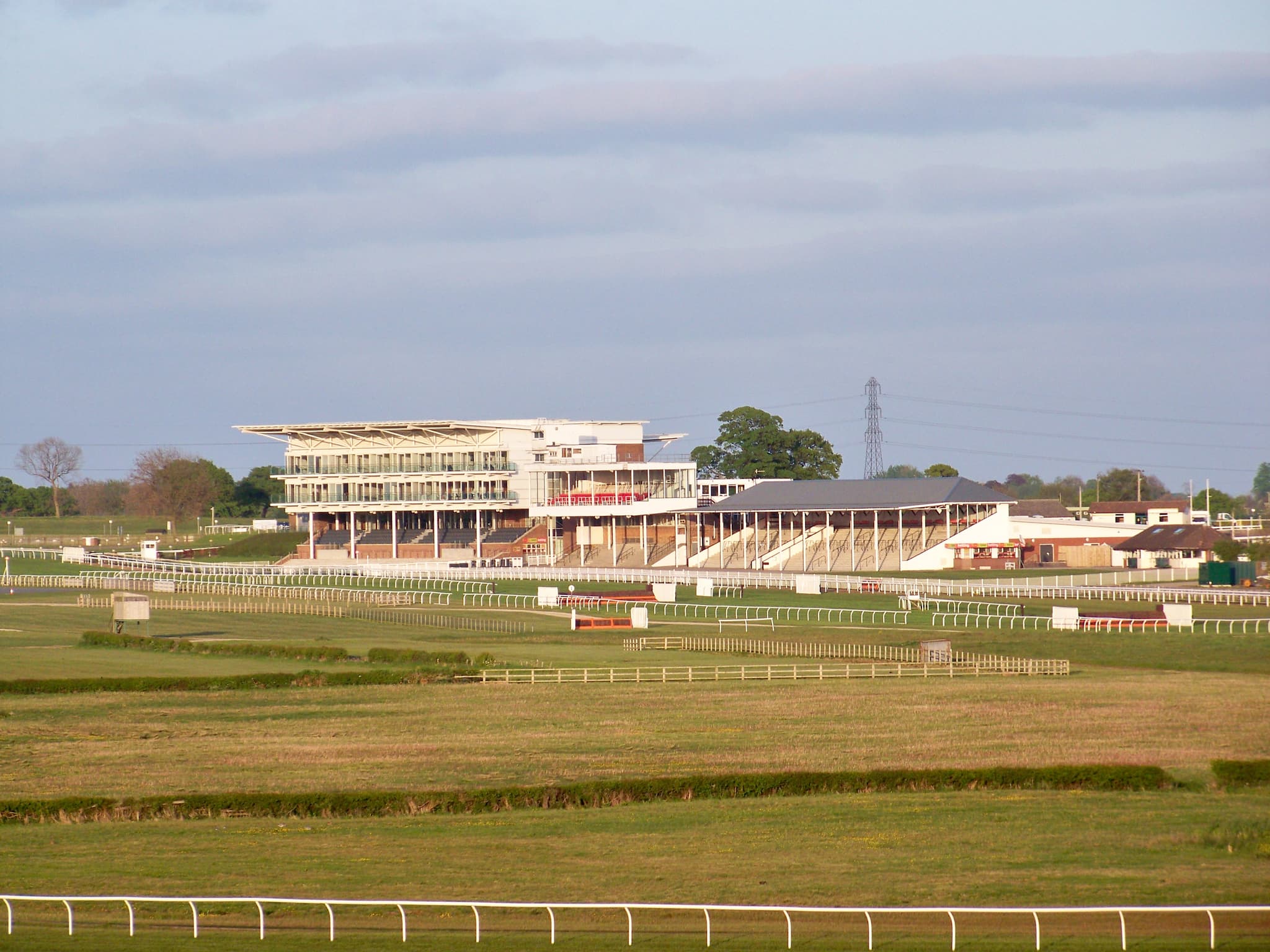
Wetherby Racecourse has stood on its York Road site since Easter Monday 1891, making it one of the longest-serving National Hunt venues in England. In those 135 years it has grown from a modest committee-run fixture with a handful of race days each season into Yorkshire's defining jumps course — the place where the northern NH season properly begins and where, each October, the best staying chasers in training take their first serious test of the new campaign.
The Charlie Hall Chase is the thread that runs through everything. First run in 1969, now a Grade 2 worth £100,000, it carries the name of a West Riding trainer who shaped the course's identity in the mid-twentieth century. Its roll of honour — Wayward Lad, One Man, See More Business, Kauto Star, Best Mate, Cue Card, Bravemansgame — is a concise history of British staying chasing across five decades. No other race at a northern course has matched it for sustained quality.
The course itself is built on land close to the River Wharfe, on the edge of a market town that has served travellers on the Great North Road since the medieval period. That geography matters: the A1(M) runs directly alongside the track, giving Wetherby an accessibility that many rural jump courses lack, and explaining why northern racegoers from Bradford, Leeds, Harrogate and York have always found it the easiest course to reach. On Boxing Day, when the Rowland Meyrick Handicap Chase is the centrepiece, the racecourse draws crowds of 6,000 — a figure that puts it among the biggest NH days in the north of England.
Wetherby was jumps-only for over 120 years, the last racecourse in Yorkshire to hold that distinction. Flat racing arrived in April 2015, when four fixtures were added to the licence, but the NH programme has always been and remains the core of what the course does. From October to May it stages 14 or 15 meetings per year, with the Charlie Hall meeting in late October, the Christmas double-header on 26 and 27 December, and a run of January and February cards that give northern trainers reliable ground and good prize money.
This article traces Wetherby's full story: the origins of the course and the town's pre-existing racing culture before 1891; the golden era of post-war expansion and the arrival of the Charlie Hall Chase in 1969; the famous races and moments that have lodged the course in the national consciousness; the modern era of facility investment and dual-purpose status; and the legacy that makes Wetherby something more than just another provincial NH track. It is, in the clearest possible sense, the heartland of Yorkshire jumping.
Origins & Foundation
Wetherby Before the Racecourse
Wetherby is a small market town in the West Riding of Yorkshire, positioned on the north bank of the River Wharfe at a point where the river has been forded and bridged since at least the twelfth century. Its importance in the pre-railway era came entirely from its position on the Great North Road — the main coaching route between London and Edinburgh that is now the A1(M). The town had a thriving trade in posting horses by the late eighteenth century, with several coaching inns on the High Street providing fresh animals for the mail coaches that passed through. Travellers stopping at Wetherby brought custom and money; the town was prosperous, well-connected, and socially active in ways that a purely agricultural settlement of its size would not have been.
Horse racing in the Wetherby area has a history that predates the current course by at least a century. By the early nineteenth century, organised race meetings were being held at Scaur Bank — a stretch of elevated ground to the north of the town centre that is now known as the King George V playing fields, though many older Wetherby residents still refer to it by its original name. These meetings were steeplechases and flat races run under informal rules, typical of the ad hoc racing that took place at dozens of market towns across Yorkshire in the Georgian and early Victorian periods. The sport at Scaur Bank was local in character: the horses were predominantly owned by farming families and local landowners, the crowds were made up of townspeople and visitors from the surrounding villages, and the meetings were tied to the agricultural calendar.
The River Wharfe and the York Road Site
By the 1880s, Scaur Bank was no longer adequate. The growth of organised racing under Jockey Club and National Hunt Committee rules required a more permanent infrastructure than an open hillside could provide. The land off York Road, between the town and the River Wharfe, offered what the old site could not: space for a proper oval course, room for a grandstand and paddock, and direct road access from the main coaching routes.
The River Wharfe shapes the setting of the course to this day. The track runs close to the southern bank, and the Wharfe valley gives Wetherby its characteristic landscape — wide, flat-bottomed, with the gentle limestone hills of the Magnesian Shelf visible to the east. The ground drains reasonably well by northern standards, which was important in the era before systematic drainage work: a course that became a quagmire after heavy rain would not attract good horses or good crowds.
The Inaugural Meeting, Easter 1891
Racing moved to the York Road site for Easter 1891. The inaugural meeting took place on Easter Monday, 30 March 1891, run by a small committee of local landowners and racing men. The exact composition of that founding committee is not fully documented in surviving records, but later company documents from around 1920 name Mr Crossley, Mr Long and Mr Atkinson as the last surviving members of the original race committee — suggesting a founding group of modest size, drawn from the professional and landowning families of the West Riding.
The course layout in 1891 was simpler than the current configuration. The circuit measured approximately one mile and three furlongs around, compared to the modern left-handed oval of about one mile two furlongs. The early fences were built to the standards of the period — post-and-rail constructions with brush faces, less precisely engineered than the modern obstacles. There was no permanent grandstand in the first decade; racegoers watched from temporary wooden structures or from the open track rail. The weighing room, jockeys' facilities and officials' accommodation were minimal.
The Victorian Fixture List
Wetherby's early fixture list was concentrated in the autumn and spring, following the natural rhythm of the National Hunt season as it was then practised. Meetings in November and March were typical: the ground was often good to soft in those months, the horses were fit from their summer rest, and the major festivals at Cheltenham and Liverpool were close enough on the calendar to give prep races context. Summer jumping, which became common in the twentieth century, was not part of the Victorian programme.
The racing was a mixture of steeplechases and hurdle races, with the steeplechases carrying the higher prize money and prestige. The distances ran from about two miles to three and a half miles, and the fields were drawn from the yards of northern trainers — men training in the villages around Middleham, Richmond and Malton who had established the Yorkshire NH tradition that still operates from the same towns today. By the 1900s and 1910s, a small number of southern trainers and owners were occasionally sending horses north for Wetherby's better prizes, a sign that the course was beginning to register on the national radar.
Yorkshire's Late Victorian Racing Culture
Wetherby existed within a rich matrix of northern racing in the 1890s and 1900s. Yorkshire had more racecourses per square mile than any other county in England. Within twenty miles of Wetherby there were meetings at Knaresborough, Harrogate and occasionally York. The NH circuit also included Catterick Bridge, Thirsk, and Ripon for hurdle races, as well as the now-closed courses at Bramham Park and Middleham itself. The Yorkshire racing public was knowledgeable and enthusiastic, with a strong tradition of owner-breeders who raised horses on the limestone pastures of the Wolds and the Vale of York.
The founding of Wetherby in 1891 was not, therefore, an isolated act of enterprise. It was a consolidation: a permanent, properly organised venue replacing the informal arrangement at Scaur Bank and positioning itself to capture the NH racing that was beginning to outgrow the makeshift facilities of the old agricultural meetings. Within two decades of its opening, Wetherby had established itself as one of the leading NH venues north of Doncaster, drawing horses and owners who regarded it as a serious test rather than a simple country fixture.
The Formation of the Race Company
When the original lease expired in 1920, the three surviving members of the founding committee — Crossley, Long and Atkinson — joined forces with new partners to form a limited company to take over the course's operation. Rowland F. Meyrick was appointed clerk of the course, and under his direction the transition from committee to company was managed without interruption to the fixture list. This corporatisation was typical of the period: dozens of British racecourses made the same shift in the late Victorian and Edwardian eras as the costs of maintaining proper facilities outgrew what a small committee could finance informally. For Wetherby, it was the beginning of a more deliberate programme of improvement that would accelerate through the 1920s and 1930s.
The Racecourse Railway Station
One of the most telling indicators of Wetherby's growing importance was the opening of Wetherby Racecourse Station in 1924, on the Church Fenton to Harrogate branch line. Special race trains — "Racecourse Specials" — ran from Bradford Exchange and other West Yorkshire stations on meeting days, delivering several hundred additional racegoers per fixture. The station remained in use until 1959, when the growth of private car ownership and the decline of the branch-line network made it unviable. Its existence for 35 years confirms that Wetherby, in the interwar and early post-war decades, was drawing crowds large enough to justify dedicated railway infrastructure — a measure of success that many nearby courses never achieved.
The Golden Era
The Interwar Expansion
National Hunt racing expanded significantly across Yorkshire in the 1920s and 1930s. The sport's governing body, the National Hunt Committee, was standardising rules and prize money schedules, and the number of licensed trainers in the north grew steadily as returning servicemen took up racing in the years after 1918. Wetherby, under the direction of clerk of the course Rowland Meyrick, was well placed to benefit. The new race company had capital to invest, and Meyrick used it: prize money was raised, additional fixtures were sought, and the first permanent terraces were erected in the 1930s, replacing the temporary wooden structures that racegoers had used since the Victorian era.
The course's accessibility gave it an advantage over more rurally isolated competitors. Vehicles were becoming more common among Yorkshire racing people in the 1920s and 1930s — enough that Wetherby could draw trainers from as far as Lambourn and Newmarket for its better prizes. The interwar fixture list was modest by modern standards, typically five or six meetings per year, but the quality of those meetings was improving. By the mid-1930s, Wetherby was operating the best-organised NH fixtures in Yorkshire, with a crowd infrastructure that none of the county's smaller courses could match.
Wartime and the Post-War Revival
Racing at Wetherby, like at virtually every British course, was severely curtailed during the Second World War. The racecourse continued in some form under wartime conditions — the National Hunt Committee and Jockey Club maintained a reduced fixture list to preserve the breeding industry and provide some continuity for trainers and stable staff — but the regular programme was suspended. The York Road site was commandeered for military purposes for part of the conflict, though the extent of any physical damage to the track and buildings is not fully documented in surviving records.
The post-war revival was rapid. By the 1947-48 season Wetherby was back to a near-normal fixture list, and the late 1940s and 1950s saw an expansion of the NH programme that would continue for three decades. The sport itself was growing: television coverage from 1960, rising prize money, and the emergence of the Cheltenham Festival as the sport's defining annual occasion all created demand for more NH fixtures and better quality prep races. Wetherby, with its dependable ground and reliable organisation, fitted the need exactly.
The Fire of 1958 and the Rebuilt Course
The most serious setback of the post-war era came in 1958, when fire destroyed a block of buildings containing the restaurants, bars, weighing room and jockeys' changing rooms. The damage was extensive enough to require two years of rebuilding work, and the course was forced to run meetings with improvised facilities while construction proceeded. The rebuilt complex, completed in 1960, was modern and better designed than what it replaced. In one of those ironies that recur in racing history, the fire that threatened Wetherby's future ultimately produced a better-equipped course.
Major W.T. Lipscomb had by then succeeded Meyrick as clerk of the course, and it was under Lipscomb's tenure that the race company made its most significant long-term commitment: the purchase of the freehold of the York Road site in 1953. This step removed the uncertainty that had hung over the course's future since the original lease expired in 1920, and it gave the company the security to plan and invest over a longer horizon. The new stands that followed — a club stand in 1967 and a two-tier stand in the 1970s — were only possible because the race company owned the land beneath them.
The Northern NH Landscape Contracts
The 1950s through to the 1980s saw a steady contraction in the number of NH courses in Yorkshire and the wider north. Bramham Park had already closed before the war. Knaresborough Racecourse, which had held occasional meetings in the first half of the twentieth century, was gone. Several smaller northern courses that had struggled through the war years failed to revive. Catterick Bridge survived, as did Carlisle, Hexham and Newcastle, but the overall effect of these closures was to concentrate Yorkshire's NH racing at fewer venues. Wetherby was the primary beneficiary. Trainers who had previously split their runners across four or five local courses now had fewer options, and Wetherby — with its better facilities and higher prize money — received more of the better horses.
This concentration produced a virtuous cycle. Better horses meant better fields; better fields attracted better owners; better owners were prepared to pay higher entry fees; higher fees funded better prize money; and better prize money attracted better horses. By the mid-1960s Wetherby was firmly established as the leading NH venue in Yorkshire, a position it has not relinquished.
The Jockeys and Trainers of the Mid-Century
The leading NH jockeys of the 1950s and 1960s rode regularly at Wetherby. Tim Brookshaw, who finished runner-up in the 1958 Grand National on Wyndburgh, was a frequent visitor from his Shropshire base. Stan Mellor, who rode over 1,000 winners in National Hunt racing and was champion jockey three times between 1959-60 and 1961-62, also appeared at the Yorkshire course. Josh Gifford, later a champion trainer of Aldaniti fame, rode at Wetherby during his riding career in the 1960s. These men came north because the prize money justified the journey — a reliable sign that the course had climbed into the national tier of NH venues.
From the Yorkshire side, the Malton and Middleham training centres supplied a steady stream of runners. Arthur Stephenson, based at Bishop Auckland in County Durham, was one of the north's great NH trainers of the 1960s and 1970s and saddled winners at Wetherby across four decades. His contemporaries included Denys Smith, Willie Stephenson (no relation) and Gordon Richards, all of whom used the course regularly and had a particular understanding of its character: left-handed, stiff fences, a demanding uphill finish that tested a horse's stamina and jumping honesty in equal measure.
The Charlie Hall Chase: Creation and Growth
The creation of the Charlie Hall Chase in 1969 was the defining act of Wetherby's golden era. The race replaced the Emblem Handicap Chase, which had honoured the 1863 Grand National winner, and was initially run as the Wetherby Pattern Chase — a conditions race open to top-class chasers and worth significantly more than anything Wetherby had previously offered in prize money.
The race was renamed the Charlie Hall Memorial Wetherby Pattern Chase in 1978, in honour of trainer Charlie Hall, a West Yorkshire man who had trained at Towton, near Tadcaster, and whose horses had won at Wetherby over many seasons. The name was shortened to the Charlie Hall Chase in 1990. The grading system introduced by the BHB in the 1990s ultimately classified it as Grade 2, which is where it remains: the highest-rated staying chase regularly run north of Haydock in the early part of the NH season.
From the start, the Charlie Hall attracted the quality its prize money promised. The race's position in late October — early enough in the season to test horses returning from their summer break, late enough that they were fit and ready to run — made it an ideal prep for the bigger targets of December and March. Trainers could run a horse in the Charlie Hall, assess his condition and jumping, and then map a route to the Betfair Chase, the King George VI Chase or the Cheltenham Gold Cup depending on what they saw. That practical utility, as much as the prize money, gave the race its grip on the training community.
Wayward Lad Establishes the Benchmark
The first truly great horse to make the Charlie Hall his own was Wayward Lad, trained initially by Michael Dickinson and Then by his mother Monica. Wayward Lad won the race in 1983 and again in 1985, the years either side of a 1984 renewal in which he did not run. He was also a three-time King George VI Chase winner (1982, 1983, 1985) and one of the best staying chasers of his generation. His association with the Charlie Hall established the template that would hold for the next four decades: use Wetherby in October as the starting point for a campaign aimed at the season's prestige prizes in December and March.
Famous Races & Moments
Kauto Star, October 2008
Of all the Charlie Hall Chases run since 1969, the 2008 renewal carries the most weight in the wider story of British steeplechasing. Kauto Star, the Paul Nicholls-trained French-bred gelding, arrived at Wetherby on 1 November 2008 as a horse whose career had reached a crossroads. He had won the Cheltenham Gold Cup in 2007 and the King George VI Chase twice, but had been beaten in the 2008 Gold Cup — falling when still in contention — and had spent the summer with questions hanging over his jumping reliability.
Nicholls sent him to Wetherby to answer those questions in public. Kauto Star won the 2008 Charlie Hall by two and a half lengths from Our Vic, jumping with the accuracy that his trainer had been working to restore. The performance was not flashy — he was ridden conservatively by Ruby Walsh, who was content to settle him behind horses and produce him smoothly at the second last — but it was exactly what was needed. It demonstrated that the Gold Cup fall had not shaken him, and it cleared the way for what followed: a return to Kempton Park on 26 December 2008, where he won his third King George VI Chase under Walsh by two lengths from Exotic Dancer. The Wetherby prep was the foundation on which that King George was built.
Looking further forward, the 2008 Charlie Hall was the opening move in Kauto Star's recovery arc that culminated in the 2009 Cheltenham Gold Cup — won by him for the second time, making him the only horse to regain the Gold Cup. Wetherby was the first public confirmation that the recovery was real.
Best Mate, October 2004
Best Mate's appearance at Wetherby on 30 October 2004 was one of the most anticipated days in Yorkshire racing for years. The Henrietta Knight-trained gelding had won three consecutive Cheltenham Gold Cups — in 2002, 2003 and 2004 — and was being prepared for a fourth attempt. The 2004 Charlie Hall Chase was his first race of the season and his first appearance at Wetherby.
He started at odds of 4-9 under Jim Culloty's regular partner, jockey Jim Culloty having retired, with Paul Carberry now in the saddle. Best Mate won the race, but only just: he beat Kelami by half a length in a performance that Henrietta Knight described as "workmanlike rather than spectacular." The horse was clearly fit but not at his absolute peak, which was exactly what a prep race should show. He went on to run at Exeter the following month, where he suffered a fatal heart attack — a tragedy that meant the 2004 Charlie Hall was the last win of his career. Wetherby therefore holds a bittersweet place in the Best Mate story: the scene of his final victory and, in retrospect, a last glimpse of a horse who had defined Gold Cup racing for three years.
Long Run's Dominant 2010 Win
Long Run's victory in the 2010 Charlie Hall Chase announced a new star to the north of England. The Nicky Henderson-trained gelding, owned by Robert Waley-Cohen, was only six years old when he won at Wetherby on 30 October 2010, carrying 11st 10lb and beating Imperial Commander — the reigning Gold Cup winner — by four lengths. It was a performance of exceptional authority: Long Run travelled powerfully throughout, jumped fluently, and drew clear from two out without being asked a serious question.
The 2010 Charlie Hall was Long Run's fourth career start over fences, and his first against proven top-class opposition. The manner of his victory — beating the Gold Cup winner with something in hand — immediately made him the ante-post favourite for the 2011 Cheltenham Gold Cup. He duly won that race on 18 March 2011, ridden by Sam Waley-Cohen, owner Robert's son, in one of the most popular results of the decade. Wetherby had again provided the launch platform for a Gold Cup winner, reinforcing the race's value as a real indicator rather than a soft prep.
Cue Card's Back-to-Back Wins, 2015 and 2016
Cue Card won the Charlie Hall Chase in successive years — 2015 and 2016 — and the circumstances of both victories illustrate the race's role in what was the best NH campaign of his long career. Trained by Colin Tizzard and ridden throughout by Paddy Brennan, Cue Card arrived at Wetherby on 31 October 2015 as a nine-year-old with a following in the north that dated back to his Champion Bumper win at Cheltenham in 2010. He won the 2015 Charlie Hall by six lengths from Uxizandre, jumping cleanly and travelling with the enthusiasm that characterised his best performances.
That 2015 season became his finest. After Wetherby, he won the Betfair Chase at Haydock on 21 November and the King George VI Chase at Kempton on 26 December — giving him three Grade 1s in less than two months, which few chasers of any era have managed. He was then a narrow faller at the third-last in the 2016 Cheltenham Gold Cup, a moment that cost him what looked a likely victory. The Charlie Hall had begun it all.
His return in 2016 — again at Wetherby on 29 October, again under Brennan — produced another six-length win, this time from Coneygree, the 2015 Gold Cup winner. Back-to-back Charlie Hall victories are not unusual in the race's history, but winning with the authority Cue Card showed in both years, at an age (nine and ten) when many chasers are beginning to decline, was unusual. His Wetherby double confirmed his status as the most durable and popular NH chaser of the 2010s.
Wayward Lad and the Formative Years of the Race
Before the modern superstars arrived, Wayward Lad set the standard for what the Charlie Hall should mean. His victories in 1983 and 1985, trained initially by Michael Dickinson and then by Monica Dickinson after Michael moved to the United States, were both authoritative performances against strong fields. Between them, he won the King George VI Chase three times (1982, 1983 and 1985), and his record at Wetherby demonstrated that the Charlie Hall was attracting horses of real Gold Cup calibre from early in the race's history.
The 1984 Charlie Hall, the year between Wayward Lad's two wins, was taken by Brown Chamberlin — a horse trained by Fulke Walwyn who finished second in the 1983 Cheltenham Gold Cup. The quality of that renewal — Wayward Lad absent, yet the race still attracting a Gold Cup runner-up — showed that the Charlie Hall had established itself independently rather than relying on a single horse's patronage.
One Man, 1996 and 1997
One Man's back-to-back wins in 1996 and 1997 belong to the period when the Charlie Hall was cementing its Grade 2 status. Trained by Gordon Richards at Penrith and ridden by Brian Harding and then Richard Dunwoody in successive years, One Man was a two-mile specialist who won the King George VI Chase in 1994 and 1995 and proved he could stay further when conditions suited. His presence at Wetherby drew large crowds for both renewals, and his victories, combined with See More Business winning in 1999 and 2000, gave the race four wins in five years by Gold Cup-class horses.
See More Business, trained by Paul Nicholls and ridden by Mick Fitzgerald, won the 1999 Cheltenham Gold Cup and used Wetherby as his prep in the autumns of 1998 and 1999. His 2000 Charlie Hall victory came after the Gold Cup triumph, confirming that the race could attract not just aspirants but proven champions. Paul Nicholls has been the dominant trainer in the Charlie Hall's modern history — Kauto Star in 2008 and See More Business in 1999 and 2000 being his most celebrated winners — and his willingness to send horses north for Wetherby has done more than any other single factor to maintain the race's profile at the highest level.
The Boxing Day Rowland Meyrick Chase
The Charlie Hall is Wetherby's signature race, but the Boxing Day meeting produces its own moments. The Rowland Meyrick Handicap Chase, named after the clerk who built the course in the 1920s, has been won by a succession of quality staying chasers and regularly draws fields of 12 to 15 runners. Jonjo O'Neill trained two Boxing Day winners in the 1990s that went on to better things. More recently, the 2019 Rowland Meyrick was won by Definitly Red, trained by Brian Ellison, a horse who had won the Charlie Hall in 2017 and became one of Ellison's flagship horses over several seasons.
The atmosphere at Wetherby on Boxing Day — with a crowd of up to 6,000 racegoers, many of them making their annual visit to a racecourse — gives those handicap results a context that the form book alone cannot capture. Horses that win at Wetherby in December in front of those crowds, on ground that is usually testing, have shown something. It is a judgment the northern training community trusts.
The Modern Era
The Millennium Stand
The most significant single investment in Wetherby's modern history was the opening of the Millennium Stand in 1999. The stand provided executive banqueting, conference facilities and a purpose-built Premier Enclosure that replaced the ad hoc corporate hospitality the course had offered from converted spaces in older buildings. The White Horse Restaurant, housed in the Millennium Stand, became the course's flagship dining facility. The investment cost several million pounds — Wetherby did not make precise figures public at the time — but the returns were measurable: corporate bookings increased, the course's ability to market itself as a venue for non-racing events improved, and the raceday experience for paying racegoers in the Premier Enclosure was brought to a standard comparable with the better-resourced courses in the north.
The Millennium Stand gave Wetherby its modern face. The older grandstand structures from the 1960s and 1970s remained in use for the Paddock Enclosure, providing capacity at a lower price point — a sensible dual-tier approach that matched the racecourse's core audience of northern NH enthusiasts who came for the racing rather than the hospitality.
Bet365 Sponsorship and Prize Money Growth
The commercial reinforcement of the Charlie Hall Chase followed in 2003, when Bet365 became the race's title sponsor. The Bet365 partnership has proved one of the most durable in northern racing — still in place more than two decades later — and it has maintained a prize fund that by the 2020s stood at approximately £100,000 for the Grade 2 itself, with the supporting card offering total prize money of around £200,000 on Charlie Hall day. These figures made the October meeting consistently one of the highest-prize-money fixtures in the NH calendar north of Cheltenham and Haydock.
Prize money across the board at Wetherby increased steadily through the 2000s and 2010s, following the broader pattern of British NH racing as media rights income from Channel 4 and later ITV enriched the Levy Board distributions. Wetherby's NH programme has received consistent terrestrial television coverage: the Charlie Hall meeting and the Boxing Day card have been broadcast live on ITV Racing's predecessor channels for most of the years since the mid-1990s, and that exposure has driven sponsorship income from local and national businesses.
Ownership and Governance
Wetherby Racecourse has had a relatively uncomplicated ownership history compared with many British courses. The race company that purchased the York Road freehold in 1953 retained control through the consolidations of the 1990s. The course joined the Racecourse Holdings Trust portfolio for a period — the RHT was a charity that owned several British racecourses — before the broader restructuring of British racecourse ownership in the 2000s and 2010s. Wetherby is now operated as an independent course under the Wetherby Race Company, separate from the Arena Racing Company group that owns and operates around half of British racecourses. This independent status has given the management flexibility to invest and manage its own programme without the constraints of a large group structure.
The course's management has consistently prioritised the NH programme over any temptation to build the flat fixtures into a comparable operation. The four flat meetings introduced in 2015 have been maintained on the licence, using the hurdles track with a home straight of approximately half a mile, but they supplement rather than challenge the NH core.
Wetherby as a Novice Hurdle Launching Pad
One of the less-discussed aspects of Wetherby's modern contribution is its role in the development of young NH horses. The course's novice hurdle programme — run throughout the autumn and winter — has produced a disproportionate number of horses who went on to win at the Cheltenham Festival. The track's left-handed circuit, with its testing uphill finish, penalises horses that jump poorly or lack stamina, and the fields for Wetherby novice hurdles are often drawn from the best-regarded young horses in the north. A novice hurdle winner at Wetherby in November or December is taken seriously by trainers, punters and selectors alike, in a way that a similar win at a flatter, easier track in the same region would not be.
Trainers including Jonjo O'Neill, Howard Johnson and, in more recent years, Brian Ellison and Sue Smith have used Wetherby systematically to school young horses against proper competition, confident that the track will sort them out honestly. The course's water jump — one of a small number of NH tracks still running the water — adds an additional technical test that many modern hurdle courses do not provide.
The Boxing Day Meeting's Growth
The Boxing Day programme has expanded through the modern era to become one of the most significant NH days in the north of England. The principal race is the Rowland Meyrick Handicap Chase, a three-mile event restricted to horses rated above a certain threshold that consistently attracts fields of class staying chasers. The supporting card typically includes a two-mile handicap chase and two or three competitive hurdle races, giving racegoers five or six races of real quality.
Crowds for the Boxing Day meeting have been consistently close to the 6,000 capacity in good weather. The combination of the Christmas holiday, the relative scarcity of entertainment alternatives in the region on 26 December, and the course's accessibility from Leeds, Bradford and Harrogate via the A1(M) produces a social atmosphere that goes beyond the typical NH raceday. For many families in West Yorkshire, the Boxing Day meeting at Wetherby has been an annual tradition passed across generations — grandparents bringing children and grandchildren in a pattern that repeats year after year.
Flat Racing from 2015
The announcement in 2014 that Wetherby intended to seek flat racing fixtures ended more than a century of NH exclusivity. The first flat meeting took place on 26 April 2015, and the programme has since settled at four or five flat fixtures per year, typically from April to August. The course uses the hurdles track, with the inner rail removed, and starts from a spur for the shortest distances. No straight course exists: all flat races are run around the left-handed loop, which suits certain types of horse and has attracted a modest but regular following among flat racing trainers from the Yorkshire circuit.
The flat meetings have not threatened the NH identity. Wetherby remains, in the minds of racing people, a jumping course: a place defined by the Charlie Hall, the Boxing Day Rowland Meyrick, and the demanding test it sets for horses and jockeys across a National Hunt season.
Wetherby's Legacy
Wetherby and the Northern NH Tradition
Wetherby Racecourse occupies a specific and identifiable place in the geography of British National Hunt racing. It is not the biggest northern course — that is Haydock Park, with its superior prize money and larger audience. It is not the most prestigious in terms of Graded race inventory — Cheltenham holds roughly fifteen Grade 1s a year; Wetherby holds one Grade 2. What Wetherby offers, and has offered since 1891, is something harder to quantify: consistency, honest form, and a direct line into the northern NH training community that no other Yorkshire course matches.
The Charlie Hall Chase remains the single most important early-season staying chase run north of Doncaster. Its Grade 2 status is not a consolation prize; it reflects real quality sustained across five decades. A roll of honour that includes Wayward Lad, Best Mate, Kauto Star, Long Run and Cue Card is not the product of clever marketing or accident of geography. It is the product of a race whose conditions, distance and timing have consistently attracted Gold Cup-calibre horses. Trainers return to it year after year because the race does what it promises: it tests a horse honestly in October and tells you what you have in time to make the decisions that matter.
The Boxing Day Institution
The Boxing Day meeting's hold on West Yorkshire runs deeper than any single race result. For thousands of racegoers who attend Wetherby once a year and once a year only, 26 December is that day. The crowd on Boxing Day is different from the crowd at the Charlie Hall: less specialist, more family-oriented, and more connected to the social rhythm of the Christmas holiday than to the racing calendar. Children who came to Wetherby on Boxing Day with their parents in the 1980s and 1990s are now bringing their own children, perpetuating a tradition that requires no advertising because it is self-reinforcing.
The Rowland Meyrick Handicap Chase gives that day an anchor of proper sporting interest. A maximum field of quality staying chasers, 6,000 racegoers, and the particular atmosphere of a northern course in late December — cold, intimate, and loud in the way that small English sports venues can be — produces a raceday unlike anything else on the NH calendar.
The Trainers Who Built Careers at Wetherby
Certain northern NH trainers have built their reputations in a way that is partly inseparable from Wetherby results. Brian Ellison, who trains at Castle Stables at Richmond in North Yorkshire, has been among the most consistent winners at the course over the past 15 years. His Definitly Red won the Charlie Hall Chase in 2017, and Ellison has put up double-figure winners at Wetherby in multiple seasons. His approach — patient, low-profile, strongly northern — suits a course where form is trusted and horses are given time to develop.
Micky Hammond, based at Middleham in North Yorkshire, is another trainer whose record at Wetherby is better than his national profile might suggest. Middleham has been a training centre for NH horses since the nineteenth century, and its proximity to Wetherby — roughly 35 miles north via the A1 — means Hammond's horses arrive fit, familiar with northern ground conditions, and targeted at the course's specific races. The novice hurdle winners he has sent out at Wetherby over the years have included several horses that improved substantially when they stepped up in class.
The generation of northern NH trainers that includes Ellison and Hammond also cites Wetherby form as a reliable gauge. A horse that wins at Wetherby on testing ground, against a proper field, has beaten real opposition over a real test. That judgment is shared by connections looking at improving horses in the north, and it gives Wetherby results a currency that not every provincial NH course can claim.
What Wetherby Represents
Wetherby is not trying to be a southern course planted in Yorkshire. It has never pretended that its Boxing Day programme rivals Kempton's King George card, or that its facilities match Newbury or Ascot. Its identity is rooted in the northern NH culture that it has served and helped shape since 1891 — a culture built on honest ground, unshowy horsemanship, and a knowledgeable crowd that understands when it is watching something good.
For as long as there is NH racing in Yorkshire, Wetherby will have a role. Its freehold is secure, its signature race is entrenched, and its audience is loyal in the way that audiences of traditional English sporting venues are loyal: not because of novelty, but because of habit and affection. The course's story from Scaur Bank to the Millennium Stand is one of adaptation without loss of character. That, in the end, is Wetherby's most enduring achievement.
Share this article
More about this racecourse
All Wetherby guides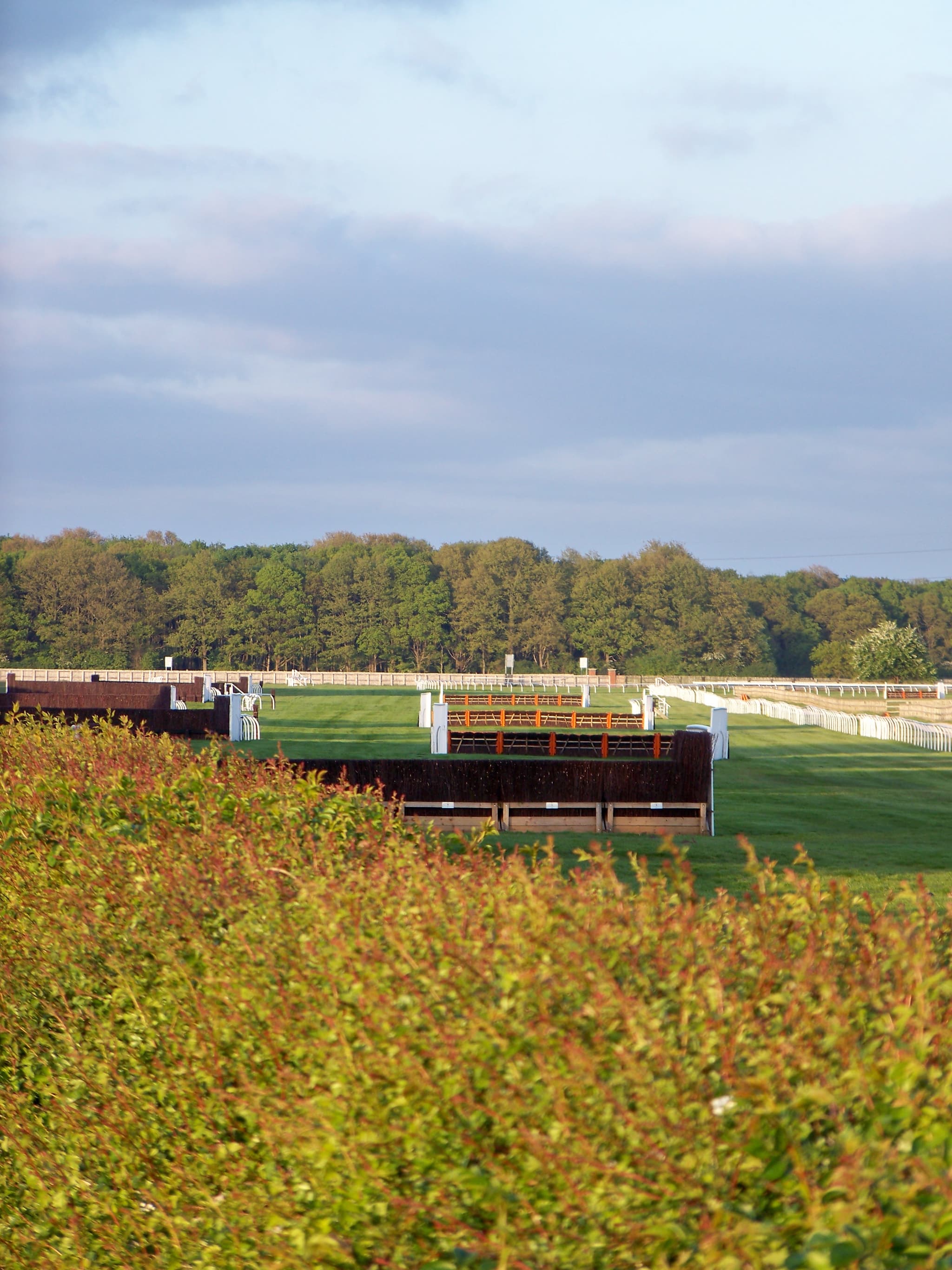
The Charlie Hall Chase at Wetherby: Complete Guide
Everything you need to know about the Charlie Hall Chase — Wetherby's prestigious early-season Grade 2 staying chase.
Read more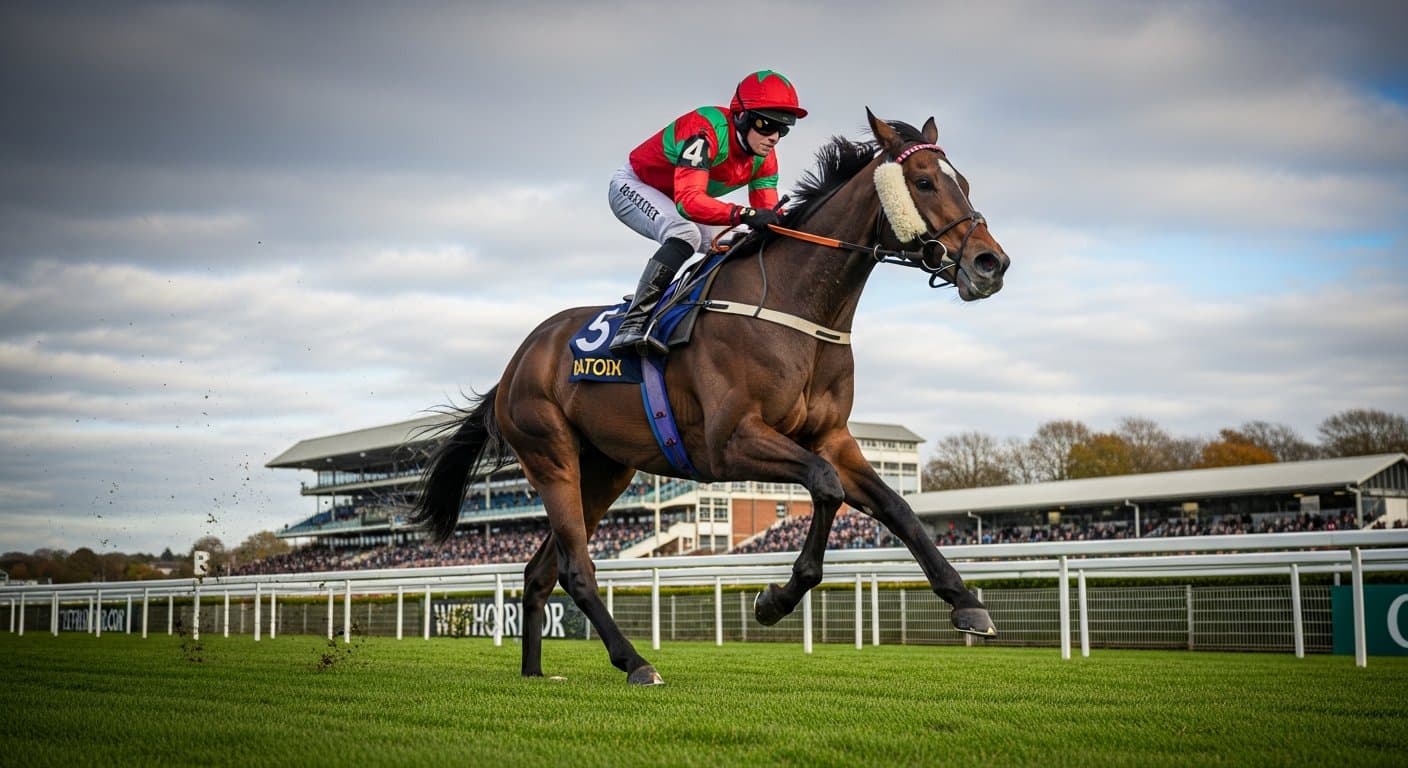
Kauto Star at Wetherby: The Charlie Hall and a Champion's Launchpad
Kauto Star used the Charlie Hall Chase at Wetherby as a seasonal opener on his way to becoming the greatest staying chaser of his generation. This is his Wetherby story.
Read more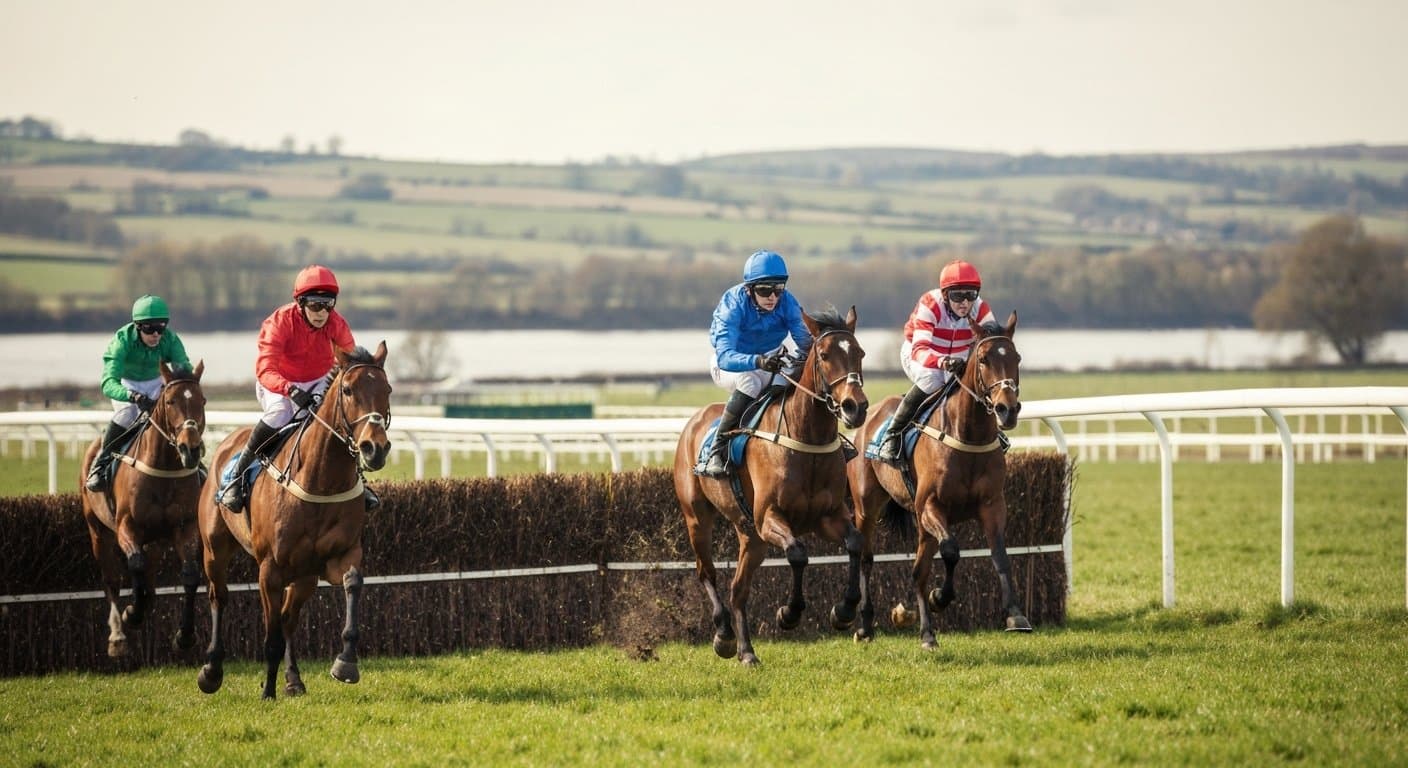
Betting at Wetherby Racecourse
How to bet smarter at Wetherby: track characteristics, going preferences, key trainers and winning strategies.
Read morePhotos on this page are used under Creative Commons licences. Titles, sources and licence links for each one are on our image credits page.
Gamble Responsibly
Gambling should be entertaining and not seen as a way to make money. Never bet more than you can afford to lose. If you or someone you know has a gambling problem, help and support is available.