
Founder & Editor · Last reviewed 2026-03-02
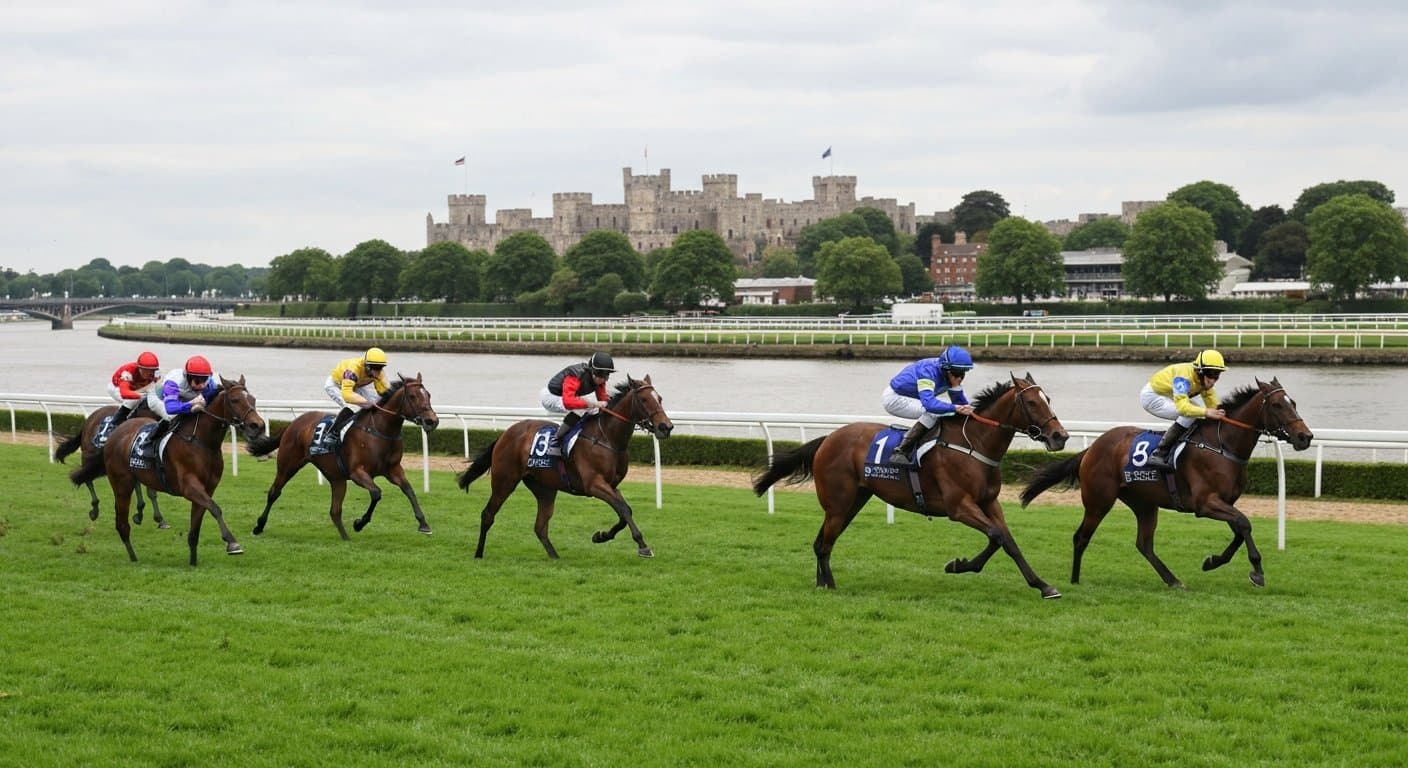
Evening racing at Windsor is a different proposition to a Saturday afternoon at Ascot or Newmarket. The sun sets over the Thames, the crowd is relaxed, and the atmosphere is distinctly Windsor — casual, local, and entirely unhurried. Most of the course's fixtures are Monday nights through the summer: first race around 5:30pm to 5:45pm, last race by 9:00pm to 9:30pm. You can finish work in London, catch a train from Waterloo, and be trackside in under an hour. Home before 11pm. No need to book a day off. No need to fight weekend traffic. It is racing designed to fit around how people actually live.
Windsor has been staging evening meetings since the modern flat programme took shape after jump racing ended here in 1998. The course's position in the Thames Valley — close to London, easily accessible by rail, and set on an island between the Thames and the Clewer Mill Stream — makes it the natural home for weeknight flat racing in the South East. No other venue combines the access from a major city with a setting this attractive. That combination explains why Windsor's Monday evening meetings are consistently well-attended across the season.
The programme runs from April through to October, with the concentration of Monday evening meetings falling from May through to September. A typical season includes fifteen to twenty evening fixtures. The quality of racing is competitive throughout. These are not filler cards: the trainers who target Windsor regularly — and there is a clear group of them — send decent horses and take the meetings seriously. For the betting racegoer, that consistency creates an identifiable set of patterns that rewards attention.
The figure-of-eight layout is unique in flat racing. The course crosses itself once during each circuit, creating a tactical puzzle that distinguishes Windsor from any straight or conventional oval course. The tight right-handed loop known as "carnage corner" is where races are often decided: horses that are well-positioned going into the bend maintain the advantage; those that find themselves trapped on the inside at the wrong moment can lose all chance. Understanding this helps whether you are betting or simply watching.
This guide covers the full evening meeting format, the betting angles that are specific to or amplified by evening conditions, the key trainer patterns, how to plan your evening from arrival to the last train, and what to expect across the different types of race on a typical card. Whether it is your first Monday at Windsor or your fiftieth, the detail here will add something to the experience.
Bet on Windsor
Place your bets on Windsor races with a trusted bookmaker.

Promo code BETFRED50. New customers only. Register, deposit with a Debit Card, and place a first bet of £10+ at Evens (2.0)+ on Sports, to be settled within 7 days, to get £30 in Sports Free Bets and £20 in Bet Builder Free Bets within 24 hours of settlement. 7-day expiry. Eligibility & payment exclusions apply. Full T&Cs apply. Take Time to Think. BeGambleAware.org. 18+. Full T&Cs.

Promo code R30. New UK customers only, 18+. Register, deposit £10 or more, then place a £10 single cash bet at odds of 1/2 (1.5) or greater on any sports market (excluding Virtuals). Once the qualifying bet settles you get £30 in Free Bets (3 x £10) — the qualifying bet can win or lose. Free Bets are valid on any sports market excluding Virtuals, expire in 7 days, are non-withdrawable and must be used in full. Excluded deposit methods apply (including PayPal, Apple Pay, Skrill and NETELLER). Named bets such as Lucky 15 do not qualify. If you cash out the qualifying bet, or it is voided, you are no longer eligible for the offer. Ends 31.12.26. Full T&Cs apply. Please gamble responsibly. BeGambleAware.org. 18+. Full T&Cs.

Promo code BET40GET20. New UK customers, 18+. Register with the code and place a first bet of £40 or more at Evens (2.0) or greater. Receive 2 × £10 free bets: the first credited automatically once the qualifying bet settles, the second 24 hours later. Free bets must be placed at minimum odds of 4/1 (5.0), expire 24 hours after credit, and the free-bet stake is not returned with winnings. Debit card deposits only. Take Time to Think. BeGambleAware.org. 18+. T&Cs apply. Full T&Cs.

50% of your first-day net losses refunded as a free bet, capped at £25. New UK customers aged 18+ only. To qualify, deposit and place a first bet of £10 or more on any sport at minimum odds of evens (2.00), then place at least two further bets on different events, each worth at least 50% of your largest bet, all at evens (2.00) or greater. Losses are counted from your first settled bet until 23:59 the same day. Place a qualifying £10+ bet and you are guaranteed at least a £5 free bet. Bets placed at SP, void bets, cashed-out bets and bets struck with free bets do not count towards the offer. The free bet is credited the day after your qualifying bets settle and must be used within 7 days, after which it expires. It can be used at odds from 1/4 (1.25) up to 250/1 on singles and straight accumulators, but not on Trixie, Patent or Yankee style multiples. Free-bet stake is not returned with winnings. One offer per person, household, address, IP address and device. E-wallet deposits may not qualify, so check the cashier before depositing. Customers registered with GAMSTOP cannot claim. KYC identity verification must be completed before the free bet is credited. Take Time to Think. BeGambleAware.org. 18+. T&Cs apply. Full T&Cs.

New customers, 18+. Choose the sports bonus at sign-up, make a first deposit and receive a 100% bonus up to £50 in your Sports Bonus balance. To convert the bonus to cash, wager it 10x within 30 days. Single bets below Evens (2.00) do not qualify; accumulators do not qualify if any selection is below 1/2 (1.50). Virtual Sports, voided, cancelled, drawn, cashed-out and free-bet wagers do not count towards wagering. Only the first settled bet per event counts. Withdrawing before the wagering requirement is met forfeits the bonus balance including bonus winnings. Real-money funds are used before bonus funds. Deposits via Skrill or Neteller are not eligible. Not valid in conjunction with other promotions. Odds, bet and payment limits apply. 10bet general and promotion T&Cs apply. BeGambleAware.org. 18+. Full T&Cs.

New customers in Great Britain and Republic of Ireland, 18+. Place a £10 fixed-odds qualifying bet at minimum odds of 1/2 (1.50) — single or each-way (only the win part counts), pre-event or in-play, not cashed out early, within 28 days of opening the account. Receive up to £60 in bonuses credited over three days: 3 × £10 fixed-odds free bets (the first on settlement, then 24 and 48 hours later) plus 3 × £5 Total Goals FOOTBALL spread bets and 3 × £5 racing Winning Favourites spread bets, with a £1 racing Race Index spread bet as an extra on top. The spread bets need a full spread-betting account, opened within 28 days of the fixed-odds account and subject to Spreadex's eligibility and appropriateness checks. Free-bet stakes not returned with winnings; free bets valid 28 days from issue. IMPORTANT: the £5 credits are SPREAD bets — sports spread betting carries the risk that losses can exceed your stake. Sports spread-betting customers do not have Financial Ombudsman or FSCS recourse. Take Time to Think. BeGambleAware.org. 18+. T&Cs apply. Full T&Cs.

Promo code WELCOME15, entered under My Bonuses after registering. New UK customers, 18+. Place a first qualifying bet of at least £10 from your cash balance at odds of evens (2.0) or greater within 7 days of opening the account. Once the qualifying bet fully settles you receive £15 in free bets, credited as 3 x £5 tokens with set uses: one £5 accumulator free bet (minimum 4 legs, each leg at 2/5 or bigger), one £5 sports free bet (any market at evens or bigger) and one £5 Sub Cover free bet (selected football player markets at evens or bigger). Free-bet stakes are not returned with winnings. Free bets expire 7 days after they are credited. Void, cashed-out and partially cashed-out bets do not qualify. One offer per customer. Confirm the current terms on BetGoodwin's own welcome-offer page before claiming. Take Time to Think. BeGambleAware.org. 18+. T&Cs apply. Full T&Cs.

New UK customers, 18+. Minimum deposit £10. Place a £10 qualifying single on sports (excluding virtuals) at minimum odds of 1/2 (1.50), settled within 14 days. Deposit-method exclusions apply. Receive £30 in free bets (stake not returned), split £20 for sportsbook use (2 x £10) and £10 for Bet Builder only (2 x £5); Bet Builder does not cover horse racing. Free bets must be accepted within 7 days and expire 7 days after acceptance. No promo code required. Best Odds Guaranteed on UK & Irish racing, subject to having staked over £25 in the previous seven days. Operated by LiveScore Betting and Gaming (Gibraltar) Ltd, UKGC 56859. Confirm the current terms on LiveScore Bet's own promotions page before claiming. Take Time to Think. BeGambleAware.org. 18+. T&Cs apply. Full T&Cs.
18+. BeGambleAware.org
The Evening Experience
An evening at Windsor has a rhythm that is hard to replicate at any other British racecourse. The crowd arrives in a steady stream from late afternoon — a mix of after-work visitors, groups on a night out, regulars who know every corner of the track. The atmosphere is casual. Nobody is in a rush. The Thames reflects the evening light behind the grandstand. It is one of the most pleasant ways to spend a summer weeknight in the South East.
The Crowd
The Monday evening audience at Windsor is clearly different from a Saturday crowd at a major venue. You will not find the corporate element that dominates some larger fixtures. Evening racing at Windsor draws people who have come for the racing, the setting and the chance to unwind — and that changes the atmosphere entirely. Conversations start naturally between strangers comparing notes on the card. The paddock is accessible and sociable. The betting ring is busy but not frantic.
The crowd is knowledgeable without being intimidating. There are regulars who have been coming for years and know the track well, and there are first-timers for whom this is an introduction to the sport. Both are equally at home. The compact site means the two groups are never far apart: the paddock, the grandstand, the betting ring and the bars are all within a few minutes' walk. You are not corralled into separate sections.
In terms of numbers, a typical Monday evening in high summer will draw between 2,000 and 5,000 people depending on the date, the race card quality, and the weather. The Winter Hill Stakes meeting in August, Windsor's highlight fixture, draws the top end of that range. A quiet Monday in early May can be much more modest. In all cases, the atmosphere is sociable rather than pressured. The course never feels uncomfortably crowded.
The Setting
The riverside backdrop is Windsor's outstanding asset, and it is never more apparent than on a summer evening. As the sun drops behind the course, the light on the Thames changes — first golden, then the soft flat light of a British summer evening. The grandstand looks out over the track, and the Thames is visible beyond the far rail. It is unlike any other flat-racing venue in Britain.
The island location — between the main river channel and the Clewer Mill Stream — gives the course a sense of separation from the outside world. The bustle of Windsor town and the A-roads beyond the river are present but distant. You are on a compact island, at the races, with no pressing reason to be anywhere else. That quality of containment, combined with the water views, sets Windsor's evening atmosphere apart from courses that sit on open heath or in urban surroundings.
By the fifth or sixth race, as the light fades and the crowd has settled in for the home straight, the atmosphere becomes absorbing. The Thames at dusk, the sound of hooves on the flat surface, the compact crowd — it is one of those rare situations in sport where the setting adds as much as the event itself.
The Evening Meeting Format
A standard Windsor evening card comprises seven or eight races. The first race goes off at 5:30pm to 5:45pm, sometimes slightly later depending on the fixture. Subsequent races are spaced 25 to 35 minutes apart, giving time between each to visit the paddock, study the next race, and get to the betting ring or Tote. The last race typically finishes between 9:00pm and 9:30pm.
The total duration from first to last race is three and a half to four hours. This is long enough to constitute a proper evening's racing without pushing into late-night territory. The timing is designed around the working week: you can arrive by train from London having left work at 4:30pm, see all seven or eight races, and catch a train home that delivers you back at Waterloo before 11pm.
The inter-race interval is part of the evening's texture. Twenty-five to thirty minutes between races is time to: spend five minutes watching the parade in the paddock, spend five minutes studying the form for the next race, spend five minutes at the betting ring placing your bet, and then find a position for the race itself. It also leaves time for a drink. This rhythm, repeated seven times through the evening, creates the distinctly Windsor tempo — unhurried, purposeful, enjoyable.
On evenings when racing finishes nearer 9:30pm, the last train timings become relevant. Trains from Windsor & Eton Riverside to London Waterloo run late but become less frequent after 10pm. If you are targeting the last train, leave the course promptly after the final race. The ten-minute walk to Riverside is the limiting factor — leave yourself fifteen minutes to be comfortable. If you are not constrained by trains, the post-race walk into Windsor town for a drink at one of the riverside pubs is a natural extension of the evening.
Race Card Types
A typical Windsor evening card mixes several race types across the seven or eight races:
Maidens — races for horses that have not yet won — are common on evening cards, particularly earlier in the season when the cohort of two-year-olds is starting to gain experience. Maiden races can be unpredictable: some feature horses that are well-fancied and win easily; others are truly open. The trainer's form with first-time starters is a key reference point.
Novice stakes — open to horses that have run once or twice — follow a similar logic. These races often produce informative market moves: when a horse is backed from 5/1 into 2/1 before a novice stake, the trainer and connections know something. Monitoring the market from opening prices through to race time for novice races is one of the most productive habits at evening meetings.
Conditions races — open to horses above maiden level but below handicap — are where the evening card sometimes produces its best racing. Conditions races at Windsor attract horses that are being aimed at the course specifically, and the trainer patterns for these races are among the most consistent in the evening programme.
Handicaps — the bulk of the card — are the most populated race type. Windsor evening handicaps feature fields of 10 to 16 runners as standard. The large field sizes and the course's tactical demands mean value exists in the markets, particularly for horses with course form that might have drifted in price after a couple of disappointing runs on a different track.
The Vibe
Windsor does not take itself too seriously. There is no dress code, no corporate pressure, no feeling that you are there to be seen rather than to watch the racing. The bars stay sociable between races. The betting ring hums with activity through the evening without the slightly aggressive atmosphere that characterises some bigger-meeting rings. By the last race, the light has softened, the crowd has wound down gently, and the evening has a natural, unhurried conclusion.
The Thames-side location means that even after the racing, the evening continues naturally: a walk along the river, a drink in Windsor town, the comfortable train home. There is a completeness to a Monday evening at Windsor that Saturday racing at a major course, with its early alarm clocks and its crowds and its long drive home, does not always deliver.
Key Evening Meetings
Windsor's evening programme runs from April through October, with the bulk of fixtures concentrated on Monday nights between May and September. Within that programme, some meetings stand out for their race quality, their atmosphere, or their specific significance in the British flat-racing calendar.
Monday Evening Cards: The Core of the Season
The Monday evening meetings are what Windsor is built around. Typically one per week from May through to the end of September, with some gaps depending on racing calendars and school holidays. A standard Monday card features seven or eight races across three and a half to four hours, with the first race at 5:30pm to 5:45pm and the last at 9:00pm to 9:30pm.
These meetings define what Windsor is. The racing is competitive. The atmosphere is consistent — relaxed, accessible, sociable. The crowd is the right size: enough to create buzz around the betting ring and the paddock, not so large that moving around the compact site becomes difficult. If you have never been to Windsor, a Monday evening in high summer (late June through August) is the ideal introduction. The light lasts deep into the evening, the weather is at its best, and the combination of good racing and a beautiful setting is at its strongest.
Early-season Monday evenings (April and May) can feel slightly more tentative. The light fades earlier. The crowd is smaller. The horses are earlier in their season campaigns and the form is less settled. It is still worth attending, but the experience is different from the midsummer peak.
Late-season Monday evenings (late September and October) have their own appeal — the crowd is smaller, the atmosphere is quieter, and there is something attractive about one of the last evenings of the flat season on the Thames. But these are for the established Windsor visitor rather than the first-timer.
The Winter Hill Stakes Evening
The highlight of Windsor's flat season is the Winter Hill Stakes — a Group 3 race over a mile and two furlongs. It is typically run in early August, and it is the most prestigious race in Windsor's annual calendar. The Winter Hill Stakes attracts listed and Group-class horses from the major training centres, and the race is a useful pointer to the autumn programme. Horses that run well in the Winter Hill Stakes often go on to compete at the highest level through September and October.
The meeting on which the Winter Hill Stakes falls is Windsor at its best. The crowd is larger, the race card is stronger, the betting ring is more active, and the general atmosphere has an edge that the routine Monday evenings do not. It is worth planning specifically for this date: the race is worth watching for its own sake, and the setting — the August evening, the Thames, the full grandstand — is the most complete Windsor experience of the year.
Be aware that the Winter Hill Stakes meeting draws significantly more visitors than a typical Monday. Book tickets in advance. Arrive earlier than you would for a routine evening. Car parks fill faster. Trains from London can be busier. The Winter Hill Stakes day is the one Windsor fixture where treating it like a major Saturday fixture — in terms of planning and logistics — is appropriate.
The Royal Windsor Stakes
The Royal Windsor Stakes is a Group 3 sprint race run over six furlongs, and it represents Windsor's other significant contribution to the British pattern programme. Sprinters with real class contest the Royal Windsor Stakes, and it is one of the course's showpiece races of the season. Group 3 races at Windsor are relatively infrequent — the bulk of the programme is handicaps and conditions races — which makes the pattern fixtures stand out.
For the betting racegoer, Group 3 races on the Windsor programme are where the market is most liquid and the public betting most active. The Royal Windsor Stakes attracts well-backed favourites from the major yards, and the pace of the betting market reflects that. These are also the races where careful pre-race study pays off most — the form book for a Group 3 sprint is more settled than a maiden or a novice race, and the draw and pace angles can identify a specific edge.
Early and Late Season Meetings
The first evening meetings of the year, in April or early May, are worth attending if you are a regular — but not as a first experience. The weather is unpredictable, the fields are less settled, and the evening format is compressed by the earlier sunset. Bring an extra layer; the river adds to the chill.
By June and July, the long summer evenings are Windsor at its most enjoyable. Daylight through the early races allows you to watch the horses clearly in the paddock and from the rail without relying on the course lighting. The crowd is larger and the racing is more established. This is the sweet spot of the Windsor calendar.
August is the peak month — the Winter Hill Stakes falls here, the crowd is at its season-high attendance, and the race card quality is at its best. The evenings start to shorten from mid-August onward, and the last two races of an August evening meeting are run under the course floodlights.
September and October evenings are shorter and cooler, but still worth visiting for anyone who enjoys the course. The fields remain competitive as trainers try to place horses before the season closes. The atmosphere is slightly more reflective than the midsummer peak — the season is winding down, the crowd is smaller, and there is a different quality to the evening. It remains a pleasant way to spend a Monday.
Weekend and Saturday Fixtures
Occasional Saturday fixtures feature through the season. These attract larger crowds and a more varied audience than the Monday evenings — families, groups marking a specific occasion, visitors who would not travel on a weekday. The racing on Saturday fixtures can be stronger, particularly when Group or listed races are included.
The Saturday atmosphere at Windsor is different to the Monday evening norm: more formal in dress, more varied in motivation, and more mixed in experience level. Neither is better — they are simply different audiences for the same course. If your only option is a Saturday, Windsor on a Saturday is still excellent. If you have the choice, a peak-summer Monday evening represents the purest version of what Windsor is.
Betting Angles
The betting angles at Windsor apply equally whether you are attending an afternoon or an evening fixture. The track does not change. The form does not change. The course's structural characteristics — the figure-of-eight, the tight bends, the way the draw interacts with different distances — are permanent. What evening cards do introduce is a set of additional market dynamics and punter tendencies that, if understood, can help you find value across a typical seven or eight-race card.
Course Form: The Single Most Reliable Angle
Windsor's unusual layout produces a specific type of race that rewards a specific type of horse. Horses that have won or placed at Windsor before are worth taking seriously in any race at the course, because the ability to handle the figure-of-eight — to sit handy, to quicken around the tight bends, to handle the sharp right-handed loop — is a real and repeatable skill.
In the form book, look for a "W" in the course column, or for placed efforts at Windsor in similar conditions. A horse that has won twice at Windsor in handicaps is a fundamentally different proposition from one with two wins elsewhere and no Windsor experience, even if the overall form ratings are similar. Course winners returning in a matching race type and distance at Windsor have one of the strongest positive angles in British flat racing at this level.
This is particularly true for horses that have won at "carnage corner" distances — races that include the tight loop. Sprint races over five and six furlongs at Windsor are heavily influenced by positioning going into the bend. A horse with established course form at these distances has already demonstrated that it can handle the key navigational challenge of the race.
The Figure-of-Eight: Tactical Speed Matters
The tight bends and the right-handed loop favour horses that can sit handy and avoid traffic. Deep closers can win at Windsor — any horse can win on its day — but they need a truly strong pace to close from behind, and a clear run around the bend to do it. When the pace is steady, as it often is in maiden and novice races, closers frequently fail to get into the race until it is over.
When you assess an evening handicap at Windsor, focus on which horses are likely to be prominent or handy. Front-runners at Windsor have a strong record, particularly over shorter distances. Horses that travel well close to the pace and can quicken when the bend straightens out win here regularly. If the draw analysis suggests a horse will be on the favoured part of the track going into the bend, that is a significant additional factor.
Draw bias at Windsor varies by distance and by ground conditions, and the full betting guide covers this in detail. The short summary for evening meetings is: check the draw carefully for sprint distances, and note whether the ground has any firmness variation that might affect one side of the track.
Evening Market Dynamics: Where Value Exists
Evening meetings at Windsor attract a different composition of punters than the major Saturday cards at Ascot, Goodwood or Newmarket. The Monday evening crowd includes a higher proportion of casual punters who are betting for entertainment — backing well-known trainers, following the public nap selections, or placing money on names they recognise from television coverage. The proportion of sophisticated, form-focused punters is lower than on the biggest Saturday cards.
This creates a specific pattern in the ante-post and early betting markets. Early prices set by bookmakers for Windsor evening races — typically available from the morning of the meeting — sometimes reflect the form book more accurately than the SP, because they are set against a more informed early market. By the time the casual Monday evening crowd is at the course and betting on the tote and with bookmakers in the ring, the market can move away from its early position.
The practical implication: take ante-post prices seriously for Windsor evening races. If you have done your form and identified a horse you like, the early price on the morning of the meeting can be better value than the SP. Particularly in maiden and novice races, where there is real uncertainty in the form, the early price often represents the bookmakers' best estimate rather than the crowd's sentiment.
For the Tote, evening meetings at Windsor can produce longer dividends in the win and place pools than comparable Saturday races, because the total pool size is smaller and the public money is sometimes less effectively distributed across the correct horses. The Tote exacta and trifecta pools for Windsor evenings can also offer larger dividends than the off-course equivalents suggest.
Trainer Patterns: The Consistent Names
Windsor's evening programme attracts a specific set of trainers who target the course regularly and have strong records here. Understanding which trainers use Windsor strategically — rather than simply entering horses when nothing else fits — is one of the more productive preparation habits.
Roger Varian has a strong record at Windsor with horses of all types. His operation sends horses specifically to the course rather than as an afterthought, and his stable form figures at Windsor are consistently above average. When a Varian runner at Windsor is backed on the day, it is usually worth attention. First-time starters and lightly-raced horses from the Varian yard at Windsor have a consistently strong strike rate.
William Haggas similarly uses Windsor as a deliberate placement rather than a fallback. Haggas horses sent to Windsor are often well-prepared, and his yard's market moves on the day are informative. A Haggas horse that drifts in price at Windsor is a more significant signal than a drift from a yard that simply enters horses anywhere — and equally, a Haggas horse that shortens on the day deserves respect.
Charlie Appleby and the Godolphin operation target Windsor's evening programme with horses at various stages of their campaigns. Appleby's two-year-olds making their debut or their second run at Windsor are worth following closely. The yard's production line of well-bred, professionally prepared horses suits Windsor's conditions, and Appleby is one of the most efficient trainers in Britain at winning with horses at or near their best.
These three yards represent the end of the market where money and form tend to align. When Varian, Haggas or Appleby back a runner in the ring at Windsor, the pattern of market moves from opening price to SP is informative — not infallible, but statistically significant.
Other trainers with strong Windsor records include Andrew Balding (well-established Southern operation with strong local knowledge), Clive Cox (particularly effective with sprinters at Windsor), and John and Thady Gosden (whose horses often hold condition at Windsor's distances). None of these is a universal flag to follow, but all have above-average conversion rates at the course compared to their national figures.
The key question is always: is this trainer's horse at Windsor because they have specifically placed it here, or because the entry came as part of a broad sweep? The difference between a targeted placement and a speculative entry is significant. Monitoring trainer comments in Racing Post previews and noting whether the horse has been to Windsor before in a similar race type helps calibrate this.
Watching Market Moves
For evening races, the betting market opens formally in the morning and evolves through the afternoon. By the time you arrive at the course for the first race, the early markets have been running for several hours. Prices on Racing Post or your preferred form guide reflect morning show, early show, and any significant movements.
For Windsor evening races, the most informative market moves typically happen between 3pm and 5pm on the day of the meeting, when professional money for evening races is often placed. A horse that opens at 4/1 in the morning and is 2/1 by the time you arrive at the course at 5pm has been backed consistently. A horse that drifts from 3/1 to 5/1 in the same window has been passed over by people who know the horse.
This is not an instruction to blindly follow market moves — plenty of well-supported horses lose, and drifters can win. It is an instruction to notice the move and ask why. Market intelligence is one input among several. Course form, the trainer's strike rate at Windsor, the likely pace scenario, and the draw all combine to produce a betting judgement. The market move, observed alongside those factors, is often confirmation rather than a standalone reason.
Large Fields and Value in the Handicaps
Windsor evening handicaps regularly attract fields of 12 to 16 runners. In large-field handicaps, the win market is typically priced to a high overround — the bookmakers hold a larger edge. But the larger fields also mean real prices are available for well-handicapped horses that may have drifted on the back of a couple of indifferent recent runs.
A horse that has two or three below-par runs on quick ground, but whose best form was on good to soft, is correctly priced down the field on a firm summer evening at Windsor. If the ground changes — if rain has come earlier in the week and the going is softer than anticipated — that horse's price has not adjusted to reflect the new conditions, and value exists. Checking the overnight going and any going stick readings before the meeting is particularly worthwhile for Windsor's summer evening meetings when the ground can shift between a hard midsummer firm and a more raceable surface after July rain.
The Tote on Course
For casual bettors, the Tote pools at Windsor provide a different experience from fixed-odds bookmaking. The Jackpot and Placepot (finding a placed horse in each of the first six races) are the most popular pool bets. Windsor evening Placepot pools are well-supported by course punters and off-course Tote players, and a successful Placepot ticket from a £1 or £2 unit stake can return very useful dividends. The Placepot is a good introduction to pool betting for those new to it: the selection process of finding six placed horses across the card engages with the full evening's racing rather than concentrating all interest on a single race.
Cash and card are both accepted at the Tote terminals on course. Having cash for the ring bookmakers and card for the Tote is a workable arrangement. Some bookmakers in the ring now take card, but cash remains the more efficient option in a busy ring.
Planning Your Evening
Planning a Monday evening at Windsor is straightforward if you address a few specifics in advance. The margin for error is slim on a Monday after work — if you miss the right train or arrive without a plan for food, the first hour can be frustrating. Get the logistics right and the evening runs itself.
Getting There: Train Timings in Detail
For those coming from London, the key choice is which station to use. Windsor & Eton Riverside is served directly from London Waterloo by South Western Railway with no changes. The journey takes 55 minutes. Windsor & Eton Central is reached via a change at Slough from London Paddington on Great Western Railway — 18 minutes to Slough, then six minutes on the branch line. Total from Paddington: approximately 35 minutes.
For most London visitors, the choice comes down to where you are starting from. Anyone based in or passing through central London — City workers, those arriving via Eurostar — will find the Waterloo route more straightforward. Anyone in west London, Heathrow, or travelling from the west of England will typically find the Paddington route faster.
Recommended departure times for a 5:30pm to 5:45pm first race:
- From London Waterloo: depart by 4:30pm to arrive comfortably before the first race. A 4:45pm train is workable but tight. Do not leave it later.
- From London Paddington: depart by 4:45pm, change at Slough. The shorter journey from Paddington gives slightly more margin, but the change adds a risk if the Paddington service is delayed.
Both Windsor stations are around a ten-minute walk from the racecourse — a level, straightforward walk through the town or along the river path. Factor this in when planning. If you are carrying anything heavy or have children in tow, the walk can take 15 minutes rather than ten.
The racecourse typically publishes recommended train times for each fixture on its website and social media. Check these before you travel — they account for any advertised late starts or adjustments to the first race time.
Getting There: By Car
Postcode SL4 5JJ. The racecourse is well signposted from Junction 6 of the M4 and from the M3 corridor via the A332. Parking is typically included in general admission, though confirm for your specific fixture.
On Monday evenings, the drive from central London via the M4 is not the recommended option. The M4 and A4 are congested between 4:30pm and 7pm, and the journey can take 90 minutes or more in heavy traffic. From west London suburbs, the calculation is closer — someone in Hammersmith or Chiswick might find the drive comparable to the train. From the Thames Valley corridor — Reading, Slough, Maidenhead — the car is straightforward and the parking is easy.
If you are driving, aim to arrive 45 minutes before the first race to ensure a car park space and time to walk to the entrance. On Monday evenings, spaces are rarely a problem except for the Winter Hill Stakes meeting, where earlier arrival is recommended.
Arriving at the Course: What to Do First
Gates open approximately two hours before the first race, which means you can arrive as early as 3:30pm for a 5:30pm card. Most visitors arrive in the 45 minutes before the first race. Arriving 45 to 60 minutes before the first race is the optimal point: the course is set up, the bookmakers are open and have their boards up, the paddock is accessible, and you have time to buy a programme, get a drink, and find your spot before the first horses come out.
On arrival, collect a racecard if you do not have the form loaded on your phone. The racecard gives you the full card: race times, runners, weights, draw numbers and trainer information. Spend ten minutes with the card before the first race to understand the evening's structure — which race types are scheduled, where the main interest is, and which races are worth specific focus for your betting approach.
Visit the paddock before the first race. Even if you are not betting on race one, seeing the first set of horses in the parade ring is useful — it establishes what a horse in good condition looks like on this specific day, at this specific venue, in these conditions. If the ground is firm, well-prepared horses will typically look sharp and bouncy. If there has been overnight rain and the going is softer, they may settle differently.
Timing Your Evening
The seven or eight races over three and a half to four hours create a natural rhythm. Here is how a typical Windsor evening might be structured:
Race 1 (5:30pm to 5:45pm): Arrive by 5:00pm. Visit the paddock. Place any ante-post or Tote bets. Find your viewing spot.
Races 2 and 3: The settling-in phase. You know the course now. Use the inter-race intervals to study the later races on the card.
Races 4 and 5: The peak of the evening in terms of race quality and betting interest. The feature race of the card is usually in this slot. The betting ring is busiest here.
Races 6 and 7 (or 8): The wind-down phase. The light has dropped significantly by race seven on a summer evening. The crowd starts to think about transport. The betting ring thins out. If you are catching a specific train, start thinking about your departure after race six.
If you want to stay for all races and take the last comfortable train, aim to be at the exit gates within ten minutes of the last race finishing. The walk to Windsor & Eton Riverside takes ten minutes. A race finishing at 9:15pm means you need to be walking by 9:25pm for a 9:40pm train — tight but workable if you do not linger.
If Racing Finishes Late
The last race on a Windsor evening card is scheduled to finish by 9:30pm, but delays can push this later — a walkover, a stewards' inquiry or a late start to a previous race can all add time. If the final race does not finish until 9:40pm or 9:45pm, the 10pm trains from Windsor & Eton Riverside become the target.
Check the South Western Railway and Great Western Railway timetables before you leave for the evening. Know the last train times from both Windsor stations. The final services from Windsor & Eton Riverside to London Waterloo typically run until around 11pm, but they become less frequent after 10pm. If you miss the comfortable train and the next one is 45 minutes away, Windsor town provides good options for the wait: the riverside pubs are open until at least 11pm, and a drink after racing with a later train is a perfectly enjoyable way to finish the evening.
For those driving, car park exits on a Monday evening are rarely a problem. The course empties gradually after the last race, and there is no significant traffic build-up on the approach roads at that hour. Leave when you are ready rather than sprinting to avoid a queue — there usually is not one.
Food: Pre-Race or On-Course
The on-course food options are adequate but functional. Burgers, hot dogs, fish and chips — standard racecourse fare at standard racecourse prices (£8 to £12 per item). If you want something better, the practical choice is to eat in Windsor town before the racing.
The journey from London allows you to arrive in Windsor by 2pm to 3pm if you catch an early enough train. That gives time for a proper sit-down meal at one of Windsor or Eton's restaurants before walking to the course for the first race. This is a popular approach among regular visitors who use the Windsor evening as a proper night out rather than just a racing visit.
If you are arriving closer to the first race and eating on-course, the practical advice is to buy food in the first inter-race interval rather than before the first race. The queues are shorter during a race than immediately after one. Identify the food stand you want before the first race and head there as soon as the race starts — you will be back in position before the next set of horses comes out.
What to Bring
- Train ticket or contactless card: confirmed against your chosen service
- Racecard: downloaded to your phone (Racing Post or racecourse app) or available on course
- Cash and card: ring bookmakers mostly take card now but cash remains useful; Tote takes both
- Jacket or jumper: the Thames at 9pm is noticeably cooler than the Thames at 5:30pm
- Light waterproof: compact, in your bag, for the possibility of summer rain
- Comfortable shoes: you will be on your feet for four hours
- Binoculars (optional but worthwhile): for following the full circuit from the grandstand
Do not bring bags that are cumbersome or need checking in — the course's facilities are not set up as a luggage operation. A small day bag or a jacket pocket for essentials is the most practical approach.
A Note on Group Visits
Windsor's Monday evenings are well-suited to group visits of four to twelve people. The relaxed atmosphere, the absence of a dress code, and the compact layout mean that a group can stay together easily without the logistics that a major Saturday meeting entails. Groups that want a reserved experience should look at the restaurant packages or hospitality options, which provide a fixed base for the evening — a table, food, and drinks — with access to the paddock and track between courses. Book well in advance for summer fixtures, particularly July and August.
For larger groups (12 to 30 people), a private box enquiry to the racecourse events team is the right approach. Private boxes at Windsor for a summer Monday evening are priced below the equivalent at a major weekend venue and offer a very pleasant group setting.
Frequently Asked Questions
Share this article
More about this racecourse
All Windsor guides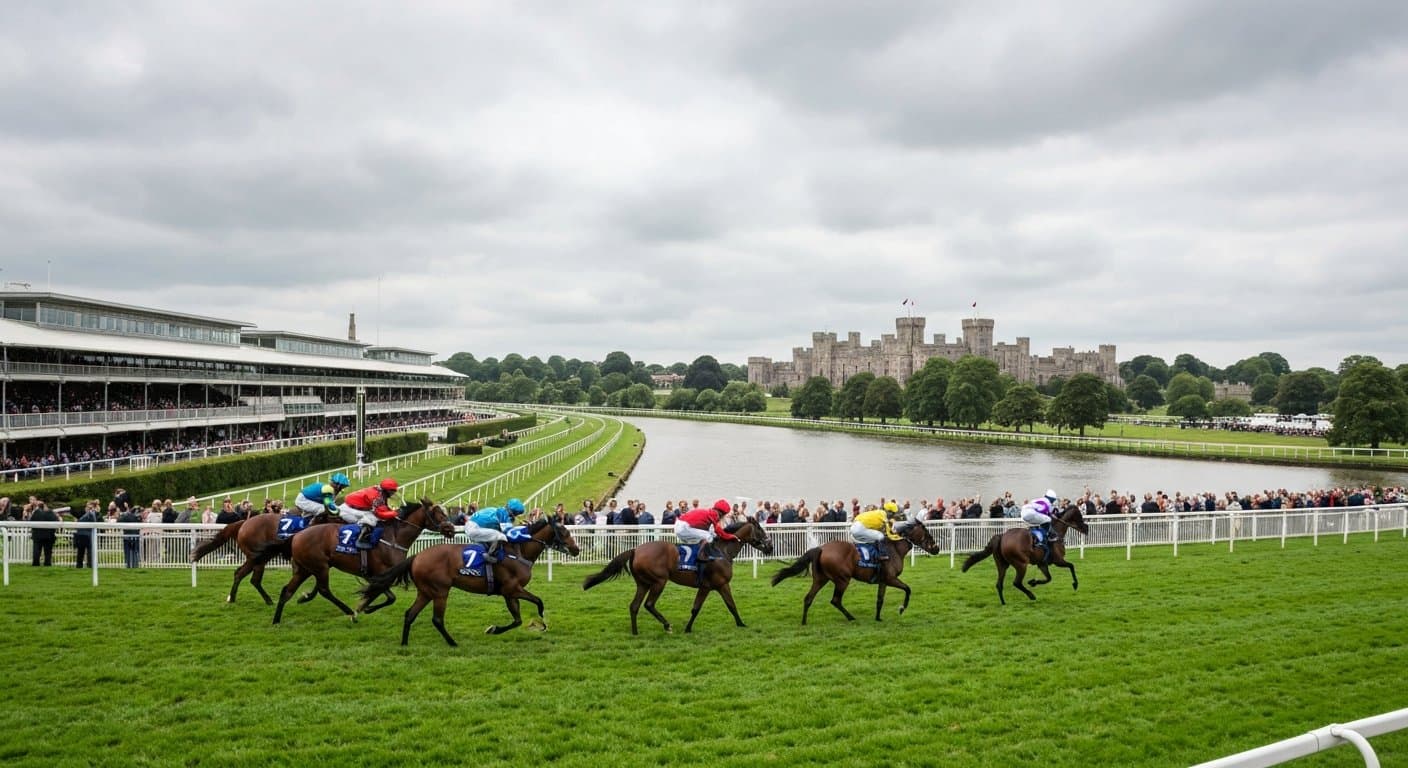
Family Racedays at Windsor
Your guide to family-friendly racing at Windsor — kids' activities, what to bring and how to make the most of it.
Read more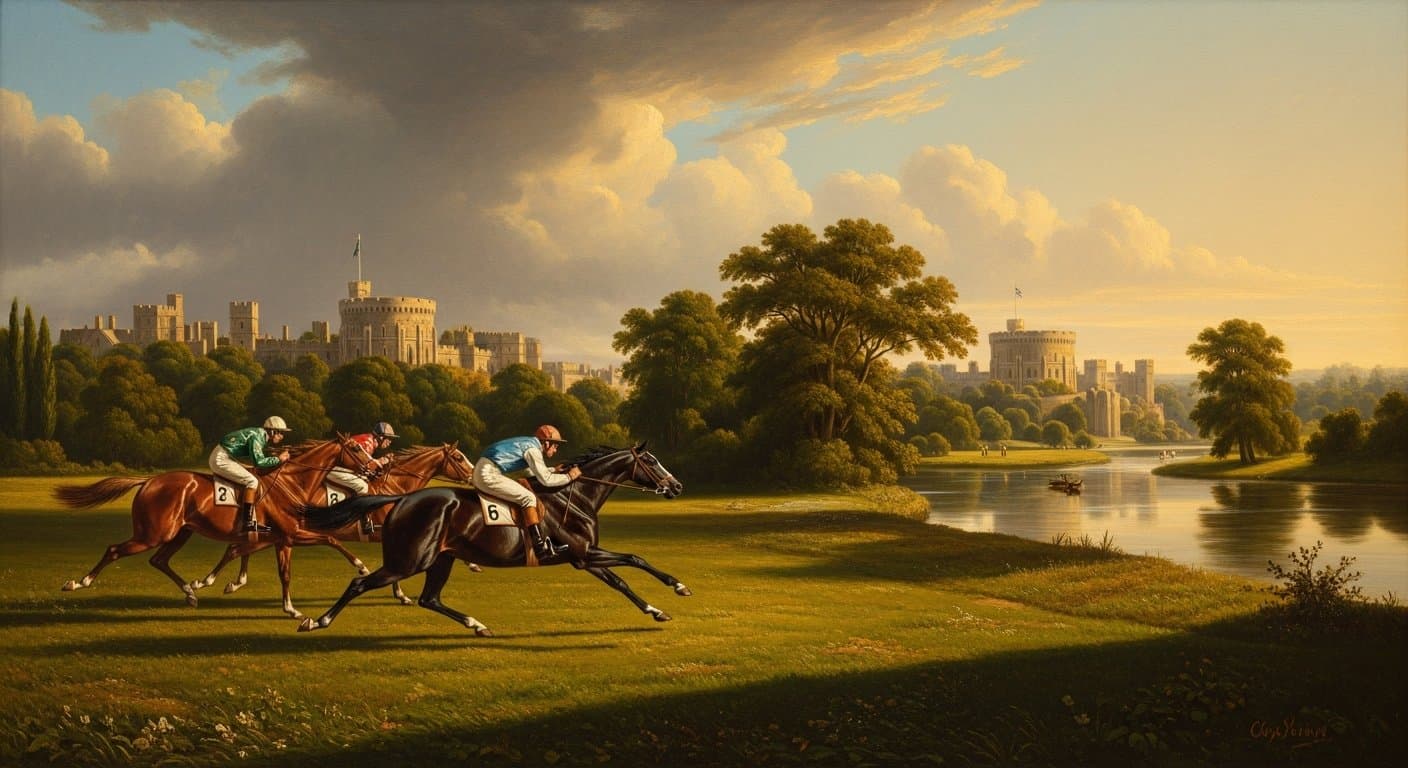
Windsor Summer Racing Festival: Your Complete Guide
Royal Windsor's summer evening meetings are some of the most atmospheric in flat racing. Here's your guide to the Windsor summer festival season.
Read more
The History of Windsor Racecourse
From Victorian beginnings to a beloved evening racing venue — the story of Windsor Racecourse.
Read morePhotos on this page are used under Creative Commons licences. Titles, sources and licence links for each one are on our image credits page.
Research the field with the AI Race Predictor
Our model publishes calibrated win-probability estimates for UK races — a second opinion to understand a race, not tips. It's open about its record: it doesn't beat the market, and we show exactly how it does.
Work it out & learn the basics
Gamble Responsibly
Gambling should be entertaining and not seen as a way to make money. Never bet more than you can afford to lose. If you or someone you know has a gambling problem, help and support is available.