
Founder & Editor · Last reviewed 2026-03-02
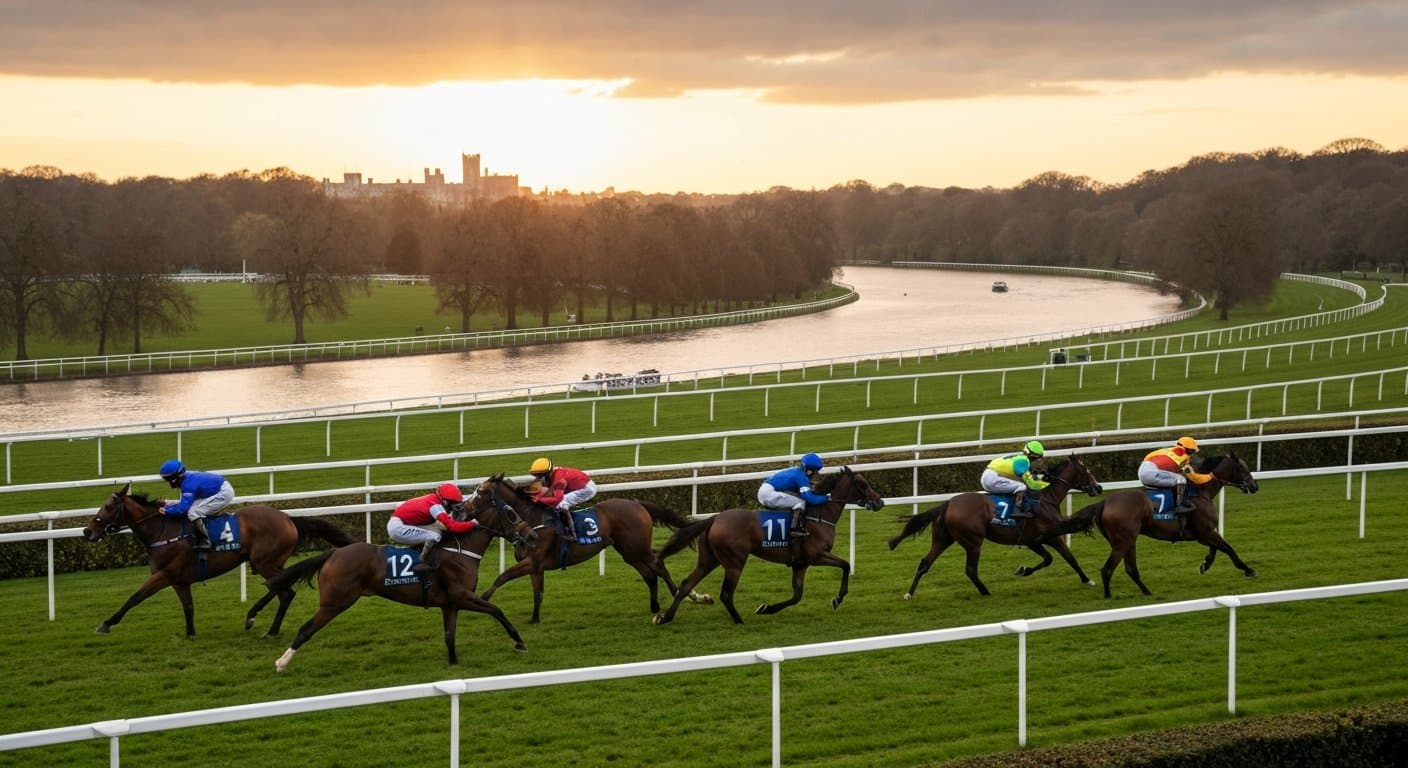
Windsor rewards punters who understand the track. The figure-of-eight layout, the tight bends, the level turf and the evening format all create patterns that repeat. Horses that handle the course tend to run well again. Horses that get stuck in traffic around carnage corner tend to struggle. If you can read those patterns, you have a real edge.
The course is unique. It is the only flat track in Britain configured as a figure-of-eight. That means tactical positioning matters more than at most venues. A horse that can sit handy, avoid the scrimmaging on the bends and quicken when it matters has a significant advantage over a horse that needs to come from off the pace. Closers can win — the straight sections give them a chance — but they need a strong pace and a clear run. The track favours horses that travel well and jockeys who know exactly where to be at each stage.
The evening format adds a specific dimension. Evening cards at Windsor tend to attract smaller fields than the major afternoon meetings at Newmarket or Ascot. The form is often more settled — horses that have been aimed at specific evening cards, trainers who know what they have and who they are running against, markets that move in the final hour before racing from the weight of informed money. Understanding the evening pattern gives you an additional angle.
The trainers who dominate Windsor's results are the southern-based yards who run here regularly. Roger Varian, William Haggas, Andrew Balding, Clive Cox — all have strong records. The jockeys who know the track — who can navigate the intersection, thread through traffic on the tight bends, and time a finish precisely — consistently outperform those who treat Windsor like any other course.
This guide covers the track characteristics that shape every race, the going and draw biases, the trainers and jockeys who excel here, and some practical strategies. For more on the course layout itself, see our complete guide. For the evening racing experience, check the evening guide.
Bet on Windsor
Place your bets on Windsor races with a trusted bookmaker.

Promo code BETFRED50. New customers only. Register, deposit with a Debit Card, and place a first bet of £10+ at Evens (2.0)+ on Sports, to be settled within 7 days, to get £30 in Sports Free Bets and £20 in Bet Builder Free Bets within 24 hours of settlement. 7-day expiry. Eligibility & payment exclusions apply. Full T&Cs apply. Take Time to Think. BeGambleAware.org. 18+. Full T&Cs.

Promo code R30. New UK customers only, 18+. Register, deposit £10 or more, then place a £10 single cash bet at odds of 1/2 (1.5) or greater on any sports market (excluding Virtuals). Once the qualifying bet settles you get £30 in Free Bets (3 x £10) — the qualifying bet can win or lose. Free Bets are valid on any sports market excluding Virtuals, expire in 7 days, are non-withdrawable and must be used in full. Excluded deposit methods apply (including PayPal, Apple Pay, Skrill and NETELLER). Named bets such as Lucky 15 do not qualify. If you cash out the qualifying bet, or it is voided, you are no longer eligible for the offer. Ends 31.12.26. Full T&Cs apply. Please gamble responsibly. BeGambleAware.org. 18+. Full T&Cs.

Promo code BET40GET20. New UK customers, 18+. Register with the code and place a first bet of £40 or more at Evens (2.0) or greater. Receive 2 × £10 free bets: the first credited automatically once the qualifying bet settles, the second 24 hours later. Free bets must be placed at minimum odds of 4/1 (5.0), expire 24 hours after credit, and the free-bet stake is not returned with winnings. Debit card deposits only. Take Time to Think. BeGambleAware.org. 18+. T&Cs apply. Full T&Cs.

50% of your first-day net losses refunded as a free bet, capped at £25. New UK customers aged 18+ only. To qualify, deposit and place a first bet of £10 or more on any sport at minimum odds of evens (2.00), then place at least two further bets on different events, each worth at least 50% of your largest bet, all at evens (2.00) or greater. Losses are counted from your first settled bet until 23:59 the same day. Place a qualifying £10+ bet and you are guaranteed at least a £5 free bet. Bets placed at SP, void bets, cashed-out bets and bets struck with free bets do not count towards the offer. The free bet is credited the day after your qualifying bets settle and must be used within 7 days, after which it expires. It can be used at odds from 1/4 (1.25) up to 250/1 on singles and straight accumulators, but not on Trixie, Patent or Yankee style multiples. Free-bet stake is not returned with winnings. One offer per person, household, address, IP address and device. E-wallet deposits may not qualify, so check the cashier before depositing. Customers registered with GAMSTOP cannot claim. KYC identity verification must be completed before the free bet is credited. Take Time to Think. BeGambleAware.org. 18+. T&Cs apply. Full T&Cs.

New customers, 18+. Choose the sports bonus at sign-up, make a first deposit and receive a 100% bonus up to £50 in your Sports Bonus balance. To convert the bonus to cash, wager it 10x within 30 days. Single bets below Evens (2.00) do not qualify; accumulators do not qualify if any selection is below 1/2 (1.50). Virtual Sports, voided, cancelled, drawn, cashed-out and free-bet wagers do not count towards wagering. Only the first settled bet per event counts. Withdrawing before the wagering requirement is met forfeits the bonus balance including bonus winnings. Real-money funds are used before bonus funds. Deposits via Skrill or Neteller are not eligible. Not valid in conjunction with other promotions. Odds, bet and payment limits apply. 10bet general and promotion T&Cs apply. BeGambleAware.org. 18+. Full T&Cs.

New customers in Great Britain and Republic of Ireland, 18+. Place a £10 fixed-odds qualifying bet at minimum odds of 1/2 (1.50) — single or each-way (only the win part counts), pre-event or in-play, not cashed out early, within 28 days of opening the account. Receive up to £60 in bonuses credited over three days: 3 × £10 fixed-odds free bets (the first on settlement, then 24 and 48 hours later) plus 3 × £5 Total Goals FOOTBALL spread bets and 3 × £5 racing Winning Favourites spread bets, with a £1 racing Race Index spread bet as an extra on top. The spread bets need a full spread-betting account, opened within 28 days of the fixed-odds account and subject to Spreadex's eligibility and appropriateness checks. Free-bet stakes not returned with winnings; free bets valid 28 days from issue. IMPORTANT: the £5 credits are SPREAD bets — sports spread betting carries the risk that losses can exceed your stake. Sports spread-betting customers do not have Financial Ombudsman or FSCS recourse. Take Time to Think. BeGambleAware.org. 18+. T&Cs apply. Full T&Cs.

Promo code WELCOME15, entered under My Bonuses after registering. New UK customers, 18+. Place a first qualifying bet of at least £10 from your cash balance at odds of evens (2.0) or greater within 7 days of opening the account. Once the qualifying bet fully settles you receive £15 in free bets, credited as 3 x £5 tokens with set uses: one £5 accumulator free bet (minimum 4 legs, each leg at 2/5 or bigger), one £5 sports free bet (any market at evens or bigger) and one £5 Sub Cover free bet (selected football player markets at evens or bigger). Free-bet stakes are not returned with winnings. Free bets expire 7 days after they are credited. Void, cashed-out and partially cashed-out bets do not qualify. One offer per customer. Confirm the current terms on BetGoodwin's own welcome-offer page before claiming. Take Time to Think. BeGambleAware.org. 18+. T&Cs apply. Full T&Cs.

New UK customers, 18+. Minimum deposit £10. Place a £10 qualifying single on sports (excluding virtuals) at minimum odds of 1/2 (1.50), settled within 14 days. Deposit-method exclusions apply. Receive £30 in free bets (stake not returned), split £20 for sportsbook use (2 x £10) and £10 for Bet Builder only (2 x £5); Bet Builder does not cover horse racing. Free bets must be accepted within 7 days and expire 7 days after acceptance. No promo code required. Best Odds Guaranteed on UK & Irish racing, subject to having staked over £25 in the previous seven days. Operated by LiveScore Betting and Gaming (Gibraltar) Ltd, UKGC 56859. Confirm the current terms on LiveScore Bet's own promotions page before claiming. Take Time to Think. BeGambleAware.org. 18+. T&Cs apply. Full T&Cs.
18+. BeGambleAware.org
Track Characteristics
Windsor's figure-of-eight layout creates distinct challenges at different distances. Understanding how each trip is run will sharpen your form reading considerably.
The Figure-of-Eight Explained
Windsor uses two interlocking loops that cross over one another, creating the figure-of-eight shape visible from the air. Horses race right-handed throughout. The outer loop — the first loop in most races — is wider and more galloping in character. The inner loop, which forms the second half of middle-distance and longer races, is tighter. The point at which the two loops intersect is a critical moment in every race beyond six furlongs.
At the intersection, horses that have been running comfortably can suddenly find themselves in tighter quarters. The course narrows. Jockeys need to make quick decisions about positioning. Horses that are not settled or not agile can lose lengths here without anyone to blame. It is not a corner in the conventional sense — it is a crossing point, unique to Windsor, that requires specific preparation and instinct.
Understanding this intersection is the starting point for betting at Windsor. Every race over a mile uses it. Every middle-distance race navigates it at a critical stage. The horses and jockeys that handle it best are the ones who win most often.
Sprint Races: 5f and 6f
The sprint course is almost straight, running down the main straight without making use of either loop. Five-furlong races are essentially a dash down a straight track with minimal turning. This sounds simple, but the surface conditions and the draw can introduce complexity.
Six-furlong races include a right-hand kink roughly three furlongs from home. This is the point where the sprint course joins the outer loop — a gentle but definite deviation that can catch out horses that drift left or lose balance. It is not a sharp bend, but it is enough to require horses to stay balanced and jockeys to keep them straight. Horses that habitually drift left under pressure — whether from preference or fatigue — can lose ground here.
For sprints, speed horses and prominent racers do well. The almost-straight course means the closing straight is the whole race — there is no second loop to negotiate, no carnage corner. A fast-starting, pace-setting horse can control a five-furlong race from the front if the pace suits. Closers can win if the early pace is strong, but they need a clean run down the straight. Draw bias in sprints is the key variable — covered in detail in the going and draw section.
Middle Distances: 1m and 1m 2f
Races at a mile and a mile and two furlongs begin on the outer loop before crossing into the inner loop at the intersection. The racing at this distance is where Windsor's tactical complexity is most pronounced.
The beginning of a mile race at Windsor starts from the chute, heads down towards the first bend, and then sweeps right onto the outer loop. Horses settle through the early stages. The pace in middle-distance evening handicaps at Windsor is often moderate — there are few natural front-runners, and the tight bends discourage horses from bowling along at a furious pace. This moderate early pace sets up a race where tactical positioning in the middle stages becomes everything.
The second loop — the inner loop — is the tight one. The right-handed bend at the far end of the inner loop, known informally as carnage corner, is the defining moment of the race. Horses that are boxed in or trapped on the rail approaching this bend can find themselves unable to quicken when the race quickens. Horses that are in the first three or four, with a clear run, can accelerate around the bend and into the straight with a decisive advantage.
Overtaking around carnage corner is truly difficult. The bend is tight, the space is limited, and horses that try to swing wide to get a run expose themselves to the risk of covering extra ground. Horses that stay tight to the rail navigate it fastest but risk getting trapped behind the horse in front. The jockey who gets this bend right — who finds a position at the rail with clear air in front — is doing something that skill and course knowledge make possible, and that ignorance makes very difficult.
Into the straight, the middle-distance race opens up. There is room to sprint. Horses that have been saved for this moment — held just behind the leading group through the tight bends — can come with a sustained run. But they need clear air. If they have been waiting behind a slow horse or a tiring rival, their run can be blocked at exactly the point when they most need room. The complete guide to the course layout covers the physical geography in more detail.
The Longest Trip: 1m 3f 99y
Windsor's longest distance uses both loops in full. The figures — 1m 3f 99y — are specific to the island geography and the exact layout of the figure-of-eight. This is a proper stamina test, but it demands agility as much as staying power.
Horses that plod steadily around the bends at this distance tend to get caught. The two tight right-handed bends — one on each loop — penalise horses that slow through the corners. Horses with tactical speed, that can maintain momentum through the bends and quicken in the straight sections, have an advantage over pure staying types who grind out the distance on straight tracks but struggle when asked to turn sharply.
Course form at the longest trip is particularly valuable. Horses that have run well at Windsor at shorter distances — a mile or a mile and two — and then step up in trip often improve here. They know the bends. They know the intersection. They know the corner. That course familiarity translates into a smoother, faster passage around the circuit.
Level Track
The turf is level throughout. No undulations, no camber, no changes in gradient that influence where horses prefer to run. That means the going is consistent across the track — no advantage to running on one side of the course versus the other, no patches of different ground that a savvy trainer might target. What you see is what you get.
Form from other flat courses translates to Windsor better than it does at, say, Epsom, where the undulations and cambers create very specific ground conditions. A horse that has won on flat ground at Sandown or Newmarket is not encountering anything physically alien at Windsor — the difference is the layout, not the surface texture or gradient. Course form at Windsor is still valuable, but for different reasons than at courses with more pronounced physical characteristics.
The Sprint-Versus-Middle-Distance Angle
One useful betting angle at Windsor is the relationship between sprint form and middle-distance form. Horses that have shown tactical speed over five or six furlongs, but lack the pure pace of top-class sprinters, can translate that quality into effective middle-distance performances at Windsor. The tight bends require the ability to quicken, not to sustain a straight-line sprint. A horse with seven-furlong speed in a mile-and-two-furlong race at Windsor has a specific advantage over a pure stayer.
The reverse is also occasionally true: real staying types that handle the bends well can win at Windsor even if their form at the same trip on conventional tracks is moderate. The unique demands of the figure-of-eight create a category of Windsor specialist that does not necessarily correspond to conventional form ratings.
Going & Draw Bias
Windsor's island location and level turf create predictable patterns for going and draw. Understanding them gives you a framework before you look at individual horses.
Going Patterns at Windsor
The riverside setting influences the going in a specific way. The Thames and the Clewer Mill Stream create a high water table on the island. When rain falls heavily, the ground can become soft relatively quickly because the water table is already elevated. Conversely, when conditions are dry and warm, the island's flat terrain and good drainage allow the ground to dry out reasonably quickly.
The practical result is a course that spends most of the summer on good to firm or good ground — the long dry spells of the May-to-September flat season suit Windsor's drainage well. The island does not trap moisture in the same way that enclosed courses with poor drainage can. After heavy rain, Windsor will go soft, but it recovers faster than many comparable venues.
Good to firm is Windsor's natural state for most of the evening racing season. On this ground, speed horses and horses with tactical pace are at their best. The surface is true, the bends are fair, and the form from other good-to-firm tracks translates well. When the going reaches good to firm, Windsor races often produce clean, competitive results where the form holds.
When the ground goes soft or heavy, the racing changes materially. The tight bends become more demanding for horses that are tiring. Stamina moves to the fore. Horses that have previous form on soft ground at Windsor are worth noting — they have already proved they can negotiate the bends under the additional effort required on testing ground. Form from flat tracks in soft ground elsewhere does not always translate, because the Windsor bends make soft-ground racing more physically demanding than the same going on a straightforward oval.
Exposed Riverside Drainage: The Practical Effect
A specific feature of Windsor's drainage is worth understanding. The island location means that the ground receives the same water from rain as any other course, but the drainage is assisted by the proximity of the watercourses on either side. Water moves away from the surface relatively efficiently. After a wet period, Windsor typically recovers to racing condition faster than nearby courses like Ascot or Kempton that have different soil compositions and drainage profiles.
This matters for betting because going descriptions can lag behind actual conditions at Windsor. A race declared on good to soft ground after two dry days may actually find the surface closer to good on the day. Checking the going report published in the morning of the meeting is important. Going that is drying towards good can change the complexion of a race significantly — horses entered because they act on soft ground may find themselves on a surface that suits their faster rivals more.
Monitor the weather in the days before any Windsor meeting. A dry run of three or four days after soft ground will typically see the going move rapidly towards good. A single wet day at the end of that run can maintain it at good to soft. Windsor's going is more volatile than many punters assume.
Draw Bias in Sprints: The Detail
For five-furlong and six-furlong races at Windsor, draw bias exists but varies by conditions.
On good to firm ground, the draw tends to be relatively neutral across the full width of the course. The sprint track is almost straight, and on fast ground where all horses are moving efficiently, stall position makes little material difference to most outcomes. The exception is the kink at the three-furlong point of six-furlong races, where low-drawn horses on the rail can take a slightly shorter path around the deviation.
When the ground is soft, the picture changes. The stands side — typically the lower stall numbers — can ride better because it receives less traffic during softer conditions, preserving a slightly firmer surface. When the field has been running on the far side in preceding races, the stands rail can be truly faster. In these conditions, low-drawn horses have a significant advantage, and their odds may not reflect that edge if casual punters are not tracking the ground conditions carefully.
For short-priced horses in sprints, the draw effect rarely changes the fundamental assessment — a much better horse will win regardless of stall. But in competitive handicaps where several horses have similar form, a draw advantage of two or three lengths over five furlongs is significant. It can be the difference between a winner and a placed horse.
High stalls in sprints on soft ground deserve extra scrutiny. A horse drawn in stall 14 of 16 on soft ground at Windsor, where the stands side is riding better, has a real disadvantage to overcome before the race even begins. Factor that into both selection and staking.
Draw Bias at Middle Distances: A Different Calculation
At a mile and beyond, the draw analysis changes fundamentally. The opening stages of the race cover enough ground for jockeys to establish position before the first significant bend. A horse drawn in stall 12 in a mile handicap at Windsor can get onto the rail by the first turn if the jockey rides actively. A horse drawn in stall 1 on the inside can still end up trapped if the pace collapses in front of it.
What matters more than the draw at middle distances is the horse's running style and the jockey's ability to find and maintain a good position. A horse that races prominently in the first three or four, regardless of stall, has a structural advantage at Windsor. It will navigate carnage corner with clear air in front. It will arrive at the straight without having to thread through traffic.
Trainers who regularly run at Windsor understand this. When they enter horses in middle-distance races here, they think about running style before draw. A hold-up horse in stall 1 can have a worse race at Windsor than a prominent racer in stall 12, because the prominent racer will get the position it needs regardless of where it starts.
Pace and Tactical Assessment
Windsor's evening handicaps frequently produce races with a moderate pace in the early stages. This is a structural feature of the type of horse that tends to run at Windsor — the middle-ranking handicapper who has run here before, who knows the track, and who settles into a rhythm without making the race. Very few true front-runners target Windsor's handicaps specifically. The result is that the early pace is often slower than the race average, setting up a finish that depends on tactical positioning rather than sheer stamina.
When the early pace is moderate, closers are at a structural disadvantage. The horse in the first three has been saving energy all race; the horse at the back of the field has been doing the same, but it has ground to make up and no strong pace to run at. In those conditions, the prominent racer wins far more often than its odds suggest.
When the early pace is truly strong — when there is a front-runner that means to make every yard — the closer has a chance. The strong pace creates legitimate running room at the finish. Horses that have been held back, preserving their energy, can sprint past a tiring front-runner. But these races are less common at Windsor than at faster-paced tracks like Chester or Goodwood. Identify the pace scenario before you bet, and adjust your selection accordingly.
A practical tool for pace assessment is the race conditions — not just who is in the field, but what their running styles are. Racing Post speed figures and sectional data, where available, can help. More simply, look at the race histories of each horse: those that raced prominently in their last three runs are likely to be prominent here. If five or six horses in a field of twelve are recorded as prominent racers, the pace is likely to be honest. If only one or two are habitual front-runners, the race may dawdle.
Key Trainers & Jockeys
Certain trainers and jockeys have strong records at Windsor. Course knowledge matters enormously on the figure-of-eight — knowing where to be, when to make a move, how to avoid trouble. That experience shows up consistently in the results.
Roger Varian
Roger Varian's Newmarket yard has developed a strong pattern at Windsor over recent years. Varian sends horses to Windsor when he has something that fits the card — a horse that will handle the tight bends, that has tactical speed and the agility for the figure-of-eight. He does not send horses to Windsor randomly. When Varian has a runner at Windsor, particularly in a maiden or a conditions race, the strike rate is worth noting.
His horses tend to be well prepared and accurately placed. Varian does not use Windsor as a gentle introduction for horses he is unsure about — he sends horses he expects to perform. The combination of quality horses and specific course targeting gives his runners a structural advantage in their market positions.
William Haggas
William Haggas runs one of the most successful yards in Newmarket. His record across British racecourses is strong, and Windsor is no exception. Haggas horses at Windsor tend to be competitive, well prepared and accurately assessed. Like Varian, Haggas targets Windsor deliberately — a horse sent from Newmarket to Windsor is there for a reason. The south of England evening meetings give Haggas an opportunity to run horses in competitive but not Group 1-level fields, finding the right level for horses that are good without being exceptional.
Watching for Haggas's first-time runners at Windsor is a useful angle. A horse that has shown good work at home but not yet run in public, sent to Windsor for a maiden, is often there because the trainer believes it will handle the track. The specific choice of Windsor — over other possible tracks — can itself be a signal.
Andrew Balding
Andrew Balding trains at Kingsclere in Hampshire, placing him among the closest major trainers to Windsor geographically. That proximity translates into volume and into understanding. Balding knows the track well. His staff attend Windsor regularly. The logistical ease of getting horses to Windsor means he can target specific meetings without the cost and complexity involved in longer journeys.
Balding's horses at Windsor show consistent form. He sends horses when they fit the card and he understands what works on the figure-of-eight. His handicappers in particular — horses that have found their level and are running to a consistent mark — perform well at Windsor because the course suits the types he tends to produce. Horses from Kingsclere that handle Windsor tend to be the patient, tactical types that settle well and quicken.
Clive Cox
Clive Cox, also based in Lambourn, has an excellent record at Windsor in sprint races. His horses frequently win the five-furlong and six-furlong races on the evening programme. Cox excels at producing sprinters that are quick away and maintain their speed across the finishing straight. His knowledge of Windsor's sprint configuration — the almost-straight course, the kink at three furlongs in six-furlong races — translates into well-placed runners that handle the course's specific demands.
When Cox has a short-priced favourite in a sprint at Windsor, his strike rate is a serious consideration. He does not over-bet his horses here — he sends them when they have a real chance. The shorter the trip, the more useful his record becomes as a filter.
Other Significant Trainers
Beyond those four, a range of southern-based trainers contribute consistently to Windsor's results. John and Thady Gosden, with their Newmarket base, produce horses that handle Windsor's flat, level surface well. Marcus Tregoning, training near Newbury, sends horses to Windsor regularly with good results. James Fanshawe has had success here with horses that have the tactical flexibility to handle the figure-of-eight.
Smaller operations that target Windsor specifically — trainers without big strings, who study the conditions and pick their spots — can produce value. When a trainer with a 5% strike rate nationally sends a horse to Windsor and their Windsor-specific strike rate is 18%, the discrepancy is worth investigating. Those trainers have worked out something specific about what wins here, and they apply it selectively.
The practical approach: before any Windsor meeting, check the trainer's record at the course over the past 12 months. A trainer with three winners from seven runners at Windsor is more interesting than a trainer with three winners from 40 runners. Volume and selectivity together tell the story.
Richard Hughes and the Jockey Legacy
Richard Hughes's seven winners from eight rides at Windsor in October 2012 remains the benchmark for riding excellence at the course. Hughes understood Windsor instinctively — his ability to read the intersection, time the move through carnage corner and position horses for the straight was unmatched. His record at Windsor was exceptional throughout his career.
Hughes retired from riding in 2015, but the lessons his dominance illustrated are still valid. Jockeys who understand the figure-of-eight at a tactical level — who know when to move, where the gaps will open, how tight to take the inner loop — consistently outperform those who rely on horsepower alone.
Current Leading Jockeys
Oisin Murphy has developed a strong record at Windsor as his career has matured. His positioning on the figure-of-eight is sophisticated — he reads the pace early, finds a position that gives him options through the tight sections, and produces horses at the right moment. Murphy's overall record at Windsor over recent seasons is among the best of any senior jockey.
William Buick, associated primarily with the Godolphin operation, rides at Windsor when Godolphin have runners. His record here is strong, reflecting both the quality of horses he rides and his tactical intelligence. Buick is patient in the early stages of races and decisive when the moment comes — qualities that are well suited to Windsor's tactical demands.
Ryan Moore rides at Windsor less frequently than at the major Flat meetings, but when he appears — typically on a Saturday card or for the Winter Hill Stakes — his record is excellent. Moore's tactical riding, shaped by years on the biggest stages, translates naturally to Windsor's figure-of-eight demands.
For the evening programme, the jockeys who ride the most Windsor meetings in a season develop a specific advantage. They know the course from the inside. They have ridden the intersection dozens of times. They know which horses handle the tight bend and which ones struggle. That accumulated knowledge is worth money — it is not visible in headline statistics but shows up in the results.
Course Specialists Among the Horses
Some horses become Windsor specialists. They win here repeatedly, at similar distances, often in similar types of race. When a horse has won two or three times at Windsor, its return to the course at the same trip deserves serious consideration. The track suits a particular type — handy, agile, able to quicken through tight bends — and that type tends to reproduce its best form here when everything else is in order.
Look for the "W" in the form guide alongside Windsor's three-letter code. A horse returning to Windsor after wins here, particularly if those wins came in similar conditions and at a similar trip, is a strong starting point for selection assessment.
First-time visitors are not automatically at a disadvantage — the track is not so extreme that an unfamiliar horse cannot handle it. But all else being equal, the course winner beats the debutant. Windsor's form is consistent enough to use as a filter. When you are unsure between two horses on form grounds, course form is a significant tiebreaker.
Strategies
A set of practical strategies can help you bet more effectively at Windsor. None are infallible — racing never is — but they provide a framework grounded in how this specific course actually produces results.
Back Course Winners
The single most reliable angle at Windsor is course form. Horses that have won or placed at Windsor before are worth serious consideration. The figure-of-eight suits a certain type, and that type tends to repeat. Check the form for a "W" or a placed effort at Windsor. If the horse is returning at a similar distance, in a similar type of race, and the general form otherwise stacks up, it is a solid starting point.
Course form is valuable at most tracks, but at Windsor it is more valuable than average. The specific demands — the figure-of-eight intersection, carnage corner, the tactical pace of the evening handicaps — create a filter that separates horses that handle Windsor from those that do not. A horse that has run well here has passed that test. That is information that form from other courses does not directly provide.
Be specific about distance when applying this rule. A Windsor winner over a mile is not automatically a Windsor winner over a mile and two furlongs. The second loop, which is used in the longer trips, is the harder loop. Horses that have won over shorter distances need to prove they can handle the full circuit before being backed automatically at the longer trips.
Respect Tactical Speed Over Closing Ability
The tight bends and the difficulty of overtaking around carnage corner mean that prominent racers win more often at Windsor than at open, galloping tracks. When you are assessing two horses with similar form, and one is a front-runner or a sit-handy type while the other needs to come from the back, favour the prominent racer at Windsor.
This does not mean backing all front-runners blindly. A front-runner that sets a strong pace and ties itself up in the final furlong is not a good bet — it will be caught. But a horse that races in the first three or four, settles well through the middle stages, and then quickens around carnage corner and into the straight is structurally positioned for Windsor success.
When the pace is likely to be moderate — which it often is in Windsor's evening handicaps — the closing horse is at a double disadvantage: it needs to overcome both the lack of pace to run at and the difficulty of getting clear runs through the tight bends.
Watch the Draw in Sprint Races
For five-furlong and six-furlong races, check recent results for a consistent draw bias. If the stands side has been winning consistently, and the going is soft or good to soft, that bias may persist. If the results have been scattered across the draw, the bias is probably negligible.
The key is to look at recent results in similar conditions, not a long-term draw analysis that combines meetings on good to firm with meetings on heavy ground. Draw bias at Windsor varies by ground condition, and lumping all conditions together obscures what is actually happening on the day.
Do not dismiss a horse purely because of an unfavourable draw. But if two horses are very closely matched and one has a significant draw advantage, that can legitimately be the tiebreaker. A two-length draw advantage over five furlongs is material.
Follow the Going Carefully
Windsor's going changes faster than racegoers often expect, in both directions. After rain, the course can soften quickly from its riverside position. After dry weather, it recovers fast. The official going description declared at 7am on raceday may not reflect what the going stick reads at 4pm after a dry afternoon.
Check the going report issued by the racecourse as close to the meeting as possible. Watch for horses that have been entered specifically because the going suits them — trainers who have been waiting for soft ground for a particular horse will run it at Windsor when the conditions arrive, knowing the course's drainage will not save them this time.
On soft ground, adjust your selection accordingly: favour stayers over sprinters, horses with soft-ground form over those that have only run on good to firm, and front-runners who can dictate their own pace over closers who need a strong gallop to be competitive.
Evening Market Characteristics
Evening markets at Windsor have specific features that differ from major daytime meetings. The market is thinner — fewer professional bettors engaging, lower turnover, more dominated by casual money and trained on-course opinion. This creates both risks and opportunities.
The risk: short-priced favourites at Windsor evening meetings are sometimes shorter than their actual probability of winning. The casual punter backing a well-known trainer or jockey name has pushed the price in. When a horse is a clear market leader at a short price, be rigorous about whether the price is truly fair.
The opportunity: horses that have been specifically targeted for Windsor by less prominent trainers can drift in the market despite being truly well-prepared. When a smaller yard has a 25% Windsor strike rate and its runner drifts from 7/2 to 5/1 in the final hour, the drift may be market noise rather than informed money. Context is everything.
The form is often familiar in evening fields — many of the horses will have run at Windsor before. That makes the form assessment more straightforward than at a major Saturday meeting where there are many unknowns. Use that familiarity to your advantage. When you know how a race is likely to be run and which horses handle the track, the field narrows quickly.
The Royal Windsor Stakes as a Betting Event
The Royal Windsor Stakes, Windsor's Group 3 sprint in late May or early June, is one of the course's most interesting betting events. The field quality is higher than the Monday evening handicaps, but the race is still run on the same figure-of-eight track with the same tactical considerations.
The sprint course's almost-straight configuration means that the Royal Windsor Stakes is less influenced by the figure-of-eight's complexity than the middle-distance races. It is closer to a conventional sprint in character. Draw bias, going and raw speed are more important here than course knowledge. Look for horses that have recently run well over six furlongs on fast ground at a comparable course, horses that have already run at Windsor and shown they handle the kink, and trainers who target the race specifically as part of a Royal Ascot preparation.
The Royal Windsor Stakes can serve as a guide to the following month's sprinting at Royal Ascot. Horses that run well here and then go on to Ascot can tell you something about the strength of Windsor's form relative to the group-race standard.
Identifying Value in Windsor Handicaps
The Monday evening handicaps at Windsor are competitive in a specific way. The fields are smaller than major weekend handicaps — often eight to twelve runners rather than sixteen to twenty — and the form is well known within the small pool of regulars who target the course. This creates a well-informed market that is harder to beat than the big-field weekend handicaps at Newmarket or Ascot.
Value in Windsor handicaps tends to come from specific mismatches between a horse's assessed handicap mark and the demands of the Windsor track. A horse given a mark based on a good run on a galloping straight track may be overrated at Windsor, where the tactics are different. A horse that has improved its mark through hard-fought races on tight tracks similar to Windsor may be underrated relative to the Windsor-specific demands.
Look for horses stepping down from a higher class where they were competitive but not winning. A horse that has run in a Listed race, showed promise without winning, and now drops into a decent evening handicap at Windsor is sometimes better than its mark suggests. The form book shows competitive runs; the handicapper has not fully rewarded them; the horse is now running at a level where it should win.
The key races section covers the headline events in more detail.
To compare place terms and each-way promotions across the major bookmakers, see our best bookmakers for horse racing guide.
Key Races
Windsor's key races offer the best quality and the most substantive betting interest. These are the events worth marking on the calendar and preparing for in more detail than the routine evening handicap.
Royal Windsor Stakes (Group 3, 6f, late May/early June)
The Royal Windsor Stakes is the course's senior sprint. Run at Group 3 level over six furlongs in late May or early June, it sits at a tactically significant point in the sprint season — after the Newmarket guineas meetings, with Royal Ascot six weeks away.
The race attracts a mix of horses on different trajectories. Some are being aimed at the Platinum Jubilee Stakes or King's Stand Stakes at Royal Ascot and need a solid warm-up run. Others have shown sprint-level ability earlier in the season and are finding their level at Group 3. A third group consists of older sprinters whose owners target this race as a real objective rather than a stepping stone.
The betting dynamics reflect these different intentions. The horses being tuned up for Ascot are often not fully wound up — their trainers are managing their preparation, not pushing them to peak performance for Windsor. The horses targeting the race as their objective are likely to be fully prepared. Identifying which category each runner falls into is part of the pre-race assessment.
Draw bias is less pronounced at this trip than in many sprints, because the Royal Windsor Stakes uses the almost-straight sprint course. The kink at the three-furlong point is present, but the race is close to a straight sprint. Speed, going preference and the ability to handle that kink are the main filters. Previous Windsor form is less critical here than in middle-distance races — the sprint course does not test the figure-of-eight complexity as fully.
Winter Hill Stakes (Group 3, 1m 2f, August)
The Winter Hill Stakes is Windsor's signature race. Run over a mile and two furlongs in August, it uses the full complexity of the figure-of-eight, including carnage corner and the intersection. It is the race that most fully tests what Windsor as a venue demands.
Fields for the Winter Hill Stakes typically include older horses and three-year-olds. The three-year-olds have a weight advantage, but the older horses have experience — often including Windsor experience — that can compensate. A three-year-old who has already run at Windsor and proved it handles the track has a real edge over a classier three-year-old who has only run on conventional oval tracks.
From a betting perspective, course form is particularly valuable in the Winter Hill Stakes. The tactical complexity of the mile-and-two trip on Windsor's configuration means that horses who do not handle the track are at a structural disadvantage regardless of their ratings. When a previous Windsor winner is in the field, start your assessment there.
Trainers who specifically target the Winter Hill Stakes — who have prepared a horse over several weeks for this race rather than running it as an afterthought — are worth identifying. The race is competitive enough that a well-prepared, specifically targeted horse from a smaller yard can beat a casually entered horse from a major stable.
Each-way markets for the Winter Hill Stakes are usually fair. The Group 3 field size is typically around eight to twelve runners. With three places paid, each-way betting on second or third favourites can offer value when the form is truly open.
August Stakes (Listed, 1m 3f 99y, August)
The Listed August Stakes uses Windsor's full circuit, including both loops of the figure-of-eight. At a mile, three furlongs and ninety-nine yards, it is the longest race regularly run at Windsor. The unique distance is a function of the island's geography — the measurement reflects the exact distance covered by using both loops of the figure-of-eight circuit.
Stamina is tested, but agility is equally important. Horses that grind out long distances on straight tracks do not automatically translate to Windsor. The two tight right-handed bends — one on each loop — take a toll on pure plodders. Horses with a real change of gear, that can maintain momentum through the bends and quicken in the straight, have an advantage.
Course specialists are the best starting point in the August Stakes. Horses with winning form at Windsor over shorter distances who step up in trip often perform well. They have already proved they can handle the bends; stepping up in trip adds the stamina requirement but does not introduce a new challenge.
Monday Evening Handicaps
The regular Monday evening programme forms the backbone of Windsor's season. These handicaps at various distances — five furlongs, six furlongs, a mile, a mile and two furlongs — are where the form student can find consistent opportunity.
The fields are smaller than major Saturday handicaps, which makes form analysis more manageable. With eight to twelve runners rather than sixteen to twenty, the number of horses with a realistic chance is limited. Course form, trainer records and the tactical considerations outlined in the earlier sections narrow the field further. On a good day, you might have a field of ten where five can be eliminated quickly on course or tactical grounds, leaving five real contenders.
The value in Windsor evening handicaps comes from the trainer-targeting angle. Smaller yards that send horses specifically to Windsor, with a history of good results here, are worth monitoring across the season. They are not betting against themselves. When they run, they are running to win.
Large each-way fields in Windsor handicaps — eight or more runners with the full three places paid — can produce value in the each-way market when a horse is likely to run into a place but not necessarily win. The tight, tactical nature of Windsor races means that a wide-margin winner is relatively unusual. Competitive finishes with multiple horses involved are common. Each-way betting on a 6/1 or 7/1 horse in a field where you truly believe it will place is a reasonable strategy.
The Winter Jump Programme
With jump racing returning to Windsor from December 2024, the winter programme adds a new dimension. The jump races sit separately from the summer flat programme, but the same course-knowledge principles apply. Horses that have proved they handle the figure-of-eight under National Hunt conditions — the tight bends, the specific fence positions — will be worth noting as course form develops in the jump programme.
Lambourn trainers who already know Windsor well from the flat programme are likely to target the jump meetings with appropriate runners. Their strike rates and selection habits, established over years of evening flat racing, will extend naturally into the winter jump programme.
Share this article
More about this racecourse
All Windsor guides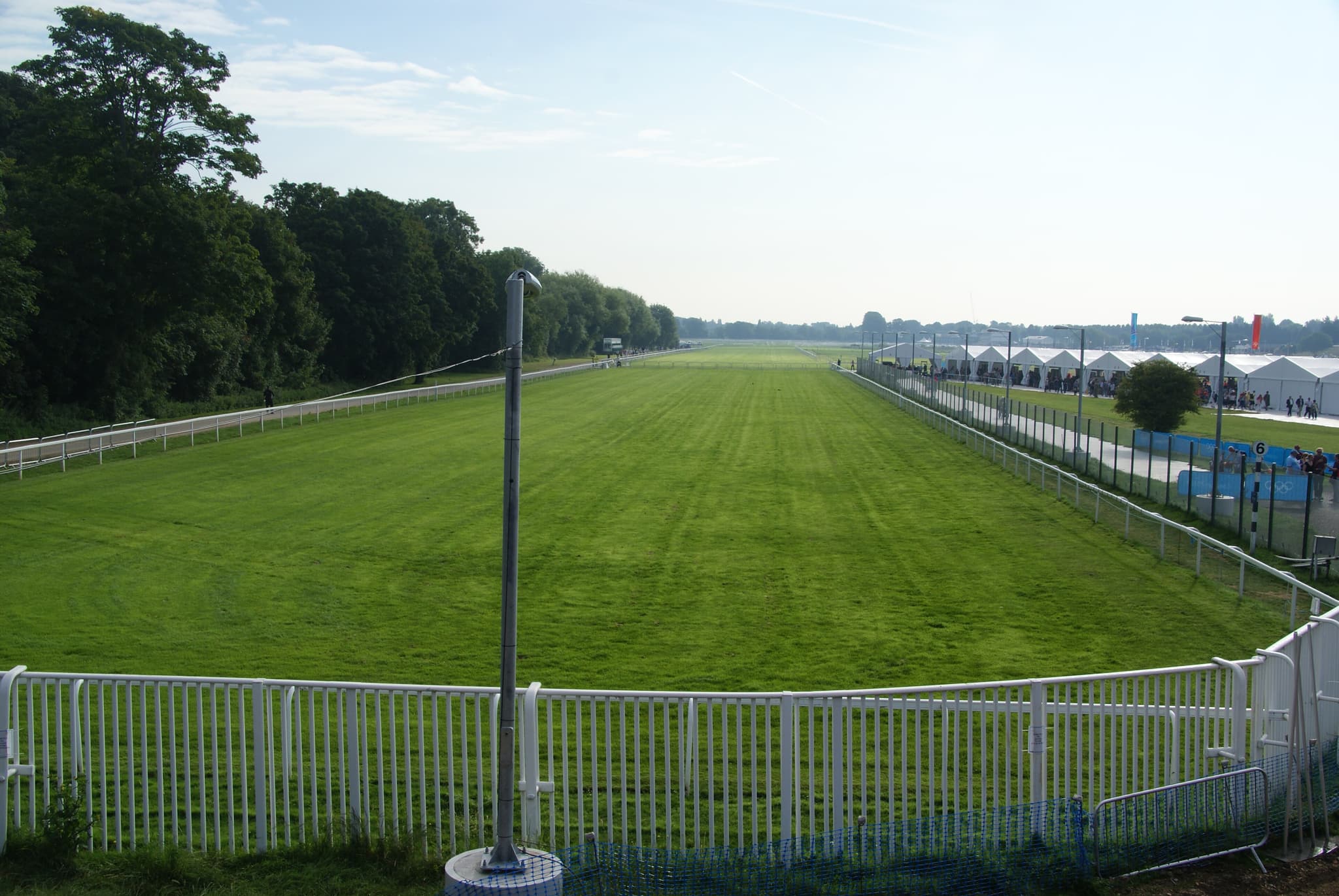
Windsor Racecourse: Complete Guide
Your complete guide to Windsor Racecourse: evening flat racing beside the Thames in Royal Berkshire.
Read more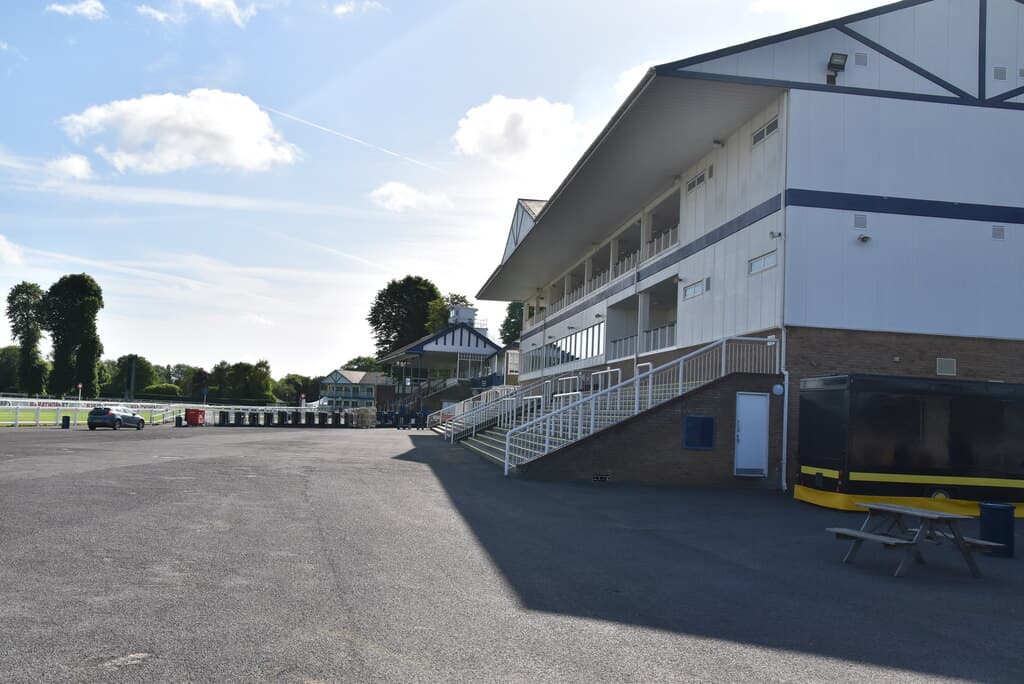
A Day Out at Windsor Racecourse
Everything you need for a day at Windsor — getting there, what to wear, enclosures, food and drink, and tips.
Read more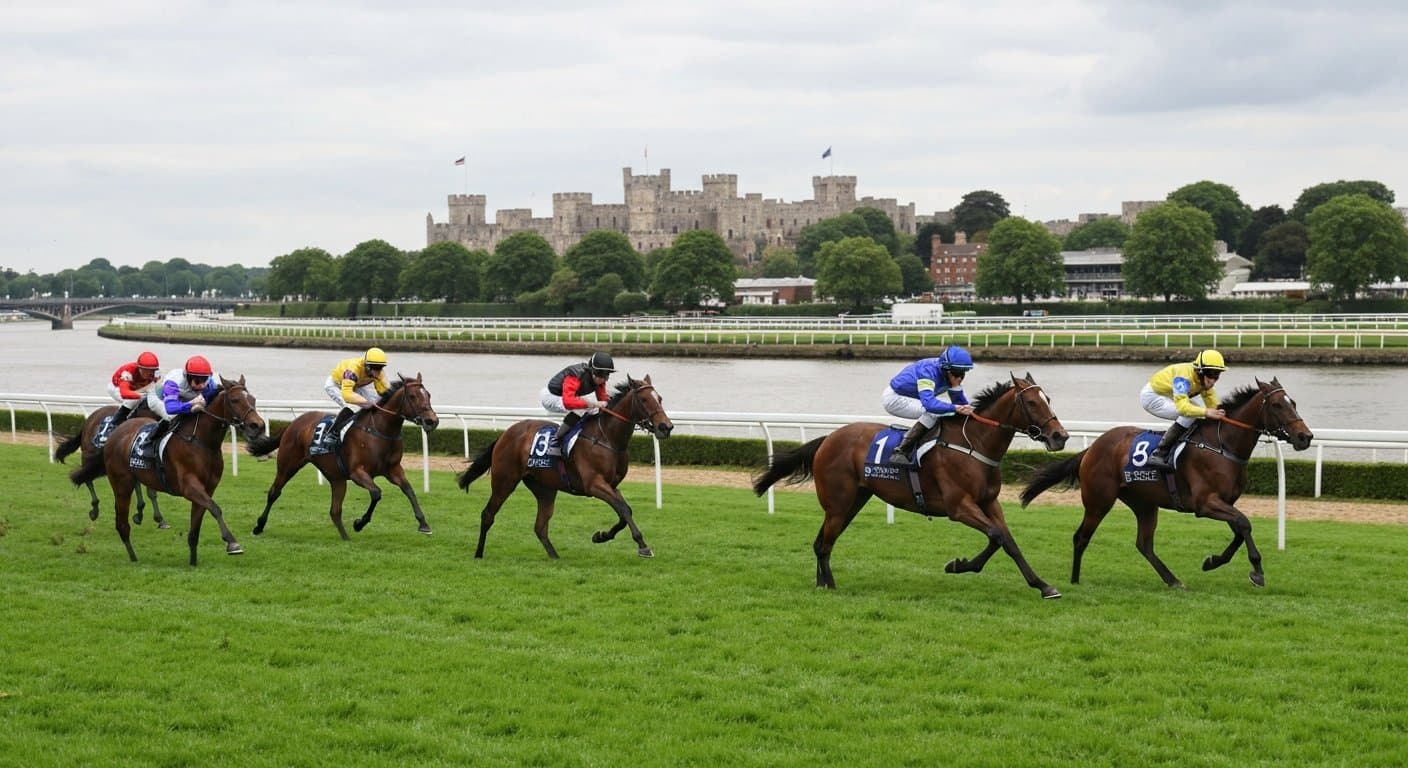
Evening Racing at Windsor
Your guide to summer evening racing at Windsor — the atmosphere, the Thames-side setting and what to expect.
Read morePhotos on this page are used under Creative Commons licences. Titles, sources and licence links for each one are on our image credits page.
Research the field with the AI Race Predictor
Our model publishes calibrated win-probability estimates for UK races — a second opinion to understand a race, not tips. It's open about its record: it doesn't beat the market, and we show exactly how it does.
Work it out & learn the basics
Gamble Responsibly
Gambling should be entertaining and not seen as a way to make money. Never bet more than you can afford to lose. If you or someone you know has a gambling problem, help and support is available.