
Founder & Editor · Last reviewed 2026-04-04
On a Monday evening in July, the trains from London Waterloo fill up around 4:30pm. City workers with race cards folded into jacket pockets, couples with picnic bags, groups in shirtsleeves heading for an evening on the Thames. Thirty-five minutes later, they're walking through Windsor town centre toward one of the most distinctively shaped racecourses in Britain. By 6pm, the stands are filling, the bookmakers are chalking up prices and the horses are circling the paddock with Windsor Castle visible above the treeline.
That is Windsor in summer: accessible, relaxed, and like no other evening out.
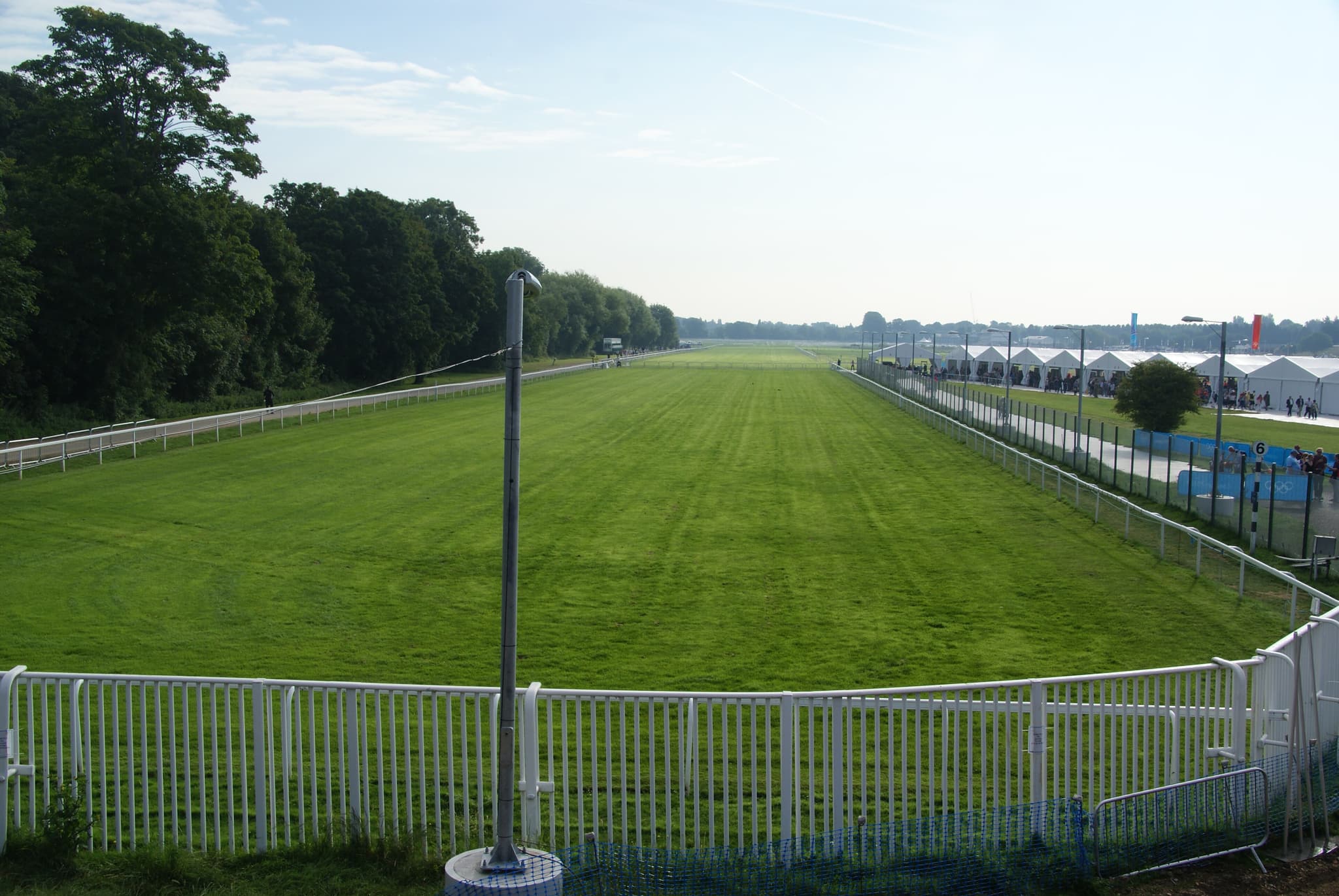
Racing has taken place on the current site since 1866, though the area's association with horses goes back centuries earlier. The venue sits on Clewer Island, a flat parcel of land enclosed by the River Thames on one side and the Clewer Mill Stream on the other. The geography forced the course designers to work with what the island gave them, and what it gave them was the only figure-of-eight flat racing circuit in Britain.
Quick Decision Block
- Should you visit? Yes, if you want accessible evening flat racing with a strong London buzz, or a relaxed family day within easy reach of the capital.
- Best time to go? A Monday evening meeting in July or August. These are the fixtures Windsor is built around, and the atmosphere on a warm evening is hard to match in southern England.
- Which enclosure? General admission is perfectly adequate. The site is compact and the views are good from most positions. Upgrade if you want hospitality or a guaranteed table.
- Which race to see? The Winter Hill Stakes (Group 3, one mile two furlongs) in August is the season's showpiece. For sheer fun, any evening card in high summer works.
- How to get there? Train. Windsor & Eton Riverside from London Waterloo (around 35 minutes) or Windsor & Eton Central from London Paddington via Slough (around 40 minutes). Both stations are five to ten minutes' walk from the racecourse. You don't need a car.
- What to wear? Smart casual or casual. No dress code. This is not Royal Ascot. Jeans and a light jacket are fine.
- Is it family-friendly? Yes. The compact site keeps everything in view. Windsor stages dedicated family racedays through the summer with activities for children.
Who This Guide Is For
If you've never been to Windsor before, the first thing to understand is that the evening meetings are the point. This is a course designed to be used after work on a summer Monday. The fixture list, the transport links and the whole atmosphere are built around that format. If you're planning a first visit, aim for one of those evenings.
If you're a regular racegoer who watches form closely, the figure-of-eight track is the single most interesting betting puzzle Windsor offers. The layout creates draw biases and positional advantages that don't exist anywhere else. The course section and the betting guide cover this in detail.
If you have a historical interest in racing, Windsor's connection to the Crown (the castle sits adjacent to the racecourse) and its long Victorian history give the venue a different kind of backdrop from most courses.
If you're coming with children, the family raceday guide covers the specific events and facilities in more depth.
The sections that follow cover the history, the course layout, the racing calendar, facilities, transport, betting angles, and atmosphere.
Bet on Windsor
Place your bets on Windsor races with a trusted bookmaker.

Promo code BETFRED50. New customers only. Register, deposit with a Debit Card, and place a first bet of £10+ at Evens (2.0)+ on Sports, to be settled within 7 days, to get £30 in Sports Free Bets and £20 in Bet Builder Free Bets within 24 hours of settlement. 7-day expiry. Eligibility & payment exclusions apply. Full T&Cs apply. Take Time to Think. BeGambleAware.org. 18+. Full T&Cs.

Promo code R30. New UK customers only, 18+. Register, deposit £10 or more, then place a £10 single cash bet at odds of 1/2 (1.5) or greater on any sports market (excluding Virtuals). Once the qualifying bet settles you get £30 in Free Bets (3 x £10) — the qualifying bet can win or lose. Free Bets are valid on any sports market excluding Virtuals, expire in 7 days, are non-withdrawable and must be used in full. Excluded deposit methods apply (including PayPal, Apple Pay, Skrill and NETELLER). Named bets such as Lucky 15 do not qualify. If you cash out the qualifying bet, or it is voided, you are no longer eligible for the offer. Ends 31.12.26. Full T&Cs apply. Please gamble responsibly. BeGambleAware.org. 18+. Full T&Cs.

Promo code BET40GET20. New UK customers, 18+. Register with the code and place a first bet of £40 or more at Evens (2.0) or greater. Receive 2 × £10 free bets: the first credited automatically once the qualifying bet settles, the second 24 hours later. Free bets must be placed at minimum odds of 4/1 (5.0), expire 24 hours after credit, and the free-bet stake is not returned with winnings. Debit card deposits only. Take Time to Think. BeGambleAware.org. 18+. T&Cs apply. Full T&Cs.

50% of your first-day net losses refunded as a free bet, capped at £25. New UK customers aged 18+ only. To qualify, deposit and place a first bet of £10 or more on any sport at minimum odds of evens (2.00), then place at least two further bets on different events, each worth at least 50% of your largest bet, all at evens (2.00) or greater. Losses are counted from your first settled bet until 23:59 the same day. Place a qualifying £10+ bet and you are guaranteed at least a £5 free bet. Bets placed at SP, void bets, cashed-out bets and bets struck with free bets do not count towards the offer. The free bet is credited the day after your qualifying bets settle and must be used within 7 days, after which it expires. It can be used at odds from 1/4 (1.25) up to 250/1 on singles and straight accumulators, but not on Trixie, Patent or Yankee style multiples. Free-bet stake is not returned with winnings. One offer per person, household, address, IP address and device. E-wallet deposits may not qualify, so check the cashier before depositing. Customers registered with GAMSTOP cannot claim. KYC identity verification must be completed before the free bet is credited. Take Time to Think. BeGambleAware.org. 18+. T&Cs apply. Full T&Cs.

New customers, 18+. Choose the sports bonus at sign-up, make a first deposit and receive a 100% bonus up to £50 in your Sports Bonus balance. To convert the bonus to cash, wager it 10x within 30 days. Single bets below Evens (2.00) do not qualify; accumulators do not qualify if any selection is below 1/2 (1.50). Virtual Sports, voided, cancelled, drawn, cashed-out and free-bet wagers do not count towards wagering. Only the first settled bet per event counts. Withdrawing before the wagering requirement is met forfeits the bonus balance including bonus winnings. Real-money funds are used before bonus funds. Deposits via Skrill or Neteller are not eligible. Not valid in conjunction with other promotions. Odds, bet and payment limits apply. 10bet general and promotion T&Cs apply. BeGambleAware.org. 18+. Full T&Cs.

New customers in Great Britain and Republic of Ireland, 18+. Place a £10 fixed-odds qualifying bet at minimum odds of 1/2 (1.50) — single or each-way (only the win part counts), pre-event or in-play, not cashed out early, within 28 days of opening the account. Receive up to £60 in bonuses credited over three days: 3 × £10 fixed-odds free bets (the first on settlement, then 24 and 48 hours later) plus 3 × £5 Total Goals FOOTBALL spread bets and 3 × £5 racing Winning Favourites spread bets, with a £1 racing Race Index spread bet as an extra on top. The spread bets need a full spread-betting account, opened within 28 days of the fixed-odds account and subject to Spreadex's eligibility and appropriateness checks. Free-bet stakes not returned with winnings; free bets valid 28 days from issue. IMPORTANT: the £5 credits are SPREAD bets — sports spread betting carries the risk that losses can exceed your stake. Sports spread-betting customers do not have Financial Ombudsman or FSCS recourse. Take Time to Think. BeGambleAware.org. 18+. T&Cs apply. Full T&Cs.

Promo code WELCOME15, entered under My Bonuses after registering. New UK customers, 18+. Place a first qualifying bet of at least £10 from your cash balance at odds of evens (2.0) or greater within 7 days of opening the account. Once the qualifying bet fully settles you receive £15 in free bets, credited as 3 x £5 tokens with set uses: one £5 accumulator free bet (minimum 4 legs, each leg at 2/5 or bigger), one £5 sports free bet (any market at evens or bigger) and one £5 Sub Cover free bet (selected football player markets at evens or bigger). Free-bet stakes are not returned with winnings. Free bets expire 7 days after they are credited. Void, cashed-out and partially cashed-out bets do not qualify. One offer per customer. Confirm the current terms on BetGoodwin's own welcome-offer page before claiming. Take Time to Think. BeGambleAware.org. 18+. T&Cs apply. Full T&Cs.

New UK customers, 18+. Minimum deposit £10. Place a £10 qualifying single on sports (excluding virtuals) at minimum odds of 1/2 (1.50), settled within 14 days. Deposit-method exclusions apply. Receive £30 in free bets (stake not returned), split £20 for sportsbook use (2 x £10) and £10 for Bet Builder only (2 x £5); Bet Builder does not cover horse racing. Free bets must be accepted within 7 days and expire 7 days after acceptance. No promo code required. Best Odds Guaranteed on UK & Irish racing, subject to having staked over £25 in the previous seven days. Operated by LiveScore Betting and Gaming (Gibraltar) Ltd, UKGC 56859. Confirm the current terms on LiveScore Bet's own promotions page before claiming. Take Time to Think. BeGambleAware.org. 18+. T&Cs apply. Full T&Cs.
18+. BeGambleAware.org
History of Windsor Racecourse
Racing beside the Thames at Windsor dates back further than 1866. For centuries, the flat meadows adjacent to Windsor Castle provided natural ground for match races and informal contests between the horses of local gentry. The castle and the racecourse have always been close neighbours.
Medieval Origins and Royal Patronage
The earliest documented horse racing in the Windsor area dates to the reign of Henry VIII, who stabled horses at the castle and showed considerable interest in equestrian sport. Charles II, who revived organised racing at Newmarket after the Restoration in 1660, was a regular visitor to the Thames Valley and the area around Windsor was part of the royal riding country. These early races were informal affairs: two horses matched against each other for a wager, over distances measured by agreement rather than any fixed standard.
By the early eighteenth century, the pattern was changing. Racing in Britain was becoming more structured: the Jockey Club was established around 1750, Newmarket's hegemony over the sport was cementing, and courses began to establish fixed calendars rather than ad hoc meetings. Windsor was part of this shift. The Home Park, the area of Windsor Great Park immediately adjacent to the castle, hosted organised flat racing by the mid-eighteenth century. These were still relatively modest affairs by the standards of Newmarket or Epsom, but they drew the local gentry and, on occasion, members of the Royal Family.
The proximity to the Crown gave these early Windsor meetings a social distinction that many courses struggled to match. George IV, Prince Regent from 1811 and King from 1820, had a pronounced love of horse racing. He kept horses in training and attended meetings at Newmarket and Epsom. Windsor, on his own doorstep, was a natural venue. His patronage, however informal, lent the course a prestige that outlasted his reign.
The Victorian Establishment (1866)
The modern history of Windsor Racecourse begins in 1866, the year the current site at Clewer Island was formally established as a recognised racing venue. The reasons for the move from the Home Park were partly practical: Clewer Island, enclosed by the Thames and the Clewer Mill Stream, offered a more defined and manageable footprint. The flat terrain was ideal for a racing surface. The island nature of the site also made crowd management easier. Access was controlled by bridges, which helped operators handle the large audiences that Victorian racing was beginning to attract.
The Victorian period was a golden era for British racecourses. The railway network, expanding rapidly through the 1840s and 1850s, made it possible for people to travel from London for a day's racing and return the same evening. Windsor sat on a line from London, and the arrival of the railway transformed the economics of the course. Instead of drawing purely local audiences, Windsor could attract day-trippers from the capital. By the 1870s and 1880s, Windsor race days were regular summer entertainments drawing large crowds from across the south of England.
The course layout in this period was different from today. The island's geometry encouraged a circuit that crossed itself, but the full figure-of-eight configuration as currently understood was refined over successive decades rather than fixed from the outset. The basic principle of a track that loops around the island, with races starting at different points depending on distance, was in place from the early years.
The Victorian Windsor card was primarily flat racing. The programme was built around handicaps and conditions races rather than pattern races at that stage in the course's development. The Winter Hill Stakes, now the course's signature Group 3 race, was established later in the twentieth century, though handicaps of various distances over the same ground had been run since the 1860s.
The Royal Connection
The proximity of Windsor Castle to the racecourse is the most immediately striking thing about the venue for a first-time visitor. The castle's towers are visible from the track, and the whole course sits within what was historically the extended domain of the Crown.
Victoria and Albert both spent considerable time at Windsor Castle, and the castle's social calendar made Windsor race days natural appointments. The concept of the Royal Box at Windsor was established in the Victorian period. Successive monarchs maintained the association: Edward VII, himself a passionate racehorse owner and breeder, attended Windsor meetings. George V, George VI and Elizabeth II all maintained the royal connection with the course.
This royal backdrop has always influenced Windsor's character. The course sits six miles from Royal Ascot, which holds the flagship royal meeting each June. Windsor is not Ascot. The scale, the formality and the social expectations are entirely different. But the Castle's presence gives Windsor a setting that no other course in Britain replicates. You can watch a Monday evening handicap while Windsor Castle's towers catch the last of the evening sun. It's a peculiar and rather satisfying combination.
The Crown Estate, which manages the land around Windsor, has maintained a close relationship with the racecourse throughout its history. The presence of royalty at evening meetings was, for most of the twentieth century, an occasional rather than regular occurrence, but the backdrop has always been there.
The Figure-of-Eight Takes Shape
The figure-of-eight layout that defines Windsor today was not a deliberate architectural choice so much as a practical response to the island site. The island is too short for a conventional oval circuit of the length required to stage mile-and-a-half races or longer. The solution was to run two loops (one right-handed at the northern end of the island, one right-handed at the southern end) with the courses crossing in the middle.
The layout as it stood through most of the twentieth century used both loops for the longest races. The full circuit was approximately one mile and six furlongs in the early decades, though the course was altered in the late 1970s to the current configuration where the longest race distance is one mile, three furlongs and ninety-nine yards. The alterations tightened some of the bends and adjusted where races started, but the fundamental figure-of-eight structure was preserved.
The course is often described as the only figure-of-eight flat track in Britain. Fontwell Park uses a figure-of-eight for National Hunt racing over hurdles and fences, but for flat racing on the level, Windsor is alone. This distinction matters because the configuration creates different racing dynamics that don't exist elsewhere: horses change direction mid-race, the tight bends reward agility and balance, and the crossover point near the home straight is a tactical crux that determines many results.
During the mid-twentieth century, Windsor's figure-of-eight attracted considerable interest from racecourse operators who studied whether the configuration offered any model for new venues. No other British flat course has adopted the format, partly because island sites with the right geometry are rare, and partly because most racecourse developers preferred conventional ovals.
The Evening Meeting Tradition
The most important development in Windsor's modern history was the establishment of the Monday evening meeting format. This shift took place gradually through the 1970s and 1980s, as the course identified its competitive advantage over other venues in the south-east: the proximity to London, the excellent rail access and the relaxed riverside setting were natural ingredients for after-work racing.
Monday evening meetings had been part of Windsor's programme for much of the twentieth century, but they became the dominant format in the modern era as the course deliberately moved toward a summer evening specialism. The fixture list was concentrated on Monday nights through May, June, July, August and September. The timing was calculated precisely: first race at around 5:45pm or 6:00pm, last race around 9:00pm, trains back to London arriving in the capital before 11pm.
The format transformed Windsor's identity. Instead of competing directly with Ascot, Goodwood and Newbury for the weekend racing audience, Windsor carved out its own space as the post-work evening venue for London racegoers. The audience is different from a typical Saturday crowd: younger on average, less formal, more interested in the social occasion than the racing itself. That's not a criticism. It's the point.
The Monday evening format became so associated with Windsor that the two are now inseparable in the perception of most London racegoers. If you say "Windsor racing" to someone who lives in south-west London, the first image is almost always a summer evening on the Thames.
Jump Racing: Departure and Return
Windsor staged National Hunt racing for much of the twentieth century. The figure-of-eight layout translated reasonably well to jump racing, with fences and hurdles positioned on both loops, and the variety of going testing horses in different ways. However, in 1998, the course took the decision to abandon National Hunt racing and focus entirely on flat racing.
The reasons were partly financial and partly practical. The flat season offered better commercial opportunities, and concentrating the programme on one code allowed more coherent planning and marketing. Windsor as a pure flat course, particularly with the evening meeting format, was a clearer proposition than a dual-purpose venue trying to serve two audiences with different attendance patterns.
The flat-only era lasted until December 2024, when jump racing returned to Windsor after a 26-year absence. The return was cautious: a limited number of winter fixtures, designed to test the appetite for National Hunt racing at the course. The riverside setting and the figure-of-eight layout give Windsor jump racing its own character. The early signs suggest the reintroduction has been welcomed by both the local audience and the racing industry more broadly.
A Twentieth Century Timeline
The broader shape of Windsor's twentieth century is worth sketching briefly. The course was requisitioned during the Second World War, as many British racecourses were, and normal flat racing was suspended from 1940 to 1945. Racing resumed in 1946 and the post-war decades saw gradual investment in the stands and facilities, though Windsor remained a relatively modest venue by the standards of the Classics courses.
Television coverage of British racing expanded significantly through the 1960s and 1970s, and Windsor's summer evening meetings occasionally featured in televised programmes. The compact course and accessible setting made it a natural venue for outside broadcasts, and the evening light gave Windsor race meetings a visual quality that translated well to the screen.
The Winter Hill Stakes was upgraded to Group 3 status, giving Windsor its first and only pattern race. Named after Winter Hill, the wooded ridge that overlooks the course from the Berkshire side, the race became a reliable August pointer for middle-distance horses targeting autumn targets. It drew better horses and provided a solid quality fixture around which the August programme was built.
What the History Means Today
The 160-year history of Windsor on the current site has shaped the course in specific ways. The royal connection brought prestige and a unique setting. The island geography forced the figure-of-eight layout that makes Windsor unlike anywhere else in British flat racing. The railway access from London created an audience that no other Thames Valley course could match. And the deliberate shift to Monday evening meetings gave Windsor a format that has proved durable through changing patterns of leisure and entertainment.
A racegoer visiting Windsor today is visiting a course that has found its role in British racing and settled into it with some confidence. It's not trying to be Ascot or Goodwood. It's doing what it does best: evening flat racing on a unique track, with two railway stations serving the capital and Windsor Castle providing one of the better backdrops in sport.
The Course & Layout
Windsor's figure-of-eight layout is the most interesting racing surface in the south of England, and possibly in Britain. Understanding how it works, and what it means for the horses that compete on it, is the difference between watching the racing and actually following it.
The Island Setting
The racecourse occupies Clewer Island, a flat parcel of land enclosed by the River Thames on the northern edge and the Clewer Mill Stream to the south. The island is roughly elliptical in shape, perhaps a mile and a quarter in length but relatively narrow across. That limited width is the key fact: a conventional oval track of sufficient length to stage mile-and-a-quarter or longer races would simply not fit. The solution that emerged in the Victorian era was to run two separate loops, one at each end of the island, with the course crossing itself in the middle.
The ground is completely flat throughout. There are no gradients, no camber of significance, no uphill finishes. Windsor is a pure speed and tactics test with the unusual geometry of directional changes added in. A horse that runs well here has to handle two things that don't apply at any other flat course in Britain: the figure-of-eight crossover, and the tight right-handed bends that form both loops.
The turf drainage is generally sound. The Thames Valley location and the island's proximity to water mean the going can shift, but Windsor tends toward Good to Firm through the summer months, which is the period when most racing takes place. Heavier ground is rare in the flat season, though autumn fixtures can produce Good to Soft conditions. The level surface means going changes affect horses fairly uniformly: there's no high ground that stays faster or low-lying patch that holds moisture.
How the Figure-of-Eight Works
To understand the figure-of-eight, picture two separate right-handed loops connected at one point. The northern loop runs around the upper end of the island. The southern loop covers the lower end. The two loops meet at the crossing point, which falls roughly in the area of the home straight. From the grandstand, you can watch horses racing on both loops simultaneously, which is one of the stranger sights in British racing.
No single race uses the entire figure-of-eight as a continuous circuit. Instead, different races use different portions of the two loops, with starting positions varied to achieve the required distances. The crossover point is the constant: races that use both loops necessarily pass through it, which is where the directional change happens.
In practice, the transition through the crossover is a tight right-hand kink. Jockeys who know the course time their positioning to be in the clearest space possible entering the kink, then accelerate out of it. Horses that don't handle the bend smoothly (those that throw their heads up on tight turns, or that lose momentum when the direction changes) pay a real penalty here.
Sprint Races: Five and Six Furlongs
The five-furlong course is effectively a straight. It runs along the home side of the island with only minimal turning. Speed horses and prominent racers are at their element over this trip. Closers can succeed if the pace is strong enough to create a drop-through opportunity, but the near-straight nature of the track means that positional races (those run at a steady gallop with no real test of finishing pace) tend to favour horses that lead or race prominently.
The six-furlong course extends the distance by incorporating the kink at the crossover point. This is where the figure-of-eight matters most for short-distance horses. A horse racing six furlongs at Windsor must negotiate a right-hand bend that doesn't exist in a six-furlong straight at somewhere like Catterick or Epsom. Horses that are comfortable on a turning track, carrying themselves well through bends without losing their action, tend to outperform horses that prefer a straight galloping surface.
Draw bias in sprint races is worth understanding. In five-furlong races, high draws can be advantageous because the early part of the race involves the horses positioning for the run to the line, and a high draw keeps horses away from the far rail where the ground can be slightly different. In six-furlong races, draw effects are less clear-cut because the kink redistributes positions mid-race. As a general rule: don't ignore draw effects at Windsor in sprint races, but don't apply rigid rules either. Check the specific stall positions in the race you're examining.
Middle Distances: One Mile and One Mile Two Furlongs
The mile and the mile and two furlong courses use a combination of both loops. Horses set off on the southern loop, pass through the crossover into the northern loop, and race back along the home straight to the finish. The sequence of turns is: left-handed exit from the start, right-handed through the main body of the first loop, left-handed into the crossover, then right-handed tight bend on the second loop before the home straight.
The second right-handed bend, the one that takes horses onto the home straight, is tight. It has acquired the nickname "carnage corner" among Windsor regulars, and the name is earned. The bend comes at a point in the race where horses are beginning to tire, jockeys are asking for effort, and positions are shifting. A horse that gets boxed in approaching the bend, or that takes it too wide and loses ground, can find itself in trouble that can't be recovered in the remaining three furlongs.
Tactical positioning matters more in mile races at Windsor than at most flat courses. A horse drawn widest is not automatically advantaged in longer races the way it might be in sprints. What matters is where the horse is placed entering the final bend. Horses that sit handy, avoid the worst of the traffic, and can quicken through the bend and into the straight have a structural advantage. Horses that settle towards the rear and depend on producing a long sustained run in the straight face a harder task here than they would at, say, Newmarket, where the straight is longer and there's more room to make ground.
The Longest Trip: One Mile Three Furlongs Ninety-Nine Yards
Windsor's longest flat race distance is one mile, three furlongs and ninety-nine yards. This trip is unusual (that ninety-nine yards is a precise quirk of the island geometry) and it uses both loops in a longer sequence than the mile and one-mile-two configuration.
The August Stakes, a Listed race, is run over this distance. Horses that have already proven they can handle the figure-of-eight at shorter trips have an advantage. Stamina is required — this is a real test of an older horse's ability to sustain pace over a distance that rewards horses with a good galloping action. But agility through the bends is equally important. Plodders that grind out long distances on a conventional galloping track can find Windsor's repeated turning unfamiliar and difficult.
The Winter Hill Stakes, the course's Group 3 race, is run over one mile two furlongs: a touch shorter than the longest trip but still using both loops and demanding the full range of Windsor skills.
What Type of Horse Wins at Windsor
The figure-of-eight demands a specific kind of horse. These are the characteristics that recur among Windsor's winners:
Good balance. A horse that carries itself well through bends, that doesn't throw its head up or shift its weight awkwardly when the direction changes, has an immediate advantage. This is partly training and partly conformation. Short-backed horses with a naturally low action tend to handle Windsor's bends better than long-striding horses that need a straight track to find their rhythm.
Tactical speed. The tight nature of the second loop means that horses which can quicken over a short distance, from two furlongs out to the line, win more races at Windsor than horses with sustained but modest finishing pace. You want a horse that can switch off and travel, then produce three quick furlongs when asked.
Previous Windsor form. This is a consistent pattern across British racecourses, but it applies with particular force at Windsor because the figure-of-eight is unlike anything horses encounter at other British flat courses. First-time visitors can be unsettled by the unusual demands. Horses that have already raced on the figure-of-eight and handled it competently carry a clear form advantage.
Adaptability on going. Windsor's ground in summer tends Good to Firm, and the flat, free-draining surface rewards horses that move efficiently on faster ground. However, autumn fixtures on softer going produce different winners. Checking a horse's going preferences against the forecast conditions is standard advice for any course, but Windsor's range from summer firm to autumn soft is wide enough that it's worth checking.
National Hunt at Windsor
Jump racing returned to Windsor in December 2024 after a 26-year absence. The figure-of-eight configuration translates to National Hunt with some adjustments: fences and hurdles are placed on the straighter sections of both loops, and the crossover is managed carefully. The flat turf, which suits horses moving fluently across the ground, is well suited to jumping.
National Hunt at Windsor is still in its early phase after the return. The initial fixtures suggested the course suits jumping horses with good technique rather than those that rely on jumping very boldly at speed. The tight bends that matter in flat racing matter in jump racing too. Horses that approach fences from a wide, sweeping line have more room than those on the inner, which can compress the jumping arc.
For punters, National Hunt at Windsor is a format where local knowledge is still accumulating. Study the trainers who have used the early fixtures. Those who have already placed horses successfully at Windsor will have an advantage as the jump programme develops.
Key Fixtures & Calendar
Windsor's calendar is built around two principles: summer evening flat racing on Monday nights, and one quality August fixture that stands as the season's high point. Weekend meetings, autumn cards and the winter jump programme all fill in around those two anchors.
The Winter Hill Stakes
The Winter Hill Stakes is Windsor's only Group 3 race and the clear highlight of the flat season. It's run in August over one mile two furlongs, which is the full figure-of-eight circuit with both loops in play. The race is named after Winter Hill, the wooded ridge that rises above the Berkshire bank of the Thames and is visible from the stands on a clear day.
Being a Group 3 over an unusual distance on a unique track, the Winter Hill typically draws a field that includes horses stepping up from a mile, horses that have been running at a mile and a quarter but need the extra two furlongs, and older horses that have found their distance through the season. It's not a race with a predictable profile. The figure-of-eight format means that form from conventional galloping tracks sometimes doesn't translate. Horses that have been running in big fields on wide, straight courses can find the tight bends uncomfortable.
Past Winter Hill Stakes winners have gone on to pattern races at the end-of-season festivals. A horse that handles the Windsor geometry well and wins in August can be a pointer for owners targeting autumn targets at Ascot, Newmarket or York. The race also attracts horses that trainers know are well suited to Windsor specifically: regular visitors to the course who have built up miles on the figure-of-eight.
The Winter Hill attracts modest but respectable fields of eight to twelve runners in most years. It's not the deepest Group 3 in the calendar, but it's a legitimate quality event and a useful betting race precisely because the small field means less traffic noise to analyse.
The August Stakes
The August Stakes, a Listed race run over Windsor's longest trip of one mile, three furlongs and ninety-nine yards, sits alongside the Winter Hill Stakes in the August programme. It attracts older staying horses and tests both stamina and the ability to handle the full extent of the figure-of-eight. Horses that have strong form from conventional staying trips elsewhere don't always transfer their form to Windsor because the demands here are different. The repeat visitors, horses that have already raced multiple times on the figure-of-eight, tend to be well represented in the results.
The Royal Windsor Stakes
The Royal Windsor Stakes is a Listed six-furlong sprint, providing the season's best sprint performance over the course's shorter configuration. The race draws quality sprinters from across the south and occasionally attracts horses from northern yards who want a Listed win on their record before targeting sprint handicaps or conditions races later in the season.
The six-furlong trip at Windsor, with its kink at the crossover point, produces a slightly different race shape than a conventional six-furlong sprint. Horses need to handle that mid-race directional change alongside the usual sprint demands. The Royal Windsor Stakes is a reliable indicator of which sprinters in training handle Windsor specifically, providing useful form context for subsequent races at the course.
Monday Evening Meetings: The Core of the Season
The Monday evening programme is Windsor's identity. From around the third week of April through to late September, Windsor stages Monday night cards that typically feature six to seven races, with a first race around 5:45pm or 6:00pm and a final race by 9:00pm or shortly after.
The timing is precise by design. The races finish early enough that racegoers can catch trains back to London and be home by 11pm, which is the practical threshold for a weeknight trip. The race programme is built around the audience rather than the other way around.
April and May. The early season Monday evenings are pleasant but rarely sell out. The crowds are smaller than high summer, and the atmosphere is more casual. The going is often Good, the fields are competitive in the handicaps, and the course is finding its early-season stride. These evenings can offer good value on the betting front. Horses are running off marks set in the previous autumn, the market hasn't fully assessed form, and the novelty factor of the season's early weeks creates occasional pricing inefficiencies.
June. The summer Monday programme hits its stride in June. Crowds increase, the warm evenings start drawing the post-work London contingent in larger numbers, and the racing quality improves as horses reach their form peaks. June evenings are often the busiest of the non-August weeks.
July. July is the peak of the summer season. The evenings are long, the atmosphere at its best, and the attendance figures are at their highest for non-August fixtures. High summer Windsor on a clear evening, with the castle visible, the river reflecting the last light and a decent card of seven races, is one of the better ways to spend a Monday in south-east England. The crowd in July tends to include a high proportion of people who are there primarily for the social occasion, which suits Windsor's relaxed format perfectly.
August. August brings the Winter Hill Stakes and the August Stakes, elevating the month to the season's high point in terms of racing quality. The crowds for the Group 3 weekend are the largest of the year outside any major Saturday fixtures. The atmosphere on the evening of the Winter Hill is several notches above a standard Monday card. Serious racegoers and form students mix with the usual summer crowd, and the betting markets are more active.
September. The September Monday evenings are good without being exceptional. The nights are drawing in, the weather is more variable, and the racing programme winds down toward the end of the flat season. The going may start to shift toward Good to Soft on later September cards, which changes the competitive picture. These autumn evenings are calmer and quieter than high summer, and some regulars prefer them precisely because the crowds are smaller and the atmosphere is more contemplative.
Saturday Meetings
Windsor stages occasional Saturday fixtures through the season. These are different in character from the Monday evenings: a more typical British racing day rather than an evening social occasion. The crowds tend to include more families and day-trippers alongside the regular racegoing audience. The Saturday cards often feature the quality races of the season: the Winter Hill Stakes and August Stakes both fall on Saturday or Sunday fixtures rather than Mondays.
Weekend Fixtures and the Changing Calendar
Windsor's fixture list is not entirely static. The number of Saturday fixtures can vary from year to year, and the course occasionally takes on additional dates or adjusts the timing of specific races in response to the broader calendar. The official website carries the current fixture list. For planning purposes, the Monday evenings from May to September are the constant. Everything else should be verified against the current year's programme.
Jump Racing: The Winter Programme
The return of National Hunt racing in December 2024 adds a winter dimension to Windsor's calendar. Jump meetings in December, January and February give the course a year-round presence that it lacked during the flat-only era from 1998 to 2024. The winter jump fixtures have a completely different atmosphere from the summer evening meetings: cold, often muddy, with smaller crowds and a core audience of National Hunt enthusiasts rather than the summer social crowd.
For racegoers who follow both codes, Windsor's return to jump racing is a useful addition to the southern England winter calendar. The course sits in a winter racing scene that includes nearby Kempton Park and Plumpton, and the addition of Windsor gives south-east England more National Hunt options.
Planning Your Visit
The practical advice is straightforward. For a first visit, book a Monday evening in July or August. For the best racing quality, the Winter Hill Stakes day in August is the target. For jump racing, check the winter fixture list once it's published. Dates are likely to fall in December through February, though the exact programme may shift year to year.
Tickets for standard Monday evening meetings rarely require advance booking, though buying in advance is always cheaper than on the gate. For the Winter Hill Stakes meeting, buying a week or two ahead is sensible. For any Saturday fixture that attracts a large crowd, advance purchase is recommended.
Facilities & Hospitality
Windsor's facilities are built around a compact site that prioritises easy navigation over grand infrastructure. With a capacity of approximately 12,000, it's not a vast venue. You can walk from the main gates to the paddock and back to the grandstand in a few minutes. That simplicity is part of the appeal.
Enclosures and Admission
Windsor operates a straightforward admission structure. The main enclosure gives access to the grandstand, the paddock, the betting ring and the food and drink outlets. There's no complex hierarchy of Premier, County and Silver Ring that defines some larger courses. Windsor keeps it simple: general admission covers what most racegoers need.
For the grandstand's premium areas and restaurant facilities, additional packages are available. These are primarily aimed at groups, corporate visits and special occasions. For the standard racegoer attending a Monday evening meeting, the general admission is the right call. The site is compact enough that there are very few bad vantage points.
For group bookings, birthday parties and work socials, the racecourse offers packages that include reserved seating, food service and sometimes a dedicated host. The riverside setting makes Windsor a natural choice for summer corporate entertainment, and the course is experienced at handling groups that are there as much for the event as for the racing.
The Grandstand
The grandstand faces the home straight and provides a clear view of the finish. The tiered seating gives a good line of sight from most positions. For evening meetings, the grandstand fills steadily through the first few races, and the best seats are taken quickly on busy summer nights. The view from the upper tiers is the best in the house: you can see horses on both loops of the figure-of-eight simultaneously, which makes the course's unusual geometry visible in a way that you can't fully appreciate from ground level.
At ground level, the rail alongside the home straight is the spot for watching horses pass at close range. Windsor's compact circuit means horses come past the main viewing areas multiple times in longer races, which is more entertaining than a straight or conventional oval where horses may only be visible for part of the race.
The Paddock
The paddock at Windsor is central to the site and accessible from general admission. The parade ring is modest in size but that compactness brings horses and spectators into close proximity. There's none of the distant viewing that large parade rings at places like Cheltenham can produce. For an evening visit, standing at the paddock rail for the ten minutes before each race is a good way to assess the horses and get a feel for which ones look well.
The paddock atmosphere on a summer evening, with the horses walking round in the long light and the bookmakers calling prices in the background, is one of the informal pleasures of Windsor that doesn't require any particular racing knowledge to enjoy. It's worth making the walk over for each race rather than staying in the grandstand.
Food and Drink
Windsor's catering has evolved toward the evening audience. The standard food options (burgers, fish and chips, pizza, hot snacks) are well suited to people who've come straight from work and want something quick before the first race or between races. The queue management is generally good at standard Monday evening meetings; less so on the busiest August and Saturday fixtures.
Bars are distributed across the site. Windsor's evening format means the bars are busy from the moment the gates open until the last race, and the bar areas become social hubs in their own right. For a relaxed evening out, the combination of quick food, accessible bars and the riverbank setting works well together.
For something more structured, the racecourse's hospitality packages include seated dining with race views. These are popular for celebrations, work events and group bookings. Booking in advance is necessary for any hospitality package, particularly in July and August.
Picnics are permitted and popular. The riverside setting makes Windsor a natural picnic venue, with grassed areas where you can spread out a blanket and watch the racing, particularly on weekend afternoon meetings. Evening meetings see fewer picnics simply because the post-work format doesn't lend itself to carrying hampers on the train, but on Saturday meetings, picnic culture at Windsor is well established.
The Thames Bank
The river adds a dimension to Windsor's facilities that's easy to undervalue. The Clewer Mill Stream runs alongside part of the track, and the Thames is never far away. On summer evenings, the air off the water cools the course and the views across the river toward Eton and the castle are among the best you'll find at any British racecourse.
The grandstand faces west, which means the evening sun is behind the stands on summer nights rather than in your face. This is one of the small practical advantages of Windsor's geography that long-term regulars appreciate.
Family Facilities
Windsor runs dedicated family raceday events through the season. On these days, the racecourse adds children's entertainment alongside the standard racing programme: fairground rides, face painting, activities areas and interactive racing-themed entertainment. Under-18s typically get in free with a paying adult on family racedays. Check the specific terms for each event.
The compact site makes Windsor well-suited to families with young children. You're never more than a few minutes' walk from any part of the course, so managing children while watching racing is more achievable here than at large sprawling venues. The flat terrain is also easier with pushchairs than courses built on hillsides.
The paddock is a useful destination for children: watching large thoroughbreds at close range before a race is often the highlight of the day for young visitors. On family racedays, there are sometimes opportunities for children to interact more directly with horses in organised activities. Check the racecourse website for specific programmes.
Baby changing facilities are available within the site. Accessible toilets are provided. The flat terrain makes wheelchair access reasonable throughout most of the course.
Accessibility
The island setting is flat and mostly accessible. Wheelchair spaces are available in the grandstand viewing areas. Disabled parking is close to the main entrance. Contact the racecourse in advance if you need to arrange this, particularly for busier Saturday meetings when car parks fill early.
The walk from the two Windsor railway stations to the racecourse (five to ten minutes) is on level pavements through the town centre. This is one of Windsor's advantages for racegoers who use mobility aids: there are no steep approaches or difficult terrain between the stations and the course entrance.
Hearing loops are available in certain facilities. Audio commentary on the course PA covers race-by-race updates. Assistance dogs are permitted throughout the site.
Betting Facilities
The betting ring at Windsor is active for a course of this size. Ring bookmakers take pitches alongside the home straight and near the paddock. For evening meetings, the bookmakers' boards are a focal point of activity between races, with odds for the next race posted as soon as the previous one finishes.
Tote facilities are available throughout the site, including self-service machines in the grandstand areas. The Tote pool at evening meetings reflects the strong local attendance and the online betting traffic that Windsor attracts. The pools are generally liquid enough to get decent bets matched at fair prices.
Mobile bookmakers' apps work well at Windsor given the outdoor setting and generally good signal. Many evening racegoers use a combination of ring bookmakers for atmosphere and mobile apps for comparison, which is a sensible approach.
Getting to Windsor
Windsor's transport links are among the best of any British racecourse. Two separate railway stations, both within walking distance, serve two different London termini. The result is that most of the capital's population can reach Windsor for an evening meeting and be home before midnight without needing a car.
By Train from London Waterloo: Windsor & Eton Riverside
The South Western Railway route from London Waterloo to Windsor & Eton Riverside is the most direct connection for racegoers coming from central or south-west London.
Trains from Waterloo run to Windsor & Eton Riverside throughout the day, with good frequency during evening peak times. The journey takes approximately 35 minutes, though this varies slightly depending on whether the service stops at intermediate stations. On race evenings, the trains that leave Waterloo between 4:30pm and 5:30pm are the relevant ones. These deliver racegoers to Windsor in time for the first race around 5:45pm or 6:00pm.
Windsor & Eton Riverside station is a small terminus station rather than a through station. Trains end their journey here. On race evenings, the platform is busy with racegoers but the station handles the flow without significant difficulty. From the station, the racecourse is approximately five to ten minutes on foot. The route goes through Windsor town centre, past Windsor Castle, and down toward the river. Follow the signs for the racecourse; they're well placed.
Return trains from Windsor & Eton Riverside to Waterloo run until late, well past the time the last race finishes. After a 9pm final race, you'll be at the station by 9:30pm and back in London by around 10:15pm. This is the key practical advantage of the Waterloo route: the post-race return is straightforward and the service frequency is adequate for the crowds.
For racegoers coming from the City of London or east London, Waterloo is reached via the Jubilee or Waterloo and City lines. From south-west London, Waterloo is a direct journey on South Western Railway itself or the Underground. The route is accessible from a wide catchment area.
By Train from London Paddington: Windsor & Eton Central
The alternative route runs from London Paddington on Great Western Railway, changing at Slough for the branch line to Windsor & Eton Central. The Slough change adds a few minutes to the journey, and the total Paddington to Windsor time is around 40 minutes, depending on connections.
Windsor & Eton Central is a different station from Windsor & Eton Riverside, though the two are close to each other. From Windsor & Eton Central, the walk to the racecourse is also around five to ten minutes, taking a slightly different route through the town centre.
The Paddington route serves racegoers coming from west London, Heathrow (the Heathrow Express connects to Paddington), Reading and the Thames Valley corridor along the M4. For people working in west London or arriving at Heathrow, this route is often quicker than the Waterloo alternative.
One practical consideration: the Slough change on the GWR route means you need to factor in connection time. On busy summer evenings, check the specific times in advance to ensure the connection works as planned.
Which Station to Use
If you're coming from central or south-west London: use Waterloo. Quicker, more direct, no change of train.
If you're coming from west London, Reading, or via Heathrow: use Paddington. The Slough change is quick and the route serves your origin station better.
Either way, you arrive at a station that's five to ten minutes' walk from the racecourse entrance. Windsor is one of the few British racecourses where the station walk is straightforward: flat pavements through a pleasant town centre rather than a trek down industrial roads or across muddy car parks.
By Car
Windsor sits just off the M4, accessed most conveniently from Junction 6. From Junction 6, follow the signs for Windsor. The racecourse is well signposted as you approach the town. The postcode for sat nav is SL4 5JJ.
From the M3 to the south, the route comes up through Egham and Staines, a longer drive than the M4 route but manageable for racegoers from that direction. From central London, the A308 through Staines or the A332 through Eton provides direct access.
Parking is available on site. On standard Monday evening meetings, spaces are generally available though the car parks fill progressively through the evening. Arriving an hour before the first race gives you a comfortable margin. On busier Saturday meetings, arriving 90 minutes before the first race is sensible.
A word of caution on evening meeting traffic: Windsor town itself can be congested on summer evenings regardless of whether there's racing, partly because of the volume of tourists visiting the castle. The roads around the racecourse and the town centre can be slow in the 5pm to 7pm window. If you're driving from London, factor in at least 45 to 60 minutes of journey time even if the M4 is clear, because the last few miles into Windsor can be slow.
For the return journey by car, the post-race traffic disperses quickly. Most racegoers leave in a concentrated window after the last race, but the road network handles it without major issues. The M4 is accessible within a few minutes of leaving the racecourse.
By Bus
Local bus services run between Windsor and nearby towns including Slough, Maidenhead and Reading. These are useful for racegoers coming from those directions who prefer not to drive. The racecourse website occasionally advertises shuttle services for specific meetings. Check for any special arrangements, particularly for Saturday fixtures.
For most racegoers, bus is a secondary option behind train and car. The frequency and timing of local services don't always align well with the 6pm start and 9pm finish of evening meetings, making train or car the more reliable choices.
From Abroad or via Heathrow
Windsor sits approximately 12 miles from Heathrow Airport, which makes the racecourse reachable for international visitors or those with a layover. The Heathrow Express to Paddington (15 minutes) connects to the GWR service to Slough and then Windsor. From Heathrow to Windsor's racecourse takes roughly an hour door-to-door. It's an unusual way to spend a transit day, but it's entirely workable.
Practical Summary
- Waterloo route: South Western Railway direct to Windsor & Eton Riverside. Around 35 minutes. Best for central and south-west London.
- Paddington route: GWR to Slough, branch line to Windsor & Eton Central. Around 40 minutes. Best for west London and M4 corridor.
- Either station: Five to ten minutes' walk to the racecourse on flat pavements.
- By car: M4 Junction 6, SL4 5JJ. Arrive an hour early on busy evenings.
- Traffic warning: Windsor town centre is slow in summer evenings. Factor this into car journey times.
Betting at Windsor
Windsor's figure-of-eight presents the most distinctive betting puzzle in southern flat racing. The draw effects, the positional demands of the tight bends and the particular type of horse that wins here all create angles that don't exist at conventional courses. This section covers the specific patterns worth understanding before you bet here.
The Figure-of-Eight Draw Effect
Draw bias at Windsor is real but misunderstood by racegoers who try to apply simple rules. The effects vary sharply by distance, and a blanket approach of always backing high draws or always backing low draws will cost you money.
Five-furlong races. The five-furlong course is effectively straight, and draw effects are relatively minor. On good-to-firm ground in a big field, horses drawn in the middle of the track tend to travel on the best ground and have natural room. High draws are marginally favoured on some going configurations, but the effects are not strong enough to override form or class considerations. Don't overpay for draw bias in five-furlong races.
Six-furlong races. The kink at the crossover point mid-race redistributes positions. High-drawn horses that break well can get to the outside of the bend, which gives them a longer but cleaner path through. Low-drawn horses may find themselves on the inner rail where the bend tightens. In moderate fields of eight to ten runners, this effect is not always decisive. In large fields of fourteen-plus, the traffic at the crossover point can affect results materially, and horses drawn in the middle third of the field tend to have the most manageable path.
One-mile and mile-and-two races. Draw has less independent effect over these distances because the positional re-ordering that happens at the crossover and through the final bend is the bigger determinant. A horse drawn unfavourably that travels well and positions correctly can still win. A horse drawn ideally that gets caught in traffic at the final bend can lose. The jockey's ability to judge the bend is more significant than the starting stall number.
The practical approach: use draw as a tiebreaker in sprint races, not as a primary selection factor. Over a mile and beyond, weight draw effects lightly and concentrate on form, class and handling ability on the figure-of-eight.
Positional Patterns in Mile-Plus Races
The tightest bend at Windsor, the final right-hander before the home straight, is the single most important factor in the results of mile and mile-and-two races. Horses that approach this bend in the first four or five are better placed than those in the rear group. Windsor is not a front-runner's track, but the bend does not allow wide, sweeping moves that create running room from the back.
What wins most often over a mile at Windsor: a horse that sits handy in third to fifth position, travels smoothly through the crossover, sits just off the leader entering the final bend, then quickens off that bend and into the straight. Horses that are further back than sixth or seventh entering the final bend need the front horses to fade significantly to get involved.
This pattern makes Windsor tough for confirmed hold-up horses. If a trainer's horse needs to be dropped out, covered up and produced late, the figure-of-eight bends work against that strategy. When hold-up horses do win at Windsor, it's usually because the pace was strong enough to string out the field through both loops, which created a real finishing straight test.
Check a horse's previous races at Windsor before anything else. A horse with two or three Windsor runs showing consistent prominent racing will have learned the course. A horse on debut at Windsor showing hold-up form at Sandown or Kempton deserves a confidence discount.
Going Patterns on Thames Valley Turf
Windsor's summer ground is typically Good to Firm. The island site and free-draining Thames Valley soil produce faster ground than many southern venues through the summer months. In a normal July or August with regular irrigation, the going sits at Good to Firm, occasionally faster after a dry spell.
Horses that perform well at Windsor in summer tend to show good form on similar going at other southern courses: Goodwood, Newbury, Kempton on turf. Horses that prefer softer conditions can be backed in advance of autumn Windsor fixtures, but summer handicap punters should look for horses with a record on faster ground.
One specific pattern worth tracking: after a prolonged dry period in late August, the going can firm up significantly and the course may apply significant watering. When the watering programme is heavy enough to put the going back to Good from Fast, horses that prefer Good rather than Good to Firm can outperform their prices, because the market tends to price them as if the course is always Fast in August.
Evening Meeting Market Dynamics
Monday evening handicap markets at Windsor have some specific characteristics worth understanding.
Field sizes. Evening meetings typically attract smaller fields than weekend cards at prestige southern venues. The average field size in Windsor evening handicaps runs six to nine runners in many cases. Small fields mean less crowded markets, tighter form analysis and lower each-way place counts, which has implications for each-way value. In a six-runner field paying two places, each-way betting on anything other than the clear market leader is rarely good value. In an eight-runner field, the same applies. Stick to win-only bets in small field evening handicaps unless there's a specific value case.
Early-season racing. The April and May Monday evenings see horses running off previous-season handicap marks that haven't yet been updated for current form. In a good spring for a specific horse that has improved over winter, or that has changed trainer, the handicapper may be a few ratings points behind where the horse actually is. The early-season evening meetings are worth studying for horses that look likely to be well handicapped.
Class levels. Windsor evening handicaps run from Class 2 down to Class 6. The competitive standard varies considerably. In the lower-class evening handicaps, local knowledge advantages tend to be smaller and the form is harder to assess because many runners have minimal exposed form. In the higher-class evening handicaps, the form study from previous runs at similar class levels is more predictive. Don't assume that all evening races at Windsor carry the same form reliability.
Trainer Patterns
Certain trainers run their horses regularly at Windsor and understand the course well. Trainers based within 40 miles of Windsor, in Newmarket, Lambourn, Epsom and the Berkshire and Surrey training centres, have higher strike rates at Windsor than trainers sending horses from long distances.
Lambourn is the closest major training centre to Windsor, roughly 20 miles south-west along the valley. Trainers including Andrew Balding, Charlie Hills and Mick Channon (at various points in their careers) have consistently placed horses well at Windsor because they know the course and can school horses over the figure-of-eight demands in preparation.
Newmarket-based trainers run regularly at Windsor but don't always adapt their horses to the course's specific demands. A Newmarket horse making its Windsor debut after a season of straight-track Newmarket racing deserves more scrutiny than a Lambourn or Surrey horse with a Windsor record.
John Gosden (now Gosden and Gosden), William Haggas and Charlie Appleby have all placed horses at Windsor when the distance and conditions suit, though Windsor is not their primary venue. When trainers of this calibre do run at Windsor, it's usually because the race fits a specific horse, and that precision of targeting is itself a positive signal.
Jump Racing Betting Angles
National Hunt at Windsor is in its early phase after the 2024 return, so historical data is limited. The patterns to watch:
Front-running horses are likely to be favoured on the flat course, because the figure-of-eight bends compress pace and create gaps for horses that dictate from the front. Horses that stay on the gallop over two miles or more on flat, right-handed tracks will have an advantage over those that prefer left-handed circuits with gradients.
Trainers who are local to Windsor and who ran horses here before 1998 when jump racing was last staged will have accumulated wisdom about the course's specific demands. This knowledge will gradually become visible in results as the winter programme develops.
For the first two or three years of the reintroduced jump programme, treat Windsor as a form study challenge with incomplete data rather than a course where you have established edges. Watch, note which trainer and horse combinations succeed, and build your own data set.
Practical Betting at Windsor
The ring bookmakers at Windsor are active and well-staffed for a course of its size. Prices for evening handicaps are competitive with the major online exchanges in most cases. The betting ring is a good place to take a view on a small-field evening race. The local bookmakers often have an opinion and price it accordingly, which can create short-term inefficiencies that attentive punters can spot.
Tote pools at Windsor evening meetings reflect reasonable liquidity. The Jackpot and Scoop6 national pools don't centre on Windsor, but the standard win, place and exacta pools are worth using for bigger races on the card.
Please gamble responsibly. Set a budget before arriving and stick to it. If you feel you may have a problem with gambling, visit BeGambleAware.org or call the National Gambling Helpline on 0808 8020 133.
Atmosphere & Experience
There's a specific type of evening that Windsor creates in high summer that's hard to replicate. The train from Waterloo fills up with office workers at 5pm. By 5:45pm, they're at the rail as the first horses enter the paddock. By 7pm, they're two races in with a drink in hand and the long evening light stretching across the Thames. By 9pm, they're catching the last race with Windsor Castle silhouetted against the darkening sky behind the stands.
That sequence, repeated every Monday through the summer season, defines Windsor racecourse as a social venue. The racing is good, the betting is competitive, and the atmosphere is unlike any other evening out in British racing.
The Summer Evening Character
The Monday evening crowd at Windsor is distinct from weekend racing audiences elsewhere. There are fewer dedicated racegoers who track the form closely, and more people who are there for the whole occasion: dinner at the track, a glass of wine at the bar, the spectacle of horses rather than detailed analysis of who wins. That's not a shortcoming. It's what makes Windsor evenings work.
The dress code reflects this. There isn't one. Smart casual is the modal choice on a summer Monday: a shirt and chinos, a summer dress, a jacket without a tie. But jeans and trainers are equally common and nobody looks sideways. The contrast with Royal Ascot, six miles up the road, is immediate and deliberate. Windsor is the accessible version of Thames Valley racing.
The post-work crowd has a specific energy that weekend racing doesn't quite replicate. People arriving from London are slightly unwound from their day, slightly more willing to be spontaneous with a bet, slightly more interested in socialising than studying form. The racecourse's food and bar operations are calibrated for this: quick service, cold drinks, food you can carry around rather than sit down for. It works well.
Windsor Castle as a Backdrop
Windsor Castle is one of Britain's most recognisable buildings: a medieval fortress that has been a royal residence for nine centuries, built on a chalk ridge above the Thames floodplain. From the racecourse, the Round Tower and the Upper Ward are visible above the treeline to the south-east. On clear evenings in June and July, the castle catches the low sun and stands out against a blue sky. It's one of the more striking backdrops in British sport.
The castle's proximity is a constant presence rather than something you notice every five minutes. But when you do look up, between races or crossing the course to the paddock, it's there. The combination of thoroughbreds, the Thames and a medieval royal castle is a distinctly English scene.
This setting creates a visitor pull that Windsor has never fully needed to manufacture: people come to Windsor partly because of the castle, the town and the river, and the racecourse benefits from that draw. Day racegoers often combine the races with a morning visit to the castle or an afternoon walk along the river. Evening racegoers often meet in the town before the races. Windsor the racecourse and Windsor the town are connected in a way that works naturally.
Picnic Culture and the Riverside
Weekend meetings at Windsor attract a picnic culture that's well established in the regular audience. Families and groups bring rugs and hampers, particularly for afternoon Saturday meetings. The grassed areas on the inside of the course and near the river provide good space for setting up away from the grandstand crowds.
Evening meetings are less picnic-heavy, since people coming from work don't typically carry hampers on the Waterloo train, but the outdoor eating areas near the food outlets create a similar relaxed atmosphere. Tables fill up quickly in the first hour on popular summer Mondays, but there's enough standing room and grassed area that it rarely feels cramped.
The river itself is a constant ambient presence. The sound of water, the passing boats on summer evenings and the cooling air from the Thames make Windsor's outdoor experience on a warm evening among the best in British racing. It's not the most prestigious course in England, and nobody pretends otherwise. But for an evening out in July, the Thames-side setting is hard to beat.
How Windsor Compares to Nearby Courses
The Thames Valley is dense with racecourses. Ascot is six miles away. Kempton Park is 12 miles. Newbury is 22 miles. Sandown is 16 miles. Windsor sits in one of the most competitive racing catchment areas in the country.
Its distinctive position is the evening Monday format plus the figure-of-eight course. Kempton stages all-weather evening racing throughout the year. Ascot has the Royal Meeting and major Saturday cards. Windsor is the flat-turf summer evening specialist, and that niche is clear.
The crowd character is noticeably different from Ascot. Ascot draws an audience that skews older, more formally dressed and more willing to spend on hospitality. Windsor draws younger, more casual, more interested in the social occasion. Neither is better than the other. They're different products serving different audiences, and the geographical proximity is not really competitive because the audiences partially overlap.
Sandown and Windsor share some audience overlap in the south-west London catchment. Sandown's Saturday and Sunday meetings draw racegoers who can give up a weekend afternoon. Windsor's Monday evenings draw the same people on weeknights. For many south-west London racegoers, visiting both through a season is the natural pattern.
Frequently Asked Questions
More guides for this course
Share this article
More about this racecourse
All Windsor guides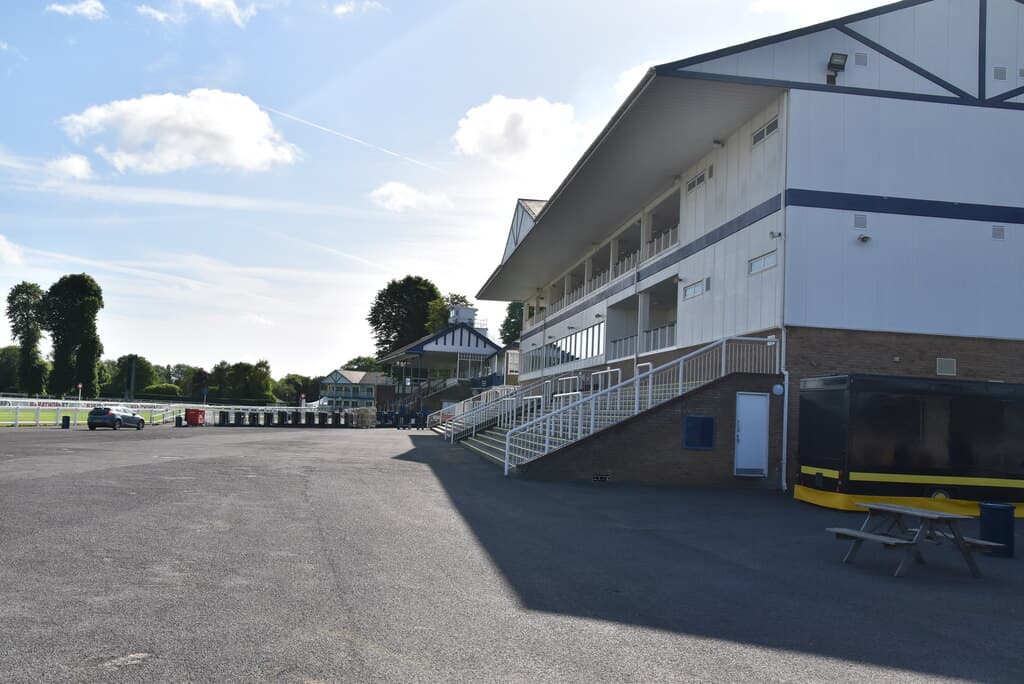
A Day Out at Windsor Racecourse
Everything you need for a day at Windsor — getting there, what to wear, enclosures, food and drink, and tips.
Read more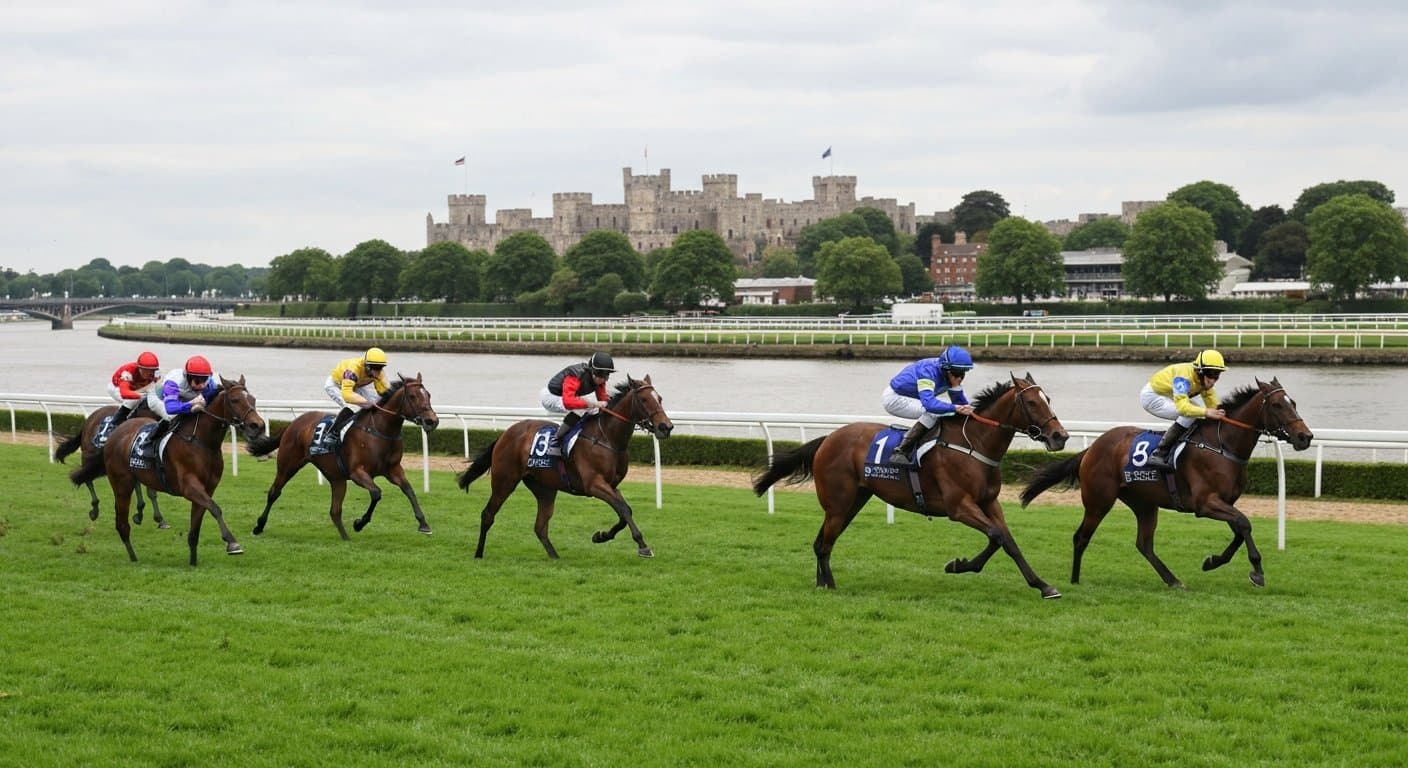
Evening Racing at Windsor
Your guide to summer evening racing at Windsor — the atmosphere, the Thames-side setting and what to expect.
Read more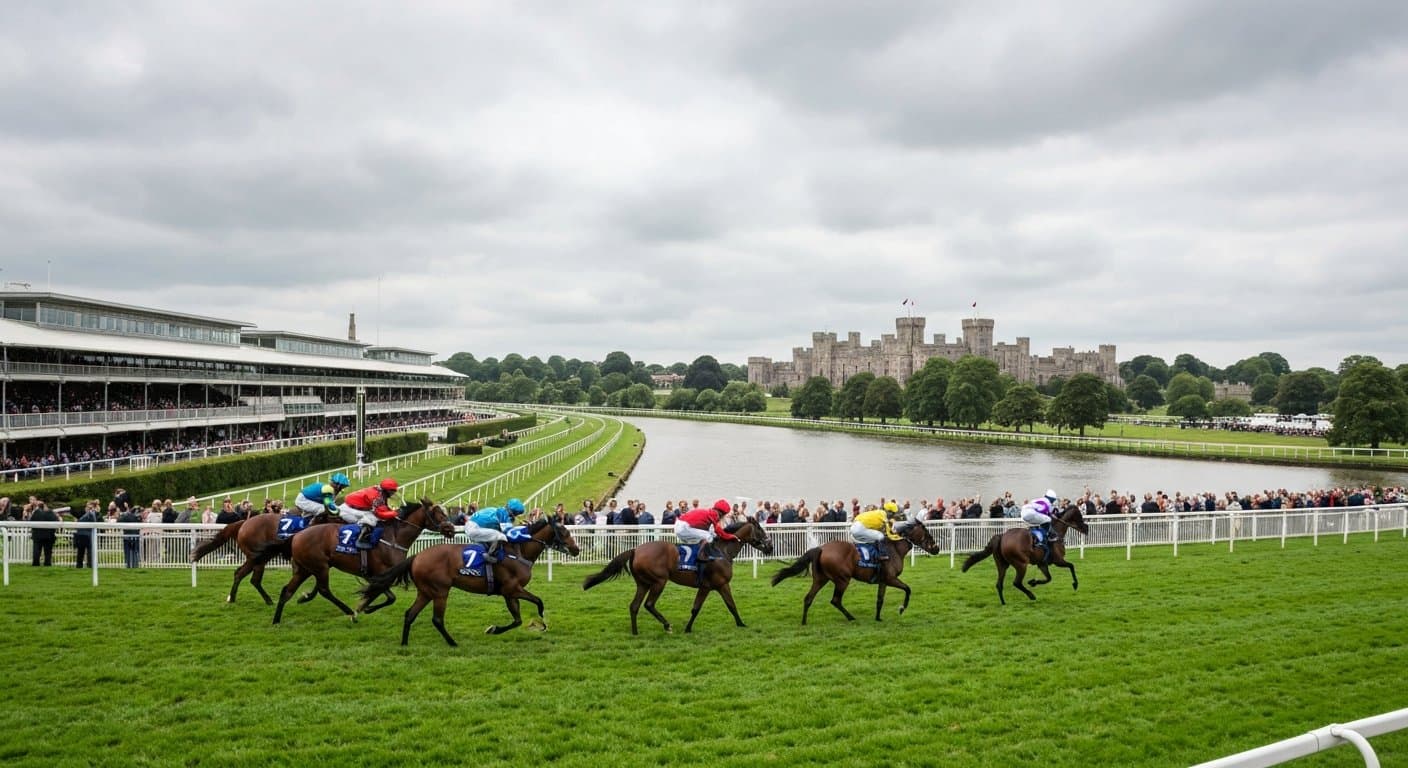
Family Racedays at Windsor
Your guide to family-friendly racing at Windsor — kids' activities, what to bring and how to make the most of it.
Read morePhotos on this page are used under Creative Commons licences. Titles, sources and licence links for each one are on our image credits page.
Research the field with the AI Race Predictor
Our model publishes calibrated win-probability estimates for UK races — a second opinion to understand a race, not tips. It's open about its record: it doesn't beat the market, and we show exactly how it does.
Work it out & learn the basics
Gamble Responsibly
Gambling should be entertaining and not seen as a way to make money. Never bet more than you can afford to lose. If you or someone you know has a gambling problem, help and support is available.