
Founder & Editor · Last reviewed 2026-03-02
Windsor Racecourse has been part of the Berkshire landscape since the 1860s, and the area's connection to horse racing goes back three centuries further than that. For over 150 years, the current course has staged racing on an island between the River Thames and the Clewer Mill Stream — a setting that has changed little even as the sport around it has evolved. From Victorian match races to summer evening flat cards, Windsor has adapted through every era of British racing.
The local links with the sport run deep. Henry VIII's Privy Purse Accounts record payments to Thomas Ogle, Master of Horse at Windsor, where a stud and stable operated inside the Castle grounds. Horses were bred and trained within sight of the battlements. By the reign of Charles II, there were organised race meetings at Datchet Ferry, just across the Thames. A bet of 500 guineas was recorded on a race there in 1682 — a substantial sum that speaks to the seriousness with which the sport was pursued. Racing in the Windsor area was not a novelty in the 19th century; it was a continuation of something far older.
The racecourse as we know it began in the 1860s, when John Frail drew up plans for a track on Rays Meadows. What followed is a story of floods, wartime racing, famous winners, and a gradual shift towards the evening flat programme that defines Windsor today. The course abandoned jump racing in 1998, only to revive it in 2024. It survived a V1 flying bomb, a three-foot flood, and a bookmaker strike that left racegoers watching in silence. Through all of it, the Thames-side setting and the figure-of-eight layout have remained constants.
This article traces the full arc — from the earliest stirrings of racing in Windsor to the current programme. For the practical picture of Windsor today, see our complete guide.
Origins & Foundation
The story of Windsor Racecourse begins with the ground itself — an island between the River Thames and the Clewer Mill Stream. That geography would shape everything that followed.
Racing at Datchet Ferry: The 17th-Century Roots
Before the current course existed, Windsor and its surroundings had already developed a racing culture. The reign of Charles II brought organised sport to the area in earnest. Charles was an enthusiastic racegoer and patron of the turf; he attended Newmarket regularly and encouraged racing across his kingdom. At Datchet Ferry, just across the Thames from Windsor, races were held with proper stakes and formal betting. The 1682 record of a 500-guinea wager on a Datchet race was not unusual for the period — serious money changed hands at these events, and the proximity to Windsor Castle guaranteed royal interest.
Henry VIII's association with horses at Windsor is well documented in the royal accounts. The Castle grounds housed a stud, and Thomas Ogle, as Master of Horse, oversaw the breeding and training operations. The connection between Windsor and the horse was established centuries before a racecourse was laid out on Rays Meadows.
Through the 17th and early 18th centuries, racing in the area remained informal by modern standards. There was no permanent track, no grandstand, no organised fixture list. But the tradition of sporting competition on horseback was embedded in the local culture, and when the time came to build a proper course, the ground was already prepared in every sense.
Rays Meadows and John Frail's Vision
The area known as Rays Meadows had long been used for grazing and recreation. The Thames and the Clewer Mill Stream created a natural boundary on either side, and the flat, well-drained land was suited to sport. By the mid-19th century, organised horse racing was flourishing across Britain. Ascot, Epsom and Newmarket had established themselves as fixtures in the national calendar. Windsor, with its royal connections and its proximity to London, was an obvious candidate for a permanent racecourse.
In 1865, John Frail drew up plans for a track on Rays Meadows. Frail was a local figure with practical ambition and the connections to see the project through. The site was secured, the track laid out, and on 5th and 6th June 1866, the first meeting was held. Among the spectators was Admiral Rous — the man who devised racing's weight-for-age scale, which, with modifications, is still used today. His presence at the opening meeting was more than ceremonial. It signalled that Windsor was a serious venture, not a provincial novelty.
The Early Layout and the Figure-of-Eight Origins
The original course was configured differently from today's figure-of-eight. The full circuit was approximately a mile and six furlongs. The island setting imposed constraints: the river on one side, the mill stream on the other. The track had to work around those natural boundaries, and the result was a layout that would eventually evolve into one of the most distinctive configurations in British racing.
In those early years, the programme included flat racing and, as the decades passed, jump racing. The original layout was modified over time. The full circuit was shortened in the late 1970s to just over a mile and four furlongs, and the figure-of-eight configuration — two interlocking loops that cross over one another — became the defining feature. No other flat course in Britain is laid out this way. The origins of that uniqueness lie in the geography of Rays Meadows: an island with fixed boundaries that forced designers to think creatively.
The original right-handed orientation was established from the start. Horses would always race clockwise. The tight bends that would eventually become known as "carnage corner" were inherent in the island's shape. What began as a practical response to a constrained site became, over generations, a tactical challenge that separates Windsor from every other flat track in the country.
The Victorian Establishment
Through the late 19th century, Windsor established itself as a regular fixture in the southern racing calendar. The railway was a key factor. Windsor & Eton Riverside station opened in 1849, connecting the town to London Waterloo. Windsor & Eton Central followed, with connections via Slough to Paddington. By the time the racecourse was founded in 1866, London racegoers could travel to Windsor and back in a single day. That accessibility shaped the course's identity from the outset.
The crowd that Windsor attracted was different from Ascot's. Royal Ascot, just a few miles away, was the grand occasion — the formal dress, the Royal Procession, the high social ritual. Windsor was the more accessible cousin. You could turn up without a top hat. You could watch racing without navigating complex enclosure hierarchies. The course positioned itself, consciously or not, as the democratic alternative to Ascot's formality.
Racing at Windsor grew through the 1870s and 1880s. The fixture list expanded. More meetings were added. The programme included both flat and jump racing, reflecting the Victorian appetite for variety. The Thames-side setting drew visitors who combined the races with a trip to Windsor Castle or a walk along the river. The racecourse was not just a sporting venue; it was part of a day out.
The Royal Connection
Windsor's proximity to Windsor Castle gave the course a royal dimension that Ascot could match but no other course could claim. The course was sometimes known as Royal Windsor Racecourse. Royalty attended, and the association with the town — with its Castle, its history, its association with the Crown — lent the course prestige. It was never as formal as Royal Ascot, but the royal flavour was real. Horses bred at the royal studs at Sandringham and Windsor itself occasionally ran here. Trainers and jockeys with royal connections were familiar faces.
The relationship between Windsor town and the racecourse was symbiotic. The Castle drew visitors from across Britain and beyond. The racecourse benefited from that tourist traffic. On racedays, the town would fill with visitors who arrived for the races and stayed to see the Castle, or came for the Castle and found themselves at the races. The combination made Windsor a raceday destination in a way that purely racing-focused venues could not match.
Surviving the Early Years
The first decades were not without difficulties. Funding, weather, the constant competition from better-resourced venues — all had to be navigated. The course's island location, which gave it its distinctive character, also made it vulnerable to flooding. The Thames was not always a gentle neighbour. Early meetings sometimes had to contend with waterlogged ground, and the threat of flood damage was always present.
But the combination of the unique setting, the railway connection and the royal association ensured Windsor's survival where other provincial courses failed. By the turn of the 20th century, the racecourse was an established part of the southern racing landscape. The foundations were solid. The character was set. What remained was to build on it.
The Figure-of-Eight Takes Shape
The evolution of the layout is worth pausing on, because the figure-of-eight is Windsor's most defining characteristic. The original course was essentially a loop. As the track was modified and compressed over the decades, the two-loop configuration emerged. The point where the inner and outer loops cross — the intersection that creates the figure-of-eight — became a critical tactical moment in races.
For flat racing, this is extraordinary. No other British flat course asks horses and jockeys to navigate a point where two separate parts of the circuit intersect. The logistics of managing races across the figure-of-eight require careful thought from the racecourse and precise riding from the jockeys. Horses in middle-distance races begin on one loop, cross through the intersection and complete the circuit on the other. The tight right-handed bend at the far end of the second loop — the stretch that became known informally as "carnage corner" — rewards agility and punishes horses that lose their balance or get caught in traffic.
The shortening of the course in the late 1970s refined the figure-of-eight but didn't change its fundamental nature. Today's circuit, just over a mile and four furlongs at its longest, is the product of 150 years of gradual evolution from those original Rays Meadows boundaries.
The Golden Era
The first half of the 20th century saw Windsor consolidate its position as a popular southern venue. The course hosted both flat and jump racing, drew steady crowds, and became a fixture in the lives of Berkshire racegoers.
The Edwardian Period and Pre-War Racing
By the Edwardian era, Windsor was well established. The course had survived its early financial uncertainties and found a stable footing in the southern racing calendar. Fixture lists expanded and the mix of flat and jump racing attracted a broad audience. The Monday fixture tradition that would eventually define the course was already developing — Windsor had positioned itself as the weekday alternative to the grander weekend occasions at Ascot and Epsom.
The royal presence remained important. Edward VII was a passionate racing man and an owner of some distinction — his horse Minoru won the Derby in 1909. Meetings at Windsor, so close to the Castle, benefited from the reflected glamour of royal engagement with the sport. Even when the King was not present, the association lent the course prestige.
The facilities during this period were modest by later standards. The grandstand, the paddock arrangements, the betting ring — all were functional rather than spectacular. Windsor was never a venue that competed on infrastructure. Its appeal lay in accessibility, atmosphere and the Thames-side setting. That formula proved durable.
The Interwar Years
Between the wars, Windsor's programme expanded further. The track was maintained, the facilities improved incrementally, and the course settled into a rhythm that racegoers found reliable. The Monday meetings became a feature of the southern sporting calendar. Families, groups, regulars — Windsor attracted them all.
The figure-of-eight layout was by this point the established configuration. Jockeys who rode regularly at Windsor developed an instinct for its demands — when to press forward, when to sit and wait, how to navigate the tight right-handed bend without getting trapped. That course knowledge became a real advantage. Riders who understood Windsor's particular rhythms consistently outperformed those who treated it like any other track.
Jump racing continued to feature in the programme. Windsor's turf track was well suited to National Hunt racing — the level ground, the good drainage and the shape of the circuit all made for fair jumping conditions. The course attracted reasonable quality in its jump meetings, drawing horses from the surrounding training centres.
The 1926 Bookmaker Strike
In 1926, Windsor made headlines for an unlikely reason. Winston Churchill, then Chancellor of the Exchequer in Stanley Baldwin's government, introduced a betting tax of 2d in the pound. The bookmakers were incensed. At Windsor, they staged a protest that brought a peculiar silence to the betting ring: they simply refused to trade. The crowd watched the racing without the usual soundtrack of the ring — no calling of prices, no shouted bets, no commerce. Just horses and spectators in an uncharacteristic quiet.
The protest was effective. The tax was unpopular with the public as well as the bookmakers, and it was abolished within two years. Windsor had played a small but memorable part in racing's political history. The bookmaker who organised the Windsor protest became briefly famous. Churchill, who was himself a racing enthusiast and would later own racehorses, was presumably unmoved in the short term — but the tax did not survive.
Racing Through the Blitz: Windsor During the Second World War
When the Second World War began, British racing was curtailed severely. Many racecourses were requisitioned for military use, converted to airfields, or simply closed for the duration. Windsor was one of only three southern courses allowed to continue staging racing — the others were Newmarket and Salisbury. That distinction reflected the course's importance to the sport and, not incidentally, to civilian morale.
Racing during wartime was a different experience. Crowds were smaller. Prize money was reduced. The programme was stripped back. But racing continued, and for those who attended, it provided a connection to normality that the wartime authorities judged valuable. Servicemen on leave attended Windsor meetings. Local workers came out on weekday afternoons. The racecourse was a place where the pressures of wartime could be briefly set aside.
The practical difficulties were considerable. Petrol rationing limited travel. Many horses had been put to other uses. The quality of racing declined from pre-war standards. But the course remained open and functional — a small act of defiance against the disruption that the war had imposed on ordinary life.
The V1 Flying Bomb
Among the most extraordinary episodes in Windsor's history occurred during one wartime meeting. A German V1 flying bomb — the unmanned aircraft that became known as a "doodlebug" — landed in a field near the racecourse just as the runners for a race were about to leave the parade ring. The explosion was close enough to be heard and felt. The racegoers, a mixture of civilians and servicemen, apparently took the interruption in their stride. The show went on.
The story captures something important about Windsor's character and about the mood of the country during the war. Racegoers who had endured years of disruption and danger were not about to abandon an afternoon at the races because a flying bomb had landed nearby. The pragmatism of continuing — while not minimising the danger — speaks to a particular British quality that Windsor, throughout its history, has consistently embodied.
Servicemen with radar equipment attended some wartime Windsor meetings, ostensibly to test equipment. On the occasion of the flying bomb, the radar clearly failed to provide advance warning. The anecdote has been repeated in racing histories ever since, a reminder that the Thames-side course was not insulated from the wider world even during its afternoons of relative normality.
The 1947 Flood
Two years after the war ended, Windsor's island location proved a serious liability. The winter of 1946–47 was one of the coldest on record. In February and March 1947, the sudden thaw sent meltwater surging into Britain's rivers. The Thames overflowed its banks. The Clewer Mill Stream, which forms the other boundary of Windsor's island, also burst. The racecourse, sitting between them, was inundated.
Three feet of water covered the stands. The damage was estimated at £100,000 — a very substantial sum in 1947. Fences were damaged, surfaces ruined, buildings affected. The scale of the flooding was unmatched in the course's history. Restoring the course to racing condition required considerable work and investment.
Racing resumed once the repairs were completed. The flood entered Windsor folklore. Every subsequent decade of heavy rain has prompted comparisons with 1947. The course's drainage and flood management have been improved several times since, but the memory of those three feet of water in the stands has never entirely faded. It is part of what makes Windsor distinctive — the awareness that racing beside the Thames comes with inherent risk, and that the river which gives the course its beauty can also be its adversary.
The Jump Racing Years
Through the first half of the 20th century and into the second, Windsor maintained a substantial National Hunt programme alongside its flat racing. The course was well regarded for its jumping. The level turf, the reasonably sized fences and the fair course layout made it an honest test.
Horses from the major jump training centres — Lambourn in particular, less than half an hour's drive away — regularly ran at Windsor. Trainers like Fulke Walwyn, who operated from Lambourn, knew the course well. The jump programme attracted solid fields and competitive racing. It was not a track where the very best Grade 1 staying chasers competed — those horses went to Cheltenham or Kempton — but the quality was real and the racing was fair.
The jump course ran inside the flat track, using the same island. The fences were sited to make use of the available space. The figure-of-eight layout created interesting navigational challenges for jumpers as well as flat horses — the tight right-hand bend and the undulations of the circuit demanded horses that were agile as well as brave.
Notable Horses and Jockeys of the Era
The names that dominate British racing's mid-20th century history all had contact with Windsor at some point. Gordon Richards, the champion jockey whose record of wins stood for decades, rode regularly at Windsor. His mastery of the figure-of-eight track — his ability to settle a horse in a forward position and produce it at the right moment — made him particularly effective on a course that rewards tactical intelligence.
Richards rode his 4,000th career winner in 1947, the same year as the great flood. His visits to Windsor were part of a campaign schedule that took him across the country's racecourses, but Windsor was a course he understood well. The tactical demands of the figure-of-eight suited his style.
Other champions followed. Scobie Breasley, Lester Piggott, Joe Mercer — all rode at Windsor during the post-war decades. The course's position in the southern circuit meant that the top jockeys of every era were regular visitors. For many younger riders, Windsor was a formative experience — a track that demanded something beyond simple horsemanship, that required thought as well as ability.
The Evening Racing Tradition Begins
The shift towards evening racing did not happen overnight. It was the product of gradual change through the post-war decades as the leisure patterns of British life evolved. The working week shortened. Car ownership increased. People had more freedom in their evenings and more money to spend on entertainment.
Windsor was well positioned to benefit from these changes. The train from Waterloo made it accessible without a car. The Monday slot — an unconventional choice that kept Windsor away from direct competition with weekend courses — gave it a distinctive place in the fixture list. The summer evenings, the river, the relaxed atmosphere: all were assets that an evening format amplified.
By the 1970s and 1980s, the evening programme was established as Windsor's primary identity. Other courses staged evening meetings, but Windsor had made it its own. The formula of finishing work, catching the train and spending an evening at the races on the Thames suited the demographics of the South East — a well-educated, commuter-rich region with disposable income and an appetite for accessible leisure.
That evolution is the bridge between Windsor's Victorian origins and its modern identity. The figure-of-eight, the Thames, the Monday evening — these three elements combined to create something distinctive. The golden era was not defined by any single year or any single champion. It was built across decades of steady, unglamorous success.
Famous Races & Moments
Windsor has witnessed its share of memorable moments — from political drama to sporting excellence, from royal appearances to record-breaking rides.
Churchill and Colonist II
In 1949, Winston Churchill — the same man whose betting tax had provoked the bookmaker strike 23 years earlier — attended Windsor races to watch his horse Colonist II. Churchill had developed a passion for owning racehorses, and Colonist II was his star performer during that period. The grey gelding, trained by Walter Nightingall at Epsom, won the Lime Tree Stakes at Windsor that day, giving his owner a moment of real personal pleasure.
Colonist II went on to win 13 races in total during Churchill's ownership, including the White Rose Stakes at York and several other decent races. He was never a classic horse, but he was a real performer and a source of considerable joy to an owner who had recently led his country through its greatest crisis. Churchill was said to talk to Colonist II as he would to a companion. The horse's win at Windsor was a stepping stone in a career that gave an ageing statesman some of the most uncomplicated pleasure of his later years.
The image of Churchill at Windsor — the wartime Prime Minister watching his grey win the Lime Tree Stakes, a few miles from the royal castle, on the course where the bookmakers had once refused to trade in protest at his own tax policy — is a richly layered piece of British history compressed into a single afternoon.
The Royal Windsor Stakes
The Royal Windsor Stakes has been a fixture in the British flat racing calendar since the mid-20th century. Run over six furlongs at Windsor in late May or early June, it is a Group 3 that attracts good-quality sprinters at the beginning of the summer campaign. The prize money has grown over the decades, and the field quality has improved correspondingly.
The race sits at an interesting point in the sprint calendar — after the 1,000 and 2,000 Guineas but before Royal Ascot. It attracts horses that have either just run well at Newmarket or are being aimed at one of the Ascot sprint races. Connections use it as a stepping stone. The form is reliable, and winners have often gone on to group-race success later in the season.
Significant horses that have run in the Royal Windsor Stakes include a roster of leading British sprinters over the past 40 years. The race's Group 3 status gives it a place in the pattern book, making it a target for horses that are good enough to compete at that level but not yet ready for the Group 1 demands of Royal Ascot. For Windsor, it is the headline sprint, the race that brings real quality to the Monday evening programme.
The Winter Hill Stakes
The Winter Hill Stakes is Windsor's signature race — a Group 3 over a mile and two furlongs, run in August. Named after a local landmark, it has been won by horses of real quality over the years. The tight bends and the tactical nature of the figure-of-eight make it a proper test that can expose horses without the agility to handle Windsor's unique demands.
The race attracts a competitive field of older horses and three-year-olds. Horses from the major Newmarket yards mix with representatives from Lambourn and the south of England. The mile-and-two-furlongs trip on Windsor's particular layout is a different test from a mile-and-two on a conventional oval track. The sharp bends require a horse to balance and adjust, and the intersection of the two loops demands sustained attention from the jockey.
Past winners have gone on to compete at the highest level. The race's Group 3 status places it below the elite contests but above the handicap class, and horses that win it convincingly often confirm that status with further successes. For Windsor, it is the proof that the course can stage high-quality racing, not just the bread-and-butter evening handicaps that make up most of the fixture list.
Richard Hughes's Magnificent Seven
On 15 October 2012, jockey Richard Hughes achieved something that had no precedent in Windsor's history and has not been equalled since. He won seven races from eight on the card. Seven winners from eight rides, in a single afternoon — a display of sustained excellence that made headlines across the racing world.
Hughes was at or near the peak of his powers in 2012. He would go on to be champion jockey three times. But even allowing for his exceptional ability, winning seven from eight on the same card at any racecourse is extraordinary. The bookmakers had a very difficult afternoon. Several of the winners came at short prices, but the accumulation of results across the card made a dent in any account that had bet against him.
Windsor's figure-of-eight layout suited Hughes's style precisely. He was a jockey of exceptional tactical intelligence — he could read a race, find a position, and produce a horse at exactly the right moment. The tight bends that penalise poor decision-making rewarded his instinctive feel for where to be. The intersection of the two loops, where horses can get shuffled back or trapped wide, was a challenge he navigated with consistent skill.
The achievement entered racing folklore immediately. It was discussed in the weighing room, debated on racing television and written up in every major newspaper. Nobody at Windsor that day had witnessed anything quite like it. The racecard from that meeting has become a minor collector's item. For the course, it was confirmation that the figure-of-eight track, for all its eccentricities, was a place where great jockeys could demonstrate something approaching mastery.
The August Stakes
The Listed August Stakes, run over Windsor's longest distance of a mile, three furlongs and ninety-nine yards, uses both loops of the figure-of-eight in full. It is a test of stamina, agility and tactical intelligence. Horses that plod steadily through the bends without varying their pace tend to get caught by quicker types who sit behind and pounce on the straight sections. It is not simply a staying race in the conventional sense — it requires a particular versatility.
Course specialists often run well in the August Stakes. Horses that have proved they can handle Windsor's layout at shorter distances and then step up in trip have a real advantage. The form book regularly shows that course form translates well from seven furlongs or a mile to the longer trip. The same qualities that win at those distances — agility, tactical speed, the ability to quicken after tight bends — are what win the August Stakes.
From a historical perspective, the race is a reminder of Windsor's unusual geography. The longest distance at most courses is a simple extension of the standard circuit, going further around the same oval. At Windsor, the longest trip uses a configuration that exists nowhere else in flat racing. That uniqueness has made the August Stakes a distinctive event in the late-summer calendar.
Film, Television and the 2012 Olympics
Windsor's photogenic qualities have attracted attention beyond racing. The riverside setting, the distinctive grandstand and the proximity to Windsor Castle make it an appealing location for filmmakers and television producers.
The film Last Orders, based on Graham Swift's Booker Prize-winning novel, used Windsor Racecourse as a location. Midsomer Murders, the long-running ITV detective series, filmed at Windsor for an episode called Bantling Boy, part of Season 8. Both uses reflect the course's visual appeal — it photographs well, it has character, and its association with a particular strand of English life makes it recognisable to a wide audience.
The 2012 London Olympics brought Windsor briefly into an even wider spotlight. Dorney Lake, the rowing and canoeing venue used for the Games, sits close to the racecourse. A temporary bridge was constructed linking the racecourse with the Olympic site. Windsor served as a transport hub — a drop-off and collection point for spectators heading to and from Dorney Lake. For a few weeks in the summer of 2012, the racecourse was part of the logistics infrastructure of a global sporting event. The figure-of-eight track had not previously hosted Olympic athletes, but it played its small part all the same.
Famous Horses on the Figure-of-Eight
Over the 150-plus years of Windsor racing, many horses have developed a particular affinity with the figure-of-eight track. The combination of tactility and agility that Windsor demands has produced course specialists whose records here outstrip what they achieved elsewhere. Some of these horses won repeatedly at Windsor, returning season after season to the track that suited them, confirming course form as one of the most reliable indicators in Windsor betting.
Horses from the major southern yards — trained at Lambourn, Newmarket, Epsom and Middleham — have all built Windsor records. The southern trainers who target the Monday evening programme have developed an understanding of what works on the figure-of-eight: horses with quick footwork, horses that can settle in a small space, horses with the agility to negotiate tight bends without losing momentum. That knowledge, accumulated over decades, is part of Windsor's sporting heritage.
Windsor and the Royal Studs
The connection between Windsor Racecourse and the royal horse-breeding tradition deserves mention. The royal studs at Sandringham and, historically, at Windsor itself, produced horses that ran at Windsor as a matter of course. Royal racing colours have appeared at the course regularly across its history.
The proximity of Windsor Castle meant that royal engagement with the course was natural and frequent. Royal horses raced here at various points in the 20th century. The Queen's horses, trained by different trainers over the decades, made occasional appearances. Those appearances were not always at the top level — royal horses, like the horses of any conscientious owner, ran where the programme suited them — but they reinforced the association between Windsor's royal setting and the royal presence in the sport.
The Modern Era
The late 20th and early 21st centuries brought significant changes to Windsor. Ownership shifted, the racing programme was refocused, and the course evolved into the evening flat specialist that most racegoers know today.
The Thompson Era
In 1987, David Thompson acquired a majority interest in Windsor Racecourse. Richard Thompson became chairman and held the role until the sale to Arena Leisure plc in 1999. The Thompson era coincided with a period of significant change in British racing — the growth of television coverage, the emergence of off-course betting as the primary revenue source for the sport, and the professionalisation of racecourse management.
Under the Thompsons, Windsor invested in facilities and developed a clearer focus on what the course did best. The Monday evening programme became the backbone of the fixture list. The marketing emphasised accessibility — racing that fitted around working life, a venue that didn't require formal dress or advance planning, a Thames-side setting that made the evening feel like a real occasion. The formula worked. Windsor's reputation as the pre-eminent evening racing venue in the South East was established during this period.
Richard Thompson was an active chairman who understood Windsor's particular strengths. The course's positioning as the relaxed, accessible alternative to Ascot's formality was not accidental — it was a deliberate choice that reflected an understanding of the demographic Windsor could attract. Office workers from London and the Thames Valley, families from the surrounding area, racing enthusiasts who wanted good racing without the ceremony — Windsor catered to all of them.
The End of Jump Racing in 1998
In December 1998, Windsor abandoned National Hunt racing and switched entirely to flat. The decision was driven by commercial logic. Flat racing, and specifically the evening meetings that had become Windsor's hallmark, drew better crowds and generated more revenue than the jump programme. The infrastructure required to stage jump racing — the fences, the additional preparation of the course — added cost without proportionate return.
The timing reflected a broader trend. The late 1990s were a period of consolidation in British racing. Some courses added all-weather tracks; others focused their flat programmes; Windsor chose specialisation. The figure-of-eight flat course could produce a full evening programme without the complications of jump racing. The jump course, which ran inside the flat circuit, was decommissioned.
For over two decades, Windsor was a flat-only venue. The identity that had been partially dual-purpose — flat in the summer, jumps in the winter — became exclusively flat. Summer was the season. The Thames-side evening was the product. Everything else was secondary.
Arena Leisure and the Corporate Era
The sale to Arena Leisure plc in 1999 placed Windsor within a group of racecourses managed as a portfolio. Arena Leisure, which later merged with Northern Racing to form Arena Racing Company (ARC), took a corporate approach to racecourse management. Investment decisions were made across the portfolio rather than course by course. Costs were controlled centrally. Marketing and promotion were professionalised.
For Windsor, this brought both opportunities and tensions. The investment in facilities continued. The fixture list was maintained. But the course was now part of a larger operation, and decisions made in boardrooms rather than by local ownership sometimes produced friction with the racing community. The balance between commercial management and the preservation of the course's distinctive character was not always easy to maintain.
ARC's management of Windsor through the 2000s and 2010s maintained the evening racing programme as the primary product. The Monday fixture remained the backbone. The Royal Windsor Stakes and the Winter Hill Stakes were retained as the headline races. The overall direction of the course — evening flat specialist with a Thames-side identity — was consistent with what the Thompson era had established.
The Ascot Refurbishment and Windsor's Moment
When Ascot underwent its major redevelopment in 2004 and 2005, Royal Ascot itself moved temporarily to York. But the redevelopment also affected Ascot's National Hunt programme. Windsor stepped in to host some of the displaced jump meetings during this period — a temporary return to National Hunt that demonstrated the course's versatility. The turf track, maintained for flat racing, was still well suited to jumping. The experiment was brief but successful.
It was a reminder that Windsor's 1998 decision to abandon jumping was commercial rather than structural. The track could still stage good jumping. The reason it didn't was economics, not infrastructure.
The Return of Jump Racing in 2024
In July 2023, Arena Racing Company announced that jump racing would return to Windsor from the 2024–25 season. The announcement came after a 26-year absence and reflected a desire to use the turf track during the winter months, when flat racing is not staged. Jump racing in the winter would complement the flat programme in the summer. Windsor would be dual-purpose again.
On 15 December 2024, National Hunt racing resumed at Windsor after its 26-year absence. The return was widely welcomed by the racing community. Lambourn trainers, who had always been among the most regular suppliers of runners to Windsor, were particularly positive about having a jump venue nearby that used good turf rather than all-weather.
The revival was not simply a return to the old programme. The jump course was designed for the modern era, with an emphasis on safety and fair competition. The fences and hurdles were positioned to work within the constraints of the island site. The figure-of-eight configuration created interesting challenges for jumpers, as it always had.
Windsor had come full circle. The course that began in 1866 with a mixed programme of flat and jump racing had, through the 1998 changes, become a flat specialist, and had now returned to its dual-purpose roots.
The Evening Racing Programme in the 21st Century
Through the 2000s and 2010s, the evening racing formula continued to evolve. The programme was typically 16 to 20 meetings per year, predominantly on Monday evenings from May through September. First race around 5:30pm or 6pm, last race by 9pm. The format was consistent enough to be reliable, flexible enough to accommodate occasional Saturday fixtures.
The quality of racing at Windsor evening meetings improved alongside the broader improvements in British flat racing. Prize money grew. The fields in the handicaps became more competitive. The Royal Windsor Stakes retained its Group 3 status and attracted better horses. The Winter Hill Stakes Group 3 was won by horses that went on to compete at Listed and Group 1 level.
The evening audience also changed. The growth of online betting meant that many racegoers arriving at Windsor had already studied the card in detail. The betting ring was supplemented by mobile phones and betting apps. The relationship between the course and the punter became more sophisticated. Windsor's tradition of attracting knowledgeable, engaged crowds was reinforced by the information-rich environment of modern betting.
Modern Facilities and the Contemporary Course
The facilities at Windsor in the 21st century are considerably better than those the Victorians would have recognised. The grandstand, the food and drink offering, the corporate hospitality facilities — all have been upgraded at various points. The island location imposes physical limits on expansion, but the course has made effective use of the available space.
The paddock remains central to the layout. The compact site — everything within easy walking distance — is unchanged and remains one of Windsor's most practical advantages. Racegoers can watch the parade, place a bet with the ring bookmakers or a Tote terminal, grab a drink and find a viewing position without navigating the vast distances that some larger venues require.
The Thames-side location, which was the course's original selling point, remains its greatest asset. Summer evenings beside the river, with the horses passing the grandstand against a backdrop of water and fading light, provide an experience that no refurbishment programme can improve on. Windsor's natural setting is the one facility that cost nothing to install and requires nothing to maintain.
Windsor Today: Bridging Past and Future
The Windsor of the 2020s is recognisably the Windsor of the 1960s and 1970s in its essential character: the figure-of-eight, the Thames, the relaxed atmosphere, the Monday evening. What has changed is the context. Better transport links, online betting, improved facilities, and the return of jump racing have all updated the product. The audience is sophisticated. The racing is competitive. The venue is well managed.
The course's history — 160 years from John Frail's plans on Rays Meadows to a dual-purpose venue attracting tens of thousands of racegoers each year — is not simply a backdrop to the present. It is the foundation on which the present is built. Windsor's distinctive character, its resistance to being categorised with any other course, its capacity to be simultaneously historic and informal — all of these flow from the accumulated decisions and accidents of that long history.
For the current programme and practical information, our complete guide covers everything you need for a visit today.
Windsor's Legacy
Windsor's legacy rests on three things: the setting, the layout, and the atmosphere. The Thames-side island, the figure-of-eight track, and the relaxed evening racing have combined to create a venue that feels distinct from anywhere else in British racing. That distinctiveness was not engineered. It emerged from geography, history and the accumulated choices of 160 years.
A Unique Venue
There is no other flat course like Windsor. The figure-of-eight layout is unique in flat racing — two interlocking loops that cross over one another, creating tactical challenges that exist nowhere else. The island setting, bounded by the Thames on one side and the Clewer Mill Stream on the other, cannot be replicated. When you stand by the grandstand and watch the horses parade with the river behind them, you are experiencing something that exists nowhere else in British racing.
That distinctiveness has sustained Windsor through considerable change. Courses that lack a clear identity struggle when the market becomes crowded, when attendance falls, when prize money is cut. Windsor has always had a reason to exist that transcends the current fixture list or the current prize-money levels. The figure-of-eight and the Thames are reasons in themselves.
The Evening Racing Pioneer
Windsor did not invent evening racing in Britain. But it embraced the format earlier and more wholeheartedly than any comparable venue, and it made the evening meeting its defining product. The Monday evening programme — finish work, catch the train from Waterloo, be at the races for the first race and home before midnight — was a formula that matched the rhythms of life in the South East. Other courses have adopted evening racing; Windsor gets the credit for showing that it worked.
The appeal of the evening format extends beyond simple convenience. There is something about racing at dusk that is different from the afternoon card. The light changes. The crowd relaxes. The riverside setting, at its most atmospheric when the sun is going down, becomes the star of the show. Windsor's natural assets and its chosen format aligned perfectly.
Accessibility as a Value
Throughout its history, Windsor has been the accessible option. Not in a pejorative sense — the racing has been competitive, the facilities have been adequate — but in the sense that it has never required its racegoers to jump through hoops. No mandatory dress code. No complex enclosure hierarchy. No need to book months in advance. You can decide on a Monday afternoon to go to Windsor that evening and have a good time.
That accessibility has built loyalty. Regulars know the track, know the trainers who target it, know where to stand for the best view of carnage corner. First-timers find it manageable, welcoming and worth repeating. The combination of knowledgeable regulars and a steady flow of new visitors gives Windsor meetings a social texture that benefits everyone.
The railway connection has been central to this accessibility since 1849. The fact that you can get from London Waterloo to Windsor & Eton Riverside in under an hour, and walk to the racecourse from the station in 20 minutes, is not a modern convenience. It is a Victorian infrastructure choice that still shapes Windsor's audience 175 years later.
Royal Windsor's Place in the Pattern
The Royal Windsor Stakes, as a Group 3 sprint, places Windsor in the pattern of British flat racing. The Winter Hill Stakes, as another Group 3, confirms it. A course that stages two pattern races is a course with standing in the sport's hierarchy, not just a venue for midweek handicaps. That standing matters. It attracts better horses. It maintains relationships with the major stables. It ensures that Windsor is considered a serious venue by trainers who might otherwise focus their pattern-race entries on Newmarket, Ascot or Sandown.
The Group 3 status of both races is appropriate to Windsor's position in the hierarchy. It is not a Group 1 course — the track configuration, the scale and the prize money would not support that ambition. But Group 3 fits perfectly. Good horses, competitive fields, fair testing of quality — that is what Windsor's best races deliver.
The Jump Racing Thread
The return of jump racing in 2024, after a 26-year absence, is a legacy decision as much as a commercial one. Windsor's history as a dual-purpose course is longer than its history as a flat specialist. Jump racing was part of Windsor from the beginning through to 1998 — well over a century of National Hunt meetings. The 1998 decision was a commercial expedient, not a permanent renunciation.
The revival restores something that was always part of Windsor's identity. Lambourn trainers, who have been visiting Windsor for decades with their flat horses, now have a jump venue nearby that uses proper turf. The winter months, which had been quiet on the island, now have a purpose. And the figure-of-eight track, which was always well suited to jumping, gets to demonstrate that suitability again.
For Windsor's legacy, the jump revival reinforces the message that this is a versatile, adaptable venue. Flat in the summer, jumps in the winter — the original format, restored after a quarter-century away.
What Windsor Represents in British Racing
British racing has courses of every type: the sweeping galloping tracks of Newmarket, the sharp bends of Chester, the demanding undulations of Epsom, the grand scale of Cheltenham. Windsor fits none of those categories. It is sui generis — its own category.
The figure-of-eight is a statement of individuality. In a sport that has standardised so much over the past century, Windsor has maintained a track configuration that could not be confused with anywhere else. That stubbornness about identity — the refusal to be a conventional oval, a conventional grandstand-and-finishing-straight course — is part of the legacy.
Windsor also represents something about the relationship between racing and its surrounding community. The Thames-side town, the Castle, the Long Walk, Eton College across the river — Windsor Racecourse is part of a place that is itself extraordinary. That setting confers a quality that money cannot buy. It creates a raceday context in which the racing is one element of something larger. Visitors who come for the racing leave with memories of the river as well as the finishing line.
Looking Forward
The complete guide and the evening racing guide cover Windsor today in practical detail. The history is the foundation; the present is the product. Jump racing has returned, the flat programme is strong, and the Thames-side setting remains unchanged.
Windsor's 160-year history has produced a course of real character. That character — accessible, distinctive, relaxed, tactically demanding — will not change overnight. The figure-of-eight track and the island between the rivers will still be here long after the current ownership, the current fixture list and the current champion jockey have all moved on. The river flows. The horses race. Windsor endures.
Share this article
More about this racecourse
All Windsor guides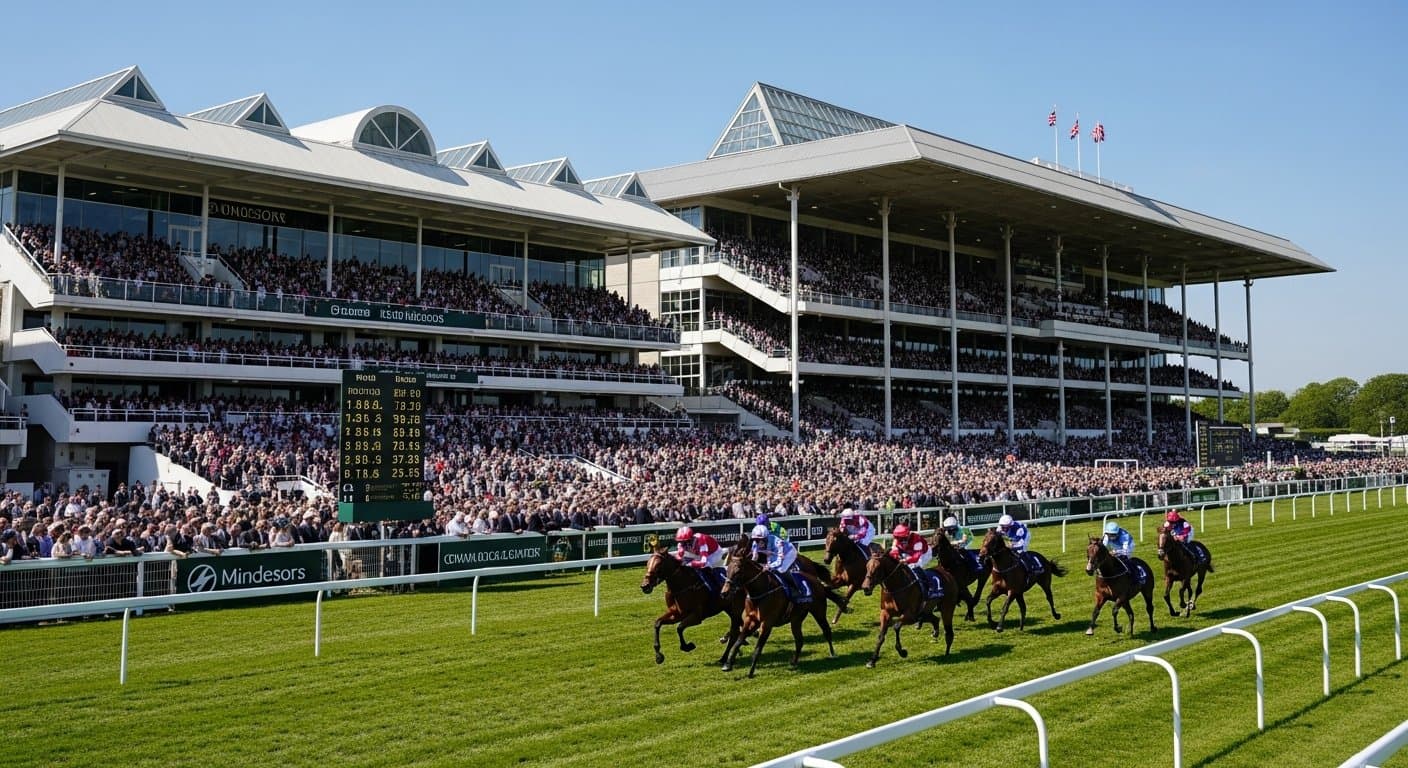
Winter Hill Stakes at Windsor: The Complete Guide
Windsor's only Group race, the Winter Hill Stakes in August is the biggest race day of the year at Royal Windsor. Here's what to expect.
Read more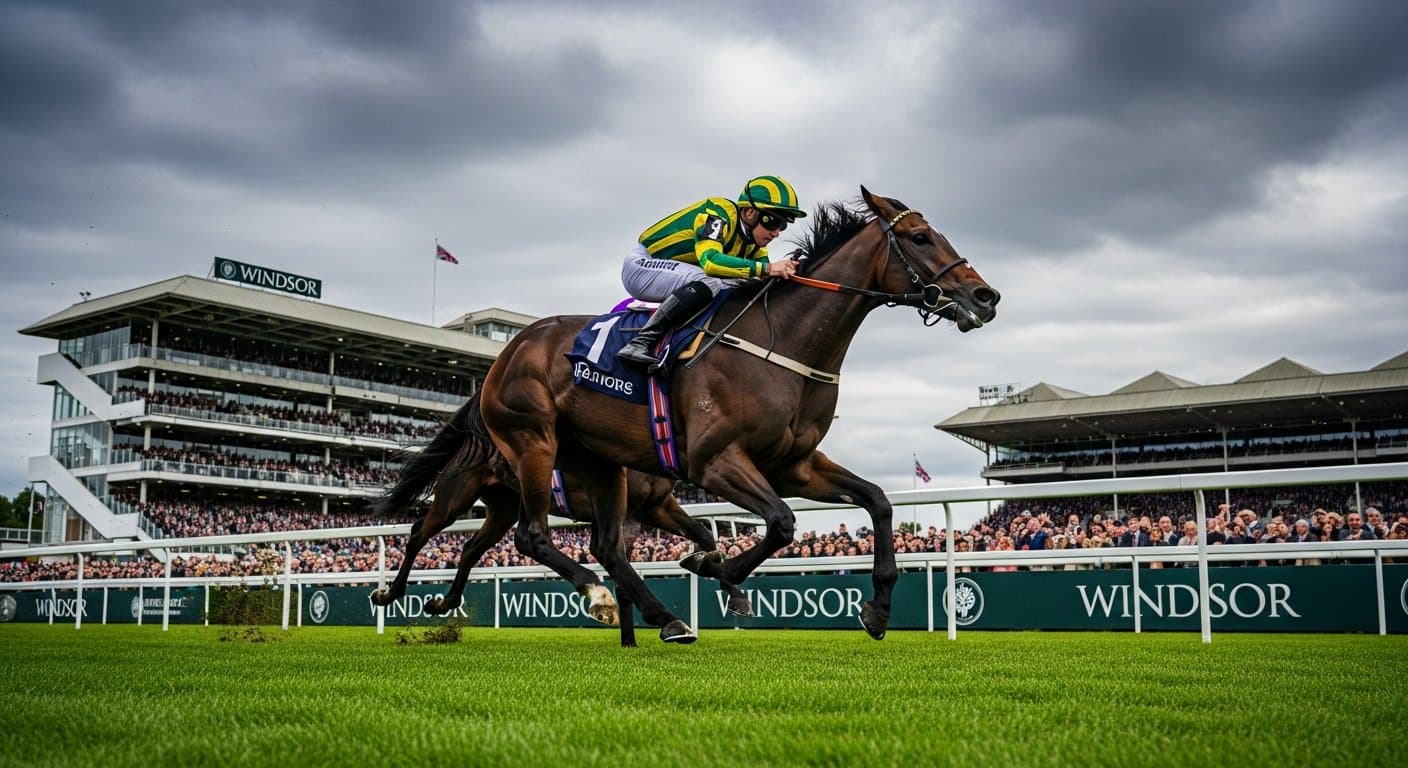
Al Kazeem at Windsor: The Complete Story
Al Kazeem won Windsor's Winter Hill Stakes in 2014 on his comeback from stud. The story of a Group One horse and the race that defined his return.
Read more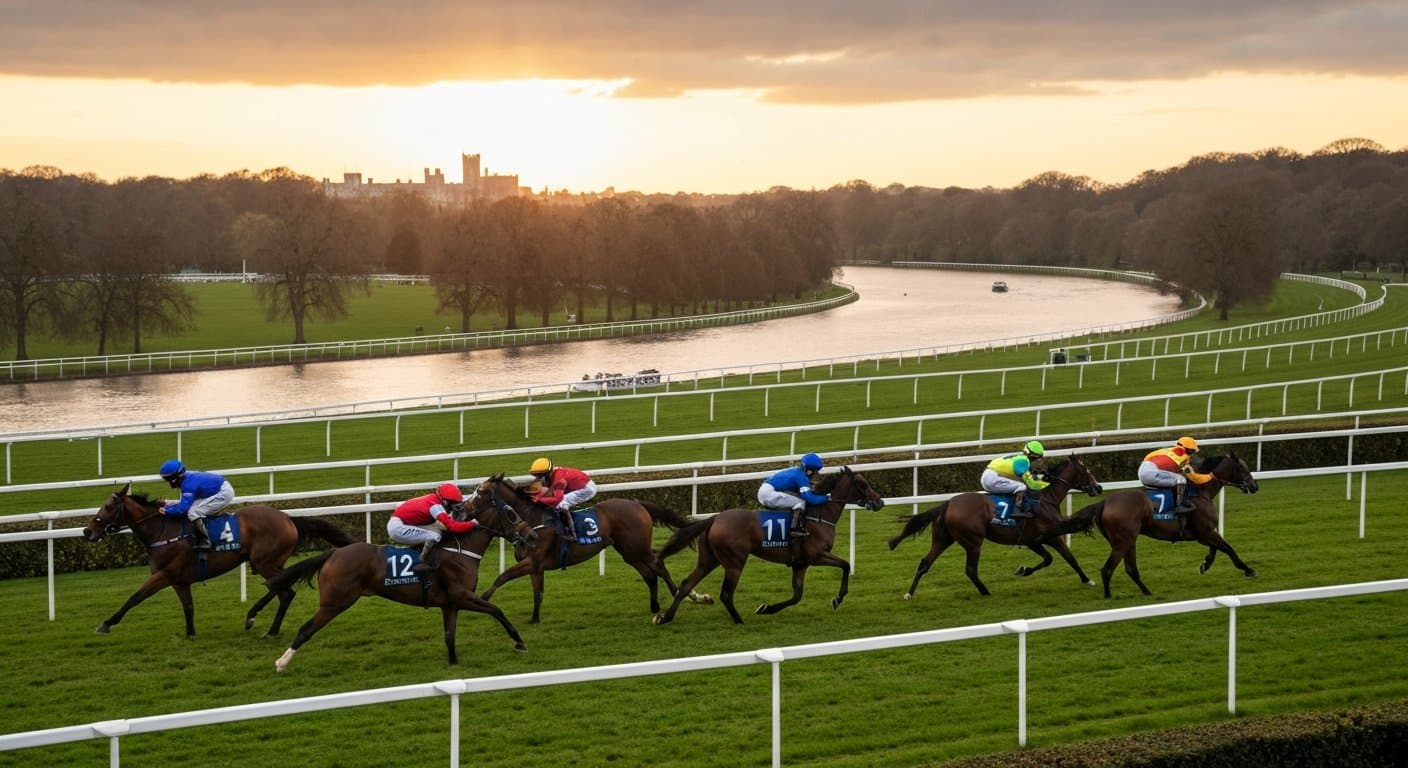
Betting at Windsor Racecourse
How to bet smarter at Windsor — track characteristics, going preferences, draw biases and winning strategies.
Read moreGamble Responsibly
Gambling should be entertaining and not seen as a way to make money. Never bet more than you can afford to lose. If you or someone you know has a gambling problem, help and support is available.