
Founder & Editor · Last reviewed 2026-04-05
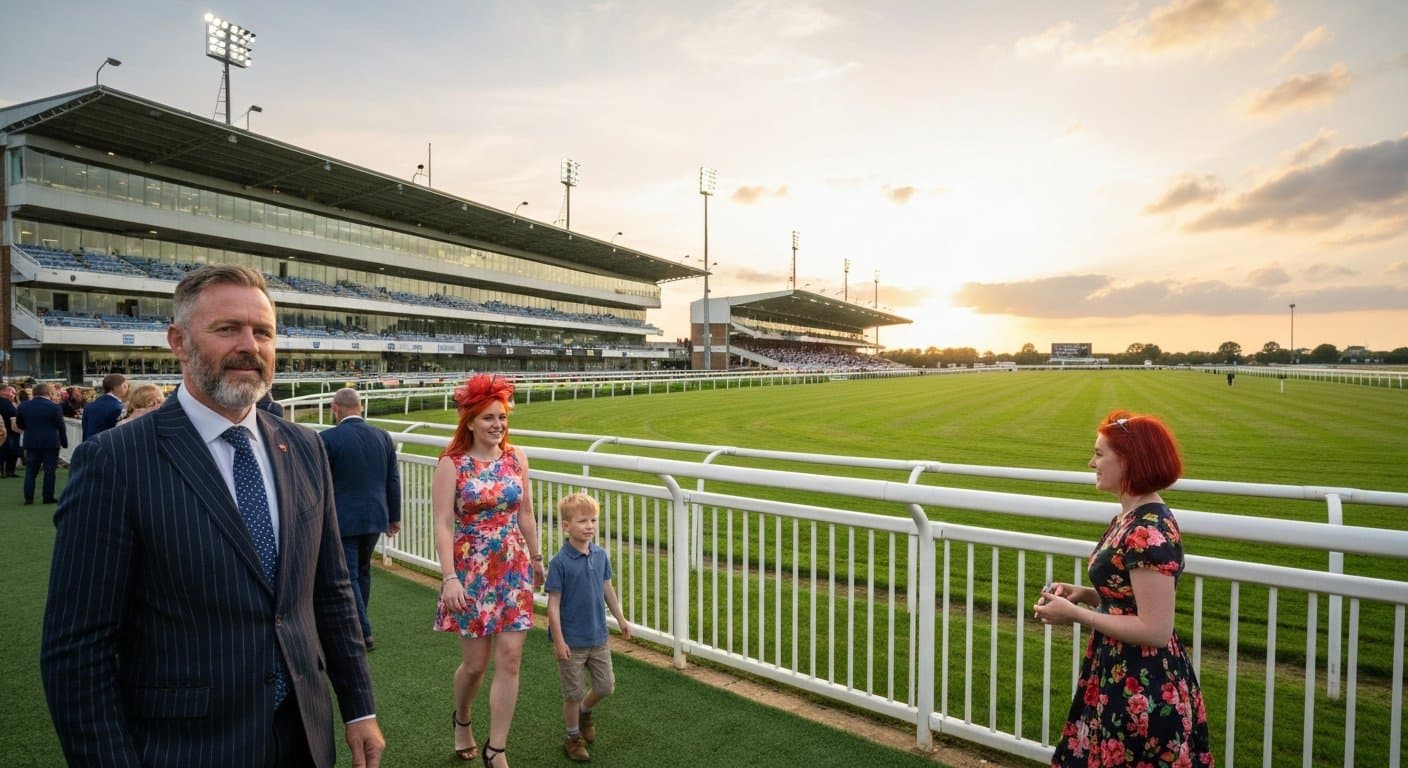
A day out at Wolverhampton is a different beast to Ascot or Cheltenham. There's no dress code drama, no corporate schmoozing — just racing. Year-round all-weather flat action under floodlights, in a compact venue that's easy to reach and easy to navigate. If you want a relaxed afternoon or evening at the races without the fuss, Dunstall Park delivers it.
The course sits about a mile from Wolverhampton city centre. It's one of the most accessible tracks in Britain — train from Birmingham New Street in 20 minutes, drive from the M6 in similar time. The capacity is around 5,000, so it never feels overwhelming. You'll find a mix of casual racegoers, seasoned punters, and the odd group celebrating a birthday or a night out. The atmosphere is friendly and unpretentious.
Evening racing is the big draw. Wolverhampton was an early adopter of floodlights, and the night cards have a unique feel. The Tapeta surface takes on a particular quality under the lights, the crowd is lively, and you're home by 9:30pm without having taken a day off work. Our evening racing guide covers what to expect in detail.
What Kind of Day Is This?
Wolverhampton works well for several different kinds of visitor:
The punter. If you want to bet seriously on live racing, Dunstall Park gives you six or seven races per card with a consistent surface, a readable betting ring and space to think between races. The form is more analysable here than at most turf tracks because the going doesn't change. It's a punter's working environment.
The social group. An evening at Wolverhampton — five or six people, a couple of drinks, some casual bets — is truly good fun. It's compact enough that you can all watch together and find each other easily. The evening atmosphere after the city clears out is lively without being rowdy.
The family. Children are welcome and the course has family-specific tickets. The format is accessible: you watch a race every 30 minutes, with enough time in between to walk around, see the horses in the parade ring, and grab something to eat. There's no long stretches of empty time.
The first-timer. If you've never been to a racemeeting and want to experience one without being intimidated, Wolverhampton is close to ideal. It's casual, affordable, and the racing is compact and easy to follow. Nobody is checking what you're wearing.
For the full picture on the course, facilities and fixture list, see the complete guide. For betting angles and strategies, the betting guide covers everything you need to know. This guide is all about the practical stuff: getting there, what to wear, where to stand, what to eat and drink, and the tips that'll make your visit smoother.
Getting to Wolverhampton
Wolverhampton is one of the easiest racecourses to reach in Britain. The postcode for sat-nav is WV6 0PE. Whether you're coming by train, car or bus, the logistics are straightforward — and the urban location means you have more transport options than at most rural tracks.
By Train
Wolverhampton station is a major stop on the West Coast Main Line, with direct services from all the key cities:
- From Birmingham New Street: around 20 minutes. Services run every few minutes at peak times. This is the primary route for Midlands racegoers.
- From London Euston: around 90 minutes direct, or around two hours on the slower services. London racegoers can travel up for an evening meeting and still be home before midnight.
- From Manchester Piccadilly: around 90 minutes. Northern racegoers are well served.
- From Liverpool Lime Street: approximately 90 minutes via Birmingham.
- From Bristol and Cardiff: change at Birmingham New Street.
From Wolverhampton station, the racecourse is roughly a mile away. The walk takes about 15 minutes along well-signed streets — straightforward in daylight, manageable on a winter evening if you know the route. The course runs a shuttle bus service from the station to the racecourse on racedays, which is the recommended option for evening meetings when you'd rather not navigate an unfamiliar route in the dark. Look for the shuttle marshals outside the station exit.
If you prefer not to walk or wait for the shuttle, taxis queue at the station rank. The ride to the course takes five minutes and costs around £5–8. Pre-booking through a local firm (there are several with apps) is sensible for the return journey after evening racing, when the rank can be busy.
Checking return times: If you're coming by train for an evening meeting, check the timetable before you go. The last Birmingham-bound services from Wolverhampton run until after midnight, so most racegoers are well covered. For London, the last direct Euston service from Wolverhampton is typically around 10:30–11pm — sufficient for a standard evening card but worth checking if the meeting runs late. Plan your return in advance rather than hoping to pick up a connection after the last race.
By Car
Dunstall Park is well served by the motorway network:
From the south and east (M6): Leave at junction 12 (Gailey) and follow the A5 west to Wolverhampton. The course is signposted. This is the best approach from Birmingham, the south-east and London.
From the north-west (M54): Leave at junction 2 (Wolverhampton north) and follow signs to the city centre and racecourse. This is the best approach from Telford, Shrewsbury and Wales.
From Birmingham directly: The A41 north from the city centre is a reliable route into Wolverhampton, though it can be slow during rush hour on weekday evenings.
Parking is free on site at Wolverhampton on most racedays, which is an advantage over many courses that charge £10 or more. The car parks are adjacent to the racecourse entrance, meaning a short walk from car to turnstile. On busy evening meetings arrive at least 30 minutes before the first race — the car parks fill during the 5pm–6pm rush hour period when visitors are arriving and commuter traffic is also on the road. Arriving earlier than you might think necessary is the simplest way to avoid a stressful start.
Rush hour on evening meeting days: If you're driving from Birmingham or elsewhere in the West Midlands for an evening card, be aware that the A454 and the approaches to Wolverhampton can be congested between 4:30pm and 6:30pm. Allow an extra 20–30 minutes compared to off-peak travel times. The M6 junction 10 approach can also back up at peak times. Giving yourself a comfortable buffer transforms the experience: you arrive relaxed rather than stressed from the journey.
By Bus
Local bus services run from Wolverhampton city centre to the Dunstall Park area. The West Midlands Bus network (National Express West Midlands) covers the route. Routes change periodically, so check the Travel West Midlands website or app for current services and stops. The bus is a perfectly valid option if you're staying in Wolverhampton or living locally — combine it with a drink in the city centre before the meeting.
From Wolverhampton City Centre
If you're making a day of it in Wolverhampton before the racing, the city centre is a 20-minute walk from the racecourse. You can explore the attractions, have a meal and then walk or taxi to Dunstall Park for the first race. The city has a tram system (West Midlands Metro) connecting the city centre to the wider conurbation, though it doesn't serve the racecourse directly.
Arriving for Evening Racing
Evening cards can start as early as 4:45pm or 5pm. If you're driving from work, factor in rush hour traffic. The M6 and M54 can be slow between 4pm and 6:30pm. Arriving an hour before the first race gives you time to park, buy a drink, pick up a racecard and watch the horses in the parade ring before the action starts. Evening meetings typically finish between 9pm and 9:30pm, giving you a clear run home on quieter roads.
What to Wear
Wolverhampton is relaxed. There's no formal dress code — no ties, no suits, no hats required. It's an all-weather venue with a casual, unpretentious character. Wear what you're comfortable in, then make sure you're dressed for the temperature.
The General Rule
Smart casual works for everything at Wolverhampton. Jeans and a shirt, chinos and a jumper, or a casual dress — you're fine in any enclosure. The crowd is mixed. You'll see everything from tracksuits to the occasional blazer. Nobody is going to turn you away for being underdressed. The focus is on the racing, not the fashion.
If you're going with a group and want to make a bit more of an occasion of it, smart casual still works — just cleaner and a bit more considered. The course doesn't have a Premier Enclosure dress requirement the way some tracks do, so there's no tier of admission that demands a step up.
Evening Meetings: Layering Is Key
Evening racing at Wolverhampton can get cold, particularly from October through to March. The course is open to the elements — the stands provide shelter from rain but not much warmth — and even the floodlights don't noticeably raise the temperature. If you're planning to stand outside watching races in winter, the cold will find you.
The solution is layers rather than one heavy item:
- A base layer (thermal or just a fitted long-sleeve top) under a shirt
- A mid-layer such as a fleece or jumper
- A windproof or waterproof outer jacket
- A hat and gloves for December, January and February nights
This sounds like a lot, but you can remove layers if it's warmer than expected, and you'll be grateful for each one when you're standing at the rail watching the fourth race at 7pm in January. Hot drinks from the bars help — take advantage of them.
Winter Afternoon Cards
Winter daytime meetings are if anything colder than the evening cards, because the floodlights at least create a sense of activity in the evenings. A cold January afternoon on the viewing terrace is exactly as cold as it sounds. Dress for the weather rather than the occasion. Nobody is judging your puffa jacket. Waterproof boots are a sensible choice if it's been raining, as the ground between the stands and the parade ring can get wet.
Summer Afternoons
Summer afternoon cards are forgiving. A T-shirt and shorts is fine. Bring a sun hat and sunscreen if it's a bright day — the stands can get warm when the sun's fully out, and the Tapeta surface has a reflective quality that can make it feel hotter than the thermometer suggests. A lightweight jacket for later in the afternoon is still worth having, because even in summer the West Midlands can cool down quickly after the sun drops.
Family and Children
For children, comfort and warmth take priority. Younger children who are likely to be standing around between races need warm layers even in weather that feels mild to adults. Comfortable shoes for children are particularly important — they may want to run around the open areas of the course, and formal footwear on a child is a recipe for complaints.
What to Avoid
Anything you'd struggle to walk in. The course is compact but you'll be on your feet — walking from stands to parade ring, to the betting ring, to the food outlets, and back. Comfortable footwear transforms the experience. High heels work on the hard-standing areas of the course, but the paddock area can have softer ground. Practical footwear that you're happy to stand in for three or four hours is the right call.
Enclosures & Viewing
Wolverhampton is a single-enclosure venue. There's no Members versus Tattersalls divide — you buy a ticket, you get access to the whole course. It's simple, and it keeps the atmosphere inclusive. The course holds around 5,000, so it never feels cramped. You can move around easily and find a spot that suits you.
Viewing Areas: Finding Your Spot
The main grandstand gives a clear view of the entire oval circuit. Because the track is compact — roughly a mile and a quarter — you can see most of the action from one position. The finishing straight runs directly in front of the main stand, and from the upper levels you can watch horses the whole way round: the back straight, the bends, and the run-in. You won't be fighting for a vantage point.
The best overall view from the stands is from the upper level, looking straight down the finishing straight. On evening meetings, the whole circuit is illuminated by the floodlights, making it truly easy to follow the field throughout the race — sometimes easier than watching on a turf track where the shadows of hedges and trees can obscure parts of the course.
For a different perspective, the areas at ground level beside the track give you a close-up experience that the stands can't replicate. You can hear the horses coming, feel the track vibrating slightly as they pass, and watch them flash by at full speed a few metres away. This is particularly striking on the sprint straight, where the horses come directly at you at pace.
The Parade Ring and Winner's Enclosure
The parade ring is close to the main stands and easy to access between races. Getting to the parade ring rail before a race and then back to the stand before the off is perfectly manageable — the distances are short. The pre-race parade is worth watching for every race if you want to assess the horses. Wolverhampton's small, accessible setup means you can truly get close enough to see how a horse is moving, whether it's sweating up, or whether it looks calm and ready.
The winner's enclosure is adjacent to the parade ring. After a race, if you're positioned near the enclosure, you'll see the winning connections — trainer, jockey, owner — as the horse is led in. At Wolverhampton's scale, this is a direct experience rather than a distant spectacle.
Under the Floodlights
The floodlit evening experience at Wolverhampton is the defining characteristic of the modern course. The lighting is complete — no dark patches on the track, no unlit areas of the course. Under the lights, the Tapeta surface has a particular look: the fibres reflect the light slightly, giving the track a consistent, almost cinematic quality. It's a truly different experience from watching flat racing in daylight.
Evening meetings under the lights have a relaxed, sociable atmosphere. The crowd on a weekday evening is a mix of regulars who come every week and groups who've decided to try something different. It's lively without being rowdy. The combination of the lights, the compact venue and the after-work timing creates an atmosphere that's more like a sporting entertainment event than a traditional afternoon racing fixture — and that's by design. Wolverhampton's evening model is built around the idea of accessible, enjoyable sport for people who work during the day.
Hospitality and Private Areas
For groups and corporate events, the racecourse offers private boxes and restaurant packages. These are available by booking in advance through the Wolverhampton website, and they're popular for birthday parties, works outings and team celebrations. A private box gives you a reserved area with views over the track, food and drinks included, and the full racing experience without standing in a crowd.
For most casual visitors, standard admission is the right choice. You get the full Wolverhampton experience without any extra cost, and the open layout means you're not missing anything by not being in a private area. Book ahead if you want hospitality; for everything else, tickets on the day are usually available.
Accessibility
The course is largely flat and accessible for visitors with mobility requirements. The stands have accessible viewing areas and facilities. If you have specific needs — wheelchair access to particular areas, assistance at arrival, accessible parking — contact the racecourse in advance. They're experienced at accommodating visitors with a range of requirements and will advise on the best arrangements. Accessible toilets and parking spaces are available on site.
Pushchairs can navigate most of the course without difficulty. The hard-standing areas around the main stands are the most manageable for wheeled access; some areas near the track have gravel or grass underfoot.
Food & Drink
Wolverhampton isn't a foodie destination. You'll find the usual racecourse fare — burgers, chips, sandwiches, hot dogs, pies. The bars are well stocked with beer, wine, spirits and soft drinks. Nothing fancy, but it does the job. You won't go hungry or thirsty, and the prices are broadly in line with what you'd pay at any sporting venue.
Food Outlets
Food outlets are spread around the course. The main outlets near the grandstand serve burgers, chips, pies, hot dogs and similar quick-service food throughout the meeting. Quality is typical of a well-run racecourse: the food is hot, fresh and filling rather than gourmet. Budget around £8–12 for a main item.
On evening meetings, food outlets are open throughout the card. The choice can thin out towards the later races — if you want a hot meal, order it in the first half of the meeting rather than after the fifth race. On bigger weekend meetings, the full range of outlets stays open right through.
There's sit-down restaurant space available at Wolverhampton as part of the hospitality packages. For a casual visit, the standard outlets are sufficient, but if you want a proper meal in a seated environment, look at the restaurant options when booking.
Bars
There are bars throughout the course — near the stands, near the betting ring and at trackside areas. The main bar handles the bulk of the trade. On a busy evening meeting, the bars fill up just before the first race and immediately after each race finishes. The trick is to order between races: you get served faster and you don't miss any action. A pint takes two minutes to pour; standing in a ten-deep queue takes fifteen.
A standard pint of lager costs around £5.50–6.50. Wine runs at similar prices. Spirits start from around £5.50–6.50. Hot drinks — tea, coffee, hot chocolate — are available and particularly worth seeking out on cold winter evenings. The hot drink queue is always shorter than the beer queue.
Soft drinks are available at all bar outlets and are reasonably priced. If you're driving or not drinking, the soft drinks selection is broader than you'd find at a pub — several options from each bar rather than just cola.
What to Eat Before or After Racing
If you want a proper meal without racecourse pricing, Wolverhampton city centre is a 15-minute walk or a short taxi ride. The city has a wide range of restaurants, cafes and bars at all price points. For a group evening out, a sensible plan is to eat in the city before the meeting, attend the racing, and then head back into the city centre for drinks or dessert afterwards.
What to do in Wolverhampton around the racing:
- Wolverhampton Art Gallery on Lichfield Street is a short walk from the city centre and hosts a strong collection including pop art, Victorian paintings and regular contemporary exhibitions. Free entry. If you arrive in Wolverhampton in the early afternoon before an evening meeting, it's well worth an hour.
- Bantock House Museum in Bantock Park, about two miles from the city centre, is a restored Edwardian home with decorative arts collections and pleasant grounds. Good for an afternoon visit before evening racing.
- West Midlands Safari Park in Bewdley is about 15 miles south-west of Wolverhampton — roughly a 15-minute drive. It's a half-day attraction that works well if you're combining it with an evening meeting. Families particularly will find the safari park fills the gap between an early-afternoon visit and the 5pm or 6pm start at the racecourse. Plan carefully to allow enough travel time.
Bringing Your Own
Policies on bringing your own food vary. Check the Wolverhampton website for the current position before packing a picnic. On most racedays, bringing your own food in a bag is permitted; glass bottles are typically restricted. If you have dietary requirements that aren't well served by the on-site outlets, this is worth checking in advance.
Budget Planning for a Wolverhampton Visit
For a standard evening visit:
- Admission: around £12–16 depending on fixture
- Food: £10–15 if using the on-site outlets
- Drinks: budget for a pub evening — four or five rounds across a three-hour meeting
- Racecard: typically £2–3 on the day
Combined with free on-site parking, Wolverhampton is one of the more affordable racecourse experiences available, particularly for a weekday evening card. The total cost for a couple for an evening — admission, a couple of drinks each, something to eat — typically comes to £60–80. That's competitive with a cinema-and-dinner evening and considerably more involving.
Tips & FAQ
Tips for a Great Visit
Arrive early. Give yourself time to park, find your bearings and grab a drink before the first race. Evening meetings can get busy — the bars and betting ring fill up quickly after 5pm. If you're driving, allow extra time for rush-hour traffic on the M6 and M54 and around the city.
Layer up for evening meetings. Wolverhampton is open to the elements. Even with the floodlights, it can get cold at night from October through to April. A warm coat, a base layer and — for December to February nights — a hat and gloves will make the difference between a comfortable evening and a miserable one. The horses don't slow down in the cold, but the spectators do.
Take the shuttle from the station. If you're arriving by train, the racecourse shuttle bus from the station forecourt is the most straightforward route to the course. It drops you at the entrance without any navigation. For the return journey, the same shuttle runs back to the station after the last race.
Study the form. Wolverhampton's Tapeta surface is consistent — form holds up here more reliably than on turf. Our betting guide and Tapeta guide cover the angles in detail. Even basic preparation — reading the form for the top three in each race — transforms the experience. You watch each race differently when you have a view on which horse should win and why.
Know your last train. If you're coming by train for an evening meeting, check the timetable before you go. Birmingham-bound services run late, but if you're heading to London or another city, the last direct service may be around 10:30pm. Missing it means a taxi or a longer journey. Plan ahead.
Use the parade ring. At a compact, accessible course like Wolverhampton, you can get close to the horses in the parade ring before each race. It takes a few minutes before each race starts. Watching how the horses are moving, whether they seem settled or edgy, and how they walk tells you things the form book can't. It's not an exact science, but it's far better information than watching the market move and guessing.
Combine with a city visit. Wolverhampton city centre has more to offer than its reputation suggests. Wolverhampton Art Gallery on Lichfield Street is free, well-curated and worth an hour before an evening meeting. Bantock House Museum is a pleasant afternoon option for families. For those willing to drive 15 minutes south-west, West Midlands Safari Park in Bewdley is an excellent half-day option to combine with evening racing — children will find the combination of safari in the afternoon and floodlit racing in the evening a particularly absorbing day out.
Bring cash for the bookmakers. On-course bookmakers accept cards at most tracks now, but cash is faster and easier, particularly when you're trying to get a bet on between races. A float of £40–80 in notes covers most betting scenarios without requiring a trip to an ATM mid-meeting.
Go midweek for a quieter experience. A Wednesday or Thursday evening card at Wolverhampton is a very different experience from a Saturday meeting. The crowds are smaller, the atmosphere is more relaxed, and you can find a position anywhere in the stands without effort. For a first visit or a quiet night out, midweek is ideal. For the busiest, liveliest experience, Saturday cards or Championship qualifier nights are the ones to choose.
How Evening Meetings Differ from Daytime
If you're used to traditional afternoon racing, an evening card at Wolverhampton is a noticeably different experience:
- Timing: Arrive around 5pm (or earlier if driving against rush hour). The last race goes off around 9:00–9:30pm in summer, slightly earlier in winter.
- Crowd: More social groups, fewer dedicated form students. The betting ring is busy but the overall atmosphere is more festive than a typical afternoon.
- Lighting: The floodlights transform the visual experience. The Tapeta track is consistently illuminated and easier to follow than you might expect. The paddock and winner's enclosure are also lit, so the pre-race ritual looks the same as it would in daylight.
- Departure: The finish time of around 9:30pm means you're home at a reasonable hour — no late nights unless you choose them. The roads are quieter than the arrival journey, and the trains are less crowded.
Frequently Asked Questions
Can I buy tickets on the day?
Yes, for most meetings. Wolverhampton rarely sells out general admission. Book in advance for hospitality packages or if you're in a large group and want to guarantee your space. Standard admission on the day is usually available at the gate.
Is there a dress code?
No. Wolverhampton is casual. Smart casual works; jeans and a shirt are fine. No ties, suits or hats required in any area of the course.
What time do evening meetings start?
Usually between 4:45pm and 6:00pm for the first race, depending on the fixture. Check the racecourse website or the Racing Post for the specific card. First race times vary quite a bit across the season.
Can I bring children?
Yes. Wolverhampton is family-friendly. Under-18s usually get in free or at a significantly reduced rate when accompanied by a paying adult — check the website for current pricing. The course is compact enough to be manageable with children, and the parade ring access is truly engaging for younger visitors.
Is there parking, and does it cost?
On-site parking is available and free on most racedays. This is a real advantage over many racecourses that charge £10 or more. Follow the signs from the A454. On busy evenings, arrive early to secure a spot close to the entrance.
What is Tapeta?
Tapeta is the synthetic all-weather surface at Wolverhampton. It's wax-based, drains rapidly and rides consistently regardless of weather. The official going description is almost always Standard or similar — no heavy, no firm, no abandoned meetings. It's the same surface used at Newcastle Racecourse in the UK and at numerous international tracks. The Tapeta guide explains the surface and its implications for form in detail.
Can I watch the horses in the parade ring?
Yes. The parade ring is accessible to all admission levels and you can get close to the rail to watch the horses being prepared. It's a five-minute walk from the main stand, and the round trip is easily done before each race starts.
What's nearby for a full day out?
West Midlands Safari Park (15 minutes by car, Bewdley) is ideal for families. Wolverhampton Art Gallery and Bantock House Museum are both worthwhile. The city centre has a range of restaurants and bars within easy reach of both the station and the racecourse.
Wolverhampton and Beyond
Wolverhampton and the West Midlands: Making a Day of It
Wolverhampton has more on offer than its reputation suggests. Combine the evening meeting with an afternoon in the city or the wider West Midlands, and you have a full day out rather than just a racing trip.
Wolverhampton City Centre
The city centre is a 15-minute drive from Dunstall Park, or around 10 minutes by taxi. Wolverhampton station sits in the heart of the centre, so if you're arriving by train you're well placed to explore before heading to the track.
Wolverhampton Art Gallery on Lichfield Street holds one of the best collections in the Midlands outside Birmingham. Entry is free. The permanent collection includes work spanning four centuries, with particular strengths in Victorian painting and 20th-century British work. The pop art collection is among the largest in the UK outside London. Allow 45 to 90 minutes, depending on how engaged you are. It closes at 5pm most days, so it fits comfortably before an evening meeting.
Bantock House Museum and Park sits about a mile south-west of the city centre. The Edwardian house contains period furniture, ceramics and locally significant collections. The park around it — around 43 acres — is pleasant for a walk. Combined with the museum, a visit takes about two hours. Admission is free.
The city centre itself is a practical stopping point for food before racing. The Market Street and Victoria Street area has a range of restaurants and cafés. The Old Still on John Street is a large traditional Wetherspoons for those who want cheap food and no fuss. For something better, Bilash on Cheapside has been Wolverhampton's most consistently rated Indian restaurant for three decades, which matters in a city with strong South Asian culinary heritage.
Black Country Living Museum
For a half-day option that suits most ages, the Black Country Living Museum in Dudley is 10 miles south-east of Wolverhampton (15 to 20 minutes by car via the A41). It is one of the most visited open-air museums in the UK outside London, and the reason is straightforward: it recreates a Victorian industrial village with working demonstrations, costumed staff, a working replica coalmine (underground tour), a canal boat trip through a tunnel, and authentic period shops and houses.
The site covers 26 acres and takes three to four hours at a comfortable pace. There is a working chip shop on site — the sort that serves scraps and costs pennies — which is entirely in keeping with the surroundings. Admission is around £23 for adults and £17 for children (check current pricing). The museum closes at 5pm on most days outside peak season, which makes it workable before a Wolverhampton evening meeting if you leave by 4pm.
The museum is relevant to Wolverhampton because the Black Country — the industrial belt that includes Wolverhampton, Dudley, West Bromwich and Walsall — was the engine room of Britain's first industrial revolution. The local landscape, the racing crowd on a Wednesday evening, and the way Dunstall Park itself was built on the edge of working-class Wolverhampton all connect to that history in ways that the museum helps you understand.
Wightwick Manor
For something quieter, Wightwick Manor (National Trust) is three miles west of the city centre along the Bridgnorth Road. The Victorian house was built in 1887 — the same year Wolverhampton's racecourse opened — and contains one of the most significant collections of Pre-Raphaelite art in the country: original paintings by Millais, Rossetti and Burne-Jones, alongside Morris wallpapers and fabrics throughout the interior. The gardens are large and formal.
Entry is around £12 for adults, free for National Trust members. Allow 90 minutes. The house is open Wednesday to Sunday, closing at 5pm. It is calmer than a museum, more suited to a slow walk and a proper look at each room. If you are arriving at Wolverhampton for an evening meeting and want a peaceful afternoon beforehand, Wightwick is a 10-minute taxi from the racecourse entrance.
West Midlands Safari Park
For families combining an afternoon attraction with evening racing, West Midlands Safari Park at Bewdley is 15 to 20 minutes south-west of Wolverhampton by car (A449 south). The safari park covers around 70 acres of drive-through experience — lions, giraffes, rhinos, hippos, and around 150 other species viewed from your car. There are also amusement rides and a sea lion show.
The drive-through section takes 45 to 75 minutes. With the rest of the attractions, allow three to four hours for a full visit. Admission is around £25 per adult and £20 per child (check current pricing online). The safari park closes at 5pm on most days, which leaves time to drive back to Wolverhampton and arrive at the racecourse by 5:30pm for an evening meeting.
This combination — safari in the afternoon, floodlit racing in the evening — is particularly effective with children aged six and above. Younger children may find either experience tiring; older ones usually manage both without issue.
Staying Overnight
Wolverhampton has a solid range of mid-range hotels close to the city centre, most of which are a short taxi ride from the racecourse.
The Mount Hotel at Mount Road, Tettenhall, is a country house hotel about a mile from the racecourse. It occupies a Victorian property with 60 rooms, a restaurant and function space. It's the most direct option for racegoers who want to walk or take a short taxi.
Premier Inn Wolverhampton City Centre on Farmers Bridge offers reliable, inexpensive accommodation near the station. Rooms are typically under £70. The proximity to the station is useful if you're arriving by train.
Novotel Wolverhampton on Union Street is another city-centre option, newer and slightly more expensive, with a car park.
For those driving, there are several Premier Inn and Holiday Inn options on the outskirts along the A449 and A41 corridors, which can be marginally cheaper and easier to park at.
Nearby Racecourses
Wolverhampton sits at the centre of a cluster of racecourses. If you're making a longer trip to the West Midlands or combining courses:
Ludlow (National Hunt only) is 30 miles south-west on the A449/A44. Jump meetings from October to May.
Stratford-upon-Avon (National Hunt only) is 25 miles south-east. Racing from spring to autumn.
Hereford is 35 miles south-west. Jump racing on a tight right-handed circuit.
Worcester is 20 miles south. Flat and jump racing on a riverside course.
For all-weather flat racing, Newcastle (Tapeta, same surface as Wolverhampton) and Kempton Park (Polytrack) offer the nearest like-for-like alternatives if you want to compare how the form holds up across different AW surfaces.
Planning the Day: Three Options
The logistics depend on who you're bringing and how much of the day you want to fill.
The city afternoon: Arrive in Wolverhampton by train at 2pm. Wolverhampton Art Gallery until 4pm (free, 10-minute walk from the station). Dinner at Bilash or a city-centre restaurant by 5pm. Shuttle bus to the racecourse in time for the first race at 5:45pm. Trains back to Birmingham New Street run until late. This works for couples or small groups who want a proper evening without long driving.
The family day: Drive to West Midlands Safari Park at 11am and leave by 3:45pm. Drive north to Wolverhampton (15 to 20 minutes). Arrive at Dunstall Park by 4:30pm for the parade ring before the first race. Children who have spent the afternoon watching lions and giraffes will find the floodlit racing absorbing rather than tiring — the change of setting helps. Get home by 10pm. This combination works well for children aged six and upward; under-fives may find the evening meeting too late.
The culture half-day: Drive to the Black Country Living Museum or Wightwick Manor at 11am. Leave by 3:30pm. Stop for food at one of the Wolverhampton city-centre restaurants before heading to the course. Arrive at Dunstall Park by 5:30pm. This suits visitors who want something more than just racing and don't have children to manage.
All three approaches end at the same place: Wolverhampton Racecourse at dusk, floodlights on, horses going to post. The surrounding day shapes how you feel when you arrive, but the racing stands on its own regardless of what came before. Wolverhampton is a practical venue — easy to reach, easy to navigate, and consistently worth the trip whether you treat it as an evening out or a full day in the West Midlands.
Share this article
More about this racecourse
All Wolverhampton guides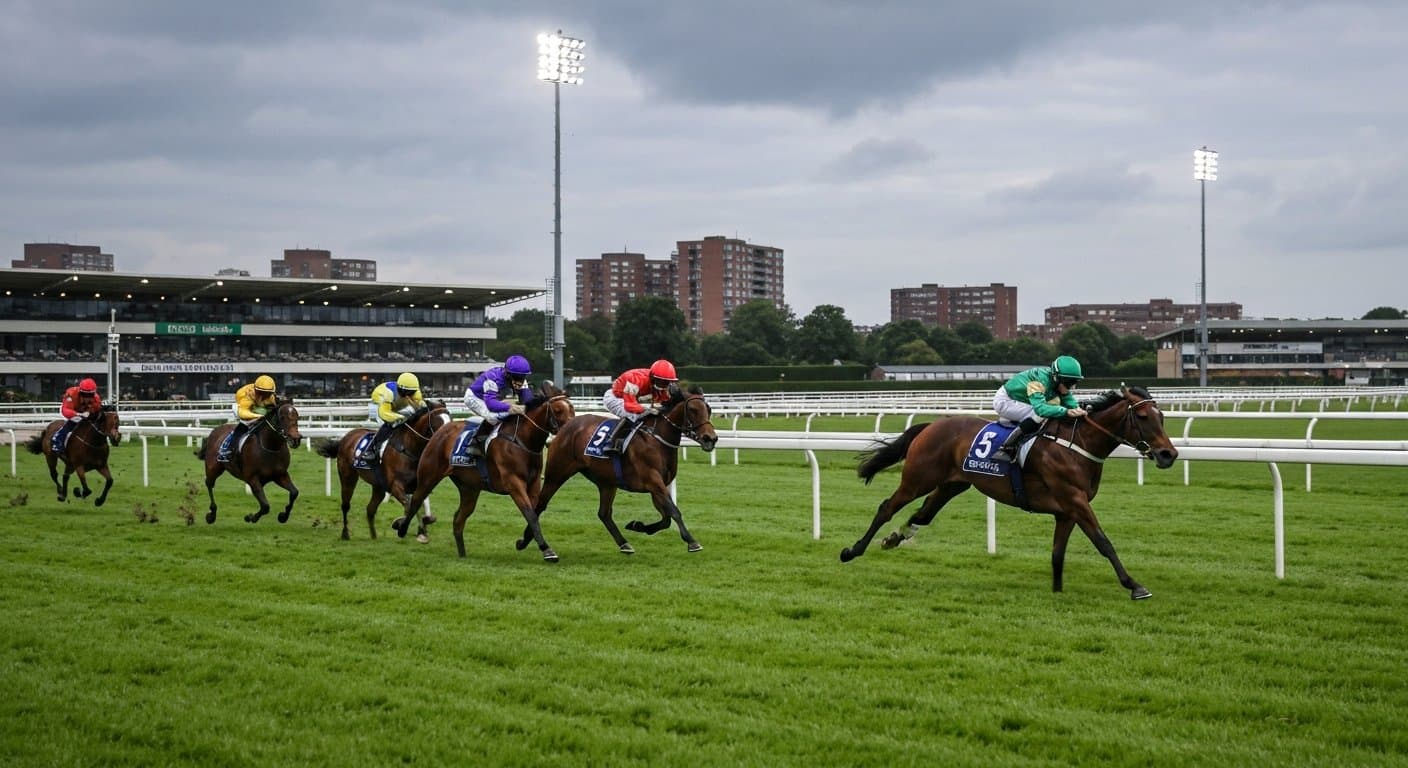
Evening Racing at Wolverhampton
Your guide to floodlit evening racing at Wolverhampton — the unique atmosphere, betting tactics and what to expect.
Read moreWolverhampton Festival Guide
Your complete guide to Wolverhampton Racecourse's all-weather festivals — the Winter Series, the floodlit evening meetings and what makes this Midlands Polytrack circuit Britain's most prolific race-day host.
Read more
The History of Wolverhampton Racecourse
From Victorian turf racing to a modern all-weather venue — the story of Wolverhampton's Dunstall Park.
Read moreGamble Responsibly
Gambling should be entertaining and not seen as a way to make money. Never bet more than you can afford to lose. If you or someone you know has a gambling problem, help and support is available.