
Founder & Editor · Last reviewed 2026-04-07
Worcester Racecourse offers one of the most visually magnificent racing experiences in Britain. Set beside the River Severn, its flat, left-handed oval frames a view dominated by Worcester Cathedral — one of England's great medieval buildings — rising from the city on the opposite bank. The sight of horses jumping fences against that cathedral backdrop, particularly in the long light of a summer evening, is one of those images that reminds you why racing remains so deeply embedded in the English countryside and its culture.
The course stages summer jump racing from May through October, placing it among the small and valuable network of venues that keep National Hunt racing alive through the months when Cheltenham, Sandown, Kempton and Haydock are devoted to the flat calendar. Summer jumps racing exists at only a handful of tracks — Worcester alongside Stratford, Cartmel, Market Rasen and a few others — and it provides both a competitive outlet for horses that prefer the firmer summer ground and a very different atmosphere from the winter game.
Summer at Worcester means something specific and appealing. The ground is genuinely good to firm for most of the season, fast-draining turf providing a surface very different from the soft and heavy ground of winter jumping. The horses that thrive in this environment are not the heavy-mud specialists of the winter festivals but lighter, quicker athletes whose jumping is sharp and pace-oriented. Summer jumping is a different discipline, and Worcester's flat, fast circuit suits the summer specialist perfectly.
The course itself is compact and accessible — good sight-lines from the main grandstand across the flat oval, plenty of riverside space for picnics and lawn racing, and Worcester city centre within comfortable walking distance. The absence of imposing architecture and corporate complexity gives Worcester a relaxed, open quality that is perfectly suited to summer afternoon and evening meetings.
Worcester city centre, ten minutes on foot across the Severn bridges, offers excellent restaurants, pubs and accommodation options that make the course one of the most convenient in Britain for combining racing with an evening out. The combination of the cathedral view, the riverside setting and the city's hospitality makes Worcester one of the most distinctive and enjoyable racing destinations in the country.
Bet on Worcester
Place your bets on Worcester races with a trusted bookmaker.

Promo code BETFRED50. New customers only. Register, deposit with a Debit Card, and place a first bet of £10+ at Evens (2.0)+ on Sports, to be settled within 7 days, to get £30 in Sports Free Bets and £20 in Bet Builder Free Bets within 24 hours of settlement. 7-day expiry. Eligibility & payment exclusions apply. Full T&Cs apply. Take Time to Think. BeGambleAware.org. 18+. Full T&Cs.

Promo code R30. New UK customers only, 18+. Register, deposit £10 or more, then place a £10 single cash bet at odds of 1/2 (1.5) or greater on any sports market (excluding Virtuals). Once the qualifying bet settles you get £30 in Free Bets (3 x £10) — the qualifying bet can win or lose. Free Bets are valid on any sports market excluding Virtuals, expire in 7 days, are non-withdrawable and must be used in full. Excluded deposit methods apply (including PayPal, Apple Pay, Skrill and NETELLER). Named bets such as Lucky 15 do not qualify. If you cash out the qualifying bet, or it is voided, you are no longer eligible for the offer. Ends 31.12.26. Full T&Cs apply. Please gamble responsibly. BeGambleAware.org. 18+. Full T&Cs.

Promo code BET40GET20. New UK customers, 18+. Register with the code and place a first bet of £40 or more at Evens (2.0) or greater. Receive 2 × £10 free bets: the first credited automatically once the qualifying bet settles, the second 24 hours later. Free bets must be placed at minimum odds of 4/1 (5.0), expire 24 hours after credit, and the free-bet stake is not returned with winnings. Debit card deposits only. Take Time to Think. BeGambleAware.org. 18+. T&Cs apply. Full T&Cs.

50% of your first-day net losses refunded as a free bet, capped at £25. New UK customers aged 18+ only. To qualify, deposit and place a first bet of £10 or more on any sport at minimum odds of evens (2.00), then place at least two further bets on different events, each worth at least 50% of your largest bet, all at evens (2.00) or greater. Losses are counted from your first settled bet until 23:59 the same day. Place a qualifying £10+ bet and you are guaranteed at least a £5 free bet. Bets placed at SP, void bets, cashed-out bets and bets struck with free bets do not count towards the offer. The free bet is credited the day after your qualifying bets settle and must be used within 7 days, after which it expires. It can be used at odds from 1/4 (1.25) up to 250/1 on singles and straight accumulators, but not on Trixie, Patent or Yankee style multiples. Free-bet stake is not returned with winnings. One offer per person, household, address, IP address and device. E-wallet deposits may not qualify, so check the cashier before depositing. Customers registered with GAMSTOP cannot claim. KYC identity verification must be completed before the free bet is credited. Take Time to Think. BeGambleAware.org. 18+. T&Cs apply. Full T&Cs.

New customers, 18+. Choose the sports bonus at sign-up, make a first deposit and receive a 100% bonus up to £50 in your Sports Bonus balance. To convert the bonus to cash, wager it 10x within 30 days. Single bets below Evens (2.00) do not qualify; accumulators do not qualify if any selection is below 1/2 (1.50). Virtual Sports, voided, cancelled, drawn, cashed-out and free-bet wagers do not count towards wagering. Only the first settled bet per event counts. Withdrawing before the wagering requirement is met forfeits the bonus balance including bonus winnings. Real-money funds are used before bonus funds. Deposits via Skrill or Neteller are not eligible. Not valid in conjunction with other promotions. Odds, bet and payment limits apply. 10bet general and promotion T&Cs apply. BeGambleAware.org. 18+. Full T&Cs.

New customers in Great Britain and Republic of Ireland, 18+. Place a £10 fixed-odds qualifying bet at minimum odds of 1/2 (1.50) — single or each-way (only the win part counts), pre-event or in-play, not cashed out early, within 28 days of opening the account. Receive up to £60 in bonuses credited over three days: 3 × £10 fixed-odds free bets (the first on settlement, then 24 and 48 hours later) plus 3 × £5 Total Goals FOOTBALL spread bets, 3 × £5 racing Winning Favourites spread bets and a £1 racing Race Index spread bet (the spread bets need a full spread-betting account). Free-bet stakes not returned with winnings; free bets valid 28 days from issue. IMPORTANT: the £5 credits are SPREAD bets — sports spread betting carries the risk that losses can exceed your stake. Sports spread-betting customers do not have Financial Ombudsman or FSCS recourse. Take Time to Think. BeGambleAware.org. 18+. T&Cs apply. Full T&Cs.

Promo code WELCOME15, entered under My Bonuses after registering. New UK customers, 18+. Place a first qualifying bet of at least £10 from your cash balance at odds of evens (2.0) or greater within 7 days of opening the account. Once the qualifying bet fully settles you receive £15 in free bets, credited as 3 x £5 tokens with set uses: one £5 accumulator free bet (minimum 4 legs, each leg at 2/5 or bigger), one £5 sports free bet (any market at evens or bigger) and one £5 Sub Cover free bet (selected football player markets at evens or bigger). Free-bet stakes are not returned with winnings. Free bets expire 7 days after they are credited. Void, cashed-out and partially cashed-out bets do not qualify. One offer per customer. Confirm the current terms on BetGoodwin's own welcome-offer page before claiming. Take Time to Think. BeGambleAware.org. 18+. T&Cs apply. Full T&Cs.

New UK customers, 18+. Minimum deposit £10. Place a £10 qualifying single at minimum odds of 1/2 (1.50), settled within 14 days. Receive £30 in free bets (stake not returned), split £20 for sportsbook use (2 x £10) and £10 for Bet Builder only (2 x £5); Bet Builder does not cover horse racing. Free bets must be accepted within 7 days and expire 7 days after acceptance. No promo code required. Best Odds Guaranteed on UK & Irish racing, subject to having staked over £25 in the previous seven days. Operated by LiveScore Betting and Gaming (Gibraltar) Ltd, UKGC 56859. Confirm the current terms on LiveScore Bet's own promotions page before claiming. Take Time to Think. BeGambleAware.org. 18+. T&Cs apply. Full T&Cs.
18+. BeGambleAware.org
Day-by-Day Guide
May Opening Meeting
Worcester's season begins in May, and the opening meeting draws a mix of horses: some fresh from the spring festivals at Cheltenham, Punchestown and Aintree who are being aimed at summer campaigns, and some that have operated specifically during the summer months in previous seasons and are returning to their preferred conditions. The May cards are competitive — the novelty of the newly-opened season and the generally reliable ground conditions produce well-attended meetings with genuine competitive content.
The opening meeting is a useful form-spotting opportunity. Horses making their first summer appearance reveal whether they handle the firmer Worcester ground, and the early-season results establish the form lines that will carry through to the busiest summer fixtures.
June Festival Day
By June, the Worcester season is in full stride. The busiest competitive card of the early summer programme typically falls in June — a day when the handicap chasers and summer-specialist hurdlers are fully wound up and the fields have real quality throughout. The June fixture is Worcester's first genuinely major day: a multi-race card where the racing is as competitive as anything the summer jumping calendar produces.
Trainers from across Britain and Ireland use the June Worcester cards to progress novice chasers, give promising young hurdlers experience of summer conditions, and run handicappers in races that offer decent prize money in a well-organised competitive environment.
July and August Evening Meetings
Summer evening jump racing at Worcester beside the River Severn is one of the great experiences in British sport. As the afternoon cools into evening and the light begins to change across the cathedral, the atmosphere beside the Severn combines the aesthetic of great English landscape with the pleasure of genuine athletic competition. Racing under these conditions — good to firm ground, long summer evenings, the cathedral illuminated across the river — is unlike anything the winter jump programme can offer.
The evening meetings draw a different audience from the afternoon fixtures: couples, groups of friends, families. It is racing as an evening out as much as a betting event, and the atmosphere is correspondingly relaxed and celebratory. But the racing is genuine — summer specialists in their best conditions, competing on fast ground that separates the quick jumpers from the plodders.
September Finale
September cards bridge the summer programme to the autumn, as horses begin to return from summer campaigns and the first thoughts of winter preparation begin. The ground can become softer in September after August's heat breaks, providing transition conditions. The September meetings at Worcester draw horses finishing their summer programmes and others making their first appearances of a new autumn campaign.
October Transition
The final meetings of the Worcester season — typically in October — mark the transition from summer to proper autumn jumping. The ground softens further, the days shorten, and the horses competing at Worcester in October are increasingly those whose primary objectives lie in the winter months ahead.
Key Races to Watch
Fixed Brush Hurdle Series Final (late September, 2m 4f)
Worcester's most important race is a Class 2 novices' handicap hurdle over two miles and four furlongs, run on the season's finale raceday in late September. The 2026 running is on Friday 25 September, and the card carries £70,000 in total prize money. The race takes its name from the fixed-brush hurdles Worcester jumps, which are stiffer than the standard knock-down flights.
An earlier version of this page named a "Worcester Summer Handicap Chase" as the principal prize of the Worcester season, run in July or August over 2m 4f to 3m. No race of that name exists at Worcester, and the course's biggest race is a hurdle in September rather than a chase in high summer. The claim has been removed.
The final sits on top of a qualifying series. Qualifiers run at Worcester and Southwell from early May, and horses placed in the first six in one are eligible to enter. That makes qualifier form the most directly comparable evidence in the race, over the same obstacles at the same track. The variable it does not account for is ground: the 2024 final was run on soft, while the summer qualifiers are usually on good or quicker.
The October Memorial Card
Worcester's other day with two named races on it comes in October: the Richard Davis Memorial and the Fred & Mercy Rimell Memorial on the same afternoon. In 2025 they went off at 13:00 and 13:30 on Wednesday 22 October.
Both move around in conditions from year to year. The Richard Davis has run as a handicap chase, as a novices' limited handicap and as a Class 3 beginners' chase; the Rimell was a Class 4 handicap chase over 2m ½f in 2025 and a mares' novices' handicap chase in 2022. Neither should be treated as a fixed format.
Ladies Day
The first Saturday in June is Worcester's biggest crowd rather than its best racing. More than 9,000 attended in 2024 and over 10,000 in 2025, the Centre Course enclosure opens specifically for the day, and the course runs Style Awards. The racing is the ordinary summer programme, which is worth knowing before you plan a betting day around it.
What Worcester does not have
There is no Group, Graded or Listed racing at Worcester under either code. The one Grade 2 ever to carry the course's name, the Worcester Novices' Chase, first run in 1990, transferred to Newbury in 2000, became the John Francome Novices' Chase in 2017 and was removed from the programme in 2023/24. The course's one historic named race is the Worcester Grand Annual Steeplechase, run from 1836 to 1933 and revived once in 2018 for the course's 300th anniversary, when Bestwork won it.
Betting Preview
Going is the Primary Variable
At Worcester, more than at almost any other jump track in Britain, the going determines everything. The flat, riverside turf drains well; summer meetings from May to August are almost invariably run on good or good to firm ground. September can bring softer conditions, and October invariably does. The fundamental rule for betting at Worcester is to match the horse's proven ground preferences to the conditions on the day, and that match is more decisive here than at a track with more topographical variation that dilutes the impact of going.
Horses that have demonstrated they handle fast, flat summer ground — ideally through course form at Worcester, Stratford or Market Rasen — hold a clear advantage over horses whose form has been built primarily on winter ground. The summer jump specialist exists as a genuine type: an athletic, quick-jumping horse with a flat-track galloping action that simply does not handle deep winter mud but is at its best on firm conditions. Identifying these horses is the most profitable analytical exercise available in Worcester betting.
Irish Raiders Offer Value
Irish trainers from the major yards specifically target English summer jump prize money. Willie Mullins, Gordon Elliott and several other leading handlers enter horses in Worcester novice chases and handicap hurdles because the prize money is available, the competition quality is manageable, and the conditions suit horses that have been raised on good Irish ground. The English market does not always price these horses correctly — their Irish form is sometimes dismissed as less relevant than English form, when in fact a horse with two or three strong Irish bumper or hurdle performances behind it is arriving at an English novice chase as one of the better-qualified horses in the field.
Northern Yard Sorties — Apply Scepticism
Occasional runners from northern yards — particularly second or third strings from Paul Nicholls, Nicky Henderson or Gordon Elliott stables making the journey to Worcester for a specific race — should be assessed carefully rather than automatically followed. A long journey for a horse that is not the yard's main priority runner can produce an uninspiring performance. Check whether the horse in question fits the summer ground conditions, and whether the trainer's record at summer meetings specifically — rather than their overall record — justifies the starting price.
Flat Circuit Suits Flat-Track Gallopers
Worcester's oval, flat layout rewards horses with a long, low, flat-track galloping action — the type that does well at Exeter (flat and galloping), Market Rasen (flat) and Stratford (flat oval). Cheltenham specialists — horses bred and trained for the undulating, camber-heavy Festival track — do not always translate their form to Worcester's entirely different geometry. When a horse's primary form references are all from Cheltenham, Sandown or Kempton, apply a discount when assessing its Worcester credentials.
Visitor Information
Getting There
By rail: Worcester has two city centre stations — Shrub Hill and Foregate Street — both approximately ten minutes' walk from the racecourse. Foregate Street is usually marginally closer for the riverbank approach. Services from Birmingham New Street take around 30 minutes; from Bristol Temple Meads approximately 50 minutes; from London Paddington around two hours. The rail access makes Worcester one of the most straightforwardly train-accessible jump tracks in the Midlands, and arriving by train allows you to walk through the city centre to the course, which is in itself a pleasant approach.
By car: The M5 motorway provides the most direct route — Junction 7 for Worcester south, then the A44 towards the city centre. The racecourse is signposted clearly from the major approaches. Free parking adjacent to the course is available, and the flat, accessible location means the walk from the car park to the enclosures is minimal.
Enclosures and Facilities
The main grandstand runs along one side of the oval, providing clear views across the circuit and — crucially — the Cathedral backdrop visible across the river. The riverside lawn areas provide informal outdoor space for those who prefer to watch away from the grandstand, and on evening meetings these areas are among the most pleasant anywhere in British summer sport.
The parade ring is accessible and compact, giving spectators an excellent close-up view of horses before each race. Catering at Worcester reflects its summer, festival character — food concessions and bars are oriented towards the outdoor evening audience, and the quality has improved significantly in recent seasons. Bring a blanket or rug for lawn meetings, particularly on September and October evenings when the temperature drops after sunset.
Practical Tips
Evening meetings are the essential Worcester experience. If you are visiting once, visit for a July or August evening fixture. The cathedral lit at dusk, racing in the foreground, a long summer evening — it is unlike anything else in British sport.
Bring a picnic. The lawn areas alongside the river are entirely appropriate for a picnic, and many racegoers bring food and wine for summer meetings. This is one of the few British racecourses where a picnic genuinely fits the atmosphere.
Smart casual dress is standard throughout the summer. Bright summer colours, linen, light layers — dress for a summer evening outdoors rather than for a midwinter festival.
Post-Racing
Worcester city centre — ten minutes' walk — has an excellent range of restaurants and pubs concentrated around the High Street, Friar Street and the Cathedral. The Worcestershire countryside surrounding the city offers country pubs and restaurants within a short drive. For overnight stays, Worcester has a good range of hotels and B&Bs within easy distance of the course.
Share this article
More about this racecourse
All Worcester guides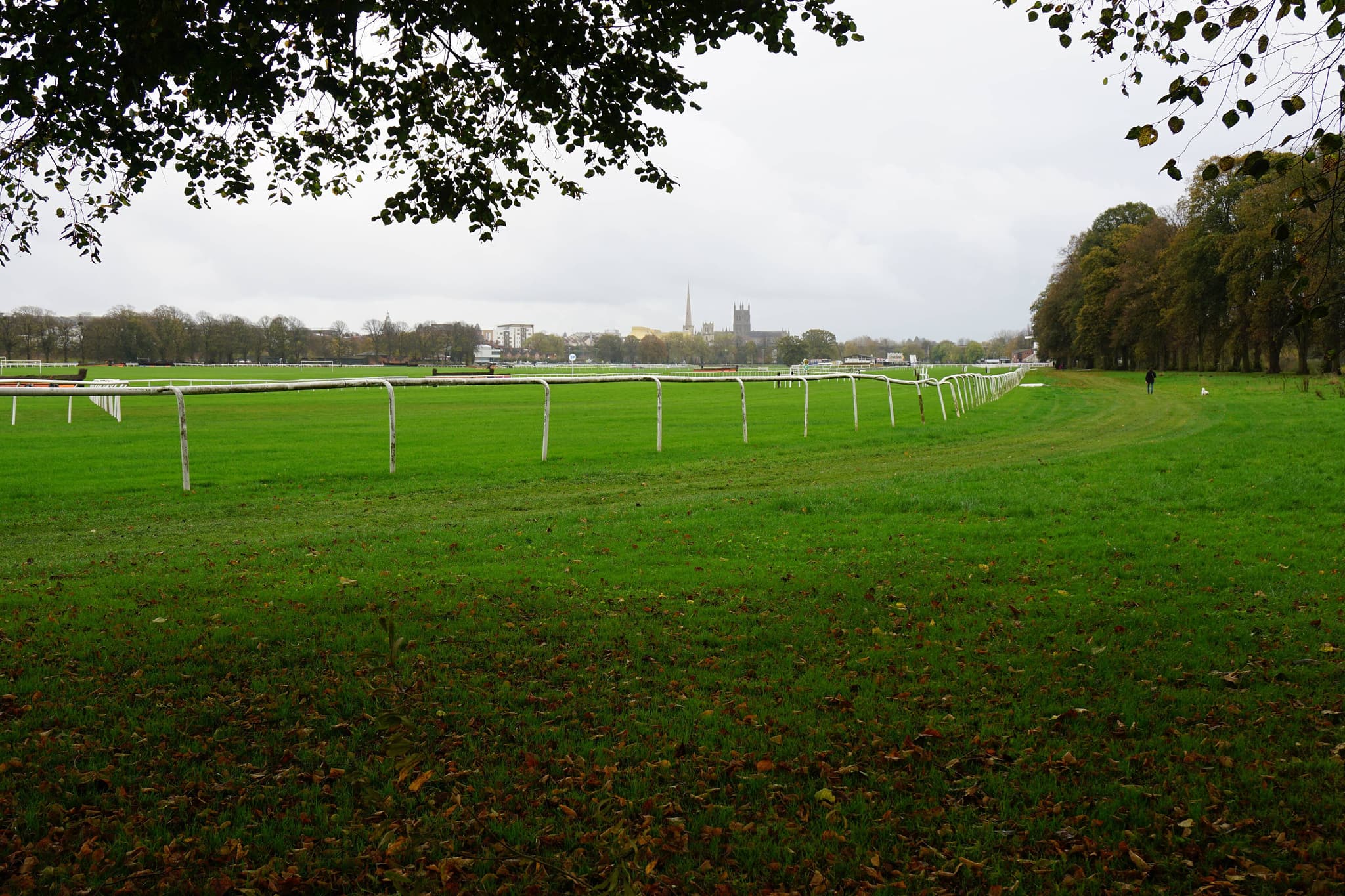
The History of Worcester Racecourse
Over 300 years of racing at Worcester — from the banks of the Severn to the West Midlands' riverside National Hunt venue and the Worcester Cup.
Read more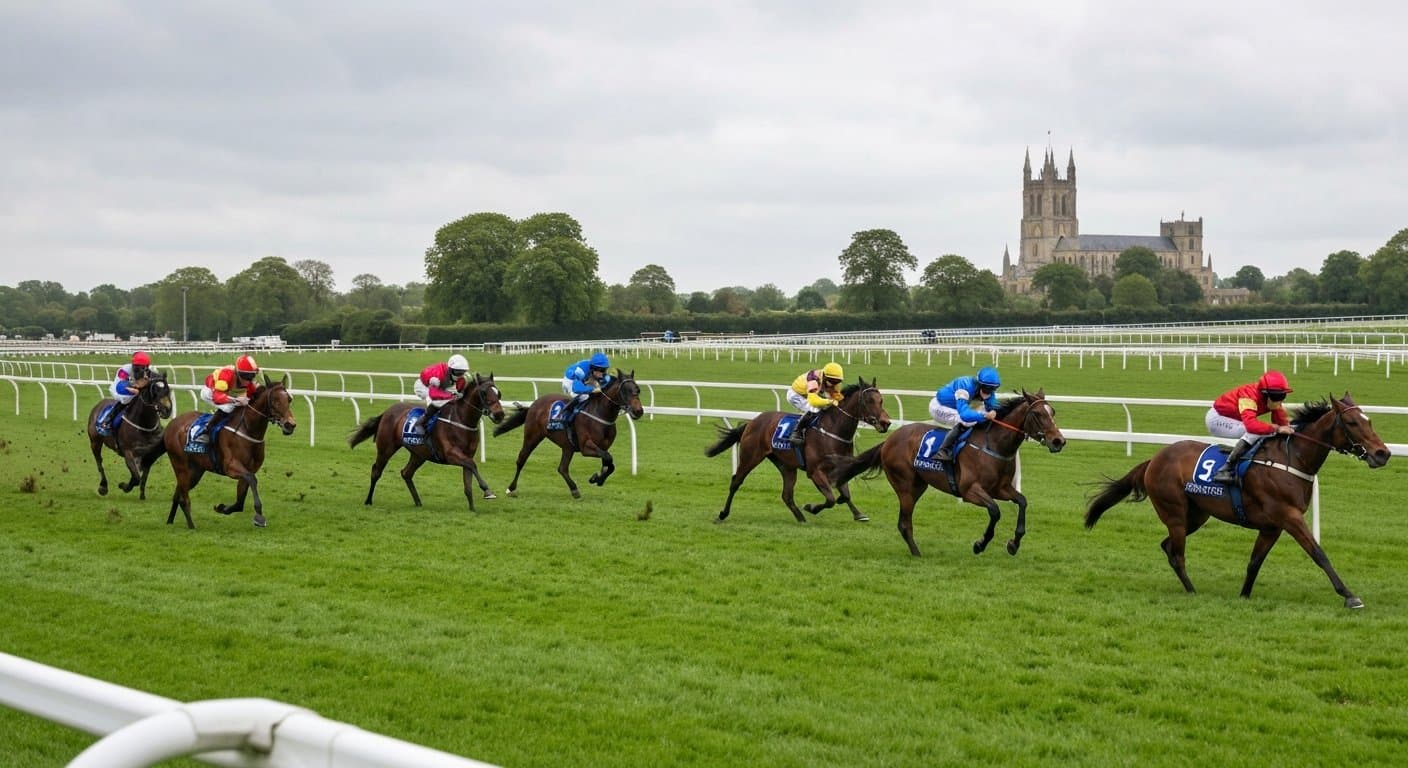
Summer Jumping at Worcester: Complete Guide
Summer jumping at Worcester — the Worcester Cup, key meetings, and National Hunt racing in the West Midlands when most tracks have switched to the flat.
Read more
Morley Street at Worcester: The Complete Story
Morley Street won his first chase at Worcester in 1990, then took the Cheltenham Champion Hurdle in 1991. The story of a summer jumping course and a future champion.
Read morePhotos on this page are used under Creative Commons licences. Titles, sources and licence links for each one are on our image credits page.
Research the field with the AI Race Predictor
Our model publishes calibrated win-probability estimates for UK races — a second opinion to understand a race, not tips. It's open about its record: it doesn't beat the market, and we show exactly how it does.
Work it out & learn the basics
Gamble Responsibly
Gambling should be entertaining and not seen as a way to make money. Never bet more than you can afford to lose. If you or someone you know has a gambling problem, help and support is available.