
Founder & Editor · Last reviewed 2026-10-14
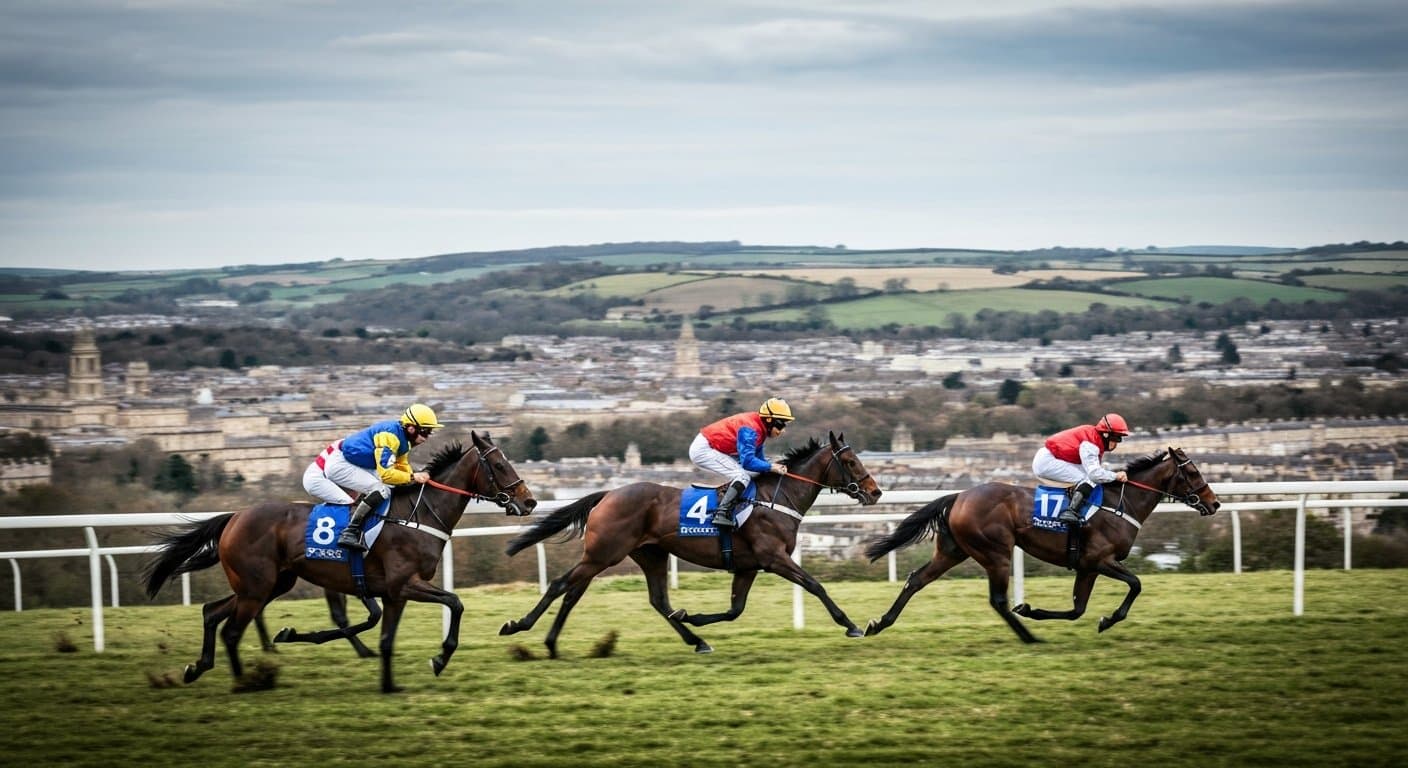
Bath sits at 780 feet above sea level on Lansdown Hill, making it the highest flat racing course in Britain. The elevation shapes everything: the going dries more quickly than at lower courses after rain, the exposure to wind can affect how races are run, and the pronounced uphill finish filters out horses that lack the stamina to grind to the line. It is a track where form from flat, galloping venues often needs substantial discounting, and where horses that have previously won here carry a measurably stronger claim than their rating alone suggests.
The course stages flat racing from April through October, with the summer months — June, July, and August — providing the most competitive fields and the highest programme quality. The summer is sold as Summer At Bath, a run of themed racedays rather than one headline meeting, and the two Listed races, the Lansdown Fillies' Stakes and the Beckford Stakes, come in April and October. Evening racing adds fixtures through the warmer months with a different atmosphere but the same track characteristics.
Key angles to establish before betting at Bath:
- Course form is the highest-value filter — horses that have won or placed at Bath, particularly in similar race conditions, carry evidence that others cannot match
- The uphill finish is the key discriminator — horses that lack the stamina to grind up the final rise are found out regardless of class; sprint form from flat tracks does not guarantee ability to handle the gradient
- Low draw offers a marginal advantage in sprints — stalls one through six over five and six furlongs carry a modest edge, but the bias is not strong enough to make draw the primary selection factor
- Form from undulating tracks transfers better than form from galloping circuits — Catterick, Brighton, and Chester form translates more reliably than form from Newmarket, York, or Doncaster
- West Country trainers know the track — stables within 60 miles of Lansdown have a structural advantage in course knowledge; their horses are worth noting in competitive handicaps
- The gravel subsoil drains quickly — going can shift from Good to Soft to Good or Good to Firm within 24 hours in summer; always check the raceday report before betting
The complete guide to Bath covers the course's history and layout in detail. The history guide traces the track back to its origins. For a day visit, the day out guide covers the practical details. The Kind at Bath guide covers the course's most famous race moment.
This guide focuses on the betting angles — what the track demands, who exploits it best, and which strategies consistently generate value across the season.
Bet on Bath
Place your bets on Bath races with a trusted bookmaker.

Promo code BETFRED50. New customers only. Register, deposit with a Debit Card, and place a first bet of £10+ at Evens (2.0)+ on Sports, to be settled within 7 days, to get £30 in Sports Free Bets and £20 in Bet Builder Free Bets within 24 hours of settlement. 7-day expiry. Eligibility & payment exclusions apply. Full T&Cs apply. Take Time to Think. BeGambleAware.org. 18+. Full T&Cs.

Promo code R30. New UK customers only, 18+. Register, deposit £10 or more, then place a £10 single cash bet at odds of 1/2 (1.5) or greater on any sports market (excluding Virtuals). Once the qualifying bet settles you get £30 in Free Bets (3 x £10) — the qualifying bet can win or lose. Free Bets are valid on any sports market excluding Virtuals, expire in 7 days, are non-withdrawable and must be used in full. Excluded deposit methods apply (including PayPal, Apple Pay, Skrill and NETELLER). Named bets such as Lucky 15 do not qualify. If you cash out the qualifying bet, or it is voided, you are no longer eligible for the offer. Ends 31.12.26. Full T&Cs apply. Please gamble responsibly. BeGambleAware.org. 18+. Full T&Cs.

Promo code BET40GET20. New UK customers, 18+. Register with the code and place a first bet of £40 or more at Evens (2.0) or greater. Receive 2 × £10 free bets: the first credited automatically once the qualifying bet settles, the second 24 hours later. Free bets must be placed at minimum odds of 4/1 (5.0), expire 24 hours after credit, and the free-bet stake is not returned with winnings. Debit card deposits only. Take Time to Think. BeGambleAware.org. 18+. T&Cs apply. Full T&Cs.

50% of your first-day net losses refunded as a free bet, capped at £25. New UK customers aged 18+ only. To qualify, deposit and place a first bet of £10 or more on any sport at minimum odds of evens (2.00), then place at least two further bets on different events, each worth at least 50% of your largest bet, all at evens (2.00) or greater. Losses are counted from your first settled bet until 23:59 the same day. Place a qualifying £10+ bet and you are guaranteed at least a £5 free bet. Bets placed at SP, void bets, cashed-out bets and bets struck with free bets do not count towards the offer. The free bet is credited the day after your qualifying bets settle and must be used within 7 days, after which it expires. It can be used at odds from 1/4 (1.25) up to 250/1 on singles and straight accumulators, but not on Trixie, Patent or Yankee style multiples. Free-bet stake is not returned with winnings. One offer per person, household, address, IP address and device. E-wallet deposits may not qualify, so check the cashier before depositing. Customers registered with GAMSTOP cannot claim. KYC identity verification must be completed before the free bet is credited. Take Time to Think. BeGambleAware.org. 18+. T&Cs apply. Full T&Cs.

New customers, 18+. Choose the sports bonus at sign-up, make a first deposit and receive a 100% bonus up to £50 in your Sports Bonus balance. To convert the bonus to cash, wager it 10x within 30 days. Single bets below Evens (2.00) do not qualify; accumulators do not qualify if any selection is below 1/2 (1.50). Virtual Sports, voided, cancelled, drawn, cashed-out and free-bet wagers do not count towards wagering. Only the first settled bet per event counts. Withdrawing before the wagering requirement is met forfeits the bonus balance including bonus winnings. Real-money funds are used before bonus funds. Deposits via Skrill or Neteller are not eligible. Not valid in conjunction with other promotions. Odds, bet and payment limits apply. 10bet general and promotion T&Cs apply. BeGambleAware.org. 18+. Full T&Cs.

New customers in Great Britain and Republic of Ireland, 18+. Place a £10 fixed-odds qualifying bet at minimum odds of 1/2 (1.50) — single or each-way (only the win part counts), pre-event or in-play, not cashed out early, within 28 days of opening the account. Receive up to £60 in bonuses credited over three days: 3 × £10 fixed-odds free bets (the first on settlement, then 24 and 48 hours later) plus 3 × £5 Total Goals FOOTBALL spread bets and 3 × £5 racing Winning Favourites spread bets, with a £1 racing Race Index spread bet as an extra on top. The spread bets need a full spread-betting account, opened within 28 days of the fixed-odds account and subject to Spreadex's eligibility and appropriateness checks. Free-bet stakes not returned with winnings; free bets valid 28 days from issue. IMPORTANT: the £5 credits are SPREAD bets — sports spread betting carries the risk that losses can exceed your stake. Sports spread-betting customers do not have Financial Ombudsman or FSCS recourse. Take Time to Think. BeGambleAware.org. 18+. T&Cs apply. Full T&Cs.

Promo code WELCOME15, entered under My Bonuses after registering. New UK customers, 18+. Place a first qualifying bet of at least £10 from your cash balance at odds of evens (2.0) or greater within 7 days of opening the account. Once the qualifying bet fully settles you receive £15 in free bets, credited as 3 x £5 tokens with set uses: one £5 accumulator free bet (minimum 4 legs, each leg at 2/5 or bigger), one £5 sports free bet (any market at evens or bigger) and one £5 Sub Cover free bet (selected football player markets at evens or bigger). Free-bet stakes are not returned with winnings. Free bets expire 7 days after they are credited. Void, cashed-out and partially cashed-out bets do not qualify. One offer per customer. Confirm the current terms on BetGoodwin's own welcome-offer page before claiming. Take Time to Think. BeGambleAware.org. 18+. T&Cs apply. Full T&Cs.

New UK customers, 18+. Minimum deposit £10. Place a £10 qualifying single on sports (excluding virtuals) at minimum odds of 1/2 (1.50), settled within 14 days. Deposit-method exclusions apply. Receive £30 in free bets (stake not returned), split £20 for sportsbook use (2 x £10) and £10 for Bet Builder only (2 x £5); Bet Builder does not cover horse racing. Free bets must be accepted within 7 days and expire 7 days after acceptance. No promo code required. Best Odds Guaranteed on UK & Irish racing, subject to having staked over £25 in the previous seven days. Operated by LiveScore Betting and Gaming (Gibraltar) Ltd, UKGC 56859. Confirm the current terms on LiveScore Bet's own promotions page before claiming. Take Time to Think. BeGambleAware.org. 18+. T&Cs apply. Full T&Cs.
18+. BeGambleAware.org
Track Characteristics
The Bath circuit is left-handed, measuring approximately one mile and two furlongs around. The full track is set on Lansdown Hill at 780 feet — the highest elevation of any flat course in Britain. This is not merely a geographical curiosity. The height determines drainage behaviour, influences the going in ways that differ from lower-lying courses, and the gradient of the final rise is the single most important physical feature on the track from a betting perspective.
The Uphill Finish
The run-in at Bath rises steadily for the final furlong and a half to the winning post. This is steeper than it appears from the grandstand. Horses that are beginning to tire in the final two furlongs face an increasingly demanding gradient just as they need to find their finishing effort. Horses with abundant stamina for the distance are not meaningfully affected — they are still travelling strongly when the hill begins to bite. Horses at the limit of their stamina, or those racing on inadequate ground preparation, are found out in the last hundred yards when the hill takes hold.
The practical implication for betting is significant. A horse that has won comfortably over the same distance at a flat course like Windsor or Kempton has done so without the final stamina challenge that Bath imposes. A horse rated at the top of its distance range — a miler that tends to get outpaced over further — may find the Bath mile a difficult proposition even if it has won over the same trip elsewhere.
The Bends and Track Shape
Bath's bends are tight for a course of its total length. The turns come up relatively quickly on the approach to the home straight, which itself is shorter than at most British flat courses. Horses that are nimble and handy through the bends — those that can maintain their rhythm without losing lengths wide — have an advantage over horses that are broad, free-running types requiring a long, sweeping straight to show their best.
This is the structural reason why form from galloping tracks translates poorly to Bath. At Newmarket, York, and Doncaster, horses can run in a straight line for substantial distances before needing to change their balance. At Bath, the bends demand a different kind of athleticism: the ability to shorten stride, maintain balance through a turn, and then produce effort on the uphill straight. Horses that have raced well at Catterick, Epsom, Chester, or Brighton — all undulating or tight-turning flat tracks — carry more transferable form to Bath than horses arriving from straight-track or wide galloping venues.
The Sprint Course
Bath's five-furlong course runs from a separate chute into the main circuit before joining the round course for the final portion. The full five furlongs include a slight downhill section from the start, followed by the undulating back straight, then the final uphill run. Sprint races at Bath are not simply tests of raw speed — they require a horse that can handle gradient changes, maintain its action through a turn, and still produce power on the rise to the line.
This makes Bath sprints more demanding than sprints at flat all-weather tracks. A horse that excels over five furlongs on the Polytrack at Lingfield has not necessarily demonstrated the balance, stamina, or gradient handling required to win over five furlongs at Bath. Form assessment needs to account for the different nature of the physical demands.
Distance Range
Bath stages races from five furlongs to one mile and five furlongs. The majority of the programme falls between six furlongs and one mile two furlongs. The uphill finish means every distance here is marginally more demanding on stamina than the same distance at a flat course — typically equivalent to adding two or three furlongs of flat-course distance when assessing whether a horse will get the trip.
Going & Draw Bias
Bath's going behaviour differs from most flat courses because of its elevation and the gravel-rich subsoil on Lansdown Hill. At 780 feet, the course drains faster than low-lying courses and is more exposed to drying winds. Rain that would leave a valley course Soft for two or three days can produce Good ground at Bath by the following morning. This drainage efficiency is one reason the course is less vulnerable to summer fixture disruption than tracks with heavier clay soils.
Typical Seasonal Going
April and May meetings at Bath often encounter Good to Soft or Good ground. The spring season is the most variable: late April can bring heavy rain that softens the track noticeably, while a dry April can produce Good to Firm conditions by early May. Checking the going report for individual meetings is more important at this point of the season than at the height of summer.
June, July, and August typically produce Good to Firm or Good conditions. The summer dry period, combined with the elevated position and quick-draining subsoil, means summer racing at Bath usually takes place on going that is on the quick side. Horses with proven Good to Firm form — those that cope well with firm ground without being impaired by it — tend to run to their best at this time of year.
September and October meetings can encounter anything from Good to Firm in a dry autumn to Good to Soft if wet weather arrives. The going in September is the hardest to predict for Bath, and checking the raceday report matters more than at any other time of year.
How the Going Affects Race Character
On Good to Firm ground, Bath becomes a test of tactical speed. The uphill finish is still there, but a horse with a real turn of foot can win from a hold-up position if it quickens well enough to overcome the gradient. Front-runners do not have the same structural advantage they possess on flat, quick ground at one-dimensional circuits, because the final rise gives the finish a natural equalising effect.
On Good to Soft or Soft ground, stamina becomes dominant. The hill takes markedly more out of tiring horses on soft ground than on firm. In these conditions, distance form should be reassessed: a horse that has won over a mile on Good to Firm may not stay a mile on Good to Soft at Bath because the gradient effectively extends the distance. Proven soft-ground form combined with course form is a strong combination in these conditions.
Draw Bias
Bath's left-handed circuit creates a modest draw bias in sprint races. In fields of ten or more runners over five and six furlongs, stalls one through six have historically produced a slightly higher proportion of winners than high-numbered stalls. The effect is most pronounced when the field is large and pace is strong — high-drawn horses tend to be carried wide on the bends, costing them ground they cannot recover on the short uphill straight.
The bias is not extreme. In fields of fewer than ten runners, draw has minimal effect because horses have room to find their positions without major ground loss. In longer races over seven furlongs and a mile, draw effect largely disappears because horses have time to settle into their preferred positions before the bends become a deciding factor.
The practical rule: note the draw when assessing five and six furlong handicaps with fields of ten or more, weight stalls one to six slightly in favour when all else is equal, but do not make draw the primary reason to back a horse at short prices. It is a tiebreaker, not a selection driver.
Ground Checks
Bath's elevated position means its going descriptions can diverge from surrounding courses. A meeting at Salisbury or Windsor on Good to Soft on the same day may find Bath running on Good or even Good to Firm if the hill has dried more quickly. Always use the official Bath track report rather than inferring going from nearby course descriptions.
Key Trainers & Jockeys
Bath's trainer landscape is dominated by two groups: regional yards based within 60 miles of Lansdown Hill who target the course throughout the summer, and a smaller number of larger operations who send horses from further afield for specific competitive handicaps or conditions races. Understanding which category a trainer falls into helps calibrate how much weight to give their Bangor-on-Dee Bath record.
Eve Johnson Houghton
Eve Johnson Houghton trains at Blewbury in Oxfordshire, approximately 45 miles from Bath. She has built a consistent record at the course across multiple seasons. Her horses tend to be well-prepared for their targets, and she has a good eye for placing horses in races that match their ability levels. Johnson Houghton runners in Bath handicaps — particularly those at seven furlongs and a mile — are worth noting in race assessments. She does not flood the track with runners, so when she sends a horse to Bath, it typically arrives in suitable conditions.
Tim Clover
Tim Clover trains at Newmarket but has a long-established record of sending horses to Bath for summer programme races. His horses tend to suit the course: handy types that can handle the bends and grind up the hill. Clover's Bath handicap runners are frequently priced on the lenient side of the market, and his record at the course justifies treating them as realistic contenders rather than field fillers.
Regional and West Country Yards
Bath attracts a steady stream of runners from regional West Country stables — yards in Somerset, Wiltshire, Gloucestershire, and Dorset that use the course as their primary local flat venue. Several of these smaller operations have consistent records at Bath simply because they target races that suit their horses and have direct experience of how the course rides. West Country trainers attending Bath meetings throughout the season build up a library of tactical information that larger, more nationally-spread operations cannot match with occasional visits.
When a West Country trainer with a solid Bath record runs a horse that has previously won or placed here, in a class of race appropriate to its ability, that combination should be treated with more respect than a cold price comparison might suggest.
Jockey Knowledge
Bath attracts a core group of jockeys who ride here throughout the summer. Jockeys based on or near the southern circuit — those who regularly ride at Salisbury, Brighton, Kempton, and Bath itself — develop an understanding of the final hill and the tight bends that occasional visitors lack.
The specific skill at Bath is positioning a horse correctly on the final bend to enter the uphill straight without excessive use of energy, then sustaining the horse's effort up the gradient. Jockeys who have ridden winners here know how much to ask for in the final two furlongs. Jockeys having their first or second ride at Bath occasionally misjudge the hill, asking for a final effort a furlong too early and finding the horse ties up in the final fifty yards.
When a horse is ridden by a jockey who has won at Bath before — particularly in the same class of race over the same distance — it is a minor positive in the selection process. When a top-priced horse is ridden by a jockey without Bath experience in a race over seven furlongs or a mile with a gradient finish, note it as a mild negative.
Trainer Form Patterns
The most consistent training pattern at Bath, across multiple seasons, is that trainers who visit regularly tend to target meetings at a specific time of year — usually when the going suits their horses' preferences. A trainer who has won three times at Bath in August over the past four seasons is likely to bring a horse suited to fast summer ground. Their absence in September when the ground softens tells you about their seasonal targeting rather than their ability at the track.
Betting Strategies
The strategies that work at Bath are built on three structural features of the track: the uphill finish, the tight bends, and the course's drainage behaviour. Each creates a distinct betting angle that holds across seasons and race types.
Strategy One: Prioritise Course Form Above All Else
The most consistently profitable approach at Bath is to prioritise horses with previous course form. The uphill finish, the tight bends, and the sprint course gradient create a specific set of demands that not all horses handle well. A horse that has won or placed at Bath — particularly at the same distance and on similar ground — has demonstrated it can handle the test. That evidence is more directly relevant than equivalent form at a different flat course.
The strength of this angle is not simply that course specialists exist at Bath (they do, and several horses have won here five or more times). It is that the market does not always fully price in the advantage of proven course form versus form from contrasting track types. A horse with two Bath wins at one mile on Good to Firm may be priced equal to a horse with similar form from Newmarket or York. The Bath-proven horse has a structural advantage that the price does not always reflect.
Apply this strategy most aggressively in handicaps over seven furlongs and a mile, where the hill is most discriminating and where course specialists have their clearest advantage.
Strategy Two: Discount Galloping Track Form in Stamina Races
When a horse's entire form record consists of races at Newmarket, York, Doncaster, or Lingfield — all flat or near-flat galloping tracks — its form deserves a discount when running at Bath for the first time. The discount is not extreme, but it is real. The horse has never been asked to handle the tight bends and the uphill finish simultaneously.
This strategy works best when applied as a negative filter: it does not tell you who to back, but it tells you which favourites to be cautious about at short prices in stamina-oriented races. A favourite at 6/5 or 7/4 arriving at Bath for the first time off strong galloping-track form, in a race where several rivals have Bath course form, deserves less confidence than its price implies.
Strategy Three: Exploit the Going Adjustment Window
Bath's fast-draining gravel subsoil means it regularly produces going that is a full category firmer than surrounding courses on the same day. This creates an occasional mispricing opportunity. When nearby courses are running on Good to Soft and Bath is declared Good or Good to Firm, horses that have shown good form on firmer ground but whose most recent runs have been on softer ground are sometimes overlooked by a market that anchors on recent form rather than going preference.
Identify horses in summer Bath handicaps whose career best form came on Good to Firm ground, but whose most recent outing was on Good to Soft or Soft elsewhere. If the going at Bath is Good to Firm on the day, those horses are returning to their preferred conditions. The market may not fully credit the improvement that represents.
Strategy Four: Evening Race Value
Evening meetings at Bath in June and August attract different market dynamics from daytime fixtures. The fields are often smaller, the press coverage is lighter, and the market is formed with less information than for daytime cards. The track characteristics are identical. The same course form angles apply.
In evening races with fields of eight or fewer runners, a horse with Bath course form, from an in-form yard, at prices above 3/1, represents a concentrated value proposition. The reduced field size limits the alternatives and the reduced market liquidity means mispricing is more common than in daytime races with full market scrutiny.
What to Avoid
Backing horses at short prices that arrive at Bath for the first time from flat, galloping circuits in races over a mile or more where the uphill finish is a significant factor. The risk of a maiden visit to Bath at odds-on or short odds-against is that the horse simply does not handle the gradient as well as more experienced Bath runners. The downside of being wrong outweighs the upside of a modest short-priced win.
To compare place terms and each-way promotions across the major bookmakers, see our best bookmakers for horse racing guide.
Key Races to Bet On
Bath's racing calendar does not include Group 1 or Group 2 races. The course operates at Listed level at its highest point, with the programme built around competitive handicaps and conditions races, plus two Listed races for fillies and mares.
The Lansdown Fillies' Stakes and the Beckford Stakes
Bath's two named feature races are both Listed and both for fillies and mares. The Lansdown Fillies' Stakes is a sprint run in April, and the Beckford Stakes is a staying race run in October. Course form and going are the filters to apply in both.
Summer At Bath
Bath's summer racing runs as Summer At Bath, a season of themed racedays such as Ladies Day and Rum & Reggae rather than one multi-day meeting. Summer ground is usually on the quick side, so horses that have shown their best form on fast ground at Bath specifically, not just elsewhere, carry the most useful evidence.
The Somersetshire Stakes
The Somersetshire Stakes is one of Bath's historically significant races and has been contested periodically under various conditions. At its best it has served as a trial for classic-generation three-year-olds. When it appears on the programme, it carries Listed or conditions race status and attracts horses of a quality above the course's typical handicap programme. The race does not run at Bath every year — check the course's fixture announcement for the current season. When it does run, the three-year-old form from Newmarket and Newbury that dominates the market requires assessment against how those horses handle the Bath hill.
Competitive Handicaps Throughout the Season
Bath stages competitive handicaps at most of its meetings from May through September. The most informative from a betting perspective are the seven-furlong and one-mile handicaps run in summer conditions when the going is on the quick side. These races attract a consistent cast of horses, many of whom are course regulars, and the form from earlier meetings in the season transfers well to later races when going conditions are similar.
For each-way purposes, seven-furlong and one-mile handicaps at Bath with fields of ten or more runners — particularly in the summer — offer consistently competitive markets. Each-way at standard terms (quarter odds, two places) is well-suited to these races when a horse with course form is available in the 5/1 to 10/1 range.
Evening Racing Opportunities
Evening meetings in June and August — including themed fixture nights that attract larger social crowds — carry the same track characteristics as daytime meetings but with typically smaller fields and thinner betting markets. These are occasions when a horse with Bath course form in a field of seven or eight runners represents concentrated value rather than the diluted value of a large competitive field. Evening races at Bath reward systematic use of the track knowledge described in this guide more consistently than they reward raw handicap form analysis.
Share this article
More about this racecourse
All Bath guides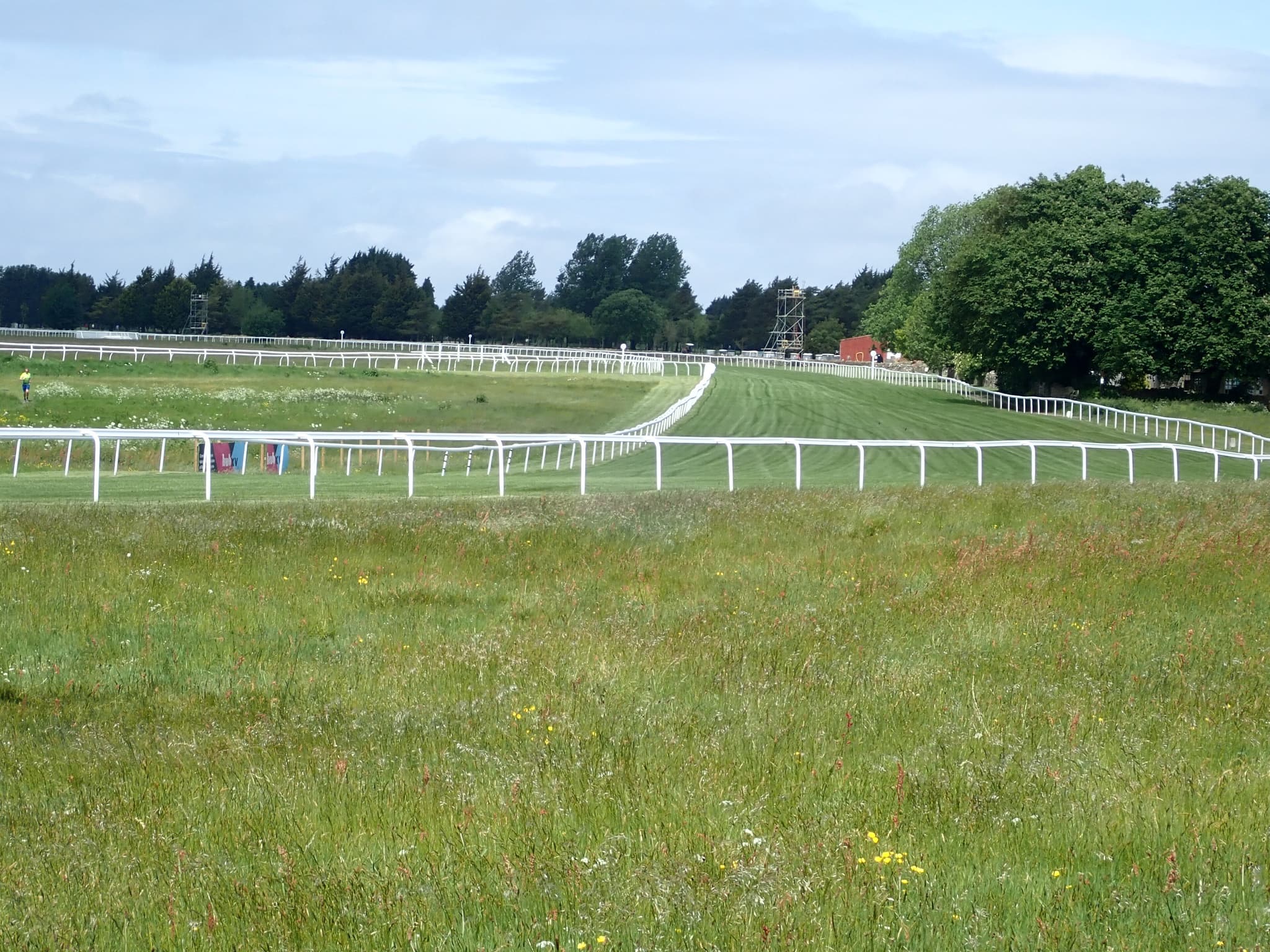
Bath Racecourse: Complete Guide
Everything you need to know about Bath Racecourse — Britain's highest flat course, the Bath Summer Meeting, and racing on Lansdown Hill.
Read more
A Day Out at Bath Racecourse
Everything you need for a day at Bath — getting there, what to wear, enclosures, food and drink, and insider tips for Britain's highest flat course.
Read more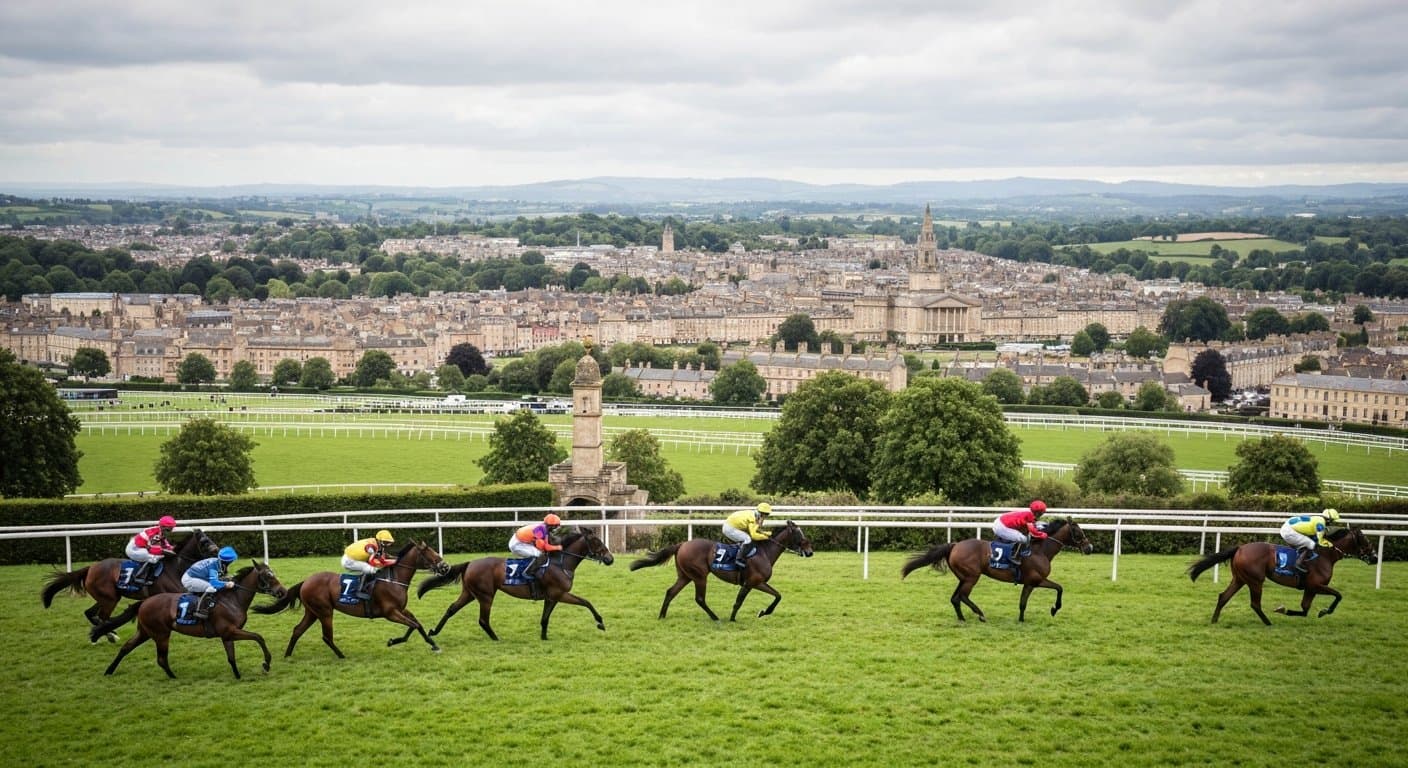
Evening Racing at Bath Racecourse
Your guide to evening racing at Bath — June evenings, Rum & Reggae, and summer nights on Britain's highest flat course.
Read morePhotos on this page are used under Creative Commons licences. Titles, sources and licence links for each one are on our image credits page.
Research the field with the AI Race Predictor
Our model publishes calibrated win-probability estimates for UK races — a second opinion to understand a race, not tips. It's open about its record: it doesn't beat the market, and we show exactly how it does.
Work it out & learn the basics
Gamble Responsibly
Gambling should be entertaining and not seen as a way to make money. Never bet more than you can afford to lose. If you or someone you know has a gambling problem, help and support is available.