
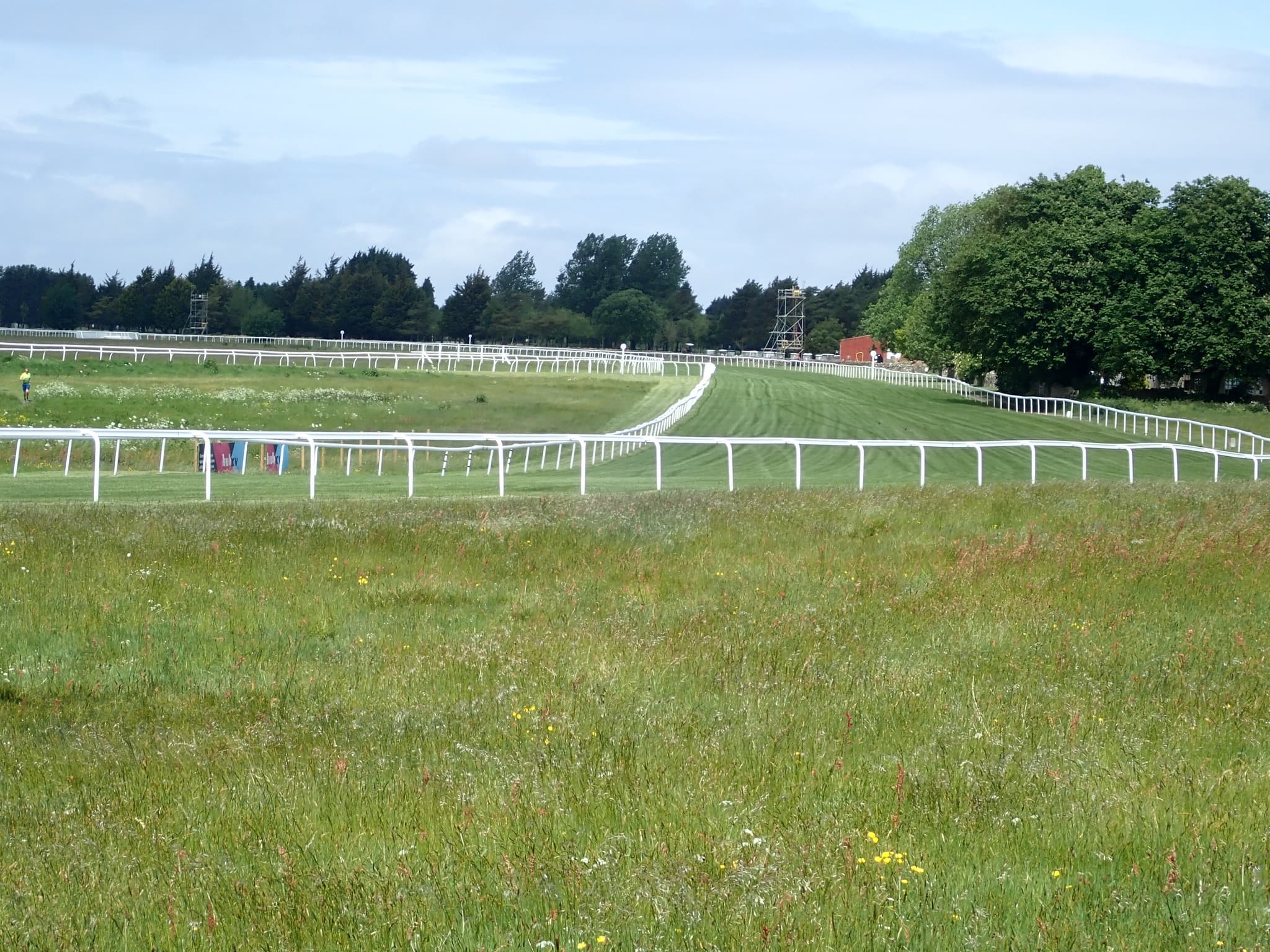
Founder & Editor · Last reviewed 2026-10-14
Bath Racecourse sits at 800 feet above sea level on the Lansdown Plateau, two miles north of Bath city centre, and no other flat course in England occupies as exposed or as dramatic a position. The limestone hilltop drains fast, commands views across to the Mendip Hills and the Cotswolds, and on clear days the Bristol Channel is visible on the horizon. The Georgian rooftops of Bath itself are spread out below. You notice all of this before a single horse has broken from the stalls.
Racing on Lansdown dates to 1728, which places Bath among the oldest flat venues in Britain. The course moved from Claverton Down to its present hilltop site in 1831, and the layout has evolved since, but the essential character has not: a tight, left-handed circuit of approximately one mile and four furlongs, with a straight mile course that descends before rising sharply to the line. Wind is a real factor at this elevation. So is the going — the limestone plateau drains very quickly, and the ground can be riding good to firm by mid-July even when the rest of southern England is slower.
Who This Guide Is For
First-time visitors will find everything they need here: how to get to a course that has no rail connection, what to expect from the facilities, and which type of day (afternoon meeting, evening social fixture or themed summer raceday) suits different plans.
Regular racegoers interested in the form puzzle will find detail on the course's characteristics: the way the straight mile descends and then climbs, the draw bias in shorter races, the trainers who target Bath in numbers, and the going patterns driven by the limestone base.
History-focused readers will find a dedicated section covering the course's three centuries of continuous operation, from its origins in the early Georgian period through to the modern Jockey Club era.
Trip planners will find sections on the Summer At Bath racedays, on evening racing fixtures, and on combining a race day with the Roman Baths, Royal Crescent, and Pump Room, all within the city below.
Quick Decisions
- Feature races: the Lansdown Fillies' Stakes (Listed, April) and the Beckford Stakes (Listed, October)
- Best for atmosphere: evening fixtures in June and July, including themed nights at the course
- Where to stand: the grandstand gives the clearest view of the uphill finish; the open terrace gives the broadest view of the circuit as a whole
- Getting there: drive or take a shuttle bus from Bath Spa station — there is no rail access to the course itself; the car park is large and free
- Going to watch for: the limestone plateau drains fast; check the going report before travelling in summer, as good to firm can arrive quickly
- Best race type to follow: two-year-old maidens; Bath produces a consistent stream of winners who go on to perform at higher levels
- Combine with: Roman Baths, Royal Crescent, Pump Room, and the Georgian city — all within two miles of the course
The Course at a Glance
Bath's circuit is left-handed and approximately one mile and four furlongs in circumference. The straight mile course, which handles five-furlong and six-furlong sprints as well as the full-mile trips, descends noticeably from the top of the plateau in the opening furlong before rising steadily over the final two furlongs to the line. That uphill finish is the defining characteristic of the track: it separates the horses that can sustain their effort from those whose finishing kicks are brief and sharp. Sprinters who arrive at Bath accustomed to flat, fast finishes at Kempton or Lingfield often find the rising ground against them in the closing stages.
The going, driven by the limestone base, is fast. Between June and August, the ground at Bath sits at good to firm for the majority of meetings, with the course's watering programme preventing firm in most years but unable to replicate the ease of a clay-based venue after rain. Trainers know this, and they target Bath accordingly: the yards at Kingsclere (Andrew Balding), Hungerford (Clive Cox), Beckhampton (Roger Charlton), and Kimpton (Ralph Beckett) are all within 50 miles of the course and supply the majority of the competitive entries throughout the summer programme.
The sections that follow cover the course layout in full, the fixture calendar, facilities, travel, history, famous moments, and a betting guide with practical angles. Each section can be read independently.
Bet on Bath
Place your bets on Bath races with a trusted bookmaker.

Promo code BETFRED50. New customers only. Register, deposit with a Debit Card, and place a first bet of £10+ at Evens (2.0)+ on Sports, to be settled within 7 days, to get £30 in Sports Free Bets and £20 in Bet Builder Free Bets within 24 hours of settlement. 7-day expiry. Eligibility & payment exclusions apply. Full T&Cs apply. Take Time to Think. BeGambleAware.org. 18+. Full T&Cs.

Promo code R30. New UK customers only, 18+. Register, deposit £10 or more, then place a £10 single cash bet at odds of 1/2 (1.5) or greater on any sports market (excluding Virtuals). Once the qualifying bet settles you get £30 in Free Bets (3 x £10) — the qualifying bet can win or lose. Free Bets are valid on any sports market excluding Virtuals, expire in 7 days, are non-withdrawable and must be used in full. Excluded deposit methods apply (including PayPal, Apple Pay, Skrill and NETELLER). Named bets such as Lucky 15 do not qualify. If you cash out the qualifying bet, or it is voided, you are no longer eligible for the offer. Ends 31.12.26. Full T&Cs apply. Please gamble responsibly. BeGambleAware.org. 18+. Full T&Cs.

Promo code BET40GET20. New UK customers, 18+. Register with the code and place a first bet of £40 or more at Evens (2.0) or greater. Receive 2 × £10 free bets: the first credited automatically once the qualifying bet settles, the second 24 hours later. Free bets must be placed at minimum odds of 4/1 (5.0), expire 24 hours after credit, and the free-bet stake is not returned with winnings. Debit card deposits only. Take Time to Think. BeGambleAware.org. 18+. T&Cs apply. Full T&Cs.

50% of your first-day net losses refunded as a free bet, capped at £25. New UK customers aged 18+ only. To qualify, deposit and place a first bet of £10 or more on any sport at minimum odds of evens (2.00), then place at least two further bets on different events, each worth at least 50% of your largest bet, all at evens (2.00) or greater. Losses are counted from your first settled bet until 23:59 the same day. Place a qualifying £10+ bet and you are guaranteed at least a £5 free bet. Bets placed at SP, void bets, cashed-out bets and bets struck with free bets do not count towards the offer. The free bet is credited the day after your qualifying bets settle and must be used within 7 days, after which it expires. It can be used at odds from 1/4 (1.25) up to 250/1 on singles and straight accumulators, but not on Trixie, Patent or Yankee style multiples. Free-bet stake is not returned with winnings. One offer per person, household, address, IP address and device. E-wallet deposits may not qualify, so check the cashier before depositing. Customers registered with GAMSTOP cannot claim. KYC identity verification must be completed before the free bet is credited. Take Time to Think. BeGambleAware.org. 18+. T&Cs apply. Full T&Cs.

New customers, 18+. Choose the sports bonus at sign-up, make a first deposit and receive a 100% bonus up to £50 in your Sports Bonus balance. To convert the bonus to cash, wager it 10x within 30 days. Single bets below Evens (2.00) do not qualify; accumulators do not qualify if any selection is below 1/2 (1.50). Virtual Sports, voided, cancelled, drawn, cashed-out and free-bet wagers do not count towards wagering. Only the first settled bet per event counts. Withdrawing before the wagering requirement is met forfeits the bonus balance including bonus winnings. Real-money funds are used before bonus funds. Deposits via Skrill or Neteller are not eligible. Not valid in conjunction with other promotions. Odds, bet and payment limits apply. 10bet general and promotion T&Cs apply. BeGambleAware.org. 18+. Full T&Cs.

New customers in Great Britain and Republic of Ireland, 18+. Place a £10 fixed-odds qualifying bet at minimum odds of 1/2 (1.50) — single or each-way (only the win part counts), pre-event or in-play, not cashed out early, within 28 days of opening the account. Receive up to £60 in bonuses credited over three days: 3 × £10 fixed-odds free bets (the first on settlement, then 24 and 48 hours later) plus 3 × £5 Total Goals FOOTBALL spread bets and 3 × £5 racing Winning Favourites spread bets, with a £1 racing Race Index spread bet as an extra on top. The spread bets need a full spread-betting account, opened within 28 days of the fixed-odds account and subject to Spreadex's eligibility and appropriateness checks. Free-bet stakes not returned with winnings; free bets valid 28 days from issue. IMPORTANT: the £5 credits are SPREAD bets — sports spread betting carries the risk that losses can exceed your stake. Sports spread-betting customers do not have Financial Ombudsman or FSCS recourse. Take Time to Think. BeGambleAware.org. 18+. T&Cs apply. Full T&Cs.

Promo code WELCOME15, entered under My Bonuses after registering. New UK customers, 18+. Place a first qualifying bet of at least £10 from your cash balance at odds of evens (2.0) or greater within 7 days of opening the account. Once the qualifying bet fully settles you receive £15 in free bets, credited as 3 x £5 tokens with set uses: one £5 accumulator free bet (minimum 4 legs, each leg at 2/5 or bigger), one £5 sports free bet (any market at evens or bigger) and one £5 Sub Cover free bet (selected football player markets at evens or bigger). Free-bet stakes are not returned with winnings. Free bets expire 7 days after they are credited. Void, cashed-out and partially cashed-out bets do not qualify. One offer per customer. Confirm the current terms on BetGoodwin's own welcome-offer page before claiming. Take Time to Think. BeGambleAware.org. 18+. T&Cs apply. Full T&Cs.

New UK customers, 18+. Minimum deposit £10. Place a £10 qualifying single on sports (excluding virtuals) at minimum odds of 1/2 (1.50), settled within 14 days. Deposit-method exclusions apply. Receive £30 in free bets (stake not returned), split £20 for sportsbook use (2 x £10) and £10 for Bet Builder only (2 x £5); Bet Builder does not cover horse racing. Free bets must be accepted within 7 days and expire 7 days after acceptance. No promo code required. Best Odds Guaranteed on UK & Irish racing, subject to having staked over £25 in the previous seven days. Operated by LiveScore Betting and Gaming (Gibraltar) Ltd, UKGC 56859. Confirm the current terms on LiveScore Bet's own promotions page before claiming. Take Time to Think. BeGambleAware.org. 18+. T&Cs apply. Full T&Cs.
18+. BeGambleAware.org
The Course
The Course
Bath's track runs left-handed on a limestone plateau at approximately 800 feet above sea level, making it the highest flat racecourse in England. The circuit is roughly one mile and four furlongs in circumference, but the distance that defines the venue is the straight mile — a course that starts near the top of Lansdown, drops away sharply in the opening furlong, and then climbs back up to the finish line in the final two furlongs. This combination of descent and ascent, open hilltop exposure, and a tight left-handed circuit gives Bath a character that does not closely resemble any other flat venue in Britain.
The Straight Mile
The straight course at Bath runs from a point near the highest part of the plateau and descends noticeably in the first furlong, before the ground levels briefly and then begins a sustained uphill climb from roughly the three-furlong marker to the winning post. Horses that are ridden to get daylight early can set a searching pace on the downhill section, but the race is often not settled until the rising ground tests stamina in the closing stages.
The uphill finish is a significant factor in race planning. Trainers targeting Bath in the summer months routinely choose horses that have already shown they can handle a stiff finish — a horse that has won on flat-finished tracks like Kempton or Lingfield needs reassessment before being backed at Bath. The gradient rewards horses with a high cruising speed that can be maintained rather than those who produce a brief, sharp burst of acceleration.
For sprint races — five furlongs and six furlongs — the opening descent creates speed early. The stalls are positioned at the top of the hill, and horses immediately begin racing downhill, which can make early fractions faster than they appear. The uphill closing section then tests whether that early pace has been set at a sustainable rate or whether a short-striding speedster will find the rising ground against them in the final furlong.
The Round Course
The round course adds the left-handed bends of the main circuit to the equation. The bends at Bath are relatively sharp by the standards of a mile-and-a-quarter track — certainly sharper than you would find at a galloping course like Newmarket or York. Horses that travel prominently, stay close to the rail on the bends, and switch gears cleanly when the bend straightens out have a clear positional advantage. Wide runners face extra ground, and in competitive handicaps the extra distance run by a horse that drifts three or four wide on the bends can be decisive.
The round course races from seven furlongs up to one mile four furlongs are all run on the oval circuit. Entering the short straight for home, runners have roughly two furlongs to the line — including the final uphill climb that defines the finish at Bath.
Going and Ground Conditions
The limestone plateau beneath the course surface drains at a rate that is rapid by British standards. In a dry June or July, the going can reach good to firm within days of the last significant rainfall, and the course operates a watering programme throughout the summer months to keep the surface raceable. Even with watering, the going at Bath sits at the faster end of the spectrum for most of the summer season.
Soft or heavy ground is unusual at Bath between May and September. The spring and autumn fixtures — April, late September, and October — can encounter softer conditions when the season transitions, and it is at these ends of the calendar that ground-sensitive horses find Bath more to their liking. Anyone betting Bath in July or August on a horse that needs soft should look elsewhere — the course rarely delivers that type of surface in high summer.
Wind is the other environmental factor that sets Bath apart. The exposed plateau position, 800 feet above the valley, means wind speed and direction can be stronger and more variable than at most flat venues. A strong headwind in the final furlong accentuates the testing nature of the uphill finish; a following wind lightens it. Race readers who account for wind direction at Bath have a small but real edge when assessing finishing times.
Draw Bias
Draw bias at Bath has been a consistent feature of the track's history, though it varies by distance and conditions. In five-furlong and six-furlong races on the straight course, low draws — stalls one through to around six — have historically held a small advantage on good or faster going, as runners from low numbers can establish the inside rail position before the climb begins. On soft ground, the bias tends to even out or sometimes reverse.
In round-course races, the draw is less decisive because horses have the length of a full circuit to find their positions. The key factor in round-course races at Bath is not stall number but early positioning — horses that jump well and get to the inside rail quickly tend to run the shortest possible line. Trainers and jockeys who know the track use the first bend to advantage.
For sprint races of five or six furlongs, the draw statistics are worth consulting before betting. A high-drawn horse in a field of 12 or more at five furlongs at Bath faces a real positional disadvantage that needs to be priced in.
Track Profile Summary
- Direction: Left-handed
- Circuit length: Approximately one mile and four furlongs
- Straight mile: Descends from the top of Lansdown before a sustained uphill finish
- Uphill finish: Final two furlongs rise to the line; stamina required even in sprint distances
- Drainage: Very fast — limestone base; watering programme operates in summer
- Typical summer going: Good to firm; firm possible in July and August without watering
- Wind exposure: High — open plateau at 800 feet; can affect finishing times materially
- Bends: Sharp by flat-course standards; position on the rail matters in round-course races
- Draw bias (sprints): Low draws favoured on good or faster going in five- and six-furlong races
Race Reader's Checklist
For anyone studying a Bath card before a meeting, the following sequence covers the primary course-related factors that will influence results:
- Going report — Check the official going description and any supplementary watering note issued by the clerk of the course. If the going is described as good to firm or faster and the horse you are considering has a preference for soft, adjust accordingly.
- Draw — In five- and six-furlong races, check the stall allocation. Fields of 10 or more on fast going: low draws (one to six) have historically held an advantage. In round-course races, draw matters less than positioning after the first bend.
- Distance profile — Does the horse stay at least one furlong beyond the advertised distance? The uphill finish means effective stamina demands are slightly greater than the race distance implies. A horse rated as ideally suited to five furlongs may find Bath's five furlongs — with its closing climb — more testing than five furlongs on a flat track.
- Trainer form at course — Check the trainer's Bath strike rate over the past 12 months. Trainers based within 50 miles of the course, particularly Balding, Cox, Charlton, and Beckett, have consistent patterns worth consulting.
- Wind conditions — Check the Met Office forecast for Lansdown Hill, not just Bath city below. Wind speeds are measurably higher on the plateau, and a strong headwind in the final furlong will slow finishing times materially.
Takeaway: Bath's combination of fast drainage, uphill finish, and sharp bends creates a distinctive test. Horses that stay close to the pace, handle rising ground, and have the physical build for a tight left-handed track perform consistently better at Bath than types suited to flat, galloping courses.
Key Fixtures & Calendar
Key Fixtures & Calendar
Bath stages flat racing from April through October, a season of roughly six months that covers the full spectrum of British flat conditions — from the sharp spring ground of early April to the often soft autumn surface of late October. The course typically schedules between 14 and 18 meetings per season, split across weekday afternoon cards, weekend fixtures, and summer evening meetings. The programme centres on handicaps and conditions races, with two-year-old maidens featuring prominently throughout the summer months.
Summer At Bath
Bath does not have a single summer meeting. Its summer racing is sold as Summer At Bath, a season of separately named themed racedays, including Party in The Paddock, Ladies Day, The Wurzels Racenight, Rum & Reggae and Absolute Country. Each is a normal flat card. Dates change every year, so check the course website.
Trainers such as Andrew Balding, operating from Kingsclere approximately 40 miles to the east, and Clive Cox from Hungerford around 35 miles away, are regular visitors through the summer. Roger Charlton's Beckhampton yard, 25 miles from the course, and Ralph Beckett's Kimpton stable, around 45 miles distant, are similarly active. Booking in advance is advisable for the busier themed days.
Evening Fixtures
Bath's summer programme includes a series of evening meetings that operate under natural light through June, July, and August. Evening fixtures typically have gates opening between 4pm and 5pm, with the first race at around 5:30pm or 6pm and a card of six or seven races finishing before 9pm. These meetings attract a different type of crowd from the Saturday afternoon fixture — racegoers who combine work or a city visit with an evening of racing, often in groups.
The most distinctive evening meetings are the themed events. The Rum and Reggae Racenight, staged in August, combines live music, Caribbean food, and racing into an event that is as much social occasion as sporting fixture. A smaller percentage of the crowd at themed evenings is there primarily as serious students of the form, and this in turn affects the betting market — pools can be thinner and market movers more influential.
For those following the form at evening meetings, the going is usually at its firmest of the season — the limestone plateau drains throughout the dry summer days, and evening meeting ground is typically good to firm or firm. Watering is applied, but evening fixtures often race on the fastest ground of the Bath calendar year.
The Listed Races
Bath's two named feature races are both Listed, one step below Group 3 in the British pattern structure, and both are for fillies and mares. The Lansdown Fillies' Stakes is a sprint run in April. The Beckford Stakes is a staying race run in October. Listed racing gives the course a reason to attract horses from top yards that would otherwise have little reason to make the journey.
Spring and Autumn Fixtures
The opening meeting of the Bath season, usually in mid-April, tends to attract lightly raced horses returning from winter breaks and trainers looking for confidence-building runs on ground that is typically good or good to soft. The form from April Bath meetings needs careful interpretation — fitness levels vary, and horses returning from absence can improve dramatically at their next start.
October fixtures, which often close the Bath season, operate under decreasing hours of natural light and frequently on softer ground than the summer months. Trainers who have been campaigning horses on fast summer ground occasionally target the autumn fixtures for horses that go well with cut in the going. The form at late-season Bath can be reliable if the going is consistent with the horse's summer performances, but requires recalibration if conditions have changed substantially.
Key Dates Summary
The Bath fixture list is published annually by the British Horseracing Authority and is available on the course website. The specific dates of the themed summer racedays and the two Listed races vary year to year depending on the national fixture schedule. The course website at bath-racecourse.co.uk is the definitive source for confirmed dates, ticket availability, and hospitality packages for each fixture.
Takeaway: Plan around the Listed races in April and October for the best quality, and around the Summer At Bath themed racedays for atmosphere. Evening meetings provide an alternative experience suited to social occasions as much as serious study of the form.
Facilities & Hospitality
Facilities & Hospitality
Bath Racecourse underwent a significant redevelopment programme in 2015 and 2016, funded through the Jockey Club's wider estate investment. The result is a set of facilities that function efficiently for a course of its size — approximately 7,000 capacity — without attempting to replicate the scale of Cheltenham or Sandown. The compact footprint of the hilltop site means everything is close together, and navigating from the car park to the grandstand, the betting ring, and the rails takes only a few minutes on foot.
The Grandstand and Viewing Areas
The main grandstand faces the track directly and provides the clearest viewing of the finishing straight and the uphill run to the line. From the upper tier, the full circuit is visible, including the bends and the early stages of round-course races. The open terrace in front of the grandstand is the most popular area on warm summer days — racegoers who stand at the rail between the four-furlong marker and the finish line get close, unobstructed views of the decisive stages of most races.
For the busiest themed days and evening fixtures, the course erects additional bar structures and viewing areas on the infield side of the track, creating a more festival-style layout. These areas are more social than they are prime viewing spots, but they suit group visits where not everyone is watching every race closely.
Hospitality and Private Boxes
Bath offers a tiered hospitality programme. The Lansdown Restaurant — located within the main grandstand building with a direct track view — provides table service dining for groups and couples. Packages typically include a three-course meal, a racecard, and access to a reserved viewing area. For the themed summer racedays, the Lansdown Restaurant often books out weeks in advance.
Private box hire is available for corporate groups, typically accommodating between eight and 20 people per box. Box packages include catering, a dedicated host, and the ability to customise food and drink arrangements. For group sizes beyond 20, the course's events team can advise on marquee or bespoke arrangements, though the hilltop site's space constraints limit the scale of very large corporate events. The Jockey Club's central events team handles bookings at the national level, so enquiries for Bath hospitality go through the same channel as those for Cheltenham or Sandown.
Food and Drink
The course has several catering outlets positioned around the main enclosure. The main bar in the grandstand serves a standard selection of draught beers, wines, and spirits throughout the racing card. In the paddock enclosure, additional food outlets offer hot food, snacks, and non-alcoholic options. Queues at the busiest points — around 20 minutes before each race — can build at popular food outlets on busy summer days, so arriving early or going between races rather than immediately before them saves time.
The themed evening meetings expand the food and drink programme significantly. The Rum and Reggae Racenight in August includes Caribbean food stalls, tropical cocktail bars, and live music between races. These events are planned months in advance, and the catering is substantially different from a standard afternoon fixture — racegoers attending a themed evening expecting a typical course food offering may be pleasantly surprised.
For racegoers with specific dietary requirements, the course website advises contacting the hospitality team in advance. Vegetarian options are available at all catering points, but gluten-free and allergen-sensitive catering is best confirmed ahead of the visit rather than assumed on the day.
Paddock and Parade Ring
The parade ring at Bath is positioned close to the main grandstand, and the walking distance from the ring to the starting stalls is not long. Racegoers who like to watch horses in the paddock before racing can move from there to a viewing position in a matter of minutes. The proximity of the paddock to the grandstand is one of the practical advantages of Bath's compact layout — at larger, more spread-out venues, there is often a trade-off between spending time in the paddock and securing a good viewing spot. At Bath, both are easily manageable.
The pre-race parade, where horses walk around the ring in front of racegoers and connections, gives good visual opportunities for anyone assessing coat condition, movement, and demeanour before a race. Bath's parade ring is open to racegoers in all enclosures, not just premium areas.
Accessibility
The Jockey Club has progressively improved accessibility at Bath as part of the 2015–2016 redevelopment. Wheelchair access is available to the main viewing areas and grandstand. Dedicated accessible parking spaces are available in the main car park, positioned close to the racecourse entrance. Accessible toilet facilities are provided throughout the course. Racegoers with specific access requirements are advised to contact the course directly before their visit to confirm current arrangements — the Jockey Club's website carries a detailed accessibility guide for each venue.
Takeaway: Bath's facilities are well suited to its size and the type of racegoer it attracts. The compact hilltop layout means nowhere is far from anything else, which makes the course easy to use across a full day or evening. For the best hospitality experience, booking ahead for the busy summer racedays is essential.
Getting There
Getting There
Bath Racecourse is located at Lansdown, on the hilltop above Bath city centre, with the postcode BA1 9BU. The course sits approximately two miles from the centre of Bath via the Lansdown Road. There is no railway station anywhere near the course itself — the nearest mainline station is Bath Spa, around two miles downhill in the city centre. The practical options are car, shuttle bus from Bath Spa on race days, or taxi. Each has real advantages depending on where you are travelling from and what type of visit you are planning.
By Train and Shuttle Bus
Bath Spa is on the Great Western Railway main line from London Paddington. Journey times from Paddington are approximately 90 minutes on a fast service, with departures typically every 30 minutes throughout the day. Trains also serve Bath Spa from Bristol Temple Meads (around 12 minutes), Cardiff, and destinations in the South West including Taunton, Exeter, and Plymouth.
On race days, the course operates a shuttle bus service from Bath Spa station to the course and back. The shuttle runs from approximately two hours before the first race and continues for around 90 minutes after the last race finishes. The shuttle stop at Bath Spa is signposted on race days, and the journey takes roughly 15 minutes. Return shuttle journeys can fill up quickly after the last race, particularly on busy summer racedays, so allowing time for the queue is advisable. The cost of the shuttle is usually included in the race day ticket or available at a small additional charge.
By Car
From London and the east, the M4 to Junction 18, then the A46 south towards Bath. From the A46, the racecourse is signposted clearly. The journey from Junction 18 to the course takes around 15 minutes in normal traffic conditions. From Bristol, take the A4 east into Bath and then follow the A46 Lansdown Road north from the city centre — the course is approximately 20 minutes from central Bristol.
Parking at Bath Racecourse is in a large on-course car park that is free of charge. This is one of the practical advantages of the hilltop location — there is enough space on the plateau to accommodate a substantial number of vehicles without the congestion problems that affect courses where parking is on-street or in adjacent fields. On busy summer racedays, the car park fills progressively from around 90 minutes before the first race. Arriving 45 minutes before the first race will generally secure a space without difficulty; arriving later on the busiest days may require a slightly longer walk from the overflow areas.
By Taxi
Taxis from Bath Spa station to the course take approximately 10 to 15 minutes and cost around £10 to £15 depending on the operator and time of day. Pre-booking a taxi for the return journey from the course is strongly recommended for evening meetings — demand for taxis immediately after racing finishes can mean a 20 to 30 minute wait if arriving without a booking. Several Bath taxi companies offer race-day packages with pre-arranged return times. The course website and ticketing communications typically list recommended operators.
Combining with a Visit to Bath
The city of Bath is one of Britain's most visited destinations. The Roman Baths, on Stall Street in the city centre, are open daily and represent one of the best-preserved Roman spa complexes in northern Europe. The Royal Crescent, built between 1767 and 1774, and the adjoining Circus (completed 1768) are the defining examples of Georgian urban architecture in Britain. The Pump Room, adjacent to the Roman Baths, offers morning coffee and afternoon tea in surroundings that have been used for social gatherings since 1706.
All of these attractions are within a short walk or taxi ride of Bath Spa station, making a pre-race visit to the city entirely straightforward. A logical plan for a race-day visit that combines city tourism with racing might be: arrive Bath Spa by train mid-morning, visit the Roman Baths or Royal Crescent before lunch, have lunch in the city, and take the race-day shuttle from Bath Spa at around 1pm for a 2pm first race. Reverse the journey in the evening.
Takeaway: The car is the simplest option for most racegoers, and the free car park is a real advantage. For those travelling by train from London or Bristol, the shuttle bus from Bath Spa works well and makes car ownership unnecessary for a day at the races. Evening meeting visitors travelling by train should book a return taxi in advance rather than relying on the shuttle or hailing one after the last race.
Frequently Asked Questions
History of Bath Racecourse
History of Bath Racecourse
Bath has staged horse racing continuously for close to 300 years, placing it among the handful of British flat courses whose history stretches back to the early Georgian period. The sequence of moves, reconstructions, and regulatory changes that brought the course to its present hilltop site on Lansdown are a compressed record of how British racing developed from an informal aristocratic pastime into a nationally regulated sport.
The Claverton Down Origins (1728–1830)
The earliest recorded racing at Bath took place at Claverton Down in 1728. Claverton Down is a plateau on the south-eastern edge of Bath, separated from the city by the Avon valley. The site offered flat, open ground suitable for the kind of match racing that dominated the early eighteenth century — typically two horses, sometimes three, racing over distances of two miles or more in front of a crowd that had bet heavily on the outcome.
Racing at Claverton Down operated under the broad patronage of Bath society. The city in the early eighteenth century was at the height of its fashionable prominence, with Beau Nash serving as Master of Ceremonies from 1705 to 1761 and the Assembly Rooms filling nightly with the wealthy and titled. Racing at Claverton Down formed part of the seasonal programme of events that drew visitors to Bath each summer, alongside concerts, promenading, and card games. Attendance at the races was less a matter of serious sporting interest than a social occasion at which bets were placed between acquaintances.
The course at Claverton Down was never a permanent, purpose-built facility in the modern sense. It was open land adapted for racing, with temporary structures providing viewing and shelter for the wealthy enclosures. The organisation of meetings was handled by local committees of gentlemen rather than by any professional racing body. Jockey Club rules were acknowledged but enforcement at a distance was imperfect.
The Move to Lansdown (1831 onwards)
The move to the present Lansdown site in 1831 was driven by a combination of practical and social pressures. Claverton Down had operational limitations — access was difficult for large crowds, and the terrain was not ideally suited to the increasingly formal circuit racing that was replacing match racing as the standard format. Lansdown offered a broad, flat limestone plateau with the space to develop a proper oval circuit and, importantly, the views over the city that made it an attractive venue in its own right.
The 1831 move brought Bath in line with the trend in British racing towards purpose-built courses on defined circuits with permanent facilities. The Jockey Club's growing authority over the rules of racing was also a factor — meetings needed to be run on ground that could be consistently prepared and measured. Lansdown's limestone base proved exceptionally good for drainage, and the plateau's dimensions allowed the construction of a circuit that remained broadly consistent in layout for the next two centuries.
Victorian and Edwardian Racing at Bath
Through the Victorian period, Bath operated as a solid regional course whose fixtures attracted local entries and occasional runners from major yards when the schedule and the prize money made the journey worthwhile. The Somersetshire Stakes — historically run as a Derby trial, targeting Classic contenders — was one of the course's more significant races of this era, and its occasional revival in the modern programme is a direct reference back to this Victorian heritage.
Attendances at Bath through the Victorian period tracked the growth of the railway network. When Bath Spa station opened in 1840, connected to London via Brunel's Great Western Railway, the journey from London to Bath that had previously taken a full day by coach was reduced to around three hours. The arrival of rail travel opened racing at Bath to London racegoers and London-based gamblers in a way that had not previously been possible.
The Twentieth Century and Jockey Club Management
Bath continued as a provincial flat venue through the early twentieth century without the level of investment or prestige that would mark out the major national courses. Racing was suspended during both World Wars, in common with all British racecourses, and the course resumed operations after 1945 to find that the structure of British racing had changed substantially — the fixture list was longer, prize money structures had been formalised, and the organisation of courses was increasingly professional.
The Jockey Club's acquisition of Bath as part of its wider estate consolidated the course's long-term future. Under Jockey Club management, which continues into the present, the course has had access to the investment and administrative support that sustains a modern licensed racecourse. The 2015–2016 redevelopment — the most extensive structural investment in Bath's history — produced the grandstand and facilities that the course operates from today.
Three Centuries in Continuous Operation
Racing at Bath in 2026 takes place on ground that has been used for horse racing since 1728. The current circuit, the limestone drainage, the hilltop elevation, and the views over the Georgian city are the same features that defined the course when it moved to Lansdown in 1831. The venue has modernised its facilities, joined a national racing group, and added a Listed race to its programme — but the essential character of racing on the Lansdown Plateau remains consistent with what racegoers found there in the early nineteenth century: an exposed, fast-draining hilltop track with an uphill finish and a spectacular backdrop.
Takeaway: Bath's history spans nearly three centuries of British flat racing, from the informal match racing of the early Georgian period to the fully regulated, professionally managed modern course. Its 1831 move to Lansdown established the setting that all subsequent generations of racegoers have experienced.
Famous Moments
Famous Moments at Bath Racecourse
Bath's programme has never been home to Classic trials of the first order or the top-tier Group 1 fixtures that define Ascot, Goodwood, or York. What the course has produced, across its long history, is a series of races and performances that carry weight in the context of British flat racing at the regional and national level — early career wins by horses who went on to major prizes, the emergence of trainers who later reached the top of their profession, and moments where the character of the Lansdown track created finishes that lingered in the memory of those present.
Notable Early Career Wins
Bath's role in the development of racehorses is most visible in the two-year-old maiden and conditions race programme. The course has been a regular starting point for horses who Then developed into Group-level performers. The uphill finish and fast-draining ground mean that the Bath two-year-old form has historically been a reliable guide to physical maturity and ability — a horse that wins a Bath maiden by a margin of three lengths in good style is not doing so against opposition that has been flatly disadvantaged by the track.
Several horses who later competed at Group 1 level in Britain and abroad recorded early victories at Bath. The specifics of each generation's Bath graduates change, but the pattern is consistent: trainers from Kingsclere, Beckhampton, and Hungerford use Bath as a natural introduction for promising juveniles, and the best of those juveniles tend to show it at the earliest opportunity.
The Somersetshire Stakes and its Revival
The Somersetshire Stakes carries the longest historical lineage of any race at Bath. Run during the Victorian period as a Derby trial, it served as a legitimate pointer to Classic contenders at a time when Bath's proximity to the training centres of Berkshire and Wiltshire made it a natural staging post for horses targeting Epsom in June. The race lapsed for many decades but was revived in 2011, and its occasional reappearance on the programme is a direct acknowledgement of this Victorian heritage.
The revival of the Somersetshire Stakes in 2011 attracted runners of a quality level that the name warranted, and the race has since operated intermittently rather than as a fixed annual fixture. When it does appear on the programme, it tends to attract coverage beyond the regional racing media — the name carries enough historical weight to earn a wider audience.
The Bath Stakes as a Form Reference
The Bath Stakes, operating at Listed level, produces the most reliably significant form of the modern Bath season. Winners of the race include horses that have gone on to compete at Group 3 and Group 2 level, and the race serves as a benchmark for the quality of the Bath summer programme in the way that a mid-tier Listed race does at any course. The field size for the Bath Stakes is typically six to ten runners, reflecting the limited pool of horses available at this level in the summer calendar.
Record Viewership Moments
The evening meetings at Bath — particularly the themed events — have attracted their largest-ever attendances in the period following the 2015–2016 redevelopment. The Rum and Reggae Racenight, introduced as a themed event to capture the social racing audience, drew the course some of its best recent summer evening crowds. These are not moments of sporting history in the conventional sense, but they represent a shift in how Bath operates as a venue — from a purely form-focused afternoon fixture to a racecourse that generates its own local cultural identity through the evening programme.
The Course as a Career Launchpad
The most consistent narrative at Bath across the modern period is not a single famous race but a recurring pattern: young jockeys ride their early winners here, trainers establish reputations on the Bath programme before reaching for higher levels, and horses show their best for the first time in front of a small but knowledgeable crowd on the Lansdown Plateau. Frankie Dettori, William Buick, and other leading flat jockeys of their respective eras have all ridden at Bath at the stages of their careers when they were taking any rides they could get. The course's position within the regional flat racing ecosystem makes it a natural place where careers begin.
Takeaway: Bath's most consistent significance is as a development ground for horses, jockeys, and trainers who go on to operate at the highest levels of British flat racing. The Bath Stakes and the occasional revival of the Somersetshire Stakes provide the historical and contemporary frames of reference for the course's form.
Betting Guide
Betting Guide
Bath rewards racegoers and punters who understand the course's specific characteristics. The combination of a fast-draining limestone surface, an uphill finish, exposed hilltop conditions, and a reliable set of local trainers who target the course with purpose creates a series of angles that are more consistent than at many provincial flat venues. This section covers the main factors and how to apply them.
Please gamble responsibly. If you feel you may have a problem with gambling, visit BeGambleAware.org or call the National Gambling Helpline on 0808 8020 133.
Going and the Limestone Effect
The starting point for any Bath bet is the going report. The limestone plateau at 800 feet drains at an exceptional rate — faster than almost any other British flat course. Between mid-June and late August, the going frequently sits at good to firm and can reach firm in extended dry periods even when the course is watering. This matters because horses suited to easy ground are at a material disadvantage at summer Bath meetings, regardless of what their handlers say about versatility.
When the going is described as good to firm or firmer, the form to trust is that of horses who have previously run well at Bath or on similar fast surfaces at tracks like Newmarket on the July course, Goodwood, or Epsom. Horses with recent runs on slow artificial surfaces — Wolverhampton heavy in January, for instance — need careful scrutiny before being backed at summer Bath.
The one exception to the fast-ground baseline is at the ends of the season. April, late September, and October meetings can produce good to soft or soft ground at Bath, and the form book for those meetings looks quite different from the July programme. Trainers who target October Bath with horses that carry previous soft-ground form are worth noting.
The Uphill Finish and Stamina Tests
The uphill climb in the final two furlongs of every Bath race — on both the straight course and the round circuit — has a consistent effect on results. Horses that produce a single brief burst of speed and then flatten out are at a disadvantage here. The final furlong asks horses to maintain their effort on a rising surface when fatigue is at its highest.
Practically, this means: at sprint distances of five and six furlongs, do not assume that the fastest early-pace setter will hold on. Look at the finishing patterns in previous Bath sprint races — horses that finished strongly from off the pace at Bath, or that showed stamina in their last run by winning over an extra furlong elsewhere, tend to maintain their effort up the hill better than confirmed front-runners over flat tracks.
At middle distances of one mile and one mile two furlongs, the uphill finish tests the real stayer within the field. Bath miles and Bath mile-and-a-quarter races often produce winners who are capable of winning at a furlong further. A horse that just gets beaten at Bath over one mile may be well worth following at a mile and a quarter on a flatter track.
Draw Bias in Sprint Races
In five-furlong and six-furlong races on the straight course, the historical statistics at Bath favour low draws — roughly stalls one to six — on good or faster going. The advantage is created by the position of the inside rail: horses that break from low stalls can establish the rail position in the opening furlong and carry it through the descent and up the closing climb. High-drawn horses in large sprint fields face extra ground to make up and, if the pace is strong early, may find themselves making their run on the wide outside up the hill.
The practical application is straightforward. In a 12-runner Bath sprint on good to firm going, a 9/1 shot drawn in stall 11 needs to be significantly better than the 9/1 market price implies — the draw is working against them. Conversely, a horse drawn in stall two or three at 14/1 in the same race deserves a second look, particularly if it has previously shown an ability to use the inside rail.
On soft ground, the draw statistics at Bath are less clear-cut, and some analysis suggests the advantage actually reverses — softer conditions away from the well-worn inside rail can offer cleaner ground to high-drawn runners.
Trainer Patterns
The Bath statistics repay attention to trainer performance patterns. Andrew Balding (Kingsclere), Clive Cox (Hungerford), Roger Charlton (Beckhampton), and Ralph Beckett (Kimpton) are the four yards that appear most consistently at the top of the Bath trainer statistics over any rolling 12-month period. When any of these trainers send a horse to Bath having previously run the horse on a different type of track, the course fitness question is almost non-existent — they know what Bath requires and they send horses they believe will handle it.
A first-time-at-Bath runner from one of these yards at a price above 5/1 is a reasonable candidate for a second look. These trainers do not make the 25–45 mile journey to Lansdown without a specific plan for the horse they are bringing. Conversely, a horse from a northern yard visiting Bath for the first time in a competitive handicap on a surface and track that is truly unlike anything the horse has encountered deserves caution at short prices.
Two-Year-Old Maidens
Bath two-year-old maiden races are one of the most consistently productive race types for finding horses that Then win at a higher level. The uphill finish produces a reliable test of juvenile physical maturity, and the fast summer ground at Bath tends to filter out horses that need time or easy conditions. A two-year-old that wins a Bath maiden in July by two lengths or more, in the style of a horse going through its gears rather than grinding out a narrow victory, has typically shown something concrete.
For betting purposes, looking at the second and third from Bath juvenile maidens — horses that are beaten by a good winner but run creditably — is a productive exercise. They represent an opportunity at bigger prices, carrying form that is well substantiated, in subsequent races at comparable tracks.
Wind and Finishing Times
The exposed position at 800 feet means wind direction materially affects finishing times at Bath. A strong south-westerly in the face of horses racing towards the finishing post — the prevailing direction of approach given the straight course runs broadly north to south — will slow finishing times significantly. An equivalent strong tailwind will produce fast times that may appear to suggest the horse is better than it is.
Comparing Bath finishing times directly to those from enclosed or sheltered tracks like Chester or Windsor is unreliable without accounting for this wind factor. Sectional timing data, where available, is more useful than raw finishing times for assessing the quality of a Bath performance.
Takeaway: The most consistent Bath betting angles are: monitor the going report closely before any summer meeting; apply draw bias analysis in five- and six-furlong sprint races; follow the four local training yards (Balding, Cox, Charlton, Beckett) when they send first-time Bath runners; and prioritise stayers-within-the-distance over pure speed merchants given the uphill finish.
Atmosphere & Planning Your Visit
Atmosphere & Planning Your Visit
There is a moment, usually about 20 minutes before the first race on a summer afternoon at Bath, when the course feels exactly as it should. The grandstand is half-full. A group of racegoers in a corporate box to the right have already ordered drinks. A trainer — typically someone in a blue jacket with the look of a person who has driven here from Berkshire and left before breakfast — is watching a horse walk the paddock with an expression of focused appraisal. Somewhere behind the grandstand, the announcer runs through the card for the afternoon. The wind off the plateau is mild. Below and to the south, the city of Bath sits in the valley, the Abbey tower visible above the rooflines.
This is not the drama of a festival or the intensity of a championship day. Bath's atmosphere is more considered — a working racecourse on a working summer day, populated by people who know what they are doing and a smaller number who are here for the first time and finding they like it more than they expected.
What a Race Day Feels Like
The compact layout at Bath means the social geography of a race day is different from larger venues. There is no long walk from one enclosure to another, no difficulty in finding a position at the rail, no sense that the course is too big for its usual crowd. With 7,000 as the capacity, and most weekday afternoon meetings drawing considerably fewer than that, Bath is a course where you can spend time in the paddock, move to the rail, return to the bar, and be back at a viewing spot in the grandstand before the horses have reached the two-furlong marker — all without rushing.
Evening meetings have a distinct energy. The themed nights draw a crowd that is often seeing a race day for the first time, and the festival-style layout with additional bars and live music creates something closer to a summer event than a traditional afternoon fixture. The Rum and Reggae Racenight in August, in particular, has become one of the course's most popular evenings — the racing is real and competitive, but for a proportion of those present it is secondary to the occasion.
Dressing for the Hilltop
The single practical note that every experienced Bath racegoer passes on to first-timers is this: it is colder on the plateau than in Bath city below, and the wind can arrive without warning. The Lansdown Plateau at 800 feet is exposed in every direction. A warm June afternoon in the city can translate to a breezy and noticeably cooler experience on the hilltop, particularly in the spring and autumn months. An extra layer is never wasted at Bath, even in midsummer.
There is no formal dress code in the general enclosure. Hospitality areas expect smart casual at minimum, and the themed summer racedays tend to attract racegoers who dress for the occasion.
Planning a Full Day
A Bath race day fits naturally alongside a visit to the city. The Roman Baths open at 9am and can be covered in two to three hours. The Royal Crescent and the adjoining Circus are a 20-minute walk from the train station. The Pump Room offers morning coffee or afternoon tea. A racegoer arriving at Bath Spa station at 10am can have covered the main city attractions, had lunch, and be on the shuttle bus to the course by 1pm for a 2pm first race.
Post-racing, the city's restaurant and bar offer stretches along Milsom Street and the area near the station are well suited to a late dinner or drinks after an evening fixture. For those staying overnight, the range of hotels and guest houses in the city centre — which has operated as a destination for visitors since the Roman period — means accommodation options across all price points are available within walking distance of Bath Spa station.
Takeaway: Bath's atmosphere is quieter and more focused than a major festival venue, which is precisely its attraction for racegoers who want close access to the racing without the scale and noise of a crowd of 30,000. Plan for the wind and temperature differential from the city below, combine the race day with the city's attractions, and book hospitality for the busy summer racedays well in advance.
More guides for this course
Share this article
More about this racecourse
All Bath guides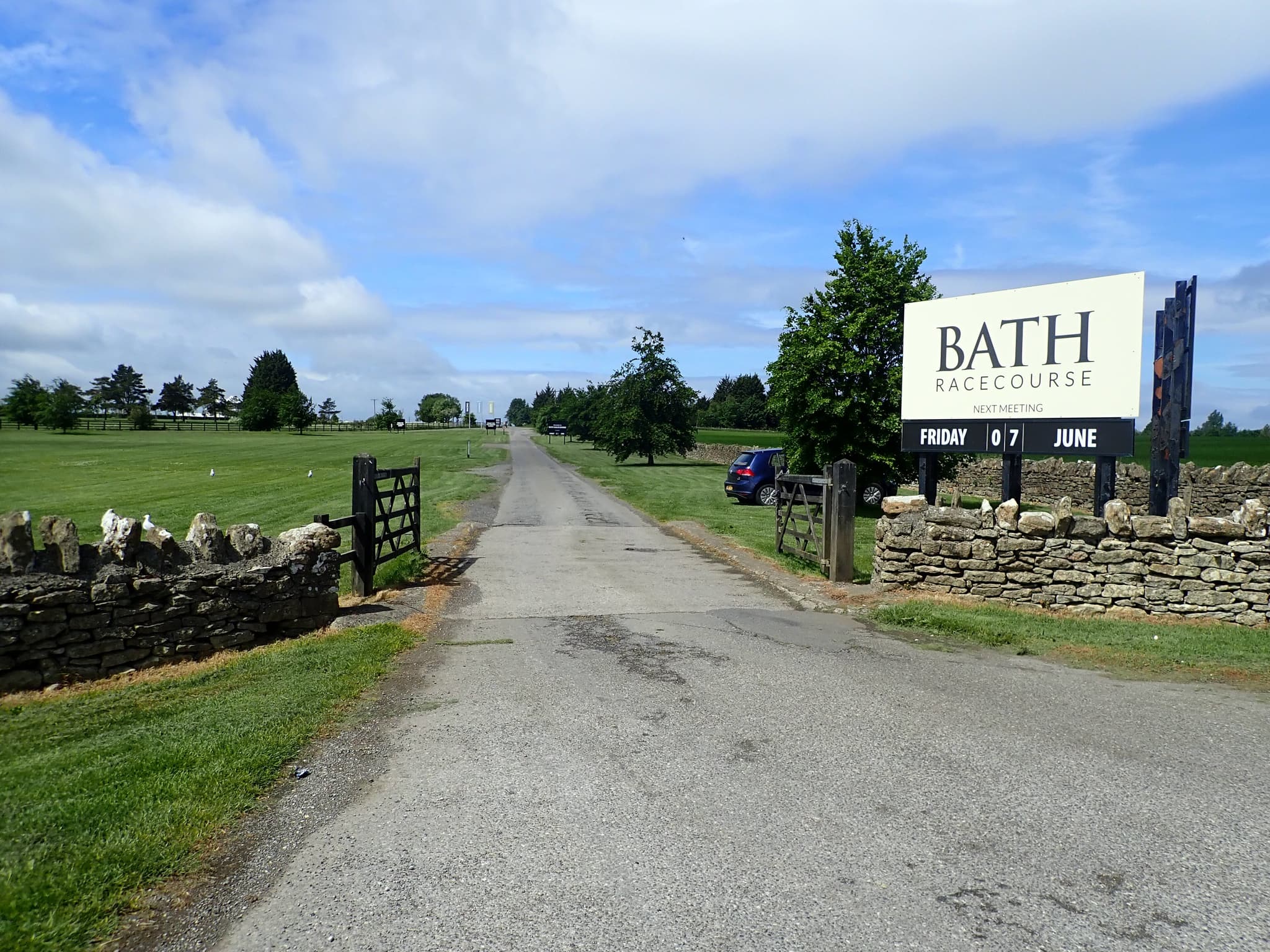
A Day Out at Bath Racecourse
Everything you need for a day at Bath — getting there, what to wear, enclosures, food and drink, and insider tips for Britain's highest flat course.
Read more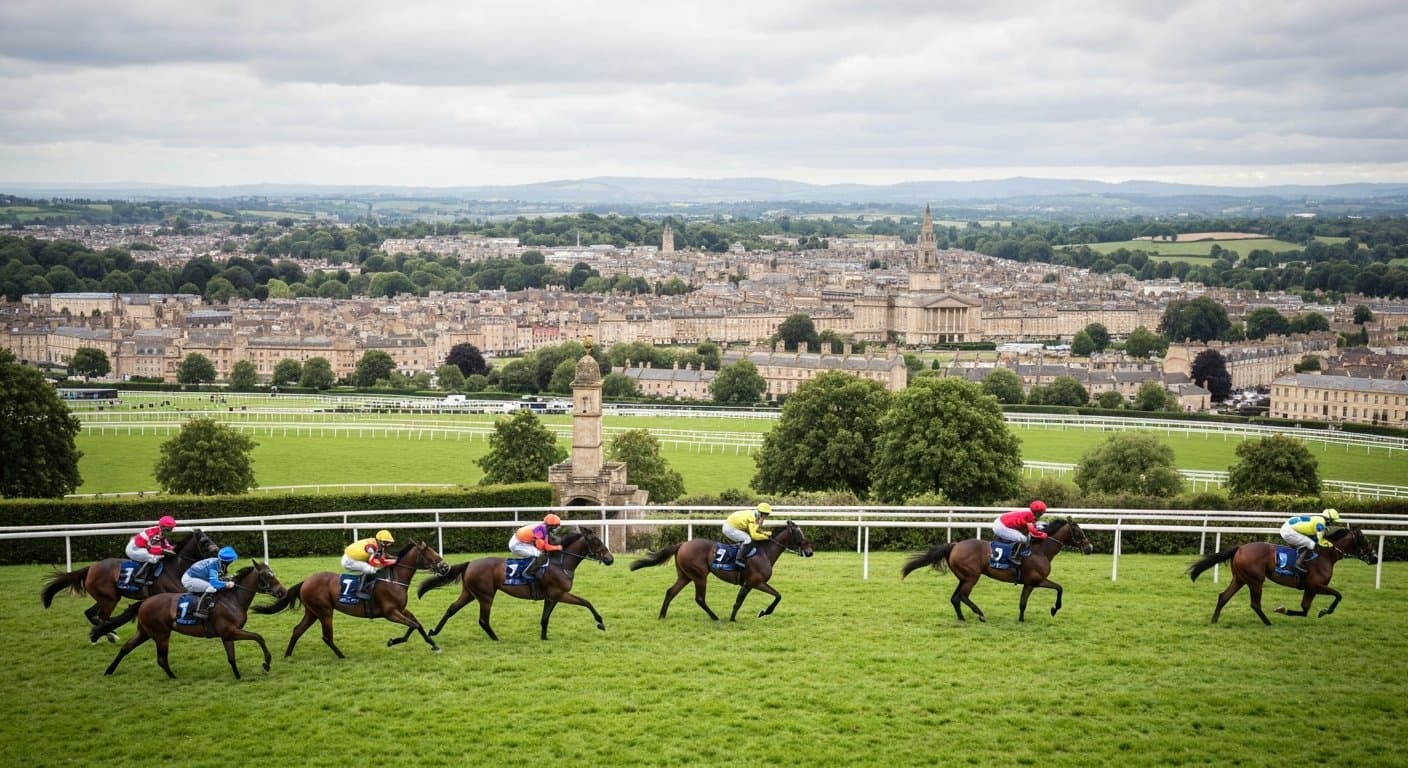
Evening Racing at Bath Racecourse
Your guide to evening racing at Bath — June evenings, Rum & Reggae, and summer nights on Britain's highest flat course.
Read more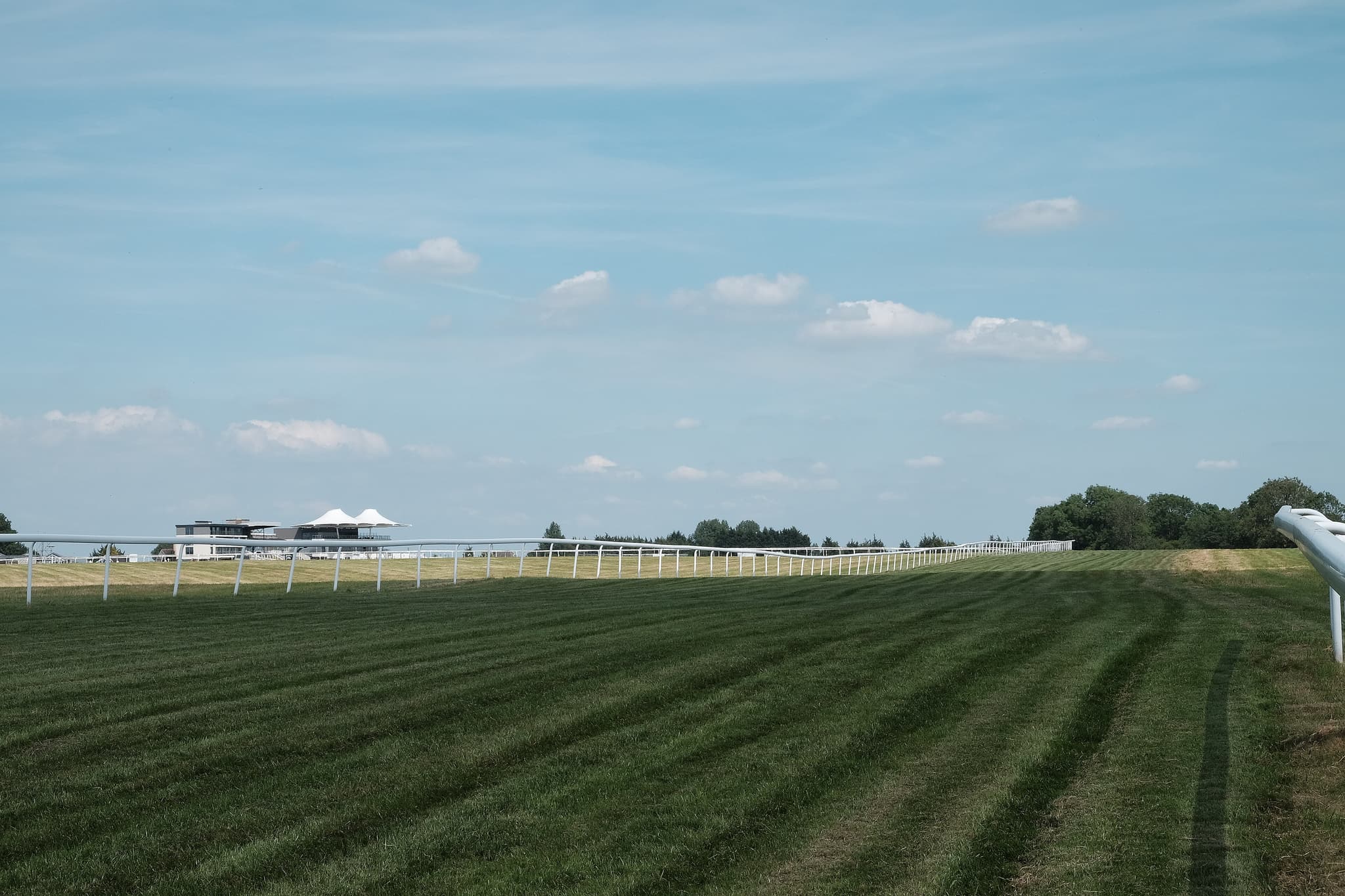
Bath Summer Racing Festival: Your Complete Guide
Bath Racecourse's summer programme is one of the most scenic in British flat racing. Here's your guide to the Bath Summer Meeting and what makes it special.
Read morePhotos on this page are used under Creative Commons licences. Titles, sources and licence links for each one are on our image credits page.
Research the field with the AI Race Predictor
Our model publishes calibrated win-probability estimates for UK races — a second opinion to understand a race, not tips. It's open about its record: it doesn't beat the market, and we show exactly how it does.
Work it out & learn the basics
Gamble Responsibly
Gambling should be entertaining and not seen as a way to make money. Never bet more than you can afford to lose. If you or someone you know has a gambling problem, help and support is available.