
Founder & Editor · Last reviewed 2026-04-05
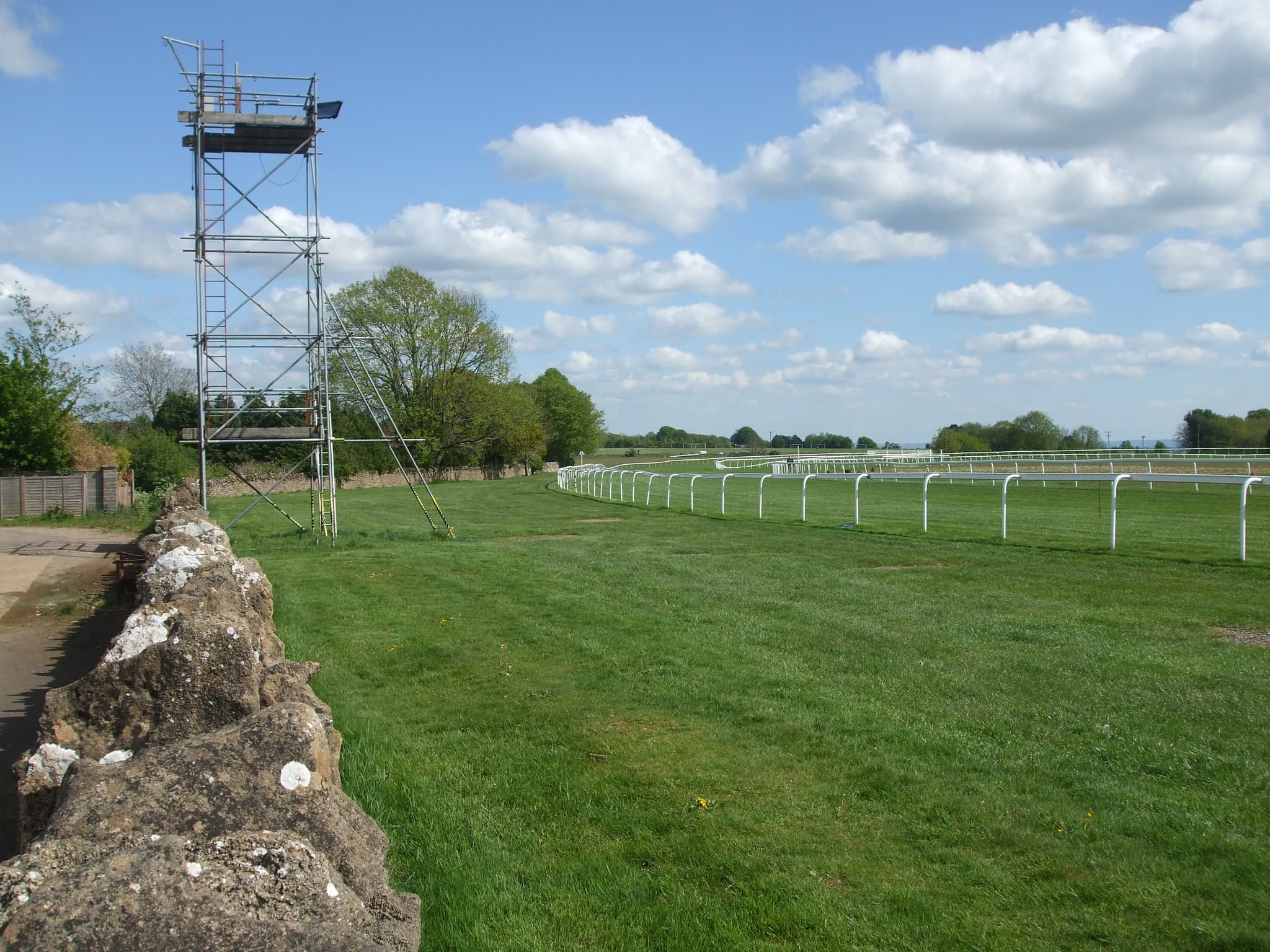
On a clear evening in July, Bath Racecourse offers a panorama that stops racegoers mid-stride. To the north-east, the Cotswolds ridge rolls away in long, pale swells. To the west, Bristol sits in its valley, the Severn estuary catching the last of the light beyond it. To the south, the Mendip Hills close the horizon in a dark, unbroken line. The city of Bath itself lies 800 feet below — the Abbey's tower, the terraced crescents, the threadwork of Georgian streets compressed into a miniature that looks almost engineered. Then the stalls open and everything else disappears.
Bath Racecourse is the highest flat course in Britain. That figure — approximately 800 feet above sea level on the Lansdown plateau — is not merely a statistic. It shapes the experience of racing here in ways that smaller numbers cannot capture. The wind comes unobstructed across open grassland. The going dries quickly after rain and hardens quickly in sun. Horses that travel well and front-run on a stiff track hold an advantage that a rider at Salisbury or Kempton would not need to consider. The altitude is a condition, as much as the going or the draw.
The track runs left-handed. That distinction matters because British flat racing is overwhelmingly right-handed — Newmarket, Goodwood, Ascot, York, Epsom: all right-handed or straight. Bath's left-handed circuit of roughly one mile and four furlongs makes it, along with Chester and Brighton, one of a small group of courses where horses that habitually race the other way are put at an immediate disadvantage. Regular Bath runners from yards within range of Lansdown Hill — Richard Hannon at Herridge, Andrew Balding at Kingsclere, the Lambourn trainers thirty-five miles to the north-east — have learned which horses to bring back here and which to point elsewhere.
The history of racing at Bath stretches back to 1728, when the first recorded meetings took place at Claverton Down, to the south-east of the city. For more than a century, Bath's racing was shaped by the social seasons of a Georgian spa town and the practical limits of what a hillside venue could stage. The move to the Lansdown plateau came in 1881, and the course that exists today was taking shape by the turn of the twentieth century.
Bath is a summer flat course. The season runs from late April or early May through to October, with approximately twenty race days spread across the warmer months. Evening fixtures have become central to the programme, drawing families and local crowds to meetings that begin as the afternoon cools. The Jockey Club, which has operated the course since 2015, has invested steadily in the facilities while keeping the atmosphere unhurried and accessible.
Nothing else in British flat racing quite resembles an evening at Bath in high summer — the long shadows crossing the track, the views to three counties, the sense that the city below belongs to a different world.
Origins at Claverton Down
Origins at Claverton Down
In 1728, Bath was the most fashionable city in England outside London. Beau Nash, the self-appointed Master of Ceremonies, ran the social programme from the Pump Room with the confidence of a man who had decided how elegant people spent their time and expected them to agree. The Assembly Rooms would not open until 1771, but the routine of the Georgian season was already fixed: take the waters in the morning, promenade in the afternoon, attend concerts and card parties in the evening. Horse racing fitted the afternoon slot with the naturalness of something that had always been there.
The first recorded race meetings at Claverton Down date from 1728. Claverton is a parish to the south-east of Bath's city centre, bounded by the Avon to the north and rising steeply toward open downland. The turf there was good. The elevation was manageable. The proximity to the city, before proper roads made longer journeys easier, was essential. Wealthy visitors who came to Bath for the mineral waters were also the kind of men who kept thoroughbreds, wagered heavily, and expected racing as part of a visit to any town of consequence.
The Georgian horse-racing meeting was a social event first and a sporting one second. Subscription races — where a group of gentlemen each put in a fixed sum, winner takes the pot — were the standard format. Purses came from the gate money and local patronage rather than a central racing authority; the Jockey Club had been established in Newmarket around 1750, but its reach into provincial meetings was loose and often nominal. At Claverton Down, the local gentry, Bath's civic leaders, and the spa town's seasonal visitors provided the field and the crowd in roughly equal measure.
Ralph Allen, who built Prior Park on the slopes above the Avon and quarried Bath stone for half of Georgian London, was the kind of landowner whose interest in local events gave them a degree of formal weight. The rediscovery of the Roman Baths in 1727 — the year before Claverton Down racing began — had reinforced Bath's identity as a place of ancient prestige newly recovered for modern use. Racing on the hills above the city slotted into that same self-image: classical, civilised, and properly expensive.
The Great Western Railway reached Bath in 1840, part of Brunel's line from Bristol to London via the Box Tunnel, which opened through to Paddington in 1841. The effect on Bath's racegoing public was considerable. Where coaches had once made the journey from London a two-day undertaking, the railway reduced it to under three hours. Crowds could travel in from Bristol, from Wiltshire, from as far as Reading or Swindon in a morning and return the same evening. The annual race meeting at Claverton Down began to draw larger attendances and more competitive fields as access improved.
But Claverton Down had limits that the railway could not fix. The site was not enclosed in any modern sense. Controlling crowds and ensuring that entry fees were actually collected was difficult on open downland. The racing surface, good in dry summers, could deteriorate badly in wet autumns. The slope of the ground was workable but not ideal — the circuit lacked the clear, consistent gradient that the best Victorian flat courses demanded. As racing became more commercially organised in the middle decades of the nineteenth century, and as courses like Sandown Park (enclosed in 1875) demonstrated how much more revenue a properly fenced and managed venue could generate, Claverton Down began to look like an arrangement from an earlier era.
The decision to move to Lansdown Hill came in 1881. The plateau to the north of Bath, already known for the Battle of Lansdown fought during the Civil War in 1643, offered a different kind of ground: flat, broad, exposed, and clearly elevated. The plateau sits at approximately 800 feet above sea level. It was further from the city centre than Claverton Down and required a longer journey for racegoers arriving by foot or horse-drawn transport from Bath Spa station, which had opened in 1840. That distance was a practical consideration but not an insurmountable one; a new road up Lansdown could be negotiated, and the views from the plateau were of a quality that no amount of inconvenience could diminish.
The 1881 move was also a modernisation in the Victorian commercial sense. Enclosing the Lansdown site properly allowed the racecourse to charge for entry, manage the crowd, and invest in facilities with a reasonable expectation of return. The original Claverton Down course had been an informal arrangement sustained by the enthusiasm of the local gentry and the seasonal traffic of spa visitors; the Lansdown course was a business, operating in a framework shaped by the Rules of Racing and the growing authority of the Jockey Club over provincial meetings.
The new course ran left-handed on the plateau, roughly oval, with a circuit of approximately one mile and four furlongs. The going in summer, on the free-draining soil of the limestone upland, was typically good to firm and hardened quickly in dry spells. The wind, unbroken across the plateau, was a constant presence — a factor that would take visiting trainers and jockeys a meeting or two to understand properly.
Racing at Bath in 1881 was starting again, in effect, on a clean sheet. The 153-year connection to Claverton Down was over, and the course that would carry Bath's racing identity through the twentieth century and into the twenty-first had taken its first steps.
The Victorian, Edwardian, and Interwar Years
The Victorian, Edwardian, and Interwar Years
Bath Racecourse arrived on Lansdown Hill at exactly the moment when British flat racing was organising itself into something resembling the modern structure. The 1880s and 1890s saw the Jockey Club tighten its authority over provincial meetings, standardise registration for horses and jockeys, and begin the process of weeding out meetings that could not meet basic standards of administration. Bath, freshly relocated and properly enclosed, fitted the new order. It was not a glamour course — no Classics were run there, and the prize money could not match Ascot or Newbury — but it was legitimate, well-managed, and serving a part of the country that had few alternatives for summer flat racing.
The character of the track established itself quickly. Left-handed, approximately one mile and four furlongs in circuit, with a short straight of around three furlongs, Bath suited horses that were handy and relaxed in their movement rather than long-striding gallopers that needed a great deal of room to build momentum. The uphill run to the finish, such as it is on the plateau, was gentle but real — horses that tired after a mile found the final two furlongs harder than their stride suggested they should. Trainers in the West of England and along the Berkshire Downs began to form views about which horses came alive at Bath and which found it awkward.
The Somersetshire Stakes, the course's most historically significant race, was associated with Bath from its origins as a Derby trial in the nineteenth century. The race's status as a Classic pointer gave Bath a seasonal relevance it might otherwise have lacked: a horse that ran well in the Somersetshire Stakes in late spring was at least part of the Epsom conversation. The race came and went over the decades as the racing calendar shifted and fixture lists were rearranged by both world wars, but its periods of prominence gave Bath a prestige that went beyond its everyday card of maiden races and modest handicaps.
Through the Edwardian period — the years between Victoria's death in 1901 and the outbreak of the First World War in 1914 — Bath sustained a consistent programme of summer flat racing. The social character of those meetings still echoed the Georgian model: raceday at Bath was a day out for well-dressed people in a famous city, with the racing providing a structure around which the afternoon could be organised. The enclosures were improving, the facilities were adequate if not lavish, and the quality of the racing was solid rather than spectacular.
The First World War interrupted Bath's programme, as it interrupted everything in British sport. When racing resumed in the early 1920s, the course found itself in a racing world that was beginning to modernise more rapidly. The 1920s and 1930s brought improved road transport, wider ownership of motorcars among the professional middle classes, and a broadcasting culture that was beginning to create national interest in provincial racing results. Bath remained a course for the South West and for trainers within a day's journey by road, but its catchment area was widening.
The interwar summer meeting was Bath at its most characteristic: a two- or three-day fixture in the warmest weeks of the year, popular with local families, attractive to trainers from Lambourn and the Wiltshire training centres, and competitive enough to attract decent horses without requiring a prep race at a more prestigious venue. The going on the Lansdown plateau in a good July or August was reliable — quick enough for speed horses, consistent enough for form students to trust. A performance at Bath in midsummer could be measured against subsequent runs at Newbury or Newmarket with reasonable confidence.
The Second World War brought a longer and more disruptive interruption than the First. Bath Racecourse was requisitioned for military use, serving as RAF North Stoke airfield during the conflict. Racing was suspended entirely. The course was returned to civilian use after 1945, and racing resumed, but the facilities were in the state you would expect of a site that had been used as an airfield for several years: functional rather than comfortable, and requiring investment before the grandstands could be considered adequate.
The resumption of racing in the late 1940s coincided with a broader reshaping of the flat calendar. Evening racing — meetings that began in late afternoon and ran through to dusk — began to develop in this period as the working week shortened and the demand for weekday entertainment grew. Bath's summer programme made it well placed to experiment with evening fixtures, and the course became one of the earlier adopters of the evening meeting format in the south of England. A mid-week evening at Bath in summer, with the sun dropping behind the Cotswolds and the smell of cut grass sharp in the thin plateau air, proved to be exactly the kind of informal, accessible event that post-war audiences wanted.
By the 1950s, Bath had settled into the role it would occupy for the rest of the twentieth century: a summer flat course of the second tier, below Ascot and Newbury in prestige and prize money, but above many of the smaller regional meetings in consistency and organisation. The left-handed track, the altitude, the reliable summer going — these were assets that trainers learned to plan for. Horses that were lightly raced and needed a run before being aimed at a pattern race later in the season could be profitably placed at Bath, where a decent performance in a low-key maiden or novice race would give a clear indication of what to do next.
The course's role as a proving ground for young horses was, by mid-century, as well established as the evening meeting format or the views from the grandstand. Form from Bath, precisely because the track was unusual enough to test horses thoroughly, was becoming something that serious form students in London and Newmarket were beginning to read carefully.
Famous Moments
Famous Moments
Bath has never been the setting for a Classic or a Group 1, but some of the horses that won their first races here, or their first important races, went on to win at the highest level. The course's record as a form guide — specifically for juvenile and lightly-raced maidens — is better than its modest standing in the flat hierarchy might suggest.
One of the most widely cited examples concerns Brigadier Gerard, the unbeaten horse trained by Dick Hern and regarded by many as the finest miler of the twentieth century. Before his stellar career began in earnest, his connections used provincial flat courses in the south of England for early-season work, and Bath's late spring card was among the venues where horses from the Lambourn and Wiltshire yards received their education. Bath does not appear as Brigadier Gerard's winning debut, but the connection between the course and the trainers who produced the horses that defined the early 1970s flat programme was real and sustained.
More concretely, Frankie Dettori rode at Bath regularly through the 1990s as part of a schedule that covered a significant proportion of the flat season's fixtures. Dettori's famous seven-winner card at Ascot in September 1996 has overshadowed much of what he did at smaller courses in that period, but his record at Bath across that decade included winners for Henry Cecil, John Gosden, and the Sheikh Mohammed-owned strings. A successful Bath meeting for a retained jockey in high summer was often a useful test of how fit and focused a horse was before being aimed at a higher target in August or September.
Lester Piggott, whose career on the flat extended from the early 1950s to his final retirement in 1995, rode at Bath frequently during the decades when he dominated English racing. Piggott's tactical intelligence made him particularly effective at Bath, where the left-handed layout, the tighter bends, and the need to position a horse correctly in the early stages of the race rewarded a jockey who thought several furlongs ahead. His understanding of the Lansdown track was noted by trainers who booked him for Bath rides in the 1960s and 1970s, when he was at the height of his powers. Willie Carson, champion jockey four times between 1972 and 1983, had a similar instinct for the course and rode a steady volume of winners there through his peak years for the Dick Hern stable.
The Francasal Affair of 1953 is the moment from Bath's history that reached the national newspapers and has stayed in the popular account of racing scandals ever since. The scheme involved substituting a faster horse for the one that had been entered in a race at Bath, manipulating the odds by telephone, and then collecting winnings at betting shops across the country before the substitution was detected. The conspirators cut the telephone wires at the racecourse to prevent bookmakers' information reaching the off-course market in time to shorten the price. The plan failed: the substitution was identified, the ringleaders were prosecuted, and the case became a standard reference in discussions of race-fixing in the postwar period. The fact that Bath was the venue was incidental — the course was chosen because its communications were vulnerable, not because of anything particular about the racing — but the association has stuck.
The Somersetshire Stakes, in its various incarnations, provided several notable moments across the course's history. When the race functioned as a Derby trial in the nineteenth and early twentieth centuries, it attracted horses that were already under serious consideration for Epsom. The race was discontinued in 1998 after a period in which its status had declined, then resurrected in 2011 as part of a broader effort to restore historical elements to the Bath programme. In its modern form it runs over one mile and two furlongs, a distance that suits horses with Classic potential and enough stamina to climb the gradual rise in the final stages.
The course record for five furlongs at Bath is a particular point of interest for sprint specialists. The five-furlong course at Bath runs almost entirely on the uphill sweep of the plateau, making it a stiff track for a horse that needs a downhill or level surface to show its best. Horses that manage a fast time over this distance at Bath have demonstrated something specific about their ability to sustain speed under physical strain — a quality that translates well to sprint conditions at larger meetings.
Among the training records associated with Bath, the names of the Hannon operation at East Everleigh and Herridge in Wiltshire appear repeatedly. Richard Hannon Senior, who trained at East Everleigh before his son Richard Hannon took over the licence in 2012, sent horses to Bath regularly through his prolific training career. His winners at Bath across the 1990s and 2000s included multiple juvenile debutants that went on to win listed or Group races later in the same season — a record that confirmed the course's value as a starting point for well-bred horses in need of a racecourse education.
Clive Brittain, who trained at Newmarket but covered a wider range of fixtures than many of his Headquarters contemporaries, also produced winners at Bath that provided early evidence of a horse's quality. His filly Pebbles, trained through the 1980s, did not race at Bath as a juvenile — her early career was conducted on more conventional ground — but the habit of using Bath as a form-builder was one that Newmarket trainers adopted in significant numbers through the 1980s and 1990s as the prize money at southern provincial meetings improved.
The evening meetings of the 1980s and 1990s also produced their share of memorable competitive handicaps: races where a large field of horses at the bottom of the ratings produced unpredictable results in front of crowds that came as much for the atmosphere as the racing. Those handicaps, run on firm late-summer ground with the plateau wind picking up as the sun lowered, had a character that the same race at a flatter, more conventional track would not have replicated. The Bath handicapper was a puzzle worth spending a Wednesday evening on.
The Modern Era
The Modern Era
The Jockey Club's acquisition of Bath Racecourse in 2015 brought the course into a managed portfolio alongside Cheltenham, Epsom, Sandown Park, and several other major venues. For a course of Bath's size — capacity of around 7,000, with a programme of approximately twenty race days per year — the Jockey Club umbrella provided a financial stability and a marketing platform that the previous operating structure had not fully delivered. The investment that followed the 2015 acquisition included improvements to the grandstand, the parade ring area, and the facilities in the cheaper enclosures, all directed at making a day or evening at Bath feel like a version of the same experience that a more prominent Jockey Club venue offered, scaled appropriately.
The current race programme runs from late April through to October. The season's structure leans heavily on evening fixtures from May onwards — typically six or seven evening meetings within the twenty-race-day total — supplemented by afternoon cards on Bank Holidays and weekend fixtures in August. The evening meetings have been the most commercially successful part of the Bath programme. They draw a crowd that includes significant numbers of people who would not describe themselves as regular racegoers: couples, families, groups of friends from Bristol and Bath itself, people who work in the week and want an outdoor event that finishes before midnight. Attendance at the summer evening meetings averages around 3,000 to 4,000 per fixture, which for a course with a 7,000 capacity represents a healthy fill.
In terms of the flat hierarchy, Bath sits in a clearly defined position. It is a Class 4 and Class 5 course in terms of the majority of its card — conditions races and rated stakes for horses rated between 60 and 90, maiden races for unraced or lightly raced horses, and the mid-division handicaps that form the bulk of any provincial flat programme. It is below Newbury (around forty miles to the east) in prestige and prize money, but above Windsor in terms of the quality and variety of its racing surface. Salisbury, forty miles to the south-east, is the closest comparator in terms of course profile: another elevated, characteristic flat track in the south of England that handles the South West's better trainers and horses at a level below the southern Classics circuit.
The left-handed track remains the most distinctive operational feature. In a flat programme dominated by right-handed courses, Bath's direction creates a consistent differentiator for trainers and form analysts. Horses that race right-handed by default — particularly those from northern stables where Chester, York, and Haydock make up the bulk of the programme — are at a clear disadvantage when they visit Lansdown Hill. Left-handed horses from the southern yards, particularly those trained at Lambourn (approximately thirty-five miles north-east), Kingsclere (Andrew Balding's base, approximately forty-five miles east), and the Hannon yards in Wiltshire (Herridge is around forty miles from Bath), have a structural edge before the race begins.
Richard Hannon, who took over from his father Richard Hannon Senior in 2012, has been one of the most prolific Bath trainers of the modern era. His yard at Herridge, close to Marlborough in Wiltshire, produces large volumes of juvenile and three-year-old flat horses, many of which make their racecourse debuts or early-season appearances at Bath. The distance from Herridge to Lansdown Hill is around forty miles by road, making a morning arrival and afternoon departure entirely manageable for the stable staff. Hannon has trained multiple Bath winners in every season since 2012, and his operation's record on the left-handed circuit is a significant contributor to the yard's annual total.
Andrew Balding at Kingsclere in Hampshire is a second major Bath patron. Kingsclere is approximately forty-five miles by road from Bath, and Balding's string — which has grown substantially in quality and size since his father Ian Balding retired — includes horses suited to Bath's conditions. The Kingsclere yard trains a mix of sprinters, milers, and middle-distance horses, and the Bath programme at both five furlongs and a mile and a quarter offers suitable options at most levels of the flat ratings.
The Beckhampton yard, historically one of the most important in English training, sits around twenty-five miles from Bath — close enough for a quick, low-stress journey that makes Bath a natural first port of call for lightly-raced horses beginning a season's campaign.
The course's value as a form pointer for juvenile maiden races has been confirmed by its record since 2000. Horses that have won Bath maidens as two-year-olds and then gone on to Group race success include a steady stream of animals that began their careers in fields of eight to twelve, on the firm late-summer plateau turf, in races that received little attention from the national racing press. The Bath maiden form has been reliably informative: a clear winner in a well-run maiden on sound ground at Bath, particularly from one of the yards mentioned above, is a result that justifies serious attention in the following weeks.
The summer evening meeting atmosphere — the one that the Jockey Club's promotional material leans on most heavily — is, in fairness, exactly as advertised. The sun drops towards Bristol somewhere after the fifth race, the Cotswolds hold their colour until nearly nine o'clock, and the plateau wind that made the earlier races feel brisk has usually dropped to something gentle by the time the final field goes into the stalls. Bath at its best is a course that earns its reputation for every inch of the eight-hundred-foot climb to reach it.
Bath's Legacy
Bath's Legacy
Bath Racecourse's place in British flat racing rests on three things that no other course shares in the same combination: the altitude, the direction, and the city below.
The altitude — approximately 800 feet on the Lansdown plateau — makes Bath the highest flat course in Britain. That distinction is real in its effects and not merely a marketing line. The going dries faster than at sea-level courses. The wind crosses the plateau without the shelter that trees or stands provide at other venues. Horses that have only raced on soft or yielding ground come to Bath and find a completely different surface in a warm summer. Trainers who bring horses to Lansdown Hill for the first time sometimes need the experience once before they understand what the track asks. The altitude is not merely a number on a course guide.
The left-handed circuit is the second distinguishing feature. In a flat programme where the majority of England's major tracks run right-handed, Bath's direction creates a consistent filter. It rewards horses that are handy, balanced, and comfortable on a tight radius, and exposes those that need a long galloping straight to produce their best. That filter, applied over nearly three hundred years of racing, has given Bath its reputation as a form track — a course where a clear performance in a competitive race means something specific about what a horse can do.
The city below is the third element, and the hardest to quantify. Racing above Bath, with the Abbey's tower visible from the plateau and the Mendips on the southern horizon, creates an experience that is unlike racing at a facility built in the twentieth century on flat agricultural land. Bath Racecourse has been part of a specific place for as long as the Georgian terraces have lined the hillsides — nearly three centuries of meetings staged above one of England's most architecturally coherent cities.
The course's role as a form-builder and a proving ground for juvenile horses has grown rather than diminished in the modern era. As the flat programme at the top level becomes more concentrated in a small number of prestigious venues, the provincial courses that do their work well and consistently serve a function that is irreplaceable. Bath is one of the courses that does that work. A Bath maiden winner in May or June, trained by a yard that knows the track, is a result worth noting.
Under the Jockey Club, the investment in facilities and the expansion of the evening-meeting programme have secured Bath's position for the foreseeable future. The course stages around twenty race days per year, employs a permanent staff, and generates a civic identity for a city that takes its cultural calendar seriously. Racing at Bath is not a marginal activity on the edge of the city's self-image. It is, as it has been since 1728, part of what Bath does.
Frequently Asked Questions
When was Bath Racecourse founded?
Racing near Bath began in 1728 at Claverton Down, to the south-east of the city. The course moved to its current location on the Lansdown plateau in 1881, where it has staged flat racing continuously ever since, making it one of the longest-established venues in British racing.
Why is Bath Racecourse notable?
Bath claims to be the highest flat racecourse in Britain, situated at approximately 800 feet above sea level on the Lansdown plateau. It is also one of a small number of left-handed flat tracks in England — a distinction that affects racing conditions and form in concrete ways, and that sets Bath apart from the majority of the flat programme.
Who owns Bath Racecourse?
Bath Racecourse is operated by The Jockey Club, which acquired the venue in 2015. The Jockey Club is the largest commercial group in British horse racing and also operates Cheltenham, Epsom Downs, Sandown Park, and a number of other major courses across England.
How do I get to Bath Racecourse?
By rail, Bath Spa station has direct services to London Paddington (approximately 75 minutes), Bristol Temple Meads (15 minutes), and stations across the South West. From Bath Spa, the racecourse is a short taxi ride or bus journey up Lansdown Hill. By road, the M4 motorway connects to Bath via the A46; follow signs for Lansdown from the city centre. The postcode for navigation is BA1 9BU.
What type of racing does Bath stage?
Bath stages flat racing only. The season runs from late April or early May through to October, with approximately twenty race days per year. There is no jumps programme. The course specialises in summer flat racing, including a significant number of evening fixtures and Bank Holiday cards.
What is the track like at Bath?
Bath's track runs left-handed on the Lansdown plateau in a roughly oval circuit of approximately one mile and four furlongs. The surface is turf, free-draining on the limestone upland, and typically quick in summer. The course is undulating, exposed to the plateau wind, and around 800 feet above sea level. The relatively short straight and tight bends suit handy, balanced horses rather than long-striding gallopers.
Share this article
More about this racecourse
All Bath guides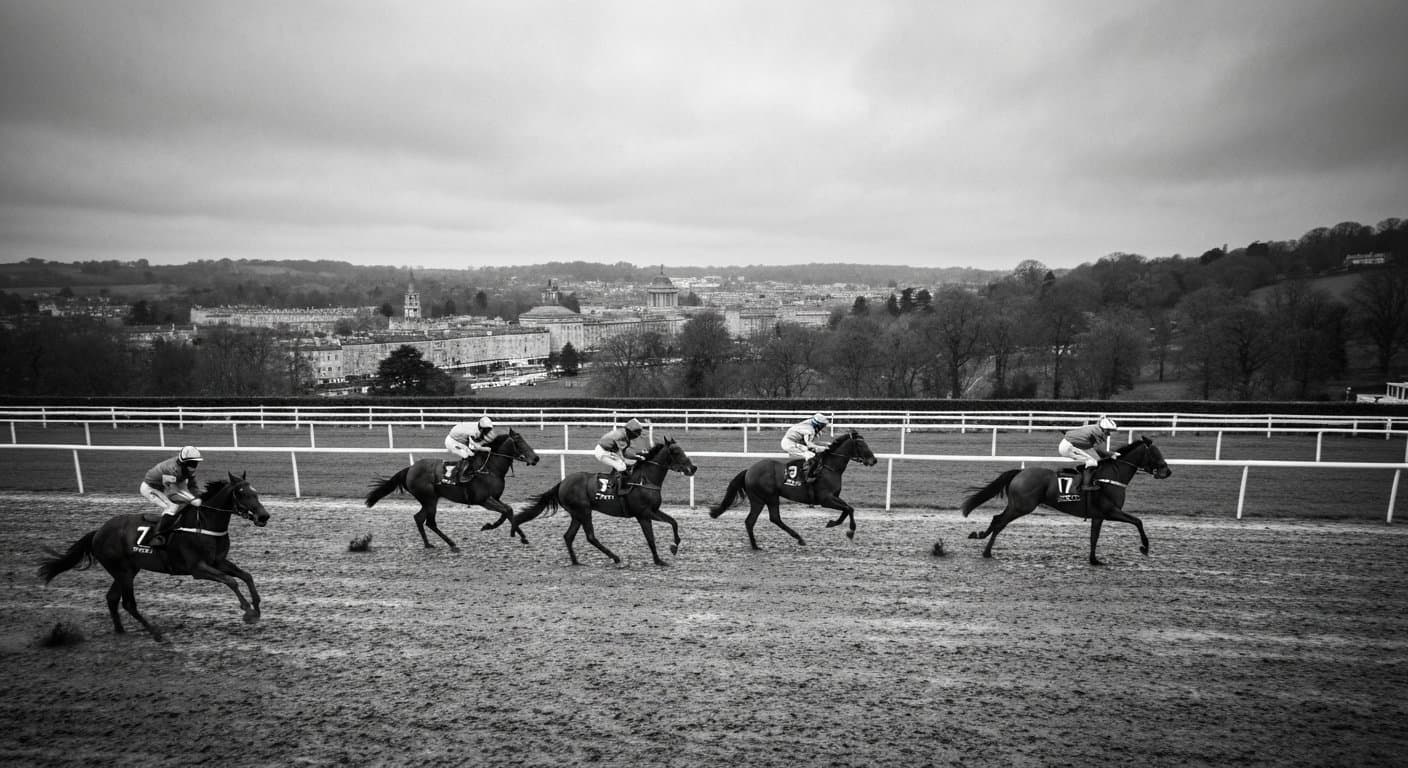
Bath Summer Meeting: Complete Guide
Your complete guide to the Bath Summer Meeting — the highlight of the season at Britain's highest flat course.
Read more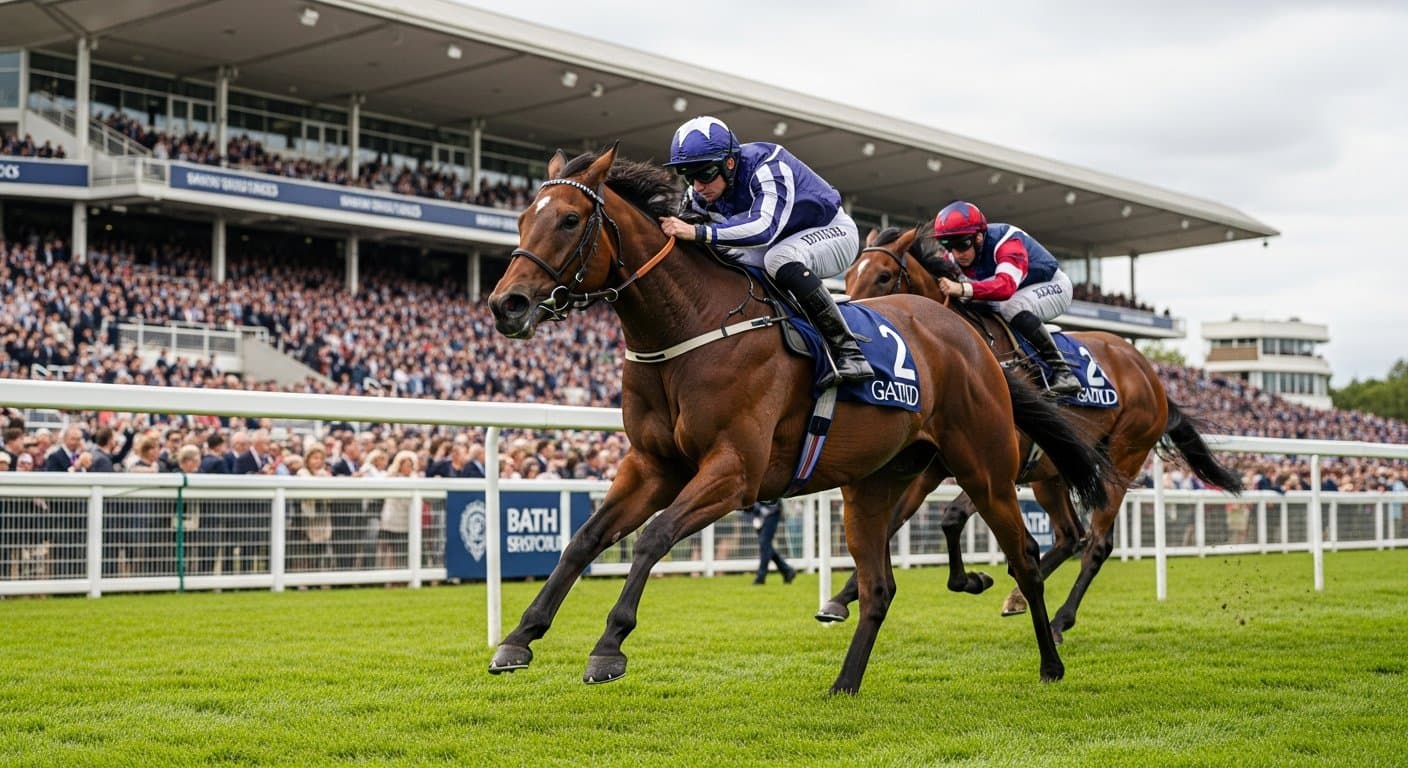
Kind at Bath: The Mare Who Gave Racing Frankel
Kind ran at Bath's Lansdown Fillies' Stakes in 2005 before becoming Frankel's dam. Her connection to Britain's highest flat course is part of racing's greatest breeding story.
Read more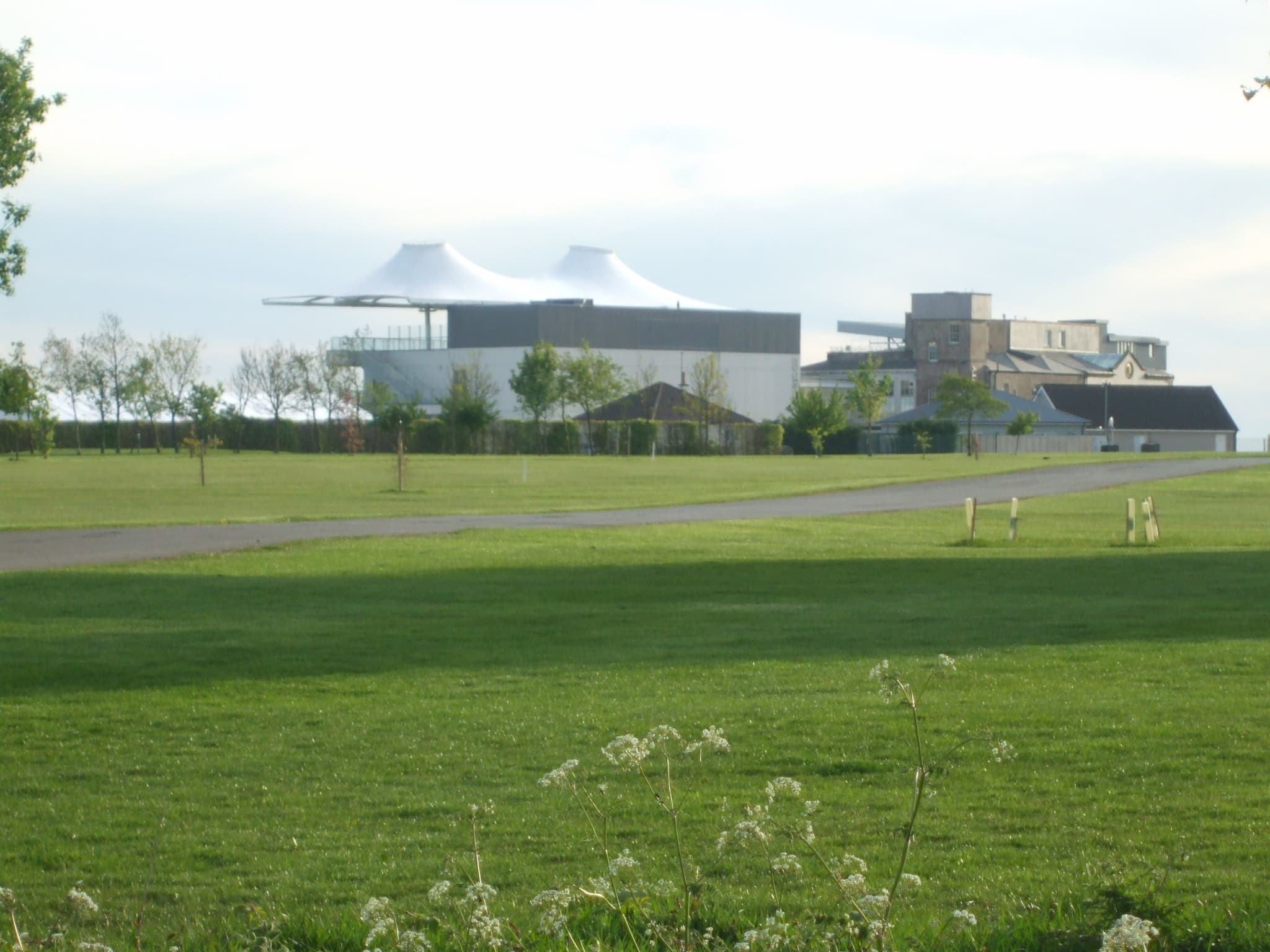
Ladies Day at Bath: The Complete Guide
Everything you need to know about Bath Ladies Day — the hilltop flat racing occasion above one of Britain's most beautiful cities. Race card, fashion, betting angles, and how to get there.
Read morePhotos on this page are used under Creative Commons licences. Titles, sources and licence links for each one are on our image credits page.
Gamble Responsibly
Gambling should be entertaining and not seen as a way to make money. Never bet more than you can afford to lose. If you or someone you know has a gambling problem, help and support is available.