
Founder & Editor · Last reviewed 2026-03-02
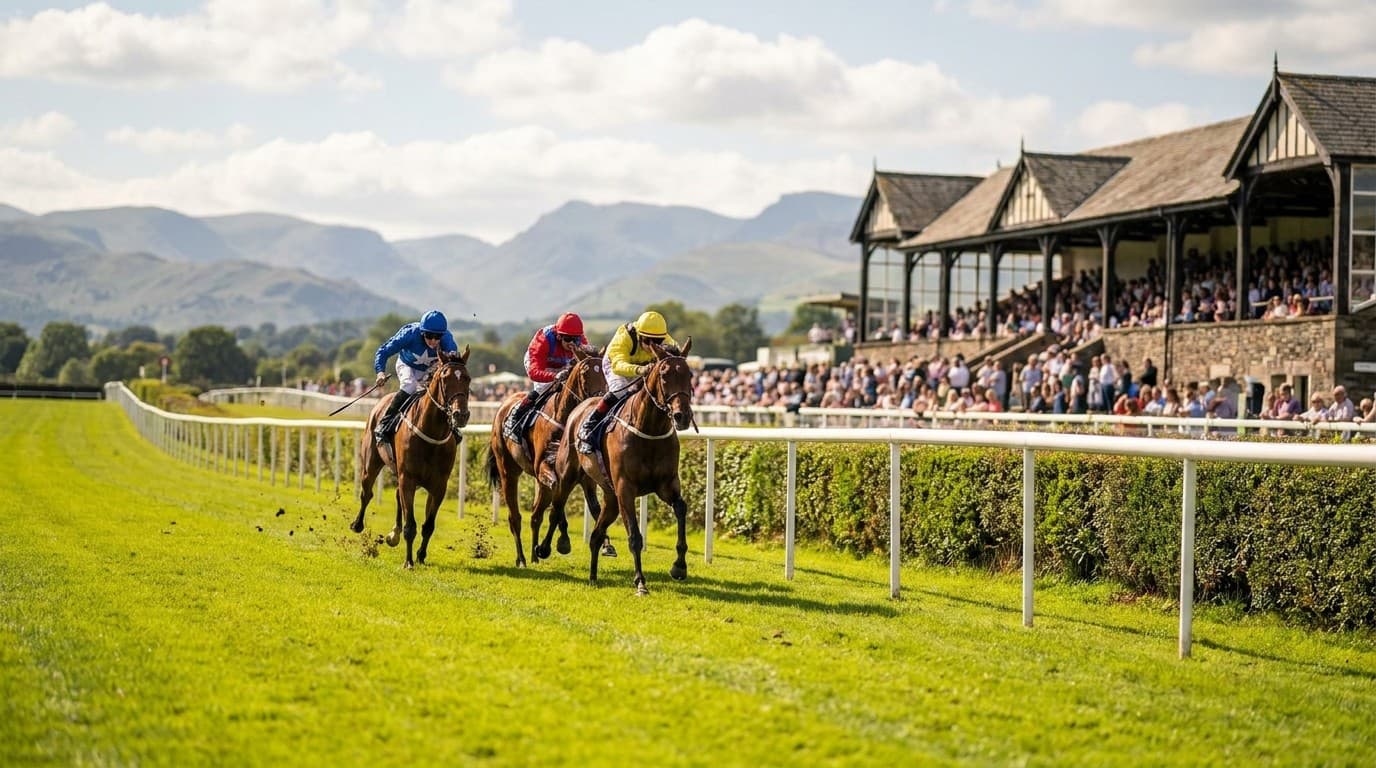
Carlisle is Britain's northernmost dual-purpose racecourse, and the terrain defines everything. The final half-mile of every race rises steadily uphill to the finish. There's no sharp feature, no tight bend — just a sustained climb that exposes any horse lacking real stamina. Those that grind it out under pressure come back and do it again. Those that rely on speed alone find there's nowhere to hide.
The course sits at Blackwell on the edge of Cumbria. The flat programme runs from April through September; National Hunt from October into January. Each carries the same physical character — the uphill finish doesn't change — but the two versions of the track feel quite different. Flat days in June and July can be breezy and calm; NH meetings in December can be brutal, with heavy going and cold winds off the Pennines. Understanding which you're dealing with is the first step in any Carlisle bet.
The centrepiece of the flat season is the Carlisle Bell and Cumberland Plate card in June. The Carlisle Bell — run over seven furlongs and 173 yards — is one of the oldest sporting trophies in the world. The original bell dates to 1559, making it the oldest piece of continuous sporting silverware in Britain. The race it's attached to draws quality northern handicappers and occasionally raiders from the south, and it's the sharpest, most competitive betting market of the Carlisle flat season.
The NH programme is anchored by November's Listed races — the Cumberland Chase and Graduation Chase — and the Colin Parker Memorial Intermediate Chase, which draws a competitive field of experienced chasers. These races attract serious horses and the form often works out. When the going is heavy at Carlisle in November, you need horses with proven credentials in testing ground. The hill amplifies what heavy ground already demands.
For local trainers — Keith Dalgleish from Carluke, Dianne Sayer from Penrith, Brian Ellison from Malton — Carlisle sits within easy reach and the course becomes a natural home track. Sayer in particular has built an extraordinary record at the course over the years; her small yard operates consistently above its weight when the horses come here.
Quick reference: when Carlisle works for you
- The horse has won or placed at Carlisle before — the uphill finish is specific
- The ground suits: stamina horses when soft/heavy; honest all-rounders when good
- Dianne Sayer has a runner — her home-track strike rate is exceptional
- Keith Dalgleish sends a runner and it drifts in the market — often means it's trying
- The trainer targets the course specifically (not a make-weight entry)
- The distance is 1m4f+ on the flat, or 2m4f+ over jumps — the hill is proportionally more punishing
When to walk away
- A horse with all its best form on flat galloping tracks (Newmarket, Doncaster) at a 1m4f+ trip — the hill is unlike anything at those courses
- The going is heavy in November/December and the horse's best form came on good ground
- The market is short and the trainer has no specific Carlisle record to reference
This guide covers track characteristics, going and draw, key trainers and jockeys, strategies, and key races.
Bet on Carlisle
Place your bets on Carlisle races with a trusted bookmaker.

Promo code BETFRED50. New customers only. Register, deposit with a Debit Card, and place a first bet of £10+ at Evens (2.0)+ on Sports, to be settled within 7 days, to get £30 in Sports Free Bets and £20 in Bet Builder Free Bets within 24 hours of settlement. 7-day expiry. Eligibility & payment exclusions apply. Full T&Cs apply. Take Time to Think. BeGambleAware.org. 18+. Full T&Cs.

Promo code R30. New UK customers only, 18+. Register, deposit £10 or more, then place a £10 single cash bet at odds of 1/2 (1.5) or greater on any sports market (excluding Virtuals). Once the qualifying bet settles you get £30 in Free Bets (3 x £10) — the qualifying bet can win or lose. Free Bets are valid on any sports market excluding Virtuals, expire in 7 days, are non-withdrawable and must be used in full. Excluded deposit methods apply (including PayPal, Apple Pay, Skrill and NETELLER). Named bets such as Lucky 15 do not qualify. If you cash out the qualifying bet, or it is voided, you are no longer eligible for the offer. Ends 31.12.26. Full T&Cs apply. Please gamble responsibly. BeGambleAware.org. 18+. Full T&Cs.

Promo code BET40GET20. New UK customers, 18+. Register with the code and place a first bet of £40 or more at Evens (2.0) or greater. Receive 2 × £10 free bets: the first credited automatically once the qualifying bet settles, the second 24 hours later. Free bets must be placed at minimum odds of 4/1 (5.0), expire 24 hours after credit, and the free-bet stake is not returned with winnings. Debit card deposits only. Take Time to Think. BeGambleAware.org. 18+. T&Cs apply. Full T&Cs.

50% of your first-day net losses refunded as a free bet, capped at £25. New UK customers aged 18+ only. To qualify, deposit and place a first bet of £10 or more on any sport at minimum odds of evens (2.00), then place at least two further bets on different events, each worth at least 50% of your largest bet, all at evens (2.00) or greater. Losses are counted from your first settled bet until 23:59 the same day. Place a qualifying £10+ bet and you are guaranteed at least a £5 free bet. Bets placed at SP, void bets, cashed-out bets and bets struck with free bets do not count towards the offer. The free bet is credited the day after your qualifying bets settle and must be used within 7 days, after which it expires. It can be used at odds from 1/4 (1.25) up to 250/1 on singles and straight accumulators, but not on Trixie, Patent or Yankee style multiples. Free-bet stake is not returned with winnings. One offer per person, household, address, IP address and device. E-wallet deposits may not qualify, so check the cashier before depositing. Customers registered with GAMSTOP cannot claim. KYC identity verification must be completed before the free bet is credited. Take Time to Think. BeGambleAware.org. 18+. T&Cs apply. Full T&Cs.

New customers, 18+. Choose the sports bonus at sign-up, make a first deposit and receive a 100% bonus up to £50 in your Sports Bonus balance. To convert the bonus to cash, wager it 10x within 30 days. Single bets below Evens (2.00) do not qualify; accumulators do not qualify if any selection is below 1/2 (1.50). Virtual Sports, voided, cancelled, drawn, cashed-out and free-bet wagers do not count towards wagering. Only the first settled bet per event counts. Withdrawing before the wagering requirement is met forfeits the bonus balance including bonus winnings. Real-money funds are used before bonus funds. Deposits via Skrill or Neteller are not eligible. Not valid in conjunction with other promotions. Odds, bet and payment limits apply. 10bet general and promotion T&Cs apply. BeGambleAware.org. 18+. Full T&Cs.

New customers in Great Britain and Republic of Ireland, 18+. Place a £10 fixed-odds qualifying bet at minimum odds of 1/2 (1.50) — single or each-way (only the win part counts), pre-event or in-play, not cashed out early, within 28 days of opening the account. Receive up to £60 in bonuses credited over three days: 3 × £10 fixed-odds free bets (the first on settlement, then 24 and 48 hours later) plus 3 × £5 Total Goals FOOTBALL spread bets and 3 × £5 racing Winning Favourites spread bets, with a £1 racing Race Index spread bet as an extra on top. The spread bets need a full spread-betting account, opened within 28 days of the fixed-odds account and subject to Spreadex's eligibility and appropriateness checks. Free-bet stakes not returned with winnings; free bets valid 28 days from issue. IMPORTANT: the £5 credits are SPREAD bets — sports spread betting carries the risk that losses can exceed your stake. Sports spread-betting customers do not have Financial Ombudsman or FSCS recourse. Take Time to Think. BeGambleAware.org. 18+. T&Cs apply. Full T&Cs.

Promo code WELCOME15, entered under My Bonuses after registering. New UK customers, 18+. Place a first qualifying bet of at least £10 from your cash balance at odds of evens (2.0) or greater within 7 days of opening the account. Once the qualifying bet fully settles you receive £15 in free bets, credited as 3 x £5 tokens with set uses: one £5 accumulator free bet (minimum 4 legs, each leg at 2/5 or bigger), one £5 sports free bet (any market at evens or bigger) and one £5 Sub Cover free bet (selected football player markets at evens or bigger). Free-bet stakes are not returned with winnings. Free bets expire 7 days after they are credited. Void, cashed-out and partially cashed-out bets do not qualify. One offer per customer. Confirm the current terms on BetGoodwin's own welcome-offer page before claiming. Take Time to Think. BeGambleAware.org. 18+. T&Cs apply. Full T&Cs.

New UK customers, 18+. Minimum deposit £10. Place a £10 qualifying single on sports (excluding virtuals) at minimum odds of 1/2 (1.50), settled within 14 days. Deposit-method exclusions apply. Receive £30 in free bets (stake not returned), split £20 for sportsbook use (2 x £10) and £10 for Bet Builder only (2 x £5); Bet Builder does not cover horse racing. Free bets must be accepted within 7 days and expire 7 days after acceptance. No promo code required. Best Odds Guaranteed on UK & Irish racing, subject to having staked over £25 in the previous seven days. Operated by LiveScore Betting and Gaming (Gibraltar) Ltd, UKGC 56859. Confirm the current terms on LiveScore Bet's own promotions page before claiming. Take Time to Think. BeGambleAware.org. 18+. T&Cs apply. Full T&Cs.
18+. BeGambleAware.org
Track Characteristics
The Layout
The track at Carlisle is a right-handed oval of approximately one mile and four furlongs, set at Blackwell roughly a mile south of the city centre. The circuit has a straight course for sprint races — up to six furlongs — and the round course for seven furlongs and beyond. There are no sharp bends, no tight chicanes, no dramatic undulations away from the finish. The main body of the track is relatively straightforward. What makes Carlisle difficult is the last section.
The final half-mile rises steadily uphill. It's not a sharp climb like Epsom or a grinding wall like Goodwood, but it's sustained — horses encounter it when they're already at their most tired, and it separates those with residual stamina from those who are empty. The climb begins roughly at the two-furlong pole and continues all the way to the line. In a tight finish, the horse that can still find something up the hill almost always wins.
Stamina Is Not Optional
At Carlisle, every race is effectively half a furlong longer than the stated distance. Treat a seven-furlong race here as a seven-and-a-half furlong race. A one-mile race needs a horse that stays at least one mile and one furlong. That adjustment applies consistently. Horses that are strictly pace-dependent — that need to be on the front end to have a chance — can get tapped for toe on the climb because they've spent their energy maintaining position rather than conserving it.
Stayers from other uphill tracks transfer well. Pontefract — which has a long uphill finish of its own — is the closest comparison on the flat. Beverley, with its stiff seven-furlong climb, is another reliable guide. Form from Hamilton Park, which is undulating with a testing finish, also translates. Discount form from Newmarket, Chester, or Doncaster, where the track profile is fundamentally different.
Flat vs Jumps Character
The flat programme and the NH programme share a track but little else. Flat meetings from April to September run on good to firm ground, in dry conditions, with moderate pace and competent fields. The uphill finish is important, but the overall test is fair. A good flat horse with real stamina should be able to handle it.
NH meetings, particularly from November onwards, add two layers of complexity: the going is often soft or heavy, and the horses are tired from a different kind of effort — jumping fences while galloping. A horse that is good at jumping and relentless in its galloping style will thrive here. A horse that jumps adequately and relies on being fresh to win will be found out on the climb.
Jumping and the Fences
The NH fences at Carlisle are well-maintained and present a fair test. There's no drop fence or particularly unusual obstacle. Horses should be able to handle Carlisle if they jump soundly at other tracks. The uphill finish after the last fence is the critical test — horses that arrive at the final obstacle with too little left can stagger up the hill without threatening.
In hurdles races, the flat layout of the back straight means horses can travel fast before the final two flights, and the pace is often real from an early stage. This suits horses with a strong galloping action — those that maintain a rhythm rather than quickening and dying.
Form Transfer Guide
| Strong guide to Carlisle | Weaker guide to Carlisle |
|---|---|
| Pontefract (uphill finish) | Newmarket (flat, straight) |
| Beverley (stiff seven furlongs) | Chester (flat, very tight turns) |
| Hamilton Park (undulating) | Doncaster (flat, galloping) |
| Musselburgh (NH, good going) | Cheltenham (different uphill profile, sharper) |
| Exeter (NH, testing) | Ascot (flat finish) |
Going & Draw Bias
Going at Carlisle
Carlisle's location in Cumbria means it receives significantly more rainfall than courses in the south of England. The Eden Valley to the north and the Pennines to the east both funnel weather systems into this part of the country. From November through February, the going at Carlisle can be heavy for extended periods. That's the norm — not an outlier — and betting without accounting for it is a mistake.
Seasonal Going Profile
April–May (flat season opening): Going varies. Early spring can produce good to soft or soft after a wet winter; a dry April quickly firms things up. At this stage of the season, check the going report carefully — the ground is least predictable now.
June–September (summer flat): Typically good to firm or good, sometimes firm in a dry spell. The chalk-and-clay base drains reasonably but not as fast as pure chalk courses like Brighton. Summer conditions suit a wider range of horses than the NH programme.
October (NH season opening): Going often softens as autumn rains arrive. Good to soft is typical for October NH meetings. Horses working through their autumn prep runs need good to soft form to be trusted here.
November–December (NH core): This is when Carlisle tests horses fully. Soft or heavy is the norm. The Listed races in November — Cumberland Chase, Graduation Chase, Colin Parker — are typically run on soft or worse. A horse with only good-ground form arriving at these meetings is a significant risk.
January: If meetings take place, expect heavy ground. Frost can cause abandonments, which have happened more frequently in recent years during cold snaps.
The Going and the Hill
The uphill finish interacts with the going in an important way. On good to firm ground, the climb is a test of stamina — challenging but not extreme. On heavy ground, the climb becomes truly punishing. Horses that would have enough stamina on good ground can still be found out when the surface drags at their legs for the entire back straight before they even reach the hill.
This is the key Carlisle NH insight: when the going is heavy, the effective additional distance from the hill increases. A two-mile hurdle on heavy ground at Carlisle is closer to a two-mile-three-furlong race in terms of the energy demands. Back horses that have already demonstrated they stay well in heavy ground, not just horses that have won over the trip.
Draw Bias (Flat)
On the straight course (sprint distances up to six furlongs), the draw can matter in large fields. A low draw (stalls 1–6 in a 10+ runner field) tends to be marginally better because it allows a horse to secure the rail in the run to the first bend. However, the effect is moderate — it's nowhere near as pronounced as at Chester or Beverley. The hill matters more than the stall number.
On the round course (seven furlongs and beyond), draw effect is minimal. The race plays out over a long enough distance for position to be determined by tactical riding rather than where you started.
Late Declarations and Withdrawals
Carlisle's weather can change overnight. A trainer who declares a horse for a November NH meeting on good to soft may pull it out if overnight rain makes the ground heavy before declarations close. If you've backed a horse that needs better ground, watch the weather in the 48 hours before the race. Conversely, a horse known to thrive in heavy going may suddenly look like excellent value if the going deteriorates after you've found it in the form book.
The course website posts going updates, and the BHA going reports on race morning are the most reliable guide.
Key Trainers & Jockeys
Trainers
Dianne Sayer (Hackthorpe, Penrith)
Sayer's yard at Hackthorpe is approximately eight miles from the racecourse. That proximity translates directly into her numbers at Carlisle — her strike rate here is well above her national average, and she has won races at the course that look improbable from the outside. She runs a small operation but targets Carlisle specifically, and her horses tend to be well-suited to the uphill finish and the variable going.
The key signal with Sayer is that she's not a name who appears in major publications or draws significant betting attention. Her horses can drift or trade at larger prices than their actual chance warrants. When Sayer has a runner at Carlisle — any race, any distance — check the going, check the horse's previous form at the track, and take the price seriously. Over a long period, backing Sayer runners at Carlisle at even money or above has been consistently profitable.
Keith Dalgleish (Carluke, Lanarkshire)
Dalgleish trains at Carluke in South Lanarkshire, roughly 75 miles north of Carlisle. Scotland's busiest flat trainer, he uses Carlisle extensively as a primary target in the northern circuit. His volume of runners at the course means his strike rate fluctuates, but when he sends a well-regarded horse with a good jockey booking, the Carlisle market often reacts slowly. Dalgleish at 4/1 or bigger with Paul Mulrennan or Callum Rodriguez in the saddle is a recurring profitable profile.
Tim Easterby (Great Habton, North Yorkshire)
Easterby is one of the most prolific northern flat trainers, and Carlisle falls comfortably within his target range. He excels with sprint and seven-furlong handicappers, and the uphill finish suits the type of tough, consistent horse he tends to produce. His record at Carlisle over a rolling three-year period regularly stands above his national average. At value prices — particularly mid-season when his horses are fit from regular racing — Easterby runners deserve consideration.
Brian Ellison (Malton, North Yorkshire)
Ellison operates across both flat and NH racing from Malton. His dual-purpose operation means he has horses ready for the autumn NH programme at Carlisle as well as the summer flat. He's particularly strong with staying flat handicappers — the type that handles the uphill finish — and his November NH runners at Carlisle have a respectable record in testing conditions.
Stuart Crawford (Northern Ireland) and Southern Raiders
The Cumberland Chase and Graduation Chase in November occasionally attract northern Irish trainers who make the short crossing for the Listed prize. Crawford, in particular, has targeted these races and produced winners. For these races, check for cross-channel entries: they're often less exposed in the market than their actual chance.
Jockeys
Paul Mulrennan
Mulrennan is the jockey most associated with the top northern flat yards, including Dalgleish. He rides at Carlisle regularly and knows the uphill finish well. When Mulrennan takes a booking at Carlisle for a northern trainer — particularly in handicaps at seven furlongs and above — it's often a significant engagement.
Callum Rodriguez and David Allan
Both ride consistently on the northern flat circuit and are regular faces at Carlisle. Rodriguez in particular has a strong record at the course and often picks up the better rides from smaller yards. Allan is associated with several key northern operations and is reliable in sprint to middle-distance races.
Brian Hughes (NH)
Hughes is the dominant northern NH jockey and rides at Carlisle's jumps meetings regularly. His record at the course — especially in handicap hurdles and chases on soft or heavy ground — reflects his ability to manage a horse on a testing track. When Hughes has a specific booking at Carlisle for the November Listed races, it's worth checking who placed him there and why.
Betting Strategies
The Sayer Signal
Dianne Sayer at Carlisle is one of the clearest home-trainer signals in British racing. Her operation at Hackthorpe is eight miles from the track, she targets the course specifically, and her strike rate here is demonstrably higher than her national average. When she has a runner, the market rarely adjusts fully — her name doesn't draw the same attention as Fahey at Pontefract or Nicholls at Taunton.
The practical play: add every Sayer entry at Carlisle to your shortlist before you look at anything else. Then assess the horse on its merits — going match, previous course form, trainer patterns. If it clears two of those three, the price is almost always worth taking. At 5/1 or bigger with course form, it's close to automatic.
Stamina Filter — Treat Carlisle as One Furlong Longer
Every Carlisle race asks for more stamina than its official distance suggests. The final half-mile of sustained uphill means a horse that stays the trip on a flat course may not stay it at Carlisle. Apply this consistently: in a one-mile flat handicap, you need a horse that stays one mile one furlong. In a two-mile NH hurdle, the horse needs the reserves to climb the hill after two miles of jumping.
The practical test: look at the horse's form in the closing stages of its recent races. Does it keep finding? Does it stay on when others are tiring? Or does it stop after leading early? A horse that wins by staying on at Pontefract or Beverley — both uphill courses — is a direct translation. A horse that wins by blazing the pace at Chester and stopping has the wrong profile.
Dalgleish at 4/1+ in Northern Flat Handicaps
Dalgleish trains volume and the market prices his runners accordingly — his average starting price at Carlisle reflects the fact that he's often sending horses there on form that's routine rather than exceptional. But when Dalgleish specifically targets a race with a horse that has course form or strong staying handicap credentials, the price often doesn't fully contract. At 4/1 or bigger with Mulrennan or Rodriguez in the saddle, Dalgleish runners in northern flat handicaps at Carlisle have a consistent positive expectation.
The key is to distinguish targeted entries from routine ones. A horse that is making its third Carlisle appearance and running in a race that suits its rating is targeted. A horse making its first visit on a card where the trainer has five other runners is routine.
Going Filter in NH Racing: Hard Rule
When the going at Carlisle in November to January is soft or heavy, never back a horse whose best form came on good ground unless there's specific evidence it handles testing conditions. The combination of the hill and the going makes Carlisle one of the most severe tests in the NH calendar during the winter months. It looks like a modest northern track on paper; in December on heavy ground with a tired horse, the hill is unforgiving.
Apply this as a hard filter before any other analysis. Going match comes first, then course form, then trainer/jockey signals.
The Carlisle Bell Day — Form Study, Not Betting Frenzy
The Carlisle Bell and Cumberland Plate card in June draws the best flat fields of the Carlisle season, and the markets are consequently sharper. This is the day to study form rather than bet impulsively. The horses that run well in the Carlisle Bell — winners and placed horses — often go on to perform in northern handicap chases through the summer. Build a list of form from this card and use it as a reference for later in the season, when the same horses appear in softer markets at Carlisle, Hamilton, Catterick, and Musselburgh.
The betting value on Carlisle Bell day itself is harder to find than on a typical Carlisle card. The added publicity means sharper markets. Target the supporting handicaps rather than the feature race unless you have a strong case.
To compare place terms and each-way promotions across the major bookmakers, see our best bookmakers for horse racing guide.
Key Races to Bet On
The Carlisle Bell
The Carlisle Bell is the course's defining race — a handicap over seven furlongs and 173 yards, run in June as part of the Bell and Plate card. The prize for the winning connections is the original Carlisle Bell trophy, a large silver bell that dates to 1559. It is the oldest piece of continuous sporting silverware in Britain; the same trophy awarded to winners in the Tudor era is presented today. No other race in British flat racing can claim a prize with the same history.
The race itself is truly competitive. Seven furlongs and 173 yards at Carlisle means the uphill finish is felt more than in a sprint — the horses are going slower and have been on the track longer, which makes the final climb more punishing. Stayers within the distance — horses that can maintain their effort up the hill — consistently outperform pure seven-furlong pace horses. In terms of form transfer, look for horses that have performed well at Pontefract or Beverley: both have similar uphill finishes and produce runners that handle Carlisle's demands.
The dedicated Carlisle Bell guide covers the full history and betting angles for this race.
The Cumberland Plate
The Cumberland Plate runs on the same card as the Bell and provides the stamina end of the programme. The distance is typically one mile six furlongs or two miles — a staying test on a track where staying is everything. The hill takes maximum toll at this distance; horses need to have real reserves to get to the line. The form from the Cumberland Plate often works out well in staying handicaps through the rest of the summer at northern tracks.
Our Cumberland Plate guide has the full breakdown.
The Eternal Stakes
Run on or near the Bell and Plate card, the Eternal Stakes is a Listed race for three-year-old fillies over six furlongs and 192 yards. Quality fillies from leading southern yards often travel north for this. The sprint distance means the hill is less dominant, but the Listed prize attracts horses with real quality. Past winners have gone on to compete at Group level later in the season. For betting, watch for a well-regarded filly from a major yard having her first Carlisle run — she may not be fully priced up to her actual chance.
The November Listed Chase Double
The Cumberland Chase and Graduation Chase in November form the backbone of Carlisle's NH season. Both are Listed chases, both run over approximately two miles and four furlongs, both typically on soft or heavy ground. They attract serious staying chasers — horses on the pathway to the better prizes in December and January — and the form from these races is often a reliable guide to the NH season ahead.
The Colin Parker Memorial Intermediate Chase runs at the same meeting. Open to horses that are not specifically novices but haven't won a chase of sufficient class to qualify for restricted races, it draws a competitive mix of lower-graded chasers and novices stepping up. Good each-way value often exists here.
Mid-Season NH Handicaps (December–January)
The midwinter handicap chases and hurdles at Carlisle are underrated betting events. Fields are often small, the going is heavy, and the market is thin — all of which creates pricing inefficiencies. The Sayer, Dalgleish, and Ellison signals discussed in the strategies section apply most strongly here. A horse with heavy-ground form and a local trainer booking at Carlisle in December is often priced as if it's an afterthought. It isn't.
For the full fixture schedule, see the Carlisle complete guide.
Share this article
More about this racecourse
All Carlisle guides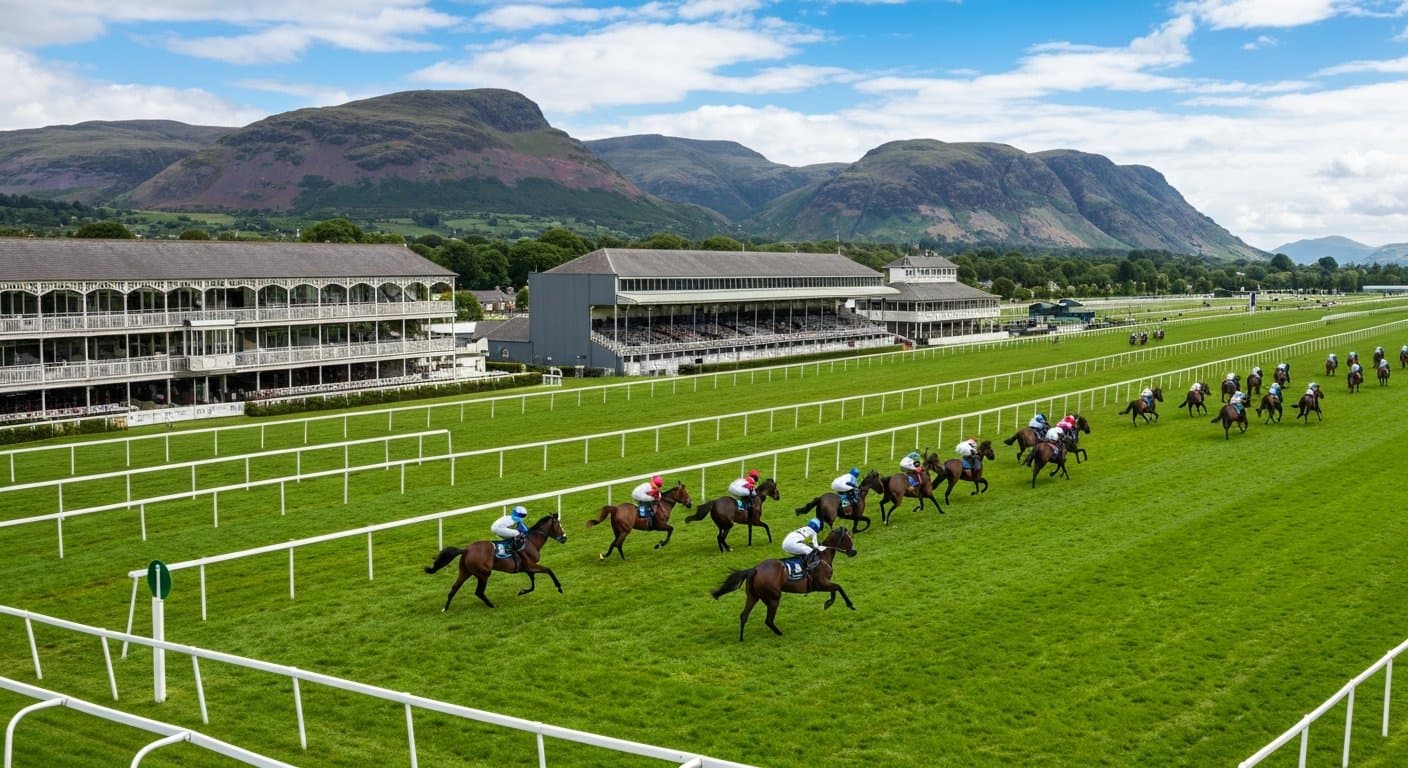
Carlisle Racecourse: Tips, Going & Britain's Northernmost Track
Get winning tips for Britain's northernmost racecourse. Carlisle Bell insights, going reports, and everything you need for Cumbria racing.
Read more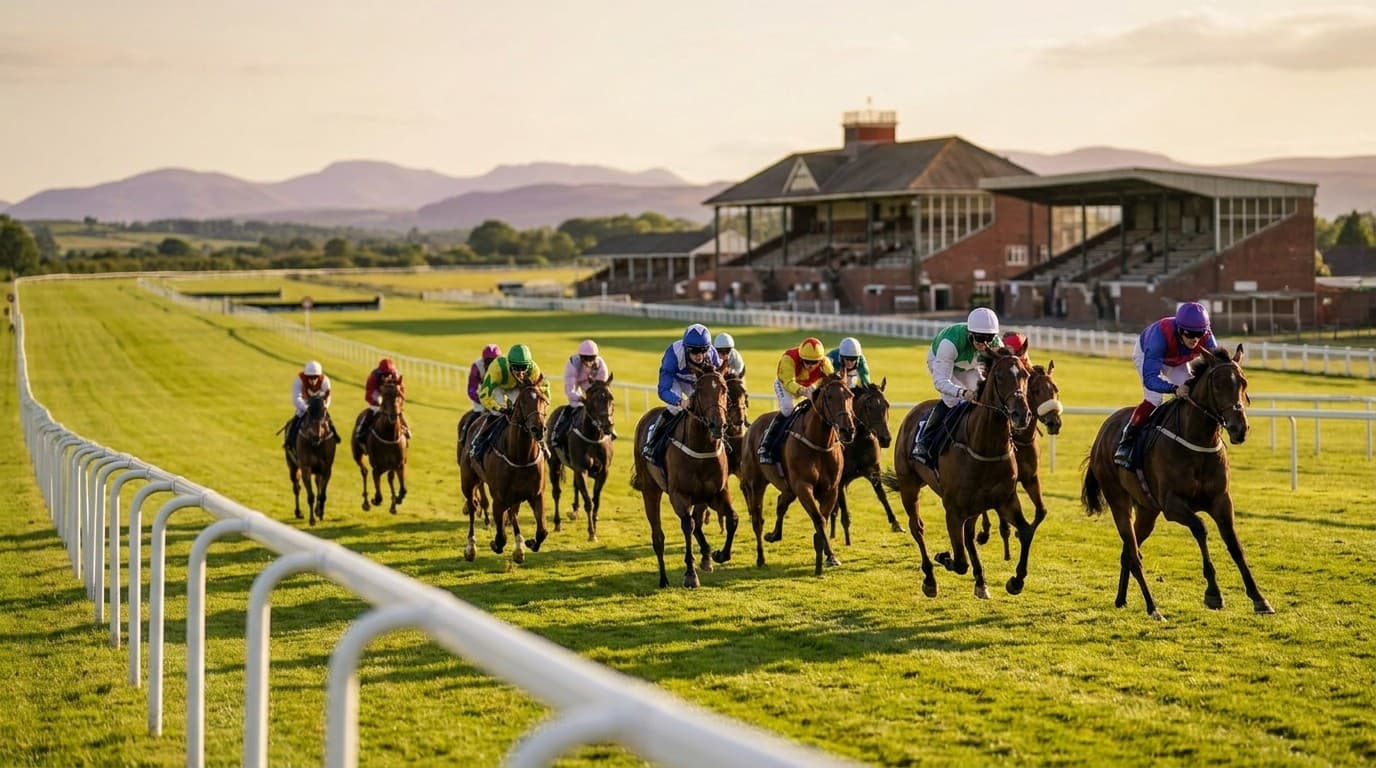
Cumberland Plate 2026: Carlisle Tips, Odds & Race Guide
Get expert tips and betting odds for Carlisle's historic Cumberland Plate handicap. Race preview, form analysis and insider knowledge for June's big race.
Read more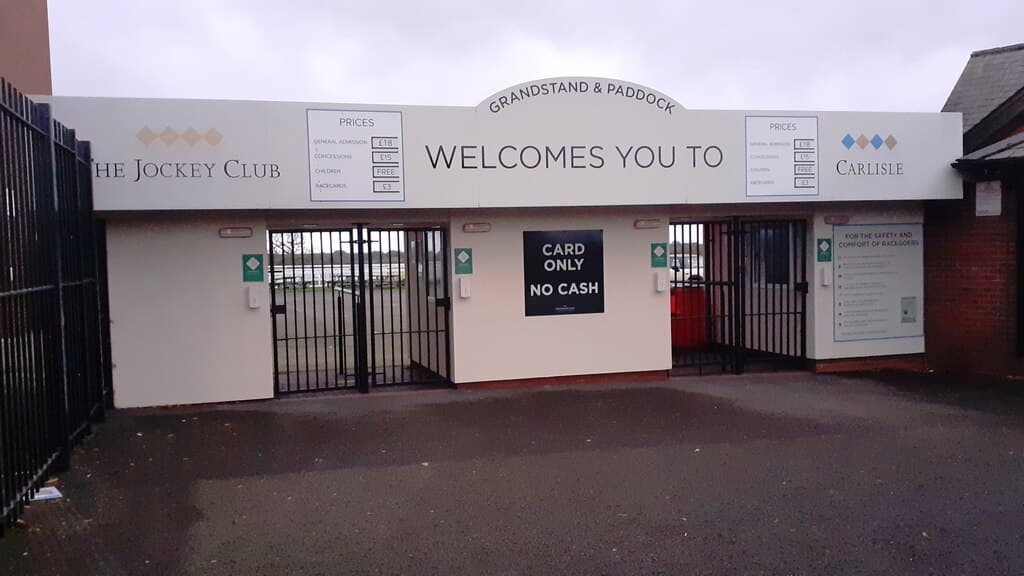
A Day Out at Carlisle Racecourse
A day at Carlisle — getting there, what to wear, enclosures, food and drink, and insider tips for Britain's northernmost dual-purpose track.
Read morePhotos on this page are used under Creative Commons licences. Titles, sources and licence links for each one are on our image credits page.
Research the field with the AI Race Predictor
Our model publishes calibrated win-probability estimates for UK races — a second opinion to understand a race, not tips. It's open about its record: it doesn't beat the market, and we show exactly how it does.
Work it out & learn the basics
Gamble Responsibly
Gambling should be entertaining and not seen as a way to make money. Never bet more than you can afford to lose. If you or someone you know has a gambling problem, help and support is available.