
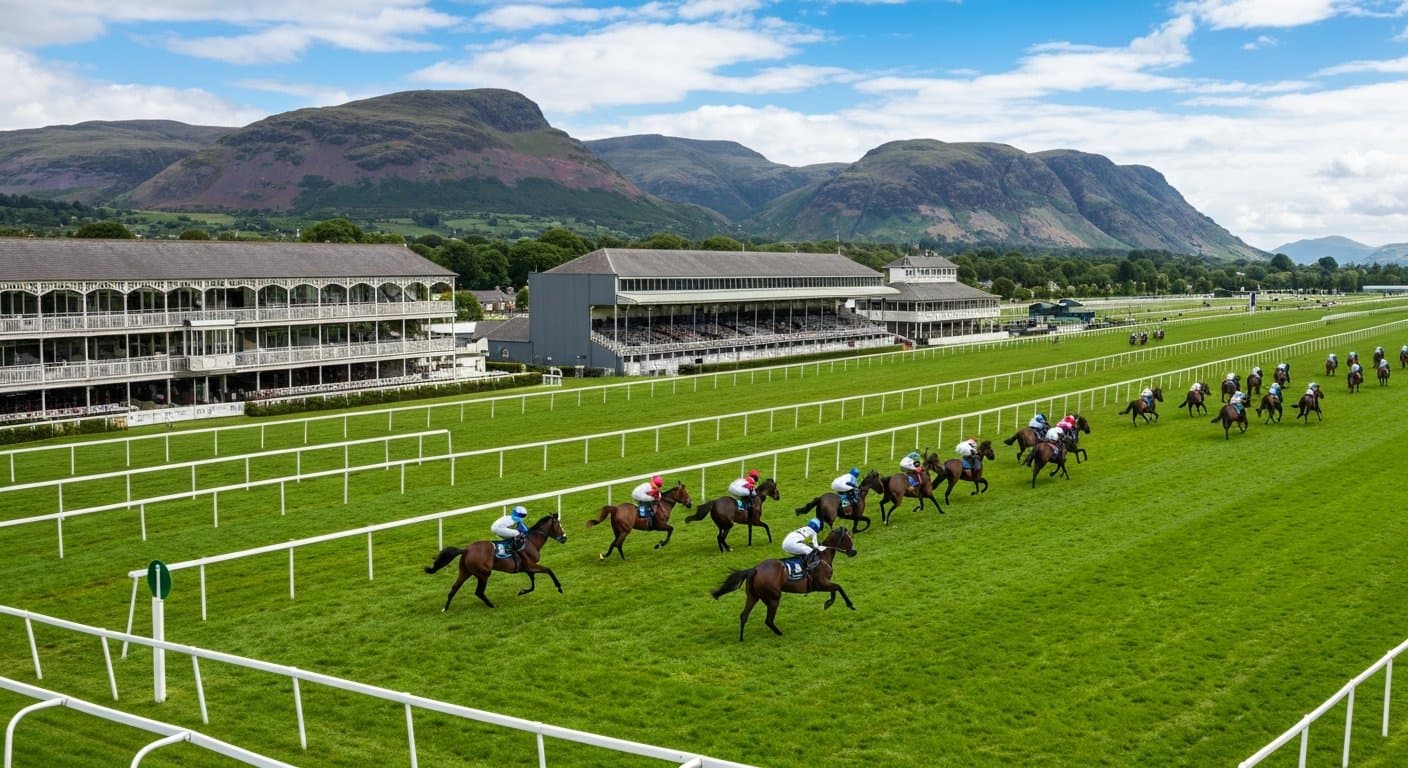
Founder & Editor · Last reviewed 2026-04-05
Carlisle Racecourse sits at the northern edge of English racing, 8 miles from the Scottish border at Gretna and roughly equidistant between Edinburgh and Manchester. That geography shapes everything about the place, the crowd it draws, the weather it endures, and the sense that a day at Carlisle is a proper northern occasion rather than a day at the races with a northern postcode. The current course at Durdar Road, Blackwell, has been in operation since 1904, and dual-purpose racing has been part of the fabric of Cumbrian life ever since.
This guide is for anyone heading to Carlisle for the first time or returning after a gap. It covers the layout of the right-handed, undulating track, the fixture calendar with the Cumberland Plate meeting as its centrepiece, the facilities, the travel options, and the betting angles that the course's unique character produces. There is a section on the racecourse's history stretching back to 18th-century town moor meetings, a look at the moments that have defined the course, and practical advice on combining a race day with the Lake District or a short trip over the border into Scotland.
Carlisle is the most accessible major racecourse in England for visitors arriving from Scotland. The West Coast Main Line stops at Carlisle station, 1.5 miles from the course, and Edinburgh is just over an hour away by train. Glasgow is 1 hour 45 minutes. For Scottish racegoers who want English racing without a full day's travel, Carlisle is the natural choice. The same line, heading south, brings visitors from Manchester in 1 hour 30 minutes and from London Euston in around 3 hours.
The Lake District backdrop is part of the course's appeal even if the fells themselves are not visible from the grandstand. The A66 to Keswick and the heart of the national park begins less than a mile from the racecourse. Many visitors combine a morning in the Lakes with an afternoon at the races, the logistics work well enough for a long June day when racing finishes at around 5.30pm.
Quick Facts
| Location | Durdar Road, Blackwell, Carlisle, Cumbria, CA2 4TS |
| Region | North West England (8 miles from the Scottish border) |
| Racing type | Dual purpose, flat and National Hunt |
| Current site opened | 1904 |
| Track shape | Right-handed, pear-shaped, approximately 1m5f round |
| Notable feature | Long uphill climb into the finishing straight |
| Capacity | Approximately 7,000 |
| Signature flat race | Cumberland Plate (Class 2 handicap, June) |
| Signature NH race | Cumberland Chase (Listed, November) |
| Nearest station | Carlisle (West Coast Main Line, 1.5 miles) |
| Nearest motorway | M6, Junction 42 (southbound) or Junction 43 (northbound) |
| Website | thejockeyclub.co.uk/carlisle |
| Operator | The Jockey Club |
| Related courses | Hexham, Kelso, Catterick |
The course is owned by The Jockey Club, which has invested steadily in facilities since 2002 when the main grandstand was rebuilt. The capacity of around 7,000 keeps the atmosphere tight, on a busy Cumberland Plate day the whole place feels purposeful and alive, without the sprawl of a Chester or Haydock.
One thing that distinguishes Carlisle from most English tracks is the weather exposure. The course sits on elevated ground above the Eden Valley, open to westerly weather coming off the Irish Sea and north-westerlies coming down from the Solway Firth. In April and May, snow is not unheard of. The course has been abandoned in late spring due to frost and snow on more than one occasion. Even in June, a coat is advisable after the last race. That exposure also means the going can change quickly, which matters both to racegoers planning their visit and to punters assessing the form.
The dual-purpose calendar means the racecourse rarely lies idle for long. Flat racing runs April through September; National Hunt fills October through April. Meetings happen roughly every three weeks through most of the year, with the busiest period concentrated around the Cumberland Plate meeting in June and the November jump fixtures. Crowd sizes on ordinary flat and jump days tend to be around 3,000 to 5,000; the Cumberland Plate meeting draws 7,000 to 8,000.
Whatever brings you to Carlisle (the racing, the history, the proximity to the Lake District, or the straightforward fact that it is one of the few English courses truly easy to reach from Scotland) the track itself will not disappoint. The uphill finish produces honest, hard-fought races. Form here tends to hold up. And on a clear June afternoon, with the Lakeland fells dimly visible to the south-west and a full card of flat racing ahead of you, it is one of the better afternoons English racing has to offer.
Bet on Carlisle
Place your bets on Carlisle races with a trusted bookmaker.

Promo code BETFRED50. New customers only. Register, deposit with a Debit Card, and place a first bet of £10+ at Evens (2.0)+ on Sports, to be settled within 7 days, to get £30 in Sports Free Bets and £20 in Bet Builder Free Bets within 24 hours of settlement. 7-day expiry. Eligibility & payment exclusions apply. Full T&Cs apply. Take Time to Think. BeGambleAware.org. 18+. Full T&Cs.

Promo code R30. New UK customers only, 18+. Register, deposit £10 or more, then place a £10 single cash bet at odds of 1/2 (1.5) or greater on any sports market (excluding Virtuals). Once the qualifying bet settles you get £30 in Free Bets (3 x £10) — the qualifying bet can win or lose. Free Bets are valid on any sports market excluding Virtuals, expire in 7 days, are non-withdrawable and must be used in full. Excluded deposit methods apply (including PayPal, Apple Pay, Skrill and NETELLER). Named bets such as Lucky 15 do not qualify. If you cash out the qualifying bet, or it is voided, you are no longer eligible for the offer. Ends 31.12.26. Full T&Cs apply. Please gamble responsibly. BeGambleAware.org. 18+. Full T&Cs.

Promo code BET40GET20. New UK customers, 18+. Register with the code and place a first bet of £40 or more at Evens (2.0) or greater. Receive 2 × £10 free bets: the first credited automatically once the qualifying bet settles, the second 24 hours later. Free bets must be placed at minimum odds of 4/1 (5.0), expire 24 hours after credit, and the free-bet stake is not returned with winnings. Debit card deposits only. Take Time to Think. BeGambleAware.org. 18+. T&Cs apply. Full T&Cs.

50% of your first-day net losses refunded as a free bet, capped at £25. New UK customers aged 18+ only. To qualify, deposit and place a first bet of £10 or more on any sport at minimum odds of evens (2.00), then place at least two further bets on different events, each worth at least 50% of your largest bet, all at evens (2.00) or greater. Losses are counted from your first settled bet until 23:59 the same day. Place a qualifying £10+ bet and you are guaranteed at least a £5 free bet. Bets placed at SP, void bets, cashed-out bets and bets struck with free bets do not count towards the offer. The free bet is credited the day after your qualifying bets settle and must be used within 7 days, after which it expires. It can be used at odds from 1/4 (1.25) up to 250/1 on singles and straight accumulators, but not on Trixie, Patent or Yankee style multiples. Free-bet stake is not returned with winnings. One offer per person, household, address, IP address and device. E-wallet deposits may not qualify, so check the cashier before depositing. Customers registered with GAMSTOP cannot claim. KYC identity verification must be completed before the free bet is credited. Take Time to Think. BeGambleAware.org. 18+. T&Cs apply. Full T&Cs.

New customers, 18+. Choose the sports bonus at sign-up, make a first deposit and receive a 100% bonus up to £50 in your Sports Bonus balance. To convert the bonus to cash, wager it 10x within 30 days. Single bets below Evens (2.00) do not qualify; accumulators do not qualify if any selection is below 1/2 (1.50). Virtual Sports, voided, cancelled, drawn, cashed-out and free-bet wagers do not count towards wagering. Only the first settled bet per event counts. Withdrawing before the wagering requirement is met forfeits the bonus balance including bonus winnings. Real-money funds are used before bonus funds. Deposits via Skrill or Neteller are not eligible. Not valid in conjunction with other promotions. Odds, bet and payment limits apply. 10bet general and promotion T&Cs apply. BeGambleAware.org. 18+. Full T&Cs.

New customers in Great Britain and Republic of Ireland, 18+. Place a £10 fixed-odds qualifying bet at minimum odds of 1/2 (1.50) — single or each-way (only the win part counts), pre-event or in-play, not cashed out early, within 28 days of opening the account. Receive up to £60 in bonuses credited over three days: 3 × £10 fixed-odds free bets (the first on settlement, then 24 and 48 hours later) plus 3 × £5 Total Goals FOOTBALL spread bets and 3 × £5 racing Winning Favourites spread bets, with a £1 racing Race Index spread bet as an extra on top. The spread bets need a full spread-betting account, opened within 28 days of the fixed-odds account and subject to Spreadex's eligibility and appropriateness checks. Free-bet stakes not returned with winnings; free bets valid 28 days from issue. IMPORTANT: the £5 credits are SPREAD bets — sports spread betting carries the risk that losses can exceed your stake. Sports spread-betting customers do not have Financial Ombudsman or FSCS recourse. Take Time to Think. BeGambleAware.org. 18+. T&Cs apply. Full T&Cs.

Promo code WELCOME15, entered under My Bonuses after registering. New UK customers, 18+. Place a first qualifying bet of at least £10 from your cash balance at odds of evens (2.0) or greater within 7 days of opening the account. Once the qualifying bet fully settles you receive £15 in free bets, credited as 3 x £5 tokens with set uses: one £5 accumulator free bet (minimum 4 legs, each leg at 2/5 or bigger), one £5 sports free bet (any market at evens or bigger) and one £5 Sub Cover free bet (selected football player markets at evens or bigger). Free-bet stakes are not returned with winnings. Free bets expire 7 days after they are credited. Void, cashed-out and partially cashed-out bets do not qualify. One offer per customer. Confirm the current terms on BetGoodwin's own welcome-offer page before claiming. Take Time to Think. BeGambleAware.org. 18+. T&Cs apply. Full T&Cs.

New UK customers, 18+. Minimum deposit £10. Place a £10 qualifying single on sports (excluding virtuals) at minimum odds of 1/2 (1.50), settled within 14 days. Deposit-method exclusions apply. Receive £30 in free bets (stake not returned), split £20 for sportsbook use (2 x £10) and £10 for Bet Builder only (2 x £5); Bet Builder does not cover horse racing. Free bets must be accepted within 7 days and expire 7 days after acceptance. No promo code required. Best Odds Guaranteed on UK & Irish racing, subject to having staked over £25 in the previous seven days. Operated by LiveScore Betting and Gaming (Gibraltar) Ltd, UKGC 56859. Confirm the current terms on LiveScore Bet's own promotions page before claiming. Take Time to Think. BeGambleAware.org. 18+. T&Cs apply. Full T&Cs.
18+. BeGambleAware.org
The Course
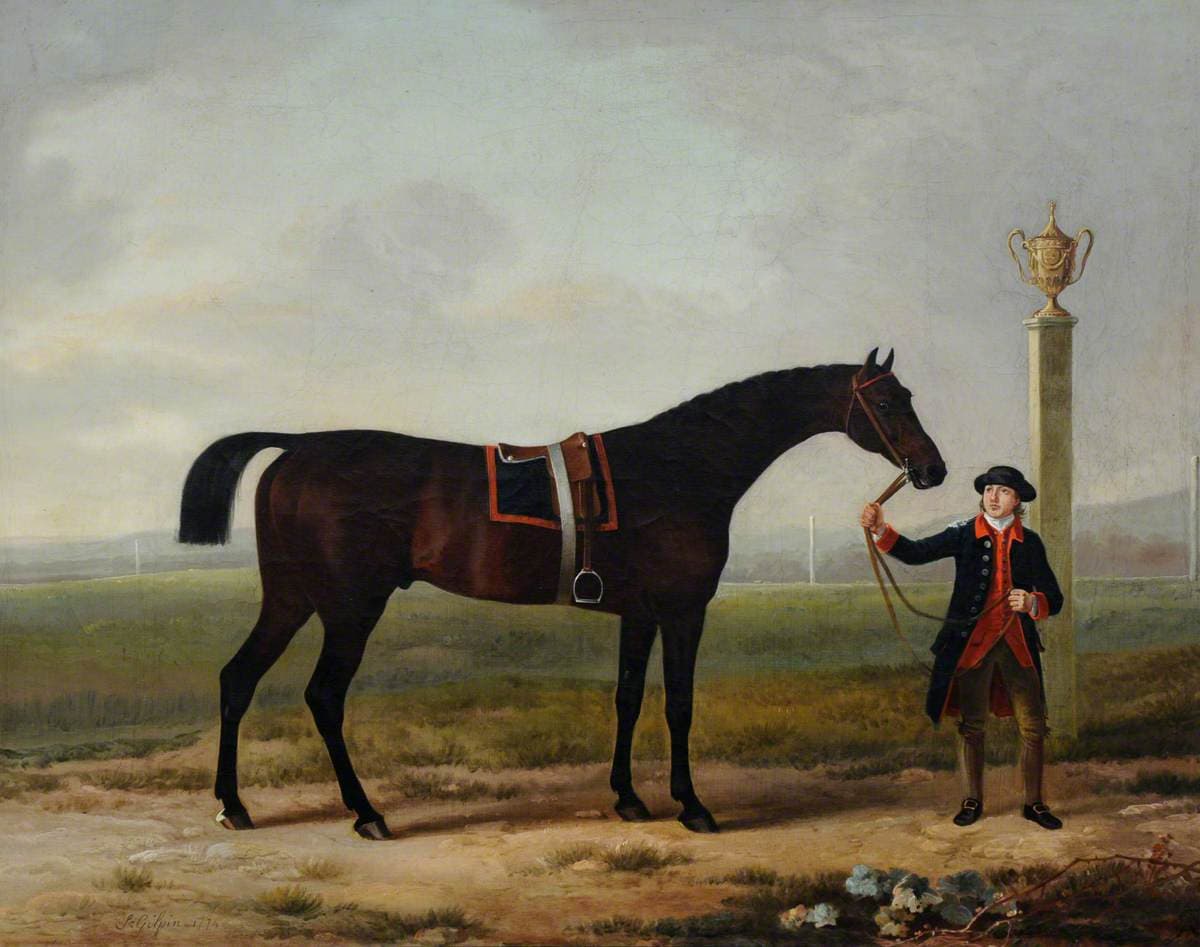
Carlisle is a right-handed, pear-shaped circuit of approximately 1 mile 5 furlongs. That measurement is a slight curiosity, it places Carlisle at the lower end of what most people picture when they think of a galloping track, but the course rides longer than the circumference suggests because of the significant changes in elevation. A horse covering the back straight and the long run up to the finish is doing considerably more work than the same distance on a flat oval.
Shape and Elevation
The course begins from a chute that joins the main circuit at roughly the 10-furlong mark. Horses run along the back straight, which is relatively level, before sweeping right-handed into the long bend that leads to the home straight. The key topographical feature starts here: from the top of the bend, the ground rises noticeably all the way to the winning post. The climb is not sudden. It is a sustained, grinding ascent over roughly five furlongs. Horses that are already under pressure at the turn into the straight rarely see it out; those with reserves of stamina come alive on the hill.
The highest point of the track is the winning post itself, which sits on elevated ground above the Eden Valley. On a clear day the views from the grandstand stretch south towards the Lake District fells and north towards the Solway coast. The course's elevated position is also the reason it can be windswept and cold even when nearby Carlisle city centre is relatively mild.
Flat Distances
The flat programme at Carlisle uses seven distances:
- 5 furlongs: the sprint course uses a chute that joins the back straight. Horses run a short stretch before swinging right into the home bend and climbing to the finish. The uphill last two furlongs tests even real sprinters.
- 6 furlongs: a straighter path from the chute, joining the main track slightly further round. One of the more testing 6-furlong tracks in the north of England.
- 7 furlongs 193 yards: races at this distance use most of the circuit. The draw matters less than at shorter trips; stamina is the overriding factor.
- 1 mile: horses start near the top of the back straight and complete nearly a full circuit. Strong-travelling stayers are consistently advantaged.
- 1 mile 1 furlong: a middle-distance trip that rewards horses with both class and stamina. Regularly used for the better handicaps.
- 1 mile 3 furlongs: a thorough test. Horses that stay well and handle the gradient win here.
- 2 miles: used occasionally for staying handicaps. The climb in the home straight is extreme over this trip; form from similar staying tracks (Catterick, Chester, Pontefract) often translates.
Draw Bias on the Flat
The draw creates a clear bias at sprint distances. On the 5-furlong and 6-furlong trips, horses in high-numbered stalls can be disadvantaged. The reason is the way the course bends right shortly after the start, horses drawn wide (high numbers) must cover additional ground to settle into a position on the rail. When the pace is strong and the field is large, high draws at 5f can concede two or three lengths by the end of the opening two furlongs.
Rail position affects the bias further. Carlisle moves the running rail regularly to protect the ground, and a strip of fresh ground on the inside can swing the advantage back towards low draws, or eliminate it altogether. Before sprint races, always check where the rail is set for that specific meeting. The Jockey Club publishes going and rail updates on the course website, usually 48 hours before racing.
At distances of 1 mile and beyond the draw effect diminishes. Fields have time to settle, jockeys choose their positions, and the result is determined more by stamina and tactics on the uphill run than by where a horse broke from the stalls.
National Hunt Distances
The jumps programme uses three main trip categories:
- 2 miles 1 furlong: the shortest NH trip at Carlisle. Even at this distance, the hill in the closing stages tests jumping accuracy and resolution. Fences come quickly after the bend, and horses that are tiring will jump sloppily.
- 2 miles 4 furlongs: the intermediate trip, used for the majority of handicap chases and novice hurdles. Front-runners who set an honest gallop and jump well can build an advantage that the hill never allows rivals to close.
- 3 miles 2 furlongs: Carlisle's staying chase trip. This is a punishing distance on this track. The ground, which can be heavy or soft through most of the NH season, combined with the long home straight climb, means only horses with real stamina and bold jumping ability compete on level terms.
Going Tendencies
Carlisle's going is among the most variable of any northern course. The elevated position above the Eden Valley (the course sits roughly 60 metres above the valley floor) means it is fully exposed to weather systems moving in from the west. Rainfall that leaves a track in Preston or York yielding-to-good can leave Carlisle good-to-soft or soft. After sustained wet weather, the ground at the back of the course (the lowest-lying section) can be heavy even when the stands area is soft.
The going reports from Carlisle have historically tended to be conservative. A course official walking the ground at 7am on a cold November morning may describe conditions as soft when they are effectively heavy in the running track used by horses. Experienced punters treat Carlisle's going reports as one step firmer than they appear, particularly for NH meetings between October and February.
In summer, the elevated position can also mean the ground dries quickly after a dry spell. Carlisle has been good or good-to-firm in July and August during dry summers, which changes the character of the racing entirely, flat horses bred for speed rather than stamina become more competitive when the ground is quick.
What Type of Horse Succeeds
Flat: The uphill finish is the defining filter. Horses bred and trained for stamina (middle-distance types dropping back from 1m4f, stayers stretching down from 2m) consistently outrun their odds at Carlisle. Horses that have won on other testing, undulating tracks (Catterick's false flat finish, Chester's tight circuit, Pontefract's long uphill run) often translate well. Horses that have only won on flat, fast tracks like Newmarket or Goodwood may underperform, particularly if the ground is soft.
National Hunt: The ideal Carlisle jumper is a bold front-runner or a horse that travels well within a race and jumps accurately. The undulating back straight means horses that do not settle burn through their energy reserves before the climb. In heavy ground, the penalty for a single poor jump (losing momentum, losing place, losing rhythm) is amplified by the hill. Horses trained by yards with a local knowledge advantage consistently outperform the national average at Carlisle.
Key Fixtures & Calendar
Carlisle stages roughly 16 to 18 fixtures per year across both codes. The flat season runs from April to September, National Hunt from October to April. The two codes overlap in spring and autumn, meaning the track can host a flat card one week and a NH card a fortnight later. The calendar is built around a handful of set-piece meetings (the Cumberland Plate day being the most important) with bread-and-butter handicap cards filling the gaps.
The Flat Season: April to September
The flat season begins in April, usually with a maiden and handicap card that signals the start of the northern flat season alongside Catterick and Ripon. Fields in April at Carlisle tend to be modest, trainers are still getting horses fit and the going is often soft from winter rain. The racing sharpens through May as better-quality horses emerge and summer conditions allow faster ground.
June, the Cumberland Plate Meeting
June is the centrepiece of Carlisle's flat year. The Cumberland Plate meeting is the course's social and sporting highlight, typically drawing 7,000 to 8,000 racegoers, the upper limit of the racecourse's capacity. The Cumberland Plate itself is a Class 2 flat handicap run over 1 mile 1 furlong, with prize money that attracts northern trainers and the occasional southern raider. It is the best-known flat race at Carlisle and has been the course's signature event for well over a century.
The Carlisle Bell, run over 7 furlongs 193 yards, also features on the same card. The Bell is one of the oldest sporting trophies in Britain. The original bell dates to 1559 and was awarded to the winner of the town moor races. The modern race preserves that tradition and the card around it is the strongest flat card Carlisle stages. Hospitality packages for this meeting sell out early, and anyone planning a first visit to Carlisle would do well to make this their date.
Other Flat Fixtures
The Eternal Stakes, a Listed race for three-year-old fillies over 6 furlongs 192 yards, brings Pattern-level competition to Carlisle's summer programme and is often the best race in the July or August card. Weekend flat fixtures through July and August draw crowds of 3,000 to 5,000. Midweek evening meetings, which Carlisle stages occasionally in June and July, attract smaller but enthusiastic local crowds, 1,500 to 2,500 on a typical weekday evening.
The flat season closes in September with a two-day fixture that doubles as a farewell to the summer programme. By this point the going has usually softened and the card takes on a different character to the fast-ground sprints of midsummer.
The National Hunt Season: October to April
The NH season begins in late October, usually with a mixed card of novice hurdles and handicap chases. The going is typically good-to-soft or soft by then, and the character of Carlisle racing shifts: the crowds are smaller (2,000 to 4,000 on a typical NH day), the atmosphere is more focused on the racing, and the conditions are testing.
November, the Quality Jumps Cards
November brings Carlisle's strongest NH fixtures. The Cumberland Chase, a Listed handicap chase run over 2 miles 4 furlongs, is the headline race. It attracts northern-trained chasers with Cheltenham Festival ambitions, and the heavy or soft going that is common by late November sharpens the test considerably. The Colin Parker Memorial Intermediate Chase, also run in November, is a well-regarded conditions race for chasers stepping up in class.
The Houghton Mares' Chase and the Graduation Chase complete the November programme. In a good year, this November cluster of fixtures represents the best racing Carlisle stages across either code.
The Border Novices' Hurdle Meeting, December
The Border Novices' Hurdle has become one of Carlisle's most watched NH races. Run in December, it is a Grade 2 novice hurdle that consistently throws up future Festival contenders. Trainers with strong novice hurdler strings (including Irish yards making the trip across) target the race specifically. The December meeting is a real pointer for the Cheltenham Festival bumpers and novice hurdle races the following March.
January and February NH Meetings
The January and February cards are the most exposed to the Cumbrian winter. Frost, snow, and waterlogged ground mean abandonment is not uncommon at this time of year. When the card does go ahead, it often produces competitive racing on truly testing ground. The going in January at Carlisle can be heavy in the extreme, some of the most punishing racing surfaces of the winter season are found here.
Spring NH Fixtures
March and April bring a gradual improvement in conditions. The NH season winds down with two or three fixtures that often include competitive staying hurdles and handicap chases. The April card can coincide with the very beginning of the flat season if the fixture list overlaps.
Crowd Sizes and the Atmosphere Calendar
- Cumberland Plate meeting (June): 7,000–8,000: the biggest crowd of the year, festive atmosphere, hospitality packages at a premium
- Other summer flat weekends: 3,000–5,000: relaxed, family-friendly, good value
- Midweek flat evenings: 1,500–2,500: local crowd, informal
- November NH quality meetings: 2,500–4,000: serious racing fans, form-focused
- December Border Novices' Hurdle meeting: 3,000–4,500: elevated interest given the race's profile
- January/February NH meetings: 1,500–2,500: committed attendees only; weather can be severe
Planning Your Fixture
The Jockey Club publishes the full fixture list at thejockeyclub.co.uk/carlisle, usually by October for the following year. Tickets for the Cumberland Plate meeting go on sale in January and hospitality packages are typically gone by April. For NH fixtures, tickets are available on the day for most meetings, though the Border Novices' Hurdle card in December benefits from booking in advance.
Facilities & Hospitality
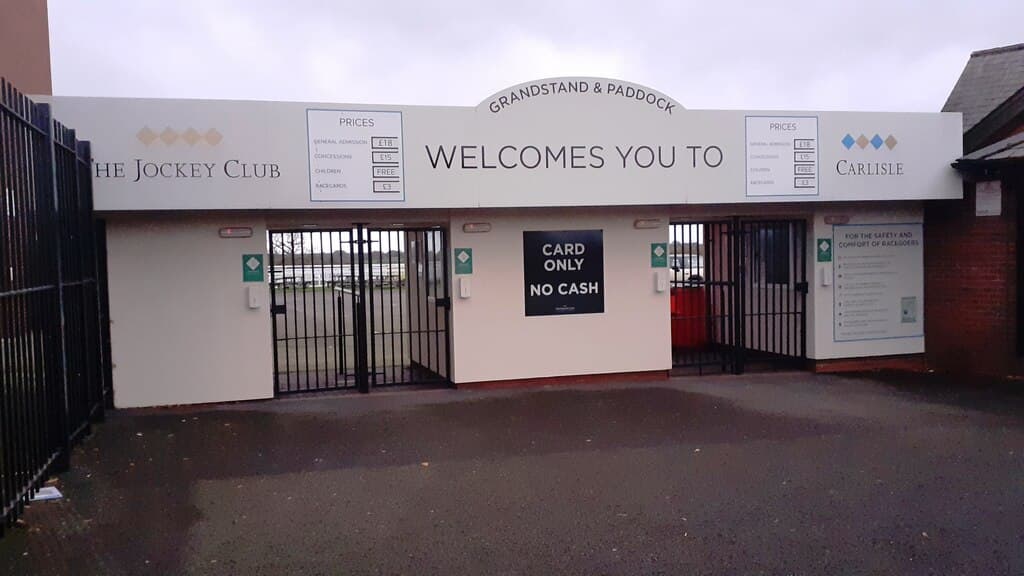
Carlisle Racecourse is a Jockey Club venue, rebuilt substantially in 2002 when the current main grandstand was completed. The facilities are solid and practical rather than lavish. The capacity of around 7,000 means everything is reachable on foot in a few minutes, and the layout does not require a map. What the course has traded in scale it compensates for in atmosphere and sightlines. The uphill finish is visible from most of the grandstand, which is more than can be said for many larger venues.
The Grandstand and Enclosures
The main grandstand faces the finishing straight and provides the best elevated view of the uphill run-in. The seating tiers give a clear sight of the last four furlongs as horses climb to the finish, a view that many larger courses, with their flat layouts, cannot match. The open terrace to the right of the grandstand is popular on warm summer days and provides a ground-level view of the paddock area.
There are two principal enclosures at Carlisle:
Premier Enclosure: the main grandstand and paddock area. Admission at a typical flat meeting is in the range of £18 to £25. This enclosure includes access to the main bars, the paddock for horse inspection, and the winners' enclosure. A smart casual dress code is expected, particularly on Cumberland Plate day, shorts are discouraged in the Premier Enclosure on the main summer fixtures.
General Admission (Tattersalls): covers the majority of the viewing area including the open terrace and the betting ring. Admission is typically £10 to £15 on a standard day. Dress code is relaxed. This is the better option for racegoers who prioritise access to the bookmakers over a formal setting.
The Paddock
The paddock at Carlisle is compact and well-positioned relative to both enclosures. Racegoers in both the Premier and General Admission areas can watch the pre-race parade without difficulty. The paddock is a real focal point on race days. The trainers and jockeys are close enough that conversations are audible, and the sense of proximity to the horses is one of Carlisle's pleasures.
Food and Drink
The food at Carlisle leans into Cumbrian produce, which is one of the course's better distinctions. On the better summer cards you will find Cumberland sausage rolls, pulled pork from locally sourced Cumbrian pigs, and artisan pies from north Cumbrian producers. The Grasmere Gingerbread shop has supplied gingerbread to Carlisle racecourse on the Cumberland Plate meeting. A small detail but one that is distinctly local.
Bars are distributed across both enclosures. On a warm June day, the terrace bar is consistently busy. The main grandstand bar carries a selection of Cumbrian ales alongside the standard Jockey Club offering, Yates' Brewery of Westnewton, 15 miles west of Carlisle, has supplied beer to Carlisle events in the past. The catering quality is above average for a regional track of this size.
For racegoers wanting something more substantial than racecourse catering, Carlisle city centre is 1.5 miles away and served by a good range of restaurants and pubs. The Thin White Duke on Castle Way and the Woodlands Bar on Portland Square are both popular with racegoers on a big day out.
Hospitality Suites
The course offers private hospitality suites above the grandstand, bookable for corporate groups and private parties. Suites accommodate between 10 and 40 guests and include a dedicated viewing area, three-course lunch, and race card. Prices are in line with comparable northern Jockey Club tracks, roughly £80 to £120 per head on the Cumberland Plate meeting, £55 to £70 on a standard flat day.
For smaller groups, the Premier Enclosure provides a semi-formal alternative without a full hospitality booking.
Children and Families
Carlisle actively markets itself as a family-friendly venue. Children under 18 are admitted free to the General Admission enclosure on most fixtures. There is a children's activity area on family-designated days, and the compact size of the course means children do not get lost in a crowd. The paddock access is particularly good for children. The horses are visible at close quarters before each race.
Disabled Facilities
The 2002 grandstand rebuild incorporated disabled access to the main viewing areas. There are designated viewing platforms with clear sightlines to the finish, accessible from level ground. Parking for blue badge holders is available close to the main entrance. The Jockey Club access team can be contacted in advance at the course website to arrange specific requirements.
The Betting Ring
The on-course betting ring at Carlisle is well-maintained and active on the bigger days. Independent bookmakers line the ring, with boards updated manually. A feature that is increasingly rare at larger courses but survives at Carlisle. On a busy Cumberland Plate card there will be 15 to 20 rails bookmakers operating. Tote terminals are positioned throughout the course.
The ring's proximity to the paddock makes it easy to watch the horses, form a view, then place a bet quickly before the off. The compact layout of the course is an advantage here.
Getting There
Carlisle Racecourse is located at Durdar Road, Blackwell, on the south-eastern edge of Carlisle city, with postcode CA2 4TS. It sits approximately 1.5 miles from Carlisle railway station and is accessible by taxi, bus, or a 25-minute walk through the southern suburbs.
By Train
Carlisle station is on the West Coast Main Line, one of Britain's busiest intercity rail corridors. That gives Carlisle an unusually strong rail connection for a regional course.
From London Euston: Direct Avanti West Coast services run approximately every 45 minutes during the day. The journey takes around 3 hours to 3 hours 15 minutes. The 09:00 from Euston arrives at approximately 12:15, giving comfortable time to reach the course for a 2pm first race. Return services from Carlisle run to 22:00, covering most evening fixtures.
From Edinburgh Waverley: Direct TransPennine Express or Avanti services take approximately 1 hour 15 minutes. Carlisle is one stop south of Edinburgh on the main Anglo-Scottish route, for Scottish racegoers, it is the nearest English course with a major meeting programme. Services run every 30 minutes throughout the day.
From Glasgow Central: Services require a change at Carlisle, or a direct service via the west coast route via Dumfries takes around 1 hour 45 minutes. Alternatively, Glasgow racegoers can take the fast service to Edinburgh (50 minutes) and change there.
From Manchester Piccadilly: Direct Avanti services take approximately 1 hour 30 minutes. This makes Carlisle viable for Manchester-based racegoers even on a working day. A midweek evening fixture is reachable with the right timetable.
From Newcastle: Services run via the Tyne Valley line (the Carlisle–Newcastle cross-country route), taking approximately 1 hour 10 minutes and passing through Hexham. For racegoers based in the North East, this route also makes it easy to combine a Carlisle meeting with a night in the city.
From the station to the course: Taxis from Carlisle station to the racecourse take approximately 10 minutes and cost around £6 to £9. On Cumberland Plate day, there is usually a shuttle bus service from the station, check the Jockey Club website closer to the date for confirmation. The walk from the station is feasible but takes around 25 minutes through residential streets.
By Car
Carlisle is well served by the M6 motorway, which approaches the city from both north and south.
From the south (M6): Exit at Junction 43. Take the A69 east briefly, then the A7 south, following signs for the racecourse. Allow 10 to 15 minutes from the motorway junction in light traffic.
From the north (M6): The motorway terminates near Carlisle. Exit at Junction 42, which feeds onto the A6 into the city. The racecourse is signposted from the main southern approaches.
From the east (A69 from Newcastle): The A69 enters Carlisle from the east and passes through the city's southern suburbs. The racecourse is signposted from the A69 as it approaches the city.
Parking: Free parking is available at the racecourse on all fixtures. The site accommodates approximately 2,000 cars. On Cumberland Plate day, the car parks fill by 1pm, arrive before midday to secure a space near the entrance. Overflow parking is available in designated fields adjacent to the course.
Practical Notes for Visitors from Scotland
Carlisle is the most accessible major English racecourse by train for visitors coming from Scotland. The border at Gretna is 8 miles north, and the cultural familiarity of northern England (similar weather, similar towns, similar racing culture to Scottish lowland courses like Kelso and Ayr) makes the trip feel natural rather than foreign.
Visitors from Edinburgh and the Lothians have the option of combining Carlisle with a stop at Gretna for the outlet shopping village 8 miles north, or extending the trip to include Carlisle Castle (English Heritage, open daily) and the city's small but fine cathedral.
By Taxi and Rideshare
Uber and local taxis operate from Carlisle station. On Cumberland Plate day, booking in advance is advisable, the demand after racing finishes peaks sharply and waiting times at the course can be 30 minutes without a pre-booked car. The main local taxi firms serving the racecourse include County Taxis and Citadel Radio Taxis, both contactable through the Carlisle station taxi rank.
Accessibility
The course is fully accessible by wheelchair from the main car park. Dedicated drop-off points for minibuses and accessible vehicles are signed from Durdar Road. Blue badge parking is immediately adjacent to the entrance. Carlisle station has full step-free access including lifts to all platforms.
Frequently Asked Questions
History
Racing in the Carlisle area has a documented history stretching back to the early 18th century. The town moor to the north of the city was used for race meetings from at least 1721, when the Corporation of Carlisle began organising an annual race card. The prizes in those early years were modest, the Carlisle Bell, a silver bell awarded to the winning rider, was already old by then, having been presented by the city in 1559 as an incentive for horse racing. The Bell is one of the oldest sporting trophies in the world still awarded in its original form, and it predates the establishment of formal horseracing in England by well over a century.
The Town Moor Period
The town moor meetings ran intermittently through the 18th century, shaped by the practicalities of civic organisation and the periodic disruption of the Jacobite risings. Carlisle was occupied by Bonnie Prince Charlie's army in November 1745 during the retreat from Derby. Racing resumed after the political upheaval, and by the late 18th century Carlisle had established itself as a fixture in the northern racing calendar alongside York, Newcastle, and the smaller Cumbrian meetings.
The site used during the town moor period was eventually squeezed out as Carlisle expanded northwards. The other significant 19th-century site was The Swifts, a course to the south of the city that hosted racing from the mid-Victorian period. The Swifts provided a more structured venue than the open moorland, but by the turn of the 20th century the limitations of the site (inadequate drainage, restricted space for grandstand development) were clear.
The Move to Durdar Road, 1904
The current course at Durdar Road, Blackwell, opened in 1904. The move was driven by the Carlisle Race Company, which had identified the elevated ground south-east of the city as suitable for a permanent, properly drained track. The pear-shaped right-handed layout that exists today was established at this point, as was the signature feature of the course: the long uphill run to the finish that separates stayers from horses without the necessary stamina.
The early Durdar Road meetings were well attended. Carlisle's position on the Midland Railway's Settle–Carlisle line and on the main west coast corridor meant that visitors could travel from Manchester, Glasgow, and Edinburgh with relative ease. By 1910 the racecourse was drawing crowds of several thousand on its best days, with the Cumberland Plate already established as the feature event of the flat season.
The Border Country Catchment
What made Carlisle's racecourse distinctive from the outset was its geographic position. Sitting 8 miles from the Scottish border, the course drew racegoers from both sides of the frontier. Scottish lowland trainers from Ayrshire and the Borders entered horses regularly, and the crowd on a big day included as many Scots as Cumbrians. This dual catchment (truly cross-border in character) was rare in English racing and gave Carlisle a cultural flavour quite different from courses of comparable size.
The Border Reivers heritage added a layer of historical identity that the racecourse embraced. The Reivers were the cattle-raiding clans who dominated the Border country between the 15th and 17th centuries, operating across national boundaries with equal indifference to English and Scottish authority. Several of Carlisle's NH races carry Border-themed names, including the Border Novices' Hurdle, a deliberate connection to the region's most distinctive historical identity.
Greystoke and the Northern Training Centres
Fifteen miles south of Carlisle, at Greystoke near Penrith, sits one of the north's most significant National Hunt training operations. The Greystoke establishment (most associated in modern times with trainer Nicky Richards) has produced a succession of Carlisle winners over decades. Richards' father, Gordon Richards (no relation to the champion flat jockey), trained at Greystoke from 1961 and built a record at Carlisle that Nicky has continued and extended. The proximity of a well-resourced training yard to the course means Greystoke horses often represent the local knowledge advantage that defines successful betting at regional tracks.
Other northern trainers with strong Carlisle records include Maurice Barnes, who trained near Tebay, 25 miles south, and whose horses dominated the Carlisle NH cards of the 1990s and 2000s. Gordon Elliott, the Irish champion trainer, has made selective raids to Carlisle for the better NH prizes (the Border Novices' Hurdle and the Cumberland Chase) with horses that his Co Meath yard has prepared specifically for British targets.
20th-Century Development
The interwar period was difficult for many northern courses, and Carlisle was not immune. Attendance fell during the Depression years and the course operated on modest budgets through much of the 1930s. Racing was suspended during the Second World War, with the Durdar Road site used for military purposes. The racecourse reopened in 1945 and rebuilt its programme steadily through the late 1940s and 1950s.
The late 20th century brought infrastructure investment. The Jockey Club, which took over management of Carlisle as part of its rationalisation of northern racing, oversaw the 2002 grandstand rebuild that created the current main viewing structure. The new grandstand improved facilities considerably without altering the essential character of the course, compact, accessible, focused on the racing rather than the occasion.
The Course Today
Carlisle today stages 16 to 18 fixtures per year under the Jockey Club umbrella. The dual-purpose calendar is one of only a handful in England, the combination of flat and NH racing on the same permanent track, with the same gradient as the defining feature, is truly unusual. The course's distance from the major racing centres of the south has kept it from the top tier of British racing, but the quality of its NH programme in particular (the November Listed chases, the Border Novices' Hurdle, the seasonal pointer races that feed the Cheltenham pipeline) gives it a relevance well beyond its size.
Famous Moments
The Cumberland Plate and Its Renewals
The Cumberland Plate has been Carlisle's signature flat race for well over a century, and its history reflects the changing patterns of northern racing. In the Victorian and Edwardian periods the race attracted horses from the northern training centres (Middleham, Malton, and the Cumbrian yards) and was decided by horses bred specifically for stamina over middle distances. The uphill finish at Carlisle was always a filter, and the race developed a reputation as one of the more honest northern handicaps: horses that won the Cumberland Plate at 1 mile 1 furlong up the Carlisle hill were worth tracking at similar tracks.
The race gained renewed prominence in the late 20th century as prize money in northern flat racing improved. By the 2000s, Cumberland Plate day was drawing fields of 12 to 16 runners from across England, with occasional southern raiders treating the race as an alternative to the crowded summer handicap market at York and Newmarket. The best renewals have been close finishes decided in the final furlong of the climb, exactly the type of race the course is designed to produce.
The Border Novices' Hurdle: A Cheltenham Pointer
The Border Novices' Hurdle has established itself over the past 20 years as one of the most reliable early-season indicators of Cheltenham Festival quality. Run at Grade 2 level in December, the race has produced winners that went on to Festival success the following March. The combination of testing ground, an honest pace set by northern front-runners, and the Carlisle hill produces a real race, novice hurdlers that win here under pressure have usually demonstrated more than those winning on easier tracks in smaller fields.
Trainers from both England and Ireland use the Border Novices' Hurdle as a stepping stone. The Irish representation in particular has grown as Gordon Elliott and other Co Meath operations have identified Carlisle as a course where well-prepared novices can stake their Cheltenham credentials in a competitive environment. For NH followers who want to get ahead of the Festival market, the December meeting at Carlisle is essential viewing.
Weather Abandonments and Cumbrian Extremes
No account of Carlisle's notable moments would be complete without the weather. The course's elevated, exposed position has produced some of the most dramatic conditions in British racing, and the Carlisle abandonment has become a recognised event in the northern racing calendar.
The most memorable instances involve late spring snow. Carlisle has been abandoned due to frost and snow in April on multiple occasions, a fact that surprises visitors unfamiliar with the elevation of the Durdar Road site. The area sits 60 metres above the Eden Valley, fully exposed to northerly and north-westerly airflows, and can hold temperature-sapping cold well into spring. Racegoers who have arrived for an April meeting in light clothing have found themselves in near-arctic conditions.
The January meetings at Carlisle have a particular reputation for testing conditions. Heavy snowfall, frozen ground, and wind chills that push the apparent temperature well below zero are part of the course's winter character. These meetings that do go ahead (often after a morning inspection that clears the course against the odds) produce racing that is talked about for years. Horses that win over 3 miles 2 furlongs on heavy ground at Carlisle in January have earned their prize.
Northern Yards Using Carlisle as a Prep
The Greystoke training centre, 15 miles south of Carlisle near Penrith, has historically used Carlisle as a first-run preparation track for horses targeting bigger prizes later in the season. Gordon Richards senior trained horses at Greystoke through the 1960s, 70s, and 80s and used the local track to educate young jumpers before sending them to Cheltenham, Aintree, or Haydock. Nicky Richards has continued this tradition, horses from the Greystoke yard regularly appear at Carlisle in the opening NH fixtures of October and November, often winning on their first run of the season before being aimed at Listed or Graded company.
Maurice Barnes, training near Tebay through the 1990s and 2000s, was another yard that treated Carlisle as a home track. Barnes horses in NH handicaps at Carlisle consistently outperformed their market prices, partly because of the trainer's knowledge of how the hill rewarded certain types and partly because Barnes ran horses specifically over distances and in ground conditions that suited them.
The Edinburgh-London Corridor and Racegoing History
Carlisle's position on the main Anglo-Scottish railway corridor gave it a significance in the Victorian and Edwardian racegoing culture that went beyond its local catchment. The West Coast Main Line (the London and North Western Railway in its original form) made Carlisle reachable from London in around 5 hours by express train. Scottish racegoers heading south for a day at the races could alight at Carlisle and be on the course without continuing to Newmarket or Ascot.
The result was a course with a real cross-border audience from the beginning of the railway era. Trainers from Ayr and Kelso entered horses without the full journey south. Edinburgh racing followers whose interests included English flat racing found Carlisle the natural stopping point. That active has persisted, the 1 hour 15 minutes from Edinburgh on a modern Avanti express is a reasonable journey for a day at the races, and the Scottish contingent in the crowd on a big Carlisle day is larger than at almost any other English course outside Aintree.
Betting Guide
Carlisle rewards preparation. The combination of an undulating track, variable going, a significant draw bias in sprints, and a set of trainers whose local knowledge produces a measurable edge means that arriving without a framework will cost you money. The notes below cover the key angles that consistently matter at this course.
The Uphill Finish: The First Filter for Every Race
Before looking at anything else, apply the stamina filter. The home straight at Carlisle climbs steadily from the top of the bend to the winning post. Horses that have won on flat or downhill tracks (Newmarket, Goodwood, Ascot) may not translate. Horses with a record on tracks with testing finishing straights (Catterick, Chester, Pontefract, Epsom) are more reliable pointers.
The practical approach: when assessing flat races at 1 mile or beyond, weight recent course-and-distance form heavily. A horse that has won or run close on this track before has already demonstrated the ability to handle the gradient. The same horse's form at a flat track should be discounted slightly.
For sprint races (5f, 6f), stamina is still a factor in the final two furlongs of the climb. Horses that have won on flat sprint tracks without a strong finishing test may find the Carlisle hill catches them in the last furlong. Prefer sprinters with a pedigree for six-furlong and mile races dropping back to sprint trips, they carry the extra engine needed for the climb.
Draw Bias at Sprint Distances
At 5 furlongs and 6 furlongs, the draw is a primary factor. High-numbered stalls (roughly stalls 9 and above in fields of 12 or more) are disadvantaged because the track bends right shortly after the start, forcing wide-drawn runners to cover extra ground. In a competitive 12-runner sprint, a horse in stall 12 can lose two to three lengths before the field has settled.
The qualification: Carlisle moves the running rail regularly to protect the ground. A fresh strip on the inside rail can eliminate the high-draw penalty or even reverse it if the ground is significantly better away from the worn strip. Before placing sprint bets, check the rail position for that specific meeting. The going update on the Jockey Club website (usually posted at approximately 7am on race day and again at 11am) includes rail movement information.
At 7 furlongs 193 yards and above, the draw matters much less. Fields have time to find positions and the result is determined by the hill rather than by stall placement.
Going at Carlisle: Treat Reports as Conservative
This is one of the most practical pieces of information available to a Carlisle punter. The course sits on elevated ground above the Eden Valley, exposed to westerly and north-westerly weather. Rainfall that produces good-to-soft at a lowland track typically produces soft at Carlisle. Sustained wet spells produce heavy.
The going reports from Carlisle have historically described conditions one step firmer than they ride, particularly in the spring and autumn transition periods and through the NH season. If the report says soft, consider your selections on the basis of heavy-ground form. If it says good-to-soft, there is a reasonable chance that it is soft to heavy on the lower-lying section of the back straight.
This tendency is well known among local punters but is not always priced into the market, particularly for horses travelling from southern stables where the trainer relies on the official going description. Horses from northern yards whose trainers have walked the ground will know the truth of it. Horses from distant stables running on the strength of the official description may be working harder than expected.
Trainer Statistics: Nicky Richards
Nicky Richards trains at Greystoke, 15 miles south of Carlisle near Penrith. His National Hunt record at Carlisle is exceptional. A strike rate that consistently runs 10 to 15 percentage points above his national average, across novice hurdles, handicap chases, and conditions races. The reasons are structural: Richards knows the course intimately, prepares horses specifically for the going conditions he expects to find, and has trained horses on similar undulating ground all their lives. When a Richards horse appears at Carlisle in the first half of the NH season, particularly in October and November before the market has calibrated his record, it is regularly a profitable situation.
Richards' horses should always be noted at Carlisle even when not prominently priced. Horses returned at 5/1 to 8/1 with an indifferent recent record but trained by Richards at Greystoke and running at his home track frequently outrun the market.
Trainer Statistics: Gordon Elliott
Gordon Elliott, based in Co Meath, does not run horses at Carlisle with the same frequency as Richards but makes targeted raids for the better NH prizes, the Border Novices' Hurdle in December and the Cumberland Chase and Colin Parker Memorial in November. When Elliott sends a horse to Carlisle Note: the yard does not make a 7-hour journey for a horse it does not believe has a winning chance. Elliott horses at Carlisle tend to be well prepared, well priced (the market often underestimates the quality of Irish raiders at northern tracks), and worth serious consideration.
National Hunt Angles: Front-Runners on Undulating Ground
The Carlisle NH track rewards a specific type. Bold front-runners who jump accurately and are not fazed by an undulating circuit can dictate racing at Carlisle in a way they cannot at flat, galloping tracks. The back straight provides an opportunity to build a lead before the bend, and horses that go clear by the turn often hold on up the hill when they would be caught on a flat track.
In heavy or soft ground, this front-running advantage is more pronounced. The hill in the home straight punishes horses that have been held up and must produce a sustained run from behind, in truly heavy ground, the effort required to accelerate past rivals on the climb is enormous. Back the front-runners, or at minimum discount horses with a hold-up style that relies on a late burst of speed.
Going Watch: Wet Forecasts
When the forecast for the week before a Carlisle NH meeting includes significant rainfall, treat the following as a guide:
- Three or more consecutive days of rain before a meeting will typically produce heavy or very heavy on the back straight
- A dry fortnight before a spring or summer flat meeting can produce firm ground faster than at lowland courses, because the elevation accelerates evaporation on warm days
- April meetings at Carlisle are the most variable of any northern fixture: going has ranged from heavy to good-to-firm in April over the past decade
Check the going report on the morning of the meeting. Do not rely on the forecast from 48 hours before.
Markets and Value
Carlisle does not attract the deep market liquidity of York or Chester. On a midweek NH card in February, the market is thin and can be moved by relatively small activity. The practical implication: if you have a strong view on a horse at Carlisle, place your bet early in the morning before the market is formed by professional activity. The best prices are often available at 9am on race day rather than at the off.
On the Cumberland Plate meeting in June, market depth improves significantly. Southern bookmakers who take an active interest in competitive summer handicaps create a better-formed market. On that specific card, value is harder to find but the race-reading angles above (stamina, going, rail position) still apply.
Atmosphere & Planning Your Visit
Carlisle is a useful base for a wider trip in a way that few English racecourses can claim. The Lake District National Park, one of the most visited landscapes in Britain, begins less than five miles from the racecourse. The Scottish border is 8 miles north. The city itself is a compact medieval and Victorian city with two significant English Heritage sites, a cathedral, and a good range of hotels and restaurants at prices well below those of larger northern cities.
Combining with the Lake District
The A66 to Keswick begins from the north side of Carlisle, approximately 1 mile from the racecourse. Keswick is 30 miles by road, about 45 minutes in normal traffic. Ullswater, the quieter of the two main lakes and more accessible from Carlisle than Windermere, is 30 miles to the south-east on the A592.
The practical combination for June: take the train to Carlisle the evening before racing, stay in the city, and take an early hire car or taxi for a morning in the Lakes. Ullswater Steamers run from Pooley Bridge at the northern end of the lake, and the round trip by boat takes about 90 minutes, enough for a morning excursion before returning for a 2pm first race. Keswick allows for a walk above Derwentwater or along the ridge from Catbells before driving back to the course for racing. Racing on a June card typically finishes by 5.30pm, leaving the evening free.
The July and August fixtures work in a similar way. The light in Cumbria in midsummer is extraordinary, the Lake District fells catch the evening sun until past 9pm. A race day in August that begins in Langdale or on the Helvellyn ridge and ends with racing at Carlisle is one of the more unusual combinations available to an English racegoer.
The City of Carlisle
Carlisle is a functioning northern city rather than a tourist destination, which keeps it honest. The centre is compact, everything of interest is within 15 minutes' walk of the railway station.
Carlisle Castle (English Heritage) sits at the north end of the city centre, immediately above the River Eden. The castle has been continuously occupied since Norman times and served as a prison for Mary Queen of Scots following her defeat at the Battle of Langside in 1568. She was held here for two months in 1568. The keep and the medieval outer walls are open daily; the English Civil War earthworks are well preserved. Allow 90 minutes.
Carlisle Cathedral is among the smallest of England's cathedrals but disproportionately rich in detail. The painted ceiling of the choir (a 15th-century design of blue and gold astronomical patterns) is the most frequently photographed interior in the city. Entry is free, and the cathedral is open throughout the day.
Tullie House Museum on Castle Way is the city's main museum and covers the Roman frontier, the Border Reivers period, and the natural history of Cumbria. The Roman collection is particularly strong. Carlisle (Luguvalium) was a significant supply base for Hadrian's Wall, which runs 15 miles to the south. Open daily; free admission.
The Crown & Mitre on English Street is the historic city-centre hotel, built in 1905 and positioned in the heart of the pedestrian shopping area. It is the traditional racegoers' hotel for the Cumberland Plate meeting and books up by March. Rates in June run from £90 to £140 per night for a double room. For budget options, the Premier Inn near the station and the Hallmark Hotel on the ring road both provide reasonable accommodation at lower prices.
The Scottish Day-Trip
Gretna is 8 miles north of Carlisle and takes about 15 minutes by taxi. Gretna Green has the Famous Blacksmiths Shop museum, which covers the history of the village as a destination for eloping English couples taking advantage of Scottish marriage law. It is a modest attraction but worth an hour if you have never visited. The Gretna Gateway Outlet Village adjacent to it has better shopping than most outlet centres in the north.
For a more atmospheric Scottish experience, Dumfries is 35 miles north on the A75. The Robert Burns Heritage Centre in Dumfries is the best Burns museum outside Ayrshire, and the town itself has a pleasant Georgian centre. Dumfries is too far for a same-day combination with a full race card, but works well if you are staying in Carlisle for two nights.
Best Month to Visit
June is the recommendation. The Cumberland Plate meeting is the course's best social and sporting day, the daylight lasts until 10pm, and the Lake District in June (before the school holiday peak of July and August) is accessible without the worst of the summer crowds. The weather is not guaranteed (bring a waterproof regardless), but the chances of a warm, clear day are at their highest and the course looks its best in early summer condition.
October is worth considering for first-time NH visitors. The opening NH meetings at Carlisle in late October tend to feature fresh horses early in the season with plenty to prove, and the autumnal light on the Cumbrian hills makes the setting memorable. The going is usually good-to-soft, which produces the most balanced NH racing the course offers.
Avoid January unless you enjoy the idea of watching racing in arctic conditions, which some people do, and they have their own satisfaction in it.
More guides for this course
Share this article
More about this racecourse
All Carlisle guides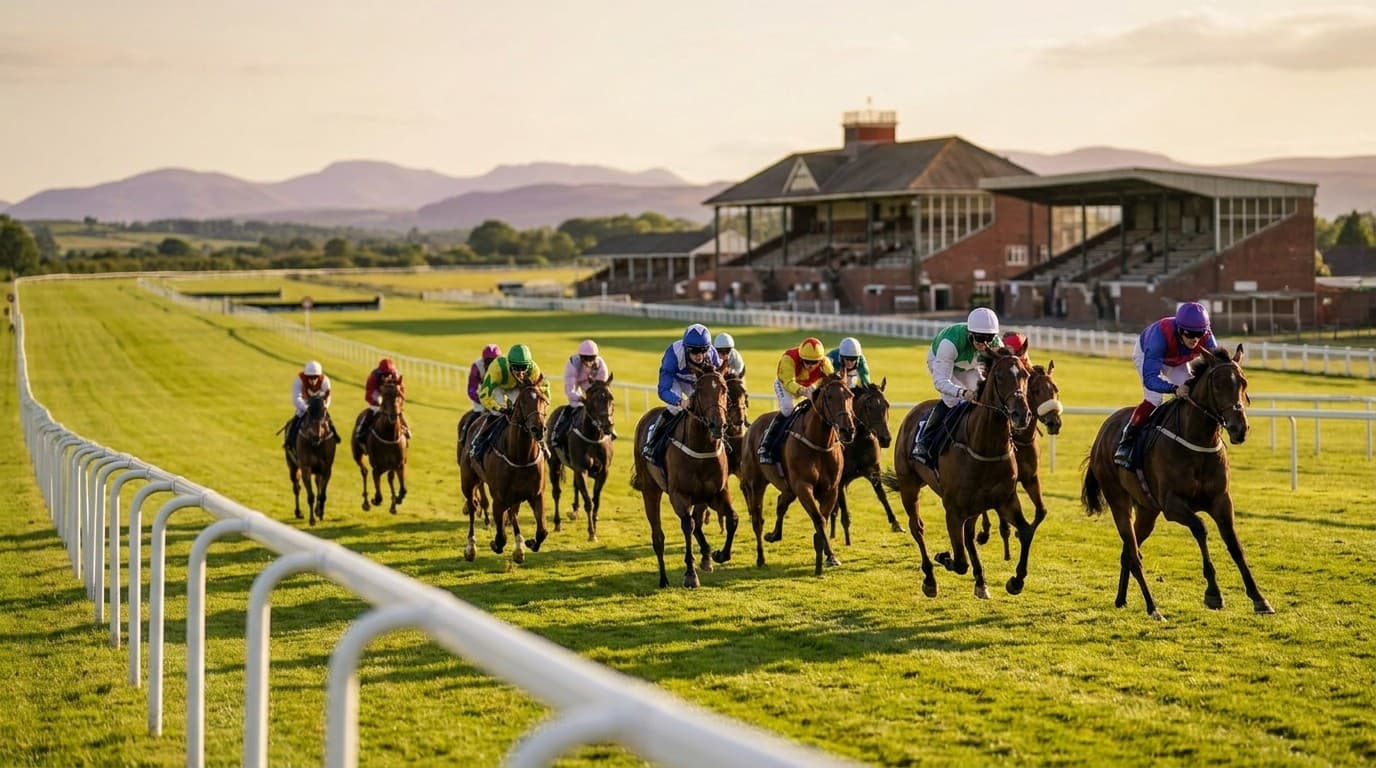
Cumberland Plate 2026: Carlisle Tips, Odds & Race Guide
Get expert tips and betting odds for Carlisle's historic Cumberland Plate handicap. Race preview, form analysis and insider knowledge for June's big race.
Read more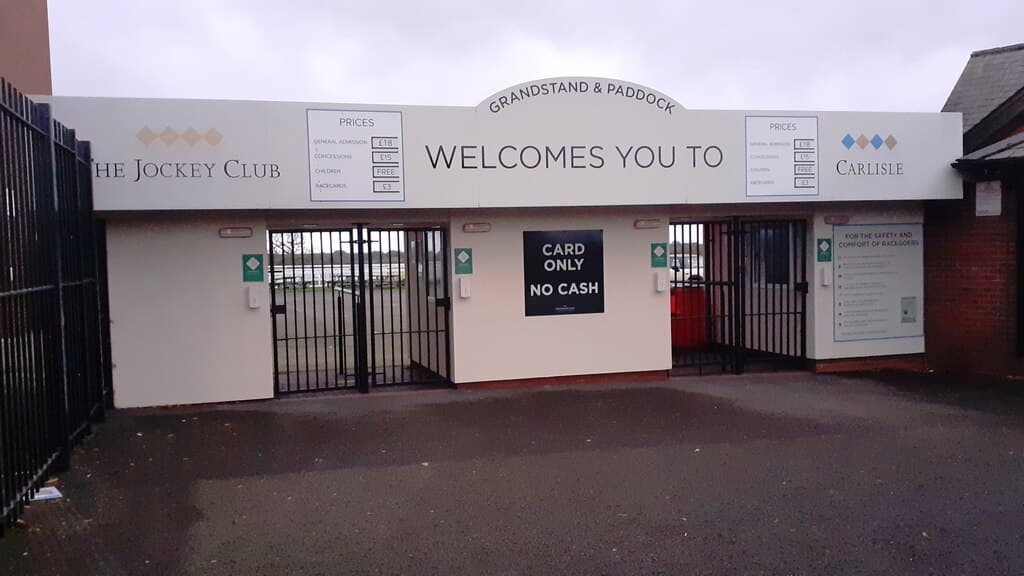
A Day Out at Carlisle Racecourse
A day at Carlisle — getting there, what to wear, enclosures, food and drink, and insider tips for Britain's northernmost dual-purpose track.
Read more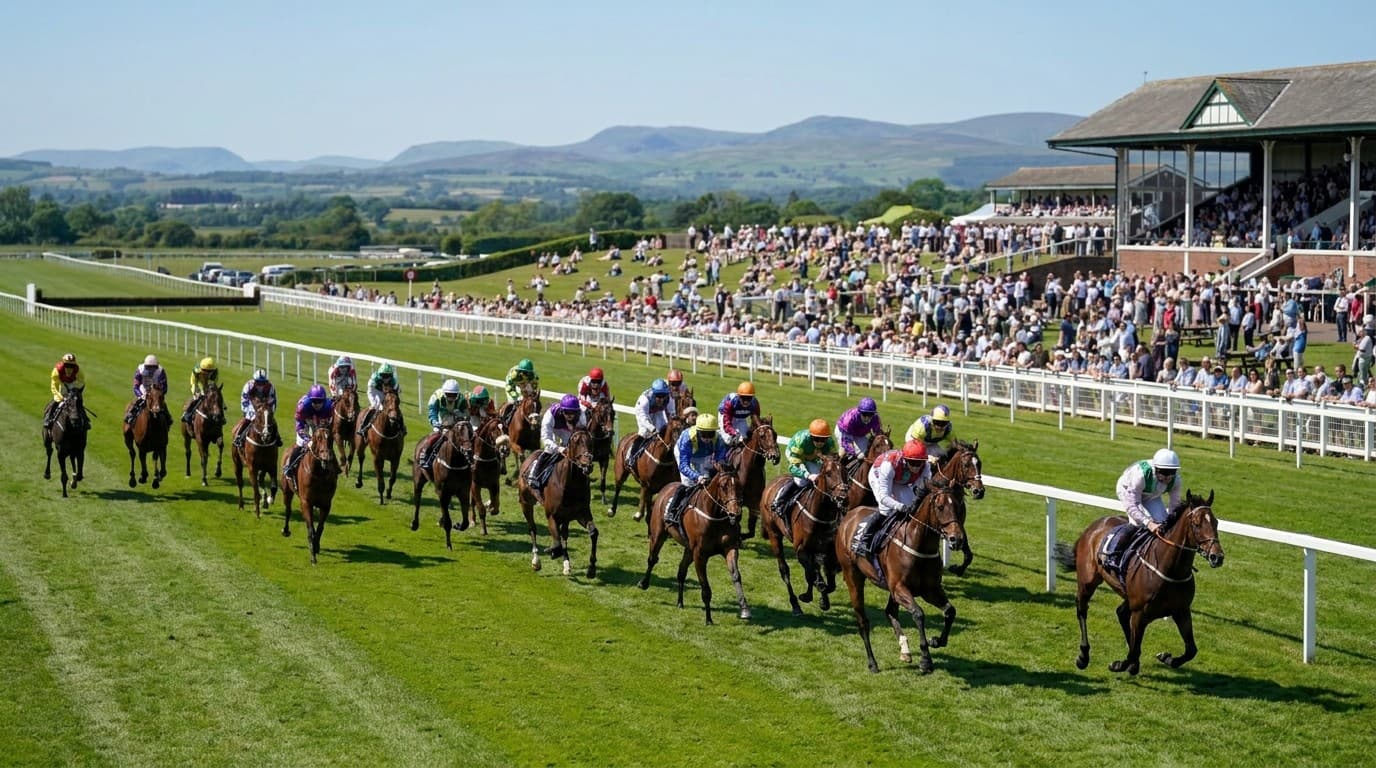
Carlisle Racing Festival: Your Complete Guide
Carlisle Racecourse stages the north's most scenic festival racing. Here's your guide to the Cumberland Plate meeting and the best of Cumbrian racing.
Read morePhotos on this page are used under Creative Commons licences. Titles, sources and licence links for each one are on our image credits page.
Research the field with the AI Race Predictor
Our model publishes calibrated win-probability estimates for UK races — a second opinion to understand a race, not tips. It's open about its record: it doesn't beat the market, and we show exactly how it does.
Work it out & learn the basics
Gamble Responsibly
Gambling should be entertaining and not seen as a way to make money. Never bet more than you can afford to lose. If you or someone you know has a gambling problem, help and support is available.