
Founder & Editor · Last reviewed 2026-04-05
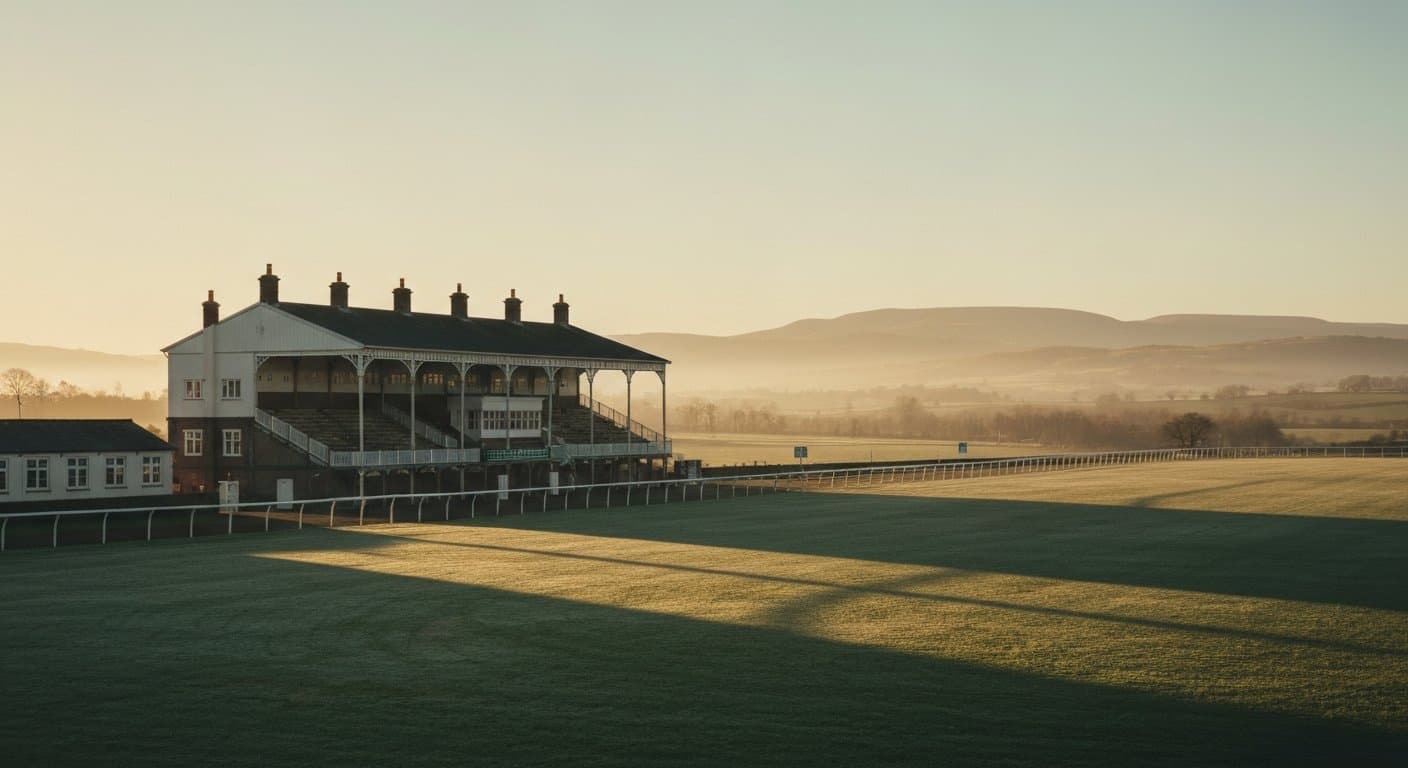
Carlisle Racecourse sits on Durdar Road, roughly two miles south of Carlisle city centre, at a postcode that puts it squarely in Cumbria: CA2 4TS. What the postcode cannot convey is the weight of history attached to the place. Racing was recorded in the Carlisle area in 1559 — more than four and a half centuries ago — and the bell that served as the original prize still exists, kept in the Carlisle Guildhall Museum and paraded to the winning connections each June. That connection across 460-plus years is not symbolic window dressing. It is the thread that runs through everything the course has done since.
The route from those 16th-century meetings to the modern dual-purpose track on Durdar Road was not straightforward. For more than 300 years, racing took place at The Swifts, a site close to the city centre. The move to the present location at Blackwell came in 1904, and it was there that the course found its defining character: a right-handed oval of approximately one mile and five furlongs, undulating throughout, with a finish that climbs steadily enough to expose any horse lacking in stamina. That gradient has shaped northern racing in ways that statistics bear out — horses who handle Carlisle's terrain tend to stay and grind rather than sprint and coast.
Carlisle holds a position that no other British racecourse can claim: it is the country's northernmost dual-purpose track, staging flat racing from April through October and National Hunt racing from October through May. The catchment area is correspondingly wide. Racegoers travel from across Cumbria, from south-west Scotland — Carluke is 60 miles north — and from County Durham to the east. The M6 motorway passes three miles east at junctions 42 and 43, making the course accessible from the south without the visitor needing to navigate Carlisle itself.
The backdrop matters too. Hadrian's Wall, the Roman frontier, runs ten miles north of the city. Carlisle Castle, begun in 1092 under William Rufus, anchors the medieval quarter. The Lake District National Park begins 15 miles to the south-east. Carlisle is a working northern city with real depth of history, and the racecourse belongs to that texture — it is not a rural showpiece dropped into empty countryside but a civic institution embedded in a place that has been commercially and militarily important for two millennia.
This article traces the full arc: the origins of racing at Carlisle and the gift of the Carlisle Bell, the move to Blackwell in 1904 and the decades that followed, the moments that punctuated that history, the modern era under Jockey Club ownership, and what the course's legacy means for racing in the North.
Origins & the Carlisle Bell
Origins and the Carlisle Bell
The earliest documentary evidence of horse racing at Carlisle dates to 1559, the first year of Elizabeth I's reign. The meeting was held at The Swifts, a stretch of land close to the city centre, and the prize on offer was a gold bell donated by Lady Dacre — a member of one of the most powerful Border families in the North of England. The inscription on that bell has survived in its original spelling: "The sweftes horse thes bel to tak for mi lade Daker sake." Translated into modern English, it reads "The swiftest horse this bell to take for my lady Dacre's sake." The Dacre family's influence across the Cumbrian and Border region in the mid-16th century was considerable, and the donation of a racing prize was both a display of status and a gesture of civic patronage.
The Bells: What They Are and Where They Live
The Carlisle Bell is not a single object. There are in fact two bells. The larger one carries Lady Dacre's 1559 inscription and is the older of the pair. The smaller bell is inscribed "1599 HBMC" — the letters widely believed to stand for Henry Baines, who served as Mayor of Carlisle at that time, and for the Corporation of Carlisle. Both bells have been preserved with considerable care. They are kept in the Carlisle Guildhall Museum on Greenmarket, a medieval building that itself dates to the 15th century. The pairing of a race prize with a civic institution of that age is unusual in British sport: the bells are not replicas or commemorations but the original objects that generations of winning connections have received and returned.
The ceremony of presentation has adapted over the centuries. Today, after the Carlisle Bell race each June, the winning trainer and jockey receive the bells for photographs and a brief ceremony before they are taken back to the museum. The race is run as a Listed flat handicap, which means it carries Group-adjacent status and attracts competitive horses from across the North. The trophy tradition thus continues unbroken — or nearly so. There have been two interruptions: in 2001, when the foot-and-mouth disease outbreak forced the race to be staged at Thirsk, and in 2020, when the COVID-19 pandemic resulted in its cancellation altogether. Those two breaks in 461 years of history are worth noting precisely because they stand out against the continuity.
The Swifts: Three Centuries of Racing
The Swifts served as Carlisle's racecourse from 1559 until the close of the 19th century — a span of approximately 340 years. The site was located near the city centre, close enough to the River Eden that flooding would have been a periodic problem. The precise layout of early meetings at The Swifts is difficult to reconstruct. Racing in the 16th and 17th centuries was largely organised as match races between two horses, sometimes with a small number of additional entries. The format of best-of-three heats over a set distance was common in the period, and Carlisle's early meetings likely followed that pattern.
By the 18th century, racing at Carlisle had grown more structured. The course was attracting horses from further afield, and the social occasion of race day had become embedded in the Cumbrian calendar. The city's position — close to the Scottish border and on the main north-south route through the western side of England — meant it drew visitors from both countries. Carlisle was already a garrison town and a commercial hub; racing fitted that character.
The King's Plate
In 1763, Carlisle was allocated a King's Plate — one of the royal-sponsored prizes that George III used to encourage thoroughbred breeding and racing at provincial courses across Britain. The Carlisle King's Plate was run over three-mile heats and was open to five-year-olds carrying set weights. It was a prestigious addition to the calendar, placing Carlisle alongside other northern courses such as York and Chester that also hosted King's Plates in this period. The race brought horses of a higher standard to The Swifts and reinforced Carlisle's position as a serious racing venue rather than a purely local fixture.
The King's Plate at Carlisle survived into the 19th century, but its decline was gradual. Around 1839, the prize money was halved, which reduced the race's attractiveness to owners travelling with quality horses. The race disappeared from the programme in due course, a casualty of changing priorities in the organisation of British racing rather than any particular failing of the Carlisle course itself. The demise of the King's Plate contrasted sharply with the durability of the Carlisle Bell, which continued regardless.
The Move Away from The Swifts
By the late 19th century, The Swifts had run its course as a viable racecourse location. The growth of Carlisle as an industrial and railway city had changed the land surrounding the site, and the demands of modern racing — better drainage, more spectator space, improved access — could not be met there. The Jockey Club, which by that period exercised regulatory authority over British racing, was pressing courses to upgrade their facilities or face losing their licences. Carlisle responded by beginning the process of identifying a new site.
The land at Blackwell, two miles south of the city centre on Durdar Road, was selected. It sat on higher ground than The Swifts, offered more space for a proper oval circuit, and was accessible by road from the city. The move would not happen until 1904, but the decision taken in the final years of the 19th century effectively ended 340 years of racing at The Swifts and began the modern chapter of Carlisle's history.
Era takeaway: Racing at Carlisle from 1559 to 1904 produced two durable legacies — the Carlisle Bell, which is among the oldest sporting prizes in the world, and an institutional commitment to racing in the North that survived political upheaval, changes in the sport's organisation, and the slow decline of The Swifts as a viable venue. The Bell did not merely survive; it became the mechanism by which Carlisle's identity in racing was maintained across three and a half centuries.
The Move to Blackwell
The Move to Blackwell and the Establishment of a Modern Course
Carlisle Racecourse opened at its current site on Durdar Road, Blackwell, in 1904. The move from The Swifts was completed without loss of continuity in the racing programme — fixtures continued that season — and the Blackwell site offered immediate advantages over its predecessor. The land was more open, the gradient more controllable, and the greater distance from the city centre meant that the course could expand over time without being hemmed in by development.
The Course Takes Shape
The layout established at Blackwell in 1904 has remained substantially unchanged ever since. The circuit runs right-handed, roughly oval, at a circumference of approximately one mile and five furlongs. What distinguishes the course is its topography. Carlisle is far from flat. The ground rises and falls throughout, with the most significant climb coming in the final half-mile before the finish. A horse that lacks stamina — or that has been ridden too freely in the early stages — will find that hill a test they cannot pass. The undulations also affect how horses travel: those that find a rhythm on undulating terrain tend to do better here than those that prefer level galloping tracks.
The going at Carlisle is influenced by the Cumbrian climate. The soil is a mixture of clay and limestone, and the course sits close enough to the Pennines to receive above-average rainfall, particularly in autumn and winter. In the summer flat season, the going can reach good to firm when a dry spell extends for more than a week, but soft ground is a realistic prospect at almost any flat meeting. In the National Hunt season, soft and heavy are regular conditions from November through to March. Trainers who run horses regularly at Carlisle understand this and declare accordingly.
Dual Purpose from the Start
From 1904, Carlisle staged both flat and National Hunt racing, a dual-purpose character that it has maintained continuously. The flat season runs from April through October, the National Hunt season from October through May, with some overlap at each end. This dual-purpose status placed Carlisle in a distinct category among British racecourses: only a handful of tracks — Newmarket, Ascot, Cheltenham — are more strongly associated with a single code than the other. Carlisle has always served both.
The National Hunt programme in the early decades of the 20th century drew horses from across the Borders. Scotland had a strong community of National Hunt trainers and owners, and Carlisle was the closest licensed course for many of them. The flat programme attracted horses from the Yorkshire training belt — Malton, Middleham, and the surrounding villages — which lies 70 to 80 miles to the south-east. That geographic positioning between two significant training regions has remained one of the course's structural advantages.
The Tote's First Day: 2 July 1929
The most historically significant single day in Carlisle's existence at Blackwell came on 2 July 1929. On that afternoon, the Horserace Totalisator Board operated pool betting for the first time on a British racecourse — and the racecourse was Carlisle. The Tote, as the system became universally known, had been established under the Racecourse Betting Act 1928, which passed through Parliament the previous year. The Act created a statutory body to run pari-mutuel betting at British tracks, providing an alternative to the bookmaker for those who preferred to bet into a pool rather than with an individual.
The choice of Carlisle for this historic inaugural was not accidental. The course's management had engaged actively with the discussions around the Tote's establishment, and Carlisle was selected as the first site. The mechanics of the new system — tickets, pools, dividend calculations — had to be tested under real racing conditions, and the 2 July meeting provided that test. The system worked. The Tote went on to become a fixture at every major British racecourse, and the legal framework established in 1928 shaped betting at British tracks for the better part of a century. Carlisle's claim to that history is unambiguous: 2 July 1929, Durdar Road.
Between the Wars: Consolidation
The interwar period brought challenges to British racing broadly — the First World War had interrupted the sport, and the financial conditions of the 1920s and 1930s were difficult for smaller provincial tracks. Carlisle survived this period without significant disruption, in part because of the Jockey Club's continued support for the fixture list and in part because of the course's embedded position in the social life of Cumbria. Race days at Carlisle in this period were well-attended civic events, drawing racegoers from Carlisle itself, from the market towns of Cumbria, and from across the Scottish Border.
The Second World War brought a near-complete suspension of British racing. Carlisle, like most courses, staged no racing during the war years. When racing resumed in 1945, Carlisle re-established its programme quickly, and the Carlisle Bell race returned to the calendar within a year or two of the resumption of normal fixtures.
Building a Festival Centrepiece
Through the mid-20th century, the June fixture that combined the Carlisle Bell and the Cumberland Plate became the defining day of the flat season at Carlisle. The Cumberland Plate — a competitive handicap run over the straight mile — drew horses from Yorkshire and Cumbrian stables and became an important trial for northern-trained horses in mid-season. The race was upgraded to Listed status in recognition of the quality it was attracting, and the June fixture grew in profile as a result.
The Cumberland Plate and Carlisle Bell together formed the twin pillars of the summer programme. No other fixture at Carlisle has matched the June day for crowd numbers or racing quality, and that relative concentration of the course's best racing into a single afternoon has been a persistent feature of how the course organises its flat season.
Era takeaway: The move to Blackwell in 1904 gave Carlisle the physical infrastructure — the right-handed oval, the testing gradient, the dual-purpose layout — that defines it today. The Tote's first day in 1929 added a footnote that no other British course can match. The decades that followed confirmed Carlisle as the principal racecourse for northern England's western corridor and the gateway to Scottish National Hunt racing.
Famous Moments
Famous Moments in Carlisle's Racing History
A course with more than 460 years of documented racing accumulates moments that stick in the memory. At Carlisle, those moments span the full range of the sport: a revolution in betting, a race survived across centuries, National Hunt results that pointed forward to bigger things, and the two occasions when the programme failed to run at all.
2 July 1929: The Tote Goes Live
If Carlisle's history were condensed to a single afternoon, 2 July 1929 would be the one to choose. That day, the Horserace Totalisator Board ran pool betting at a British racecourse for the first time. The setting was an ordinary summer meeting on Durdar Road, and the horses running that afternoon were the standard mixture of northern-trained handicappers that populated the course's fixture list throughout the interwar years. Nothing about the racing card itself made it special. What made it historic was the infrastructure surrounding it.
The Tote's pool betting system — in which all stakes were aggregated and dividends calculated from the pool after a deduction for costs — required real race conditions to test it. Carlisle's management had committed to hosting the first day of operation, and they saw it through. The system ran without the kind of catastrophic failure that a sceptical racing press had predicted some might fear. Punters bought Tote tickets, races went off, dividends were paid. By the end of the day, the Tote had demonstrated that it could work as an alternative to traditional bookmaking. The organisation went on to operate at tracks across Britain for the next eight decades, ultimately becoming Tote Sport and then being privatised in 2011. Through all of that, the inscription on the record remains: first race, first pool, Carlisle, 2 July 1929.
The Carlisle Bell Race: Continuity Across Four Centuries
The Carlisle Bell race has been run in almost every year since 1559. The exceptions are few enough to list in full: 2001, when the foot-and-mouth disease outbreak in Cumbria forced the race to be moved to Thirsk — the only occasion in the race's history it has been run at another course — and 2020, when the COVID-19 pandemic led to its cancellation. Two interruptions in 461 years. The race has survived two World Wars, the suspension of racing for extended periods, changes in the structure of British racing, and the movement of the course from The Swifts to Blackwell.
The 2001 running at Thirsk deserves a note. Foot-and-mouth disease spread across Cumbria and the North of England in early 2001 with significant speed, affecting livestock farms across the region. Racing at Carlisle was suspended as part of the wider restrictions on movement of livestock and people. The decision to move the Carlisle Bell to Thirsk — rather than simply cancel it — reflected the importance attached to the race's continuity. The bells were transported south, the presentation was made in the Thirsk parade ring, and the race was recorded in the official sequence. The following year it returned to Carlisle.
The Cumberland Plate and Its Listed Status
The Cumberland Plate's elevation to Listed status was the result of the race consistently attracting horses of a standard that the BHA's race conditions committee deemed suitable for the designation. Listed races sit one tier below Group 3 in the British Flat pattern, and they carry black-type status — meaning that horses who finish first, second, or third earn a note in their pedigree records that is of value to breeders. The practical effect of Listed status at Carlisle was to increase the quality of the entries each June.
Trainers from Richard Fahey's Musley Bank stable at Malton — approximately 80 miles south-east of Carlisle — have been regular contributors to the Cumberland Plate field. Fahey's operation is one of the largest in the North, and his affinity for northern handicaps aligns naturally with Carlisle's programme. Tim Easterby at Sheriff Hutton, 75 miles to the south-east, runs horses at Carlisle throughout the flat season, as does Keith Dalgleish from Carluke in Scotland, 60 miles to the north. The Cumberland Plate in June draws from all three directions and tends to produce fields of 10 to 16 runners — competitive enough to be truly hard to call.
National Hunt Highlights: The Course's Testing Nature
The National Hunt programme at Carlisle has produced results that resonate in the wider jumps calendar. The Colin Parker Memorial Intermediate Chase, run in November, has attracted horses early in their chasing careers that have gone on to win at the top level. The race is named after Colin Parker, a well-regarded northern National Hunt trainer whose horses were a fixture at Carlisle for decades. His son, William Parker, has maintained the family connection to the course.
The Houghton Mares' Chase, also run in the autumn, has become a quality target race for mares competing over fences in the North. Mares' races have grown in number and quality across British National Hunt racing since 2016, when the BHA introduced incentives for mares-only programme races, and Carlisle adopted the trend early. The course's heavy winter going suits strong mares who stay — a type well-suited to the hill in the final half-mile.
The nature of the course in winter is worth understanding. When the going reaches heavy — which at Carlisle in December and January is not unusual — the final climb becomes a serious examination of fitness and will. Horses that travel through deep ground in the back straight and still have something left to give going up the hill are horses worth noting for similar conditions elsewhere. Carlisle's form in soft-to-heavy conditions is a real guide because the course creates significant separation between horses.
The Graduation Chase and Novice Programme
Carlisle's novice chase programme in November and December sits at a useful point in the National Hunt calendar. The early winter fixtures attract horses that have just been switched from hurdling to fencing, often including some that are regarded as potential candidates for the higher-level chases later in the season. The graduation and novice chases at Carlisle have occasionally flagged up horses of interest — not with the frequency of Cheltenham trials or the Hennessy, but enough that northern trainers treat them as legitimate starting points for young chasers.
Lucinda Russell, based at Kinross in Perthshire — approximately 90 miles north of Carlisle — has been a consistent presence in the National Hunt programme. Her horses travel south to Carlisle rather than the more distant southern tracks when looking for suitable conditions in October and November, and the course's proximity to Scotland is a structural advantage for Scottish-trained jumpers.
Two Quiet Moments: 1939 and 2020
Racing at Carlisle went dark in 1939 when the Second World War began. The course was not requisitioned for military purposes in the way that some southern tracks were, but racing was suspended under wartime regulations and did not resume until after the war ended in 1945. The six-year gap was the longest interruption in Carlisle's history, and it affected the Carlisle Bell's continuity in the same way that the 2020 cancellation would do eight decades later.
The 2020 cancellation, caused by the COVID-19 pandemic, meant that the Carlisle Bell was not run in 2020. Unlike 2001, there was no possibility of a transfer to another course — the whole of British racing was suspended from March to June of that year. When racing resumed behind closed doors in June 2020, the fixtures that had been postponed or cancelled did not simply reappear. The Carlisle Bell was among the losses of that season. It returned in 2021 with the course open to racegoers, and the two-bell ceremony was conducted as normal.
Era takeaway: Carlisle's famous moments are defined less by single spectacular races than by the continuity of the Carlisle Bell and the singular importance of the Tote's first day. The course's history is punctuated by events that have shaped British racing as a whole — and by a jumps programme that has functioned as a reliable indicator of northern National Hunt quality for over a century.
The Modern Era
The Modern Era: Investment, Ownership, and a Changing Race Programme
The modern era at Carlisle is usually dated from 2002, when a new grandstand opened on Durdar Road. The stand gave the course its most significant upgrade in facilities since the original construction at Blackwell in 1904. Viewing was improved from almost every position, hospitality boxes were added, and the basic comfort of a day's racing — shelter, sightlines, catering — reached a standard that had been lacking in the older structure.
Jockey Club Racecourses
Carlisle is owned by Jockey Club Racecourses, the commercial arm of the Jockey Club that manages 15 racecourses across Britain. The portfolio includes Cheltenham, Aintree, Epsom, Newmarket, and Sandown at the top end, and Carlisle, Huntingdon, and Market Rasen at what might be considered the mid-tier. Jockey Club ownership brings financial stability, access to central marketing resources, and a shared approach to facility investment across the portfolio. For Carlisle, membership of that group has meant a regular programme of capital expenditure that an independently owned track of similar size might struggle to sustain.
The Jockey Club's approach to smaller courses in the modern era has broadly been to support their role within regional racing rather than attempt to compete with the major meetings on equal terms. Carlisle's position in that strategy is as the principal track for the North West and Cumbria, serving a geographic area that is not well-served by alternative courses. The nearest flat tracks in regular use are Newcastle, 60 miles to the east, and Haydock Park, 90 miles to the south. For flat racegoers in Cumbria, Carlisle is not merely convenient — it is often the only practical option.
The Fixture List in the 21st Century
The fixture list has developed through the 2000s and 2010s to include a growing number of pattern and Listed races. On the flat, the Eternal Stakes — a Listed race for three-year-old fillies — was introduced to add a black-type target to the June programme alongside the Cumberland Plate and Carlisle Bell. The fillies' category responds to an industry-wide push to provide more opportunities for fillies in the flat racing programme, and Carlisle's version attracts horses from the Yorkshire stables that dominate northern flat racing.
The National Hunt fixture list has similarly grown in quality. The Colin Parker Memorial Intermediate Chase, run in November over two miles and one furlong, carries Listed status and targets horses at an early stage of their chasing careers. The Houghton Mares' Chase, run over the same trip, is one of the better mares' chase opportunities in the North. The November fixture has become the course's most important National Hunt day, drawing fields that include horses from Scottish stables as well as the North of England training centres.
The December programme, which can include good to soft or heavy ground as conditions deteriorate, tests horses in ways that mirror what they will face if they are aimed at handicap chases and novice chases later in the season. Carlisle's December form is taken seriously by handicappers because the conditions are real. A horse rated on the basis of a December run at Carlisle in soft or heavy ground has been tested by something real.
The Catchment Area: Scotland, Cumbria, and the Pennines
Carlisle's training catchment area spans two countries and several of Britain's most active National Hunt regions. Keith Dalgleish, based at Carluke in Lanarkshire — 60 miles north of Carlisle — is the most active Scottish trainer at the course in both codes. Lucinda Russell, 90 miles north at Kinross, is a significant National Hunt presence. Her record at Carlisle reflects the consistent use Scottish trainers make of the course as their nearest southern option.
From the south, Richard Fahey at Musley Bank, Malton — 80 miles south-east — has dominated northern flat racing for much of the past decade and is the most prolific trainer in the northern flat sector. His strike rate at Carlisle tracks his general form: consistent, built on volume of runners across a wide range of distances and conditions. Tim Easterby at Sheriff Hutton, 75 miles to the south-east, targets the handicap programme at Carlisle throughout the season and has a strong record in staying flat handicaps where the hill suits horses with a real staying profile.
This breadth of trainer participation is not merely a statistic about the catchment area. It means that a Saturday flat card at Carlisle in June might include horses trained in Lanarkshire, North Yorkshire, and County Durham, running for prize money that is competitive with similar cards at tracks further south. The geographic mix creates competitive fields, and competitive fields produce form that transfers across the racing calendar.
Facilities and Crowd Experience
The 2002 grandstand brought the course's capacity to approximately 7,000. That figure places Carlisle firmly in the mid-sized category of British racecourses — smaller than Chester's 8,000 or Haydock's 27,000, but large enough to absorb a healthy crowd on the June festival day. The atmosphere at Carlisle is consistently described as welcoming and unforced. The course is not attempting to replicate a Cheltenham or Epsom experience; it is a northern racecourse with a loyal local audience and a straightforward offer of quality racing in pleasant surroundings.
The surrounding context adds to the experience in ways that a visiting racegoer appreciates. The Lake District begins 15 miles to the south-east. The Roman Wall is 10 miles to the north. Carlisle Castle and the cathedral quarter are a ten-minute drive. For racegoers combining a day at Carlisle with a wider Cumbrian visit, the racing sits comfortably alongside the region's other attractions. The day out guide covers accommodation, access via the M6 at junctions 42 and 43, and the journey from Carlisle railway station, which is served by direct trains from Glasgow, London Euston, and Leeds.
Race Quality and the BHA's Northern Programme
The BHA's ongoing work to distribute quality racing more evenly across British racecourses has benefited Carlisle. The northern flat programme, in particular, has been developed with a view to ensuring that Yorkshire and Cumbrian tracks can offer black-type races that retain good horses in the region rather than sending them south for their pattern targets. Carlisle's Listed races on the flat — the Cumberland Plate, the Eternal Stakes, and the Carlisle Bell itself — give northern trainers targets within a reasonable distance.
The development of the complete guide to Carlisle and the supporting analysis across StableBet's racecourse coverage reflects the course's growing relevance in punters' calculations. The course's form is consistent enough that trainers' and jockeys' stats carry real predictive weight, and the going-related patterns — soft suits stayers, good to firm can suit pace-prominent horses at shorter distances — are well-established over a long dataset.
Era takeaway: The modern era at Carlisle is characterised by continued investment under Jockey Club ownership, a growing Listed race programme, and the course's enduring function as the northern gateway for Scottish trainers and the principal flat venue for Cumbria. The 2002 grandstand marked the transition from Victorian infrastructure to a workable modern facility; subsequent improvements have extended that progress without altering the character of the racing itself.
Carlisle's Legacy
Carlisle's Legacy in British Racing
Carlisle's place in British racing rests on three things that other courses cannot replicate: the Carlisle Bell, the Tote's first day, and the course's unbroken function as the principal racecourse for a region that stretches from the Pennines to the Scottish Border. Together, those three facts define a legacy that goes well beyond the size of the course's prize money or the capacity of its grandstand.
The Bell as an Object of History
The Carlisle Bell — or rather, the two bells, the 1559 original and the 1599 addition — occupies a category of British sporting artefact that is truly rare. Most old sporting prizes have been replaced, lost, melted down, or so heavily restored as to be functionally replicas. The Carlisle bells are the originals. They sit in the Carlisle Guildhall Museum in the centre of the city, accessible to anyone who walks through the museum's doors on a weekday. They are not locked in a vault or exhibited only on special occasions.
The comparison with other old sporting trophies is instructive. The Ashes urn — arguably the most famous cricket trophy in the world — dates from 1882 and has rarely been moved from Lord's. The FA Cup as a trophy has been replaced multiple times. The Carlisle Bell from 1559 is older than both by a considerable margin and is still being used in its original ceremonial function each June. When the winning trainer receives the bell in the Carlisle parade ring, they are touching an object that has been passed to winning connections since the reign of Elizabeth I. That fact does not need embellishment.
A Distinctive Track With a real Test
The Durdar Road oval has a character that trainers and jockeys understand. The course rises and falls across its full circuit of approximately one mile and five furlongs. The climb in the final half-mile is consistent — not steep in the way that Epsom's descent and home turn are dramatic, but persistent enough to matter. Horses that lack the stamina to maintain their effort up the hill will drop away, and the finishing order often reflects the stay-power of each runner more than their raw speed.
This has two consequences that are relevant to anyone following the form. First, horses that run well at Carlisle tend to be real stayers at their respective distances. A horse winning a seven-furlong handicap at Carlisle in soft ground is working hard from the two-furlong pole and still finding more at the line — that is a horse with a stamina profile that will transfer to similar tests elsewhere. Second, pace-prominent horses that lead or race prominently at Carlisle face a greater test than at flat tracks, because they must maintain their effort through the undulations rather than coast to the line on level ground.
The going adds another layer. The Cumbrian clay and limestone soil, combined with above-average annual rainfall — proximity to the Pennines ensures this — means that truly fast ground is unusual and soft ground is a realistic expectation at most meetings outside the core summer months. Any analysis of Carlisle form that does not account for going conditions is missing the course's primary variable.
The Geographic Role
Carlisle's position as Britain's northernmost dual-purpose track is not merely a geographical footnote. It means that the course functions as the pivot between the English and Scottish racing communities. Scottish National Hunt trainers — Lucinda Russell, Keith Dalgleish, and others from the central belt and beyond — use Carlisle as the most accessible English track for their horses. Cumbrian and Borders racegoers, who would face a long journey to Newcastle or Haydock, can reach Durdar Road in under an hour from much of the county.
That geographic role has implications for the quality and character of the racing. Fields at Carlisle, particularly in the National Hunt season, are drawn from a truly wide pool: Scotland, Yorkshire, County Durham, Lancashire, and Cumbria itself. The going at Carlisle in winter is not dramatically different from what horses from northern Scotland encounter in their home conditions, which means that Scottish-trained horses are not at an obvious disadvantage when they run south. That parity of conditions produces competitive racing and form that punters can trust.
What Stays the Same
Two things at Carlisle have not changed since 1904 and show no sign of doing so. The bell returns to the Guildhall Museum after each presentation, waiting for the next June ceremony. And the hill — that persistent, unglamorous rise in the final half-mile of the Durdar Road oval — will continue to divide horses that stay from horses that don't, exactly as it has done for every season since the course opened.
For those who follow racing in the North, Carlisle is not a romantic destination or a historic curiosity. It is a working racecourse with a functional programme, competitive fields, and going conditions that produce reliable form data. The history matters because it explains how the course arrived at what it is. The bells in the Guildhall, the record of 2 July 1929, the 340 years at The Swifts — all of it feeds into a racing institution that has served its region continuously since before Shakespeare was born.
The betting guide covers the practical angles — trainer stats, going preferences, draw bias — that matter to anyone putting money on Carlisle's programme. The complete guide covers fixtures, access, and facilities. And the Carlisle Bell guide traces the race itself through its annual iterations. Taken together, they document a course that earns its place in the calendar on the strength of what it has been and what it continues to be.
Frequently Asked Questions
When was Carlisle Racecourse founded?
Racing at Carlisle is first recorded in 1559, when the meeting was held at The Swifts close to the city centre. The current site at Durdar Road, Blackwell, has been in use since 1904. So the answer depends on definition: the racing tradition dates back 466 years, the present racecourse has operated for 121 years.
What is the Carlisle Bell and why is it significant?
The Carlisle Bell is a pair of historic bells — one dated 1559, one dated 1599 — donated as prizes for the winner of Carlisle's horse races. The 1559 bell, inscribed with the message from Lady Dacre, is Britain's oldest known horse racing prize and one of the oldest sporting trophies in the world. Both bells are kept in the Carlisle Guildhall Museum and presented to winning connections after the annual Carlisle Bell race in June, before being returned to the museum.
Where did Carlisle race before moving to Durdar Road?
Carlisle's races were held at The Swifts, a site close to the city centre, from 1559 until the late 19th century — a span of approximately 340 years. The move to the current Blackwell site on Durdar Road was completed in 1904.
What is Carlisle's claim to racing history beyond the Bell?
On 2 July 1929, Carlisle Racecourse hosted the first ever operation of pool betting by the Horserace Totalisator Board on a British racecourse. The Tote, as it became known, went on to operate at racecourses across Britain for most of the 20th century. Carlisle was where it started.
Has the Carlisle Bell race always been run at Carlisle?
Almost always. There have been two exceptions: in 2001, foot-and-mouth disease restrictions forced the race to be run at Thirsk — the only occasion it has been held at another course — and in 2020, the COVID-19 pandemic led to its cancellation. The race has returned to Carlisle in every other year since 1559.
What type of racing does Carlisle stage?
Carlisle is a dual-purpose racecourse, staging flat racing from April through October and National Hunt racing from October through May. It is Britain's northernmost dual-purpose track. The signature flat race is the Cumberland Plate, a Listed handicap run in June. The principal National Hunt race is the Colin Parker Memorial Intermediate Chase, run in November.
Share this article
More about this racecourse
All Carlisle guides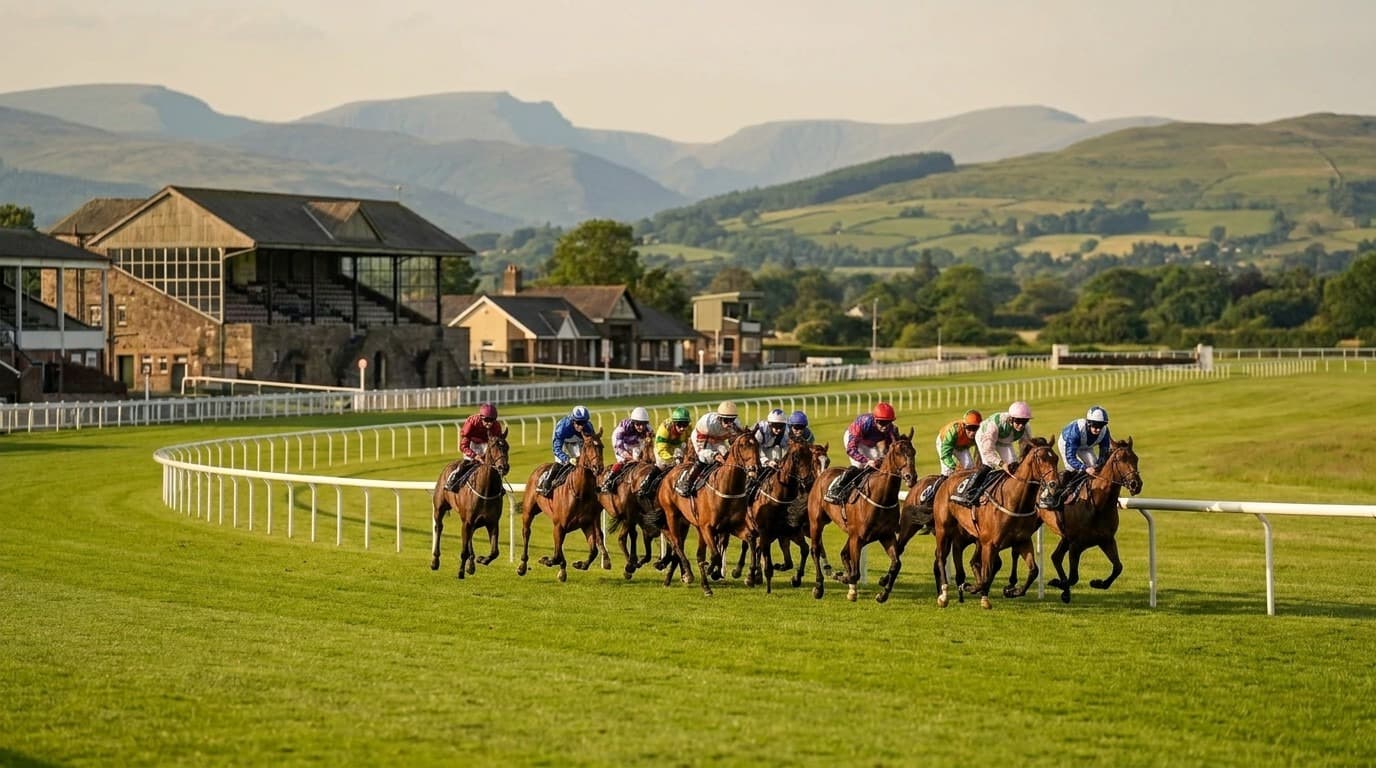
Cumberland Plate Day at Carlisle: The Complete Guide
Everything you need to know about Cumberland Plate Day at Carlisle, run each June alongside the Carlisle Bell. The Cumberland Plate draws competitive northern middle-distance handicappers to one of Britain's most demanding regional tracks.
Read more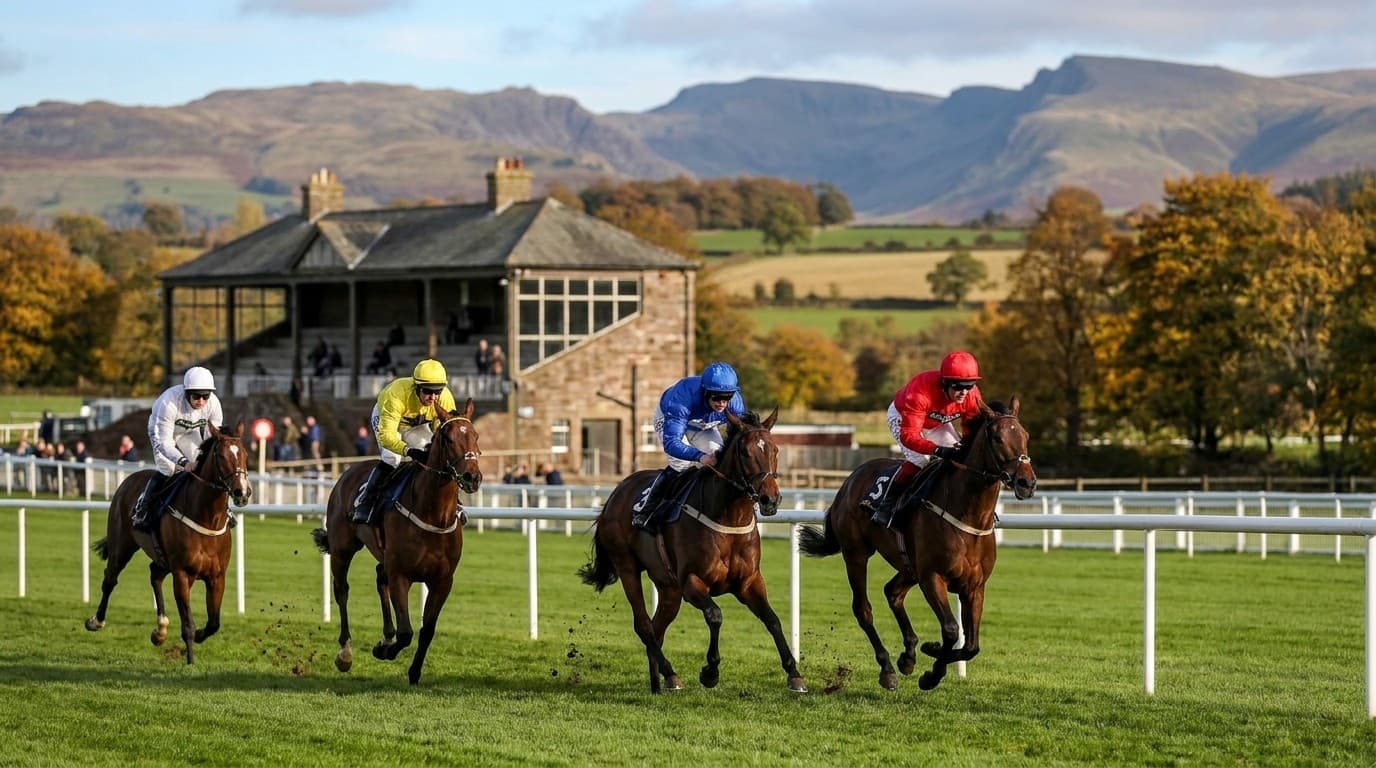
Red Rum at Carlisle: The Windermere Chase and the Grand National Omen
Red Rum won the Windermere Handicap Chase at Carlisle in 1972, 1973 and 1976, each victory a prelude to Grand National glory at Aintree. Carlisle later revived the race for a Red Rum Day.
Read more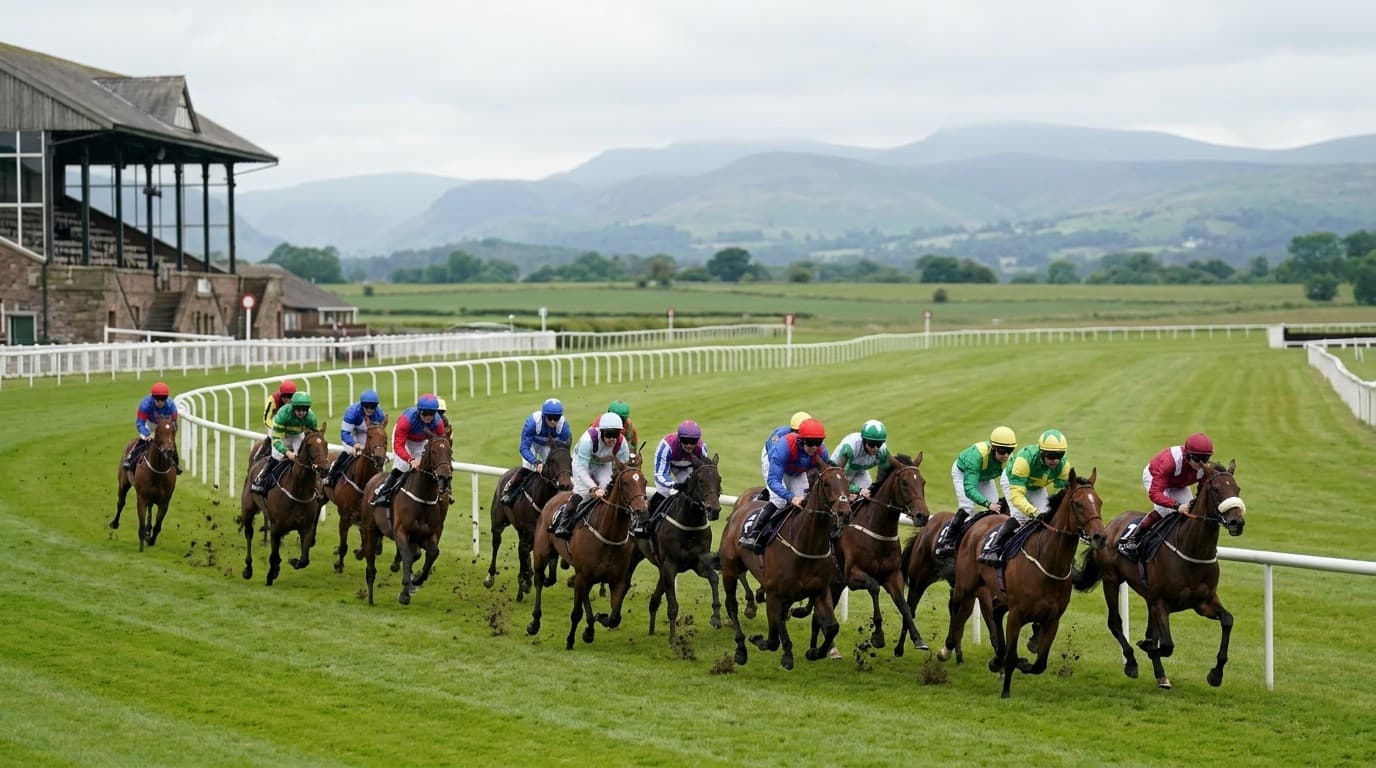
Carlisle Bell: Complete Guide
Your complete guide to the Carlisle Bell — one of the oldest sporting trophies in the world, run at Carlisle Racecourse each June.
Read moreGamble Responsibly
Gambling should be entertaining and not seen as a way to make money. Never bet more than you can afford to lose. If you or someone you know has a gambling problem, help and support is available.