
Founder & Editor · Last reviewed 2026-04-05
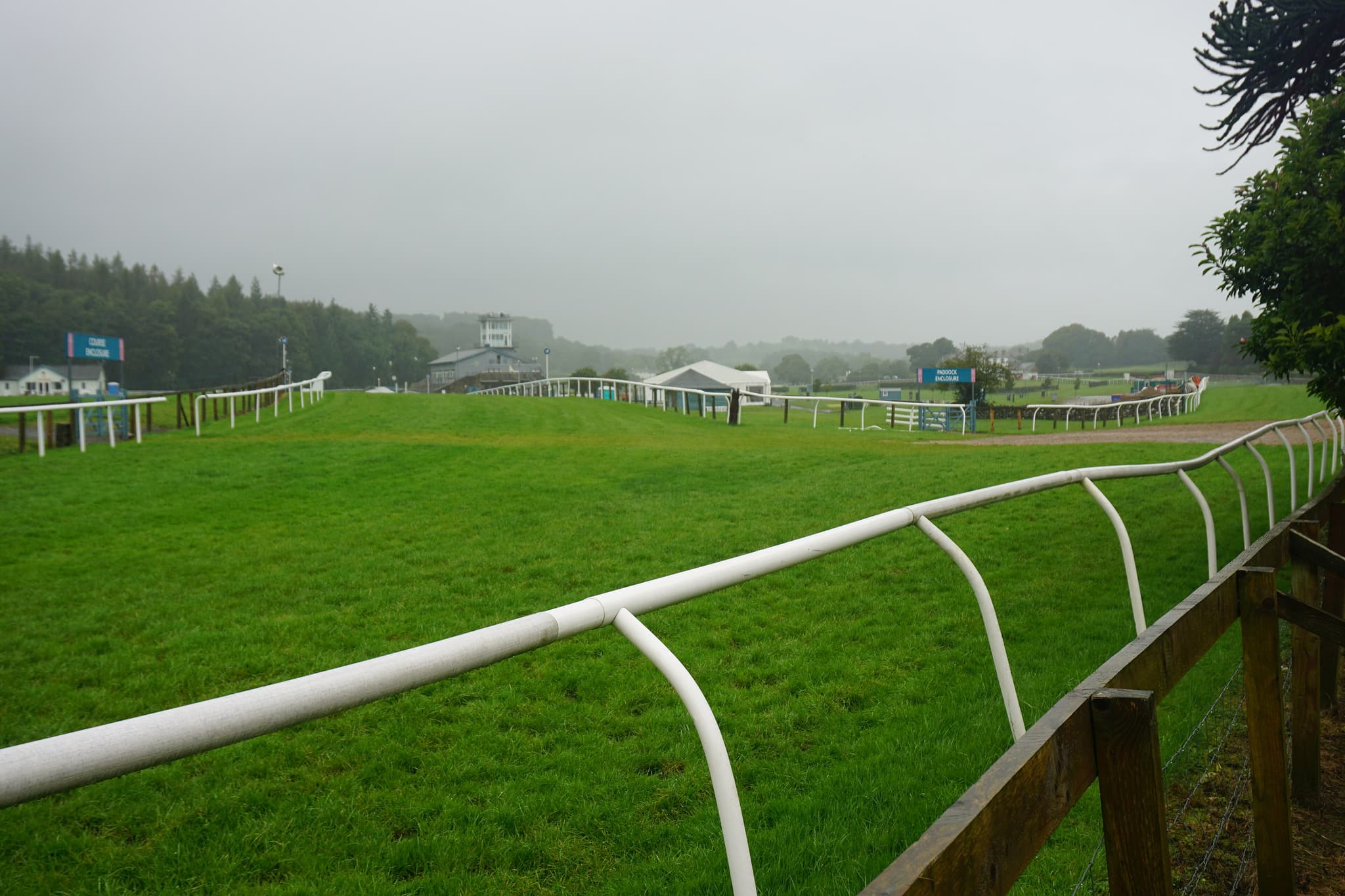
Cartmel Racecourse sits inside the village of Cartmel, Cumbria — not beside it, not on its outskirts, but physically within it. The track occupies roughly a mile of village ground, encircling the cricket pitch and overlooked by a 12th-century Augustinian priory. No other racecourse in Britain is embedded in a settlement quite like this. When the horses come out for the first race, they do so past stone cottages, through a village that was already centuries old when racing started here in 1856.
The course is small and uncompromising. Left-handed, approximately one mile round, with sharp bends and terrain that punishes horses who are not naturally handy. The steeplechase track has a four-furlong run-in from the last fence to the finish line — the longest of any jumps track in Britain — which means horses can be headed and beaten in the final stretch in a way that rarely happens elsewhere. Races at Cartmel tend to be decided late, and form students who understand this earn an edge over those who don't.
Who This Guide Is For
First-time visitors will find everything they need: the course layout, how to get there, what to expect from the facilities, and what the Bank Holiday festival actually involves.
Regular racegoers looking to understand the track better will want to spend time on the course section and the betting guide. Course form matters here more than at many venues, and the run-in characteristics create patterns worth studying.
History-focused readers will find that Cartmel's story runs back further than 1856 — the priory was founded around 1190, the village has been a market town since the medieval period, and racing in this pocket of Cumbria has its own distinct heritage.
Festival and trip planners will find fixture dates, parking and transport details, and guidance on combining racing with the wider Lake District. Holker Hall, one mile east, and the shores of Windermere, eight miles north, are both within easy reach.
Quick Reference
- National Hunt only — hurdles and steeplechases, no flat racing
- Season: late May to August (Spring Bank Holiday, Whitsun, August Bank Holiday weekends are the core fixtures)
- Signature race: the Cartmel Cup, run at the August Bank Holiday meeting
- The steeplechase run-in is four furlongs — the longest in British jumps racing
- August Bank Holiday crowds: 8,000–10,000 over two days; traffic queues of 2–3 miles are normal
- Nearest station: Grange-over-Sands, 3 miles (Furness Line from Lancaster)
- No practical public transport on race days — most racegoers drive
The Character of the Place
A Saturday afternoon at Cartmel's August Bank Holiday meeting carries something most racecourses cannot replicate. Racegoers walk in through the village streets, past the old priory gatehouse, past The Sticky Toffee Pudding Company on the square. The horses warm up in a paddock that sits in the middle of the course. The medieval priory tower is visible from the grandstand. And when the field turns for home and stretches into the final four furlongs, 10,000 people watch from the grandstand, the village green, the churchyard walls, and adjacent farmland — all of them pressed forward for a finish line that can still be a long way off when the last horse jumps the last fence.
That combination of intimacy, setting, and real National Hunt racing is what brings racegoers back year after year. Cartmel is not trying to be Cheltenham or Ascot. It is doing something different — offering a day that happens to include racing, rather than a racing day that happens to include a venue. The priory has been there for 800 years. The village predates the course by centuries. The racing fits into the landscape rather than dominating it, and that is why a Tuesday afternoon at Cheltenham and a Bank Holiday Monday at Cartmel are both enjoyable but completely unlike each other.
This guide explains the course, the calendar, the facilities, the history, and the betting angles. Start at whichever section is most relevant to you.
Bet on Cartmel
Place your bets on Cartmel races with a trusted bookmaker.

Promo code BETFRED50. New customers only. Register, deposit with a Debit Card, and place a first bet of £10+ at Evens (2.0)+ on Sports, to be settled within 7 days, to get £30 in Sports Free Bets and £20 in Bet Builder Free Bets within 24 hours of settlement. 7-day expiry. Eligibility & payment exclusions apply. Full T&Cs apply. Take Time to Think. BeGambleAware.org. 18+. Full T&Cs.

Promo code R30. New UK customers only, 18+. Register, deposit £10 or more, then place a £10 single cash bet at odds of 1/2 (1.5) or greater on any sports market (excluding Virtuals). Once the qualifying bet settles you get £30 in Free Bets (3 x £10) — the qualifying bet can win or lose. Free Bets are valid on any sports market excluding Virtuals, expire in 7 days, are non-withdrawable and must be used in full. Excluded deposit methods apply (including PayPal, Apple Pay, Skrill and NETELLER). Named bets such as Lucky 15 do not qualify. If you cash out the qualifying bet, or it is voided, you are no longer eligible for the offer. Ends 31.12.26. Full T&Cs apply. Please gamble responsibly. BeGambleAware.org. 18+. Full T&Cs.

Promo code BET40GET20. New UK customers, 18+. Register with the code and place a first bet of £40 or more at Evens (2.0) or greater. Receive 2 × £10 free bets: the first credited automatically once the qualifying bet settles, the second 24 hours later. Free bets must be placed at minimum odds of 4/1 (5.0), expire 24 hours after credit, and the free-bet stake is not returned with winnings. Debit card deposits only. Take Time to Think. BeGambleAware.org. 18+. T&Cs apply. Full T&Cs.

50% of your first-day net losses refunded as a free bet, capped at £25. New UK customers aged 18+ only. To qualify, deposit and place a first bet of £10 or more on any sport at minimum odds of evens (2.00), then place at least two further bets on different events, each worth at least 50% of your largest bet, all at evens (2.00) or greater. Losses are counted from your first settled bet until 23:59 the same day. Place a qualifying £10+ bet and you are guaranteed at least a £5 free bet. Bets placed at SP, void bets, cashed-out bets and bets struck with free bets do not count towards the offer. The free bet is credited the day after your qualifying bets settle and must be used within 7 days, after which it expires. It can be used at odds from 1/4 (1.25) up to 250/1 on singles and straight accumulators, but not on Trixie, Patent or Yankee style multiples. Free-bet stake is not returned with winnings. One offer per person, household, address, IP address and device. E-wallet deposits may not qualify, so check the cashier before depositing. Customers registered with GAMSTOP cannot claim. KYC identity verification must be completed before the free bet is credited. Take Time to Think. BeGambleAware.org. 18+. T&Cs apply. Full T&Cs.

New customers, 18+. Choose the sports bonus at sign-up, make a first deposit and receive a 100% bonus up to £50 in your Sports Bonus balance. To convert the bonus to cash, wager it 10x within 30 days. Single bets below Evens (2.00) do not qualify; accumulators do not qualify if any selection is below 1/2 (1.50). Virtual Sports, voided, cancelled, drawn, cashed-out and free-bet wagers do not count towards wagering. Only the first settled bet per event counts. Withdrawing before the wagering requirement is met forfeits the bonus balance including bonus winnings. Real-money funds are used before bonus funds. Deposits via Skrill or Neteller are not eligible. Not valid in conjunction with other promotions. Odds, bet and payment limits apply. 10bet general and promotion T&Cs apply. BeGambleAware.org. 18+. Full T&Cs.

New customers in Great Britain and Republic of Ireland, 18+. Place a £10 fixed-odds qualifying bet at minimum odds of 1/2 (1.50) — single or each-way (only the win part counts), pre-event or in-play, not cashed out early, within 28 days of opening the account. Receive up to £60 in bonuses credited over three days: 3 × £10 fixed-odds free bets (the first on settlement, then 24 and 48 hours later) plus 3 × £5 Total Goals FOOTBALL spread bets and 3 × £5 racing Winning Favourites spread bets, with a £1 racing Race Index spread bet as an extra on top. The spread bets need a full spread-betting account, opened within 28 days of the fixed-odds account and subject to Spreadex's eligibility and appropriateness checks. Free-bet stakes not returned with winnings; free bets valid 28 days from issue. IMPORTANT: the £5 credits are SPREAD bets — sports spread betting carries the risk that losses can exceed your stake. Sports spread-betting customers do not have Financial Ombudsman or FSCS recourse. Take Time to Think. BeGambleAware.org. 18+. T&Cs apply. Full T&Cs.

Promo code WELCOME15, entered under My Bonuses after registering. New UK customers, 18+. Place a first qualifying bet of at least £10 from your cash balance at odds of evens (2.0) or greater within 7 days of opening the account. Once the qualifying bet fully settles you receive £15 in free bets, credited as 3 x £5 tokens with set uses: one £5 accumulator free bet (minimum 4 legs, each leg at 2/5 or bigger), one £5 sports free bet (any market at evens or bigger) and one £5 Sub Cover free bet (selected football player markets at evens or bigger). Free-bet stakes are not returned with winnings. Free bets expire 7 days after they are credited. Void, cashed-out and partially cashed-out bets do not qualify. One offer per customer. Confirm the current terms on BetGoodwin's own welcome-offer page before claiming. Take Time to Think. BeGambleAware.org. 18+. T&Cs apply. Full T&Cs.

New UK customers, 18+. Minimum deposit £10. Place a £10 qualifying single on sports (excluding virtuals) at minimum odds of 1/2 (1.50), settled within 14 days. Deposit-method exclusions apply. Receive £30 in free bets (stake not returned), split £20 for sportsbook use (2 x £10) and £10 for Bet Builder only (2 x £5); Bet Builder does not cover horse racing. Free bets must be accepted within 7 days and expire 7 days after acceptance. No promo code required. Best Odds Guaranteed on UK & Irish racing, subject to having staked over £25 in the previous seven days. Operated by LiveScore Betting and Gaming (Gibraltar) Ltd, UKGC 56859. Confirm the current terms on LiveScore Bet's own promotions page before claiming. Take Time to Think. BeGambleAware.org. 18+. T&Cs apply. Full T&Cs.
18+. BeGambleAware.org
The Course
Cartmel's track is a tight, left-handed oval of approximately one mile. It sits in a natural bowl formed by the topography of the Furness Peninsula, and the surrounding village — its stone walls, the cricket ground in the middle of the oval, the priory on the skyline — creates a viewing environment unlike any other jumps track in the country. The circuit is one of the smallest and most demanding in Britain. That demands respect from trainers, jockeys, and punters alike.
Shape and Dimensions
The course is roughly oval in shape, with two distinct bends that are sharper than anything found on a galloping track. The circumference is approximately one mile. importantly, the paddock sits in the infield, and the finishing straight bisects the course rather than running alongside it — which is why spectators get close to the action even from a simple standing position on the rail.
Horses race left-handed, which suits certain types more than others. Trainers who prepare horses specifically for Cartmel — rather than using it as a filler fixture — tend to do well. The compact nature of the track means position in running matters greatly. A horse that gets squeezed on a bend or loses its footing on the turns can lose many lengths it will not get back.
The Steeplechase Course
The steeplechase course is Cartmel's defining characteristic. Six fences per circuit, with a four-furlong run-in from the last fence to the finish line. At most jumps tracks in Britain, the run-in is between one and two furlongs. Cheltenham's Old Course, for comparison, has a run-in of roughly 250 yards — less than two furlongs. Cartmel's four furlongs is in a different category entirely.
The practical effect is significant. A horse can jump the last fence in the lead by three lengths and still lose the race. A horse that is six lengths off the pace jumping the last has a live chance if it is travelling well. Jockeys who know the track understand this: conserving a horse's energy for the long run-in, rather than pressing from the final bend, is a more effective tactic than it would be elsewhere. Front-runners who do not stay the trip often get swallowed up in the final hundred yards.
The fences themselves are of a standard size for National Hunt racing, but the tight bends leading into the back straight put a premium on jumping accuracy. Horses that fiddle a fence and lose momentum on the bend give ground they will struggle to recover given how quickly the track turns again.
The Hurdle Course
The hurdle track follows a similar layout, but the run-in is shorter — under two furlongs, more in line with a conventional jumps course. Even so, the sharp bends and undulating ground still place demands on horses that a flat, galloping track does not. Nimble, handy hurdlers who can balance quickly around the turns tend to outperform bigger, scopier types who need a straight line to show their best.
Position in the early part of a hurdle race at Cartmel is worth monitoring: horses that settle into a prominent position on the first circuit are better placed to dictate the race on the second than those who are pulled back and forced to make up ground through the bends.
Going and Ground Conditions
Cartmel's setting in Cumbria means rainfall is a factor at almost every fixture. The Lake District receives some of the highest annual rainfall in England — Windermere, eight miles to the north, averages around 60 inches per year — and the racecourse ground reflects this. Going of good to soft or softer is common at the May fixtures, and the August meetings are not immune to summer showers turning the ground testing in short order.
For bettors, going matters here more than at drier southern tracks. The May Whitsun meeting has historically produced a reasonable share of soft-ground winners. The August Bank Holiday can go either way — a dry July can leave the ground good to firm, while a wet month can produce soft or heavy by early August. Checking the going report in the 48 hours before a meeting is worth doing at Cartmel even if it would not occur to you elsewhere.
Heavy ground is generally less of a factor at the summer fixtures than it would be at a November or December meeting — the drainage of the Furness Peninsula's grassland has improved over the decades — but it is not impossible. Ground that starts good at the opening race can deteriorate through the day on a wet afternoon when 8,000 people are walking the course.
Course Form
Course winners at Cartmel tend to run well at Cartmel again. The reasoning is straightforward: the track's demands are idiosyncratic enough that a horse which has shown it can handle the bends and the long run-in has demonstrated something specific. Trainers who target Cartmel regularly — Donald McCain, whose stable at Cholmondeley is around 60 miles from the course, and Jennie Candlish, based at Cockermouth approximately 35 miles away — return to the track season after season with horses that have proven records here.
Horses that have finished second or third at Cartmel before often win next time around. The profile of a typical Cartmel winner on the steeplechase course is a horse that stays well, jumps cleanly under pressure, and can sustain a gallop for four furlongs without the benefit of fresh ground. That is a reasonably narrow profile, and it is worth bearing in mind when studying a card.
The Infield and Spectator Sightlines
One unusual feature of Cartmel's layout is the extent to which spectators can follow the entire race without losing sight of the horses. The track's compactness means that the far side of the course is not as distant as it might appear at, say, Newmarket or Ascot. From the main viewing area, racegoers can see horses rounding the back bend and entering the final straight with a reasonable degree of clarity.
The village green, adjacent to the course boundary, provides an alternative viewing position that is used informally on busy Bank Holiday days. Spectators have historically spread onto the churchyard walls and farmland surrounding the oval. This is part of Cartmel's character: the racing happens within the village, and the village watches.
What the Course Demands
To summarise the course in practical terms: it rewards stayers over speedsters, handy types over wide-running galloping horses, and experienced jumpers over those still learning their trade. The four-furlong run-in means finishing speed is prized, but the sharp turns mean a horse must be balanced and accurate throughout the circuit to get to that point in a race-winning position. Trainers who understand this tend to pick the right horses for Cartmel, and their records at the track over multiple seasons are worth studying before placing a bet.
Comparison With Other Small Circuits
Cartmel is often compared with other compact, rural National Hunt venues. Fakenham in Norfolk is another small, left-handed track of under a mile. Perth Racecourse in Scotland is a flat, left-handed oval with a very different character but comparable intimacy. What distinguishes Cartmel from both is the run-in: no British jumps track — large or small — has one as long. Fakenham's run-in is roughly two furlongs; Perth's is slightly longer but still under three. Cartmel's four furlongs is in a different bracket entirely. A bettor who moves their thinking across from Fakenham to Cartmel — assuming the run-in behaves similarly — is working with a flawed model. The tactical calculations are truly different here.
Key Fixtures & Calendar
Cartmel races for roughly five to six days per year, spread across two or three meetings between late May and August. That makes it one of the most concentrated and seasonal courses in Britain: completely dormant through winter, spring, and early autumn, then alive for a handful of weeks in summer. The scarcity is part of the appeal.
The Spring Bank Holiday Meeting
The Whitsun weekend — typically the last weekend of May and early June — is Cartmel's traditional season opener. Racing in this slot has taken place since 1856, when the first Whitsun meeting was held on Whit Monday. The Spring Bank Holiday fixture normally runs across two days, with racing on both days of the long weekend.
Going at the May meeting tends to be soft to good, reflecting Cumbrian spring conditions. Fields are competitive from the opening card — trainers who target Cartmel specifically rather than using it as a fill-in fixture arrive with horses that have been pointed at the spring meeting throughout the winter. Crowd levels are good but substantially below the August Bank Holiday numbers, which can make the May fixture an easier environment for racegoers who want to watch racing without queuing to park.
The Whitsun meeting is where first-season Cartmel performers often appear: horses running at the track for the first time, establishing the course form that will make them interesting propositions later in the summer.
The August Fixtures
August is when Cartmel fully comes alive. The course typically stages three racedays in August: a Saturday programme, a Bank Holiday Sunday, and a Bank Holiday Monday. The Saturday and the Bank Holiday Monday are the busiest fixtures; the Sunday card, where staged, tends to draw slightly smaller numbers.
The Cartmel Cup is run at the August Bank Holiday meeting. A National Hunt handicap, it is the course's signature event and draws the largest fields of the season. Trainers from across the north of England target it, and the Cartmel Cup winner is among the most keenly contested outcomes of the August card.
The August Bank Holiday Monday is the most attended single day of the year at Cartmel — estimates of 8,000–10,000 spectators for the Bank Holiday weekend are consistent with what the course and the village can absorb. Traffic queues of 2–3 miles form on the approach roads from the A590. Arriving early — at least an hour before the first race, which typically goes off at around 2:00pm — is advised for anyone driving to the course. Parking fills quickly; the overflow fields used on Bank Holiday days are often full before midday.
The Saturday August Card
The Saturday fixture in August — usually the week before the Bank Holiday — provides some of the season's most competitive racing without the same volume of traffic. For punters who want a serious racing day rather than a Bank Holiday crowd experience, the Saturday meeting has merit. Fields are strong, the pace of the day is more relaxed, and the village is busy but not overwhelmed.
Since 1974, when a Saturday programme was added to the August fixture list, the course has had a three-raceday August sequence in most years. Prior to that, the Bank Holiday Monday added in 1969 was the sole late-summer meeting.
Planning Around the Fixtures
The exact dates of each meeting shift slightly year to year depending on the Bank Holiday calendar. The Spring Bank Holiday falls on the last Monday of May, and the August Bank Holiday is the last Monday of August — but the precise fixture schedule is published by the course each autumn. The course website publishes dates once the BHA fixture list is confirmed, typically by November or December of the preceding year.
For the Bank Holiday meetings especially, tickets should be purchased in advance. Cartmel does not operate an unlimited walk-in policy on its busiest days, and certain enclosures sell out weeks ahead. Hospitality packages for the August Bank Holiday can go faster still.
Race Programme and Classes
Cartmel's programme consists entirely of National Hunt racing — no flat. The mixture is roughly even between hurdles and steeplechases, with the distances ranging from around two miles up to three miles plus for the longer chase events. Class 4 and Class 5 handicaps make up the bulk of the card; the Cartmel Cup and a small number of conditions events provide the higher-quality racing.
Given the course's compact size and summer-only schedule, it sits outside the top tier of the National Hunt calendar — the Cheltenham Festival and the Grade 1 programme are run elsewhere. But within the northern National Hunt circuit, Cartmel's Bank Holiday meetings attract fields of real quality, and the Cartmel Cup in particular draws horses from trainers well beyond the immediate region.
Facilities & Hospitality
Cartmel's facilities are shaped by what the course is: a seasonal, village-based National Hunt venue that hosts a small number of concentrated meetings each year. The on-course infrastructure has developed considerably since the first meetings in 1856, but the character remains distinct from purpose-built urban racecourses. There is no permanent grandstand occupying a quarter-mile of prime viewing space. There is no hotel. The scale is human, and the setting does most of the work.
Enclosures and Viewing
The course operates enclosures on a tiered basis, as most British racecourses do, though the exact enclosure names and pricing change year to year. The main enclosures provide access to the grandstand area, the paddock, and the best of the finishing straight viewing. The paddock sits in the infield, meaning a short walk through the course takes you to the pre-race area where horses are led up before each event.
The finishing straight runs through the centre of the oval, and the grandstand viewing area looks directly down it. The four-furlong run-in is visible in full from the main stand, which is one reason why watching a race at Cartmel is a different experience from most jumps tracks — you can see the full chase from the last fence to the line, which at many courses would be partly obscured or spread over a longer distance than the eye can follow.
On Bank Holiday days, spectators spread well beyond the formal enclosures. The village green, the churchyard surrounding Cartmel Priory, and adjacent farmland are all used informally — this is a characteristic of the venue that has existed since the 19th century, when the tight geography of the village made containing the crowd within formal enclosures impossible.
Hospitality and Private Dining
Cartmel offers hospitality packages at its major meetings, particularly for the August Bank Holiday cards. Private boxes and group dining options are available, and the course positions itself — accurately — as an unusual corporate venue: a medieval village, a working priory, and National Hunt racing on the same afternoon. Pre-booking is necessary; the available hospitality capacity is limited relative to the total crowd, and Bank Holiday packages fill early.
Group bookings for the May or August Saturday meetings are a slightly less pressured option than the Bank Holiday Monday, and they offer broadly the same facilities with somewhat more flexibility on booking timelines.
Food and Drink On Course
The on-course catering is a mix of permanent concessions and additional hospitality outlets opened for the busier meetings. Expect a reasonable selection of food options — burgers, hot food, snacks — alongside bar facilities. Prices are in line with British racecourse averages, which is to say higher than the high street but not dramatically so.
What distinguishes Cartmel's food-and-drink picture is the village itself. The Sticky Toffee Pudding Company, on the village square, is one of the most well-known food businesses in the Lake District. The original Cartmel sticky toffee pudding recipe was developed here, and the shop has been a fixture long enough that it is now considered part of the day's experience for many racegoers. The village pubs — including the Kings Arms, one of the older establishments on the square — are open on race days and worth visiting before or after the card, though they get busy quickly on Bank Holiday afternoons.
Betting Facilities
On-course bookmakers operate at all Cartmel meetings, with pitches in the standard Tattersalls area. Tote facilities are available through the Racecourse Tote. Mobile betting via app is unrestricted but phone signal can be variable in the village — worth bearing in mind if you rely on a specific bookmaker's app for live markets.
Accessibility
The course sits on undulating terrain within a village, which creates some practical challenges for wheelchair users and racegoers with limited mobility. The ground between enclosures is uneven in places, and on wet days the going underfoot can become difficult away from the paved areas.
The racecourse recommends contacting the office in advance to discuss specific access requirements. Dedicated parking closer to the main entrance can be arranged for blue badge holders. For the most current information, the course website publishes updated accessibility guidance before each meeting.
The Village as an Extension of the Venue
Perhaps the most useful way to think about Cartmel's facilities is that the village functions as an extension of the racecourse. The priory gatehouse, the square, the shops, the pubs — these are all within a few minutes' walk of the course entrance, and most racegoers factor them into their day. The combination of village, priory, and racing is what makes Cartmel different from any other jumps track in England.
Getting There
Cartmel Racecourse is at LA11 6QF, in the village of Cartmel, Cumbria. The village lies on the Furness Peninsula, approximately three miles inland from Grange-over-Sands, eight miles south of Windermere, and about 10 miles north-east of Ulverston. It is rural, contained, and — on Bank Holiday race days — subject to serious traffic congestion. Planning the journey in advance is not optional; it is the difference between a straightforward afternoon and sitting in a queue on a country lane for an hour and a half.
By Car
The standard route from the south or east uses the M6 motorway. Leave at Junction 36 and take the A590 westbound towards Barrow-in-Furness. After approximately 11 miles, the A5074 turn-off leads north towards Cartmel. The village is signposted from the main road.
From the north or from the Lake District, the A592 or A591 through the central lakes connects to the Furness Peninsula via Levens Bridge on the A590, then west as above.
Car parking is available in village fields and on farmland immediately adjacent to the course. On ordinary race days — the May meetings and the Saturday August card — parking fills but does not reach critical pressure. On the Bank Holiday Monday, the situation is different. Traffic queues of two to three miles form on the A590 approach from the east, and on the minor roads from the west. Cars are queuing before midday. Arriving at least an hour before the first race is sensible; arriving 90 minutes before is safer on the Bank Holiday. The course publishes a parking map before each meeting.
By Train
The nearest station is Grange-over-Sands, three miles from Cartmel. The station is served by the Furness Line, which connects Lancaster (to the south) with Barrow-in-Furness (to the west). Lancaster is on the West Coast Main Line, making Grange-over-Sands reachable by train from London Euston (via Lancaster), Manchester, and Glasgow.
The honest assessment is that public transport to Cartmel on a race day requires effort. From Grange-over-Sands station, the connection to Cartmel involves a taxi — around £8–12 each way — as there is no bus service that reliably aligns with race day timetables. Booking a return taxi in advance is strongly recommended; on Bank Holiday afternoons, finding a cab to the station after the last race can take time.
A small number of local taxi companies offer race-day packages from Grange-over-Sands and from Ulverston (approximately seven miles away). Checking in advance whether any shuttle service is operating is worth the few minutes it takes.
By Bus
Local bus services connect Grange-over-Sands, Ulverston, and Kendal with Cartmel on non-race days. On race days, frequencies do not reliably increase to meet demand, and the return journey post-racing can involve a long wait. For most racegoers arriving by bus, the practicalities are similar to the train option: plan the connection carefully and have a contingency.
Combining with the Lake District
Cartmel is well placed for visitors spending time in the Lake District. Windermere is eight miles north, Coniston Water is 12 miles north-west, and the town of Kendal — with its castle and market — is around 10 miles to the north-east. Holker Hall, a country house with extensive formal gardens, is approximately one mile east of the village and is open on non-race days.
The Furness Peninsula has its own attractions: the ruins of Furness Abbey (run by English Heritage) are five miles south-west of Cartmel, near Barrow-in-Furness. Grange-over-Sands, with its Edwardian promenade and views across Morecambe Bay, is a useful base for an overnight stay — it has hotels and guest houses and is more accessible by train than Cartmel itself.
For visitors planning a racing weekend in the north, Carlisle Racecourse is approximately 50 miles north and runs through the summer months, providing a possible two-day racing itinerary within Cumbria.
Frequently Asked Questions
History of Cartmel Racecourse
History of Cartmel Racecourse
Racing at Cartmel began in 1856, when the first Whitsun meeting was held on Whit Monday. The choice of the village as a racing venue was not arbitrary: the flat, bowl-shaped land within the village had long been used for recreational gatherings, and the natural amphitheatre created by the surrounding hills made it a logical site for an event that required a circular course and a large crowd of spectators. What was less obvious, perhaps, was that a racecourse begun as a single annual fixture would still be running 170 years later.
The Medieval Context
The village that surrounds the racecourse predates the racing by roughly seven centuries. Cartmel Priory was founded around 1190 by William Marshal, one of the most powerful English noblemen of the Plantagenet era. Marshal served as regent of England during the minority of Henry III and was described by contemporaries as the greatest knight in the world — a description that has survived in various forms in historical accounts of the period. His choice of Cartmel as the site of an Augustinian priory placed a significant religious institution at the head of the Furness Peninsula, and the priory church that stands today is substantially the same building his canons used, modified over the following centuries.
The priory's nave survived the Dissolution of the Monasteries under Henry VIII in 1537 partly through the efforts of local people who converted it to a parish church. The surrounding lands were dispersed, but the church remained. When racing came to Cartmel in the 19th century, the priory was already three and a half centuries beyond its founding and nearly 350 years past the Dissolution. The tower and nave visible from the racecourse grandstand today are medieval structures in active use as a parish church.
Racing's Formal Establishment
The Whitsun meeting of 1856 established racing at Cartmel on a regular basis, though the term "regular" needs to be understood in the context of the era. For over a century, the Whitsun fixture was the only scheduled meeting. Racing happened once a year, on Whit Monday, and the crowd that gathered was as much a social occasion as a sporting one. The village was the venue: spectators watched from the green, from the churchyard, from farmland, and from wherever they could find a sightline to the horses.
The National Hunt format — hurdles and steeplechases — suited the village setting. Flat racing at Cartmel was never seriously pursued; the tight oval and the undulating ground created a course better suited to the controlled, rhythmic demands of a jumping horse than the pure speed of a flat runner.
Expansion in the Late 20th Century
The single-meeting format persisted for 113 years. In 1969, an August Bank Holiday Monday meeting was added, effectively doubling the course's annual programme. This was the most significant structural change in Cartmel's history, and it created what became the dominant occasion in the course's calendar. The August Bank Holiday meeting quickly established itself as the primary event, drawing larger crowds and attracting better fields than the Whitsun fixture.
In 1974, a Saturday fixture in August was added alongside the Bank Holiday meeting, giving the course three racedays across the two summer periods — the shape of the programme that exists today. The gradual expansion from one to five or six days was measured and conservative, consistent with the village's physical limits and the character of the course.
The Course Within the Village
One characteristic that has remained constant throughout Cartmel's history is the physical relationship between the racecourse and the village. The track encircles the cricket ground, which sits in the infield. The course boundary runs alongside village gardens, the church grounds, and farmland. This is not a racecourse that was built and then had a village grow up around it — the village came first, and the racecourse was placed within it.
This has created a venue that operates differently from almost any other in Britain. The crowd is not contained within formal enclosures in the way it would be at a modern purpose-built stadium. Spectators have, since 1856, watched from public land adjacent to the course. The priory, the village square, the pubs, and the streets are all within a few hundred metres of the track.
The Modern Era
The course has been managed and maintained to a standard consistent with modern BHA requirements while preserving its essential character. The grandstand and facilities have been upgraded incrementally without the wholesale redevelopment that has changed the appearance of many British racecourses over the past three decades. Cartmel looks, to a visitor who knew it in the 1980s, broadly as it did then — smaller in scale than almost any other functioning racecourse, but persistent, specific, and thoroughly of its place.
The village's food culture — centred on the sticky toffee pudding recipe developed and popularised by The Sticky Toffee Pudding Company on the square — has become part of Cartmel's national identity in a way that is unusual for a racing venue. The shop and the racecourse now share the task of putting the village on the national map, and visitors arrive on non-race days from across the country specifically for the pudding.
Continuity
What is perhaps most striking about Cartmel's history is its continuity. The racing format — National Hunt, left-handed, in the village — has not changed since 1856. The priory has not changed in any fundamental sense since the Dissolution. The village layout, with the square, the gatehouse, and the church, is recognisably the same arrangement shown in 19th-century records. Racing at Cartmel in 2026 takes place in an environment that would be broadly legible to someone who attended the first Whitsun meeting 170 years ago — which is an unusual thing to be able to say about any sporting venue in modern Britain.
Famous Moments
Famous Moments at Cartmel Racecourse
Cartmel's small scale and limited fixture list mean it does not accumulate the catalogue of landmark races that a year-round course like Cheltenham or Ascot does. What it has instead is a tighter, more concentrated set of occasions — days when the unique combination of setting, crowd, and racing produced something that racegoers still describe years later. These are the moments that define what the course is.
The August Bank Holiday as a Recurring Event
The August Bank Holiday Monday is not one moment but a recurring pattern, and that pattern is itself worth recording. Since the Bank Holiday meeting was added in 1969, the combination of 8,000–10,000 spectators, the priory backdrop, the village heat (when Cumbrian August cooperates), and the Cartmel Cup on the card has produced an atmosphere that racegoers across the north cite as one of the highlights of their racing year. It is the kind of afternoon where conditions align — a dry August, a competitive card, horses truly tested by the long run-in — to produce something that feels specific to this place.
The sheer spectacle of a Bank Holiday Monday crowd at Cartmel is part of the story. Traffic queued for miles, racegoers walking in through the village streets past the priory gatehouse, the village square packed before the first race — this is an atmosphere built by repetition and expectation, and it has been built reliably since 1969.
Gordon Richards and the Northern Trainers
Cartmel's location in the north of England has meant it has historically been a stronghold for northern trainers. Gordon Richards — not the flat racing champion jockey of the same name, but the Cumbrian National Hunt trainer based at Greystoke Castle north of Penrith — trained winners at Cartmel across multiple decades and is among the figures most associated with the course's history. Richards won multiple editions of the course's better staying chases with horses that suited the long run-in and the demanding undulations of the oval.
Donald McCain, whose family name is among the most significant in northern National Hunt racing — his father Ginger McCain trained Red Rum to three Grand National victories at Aintree — has continued that northern tradition at Cartmel. McCain's Cholmondeley yard, around 60 miles south, targets the course systematically, and his winners here over multiple seasons make his runners worth monitoring on any Cartmel card.
The Cartmel Cup
The Cartmel Cup is the course's signature race, run at the August Bank Holiday meeting. As a National Hunt handicap, it does not carry Group or Grade status, but within the northern summer jumping calendar it occupies the position of the most keenly contested event of the season. The field typically includes horses from trainers across the north of England — Cumbria, Yorkshire, Cheshire, Lancashire — alongside occasional runners from further south.
The four-furlong run-in has produced some notable finishes in the Cup. Horses that jump the last fence in command and then are run down in the closing stages are a recurring feature; the nature of the test means the Cartmel Cup often produces a finisher who was never near the lead until the final furlong, having conserved energy through the circuit and unleashed it down the long straight.
Nigel Twiston-Davies at the Festival
Nigel Twiston-Davies's willingness to target Cartmel from his Gloucestershire base — some 150 miles away — is a consistent feature of the Bank Holiday meetings and a notable example of how the August festival attracts runners that would not typically travel so far for a Class 4 or Class 5 handicap. Twiston-Davies has sent horses north specifically for the Bank Holiday card, and his runners at Cartmel are generally considered by market observers to be live contenders rather than fillers.
This willingness from a high-profile southern trainer to make the journey north is, in a small way, a measure of the course's standing within the jumps community. Cartmel is not merely a local fixture for local horses; it has earned a reputation as a course worth targeting when you have the right type.
The Village as Part of the Story
The most famous single image associated with Cartmel is not a specific horse or race but the scene from the priory walls — or the village green, or the churchyard — of racegoers watching racing from a vantage point that would not be permitted at any purpose-built venue. The freedom of the village setting, the ability to combine watching a race with standing on medieval ground within earshot of the church bells, is the kind of thing that distinguishes the experience of Cartmel from any other afternoon in British sport.
The Sticky Toffee Pudding Company has featured in national newspaper coverage of Cartmel for decades — not as an adjunct to the racing but as a co-equal attraction. The queue outside the shop on a Bank Holiday race morning is itself a kind of institution.
What Cartmel Moments Feel Like
No single race at Cartmel has changed the course of National Hunt history in the way the 1973 Cheltenham Gold Cup or the 1977 Grand National did. What Cartmel has instead is density of character: a course that produces the same quality of experience meeting after meeting, year after year, because the conditions that create the experience — the village, the priory, the long run-in, the concentrated summer crowd — are constant. That consistency is its own kind of achievement.
Betting Guide
Betting Guide
Cartmel presents a specific betting environment shaped by the course's physical characteristics. The four-furlong steeplechase run-in, the sharp left-handed bends, the going variability in Cumbria, and the concentrated summer schedule all create patterns that repay study. This section covers the practical angles worth considering before placing a bet at Cartmel.
Please gamble responsibly. If you feel you may have a problem with gambling, visit BeGambleAware.org or call the National Gambling Helpline on 0808 8020 133.
The Run-In and What It Means for Betting
The four-furlong run-in on the steeplechase course is the single most important structural factor for bettors to understand. It changes the profile of a winning horse in a way that has practical consequences for race reading.
At a track with a one-furlong run-in, a horse that jumps the last fence in the lead and is jumping well will win the race nine times out of ten if it has anything left to give. At Cartmel, that calculation does not hold. A horse jumping the last fence in the lead needs to sustain its effort for four more furlongs — half a mile — on the flat. If it has been setting the pace since the fourth fence and used its energy resources on the front end, it may be passed by a horse that was never nearer than fifth jumping the last.
The practical lesson: in chase races at Cartmel, hold-up horses with finishing pace and strong staying ability are structurally advantaged over front-runners with limited stamina. Horses that travel smoothly through a race without expending energy unnecessarily — and that can quicken from the final fence without needing to have been on the bridle all the way round — are worth looking for.
Jockeys who ride at Cartmel regularly understand this. Those less familiar with the track sometimes misjudge the energy demands of the run-in, either pushing too hard before the final fence or, conversely, arriving at the last with too much horse and not knowing how to place it in the run-in. Looking at jockey experience at the course is not wasted effort.
Trainer Trends
Trainer statistics matter at Cartmel more than at many tracks because the concentrated fixture list — five or six days per year — creates a significant sample over time. Trainers who target the course year after year build records that can be tracked.
Donald McCain (Cholmondeley, Cheshire, approximately 60 miles) is the northern trainer most closely associated with the course. His yard sends a consistent number of runners to Cartmel's meetings, and his strike rate over multiple seasons justifies attention. Backing McCain runners blindly is not a strategy, but treating a McCain runner at short odds with suspicion simply because it is short may be a mistake — his horses are generally entered at Cartmel with purpose.
Jennie Candlish, at Cockermouth in Cumbria approximately 35 miles away, trains a smaller string but targets the course regularly from a geographical advantage. Local trainers with low travel costs can afford to run horses that are not at peak fitness in the knowledge that the effort is minimal — but Candlish's Cartmel runners tend to be real contenders rather than track work.
Nigel Twiston-Davies, travelling from Naunton in Gloucestershire around 150 miles, represents a different type: a high-profile trainer making a specific trip. When Twiston-Davies sends a horse to Cartmel, it is because the horse suits the track. His Bank Holiday runners are worth checking in the market.
Going Analysis
Cartmel's going matters in measurable ways. The Furness Peninsula's rainfall means the going ranges from good to firm (rare but possible in a dry July) through good, good to soft, soft, and occasionally heavy. At the May Whitsun meeting, soft or good to soft is the most common ground state. At the August Bank Holiday, good is probably the modal outcome across recent years, but soft or heavy in August is not unmatched.
For betting purposes: identifying whether a horse has a going preference that matches the prevailing conditions, and cross-referencing that against the likely going at Cartmel based on recent weather, is worth the few minutes it takes before a meeting. Horses that have previously won or placed on soft ground at Cartmel — and are again meeting soft conditions — have a double-edged advantage: proven course form and proven going form simultaneously.
Course Form as a Filter
Course-and-distance winners at Cartmel have a good record of repeating. The specific demands of the track — the bends, the run-in, the undulations — mean that a horse which has demonstrated it can handle those demands carries an advantage over first-time visitors, even if the form book shows the first-timer to be more talented on paper.
When looking at a Cartmel card, particularly in handicap chases, filtering the field to identify horses with a previous Cartmel win or placed run is a useful starting point. A horse with a Cartmel course record that is meeting similar conditions and is not being asked to carry significantly more weight than before is worth serious consideration.
Handicap Weight and the Run-In
The long run-in has one additional implication for handicap bettors: top weight at Cartmel, in longer steeplechases, is a significant burden. Carrying 12st 0lb for three miles around a tight circuit and then four furlongs of flat run-in demands a horse of real stamina. Horses near the bottom of the handicap — especially those that have run creditably at Cartmel before — may offer value against top-weighted runners whose form suggests raw ability but not necessarily the staying power Cartmel demands.
This is not a universal rule: a class horse carrying top weight and in excellent form will beat a lightly weighted one most of the time. But in close handicaps where the ratings are compressed, the stamina factor created by the run-in tilts the balance towards stayers over speedsters, and a pound or two off in the handicap can make the difference between a horse that finishes strongly and one that empties in the last furlong.
On-Course Betting
On-course bookmakers operate at all Cartmel meetings with pitches in the Tattersalls area. The Tote is available. Mobile signal in the village can be variable — some bookmaker apps load slowly or incompletely on Bank Holiday days when demand on local mobile networks is high. If you rely on a specific app for live markets or streaming, test the signal when you arrive rather than assuming it will work at the moment you need it.
Summary
Cartmel rewards preparation. Understanding the run-in's implications, tracking trainer records, knowing the going, and giving weight to course form are the four main areas where time spent before the meeting translates to better decisions at it. None of these is a formula for guaranteed profit — racing does not work that way — but they narrow the range of uncertainty in a market that other punters may not have studied as carefully.
Atmosphere & Planning Your Visit
Atmosphere and Planning Your Visit
Cartmel operates differently to almost every other racecourse in Britain, and planning a visit requires accounting for that difference. The combination of a small village, a concentrated fixture list, and crowds that can exceed 10,000 on Bank Holiday days creates conditions that need thought before you arrive.
What the Atmosphere Actually Is
On an August Bank Holiday Monday at Cartmel, the atmosphere starts before you reach the course. Traffic on the A590 backs up for miles. Racegoers walk into the village through the medieval gatehouse, past the priory, down to the square where The Sticky Toffee Pudding Company has a queue stretching along the pavement. The village pubs are open and busy from midday. By 1:00pm, the green is full, the course is filling, and the characteristic noise of 8,000 people doing the same thing in a very small space is present.
This is not the atmosphere of a manicured modern racecourse. There are no wide corporate boulevards. There is uneven ground, the smell of a working agricultural landscape, and the stone walls of a village that has been here for 800 years. It is informal by the standards of the sport's major venues, and that informality is the point.
The May Whitsun meeting is a different experience: competitive racing, a good crowd, the Lake District in late spring, and none of the Bank Holiday pressure. For a first visit, or for racegoers who find the August crowds overwhelming, the Whitsun fixture is worth considering.
Planning Your Day
Arrive early. On the August Bank Holiday, 90 minutes before the first race is the safe number. The August Saturday card and the May meeting allow more flexibility, but arriving with time to walk the village before racing starts is the right approach at any Cartmel fixture.
Buy tickets in advance. The Bank Holiday enclosures fill up and some are sold out weeks beforehand. The course website is the booking channel.
If you are driving, enter the postcode LA11 6QF and follow the race-day signs from the A590 — the course operates its own traffic management on busy days. Park where you are directed; attempting to park in the village itself is not realistic on a Bank Holiday.
If you are travelling by train, book the taxi from Grange-over-Sands before you leave home, not after you arrive. Return taxis from Cartmel after the last race on a Bank Holiday afternoon are in short supply.
Allow time for the village. The priory is open for visitors on most days, and the interior — the medieval misericords, the carved choir stalls, the east window — is worth an hour. The Sticky Toffee Pudding Company shop is worth the queue. The village square, with its market cross and 18th-century buildings, takes a few minutes to walk and provides context for the course you are about to enter.
Combining With the Lake District
For those visiting from outside the region, Cartmel sits within a part of England that has its own considerable attractions. Windermere is eight miles north; a visit to the lake takes an hour or two and works on any afternoon when racing finishes at the usual time of around 5:30pm. Holker Hall, one mile east, has formal gardens that are among the better examples in the north of England. Coniston Water, 12 miles north-west, offers walking routes at various levels of difficulty.
A two-night stay in Grange-over-Sands — three miles from Cartmel, accessible by train from Lancaster — gives access to two race days and the surrounding area, and remains a less pressured base than trying to find accommodation in the village itself.
For a full Lake District week, Cartmel's racing falls between late May and August, which aligns with the walking season in the fells. The combination of a Bank Holiday racing weekend and walking in the hills north of Windermere is a natural fit, and the racing is concentrated enough — two or three days — to be built into a longer trip without dominating it.
More guides for this course
Share this article
More about this racecourse
All Cartmel guides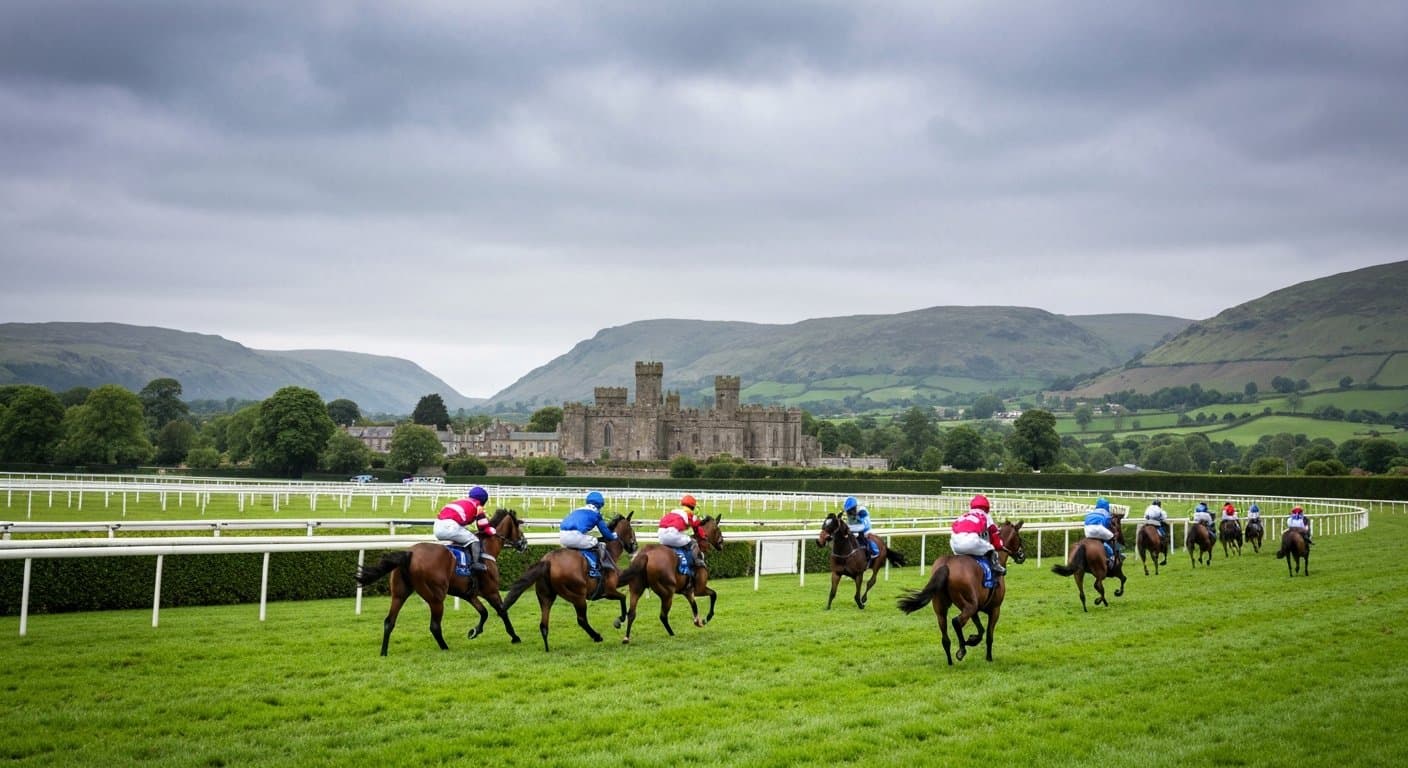
Cartmel Cup: Complete Guide
Your complete guide to the Cartmel Cup — the signature race at Cartmel Racecourse, run during the August Bank Holiday weekend.
Read more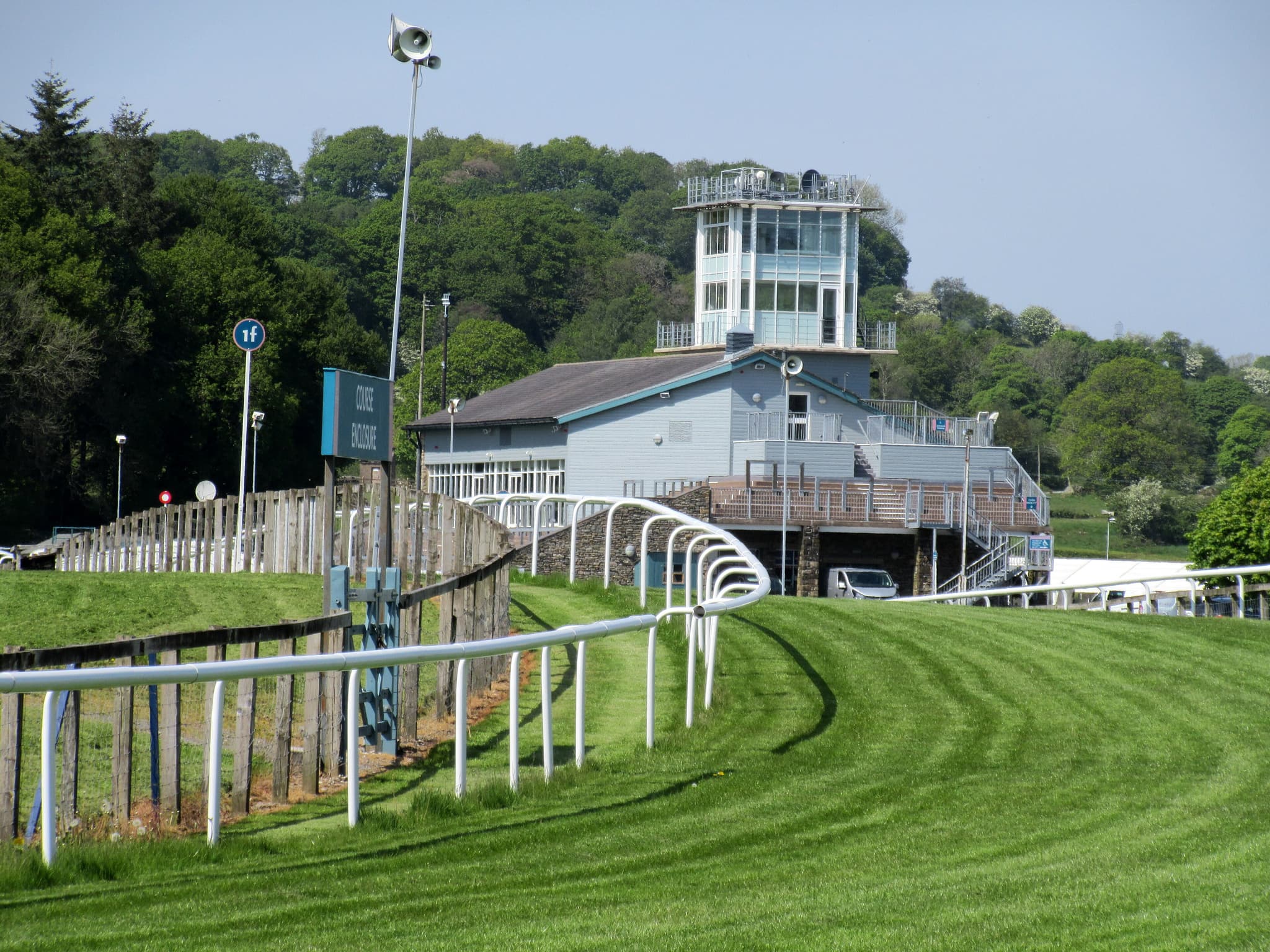
A Day Out at Cartmel Racecourse
Everything you need for a day at Cartmel — getting there, what to wear, enclosures, food and drink, and insider tips for the Lake District's unique jumps venue.
Read more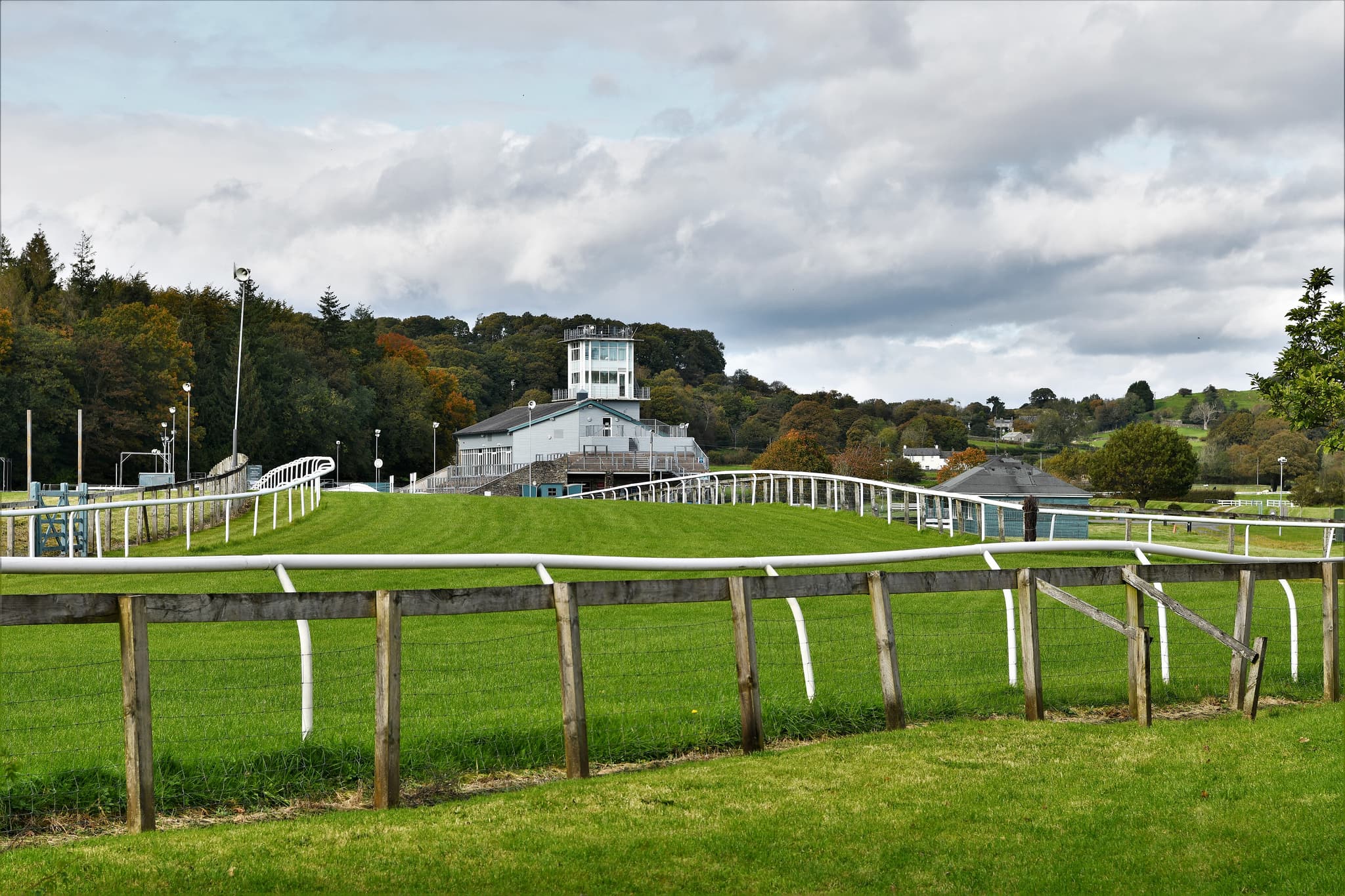
Cartmel Festival: Complete Guide
Your complete guide to the Cartmel Festival — the August Bank Holiday meeting, the Cartmel Cup, and the Lake District's biggest jumps weekend.
Read morePhotos on this page are used under Creative Commons licences. Titles, sources and licence links for each one are on our image credits page.
Research the field with the AI Race Predictor
Our model publishes calibrated win-probability estimates for UK races — a second opinion to understand a race, not tips. It's open about its record: it doesn't beat the market, and we show exactly how it does.
Work it out & learn the basics
Gamble Responsibly
Gambling should be entertaining and not seen as a way to make money. Never bet more than you can afford to lose. If you or someone you know has a gambling problem, help and support is available.