
Founder & Editor · Last reviewed 2026-04-07
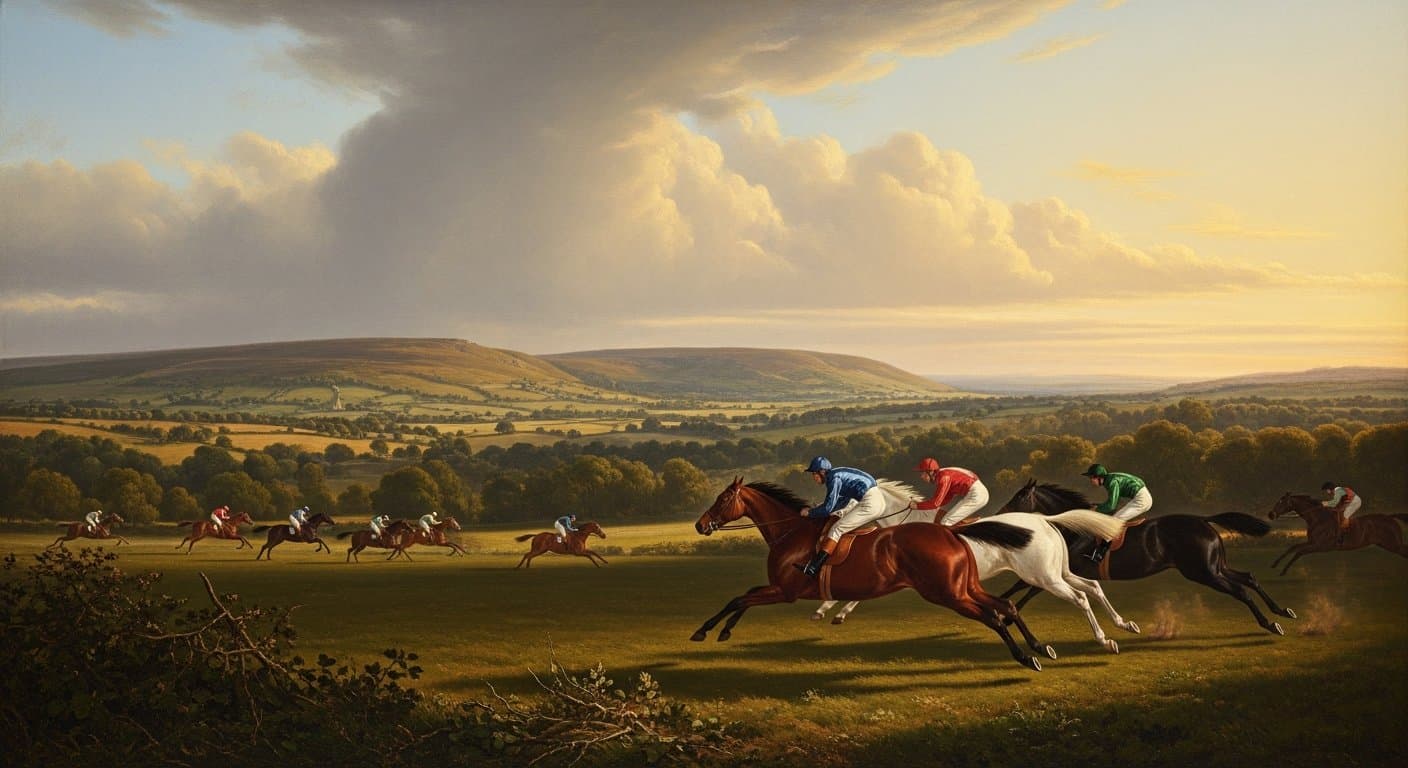
Catterick Bridge Racecourse occupies a tight, left-handed oval in the Vale of Mowbray, surrounded by the North Yorkshire countryside that makes this stretch of England some of the most beautiful racing territory in Britain. It is a quirky, specialist track that rewards course knowledge above almost any other factor — horses that love Catterick tend to keep winning here, and those that don't, don't.
The course stages both flat and National Hunt racing year-round, with its most significant festivals spread across both codes. In summer, the sprint-focused flat programme culminates in the Catterick Dash — the fastest races on the northern flat calendar. In winter, the North Yorkshire Grand National (a competitive staying handicap chase) provides a proper jumping occasion on a circuit that is deceptively demanding despite its modest size.
Catterick's unique character comes from the combination of tight bends, a sharp downhill section and the varying going conditions that the North Yorkshire climate delivers. Jockeys who ride here regularly know the precise line through each bend; horses that jump cleanly on the right stride tend to gain lengths over those that do not. Local knowledge is worth more at Catterick than almost anywhere else on the northern circuit.
The course has charm in abundance — an old-fashioned feel, a compact paddock where you can get genuinely close to the horses and a crowd that is unaffectedly passionate about racing. It is one of the north's hidden gems, and the locals very much intend to keep it that way.
Bet on Catterick
Place your bets on Catterick races with a trusted bookmaker.

Promo code BETFRED50. New customers only. Register, deposit with a Debit Card, and place a first bet of £10+ at Evens (2.0)+ on Sports, to be settled within 7 days, to get £30 in Sports Free Bets and £20 in Bet Builder Free Bets within 24 hours of settlement. 7-day expiry. Eligibility & payment exclusions apply. Full T&Cs apply. Take Time to Think. BeGambleAware.org. 18+. Full T&Cs.

Promo code R30. New UK customers only, 18+. Register, deposit £10 or more, then place a £10 single cash bet at odds of 1/2 (1.5) or greater on any sports market (excluding Virtuals). Once the qualifying bet settles you get £30 in Free Bets (3 x £10) — the qualifying bet can win or lose. Free Bets are valid on any sports market excluding Virtuals, expire in 7 days, are non-withdrawable and must be used in full. Excluded deposit methods apply (including PayPal, Apple Pay, Skrill and NETELLER). Named bets such as Lucky 15 do not qualify. If you cash out the qualifying bet, or it is voided, you are no longer eligible for the offer. Ends 31.12.26. Full T&Cs apply. Please gamble responsibly. BeGambleAware.org. 18+. Full T&Cs.

Promo code BET40GET20. New UK customers, 18+. Register with the code and place a first bet of £40 or more at Evens (2.0) or greater. Receive 2 × £10 free bets: the first credited automatically once the qualifying bet settles, the second 24 hours later. Free bets must be placed at minimum odds of 4/1 (5.0), expire 24 hours after credit, and the free-bet stake is not returned with winnings. Debit card deposits only. Take Time to Think. BeGambleAware.org. 18+. T&Cs apply. Full T&Cs.

50% of your first-day net losses refunded as a free bet, capped at £25. New UK customers aged 18+ only. To qualify, deposit and place a first bet of £10 or more on any sport at minimum odds of evens (2.00), then place at least two further bets on different events, each worth at least 50% of your largest bet, all at evens (2.00) or greater. Losses are counted from your first settled bet until 23:59 the same day. Place a qualifying £10+ bet and you are guaranteed at least a £5 free bet. Bets placed at SP, void bets, cashed-out bets and bets struck with free bets do not count towards the offer. The free bet is credited the day after your qualifying bets settle and must be used within 7 days, after which it expires. It can be used at odds from 1/4 (1.25) up to 250/1 on singles and straight accumulators, but not on Trixie, Patent or Yankee style multiples. Free-bet stake is not returned with winnings. One offer per person, household, address, IP address and device. E-wallet deposits may not qualify, so check the cashier before depositing. Customers registered with GAMSTOP cannot claim. KYC identity verification must be completed before the free bet is credited. Take Time to Think. BeGambleAware.org. 18+. T&Cs apply. Full T&Cs.

New customers, 18+. Choose the sports bonus at sign-up, make a first deposit and receive a 100% bonus up to £50 in your Sports Bonus balance. To convert the bonus to cash, wager it 10x within 30 days. Single bets below Evens (2.00) do not qualify; accumulators do not qualify if any selection is below 1/2 (1.50). Virtual Sports, voided, cancelled, drawn, cashed-out and free-bet wagers do not count towards wagering. Only the first settled bet per event counts. Withdrawing before the wagering requirement is met forfeits the bonus balance including bonus winnings. Real-money funds are used before bonus funds. Deposits via Skrill or Neteller are not eligible. Not valid in conjunction with other promotions. Odds, bet and payment limits apply. 10bet general and promotion T&Cs apply. BeGambleAware.org. 18+. Full T&Cs.

New customers in Great Britain and Republic of Ireland, 18+. Place a £10 fixed-odds qualifying bet at minimum odds of 1/2 (1.50) — single or each-way (only the win part counts), pre-event or in-play, not cashed out early, within 28 days of opening the account. Receive up to £60 in bonuses credited over three days: 3 × £10 fixed-odds free bets (the first on settlement, then 24 and 48 hours later) plus 3 × £5 Total Goals FOOTBALL spread bets, 3 × £5 racing Winning Favourites spread bets and a £1 racing Race Index spread bet (the spread bets need a full spread-betting account). Free-bet stakes not returned with winnings; free bets valid 28 days from issue. IMPORTANT: the £5 credits are SPREAD bets — sports spread betting carries the risk that losses can exceed your stake. Sports spread-betting customers do not have Financial Ombudsman or FSCS recourse. Take Time to Think. BeGambleAware.org. 18+. T&Cs apply. Full T&Cs.

Promo code WELCOME15, entered under My Bonuses after registering. New UK customers, 18+. Place a first qualifying bet of at least £10 from your cash balance at odds of evens (2.0) or greater within 7 days of opening the account. Once the qualifying bet fully settles you receive £15 in free bets, credited as 3 x £5 tokens with set uses: one £5 accumulator free bet (minimum 4 legs, each leg at 2/5 or bigger), one £5 sports free bet (any market at evens or bigger) and one £5 Sub Cover free bet (selected football player markets at evens or bigger). Free-bet stakes are not returned with winnings. Free bets expire 7 days after they are credited. Void, cashed-out and partially cashed-out bets do not qualify. One offer per customer. Confirm the current terms on BetGoodwin's own welcome-offer page before claiming. Take Time to Think. BeGambleAware.org. 18+. T&Cs apply. Full T&Cs.

New UK customers, 18+. Minimum deposit £10. Place a £10 qualifying single at minimum odds of 1/2 (1.50), settled within 14 days. Receive £30 in free bets (stake not returned), split £20 for sportsbook use (2 x £10) and £10 for Bet Builder only (2 x £5); Bet Builder does not cover horse racing. Free bets must be accepted within 7 days and expire 7 days after acceptance. No promo code required. Best Odds Guaranteed on UK & Irish racing, subject to having staked over £25 in the previous seven days. Operated by LiveScore Betting and Gaming (Gibraltar) Ltd, UKGC 56859. Confirm the current terms on LiveScore Bet's own promotions page before claiming. Take Time to Think. BeGambleAware.org. 18+. T&Cs apply. Full T&Cs.
18+. BeGambleAware.org
The Festival Programme
Summer Flat Festival (June–August)
Catterick's summer flat programme focuses on sprint and mile racing for northern-trained horses working through their campaigns. The June and July Saturday meetings are the busiest and most competitive of the season, with the Catterick Dash series providing a series of quick, competitive sprint heats.
The Dash meetings typically run on a Thursday or Saturday in July and August and attract northern sprint specialists who find the tight Catterick circuit suits their racing style. Horses that handle the sharp bends and can accelerate on the descent into the home straight have a massive advantage here — pure-speed horses that race on bigger, more galloping tracks sometimes find the Catterick circuit claustrophobic.
The summer cards are well-attended by a loyal North Yorkshire crowd — Darlington, Richmond, Northallerton and the surrounding area provides a catchment that reliably fills the course for the headline meetings. The atmosphere is unpretentious and genuinely engaged with the racing.
Autumn Jump Launch (October–November)
Catterick's early jump season meetings in October and November attract novice hurdlers and chasers from the northern yards getting their first runs of the season. The compact circuit is excellent for revealing horses' jumping technique — Catterick's short distances between fences and tight turns expose poor or careless jumpers quickly.
These October and November cards are underattended compared to the summer programme but reward the form student. Horses that jump well around Catterick — particularly those that gain ground at each fence — tend to go on to bigger things as the season develops.
North Yorkshire Grand National Day (January/February)
Catterick's winter highlight — a competitive staying handicap chase over approximately four miles that provides a northern alternative to the midwinter staying chase programme at Haydock and Cheltenham. The race attracts horses aiming at the Scottish or Welsh Grand National in spring, and the Catterick circuit's demands provide an excellent tune-up.
The winter crowd at Catterick is hardy and cheerful — wrapped in heavy coats, form books in hand, genuinely enthusiastic about staying chases in a way that makes the North Yorkshire January meeting feel like a proper racing occasion rather than a filler fixture.
Key Races to Watch
Catterick Dash (July/August, Listed, 5f)
The flagship sprint race of the Catterick flat season and one of the north's most competitive speed tests. Five furlongs around the tight Catterick circuit is a distinctly different challenge from five furlongs on a straight or galloping course — the sharp bends and the ability to maintain sprint pace through a turn are crucial skills that not all sprinters possess.
The specialist angle: Catterick five-furlong winners are a distinct group. Horses that win here tend to return and win again — the course-specialist edge is stronger here than at most tracks. If a horse has won the Catterick Dash or a listed five-furlong race here previously, it immediately becomes the most reliable selection in subsequent short-trip races at the course.
North Yorkshire Grand National (January/February, Handicap Chase, ~4m)
Catterick's winter showpiece — a long-distance staying handicap chase that provides a northern Grand National experience on a more manageable circuit. The race attracts horses aiming at the Scottish, Welsh or Midlands Grand Nationals in spring, and the Catterick circuit's tight bends make it a genuine test of jumping accuracy over a marathon trip.
Horses from Nicky Richards, Sue Smith and Brian Ellison regularly feature — all northern trainers who know how to prepare a staying chaser for Catterick's specific demands. A horse that handles Catterick's tight turns cleanly over a long distance is almost certainly a safe jumper.
Novice Hurdle Programme (October–January)
Catterick's autumn and winter novice hurdle cards are excellent form guides for the Cheltenham and Aintree novice hurdle programme. The tight circuit exposes poor jumping technique immediately — horses that win novice hurdles at Catterick cleanly tend to be technically accomplished jumpers who handle pressure well.
Sprint Handicap Series (June–August)
The summer sprint handicaps at Catterick over five and six furlongs are where course form matters most. Build a list of Catterick sprint winners from the current season. Any horse returning over the same trip within six weeks of a win here should be near the top of your assessment regardless of its market position.
Betting Preview
The Catterick Course Form Edge
Catterick is the British racecourse where course form pays most consistently. The track's tight bends and specific demands — the downhill acceleration point, the sharp turns, the short run-in — create advantages for course-experienced horses that do not exist to the same degree at more conventional tracks.
Systematic approach: Build a list of Catterick winners from the past six months before each major meeting. Any horse on the list that is returning to the same trip on similar going is a default upgrade in your market assessment. Horses with two or more Catterick wins on their form card should be treated as course specialists and backed accordingly.
Sprint specialists: Catterick five-furlong horses are a particularly tight group. The combination of the bend and the sprint demands means that horses which have shown they handle this specific challenge have a significant edge over those facing it for the first time. Before betting any Catterick five-furlong race, check specifically for previous five-furlong Catterick form.
Winter Jump Betting
The North Yorkshire Grand National and supporting handicap chases are best approached with a focus on:
- Previous Catterick jump form: Has the horse jumped around this specific tight circuit before? Course experience in jumping is worth more at Catterick than at most tracks.
- Going tolerance: Catterick's winter ground is nearly always soft or heavy in January and February. Horses without proven ability in deep ground are significant risks.
- Northern trainer records: Nicky Richards, Lucinda Russell and Sue Smith run horses here with specific preparation for the circuit. Their Catterick records are worth examining before each jump card.
Practical Notes
Catterick's betting ring is small and the bookmakers familiar with the local form. On-course prices for course specialists are often fair or occasionally better than exchange prices — the ring knows these horses. For races with less obvious form, the exchange is a better option for significant stakes.
Visitor Information
Getting There
By train: Darlington station is the most convenient rail connection — approximately 15 minutes from the racecourse by taxi or race-day shuttle bus. East Coast Main Line services from London King's Cross (approximately 2 hours 15 minutes), Edinburgh (approximately 1 hour 15 minutes) and Leeds (approximately 40 minutes) all serve Darlington. Northallerton station is slightly closer to the course on some routes — check journey times.
By car: Catterick Bridge is accessed from the A1(M) (junction 51 southbound, or A6136 from Scotch Corner northbound). The racecourse is directly adjacent to the bridge over the River Swale, well-signposted from the A1. Pre-booked parking on-site. Traffic on the A1(M) after major meetings can be slow heading south — leave time.
By bus: Arriva North East services run between Darlington and Richmond via Catterick — check the local timetable for race-day services. A taxi from Darlington is the simplest option.
Enclosures
Grandstand: The main public area with covered views of the finish, full bar and food facilities. Smart casual dress code. Compact and friendly atmosphere.
Paddock Enclosure: Direct access to the parade ring and betting ring. The best option for watching horses before each race and for getting to the bookmakers quickly. Smart casual.
Essential Tips
- The track is small — arrive early. Catterick's facilities are compact and the best spots in the grandstand fill by the second race. Arrive at gate opening time for the major meetings.
- The course is exposed in winter. January and February meetings at Catterick are cold, often wet and sometimes windy. Full winter kit is essential — this is a North Yorkshire moorland edge in mid-winter.
- North Yorkshire's food and drink scene is excellent. The surrounding area — Bedale, Northallerton, Richmond — provides excellent post-racing options. A meal in Richmond after Catterick racing is one of the north's underrated racing-trip combinations.
- Catterick is excellent value. Admission prices are among the most reasonable in north of England racing and the quality of the racing is consistently high for the region. One of the best-value race days in Yorkshire.
Share this article
More about this racecourse
All Catterick guides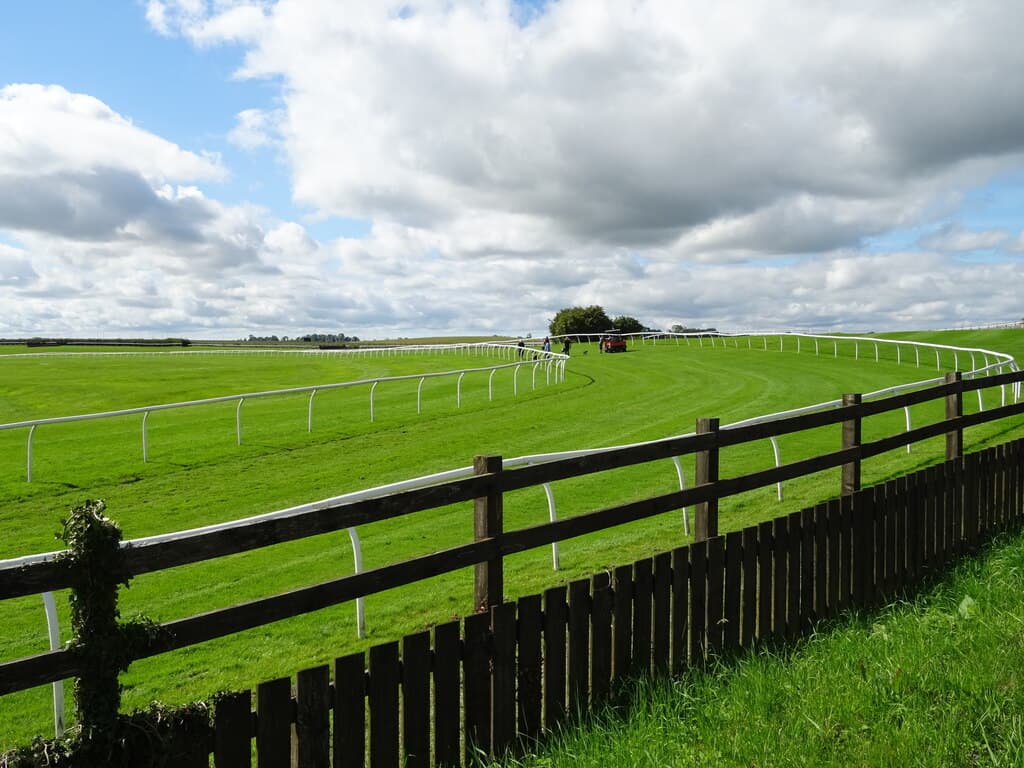
The History of Catterick Racecourse
Over 240 years of racing at Catterick Bridge — from the first meeting in 1783 to Yorkshire's busiest dual-purpose venue.
Read more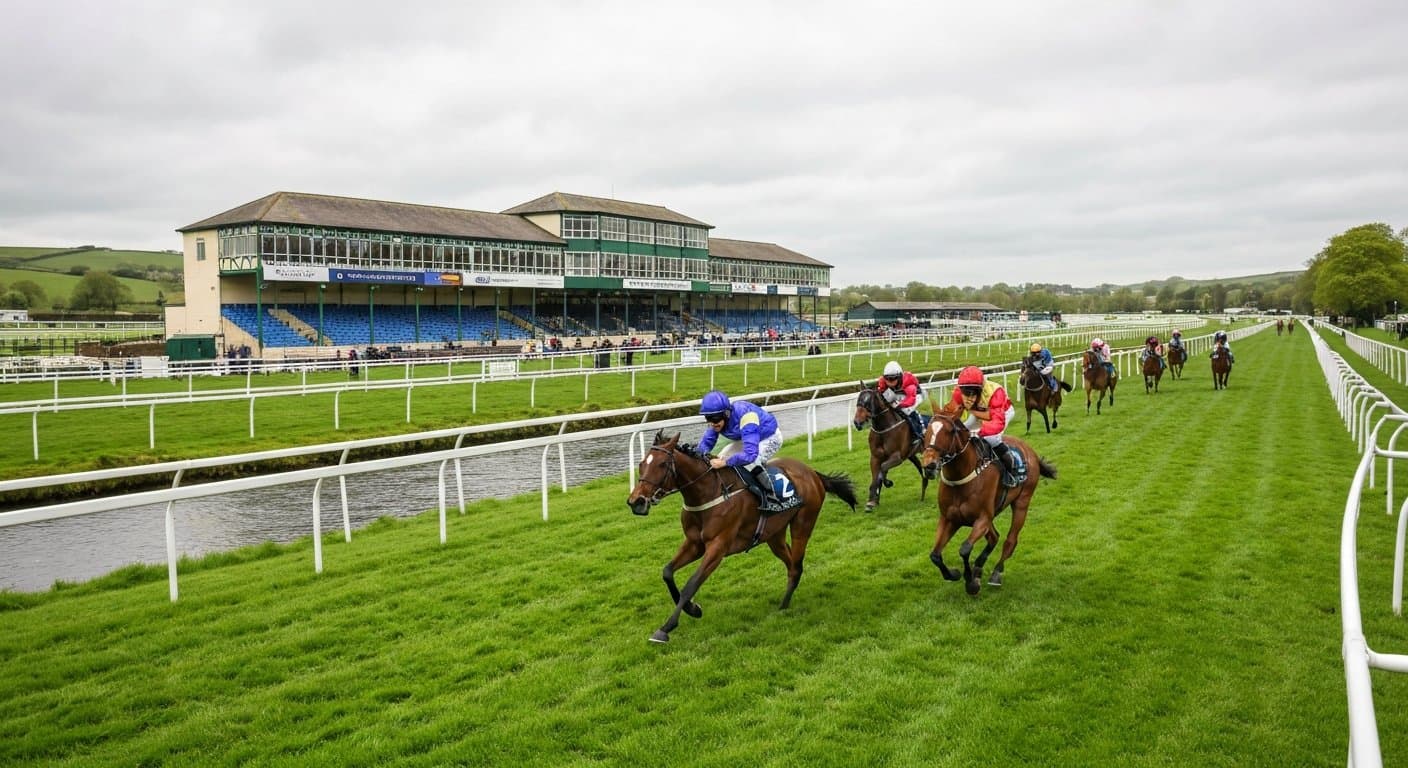
Catterick Jumps: Sharp Track, 8 Fences & Winning Tips
Master Catterick's tricky National Hunt layout with our insider guide to the sharp bends, undulating terrain and fence placement that decides races.
Read more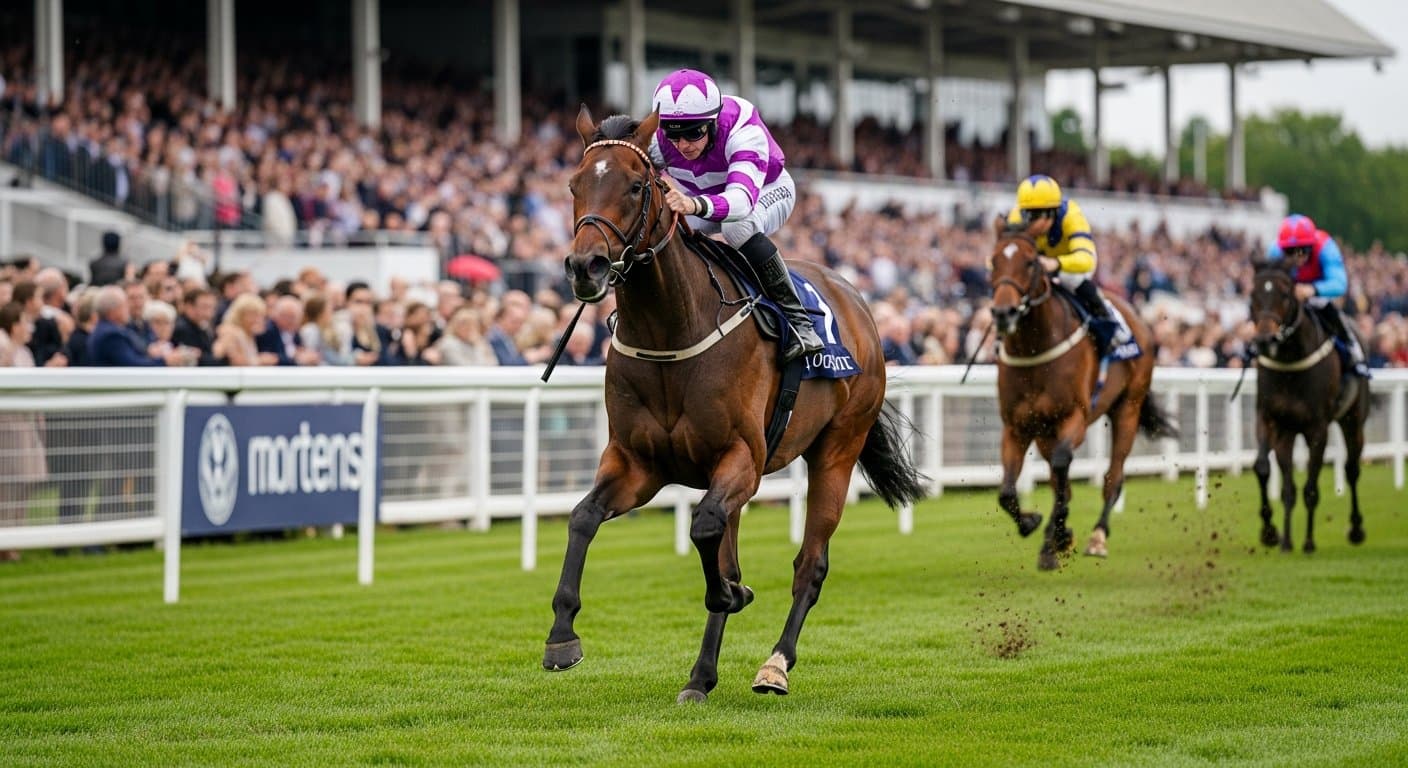
Collier Hill at Catterick: The Complete Story
How a £5,500 North Yorkshire horse made his first win at Catterick before going on to win the Irish St Leger and the Hong Kong Vase.
Read morePhotos on this page are used under Creative Commons licences. Titles, sources and licence links for each one are on our image credits page.
Research the field with the AI Race Predictor
Our model publishes calibrated win-probability estimates for UK races — a second opinion to understand a race, not tips. It's open about its record: it doesn't beat the market, and we show exactly how it does.
Work it out & learn the basics
Gamble Responsibly
Gambling should be entertaining and not seen as a way to make money. Never bet more than you can afford to lose. If you or someone you know has a gambling problem, help and support is available.