
Founder & Editor · Last reviewed 2026-03-02
Catterick Bridge is the most distinctive dual-purpose track in the north of England. The left-handed oval in North Yorkshire is unusual among British flat courses for one specific reason: the final three furlongs run downhill to the winning post. Most British tracks finish level or uphill; at Catterick the finish slopes away. That one feature changes how races are won and lost here, and understanding its implications is the starting point for any productive betting at the course.
The flat racing season runs from April to October, with sprint handicaps the dominant race type. The jumps programme operates from October through March. Both codes are served by the same compact, sharp circuit, and both reward the same general type of horse: handy, prominent racers that can handle the tight bends and exploit the downhill run-in without requiring a long straight to show their best.
Key angles before betting at Catterick:
- Prominent racers dominate on fast ground — the downhill finish means horses that hit the front running downhill are hard to reel in; front-runners have a structural advantage not seen at uphill-finishing tracks
- The draw matters in 5f sprints — stalls one through six on the straight five-furlong course have a consistent small advantage, most pronounced in large fields; the effect diminishes at a mile and beyond
- Course form is a reliable indicator — the downhill finish, tight bends, and compact oval create demands that some horses handle well and others do not; previous course winners repeat the dose at a higher rate than at most tracks
- Richard Fahey is the dominant trainer — his yard at Musley Bank is approximately five miles from the course; his strike rate at Catterick across flat racing exceeds 20% in most seasons
- The Catterick Dash is the premium betting event — the five-furlong sprint handicap in October is competitive, televised, and generates the sharpest market of the flat season
- NH form: straightforward fences reward jumping efficiency over athleticism — novice chasers with clean technique can compete with experienced horses on a circuit that does not demand spectacular jumping
- Form transfers to Ripon and Thirsk — horses that win at Catterick on the flat adapt well to those tracks; the similar sharp, northern character makes form exchange more reliable than with galloping circuits
The complete guide to Catterick covers the course layout and history. The Catterick Dash guide covers the signature race in detail. The jumps guide addresses the NH programme specifically. For a visit, see the day out guide.
Bet on Catterick
Place your bets on Catterick races with a trusted bookmaker.

Promo code BETFRED50. New customers only. Register, deposit with a Debit Card, and place a first bet of £10+ at Evens (2.0)+ on Sports, to be settled within 7 days, to get £30 in Sports Free Bets and £20 in Bet Builder Free Bets within 24 hours of settlement. 7-day expiry. Eligibility & payment exclusions apply. Full T&Cs apply. Take Time to Think. BeGambleAware.org. 18+. Full T&Cs.

Promo code R30. New UK customers only, 18+. Register, deposit £10 or more, then place a £10 single cash bet at odds of 1/2 (1.5) or greater on any sports market (excluding Virtuals). Once the qualifying bet settles you get £30 in Free Bets (3 x £10) — the qualifying bet can win or lose. Free Bets are valid on any sports market excluding Virtuals, expire in 7 days, are non-withdrawable and must be used in full. Excluded deposit methods apply (including PayPal, Apple Pay, Skrill and NETELLER). Named bets such as Lucky 15 do not qualify. If you cash out the qualifying bet, or it is voided, you are no longer eligible for the offer. Ends 31.12.26. Full T&Cs apply. Please gamble responsibly. BeGambleAware.org. 18+. Full T&Cs.

Promo code BET40GET20. New UK customers, 18+. Register with the code and place a first bet of £40 or more at Evens (2.0) or greater. Receive 2 × £10 free bets: the first credited automatically once the qualifying bet settles, the second 24 hours later. Free bets must be placed at minimum odds of 4/1 (5.0), expire 24 hours after credit, and the free-bet stake is not returned with winnings. Debit card deposits only. Take Time to Think. BeGambleAware.org. 18+. T&Cs apply. Full T&Cs.

50% of your first-day net losses refunded as a free bet, capped at £25. New UK customers aged 18+ only. To qualify, deposit and place a first bet of £10 or more on any sport at minimum odds of evens (2.00), then place at least two further bets on different events, each worth at least 50% of your largest bet, all at evens (2.00) or greater. Losses are counted from your first settled bet until 23:59 the same day. Place a qualifying £10+ bet and you are guaranteed at least a £5 free bet. Bets placed at SP, void bets, cashed-out bets and bets struck with free bets do not count towards the offer. The free bet is credited the day after your qualifying bets settle and must be used within 7 days, after which it expires. It can be used at odds from 1/4 (1.25) up to 250/1 on singles and straight accumulators, but not on Trixie, Patent or Yankee style multiples. Free-bet stake is not returned with winnings. One offer per person, household, address, IP address and device. E-wallet deposits may not qualify, so check the cashier before depositing. Customers registered with GAMSTOP cannot claim. KYC identity verification must be completed before the free bet is credited. Take Time to Think. BeGambleAware.org. 18+. T&Cs apply. Full T&Cs.

New customers, 18+. Choose the sports bonus at sign-up, make a first deposit and receive a 100% bonus up to £50 in your Sports Bonus balance. To convert the bonus to cash, wager it 10x within 30 days. Single bets below Evens (2.00) do not qualify; accumulators do not qualify if any selection is below 1/2 (1.50). Virtual Sports, voided, cancelled, drawn, cashed-out and free-bet wagers do not count towards wagering. Only the first settled bet per event counts. Withdrawing before the wagering requirement is met forfeits the bonus balance including bonus winnings. Real-money funds are used before bonus funds. Deposits via Skrill or Neteller are not eligible. Not valid in conjunction with other promotions. Odds, bet and payment limits apply. 10bet general and promotion T&Cs apply. BeGambleAware.org. 18+. Full T&Cs.

New customers in Great Britain and Republic of Ireland, 18+. Place a £10 fixed-odds qualifying bet at minimum odds of 1/2 (1.50) — single or each-way (only the win part counts), pre-event or in-play, not cashed out early, within 28 days of opening the account. Receive up to £60 in bonuses credited over three days: 3 × £10 fixed-odds free bets (the first on settlement, then 24 and 48 hours later) plus 3 × £5 Total Goals FOOTBALL spread bets and 3 × £5 racing Winning Favourites spread bets, with a £1 racing Race Index spread bet as an extra on top. The spread bets need a full spread-betting account, opened within 28 days of the fixed-odds account and subject to Spreadex's eligibility and appropriateness checks. Free-bet stakes not returned with winnings; free bets valid 28 days from issue. IMPORTANT: the £5 credits are SPREAD bets — sports spread betting carries the risk that losses can exceed your stake. Sports spread-betting customers do not have Financial Ombudsman or FSCS recourse. Take Time to Think. BeGambleAware.org. 18+. T&Cs apply. Full T&Cs.

Promo code WELCOME15, entered under My Bonuses after registering. New UK customers, 18+. Place a first qualifying bet of at least £10 from your cash balance at odds of evens (2.0) or greater within 7 days of opening the account. Once the qualifying bet fully settles you receive £15 in free bets, credited as 3 x £5 tokens with set uses: one £5 accumulator free bet (minimum 4 legs, each leg at 2/5 or bigger), one £5 sports free bet (any market at evens or bigger) and one £5 Sub Cover free bet (selected football player markets at evens or bigger). Free-bet stakes are not returned with winnings. Free bets expire 7 days after they are credited. Void, cashed-out and partially cashed-out bets do not qualify. One offer per customer. Confirm the current terms on BetGoodwin's own welcome-offer page before claiming. Take Time to Think. BeGambleAware.org. 18+. T&Cs apply. Full T&Cs.

New UK customers, 18+. Minimum deposit £10. Place a £10 qualifying single on sports (excluding virtuals) at minimum odds of 1/2 (1.50), settled within 14 days. Deposit-method exclusions apply. Receive £30 in free bets (stake not returned), split £20 for sportsbook use (2 x £10) and £10 for Bet Builder only (2 x £5); Bet Builder does not cover horse racing. Free bets must be accepted within 7 days and expire 7 days after acceptance. No promo code required. Best Odds Guaranteed on UK & Irish racing, subject to having staked over £25 in the previous seven days. Operated by LiveScore Betting and Gaming (Gibraltar) Ltd, UKGC 56859. Confirm the current terms on LiveScore Bet's own promotions page before claiming. Take Time to Think. BeGambleAware.org. 18+. T&Cs apply. Full T&Cs.
18+. BeGambleAware.org
Track Characteristics
The Catterick flat course is left-handed, oval, and measures just over a mile and a quarter around. There is also a separate five-furlong straight course that runs downhill for the first two furlongs before joining the round course for the final three furlongs. The NH course is approximately one mile and two furlongs around, running on the inside of the flat course along the home straight and on the outside for the back straight. Both courses share the track's defining characteristic: a downhill finish.
The Downhill Finish
At most British flat courses, the final straight is level or rises slightly — the type of finish that drains stamina and gives hold-up horses a chance to accelerate past tired leaders. Catterick is the opposite. The final three furlongs of every flat race here run downhill to the winning post. The gradient is consistent — not dramatically steep, but enough to change the mechanical dynamics of race-finishing in a specific and predictable way.
Horses that reach the final three furlongs in a prominent position — first, second, or third — get a gravitational assist from the downhill gradient. Their momentum increases as they accelerate; the physics of running downhill makes it harder for a horse behind them to generate the relative speed needed to overtake. A horse that leads going into the final three furlongs at Catterick is in a different tactical position from a horse leading at the same point at, say, Ascot or Goodwood, where the finish is level and the hold-up horse still has time to close.
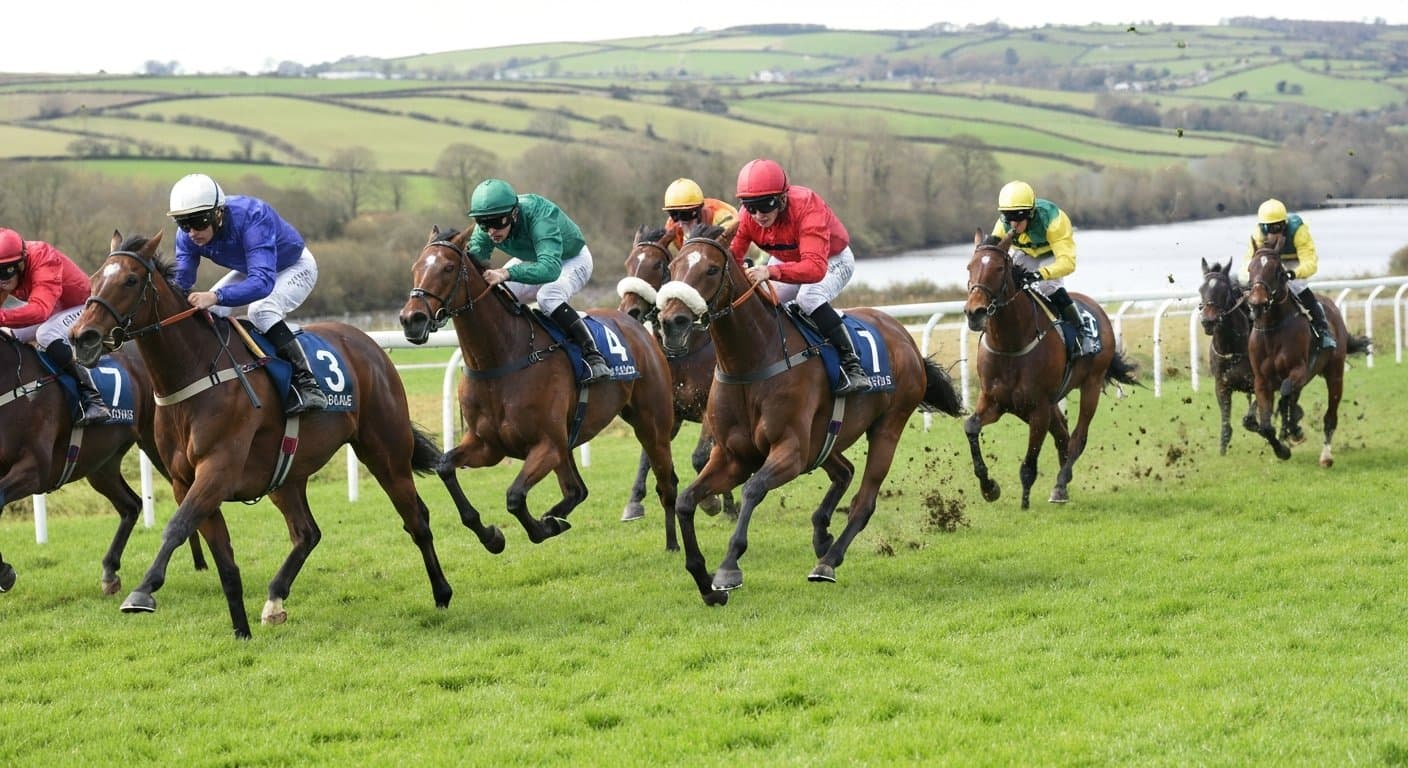
This structural advantage for prominent racers at Catterick is one of the most consistent statistical patterns in British flat racing. It is not absolute — hold-up horses do win here — but the base rate for front-runners and prominent racers finishing in the first two is higher at Catterick than at most other tracks.
Sprint Course and Tight Bends
The five-furlong straight course runs away from the main oval and rejoins it before the home turn. The first two furlongs of the five run downhill from the starting stalls, creating a fast pace from the break. Horses that come out of the stalls quickly and establish a good early position on the sprint course are in a stronger position than horses that are slow away, because the downhill momentum can be difficult to overcome from the rear of the field.
The round course has bends that are tighter than at galloping tracks. On the round mile, the final bend leading into the home straight comes up fairly quickly, requiring horses to maintain their balance through the turn before the downhill straight. Horses that are clumsy or free-running through bends — those that waste energy scrubbing and correcting balance — are at a disadvantage that wide galloping tracks would not expose.
The Jumps Course
The NH course at Catterick runs approximately one mile two furlongs per circuit. It uses the inside of the flat track on the home straight and the outside on the back straight, with eight fences per circuit — three in the home straight and five in the back straight, including an open ditch in each. The fences are regarded as straightforward: well-built and fair, without the stiffness of Cheltenham park fences or the severity of Sandown's open ditches.
On the NH course, the downhill finish still applies. Horses that jump the last fence in front at Catterick are running downhill to the line, which means they retain momentum through the final run-in. The advantage of leading at the last is, if anything, more pronounced in chases at Catterick than in flat races, because the combination of a clean jump and the downhill gradient makes it truly difficult for rivals to close from behind.
Course Comparison
For flat racing, Catterick is most comparable to Ripon and Thirsk — all three are sharp, left-handed northern tracks that reward handy, tactical horses. Form from those tracks transfers reliably. Brighton — another sharp, undulating track with gradient changes — is a southern comparison, though Brighton's specific gradients differ from Catterick's. Form from wide galloping tracks like York and Doncaster carries less direct relevance.
Going & Draw Bias
Catterick's gravel-rich subsoil gives it the best drainage of any course in North Yorkshire. The track rarely reaches truly heavy going even after sustained wet periods, and Good to Firm is the most common summer description. This makes Catterick one of the most predictable going venues in the north — bettors can plan for fast summer ground with more confidence than at nearby courses with heavier clay substrates.
Summer Flat: Good to Firm and Good
From May through September, Catterick most commonly races on Good to Firm or Good ground. On these surfaces, the structural advantages described in the track characteristics section — front-runners exploiting the downhill finish, handy horses dominating — are most pronounced. When the going is Good to Firm, the pace of races is high and the downhill momentum gives prominent racers the strongest possible advantage.
On Good to Firm ground in five-furlong sprints, the combination of a fast early pace from the downhill opening two furlongs and a strong downhill finish makes front-running the dominant winning tactic. Horses with high early-speed ratings — those that can get to the front or close to it within the first furlong — should be assessed as realistic contenders even if their later-stage finishing speed appears modest by comparison.
Going Softer: Good to Soft and Soft
When the going softens to Good to Soft or Soft — most commonly in autumn or after periods of rain — the tactical picture changes. The downhill finish remains, but the grip of softer ground slows the pace of races and changes the balance point between front-runners and hold-up horses. On soft ground, a horse that has set a strong pace through the final bend may be more vulnerable to a hold-up horse that has been conserving energy. The front-runner advantage does not disappear on soft ground, but it is less dominant than on fast ground.
In longer flat races over a mile and beyond on soft ground, stamina becomes a more decisive factor. A real miler on Good to Firm may not stay a mile on Soft at Catterick, where the energy cost of racing through testing ground adds to the overall stamina demand.
Draw Bias: Five Furlongs
In five-furlong races on the straight course, stalls one to six have a consistent modest advantage over higher-numbered stalls. The advantage is most pronounced in large fields — ten or more runners — where horses drawn high are forced wide on the slight left-hand curve that precedes the final three furlongs. In fields of eight or fewer, the draw effect is negligible because horses have room to find their positions without incurring significant ground loss.
The practical rule: in five-furlong handicaps with large fields, note whether the horse you are considering is drawn in the first six stalls. If it is, the draw is a mild positive; if it is drawn in stalls seven to fifteen in a large field, it is a mild negative. Neither effect is strong enough to be the primary reason for a bet, but both are valid tiebreakers when horses are otherwise comparable.
Draw Bias: Round Course Races
Over one mile and beyond on the round course, the draw effect at Catterick largely disappears. Horses have sufficient time and distance to find their preferred racing positions before the bends become a critical factor. The round course draw is not worth significant weighting in betting analysis for races beyond six furlongs.
Autumn and Winter: NH Going
Catterick's jumps programme runs from October through March, when the going typically ranges from Good to Soft through to Soft. truly heavy ground is unusual because the gravel subsoil retains its drainage efficiency throughout the year. In practice, Catterick NH meetings most commonly run on Soft ground with occasional Good to Soft in drier autumn periods.
On Soft going at the jumps course, stamina matters more than at the same course on Good ground. The NH circuit's shared finishing straight means the downhill run-in applies to chasers and hurdlers too — a horse that leads over the final fence at Catterick on Soft ground is running downhill and is a difficult target to catch.
Key Trainers & Jockeys
Catterick's trainer landscape reflects its position at the heart of North Yorkshire racing. Several large yards are within short travelling distance of the course, and the most successful trainers here share a common thread: they produce horses suited to sharp, tactical racing on fast-draining ground.
Richard Fahey
Richard Fahey trains at Musley Bank, Malton — approximately five miles from Catterick racecourse. The proximity is significant. Fahey can observe his horses' behaviour and condition on morning work, make last-minute decisions about which horses to run and at what trip, and build up detailed knowledge of how individual horses perform on the Catterick circuit. He is the dominant trainer at the course by strike rate and volume of winners across the flat season.
Fahey's yard specialises in speed horses — sprinters and milers that thrive on fast northern tracks. The profile matches Catterick perfectly: the downhill finish, the tight bends, and the fast-draining ground suit exactly the types he produces most consistently. His five-furlong handicappers are particularly effective at the course, and his Catterick runners at prices above 3/1 in sprint handicaps produce consistent results across seasons.
When Fahey runs a horse at Catterick that has previously won or placed here, the combination is the strongest single trainer-plus-course-form signal at the track. His horses at 4/1 or above with previous Catterick form represent the most straightforward value bet the course regularly offers.
Tim Easterby
Tim Easterby trains at Sheriff Hutton near York, approximately 20 miles from Catterick. His yard produces a steady flow of competitive northern handicappers and he sends runners to Catterick throughout the flat season. Easterby's horses tend to be durable, consistent campaigners — exactly the type that builds up course form through repeated visits. His runners in Class 4 and Class 5 handicaps at Catterick are consistently competitive and frequently priced more generously than their form record justifies.
Kevin Ryan
Kevin Ryan trains at Hambleton in North Yorkshire, approximately 15 miles from the course. He is a significant trainer at Catterick, particularly with his sprinting contingent. Ryan produces horses with pace and tactical sharpness that suits the downhill Catterick sprint perfectly. His five-furlong and six-furlong runners are worth noting when they arrive in form.
Paul Hanagan
Paul Hanagan, who rode as retained jockey for Fahey for many years and remains closely associated with leading northern yards, has the most complete understanding of the Catterick circuit of any jockey currently operating on the flat. His ability to time a move through the final bend and time the downhill run to the winning post is reflected in his record here. When Hanagan rides a Fahey horse at Catterick in a sprint, the combination is among the strongest betting signals the course generates.
Northern Jump Trainers
For NH meetings at Catterick, the dominant training operations are different from the flat season. Brian Ellison, who trains near Malton, has a consistent record at Catterick chases and hurdles. His horses tend to be workmanlike jumping types that suit the straightforward Catterick fences and the compact NH circuit. Donald McCain sends runners from Cheshire and is competitive across the range of Catterick NH races.
The downhill finish applies equally to jumps as flat racing at Catterick, and jump trainers who understand this — those who target horses capable of jumping cleanly and reaching the front before the final run-in — consistently outperform those who rely on hold-up tactics on this circuit.
Betting Strategies
Catterick's betting strategies flow directly from the track's physical characteristics. The downhill finish, the tight bends, the fast-draining going, and the dominant local trainer produce a set of consistent patterns that can be applied methodically across both flat and National Hunt programmes.
Strategy One: Back Prominent Racers on Fast Ground
The single most consistent Catterick betting strategy is to favour horses that race prominently on Good to Firm or Good ground. The downhill finish gives horses in the first two or three positions a significant mechanical advantage in the final three furlongs — they are running downhill with momentum while horses behind them are attempting to generate closing speed on the same gradient. Statistical analysis of Catterick flat results on fast ground consistently shows prominent racers winning at a higher rate than hold-up horses relative to their starting prices.
Apply this strategy specifically in sprint handicaps — five and six furlongs — where the downhill element is most pronounced and where the race from front to finish happens quickly enough that hold-up horses have limited opportunity to compensate. In races over a mile and beyond, stamina and class play larger roles, and the front-runner advantage is proportionally smaller.
Strategy Two: Follow Richard Fahey at Value Prices
Fahey's Catterick dominance is well-documented. The angle that generates the most consistent value is not backing all Fahey runners, but targeting those priced at 4/1 or above in Class 3 and Class 4 sprint handicaps where the horse has previous Catterick form. The market sometimes underestimates Fahey's horses in competitive handicaps because his runners are numerous and not all are at their best; identifying the ones with strong course form and a good draw position is the active step the strategy requires.
Avoid applying this strategy to Fahey's runners in maiden races or in higher-class pattern races where competitive pressure from visiting horses is greater and the local knowledge advantage is reduced.
Strategy Three: Use Draw as a Sprint Handicap Filter
In five-furlong handicaps with fields of ten or more runners, apply the draw as a filter after other selection criteria have been considered. If two horses are otherwise comparable on form, class, and going preference, the horse drawn in stalls one through six should be preferred. This is not a strong enough filter to override other evidence — a poorly-in-form horse drawn in stall one is not automatically better than a well-in-form horse drawn in stall twelve — but when horses are truly comparable, the draw tiebreaker is consistent with the statistical evidence.
Strategy Four: Course Form in NH Handicaps
For Catterick National Hunt meetings, the most reliable angle is course form in Class 3 and Class 4 handicap chases and hurdles. The NH circuit shares the same downhill finish as the flat course, and horses that have navigated the circuit and jumped cleanly on a previous visit bring relevant evidence. The added element is jumping ability: horses that have jumped well at Catterick specifically — clean, fluent, and maintaining their position through the back straight fences — are better prepared for their next visit than horses whose only experience of the circuit was messy.
Strategy Five: Avoid Galloping-Track Form at Short Prices
When a horse arrives at Catterick from a galloping circuit — York, Doncaster, Newmarket — having won on a flat, long-straight track, the form deserves a discount when transferred to Catterick's tight-turning, downhill-finishing course. This is most important for horses priced at 6/4 or shorter. The risk of a short-priced favourite from a galloping circuit failing to handle Catterick's specific demands is real enough that backing against it — or simply siding with a Catterick-proven rival at a bigger price — is a consistent strategy over time.
To compare place terms and each-way promotions across the major bookmakers, see our best bookmakers for horse racing guide.
Key Races to Bet On
Catterick's racing calendar is built around its strength in class-competitive northern handicaps on the flat and a well-regarded jumps programme that peaks in the winter months. The two races below anchor the betting calendar, but competitive handicaps throughout both seasons offer consistent value opportunities.
The Catterick Dash
The Catterick Dash is a five-furlong handicap run in October, widely regarded as one of the most competitive sprint handicaps of the autumn flat season. The race regularly attracts a full field of twenty or more runners, making it simultaneously one of the most difficult and most interesting handicap betting opportunities of the year.
The Dash encapsulates everything that makes Catterick sprint handicaps distinctive. A full draw covers the full range of stall positions, and the relative advantage of low draws is most pronounced in this type of large-field sprint. The pace from the gate is invariably strong because the first two furlongs are downhill. The race is won from prominent positions far more often than from the rear, because horses that establish early positions early have the downhill advantage in their favour from the start.
For betting purposes, the Dash rewards systematic application of the strategies in this guide: prominent-racer preference, modest low-draw advantage in a large field, course-form advantage where it applies. In a wide-open field, each-way betting at 10/1 or above on a horse with course form, drawn in the first eight stalls, from Fahey's or a comparable local yard, provides a consistent framework.
The full Catterick Dash guide covers the race history, handicap analysis, and specific race-by-race data.
The North Yorkshire Grand National
The North Yorkshire Grand National is Catterick's feature NH race — a staying handicap chase run in January over an extended trip, typically around three miles and a quarter. It attracts staying chasers from northern and national yards for whom a competitive winter handicap on a sharp northern circuit is the target.
The race is run on the NH circuit with the downhill finish, meaning the horse in front at the final fence on Soft January ground has a real advantage. Staying form from comparable NH courses — Wetherby, Sedgefield, and Kelso — transfers well. Horses with previous Catterick NH form are consistently overrepresented in the result relative to their prices.
Summer Sprint Handicap Programme
Catterick's flat season includes a steady sequence of five-furlong and six-furlong handicaps from April through October. These races — typically Class 3 to Class 5 — form the core of the betting interest throughout the season. They are the races where Fahey's local dominance, the low-draw advantage in larger fields, and the prominent-racer strategy produce the most consistent results.
The August and September sprint handicaps are particularly well-placed in the season. Fahey's horses that have built form across the summer are often at their peak fitness, the going remains firm enough to favour speed horses, and the fields are competitive enough to generate prices that reward systematic selection.
Christmas and New Year Jumps
The Catterick jumps calendar peaks in the fortnight spanning late December and early January. These fixtures draw large northern crowds and produce truly competitive hurdle and chase fields from across the northern jumps community. Course form from the October and November NH meetings is directly relevant — horses that have already handled the downhill circuit on soft ground have an established advantage over first-time Catterick visitors at this time of year.
Share this article
More about this racecourse
All Catterick guides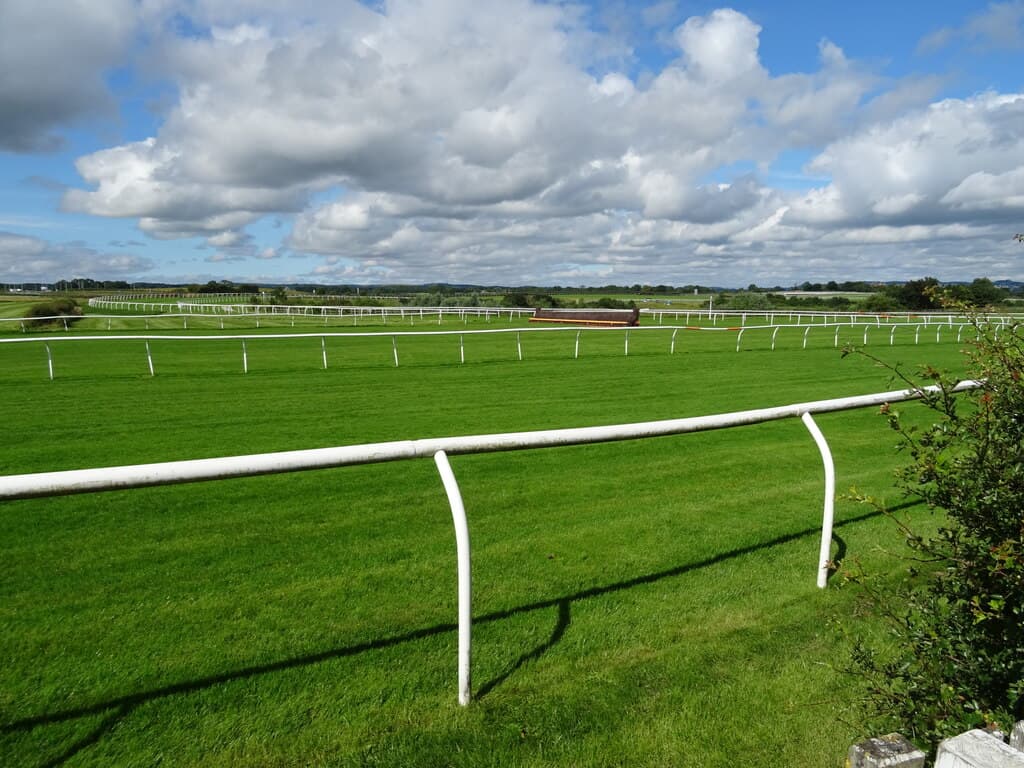
Catterick Racecourse: Complete Guide
Everything you need to know about Catterick Bridge — Yorkshire's dual-purpose venue, the Catterick Dash, and year-round flat and jumps racing.
Read more
Catterick Dash Day at Catterick: The Complete Guide
Everything you need to know about Catterick Dash Day — the north's premier sprint occasion. Race card breakdown, course specialist angles, how to get there, and what to bet.
Read more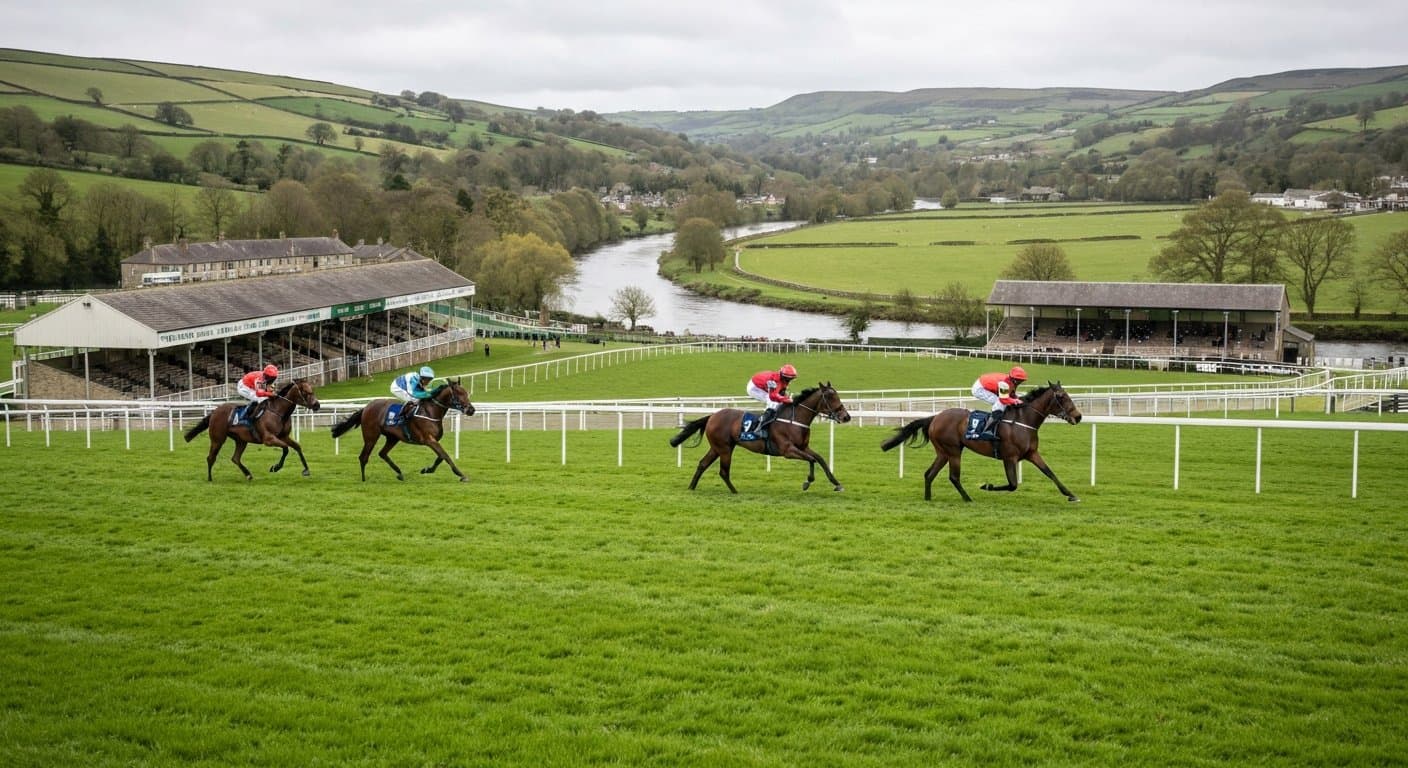
Catterick Dash: Complete Guide
Your complete guide to the Catterick Dash — history, great winners, the course, and betting angles for Catterick's signature flat race.
Read morePhotos on this page are used under Creative Commons licences. Titles, sources and licence links for each one are on our image credits page.
Research the field with the AI Race Predictor
Our model publishes calibrated win-probability estimates for UK races — a second opinion to understand a race, not tips. It's open about its record: it doesn't beat the market, and we show exactly how it does.
Work it out & learn the basics
Gamble Responsibly
Gambling should be entertaining and not seen as a way to make money. Never bet more than you can afford to lose. If you or someone you know has a gambling problem, help and support is available.