

Founder & Editor · Last reviewed 2026-03-02
Catterick is not trying to be York. That might sound like a backhanded compliment, but it is meant as real praise. Where York draws 30,000 racegoers for the Ebor, Catterick quietly gets on with its racing — dual-purpose, year-round, 5,000 capacity — and does it well enough that locals have called it "the friendly racecourse" since the 1980s. The nickname stuck because it earned it. Staff know regulars by name. Queues are short. The atmosphere is warm rather than corporate.
The course sits in the flat bottom of the Swale valley, just off the A1(M) at Junction 52, one mile northwest of Catterick village and six miles east of Richmond. It has been staging races since 1783, which makes it one of the older continuing venues in English racing, though it wears its history lightly. There is no ornate Victorian grandstand, no Grade I Listed gates. What Catterick has is an honest, functional racecourse that punches above its weight on raceday experience.
What makes Catterick distinctive as a track is the combination of sharp bends and the famous downhill five-furlong sprint course. That run — five furlongs from higher ground to the home straight — is one of the most unusual in Britain. Horses that handle camber and gradient thrive here; those that need a flat galloping track struggle. The undulating layout rewards the kind of sharp, nippy sprint horses that northern trainers specifically keep for this venue. It matters for betting. Course form at Catterick is reliable precisely because the physical demands are so specific. A horse that has won here before and returns to the same trip is a very different proposition from a horse making its debut on the track.
The flat season runs April through November. For most of that period, Catterick is a midweek staple of northern racing. The marquee event is the Catterick Dash in October — a Listed sprint over the famous five furlongs, drawing the best sprinters in the north and occasionally a raider from the south. That is the day when the grandstand fills up, the bookmakers do their best business, and the downhill sprint becomes the centre of everyone's afternoon. If you visit Catterick once on the flat, make it the Dash.
The National Hunt season runs October through April, overlapping the tail end of the flat campaign before taking over through the winter. The fences are described by jockeys as straightforward and fair. No trick fences, no awkward combinations — Catterick is a place trainers trust for early-season bumper horses and novice chasers. The North Yorkshire Grand National, staged in spring, is the other major betting event: a marathon handicap chase that draws strong local support and tends to produce dramatic finishes. On North Yorkshire Grand National day the grandstand has a different energy — more tweed, more binoculars, more serious punters leaning on the rail.
The dual-purpose nature means there is almost always something happening at Catterick, whatever time of year you visit. A mid-January NH afternoon with 400 people in the stands has its own quiet appeal — you can hear the horses breathing in the paddock, watch the jockeys clearly, and bet without fighting for a position at the rails. August flat meetings bring school-holiday families. The Dash in October draws a crowd that knows its racing.
Getting here is straightforward for anyone arriving by car. The A1(M) Junction 52 is the obvious exit whether you are travelling from the south or the north, and brown tourist signs direct you to Catterick Bridge. On-site parking is available and plentiful for most meetings. For those arriving by rail, the nearest mainline station is Darlington on the East Coast Main Line — about 15 miles east, served by trains from London Kings Cross in approximately two hours fifteen minutes. Richmond, six miles west of the course, runs a free shuttle bus on race days. Check the course website for times and pick-up points; the shuttle service is the smart option if you want to combine the racecourse with a day out in the town.
Richmond is the other reason to make the trip north. Six miles from the course along the A6108, it is one of the finest small market towns in Yorkshire. The cobbled marketplace, the Norman castle above the River Swale, the Georgian architecture on every corner — it rewards an hour or two before racing or after. The Kings Head and The Unicorn on the Market Place are both solid for a pre-race lunch. If you are coming from the south, Richmond adds real substance to the day and turns a racecourse visit into a proper North Yorkshire outing.
To the west, the Yorkshire Dales National Park begins fifteen miles from Catterick. Wensleydale and Swaledale are both within comfortable driving range for a morning before afternoon racing. Middleham, ten miles west, is the training centre where some of the best horses in the north are prepared — there is something fitting about watching a morning string work at Middleham and then backing the same stable's runners at Catterick in the afternoon. The North Yorkshire Moors are twenty miles east. The area around Junction 52 is not short of things to do.
Admission is fair and family-friendly. Under-18s are admitted free with a paying adult, which makes a Catterick afternoon a realistic family outing. The dual-enclosure system — Premier and Tattersalls (general admission) — keeps it simple. Jockey Club Venues manages the course as part of its portfolio that includes Newmarket and Cheltenham, which means the facilities are well-maintained even at a venue of this modest size.
Quick decision guide:
- Go on: Catterick Dash day in October — the course at its best, Listed sprint, good atmosphere
- Go on: First NH card of the winter (October/November) — fresh-season energy, good value
- Worth combining with: Richmond town (6 miles) — castle, marketplace, The Unicorn or Kings Head for lunch
- Worth combining with: Middleham Gallops or Wensleydale if staying overnight in the Dales
- Family tick: Yes — under-18s free, relaxed atmosphere, no dress code pressure
- Best value: Tattersalls general admission gives excellent racing access at a fair price
- Skip if: You need a glamour event or a large metropolitan racecourse atmosphere
Getting to Catterick
Getting to Catterick Bridge Racecourse
Catterick Bridge Racecourse sits at postcode DL10 7PE, one mile northwest of Catterick village in North Yorkshire. The course is right on the A1 corridor, which makes it one of the most accessible racecourses in the north of England for anyone arriving by car. Public transport requires a little planning, but it is doable — and once you factor in the free shuttle from Richmond, the train option becomes truly reasonable.
By Car
The car is the easiest choice. From both north and south, exit the A1(M) at Junction 52 and follow the brown tourist signs to Catterick Bridge. The signs are well-placed and you will not miss the turn. On-site parking is available and free with most ticket packages. The car park is close to the main entrance — no long walk across a field.
From Darlington, the drive is about 15 miles and takes roughly 25 minutes. Head west on the A67 through Barton, then join the A6136 south to the course. From Richmond, it is six miles along the A6108 heading east — approximately 12 minutes on a clear run. From Northallerton, take the A684 west and then pick up the B1263, which brings you in from the south; that route is 13 miles and takes about 20 minutes.
For the Catterick Dash (October) and the North Yorkshire Grand National, arrive at least 30 minutes before the first race. Both are busy fixtures and the car park fills faster than you might expect. Scotch Corner Services sits four miles from the course at the junction of the A1 and the A66 — useful for fuel or a coffee if you are coming from the North East or the A66 corridor.
By Rail and Shuttle
Catterick no longer has its own railway station. The nearest mainline station is Darlington, approximately 15 miles to the east. Darlington is on the East Coast Main Line, served by LNER and CrossCountry services from London Kings Cross (approximately two hours fifteen minutes), Edinburgh (approximately two hours), Leeds (around 50 minutes), and Newcastle (around 20 minutes). It is a well-connected station with frequent services.
From Darlington station, take a local bus or taxi toward Richmond. Richmond itself is six miles west of the racecourse — and the town runs a free shuttle bus to the course on race days. Check the course website at catterickbridge.co.uk for the shuttle timetable, as times and pick-up points vary by fixture. The shuttle drops racegoers directly at the course entrance and runs a return service after the last race.
If you prefer a taxi from Darlington directly to the course, expect to pay in the region of £20 to £25 each way. Pre-book a return if you are doing this on a busy fixture day — taxis get snapped up quickly after the last race.
From Key Cities
Travelling from York, the most direct route is A19 north then join the A1(M) northbound; Catterick is approximately 40 miles from York and takes about 45 minutes depending on traffic. From Leeds, join the A1(M) northbound at Wetherby and drive north — around 50 miles, roughly 55 minutes. From Newcastle, the A1 south to Junction 52 is 50 miles and takes about 50 minutes.
For visitors from the south using the train, Leeds or York are reasonable change points. From Leeds, CrossCountry or Northern services run to Darlington. From York, LNER services to Darlington are very fast — the journey is around 25 minutes.
Combining with the Area
Catterick's location makes it ideal for a wider North Yorkshire day. The obvious first stop is Richmond, six miles west. The town deserves at least an hour: the Norman castle (English Heritage, free for members) sits above the River Swale, the cobbled marketplace has good cafes and independent shops, and The Unicorn Hotel on the Market Place is a well-regarded Georgian coaching inn. The Kings Head on the square is popular with locals and serves food through the afternoon.
Middleham is ten miles west of the course along the A6108 and through Richmond. This is the training centre where horses trained by Mark Johnston, Karl Burke, and other northern trainers prepare for the flat season. Strings typically work on the Middleham gallops between seven and nine in the morning — if you are staying overnight in the area, watching the horses work is worth getting up early for. The public can observe from the road.
Beyond Middleham, the Yorkshire Dales National Park opens up. Wensleydale and Swaledale are both within 20 miles. The North Yorkshire Moors are 20 miles east. This is good country. A two-day trip combining an afternoon at Catterick with a night in Wensleydale or Richmond is a very agreeable way to spend a long weekend.
Practical Notes
The course is compact — once you have parked or arrived on the shuttle, everything is within easy walking distance. There is no long trek from the car park to the grandstand. For fixture dates and booking, the course website is the best source. Jockey Club Venues manages Catterick, so the booking infrastructure is straightforward.
What to Wear
What to Wear at Catterick
Catterick has no strict dress code. That is not a caveat — it is a feature. One of the things that earns it the "friendly racecourse" nickname is that it does not make you feel underdressed or overdressed for arriving in sensible clothes. The atmosphere at Catterick is welcoming and unpretentious, and the dress expectations reflect that across both enclosures.
General Approach
Smart casual is the standard for general admission. That means a clean shirt or blouse, decent jeans or trousers, and shoes that are not sports trainers. You will see a wide range on any raceday — from people who have made an effort in suits and dresses to people who have come straight from work in smart-casual office clothes. Neither end of that spectrum looks out of place. The crowd at Catterick is North Yorkshire through and through: practical, unpretentious, and not especially interested in what you are wearing.
That said, there is a difference between "no strict code" and "anything goes." General admission is comfortably smart casual. The Premier enclosure is marginally smarter — a collared shirt, smart jeans or trousers, and proper shoes are appropriate. Hooded tops and sports trainers may attract a quiet word on busier days in the Premier section.
Catterick Dash Day (October)
The Dash in October is the course's biggest flat day and some racegoers treat it as an occasion. You will see more dresses, smarter suits, and effort generally. Smart casual remains perfectly fine, but if you are going for the atmosphere and want to dress up a little, this is the day to do it. The weather in North Yorkshire in October can be crisp — a good jacket is useful whether you are dressing up or not.
Flat Season (April to November)
Summer flat meetings at Catterick can catch you out. The course sits in the Swale valley and is exposed on all sides. Even on warm days, a light jacket is worth having — the wind picks up in the afternoons and the hillside location means it feels cooler than the forecast. Sunscreen is worth applying on truly sunny days, as the viewing areas are open and you can spend a lot of time outdoors.
Spring fixtures in April can still be cold. Northern England in April has not read the seasonal memo. Layers are the sensible approach — a shirt under a jacket you can remove if it warms up. The transition from the flat season's start in April to the warmer months in June and July is gradual, and the early flat meetings sit climatically closer to winter than summer.
National Hunt Season (October to April)
This is where the practical advice matters most. NH meetings at Catterick from November onward can be truly cold, wet, and windy. A December or January fixture on the Swale valley floor, with the wind coming off the moors to the east, is not the place for a light coat and thin soles. Dress for the weather, not the occasion.
The essentials for NH visits from November to February: a proper waterproof coat (not just water-resistant, but waterproof), warm layers underneath, a hat and gloves, and footwear that keeps your feet dry. Wellies are not out of place at NH meetings and are entirely sensible if the ground is soft. The open viewing areas offer no shelter from wind or rain. Spectators who arrive under-dressed for December meetings at Catterick do not enjoy themselves. It is a simple equation.
Waterproof boots — walking boots or ankle boots with a waterproof membrane — are the practical midpoint between smart and functional for winter NH meetings. They keep your feet warm and dry across the open areas without looking like you have come straight from a farm.
Footwear Specific Advice
Summer flat meetings: comfortable flat shoes work well. Heels are fine in the Premier enclosure but impractical on the open grass areas around the course. The ground is generally firm in summer, so there is no risk of sinking in, but the walking across uneven ground makes flat shoes the smarter choice.
Winter NH meetings: waterproof boots. The areas around the course, including the approach to the paddock and the rail-side viewing areas, can be muddy when the going is soft or heavy. Proper waterproof footwear is the single most important item to get right for a winter visit.
Spring and autumn: somewhere between the two. Check the forecast. April and October at Catterick can be fine and cold, or wet and miserable. A pair of boots you can walk in comfortably covers most scenarios.
A Practical Summary
The overriding principle at Catterick is comfort over formality. Dress for the weather, aim for smart casual in both enclosures, and bring a layer you can add or remove. No one at Catterick is inspecting your outfit. They are watching the racing.
Enclosures & Viewing
Enclosures and Viewing at Catterick
Catterick runs two main enclosures: Premier and Tattersalls (general admission). With a total capacity of around 5,000, the course is compact enough that neither enclosure leaves you feeling distant from the action. The lack of a vast stadium experience is, paradoxically, part of the appeal — you are close to the horses, the jockeys, and the rails throughout the afternoon.
Premier Enclosure
The Premier enclosure gives you access to the main grandstand, the principal restaurant and bar facilities, and the best covered viewing of the home straight. The grandstand, which dates to 1906 in its original framework though then modernised, provides a clear view of the final two furlongs and the finish line. The covered seating here is the most sheltered spot on the course for winter NH meetings — an important consideration from November through February.
From the Premier grandstand, you can see the horses rounding the final bend and entering the home straight. On the flat course this is the critical moment — Catterick's sharp final turn filters out horses that cannot handle tight bends under pressure. Watching where horses meet traffic or get hampered on that bend is one of the betting tells that experienced Catterick racegoers use. The grandstand gives you a clear, elevated view of exactly that section.
Access to the winners' enclosure is straightforward from the Premier side. The enclosure sits centrally and is accessible, popular between races for watching the connections and horses return. On the Catterick Dash day, the winners' enclosure draws a larger crowd than usual as connections celebrate what is the course's flagship flat prize.
Tattersalls (General Admission)
Tattersalls offers excellent value and a relaxed atmosphere. The track view from general admission is good — the compact nature of the course means you are never pushed to a distant corner with a poor sightline. Bookmakers operate in the Tattersalls area, and the bookmakers' row at Catterick is a lively part of the raceday experience. This is where the serious betting happens in person, with runners writing up odds on the boards and the market shifting race by race.
For those primarily interested in the betting rather than the hospitality, Tattersalls is often the better choice. You are closer to the bookmakers, the atmosphere is less formal, and the value is strong. On quiet midweek meetings, Tattersalls is truly spacious — room to walk, find a good spot by the rail, and watch the paddock without pressure.
Watching the Downhill Five-Furlong Sprint
The course's most distinctive feature — the downhill five-furlong sprint — deserves its own viewing strategy. The start is on higher ground, and the field runs downhill and around a slight right-hand bend before straightening up for the finish. From the grandstand, you get a clear view of the field as it comes into the straight and charges for the line. This is the best position for watching the sprint races, including the Catterick Dash.
If you want to see the start and the early part of the sprint, walk to the back of the course behind the grandstand. The start of the five-furlong course is elevated and visible from the far side of the track — you can watch the horses break and begin their descent before the grandstand area picks up the action in the final two furlongs. On Dash day, some racegoers split their time between both positions, watching early from one spot and repositioning for the finish.
The Paddock
The paddock at Catterick is central and accessible from both enclosures. On most meetings, the queues to watch the pre-race parade are modest and you can get close to the horses without difficulty. The compact paddock means you are near the horses and the jockeys — useful for assessing condition, temperament, and sweating up before placing a bet.
On the North Yorkshire Grand National day, the paddock before the big race takes on a different character. The NH horses entered for a marathon handicap chase — typically run over three and a half miles — are a different physical type from the flat sprinters: bigger, more powerful, often with notable jumping scars on their legs. The paddock inspection on the day of a major NH race is one of the highlights of the Catterick calendar.
Viewing the NH Fences
For jumps meetings, position yourself where you can see both a fence in the home straight and the run-in. The fences at Catterick are fair and straightforward — no trick angles — but the drama of a horse making a mistake at the final fence and recovering is best seen from the home straight area. The grandstand gives you the finish; walking to the inner rail on the far side of the course gives you the fence action.
The compact 5,000-person capacity means that even on busy days — the Dash, the North Yorkshire Grand National — you can move around the course between races and find different positions. This is one of the practical advantages of a smaller venue over somewhere like Cheltenham or York, where repositioning between races takes considerably more effort.
Food & Drink
Food and Drink at Catterick
Catterick does honest racecourse catering. It does not claim to be a food destination — it is a racing venue in North Yorkshire, and the food and drink offer reflects that straightforwardly. Pies, burgers, fish and chips, hot drinks, a solid bar. What it lacks in culinary ambition it makes up for in practicality. Everything is easy to find, the queues are manageable on most days, and the quality is consistent.
On-Course Bars
The main bar in the grandstand serves a range of drinks: lager, ale, wine, spirits, soft drinks. Timothy Taylor's Landlord is a reliable presence — the Keighley-brewed real ale is a staple at Yorkshire racecourses and suits a cold afternoon well. On summer flat days, there is no shortage of people drinking in the open areas between races. On winter NH days, the bars are warmer places to be, and a hot drink or a whisky between races becomes considerably more appealing.
Bar prices are at standard racecourse levels. Expect to pay around £5 to £6 for a pint, £6 to £7 for a glass of wine. This is consistent with what you will pay at other Yorkshire venues and not egregiously expensive given the setting.
Food Outlets
The food outlets around the course serve the standard racecourse range: Yorkshire pies (including the meat-and-potato variety that is an institution in the county), burgers, hot dogs, fish and chips. On the Catterick Dash day, when the crowd is larger, the catering programme expands accordingly. The food quality is reliable rather than exceptional — warm pies, decent chips, nothing that will disappoint if you manage expectations correctly.
Hot drinks are worth noting. On NH winter meetings in December and January, a good hot chocolate or a strong tea from the track-side outlets becomes a significant part of the afternoon. Bring cash if you prefer — not all outlets accept cards, and the Catterick experience still has a pleasingly old-fashioned, cash-in-hand feel in some areas.
The Restaurant
The course restaurant is available with advance booking and operates on the bigger fixtures. It offers a step up from the general catering, with table service and a more considered menu. Groups planning the Catterick Dash or the North Yorkshire Grand National should book the restaurant well in advance — it fills quickly for those two fixtures. For standard midweek meetings, availability is less pressured.
Jockey Club Venues manages the hospitality, so the booking infrastructure is professional and packages are clearly laid out on the course website. If you are organising a group outing, restaurant packages that include admission can represent reasonable value compared to buying separately.
Before the Races: Richmond
Richmond, six miles west of the course along the A6108, is the natural choice for a proper pre-race meal. The town has a good range of pubs and cafes. The Unicorn Hotel on the Market Place is a Georgian coaching inn with a solid pub menu and a proper bar. The Kings Head, also on the Market Place, is popular with locals and serves food through the afternoon. Both are a 12-minute drive from the course, which gives you time for lunch and a walk before the shuttle (if using) or the drive to Catterick.
If you are coming by train via Darlington and picking up the Richmond shuttle, the timing works in your favour. Arriving in Richmond an hour before the shuttle departs gives you enough time for a decent pub lunch and a look at the castle before heading to the course.
Scotch Corner and the A1
Scotch Corner is four miles from Catterick at the A1/A66 junction. The service area there has the usual motorway fare — useful for a coffee on the way if you are coming from the north or east. It is not a destination in itself, but if you are driving and need fuel or a coffee stop, it is conveniently placed.
Post-Race
After racing, Richmond is again the obvious option for a meal or a drink to finish the day. The town has a good range of pubs and the evening atmosphere in the market square is pleasant. Catterick village itself has limited evening options, and the area around the bridge does not have much in the way of restaurants. Most racegoers either head into Richmond or drive back toward the A1 and stop en route.
For those heading south on the A1, there are services at Wetherby and Scotch Corner. For anyone making a longer trip of it and staying in the area, Wensleydale has country pubs and restaurants that reward the detour west into the Dales.
Tips & FAQ
Tips and FAQ for Catterick
Knowing a few practical details in advance turns a decent Catterick day into a very good one. The course is small enough that everything is manageable, but the busier fixtures — the Catterick Dash in October, the North Yorkshire Grand National in spring — have specific quirks worth knowing about. Here is what you need.
When to Arrive
For the Catterick Dash and the North Yorkshire Grand National, arrive 30 minutes before the first race at an absolute minimum. On these two fixtures the car park fills noticeably, the best viewing positions on the grandstand are claimed early, and the pre-race paddock builds a crowd. Arriving with an hour to spare gives you time to park, orient yourself, study the form, and watch the first race from a good position without rushing.
For standard midweek meetings — the bread-and-butter flat cards in June or July, quiet NH meetings in January — 15 to 20 minutes before first race is enough. The course is compact and you can reach any position in a few minutes. There is no sprawling infrastructure to navigate.
Best Viewing Positions
The upper tier of the grandstand is the best position for watching the home straight and the downhill sprint finish. From here, you can see the field rounding the final bend and coming down the slope — the critical moment on the flat course where position and balance determine the outcome. This spot also gives a good view of the winner's enclosure below.
If you want to watch the fences on a jumps day, walk to the inner rail on the home straight and position by one of the fences in the straight. You can then move to the finish area as the race enters its final stages. The Catterick course is compact enough to make this repositioning comfortable between races.
Middleham Gallops
If you are in the Catterick area on a non-race day, or arriving early on a day before afternoon racing, Middleham is ten miles west and worth a detour. Strings from the major Middleham yards — trainers including Mark Johnston's operation (now run by son Charlie Johnston) and Karl Burke's string — work on the open gallops above the town. The horses go out between seven and nine in the morning. You can watch from the public road. Seeing a string of 20 horses working at a canter on the upland gallops, with Middleham Castle below and Wensleydale beyond, is a properly atmospheric experience and connects the morning preparation to the afternoon racing in a satisfying way.
Richmond: What to Do
Richmond Castle is English Heritage and is one mile east of the town centre, above the Swale. Entry costs approximately £8 for non-members, free for English Heritage members. Allow 30 to 45 minutes for a proper visit including the walls and keep. The castle dates to 1071, making it one of the oldest Norman castles in England with its original keep largely intact.
The cobbled Market Place in the town centre is worth walking around. Georgian buildings line three sides. The Saturday market is the best day to visit if your trip allows it. The Greens of Richmond restaurant is a well-regarded option for something more than pub food. For a drink, both The Unicorn Hotel and The Kings Head on the Market Place are reliable and popular with racegoers.
Family Visiting
Under-18s are admitted free at Catterick with a paying adult. This is the Jockey Club's national policy and applies year-round at Catterick. The relaxed atmosphere and small scale make Catterick one of the better introductions to racing for children — there is no overwhelming crowd, the horses are visible and accessible in the paddock, and the energy is warm rather than frantic.
For younger children, the NH meetings have a certain excitement: the jumping is visible, the crowds are animated, and the return of a horse over the last fence with a clear lead is something that holds the attention of most eight or nine year olds. The flat sprint course is harder to explain to children but the downhill five-furlong finish — horses running visibly downhill — is at least visually dramatic.
Is Catterick Worth a Special Trip?
Catterick is not Goodwood or York. It does not have their settings, their prestige, or their famous race programmes. But as part of a North Yorkshire trip combining Richmond, Middleham, and the Dales, it absolutely earns its place. The Catterick Dash in October is a proper Listed race on one of England's most unusual sprint tracks, and watching it from the grandstand with the autumn light across the Swale valley is one of the better ways to spend a northern October afternoon.
Frequently Asked Questions
Is there a free shuttle from Richmond? Yes, Richmond operates a free shuttle to the course on race days. Check catterickbridge.co.uk for specific timetables, as they vary by fixture.
Where is the nearest train station? Darlington, approximately 15 miles east on the East Coast Main Line. Taxis to the course cost approximately £20 to £25.
How far is parking from the grandstand? Very close — a couple of minutes' walk. The course is compact and the car park is adjacent to the main facilities.
Does the Catterick Dash sell out? General admission rarely sells out, but the restaurant and hospitality packages for the Dash do fill up. Book hospitality at least a few weeks in advance.
What is the North Yorkshire Grand National? A marathon NH handicap chase run over the spring jumps season. It is Catterick's equivalent of a regional Grand National — a tough, competitive handicap that draws good local support. See the dedicated guide for full details.
Is there disabled access? Yes. Contact the course on 01748 811478 in advance to arrange parking, access, and viewing positions. The course is compact and generally accessible, though some areas are more suitable than others.
Share this article
More about this racecourse
All Catterick guides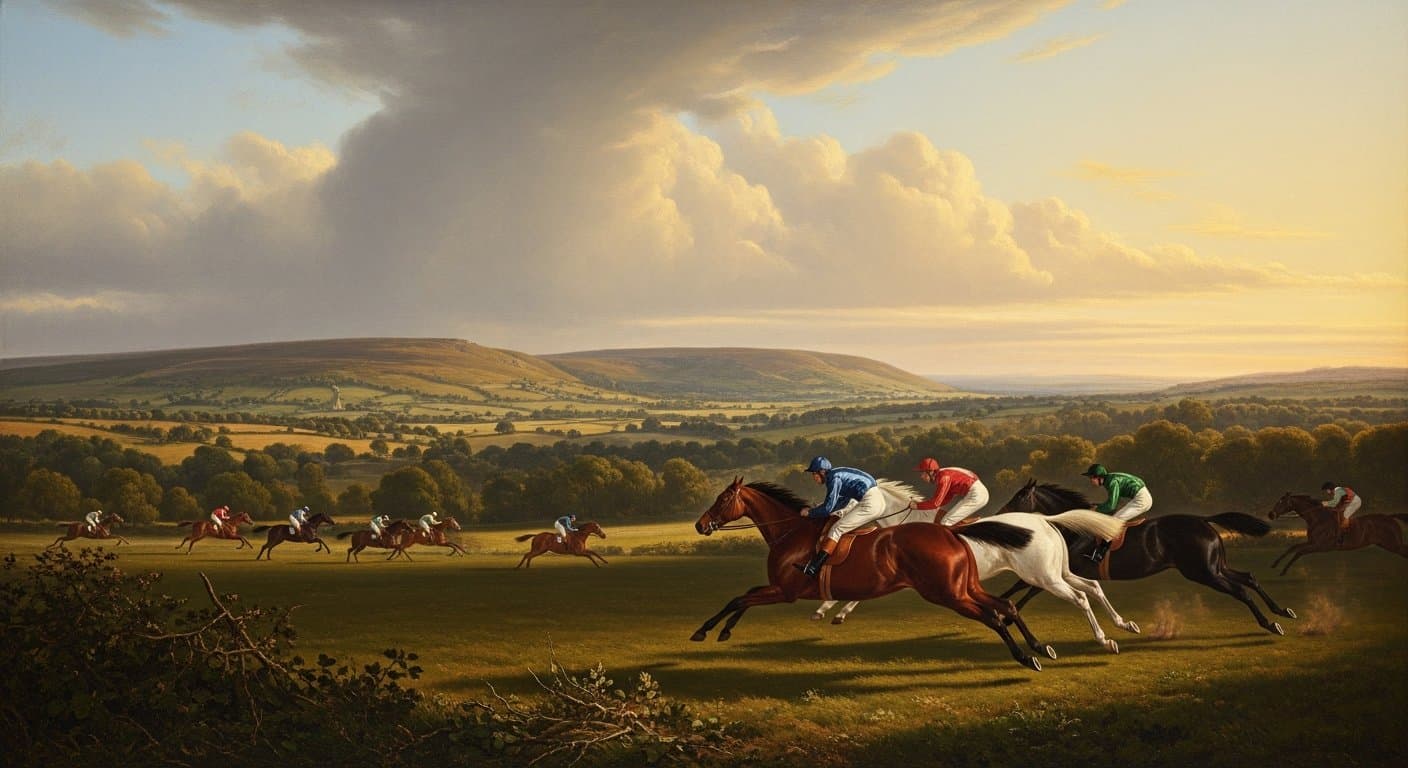
Catterick Racing Festival: Your Complete Guide
Catterick Bridge stages some of the most competitive regional racing in Britain. Here's your guide to the Catterick festival meetings and what makes this Yorkshire track special.
Read more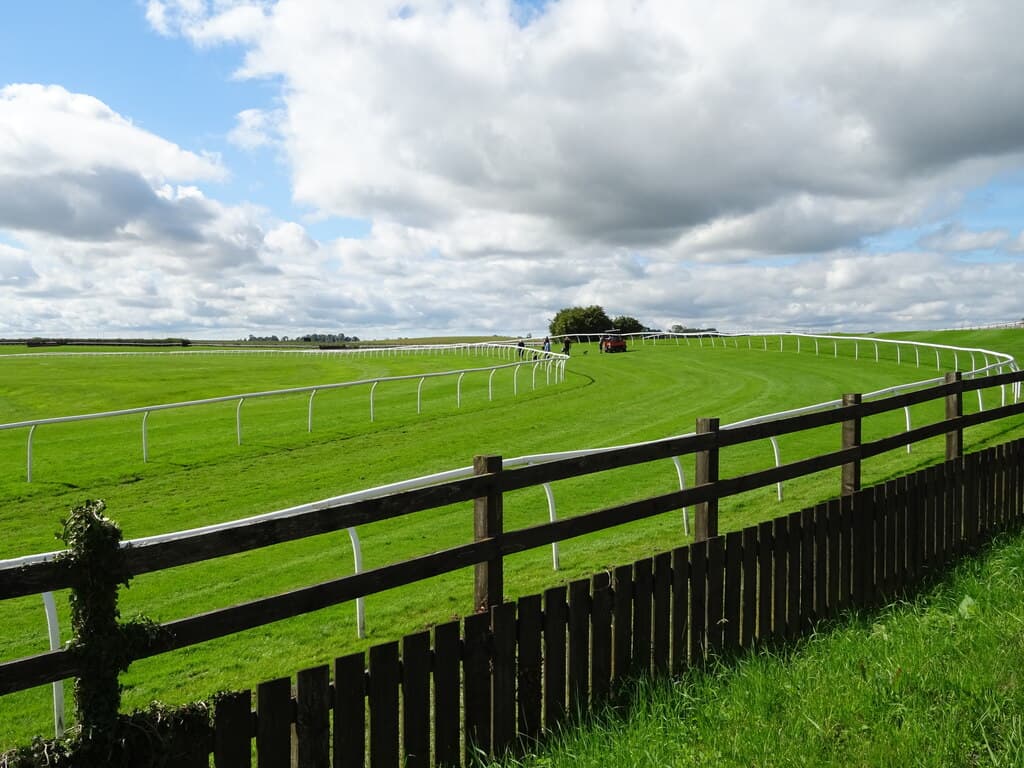
The History of Catterick Racecourse
Over 240 years of racing at Catterick Bridge — from the first meeting in 1783 to Yorkshire's busiest dual-purpose venue.
Read more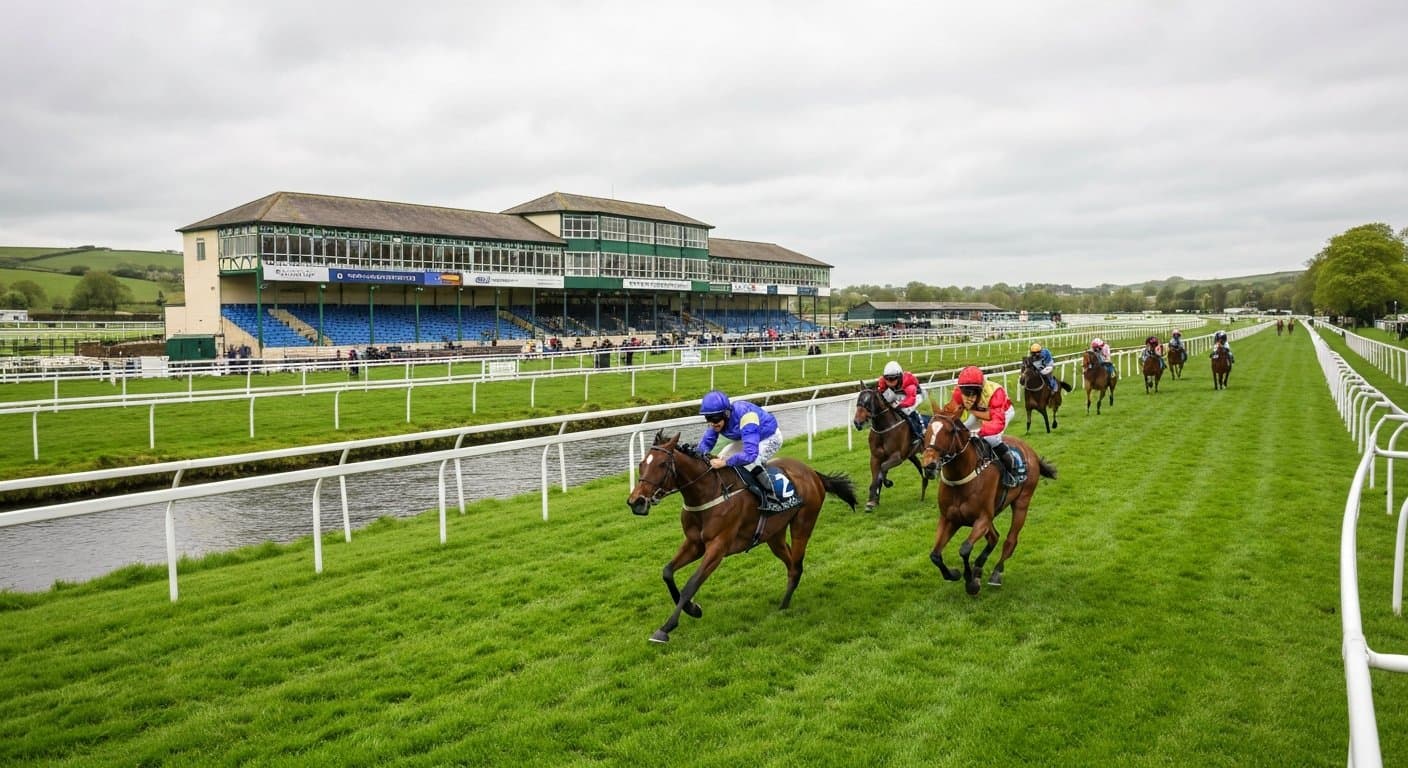
Catterick Jumps: Sharp Track, 8 Fences & Winning Tips
Master Catterick's tricky National Hunt layout with our insider guide to the sharp bends, undulating terrain and fence placement that decides races.
Read morePhotos on this page are used under Creative Commons licences. Titles, sources and licence links for each one are on our image credits page.
Gamble Responsibly
Gambling should be entertaining and not seen as a way to make money. Never bet more than you can afford to lose. If you or someone you know has a gambling problem, help and support is available.