
Founder & Editor · Last reviewed 2026-04-04
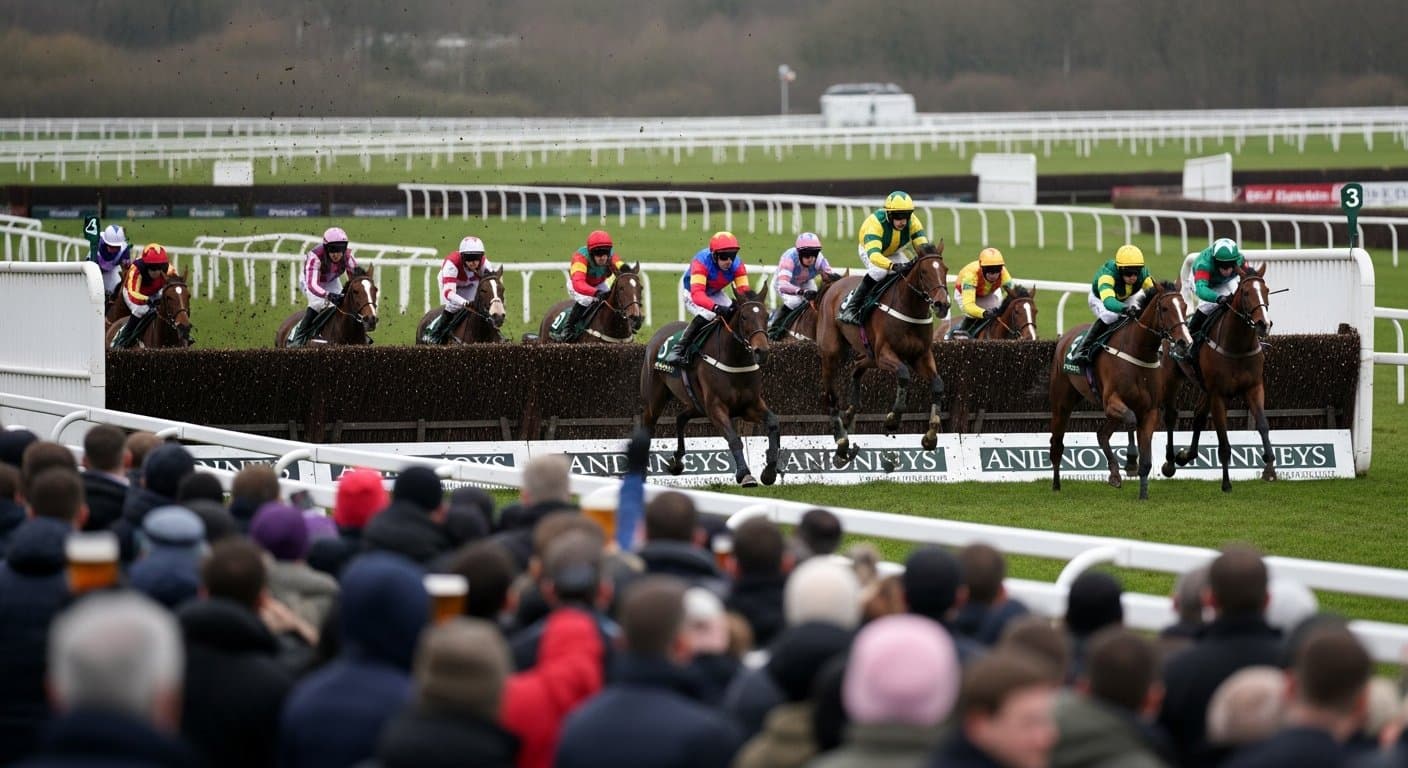
Every January, Catterick stages its biggest jump racing day — and the centrepiece is a three-and-a-half-mile handicap chase that tests everything the sport demands of staying chasers. The North Yorkshire Grand National is run over three miles and six furlongs, negotiating 24 fences and two and a half circuits of the tight left-handed track, crossing the finish line three times before the winning post finally counts. It is Catterick's longest and most challenging race, and the day that surrounds it is the course's winter flagship.
The race itself began in 2003, replacing the old North Yorkshire Handicap Chase which had been run at the track for decades. Its predecessor was won, in 1972, by Red Rum — that fact alone gives the North Yorkshire Grand National a historical thread worth pulling. The race has attracted runners from leading northern yards throughout its existence, with trainers Sue Smith, Phil Kirby, and their peers regularly targeting it with their best staying chasers.
Catterick's compact, sharp circuit changes its character between flat and jumps seasons. In the summer and autumn it is a sprinters' track — the Catterick Dash tells the story of what the course does best on the flat, rewarding quick-actioned front-runners over five furlongs. In January it becomes something altogether different: a real stamina examination, where the tight bends and undulating home straight are navigated two and a half times over fences, testing not just a horse's engine but its jumping accuracy and its ability to maintain concentration across a very long distance.
The winning owner on North Yorkshire Grand National day receives the Denys Smith Challenge Trophy, named after the great northern trainer whose 146 winners at Catterick remain a course record, and who trained Red Alligator to win the 1968 Aintree Grand National. That connection to Aintree history gives the day a particular resonance, linking a Class 3 handicap chase at a North Yorkshire track to the most famous horse race in the world.
This guide covers the races, the atmosphere, everything you need to know about attending, and how to approach the betting.
Bet on Catterick
Place your bets on Catterick races with a trusted bookmaker.

Promo code BETFRED50. New customers only. Register, deposit with a Debit Card, and place a first bet of £10+ at Evens (2.0)+ on Sports, to be settled within 7 days, to get £30 in Sports Free Bets and £20 in Bet Builder Free Bets within 24 hours of settlement. 7-day expiry. Eligibility & payment exclusions apply. Full T&Cs apply. Take Time to Think. BeGambleAware.org. 18+. Full T&Cs.

Promo code R30. New UK customers only, 18+. Register, deposit £10 or more, then place a £10 single cash bet at odds of 1/2 (1.5) or greater on any sports market (excluding Virtuals). Once the qualifying bet settles you get £30 in Free Bets (3 x £10) — the qualifying bet can win or lose. Free Bets are valid on any sports market excluding Virtuals, expire in 7 days, are non-withdrawable and must be used in full. Excluded deposit methods apply (including PayPal, Apple Pay, Skrill and NETELLER). Named bets such as Lucky 15 do not qualify. If you cash out the qualifying bet, or it is voided, you are no longer eligible for the offer. Ends 31.12.26. Full T&Cs apply. Please gamble responsibly. BeGambleAware.org. 18+. Full T&Cs.

Promo code BET40GET20. New UK customers, 18+. Register with the code and place a first bet of £40 or more at Evens (2.0) or greater. Receive 2 × £10 free bets: the first credited automatically once the qualifying bet settles, the second 24 hours later. Free bets must be placed at minimum odds of 4/1 (5.0), expire 24 hours after credit, and the free-bet stake is not returned with winnings. Debit card deposits only. Take Time to Think. BeGambleAware.org. 18+. T&Cs apply. Full T&Cs.

50% of your first-day net losses refunded as a free bet, capped at £25. New UK customers aged 18+ only. To qualify, deposit and place a first bet of £10 or more on any sport at minimum odds of evens (2.00), then place at least two further bets on different events, each worth at least 50% of your largest bet, all at evens (2.00) or greater. Losses are counted from your first settled bet until 23:59 the same day. Place a qualifying £10+ bet and you are guaranteed at least a £5 free bet. Bets placed at SP, void bets, cashed-out bets and bets struck with free bets do not count towards the offer. The free bet is credited the day after your qualifying bets settle and must be used within 7 days, after which it expires. It can be used at odds from 1/4 (1.25) up to 250/1 on singles and straight accumulators, but not on Trixie, Patent or Yankee style multiples. Free-bet stake is not returned with winnings. One offer per person, household, address, IP address and device. E-wallet deposits may not qualify, so check the cashier before depositing. Customers registered with GAMSTOP cannot claim. KYC identity verification must be completed before the free bet is credited. Take Time to Think. BeGambleAware.org. 18+. T&Cs apply. Full T&Cs.

New customers, 18+. Choose the sports bonus at sign-up, make a first deposit and receive a 100% bonus up to £50 in your Sports Bonus balance. To convert the bonus to cash, wager it 10x within 30 days. Single bets below Evens (2.00) do not qualify; accumulators do not qualify if any selection is below 1/2 (1.50). Virtual Sports, voided, cancelled, drawn, cashed-out and free-bet wagers do not count towards wagering. Only the first settled bet per event counts. Withdrawing before the wagering requirement is met forfeits the bonus balance including bonus winnings. Real-money funds are used before bonus funds. Deposits via Skrill or Neteller are not eligible. Not valid in conjunction with other promotions. Odds, bet and payment limits apply. 10bet general and promotion T&Cs apply. BeGambleAware.org. 18+. Full T&Cs.

New customers in Great Britain and Republic of Ireland, 18+. Place a £10 fixed-odds qualifying bet at minimum odds of 1/2 (1.50) — single or each-way (only the win part counts), pre-event or in-play, not cashed out early, within 28 days of opening the account. Receive up to £60 in bonuses credited over three days: 3 × £10 fixed-odds free bets (the first on settlement, then 24 and 48 hours later) plus 3 × £5 Total Goals FOOTBALL spread bets, 3 × £5 racing Winning Favourites spread bets and a £1 racing Race Index spread bet (the spread bets need a full spread-betting account). Free-bet stakes not returned with winnings; free bets valid 28 days from issue. IMPORTANT: the £5 credits are SPREAD bets — sports spread betting carries the risk that losses can exceed your stake. Sports spread-betting customers do not have Financial Ombudsman or FSCS recourse. Take Time to Think. BeGambleAware.org. 18+. T&Cs apply. Full T&Cs.

Promo code WELCOME15, entered under My Bonuses after registering. New UK customers, 18+. Place a first qualifying bet of at least £10 from your cash balance at odds of evens (2.0) or greater within 7 days of opening the account. Once the qualifying bet fully settles you receive £15 in free bets, credited as 3 x £5 tokens with set uses: one £5 accumulator free bet (minimum 4 legs, each leg at 2/5 or bigger), one £5 sports free bet (any market at evens or bigger) and one £5 Sub Cover free bet (selected football player markets at evens or bigger). Free-bet stakes are not returned with winnings. Free bets expire 7 days after they are credited. Void, cashed-out and partially cashed-out bets do not qualify. One offer per customer. Confirm the current terms on BetGoodwin's own welcome-offer page before claiming. Take Time to Think. BeGambleAware.org. 18+. T&Cs apply. Full T&Cs.

New UK customers, 18+. Minimum deposit £10. Place a £10 qualifying single at minimum odds of 1/2 (1.50), settled within 14 days. Receive £30 in free bets (stake not returned), split £20 for sportsbook use (2 x £10) and £10 for Bet Builder only (2 x £5); Bet Builder does not cover horse racing. Free bets must be accepted within 7 days and expire 7 days after acceptance. No promo code required. Best Odds Guaranteed on UK & Irish racing, subject to having staked over £25 in the previous seven days. Operated by LiveScore Betting and Gaming (Gibraltar) Ltd, UKGC 56859. Confirm the current terms on LiveScore Bet's own promotions page before claiming. Take Time to Think. BeGambleAware.org. 18+. T&Cs apply. Full T&Cs.
18+. BeGambleAware.org
The Races
North Yorkshire Grand National day at Catterick is a full jump racing programme, typically featuring six or seven races across the afternoon. The feature race runs in the middle of the card, giving it prominence without leaving the day feeling like an afterthought before or after.
The North Yorkshire Grand National Handicap Chase (3m 6f)
Prize money: approximately £26,000. Class 3. This is the headline race, run over three miles and six furlongs with 24 fences — Catterick's longest race by a considerable margin. Horses complete two and a half circuits of the left-handed track, crossing the finish line three times before the final, decisive pass. That unusual course configuration means race-reading becomes critical: horses who tire in the second circuit and lose their jumping rhythm can lose enormous ground, while those who handle the repeated encounters with the home straight bends tend to run creditably throughout.
The field size varies but typically attracts 12 to 16 runners. The race is a handicap, meaning horses carry adjusted weights based on their official ratings, and form can be difficult to assess across the full distance and these specific conditions. Northern-trained horses dominate the entries — Catterick in January is not a meeting that tends to attract raiders from the south — and familiarity with sharp, left-handed courses is a real advantage.
Sue Smith's yard near Bingley has a particularly strong record in the race, with four wins including back-to-back victories in 2018 and 2019. Phil Kirby trained the winner in 2020 and 2023. Both are Yorkshire-based yards who understand Catterick's demands intimately and target the race deliberately.
The winning time — typically around eight and a half minutes for the trip on normal ground — is slower than comparable distances at Cheltenham or Newbury because Catterick's configuration requires horses to negotiate tight bends repeatedly. Pure straight-line speed matters less than jumping accuracy, track sense, and real staying ability.
The Supporting Handicap Chases
The card on North Yorkshire Grand National day typically includes two or three other handicap chases at distances ranging from two miles to three miles. These serve as appetisers and epilogues to the feature race, drawing similar types of horse from northern yards. The two-mile chase on the card gives faster types an opportunity to shine on the day, while the three-mile contest bridges the gap between shorter chasing distances and the extreme stamina test of the feature.
The Hurdle Races
January at Catterick means soft or heavy ground in most years, and the hurdle races on the day tend to be competitive novice or handicap events drawing horses who are either new to jumping or experienced enough to handle variable conditions. The novice hurdle on the card is often worth watching for longer-term form purposes — Catterick's hurdle track uses the same left-handed configuration as the chase track, and hurdle winners here often convert well to chasing in subsequent seasons.
The Bumper
Most North Yorkshire Grand National day cards include a National Hunt flat race — a bumper — which provides an opportunity for young, unraced horses to have their first racecourse experience. These races occasionally throw up future stars, and watching bumpers at small, testing tracks like Catterick in January gives a better impression of real ability than bumpers run on flat, galloping courses in good ground.
The Atmosphere
Catterick in January is unambiguously a winter racing experience. The course sits in the Vale of Mowbray between the North Yorkshire Moors and the Yorkshire Dales, and by early January the landscape has the stripped-back quality of the English north in its hardest season. The trees along the course boundary are bare. The ground in the paddock is firm underfoot from frost. The forecast is usually for soft ground after overnight rain. You dress accordingly.
What the North Yorkshire Grand National day provides — and what most summer racing in Britain cannot — is the atmosphere of a proper jump meeting where the racing itself is the entire reason people have come. There is no backdrop of Champagne bars or dress code competitions. Catterick's capacity is around 5,000, and a good January card might draw two or three thousand, concentrated in the stands and along the rails. That concentration of real racing interest creates a particular kind of energy.
The crowd on North Yorkshire Grand National day tends to be experienced. Many of the people there have been following the northern jump circuit through October, November, and December, and they know the horses. When the feature race is declared and the runners emerge for the parade, the conversations around the paddock are specific — weights carried, ground preferences, previous form at the trip, whether the trainer has placed the horse to win today or is using the race for experience. This is not a day for those who need the form explained. It is a day for those who have already done the form.
The course configuration at Catterick — tight bends, compact straight — means spectators can see all the action clearly. The grandstand on the home straight gives a good view of the jumps in the final circuit, and the position at the top of the home straight allows racegoers to watch the field negotiate the bends and come off the final turn into the home straight where the race is usually decided. For three miles and six furlongs of jumping, Catterick is a better spectator venue than courses with longer, wider tracks where the field disappears into the distance.
The Denys Smith Challenge Trophy presentation after the feature race connects the day to the history of northern racing. Denys Smith trained at Bishop Auckland for decades, sending out hundreds of winners at tracks across the north, and his 146 Catterick winners reflect a lifetime's engagement with the course. The trophy is presented by his family, and for the winning connections — typically a small northern yard celebrating the best result of their season — it means considerably more than its monetary value.
There is no pretension about North Yorkshire Grand National day. It is a cold January racing afternoon at a functional racecourse in North Yorkshire, with horses doing difficult things over a very long distance for a modest prize. That honesty is its appeal.
Attending: What You Need to Know
Getting there
Catterick racecourse is on the A6136 between the A1(M) and Catterick village, about two miles south of Richmond. By car, the A1(M) is the obvious approach from any direction — Junction 50 southbound or Junction 53 northbound. Parking at the course is free and straightforward, with large fields on both sides of the entrance road. There is no realistic public transport option to the course itself; the nearest station is Northallerton, about eight miles away, and taxis from there are available but should be booked ahead.
Tickets and admission
Admission on a standard race day at Catterick is modest — typically between £12 and £20 for adults depending on the enclosure, with concessions available for under-18s and over-65s. The course has two main enclosures: the Premier Enclosure with access to the main grandstand, and the Paddock Enclosure which gives access to the parade ring and the main betting areas. For North Yorkshire Grand National day, advance booking is recommended, though the capacity of 5,000 means the course rarely sells out entirely. Check the Catterick racecourse website for exact prices for the year you are attending.
What to wear
January at Catterick requires serious thought about warmth. The Vale of Mowbray can be bitterly cold in winter, with a wind that comes off the moors and seems to find every gap. Thermal base layers, a substantial outer layer, and waterproofs are advisable regardless of the morning's weather, because conditions can change in the afternoon. Boots with grip are useful if the ground is soft and the public walkways show signs of wear from previous meetings. There is no dress code on a standard jump race day — the crowd ranges from tweeds to North Face fleeces and everything is appropriate.
The course facilities
Catterick's facilities are functional rather than luxurious. The main grandstand has covered seating and standing areas, with good sight lines over the home straight. The betting ring runs along the rail and accommodates on-course bookmakers as well as tote facilities. Food and drink are available from kiosks and a restaurant in the main stand — hot food is worth seeking out on a cold January day, and the kitchen on North Yorkshire Grand National day is usually well-prepared for a winter crowd. There is no racecourse hotel on site, but Catterick village and Richmond nearby have accommodation options.
Arrival and timing
Racing at Catterick on North Yorkshire Grand National day typically starts around 12:30 or 13:00, with the feature race mid-card, usually the third or fourth race. Arriving 30 to 45 minutes before the first race gives you time to park, buy your racecard, inspect the runners in the parade ring, and find your spot on the rails or in the stand. The paddock at Catterick is compact — walk the perimeter once and you have seen the horses from every angle. For the feature race, the paddock will fill up, so arrive early if you want a clear view of the runners being saddled.
Betting on the Day
The North Yorkshire Grand National is a handicap chase over three miles and six furlongs, and the betting angles that apply to staying handicaps generally are highly relevant here. The race does, however, have specific course characteristics that give Catterick punters additional information to work with.
Northern trainers dominate
The single most important selection filter is trainer base. This race is won by northern yards — Sue Smith, Phil Kirby, Brian Ellison, and similar operations based within striking distance of Catterick. Southern raiders who make the trip in January typically struggle with the combination of a sharp track, heavy ground, and a trip that local horses run over regularly. The four consecutive wins for Sue Smith (2016–2019) were not coincidental. Her Bingley yard understands Catterick's tight bends, her horses are prepared for the ground, and she targets this race with appropriate horses. When a Smith or Kirby runner tops the market on North Yorkshire Grand National day, that is significant.
Ground preference matters enormously
Check each runner's ground preference. The going on North Yorkshire Grand National day is heavy or soft in the majority of years. Horses who have won or run very well on similarly testing ground at comparable distances — particularly at Catterick, Hexham, Kelso, or other sharp northern tracks — should be prioritised over horses who have shown their best form on good or good-to-soft ground at Cheltenham or Sandown.
Top weights under pressure
Eleven to twelve stone is a significant burden over three and a half miles on heavy ground. Horses running off a high handicap mark often find the combination of weight, distance, and conditions too demanding. The past results of the North Yorkshire Grand National show a reasonable strike-rate for horses carrying between 10st 6lb and 11st 2lb — enough weight to indicate quality without being crushed. Novice chasers are eligible and occasionally compete, but their inexperience over Catterick's repeated circuits is usually a disadvantage.
Front-runners and course form
Catterick's left-handed bends reward horses who can settle handy and maintain position through the turns. Horses who require a long gallop to produce their best — the Cheltenham-type stayers who need the uphill finish to spark their best efforts — do not always translate to Catterick's flat, tight configuration. Look for course form on the card, particularly for horses who have won or been placed at Catterick in chases at a distance of two miles or more.
Each-way value in the feature
With fields of 12 to 16, each-way bets in the North Yorkshire Grand National are worth considering, particularly if there is a horse at 8-1 or above with a good profile of northern form, appropriate ground preference, and a manageable weight. Bookmakers pay four places at most meetings with 12 or more runners.
On-course bookmakers
Catterick has a traditional on-course betting ring with rails bookmakers who offer competitive prices on the feature race. Comparing their prices against the best available online can occasionally produce a value edge, particularly in the less prominent races on the card where the online market may not have been fully considered.
Frequently Asked Questions
Share this article
More about this racecourse
All Catterick guides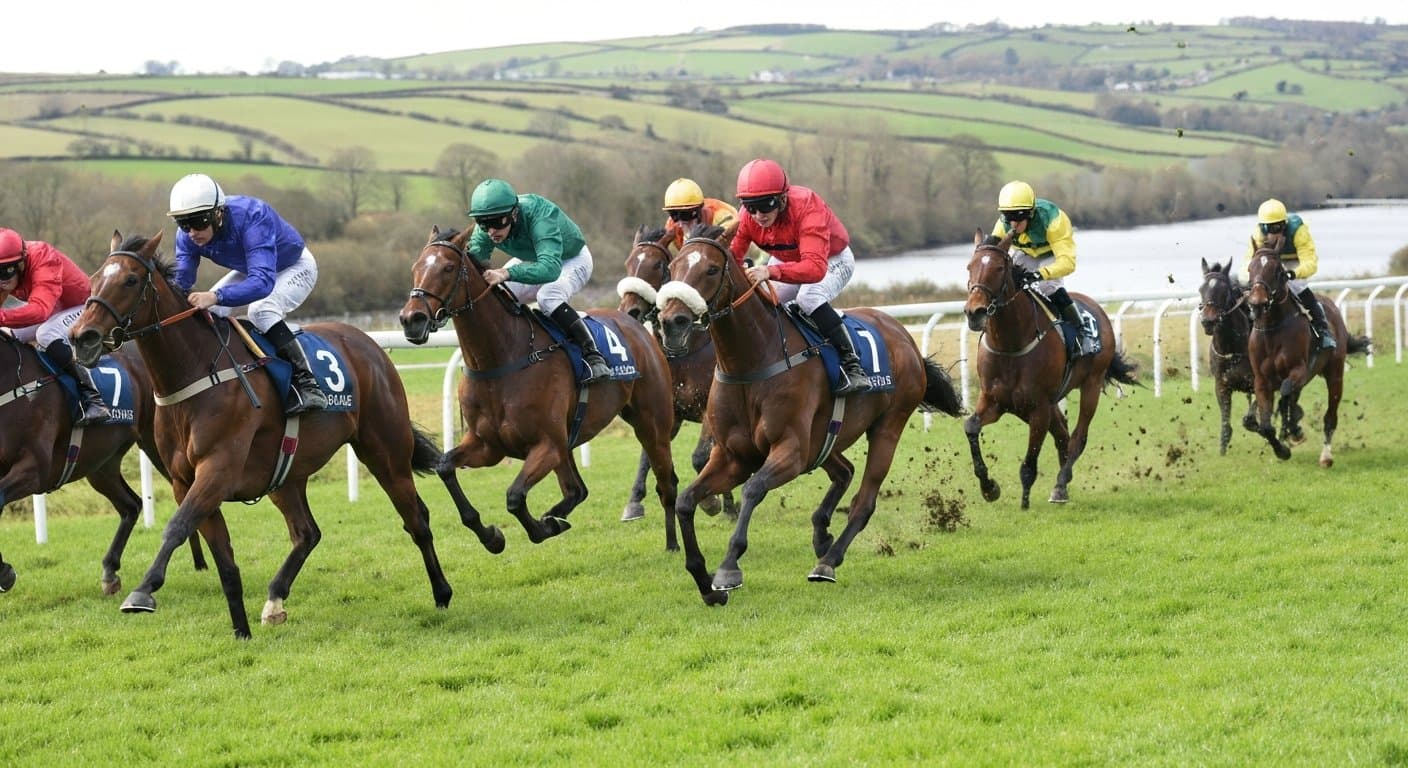
Betting at Catterick Racecourse
How to bet smarter at Catterick — track characteristics, going and draw, key trainers and jockeys, and strategies for flat and jumps.
Read more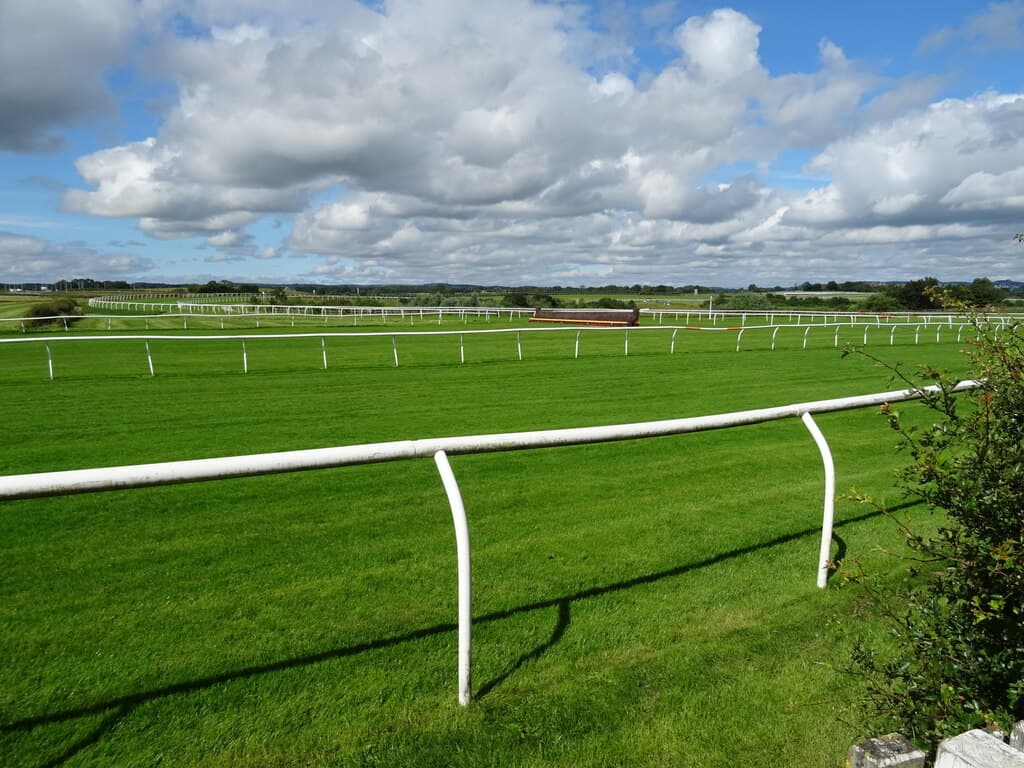
Catterick Racecourse: Complete Guide
Everything you need to know about Catterick Bridge — Yorkshire's dual-purpose venue, the Catterick Dash, and year-round flat and jumps racing.
Read more
Catterick Dash Day at Catterick: The Complete Guide
Everything you need to know about Catterick Dash Day — the north's premier sprint occasion. Race card breakdown, course specialist angles, how to get there, and what to bet.
Read morePhotos on this page are used under Creative Commons licences. Titles, sources and licence links for each one are on our image credits page.
Research the field with the AI Race Predictor
Our model publishes calibrated win-probability estimates for UK races — a second opinion to understand a race, not tips. It's open about its record: it doesn't beat the market, and we show exactly how it does.
Work it out & learn the basics
Gamble Responsibly
Gambling should be entertaining and not seen as a way to make money. Never bet more than you can afford to lose. If you or someone you know has a gambling problem, help and support is available.