
Founder & Editor · Last reviewed 2026-04-05
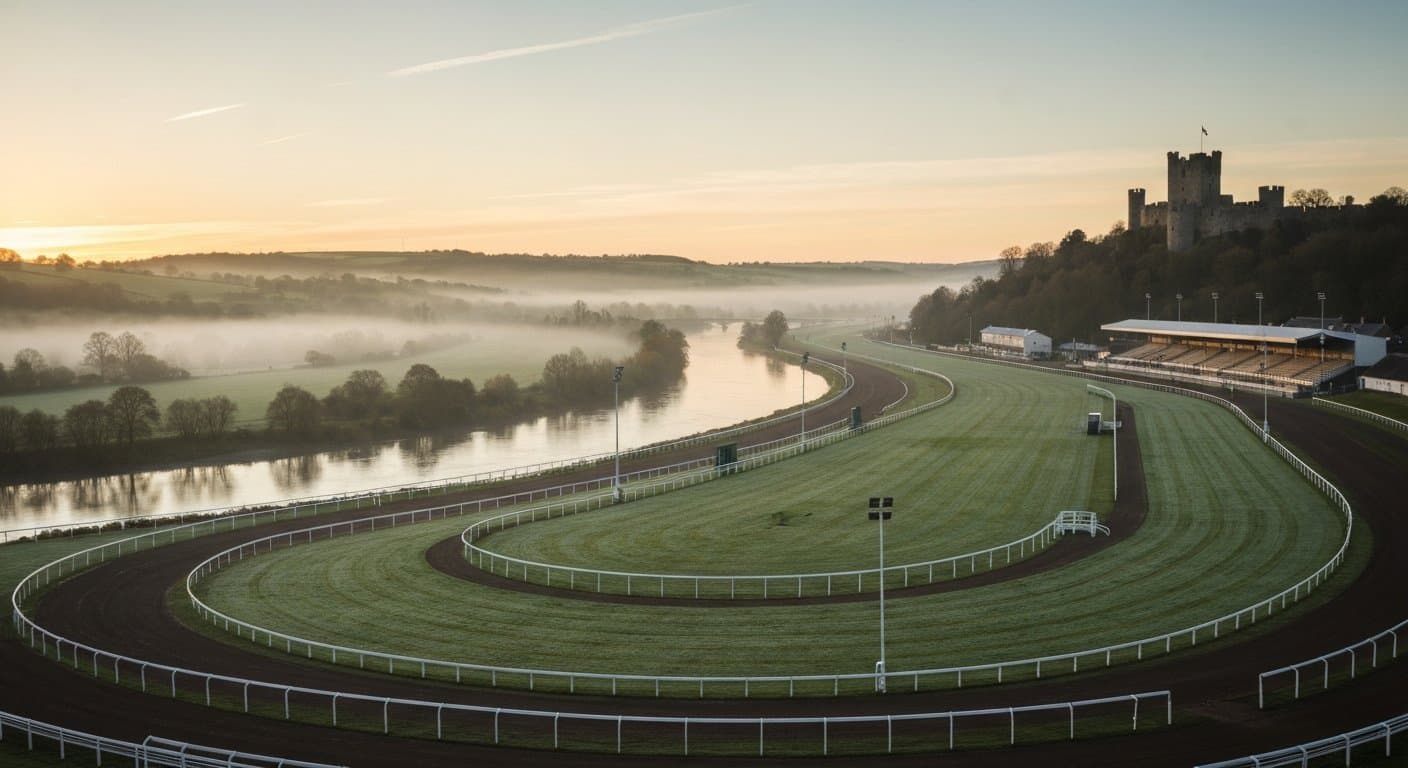
Above the gorge where the River Wye bends south towards the Severn estuary, the limestone cliffs of Piercefield Park drop sharply from a plateau of flat farmland. From the cliff edge, you can see the river below, the Severn beyond it, and on a clear day the Somerset hills to the east. In 1926, the men who built Chepstow Racecourse understood exactly what they had found. The plateau gave them a level track; the cliffs gave their spectators a natural amphitheatre unlike any other in Britain.
Chepstow Racecourse opened on 18 September 1926 with a card of both flat and jumps races. Wales had no permanent National Hunt venue before that date. Point-to-points and occasional flat meetings had taken place across the country, and the Welsh Grand National — first run in 1895 at Cardiff — had moved between South Wales venues for three decades. The opening of Chepstow gave the principality something it had never had: a professional, purpose-built racecourse capable of hosting championship-quality fixtures every year.
The early decades were a process of steady establishment. Chepstow survived the Depression, the suspension of racing during the Second World War, and the lean years of postwar austerity. In 1949 the Welsh Grand National moved permanently to Chepstow, a transfer that shaped everything that followed. The race and the course grew together over the next seventy-five years, each feeding the other's reputation, until the Welsh Grand National became one of the most watched horse races in Britain outside the Cheltenham and Aintree Festivals.
The race is a Grade 3 handicap chase run over 3 miles 5 furlongs 110 yards, staged in late December when the ground at Chepstow is at its heaviest. That combination of distance, weight, and going has consistently produced winners of the highest quality. Of the horses who have won the Welsh Grand National since 1949, a striking number went on to win the Cheltenham Gold Cup or the Grand National at Aintree. Burrough Hill Lad (1983), Synchronised (2012), and Native River (2016) are the most celebrated modern examples, but the line stretches back through decades of outstanding staying chasers.
Chepstow is also a dual-purpose course. The summer flat programme, running from April through October, has brought Listed-race quality to Wales and given the course a presence in the national flat calendar. The Heritage Handicap over a mile in summer draws runners from Newmarket and Lambourn yards who do not otherwise race in Wales. This dual identity — testing National Hunt track in winter, useful flat venue in summer — has been part of Chepstow's design since the first fixture in 1926, and it has proved more durable than the single-code model that most comparable British courses adopted.
This article traces the full history of Chepstow from its foundation in 1926 to the present day. It covers the origins and the choice of the Piercefield plateau as the site, the post-war golden era that established the course's National Hunt identity, the famous races and horses that defined its reputation, the investment and infrastructure changes of recent decades, and the place the course now holds in Welsh and British sport. The story is told chronologically, with the Welsh Grand National as the thread connecting every chapter.
Origins & Foundation
Welsh Racing Before Chepstow
Horse racing in Wales before 1926 was a scattered affair. There was no permanent championship-level track anywhere in the principality. Flat racing had taken place at Cardiff's Ely Racecourse from 1855, and it hosted both flat and, on occasion, jumping fixtures, but it was not a major National Hunt venue. Meetings at Newport, Monmouth, and a handful of other Welsh towns came and went over the decades. The Border counties — Herefordshire, Shropshire — had Hereford and Ludlow, which Welsh racegoers could reach but which were manifestly English affairs. Anyone who wanted to watch top-class National Hunt racing had to travel to Cheltenham, Sandown, or Aintree.
The Welsh Grand National illustrated the problem perfectly. The race was established in 1895, run at Cardiff's Ely Racecourse, and carried from the start the aspiration of being a national sporting event for Wales. But Ely could not sustain the race through the early twentieth century. Between 1895 and 1948, the Welsh Grand National moved repeatedly: it was run at Cardiff, Newport, Monmouth, and on at least one occasion at English venues when Welsh facilities proved inadequate. The lack of a permanent home prevented the race from building the year-on-year continuity that creates a real sporting institution. Every time the venue changed, momentum was lost.
The Piercefield Estate and the Choice of Site
The stretch of high ground above the River Wye on the eastern edge of Chepstow had been part of the Piercefield Estate, a historic landscape that included Piercefield House and the famous Wye Valley cliffs walk. By the early 1920s, parts of the estate had passed into other hands, and farmland on the plateau above the gorge was available. The site offered a combination of features that racecourse promoters found irresistible.
The plateau itself was flat — unusually so for this part of Monmouthshire, where the terrain is broken by the Wye and its tributaries. A left-handed oval track could be laid out with relative ease. The soil was clay-based, which would retain moisture and produce the soft-to-heavy going that National Hunt horses require for safety in winter. The cliffs to the south and east meant that spectators standing on the course's higher ground could look across the track with a clear view of almost the entire circuit — a natural viewing advantage that no architect could have designed better.
Access was a further consideration. The Gloucester to Newport railway line passed through Chepstow, making the town reachable from South Wales, Bristol, and the Midlands. The A48 road connected Chepstow to Cardiff in the west and Gloucester in the east. For a racecourse targeting both the Welsh population and the West Country and Midlands racing public, the location was close to ideal.
The Promoters and the Founding Company
The Chepstow Racecourse Company was formed in 1924. The promoters were a combination of Monmouthshire and South Wales businessmen, local landowners, and established racing figures with interests in Wales and the West Country. Precise records of the original shareholders are incomplete, but the company drew support from the South Wales sporting and business community that had long wanted a permanent racing venue for Wales.
Capital was raised through share subscriptions. Construction began in 1925. The track was built as a dual-purpose circuit from the outset — both flat and National Hunt facilities were incorporated into the original design. The grandstand, sited on the western side of the course, gave spectators a view of the home straight and the final two fences. A parade ring, weighing room, and the basic infrastructure of a professional racecourse were all in place before the first meeting.
The course measured approximately two miles round, a left-handed circuit with a testing uphill run from the final fence to the winning post. That uphill finish would prove one of the definitive features of Chepstow's character — it could not be won with a sprint; only real stayers who were still galloping at full effort a furlong out had any chance of holding on.
The Opening Meeting, September 1926
The first fixture at Chepstow Racecourse was held on 18 September 1926. The card mixed flat races and National Hunt events, establishing from day one the dual-purpose identity the course had been designed to carry. The local press — the Chepstow Weekly Advertiser and the South Wales Argus — gave the occasion substantial coverage. Attendances were encouraging for a first meeting on a new track in a part of Wales with no established racecourse tradition.
Over the following seasons, Chepstow steadily built a fixture list. Flat meetings ran from spring through autumn. National Hunt cards were staged through the winter. The Welsh Grand National was not yet at Chepstow — it would remain at other venues until 1949 — but the course was already attracting good-quality fields for its principal jumps races. Trainers from the South Wales valleys and the Border counties were among the first to target Chepstow regularly.
Depression, War, and Survival
The 1930s tested Chepstow as they tested every British racecourse. The Great Depression cut disposable incomes across South Wales with particular severity — the coal and steel industries that employed much of the population were contracting sharply. Crowds at mid-week meetings fell. Some fixtures were poorly supported. The Chepstow Racecourse Company operated under financial pressure.
Racing at Chepstow stopped entirely when the Second World War began in September 1939. The site was requisitioned for military purposes, as were many British racecourses. The grandstand and facilities were used by the armed forces. The track itself was not maintained as a racing surface. When the war ended in 1945 and racing began to resume across Britain, Chepstow required significant restoration work before it could reopen.
The course returned to action in 1946. Prize money was low across the board — British racing took several years to recover from the war — but attendances recovered more quickly than anyone had anticipated. The postwar public wanted entertainment and outdoor sport; horse racing met both requirements. By 1948, Chepstow was staging a full programme, its finances stabilised, and the race that would define it for the next three quarters of a century was about to arrive.
Growth & Establishment
The Welsh Grand National Arrives, 1949
The Welsh Grand National moved permanently to Chepstow in 1949 after more than fifty years of wandering between Cardiff, Newport, Monmouth, and other venues. The decision was the making of both the race and the course. For the race, a fixed home meant a fixed identity: spectators, trainers, and the racing press could begin to build a consistent relationship with a particular track, a particular type of going, and a particular test. For Chepstow, hosting the Welsh Grand National gave the course a flagship event that could anchor the entire winter programme and justify investment in facilities and prize money.
The timing of the race — the day after Boxing Day — was a stroke of commercial intelligence. The Christmas week racing public was already in a festive mood. Cheltenham's December meeting provided an appetiser; Kempton Park's King George VI Chase on Boxing Day itself was the centrepiece; and the Welsh Grand National the following afternoon gave National Hunt fans another destination within the same holiday week. Chepstow became part of the Christmas racing rhythm in a way that no spring or autumn fixture could have matched.
The race was set over what was then described as approximately three and a half miles, a distance that has settled over subsequent decades at 3 miles 5 furlongs 110 yards — one of the longest handicap chases in the calendar. The course's clay-based soil, combined with the rainfall typical of the Wye Valley in late December, ensured that the going was almost always soft or heavy. Trainers who did not have horses capable of real stamina on attritional ground did not bother to enter.
Fred Rimell and the Dominant Trainers of the 1950s–1970s
The post-war decades produced a series of training dynasties whose records at Chepstow shaped the course's reputation. Fred Rimell, who trained at Kinnersley in Worcestershire, was among the most significant. Rimell won four Grand Nationals at Aintree between 1956 and 1976, and his string consistently targeted the Welsh Grand National as part of a broader programme for his staying chasers. Horses from the Rimell yard were prominent at Chepstow through the 1950s and 1960s, and the course's proximity to Kinnersley — approximately forty miles by road — made it a natural target for West Midlands and Welsh Border trainers.
Ryan Price, based at Findon in Sussex, was another trainer whose horses featured regularly in the post-war Chepstow programme. Peter Cazalet, who trained the Queen Mother's horses at Fairlawne in Kent, also ran at Chepstow in this period. The Welsh Grand National drew horses from across England and Ireland as its prize money and prestige increased through the 1950s and 1960s. By 1965, the race was attracting fields of twelve or more runners, with runners from Lambourn, Newmarket-area stables, and the Irish training centres alongside the local Welsh and West Country contingent.
The jockeys of the era brought their own colour to Chepstow. Josh Gifford, Terry Biddlecombe, and Stan Mellor — three of the dominant National Hunt riders of the 1960s — all rode regularly at Chepstow. Stan Mellor, who in 1971 became the first jump jockey to ride 1,000 winners, had a particular affinity for the course's testing conditions.
The Christmas Meeting Takes Shape
By the mid-1950s, the Welsh Grand National day had established its pattern. The card included the main race, two or three supporting chases, and a pair of hurdle races. Crowds of between 4,000 and 7,000 were typical for the principal day, which was large by Welsh sporting standards at a time when only rugby internationals at Cardiff Arms Park regularly drew bigger winter crowds in the principality.
The atmosphere that developed around the Welsh Grand National meeting in December was distinct from anything else in the Chepstow calendar. Racegoers came from the valleys of South Wales — Rhondda, Cynon, Merthyr — and from Cardiff, Newport, and Swansea. The West Country contributed a substantial contingent from Bristol, Bath, and the Somerset towns. The Severn crossing, before the first bridge opened in 1966, required either the ferry at Beachley or a road journey north through Gloucester, which meant the M4/Severn Bridge connection was a significant infrastructure event for the course when it arrived.
The 1966 opening of the first Severn Bridge — the original suspension bridge on the M48 — transformed Chepstow's catchment area for Bristol and the West of England. Journey times from Bristol fell from over an hour via Gloucester to under thirty minutes. Attendances at the Welsh Grand National meeting increased noticeably in the years following the bridge's opening, drawing in a regular South West England audience that had previously found the journey prohibitive.
The Flat Programme: Summer Racing on the Plateau
Chepstow's summer flat meetings developed in parallel with the National Hunt programme throughout the 1950s and 1960s. The course staged a mixture of maiden races, handicaps, and conditions events. While Chepstow never attracted the Classic-quality flat horses that Newmarket, Epsom, or Goodwood could draw, the summer programme served a specific function: it kept the course operational and financially active through the months when National Hunt racing was absent, and it gave flat trainers in Wales and the West Country a local venue for their horses.
Races like the Welsh Derby Trial and various two-year-old maiden races filled the summer card and occasionally produced horses of quality. The summer meetings drew racegoers from Cardiff and Newport for whom a local flat fixture was more accessible than a trip to Newbury or Ascot.
Key Horses of the Golden Era
The 1960s produced some of the most distinguished Welsh Grand National winners in the race's history. Mandarin, trained by Fulke Walwyn and winner of the 1962 Cheltenham Gold Cup, won the Welsh Grand National in 1962 carrying 12st 7lb — a performance that confirmed Chepstow's status as a real test for horses at the top of the National Hunt tree. The Dikler, another Walwyn-trained staying chaser who would win the 1973 Cheltenham Gold Cup, was also prominent at Chepstow in this era.
Into the 1970s, Rag Trade won at Chepstow in the 1975–76 season before completing the double at Aintree in April 1976. His trainer, Fred Rimell, thus completed a neat symmetry: the man who had dominated the Welsh National in the 1950s and early 1960s was still winning it twenty years later, with a horse good enough to win the Grand National itself. That continuity said something about the consistency of Chepstow's role as a Grand National preparatory race.
By 1980, the Welsh Grand National was among the most valuable long-distance handicap chases in Britain. Its prize fund had grown steadily through the 1970s as sponsorship — Coral became the race's title sponsor in 1974 — combined with BHB central funding to bring the total prize money to a level that justified targeting the race with horses of the highest class. The golden era had established not just a great race, but a great venue.
Famous Races & Moments
Burrough Hill Lad, 1983
The 1983 Welsh Grand National produced what may be the most consequential result in the race's history. Burrough Hill Lad, trained by Jenny Pitman at Weathercock House, Upper Lambourn, and ridden by Phil Tuck, won the race on 27 December 1983 at odds of 7-2. He carried 11st 7lb over the 3 miles 5 furlongs 110 yards course and won by four lengths on heavy going.
What followed made that afternoon retrospectively significant. In March 1984, Burrough Hill Lad won the Cheltenham Gold Cup, ridden again by Phil Tuck, beating Brown Chamberlin and Drumlargan. He was the first horse since Midnight Court in 1978 to win the Gold Cup without having placed in the race previously. The Welsh Grand National had been his final preparation race — the heavy Chepstow ground in December had tuned him perfectly for the Cheltenham challenge three months later.
Jenny Pitman thus became the first woman to train a Cheltenham Gold Cup winner. The Welsh Grand National at Chepstow was the race that preceded that landmark. Pitman's record at Chepstow extended beyond Burrough Hill Lad: Corbiere, whom she also trained, had won the Welsh National in 1982 before winning the Grand National at Aintree in April 1983. Back-to-back Welsh National winners for Pitman, both of whom won major championship races the following spring, was a record without precedent in the race's history.
Corbiere, 1982
The year before Burrough Hill Lad's triumph, Corbiere had given Pitman her first Welsh Grand National when he won in December 1982 under Ben de Haan. Corbiere was a compact, tough chaser who had been bought cheaply and developed through the Pitman yard with careful attention to detail. His Welsh National win was a performance of controlled determination — he led before the last fence and held on up the hill. At Aintree the following April, he won the Grand National at 13-1, the first Grand National winner for a female trainer.
Chepstow had served as the proving ground for two successive Grand National winners, trained by the same person, in the space of eighteen months.
Earth Summit, 1997
Earth Summit, trained by Nigel Twiston-Davies at Naunton in Gloucestershire, won the Welsh Grand National in December 1997 carrying 11st 5lb on ground described as heavy. He was ridden by Carl Llewellyn, the Newport-born jockey who rode many of his best races at Chepstow in front of a home crowd. Earth Summit went on to win the Grand National at Aintree in April 1998 under Carl Llewellyn, making Llewellyn one of a small group of jockeys to win both nationals in the same season.
The 1997–98 Welsh/Grand National double was particularly significant in the context of the Aintree race that year. The 1997 Grand National had famously been abandoned after a bomb scare, and the two-day delay before it could be run produced one of the sport's most chaotic episodes. The 1998 running was a return to normality, and Earth Summit's victory was greeted with considerable relief across racing. His Chepstow win in December 1997 had been the performance that justified his Aintree entry.
Synchronised, 2012
Synchronised provided the Welsh Grand National's defining modern moment. Trained by Jonjo O'Neill at Jackdaws Castle in Gloucestershire and owned by J.P. McManus, Synchronised had been a promising novice chaser who took time to find his best form over fences. He won the Welsh Grand National on 27 December 2011 — the race staged in the 2011–12 season — and then, in March 2012, won the Cheltenham Gold Cup under A.P. McCoy, beating The Giant Bolster and Long Run.
Completing the Welsh Grand National and Cheltenham Gold Cup double in the same season placed Synchronised in a very small group of horses. The weight of historical precedent made the Gold Cup victory all the more emotional: McCoy, who had never won the Gold Cup despite winning twenty Champion Jockey titles, finally got his race at the age of 37. Chepstow's Welsh Grand National had been the last stepping stone.
The 2012 Grand National at Aintree brought Synchronised's story to a tragic end: he fell at the first fence and was fatally injured in the chaos that followed. The loss of the horse — barely three weeks after his Gold Cup triumph — was felt sharply by those who had watched his Welsh Grand National win in December and seen the progression from that heavy-ground Chepstow performance to Cheltenham glory.
Native River, 2016
Native River won the Welsh Grand National on 27 December 2016 under Richard Johnson, trained by Colin Tizzard at Venn Farm, Milborne Port. He won by nine lengths carrying 11st 12lb, a dominant performance on heavy going that left no doubt about his superiority over the field that day. Two years later, in March 2018, he won the Cheltenham Gold Cup under Richard Johnson, beating Might Bite by four and three-quarter lengths.
Native River's Chepstow performance in 2016 is frequently cited by Tizzard and Johnson as the day they realised the horse's full potential. He never stopped galloping up the hill; his jumping was accurate throughout the 3 miles 5 furlongs; and his response when Johnson pressed him after the second-last was immediate. The Welsh Grand National had, once again, identified a future Gold Cup winner.
The Finale Junior Hurdle
The Finale Junior Hurdle, run at Chepstow's December meeting, has a history as a pointer to juvenile hurdling talent. The race, for four-year-olds, takes place on the same card as the Welsh Grand National and has served as a juvenile hurdles championship race in its own right. Horses who ran prominently in the Finale in the 1990s and 2000s frequently appeared at the Cheltenham Festival in the Triumph Hurdle.
Istabraq, trained by Aidan O'Brien and owned by J.P. McManus, is the most celebrated horse associated with the juvenile programme at Chepstow from the 1990s. He ran at Chepstow on his British debut in 1996, finishing second in a novice hurdle, before winning the Triumph Hurdle at Cheltenham and then three consecutive Champion Hurdles between 1998 and 2000.
Flat Race Landmarks
Chepstow's flat programme has produced moments of note beyond the winter jumping calendar. The course hosted a valuable five-furlong sprint that attracted decent sprinters through the 1980s and 1990s. In 2003, the course staged a Listed race that served as a trial for the St Leger, drawing a field that included horses trained at Newmarket who would not otherwise have raced at a Welsh course.
The flat Heritage Handicaps at Chepstow — the race run over a mile on the round course — have periodically attracted fields of over twenty runners, with significant betting market interest driven by the large-field active on the flat. These summer flat days, though secondary to the National Hunt programme in prestige, have given Chepstow a year-round profile that purely jump tracks cannot match.
The Modern Era
Grandstand Redevelopment in the 1980s
The 1980s brought the most significant structural investment in Chepstow's history to that point. The original grandstand, built for the 1926 opening and extended incrementally over the following decades, was replaced with a new main grandstand that provided covered seating and standing accommodation for several thousand racegoers. The rebuild gave Chepstow a modern spectator facility while preserving the course's compact, intimate atmosphere — the new stand was functional rather than imposing, designed to serve the Welsh Grand National crowds of 6,000 to 8,000 without overwhelming the course's natural scale.
The parade ring was also enlarged and repositioned during this period to improve sightlines from the enclosures, and the weighing room and changing facilities were brought up to Jockey Club standards. These improvements were timed deliberately: the Welsh Grand National was growing in both prize money and profile through the early 1980s, and the course needed infrastructure capable of handling the increased commercial and media interest that followed the race's rise to national prominence.
Coral's sponsorship of the Welsh Grand National, which had begun in 1974, deepened through the 1980s as the bookmaking group expanded nationally. The Coral Welsh Grand National name gave the race a consistent identity in sponsored racing at a time when many major National Hunt fixtures were rebranding under commercial partnerships. Prize money for the race increased from approximately £15,000 in the early 1980s to over £50,000 by the end of the decade — still modest by the standards of Cheltenham or Aintree, but sufficient to attract entries from the leading staying chase stables in Britain and Ireland.
The Severn Bridge and the Bristol Catchment
The original Severn Bridge — the M48 suspension bridge — had opened in 1966 and transformed journey times from Bristol and the West of England to Chepstow. The second Severn Crossing, the M4 cable-stayed bridge, opened in April 1996, providing an additional motorway link between the West and South Wales and further reducing pressure on the M48 route.
The most significant infrastructure event for Chepstow in recent decades came on 17 November 2018, when the tolls on the M48 Severn Bridge were abolished. The bridge had charged tolls since its opening, and by 2018 the toll was £5.80 for a car. The abolition of the charge removed a psychological as well as a financial deterrent for Bristol and Somerset racegoers. Chepstow's racecourse management estimated that the removal of the toll opened up a catchment of more than one million people in Bristol, North Somerset, and South Gloucestershire who could now cross into Wales without additional cost. Attendance figures at the Welsh Grand National meeting in December 2018 — the first running after the toll removal — were among the highest for several years.
The Jockey Club Racecourses Period
Chepstow joined the Jockey Club Racecourses portfolio when the Racecourse Holdings Trust, which had owned several British courses, was reconstituted as Jockey Club Racecourses in 2012. The group owns fifteen courses across Britain, including Cheltenham, Aintree, and Newmarket. Chepstow's place within the portfolio provided financial stability and access to shared marketing and operational resources that a standalone Welsh course could not have generated independently.
The Jockey Club's ownership corrected a factual error in the stub: the Arena Racing Company (ARC) does not own Chepstow. ARC's portfolio includes Welsh courses such as Ffos Las, but Chepstow has been under Jockey Club Racecourses management since 2012. The distinction matters: Jockey Club Racecourses is a non-profit-distributing organisation, and its proceeds are reinvested in British racing through the Jockey Club's charitable remit.
The Welsh Grand National as a Premier Handicap
The Welsh Grand National was regraded as a Premier Handicap — the BHA's highest classification for handicap chases — as the race's prize money and field quality justified an elevation in status. The race now carries a guaranteed minimum prize fund of £150,000, with the winner's share sufficient to justify a long journey from any British or Irish stable.
The Coral Trophy Handicap Chase, run at the October Festival meeting, became another significant addition to Chepstow's winter jumps profile from the 2000s onwards. The October Festival, held in mid-October, serves as the first major jumping fixture of the National Hunt season in Wales and provides an early-season test for staying chasers and hurdlers who would go on to campaign at Cheltenham and Aintree. Trainers use the meeting as a fitness test rather than a formbook target, which means fields are often large and market moves are significant.
Facilities Investment in the 2000s and 2010s
Investment in Chepstow's physical infrastructure continued through the 2000s. Drainage improvements were made to the track surface following concerns about waterlogging in parts of the back straight. The going at Chepstow is almost always testing in winter — the clay soil and the high rainfall of the Wye Valley ensure that — but extreme waterlogging had occasionally led to abandonment of meetings, and drainage work reduced that risk.
The hospitality facilities were expanded significantly in the 2010s. New private boxes and hospitality suites were added above the main grandstand, targeting the corporate market that had grown substantially across British racing since the mid-1990s. Welsh Grand National day became a target for South Wales businesses entertaining clients, adding a commercial layer to a fixture that had previously been almost entirely a public racing occasion.
The flat summer programme received investment in the form of increased prize money for Listed races and the elevation of the Heritage Handicap over a mile to higher minimum values, making the race more attractive to Newmarket and Lambourn trainers who might otherwise have bypassed a Welsh course. A televised Saturday flat fixture in July, staged with ITV Racing coverage, raised the course's profile with a flat racing audience that had historically paid little attention to Chepstow.
Current Position
Chepstow today stages approximately twenty fixtures per year — a combination of National Hunt meetings from October through April and flat meetings from April through October. The Welsh Grand National meeting in late December remains the centrepiece of the entire calendar. The course's capacity of around 8,000 is typically close to full on National day, with the early arrival of racegoers from across South Wales, the Valleys, and the Bristol region creating an atmosphere markedly different from a routine midweek meeting.
Chepstow's Legacy
Wales's Racing Home
Chepstow's central claim on Welsh sporting culture is straightforward: it is Wales's national racecourse, and the Welsh Grand National is Wales's national race. There is no competitor for either title. Ffos Las in Carmarthenshire has provided National Hunt racing since 2009 and Bangor-on-Dee in the north offers a respected summer jumps programme, but neither has anything approaching the profile or history of Chepstow. The Welsh Grand National, run every late December since 1949 on the same plateau above the River Wye, draws an audience that extends far beyond the regular racing public — it reaches Welsh rugby families, South Wales valley communities, and Bristol-based Anglophone Welsh who find in the race a point of national identity that the sport's geography does not always provide.
The crowd on Welsh Grand National day is different from the crowd at most British racecourses. The mix of Welsh accents from Pontypool, Merthyr, and Bridgend alongside Bristol voices and the occasional Irish contingent who have followed a Jonjo O'Neill or Gordon Elliott runner creates a social gathering as much as a sporting event. Chepstow at its best — on a cold late December afternoon, the hill above the Wye catching the last of the winter light — is as atmospheric as any racing venue in Britain.
The Trainers and Their Records
The training dynasties associated with Chepstow over the past forty years tell a story of geographical loyalty as much as professional excellence. Martin Pipe, who trained at Nicholashayne in Somerset and became the most successful National Hunt trainer in British history, won the Welsh Grand National on multiple occasions and targeted Chepstow's October and December meetings as regular stepping stones for his staying chasers. His son, David Pipe, who took over the Nicholashayne yard when Martin retired in 2006, has maintained the family's exceptional record at the course. The proximity of Nicholashayne to the Severn crossing — under an hour by road — and the similarity between the heavy going at Chepstow and the West Country ground that Pipe horses were conditioned for, produced a natural alignment between yard and venue.
Tim Vaughan, based at Aberthin in the Vale of Glamorgan, represents the local Welsh training presence most visibly at Chepstow. Vaughan targets the course with horses that he knows are well-suited to the going and the track, and his strike rate at Chepstow is among the highest of any Welsh-based trainer over the past fifteen years. His horses tend to be prepared specifically for the October Festival and the Welsh Grand National meeting, and his local knowledge of how the going behaves in different parts of the circuit is an advantage that out-of-county trainers cannot replicate.
Paul Nicholls, Colin Tizzard, and Nicky Henderson have all won Welsh Grand Nationals in the modern era, confirming that the race draws the sport's leading trainers regardless of their base. Tizzard's victory with Native River in 2016 — from his Dorset yard at Milborne Port — and Nicholls's multiple winners from Ditcheat in Somerset underline that the West of England's proximity to Chepstow makes the course a natural autumn and winter target for the region's jump trainers.
The Setting's Enduring Character
Chepstow has not been glamourised in the way that Cheltenham's new grandstand or Ascot's 2006 rebuild changed those courses' visual identity. The limestone cliffs remain. The view across the Wye Valley from the higher parts of the ground is unchanged from what it was in 1926. The course does not attempt to be bigger or grander than it is, and that restraint is part of its appeal: it is a working racecourse built for the sport it hosts, not a conference centre with racing attached.
The track's testing character has been consistent across a century of racing. The uphill finish from the final fence is unforgiving. The bend into the home straight requires positioning skill from jockeys, particularly in large-field handicap chases. The clay-based soil continues to produce heavy going for December fixtures as reliably as it always has.
The Welsh Grand National's Growing Prestige
The Welsh Grand National has strengthened its position as the leading Grand National trial over the past quarter-century. The number of horses who have completed the Welsh National–Cheltenham Gold Cup double, the Welsh National–Grand National double, or both, is unmatched among British and Irish trials. Native River (Welsh National 2016, Gold Cup 2018), Synchronised (Welsh National 2011, Gold Cup 2012), Corbiere (Welsh National 1982, Grand National 1983), and Earth Summit (Welsh National 1997, Grand National 1998) form a lineage that any trial race in Britain would be proud to claim.
The race is now a Premier Handicap, broadcast nationally, and its winners are treated as serious contenders for the spring championship races rather than curiosities from a peripheral Welsh fixture. That transformation, from wandering race without a home to one of the most respected staying tests in the calendar, has taken less than a century. Chepstow made it possible by providing the conditions — the distance, the going, the uncompromising test of the hill finish — that have consistently sorted real champions from ordinary stayers.
That is Chepstow's legacy: not just a racecourse in Wales, but the racecourse that gave Wales a race worth winning.
Share this article
More about this racecourse
All Chepstow guides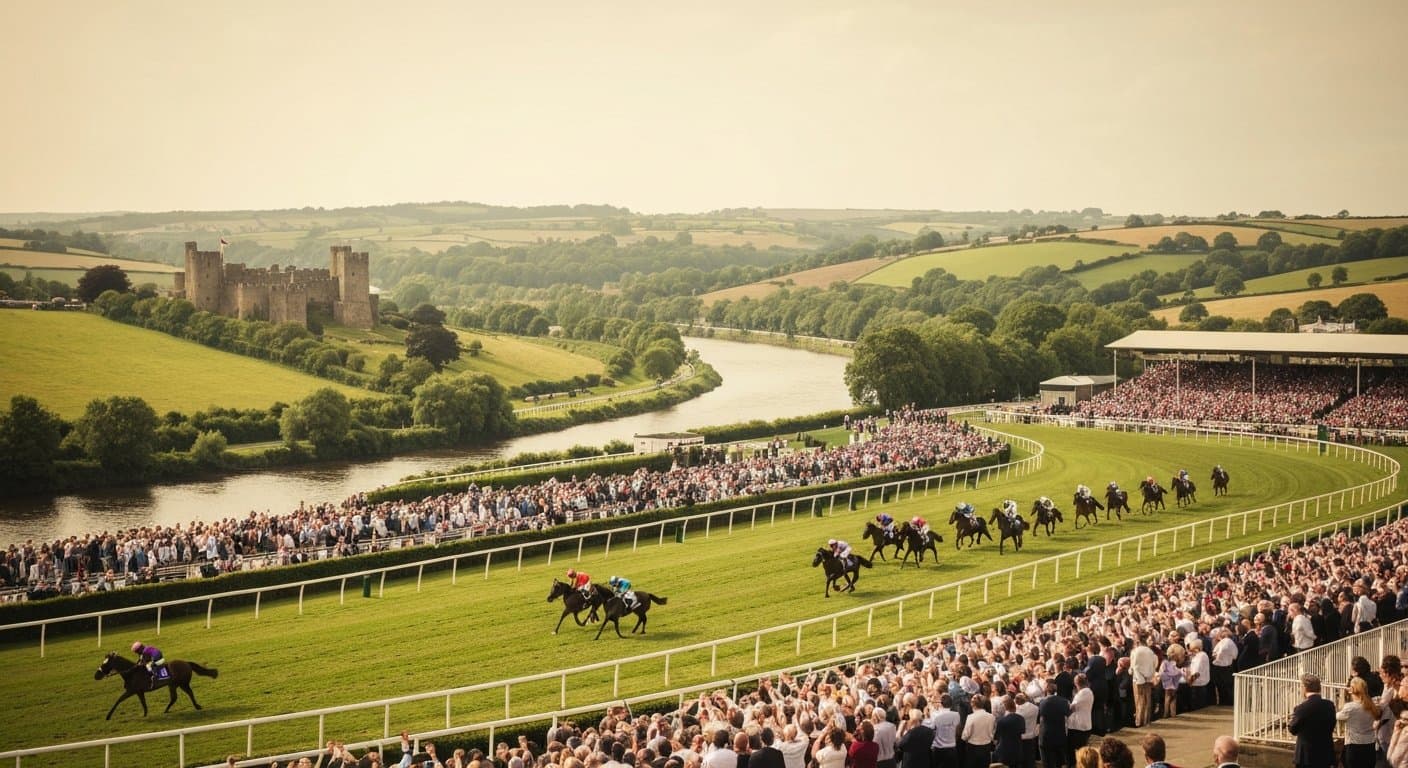
Chepstow October Festival: Complete Guide
Your guide to Chepstow's October Festival — the biggest early-season jumps meeting in Wales.
Read more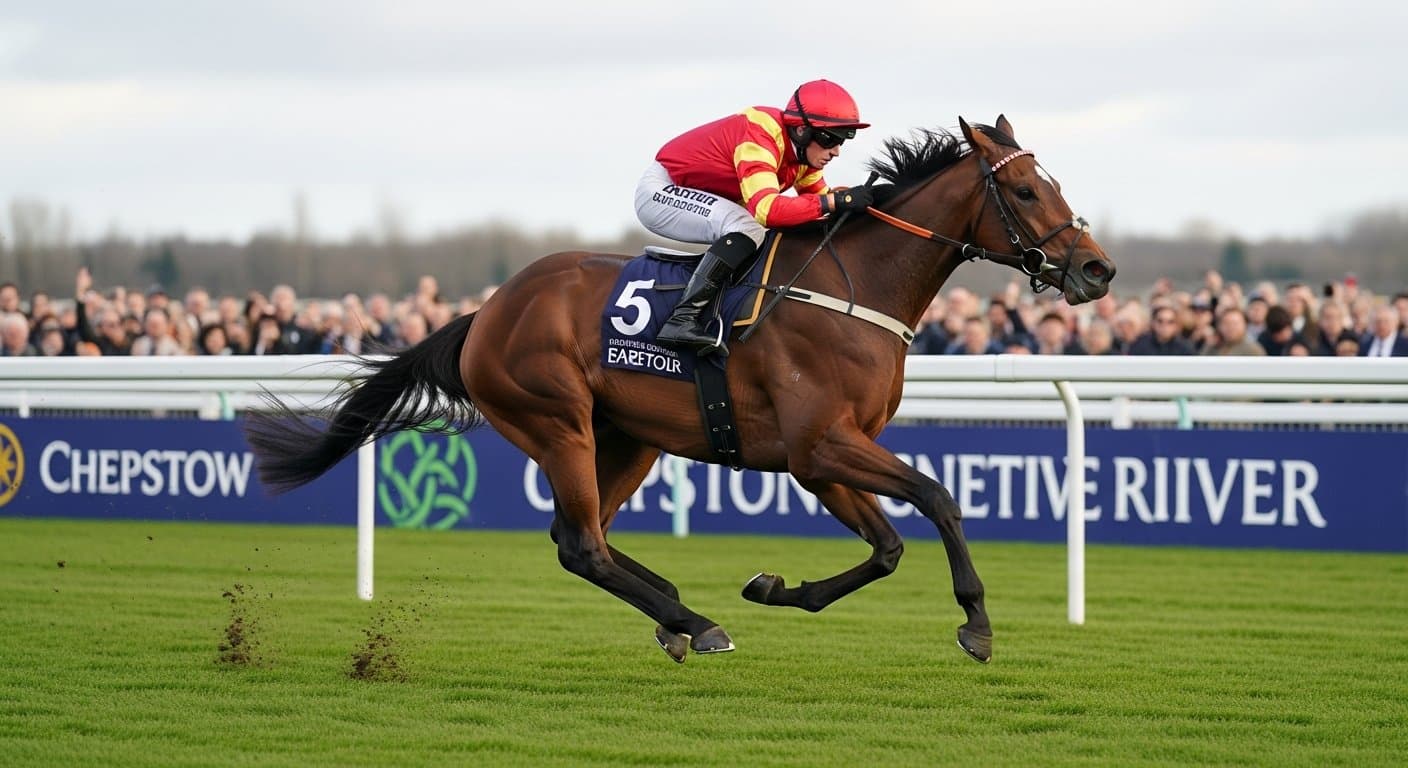
Native River at Chepstow: The Complete Story
How Native River's Coral Welsh Grand National win at Chepstow in 2016 laid the foundation for his 2018 Cheltenham Gold Cup triumph.
Read more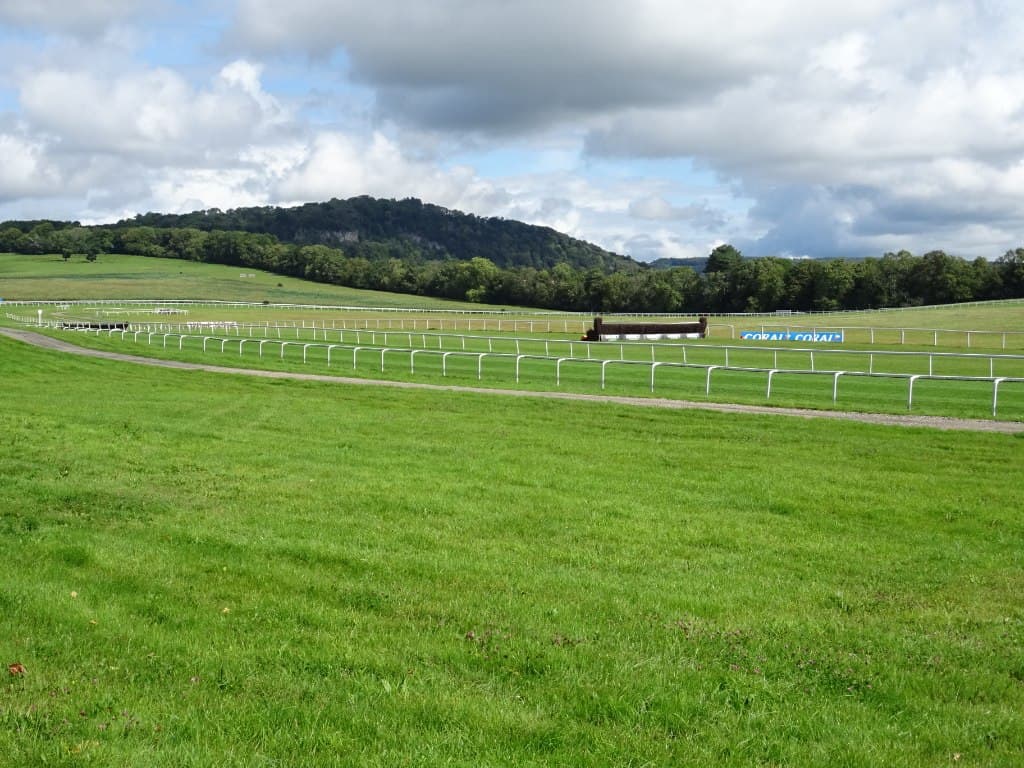
The Welsh Grand National at Chepstow: Complete Guide
Everything you need to know about the Welsh Grand National — one of the toughest staying chases in the calendar.
Read morePhotos on this page are used under Creative Commons licences. Titles, sources and licence links for each one are on our image credits page.
Gamble Responsibly
Gambling should be entertaining and not seen as a way to make money. Never bet more than you can afford to lose. If you or someone you know has a gambling problem, help and support is available.