
Founder & Editor · Last reviewed 2026-04-05
Introduction
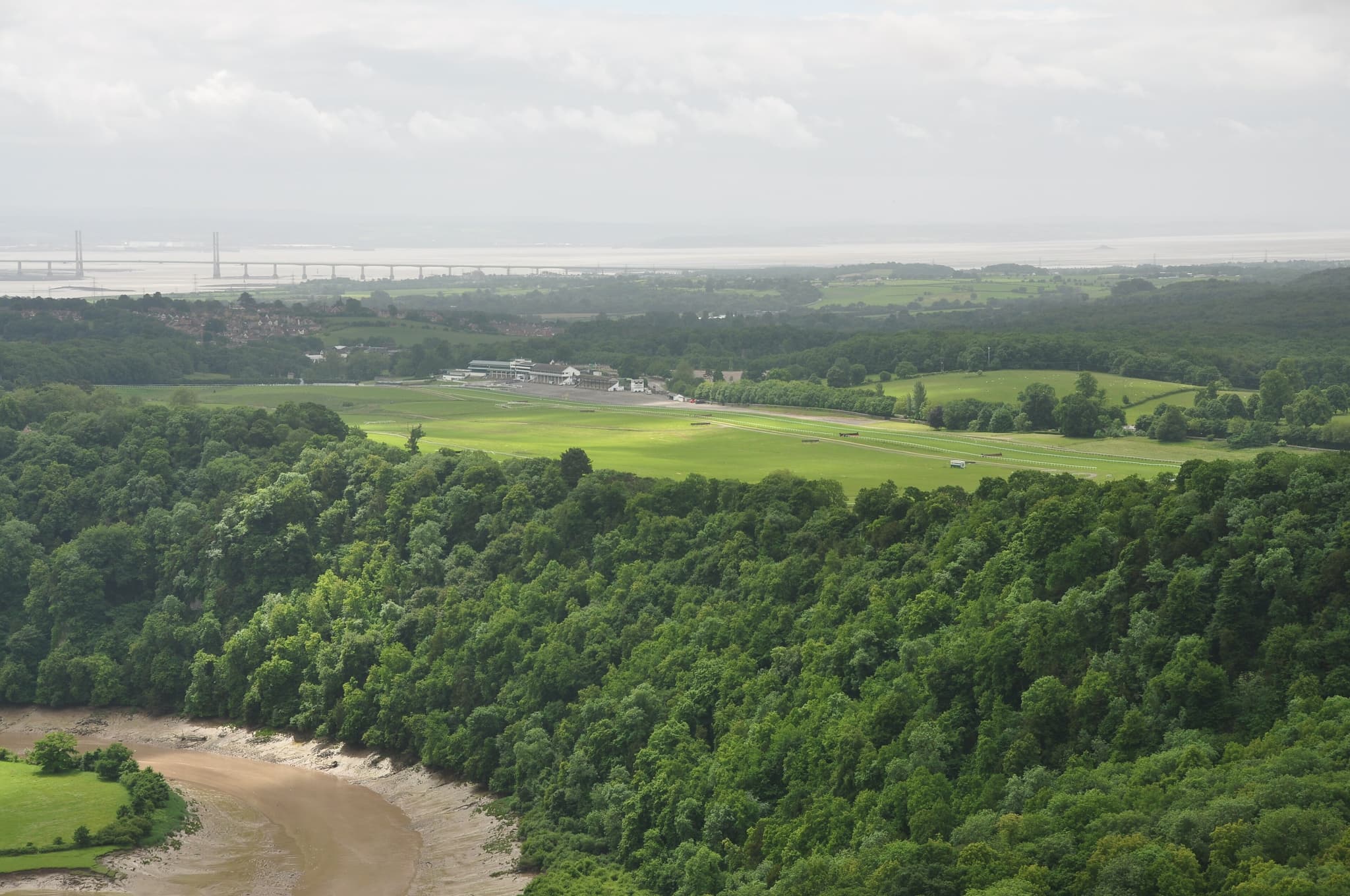
Chepstow is Wales's premier racecourse and one of the most atmospheric venues in British National Hunt racing. Set on a limestone escarpment above the River Wye, the course sits where Wales meets England — a fitting location for a track that draws racegoers from Cardiff, Bristol, Bath, and beyond. Since 1926, Chepstow has hosted racing on its dramatic clifftop site, and in the nearly hundred years since, it has grown into a dual-purpose venue that runs flat racing through the summer months and National Hunt from October through April.
The Welsh Grand National is the race that defines Chepstow's identity. Run annually on 27 December over 3m5f110y, it is one of the most demanding staying chases in the British calendar. The going is almost always soft or heavy — the Wye valley clay holds water and the course goes testing fast once autumn turns. That means the Welsh National is a race of stamina and constitution, not speed. It has a strong historical record of producing horses that go on to contest the Aintree Grand National and the Cheltenham Gold Cup, and trainers from across England and Wales target it specifically as a mid-season staying chase trial.
Away from December, Chepstow's schedule includes the October Festival — the opening salvo of the Welsh jumps season — the Finale Junior Hurdle card in December, and a summer flat programme that includes Listed races and Heritage Handicaps. The racecourse is also one of very few venues in Britain where racegoers can watch National Hunt horses jump a fence in front of the main grandstand after having already passed the winning post: the course design places a fence on the far side of the line that is jumped on the full circuit of the chase track, a detail that catches first-time visitors by surprise.
What Chepstow also offers, and what often surprises first-time visitors, is the quality of its summer flat programme. The flat season at Chepstow runs from April to September and includes Heritage Handicaps — competitive, well-subscribed flat races with significant prize money — as well as Listed contests and maiden races that regularly produce horses who go on to compete at Group level. The course's left-handed layout, with its long home straight descending slightly to the finish, produces honest, tactical flat racing. Trainers from Lambourn, Newbury, and the West Country target summer Chepstow meetings with good horses, knowing the prize money is competitive and the competition less concentrated than at the major southern flat venues.
The Severn Bridge connection matters for understanding who comes to Chepstow. Since 2018, when the tolls on the M48 bridge were removed, the journey from Bristol has become truly convenient — 18 miles via the M4 and M48, no charge, 25 minutes in normal traffic. This has noticeably broadened the course's catchment area, and summer Saturday meetings now draw racegoers from as far as Bath, Weston-super-Mare, and Gloucester alongside the Welsh contingent from Cardiff and Newport.
Who this guide is for
This guide is for anyone planning a visit to Chepstow, whether that's Welsh Grand National day in late December or a summer flat afternoon. It covers the course layout in detail, the key fixtures calendar, the facilities, transport options, and practical planning information. There is a dedicated betting guide with specific statistics for the Welsh Grand National, trainer patterns, and going analysis. History and famous moments sections cover the course from its 1926 opening through to its current position as Wales's leading dual-purpose venue.
Quick facts
- Location: Chepstow, Monmouthshire, NP16 6BE — on the Wales–England border above the River Wye
- Opened: 1926
- Racing type: Dual purpose — National Hunt (October–April) and flat (April–September)
- Signature race: Welsh Grand National, 27 December, Grade 3, 3m5f110y
- Course shape: Left-handed, roughly pear-shaped, approximately 2 miles round
- Going tendency: Soft to heavy in winter; good to soft most summers
- Capacity: Approximately 8,000 (Welsh National day can draw 15,000+)
- Nearest station: Chepstow — approximately 1 mile from the racecourse, walkable
- Website: chepstow-racecourse.co.uk
- Related courses: Newbury, Cheltenham, Hereford
Bet on Chepstow
Place your bets on Chepstow races with a trusted bookmaker.

Promo code BETFRED50. New customers only. Register, deposit with a Debit Card, and place a first bet of £10+ at Evens (2.0)+ on Sports, to be settled within 7 days, to get £30 in Sports Free Bets and £20 in Bet Builder Free Bets within 24 hours of settlement. 7-day expiry. Eligibility & payment exclusions apply. Full T&Cs apply. Take Time to Think. BeGambleAware.org. 18+. Full T&Cs.

Promo code R30. New UK customers only, 18+. Register, deposit £10 or more, then place a £10 single cash bet at odds of 1/2 (1.5) or greater on any sports market (excluding Virtuals). Once the qualifying bet settles you get £30 in Free Bets (3 x £10) — the qualifying bet can win or lose. Free Bets are valid on any sports market excluding Virtuals, expire in 7 days, are non-withdrawable and must be used in full. Excluded deposit methods apply (including PayPal, Apple Pay, Skrill and NETELLER). Named bets such as Lucky 15 do not qualify. If you cash out the qualifying bet, or it is voided, you are no longer eligible for the offer. Ends 31.12.26. Full T&Cs apply. Please gamble responsibly. BeGambleAware.org. 18+. Full T&Cs.

Promo code BET40GET20. New UK customers, 18+. Register with the code and place a first bet of £40 or more at Evens (2.0) or greater. Receive 2 × £10 free bets: the first credited automatically once the qualifying bet settles, the second 24 hours later. Free bets must be placed at minimum odds of 4/1 (5.0), expire 24 hours after credit, and the free-bet stake is not returned with winnings. Debit card deposits only. Take Time to Think. BeGambleAware.org. 18+. T&Cs apply. Full T&Cs.

50% of your first-day net losses refunded as a free bet, capped at £25. New UK customers aged 18+ only. To qualify, deposit and place a first bet of £10 or more on any sport at minimum odds of evens (2.00), then place at least two further bets on different events, each worth at least 50% of your largest bet, all at evens (2.00) or greater. Losses are counted from your first settled bet until 23:59 the same day. Place a qualifying £10+ bet and you are guaranteed at least a £5 free bet. Bets placed at SP, void bets, cashed-out bets and bets struck with free bets do not count towards the offer. The free bet is credited the day after your qualifying bets settle and must be used within 7 days, after which it expires. It can be used at odds from 1/4 (1.25) up to 250/1 on singles and straight accumulators, but not on Trixie, Patent or Yankee style multiples. Free-bet stake is not returned with winnings. One offer per person, household, address, IP address and device. E-wallet deposits may not qualify, so check the cashier before depositing. Customers registered with GAMSTOP cannot claim. KYC identity verification must be completed before the free bet is credited. Take Time to Think. BeGambleAware.org. 18+. T&Cs apply. Full T&Cs.

New customers, 18+. Choose the sports bonus at sign-up, make a first deposit and receive a 100% bonus up to £50 in your Sports Bonus balance. To convert the bonus to cash, wager it 10x within 30 days. Single bets below Evens (2.00) do not qualify; accumulators do not qualify if any selection is below 1/2 (1.50). Virtual Sports, voided, cancelled, drawn, cashed-out and free-bet wagers do not count towards wagering. Only the first settled bet per event counts. Withdrawing before the wagering requirement is met forfeits the bonus balance including bonus winnings. Real-money funds are used before bonus funds. Deposits via Skrill or Neteller are not eligible. Not valid in conjunction with other promotions. Odds, bet and payment limits apply. 10bet general and promotion T&Cs apply. BeGambleAware.org. 18+. Full T&Cs.

New customers in Great Britain and Republic of Ireland, 18+. Place a £10 fixed-odds qualifying bet at minimum odds of 1/2 (1.50) — single or each-way (only the win part counts), pre-event or in-play, not cashed out early, within 28 days of opening the account. Receive up to £60 in bonuses credited over three days: 3 × £10 fixed-odds free bets (the first on settlement, then 24 and 48 hours later) plus 3 × £5 Total Goals FOOTBALL spread bets and 3 × £5 racing Winning Favourites spread bets, with a £1 racing Race Index spread bet as an extra on top. The spread bets need a full spread-betting account, opened within 28 days of the fixed-odds account and subject to Spreadex's eligibility and appropriateness checks. Free-bet stakes not returned with winnings; free bets valid 28 days from issue. IMPORTANT: the £5 credits are SPREAD bets — sports spread betting carries the risk that losses can exceed your stake. Sports spread-betting customers do not have Financial Ombudsman or FSCS recourse. Take Time to Think. BeGambleAware.org. 18+. T&Cs apply. Full T&Cs.

Promo code WELCOME15, entered under My Bonuses after registering. New UK customers, 18+. Place a first qualifying bet of at least £10 from your cash balance at odds of evens (2.0) or greater within 7 days of opening the account. Once the qualifying bet fully settles you receive £15 in free bets, credited as 3 x £5 tokens with set uses: one £5 accumulator free bet (minimum 4 legs, each leg at 2/5 or bigger), one £5 sports free bet (any market at evens or bigger) and one £5 Sub Cover free bet (selected football player markets at evens or bigger). Free-bet stakes are not returned with winnings. Free bets expire 7 days after they are credited. Void, cashed-out and partially cashed-out bets do not qualify. One offer per customer. Confirm the current terms on BetGoodwin's own welcome-offer page before claiming. Take Time to Think. BeGambleAware.org. 18+. T&Cs apply. Full T&Cs.

New UK customers, 18+. Minimum deposit £10. Place a £10 qualifying single on sports (excluding virtuals) at minimum odds of 1/2 (1.50), settled within 14 days. Deposit-method exclusions apply. Receive £30 in free bets (stake not returned), split £20 for sportsbook use (2 x £10) and £10 for Bet Builder only (2 x £5); Bet Builder does not cover horse racing. Free bets must be accepted within 7 days and expire 7 days after acceptance. No promo code required. Best Odds Guaranteed on UK & Irish racing, subject to having staked over £25 in the previous seven days. Operated by LiveScore Betting and Gaming (Gibraltar) Ltd, UKGC 56859. Confirm the current terms on LiveScore Bet's own promotions page before claiming. Take Time to Think. BeGambleAware.org. 18+. T&Cs apply. Full T&Cs.
18+. BeGambleAware.org
The Course & Layout
Chepstow is a left-handed track, roughly pear-shaped, with a total circuit of approximately 2 miles. The course runs on a limestone plateau above the River Wye, and while the ground is mostly flat, there is a gradual descent into the home straight and the run from the final bend to the winning post is about 5 furlongs. That long run-in is one of the defining features of Chepstow as a betting proposition: horses that stay well and travel smoothly into the straight tend to outperform those that need to quicken sharply at the end of a race.
The National Hunt course
Chepstow's National Hunt track is its main attraction, used for all the major winter fixtures including the Welsh Grand National. There are 10 fences on the full chase circuit. The layout includes an open ditch in the back straight and a plain fence on the run down to the home turn, but the detail that most surprises first-time visitors is the fence positioned at the top of the hill immediately after the winning post.
On a full circuit of the chase track, horses jump this fence having already crossed the finishing line — one of only a handful of such arrangements in British National Hunt racing. In practice, this fence comes into play in races beyond 2m4f, where the field covers more than one circuit. Horses jumping it on the first circuit are doing so with a full race still ahead of them; those jumping it on later circuits are near the end. The fence is not especially testing on its own, but it arrives at a point where tired horses can make errors, and it pays to be aware of it in longer staying races.
Key distances on the National Hunt course
The principal National Hunt distances at Chepstow are:
- 2m — used for shorter novice chases and hurdles
- 2m3f100y — a mid-range chase distance
- 2m4f — used frequently for competitive handicap chases and hurdles
- 3m — the standard staying trip
- 3m2f70y — an intermediate staying distance
- 3m5f110y — the Welsh Grand National distance, run from a starting position that extends the circuit and tests every yard of the horses' stamina
The hurdle track runs inside the chase course and follows the same general route. Distances for hurdles range from 1m7f190y up to 3m.
Fence layout in detail
The fences at Chepstow are of standard specification, well maintained, and fair. They are not the open, galloping-style fences you find at Newbury or Cheltenham's Old Course, but neither are they the cramped obstacles of some smaller tracks. The open ditch on the back straight is one of the stiffer fences on the course. Novice chasers occasionally make errors there, particularly when the ground is deep and horses are already tiring before the home turn.
There is no water jump at Chepstow. The fences on the home straight run in quick succession, and the last fence is about 2 furlongs from the line — far enough that a horse which jumps it cleanly in the lead has time to be caught, and far enough that one making a mistake can still recover.
The flat course
Chepstow runs flat racing from April to September. The flat track sits inside the jumps course, also left-handed, with a circuit of approximately 1m4f at its longest. Straight course distances are possible, and the sprint course of 5 furlongs is positioned separately. The main flat distances in use at Chepstow are 5f, 6f, 7f, 1m, 1m2f, and 1m4f.
The surface for the flat track is the same turf that forms the National Hunt course in winter. By April, after months of heavy winter racing, the ground may still be soft even if there has been no recent rain. In summer, the going is usually good to firm or good, though the clay subsoil means that a few days of rain in July or August can push the going to good to soft surprisingly quickly.
There is a mild draw bias on the straight sprint course when the ground is soft: low-drawn horses (stalls 1–4 in fields of 10 or more) tend to find better ground on the stands rail. In round-course races, the draw is less significant, though horses that race prominently and take the shortest route around the left-handed bends have a natural advantage over those that drop out wide from high draws.
Flat race performance indicators
Chepstow flat form transfers reasonably well to similar tracks — Salisbury, Nottingham, and Brighton are fair comparisons for middle-distance races. The key variable is always going. A horse with a form figure reading "1111" on good to firm ground is a poor bet at Chepstow on soft — the surface is significantly different, and the effort required to pull legs from heavy ground is a substantial additional physical demand.
Going tendencies
Chepstow's reputation for heavy going is built on geography. The Wye valley has a high annual rainfall — the area receives approximately 800–900mm per year, well above the English national average — and the clay-based soil drains slowly. Once the course receives significant autumn rain, usually from October onwards, the going moves to soft within days and can reach heavy within a fortnight. The Welsh Grand National, scheduled for 27 December, is run on soft or heavy ground in the vast majority of years. In the race's history since settling at Chepstow in 1949, it has been run on good to soft only in exceptional dry autumns and winters.
In spring and early summer, the course does dry. April meetings can still be soft from winter saturation, but by May and June the going is usually good. July and August flat meetings frequently produce good to firm ground. September sees the going start to ease again as rainfall increases and the evaporation rate drops.
For National Hunt racing, the practical implication is clear: horses need to handle testing ground to win at Chepstow in the October-to-April season. That is especially true for the Welsh Grand National and the long-distance races on the winter programme. Going reports from the racecourse are usually updated on the racecourse website in the week before each meeting, and Chepstow's clerk of the course has a reputation for accurate and timely going descriptions.
Horse types that succeed
The National Hunt course rewards a specific type of horse: a strong, deep-chested stayer that handles deep going and jumps efficiently rather than spectacularly. Horses that need a fast surface to produce their best form are poor bets at Chepstow in winter regardless of their class rating. The long home straight means that horses which gallop strongly and maintain their pace through the final two furlongs — rather than those that rely on a sharp turn of foot — are at an advantage.
For the Welsh Grand National specifically, the race falls to older, experienced chasers in the 7–10 age bracket at a disproportionately high rate. Younger horses with impressive form figures on quicker ground are frequently found wanting when the race tests stamina over 3m5f on heavy going in late December.
On the flat, summer Chepstow rewards front-runners on the round course, as the track does not have the pronounced undulations that sort out a field in the final furlong. A horse that sets a strong pace and sticks to the rail through the bends is often the one to beat.
Key Fixtures & Calendar
Chepstow's calendar operates in two distinct halves: a flat season running April through September, and a National Hunt season from October through April. The two seasons overlap briefly in autumn and spring. The Welsh Grand National at the end of December is the fixed point around which everything else in the jumping season is planned.
The flat season (April–September)
Flat racing at Chepstow is honest, competitive, and underrated. The summer programme includes Heritage Handicaps — big-field competitive races with high prize money relative to the race's official conditions — and Listed races that attract runners from the major yards. The Chepstow flat season typically opens in April, though early spring meetings can run on ground that is still soft from winter.
The July and August cards are the most popular for casual visitors: the going is usually good to firm, the evenings are long, and the venue is relaxed. Chepstow's geography means it does not draw the big midweek crowds of York or Goodwood, but it offers a relaxed afternoon at the races without needing to book months in advance. Summer flat tickets are generally available on the day.
Notable flat races at Chepstow include sprint handicaps over 5 and 6 furlongs that have produced subsequent pattern-race performers, and middle-distance handicaps over 1m2f and 1m4f that often attract horses from Newbury- and Salisbury-trained strings. Roger Charlton and Richard Hannon both target Chepstow flat meetings with well-handicapped horses from their southern England yards.
The National Hunt season opener (October)
The jump season in Wales begins at Chepstow in October with a weekend that marks the return of serious National Hunt racing after the summer. The October Festival, usually held over a Saturday and Sunday in mid-October, is the biggest early-season jumps meeting in Wales.
Key races at the October Festival include the Persian War Novices' Hurdle — a Grade 2 race over 2m that has been won by horses who later ran at the Cheltenham Festival — and the Silver Trophy Handicap Hurdle, a valuable handicap that attracts good-class hurdlers. The novice chase card on Sunday typically produces at least two or three horses that go on to run in Graded company later in the season.
Chepstow in October is atmospheric. The crowds are enthusiastic and the going, usually soft after the first autumn rain, suits National Hunt horses returning from summer rest. This is not a Festival-level meeting in terms of prize money, but it is a useful pointer to which trainers have their horses ready for the winter campaign.
The Coral Trophy and November fixtures
November at Chepstow brings a step up in quality. The Coral Trophy meeting, held in mid-November, features the Coral Welsh National Trial — a staying handicap chase that gives connections of potential Welsh National entries a late-autumn prep run over a longer trip. November going is consistently soft to heavy, and the meeting is a useful guide to how the staying chase division is shaping up ahead of December.
Other November fixtures are largely competitive handicap cards. Saturday meetings attract better-class entries than the midweek programme, though even the midweek cards can feature horses with Cheltenham Festival entries who need a spin over the course and distance.
The Finale Junior Hurdle meeting (December)
One of the less well-known but historically significant fixtures at Chepstow is the Finale Junior Hurdle card in mid-December. The Finale Junior Hurdle is a Grade 1 juvenile hurdle race — one of only a handful of Grade 1 races for juveniles outside the major Festivals at Cheltenham and Newbury.
The race is run over 2m and carries a prize fund that attracts the best juvenile hurdlers in training. It has a strong historical record as a pointer: multiple horses that won the Finale Junior Hurdle have gone on to win the Triumph Hurdle at the Cheltenham Festival or run in Champion Hurdle contention. The meeting is not heavily attended compared with Welsh National day, but it is taken seriously by the major Irish and English yards.
December's other fixtures run up to Welsh National week, with the racecourse typically hosting two or three additional cards in the first three weeks of December.
The Welsh Grand National (late December)
Welsh Grand National day is the highlight of Chepstow's year and one of the most anticipated days on the British jumps calendar. The race is run on 27 December in most years, though the precise date shifts slightly when Christmas falls on a particular day of the week. It is a Grade 3 Premier Handicap Chase over 3m5f110y, with prize money of approximately £150,000 to the winner.
Crowd figures on Welsh Grand National day regularly reach 15,000 or more — making it one of the largest racing crowds in Wales each year. In a country where rugby union dominates winter sport, the Welsh Grand National is one of the few racing events that crosses over into mainstream sports conversation. Welsh-based trainers, Cardiff-based syndicate owners, and racegoers from across South Wales make it a local event as much as a national one, while English trainers from Dorset, Somerset, and Gloucestershire add a cross-border dimension.
The race itself is described in detail in the Welsh Grand National guide and in the betting section of this guide. In brief: it is always run on soft or heavy ground, it is almost always won by an older, experienced chaser, and the favourite finishes outside the first three more often than not.
Supporting races on Welsh Grand National day include competitive handicap chases over 2m4f and 3m, a novice hurdle, and often a mares' chase. The full supporting card gives casual racegoers six or seven races across the afternoon, making it a full day's racing whether or not you have a specific interest in the feature race.
Booking and planning
Welsh Grand National day and the October Festival are the two meetings that require advance booking. Both can sell out for the premier enclosure well before the raceday date. The Finale Junior Hurdle and November fixtures are usually available on the day, though booking in advance secures better prices and avoids queues.
The racecourse website publishes the fixture list for the coming season in late spring or early summer. Going updates for each meeting are posted in the week before, and the course's social media channels are active on racedays.
Facilities & Hospitality
Chepstow's facilities are functional and well-laid-out rather than architecturally spectacular. The main grandstand, built in the 1980s, is a solid concrete structure that provides good sightlines from the upper tiers across the home straight and the final fence. It is not ornate — there are no Victorian ironwork galleries or Edwardian pavilions — but it does the job efficiently and keeps large crowds dry on the wet December days that Welsh National racegoers frequently encounter.
Enclosures and viewing areas
Chepstow operates three main enclosures: the Premier Enclosure, the Grandstand and Paddock area, and a general admission zone. The difference between them is primarily about paddock access and proximity to the winners' enclosure, rather than views of the racing itself.
The Premier Enclosure is the place to be on Welsh Grand National day. It gives access to the parade ring, the winners' enclosure, and the main viewing terraces closest to the final fence and the winning post. On a busy day with 15,000 racegoers on site, the Premier Enclosure is noticeably less crowded than the general areas, and the ability to watch horses in the parade ring before each race is worth the additional entry price.
The Grandstand and Paddock enclosure provides good value. Paddock access is included, and the grandstand viewing is perfectly adequate for watching the racing and identifying horses you have backed. The open terracing at the front of the grandstand gives sightlines from the 5-furlong marker to the line, which covers the most important section of any race run on the full circuit.
Chepstow's geography provides one of its best facilities for free: the open viewing banks around the course perimeter offer excellent sightlines at multiple points, including the back straight fence and the turn into the home straight. For general admission racegoers, standing at the home bend gives a better view of the race unfolding than many grandstand positions at more enclosed venues.
The paddock
The paddock at Chepstow is a compact, oval enclosure positioned between the grandstand and the track. It is close enough to the rail that racegoers in the Grandstand and Paddock enclosure can watch horses being saddled and paraded without difficulty. On Welsh Grand National day, the parade ring fills quickly — arriving 20 minutes before the feature race is advisable if you want a position with a clear view.
The pre-parade area, where horses are shown before moving into the main paddock, is accessible and relaxed even on busy days. Trainers and jockeys are visible at close range during this phase.
The Rheidol Suite and hospitality
The principal hospitality area at Chepstow is the Rheidol Suite, positioned in the main grandstand with views over the finishing straight. It functions as the main restaurant on big racedays, with table service and a menu that uses Welsh produce — expect salt marsh lamb from the Gower Peninsula, Welsh beef, and Perl Wen cheese alongside more standard raceday catering.
At major meetings, particularly the Welsh Grand National and October Festival, the Rheidol Suite is reserved for hospitality packages. These include raceday entry, a set lunch, an afternoon tea service, and a race card. Pricing varies by meeting but typically falls in the £100–£150 per person range for the Welsh Grand National. Booking opens several months before the race and the suite fills before Welsh National day.
For groups, Chepstow offers private boxes in the main stand. These are suitable for corporate entertainment and syndicate owner days. Private box catering can be arranged in advance with the racecourse events team.
Food and drink
Outside the Rheidol Suite, food and drink options at Chepstow are spread across the course. There are several bars in the grandstand area, including a large bar on the ground floor that serves as the main meeting point on busy days. Queues at the bar can be long during the Welsh National meeting — arriving early or using quieter satellite bars further from the grandstand reduces waiting time significantly.
Food outlets at standard meetings offer the usual racecourse range: burgers, fish and chips, and hot drinks. At the Welsh National and October Festival, additional temporary catering units are installed throughout the course, and Welsh produce features more prominently — laverbread, salt marsh lamb rolls, and Welsh cheeses appear alongside the standard fare. The quality of food at the major meetings is noticeably better than at midweek cards.
Disabled facilities
Chepstow is accessible via step-free routes through the main areas, with viewing platforms for racegoers who use wheelchairs. The ground in open viewing areas can be uneven and muddy on wet days — in December, wellington boots are strongly recommended for anyone not using paved areas. The racecourse asks visitors with specific accessibility requirements to contact them in advance: the course staff are responsive and will arrange appropriate access and positioning.
Accessible parking is available close to the entrance. Disabled racegoers should note that the main grandstand access is step-free but some of the terrace viewing areas require steps.
Family facilities
Chepstow is family-friendly, particularly at summer flat meetings. There is a designated family area with activities for younger children on the bigger racedays, and admission prices for children under a specified age are typically free or heavily discounted — check the current racecourse pricing before visiting as exact ages and rates change from season to season.
Welsh Grand National day is popular with families, though the crowd size and winter weather make it a more demanding experience for young children than a summer afternoon meeting.
Getting to Chepstow
Chepstow sits at the crossing point of the River Wye on the Wales–England border, accessed via the M48 from the east or the A48 from the west. The Severn Bridge — now toll-free since November 2018, when the Welsh Government abolished charges for westbound crossings — makes Chepstow the most accessible major racecourse in Wales for visitors from Bristol, Bath, and the west of England.
By train
Chepstow railway station is approximately 1 mile from the racecourse — a straightforward 15–20 minute walk along flat pavements, or a short taxi ride. The station is on the Gloucester to Newport line, which passes through the Wye Valley corridor.
Key journey times by rail:
- Newport to Chepstow: approximately 15 minutes
- Cardiff Central to Chepstow: approximately 30 minutes (via Newport)
- Bristol Parkway to Chepstow: approximately 25 minutes
- Gloucester to Chepstow: approximately 25 minutes
Services are run by Transport for Wales and Great Western Railway depending on the direction of travel. Frequency on the Gloucester–Newport line is typically one train per hour at off-peak times, increasing slightly at peak hours. On Welsh Grand National day, additional trains are sometimes scheduled — check the National Rail website in the week before the race for any special raceday services.
For visitors from Bristol or Bath, Bristol Parkway is the practical starting point for the Chepstow train service. Bristol Temple Meads also connects to Newport, from which the Chepstow service runs.
By car
Chepstow is easy to reach by car. The M48 runs directly to Chepstow via the old Severn Bridge, exiting at junction 2 for Chepstow town and the racecourse. The M4, junction 21, provides an alternative approach. Satnav postcode NP16 6BE will navigate reliably to the main entrance.
Journey times by car:
- Bristol: approximately 18 miles via M4 and M48 — 25 to 30 minutes
- Cardiff: approximately 30 miles via M4 — 35 to 40 minutes
- Newport: approximately 15 miles — 20 minutes
- Gloucester: approximately 25 miles — 30 minutes
- London: approximately 130 miles via M4 — 2 hours under normal conditions
Parking at Chepstow is free and on-site. The main car parks are a short walk from the entrance gates. On Welsh Grand National day, the car parks fill quickly from mid-morning — arriving by 11:30am for a midday gates opening is advisable. Traffic management on the main approach roads can cause delays in the afternoon peak.
Crossing the Severn
The Severn Bridge (M48) is the direct route from England to Chepstow. Since November 2018, the bridge has been toll-free in both directions, removing what was previously a £6.70 charge for westbound car crossings. Visitors from Bristol and the west of England no longer need to carry cash or factor toll costs into their journey planning.
The Second Severn Crossing (M4, Prince of Wales Bridge) is an alternative route from the east and is also toll-free since 2018. Both crossings are similarly convenient for Chepstow, though the M48 route deposits traffic closer to the town and course.
Accommodation
Chepstow town has a modest range of accommodation — hotels and guesthouses within walking distance of the racecourse and the town centre. For Welsh Grand National day, local accommodation books out weeks in advance. Alternative bases include Newport (15 miles, good hotel range), Bristol (18 miles, largest selection), or Abergavenny (20 miles, smaller and quieter). If you are staying overnight after the Welsh National, booking accommodation at the same time as your racecourse tickets is strongly recommended.
Practical tip for Welsh National day
Arrive early and, if using the train, check return services before you travel. The final train from Chepstow in the evening can be one or two hours after the last race. If the return journey is important, identify the time of the last train before leaving home and plan accordingly. Taxis from Chepstow into Newport or Bristol on big racedays are in demand — pre-booking a taxi for the return journey saves a significant wait.
Frequently Asked Questions
History of Chepstow Racecourse
Chepstow Racecourse opened in 1926 on farmland that had previously served as agricultural grazing on the limestone cliffs above the River Wye. The site was chosen for its elevated position — the cliffs give the course its distinctive sightlines and the dramatic backdrop across the Wye valley to the Forest of Dean — and for its accessibility from the town via the road that runs along the escarpment edge. From the beginning, the course's physical character was defined by its geography: the clay-heavy plateau, the drops at the course's perimeter, and the prevailing south-westerly winds coming up the valley shaped the kind of racing Chepstow would host.
The early decades
In its first two decades, Chepstow was a modest flat racing venue with an additional National Hunt programme. The interwar years were not straightforward for British racing generally — the Depression suppressed attendances and prize money across the industry — and Chepstow, as a relatively new course in a country where rugby union was the dominant winter sport, had to work hard to establish itself.
The course's character as a National Hunt venue strengthened gradually. The heavy going that the Wye valley soil produces was, if anything, an advantage in an era when National Hunt racing rewarded hard stayers and tough, country-bred horses. By the 1940s, Chepstow had a clear identity as a jumping track, even while retaining a flat programme.
The Welsh Grand National comes to Chepstow
The history of the Welsh Grand National is longer than Chepstow's. The race was first run in 1895 — over 30 years before Chepstow opened — and in its early decades it travelled between venues, reflecting the lack of a dominant permanent racecourse in Wales. Cardiff hosted the race during its Victorian phase, and Newport and Monmouth also staged it at various points in the early twentieth century.
The race settled permanently at Chepstow in 1949, a moment that fixed Chepstow's identity as the home of Welsh National Hunt racing. In the years following, the Welsh Grand National grew in prestige. The race's December date, its testing distance of 3m5f110y, and Chepstow's reliable ability to produce soft or heavy going made it a credible trial for the Aintree Grand National and, more broadly, a mark of quality for staying chasers.
The 1970s and the growth of Welsh racing
Welsh racing in the 1970s was shaped by a generation of trainers who operated from small yards close to the course. Evan Williams had been one of the significant Welsh training figures in the mid-twentieth century — his career bridged the pre-war and post-war periods, and his work shaped the expectation that Chepstow could attract serious horses. By the 1970s and 1980s, the Welsh training base had grown modestly but the course's primary relevance was as a destination for English trainers from Lambourn, the Somerset valleys, and the Cotswolds, who found Chepstow's December prize money and its specific test of stamina worth targeting.
The 1980s and the grandstand
The main grandstand at Chepstow was built in the 1980s as part of a broader investment in British racecourse infrastructure during that decade. It replaced earlier wooden structures that had served the course since the 1920s. The 1980s grandstand is utilitarian — concrete, covered terracing, functional bar and viewing areas — but it increased the course's capacity and gave Chepstow the physical infrastructure to host large crowds safely.
The same decade saw the Welsh Grand National reach a new level of prominence. Burrough Hill Lad, trained by Jenny Pitman, won the race in 1983 and went on to win the Cheltenham Gold Cup in 1984 — a sequence that confirmed the Welsh National as a serious trial for championship-level staying chasers, not merely a domestic Welsh event.
Tim Vaughan and the local training tradition
The contemporary era of Welsh racing has been most visibly represented by Tim Vaughan, who trains from a yard in the Vale of Glamorgan. Vaughan has been the most active Welsh-based trainer at Chepstow for over a decade, and his record at the course is consistently good. He understands the going — he has spent his career preparing horses for wet Welsh going — and he targets the course strategically, particularly at the October Festival and the smaller winter fixtures where a locally-based trainer has a natural advantage in ground management.
David Pipe, based near Taunton in Somerset, has had an exceptional record in the Welsh Grand National over a sustained period. His father Martin Pipe won the race multiple times during his career at Nicholashayne, and the tradition has continued under David: the Pipe yard's ability to prepare horses specifically for a staying handicap on soft or heavy ground, built over decades of targeting the Welsh National, makes them one of the first names to check when assessing the ante-post market.
Philip Hobbs, also from Somerset, and Colin Tizzard, who trained from Dorset before retiring, have both produced significant Welsh Grand National winners and represent the broader pattern of south-west English yards that treat the race as a major seasonal target.
Chepstow and Welsh sports culture
Racing in Wales occupies a different cultural position from racing in England or Ireland. Rugby union dominates Welsh winter sport to a degree that has no direct English equivalent, and National Hunt racing has had to establish its own audience alongside that. The Welsh Grand National has succeeded partly because it falls between Christmas and the New Year — a period when rugby is largely inactive — and partly because the scale of the event, with crowds regularly exceeding 10,000, gives it a presence that smaller meetings cannot match.
The course's location on the Welsh border is also part of its cultural position. Chepstow draws from both sides of the Severn, with English racegoers from Bristol, Bath, and Gloucestershire making up a significant proportion of the Welsh National crowd. This cross-border character has reinforced Chepstow's standing: it is not exclusively a Welsh course in terms of its audience, which has helped it sustain prize money and field sizes that a purely regional venue might struggle to achieve.
Famous Moments
Chepstow's most celebrated moments are concentrated in the Welsh Grand National, a race that has produced several horses of the highest class during its decades at the course since 1949. The December race, run almost exclusively on soft or heavy ground, has regularly turned out to be a more accurate predictor of staying-chase quality than its Grade 3 rating suggests.
Burrough Hill Lad (1983 Welsh Grand National)
The Welsh Grand National result that most clearly announced the race's status as a championship-level trial arrived in December 1983. Burrough Hill Lad, trained by Jenny Pitman at Lambourn, won that year's Welsh National over the full 3m5f110y trip. Within three months, he had won the Cheltenham Gold Cup of 1984 — one of the most dominant performances in a Gold Cup of the modern era. His victory at Chepstow was not presented at the time as an obvious portent of Gold Cup glory, but in retrospect it demonstrated that the combination of Chepstow's distance and its typically heavy going identified a quality of toughness and stamina that the Festival races also demanded. Burrough Hill Lad's connection to Chepstow remains the clearest illustration of the Welsh National's predictive value.
Synchronised (2012 Welsh Grand National)
Synchronised's victory in the 2012 Welsh Grand National came in a season of extraordinary achievement for Jonjo O'Neill's yard. The horse went on to win the 2012 Cheltenham Gold Cup that March, becoming the second Welsh Grand National winner to complete the Chepstow–Cheltenham double. The victory at Chepstow the previous December had come on conclusively heavy ground — Synchronised handled it with authority, and the performance was later read as an early sign of his Gold Cup year form. His Cheltenham tragedy, when he fell and was fatally injured in the 2012 Grand National at Aintree, came months after his Chepstow win, and the Welsh National has been part of his story in every memorial account of the horse.
The race as a Grand National pointer
The Welsh Grand National's record as a prep race for Aintree is well established. Several horses who ran in the Welsh National have gone on to complete or run prominently in the Aintree Grand National in the same or the following season. The distance is close enough to Aintree's 4m2f½f to provide a thorough stamina test, and the testing-ground nature of the Welsh National is a reasonable simulation of the conditions Aintree can produce in April.
This pointer record has made the Welsh National ante-post market for Aintree one of the most active in the calendar for the weeks following 27 December. Horses that win or finish a close second in the Welsh National regularly appear in the Aintree ante-post lists within days of the result.
The Finale Junior Hurdle's Grade 1 record
The Finale Junior Hurdle at Chepstow in December is a Grade 1 juvenile hurdle that has a striking record of identifying future stars. Several horses that won or ran prominently in the Finale have gone on to win the Triumph Hurdle at the Cheltenham Festival or run in the top three at the Champion Hurdle later in their careers. The race is taken seriously by the major Irish yards, who use it as a benchmark for their best juvenile hurdlers of each season. The grade of the race, and the fact that it is run at Chepstow rather than at Cheltenham or Newbury, gives it a slightly lower profile than its results warrant.
The October Festival's Cheltenham pointers
The October Festival has produced Cheltenham Festival winners on a regular basis since the meeting was established in its modern form. The Persian War Novices' Hurdle, named after the triple Champion Hurdle winner of 1968–70 trained by Colin Davies and owned by Henry Alper, has had subsequent Grade 1 winners emerge from its results list. The Silver Trophy Handicap Hurdle has similarly been a useful guide to hurdlers who go on to competitive performance at the Cheltenham and Aintree Festivals.
The Chepstow October meeting's role as a pointer is partly because it is one of the earliest competitive National Hunt meetings of the autumn. Horses that are ready to run to a high level in mid-October have had a good summer preparation, and the soft October going at Chepstow offers an immediate ground test that some trainers deliberately use as a selection mechanism.
The view from the stands
One of Chepstow's less-discussed but consistently remarked-upon features is the visual drama of its setting. The stands face east, looking across the River Wye gorge and the Forest of Dean on the far bank. On a clear winter's day — which December at Chepstow occasionally provides between the rain — the view across the Wye valley is one of the most dramatic in British racing. The limestone cliffs on which the course sits are visible from the track, and the elevation of the grandstand gives racegoers a panoramic view of the home straight, the far rail, and the wooded hillside beyond.
The combination of the geographical setting and the nature of the Welsh Grand National — a long, grinding race on heavy ground, with horses jumping in front of a large, cold, enthusiastic crowd — produces an atmosphere that regular visitors to Chepstow describe as unlike any other December racing experience in Britain.
Notable flat moments
Summer flat racing at Chepstow has produced its share of significant performances, though these tend to be remembered in the context of subsequent careers rather than as moments defined by the course itself. Several Newmarket and Lambourn-trained Classic generation horses have run at Chepstow in June or July during seasons that culminated in pattern-race success. The course's Listed races have occasionally attracted high-rated handicappers whose Chepstow form proved significant in that season's handicap progression.
Betting Guide
Betting at Chepstow requires a different mental model for the Welsh Grand National than for almost any other race in the British calendar. The combination of extreme distance, near-certain heavy ground, and a structure that systematically disadvantages the market leader makes it one of the races where informed preparation has the most practical value.
The Welsh Grand National: starting principles
The single most important variable in the Welsh Grand National is going. The race is almost always run on soft or heavy ground — in the majority of years since settling at Chepstow in 1949, the official going at the time of the race has been soft or heavy. A horse's speed rating on good or good-to-firm ground is largely irrelevant as a selection tool. What matters is how a horse has performed in similar conditions.
The practical checklist for the Welsh National: has this horse won, or finished a close second, on soft or heavy ground in the last two months? Has it done so at a relevant distance — 3m or further? If the answer to both questions is yes, the horse is worth serious consideration regardless of its market position.
Recent form on heavy ground at Haydock, Newbury, Wetherby, or Sandown Park is the strongest correlating factor with Welsh National performance. Haydock's Betfair Chase card in November and Wetherby's Charlie Hall Chase in late October regularly produce horses that go on to run well at Chepstow in December. The relevant form line is not the class of the race but the going description: a horse winning a Class 3 handicap chase on heavy ground in late November is more valuable evidence than a Grade 1 performance on good to firm in October.
Age profile
Seven to ten year old chasers win the Welsh Grand National at a disproportionately high rate compared with their representation in the field. Younger horses — five and six year olds in their first or second chase seasons — occasionally run creditably, but they win rarely. The demands of 3m5f on heavy ground over 22 fences represent a test that younger horses, regardless of their class rating, tend to find beyond them on the day.
Older horses — eleven and twelve year olds — occasionally win, but they are the exception rather than the pattern. The strongest age range for winners has consistently been seven to nine, with eight and nine year olds slightly overrepresented among the roll of honour compared with their frequency in the field.
Favourite performance
The Welsh Grand National has one of the lowest favourite strike rates in British National Hunt jumping. Over a sustained period of results, the race's favourite finishes outside the first three more often than not. This is not a freak of short-term statistics — it reflects structural features of the race. The heavy going consistently disadvantages horses whose form was built on faster ground, and many Welsh National favourites are priced on the basis of impressive form at shorter trips or on better going earlier in the season.
Second and third favourites in the Welsh National are worth following. They win at a materially higher rate than favourites and at prices that represent value relative to their win probability. Horses priced between 6–1 and 14–1 have the strongest collective record in the race's recent history.
Trainer patterns
David Pipe's yard at Pond House, Nicholashayne has had an exceptional record in the Welsh Grand National over a sustained period. His father Martin Pipe won the race multiple times during his career at the same yard, and David has continued the tradition. The Pipe yard's approach — building fitness through high-volume canter work, targeting soft-ground staying handicaps, and running horses frequently in the weeks before a big race — suits the Welsh National template precisely. When David Pipe has a horse in the Welsh National at a double-figure price, the yard's record warrants attention regardless of the horse's general market position.
Tim Vaughan, training from the Vale of Glamorgan approximately 35 miles from Chepstow, is the Welsh trainer with the most consistent big-race record at the course. Vaughan's horses are prepared specifically for Welsh going and he targets Chepstow across the season. In the Welsh National, his runners at prices of 20–1 or greater have outperformed their market position over a run of years. Locally-based trainers at big prices in staying chases deserve respect in a race where going knowledge is a real competitive advantage.
Philip Hobbs and Colin Tizzard (now retired but succeeded by his son Joe) have both produced multiple Welsh National winners from their Somerset and Dorset yards respectively. Nigel Twiston-Davies, from Gloucestershire, has a strong record at Chepstow generally across both flat and jumps meetings.
Jockey patterns
Staying-chase jockeys who are comfortable on heavy ground and experienced in big-field handicap chases tend to outperform their more gallop-and-jump counterparts in the Welsh National. The race does not suit jockeys whose instinct is to go forward early and ride for position, because the pace is usually strong from the start and horses that use too much energy in the first two miles are not finishing in December's ground. Jockeys who can settle a horse in mid-division and produce a sustained challenge from the third-last fence have the best record in the race.
Sectional betting and each-way strategies
The Welsh Grand National pays five places each-way at most bookmakers on raceday. With a full field of 15 or more runners, each-way betting at 1/5 odds is the standard each-way term. The race's low favourite strike rate and the value available in the 8–1 to 16–1 range makes each-way betting at those prices the most statistically sound approach for the race as a whole.
Ante-post markets for the Welsh National open in October following the October Festival. Prices contract significantly as December approaches and the going picture becomes clearer. Backing a horse at 20–1 in November that shortens to 10–1 for the race is possible if you have identified a well-handicapped, ground-compatible runner early in the season. The risk, as with all ante-post betting, is non-runners — be aware of bookmaker non-runner no-bet terms before placing an ante-post bet.
Flat racing at Chepstow
Chepstow flat form is reasonably reliable as a guide to similar tracks — Salisbury and Nottingham are fair comparisons for middle-distance races — but the key variable is always going. The course's clay soil can produce soft going even in summer after rainfall, and horses that have consistently won on good to firm elsewhere are poor bets at Chepstow on soft.
The draw on the straight course matters in soft ground conditions. Low draws (stalls 1–4) find better going on the stands rail when the ground is testing. In round-course races, the draw effect is minimal, but front-runners on the left-handed bends have a structural advantage in maintaining their position without covering extra ground.
Summer Chepstow flat cards are not heavily weighted towards any particular trainer pattern — horses from Newbury, Lambourn, and the West Country yards all run competitively. The best flat betting guide at Chepstow is going-related form rather than any course-specific trainer or jockey pattern.
Atmosphere & Planning Your Visit
Chepstow town and its surrounding area are worth building a full day around, particularly if you are visiting for the Welsh Grand National. The racecourse is set above a medieval walled town that has more to offer than most racing visitors realise.
Chepstow town
Chepstow Castle stands at the foot of the town on a limestone cliff directly above the River Wye. Built from 1067 — making it one of the oldest surviving post-Conquest stone castles in Britain — it is an English Heritage site and one of the most historically significant Norman fortifications in Wales. The castle's Great Tower dates to the reign of William I and is among the earliest stone-built castle towers in the country. It is open to visitors year-round and takes approximately 45 minutes to an hour to walk around properly. The castle cliff and the racecourse cliff are part of the same geological escarpment.
The town itself retains sections of its medieval walls, which run from the castle along the ridge above the river. The town gate — the Port Wall Gate — is still standing and walkable. There is a compact town centre with independent shops, a market on Fridays and Saturdays, and several pubs and cafes within walking distance of the castle.
For a Welsh Grand National visit, a practical itinerary is: arrive in Chepstow by mid-morning, walk to the castle (approximately 10 minutes from the station), spend 45 minutes to an hour there, find lunch in the town centre, and walk or taxi to the racecourse for the gates opening at midday or early afternoon.
The Wye Valley and nearby attractions
The Wye Valley Area of Outstanding Natural Beauty extends south from Chepstow along the river gorge. Tintern Abbey, approximately 5 miles south of Chepstow via the A466, is a ruined Cistercian abbey founded in 1131 — one of the most photographed historic sites in Wales, set directly on the riverbank below wooded limestone cliffs. The Abbey is open to visitors and takes an hour to visit at a reasonable pace. The drive or cycle along the A466 between Chepstow and Tintern follows the river closely and gives a sense of the landscape that makes the Wye Valley one of the most distinct geographical areas in Britain.
The Forest of Dean sits directly across the Wye from Chepstow, on the Gloucestershire side. It is accessible within 20 minutes by car via the A48. If you are arriving from the east and want to extend the day beyond the races, the Forest offers walking and cycling without requiring significant planning.
Planning for Welsh Grand National day
For 27 December, specific preparation is needed:
Book early. Premier Enclosure tickets, hospitality in the Rheidol Suite, and private boxes all sell out before mid-December. Accommodation in Chepstow, Newport, and Bristol follows a similar pattern. If you are travelling from outside the immediate area and want to stay overnight, accommodation and racecourse tickets should be booked together, ideally in November or earlier.
Check the going. The racecourse posts going updates on its website in the week before the meeting. For the Welsh National specifically, the going report is a critical piece of information — it confirms whether the ground is soft, heavy, or heavy in places, which directly affects which horses are likely to be suited. Going updates are also posted via the British Horseracing Authority's official channels.
Dress for winter. December in the Wye Valley is reliably cold and frequently wet. Temperatures on Welsh National day are typically between 2°C and 8°C, with wind chill lowering the apparent temperature in the open viewing areas. Waterproof overcoats, hats, scarves, and wellington boots are practical requirements for anyone spending time outside the covered grandstand areas. This is not an occasion for light winter coats and leather-soled shoes.
Arrive early. The car parks begin filling from 10:30am on Welsh National day. Arriving by 11:30am gives a comfortable margin. Train travellers should check both the outward and return service times before leaving home: the last train from Chepstow on an evening after the Welsh National finishes can be one to two hours after the last race, and pre-booking a taxi return or knowing the train time avoids an uncertain wait.
The atmosphere
Welsh Grand National day at Chepstow is one of the more unusual experiences in British racing because of the combination of Welsh and West-of-England racegoing culture in the same crowd. Rugby is discussed, the Welsh language is heard, and there is a particular intensity to the race-watching that comes from a crowd that is largely there for the feature race rather than a full seven-race card. By the time the Welsh National goes to post, the noise level in the stands is Of note higher than at a comparable Saturday handicap chase at most other tracks. The race itself — seven minutes of large-field jumping over heavy ground, with multiple fallers and dramatic changes of fortune — tends to produce exactly the kind of collective reaction that makes raceday atmospheres worth experiencing in person.
More guides for this course
Share this article
More about this racecourse
All Chepstow guides
A Day Out at Chepstow Racecourse
Everything you need for a day at Chepstow — getting there, what to wear, enclosures, food and drink, and insider tips.
Read more
The History of Chepstow Racecourse
From its 1926 opening to hosting the Welsh Grand National — the fascinating story of Chepstow Racecourse.
Read more
Chepstow October Festival: Complete Guide
Your guide to Chepstow's October Festival — the biggest early-season jumps meeting in Wales.
Read morePhotos on this page are used under Creative Commons licences. Titles, sources and licence links for each one are on our image credits page.
Research the field with the AI Race Predictor
Our model publishes calibrated win-probability estimates for UK races — a second opinion to understand a race, not tips. It's open about its record: it doesn't beat the market, and we show exactly how it does.
Work it out & learn the basics
Gamble Responsibly
Gambling should be entertaining and not seen as a way to make money. Never bet more than you can afford to lose. If you or someone you know has a gambling problem, help and support is available.