
Founder & Editor · Last reviewed 2026-03-02
The Welsh Grand National is one of the toughest staying chases in the calendar. Run the day after Boxing Day at Chepstow, it covers three miles, six furlongs and 136 yards over 22 fences. The ground is almost always heavy. The fences are stiff. Only real stayers need apply. It's become a proper trial for the Grand National at Aintree — and a race that has launched the careers of some of the greatest staying chasers of the modern era.
The race has been run at Chepstow since 1949. Before that, it wandered between Cardiff, Newport, and other Welsh venues. Chepstow's testing track and central location made it the obvious permanent home. The course's reputation for heavy ground meant that the Welsh National would always be a proper test. Today, it's a Premier Handicap worth £150,000, with full fields of 20-plus runners and a crowd of around 8,000. It's the biggest raceday of the year in Wales.
What makes the Welsh Grand National special is the type of horse that wins it. They're dour stayers who relish a battle. Many have gone on to Aintree — Corbiere, Earth Summit, and others completed the double. Many have won the Cheltenham Gold Cup — Native River and Synchronised both won the Welsh National before Gold Cup glory. The race finds horses that can stay in the toughest conditions. If you're looking for future Grand National or Gold Cup winners, the Welsh National form is essential reading.
This guide covers everything. The history, the great winners, the course and conditions, the betting angles, and the practical details. Whether you're planning a visit or studying the form, you'll find it here.
Bet on Chepstow
Place your bets on Chepstow races with a trusted bookmaker.

Promo code BETFRED50. New customers only. Register, deposit with a Debit Card, and place a first bet of £10+ at Evens (2.0)+ on Sports, to be settled within 7 days, to get £30 in Sports Free Bets and £20 in Bet Builder Free Bets within 24 hours of settlement. 7-day expiry. Eligibility & payment exclusions apply. Full T&Cs apply. Take Time to Think. BeGambleAware.org. 18+. Full T&Cs.

Promo code R30. New UK customers only, 18+. Register, deposit £10 or more, then place a £10 single cash bet at odds of 1/2 (1.5) or greater on any sports market (excluding Virtuals). Once the qualifying bet settles you get £30 in Free Bets (3 x £10) — the qualifying bet can win or lose. Free Bets are valid on any sports market excluding Virtuals, expire in 7 days, are non-withdrawable and must be used in full. Excluded deposit methods apply (including PayPal, Apple Pay, Skrill and NETELLER). Named bets such as Lucky 15 do not qualify. If you cash out the qualifying bet, or it is voided, you are no longer eligible for the offer. Ends 31.12.26. Full T&Cs apply. Please gamble responsibly. BeGambleAware.org. 18+. Full T&Cs.

Promo code BET40GET20. New UK customers, 18+. Register with the code and place a first bet of £40 or more at Evens (2.0) or greater. Receive 2 × £10 free bets: the first credited automatically once the qualifying bet settles, the second 24 hours later. Free bets must be placed at minimum odds of 4/1 (5.0), expire 24 hours after credit, and the free-bet stake is not returned with winnings. Debit card deposits only. Take Time to Think. BeGambleAware.org. 18+. T&Cs apply. Full T&Cs.

50% of your first-day net losses refunded as a free bet, capped at £25. New UK customers aged 18+ only. To qualify, deposit and place a first bet of £10 or more on any sport at minimum odds of evens (2.00), then place at least two further bets on different events, each worth at least 50% of your largest bet, all at evens (2.00) or greater. Losses are counted from your first settled bet until 23:59 the same day. Place a qualifying £10+ bet and you are guaranteed at least a £5 free bet. Bets placed at SP, void bets, cashed-out bets and bets struck with free bets do not count towards the offer. The free bet is credited the day after your qualifying bets settle and must be used within 7 days, after which it expires. It can be used at odds from 1/4 (1.25) up to 250/1 on singles and straight accumulators, but not on Trixie, Patent or Yankee style multiples. Free-bet stake is not returned with winnings. One offer per person, household, address, IP address and device. E-wallet deposits may not qualify, so check the cashier before depositing. Customers registered with GAMSTOP cannot claim. KYC identity verification must be completed before the free bet is credited. Take Time to Think. BeGambleAware.org. 18+. T&Cs apply. Full T&Cs.

New customers, 18+. Choose the sports bonus at sign-up, make a first deposit and receive a 100% bonus up to £50 in your Sports Bonus balance. To convert the bonus to cash, wager it 10x within 30 days. Single bets below Evens (2.00) do not qualify; accumulators do not qualify if any selection is below 1/2 (1.50). Virtual Sports, voided, cancelled, drawn, cashed-out and free-bet wagers do not count towards wagering. Only the first settled bet per event counts. Withdrawing before the wagering requirement is met forfeits the bonus balance including bonus winnings. Real-money funds are used before bonus funds. Deposits via Skrill or Neteller are not eligible. Not valid in conjunction with other promotions. Odds, bet and payment limits apply. 10bet general and promotion T&Cs apply. BeGambleAware.org. 18+. Full T&Cs.

New customers in Great Britain and Republic of Ireland, 18+. Place a £10 fixed-odds qualifying bet at minimum odds of 1/2 (1.50) — single or each-way (only the win part counts), pre-event or in-play, not cashed out early, within 28 days of opening the account. Receive up to £60 in bonuses credited over three days: 3 × £10 fixed-odds free bets (the first on settlement, then 24 and 48 hours later) plus 3 × £5 Total Goals FOOTBALL spread bets and 3 × £5 racing Winning Favourites spread bets, with a £1 racing Race Index spread bet as an extra on top. The spread bets need a full spread-betting account, opened within 28 days of the fixed-odds account and subject to Spreadex's eligibility and appropriateness checks. Free-bet stakes not returned with winnings; free bets valid 28 days from issue. IMPORTANT: the £5 credits are SPREAD bets — sports spread betting carries the risk that losses can exceed your stake. Sports spread-betting customers do not have Financial Ombudsman or FSCS recourse. Take Time to Think. BeGambleAware.org. 18+. T&Cs apply. Full T&Cs.

Promo code WELCOME15, entered under My Bonuses after registering. New UK customers, 18+. Place a first qualifying bet of at least £10 from your cash balance at odds of evens (2.0) or greater within 7 days of opening the account. Once the qualifying bet fully settles you receive £15 in free bets, credited as 3 x £5 tokens with set uses: one £5 accumulator free bet (minimum 4 legs, each leg at 2/5 or bigger), one £5 sports free bet (any market at evens or bigger) and one £5 Sub Cover free bet (selected football player markets at evens or bigger). Free-bet stakes are not returned with winnings. Free bets expire 7 days after they are credited. Void, cashed-out and partially cashed-out bets do not qualify. One offer per customer. Confirm the current terms on BetGoodwin's own welcome-offer page before claiming. Take Time to Think. BeGambleAware.org. 18+. T&Cs apply. Full T&Cs.

New UK customers, 18+. Minimum deposit £10. Place a £10 qualifying single on sports (excluding virtuals) at minimum odds of 1/2 (1.50), settled within 14 days. Deposit-method exclusions apply. Receive £30 in free bets (stake not returned), split £20 for sportsbook use (2 x £10) and £10 for Bet Builder only (2 x £5); Bet Builder does not cover horse racing. Free bets must be accepted within 7 days and expire 7 days after acceptance. No promo code required. Best Odds Guaranteed on UK & Irish racing, subject to having staked over £25 in the previous seven days. Operated by LiveScore Betting and Gaming (Gibraltar) Ltd, UKGC 56859. Confirm the current terms on LiveScore Bet's own promotions page before claiming. Take Time to Think. BeGambleAware.org. 18+. T&Cs apply. Full T&Cs.
18+. BeGambleAware.org
Race History
The Welsh Grand National didn't start at Chepstow. It was first run in 1895 at Ely Racecourse in Cardiff, over three miles and 140 yards. The race was conceived as Wales's answer to the Grand National at Aintree — a marathon handicap chase that would showcase Welsh racing and attract top staying chasers. The first winner was a horse called Rust, trained by James Anthony and ridden by Willie Rees.
For the next half-century, the race moved around. It was run at Cardiff, Newport, and other Welsh venues. The distance and format varied. The Second World War interrupted racing entirely — the race wasn't run from 1940 to 1947. When it resumed in 1948, it was held at Caerleon. The following year, it moved to Chepstow. It has never left.
Chepstow had opened in 1926. By 1949, it had established itself as Wales's premier racecourse. The track was testing — heavy ground, stiff fences, a proper stamina test. The Welsh Grand National needed a permanent home. Chepstow was the obvious choice. The race was scheduled for the day after Boxing Day, a slot that would become one of the most cherished in the National Hunt calendar. Families would make the trip. Pubs would fill up. Welsh racing would have its day.
The 1950s and 1960s saw the race grow in stature. The list of winners began to include horses that would go on to greater things. Mandarin won in 1962, carrying 12st 7lb — a colossal weight. He'd already won the Cheltenham Gold Cup and the King George VI Chase. The Welsh Grand National was another feather in his cap. The race was on the map.
The 1970s brought sponsorship. Coral took over and have sponsored the race ever since — it's now the Coral Welsh Grand National. Prize money increased. The race attracted better horses. Rag Trade won in 1976 and went on to win the Grand National at Aintree. The Welsh National had become a proper trial for Liverpool.
The 1980s and 1990s cemented that reputation. Corbiere won the Welsh National in 1982 and the Grand National at Aintree in 1983. Earth Summit won the Welsh National in 1997 and the Grand National in 1998. The race was producing Aintree winners. Trainers from England and Ireland targeted it. The Welsh Grand National had arrived as a major event.
The 21st century has seen further consolidation. The race was upgraded to Premier Handicap status. Prize money now stands at £150,000. The field is regularly 20-plus. The race is broadcast nationally. It's one of the highlights of the Christmas racing programme — and one of the toughest tests in the sport.
Great Winners
The Welsh Grand National has produced some of the most memorable staying chasers of the modern era. The race's combination of distance, heavy ground, and stiff fences has sorted the great from the good time and again.
Mandarin (1962)
Mandarin won the Welsh Grand National in 1962 under Fred Winter, carrying 12st 7lb — a weight that would be unthinkable today. He'd already won the Cheltenham Gold Cup and the King George VI Chase. The Welsh National was another demonstration of his class and stamina. He was one of the first truly great horses to put Chepstow on the map.
Rag Trade (1976)
Rag Trade won the Welsh Grand National in 1976 and the Grand National at Aintree the same season. Trained by Anthony Gillam and ridden by John Burke, he was a tough, real stayer who revelled in heavy ground. His double confirmed the Welsh National's role as a trial for Aintree.
Corbiere (1982)
Corbiere won the Welsh Grand National in 1982 and the Grand National at Aintree in 1983. Trained by Jenny Pitman and ridden by Ben de Haan, he was a popular winner who captured the public imagination. His Welsh National victory was the breakthrough — proof that he could stay the marathon trip in testing conditions.
Earth Summit (1997)
Earth Summit won the Welsh Grand National in 1997 and the Grand National at Aintree in 1998. Trained by Nigel Twiston-Davies, he was a dour stayer who ground down his rivals. His Welsh National victory was run on heavy going — typical Chepstow. He went on to win the Scottish Grand National as well, completing a unique treble of British National wins.
Synchronised (2010)
Synchronised won the Welsh Grand National in 2010 and the Cheltenham Gold Cup in 2012. Trained by Jonjo O'Neill, he was a late developer who came into his own in staying chases. His Welsh National victory was a sign of things to come. He loved the mud and the marathon trip.
Native River (2016)
Native River won the Welsh Grand National in 2016 and the Cheltenham Gold Cup in 2018. His Welsh National victory was one of the most dominant in recent years — he won by nine lengths on heavy ground. Trained by Colin Tizzard, he was the archetypal Welsh National horse: a stayer who loved soft ground and could grind his rivals into submission.
The Course & Conditions
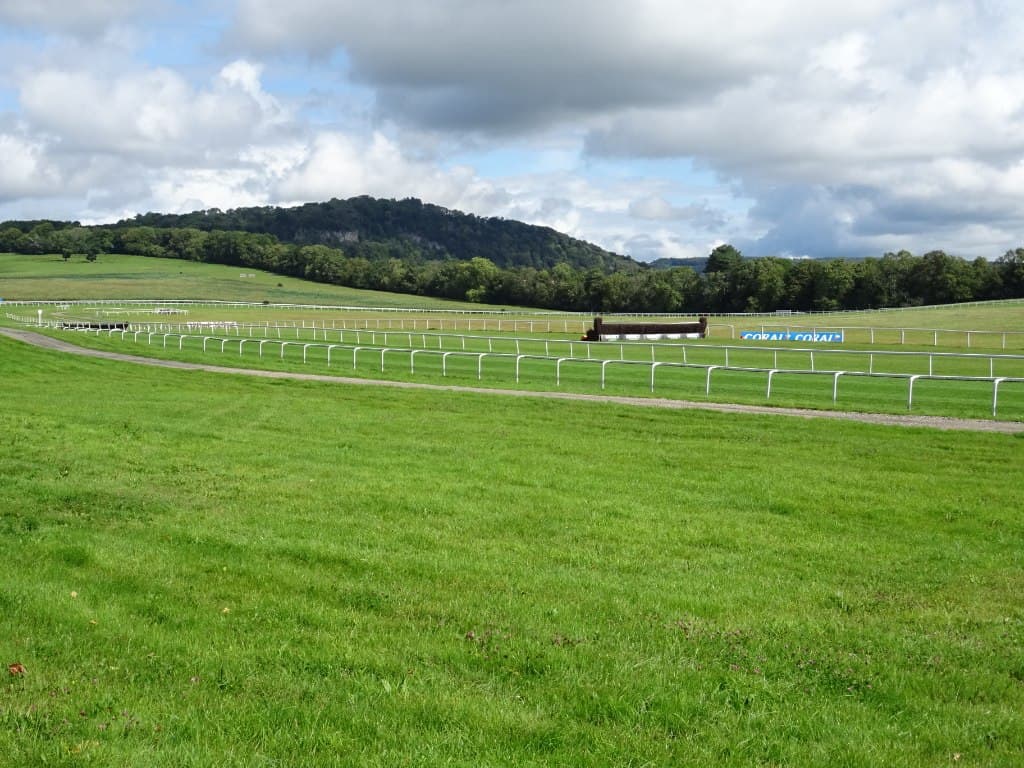
The Welsh Grand National is run over Chepstow's chase course — a left-handed, galloping oval with 12 fences per circuit. The race covers three miles, six furlongs and 136 yards, which means the field completes two full circuits plus a fraction. It's a marathon. The fences are stiff. The ground is almost always heavy.
The Track
Chepstow's chase course has a noticeable climb in the back straight. The run-in has a slight incline. Combined with the heavy ground, it's a proper stamina test. Horses need to stay, and stay well. Front-runners can get a breather in front, but they need to have the stamina to keep galloping. The chasers have to work to close the gap. It's a race that finds out non-stayers.
The fences are fair but demanding. There's an open ditch on each circuit. They take jumping. A horse that gets in close or loses its rhythm can come unstuck. But there's nothing quirky — it's an honest test of jumping and stamina.
The Ground
Chepstow's clay soil holds moisture. In late December, the ground is almost always soft or heavy. "Heavy" or "Soft, Heavy in places" is the norm. The Welsh Grand National has been run on good ground occasionally — but it's the exception. Horses need to act on deep ground. Form on heavy elsewhere — Haydock, previous Chepstow meetings — is essential. A horse that's never encountered heavy ground is a risk.
The Day
The Welsh Grand National is the feature race on the card. The supporting programme includes quality handicaps and novice chases. The crowd is around 8,000. The atmosphere is electric. It's the biggest raceday of the year in Wales. For more on visiting, see our day out guide.
Betting Angles & Trends
The Welsh Grand National is one of the best betting races of the year. Full fields, competitive handicaps, and a clear profile for the winner. A few angles stand out.
Soft-Ground Form is Essential
The single most important factor. When the ground is heavy — and it usually is — focus on horses with proven form on similar ground. Look for "won on heavy" or "placed on soft" in the form. A horse that's never encountered heavy ground is a gamble. Some adapt, some don't. The form book is your friend. Form from Haydock, Newcastle (when soft), or previous Chepstow meetings is gold dust.
Course Form Matters
A horse that has won or placed at Chepstow before has proven it can handle the track and the conditions. Previous course form is a significant plus. It's not infallible — horses can improve or regress — but it's a strong pointer. Several Welsh National winners had run well at the course before.
Stamina is Non-Negotiable
The race is a marathon. Three miles, six furlongs and 136 yards. Only real stayers need apply. Look for horses that have won or placed over three miles or further. A horse stepping up in trip for the first time is a risk. The track finds out non-stayers. Form in other staying chases — the Grand National trial at Haydock, the Becher Chase, the Ladbrokes Trophy — is relevant.
Weight Trends
The race is a handicap. Top weights have won — Mandarin carried 12st 7lb — but in recent years, the winners have tended to carry between 10st and 11st 7lb. The handicapper has a say. A horse that's well-in at the weights, with proven stamina and soft-ground form, is the ideal profile.
Use it as a Trial
The Welsh Grand National is a proper trial for the Grand National at Aintree. Horses that run well at Chepstow often go on to Liverpool. If you're building a portfolio for the Grand National, the Welsh National form is essential reading. For more betting angles, see our Chepstow betting guide.
Frequently Asked Questions
Share this article
More about this racecourse
All Chepstow guides
Welsh Grand National Winners: The Full Roll of Honour (1970-2026)
Every Welsh Grand National winner since 1970 - horse, age, starting price, jockey and trainer - with the trends that emerge across the full roll of honour. Source-verified.
Read more
Welsh National Day at Chepstow: The Complete Guide
Your complete guide to Welsh Grand National Day at Chepstow — Wales's greatest jump racing occasion. The Coral Welsh Grand National in late December is a key trial for Cheltenham and Aintree, run on one of Britain's most demanding and dramatic courses.
Read moreBetting at Chepstow Racecourse
How to bet smarter at Chepstow — track characteristics, going preferences, key trainers and winning strategies for Wales's top course.
Read moreResearch the field with the AI Race Predictor
Our model publishes calibrated win-probability estimates for UK races — a second opinion to understand a race, not tips. It's open about its record: it doesn't beat the market, and we show exactly how it does.
Work it out & learn the basics
Gamble Responsibly
Gambling should be entertaining and not seen as a way to make money. Never bet more than you can afford to lose. If you or someone you know has a gambling problem, help and support is available.