
Founder & Editor · Last reviewed 2026-04-05
Picture a Tuesday morning in early May. The Rows — Chester's medieval double-decker shopping galleries, built on Roman foundations — are already filling with women in wide-brimmed hats and men in morning suits. The city has a festival feeling by nine o'clock. Street cafes that normally serve commuters are three-deep with racegoers having breakfast. Walk down through the Eastgate, past the ornate clock that has marked city time since 1897, turn left at Watergate Street, and in ten minutes you're standing at the entrance to the Roodee with the River Dee at your back and 500 years of racing history beneath your feet.
That is Chester on May Festival morning. There is nowhere quite like it in British racing.
The Roodee is the oldest racecourse in England. Racing has been recorded here since 1539, making it one of the few sporting venues in the country with an unbroken history stretching back to the Tudor period. It sits within Chester's ancient city walls — literally inside them — occupying a flat meadow that was once the silted-up harbour of the Roman settlement Deva. You can stand in the County Stand and look up at the Roman amphitheatre ruins just beyond the course perimeter. The setting alone is worth the train ticket.
But the physical characteristics of the Roodee are what make it truly different to every other flat racing venue in Britain. At exactly one mile in circumference, it is the smallest racecourse in the country. The circuit is almost entirely flat with sharp left-handed bends, creating a natural amphitheatre where spectators can see the full race from start to finish without binoculars. At a course like Newmarket, horses disappear into the distance and reappear only for the closing stages. At Chester, every stride of every race is visible. Watching a sprint over five furlongs here — horses jammed together on the tight first bend, jockeys fighting for position, the whole field compressed into an impossibly small space — is more exciting than many races twice the distance.
The racing is highly tactical. Horses drawn in low stalls have a structural advantage in most field sizes because they don't need to travel as far on the bends. Jockeys who know the track well use the rail, the camber, and the pace of the race to their advantage in ways that make Chester racing a study in itself. For anyone who takes betting seriously, the draw statistics at Chester are mandatory reading before a single bet is placed.
Then there is the city. Most racecourses exist in the landscape as destinations in isolation. Chester Racecourse is different: it sits inside a city that is itself one of the best day-out destinations in England. The Roman walls are largely intact and walkable for over two miles. The black-and-white timber-framed buildings of the Rows are truly extraordinary — nothing else like them exists anywhere in Britain. The Cathedral dates to the 11th century. Two dozen independent restaurants and pubs are within ten minutes' walk of the racecourse gates. On a May Festival day, the boundary between city and racecourse dissolves; the whole place becomes a single extended event.
Who This Guide Is For
This guide is for anyone planning a day at Chester Racecourse — whether it's your first visit or you've been coming for years. It covers the practicalities thoroughly: how to get there, where to park, which enclosure suits your group, what to wear in each area of the course, where to eat and drink inside the gates and in the city around them. The tips section addresses the specific questions that catch people out, from the city walls viewing tradition to the rules around children and disabled access.
The May Festival (three days in early May including the Chester Cup, Chester Vase, and Dee Stakes) receives particular attention throughout because it is the event most visitors choose for their first trip. Expectations, atmosphere, and dress code are all different at the Festival compared to a standard flat fixture.
Quick Decision Block
Before you get into the detail, here are the essentials for a first visit:
Getting there: Chester station is a 10-15 minute walk from the racecourse through the city centre. Trains from Liverpool take 45 minutes, Manchester around an hour. If driving, use park and ride on Festival days rather than trying to find city centre parking.
Which enclosure: County Stand for the smartest experience and best views; Tattersalls for a good balance of value and access; General Admission for the most affordable entry. All three enclosures give a close view of the horses — the Roodee is simply too small for any area to feel remote.
Dress code: County Stand requires a suit or jacket and tie for men and smart daywear for women. Hats are expected at the May Festival and strongly encouraged at all other meetings. Do not arrive in jeans or trainers at the County Stand.
Hats: If you're attending the May Festival, wear one. Hat wearing at Chester has a social history going back well over a century. At the County Stand on Cup Day, almost every woman is wearing a hat; a significant proportion of men in the County Stand choose morning dress. This is not performative — it is simply what Chester does.
Combine with the city: Build two or three hours into the day for the city itself. Walk the walls before the first race. Have lunch in the Rows. Come back to Chester in the evening after racing — the restaurants along Watergate Street and beside the Dee fill up with racegoers and the city extends the day naturally.
Chester rewards preparation. Know your enclosure, know your train times, and bring a racecard — the draw statistics are the most important single piece of information at this track. Everything else this guide covers will make the day run smoothly.
Getting to Chester
Chester Racecourse has a structural advantage that most British tracks lack: it sits inside a city rather than outside one. The Roodee occupies the western edge of Chester's historic centre, hemmed in by the Roman city walls on one side and the River Dee on the other. That means every form of transport drops you within reasonable walking distance. There is no shuttle bus from a remote car park, no shuttle from a park-and-ride miles out of town — just a city, a set of walls, and a racecourse gate on the other side of them.
By Train
The train is the best way to arrive at Chester Racecourse. Full stop.
Chester station receives direct services from Liverpool Lime Street (around 45 minutes), Manchester Piccadilly (roughly an hour with some services requiring a change at Crewe), Birmingham New Street (approximately 90 minutes), and London Euston (two to two-and-a-half hours, often with a change). From North Wales, services run via Rhyl and Flint. From the east, Crewe is the interchange point for services from Sheffield, Leeds, and the East Midlands.
From the station, the racecourse is approximately 10-15 minutes on foot. Leave the station via the main entrance onto City Road, walk straight ahead past the Waitrose and into the old city through Northgate, then bear left through the city centre towards Watergate. On racedays the route is obvious — follow the hats. The walk passes through the heart of one of England's finest small cities, which makes it a pleasure rather than a chore. Allow 15 minutes from the station to the racecourse entrance if you're unfamiliar with the route.
Taxis outside the station take under five minutes to the course and cost approximately £5-7. On May Festival mornings they queue at the rank — expect to wait a couple of minutes.
Planning the return journey matters. Chester station becomes extremely crowded after the final race, particularly on May Festival days when 15,000 people are leaving at roughly the same time. Trains to Liverpool and Manchester fill up within minutes of pulling in. There are three practical approaches: leave before the last race (typically no earlier than 5:30pm to avoid missing the final); wait an hour or more in the city centre until crowds thin; or book a taxi in advance to collect you and take you straight to the station. If you choose to wait in the city, every pub and bar within half a mile of the course will be busy with departing racegoers — it is, in its way, part of the experience.
By Car
Driving to Chester on a standard flat fixture is manageable. On a May Festival day, it requires planning.
The main approach routes are the M56 from Manchester and the east (exit at Junction 14 for Chester, then the A5117/A55 into the city), the A55 from North Wales and the west, and the A41 from Whitchurch and Shropshire to the south-east. All roads into Chester feed into the city's inner ring road, which then distributes traffic to individual car parks.
Chester's one-way system is notoriously difficult for first-time visitors. The city's Roman street grid and later medieval street plan were not designed for motor traffic. A sat-nav is strongly recommended, and even then, give yourself an extra 20 minutes on the approach for a May Festival day because the ring road backs up significantly from mid-morning.
Parking on the Roodee itself is limited. The course has some vehicle spaces adjacent to the track, but these sell out in advance for every major fixture. Check the Chester Races website when buying tickets — parking can usually be added at the point of purchase. If you miss that window, the Roodee car park will likely be sold out by the time you arrive.
City centre car parks within walking distance of the course include the Grosvenor Nuffield car park (Brook Street), the Little Roodee car park (right beside the racecourse, accessed from Nun's Road), and the St Martin's Way multi-storey. Little Roodee is the closest option to the course on foot. All city centre car parks charge a premium on racedays — expect to pay £15-20+ for a full day's parking during the Festival. Arrive before 10:30am on May Festival days if you want a space in the nearest car parks; they fill quickly.
Park and ride is the recommended option if you're driving from a distance. Chester operates park-and-ride sites at several locations around the city: Boughton Heath on the A41 from the south-east, the Sealand Road site from the north-west, and Wrexham Road from the south. All are well signposted from their respective approach roads. Services run frequently to the city centre, with a short walk from the drop-off point to the racecourse. On May Festival days, the racecourse operates a dedicated park-and-ride service — check the Chester Races website for confirmed locations and prices each year, as these can vary by fixture.
Park and ride removes three specific problems: city traffic, city parking costs, and the need to keep one person sober. For a group of four sharing driving duties, it rarely makes financial sense. For a group of four who all want to drink, it always makes sense.
Taxis and Rideshares
Chester city centre has taxi ranks at the station, outside the Grosvenor Shopping Centre on Eastgate Street, and on several other central streets. Journey time from the station to the racecourse is under five minutes; from the city centre hotels, often less. Fares within the city are low.
Uber operates in Chester. Surge pricing activates reliably after the final race when several thousand people are looking for lifts simultaneously. If you are using Uber, book as the last race goes to the start rather than after the result — you may pay 1.5x pricing but you will have a car within minutes rather than waiting 20.
For groups, a pre-booked private hire car to collect you at a specific time is the cleanest solution. Agree a pickup point away from the main racecourse exit — the road directly outside the course is invariably congested immediately after racing.
Watching from the City Walls
Chester's city walls are one of the most complete Roman and medieval wall circuits in Britain, running for approximately two miles around the old city. Sections of the wall run immediately adjacent to the Roodee, and spectators have been watching racing from the walls since the earliest recorded race meetings in the 16th century.
The wall section adjacent to the racecourse is accessible from both the Eastgate and Watergate sides of the city. From the top of the walls, you can see the track clearly — the Roodee is so flat and compact that the entire circuit is visible from certain elevated positions. It is entirely free.
The obvious qualification is that the view is distant and you have no access to any course facilities: no bars, no parade ring, no betting infrastructure. For a casual observer — or for someone who wants to see the atmosphere of the Festival from outside — it is worth ten minutes. For an actual day's racing, it is not a substitute for buying a ticket. The tradition of wall-watching is real and part of Chester's character; it just works better as an added experience than a primary one.
Staying Overnight
Chester is an excellent city for an overnight stay, which transforms the day-out into a proper break. The Chester Grosvenor on Eastgate Street is the prestige option — a five-star hotel in the centre of the old city, within two minutes' walk of the Rows. Mid-range chains including the Hallmark Hotel (Hoole Road), Holiday Inn (Trinity Street), and a Premier Inn in the city centre provide reliable options at lower prices. The Hoole area, a residential neighbourhood about 15 minutes' walk north-east of the course, has a concentration of B&Bs and small guesthouses that offer good value.
For the May Festival, book accommodation at least three months in advance. Chester's hotel capacity is limited relative to the demand generated by 15,000 racegoers plus the city's own tourist footfall. The best mid-range options within walking distance of the course typically sell out by January for Cup Day.
Our Recommendation
Take the train. The walk through the city is not a minor detail — it is part of the experience of Chester races. You arrive through the Eastgate, past the Rows, through streets that have hosted racegoers for five centuries. You can eat and drink without a care. And when you leave, you can wait in one of Chester's truly good post-race pubs while the station crowds thin, rather than sitting in traffic on the ring road. If driving is unavoidable, use park and ride on any major fixture day.
What to Wear
Chester is one of the dressier racecourses in Britain. Not the dressiest — Ascot sets its own standard — but Chester is well clear of the casual end of the spectrum. At the May Festival in particular, the County Stand looks more like a society occasion than a sporting event, and even in the General Admission area, the overwhelming majority of racegoers have made a clear effort. You will not feel overdressed at Chester. You might feel underdressed.
The key variable is which enclosure you've booked and which fixture you're attending. The dress code enforced at the County Stand on Chester Cup day is substantially stricter than what applies on a midweek August flat card. Everything that follows reflects both those differences.
County Stand
The County Stand has a formal dress code, enforced at entry. Men must wear a suit or jacket and tie with smart shoes. Chinos and a jacket without a tie do not meet the standard for the County Stand — if in doubt, add a tie. Jeans of any colour, trainers, sportswear, and casual footwear will result in refusal at the entrance. This is not a guideline; it is applied.
Women are required to wear smart daywear. The practical range of what this means is wide — tailored trousers, midi dresses, suit dresses, and structured separates all qualify. Flip-flops, casual trainers, shorts, and heavily casual outfits do not. The County Stand does not specify a hat requirement in its formal dress code for standard fixtures, but the social expectation at the May Festival is clear: hats and fascinators are worn by the overwhelming majority of women at every May Festival day.
For Chester Cup day and Ladies' Day specifically, many men in the County Stand choose morning dress — top hat, morning coat, and waistcoat. This is not required, but it is common enough that a man arriving in a lounge suit on Cup day will be in the minority at the smarter end of the County Stand. If you enjoy the occasion-dressing aspect of racing, Cup day at Chester County Stand is the right place to commit to it.
Tattersalls Enclosure
Tattersalls has a smart-casual standard rather than a strict code. Most men wear chinos or tailored trousers with a collared shirt; jackets are common, particularly on Festival days. Jeans are permitted in Tattersalls on most fixtures, though blue denim jeans remain borderline and darker, smarter jeans are the sensible choice. Trainers are generally discouraged but the rules here are not enforced as rigorously as the County Stand.
Women in Tattersalls typically wear summer dresses, smart jeans with blouses, or casual tailored separates. On May Festival days, many women in Tattersalls also wear hats or fascinators — the general atmosphere is dressy enough that a fascinator feels natural rather than overdone. The key test for Tattersalls is: would you wear this to a smart restaurant or a friend's wedding reception? If yes, you're fine.
General Admission
The General Admission area has no formal dress code. In practice, you'll see the full spectrum from football shirts to three-piece suits. Most people still make a reasonable effort — Chester's social atmosphere is a level above many comparable courses, and the casual majority tend toward smart casual rather than sportswear. Shorts and t-shirts are common on hot August days; they're technically acceptable here. The atmosphere in General Admission is lively and informal, and nobody is policing clothing at the gate.
The May Festival: A Different Calibre
The May Festival runs over three days in early May. The three days are not equivalent. Chester Cup day (traditionally the Thursday) is the most formal, with the highest concentration of morning suits and the most elaborate hat displays. Ladies' Day (typically Friday) has the highest hat density of the three days. The Saturday card has a broader mix. If you are planning a first visit and want the full Chester dress code experience, Cup day or Ladies' Day in the County Stand is the one.
Outside the May Festival, Chester's flat season runs from May through September. Standard fixture dress codes are more relaxed — the County Stand requirements still apply but the social atmosphere of a Tuesday evening card in August is nothing like Cup day.
Weather Considerations
Chester is in the North West of England. May mornings can be truly cold — 8°C at 9am before warming to 18°C by afternoon is a typical early May day. September evenings cool quickly after 6pm. The practical implication: layers are not optional at Chester; they are standard planning.
For the May Festival, the tactical approach is a jacket or coat that works with your outfit for the morning walk through the city, which you can leave at the County Stand cloakroom once the afternoon warms up. A light stole or wrap for women doubles as both weather protection and outfit accessory. Men in morning dress have a natural layering option in the waistcoat. If the forecast shows any rain — and in Chester, May forecasts are frequently wrong in both directions — a compact fold-up umbrella in a bag is worthwhile.
The Roodee is open to the elements. The County Stand has covered terrace sections and indoor bar areas, but significant portions of even the top enclosure are uncovered. Tattersalls has a covered grandstand section but the outer viewing areas are exposed. General Admission has very limited shelter. On a wet day, a proper waterproof jacket that still looks presentable over your outfit is a sensible addition to the bag.
Footwear
This is the most practically important dress code decision at Chester. The route from Chester station to the racecourse involves cobbled streets — specifically Eastgate Street, Northgate Street, and parts of Watergate. These are uneven medieval cobbles, not modern paving. High stiletto heels on Chester's cobbles are a recipe for discomfort or a minor injury by mid-morning.
Inside the racecourse, the surfaces vary. The County Stand areas are largely tarmac and hard standing. Tattersalls includes grass sections. General Admission has extensive grass areas. High block heels manage grass better than stilettos. Wedge heels are practical on both surfaces. Men in smart shoes should prioritise comfort over newness — breaking in new leather-soled shoes on a day that involves two miles of cobbles and four hours on your feet is not a plan.
Quick Summary
County Stand: jacket and tie minimum for men, smart daywear for women, hat highly encouraged on Festival days. Tattersalls: smart casual, collared shirt, no trainers. General Admission: no formal code, though smart casual is the norm. Layers and practical footwear for any fixture — Chester's weather and its cobbled streets both reward preparation.
Enclosures & Viewing
Choosing the right enclosure matters at most racecourses. At Chester, the stakes are slightly lower than average, because the Roodee's one-mile circuit means even the most affordable ticket puts you reasonably close to the horses. The course is simply too small for any part of it to feel remote. That said, the difference in experience between the County Stand and General Admission is substantial — not in terms of viewing distance but in atmosphere, facilities, and the overall character of your day.
County Stand
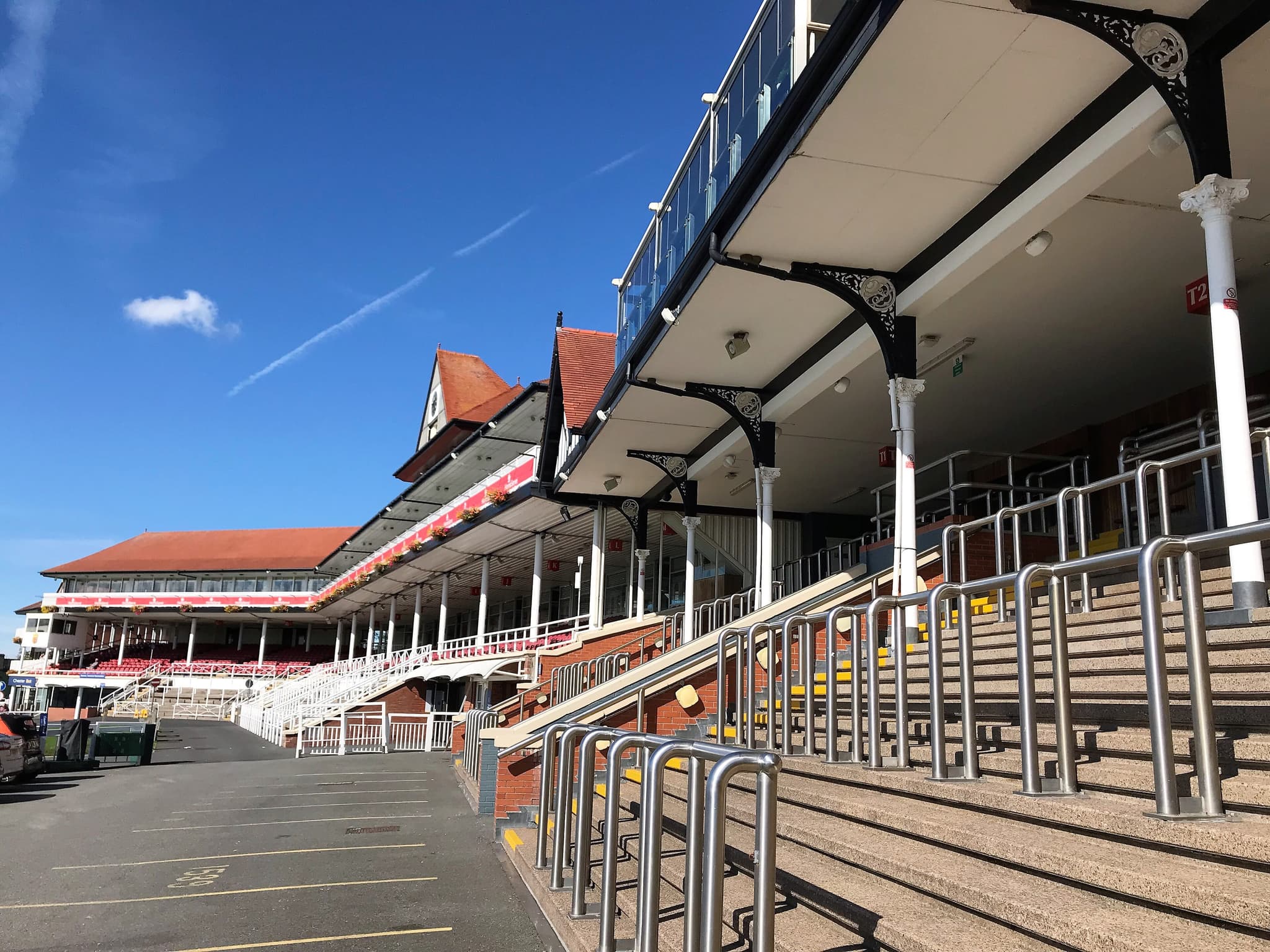
The County Stand is Chester's flagship enclosure and occupies the best position along the home straight. The viewing from the main terrace covers the full circuit — one of the few courses in Britain where this is possible from a fixed viewing position. At most flat tracks, the stalls are positioned too far away and the bends obscure large sections of the race. At Chester, you watch horses break from the stalls, complete the circuit, and cross the finish line without losing sight of them for more than a moment on the back straight. For flat racing aficionados, this is a rare pleasure.
The County Stand structure runs across several levels. Ground level access leads to the parade ring and pre-parade area, where you can stand a metre from the horses before each race. This is one of the great underrated pleasures of Chester — the paddock is compact enough that every runner is inspected up close by anyone who bothers to look. The elevated terraces give progressively better views as you go higher, and the top-floor terrace looks out across the entire Roodee with the River Dee and the Welsh hills beyond it on clear days.
Inside the County Stand, facilities include multiple bar areas across different levels, the White Horse Restaurant (booking essential for Festival days), private boxes and hospitality suites on the upper floors, and a betting hall with tote windows. The general quality of finish and maintenance in the County Stand is high. This is a course that has invested significantly in its infrastructure over the past decade.
Ticket prices for the County Stand start at around £30-40 for standard flat fixtures and rise considerably for the May Festival — Cup day tickets in the County Stand typically start from £50 and can be significantly higher for packages with hospitality or preferred viewing areas. Book well in advance for any May Festival day; the County Stand routinely sells out weeks beforehand.
The dress code applies from entry. Men need a jacket and tie at minimum; women smart daywear. On May Festival days, the standard rises further — see the dress code section for the full breakdown.
Best for: Those who want the full Chester experience, serious racegoers, special occasions, anyone for whom the quality of facilities matters as much as the racing itself.
Premier Enclosure / Tattersalls
Tattersalls (sometimes labelled Premier Enclosure depending on the fixture) sits between the County Stand and the General Admission area in both geography and price point. The viewing areas include a covered grandstand section and outdoor terracing that gives a clear sight of the home straight and finish line. Access to the parade ring is included, which is the single most important practical difference from the cheaper enclosures — being able to inspect the horses before each race is a material advantage if you're betting.
The facilities in Tattersalls are solid. There are multiple bar and food outlets, covered seating areas, and a decent concentration of bookmaker pitches. The quality of food has improved across all Chester's enclosures in recent years — you will find wood-fired pizzas, artisan burgers, and decent coffee alongside the traditional fare. Prices are racecourse prices (elevated by 30-50% compared to high street equivalents) but nothing unusual for a course of Chester's calibre.
Tattersalls typically costs £20-30 on standard fixtures and £30-40+ at the May Festival. Note that ticket prices at Chester across all enclosures are at the higher end for a British regional track — this is not a cheap day out, but the quality of the setting and facilities justifies the pricing.
Best for: First-time visitors who want a quality experience without paying County Stand prices, groups of mixed racing enthusiasm, anyone who wants parade ring access at a reasonable cost.
General Admission
The General Admission area occupies the northern end of the racecourse. Your viewing angle on the finish is more oblique than from the County Stand or Tattersalls, but the Roodee is compact enough that the home straight and final two furlongs are still clearly visible. The horses pass close to the General Admission boundary on the back straight, giving you good viewing of the early and middle stages of each race.
Access to the parade ring is not included with a General Admission ticket. This is the most significant practical limitation — if you are betting and want to see the horses before the race, you'll be working from the racecards and tote boards rather than direct observation. For casual racegoers this is not a major issue; for those having a serious day's betting, it is worth upgrading.
The facilities in General Admission focus on mobile catering units and temporary bar structures. The range is more limited than Tattersalls or the County Stand, but it covers the basics competently: hot food, a decent selection of draught beers, and betting infrastructure. The atmosphere in General Admission is the most relaxed and sociable of the three enclosures. It is popular with groups, younger racegoers, and families with children. Tickets start from around £10-15 on standard fixtures and around £20-25 at the May Festival.
Best for: Budget-conscious visitors, casual racegoers primarily interested in the social atmosphere, families with children, large groups where price per head matters.
Hospitality
Chester offers a range of private boxes and hospitality packages, primarily within the County Stand and purpose-built hospitality suites. Packages typically include a reserved table, a set-menu lunch or afternoon food package, a complimentary drinks allocation, and the best viewing positions on the course. Prices for private box hospitality start from around £150 per person and rise significantly for the May Festival's premium days.
Hospitality at Chester is popular with corporate clients and large groups marking significant occasions. The view from a private box in the upper County Stand on Cup day — horses circling in the parade ring below, the Dee glinting to the west, the medieval walls running behind the far stand — is hard to fault as a setting for a special event.
Contact the Chester Races hospitality team directly for current pricing and availability; packages for the May Festival are released in the preceding autumn and the best options sell out before Christmas.
The Viewing From the City Walls
Technically separate from any ticket enclosure, the city walls adjacent to the Roodee offer a free elevated view of the track. The relevant section of wall runs along the western side of the course. From the wall, you are above the level of the surrounding stands and can see the full circuit. The view is distant relative to any paid enclosure — you are watching from perhaps 100-150 metres from the nearest point of the track — but the spectacle is clear and the experience unique.
Chester's wall-watching tradition dates to the very earliest recorded race meetings at the Roodee in the 16th century. In those first centuries of Chester racing, the walls were a primary viewing point for citizens who had not paid for an enclosure. The tradition persists. On a May Festival afternoon, the sections of wall nearest the course will have clusters of spectators at vantage points. It is worth spending ten minutes there even if you've bought a ticket, just for the perspective it gives on the scale of the Roodee and how close the city walls actually are to the action.
Which Enclosure to Choose
If this is a special occasion, or if the quality of the day matters as much as the racing itself, book the County Stand and go fully committed on the dress code. You will have a better day.
If you are coming with a group that includes people less interested in racing — a work social, a mixed-enthusiasm group of friends — Tattersalls gives everyone the key elements: a parade ring view, decent food and drink, and a proper seat for the racing.
If cost is a constraint, or if you are testing whether you enjoy racing before committing to a more expensive day, General Admission at Chester is a better product than General Admission at most British courses, purely because the Roodee is so compact. You will not feel shortchanged.
Food & Drink
Chester does food and drink better than most racecourses its size, and the city location adds a second tier of options that most tracks cannot match. The standard on-course offering has improved substantially over the past several years, with better food and wider choice in all three enclosures. But the more important point is that Chester city centre is within ten minutes' walk, and its restaurants and pubs are considerably better than anything available inside the gates.
County Stand: Dining and Bars
The White Horse Restaurant is the County Stand's flagship dining option. It occupies a position with views over the parade ring and racecourse — arguably the best table-and-view combination at any British flat racing venue. The menu at the White Horse focuses on British seasonal cooking: grilled meats, fish, and the kind of structured menu that works well over a three-hour pre-race lunch. Prices reflect the setting; expect a full lunch for two with a bottle of wine to land somewhere north of £100 without effort. Booking is mandatory for any May Festival day and strongly advised for all County Stand fixtures. Tables on the course-facing side fill first.
Beyond the White Horse, the County Stand has several bar areas spread across different levels. The Champagne terrace bars at upper-level positions are a Chester institution on Festival days — Champagne and Prosecco service by the glass or bottle, with the best views on the course. On a warm May afternoon with a glass in hand and horses below you, this is as good as British racing gets. Bar queues in the County Stand are manageable because the space is well distributed across multiple service points.
For lighter eating within the County Stand, there are food stalls serving sandwiches, sushi boards, and charcuterie boards — the kind of food designed to sustain an afternoon rather than replace a proper meal. Coffee from a dedicated espresso bar is available from gates-open; the quality is noticeably better than the standard racecourse coffee urn.
Tattersalls: Food and Drink
Tattersalls has undergone a shift toward higher-quality food in recent years. The days of the racecourse burger van as the primary option are largely behind Chester. The Tattersalls food offering on a standard fixture now includes wood-fired pizzas cooked to order, pulled pork rolls from a dedicated barbecue unit, gourmet burgers with a proper choice of toppings, and a dedicated fish and chips outlet that queues quickly between races.
The pizza unit in particular runs to order and the quality is a clear step above standard racecourse catering. On a warm May day, eating in Tattersalls with a beer in hand and the next race visible from the standing area is a perfectly good option. Prices are typical of premium event catering: around £10-14 for a main course, £5-7 for a drink. Not cheap, but not egregious.
Bar coverage in Tattersalls is solid. There are permanent bars at multiple points and a tented bar area that expands for Festival days. Draught lager, ale, and a rotating guest cask ale are standard. Wine and spirits are available at all bars. The queuing strategy is the same at Chester as at every other racecourse in Britain: go during the race, not after the result. The two-minute window between a race starting and the result being declared is when the bars are empty; the three minutes immediately after the result is when every bar in Tattersalls has a five-person-deep scrum.
General Admission: Catering
General Admission has a more limited offer focused on mobile and temporary catering structures. Hot dogs, burgers, fish and chips, and pasties are the staples. The quality is acceptable rather than impressive, and the range is narrower than in the paid enclosures. Drinks coverage includes temporary bar structures with a basic range of lagers, ciders, and wines. The General Admission catering does the essential job for a long afternoon.
If you're in General Admission and care about food quality, the obvious solution is to eat in the city before entering. The enclosure-to-city walk takes 10-15 minutes, but once through the gates you're committed to what's available inside.
Eating and Drinking in Chester Before Racing
This is the most significant food-related decision of the day, and the recommendation is consistent: eat in the city. Have a proper lunch somewhere good before the gates open. The food quality, menu range, price-per-pound comparison, and simple pleasure of eating in Chester's medieval city centre all argue in the same direction.
The Rows — Chester's first-floor medieval arcades running along Eastgate, Northgate, Watergate, and Bridge Street — contain a mix of restaurants, independent cafes, and chain options. For a pre-race lunch, the restaurants along Watergate Street (the road that leads directly toward the racecourse) are both convenient and good. They're aware of the racing crowd and are fully staffed on Festival days.
Specific areas worth knowing: the cluster of restaurants and wine bars around St Werburgh Street near the Cathedral for a more formal lunch; the independent cafes on Watergate Street for something quicker; the riverside pubs near the Groves for those who want a pint with a view before heading to the track. The Bear and Billet on Lower Bridge Street is one of Chester's oldest pubs (the building dates to 1664) and serves food throughout the day — the kind of pre-race stop that Chester specialises in.
The timing argument for a city lunch is practical as well as qualitative. First race at Chester typically goes off around 2:00pm on a standard fixture and around 1:30pm on Festival days. Gates open 90 minutes before the first race. If you arrive in the city by 11:30am, you have time for a comfortable 90-minute lunch, a walk through the Rows or along the walls, and a relaxed walk to the course with time to spare before the first.
Post-Race Drinks and Dinner in Chester
The city's restaurant and pub scene absorbs the racing crowd well because Chester has a broad base of hospitality infrastructure that serves tourists and residents year-round. You will not struggle to find somewhere to go after racing.
Immediately after racing on a Festival day, the nearest pubs to the racecourse — particularly those on Northgate Street and along Watergate — fill with racegoers very quickly. If you want a seat, move fast or move further into the city. The Old Harkers Arms on Russell Street (a five-minute walk from the course) and The Brewery Tap on Lower Bridge Street are popular with racing crowds and have enough capacity to absorb them without losing the atmosphere.
For an evening meal after a May Festival day, booking in advance is essential for anywhere worth eating. Chester's better restaurants — Covino on Eastgate Row, the Grosvenor's Simon Radley restaurant for a special occasion, and a range of independent options along Watergate Street — are fully booked on Festival evenings. Sort this at the same time you book your racecourse tickets.
The Practical Summary
Eat a proper lunch in Chester city before racing. Drink at the course during the afternoon — the County Stand champagne terrace or the Tattersalls bar, depending on your enclosure. After racing, head into the city for drinks and, if staying overnight, dinner at a pre-booked restaurant. This structure makes the most of what Chester offers as a combined city-and-racecourse day, and it avoids the pressure of finding food at peak demand times inside the gates.
Tips & FAQ
Insider Tips
Arrive in Chester before 11am on a May Festival day. The city fills up fast. By noon on Chester Cup day, every bar and restaurant within a half-mile of the Rows has a queue outside it. Arriving early means you choose your lunch venue rather than taking what's left. It also means you get the best of Chester in a relatively calm state before 15,000 people descend.
Check the draw before every bet. Chester is not just one of the most draw-biased racecourses in Britain — it is the most draw-biased. In sprint races over five furlongs and five furlongs and eight yards, horses drawn in stall one have a structural advantage that no other variable fully compensates for. In large fields over six furlongs, low draws remain significant. The full analysis is in the Chester betting guide, but the rule of thumb is straightforward: in any race with more than ten runners on the Roodee, treat high draws with deep scepticism unless the horse has real class advantages.
Study pace and tactics. Because the circuit is tight and left-handed, the pace of races at Chester is almost always fast from the start. Horses cannot make up ground lost in the early stages the way they might on an open galloping track. A horse that misses the break or gets into a position three wide on the first bend is very likely to run below its best. Pay attention to pace angles and jockey booking — certain jockeys have excellent records on this track specifically because they understand the tactical requirements.
Walk the city walls on arrival. Give yourself twenty minutes to walk the section of the city walls adjacent to the Roodee before entering the course. The perspective from the walls looking down at the Roodee — the medieval walls framing a working racecourse in a river meadow, with the Welsh hills beyond — is not available from inside the gates. It is one of the most interesting viewpoints in British sport. The walls are accessible from both the Eastgate and Watergate sides and you can reach the best vantage points within a few minutes of either.
Book everything in advance. County Stand tickets for May Festival days, the White Horse Restaurant, post-race restaurants in the city, accommodation — all of these sell out substantially before the event. Chester has limited capacity relative to its Festival demand. The broad rule is: if you're planning a May Festival visit, make your bookings in January or February at the latest for the good options.
Position yourself for the parade ring. If you have parade ring access (County Stand or Tattersalls), use it before every race. Chester's parade ring is compact — you can stand close enough to see a horse's coat sweating, its eye movement, its stride pattern walking around the ring. This matters for betting but it also matters for the experience. At larger courses the parade ring is a distant performance; at the Roodee it is an inspection.
Plan your return journey before you need it. Chester station has limited platform capacity relative to the numbers departing after the final race. If you are catching a train, either know exactly when the last race is scheduled to finish (typically 5:45-6:15pm on a Festival day) and which train you want, or build in a contingency of an hour in a city centre pub. Do not assume you'll find a train immediately after racing.
Frequently Asked Questions
What time do the gates open?
Gates typically open approximately 90 minutes before the first race. On standard flat fixtures, the first race is usually around 2:00-2:15pm, putting gates opening at approximately 12:30pm. For the May Festival, first races are scheduled earlier — typically 1:30pm on Cup day — so gates open around 11:45am-12:00pm. Check the Chester Races website for gate times specific to each fixture; they are published with the full racecard when entries close.
What is the difference between the May Festival and a regular Chester fixture?
The May Festival (three days in early May) is Chester's premier event, drawing 15,000 racegoers per day compared to 3,000-8,000 for standard fixtures. The key differences for visitors: the dress code is applied more strictly and the social expectation is higher; ticket prices are 30-50% higher across all enclosures; all restaurants and hospitality must be booked in advance; the city is significantly busier; and the racing quality is substantially higher — the Festival card includes Group races (the Chester Vase is a Group 3 Derby trial, the Dee Stakes a Group 3 for three-year-olds). On a standard fixture, the whole experience is more relaxed. Both are worth doing but they are different days.
Do I have to wear a hat in the County Stand?
There is no written hat requirement in the County Stand dress code for standard fixtures. During the May Festival — particularly Cup day and Ladies' Day — the social expectation is strong enough to be treated as a practical requirement. A woman arriving in the County Stand on Chester Cup day without a hat or fascinator will be in a small minority. The hat tradition at Chester is one of the most embedded in British regional racing and forms a real part of the day's character rather than being purely performative.
Can I watch from the city walls without buying a ticket?
Yes. The city walls that border the racecourse are public, freely accessible, and have been used as a viewing point since the Roodee's earliest races in the 16th century. The relevant section of wall is accessible from Northgate and Watergate. You will have a clear view of the full circuit from an elevated position. What you will not have is access to any course facilities, the parade ring, bars, food, bookmakers, or tote windows. Wall-watching is a supplement to the full experience rather than an alternative to it.
How far is Chester station from the racecourse?
Chester station is approximately 10-15 minutes on foot from the racecourse entrance. The route runs through the city centre — down City Road, through the city walls via Northgate or Eastgate, and along Watergate Street to the course. On racedays, signage is in place and the direction of the crowd makes the route obvious. Taxis from the station rank take approximately five minutes and cost around £5-7. There is no direct bus service connecting the station to the racecourse, but the walk is straightforward and passes through the best parts of the city centre.
Where should I park if driving?
For the May Festival, the recommended approach is park and ride. Chester operates park-and-ride sites from several approach roads, with services running directly to the city centre. The racecourse's own Roodee car park sells out in advance — check the Chester Races website for availability when purchasing tickets. City centre car parks within walking distance include Little Roodee (nearest to the course, accessed via Nun's Road), the Grosvenor Nuffield car park on Brook Street, and the St Martin's Way multi-storey. All charge premium rates on racedays. Arriving before 10:30am significantly increases your chances of finding a space in the nearest car parks.
Are children admitted?
Children under 17 are admitted free to Chester Racecourse when accompanied by a paying adult on most fixtures. Chester is a family-friendly venue and you will see plenty of children, particularly in the General Admission area. The atmosphere in the County Stand on a May Festival afternoon can be lively; the General Admission area is generally more family-oriented. For very young children, the noise and crowd density at a May Festival day is worth considering — standard weekday flat fixtures are a considerably calmer introduction.
Is Chester Racecourse accessible for wheelchair users and disabled visitors?
Chester provides accessible viewing areas, level access to key areas of the course, designated accessible parking near the entrance (pre-booking required), and accessible toilet facilities throughout the course. The compact nature of the Roodee actually works in favour of accessibility — there is less distance between the entrance, the parade ring, and the main stands than at most larger courses. The City Walls adjacent to the course are not accessible for wheelchair users given the stair access, but the viewing within the course is. Contact Chester Races directly on their accessibility helpline before your visit to arrange specific requirements or reserved accessible parking, particularly for the May Festival.
Can I bring my own food and drink?
Alcohol cannot be brought into the racecourse — this is a standard policy across all British racecourses and is enforced at Chester's entry points. Small amounts of non-alcoholic food (sandwiches, snacks) are generally tolerated for personal consumption, but bags are checked at the entrance and large quantities of outside food may be asked to be left. The specific policy can vary by fixture and enclosure, so check the Chester Races website for the rules applying to your specific raceday, as Festival day policies are sometimes stricter than standard fixture rules.
Where can I place a bet at Chester?
Bookmaker pitches are available throughout all three enclosures. In the County Stand and Tattersalls, Tote windows operate alongside independent bookmakers. The variety of bookmaker pitches is good relative to the course size — Chester's betting environment is well developed. For those wanting to bet on credit with an account, all major UK operators' apps work on the course. The Racing Post app and Timeform's mobile product are widely used for on-course form analysis. A physical racecard (available at the entrance, typically £2-3) remains the most comprehensive single source for Chester specifically because the draw statistics printed in each race's form guide are directly relevant to every Chester race.
What are the best days to visit?
Chester Cup day (Thursday of the May Festival) is the most prestigious single day, with the Chester Cup handicap (a heritage race run since 1824) as the feature event. Ladies' Day (Friday) has the most elaborate hat displays and a very social atmosphere. The Saturday of the Festival is the most accessible in terms of dress code expectations and ticket prices. For a first visit, a standard flat fixture on a weekend in June or July gives you the core Chester experience — the Roodee, the city, the quality racing — at lower prices and with less logistical complexity than the Festival.
Are dogs allowed at Chester Racecourse?
Chester Racecourse does not permit dogs, with the exception of registered guide and assistance dogs. This is consistent with standard racecourse policy in Britain. If you are travelling with a dog, arrangements will need to be made for the animal before attending.
What happens if racing is abandoned?
Chester races in the flat season on a turf circuit with no all-weather option. Abandonment is possible due to waterlogging following heavy rain, extreme heat (rare in the North West), or occasionally high winds affecting rider safety. In practice, Chester races very rarely abandon mid-card — the Roodee's natural drainage is reasonable. If a fixture is abandoned, the racecourse's standard policy is to refund ticket costs. Check your ticket's terms and conditions and the Chester Races website if abandonment is possible — they post updates from the early morning of a raceday.
Is there a dress code on the standard mid-week flat fixtures?
The County Stand dress code applies at all fixtures: jacket and tie for men, smart daywear for women. However, the social atmosphere on a midweek August flat card is considerably more relaxed than during the May Festival, and the style of dress you see in the County Stand reflects that. Tattersalls operates the same smart-casual expectation throughout the season. General Admission has no formal code on any fixture. The difference between the May Festival and a standard fixture is one of social intensity, not the written rules.
Share this article
More about this racecourse
All Chester guides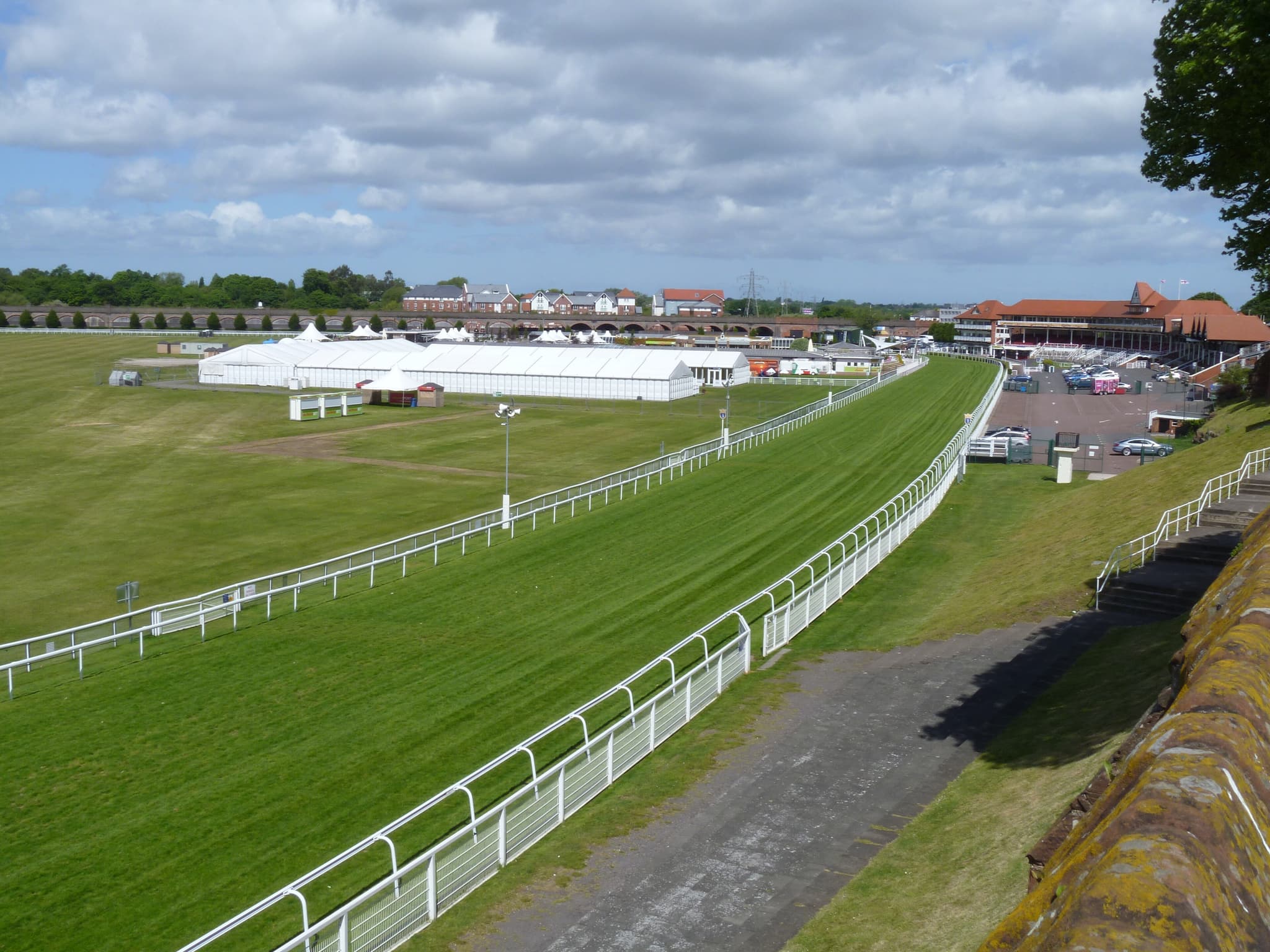
The History of Chester Racecourse
From medieval origins on the Roodee to England's oldest racecourse: nearly 500 years of racing at Chester.
Read more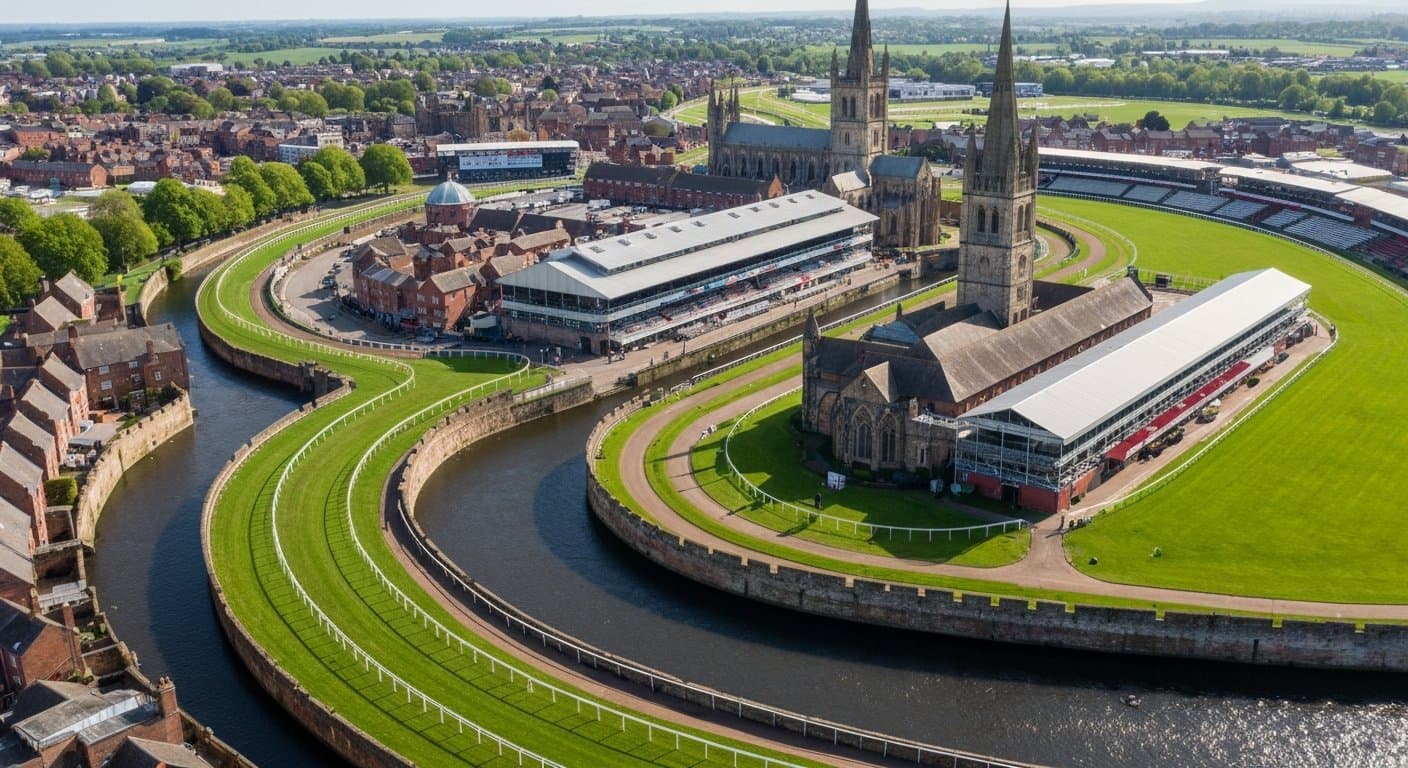
Chester May Festival: Complete Guide
Your complete guide to the Chester May Festival — three days of top-quality flat racing at England's oldest racecourse.
Read more
Enable at Chester: The Complete Story
How Enable's Cheshire Oaks victory at Chester in 2017 launched one of the greatest careers in modern British flat racing history.
Read morePhotos on this page are used under Creative Commons licences. Titles, sources and licence links for each one are on our image credits page.
Gamble Responsibly
Gambling should be entertaining and not seen as a way to make money. Never bet more than you can afford to lose. If you or someone you know has a gambling problem, help and support is available.