
Founder & Editor · Last reviewed 2026-03-02
If there is one racecourse in Britain where thorough preparation pays off more consistently than anywhere else, it is Chester. The Roodee is not just the oldest flat track in England — it is the most unusual, and that unusualness creates a betting landscape unlike anywhere else in the country.
Most racecourses ask roughly the same questions of horses: can it stay the trip, does it handle the going, is it fit enough on the day? Chester adds a further set of questions that are just as important. Can the horse negotiate tight left-handed bends without losing momentum? Does it race prominently enough to avoid getting trapped wide on the short home straight? Is it drawn low enough to have any realistic chance in a sprint handicap? These are Chester-specific questions that have no equivalent at Newmarket or York or Doncaster, and the punter who ignores them will lose money here regardless of how good their form study is elsewhere.
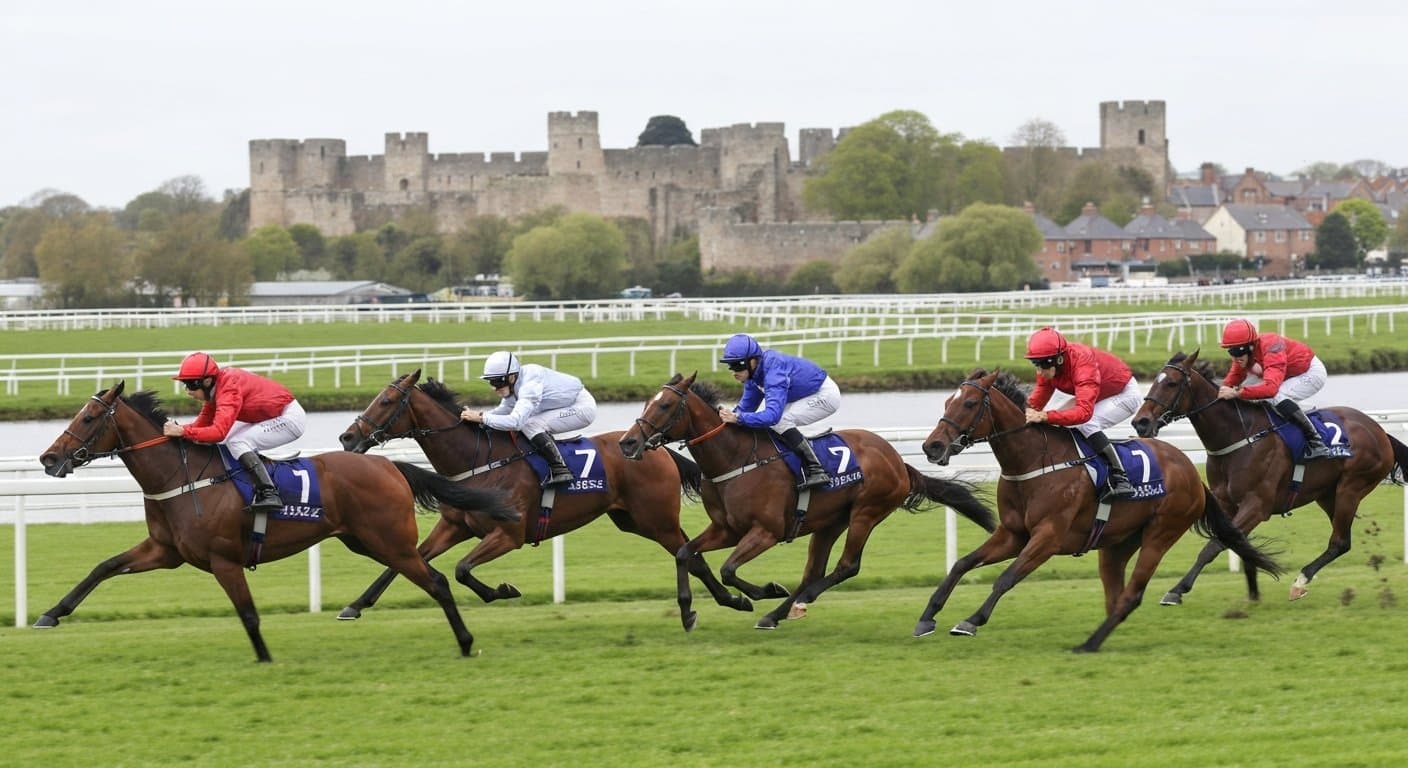
The Roodee is England's oldest racecourse, with records showing racing on the site as far back as 1539. It sits inside the medieval walls of the city of Chester, occupying a low-lying meadow beside the River Dee. The circumference of approximately one mile and one furlong makes it the smallest flat circuit in Britain, with a home straight of barely two furlongs and bends that are almost continuous throughout the race. A horse running five furlongs at Chester encounters a significant left-hand bend within the first two furlongs of the start. That simple fact is the foundation of everything you need to know about betting here.
The draw bias that results from this geometry is the most extreme of any major flat course in Britain, arguably more pronounced even than Beverley, which also carries a strong low-draw advantage. In five- and six-furlong races at Chester, horses drawn in stalls one to six win approximately 60 to 70 per cent of races despite representing roughly 40 per cent of the field in a typical 14- to 16-runner handicap. That is not a marginal edge. It is a structural feature of the course that shows up in the data year after year and that creates consistent, exploitable opportunities for bettors who know where to look.
Beyond the draw, Chester rewards its specialists. Certain trainers — Richard Fahey, Charlie Johnston, Tom Dascombe — target the Roodee deliberately and repeatedly with horses that are suited to its demands. Certain horses return to Chester season after season and win or place with a consistency that belies their form elsewhere. Jockeys who can ride the bends and slot onto the rail from the stalls have a measurable advantage over those visiting the course occasionally.
The May Festival, held over three days in early May, is the centrepiece of the Chester season and features the Chester Cup, the Chester Vase Derby trial, the Ormonde Stakes, the Huxley Stakes, and a series of competitive handicaps. The form from the May Festival feeds into the wider flat season, with Chester Vase winners regularly going on to perform with credit in the Derby, and May Festival handicap winners often reappearing at Royal Ascot.
This guide covers every angle you need to bet at Chester profitably. The draw bias, broken down by distance and field size. The Chester Cup and how to approach the world's most famous long-distance handicap. The Classic trials and what Chester form tells you about Derby contenders. The May Festival angles and the trainer and jockey trends that cut through the noise. And a complete FAQ section addressing the questions that come up every season.
Chester is a punter's course. Not because it is easy — it is far from easy — but because knowledge and preparation have a higher return on investment here than almost anywhere else in British racing. The casual punter who picks a name or backs the favourite without checking the draw will be repeatedly caught out by the Roodee's quirks. The bettor who does the work will find consistent edges that hold up across years of racing data.
Bet on Chester
Place your bets on Chester races with a trusted bookmaker.

Promo code BETFRED50. New customers only. Register, deposit with a Debit Card, and place a first bet of £10+ at Evens (2.0)+ on Sports, to be settled within 7 days, to get £30 in Sports Free Bets and £20 in Bet Builder Free Bets within 24 hours of settlement. 7-day expiry. Eligibility & payment exclusions apply. Full T&Cs apply. Take Time to Think. BeGambleAware.org. 18+. Full T&Cs.

Promo code R30. New UK customers only, 18+. Register, deposit £10 or more, then place a £10 single cash bet at odds of 1/2 (1.5) or greater on any sports market (excluding Virtuals). Once the qualifying bet settles you get £30 in Free Bets (3 x £10) — the qualifying bet can win or lose. Free Bets are valid on any sports market excluding Virtuals, expire in 7 days, are non-withdrawable and must be used in full. Excluded deposit methods apply (including PayPal, Apple Pay, Skrill and NETELLER). Named bets such as Lucky 15 do not qualify. If you cash out the qualifying bet, or it is voided, you are no longer eligible for the offer. Ends 31.12.26. Full T&Cs apply. Please gamble responsibly. BeGambleAware.org. 18+. Full T&Cs.

Promo code BET40GET20. New UK customers, 18+. Register with the code and place a first bet of £40 or more at Evens (2.0) or greater. Receive 2 × £10 free bets: the first credited automatically once the qualifying bet settles, the second 24 hours later. Free bets must be placed at minimum odds of 4/1 (5.0), expire 24 hours after credit, and the free-bet stake is not returned with winnings. Debit card deposits only. Take Time to Think. BeGambleAware.org. 18+. T&Cs apply. Full T&Cs.

50% of your first-day net losses refunded as a free bet, capped at £25. New UK customers aged 18+ only. To qualify, deposit and place a first bet of £10 or more on any sport at minimum odds of evens (2.00), then place at least two further bets on different events, each worth at least 50% of your largest bet, all at evens (2.00) or greater. Losses are counted from your first settled bet until 23:59 the same day. Place a qualifying £10+ bet and you are guaranteed at least a £5 free bet. Bets placed at SP, void bets, cashed-out bets and bets struck with free bets do not count towards the offer. The free bet is credited the day after your qualifying bets settle and must be used within 7 days, after which it expires. It can be used at odds from 1/4 (1.25) up to 250/1 on singles and straight accumulators, but not on Trixie, Patent or Yankee style multiples. Free-bet stake is not returned with winnings. One offer per person, household, address, IP address and device. E-wallet deposits may not qualify, so check the cashier before depositing. Customers registered with GAMSTOP cannot claim. KYC identity verification must be completed before the free bet is credited. Take Time to Think. BeGambleAware.org. 18+. T&Cs apply. Full T&Cs.

New customers, 18+. Choose the sports bonus at sign-up, make a first deposit and receive a 100% bonus up to £50 in your Sports Bonus balance. To convert the bonus to cash, wager it 10x within 30 days. Single bets below Evens (2.00) do not qualify; accumulators do not qualify if any selection is below 1/2 (1.50). Virtual Sports, voided, cancelled, drawn, cashed-out and free-bet wagers do not count towards wagering. Only the first settled bet per event counts. Withdrawing before the wagering requirement is met forfeits the bonus balance including bonus winnings. Real-money funds are used before bonus funds. Deposits via Skrill or Neteller are not eligible. Not valid in conjunction with other promotions. Odds, bet and payment limits apply. 10bet general and promotion T&Cs apply. BeGambleAware.org. 18+. Full T&Cs.

New customers in Great Britain and Republic of Ireland, 18+. Place a £10 fixed-odds qualifying bet at minimum odds of 1/2 (1.50) — single or each-way (only the win part counts), pre-event or in-play, not cashed out early, within 28 days of opening the account. Receive up to £60 in bonuses credited over three days: 3 × £10 fixed-odds free bets (the first on settlement, then 24 and 48 hours later) plus 3 × £5 Total Goals FOOTBALL spread bets and 3 × £5 racing Winning Favourites spread bets, with a £1 racing Race Index spread bet as an extra on top. The spread bets need a full spread-betting account, opened within 28 days of the fixed-odds account and subject to Spreadex's eligibility and appropriateness checks. Free-bet stakes not returned with winnings; free bets valid 28 days from issue. IMPORTANT: the £5 credits are SPREAD bets — sports spread betting carries the risk that losses can exceed your stake. Sports spread-betting customers do not have Financial Ombudsman or FSCS recourse. Take Time to Think. BeGambleAware.org. 18+. T&Cs apply. Full T&Cs.

Promo code WELCOME15, entered under My Bonuses after registering. New UK customers, 18+. Place a first qualifying bet of at least £10 from your cash balance at odds of evens (2.0) or greater within 7 days of opening the account. Once the qualifying bet fully settles you receive £15 in free bets, credited as 3 x £5 tokens with set uses: one £5 accumulator free bet (minimum 4 legs, each leg at 2/5 or bigger), one £5 sports free bet (any market at evens or bigger) and one £5 Sub Cover free bet (selected football player markets at evens or bigger). Free-bet stakes are not returned with winnings. Free bets expire 7 days after they are credited. Void, cashed-out and partially cashed-out bets do not qualify. One offer per customer. Confirm the current terms on BetGoodwin's own welcome-offer page before claiming. Take Time to Think. BeGambleAware.org. 18+. T&Cs apply. Full T&Cs.

New UK customers, 18+. Minimum deposit £10. Place a £10 qualifying single on sports (excluding virtuals) at minimum odds of 1/2 (1.50), settled within 14 days. Deposit-method exclusions apply. Receive £30 in free bets (stake not returned), split £20 for sportsbook use (2 x £10) and £10 for Bet Builder only (2 x £5); Bet Builder does not cover horse racing. Free bets must be accepted within 7 days and expire 7 days after acceptance. No promo code required. Best Odds Guaranteed on UK & Irish racing, subject to having staked over £25 in the previous seven days. Operated by LiveScore Betting and Gaming (Gibraltar) Ltd, UKGC 56859. Confirm the current terms on LiveScore Bet's own promotions page before claiming. Take Time to Think. BeGambleAware.org. 18+. T&Cs apply. Full T&Cs.
18+. BeGambleAware.org
Track Characteristics
Understanding Chester's physical layout is not optional background reading — it is the single most important piece of knowledge a bettor can bring to the Roodee. The course's characteristics shape every race so profoundly that ignoring them is simply not compatible with making money here.
The Smallest Track in Britain
Chester's circumference of approximately one mile and one furlong places it as the shortest flat circuit in the country by a significant margin. Haydock Park, often cited as another specialist course, runs to around a mile and five furlongs. Newmarket's July Course runs to over two miles. Chester's tight oval means that horses are almost always turning, with no extended straight sections where a horse can travel in a straight line and simply find its stride.
The consequence is that balance and adaptability are premium qualities at Chester. Big-framed horses with a long, powerful stride — the type that thrives on a galloping track like Ascot or Doncaster — often find Chester thoroughly unsuitable. Their stride pattern does not accommodate continuous turning, and they waste energy fighting the bends rather than covering ground efficiently. By contrast, compact, medium-sized horses with an economical action, the kind that can shorten their stride and lean into turns, are regularly underestimated by the market when they arrive at Chester.
This pattern shows up in the data consistently. Horses that have won at Chester once almost always have the physical attributes to win there again. Horses that have run poorly at Chester — not through poor form, but through failing to handle the bends — are worth opposing when they return, even if their form at other tracks looks strong.
The Short Home Straight
Chester's home straight runs for approximately two furlongs from the final bend to the winning post. That is among the shortest of any British flat course and shorter than virtually every course that stages Group-level racing. At Newmarket's Rowley Mile, horses have four and a half furlongs of straight running to find their best position. At Chester, there is no such margin for error.
This has a direct impact on betting. Racing at Chester is decided before the home straight in almost every race. A horse that rounds the final bend in fifth place with a clear run may get there in time, but a horse rounding that bend in tenth with two or three horses between it and the rail will almost never win. The home straight is simply too short for hold-up horses to make up ground from the back of the field.
Front-runners and horses that race prominently — in the first three or four from the pace — have an obvious advantage at Chester compared to their record at other tracks. Before the stalls open in any Chester race, assess how each runner typically races. If a horse is a confirmed hold-up performer that needs to make up ground in the last two furlongs, the Chester straight is not long enough for that pattern to work unless the pace was suicidal from the start.
Why the First Bend Changes Everything
In a typical five-furlong race at a conventional flat track, horses break from the stalls and travel roughly the full distance in a straight line. At Chester, the first left-hand bend arrives within approximately two furlongs of the start. This is the heart of the draw bias.
A horse drawn in stall one or two breaks from the stalls and has an immediate path to the inside rail. It can settle against the rail, cover the shortest possible route around the bend, and conserve energy. A horse drawn in stall twelve or fifteen breaks and immediately faces a choice: push forward aggressively to try to take a rail position before the bend, using energy that will be needed later, or accept running on the outside of the field through the first turn, covering materially more ground.
Over five furlongs, additional distance is catastrophic. Adding even half a length of ground to a horse's journey in a five-furlong sprint is the equivalent of giving every other runner a head start. High-drawn horses in Chester sprints are fighting this geometry from the moment the stalls open, and the data reflects it. Low draws in Chester sprints are not a subtle advantage — they are a structural feature that the betting market consistently underweights, particularly when a low-drawn horse has mediocre form from other courses.
Multi-Lap Races and the Chester Cup
Races over a mile and beyond at Chester require at least one full circuit of the track. The Chester Cup, run at two miles and two furlongs, involves over two complete laps. This is a feature without parallel at any other major British racecourse. Running multiple circuits of a tight left-handed oval tests not just stamina but also concentration and consistency of movement.
Horses that drift wide or lean on the bends on the first circuit are burning significant energy. By the second circuit, they are already at a disadvantage. The ideal Chester Cup horse is one that can race comfortably against the rail for extended periods — not by being aggressively ridden there, but by naturally wanting to be against the inside rail. Horses that travel keenly and need to be restrained — the type that pulls hard and refuses to settle — tend to struggle over the Cup distance because they cannot sustain that intensity for two full circuits.
The draw matters in the Chester Cup for a different reason than in sprints. Over 2m2f, the raw impact of the starting position is diluted by the distance. But the cumulative effect of running wide at bend after bend over two circuits adds up to significant additional ground. A horse drawn low in the Chester Cup does not have a decisive advantage in the way it would in a five-furlong sprint, but it enters the race with a structural ease of travel that compounds over the distance.
Surface and Going
Chester sits on a riverside meadow beside the Dee, and the ground can shift significantly depending on recent rainfall. The drainage has been improved in recent years, but the course still produces soft and heavy ground more readily than chalk-based tracks like Epsom or Goodwood. The May Festival typically takes place on good to good-to-firm ground in a normal year, but late spring rain can produce soft conditions that change the complexion of the racing entirely.
On fast ground, the draw bias is at its sharpest. The inside rail provides the fastest path around the circuit, and there is no incentive for jockeys to move away from it. When the ground turns soft and the inner strip starts to cut up, the bias moderates somewhat — horses drawn wider may find better ground by avoiding the heavily-used inner track. That said, even on soft ground, the geometric advantage of a low draw at Chester does not disappear. The bends are still there, and the horse drawn in stall one is still running less distance than the horse drawn in stall fifteen.
The Specialist Premium
The Chester specialist premium is one of the most consistent betting signals in British flat racing. A horse with two or more wins at Chester deserves a substantial premium over its form at other tracks, regardless of what the ratings say. The track asks specific physical questions, and a horse that has answered those questions multiple times has demonstrated a structural suitability that no amount of good form elsewhere can replicate.
When you see a Chester course-and-distance winner returning to the track with a favourable draw, you have one of the strongest betting combinations available anywhere in British racing. The market sometimes recognises this and prices such horses accurately. Often, however, it does not — particularly when the horse's most recent run on a different track was moderate, making it look out of form to anyone relying solely on the bare form figures.
Going & Draw Bias
The draw at Chester is not a marginal factor. In sprint races, it is the single most important variable — more important than the horse's rating, more important than recent form, more important than trainer intent. If you are betting at Chester without making the draw your first consideration, you are working with an incomplete picture that will cost you money.
Why the Draw Bias Exists
The geometry of Chester's circuit creates the bias, and understanding the geometry makes the bias predictable. The first left-hand bend arrives approximately two furlongs after the start. In a race over five or six furlongs, that means horses have barely settled into their stride before the track curves sharply to the left.
A horse drawn in stall one, two, or three has an immediate, unimpeded path to the inside rail. It can sit against that rail and cover the shortest possible route around the bend, which on a course as tight as Chester's means covering truly less distance than a horse drawn wider. On the far side of the same field, a horse in stall twelve or fourteen breaks into a wall of horses between it and the rail. The jockey faces an immediate choice: push forward assertively to claim a position before the bend, burning energy in the process, or settle in the middle or outer and accept running wide.
Wide-running horses at Chester do not just cover extra ground in the abstract — they run further. On a track with a circumference of roughly one mile and one furlong, a horse running consistently two or three widths off the rail is covering additional distance that accumulates with every bend. Over five furlongs with two significant bends, the differential between stall one and stall fifteen can approach two or three lengths of actual ground covered. In a sprint decided by fractions of a second, that is the race.
Sprint Races: 5f and 6f
This is where the draw bias is at its most extreme. Statistical analysis of Chester sprint results over extended periods consistently shows that horses drawn in stalls one to six win approximately 60 to 70 per cent of all five- and six-furlong races despite representing only around 35 to 40 per cent of the field in a typical 14- to 16-runner handicap.
The top half of the draw — stalls ten and above in a 16-runner race — produces a disproportionately low share of winners. Some analyses have found that horses drawn in stalls 13 to 16 in five-furlong Chester sprints win fewer than 8 per cent of races despite making up 25 per cent of the field. The market does not always reflect this. Bettors who follow national ratings or recent form from other courses regularly back high-drawn horses at Chester at prices that substantially understate the disadvantage they face.
In practical terms, this means the following approach applies to Chester five- and six-furlong races in fields of ten or more runners: treat any horse drawn above stall seven with significant scepticism regardless of its form. To back a horse drawn in double figures in a large-field sprint at Chester, you need a absorbing specific reason — perhaps the horse has won from a high draw before, perhaps the jockey has a specific plan to secure a rail position early. In the absence of such a reason, the geometry is working against it.
The corollary is that low-drawn horses at Chester sprint races deserve careful attention even when their form elsewhere looks modest. A horse rated 82 drawn in stall two at Chester is in a structurally stronger position than a horse rated 90 drawn in stall fourteen. That disparity is frequently mispriced.
Seven Furlongs
The draw bias over seven furlongs at Chester remains significant but is less extreme than over five or six. The extra distance gives horses slightly more time to find a position before the bends become decisive. A horse drawn in stall ten or eleven in a seven-furlong race is not facing the same impossible task as it would in a sprint — but low draws are still clearly preferred, and the statistics continue to favour the inside quarter of the field over the outer quarter.
The practical application over seven furlongs is to use the draw as a tie-breaker rather than a decisive factor. If you have two horses of equal ability, the one drawn in the bottom third of the field should be preferred. But a horse drawn in stall eight or nine that has strong Chester form and the right racing style is not automatically a write-off in the way it might be in a five-furlong race.
One Mile (Round Course)
At a mile on Chester's round course, the draw remains relevant. The race starts on the back straight, and horses drawn wide still face the challenge of covering more ground around the bends. But the extra distance and the extended early running mean that jockeys have more opportunity to correct a poor draw by finding a good position early in the race.
Low draws at a mile are still statistically superior to high draws over a sustained period of race data. The advantage is significant without being as decisive as in sprints. A horse with a proven ability to race prominently drawn low at a mile at Chester is in a good position. A horse needing to come from off the pace drawn high is in a weak position. The principles are the same as for sprints — the magnitude is reduced.
Longer Distances: 1m2f and Beyond
Over one mile two furlongs, the Chester Vase distance of one mile four furlongs, and the Chester Cup distance of two miles two furlongs, the draw effect is significantly reduced as a primary betting factor. The fields have enough time to settle, find their positions, and run their race without the starting stall position being decisive in the way it is over five furlongs.
That said, the draw still has an indirect effect even over longer distances. A horse drawn low in the Chester Cup has a structural ease of passage through multiple circuits of the tight bends. It can sit against the rail without fighting for position, conserving energy throughout the race. A horse drawn wide in the Cup does not face a sprint-level catastrophe, but it does face a sustained, small disadvantage that accumulates over two-plus miles of racing.
Over these distances, the draw should be considered alongside pace, stamina, jockey quality, and racing style rather than treated as the primary variable. It is one factor among several rather than the deciding factor it is in sprints.
Field Size: The Draw Amplifier
The draw bias at Chester intensifies with larger fields. In a five-runner sprint, the difference between stall one and stall five is modest — there are not enough horses to completely block a wide-drawn runner's route to the rail. In a 20-runner Chester Cup, the cumulative impact of the draw is felt at every single bend over two circuits.
For sprint handicaps specifically, always note the field size alongside the draw numbers. A draw of stall eight in a ten-runner field is borderline — manageable. The same draw in a 20-runner field is a serious problem. The Chester sprint handicaps that draw the largest fields, particularly the heritage handicaps during the May Festival, amplify the low-draw advantage to its maximum extent.
Going and the Draw Interaction
Fast ground sharpens the draw bias at Chester. On good-to-firm or firm ground, the inside rail is the premium strip of the track and there is no reason for horses to seek ground on the outside. Low-drawn horses hug that rail from start to finish and cover the minimum distance.
When the ground turns soft, the inner track can become cut up and deteriorate. Jockeys may seek better ground by moving a couple of widths off the rail. In such conditions, the bias moderates — but it does not disappear. The bends are still there, and a horse running in the middle of the track on soft ground is still running further than one on the inner strip. The practical implication is that on soft ground at Chester, the bias narrowly extends its reach — stalls one to eight may benefit rather than stalls one to six — but stalls twelve and above remain disadvantaged.
Reading the Racecard
The practical routine before betting on any Chester race runs as follows. First, establish the distance. Second, establish the field size. Third, rank every horse by draw. Fourth, identify which horses have drawn low and which have drawn high. Fifth, determine whether the market has correctly priced in the draw advantage or whether it is relying on form from other tracks that does not account for Chester's specific demands.
When a well-fancied horse from a top stable is drawn in stall fifteen in a 16-runner sprint, and a lesser-regarded horse with Chester course form is drawn in stall two, the lesser-regarded horse deserves serious betting attention even if the market makes it 12/1 against the favourite's 3/1. That sort of mispricing is not rare at Chester. It is a recurring feature of how the betting public processes a specialist course without fully accounting for its specialist demands.
The draw at Chester is arguably the most consistent single-factor betting edge available on the British flat. The geometry does not change. The bias does not go away. And the market does not always account for it correctly.
Key Trainers & Jockeys
Chester rewards specialists at every level — not just horses but the people who prepare them and ride them. The trainers who do well at the Roodee are overwhelmingly those who target it deliberately, understand what the course demands, and select horses that fit the brief. The same principle applies to jockeys.
Key Trainers at Chester
Charlie Johnston (Johnston Racing) — The Johnston operation has historically been among the most consistently successful at Chester, and that tradition has continued under Charlie Johnston following Mark Johnston's retirement. The yard's front-running style suits the Roodee precisely: horses that can establish a prominent position, travel smoothly against the inside rail, and sustain their gallop through the tight bends. The Johnston yard regularly targets the Chester sprint handicaps and the May Festival programme with horses specifically prepared for the Roodee's demands. When a Johnston runner has a low draw at Chester, it should always be on the shortlist.
Richard Fahey — The Musley Bank handler is one of the most productive trainers of sprint and middle-distance horses in the north of England, and Chester sits comfortably within the range of courses he targets. Fahey's record in Chester handicaps is strong, particularly over five and six furlongs where his sprinters can benefit from a low draw. He operates at a strike rate at Chester that consistently exceeds his overall average. Any Fahey runner with a draw in the bottom quarter of the field deserves serious attention.
Tom Dascombe — Chester is, in one sense, Dascombe's home track. He is based in Cheshire at Manor House Stables, and his proximity to the Roodee translates into a detailed, practical knowledge of what the course rewards. Dascombe deliberately places horses at Chester that he believes are suited to the tight bends and short straight. His strike rate at the course is consistently above average, and he regularly brings horses that have not won recently but whose course suitability is high. Local knowledge is a real edge here.
Andrew Balding — Balding has built a strong record at Chester across multiple seasons, particularly in the better races. His operation sends well-prepared, high-quality horses to the May Festival and has produced winners in the Ormonde Stakes, the Huxley Stakes, and the Chester Vase. Balding's willingness to travel his horses north for the right opportunity means Chester racegoers see some of his best horses at the Roodee.
Sir Michael Stoute / Martyn Meade / Roger Varian — The Newmarket-based operations that have built on Stoute's legacy show strong records at Chester in Pattern races. These stables understand what balance and tactical racing look like, and their horses are generally well-suited to the Roodee's demands. In the Chester Vase particularly, Newmarket runners from top yards carry serious market credibility.
David Loughnane — A trainer who has made significant progress in recent years and targets Chester's sprint programme with purpose. His sprinters have delivered at the Roodee at rewarding prices, and his willingness to prepare horses specifically for Chester's draw-sensitive sprint races makes him worth monitoring throughout the season.
Jockeys at Chester: Where Riding Skill Has Maximum Impact
Chester is one of the most technically demanding tracks in British racing for a jockey. The relentless bends, the short straight, and the premium on early position mean that riding skill and tactical awareness translate directly into results in a way that does not always apply on a straightforward galloping track.
The key skill at Chester is not strength in the finish — it is the ability to secure a good position from the stalls, hold it through the bends without being eased off the rail, and enter the home straight with momentum rather than having to find a way through traffic. A jockey who has ridden Chester a hundred times has a feel for this that someone riding the course for the second or third time simply cannot replicate.
When assessing any Chester race, check the jockey's course record. A jockey with twenty or more wins at Chester carries real specialist knowledge. That knowledge is worth something — not in terms of overriding a fundamental disadvantage like a high draw, but in terms of maximising the advantage from a good draw and navigating the bends efficiently.
Strong Chester jockeys tend to be northern-based riders who visit the Roodee regularly, or high-profile riders who have won major races here and developed a familiarity with the circuit. Look for Roodee experience in the jockey column the same way you look for Chester form in the horse's record.
The Combination Edge
The most powerful betting signal at Chester combines trainer form, jockey form, and draw into a single assessment. When a trainer with a strong Chester record runs a horse with a low draw ridden by a jockey who knows the circuit, that combination represents a concentration of advantages that the market does not always price correctly.
A horse rated 84 that has won twice at Chester, is drawn in stall three in a 14-runner handicap, is trained by a yard that targets the Roodee specifically, and is ridden by a jockey with a strong course record is a very different proposition from a horse rated 86 making its Chester debut from stall eleven for a trainer whose Chester record is average. The raw ratings say one thing. The specialist factors say something else entirely.
This is where Chester creates its best betting value: in the gap between how the market prices horses based on conventional form, and what the specialist characteristics of the Roodee actually demand from runners. That gap is most visible in handicap racing, where the draw is at its most decisive and where trainer targeting and course knowledge have the greatest impact.
Spotting the First-Time Chester Runner
One specific angle worth monitoring is the horse making its Chester debut with the right profile. Not all Chester debutants struggle — some arrive as unbeaten two-year-olds or unproven three-year-olds that have every physical attribute to thrive on the tight circuit, and their handlers know it. The clue is in the trainer's record: if a yard with a high Chester strike rate runs a first-time Chester runner in a small-field race where the draw disadvantage is limited, that runner deserves attention regardless of the lack of course form.
The inverse also applies. A hold-up performer making its Chester debut from a high draw in a large-field sprint has almost nothing going for it. Course debutants in those conditions are among the best horses to oppose regardless of their rating or recent form.
Betting Strategies
Chester's characteristics translate into several distinct, actionable betting approaches that work across the season. The strategies below apply whether you are betting on the May Festival, the summer Saturday fixtures, or the Bank Holiday meetings.
The Chester Cup: A Race That Rewards Deep Research
The Chester Cup is the Roodee's most famous race and one of the most fiendishly complex betting puzzles in the flat calendar. First run in 1824, it is staged over two miles and two furlongs — more than two full circuits of the tight Chester oval — and typically attracts a field of 16 to 22 runners. The combination of distance, field size, and the unique demands of multiple laps around Chester's tight circuit makes this a race where casual form study is not enough.
The horse that wins the Chester Cup must satisfy a specific profile. It needs to be a real stayer — not just a horse that gets a mile and a half on a fair track, but one that can sustain its effort over more than two miles on a physically demanding circuit. It must be tractable: a horse that fights for its head and burns energy in the early laps will be spent before the finish. It needs to race prominently or at least make smooth forward progress through the race rather than relying on a late sprint, because the home straight is too short for a dramatic late run to succeed in a 20-runner field.
The draw in the Chester Cup matters, but differently from sprints. The raw starting position is less decisive over 2m2f than over 5f. However, the cumulative effect of running wide at every bend over two circuits adds up. A low-drawn Chester Cup horse has an ease of passage — it can sit against the rail throughout the race without fighting for position — that a high-drawn horse cannot replicate. In fields of 18 or more, the low-draw advantage in the Cup is significant. Research the draw patterns in Chester Cup history: the winner is disproportionately drawn in the bottom third of the field.
The weight-carrying ability of Chester Cup horses is frequently underestimated by bettors who focus primarily on current ratings. A horse that has shown it can carry a big weight over extreme distances — particularly one with a record in the Cesarewitch or the Ebor — is exactly the profile to look for. The Chester Cup is not won by horses on the upgrade with low ratings. It is typically won by proven, battle-hardened stayers that know how to race and conserve energy.
Look also at race fitness for the Chester Cup. The race is run during the May Festival in early May, which is early in the flat season. Many trainers will have given their Cup horses a prep run — often in a suitable trial at Sandown or Haydock — specifically to have them ready on the day. Horses running for the first time in the season in the Chester Cup, without a prep race, face an obvious fitness disadvantage in such a demanding contest.
The Chester Vase and Derby Trial Betting
The Chester Vase, a Group 3 race over one mile and four furlongs run during the May Festival, is one of the most informative Derby trials in the calendar. The race matters for betting purposes in two distinct ways: as a betting event in its own right, and as a source of intelligence for Derby ante-post markets.
As a betting race, the Chester Vase is typically run in small fields of four to eight runners. The draw advantage is less pronounced at this distance and with limited runners, but the course-form factor remains relevant. Three-year-olds that win the Chester Vase demonstrate an ability to handle undulating, turning tracks — a quality that matters considerably for Derby form. The Vase winner tends to be a balanced, adaptable stayer rather than a powerful galloping type, which is exactly the profile that succeeds in the Derby.
Historically, Chester Vase form has translated well to Epsom. Horses that win the Vase and then run in the Derby have a significantly better conversion rate than the average Derby runner, because the Vase specifically selects for the qualities the Derby demands. When a Chester Vase winner goes to Epsom at a price, it is often because the market has not fully weighted the specific relevance of the Chester form.
For Derby ante-post purposes, the Vase is a more informative trial than the Craven Stakes (which is run on the flat Rowley Mile at Newmarket, a completely different test) and comparable in value to the Dante at York as a pointer for Classic form. A Vase winner trading at 10/1 or longer for the Derby is almost always worth ante-post consideration unless there is a specific reason to doubt its ability to improve from Group 3 to Group 1 company.
The Dee Stakes: The Thousand Guineas and Two Thousand Guineas Pointer
The Dee Stakes, run over one mile and two furlongs at the May Festival, is a Listed race for three-year-olds. It regularly provides pointers to the Newmarket Classics and the Irish equivalents. The distance is between the Guineas trip and the Derby trip, and winners often have the versatility to either step up or step back in distance.
A Dee Stakes winner that Then runs in either the Derby or the Irish Derby can carry Chester form into the handicapping and ante-post markets with real justification. The race tends to attract horses from leading Classic-generation trainers — O'Brien, Gosden, Balding — and the form is usually reliable.
Low Draw, Course Form, Front-Runner: The Core Sprint System
The foundation of profitable Chester sprint betting is a simple three-way filter. First: is the horse drawn low (stalls one to six in a field of 14 or more)? Second: does it have previous course form, ideally a Chester win? Third: does it race prominently rather than from the rear?
A horse that satisfies all three conditions is automatically of serious betting interest, regardless of what its form at other courses looks like. These horses win and place at Chester at a rate that significantly exceeds the market expectation. The market consistently underweights the combination of low draw and course form, particularly when the horse's most recent run at another track was modest.
If you apply this filter to every Chester sprint handicap over a full season, you will find that the horses meeting all three criteria collectively outperform their market prices. Not every one wins — Chester is still a competitive racecourse with a deep field of runners — but the aggregate return from this approach is positive over time.
Opposing High Draws in Large-Field Sprints
The mirror image of backing low-drawn course specialists is opposing high-drawn horses in large-field sprints. This strategy is most powerful in the place markets and forecast betting. A well-fancied horse drawn in stall 14 or above in a 16-runner sprint at Chester may well have the ability to overcome its draw occasionally, but it will do so far less often than the market implies.
The place market is particularly valuable here. Even when a high-drawn favourite does manage to run creditably, it often finishes second, third, or fourth rather than winning — the draw typically costs it just enough ground to miss out on the frame or on the win. Backing other horses for the place against a high-drawn favourite, or laying the high-drawn horse to win in a large-field sprint, are both strategies with a consistent mathematical basis at Chester.
May Festival Trial Form for the Wider Flat Season
Chester's May Festival serves as a launching pad for the flat season rather than just a standalone event. The sprint handicap form from the May Festival regularly points forward to Royal Ascot, where several Chester winners reappear in the Wokingham and other big field handicaps. The middle-distance form from the Ormonde Stakes and Huxley Stakes feeds into the Coronation Cup card at Epsom.
Tracking how Chester May Festival form works out in the following weeks and months is a productive exercise. Horses that ran well at the May Festival without winning are often overlooked when they reappear elsewhere. A horse that was second in a big Chester sprint handicap from stall nine — already fighting the draw — may be a significantly better horse than its finishing position suggested. When it reappears at Haydock or Newmarket from a more neutral draw, the market may not account for how unlucky its Chester run was.
Going Changes as a Betting Angle
Chester's May Festival typically takes place in good-to-firm or good conditions in a normal year. The summer fixtures, held in late July and August, can produce very different going — either very fast if there has been no rain, or soft if there has been an extended wet spell. When the ground changes significantly from one Chester meeting to the next, there are horses that improve dramatically in the new conditions.
If the May Festival was run on good-to-firm ground and the August Bank Holiday meeting produces heavy ground, look for horses that struggled at the Festival on the fast ground but have a proven record in soft conditions. The Chester track, with its riverside meadow base, can produce testing conditions that are softer than the official description suggests, and horses with a stamina pedigree that shone on soft ground elsewhere become much more interesting in those conditions.
The Golden Rule
The strategic foundation at Chester is unchanged whatever the race, distance, or going: check the draw before doing anything else. It is the most consistently profitable piece of advice for any punter at the Roodee, and it is advice that the majority of casual bettors either do not know or do not apply rigorously enough.
To compare place terms and each-way promotions across the major bookmakers, see our best bookmakers for horse racing guide.
Key Races to Bet On
Chester's race programme features several events that stand out as particularly productive betting opportunities. Whether you are looking for the draw edge to operate at maximum power, Classic trial intelligence, or staying handicap puzzles, the following races should be marked on your calendar.
The Chester Cup (Heritage Handicap, 2m2f)
First run in 1824, the Chester Cup is the Roodee's most famous race and one of the most complex betting propositions in the flat calendar. The race typically attracts fields of 16 to 22 runners over two and a quarter miles, making it one of the largest-field staying handicaps in the programme. The combination of extreme distance, large field, and multiple laps of Chester's tight circuit creates a race where the right profile is very specific: a real, proven stayer with a tractable racing style, good weight-carrying ability, and the physical attributes to handle running repeatedly around tight bends.
The draw matters in the Chester Cup, though differently from sprints. In a field of 20, a low-drawn horse has a structural ease of passage through the bends that accumulates over two-plus circuits. Research the historical draw patterns in the Cup — winners cluster in the lower half of the draw more often than random distribution would predict. In fields of 18 to 22, the low-draw advantage is at its most pronounced for staying races.
Ante-post betting on the Chester Cup is an established and rewarding market. Horses that have run in the Cesarewitch (October, 2m2f at Newmarket) or the Ebor (August, 1m6f at York) are always worth monitoring as potential Cup horses the following spring.
The Chester Vase (Group 3, 1m4f)
The Chester Vase is one of the most informative Derby trials in the calendar. The field is typically small — four to eight runners — which means the draw advantage is modest, but the form translates with unusual reliability to Epsom in June. Winning the Chester Vase does not guarantee success in the Derby, but it answers the specific questions the Derby asks: can the horse stay a mile and a half on a tight, turning track?
For ante-post Derby betting, a Chester Vase winner trading at double-figure prices is almost always worth an each-way investment. The race's historical record as a Derby pointer justifies the stake, and the market frequently underestimates Vase winners because Chester's specialist nature makes the form look less imposing than a win at York or Newmarket.
The Dee Stakes (Listed, 1m2f)
Run during the May Festival for three-year-olds, the Dee Stakes regularly attracts horses with Classic ambitions and provides form that reads forward. The intermediate distance makes winners potentially effective over either the Guineas trip or the Derby trip, and the best Dee Stakes horses often reappear in either the Irish Derby or the St Leger later in the season.
The Ormonde Stakes (Group 3, 1m5f110yds)
A Group 3 contest run at the May Festival over thirteen furlongs and 110 yards, the Ormonde typically attracts quality older horses aimed at summer Pattern races. The form is worth following into the Coronation Cup at Epsom and the Hardwicke Stakes at Royal Ascot. Ormonde runners that finish within two lengths of the winner are worth tracking for subsequent Pattern races over similar distances.
The Huxley Stakes (Listed, 1m2f75yds)
Run on the final day of the May Festival, the Huxley attracts Group-class performers over one mile two furlongs and often serves as a preparation race for the summer Pattern programme. Winners of the Huxley frequently reappear in races like the Prince of Wales's Stakes at Royal Ascot and the Eclipse at Sandown.
Sprint Handicaps: The Draw Bias at Maximum Power
Chester's sprint handicaps — races over five and six furlongs in fields of 12 or more — are the betting events where the draw bias creates its greatest value. These races are staged throughout the Chester season: during the May Festival in the big heritage-style sprint handicaps, during the summer Saturday fixtures, and at the August Bank Holiday meeting.
The May Festival sprint handicaps attract the largest fields and the most competitive entries, which means the draw bias operates at its most extreme. Fields of 16 to 20 runners in five-furlong handicaps at the May Festival are among the clearest cases in British racing where the starting stall number functions almost as a head start. Horses drawn in stalls one to four in these races deserve automatic betting attention regardless of their rating or recent form.
The summer sprint handicaps, with slightly smaller fields, are also productive but to a lesser degree. As field size drops below ten runners, the draw advantage narrows, and other factors take on greater relative importance.
Summer Saturday Handicaps
Chester's summer Saturday programme typically includes competitive handicaps over a mile and a mile and a quarter, as well as sprints. These are excellent betting races: sufficiently competitive fields, enough runners to generate value, and the Roodee's structural features creating edges for those who understand the course. Horses with previous Chester form that ran well but failed to win at the May Festival are often at their best in the summer handicaps after the Festival experience has sharpened them up.
The Calendar Approach
The most productive way to approach Chester betting is to plan across the whole season rather than making race-by-race decisions under time pressure. The May Festival is the centrepiece, but the summer and Bank Holiday fixtures offer consistent value for those who have done their preparation. Mark every Chester fixture in your calendar. Study the draw in every sprint before the day. Track how May Festival form translates at subsequent meetings. Chester rewards systematic preparation more than almost any other course in British racing.
FAQ
Share this article
More about this racecourse
All Chester guides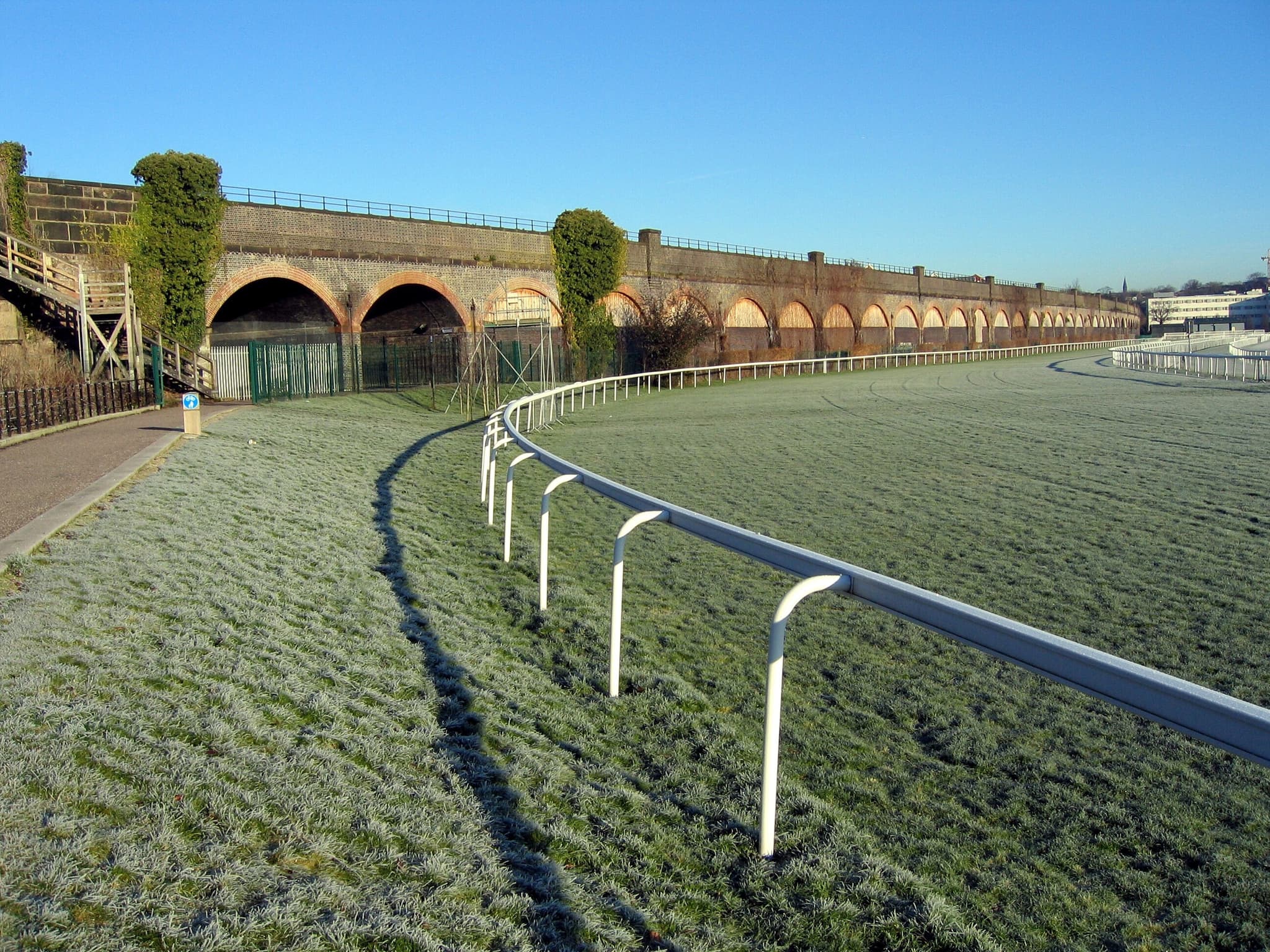
Chester Racecourse: Complete Guide
Your complete guide to Chester Racecourse — the oldest racecourse in England, racing on the Roodee since 1539.
Read more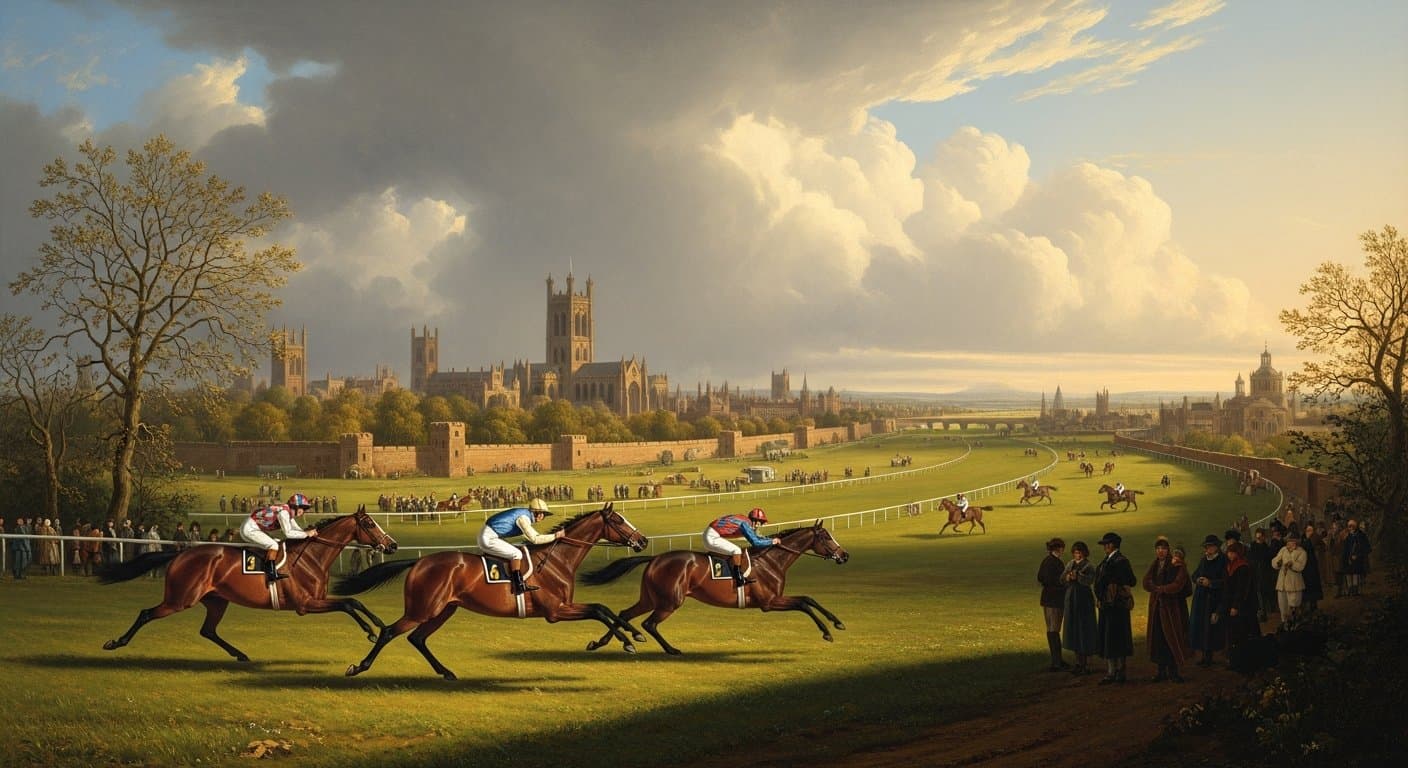
Chester Cup Day at Chester: The Complete Guide
Your complete guide to Chester Cup Day: the Thursday of Chester's May Festival, headlined by the Chester Cup staying handicap, the Dee Stakes Derby trial, and the Cheshire Oaks. Racing inside the Roman walls, on the tightest major track in Britain.
Read more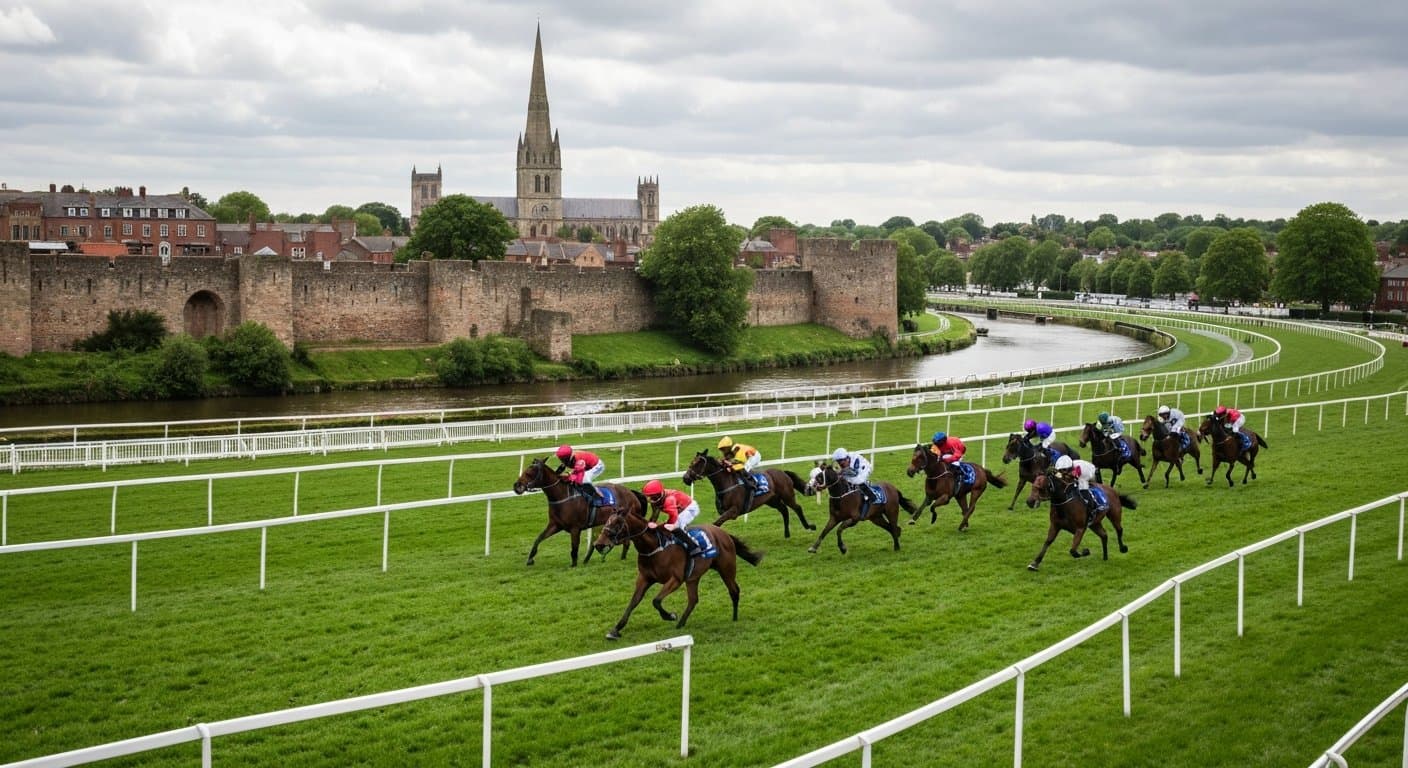
The Chester Cup: Complete Guide
Everything you need to know about the Chester Cup — one of the oldest and most prestigious handicaps in flat racing.
Read morePhotos on this page are used under Creative Commons licences. Titles, sources and licence links for each one are on our image credits page.
Research the field with the AI Race Predictor
Our model publishes calibrated win-probability estimates for UK races — a second opinion to understand a race, not tips. It's open about its record: it doesn't beat the market, and we show exactly how it does.
Work it out & learn the basics
Gamble Responsibly
Gambling should be entertaining and not seen as a way to make money. Never bet more than you can afford to lose. If you or someone you know has a gambling problem, help and support is available.