
Founder & Editor · Last reviewed 2026-04-05
Who This Guide Is For
The Chester May Festival runs over three days in early May, typically the first Thursday, Friday, and Saturday of the month, and it is one of the most bet-upon fixtures on the flat calendar. This guide is for anyone who wants to understand what the meeting is, which races matter and why, and how to approach it as a punter with a real chance of coming out ahead.
If you are a first-time visitor trying to work out which day to attend, which enclosure to book, and how to get to the Roodee without sitting in traffic for two hours, the planning sections below cover all of that. If you are an experienced racegoer who already knows Chester but wants sharper angles for the Cup or the Classic trials, the betting sections have more depth than most published guides.
The Chester May Festival sits in a very specific part of the flat calendar: after the Guineas meeting at Newmarket, before Epsom, and a month out from Royal Ascot. That timing matters. The horses running at Chester in May are not having easy spins. The Classic trials are real trials, the older horses in the Ormonde and Huxley are being tested for real, and the handicappers are running for prizemoney that counts. The form generated across these three days is some of the most transferable of the entire season.
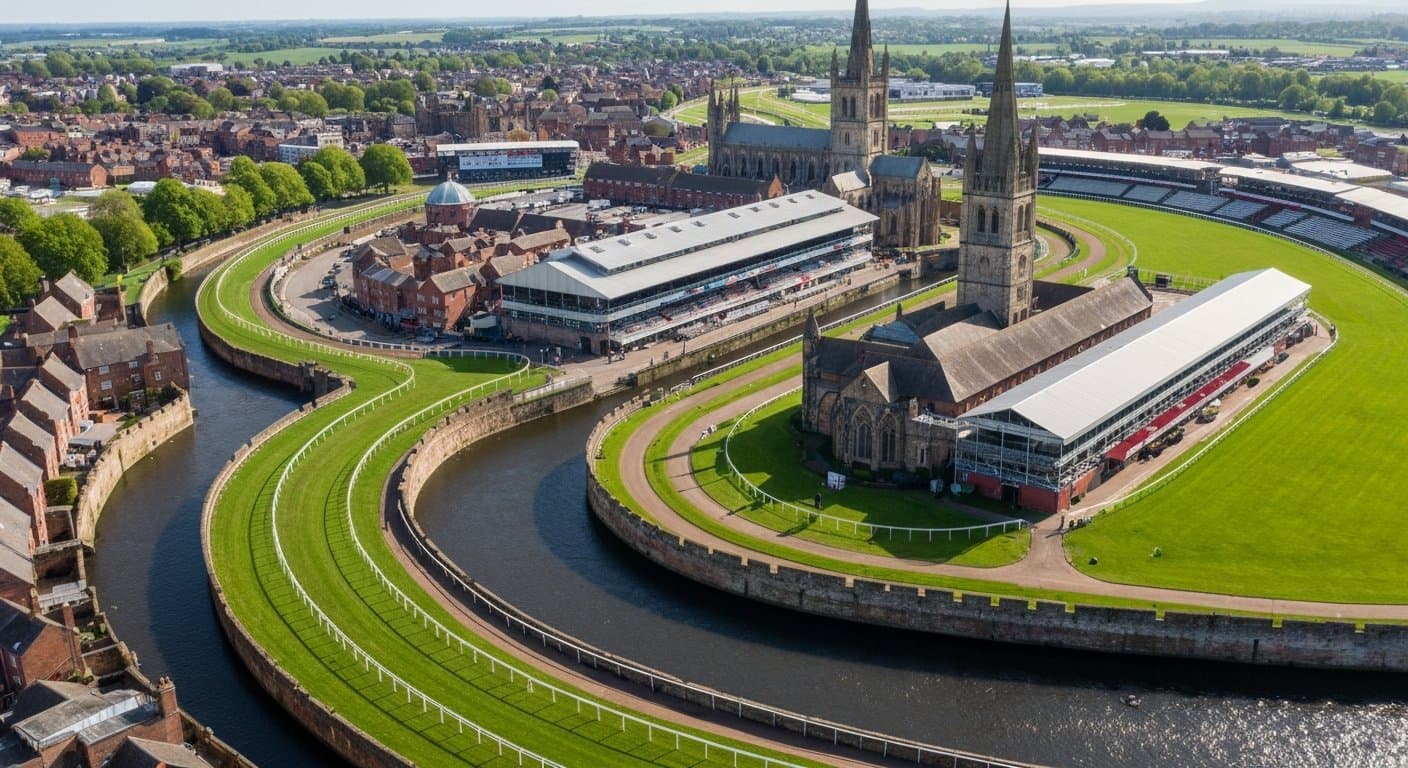
Chester is also, to put it plainly, a strange racetrack. The Roodee is 1 mile and 73 yards around, Britain's smallest flat circuit, with tight left-handed turns, a run-in of barely two furlongs, and a 10-furlong chute that means some fields are still bunched as they enter the first bend. The draw bias is not a minor consideration here; it is the defining variable in sprint and middle-distance handicaps. Understanding it before you place a single bet is the most important preparation you can do.
Quick Decision Block
Should you attend Thursday (Cup Day)? Yes, if: you want the biggest crowd, the best handicap betting atmosphere, and the Chester Cup itself. The Roodee is packed to its 8,000-plus standing capacity on Cup Day, and the race draws 20-plus runners with a real staying test over 2m2f. Arrive before 11am or plan on missing the first race.
Should you attend Friday (Vase and Dee Stakes Day)? Yes, if: you care about Derby and Guineas form. The Chester Vase (Group 3, 1m4f) and the Dee Stakes (Group 3, 1m2f) are both recognised Classic trials, and the horses running in them will be back in the headlines at Epsom and Newmarket. It is a serious racing day: excellent for study, excellent for betting the trials, slightly less social spectacle than the other two days.
Should you attend Saturday (Ormonde and Huxley Day)? Yes, if: you want a quality mid-length Group 3 card with older horses who have already proven themselves. The Ormonde Stakes (Group 3, 1m5f) and the Huxley Stakes (Group 3, 1m2½f) are both proper races. Saturday also tends to have slightly better ticket availability than Thursday or Friday.
Can you only attend one day? Thursday, without hesitation. The Chester Cup is the race that defines this festival.
Bet on Chester
Place your bets on Chester races with a trusted bookmaker.

Promo code BETFRED50. New customers only. Register, deposit with a Debit Card, and place a first bet of £10+ at Evens (2.0)+ on Sports, to be settled within 7 days, to get £30 in Sports Free Bets and £20 in Bet Builder Free Bets within 24 hours of settlement. 7-day expiry. Eligibility & payment exclusions apply. Full T&Cs apply. Take Time to Think. BeGambleAware.org. 18+. Full T&Cs.

Promo code R30. New UK customers only, 18+. Register, deposit £10 or more, then place a £10 single cash bet at odds of 1/2 (1.5) or greater on any sports market (excluding Virtuals). Once the qualifying bet settles you get £30 in Free Bets (3 x £10) — the qualifying bet can win or lose. Free Bets are valid on any sports market excluding Virtuals, expire in 7 days, are non-withdrawable and must be used in full. Excluded deposit methods apply (including PayPal, Apple Pay, Skrill and NETELLER). Named bets such as Lucky 15 do not qualify. If you cash out the qualifying bet, or it is voided, you are no longer eligible for the offer. Ends 31.12.26. Full T&Cs apply. Please gamble responsibly. BeGambleAware.org. 18+. Full T&Cs.

Promo code BET40GET20. New UK customers, 18+. Register with the code and place a first bet of £40 or more at Evens (2.0) or greater. Receive 2 × £10 free bets: the first credited automatically once the qualifying bet settles, the second 24 hours later. Free bets must be placed at minimum odds of 4/1 (5.0), expire 24 hours after credit, and the free-bet stake is not returned with winnings. Debit card deposits only. Take Time to Think. BeGambleAware.org. 18+. T&Cs apply. Full T&Cs.

50% of your first-day net losses refunded as a free bet, capped at £25. New UK customers aged 18+ only. To qualify, deposit and place a first bet of £10 or more on any sport at minimum odds of evens (2.00), then place at least two further bets on different events, each worth at least 50% of your largest bet, all at evens (2.00) or greater. Losses are counted from your first settled bet until 23:59 the same day. Place a qualifying £10+ bet and you are guaranteed at least a £5 free bet. Bets placed at SP, void bets, cashed-out bets and bets struck with free bets do not count towards the offer. The free bet is credited the day after your qualifying bets settle and must be used within 7 days, after which it expires. It can be used at odds from 1/4 (1.25) up to 250/1 on singles and straight accumulators, but not on Trixie, Patent or Yankee style multiples. Free-bet stake is not returned with winnings. One offer per person, household, address, IP address and device. E-wallet deposits may not qualify, so check the cashier before depositing. Customers registered with GAMSTOP cannot claim. KYC identity verification must be completed before the free bet is credited. Take Time to Think. BeGambleAware.org. 18+. T&Cs apply. Full T&Cs.

New customers, 18+. Choose the sports bonus at sign-up, make a first deposit and receive a 100% bonus up to £50 in your Sports Bonus balance. To convert the bonus to cash, wager it 10x within 30 days. Single bets below Evens (2.00) do not qualify; accumulators do not qualify if any selection is below 1/2 (1.50). Virtual Sports, voided, cancelled, drawn, cashed-out and free-bet wagers do not count towards wagering. Only the first settled bet per event counts. Withdrawing before the wagering requirement is met forfeits the bonus balance including bonus winnings. Real-money funds are used before bonus funds. Deposits via Skrill or Neteller are not eligible. Not valid in conjunction with other promotions. Odds, bet and payment limits apply. 10bet general and promotion T&Cs apply. BeGambleAware.org. 18+. Full T&Cs.

New customers in Great Britain and Republic of Ireland, 18+. Place a £10 fixed-odds qualifying bet at minimum odds of 1/2 (1.50) — single or each-way (only the win part counts), pre-event or in-play, not cashed out early, within 28 days of opening the account. Receive up to £60 in bonuses credited over three days: 3 × £10 fixed-odds free bets (the first on settlement, then 24 and 48 hours later) plus 3 × £5 Total Goals FOOTBALL spread bets and 3 × £5 racing Winning Favourites spread bets, with a £1 racing Race Index spread bet as an extra on top. The spread bets need a full spread-betting account, opened within 28 days of the fixed-odds account and subject to Spreadex's eligibility and appropriateness checks. Free-bet stakes not returned with winnings; free bets valid 28 days from issue. IMPORTANT: the £5 credits are SPREAD bets — sports spread betting carries the risk that losses can exceed your stake. Sports spread-betting customers do not have Financial Ombudsman or FSCS recourse. Take Time to Think. BeGambleAware.org. 18+. T&Cs apply. Full T&Cs.

Promo code WELCOME15, entered under My Bonuses after registering. New UK customers, 18+. Place a first qualifying bet of at least £10 from your cash balance at odds of evens (2.0) or greater within 7 days of opening the account. Once the qualifying bet fully settles you receive £15 in free bets, credited as 3 x £5 tokens with set uses: one £5 accumulator free bet (minimum 4 legs, each leg at 2/5 or bigger), one £5 sports free bet (any market at evens or bigger) and one £5 Sub Cover free bet (selected football player markets at evens or bigger). Free-bet stakes are not returned with winnings. Free bets expire 7 days after they are credited. Void, cashed-out and partially cashed-out bets do not qualify. One offer per customer. Confirm the current terms on BetGoodwin's own welcome-offer page before claiming. Take Time to Think. BeGambleAware.org. 18+. T&Cs apply. Full T&Cs.

New UK customers, 18+. Minimum deposit £10. Place a £10 qualifying single on sports (excluding virtuals) at minimum odds of 1/2 (1.50), settled within 14 days. Deposit-method exclusions apply. Receive £30 in free bets (stake not returned), split £20 for sportsbook use (2 x £10) and £10 for Bet Builder only (2 x £5); Bet Builder does not cover horse racing. Free bets must be accepted within 7 days and expire 7 days after acceptance. No promo code required. Best Odds Guaranteed on UK & Irish racing, subject to having staked over £25 in the previous seven days. Operated by LiveScore Betting and Gaming (Gibraltar) Ltd, UKGC 56859. Confirm the current terms on LiveScore Bet's own promotions page before claiming. Take Time to Think. BeGambleAware.org. 18+. T&Cs apply. Full T&Cs.
18+. BeGambleAware.org
Day-by-Day Guide
The Chester May Festival runs across three distinct days, each with its own character, its own feature race, and its own atmosphere. The order of days (Thursday, Friday, Saturday) shapes how the meeting builds. Thursday is the biggest crowd. Friday is the most intellectually interesting for form students. Saturday is the quality closer.
Thursday: Chester Cup Day
Thursday is the biggest flat racing crowd in the north of England on any given May day. The Roodee's standing capacity of approximately 8,000 is matched by another 6,000 or more spread across the enclosures and the open course, and on Chester Cup Day those numbers fill up early. The advice to arrive before 11am is not overcautious: roads and car parks around the city centre back up quickly, and walking from Chester station (15 minutes on foot) is often faster than driving from two miles away.
The Chester Cup is the gravitational centre of the day. Run over 2 miles 2½ furlongs, more than two full laps of the Roodee, it is one of the longest and most demanding flat handicaps in Britain. Fields regularly contain 20-plus runners, making it one of the largest fields assembled anywhere on the flat calendar in May. The betting market for the Cup opens weeks before the race, with the major bookmakers posting ante-post prices as early as the turn of the year. More money is traded on the Chester Cup than on almost any other staying handicap in Britain, and the Tote pool is consistently among the largest on any non-Group 1 day.
The atmosphere on Cup Day sits somewhere between a Cheltenham Festival day and a county show. Dress code in the County Stand is formal: morning suits are common, and the standard of dressing in the premium enclosures would not look out of place at Royal Ascot. The open course and Tattersalls are more relaxed. Between races the parade ring fills with people doing their form study in the flesh, checking the muscle condition and sweat patterns of Cup runners. It is a reminder that however much time you spend on the Racing Post, there is still something to be said for watching a horse walk.
The supporting card on Thursday is strong. Sprint handicaps over five and six furlongs, with big fields, are where the draw bias is most extreme, and they tend to produce predictable results for those who have done their homework. A well-backed, low-drawn, course-form horse in a 16-runner sprint handicap at Chester in May is not a complicated formula.
Friday: Chester Vase and Dee Stakes Day
Friday is the day that matters most for Classic form. Two Group 3 races, the Chester Vase (1m4f) and the Dee Stakes (1m2f), make it the most substantive day on the card for anyone who wants to understand what will happen at Epsom in June or Newmarket later in the season.
The Chester Vase has a long record of producing horses who run well in the Derby. It is run over 1 mile and 4½ furlongs, the closest available approximation to the Epsom trip before Epsom itself, and the tight, turning Chester circuit imposes conditions that filter out horses who lack balance or stamina. Horses that struggle to settle on the Roodee's tight turns tend to struggle at Epsom too. That correlation is not coincidental, and it is the reason trainers like Aidan O'Brien and John Gosden have sent Derby contenders here for decades. The Vase fields are typically small, four to seven runners, but the quality is consistently high.
The Dee Stakes on the same day covers 1 mile and 2½ furlongs and acts as a trial for the middle-distance Classics, most relevantly the St James's Palace Stakes at Royal Ascot and, for horses who stay further, the Irish Derby and Prix du Jockey Club. It draws three-year-old colts and fillies (though colts tend to dominate) from the top yards, and the winner almost always reappears at a Group 1 or Group 2 level within six to eight weeks.
Friday's crowd is noticeably smaller than Thursday's and somewhat smaller than Saturday's. That is not a knock on the racing programme. It is simply that the Chester Cup has more of a mass public appeal than the Classic trials. For a serious racing person, Friday is the day to be at the Roodee. The parade ring is less crowded, you can actually see the horses walking, and the post-race analysis in the bars and stands is closer to a proper racing conversation than the social buzz of the other two days.
The supporting card on Friday includes conditions races and handicaps that tend to attract horses on their way up rather than proven course specialists. Pay attention to the unexposed three-year-olds in the conditions races. Chester in May is a common launchpad for horses who spend the summer making their way through handicap or Listed company.
Saturday: Ormonde and Huxley Day
Saturday wraps up the Festival with two Group 3 contests aimed at older, proven horses. The Ormonde Stakes (1m5f) and the Huxley Stakes (1m2½f) are both proper races in their own right, attracting horses with established Group 2 and Group 3 form who are being aimed at summer targets.
The Ormonde Stakes, run over 1 mile 5 furlongs and 89 yards, is one of the oldest Group races at Chester and has a strong record as a pointer for the Coronation Cup at Epsom, a Group 1 for older horses over 1m4f. Trainers who win the Ormonde are often preparing horses for a summer campaign that includes the Coronation Cup or the Hardwicke Stakes at Royal Ascot. The fields are small (four to eight runners is typical) but the form around them is well-documented.
The Huxley Stakes over 1m2½f sits one tier below the Ormonde in profile but is often the stronger betting race on Saturday's card. Improving horses who have come through the winter well use the Huxley as a season-opener, and there is a consistent pattern of Huxley horses reappearing at Sandown's Coral-Eclipse meeting in July. A horse that wins or runs close in the Huxley at a big price, say 10/1 or above, is worth following for the rest of the season.
Saturday's atmosphere falls between the intensity of Thursday and the scholarliness of Friday. It is a festival's last day: people who have been there all three days are in high spirits, first-timers are making the most of a beautiful bank holiday weekend fixture (the May Festival almost always falls across the first Bank Holiday of the month), and the energy in the stands for the Ormonde and the Huxley is warm if not as electric as Cup Day.
For visitors who could not get tickets for Thursday, Saturday is the second choice. Ticket availability tends to be better, the County Stand is still busy but not overwhelmed, and two Group 3 races on a Saturday afternoon in Chester is a quality day of sport by any standard.
Planning Your Three Days
If you are coming for all three days, structure your energy accordingly. Thursday requires the most preparation and the most patience. You will be in a big crowd, queues for everything will be longer, and if you are going to do one day's serious betting homework in advance, make it Thursday. Friday is the day to arrive a little later, watch the horses carefully, and think about what the Classic trial form tells you. Saturday is the day to enjoy the city.
Chester city centre is less than a mile from the Roodee. After racing each evening, Eastgate Street and Bridge Street are full of racegoers spilling into the bars and restaurants. The Grosvenor Hotel on Eastgate Street is the traditional base for owners and trainers and books out months in advance. Budget accommodation in Chester during the Festival week is scarce and expensive; if you are staying over, book as soon as dates are confirmed, which is typically in January or February.
Key Races
The Chester Cup
No race at the Chester May Festival carries more weight, literally or figuratively, than the Chester Cup. Classified as a Heritage Handicap, it is run over 2 miles 2½ furlongs and held on Thursday, the first day of the Festival. First run in 1824, it predates the Cheltenham Gold Cup by a year and the Grand National by thirteen years, making it one of the oldest surviving races in British flat racing.
The Race and Its Demands
The Cup distance means runners complete more than two full circuits of the Roodee. That is not unusual for a staying race (Ascot and Goodwood also host 2-mile contests), but what makes the Chester Cup distinctive is the track configuration. On a circuit of 1 mile and 73 yards with tight left-handed bends, running twice around demands a very specific kind of horse: one that settles naturally, does not waste energy fighting for its head in the early stages, and has the mechanical efficiency to sustain a gallop through repeated turns without losing its action.
The weight conditions reflect the Cup's handicap status. The top weight is typically carried off a rating in the mid-90s, and horses rated as low as 75 or 80 can get into the race off the bottom weight of 8 stone 10 pounds (with the allowance for lighter-framed stayers). This creates enormous fields: 20 runners are normal, and 25-plus is not uncommon in competitive years.
The Draw Bias in the Cup
The draw matters enormously in the Chester Cup, arguably more than in any other race at the Festival. The 10-furlong chute that sends runners into the first bend means that high-drawn horses face an immediate navigational problem. They must either push across to the inside rail quickly, burning energy that is unavailable later, or settle wide on the first bend and concede ground that is very difficult to recover over a long trip. Neither option is neutral.
Data on Chester Cup results consistently shows that horses drawn in the bottom third of the field, stalls 1 through to roughly 7 in a 20-runner race, win at a rate significantly higher than their starting prices suggest. Horses drawn above 12 or 13 have historically returned a significant negative expected value over a long sample of results. A high-drawn horse can win, and it does, but usually only when the horse has exceptional ability relative to the field rating or when the pace scenario happens to work unusually in its favour.
For pre-race preparation: when the draw is published (the day before racing), cross-reference stall positions against current market prices. You will regularly find horses in stalls 1 to 5 priced at 10/1 or longer despite being significantly better positioned than 6/1 shots in stalls 14 to 18.
Trainers and Chester Cup Form
Certain trainers have historically performed well in the Chester Cup and deserve weighting in your analysis. Ian Williams, based in Alvechurch, Worcestershire, has a strong record at Chester in general and in the staying handicaps in particular; he understands the draw and targets suitable types. Jonjo O'Neill, more associated with jumps but an effective flat-season operator, has sent competitive Cup runners over the years. David O'Meara, whose yard at Sheriff Hutton in North Yorkshire specialises in handicappers, has become one of the most consistent Chester trainers in the last decade.
The saddling style that works in the Cup, patient well-handicapped stayers who settle and stay, is not the glamour end of horse training, and the Cup rarely attracts the very top Classic yards. But the trainers who do target it consistently know exactly what they are doing.
Betting the Cup
The Chester Cup is one of the most heavily traded races of the flat season on the betting exchanges. Markets are available weeks ahead of the race, and ante-post betting is popular because the official entries list gives you the likely field a fortnight out. The early market is often informative: money that arrives for an ante-post selection eight or ten days before the race tends to be connected money or well-researched angle bets, rather than the public following a newspaper tip.
On the day itself, watch the market in the 30 minutes before the off. The Cup is one of those races where the bookmakers' prices move in a way that tells a story. Big firms rarely take a position against a well-backed short-priced favourite without having seen something they respect. A horse that opens at 9/2 and is 7/2 by the off in a 20-runner field is having professional money behind it.
For each-way betting, the standard terms for a 20-runner field (four places at one-fifth odds) mean the return on a placed horse is substantial at any price above about 8/1. The Cup is a race where backing two horses each-way, one at a shorter price from a low draw and one at a bigger price in a lower stall, can be a productive strategy. The objective is to guarantee yourself a placed return from at least one of them while leaving yourself exposed to a profitable win if the longer-priced one leads them all home.
Classic Trials: Chester Vase and Dee Stakes
The Chester Vase (Group 3, 1m4f)
The Chester Vase is run on Friday, the second day of the Festival. It was first run in 1824, the same year as the Chester Cup, and has been part of the Derby trials calendar in its current form since the late 19th century. The distance is 1 mile 4½ furlongs, which makes it one of the only pre-Epsom trials run at or close to the Derby distance of 1m4f.
The value of the Vase as a form guide comes from what it reveals about horses. Chester's tight left-hand bends, the short straight, and the need to settle in behind pace all test qualities that matter at Epsom: balance through turns, a natural jumping action that does not rely on a straight track, and the mental temperament to race off a strong pace without over-racing. Horses that handle the Roodee tend to have the same profile as horses that handle Tattenham Corner.
Trainers who have sent Derby winners or placed horses through the Chester Vase include Aidan O'Brien (whose Galileo-era Ballydoyle operation regularly uses English trials before Epsom), John Gosden (who sent several Frankel-progeny types through Chester), and Henry Cecil in the years before his death in 2013. The race does not guarantee Derby success, but it is a significantly better predictor than trials run over shorter trips or on straight tracks.
From a betting perspective, the Vase is often dominated by short-priced favourites: three or four runners in a field of five or six is a common scenario, with the market leader trading at 4/5 or shorter. Backing the favourite in these conditions is rarely profitable over time. The more useful approach is to watch the race closely and note which runner impressed in defeat. A horse that chases a short-priced favourite and is beaten a length or a length and a half, despite appearing to have more in the tank, is worth following to Epsom or the Irish Derby in late June.
The form of horses who run in the Chester Vase and then reappear at Epsom has an excellent strike rate. From 2000 to the mid-2020s, more than half of all Chester Vase runners who subsequently ran in the Derby finished in the first five, a rate substantially above what chance would predict for a field of 12 to 15.
The Dee Stakes (Group 3, 1m2f)
The Dee Stakes, also run on Friday, covers 1 mile 2½ furlongs and is aimed at three-year-olds who are being positioned for the middle-distance Classics and the summer Group races. It is less famous than the Chester Vase but arguably more productive as a betting race, because the fields tend to be slightly larger and more varied, which creates real pricing inefficiencies.
The race is named after the River Dee, which runs immediately behind the Roodee's outer rail (you can see it from the stands). It attracts colts and fillies who might be heading for the St James's Palace Stakes, the French Classics, or the Irish Guineas, depending on their training. Horses who have already won a Guineas are eligible to run but rarely do; the Dee Stakes is for horses who still have something to prove.
Key things to look for in Dee Stakes runners: any previous course experience at Chester, because a horse that has already handled the Roodee's tight turns has already solved the main puzzle; horses with a pace-pressing style, because Chester's short straight rarely allows pure closers to get home against a well-placed rival; and trainers who have a pattern of using this race as a proper trial rather than just a spin, because the latter type often runs below its ability level.
The Ormonde Stakes and Huxley Stakes
The Ormonde Stakes (Group 3, 1m5f)
The Ormonde Stakes, run on Saturday, is named after the horse widely regarded as the outstanding Flat thoroughbred of the Victorian era. Triple Crown winner Ormonde, trained by John Porter and owned by the Duke of Westminster, was one of Chester's own; the Duke of Westminster's family seat at Eaton Hall is five miles from the Roodee. The race in his honour, run over 1 mile 5 furlongs and 89 yards, is one of the festival's older feature races and a recognised prep for the Coronation Cup at Epsom.
The Ormonde fields are small, typically four to seven runners, and the race often has a tactical shape: a slowly-run affair where the contest is decided in the final three furlongs. That tactical element makes it worth watching from a form perspective even if you do not bet on it, because the horses who travel smoothly through the race without expending energy in the early stages often have more in the tank than the final margins suggest.
Horses who win the Ormonde and then run in the Coronation Cup at Epsom (a Group 1 over 1m4f) have a respectable conversion rate: the trip shortens by two furlongs but the quality of field rises sharply. A horse that wins the Ormonde at odds-against is usually worth a small each-way interest in the Coronation Cup at whatever price is available in the ante-post market.
The Huxley Stakes (Group 3, 1m2½f)
The Huxley Stakes, also on Saturday, is often the most accessible betting race of the three-day festival from a punter's perspective. It is shorter in trip than the Ormonde, the fields are slightly larger (six to ten runners is typical), and it attracts horses who are versatile enough to mix a Chester spring run with a summer campaign that might include the Coral-Eclipse at Sandown, the Sussex Stakes at Goodwood, or the International Stakes at York.
A trainer who truly fancies a runner in the Huxley can often be identified by the approach to the race: horses who have had one or two preparatory runs rather than arriving at Chester after a long absence tend to be serious Huxley runners. A horse arriving at Chester having won its prep run over a similar trip at Sandown or Haydock is worth the scrutiny.
The Huxley is also one of the races where ante-post value occasionally appears. Trainers who target this race regularly but do not have a public profile tend to have their horses unfashionably priced in the early markets. Check the declared runners list and cross-reference the trainer's Chester record: a trainer with three wins from eight runners at Chester who has an unheralded horse in the Huxley is worth investigating.
Festival Tips & Betting Strategy
Betting Angles at the Chester May Festival
The Chester May Festival rewards preparation in a way that very few three-day meetings do. The combination of a highly unusual track, a draw bias that is among the strongest in British flat racing, and a calendar position that makes the form directly transferable to Royal Ascot and Epsom gives you more angles to work with here than almost anywhere else in May.
The Draw: Start Here, Every Time
The draw bias at Chester is not a minor statistical quirk. In sprint handicaps over five and six furlongs with fields of 10 or more runners, horses drawn in stalls 1 through 5 have consistently outperformed their starting prices. Across a 10-year sample of five-furlong handicap data at Chester, horses drawn 1 to 5 have won at roughly double the implied strike rate of the market. That is not a small edge — it is one of the largest persistent biases in British flat racing.
The mechanism is straightforward. The five-furlong trip starts on the turn, and horses drawn wide must either sprint immediately to secure a low position — burning energy that is unavailable later — or race wide through the early part of the race, conceding ground that translates to actual distance over five furlongs on a tight circuit. Neither option is neutral. Over six furlongs the bias is slightly reduced (because there is more time to navigate to the rail) but still strongly positive for low-drawn runners.
The draw bias is published in the Chester betting guide in more detail, but the key festival application is this: when draws are announced (usually the afternoon before racing), go through every sprint handicap and identify the horses in stalls 1 to 6. Compare those horses' morning line prices with where their form might price them without the draw advantage. Any low-drawn horse priced at a bigger price than its form suggests it deserves is a candidate for a bet.
Do not assume the market will catch up. Chester's draw bias is well known among serious punters, but the general betting public still responds primarily to names, trainers, and racing papers — and newspapers rarely adjust their selections for draw positions with any precision.
Use Day One as a Live Research Session
Thursday's racing is not just a day of betting — it is a data collection session for Friday and Saturday. The first two or three races on Thursday tell you things about the track condition that no Racing Post bulletin or going report can tell you as accurately.
Watch the first sprint carefully. Where do the winner and placed horses come from in the field? If the top three are all drawn in single figures and raced close to the inside rail throughout, the draw bias is playing at full strength. If a horse drawn 12 or 13 manages to lead and win comfortably, the ground near the inside rail may be particularly quick or the pace scenario distorted things. That information is live and actionable for the remaining races on Thursday and for Saturday's card.
Watch the Cup pace in the first circuit. The Chester Cup is run at varying speeds depending on who leads, and the pace shape in the race heavily influences what style of horse wins. In years when the race is run at a truly strong pace — often when there is a confirmed front-runner in the field that will not relinquish the lead — horses that settle well and come from midfield are better positioned than in years when the early gallop is modest and the race bunches up.
Back Prominent Racers in Handicaps
Chester's home straight is measured at approximately two furlongs. That is less than half the length of Newmarket's Rowley Mile or the Goodwood straight. For handicap horses who typically make their move in the final two to three furlongs, that short run-in is a serious problem — by the time they have clear daylight and have gathered momentum, the line is already passing beneath them.
The horses who win Chester handicaps reliably are those that race in the first three or four positions through the bends, save ground by hugging the inside rail, and have enough in reserve to extend when asked turning for home. They do not need to be front-runners — a horse that tracks the leader at two or three lengths and then challenges over the final two furlongs is perfectly placed. But a hold-up horse that is eighth or ninth turning for home and relies on a clear run through a closing gap is asking a lot of a two-furlong straight.
Before placing any Festival handicap bet, check the horse's typical running style from its last four or five races. A horse that consistently positions itself in the top half of the field is suited to Chester. A horse with a race record full of "ran on late" and "finishing well" captions is being backed to do something Chester rarely rewards.
Chester Course Form: Weight It Heavily
Experience at Chester is worth more here than at any other flat circuit in Britain. The track is sufficiently unusual that a horse's ability to handle it is a learned skill — horses that have run on the Roodee before, particularly horses that have won or placed on the Roodee, are dealing with a known quantity. Their trainers know how to position them. Their jockeys have a feel for the pace of the bends. They have navigated the first turn before.
Before the Festival, pull the course form of every runner in every race you are interested in. Flag any horse that has previously won at Chester, and give extra weight to those whose wins came in similar conditions (trip, going, field size). A horse rated 90 who has twice won at Chester over the same trip is a different proposition to a horse rated 90 whose form comes entirely from Newmarket and Sandown.
This applies with particular force to the sprint handicaps and to the Chester Cup itself. In longer-distance handicaps, the course navigation matters for the full two or more miles. In sprints, the very first furlong — how quickly a horse can position itself coming out of the stalls and into the bend — often determines the result.
Flag Future Royal Ascot Bets
The Chester May Festival sits exactly five to six weeks before Royal Ascot. Many horses running at Chester in early May will reappear at Ascot in June, and the correlation between Chester performance and Ascot performance is consistent enough to make it a genuinely useful form angle — though like every angle, it narrows the field rather than beating the bookmaker's margin.
Horses that impress at Chester in defeat are particularly valuable. A three-year-old colt that finishes second in the Chester Vase by a neck, looking as though it ran green or found the short straight catching it late, is a very different proposition to a horse that was beaten comfortably and never looked likely to win. The same applies to the handicappers: a horse that finishes fourth in a big Chester sprint handicap while drawn 18 of 20 has been beaten by the draw as much as by the opposition. That horse, redrawn with a low stall at Ascot, deserves a very different price than the one it went off at Chester.
Keep notes. Write down the names of horses that you think were unlucky, or that showed impressive physical quality, or that simply impressed with how they handled a difficult Chester race. Those notes are worth money in the weeks that follow.
The Ante-Post Angle in the Chester Cup
The Chester Cup ante-post market opens at major bookmakers weeks before the Festival, and it is one of the more productive ante-post betting opportunities of the flat season. The reasons are structural: the handicapper publishes the official ratings that determine weights well before entries close, a trainer who has targeted the Cup from January onwards has had months to prepare the horse for the specific demands of the race, and the early market is priced with insufficient regard for draw position (because draw allocations are not made until the day before the race).
The most productive ante-post strategy in the Cup is to identify horses with a profile — settling ability, a record of performing well with a light weight, good trainer form at Chester — and take the price before the field firms up and the market shortens. A horse that opens at 20/1 ante-post and is available at those odds two weeks before the race may be 12/1 on the day, assuming it avoids injury and makes the field. The insurance offered by some bookmakers (best price guaranteed if your horse is returned a shorter SP) makes some of the bigger-priced selections even more attractive.
Non-runners are always a risk in ante-post betting. In the Cup, injury or a change of plan from a trainer are the main risks. To manage this: back no more than two or three selections ante-post, take returns insurance where available, and accept that a non-runner without insurance is part of the cost of getting ante-post prices.
Planning Your Visit
Planning Your Visit to the Chester May Festival
Tickets and Enclosures
The Chester May Festival has three main enclosures: the County Stand, Tattersalls, and the Open Course. Each has a distinct atmosphere, a different price point, and a different view of the racing.
County Stand is Chester's premium enclosure and the best position on the course for watching races — you are looking directly down the home straight from elevated seating and standing areas, with the parade ring visible from the main terrace. During the Festival, County Stand tickets typically run from around £55 to £75 per day depending on the day and when you book. Thursday (Cup Day) and Friday (Classic trials) are usually priced similarly; Saturday can be slightly cheaper. The County Stand operates a formal dress code: lounge suits or morning dress for men, smart daywear or tailored outfits for women. Sportswear, trainers, and ripped denim are not permitted. Do not underestimate how strictly the dress code is enforced during the Festival.
Tattersalls offers solid views of the finishing straight and access to the parade ring, and it is the sweet spot for most Festival visitors in terms of value. Prices during the Festival typically range from £30 to £50, and the enclosure has enough space that it does not feel overcrowded even on Cup Day. Dress code is smart casual — no formal requirement, but the atmosphere encourages you to make an effort.
Open Course entry starts from approximately £15 to £25 during the Festival and represents the most informal experience. Views of the racing are more distant, the atmosphere is the most relaxed of the three enclosures, and it is the option that works best for groups and families. There is no formal dress code on the Open Course. Under-18s are admitted free when accompanied by a paying adult, which makes it a realistic option for families with older children.
For all enclosures during the May Festival: book online through the Chester Racecourse website. Online prices are always cheaper than on-the-gate prices, and the popular days (Thursday and Friday) sell out County Stand allocation well before the festival week. If you are going as a group of six or more, check whether a group discount applies — Chester offers these at various thresholds.
Hospitality Packages
Chester's hospitality programme during the May Festival is among the better mid-tier offerings in British racing. It is not Cheltenham or Royal Ascot in scale, but the packages are well run and the course-facing settings are excellent.
The White Horse Restaurant in the County Stand is Chester's flagship hospitality product during the Festival. A full package includes a Champagne reception on arrival, a three or four-course seated lunch with wine, afternoon refreshments, a racecard, and premium viewing positions on the County Stand terrace or in an adjacent private dining room with course views. Prices start from several hundred pounds per person and vary depending on the day. Thursday packages tend to be the most expensive because of Cup Day demand. The White Horse is a real restaurant, not a function room — the food and service are a significant part of the proposition rather than an afterthought.
Private boxes are available for groups of 10 to 30 people and include dedicated catering, private bar service, and a box-front position directly facing the course. Corporate use is common — Chester is less than an hour from both Liverpool and Manchester, making it a logical choice for a company entertaining day. The best boxes sell out four to six months before the Festival and are held by the same corporate clients year after year; if you want a private box for the first time, contact the racecourse hospitality team in September or October the year before.
Smaller hospitality products — afternoon tea packages, drinks receptions, and shared tables in private dining areas — exist at various price points below the full restaurant or private box tier. These are worth considering if you want a premium element to your day without committing to full hospitality spend. The racecourse sometimes offers race-sponsorship opportunities during the Festival, which give sponsors access to the winner's enclosure presentation and a degree of personal contact with the racing. These are a different category of spend but worth noting for businesses that want something more personal than a dining package.
Accommodation
Chester itself is not a large city — the population within the medieval walls is modest — and May Festival week fills it up completely. Hotels within walking distance of the Roodee and the city centre include the Chester Grosvenor on Eastgate Street (the most prestigious address in the city, with rooms that go for significant premiums during Festival week), the Doubletree by Hilton near the Chester Railway Station, and several independent boutique hotels in and around the city walls.
The practical advice is simple: if you are staying in Chester itself, book as soon as the Festival dates are confirmed. Those dates are usually published in December or January. Rooms at the Grosvenor book out within days of going on sale. Mid-range hotels near the station typically have availability for a month or so longer, but can double or triple their standard rates during the Festival.
If accommodation in Chester is full or unaffordable, the next-best options are Wrexham (25 minutes from Chester by train), Ellesmere Port (15 minutes by bus or car), and Warrington (30 minutes by train, with regular direct trains to Chester). These satellite towns have significantly more accommodation available at normal rates, and the journey into Chester on Festival days is manageable provided you leave in good time.
Getting There
Chester Racecourse is the easiest major British racecourse to reach without a car. It is located on the Roodee — the ancient flood plain inside the city walls — roughly 15 minutes' walk from Chester Railway Station on foot, or a five-minute taxi ride. The walk is straightforward: out of the station, through the underpass, across the roundabout, and down Nuns Road along the course perimeter.
By train: Direct services from Liverpool Lime Street take approximately 40 minutes; from Manchester Piccadilly approximately 65 minutes via Crewe; from London Euston approximately 2 hours. Chester station is a mainline station with good services on Festival days, including trains that continue running into the early evening for post-racing departures.
By car: Chester's city centre road network was not designed for 20,000 racegoers. On-site parking at the Roodee is reserved for Members and selected hospitality packages and fills completely before noon on Cup Day. The recommended approach is to use the Park and Ride services that operate from outlying car parks (signposted from the A55 and A56 approaches) and run shuttle buses every 15 minutes. The Park and Ride typically opens from 8am and operates until at least 90 minutes after the last race.
Driving into the city centre and parking in multi-storey car parks is possible but involves sitting in post-racing traffic for 45 minutes to an hour. If you are driving, factor this into your evening plans.
By coach: Dedicated raceday coach services operate from Liverpool, Manchester, and Wrexham on festival days. These are advertised through the Chester Racecourse website and local transport operators, and they provide a door-to-door service that avoids all parking and traffic problems at the cost of a fixed timetable for return.
Arriving Early on Cup Day
Thursday — Chester Cup Day — is the one day where arrival time truly matters. The racecourse operates at or near capacity, the city centre roads are congested from around 10am onwards, and the first race is typically scheduled for noon or just after. If you are arriving by train, the 9:30 or 10:00 service from Liverpool or Manchester puts you at the course by 11am with time to get a racecard, study the draw (published the previous afternoon but best reviewed fresh on the day), and secure your position. If you arrive after 12pm on Cup Day, the County Stand terraces are already packed.
The bars within the enclosures open from around 10am on Festival days. Chester caters well for this with a variety of food and drink options spread across the enclosures, ranging from trackside food stalls to the White Horse Restaurant. There is no obligation to spend heavily — bringing your own food is not permitted in the County Stand, but other enclosures are more relaxed about outside food.
Frequently Asked Questions
Share this article
More about this racecourse
All Chester guides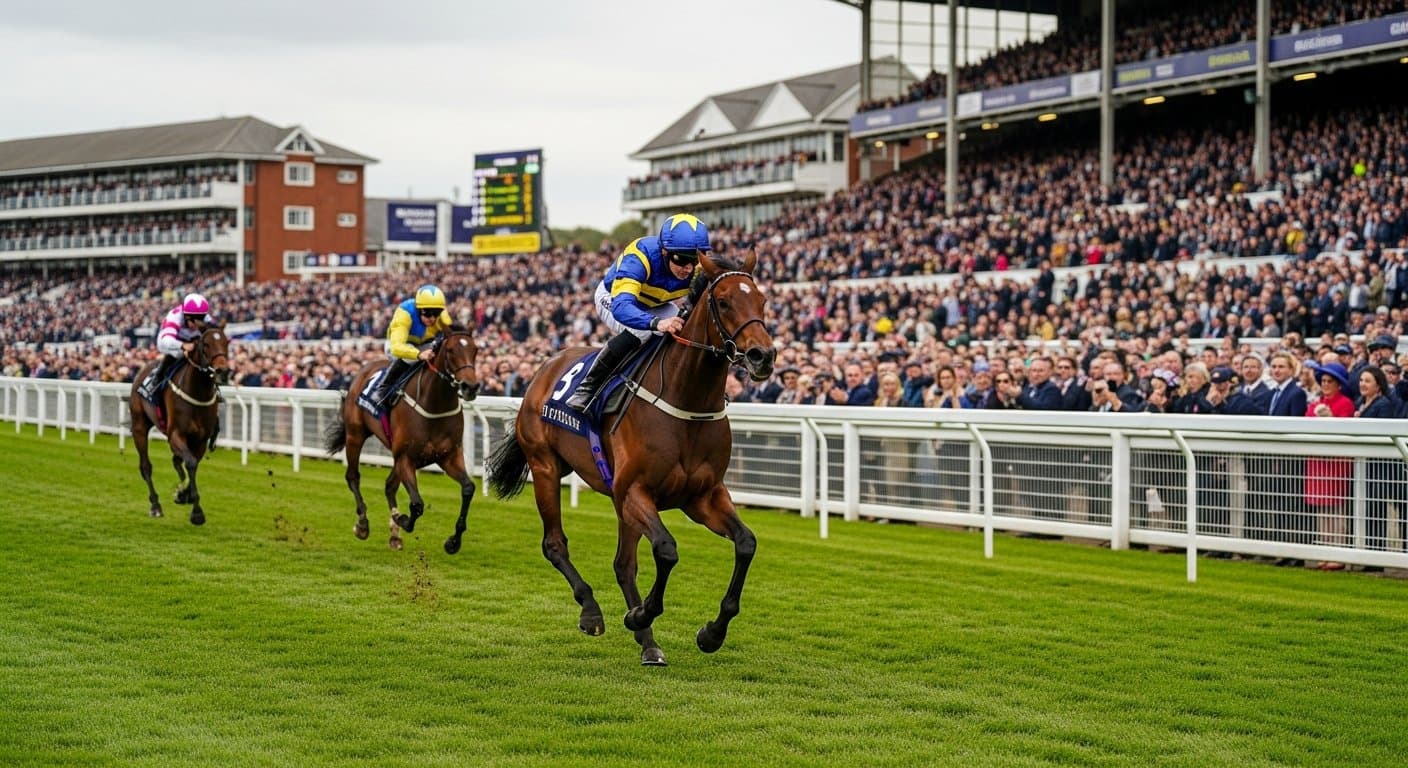
Enable at Chester: The Complete Story
How Enable's Cheshire Oaks victory at Chester in 2017 launched one of the greatest careers in modern British flat racing history.
Read more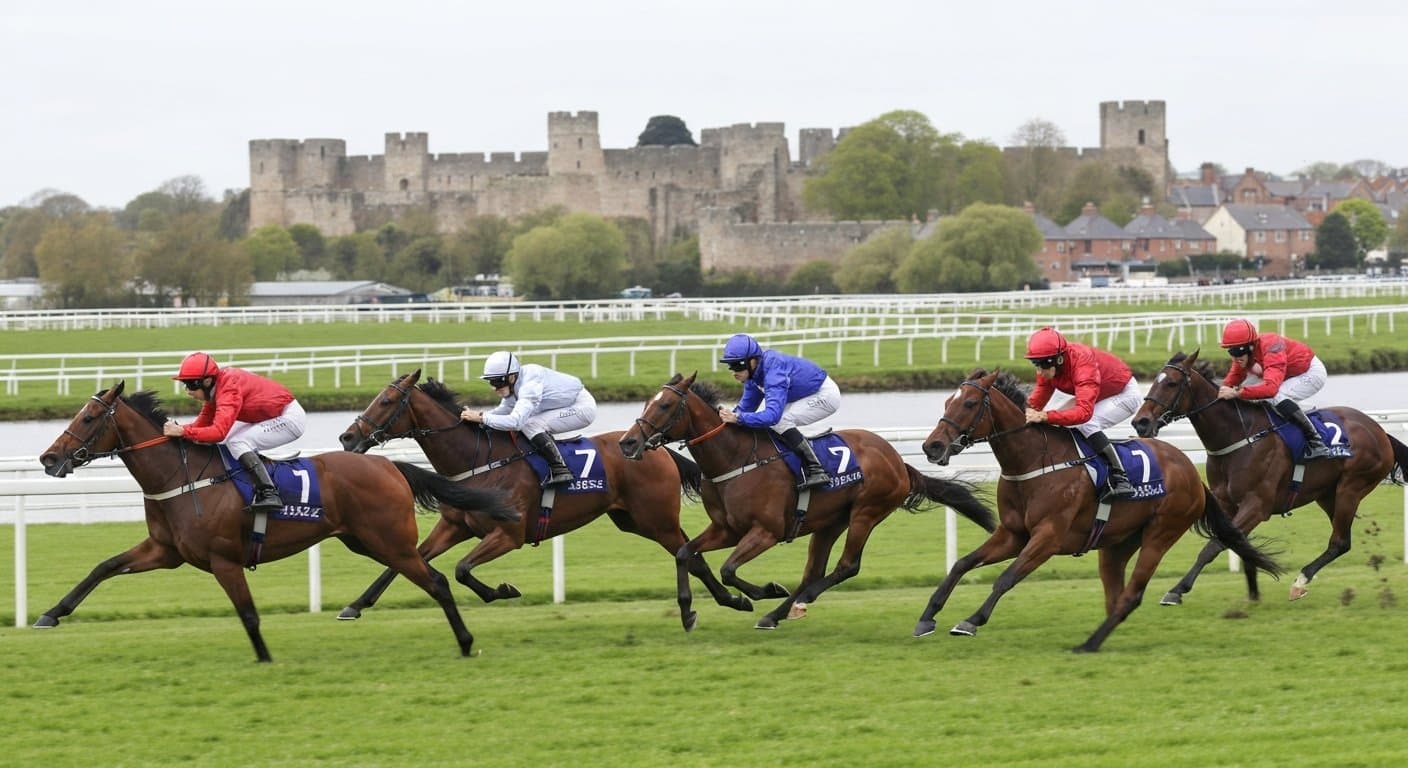
Betting at Chester Racecourse
How to bet smarter at Chester — draw biases, track characteristics, going preferences, key trainers and winning strategies for the Roodee.
Read more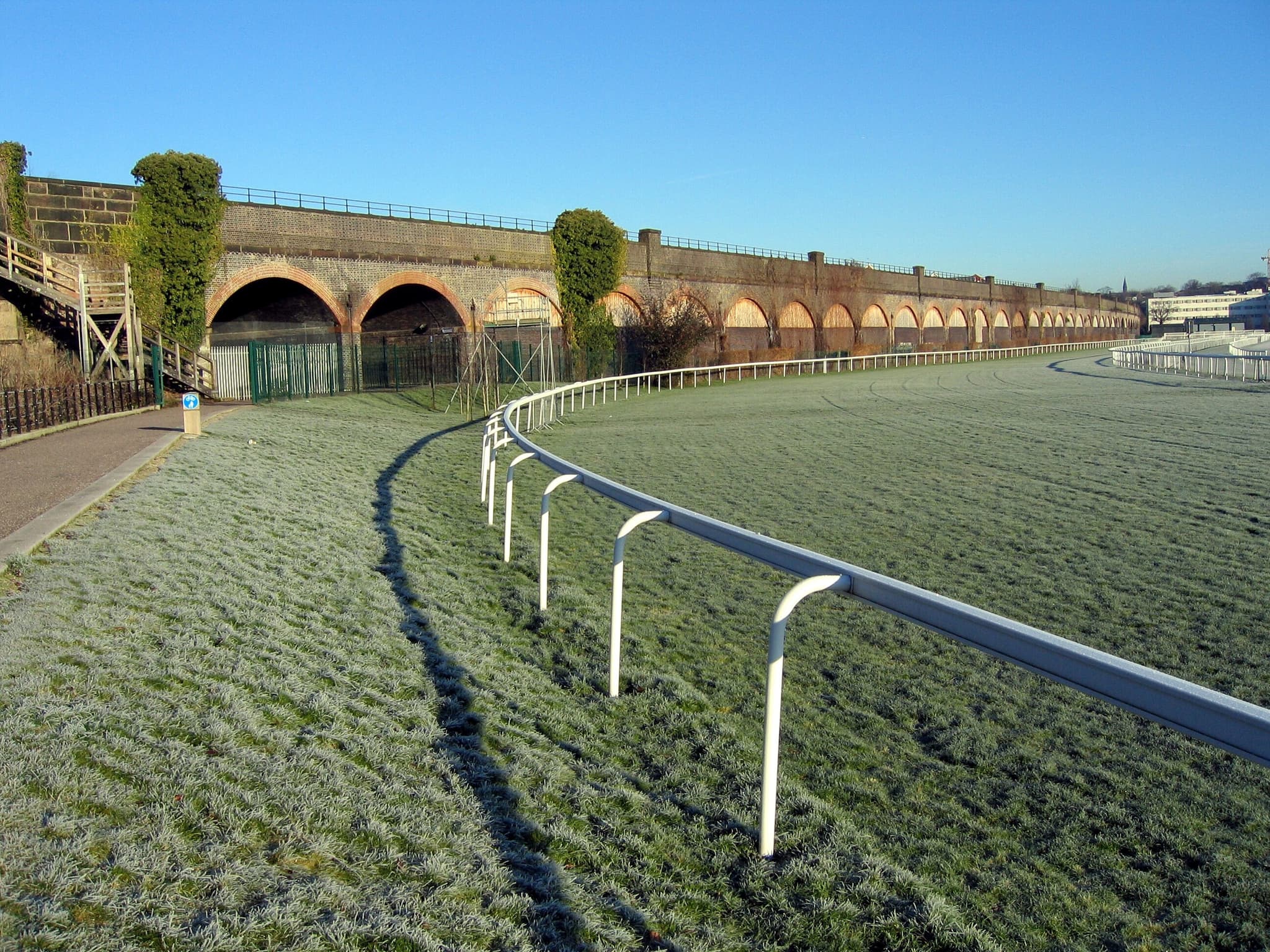
Chester Racecourse: Complete Guide
Your complete guide to Chester Racecourse — the oldest racecourse in England, racing on the Roodee since 1539.
Read morePhotos on this page are used under Creative Commons licences. Titles, sources and licence links for each one are on our image credits page.
Research the field with the AI Race Predictor
Our model publishes calibrated win-probability estimates for UK races — a second opinion to understand a race, not tips. It's open about its record: it doesn't beat the market, and we show exactly how it does.
Work it out & learn the basics
Gamble Responsibly
Gambling should be entertaining and not seen as a way to make money. Never bet more than you can afford to lose. If you or someone you know has a gambling problem, help and support is available.