
Founder & Editor · Last reviewed 2026-04-04
Introduction
England's oldest racecourse has been running since 1539. By 2026, that's 487 years of racing on the Roodee, a flat meadow beside the River Dee that was once a Roman harbour, and before that a tidal inlet with a rocky island at its centre. Chester doesn't need to remind you of its age. The city walls tell that story better than any marketing copy ever could.
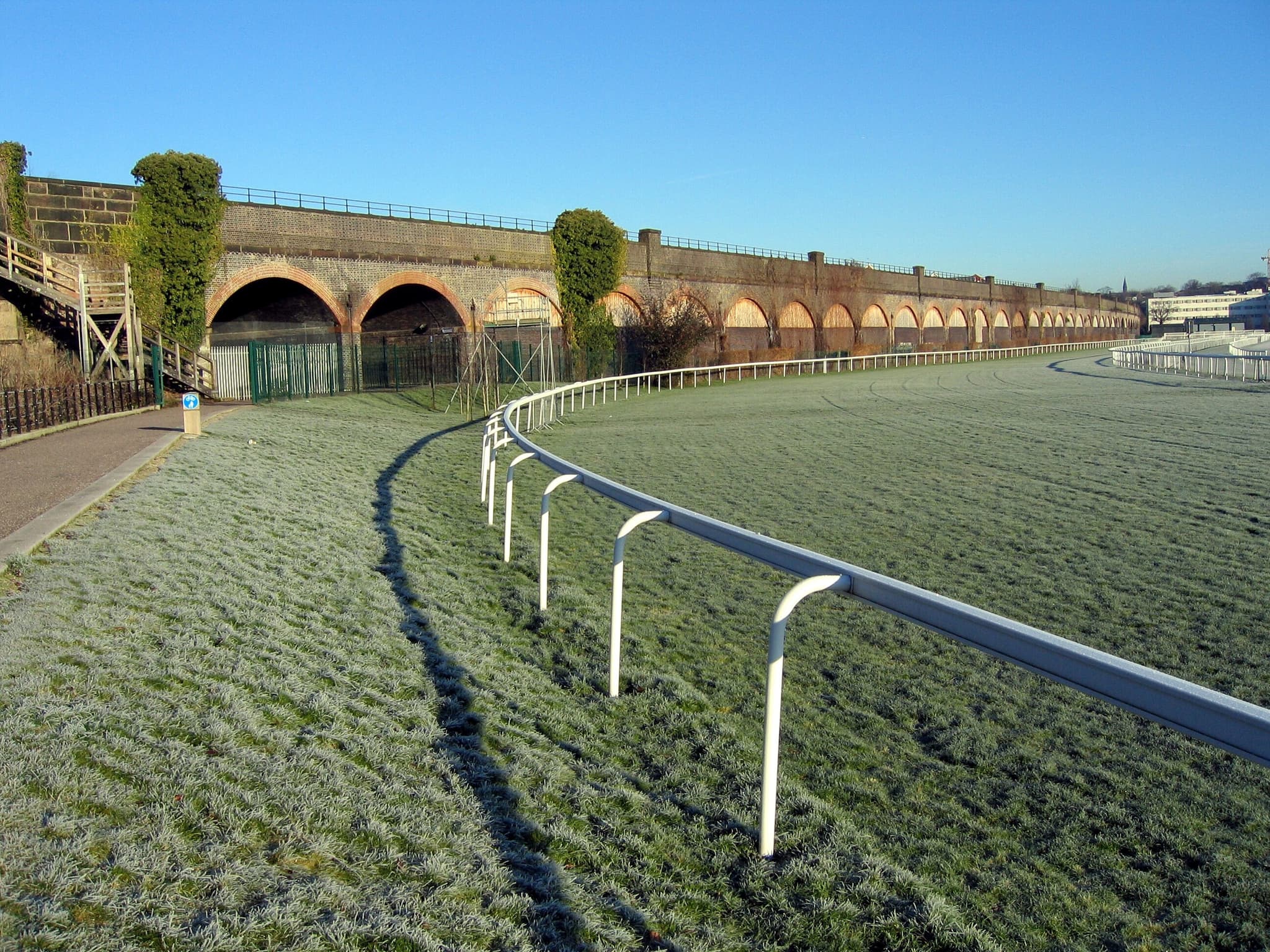
The course itself is unlike any other in British flat racing. At one mile and 73 yards in circumference, it's the tightest circuit in the country. Left-handed, almost perfectly circular, with bends so sharp that jockeys are still fighting for position long after the stalls open. Get drawn wide in a sprint here and you're effectively racing at a different track from the horse in stall one. The draw bias at Chester is the most extreme in British racing — understanding it is the single most valuable piece of knowledge a punter can have before placing a bet here.
The Chester May Festival, held over three days in the third week of May, is the racing highlight of the season. It includes the Chester Cup, a two-mile and two-and-a-half-furlong marathon that has been run since 1824, alongside Group 3 races that regularly serve as Derby and Ascot trials. Chester Vase winners have gone to Epsom and run well. Dee Stakes runners have appeared at Royal Ascot. The early season form from this meeting carries weight.
Away from the Festival, Chester runs regularly from May to September. Evening fixtures in June and July are among the most relaxed days in the flat racing calendar. Summer Saturdays draw competitive fields because trainers know that Chester's unique nature rewards specialisation. Horses who go well here tend to come back, and regular course winners are always worth following.
Quick decision guide
- When to visit: The Chester May Festival (third week of May) is the centrepiece, but summer Saturdays and evening meetings offer a more relaxed alternative with decent racing
- Which enclosure: The County Stand for the full Chester experience with dress code; Tattersalls for good views at a lower price; the Open Course if budget is the priority
- Train or car: Train, without question. Chester station is a 15-minute walk. Parking near the course is scarce on the bigger days and the one-way system through the city is a real problem
- Dress code: Smart attire in the County Stand (suits or equivalent for men, smart dress for women); Tattersalls and Open Course are relaxed, though most people make an effort on Festival days
- Families: Well-suited. Children under 17 admitted free with an adult. The parade ring is intimate enough that kids can see the horses properly
- Betting: Draw bias is everything in sprints. Always check stall draws for races over five or six furlongs before betting a penny. In races of a mile and beyond, the draw matters far less
- The one thing that makes Chester unique: The course sits within the Roman city walls. Spectators can stand on the ancient walls and watch the racing for free, an experience that exists nowhere else in British racing
Who this guide is for
First-time visitors will find everything they need to plan the day: enclosures, transport, dress code, and what to expect from the course itself. Racing regulars who've never been to Chester will get the tactical detail that makes the Roodee different from every other flat track in the country. Punters focused on betting will want to spend time with the draw bias section and the Chester-specific betting angles. History enthusiasts will find that Chester offers something no other racecourse can: a direct, continuous line back to 1539, a city that still looks largely as it did in the centuries when racing was first formalised here, and a Roman past that the Roodee literally sits on top of.
The guide is organised so you can read it from start to finish or jump to the section most relevant to you. The course layout and draw bias section is the most practically important for anyone betting. The history section covers the full 487-year story. The fixtures section breaks down the May Festival day by day. The betting guide contains the specific methodology for reading Chester races. The city and experience section covers what to do before and after racing, because Chester itself is worth half a day of anyone's time.
Bet on Chester
Place your bets on Chester races with a trusted bookmaker.

Promo code BETFRED50. New customers only. Register, deposit with a Debit Card, and place a first bet of £10+ at Evens (2.0)+ on Sports, to be settled within 7 days, to get £30 in Sports Free Bets and £20 in Bet Builder Free Bets within 24 hours of settlement. 7-day expiry. Eligibility & payment exclusions apply. Full T&Cs apply. Take Time to Think. BeGambleAware.org. 18+. Full T&Cs.

Promo code R30. New UK customers only, 18+. Register, deposit £10 or more, then place a £10 single cash bet at odds of 1/2 (1.5) or greater on any sports market (excluding Virtuals). Once the qualifying bet settles you get £30 in Free Bets (3 x £10) — the qualifying bet can win or lose. Free Bets are valid on any sports market excluding Virtuals, expire in 7 days, are non-withdrawable and must be used in full. Excluded deposit methods apply (including PayPal, Apple Pay, Skrill and NETELLER). Named bets such as Lucky 15 do not qualify. If you cash out the qualifying bet, or it is voided, you are no longer eligible for the offer. Ends 31.12.26. Full T&Cs apply. Please gamble responsibly. BeGambleAware.org. 18+. Full T&Cs.

Promo code BET40GET20. New UK customers, 18+. Register with the code and place a first bet of £40 or more at Evens (2.0) or greater. Receive 2 × £10 free bets: the first credited automatically once the qualifying bet settles, the second 24 hours later. Free bets must be placed at minimum odds of 4/1 (5.0), expire 24 hours after credit, and the free-bet stake is not returned with winnings. Debit card deposits only. Take Time to Think. BeGambleAware.org. 18+. T&Cs apply. Full T&Cs.

50% of your first-day net losses refunded as a free bet, capped at £25. New UK customers aged 18+ only. To qualify, deposit and place a first bet of £10 or more on any sport at minimum odds of evens (2.00), then place at least two further bets on different events, each worth at least 50% of your largest bet, all at evens (2.00) or greater. Losses are counted from your first settled bet until 23:59 the same day. Place a qualifying £10+ bet and you are guaranteed at least a £5 free bet. Bets placed at SP, void bets, cashed-out bets and bets struck with free bets do not count towards the offer. The free bet is credited the day after your qualifying bets settle and must be used within 7 days, after which it expires. It can be used at odds from 1/4 (1.25) up to 250/1 on singles and straight accumulators, but not on Trixie, Patent or Yankee style multiples. Free-bet stake is not returned with winnings. One offer per person, household, address, IP address and device. E-wallet deposits may not qualify, so check the cashier before depositing. Customers registered with GAMSTOP cannot claim. KYC identity verification must be completed before the free bet is credited. Take Time to Think. BeGambleAware.org. 18+. T&Cs apply. Full T&Cs.

New customers, 18+. Choose the sports bonus at sign-up, make a first deposit and receive a 100% bonus up to £50 in your Sports Bonus balance. To convert the bonus to cash, wager it 10x within 30 days. Single bets below Evens (2.00) do not qualify; accumulators do not qualify if any selection is below 1/2 (1.50). Virtual Sports, voided, cancelled, drawn, cashed-out and free-bet wagers do not count towards wagering. Only the first settled bet per event counts. Withdrawing before the wagering requirement is met forfeits the bonus balance including bonus winnings. Real-money funds are used before bonus funds. Deposits via Skrill or Neteller are not eligible. Not valid in conjunction with other promotions. Odds, bet and payment limits apply. 10bet general and promotion T&Cs apply. BeGambleAware.org. 18+. Full T&Cs.

New customers in Great Britain and Republic of Ireland, 18+. Place a £10 fixed-odds qualifying bet at minimum odds of 1/2 (1.50) — single or each-way (only the win part counts), pre-event or in-play, not cashed out early, within 28 days of opening the account. Receive up to £60 in bonuses credited over three days: 3 × £10 fixed-odds free bets (the first on settlement, then 24 and 48 hours later) plus 3 × £5 Total Goals FOOTBALL spread bets and 3 × £5 racing Winning Favourites spread bets, with a £1 racing Race Index spread bet as an extra on top. The spread bets need a full spread-betting account, opened within 28 days of the fixed-odds account and subject to Spreadex's eligibility and appropriateness checks. Free-bet stakes not returned with winnings; free bets valid 28 days from issue. IMPORTANT: the £5 credits are SPREAD bets — sports spread betting carries the risk that losses can exceed your stake. Sports spread-betting customers do not have Financial Ombudsman or FSCS recourse. Take Time to Think. BeGambleAware.org. 18+. T&Cs apply. Full T&Cs.

Promo code WELCOME15, entered under My Bonuses after registering. New UK customers, 18+. Place a first qualifying bet of at least £10 from your cash balance at odds of evens (2.0) or greater within 7 days of opening the account. Once the qualifying bet fully settles you receive £15 in free bets, credited as 3 x £5 tokens with set uses: one £5 accumulator free bet (minimum 4 legs, each leg at 2/5 or bigger), one £5 sports free bet (any market at evens or bigger) and one £5 Sub Cover free bet (selected football player markets at evens or bigger). Free-bet stakes are not returned with winnings. Free bets expire 7 days after they are credited. Void, cashed-out and partially cashed-out bets do not qualify. One offer per customer. Confirm the current terms on BetGoodwin's own welcome-offer page before claiming. Take Time to Think. BeGambleAware.org. 18+. T&Cs apply. Full T&Cs.

New UK customers, 18+. Minimum deposit £10. Place a £10 qualifying single on sports (excluding virtuals) at minimum odds of 1/2 (1.50), settled within 14 days. Deposit-method exclusions apply. Receive £30 in free bets (stake not returned), split £20 for sportsbook use (2 x £10) and £10 for Bet Builder only (2 x £5); Bet Builder does not cover horse racing. Free bets must be accepted within 7 days and expire 7 days after acceptance. No promo code required. Best Odds Guaranteed on UK & Irish racing, subject to having staked over £25 in the previous seven days. Operated by LiveScore Betting and Gaming (Gibraltar) Ltd, UKGC 56859. Confirm the current terms on LiveScore Bet's own promotions page before claiming. Take Time to Think. BeGambleAware.org. 18+. T&Cs apply. Full T&Cs.
18+. BeGambleAware.org
History of Chester Racecourse
Racing on the Roodee: 487 Years of History
The 1539 Origins
The year Henry VIII was married to Anne of Cleves, and a year before he had her marriage annulled, Chester held its first formally recorded horse race on the Roodee. The date, 9 February 1539, is the starting point for the oldest continuously active racecourse in England. Racing may have taken place on the meadow before this, with some records pointing to informal contests in the early 1500s, but 1539 is the year the city's records place an organised meeting beyond reasonable doubt.
The man credited with formalising it was Henry Gee, Lord Mayor of Chester in 1539. His name is woven into one of racing's best pieces of folk etymology: the claim that "gee-gee," the colloquial term for a horse, derives from his surname. Historians are divided on whether this is true or coincidental, but the story has circulated for centuries and Gee's role in establishing the Chester races is not disputed. What he formalised was a race run on St George's Day for a prize of a silver bell, replacing an earlier custom of a football match that had been causing public disorder. Racing, apparently, was considered the more civilised alternative.
The Roodee took its name from the landscape itself. The Old English word "rood" meant a cross, and "eye" meant island. Before the River Dee shifted its course over centuries, a rocky island sat in the middle of the meadow, topped with a stone cross, a Christian marker in a flat tidal inlet that the Romans had used as a harbour nearly fifteen centuries earlier. The Dee's gradual migration westward left this former island as dry ground. The name stuck even after the island disappeared, and the Roodee has been the Roodee ever since.
The Grosvenor family, who became the dominant force in Chester's civic and commercial life, were early supporters of the racing. Their influence on the course, through patronage, land ownership, and later the building of stands, extends across several centuries. The family's connections to Chester remained deep into the modern era, and the grandstand area still bears traces of their long involvement.
The Roman Heritage Beneath the Hooves
Racing at Chester doesn't merely sit alongside Roman history. The Roodee actually sits on top of it. Chester was established by the Romans as Deva Victrix, fortress of the Twentieth Legion, around AD 79. It became one of the largest Roman military fortresses in Britain, with walls that enclosed more than 58 acres and a garrison that at its peak numbered several thousand soldiers. Those same walls, substantially rebuilt and reinforced over medieval centuries, still encircle most of the city centre today.
The Roodee was the Roman harbour area. The Dee at that time ran close to the fortress, and the harbour served as the logistics hub for the legion's supplies. Grain, weapons, and amphorae of olive oil came through here. By the time racing began in 1539, this tidal inlet had long since silted up and the Dee had moved west, leaving the flat meadow that now forms the racecourse. The Roman quayside lies buried beneath the turf that Chester's racehorses run on every May.
This connection to Roman Britain is not just an interesting footnote. It shapes the physical experience of watching racing at Chester in ways that no other course can replicate. Spectators on the city walls are standing on stonework that in parts dates back to Roman construction. They're looking down on a meadow that served as a Roman harbour. The layers of history are literally compressed into the earth.
Medieval and Tudor Chester
Through the medieval period, Chester remained one of the most strategically important cities in England, serving as the launch point for military campaigns into Wales and as the main port for trade with Ireland. The racing tradition on the Roodee was established within a city that still functioned as a frontier settlement in some respects, with the Welsh border lying only a few miles to the west.
By the late Tudor period, the Grosvenor Silver Bell, named for the family that sponsored it, had become the prize for Chester's annual race. This silver bell, awarded from the 1540s onwards, is believed to be one of the oldest horse racing trophies still in existence. The race it was awarded for was a single contest run over several heats, very different in format from the multiple-race cards of the modern fixture list, but the continuity of organised racing from this period to the present is the basis for Chester's claim to be England's oldest active racecourse.
The 17th and 18th Centuries
Through the Civil War, Chester was a Royalist stronghold. The city was besieged by Parliamentary forces in 1645 and eventually fell after a siege that lasted months. Racing during this period was disrupted, as it was across Britain. The Interregnum under Cromwell largely suppressed horse racing as a frivolous and disorderly pastime associated with the monarchy. Racing resumed after the Restoration of Charles II in 1660, and Chester was among the courses that quickly re-established its fixture.
The 18th century saw racing at Chester become more formally structured. Races acquired prize money beyond the silver bell. Subscription races were introduced, where owners contributed to a common pool. The card expanded to include multiple races over multiple days. By the latter half of the 1700s, Chester was attracting horses from beyond the immediate region, with owners and trainers making the journey from Yorkshire and further south to compete.
The Chester Cup itself, now the centrepiece of the Festival and one of the oldest handicap races in Britain, was first run in 1824, during a period when the course was establishing the fixtures that would define its modern identity. At two miles and two and a half furlongs around the Roodee's tight circuit, it was immediately recognised as one of the most demanding staying tests in flat racing.
The Victorian Golden Age
The arrival of the railway in Chester in 1840 transformed the meeting. Before the railway, attendance was limited to those who could travel by road or horse. A journey from Manchester or Liverpool to Chester in the early 19th century took several hours. The railway cut that to under an hour and opened the Chester May Festival to the urban populations of the growing industrial cities of the north-west. Crowds that had been measured in hundreds grew towards the thousands.
Victorian Chester became one of the most fashionable race meetings in Britain. The Grand National at nearby Aintree was already established as the country's most famous race, and Chester occupied a complementary position in the early-season calendar. The May Festival drew the social elite of the north-west, combined with the growing middle class that the railways had delivered and the working-class crowds from Liverpool and Manchester who found in racing one of the few affordable mass entertainments of the era.
The course's unique character, the tight turns, the sight lines from the city walls, the backdrop of the cathedral and the medieval rows, made it unlike any other in Britain. Victorian sporting journalists wrote about it with the kind of particularity that distinguished Chester from more conventional tracks. The draw bias that now dominates pre-race analysis was already being discussed in the 19th century. Early racing journalists noted that horses drawn on the inside had an advantage on the bends, though the statistical precision with which this is now quantified did not exist.
The Chester Cup grew in stature through the Victorian period. It attracted the top staying handicappers of the day, and its results were closely studied by racing correspondents across the country. The race's distance, unaltered since its inception, gave it a distinctive identity that set it apart from the shorter handicaps that dominated most provincial meetings.
The 20th Century
The First World War interrupted racing at Chester as it did at every British course. The Roodee was requisitioned for military purposes, and the Festival was suspended for the duration. Racing resumed in 1919, and Chester quickly re-established itself through the 1920s and 1930s as one of the most important early-season meetings outside London.
The Second World War brought another suspension. From 1940 to 1945, the course was again requisitioned. Unlike some courses that suffered significant physical damage during the wartime requisition, Chester emerged largely intact and resumed racing in 1946. The post-war period saw attendance at British racecourses reach their historic peaks, and Chester benefited from the broader boom.
Television changed the relationship between Chester and its national audience. From the 1960s onwards, the May Festival was televised, and Chester's visual character, the tight oval, the Roman walls, the cathedral in the background, translated well to broadcast. A national audience that had never visited the Roodee could watch races from it every May, which reinforced Chester's reputation as one of the most distinctive settings in British racing.
The Group race system, introduced in Britain in 1971, formalised the status of Chester's best races. The Chester Vase achieved Group 3 status, as did the Dee Stakes and the Ormonde Stakes. These ratings established Chester's position in the Classic trial calendar and confirmed what trainers had known for years: that Derby candidates ran at Chester in May, and that the form from those races often held up at Epsom.
Modern Redevelopment
The late 20th and early 21st centuries brought significant investment in Chester's facilities. The grandstand was redeveloped, with the modern structure providing better viewing, improved hospitality facilities, and the catering infrastructure needed for a course of Chester's stature. The County, City, and Princess stands were updated to bring the course up to the standard that racegoers expected from a major flat venue.
The May Festival expanded in programme depth if not in days. Three days remains the format, but the racing on each day became denser and the prize money more competitive. Chester Racecourse's management worked to keep the Festival relevant in a crowded early-season calendar that includes the Guineas meeting at Newmarket and the build-up to Royal Ascot.
The course also invested in the spectator experience on the Roman walls. The free-viewing tradition from the walls predates any formal management. People in Chester have always been able to stand on the walls and watch the racing below for nothing. This informal gallery was recognised and improved, with better sightlines and some basic facilities for those who choose to watch from that vantage point. It remains entirely free.
By 2026, Chester has completed 487 years of continuous racing on the same ground. The course has survived two world wars, a civil war, plague, and the full range of social and economic changes that have transformed Britain over five centuries. The Roodee's geography, the tight oval, the riverside setting, the enclosed atmosphere created by the city walls, remains unchanged. Whatever is built around it, the racing surface itself is still the same meadow where Henry Gee organised the first formal meeting in the year of a king's fourth marriage.
The Course, Layout & Draw Bias
The Course and Layout
Shape, Size and What It Means for Racing
Chester's track is one mile and 73 yards in circumference. That's the shortest flat circuit in British racing by some distance, with the nearest comparison, Epsom, coming in at over a mile and a half around. The shape is almost perfectly circular, with one short home straight measuring roughly two furlongs. Everything else is a bend.
This is not an exaggeration or a simplification. The Roodee's design is unlike any other flat course in Britain. At Goodwood or Ascot, jockeys have long straight sections where they can assess the field, settle their horses, and make tactical decisions at a pace that allows adjustment. At Chester, the race is effectively decided on the bends, which means decisions must be made instantly and positions can be lost in seconds if a horse drifts or a jockey hesitates.
The home straight starts at the bottom of the oval and runs to the winning post. At around two furlongs, it offers a limited run-in compared to the long straights at Newmarket or Doncaster. A horse that needs a long, gradually accelerating run to show its best form will not find it at Chester. Horses who quicken sharply over a short distance, maintain their action through tight turns, and stay low and balanced on the bends are the ones who win here repeatedly.
The course sits on flat ground throughout. There's no uphill finish, no downhill approach, no false crests or camber changes that catch the unprepared. The challenge at Chester is entirely about the bends and the racing line, a pure tactical and technical test rather than the physical one you get at Epsom or Goodwood.
The Bends: What Actually Happens
The defining section of Chester's circuit is the turn coming out of the back straight. This is the sharpest bend on the course, and it's where races are regularly decided before the horses have even reached the home straight. A horse that gets shuffled back going into this bend, or that drifts wide through it, loses lengths that the short home straight rarely gives back.
The bend radius at Chester is tighter than at any other flat course in Britain. To give a sense of scale: a horse drawn in stall 16 in a 16-runner sprint has to travel a significantly longer distance around the outside of every bend compared to the horse drawn in stall one. Over the full five-furlong trip, this amounts to several extra lengths of ground, before any difference in ability or jockeyship has played any part.
Experienced Chester jockeys know to hug the inside rail. The moment the stalls open, the priority in sprint races is to get across to the rail and maintain that position through every bend. A jockey who waits, or who gets caught wide at the first bend, has handed an advantage to the inside horses that is almost impossible to claw back in the short home straight. This is why you regularly see scrappy, competitive starts at Chester. Every rider knows the rail is worth winning.
Horses who are high-mettled or who pull hard into their races can struggle with the bends. An animal that wants to race freely and carry its head high has less capacity to flex through the turn and maintain its racing line. Chester rewards horses that are relaxed in their work, that accept the bit, and that can hold their position through a tight arc without losing balance or momentum.
The Draw Bias: The Most Important Single Factor at Chester
No other topic matters more to anyone betting at Chester than the draw. The draw bias here is the most extreme in British flat racing. It affects certain distances more than others, but in sprint races, it is so significant that ignoring it is not a reasonable approach.
Five furlongs and 16 yards (the 5f sprint)
This is where the bias is at its most acute. In large fields, horses drawn high (stalls 13 to 16 in a 16-runner field) carry a dramatic advantage. Low-drawn horses in stalls one to four must either win the sprint to the rail immediately after the stalls open or concede significant ground on every bend. In a 16-runner field on this trip, a horse drawn in stall one is at approximately a seven- to eight-length disadvantage in terms of ground coverage before any racing quality is taken into account.
For punters, the practical implication is significant. If a low-drawn horse finishes beaten two or three lengths in a Chester sprint, it's quite possible the horse ran better than the result suggests. Adding two to three lengths to a low-drawn horse's beaten margin, and subtracting two to three lengths from a high-drawn winner's winning margin, gives a more accurate picture of the actual performances. This mental adjustment is standard practice for experienced Chester punters and is worth applying before taking any Chester sprint form at face value.
Six furlongs
The bias persists over six furlongs but is less extreme. High draws are still favourable, particularly in large fields, but the additional distance gives low-drawn horses more time to find their position. In a field of eight to ten runners, the draw matters less than in a 16-runner sprint. In fields of 14 or more, high draws remain advantageous. Middle draws (stalls six to ten in a 16-runner race) can compete, especially if the horse can be ridden positively to get across and claim the rail early.
Seven furlongs and one mile
At these distances, the bias reduces significantly. The extra length of race gives all horses sufficient time to find their position by the first bend. A low-drawn horse over a mile at Chester is not at the same structural disadvantage as it would be over five furlongs. The jockey has time to work across and find the rail in the early stages. Some preference for higher draws persists in very large fields, but it's marginal rather than decisive.
One mile and beyond
Over a mile and a quarter or further, the draw is essentially irrelevant. Horses need to complete at least one full circuit, and in a race of that length, positional decisions made in the first few furlongs can be reversed as the race develops. The Chester Cup at two miles and two and a half furlongs is, from a draw perspective, effectively a level playing field. Stamina, going preference, weight carried, and jockey tactics dominate entirely.
Stall-by-stall guide for sprint betting
In a 16-runner field over five furlongs:
- Stalls 1–4: significant disadvantage, roughly six to eight lengths of extra ground
- Stalls 5–8: moderate disadvantage, roughly three to five lengths
- Stalls 9–12: slight disadvantage, roughly one to two lengths
- Stalls 13–16: advantaged, particularly stalls 14–16
In a 10-runner field over five furlongs, compress these ranges proportionally. The bias exists in any size field, but the absolute difference is smaller when there are fewer horses and therefore less crowding around the rail.
When the going is soft or heavy, the draw bias in sprints may reduce slightly. Horses spread out more and the premium on the rail becomes less absolute. On firm ground, the bias is at its sharpest.
Going and Drainage
The Roodee sits on a riverside meadow beside the Dee, which might suggest the going would regularly be testing. In practice, Chester drains reasonably well during the summer months, and the going for most fixtures in June, July, and August tends to be on the quicker side: good to firm or firm on dry spells.
The Chester May Festival is the variable. May in the north-west of England can deliver any kind of weather, and the Festival has been run on going ranging from firm to heavy in different years. When the May Festival falls on soft or good-to-soft ground, the character of the racing changes. Quicker horses who benefit from the tight bends still have an advantage, but stamina becomes more of a factor, particularly in the longer races. Horses that only act on fast ground will underperform on a soft Roodee.
The going also interacts with the draw bias. On firm ground, the racing is more tactical and the inside rail advantage is at its most pronounced. On soft, the ground near the inside rail can churn up as the card progresses, and later races may see horses drifting slightly away from the compromised rail surface. This effect is most noticeable in the later races on a wet Festival day.
Chester's management irrigates the track during dry spells to keep the going from becoming unraceable, but the natural tendency is towards quick ground in the height of summer. Autumn fixtures, when Chester runs into September, can bring softer going as the weather changes.
Distance Breakdown
5f 16y: The shortest trip at Chester. Starts on a chute that joins the round course. High-draw advantage is decisive. Sprint specialists with the balance to handle the bends.
6f 18y: One step up from the sprint. High-draw still significant. Horses need both speed and the ability to corner efficiently.
7f 2y and 7f 122y: Transitional distance. The bias reduces substantially. Horses need to handle a full circuit of the bends, which tests balance as much as speed.
1m 2f 75y: Getting into middle-distance territory. One circuit, well-suited to balanced, tactically flexible horses. Draw essentially neutral.
1m 3f 75y (Chester Vase distance): Classic trial distance. Horses completing a full circuit before the home straight. Stamina starts to matter.
1m 4f 66y: Cheshire Oaks distance. Fillies' Classic prep. A proper staying test within the confines of the round track.
1m 5f 84y (Ormonde Stakes distance): Stayer's distance. Preparation ground for Gold Cup horses at Royal Ascot. Endurance over the Roodee's bends.
2m 2f 75y (Chester Cup distance): The longest trip Chester stages. Two full laps of the circuit. Pure stamina test. A horse needs to maintain its rhythm and balance through multiple sets of tight bends. An Aintree or Ascot stayer who can't handle a tight track will be found out here before the straight.
What Type of Horse Wins at Chester
The profile of a successful Chester horse is fairly consistent across distances. Compact rather than long-striding. Balanced through turns rather than galloping freely in a straight line. Comfortable being ridden on the inside rail. Relaxed in its races rather than pulling hard against its jockey.
You see the same animals returning to Chester year after year because trainers know their horses act on the course, and Chester is one of the few places where proven course form is a reliable predictor. A horse with two or three Chester wins to its name is worth more consideration here than its recent form from Newmarket or Goodwood might suggest.
Conversely, big, long-striding horses who need a straight to find their gallop often disappoint at Chester. You'll occasionally see a horse that is widely considered a much better animal than its Chester rivals underperform because it simply can't find its rhythm on the bends. Trainers who know their horses thoroughly will often avoid Chester if they suspect the track won't suit. The fact that a good horse has been targeted at Chester is itself a positive signal that the trainer believes the course characteristics fit.
Front-runners and horses that race prominently do well at Chester, particularly in sprint races where the race is effectively over before the two-furlong pole. A horse that can get to the inside rail and stay there is in a much better position than one being asked to make ground from the rear through a field that's already on the bend.
Key Fixtures & Racing Calendar
Key Fixtures and Racing Calendar
The Chester May Festival
The Chester May Festival is the most important three days in Chester's racing year and one of the most significant early-season flat meetings in Britain. Held over Wednesday, Thursday, and Friday in the third week of May, it attracts fields from the top yards and sits between the Guineas meeting at Newmarket and the run-up to Royal Ascot. The form from Chester in May regularly turns up at Group level later in the season.
Crowds across the three days push towards the course's 15,000 capacity. The Festival has a distinct atmosphere, more celebratory than a typical flat meeting, with the proximity of the city and the Roman walls contributing to a setting that feels different from any other venue in the British racing calendar. Tickets for the better enclosures sell out for at least one of the three days, and hospitality packages are typically gone months in advance.
Wednesday: The Vase and Dee Day
Wednesday is the opening day of the Festival and the one most focused on Classic generation horses. The Chester Vase, a Group 3 over one mile and three furlongs and 110 yards, is the most important Derby trial that takes place before the Epsom meeting. Trainers who have a Derby candidate but want one more run before the big day will often target the Vase. The form has translated to Epsom with notable regularity over the years, and the one mile and three-furlong distance here tests horses in a way that reveals whether they're likely to stay the Epsom mile and a half under Classic pressure.
The Dee Stakes, also on Wednesday, is a Group 3 over one mile and two and a half furlongs. Aimed at horses that may be heading for the Derby or other Classic trials, it gives trainers an option for animals that need more mileage before Epsom or who suit a shorter trip than the Vase. Both races have produced horses that went on to perform at Group 1 level later in the season.
The Cheshire Oaks, a Listed race over one mile and four furlongs and 65 yards for fillies, is often run the evening before the Festival proper or on Wednesday itself, depending on the card. It's a key prep for the Oaks at Epsom and draws fillies from the top Classic yards. The distance and the tight track test whether a filly has the balance and stamina to handle Epsom, and the race has produced several Oaks runners-up and the occasional winner.
Wednesday also features the Lily Agnes Stakes, a Listed five-furlong race for two-year-olds. Juvenile sprinters at Chester in May are already facing the demands of the tight track. The Lily Agnes consistently produces useful two-year-olds who go on to make their mark in better company later in the season.
Thursday: Chester Cup Day
Thursday is the biggest single day of the Festival in terms of betting turnover and public interest. The Chester Cup has been run since 1824 and is one of the oldest handicap races in British flat racing. At two miles and two and a half furlongs around the Roodee, with fields that regularly hit 20 or more runners, it demands staying horses of the highest order operating at handicap level.
The Cup has a substantial prize fund for a Heritage Handicap, and it attracts horses from yards across Britain and occasionally Ireland. The combination of the extreme distance, the tight track, and the typically large field makes it one of the most complex handicap puzzles of the season. Horses with proven form at two miles or beyond, who can handle the Roodee's bends, and who are well handicapped are the profile to follow. The Chester Cup is covered in its own dedicated guide, but the key betting angles are addressed in the betting section of this article.
The Ormonde Stakes, Group 3 over one mile and five furlongs and 120 yards, shares Cup day with the feature race and provides a legitimate prep for the Ascot Gold Cup. Stayers targeting the Cup in June use the Ormonde as a mid-season fitness test. The horses that run well here, particularly on testing ground, often translate their Chester form to the two-and-a-half-mile Ascot marathon.
Friday: The Festival Finale
Friday wraps up the May Festival and is typically the most relaxed of the three days in terms of social atmosphere. The serious Classic business has been done on Wednesday and the big betting event was Thursday. The Friday card features competitive handicaps and minor pattern races that still attract decent fields.
For many racegoers, Friday is actually the best day to attend if the May Festival is new to you. Tickets are more available, the atmosphere is slightly looser, the better enclosures are less crowded, and the racing is solidly competitive. It's also a good day to assess the Chester track and the draw bias in action across multiple races without the intensity of the Thursday festival crush.
Summer Fixtures
Chester runs a solid programme of Saturday meetings through June and July. These attract competitive handicap fields. Trainers who know their horses act at Chester will specifically target the summer programme, and the course's unique characteristics mean Chester form from May carries forward well.
The City Plate meeting in August is one of the highlights of the summer programme. Chester's August fixtures draw fields that are often better than their headline class suggests, because trainers have identified horses that suit the track specifically and have been pointed towards these meetings. If you're looking for Chester fixtures outside the Festival, the August City Plate card is the one most worth targeting.
Evening fixtures in June and July offer a different kind of Chester day. The course typically holds three or four evening meetings through midsummer, starting in late afternoon and running into the evening. The atmosphere is relaxed, the crowds are smaller than the Festival, and the racing provides good opportunities for punters who understand the Chester characteristics. The draw bias applies equally to evening races, and many casual evening attendees don't factor it in.
Autumn Fixtures
Chester's season extends into September, with a final cluster of fixtures that are often run on softer ground as autumn arrives. The going changes in late season can alter the betting picture from the May and summer meetings. Horses who prefer a cut in the ground will be far more competitive on an autumn Chester card than their summer form suggested.
The autumn fixtures don't carry the prestige of the Festival or the competitive depth of the summer Saturday cards, but they attract punters who understand Chester because the autumn going creates different angles from the fast-ground summer form. A horse that ran well on heavy going at Haydock or York in August might be landing among ideal conditions on a soft September Chester card.
The Racing Calendar in Context
Chester's annual fixture list runs to around 15 meetings, concentrated between May and September. That's a shorter season than many flat tracks, which gives each meeting more weight within the course's own programme. The May Festival is clearly the headline, but the summer Saturday and evening meetings provide consistent value for both racegoers and punters.
The Festival's position in the flat calendar, between the Guineas and the Derby, gives it particular relevance for Classic-season followers. Chester Vase and Dee Stakes form is studied carefully by Derby and Oaks punters, and horses that run well in those races often attract significant betting support at Epsom that traces directly back to their Chester performances. For anyone following the Classic season seriously, the Chester May Festival is not optional viewing.
Facilities & Hospitality
Facilities and Hospitality
Enclosures Overview
Chester operates multiple enclosures across its fixture list, with the range of options reflecting the course's position as both a prestigious Festival venue and an accessible summer programme host. The enclosures differ in their viewing positions, dress codes, catering options, and prices. Understanding which suits your priorities is worth thinking through before you book.
The County Stand
The County Stand is Chester's premier enclosure and the place to be for the full experience on a Festival day. It occupies the best viewing position along the home straight, with tiered seating and standing areas that offer clear sightlines across the Roodee to the River Dee and the Welsh hills beyond. On a clear May day, the view from the County Stand is one of the finest at any racecourse in Britain. The combination of the river, the hills, and the medieval city rising behind the grandstand is a setting that photographers and first-time visitors consistently comment on.
The dress code in the County Stand is enforced on the bigger days. Men are expected to wear a suit or smart jacket and trousers. Jeans, trainers, and sportswear are not permitted. Women are expected in smart attire. On quieter summer fixtures, the dress code may be relaxed, but for the May Festival it is applied consistently. Check the Chester Racecourse website for the specific requirements for each fixture before you go.
The County Stand provides access to the course's better bars and restaurants. The grandstand's upper levels contain dining options with course-facing views, and these need to be booked in advance for Festival days as they fill up weeks before the meeting. Pre-race hospitality packages within the County Stand typically include a meal, a racecard, and a complimentary drink or two. County Stand packages start from around £120 to £180 per person for a Festival day, depending on the specific package.
Tattersalls Enclosure
Tattersalls is the middle-ground option at Chester, offering solid viewing of the home straight and access to the parade ring at a lower price point than the County Stand. The enclosure is popular with regular racegoers who want a proper day's racing rather than the social event element of the premier enclosure, and it has a good atmosphere across the full range of Chester's fixtures.
From Tattersalls, you can reach the parade ring without entering the County Stand, and the betting ring is accessible. The enclosure has bars and food concessions adequate for a full day's racing. Dress code is smart casual, a step below the County Stand requirements. On the bigger Festival days, Tattersalls still has plenty of people who've made an effort with their clothes, so it doesn't feel noticeably different from the County Stand in terms of presentation.
For a first visit where the priority is watching the racing and potentially betting, Tattersalls gives you everything you need. The County Stand's better catering and restaurant access are the main things you're giving up.
The Open Course
The Open Course is the most affordable option, positioned along the far rail of the track with more distant views of the home straight and grandstand. It's the option that draws the most casual crowds on Festival days, covering those who want to be at Chester without the premium ticket price. The atmosphere in the Open Course can be excellent on the bigger days when the crowd is large.
Viewing from the Open Course is less intimate than from the main stands, but the racecourse is compact enough that you're never truly far from the action. Food and drink concessions are available. Dress code is relaxed. Children under 17 who attend with an adult are admitted free, making the Open Course a cost-effective family option.
The Parade Ring and Winners' Enclosure
Chester's parade ring sits in the centre of the course oval and is accessible from the Tattersalls enclosure. It's one of the more intimate parade rings in British racing. The compact dimensions of the Roodee mean that even a full Festival field can be paraded in front of a crowd that gets properly close to the horses. You can watch them being led round, assess their condition, and observe the trainers and jockeys in conversation before they mount.
The proximity to the horses in the parade ring is one of Chester's practical advantages for anyone who takes pre-race analysis seriously. You can see a horse's coat, its demeanour, whether it's sweating up or fractious, in a way that's harder at a larger course where the parade ring can feel distant.
The winners' enclosure after each race is positioned for easy viewing. Post-race reactions from the connections are clearly visible from the main public areas. The moment a trainer hears their horse has been awarded the race, or sees a stewards' enquiry board go up, plays out in front of the crowd in a way that larger courses rarely allow.
Hospitality Options
Chester's hospitality offering has grown significantly with the development of the grandstand. Private boxes within the County Stand can accommodate groups ranging from small private parties to corporate events of 20 or more. The boxes offer direct sightlines to the track, private bar service, and catering arranged through the racecourse.
The White Horse Restaurant is the course's flagship dining option, positioned for panoramic track views with a menu that changes across the season. Booking for Festival days needs to happen months in advance. The restaurant fills up consistently and waiting for availability in April for the May Festival is too late.
The Pavilion provides a more flexible space for group bookings, with both indoor and outdoor areas. This works well for companies running a team day or a client entertainment event where a more relaxed atmosphere is preferred over a formal private box.
During the Chester May Festival, hospitality packages are the first tickets to sell out. If you're planning a corporate day or a special occasion such as a birthday or anniversary, booking by February for the May meeting is advisable.
Food and Drink
Beyond the hospitality tiers, Chester's general catering is a step above many comparable courses. The main stands have a range of bars and food concessions, from straightforward pints and hot food at the standard racecourse level to more substantial options in the County Stand's restaurant areas.
The course's catering reflects Chester's position as a premium venue: prices are higher than at a basic provincial meeting, but the quality is correspondingly better. Hot food options include proper substantial meals rather than just hot dogs and burgers, though those are available too. On Festival days, queuing at the most popular bars can be significant around key race times. If you want a drink in hand for the Chester Cup, move towards the bar 15 minutes before the off rather than fighting the post-previous-race rush.
Accessibility
Chester Racecourse provides dedicated facilities for racegoers with disabilities. Accessible viewing platforms are positioned to give wheelchair users and those with limited mobility a clear view of the home straight. Accessible toilets are located throughout the course. Designated accessible parking is available within the official racecourse car park; contact the racecourse in advance to confirm availability, particularly for Festival days.
The course terrain is mostly flat, which makes Chester easier to navigate than many racecourses built on more varied ground. The main viewing areas and the parade ring are accessible at ground level. Lift access is available in the main grandstand. Audio commentary is provided through the public address system throughout the course.
The racecourse asks that anyone with specific requirements contacts them in advance of their visit, particularly for major meetings where crowd density can create additional challenges for people with mobility impairments.
What to Book in Advance
For the Chester May Festival, the following should be booked well ahead:
- County Stand tickets for Thursday (Chester Cup day) and Wednesday (Vase/Dee day) sell out routinely
- Hospitality packages across all three Festival days sell out by February or March in most years
- White Horse Restaurant reservations need to be arranged through the racecourse hospitality team months in advance
- Private boxes: contact the corporate team early in the year for May availability
- Accessible parking: confirm with the racecourse in advance
For summer and autumn fixtures, advance booking is advisable for the County Stand on the busier Saturday cards, but Tattersalls and Open Course tickets are generally available closer to the meeting.
Getting to Chester Racecourse
Getting to Chester Racecourse
Why the Train Is the Right Choice
Chester Racecourse is one of the most accessible courses in Britain by public transport, and one of the most awkward to reach by car on a busy raceday. On Festival days, the car creates real problems that the train entirely avoids. The recommendation is clear: take the train.
Chester station is a 15-minute walk from the Roodee. The route goes through the city centre, past the Rows and the medieval streets, and down to the racecourse entrance. It's a pleasant walk on a fine May morning, and on racedays you'll have no trouble following the signs or the crowd. The approach from the city walls towards the course, looking down over the Roodee as you descend, is one of the better arrivals in British racing.
By Train
Chester is well-connected to the major population centres of the north-west and Midlands. Regular services from Liverpool Lime Street take around 45 minutes. Manchester Piccadilly is approximately one hour. Birmingham New Street is about 90 minutes with a connection. London Euston is around two hours with a direct service.
TransPennine Express and Avanti West Coast are the main operators serving Chester, alongside Merseyrail services from Liverpool and Northern services from Manchester via Warrington. On Festival days, trains fill up. If you're travelling from Liverpool or Manchester, book in advance and avoid the last train before the first race. Give yourself at least an hour's margin to allow for any delays and to walk to the course without rushing.
Returning after racing is where the train advantage is most apparent. After the Chester Cup on a Thursday afternoon, thousands of people leave the course within 30 minutes of the last race. The car parks gridlock. The one-way ring road through Chester can add 30 to 45 minutes to any journey out of the city. The train is packed but moving. Book a return train that allows you to stay for the last race: the post-racing walk back through the city is pleasant, and trains run frequently enough that a 30-minute wait at the station is far preferable to sitting in traffic.
By Car
From the south and east, Chester is reached via the M56 (which connects with the M6 at junction 20) or via the A55 from North Wales and the west. From the north and north-east, the M56 again or the A41 from Birkenhead provide the main approach.
Chester's postcode for the racecourse is CH1 2LY. The city centre is surrounded by a one-way ring road system that, on a busy raceday, becomes seriously congested. The official racecourse car park is accessed from Watergate Street; follow the brown race traffic signs from the inner ring road. The car park has limited capacity, and for the May Festival and the busier summer Saturday fixtures, it fills before the first race.
If you drive, allocate an hour before the first race for the journey from wherever you park to your enclosure. On Chester Cup day, some racegoers park on the outskirts of the city and walk or take a taxi to the course.
Park and Ride
For Festival days and major summer fixtures, Chester Racecourse operates or co-operates with park-and-ride services from sites on the outskirts of the city. These typically run from a car park on the A55 or A51 approaches and provide a shuttle bus directly to the racecourse. The park-and-ride services are well-organised and run frequently from before the first race to after the last.
Using park-and-ride removes the stress of the one-way system and the difficulty of finding parking near the course. The shuttle bus journey into the course is typically 15 to 20 minutes, and the service runs in both directions. Confirm the specific park-and-ride locations and booking requirements for any given fixture through the Chester Racecourse website, as the arrangements can vary by meeting.
By Bus
Chester's bus station on Delamere Street is around a 10-minute walk from the Roodee. Regular bus services connect Chester with the surrounding towns and villages. Wrexham, Ellesmere Port, Northwich, and the rural Cheshire villages all have services into Chester. On major racedays, additional shuttle services between the bus station and the racecourse are sometimes laid on, though the walk is short enough that most people don't bother waiting for a shuttle.
On Foot and by Taxi
If you're staying in Chester itself, the racecourse is within easy walking distance of virtually every hotel and guesthouse in the city centre. A walk from the Cross, the central intersection of the four main medieval streets, to the racecourse entrance takes less than 10 minutes at a normal pace. From hotels near the station, allow 15 minutes.
Taxis from Chester station to the racecourse cost around £5 to £8 depending on the company and the day. On Festival days, taxi demand is high immediately after racing. If you need a taxi for the return journey, arrange it in advance or be prepared to wait 20 to 30 minutes for availability.
Where to Stay
Chester city centre has a good range of hotels and guesthouses within walking distance of the Roodee. The main options cluster around the city walls, the station, and the cathedral area. For the May Festival, particularly Thursday (Chester Cup day), hotels in the city centre book out weeks or months in advance. If you're planning a Festival trip, January or February is the time to confirm accommodation.
Options extend beyond the city centre to the surrounding Cheshire villages. Places like Tarporley, Knutsford, and Malpas are all within 30 minutes by car and offer a quieter alternative to the city on a busy raceday. If you're driving from those areas, the park-and-ride is worth considering even for local visitors on the biggest days.
Arriving Early
Chester city centre is worth your time before the racing starts. The Rows, the medieval galleried shopping streets of Eastgate Street, Northgate Street, Bridge Street, and Watergate Street, are unique in Britain and date back to the 13th and 14th centuries. The city walls are walkable in under 45 minutes and pass through two millennia of architectural history. The cathedral, which is visible from the course, is a five-minute walk from the central shopping area.
Arriving an hour and a half before the first race, having a proper lunch in the city, and then walking to the course through the walls is a far better way to spend a Chester raceday than driving in at the last minute and rushing straight through the turnstiles. The racecourse is one of the best in Britain, but Chester the city adds a dimension that no other racecourse setting in England can match.
Betting at Chester
Betting at Chester
The Core Edge: Understanding the Draw
Chester offers punters one clear, consistent, and exploitable advantage that exists at no other flat course in Britain: the draw bias. Knowing the draw data and applying it consistently is the single biggest edge available at Chester, and it works repeatedly across the season because most casual racegoers and many recreational punters don't factor it in adequately.
The bias is most extreme in sprint races over five furlongs and 16 yards. In a full field of 16 runners on this trip, the difference in ground coverage between a horse drawn in stall one and one drawn in stall 16 is roughly seven to eight lengths. That's before any difference in ability, jockeyship, fitness, or going preference has been applied. A horse with a rating of 95 drawn in stall 14 has an enormous structural advantage over a horse rated 100 drawn in stall two, all else being equal.
The practical application for punters is a two-stage process. First, eliminate or significantly discount horses drawn in the bottom third of the field in sprint races. A horse drawn one to five in a 16-runner Chester sprint needs to be considerably better than its rivals to overcome the draw penalty, and even if it does win, it has overcome something, which means its winning margin won't reflect its true superiority. Second, look for horses in the top third of the draw that are being priced as if the draw doesn't matter. If a horse drawn 14 in a 16-runner Chester sprint is available at 7/1 and a horse drawn two is at 5/1, the prices should probably be reversed.
The bias in six-furlong races at Chester is the next most important. High draws retain a real advantage in fields of 14 or more. In smaller fields of eight to ten runners, the advantage is less decisive. There's more room to manoeuvre and a low-drawn horse with a quick-jumping jockey can sometimes claim the rail before the first bend. The rule of thumb is simple: the larger the field, the more strongly the draw matters.
At seven furlongs and a mile, discount the draw as a primary factor. It's present but marginal. Over a mile and a quarter and beyond, ignore it entirely. The Chester Cup is drawn on entirely different principles.
Chester Cup Strategy
The Chester Cup is a Heritage Handicap run over two miles and two and a half furlongs with fields that regularly reach 20 or more runners. It is one of the most complex handicap puzzles of the flat season and one of the highest-betting races at a non-Ascot or Epsom venue.
The profile of a Chester Cup winner is fairly consistent:
Proven stamina over two miles or beyond. This is not a race where a horse that has won at a mile and a half stretches to the distance on good terms. Horses with confirmed form at two miles or two miles and two furlongs are structurally advantaged. A horse without proven form beyond a mile and a half is a risk in the Cup, however well it runs at shorter trips.
Ability to handle the bends. The Cup requires two full circuits of the Roodee. A horse that drifts wide on the bends wastes energy on every arc, and over two miles and two furlongs, that adds up to a very significant amount of extra ground. Course form matters enormously. A horse that has run well at Chester before the Cup, particularly over longer trips, is carrying forward knowledge that its rivals without Chester experience don't have.
A weight that leaves room for the handicapper. Cup fields are large and the weights are spread across a wide range. Horses near the top of the weights are carrying a burden that becomes more significant over two-plus miles, particularly on soft ground. Horses in the mid-range of the weights, particularly those who finished well in their last outing and whose current mark looks slightly generous, are the profile to find.
Soft ground insurance. The May Festival can serve up any going. A horse that only operates on fast ground is a risk in a May race that might be run on good to soft or soft. Versatile stayers who act on a range of going conditions are preferable for any each-way consideration.
In terms of betting structure, the Chester Cup is typically run over 20 or more runners, which means most bookmakers will offer each-way terms of five places at one fifth of the odds. This is a race worth approaching each-way, particularly at prices of 10/1 or bigger, given the size of the field and the stamina demands that cause attrition.
Classic Trial Angles: Vase and Dee Stakes
The Chester Vase and Dee Stakes, both run on the Wednesday of the May Festival, provide betting angles that extend beyond Chester itself into the Derby and Classic season.
Chester Vase form has a decent record of translating to Epsom. The Vase's distance, one mile and three furlongs and 110 yards, is close to the Derby's mile and a half, and horses that handle the tight Chester bends fluently often prove they have the balance and adaptability that Epsom's unique cambers and turns require. When a Chester Vase winner goes to Epsom, look at how it won at Chester. A horse that travelled well through the race, quickened off the bend, and won without being hard pressed is a stronger Derby prospect than one that scraped home in a messy race.
The converse is also true. A horse that wins the Vase but looks unlikely to stay an extra two furlongs at Epsom, perhaps a horse that was ridden prominently and came home on pace, should not automatically be treated as a Derby contender just because it won at Chester. The distance gap between the Vase and the Derby matters.
Dee Stakes form is worth tracking across the summer. Horses who run well in the Dee without winning are often returned to action later in the season at mile-and-a-quarter trips, where Chester experience translates to tracks with tighter bends or quicker turns. Keep an eye on Dee Stakes horses at courses like Sandown, Goodwood, and Newbury through the summer.
Trainer and Jockey Patterns
Chester rewards handlers who understand the course and who target it deliberately. When a trainer with a strong Chester record enters a horse in a race here, that's worth noting even if the horse's recent form from other tracks looks modest.
Trainers with compact, athletic horses that handle tight turns tend to do better at Chester than those whose strings rely on long-striding gallopers that need a straight to hit their best form. North-western based trainers have a logistical advantage in knowing the course well, but some of the strongest Chester records belong to yards based in Newmarket and Lambourn that have identified the type of horse that suits the Roodee and return regularly with the right animals.
In the jockeys' ranks, the key attribute at Chester is positioning instinct. Jockeys who know Chester well, who understand the value of the rail, who read the race quickly off the stalls, and who don't panic when their horse gets shuffled back on the first bend, have a clear advantage over those who approach it like any other track. Jockeys who ride Chester regularly through the season develop a feel for the course that pays dividends in sprint races particularly. When a jockey with a strong Chester record is paired with a well-drawn horse, that combination is worth taking seriously.
Going Adjustments
The going interacts with the draw bias in ways that matter for sprint betting. On firm or good-to-firm ground, the rail advantage is at its sharpest. Horses can maintain their position and the racing line is consistent throughout the race. Under these conditions, the stall-by-stall analysis is most reliable.
When the going reaches soft or heavy, the draw bias in sprints can compress slightly. The rail surface can churn up as the card progresses, making the innermost strip of ground less attractive from the third or fourth race onwards. In very testing ground, horses may actually prefer to run slightly away from the heavily used inside rail. This is worth considering when backing low-drawn horses on properly soft going: they're less disadvantaged than they would be on fast ground.
Going changes also affect which horses benefit at Chester more broadly. On fast ground, the nimble, quick-turnover horse who handles the bends well thrives. On soft ground, horses with a more powerful staying action can find the going levels things out. They simply have more fuel in the tank for the final two furlongs than their quicker rivals who've burned through their energy handling the wet turns.
Responsible Betting
Chester's draw bias is one of the few areas in British racing where a systematic, evidence-based approach consistently gives punters a real advantage in framing odds. But even the most extreme draw bias doesn't make racing predictable. Fields are large, going can change, and market movers at Chester can reflect information that simply isn't available publicly.
Use the draw data to structure your thinking, not to replace it. A horse drawn 15 in a 16-runner Chester sprint is advantaged. But if that horse has a form figure of 5-6-7 and the trainer's last four runners have been well beaten, no amount of draw advantage covers those weaknesses.
Bet within your means, treat it as a day's entertainment, and use Chester's characteristics as an edge in your analysis rather than a shortcut to certainty.
Please gamble responsibly. If you feel you may have a problem with gambling, visit BeGambleAware.org or call the National Gambling Helpline on 0808 8020 133.
Notable Moments at Chester
Notable Moments at Chester
The Chester Cup Through the Decades
The Chester Cup has been run since 1824, which makes it one of the oldest surviving handicap races in British flat racing. Its history encompasses more than 200 runnings, a range of eras in horse breeding and training, two world war interruptions, and a field that has grown from the modest entries of the early Victorian period to the 20-plus runner fields of the modern Heritage Handicap era.
The race's longevity has produced patterns that recur across generations. Staying horses trained specifically for the trip, horses whose entire seasonal preparation is built around two miles and two-plus furlongs at Chester in May, have won the Cup in every era. The Roodee's tight bends and the extreme distance conspire to make the race almost impossible for a horse that hasn't been trained for it. Horses backed on reputation from shorter trips, or those that haven't previously proven their ability to stay, are regularly exposed in the final half-mile when the pace tells and the bends keep coming.
The modern Heritage Handicap era has made the Chester Cup one of the most competitive races of its type in the calendar. With prize money that attracts the top staying handicappers from across Britain and Ireland, and a distance that provides natural selectivity among the entrants, the race draws a quality of field that punches above Chester's weight as a racecourse.
Notable recent runnings have thrown up horses that used the Chester Cup as a springboard for staying careers at the highest level. The standard of winner has risen with the prize money, and the race's record of producing horses who go on to compete at Ascot in the Gold Cup and the Sagaro Stakes is well established.
Derby Trials That Mattered
The Chester Vase's most significant function in the racing calendar is as a Derby trial, and there have been years when its result changed the betting picture for Epsom in a material way. The combination of distance, tight bends, and quality of opposition in the Vase has repeatedly produced horses that translated their Chester form to success at the highest Classic level.
The value of the Vase as a Derby trial was not always as formalised as it is today. Through the 19th and early 20th centuries, Chester's May meeting was established as an early-season quality gathering, and trainers with Classic contenders ran at Chester for the good racing and the prize money as much as for any specific preparation purpose. The Vase's Group 3 status formalised the connection between Chester's early-season form and the Classics, giving the race a clear identity within the Classic preparation calendar.
When a Vase winner goes to Epsom and performs well, it usually does so because the horse demonstrated at Chester exactly the qualities the Derby tests: balance through tight turns, the ability to quicken efficiently off a bend, and enough stamina to travel well through a demanding race before producing the winning effort. Chester's tight course selects for precisely those qualities.
The Dee Stakes has a secondary but real role as a Derby prep. Horses that don't quite get the Vase trip, or that need one more run before making the jump to Classic level, are often pointed at the Dee Stakes. Some significant Derby runners have run well in the Dee Stakes in the weeks before Epsom, and their Chester form has provided useful form anchors for Classic-season analysis.
Racing from the Walls
One of Chester's defining historical traditions has no equivalent in British racing. For as long as there has been a racecourse on the Roodee, the ancient city walls have provided a free vantage point for those who couldn't or didn't want to pay for entry to the course enclosures. Spectators on the walls look directly down onto the course below. The walls rise above the Roodee on the north and east sides, giving a bird's-eye view of the track.
In the 19th century, when racing at Chester was one of the major social and sporting events of the north-west, the walls were packed on big racedays with people who had no ticket for the enclosures. The tradition of free wall viewing has persisted without interruption across the centuries. You can watch the racing, including high-quality Group races and the Chester Cup, without paying a penny, simply by standing on a Roman wall. No other racecourse in Britain offers anything remotely equivalent.
The wall viewing spots are best for observing the races as they turn into the home straight, giving a clear view of the closing stages where races are decided. The viewing is less ideal for watching the full circuit, as the back straight is partially obscured, but for the critical final two furlongs of every race at Chester, the walls provide a very good vantage point without any entry cost.
Modern Chester has recognised and modestly improved this viewing experience. The walls are accessible and safe. The tradition continues as it has for centuries: locals who know their city, visitors who've heard about it, and the occasional racing journalist standing on Roman stonework watching a Derby trial.
Chester City & the Racecourse Experience
Chester City and the Racecourse Experience
A City That's Worth Your Time
Most British racecourses ask you to make a journey to reach them and offer the course itself as the destination. Chester is different. The city is a destination in its own right, and using the racing as the reason for a full day in Chester, rather than treating the city as a backdrop to the racing, makes for a considerably better day out.
Chester is one of the best-preserved medieval cities in Britain. The circuit of Roman and medieval walls is complete on three sides, walkable in under 45 minutes, and free to access. The Rows, the covered galleried shopping streets that run at first-floor level along the four main medieval streets, are unique in Britain and date back to the 13th century. No other city in England has this kind of medieval commercial architecture on this scale in daily use.
The cathedral, visible from the racecourse, is a short walk from the central shopping area. Chester's castle, originally Norman, rebuilt as neoclassical barracks in the 18th century, sits near the Roodee. The Roman amphitheatre, partially excavated on the south-east side of the city walls, is the largest known Roman amphitheatre in Britain. The city's Roman heritage is not limited to the walls. It's visible in excavations, in the museum, and in the layout of the street grid, which follows the original Roman plan.
Before the Racing
Arriving two hours before the first race gives you enough time to walk part of the city walls, have a proper lunch, and arrive at the course in good time for the first. The walls approach to the racecourse, walking along the top of the Roman stonework and looking down as the Roodee appears below, is the single best way to arrive at Chester. You go from ancient city to ancient racecourse without a single car journey.
Lunch in Chester is easy to arrange. The streets around the cathedral and the Rows have a range of restaurants and pubs that cater to a broad mix of budgets and preferences. Watergate Street, which leads directly towards the racecourse, has several pubs and restaurants that fill with racing crowds on Festival days. Many are busy by noon on Chester Cup Thursday, so booking a table in advance for major racedays is advisable.
The Grosvenor Hotel, on Eastgate Street, is Chester's most famous address and sits on one of the four main medieval streets. It's a 10-minute walk from the racecourse. On Festival days, its bars are full of racegoers by mid-morning. It's a good landmark for a pre-racing drink, though it's not cheap.
After Racing
The post-racing crowd disperses through the city in a way that doesn't happen at most racecourses. Because Chester is walkable from the Roodee and because the city centre is right on the doorstep, racegoers spill into the pubs and restaurants along Watergate Street and Bridge Street after the last race. The evening after Chester Cup day is one of the more enjoyable post-racing experiences in the flat calendar: a city that's been buzzing since morning continuing into a warm May evening.
The Rows and the main shopping streets are accessible for the hour or so after racing before the shops close. If you're staying overnight in Chester, the evening offers the full range of restaurants and bars across the city.
Where to Stay
Hotels in Chester city centre are within walking distance of the racecourse. The most convenient cluster sits along the main streets between the station and the course. For the Chester May Festival, Thursday night accommodation books out early in the year. If the Chester Cup is on your agenda, confirm your hotel in January or February at the latest.
Budget-conscious visitors can consider accommodation slightly outside the city centre. The surrounding Cheshire villages are well-served by local buses, and areas like Hoole, which is a 10-minute walk from the station, have a range of guesthouses at lower prices than the city centre hotels. Wrexham, just over the Welsh border and 15 minutes from Chester by train, is an option for those who don't mind a short journey.
The Free Wall Viewing Experience
The Roman city walls that encircle Chester's north and east sides run directly above the racecourse. Spectators who don't pay for entry to the course enclosures can stand on the walls and watch the racing below without any charge. This has been the case for as long as there has been a racecourse at Chester, and it remains free today.
The wall viewing is best suited to watching the final stages of races as horses turn into and run down the home straight. The view of the full circuit is partial: the far side of the Roodee is visible from the walls, but the back straight is at some distance. For the two critical furlongs of each race, the turn into the home straight and the run to the finish, the wall view is as good as anywhere in the enclosures, just without the proximity to the parade ring or the facilities.
Free wall viewing attracts a mix of locals who've been doing this for years, visitors who've read about it, and people who want to assess whether Chester is worth a full-ticket return trip. If you've never been to Chester racing and want to see whether the racecourse suits you before committing to a ticket, the walls are a perfectly legitimate way to experience the Roodee before deciding.
The walls are accessible from several points around the city. The stretch closest to the home straight and grandstand provides the best views. On Festival days, the wall spots fill up as racing starts, so arrive early if wall viewing is your plan.
Frequently Asked Questions
More guides for this course
Share this article
More about this racecourse
All Chester guides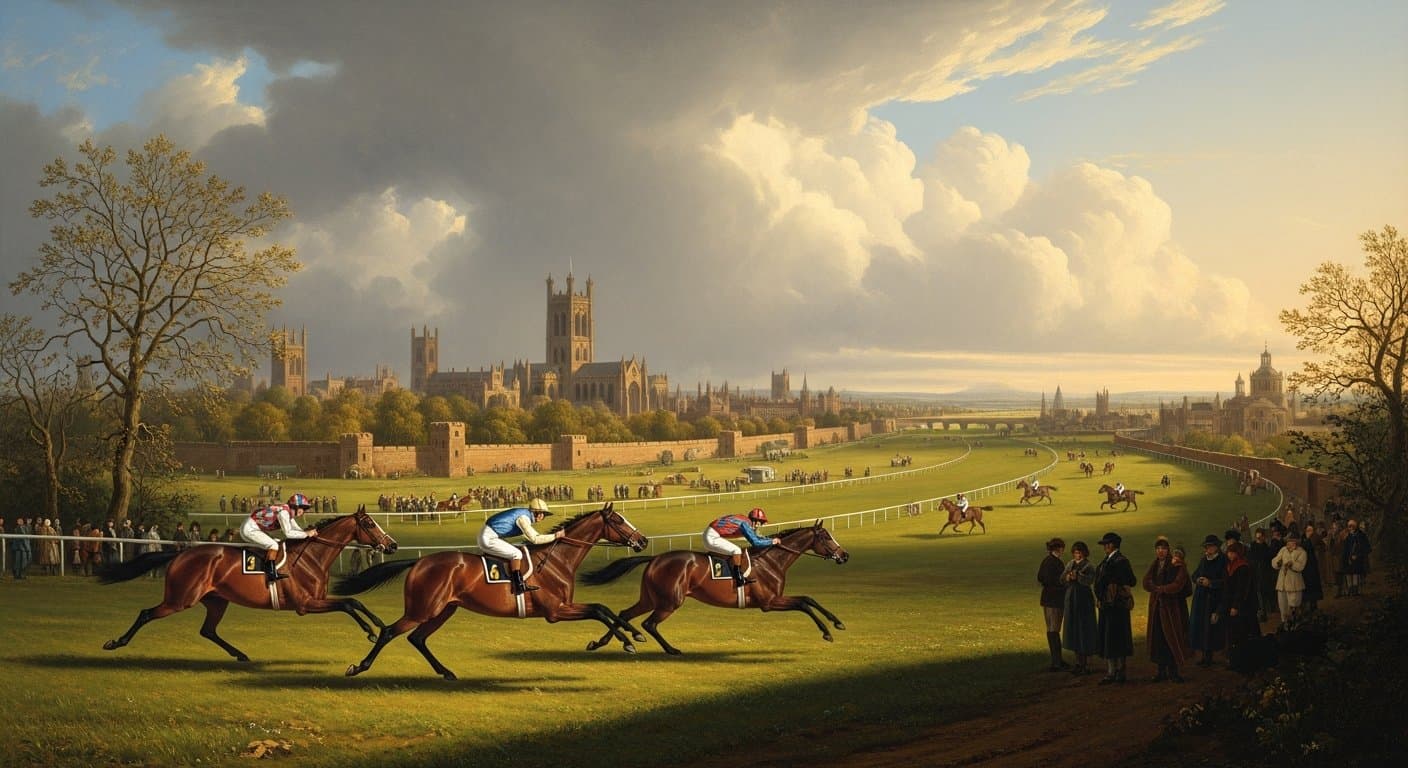
Chester Cup Day at Chester: The Complete Guide
Your complete guide to Chester Cup Day: the Thursday of Chester's May Festival, headlined by the Chester Cup staying handicap, the Dee Stakes Derby trial, and the Cheshire Oaks. Racing inside the Roman walls, on the tightest major track in Britain.
Read more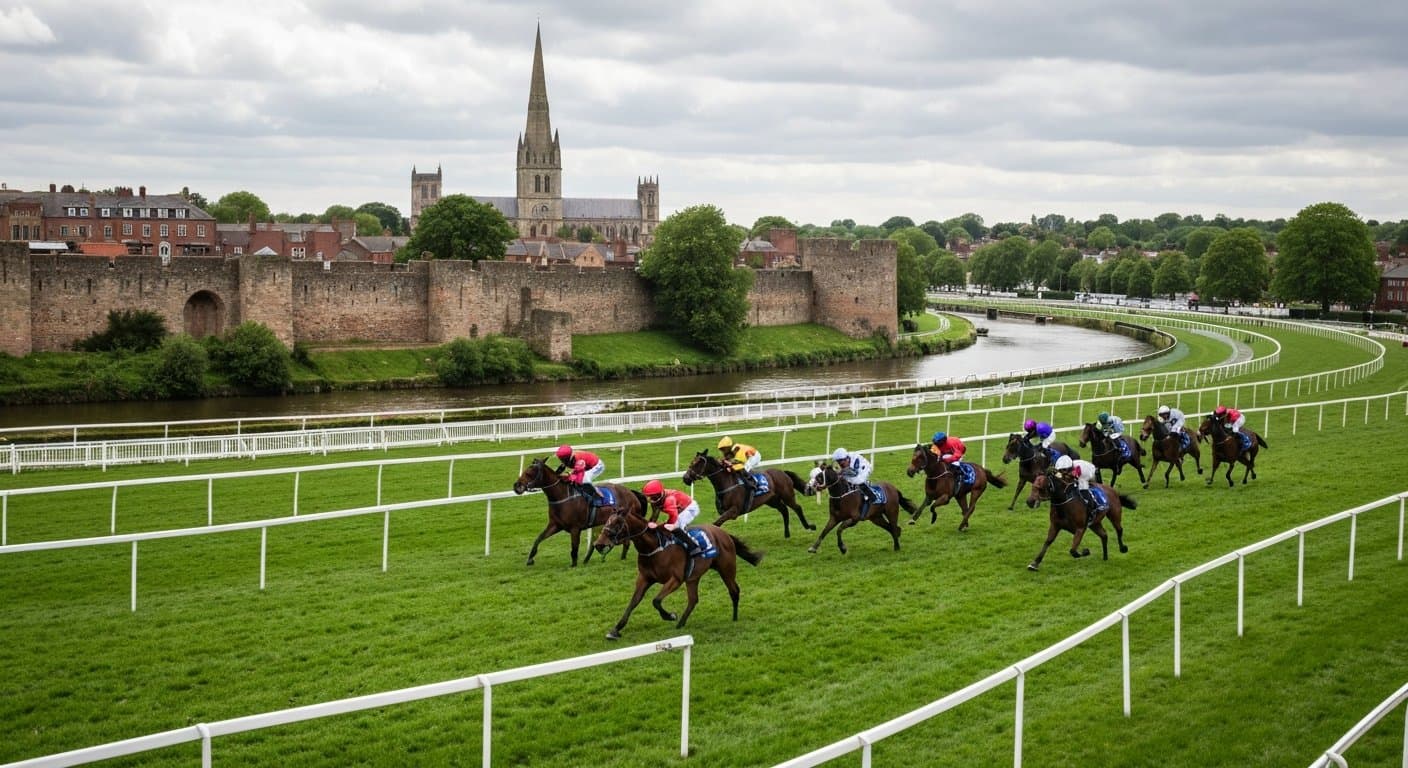
The Chester Cup: Complete Guide
Everything you need to know about the Chester Cup — one of the oldest and most prestigious handicaps in flat racing.
Read more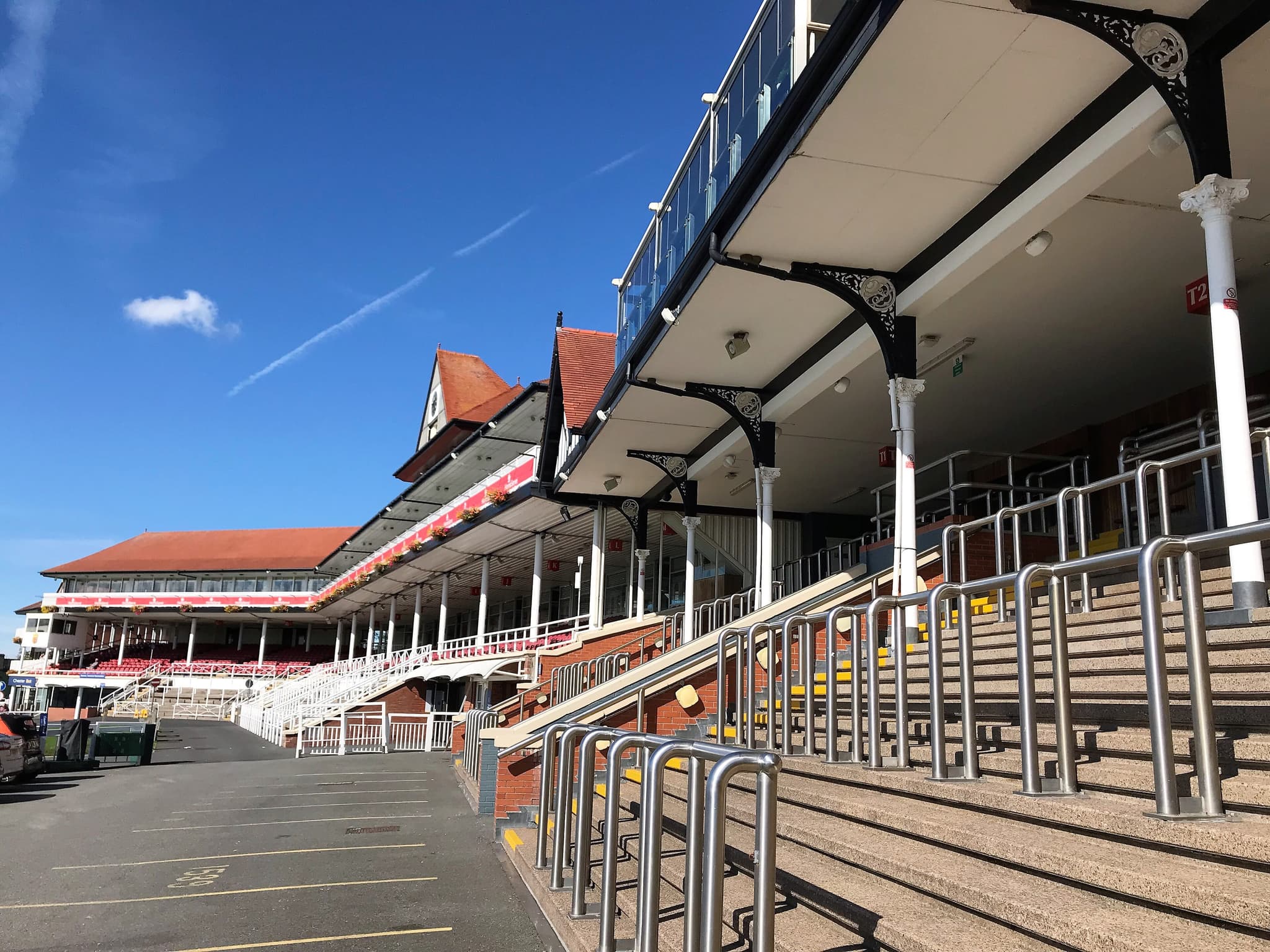
A Day Out at Chester Racecourse
Everything you need for a day at Chester — getting there, what to wear, enclosures, food and drink, and insider tips for the Roodee.
Read morePhotos on this page are used under Creative Commons licences. Titles, sources and licence links for each one are on our image credits page.
Research the field with the AI Race Predictor
Our model publishes calibrated win-probability estimates for UK races — a second opinion to understand a race, not tips. It's open about its record: it doesn't beat the market, and we show exactly how it does.
Work it out & learn the basics
Gamble Responsibly
Gambling should be entertaining and not seen as a way to make money. Never bet more than you can afford to lose. If you or someone you know has a gambling problem, help and support is available.