
Founder & Editor · Last reviewed 2026-03-02
The Chester Cup is one of the oldest and most gruelling handicaps in British flat racing. Run over two miles, two furlongs and 140 yards on the final day of the May Festival, it demands a rare combination of stamina, tactical awareness, and the ability to handle the tightest, most demanding flat track in the country.
First staged in 1824, the Chester Cup predates many of racing's most famous events. For two centuries, it has been a highlight of the early flat season: a marathon test that attracts big fields, bold gambles, and the kind of attritional racing that sorts the real stayers from the pretenders.
What makes the Chester Cup distinct is not just the distance. It is the track. Two and a quarter miles at Chester means over two complete laps of the Roodee — those relentless, tight, left-handed bends coming at the runners again and again. A horse that drifts wide or loses concentration through the turns wastes an enormous amount of energy. The bends are so sharp and so constant that the Cup is as much a test of balance and focus as raw stamina.
The race has a special status in the staying handicap division. It is typically the first major long-distance handicap of the flat season, appearing in the calendar before the longer-distance races at Royal Ascot and Goodwood. Trainers use it as a target for improving stayers, and the form often works out well: Chester Cup runners frequently go on to contest the Ascot Stakes, the Queen Alexandra Stakes, and the Ebor later in the season.
For punters, the Chester Cup is a puzzle. Large fields, often 15 or more runners, combined with the levelling effect of the handicap and the unique track demands make it one of the harder races to solve on the calendar. But that complexity is precisely what makes it rewarding when you get it right.
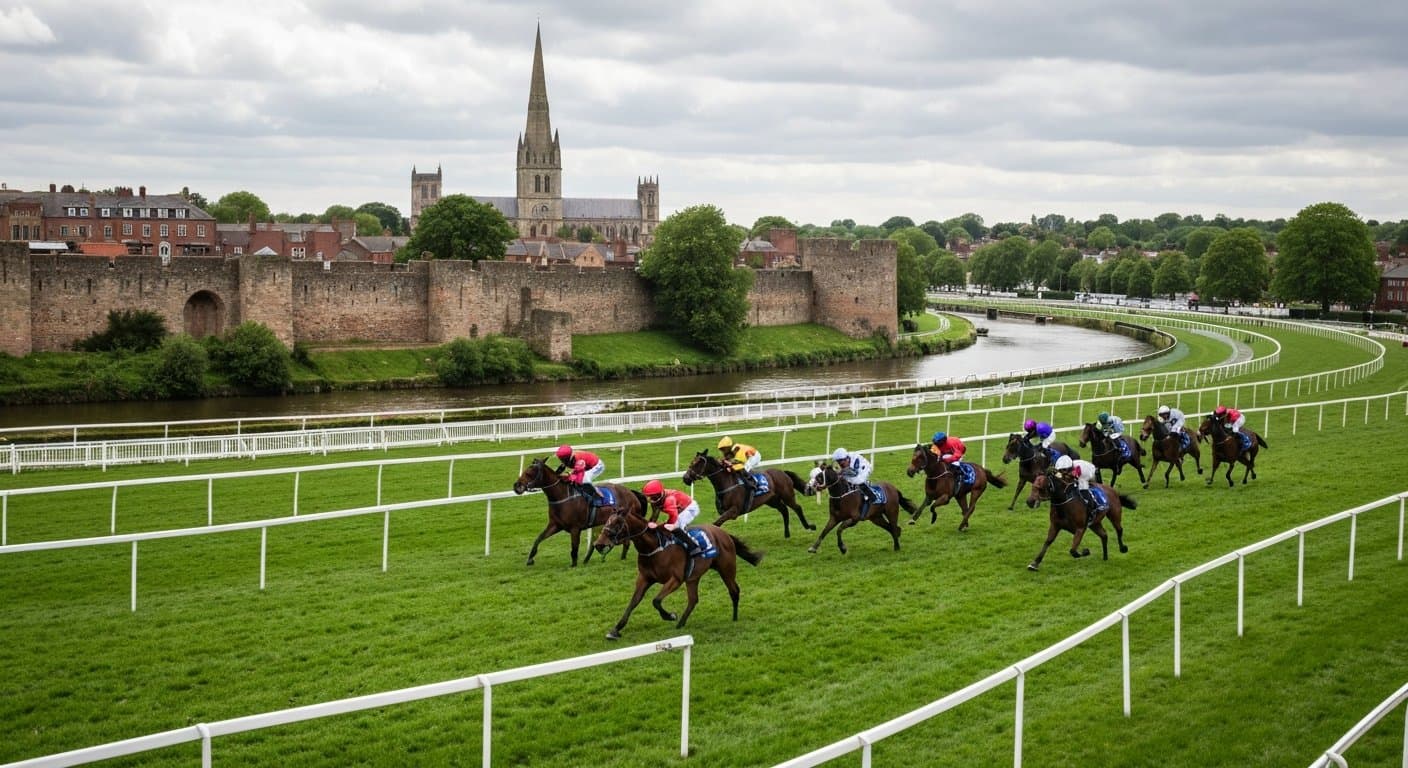
The atmosphere on Chester Cup day is something specific. It is the climax of the May Festival, the crowd is at its peak, and the race itself, with horses strung out around the Roodee on the second lap, is one of the great visual spectacles in flat racing. Whether you are at the course or watching from home, the Cup demands attention.
This guide covers the race's rich history, its greatest winners, how the course conditions affect the result, the draw bias at Chester over long trips, and the betting angles that can give you an edge in one of flat racing's most enduring and absorbing tests.
Bet on Chester
Place your bets on Chester races with a trusted bookmaker.

Promo code BETFRED50. New customers only. Register, deposit with a Debit Card, and place a first bet of £10+ at Evens (2.0)+ on Sports, to be settled within 7 days, to get £30 in Sports Free Bets and £20 in Bet Builder Free Bets within 24 hours of settlement. 7-day expiry. Eligibility & payment exclusions apply. Full T&Cs apply. Take Time to Think. BeGambleAware.org. 18+. Full T&Cs.

Promo code R30. New UK customers only, 18+. Register, deposit £10 or more, then place a £10 single cash bet at odds of 1/2 (1.5) or greater on any sports market (excluding Virtuals). Once the qualifying bet settles you get £30 in Free Bets (3 x £10) — the qualifying bet can win or lose. Free Bets are valid on any sports market excluding Virtuals, expire in 7 days, are non-withdrawable and must be used in full. Excluded deposit methods apply (including PayPal, Apple Pay, Skrill and NETELLER). Named bets such as Lucky 15 do not qualify. If you cash out the qualifying bet, or it is voided, you are no longer eligible for the offer. Ends 31.12.26. Full T&Cs apply. Please gamble responsibly. BeGambleAware.org. 18+. Full T&Cs.

Promo code BET40GET20. New UK customers, 18+. Register with the code and place a first bet of £40 or more at Evens (2.0) or greater. Receive 2 × £10 free bets: the first credited automatically once the qualifying bet settles, the second 24 hours later. Free bets must be placed at minimum odds of 4/1 (5.0), expire 24 hours after credit, and the free-bet stake is not returned with winnings. Debit card deposits only. Take Time to Think. BeGambleAware.org. 18+. T&Cs apply. Full T&Cs.

50% of your first-day net losses refunded as a free bet, capped at £25. New UK customers aged 18+ only. To qualify, deposit and place a first bet of £10 or more on any sport at minimum odds of evens (2.00), then place at least two further bets on different events, each worth at least 50% of your largest bet, all at evens (2.00) or greater. Losses are counted from your first settled bet until 23:59 the same day. Place a qualifying £10+ bet and you are guaranteed at least a £5 free bet. Bets placed at SP, void bets, cashed-out bets and bets struck with free bets do not count towards the offer. The free bet is credited the day after your qualifying bets settle and must be used within 7 days, after which it expires. It can be used at odds from 1/4 (1.25) up to 250/1 on singles and straight accumulators, but not on Trixie, Patent or Yankee style multiples. Free-bet stake is not returned with winnings. One offer per person, household, address, IP address and device. E-wallet deposits may not qualify, so check the cashier before depositing. Customers registered with GAMSTOP cannot claim. KYC identity verification must be completed before the free bet is credited. Take Time to Think. BeGambleAware.org. 18+. T&Cs apply. Full T&Cs.

New customers, 18+. Choose the sports bonus at sign-up, make a first deposit and receive a 100% bonus up to £50 in your Sports Bonus balance. To convert the bonus to cash, wager it 10x within 30 days. Single bets below Evens (2.00) do not qualify; accumulators do not qualify if any selection is below 1/2 (1.50). Virtual Sports, voided, cancelled, drawn, cashed-out and free-bet wagers do not count towards wagering. Only the first settled bet per event counts. Withdrawing before the wagering requirement is met forfeits the bonus balance including bonus winnings. Real-money funds are used before bonus funds. Deposits via Skrill or Neteller are not eligible. Not valid in conjunction with other promotions. Odds, bet and payment limits apply. 10bet general and promotion T&Cs apply. BeGambleAware.org. 18+. Full T&Cs.

New customers in Great Britain and Republic of Ireland, 18+. Place a £10 fixed-odds qualifying bet at minimum odds of 1/2 (1.50) — single or each-way (only the win part counts), pre-event or in-play, not cashed out early, within 28 days of opening the account. Receive up to £60 in bonuses credited over three days: 3 × £10 fixed-odds free bets (the first on settlement, then 24 and 48 hours later) plus 3 × £5 Total Goals FOOTBALL spread bets and 3 × £5 racing Winning Favourites spread bets, with a £1 racing Race Index spread bet as an extra on top. The spread bets need a full spread-betting account, opened within 28 days of the fixed-odds account and subject to Spreadex's eligibility and appropriateness checks. Free-bet stakes not returned with winnings; free bets valid 28 days from issue. IMPORTANT: the £5 credits are SPREAD bets — sports spread betting carries the risk that losses can exceed your stake. Sports spread-betting customers do not have Financial Ombudsman or FSCS recourse. Take Time to Think. BeGambleAware.org. 18+. T&Cs apply. Full T&Cs.

Promo code WELCOME15, entered under My Bonuses after registering. New UK customers, 18+. Place a first qualifying bet of at least £10 from your cash balance at odds of evens (2.0) or greater within 7 days of opening the account. Once the qualifying bet fully settles you receive £15 in free bets, credited as 3 x £5 tokens with set uses: one £5 accumulator free bet (minimum 4 legs, each leg at 2/5 or bigger), one £5 sports free bet (any market at evens or bigger) and one £5 Sub Cover free bet (selected football player markets at evens or bigger). Free-bet stakes are not returned with winnings. Free bets expire 7 days after they are credited. Void, cashed-out and partially cashed-out bets do not qualify. One offer per customer. Confirm the current terms on BetGoodwin's own welcome-offer page before claiming. Take Time to Think. BeGambleAware.org. 18+. T&Cs apply. Full T&Cs.

New UK customers, 18+. Minimum deposit £10. Place a £10 qualifying single on sports (excluding virtuals) at minimum odds of 1/2 (1.50), settled within 14 days. Deposit-method exclusions apply. Receive £30 in free bets (stake not returned), split £20 for sportsbook use (2 x £10) and £10 for Bet Builder only (2 x £5); Bet Builder does not cover horse racing. Free bets must be accepted within 7 days and expire 7 days after acceptance. No promo code required. Best Odds Guaranteed on UK & Irish racing, subject to having staked over £25 in the previous seven days. Operated by LiveScore Betting and Gaming (Gibraltar) Ltd, UKGC 56859. Confirm the current terms on LiveScore Bet's own promotions page before claiming. Take Time to Think. BeGambleAware.org. 18+. T&Cs apply. Full T&Cs.
18+. BeGambleAware.org
Race History
The Chester Cup was first run in 1824, making it one of the oldest handicap races in the British flat racing calendar. It was established during a period of rapid growth for the sport: the Classics were already well established, the Jockey Club was formalising rules, and racecourses across the country were adding prestige events to their programmes. Chester, with its ancient heritage, was a natural home for a race of significance.
Early Years
The original Chester Cup was conceived as a long-distance handicap that would test the best staying horses in training. In the early 19th century, long-distance racing was far more prominent than it is today. Races of three and four miles were commonplace, and the idea of a marathon handicap was entirely natural. The Chester Cup's two-and-a-quarter-mile distance was demanding but not extreme by the standards of the era.
From the start, the race attracted large fields and significant betting interest. The early Victorian period saw the Chester Cup become one of the great wagering events of the season. Information moved slowly; results from one meeting might not reach other parts of the country for days, and the Cup was a favourite target for betting coups. Owners and trainers would manoeuvre their horses into the handicap with carefully planned campaigns, aiming to get a light weight in the Cup and spring a surprise.
The Chester Cup quickly established itself alongside the Cesarewitch and the Cambridgeshire as one of the three great handicaps of the flat season. While the other two are autumn events, the Cup's early-season position gave it a distinctive character. It tested horses emerging from their winter breaks and provided the first major test of the staying division each year.
The Victorian Heyday
The mid-19th century was arguably the Chester Cup's golden age. The race regularly attracted the best staying handicappers in training, and the betting market around it was enormous. This was the era before starting prices were standardised, when on-course bookmakers operated in a lively, colourful environment and enormous sums changed hands.
The arrival of the railway in Chester in 1848 transformed the Cup meeting. Racegoers could suddenly travel from Liverpool, Manchester, Birmingham, and London to attend. The crowds grew, the atmosphere intensified, and the Cup's reputation expanded from a regional highlight to a national event.
Victorian newspapers gave the Chester Cup extensive coverage, with previews and analysis that would be recognisable to modern racing fans. The race became a fixture in the national sporting calendar, and Chester Cup day was as much a social event as a sporting one.
The races of this period were often decided by tactics as much as ability. On a course like the Roodee, where position through the bends is everything, the horse best placed after the first lap had a significant advantage. Victorian jockeys who knew Chester well were prized assets, and the premium placed on course knowledge at Chester established a tradition that has held ever since.
The 20th Century
The two World Wars disrupted the Chester Cup along with the rest of the racing programme. The race was suspended during both conflicts, though substitute events were sometimes staged at other venues. Each time, the Cup returned and quickly re-established its position in the calendar.
The post-war era saw the staying division gradually decline in importance. Shorter, faster racing became more commercially valuable, and the long-distance handicap lost some of its cultural centrality. But the Chester Cup survived better than most. Its unique setting, historic prestige, and position at the heart of the May Festival gave it a resilience that other staying events lacked.
By the late 20th century, the Cup was firmly established as a target for ambitious trainers with improving stayers. It served as a stepping stone to the longer races at Royal Ascot; horses who ran well in the Chester Cup often went on to contest the Ascot Stakes or the Queen Alexandra Stakes. This gave the Cup a strategic importance in the staying calendar that reinforced its status.
The Modern Era
Today, the Chester Cup remains one of the most prestigious staying handicaps in the flat calendar. It regularly attracts fields of 15-18 runners from the major yards, and the prize money has been maintained at a level that ensures competitive quality. The race is broadcast nationally and generates significant betting turnover.
The Cup's profile has also benefited from the growth of the Chester May Festival as a whole. As the Festival has become a bigger event, both sporting and social, the Cup has naturally grown with it. It is the headline act on the final day, the race that everyone talks about, and the contest that defines whether your Festival has been a success or a disappointment.
The race was granted Heritage Handicap status, placing it in the same category as the Cesarewitch, the Cambridgeshire, the Ebor, and the Stewards' Cup. Heritage Handicap status means the BHA allocates weights with the specific aim of producing a competitive race; the weights are published earlier and fewer adjustments are permitted than in standard handicaps. This preserves the race's original character as a real test of the staying division rather than a vehicle for balloted-out favourites.
What Heritage Handicap Status Means in Practice
The Heritage Handicap designation matters for punters and trainers alike. For trainers, the early publication of weights — around a month before the race — allows time for a properly structured preparation. Horses can be pointed at Chester with a specific target date in mind rather than being entered speculatively at the five-day stage. This tends to produce fields where connections have committed to the race with intent, which improves overall quality.
For the handicapper, the constraint on late adjustments means that the weights reflect a considered assessment rather than a reactive response to recent form. A horse who has run well in the weeks before Chester may not receive an immediate penalty before the race; conversely, an out-of-form runner will not have weight removed to encourage entry. The weights stand broadly as they were set when entries opened, which creates a more stable betting market and a more accurate reflection of each runner's assessed ability at the time of entry.
The Chester Cup shares Heritage Handicap status with the Lincolnshire Handicap (Doncaster), the Royal Hunt Cup (Ascot), the Wokingham (Ascot), and the Ebor (York), among others. In that company, it holds its own: it is the only Heritage Handicap over a distance in excess of two miles, and the only one run on a circuit as tight and unusual as the Roodee. Its specific character — marathon distance, unique track, big fields — makes it the most physically demanding of any race in the Heritage series.
Two centuries in, the Chester Cup is still doing exactly what it was designed to do: testing the best staying handicappers on one of the most demanding tracks in the country, and providing a spectacle that keeps racegoers and punters coming back year after year.
Famous Runnings of the Race
Certain editions of the Chester Cup have entered the record books for their drama, their fields, or the quality of the horse who won.
The race's Victorian editions were frequently decided in the final strides after long battles around the Roodee's bends, with large fields of 20 or more runners creating scenes of chaos that today's safety limits would not permit. The Cup was a far less controlled spectacle than it is now, and the betting coups that surrounded those early races were the stuff of racing legend.
In more recent decades, the race has produced some absorbing renewals. When Chester gets ideal conditions — good to firm ground, a reasonable pace, and a field of real stayers — the Cup provides the kind of racing that reminds you why the staying division has its own devoted following. The sight of 15 horses extended around the Roodee on the second lap, with the field beginning to string out but the race still to be decided, is one that race-goers at the May Festival return for year after year.
The race has also had its share of tight finishes. Because Chester's straight is so short, the Cup can produce last-gasp winners who have timed their challenge through the final bend to perfection. The margin between first and fifth in a Cup field is often very small at the entrance to the straight, and the result depends heavily on which horse has rationed their energy most efficiently through those two gruelling laps.
Great Winners
Two centuries of Chester Cup racing have produced a rich gallery of winners. Some were established stars who dominated the staying division. Others were bold gambles landed by shrewd connections. A few were surprising results that reminded everyone how competitive and unpredictable a big-field staying handicap can be.
Multiple Winners
One of the Chester Cup's distinctive features is the number of horses who have won it more than once. The unique demands of the Roodee — the tight bends, the stamina test, the need for a specific type of horse — mean that a real Chester Cup specialist often comes back and repeats the feat.
Doyen, trained by Richard Hannon, won the race in consecutive years in the early 2000s, demonstrating the value of course experience in a race where knowing the track is truly advantageous. Horses who handle the Roodee's demands tend to keep handling them, and trainers target proven Cup horses at the race repeatedly.
The pattern of repeat winners is not coincidence. It reflects the specific nature of the Chester test. The Roodee selects for a particular kind of horse, one with the balance, stamina, and temperament to handle two laps of tight bends under pressure. Once a horse has demonstrated those qualities, they usually retain them. The handicapper will adjust the weights upward, but often not enough to negate the course advantage.
Victorian Legends
The 19th century produced some of the Cup's most celebrated winners, though records from the earliest decades are incomplete. What is clear is that the Chester Cup was a race the leading owners and trainers took seriously. Winning it required a quality stayer who could also handle the tactical demands of the tight track; not every good horse was suited.
The great Victorian betting coups often centred on the Chester Cup. Horses would be carefully prepared over months, their form disguised on other courses, before being unleashed at Chester with significant sums already invested. When the gambles came off, they were among the most talked-about racing moments of their era. The bookmaking community in those years had no certainty about the true ability of any horse; the Chester Cup was exactly the kind of race where a well-prepared stable could extract maximum value from an uninformed market.
The scale of the betting activity around the Victorian Chester Cup is difficult to convey to a modern audience. In an era without systematic form analysis, without standardised going descriptions, and without the near-instant communication that the telegraph and telephone would later enable, those who had done their homework on a Chester Cup candidate had an enormous informational advantage over the general betting public. The Cup was a race made for the professional gambler.
20th Century Highlights
The post-war period saw several notable Chester Cup winners. The race continued to attract quality stayers, and the pattern of form working out well at subsequent meetings was established. Horses who handled the test, physically and mentally, proved they had the attributes needed for the longer staying races later in the season.
The 1990s and 2000s produced some memorable renewals. Luca Cumani's runners were a regular feature; the yard targeted the race with improving stayers who often went on to better things. The race's position as a stepping stone to Royal Ascot was cemented during this period. Mark Johnston's yard, with its front-running philosophy and deep pool of staying types, also became a regular presence. Johnston's horses suited the Cup's demands almost perfectly: they set or tracked the pace, maintained their gallop through the bends, and finished strongly in the short straight.
Royal Athlete (1992)
Royal Athlete's Chester Cup victory in 1992 stands as one of the race's most notable renewals from that era. Trained by Jenny Pitman — who would later guide him to victory in the 1995 Grand National — Royal Athlete demonstrated the staying credentials that characterised his career at a point when few expected a National Hunt-bred type to dominate a flat handicap on such a tight circuit. His win illustrated one of the Cup's enduring qualities: extreme stamina, applied on an unusual track, can override the raw speed that dominates shorter flat racing. Pitman's management of a tough, versatile horse exemplified the kind of training judgement that the Chester Cup rewards.
Sergeant Cecil (2004 and 2005)
Few Chester Cup winners have captured the public's attention quite as fully as Sergeant Cecil. Trained by Bob Street, a small stable far removed from the major yards, Sergeant Cecil won the Chester Cup in consecutive years in 2004 and 2005 and became the most recognisable staying handicapper of his generation.
The 2004 win announced him. He was a six-year-old carrying a competitive weight, drawn wide, with a jockey making difficult decisions on a track that punishes the wrong call. He won in the style of a horse who knew exactly what he was doing — settling through the bends, finding the shortest route, and finishing with authority in the straight. When he came back in 2005 and repeated the feat under a penalty, carrying more weight than any rival, the response from the Chester crowd was as warm as any staying handicap has produced.
Sergeant Cecil went on to win the Goodwood Cup and the Doncaster Cup, confirming that the Chester performance had been no fluke. He was a proper staying champion, and the Roodee was where he first announced himself clearly. His two Chester Cup victories are the standard against which repeat winners are still measured.
Thomas Chippendale (2012)
Thomas Chippendale's Chester Cup win in 2012, trained by Luca Cumani, represents the kind of performance that the Heritage Handicap format is designed to produce. Carrying a reasonable weight in a well-run race on good ground, he tracked the pace through both laps, made his move around the final bend, and won with enough in hand to suggest the form was solid.
The 2012 renewal attracted a strong field, and Thomas Chippendale's victory was widely regarded as a thoroughly deserved result for a yard that had targeted the race thoughtfully. Cumani's record in Chester staying handicaps across his career showed consistent respect for the specific demands of the Roodee, and Thomas Chippendale was the product of preparation focused on the right race at the right time. His win is a useful reminder that the Chester Cup, despite its unpredictability, often rewards horses whose connections have matched the race profile precisely.
Recent Decades
Overturn, trained by Donald McCain and ridden by Jason Maguire, provides a memorable modern example of a Chester Cup winner. The horse was primarily known as a hurdler, but his flat form was underestimated by a market that failed to account for his extreme stamina and course aptitude. His win at 25/1 demonstrated one of the persistent truths about the Chester Cup: the race regularly produces winners at prices well above what a form assessment might suggest, because the field-levelling effect of the handicap, combined with the unique track demands, creates real uncertainty that the market cannot fully resolve.
The Jockey Factor
Chester Cup history is threaded with outstanding riding performances. The two-and-a-quarter-mile trip around those bends requires exceptional judgement: when to push for position, when to sit and wait, and how to navigate through a field of 15-plus runners on a track where there is barely room for error.
Some of the finest rides in Chester Cup history have come from jockeys who understood exactly when to make their move. Coming too early on the second lap means a horse is exposed in front for too long on those grinding bends. Coming too late means there is no time to reel in the leaders in the short straight. The great Chester Cup rides hit the perfect balance.
The role of the jockey in positioning and saving ground is more significant in the Chester Cup than in almost any other flat race. Because the bends are so tight and the course so narrow, a jockey who successfully keeps his horse on the rail throughout the race may save the equivalent of two or three lengths compared to one who allows his mount to drift wide. Over two laps of a tight circuit, those saved lengths accumulate.
Jockeys with strong Chester records attract particular attention in the Cup. When a trainer with a capable horse books a jockey who knows the Roodee intimately rather than defaulting to their usual stable rider, it is a significant signal. It suggests the connections understand that the track's demands outweigh the usual factors that determine jockey selection.
The Gambles
The Chester Cup has always been a race for having a view. The handicap system levels the field, the large fields create uncertainty, and the unique track conditions add an extra variable. All of which means that well-informed punters, those who have done their homework on the course demands and identified horses that fit the profile, have consistently found value.
Some of the most celebrated punting successes in Chester Cup history have come from backing horses whose form on other courses looked moderate but whose running style, stamina profile, and track aptitude made them ideal for the Roodee. The Chester Cup rewards the punter who thinks differently, who looks beyond the raw ratings and asks whether a horse has the specific tools for this most unusual test.
The Victorian era produced the most extreme examples of gambling activity around the race, but the pattern persists in the modern era. Every year, the Chester Cup throws up a winner at a double-figure price who was well within reach of a punter who had done the analysis correctly. The race is not impossible to solve. It simply requires a different set of questions than the ones you ask about most flat races.
What Makes a Chester Cup Winner?
The common thread among the best Chester Cup winners is adaptability. They need the stamina to see out two and a quarter miles. They need the balance and agility to handle the tight bends lap after lap. They need the temperament to settle in a big field and switch off between the bursts of effort. And they need a jockey who knows when to press the button. It is a demanding combination, and the horses who possess it deserve their place in the race's long history.
A Chester Cup winner will almost always have demonstrated stamina somewhere in its form before the race. A horse who has run creditably in staying handicaps at Sandown, Haydock, or York is showing the fuel tank that Chester requires. But Chester also demands something those tracks do not routinely test: the ability to maintain form and rhythm on a continuously turning, narrow circuit. A horse who has run at Chester before and handled it well is better placed than one who is visiting the Roodee for the first time, regardless of the relative quality of their wider form.
The Course & Conditions
The Chester Cup is run over two miles, two furlongs and 147 yards on the Roodee's tight, left-handed circuit. That distance requires over two complete laps of the course, and it is the multi-lap element that makes this race so distinctively demanding.
Two Laps of Pressure
On most flat courses, a two-mile race is run largely on a straight or with sweeping, gradual bends. At Chester, runners face continuous tight turns for the entire journey. The first lap involves the full circuit of sharp bends. The second lap repeats those bends when horses are beginning to tire. By the time they hit the short home straight on the second circuit, stamina reserves are truly tested.
This repetitive stress is what separates Chester Cup horses from ordinary stayers. A horse might handle the bends comfortably on the first lap but start drifting wide on the second as fatigue sets in. That drift costs lengths, and at Chester, where every inch of ground matters, those lost lengths are rarely recovered.
Draw Bias at Chester Over Long Trips
The draw is one of the most discussed and most misunderstood elements of Chester Cup betting. At sprint distances on the Roodee, the draw has an enormous influence: low numbers get the rail into the first bend and are massively advantaged. Over sprint trips, it is effectively a structural advantage that statistics have confirmed repeatedly.
Over the Chester Cup distance, the draw's direct influence is substantially reduced but not eliminated. The race starts on the home straight, and the initial battle for position heading into the first bend still favours horses drawn on the inside. A horse drawn in stall one who gets racing cleanly will be on the rail heading into the first bend, giving it the shortest route around the circuit. Over two laps, the horse on the shortest route saves significant ground.
However, two important factors counteract the raw draw advantage over the Cup distance. First, with 15 or more runners in the race, the field sorts itself into a position order regardless of draw within the first few furlongs. A horse drawn wide who is fast enough to cross and find the rail will have overcome the initial disadvantage. Second, the longer distance gives horses more time to find their running, and jockeys more time to organise their position before the first critical bend.
The practical conclusion for punters is this: a horse in the bottom six or seven stalls has a marginal advantage over the Cup distance, all else being equal. When you have two horses of similar quality and similar racing styles, the one drawn lower will have a structural advantage. But draw alone should not be the deciding factor in Cup betting. A horse drawn in stall 14 with the right profile will beat a horse in stall 2 with the wrong profile more often than not.
The more significant position consideration in the Chester Cup is not the starting stall but the racing position during the race. Horses who race in the first three or four, on or near the rail, throughout the contest have the clearest structural advantage. They travel the shortest route, they avoid traffic through the bends, and they are well placed to kick for home in the final straight without having to navigate around tiring rivals.
The Starting Position
The Chester Cup starts on the home straight, and the initial tactical battle is for rail position heading into the first bend. Jockeys drawn on the inside have a natural advantage in securing a good position, but the longer distance gives runners more time to find their spots than in a sprint race. By the time the field completes the first half-circuit, the draw's direct influence has largely dissipated.
What matters more is racing position. Horses who can settle in the first three or four, tracking the pace on or near the rail, save the most energy through the bends. Hold-up horses have to navigate around tiring rivals in the final half-mile, and there is often not enough room or straight to accomplish it.
Going Conditions
The Chester Cup typically takes place on the final day of the May Festival, and ground conditions in early May can vary significantly year to year. On good to firm ground, the race favours horses with real pace who can maintain a gallop; the faster surface rewards efficiency. When the ground turns soft, the race becomes even more of a stamina test, with the slower conditions adding to the energy-sapping effect of the bends.
The going also affects the tactical shape of the race. On fast ground, the pace tends to be stronger and the field more strung out, which can benefit front-runners. On softer going, the pace is often more conservative, the field bunches up, and finding room for a run becomes more difficult.
Soft ground at Chester is particularly taxing. The tight bends and the double-circuit nature of the Cup mean that soft conditions do not simply slow the race down uniformly; they punish any horse who goes too wide or loses its balance in the turns. A compact, efficient mover who stays balanced through the bends on soft ground will outrun a more talented but less balanced rival. When heavy or very soft ground is forecast for Chester Cup day, the stamina test is extreme and the selection criteria become even more specialised.
Pace Scenario and Stayer Form
Because the Chester Cup is a Heritage Handicap with large fields, the pace scenario is rarely predictable in advance. There will usually be at least two or three horses in the race who want to set or track the pace, and the opening exchanges on the home straight determine how the race is run.
When the pace is strong on the first lap, the field strings out early. This tends to produce a cleaner race where the result is determined by stamina and position on the rail, with fewer traffic problems on the second lap. When the pace is slow, the field remains bunched until late in the race. A slow pace can produce a sprint finish from a large group of horses still competing in the short straight, where luck in running and jockey skill matter most.
For stayer form assessment, look at performances over two miles or further at any track, noting whether the horse races prominently or holds up. Also look at how horses have performed over staying trips on turning tracks: Sandown's round mile, Haydock's flat circuit, York's long bends, and Goodwood's undulating track all test stamina in ways that are at least partially relevant to Chester. But none of them tests balance and turning ability in the same relentless way the Roodee does. Chester form, for all the reasons discussed in this article, remains the gold standard for Cup selection.
Chester as a Stayer's Track
It is worth understanding why Chester and staying races are so closely associated. The Roodee's configuration is almost perversely well-suited to testing stamina. The circuit is roughly one mile in circumference, so the Cup distance of 2m2f means horses complete more than two full laps. Each lap contains the same tight sequence of bends — there is no long straight to allow recovery, no sweeping galloping section where a horse can find its legs and stretch out. The energy cost of navigating those turns, repeated lap after lap, accumulates in a way that has no direct equivalent on a conventional track.
A horse running two miles at a flat, conventional track like Haydock or Goodwood faces a sustained but relatively even demand on its stamina. At Chester, that demand is concentrated through the bends. A horse who drifts wide twice per lap over two-plus laps adds perhaps three or four lengths of unnecessary travel compared to one who stays tight to the rail. Over a long handicap at the end of the first day of May, with big fields and limited racing room, those lengths represent real, measurable energy expenditure.
This is why Chester has its own category of stayer. A horse who handles two miles well at most tracks may still be found out at Chester if it lacks the balance to maintain rhythm through the turns. Conversely, a compact, well-balanced horse who might be found wanting in a flat-out gallop on a straight course can excel at Chester precisely because the bends nullify raw speed and reward efficiency. The track produces its own type of winner, and understanding that type is fundamental to assessing the Cup.
What the Course Demands
The ideal Chester Cup horse is one that combines two-mile stamina with the agility and balance to handle tight turns under pressure. Long-striding gallopers who need time and space to wind up are at a disadvantage; the bends are too tight and too frequent. Compact, well-balanced types who can quicken out of a turn tend to handle it best.
Previous Chester form is a strong indicator. Horses who have won or placed over shorter distances at Chester — proving they handle the track — are prime candidates for the Cup if they have shown sufficient stamina elsewhere. The track characteristics that define all Chester racing are amplified over the Cup distance.
Betting Angles & Trends
The Chester Cup is one of the most absorbing betting races of the flat season. Large fields, the handicap system, and the unique track conditions create a puzzle that rewards careful analysis and punishes those who treat it like any other staying race.
Angle 1: Previous Course Form
This is the single most reliable indicator for the Chester Cup. Horses who have run well at Chester before, regardless of the distance, are significantly more likely to handle the Cup demands than course debutants. The track is so unique that proven ability on the Roodee trumps almost any other factor.
Look for horses who've won or placed at Chester over shorter trips. If they also showed enough stamina in their wider form to suggest the Cup distance is within range, they're prime contenders. The combination of Chester track aptitude and proven stamina is the golden ticket.
Angle 2: Handicap Profile
The Chester Cup tends to reward horses who are improving through the handicap rather than established performers at the top of the weights. High-weighted horses face a double disadvantage: they're carrying more weight and running on one of the most physically demanding tracks in the country. The bends sap energy from every runner, and extra weight amplifies that effect.
Historically, horses in the middle to lower portions of the handicap have a better record than the market favourites lumping top weight. Don't automatically back the classiest horse in the race; look for the progressive type who's well-treated by the assessor.
Angle 3: Jockey Selection
The Chester Cup is a race where the jockey's contribution is enormous. Navigating over two laps of those bends, in a field of 15-plus runners, making tactical decisions about when to push for position and when to sit — it's a jockey's race above almost anything else.
Follow jockeys with strong Chester records. If a top trainer has booked a Chester specialist rather than their usual stable jockey, that's a significant signal. It suggests the connections understand how much the track demands of the rider and have prioritised local knowledge.
Angle 4: Running Style
Front-runners and prominent racers have a structural advantage in the Chester Cup. The short straight means that hold-up horses need everything to fall perfectly: clear daylight to make their move, no traffic problems on the bends, and the acceleration to pass horses in under two furlongs. That's a lot to ask.
Check how each runner typically races. If a horse's style is to settle at the back and produce a late flourish, the Chester Cup is the wrong race for it. The runners who race handy, travel well through the bends, and kick for home at the top of the short straight have the best tactical position.
Angle 5: Trainer Patterns
Certain trainers target the Chester Cup year after year. Mark Johnston's operation has always been strong in staying handicaps, and their front-running style suits the race perfectly. Andrew Balding, William Haggas, and other major yards regularly aim horses at the Cup as part of a broader staying campaign.
When a trainer with a strong Cup record enters a horse that fits the race's profile, with proven Chester form, an improving trajectory, and a favourable handicap mark, it's worth paying close attention.
Putting It Together
The most successful Chester Cup punters combine multiple angles. A horse with proven Chester form, a progressive handicap mark, a front-running style, booked with a jockey who knows the track, and trained by a yard that targets the race: that's the complete package. Finding it at a decent price is the challenge, but even partial matches can produce value in a race where the market often focuses too heavily on raw ability rather than course-specific factors.
Frequently Asked Questions
Share this article
More about this racecourse
All Chester guides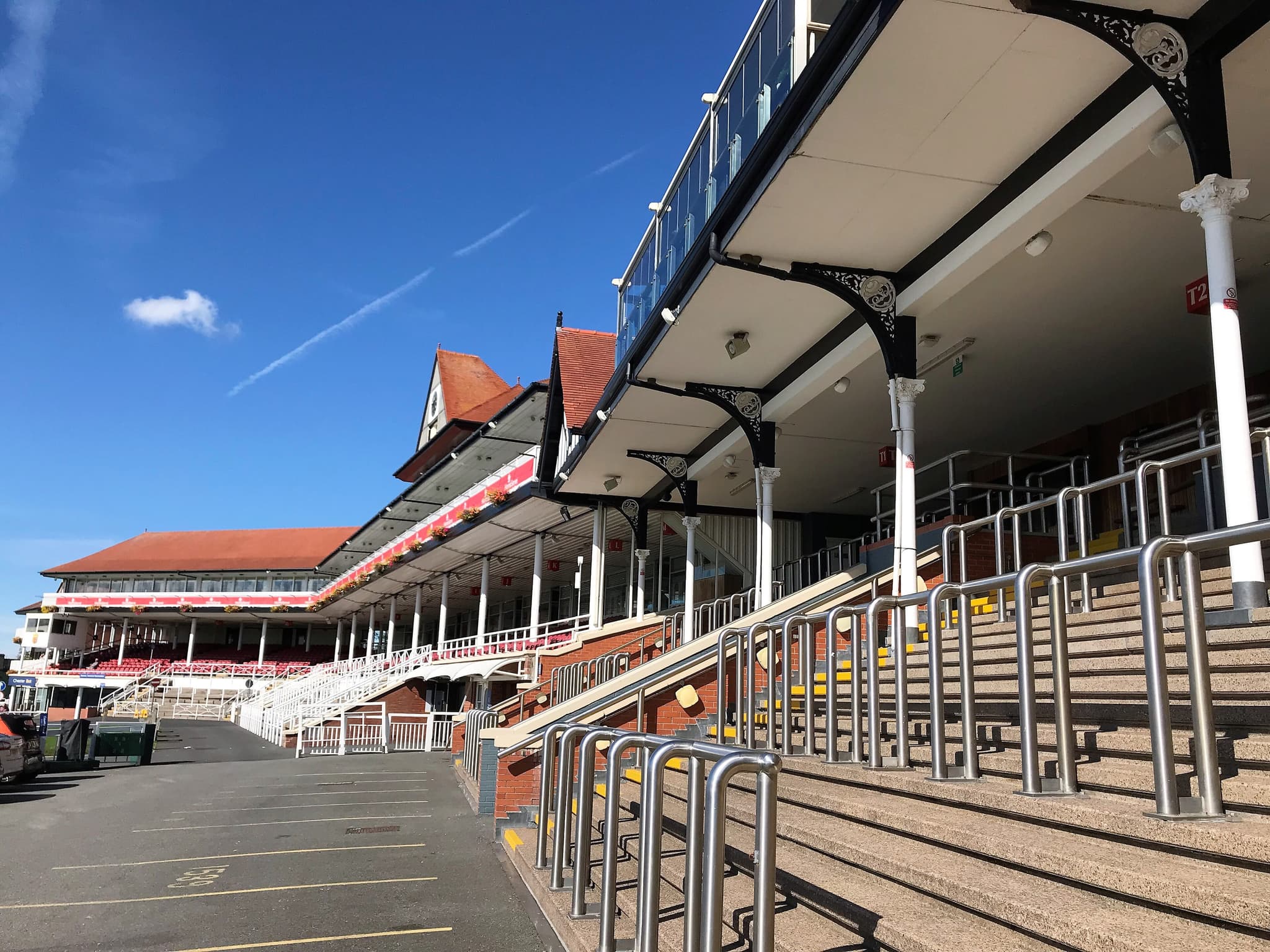
A Day Out at Chester Racecourse
Everything you need for a day at Chester — getting there, what to wear, enclosures, food and drink, and insider tips for the Roodee.
Read more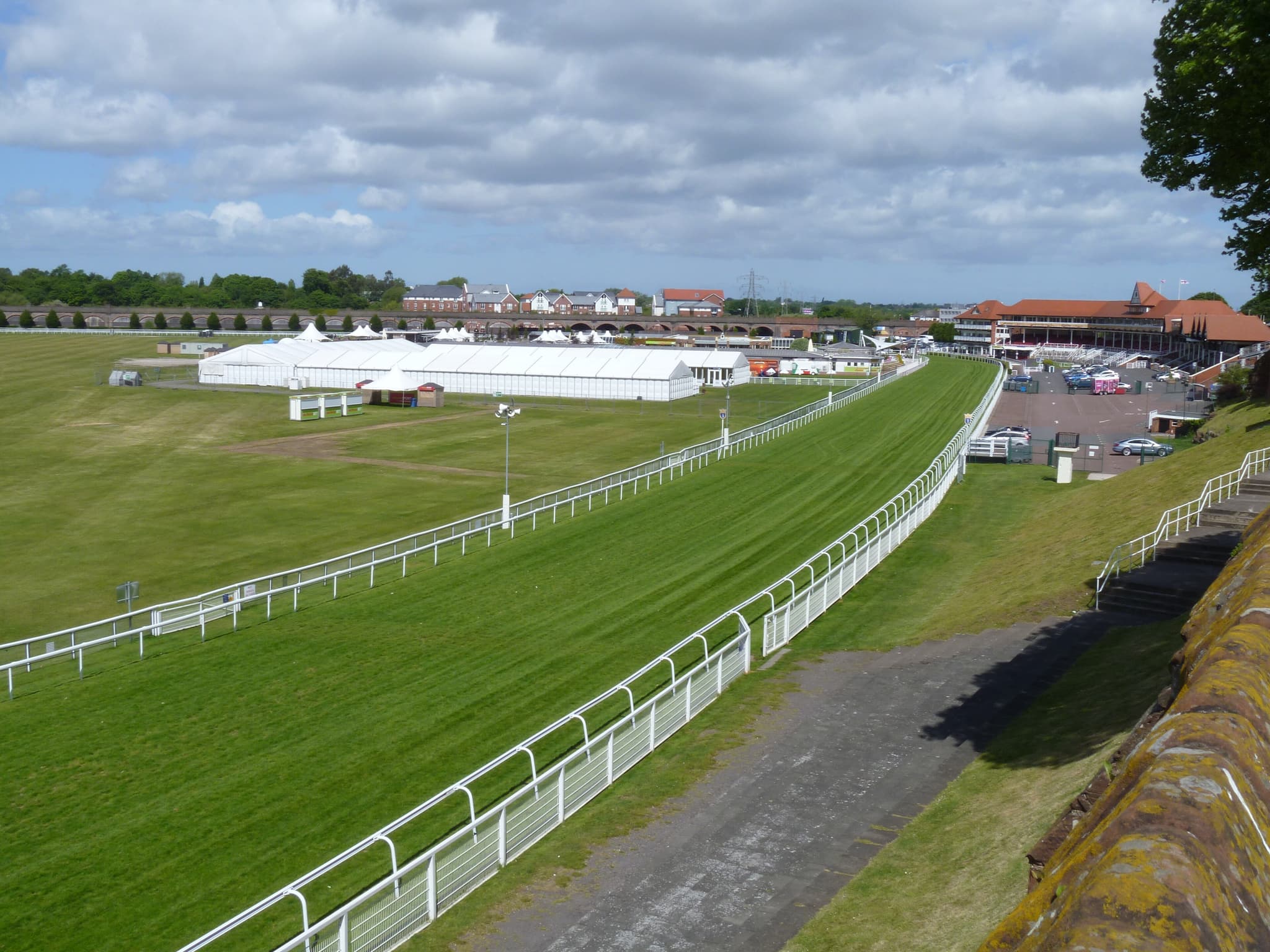
The History of Chester Racecourse
From medieval origins on the Roodee to England's oldest racecourse: nearly 500 years of racing at Chester.
Read more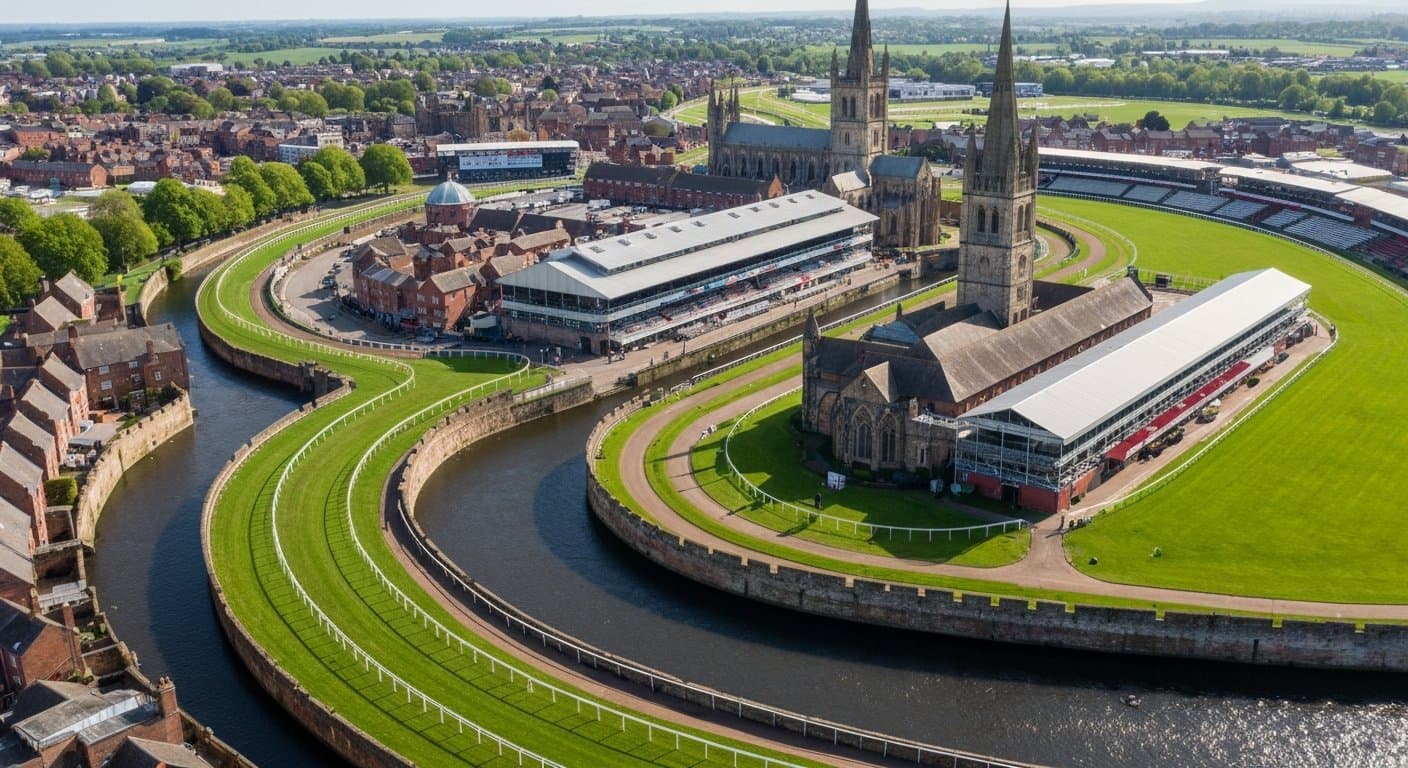
Chester May Festival: Complete Guide
Your complete guide to the Chester May Festival — three days of top-quality flat racing at England's oldest racecourse.
Read morePhotos on this page are used under Creative Commons licences. Titles, sources and licence links for each one are on our image credits page.
Research the field with the AI Race Predictor
Our model publishes calibrated win-probability estimates for UK races — a second opinion to understand a race, not tips. It's open about its record: it doesn't beat the market, and we show exactly how it does.
Work it out & learn the basics
Gamble Responsibly
Gambling should be entertaining and not seen as a way to make money. Never bet more than you can afford to lose. If you or someone you know has a gambling problem, help and support is available.