
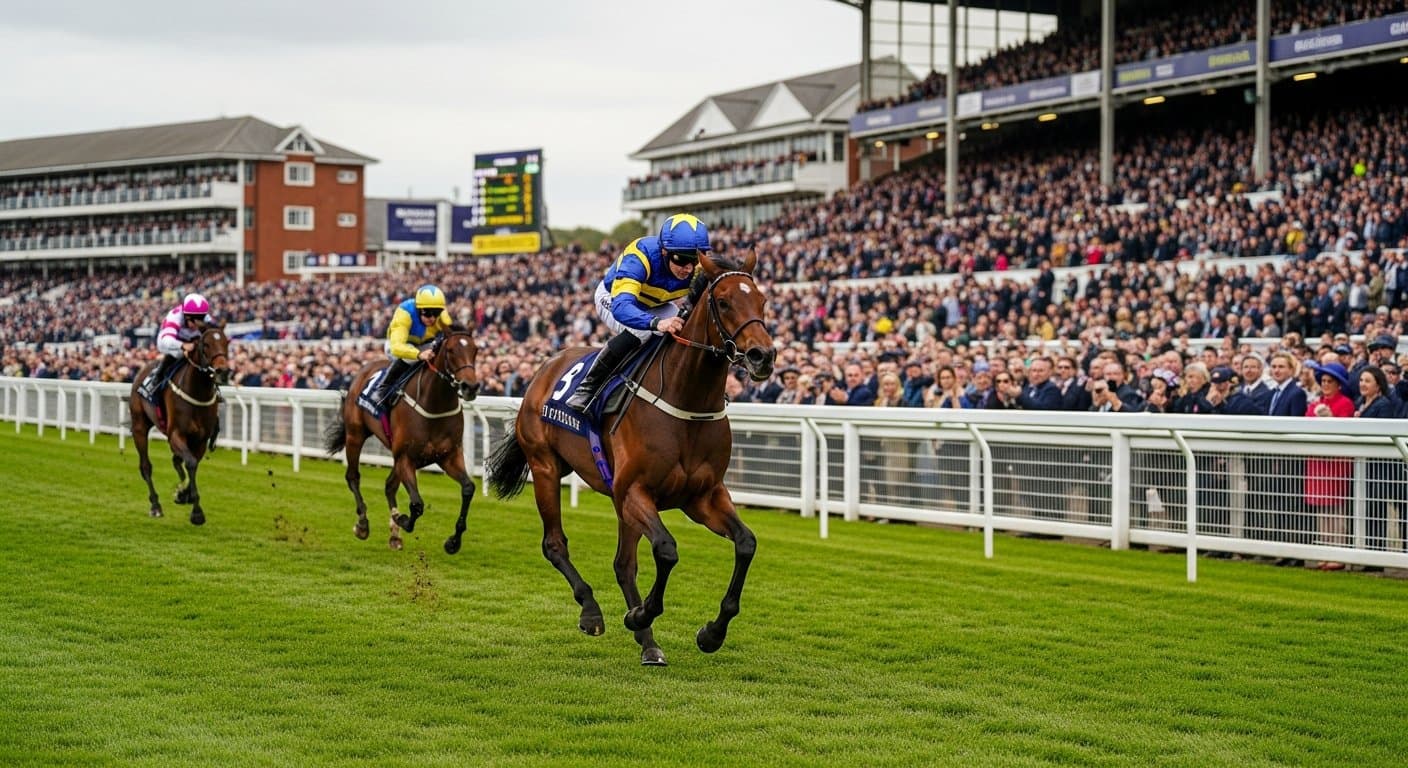
Founder & Editor · Last reviewed 2026-04-04
On a Tuesday afternoon in May 2017, a three-year-old filly trained by John Gosden and ridden for the first time by Frankie Dettori swept Aidan O'Brien's hotly-fancied Alluringly aside in the Cheshire Oaks at Chester and announced herself to the wider racing world. Her name was Enable. Within four weeks she would win the Epsom Oaks. Before the year was out she had added the Irish Oaks, the King George VI and Queen Elizabeth Stakes, the Yorkshire Oaks, and the Prix de l'Arc de Triomphe. The Cheshire Oaks at Chester was where it began.
Chester's May Festival has been a launching pad for Classic-generation talent for generations. The Roodee, the tight, circular left-handed track beside the ancient city walls, produces a particular kind of race. Horses must handle the bends, accelerate off the turns, and maintain their rhythm on a surface that demands balance as much as raw speed. The Cheshire Oaks, restricted to three-year-old fillies, is the traditional Oaks trial run over one mile and four furlongs, and its roll of honour is littered with horses who became Classics winners at Epsom and beyond.
Enable's visit to Chester was brief. She ran once, won once, and moved on to European domination. But that single race on the Roodee carries an importance that cannot be understated. It was the moment John Gosden saw, with the race in the bag and Dettori barely moving on her, that he had something extraordinary in his hands. It was the moment the form book created a piece of evidence that no subsequent critic could dismiss: she had beaten the favourite convincingly, on a left-handed track that asked real questions of her, before Dettori knew her well enough to take any liberties.
The Cheshire Oaks is not the Oaks. It is not a Group 1 race. It does not attract the same attention as the Classics that follow. But in 2017 it served a function that goes beyond its Listed status: it gave the racing world its first public glimpse of a horse who would go on to win 11 Group 1 races across four seasons and become one of the most celebrated flat racehorses of any generation.
This article tells the complete story of Enable's connection to Chester: the horse, the owner and trainer who shaped her, the Cheshire Oaks itself, what happened on the day, how Chester's unique Roodee circuit influenced everything that followed, what the Cheshire Oaks tells us about Oaks and King George contenders, how to read maiden and Classic trial form from the Roodee, and why a single visit to the oldest racecourse in England remains a key chapter in one of the greatest flat racing careers of the modern era.
Bet on Chester
Place your bets on Chester races with a trusted bookmaker.

Promo code BETFRED50. New customers only. Register, deposit with a Debit Card, and place a first bet of £10+ at Evens (2.0)+ on Sports, to be settled within 7 days, to get £30 in Sports Free Bets and £20 in Bet Builder Free Bets within 24 hours of settlement. 7-day expiry. Eligibility & payment exclusions apply. Full T&Cs apply. Take Time to Think. BeGambleAware.org. 18+. Full T&Cs.

Promo code R30. New UK customers only, 18+. Register, deposit £10 or more, then place a £10 single cash bet at odds of 1/2 (1.5) or greater on any sports market (excluding Virtuals). Once the qualifying bet settles you get £30 in Free Bets (3 x £10) — the qualifying bet can win or lose. Free Bets are valid on any sports market excluding Virtuals, expire in 7 days, are non-withdrawable and must be used in full. Excluded deposit methods apply (including PayPal, Apple Pay, Skrill and NETELLER). Named bets such as Lucky 15 do not qualify. If you cash out the qualifying bet, or it is voided, you are no longer eligible for the offer. Ends 31.12.26. Full T&Cs apply. Please gamble responsibly. BeGambleAware.org. 18+. Full T&Cs.

Promo code BET40GET20. New UK customers, 18+. Register with the code and place a first bet of £40 or more at Evens (2.0) or greater. Receive 2 × £10 free bets: the first credited automatically once the qualifying bet settles, the second 24 hours later. Free bets must be placed at minimum odds of 4/1 (5.0), expire 24 hours after credit, and the free-bet stake is not returned with winnings. Debit card deposits only. Take Time to Think. BeGambleAware.org. 18+. T&Cs apply. Full T&Cs.

50% of your first-day net losses refunded as a free bet, capped at £25. New UK customers aged 18+ only. To qualify, deposit and place a first bet of £10 or more on any sport at minimum odds of evens (2.00), then place at least two further bets on different events, each worth at least 50% of your largest bet, all at evens (2.00) or greater. Losses are counted from your first settled bet until 23:59 the same day. Place a qualifying £10+ bet and you are guaranteed at least a £5 free bet. Bets placed at SP, void bets, cashed-out bets and bets struck with free bets do not count towards the offer. The free bet is credited the day after your qualifying bets settle and must be used within 7 days, after which it expires. It can be used at odds from 1/4 (1.25) up to 250/1 on singles and straight accumulators, but not on Trixie, Patent or Yankee style multiples. Free-bet stake is not returned with winnings. One offer per person, household, address, IP address and device. E-wallet deposits may not qualify, so check the cashier before depositing. Customers registered with GAMSTOP cannot claim. KYC identity verification must be completed before the free bet is credited. Take Time to Think. BeGambleAware.org. 18+. T&Cs apply. Full T&Cs.

New customers, 18+. Choose the sports bonus at sign-up, make a first deposit and receive a 100% bonus up to £50 in your Sports Bonus balance. To convert the bonus to cash, wager it 10x within 30 days. Single bets below Evens (2.00) do not qualify; accumulators do not qualify if any selection is below 1/2 (1.50). Virtual Sports, voided, cancelled, drawn, cashed-out and free-bet wagers do not count towards wagering. Only the first settled bet per event counts. Withdrawing before the wagering requirement is met forfeits the bonus balance including bonus winnings. Real-money funds are used before bonus funds. Deposits via Skrill or Neteller are not eligible. Not valid in conjunction with other promotions. Odds, bet and payment limits apply. 10bet general and promotion T&Cs apply. BeGambleAware.org. 18+. Full T&Cs.

New customers in Great Britain and Republic of Ireland, 18+. Place a £10 fixed-odds qualifying bet at minimum odds of 1/2 (1.50) — single or each-way (only the win part counts), pre-event or in-play, not cashed out early, within 28 days of opening the account. Receive up to £60 in bonuses credited over three days: 3 × £10 fixed-odds free bets (the first on settlement, then 24 and 48 hours later) plus 3 × £5 Total Goals FOOTBALL spread bets, 3 × £5 racing Winning Favourites spread bets and a £1 racing Race Index spread bet (the spread bets need a full spread-betting account). Free-bet stakes not returned with winnings; free bets valid 28 days from issue. IMPORTANT: the £5 credits are SPREAD bets — sports spread betting carries the risk that losses can exceed your stake. Sports spread-betting customers do not have Financial Ombudsman or FSCS recourse. Take Time to Think. BeGambleAware.org. 18+. T&Cs apply. Full T&Cs.

Promo code WELCOME15, entered under My Bonuses after registering. New UK customers, 18+. Place a first qualifying bet of at least £10 from your cash balance at odds of evens (2.0) or greater within 7 days of opening the account. Once the qualifying bet fully settles you receive £15 in free bets, credited as 3 x £5 tokens with set uses: one £5 accumulator free bet (minimum 4 legs, each leg at 2/5 or bigger), one £5 sports free bet (any market at evens or bigger) and one £5 Sub Cover free bet (selected football player markets at evens or bigger). Free-bet stakes are not returned with winnings. Free bets expire 7 days after they are credited. Void, cashed-out and partially cashed-out bets do not qualify. One offer per customer. Confirm the current terms on BetGoodwin's own welcome-offer page before claiming. Take Time to Think. BeGambleAware.org. 18+. T&Cs apply. Full T&Cs.

New UK customers, 18+. Minimum deposit £10. Place a £10 qualifying single at minimum odds of 1/2 (1.50), settled within 14 days. Receive £30 in free bets (stake not returned), split £20 for sportsbook use (2 x £10) and £10 for Bet Builder only (2 x £5); Bet Builder does not cover horse racing. Free bets must be accepted within 7 days and expire 7 days after acceptance. No promo code required. Best Odds Guaranteed on UK & Irish racing, subject to having staked over £25 in the previous seven days. Operated by LiveScore Betting and Gaming (Gibraltar) Ltd, UKGC 56859. Confirm the current terms on LiveScore Bet's own promotions page before claiming. Take Time to Think. BeGambleAware.org. 18+. T&Cs apply. Full T&Cs.
18+. BeGambleAware.org
Enable: The Horse
Enable was bred by Khalid Abdullah, owner of Juddmonte Farms, one of the most powerful racing and breeding operations in the world, and trained at Clarehaven Stables, Newmarket, by John Gosden. Her sire was Nathaniel, the King Edward VII Stakes winner who had also finished second in the 2011 Epsom Derby before developing into a capable sire of middle-distance performers. Her dam, Concentric, was a winning filly who had raced at Group level without winning a Pattern race.
Nothing in the breeding demanded that Enable would be exceptional. Nathaniel was a sound but not dominant stallion, Juddmonte's second division rather than their headline act. Gosden had trained horses of this breeding for decades with variable results. What distinguished Enable from the moment she entered training was her physical quality: an unusually well-made filly with a long, sweeping stride that immediately attracted attention from the stable staff.
Her two-year-old season was limited to two starts. She won on debut at Newbury in October 2016, easily, and that was that. The stable saw no reason to run her again as a juvenile. Gosden trusted the horse's development more than the calendar, and Enable was given the winter to strengthen and grow before her Classic preparation began in earnest.
Prince Khalid Abdullah and Juddmonte Farms
The story of Enable cannot be fully told without understanding the operation that produced her. Prince Khalid Abdullah of Saudi Arabia built Juddmonte Farms across three decades into one of the most significant breeding and racing empires in the sport's history. His silks, the green and pink stripes famously described as the colours of a barber's pole, were carried to victory in nearly every major European and American race of consequence.
Juddmonte did not simply buy expensive yearlings and hope for the best. Prince Khalid bred his own horses, carrying genetics across generations and managing the entire cycle from stallion selection through to retirement. The list of horses bred at Juddmonte includes Dancing Brave, Zafonic, Dansili, Frankel, and Enable — a legacy unmatched by any private breeding operation in Europe.
Prince Khalid approached Enable's career with characteristic patience. Juddmonte fillies were rarely rushed. They were given time to develop, targeted at appropriate trials, and allowed to find their best form at their own pace. Enable's winter break after her two-year-old debut, choosing not to run her again in the autumn, was entirely consistent with the operation's philosophy: do not burn out a good horse for the sake of a minor race.
When Prince Khalid Abdullah died in January 2021 at the age of 83, Enable had already been retired to the broodmare band. The racing world marked his passing as a loss of historic proportions. He had shaped British and European flat racing for fifty years, spending hundreds of millions of pounds and producing horses of enduring influence. Enable was his last great champion.
John Gosden: The Trainer
John Gosden trained Enable at Clarehaven Stables, the historic Newmarket yard where he had built his British base after an earlier career in California. Gosden's credentials needed no introduction by 2017: he had trained Benny the Dip to win the 1997 Derby, brought Classic horses of real quality through in each decade of his career, and was regarded as one of the finest handlers of middle-distance Classic horses in Europe.
His relationship with Juddmonte was well established. The operation trusted him with their best horses, and he repaid that trust with careful management and results. Gosden was not a trainer who chased statistics. He targeted specific races, prepared horses properly for their tests, and took the long view on horses who showed quality.
With Enable, Gosden identified early that she was a filly who needed to run on a track that rewarded sustained galloping rather than sharp acceleration. Her stride was long and efficient, her best work coming when she could build and maintain momentum through bends. Chester, with its circular layout and long sweeping turns, was a natural fit. Gosden chose the Cheshire Oaks not simply because it was the obvious Oaks trial but because the Roodee would ask Enable questions that a straightforward gallop at Newmarket could not.
The decision to run her at Chester first, before a racecourse gallop had established any firm handicap assessment or public expectation, was characteristically measured. Gosden wanted her to race before Epsom. He wanted Dettori to know the horse. He wanted evidence, not just private gallop times.
Frankie Dettori: The Jockey
In the spring of 2017, Gosden paired Enable with Frankie Dettori. Dettori, then 46 and in his third decade as the most celebrated jockey in British flat racing, had a well-established relationship with Gosden's stable but had not previously ridden Enable. His first experience of her was the Cheshire Oaks at Chester, and from that single ride, he understood what he had.
Dettori brought to the partnership an instinctive reading of a horse's power. He could tell within a furlong whether a horse was travelling well or working hard, whether the response when he asked was real or borrowed. On Enable at Chester, he asked her to quicken in the straight, received an immediate and powerful response, and thereafter managed rather than drove. He kept her ahead of Alluringly without any urgency. That was information. It told him that the horse's ceiling was well above Listed level.
The Dettori-Enable partnership became one of the defining relationships in the history of flat racing. They won 11 Group 1 races together across four seasons. Dettori's celebrations after Enable's victories became set pieces: the flying dismount, the obvious affection for the horse, the direct communication to the crowd that what they had just witnessed was extraordinary. It all began at Chester, on a Tuesday in May, on the Roodee.
Enable's Character and Style
Enable was not a horse who required careful managing into position. She was aggressive, front-running by instinct, and she possessed an unusual ability to maintain her gallop when asked to extend after the turn. Gosden trained her specifically for middle distances — the Oaks trip of one mile four furlongs and beyond — and her power came late in races rather than in a brilliant burst. She did not have the electric acceleration of a Zarkava or a Treve. She had grinding, relentless quality that wore rivals down rather than sprinting past them.
This made Chester an ideal early test. The Roodee demands that a horse travel well through the bends, keep its balance on the tight turns, and then extend in the short home straight. A horse with a quick electric turn of foot can win at Goodwood or Ascot from off the pace. At Chester, you need to be carrying your momentum through those bends and then sustaining it. Enable's profile fitted perfectly.
Her two-year-old debut win at Newbury in October 2016 had been comfortable but unspectacular in print; the bare form was modest. What those who had watched it closely noted was how easily she had done it, how much she had in reserve, and how her stride ate up the ground in a way that suggested middle-distance stamina rather than juvenile speed. Gosden saw it. The stable staff saw it. The Cheshire Oaks would let the world see it too.
Enable's Career in Full
After Chester, the Epsom Oaks was won by five and a half lengths. The Irish Oaks followed at the Curragh, four lengths from Rhododendron. The King George VI and Queen Elizabeth Stakes at Ascot came next, a victory over the top older horses in Europe. Then the Yorkshire Oaks, then the Arc. Six Group 1 races in a single season, all as a three-year-old, culminating in the greatest middle-distance prize in Europe.
She returned at four, five, and six, collecting two more Arcs, two more King Georges, additional Yorkshire Oaks victories, and an Eclipse at Sandown. The sequence was interrupted only twice: a defeat by Waldgeist in the 2019 Arc on heavy ground, and a second place in the 2018 Arc behind Sea of Class, a performance later viewed as exceptional given Enable had raced brilliantly all season. In total she won 11 Group 1 races, the most by any British-trained racehorse. Her overall record was 15 wins from 19 starts over four seasons.
Her final race was the 2020 Arc, in which she finished third behind Sottsass and Deep Bond, having attempted to win the race at the age of six for the third time. It was a performance that most horses would be proud of. For Enable, it was simply the last chapter of a career that had begun, as these things always do, somewhere modest: at Chester, in a Listed trial, on a wet Tuesday in May.
When Prince Khalid Abdullah died in January 2021, Enable was retired to Juddmonte's broodmare band. The racing world had lost, in the space of one death, both its most important commercial breeder and its most celebrated mare of the previous decade.
The Races at Chester
Enable ran once at Chester, winning the Cheshire Oaks in May 2017. That single appearance is her entire Chester record. But the quality of the race — what it revealed about her, who she beat, how it resonated through the rest of her career, and what it says about the Roodee as a testing ground — makes it worthy of detailed examination.
The Roodee: Understanding the Circuit
Before examining the race itself, the track demands consideration. Chester's Roodee is unlike any other flat course in Britain. It is roughly circular, left-handed, with a circumference of around one mile and measuring about one furlong in width at its broadest point. The bends are tight and continuous. There is no extended straight to speak of; the finishing run home is approximately two furlongs, and runners emerge from the final bend already less than a quarter-mile from the line.
This layout places enormous demands on balance and rhythm. A horse that travels wide through bends, or one that requires a long run to wind up its acceleration, is compromised before it has started. The Roodee rewards horses who can maintain their momentum through the turns and then produce sustained effort in the short straight. It does not reward those who need a patient approach and a late burst of speed off a strong early pace.
The surface at Chester is flat throughout, with no significant rise or descent to test horses' breathing capacity. What tests them instead is the relentless turning. For a race at one mile four furlongs, which means a full circuit plus additional straight on the home side, horses spend the great majority of the race on a bend or just exiting one.
Left-handed circuits suit some horses and not others. This is not entirely explained by training methods; horses are often galloped left-handed as standard at most British training gallops, but certain horses show a clear preference. A filly who leans into left-hand turns and maintains her balance through them will be in her element on the Roodee. One who drifts or loses her rhythm will be giving away lengths she cannot recover in a short straight.
Enable, as events proved, handled left-hand bends well. Her long, smooth stride was perfectly adapted to maintaining momentum through the turns rather than having to reset after them. Chester was the right track for her at that stage of her career, and the result confirmed it.
The Cheshire Oaks: May 2017
The Cheshire Oaks is a Listed race restricted to three-year-old fillies, run over one mile and four furlongs on Chester's tight circular Roodee. It is the accepted Oaks trial for the Chester May Festival, one of the key early-season Classic trials in the calendar. Its roll of honour includes a succession of horses who went on to contest or win the Epsom Oaks, and trainers of quality Oaks candidates regard it as the most useful stepping stone available in early May.
The race in 2017 carried its usual significance. Three weeks before Epsom, the major yards were running their Oaks candidates through their final trials. O'Brien sent Alluringly, who carried the market's confidence as the horse most likely to represent his powerful Ballydoyle operation at Epsom. Gosden sent Enable, a filly whose Newbury win had impressed those paying close attention but who had done nothing to attract the odds-on market support that Alluringly commanded.
Enable started as the second favourite. The market was headed by Alluringly, an Aidan O'Brien-trained daughter of Galileo owned by a partnership including Michael Tabor and Derrick Smith. Alluringly had strong Classic credentials and the backing of the most powerful flat racing operation in Europe. She was sent off at odds-on by a market that considered her the likely Classic standard-bearer for O'Brien's string.
Frankie Dettori rode Enable for the first time. The partnership that would win 11 Group 1 races and change the shape of European flat racing began here, on a Tuesday in May on the oldest racecourse in England.
The race itself was settled well inside the final two furlongs. Enable moved smoothly through the field on the outside of the home straight, picked up powerfully when Dettori made his move, and was put clear of Alluringly without any real urgency. The winning margin was two and a half lengths. The manner of victory was more significant than the distance: Enable had won with Dettori still holding her together, still keeping something back, still managing rather than driving. She had beaten the favourite of a good Classic trial without being at full stretch.
Alluringly went on to finish third in the Epsom Oaks, confirming that the Cheshire Oaks form was solid. Enable won the Oaks by five and a half lengths, beating Rhododendron, who went on to contest Group 1 races across three seasons. The Cheshire Oaks result was validated almost immediately by what followed.
The Chester course suited Enable well. The left-handed circuit, the long bends, the need to balance and accelerate out of the turns: all of it played to her strengths. She was not a horse who needed a straight gallop. She was at her best on courses that rewarded rhythm and sustained power, and Chester's Roodee is exactly that kind of track. Had she needed to revisit Chester in subsequent seasons, she would have been competitive. As it was, Gosden and the Juddmonte team had bigger targets, and the Chester May Festival served its purpose as a launch pad and was left behind.
The race record reads as straightforwardly as any one-race association can: one start, one win, one Group 1 career launched. The Cheshire Oaks of 2017 will be remembered as long as Enable's career is discussed.
What the Cheshire Oaks Tells Us About Oaks and King George Contenders
The Cheshire Oaks has a strong record as an Oaks predictor. It is run over the same distance as the Epsom Classic — one mile four furlongs — and tests fillies on a tight turning circuit that demands many of the same qualities that Tattenham Corner and the downhill run at Epsom require. A filly who handles Chester's turns well has demonstrated balance and adaptability. A filly who wins it convincingly has shown she can stay and compete at the highest level of her generation.
The key indicators from the Cheshire Oaks are:
Winning margin and manner. A horse who wins tidily, holding something in reserve, is far more informative than one who wins narrowly under maximum pressure. Enable's two-and-a-half-length win without Dettori fully riding her out was the clearest possible signal. Contrast that with fillies who have scrambled home in the Cheshire Oaks and then found the step up to Epsom too much.
Quality of the opposition. The Cheshire Oaks regularly attracts O'Brien's second or third string from Ballydoyle, which in most years means talented fillies with Galileo or Danehill pedigrees. When the Cheshire Oaks winner beats a runner from O'Brien's yard convincingly, it is significant evidence. Enable beating Alluringly placed in that category.
How the horse travels. The Roodee demands that a horse travel fluently through the bends. A filly who gets outpaced or loses her position in the turns will struggle at Epsom, where the downhill run to Tattenham Corner tests a horse's balance in a different but related way. A filly who travels smoothly through Chester's continuous bends has demonstrated the natural balance that Epsom also rewards.
For the King George, which comes at Ascot in July over a mile and a half and is the first time Classic three-year-olds meet older horses, the Cheshire Oaks is two steps removed. But Enable's case shows how the Cheshire Oaks can be the starting point for a horse who goes on to dominate across the entire European middle-distance programme. The form the race produces is, at its best, a real guide to the entire season ahead.
How to Use Chester Maiden and Classic Trial Form
Chester's unique characteristics mean its form should be read with specific adjustments. The standard approach (compare times, look at the class of opposition, assess the margin) needs to be supplemented by Chester-specific considerations.
Track aptitude is the first filter. A maiden winner at Chester who turns in on the bends, handles the tight turns well, and wins without fuss has shown something that a Newmarket maiden winner who strolls up the Rowley Mile has not: adaptability to demanding conditions. Chester maiden form is reliable evidence of a horse's technical ability. A horse who wins well at Chester has solved a puzzle that most British flat tracks do not pose.
Position in the race matters more at Chester than elsewhere. Because the straight is short and the bends are tight, horses who raced prominently and then extended in the final two furlongs are demonstrating their actual aptitude. Horses who were always going to win from the front may be flattered. Horses who had to produce acceleration off a bend, as Enable did when rounding the home turn and picking up clearly when Dettori asked, have shown real quality.
The Cheshire Oaks has a consistent record of producing Epsom runners. Over recent decades, a significant proportion of Cheshire Oaks runners go on to contest Oaks trials or the Oaks itself. The race functions as a quality filter; the wrong type of filly either does not enter or runs poorly. Those who run well in it are usually on track for Epsom consideration.
Beware of interpreting Chester form in isolation. A horse who is exceptional at Chester but has not demonstrated the ability to quicken on a straight track may be a Chester specialist rather than a true Classic performer. Enable's case was clear because she went on to produce the same qualities — sustained stamina, smooth acceleration, relentless galloping — on flat tracks, turning tracks, in rain and on firm ground. Chester was consistent with her wider profile. When Chester form is the only evidence a horse has produced, treat it as one piece of a larger picture.
For punters assessing Classic trials: look at Cheshire Oaks form when evaluating Epsom Oaks prices in the final week before the race. The horses who have run in the Cheshire Oaks carry recent form at a racecourse and distance relevant to what they are about to attempt. A horse who won the Cheshire Oaks by a distance with something in hand deserves to be shorter in the Oaks market than one whose only evidence is a comfortable home gallop. Enable's Oaks price of 4/1 was arguably generous given what the Cheshire Oaks had shown. That is the punting lesson.
Great Moments
The afternoon of the 2017 Cheshire Oaks had the feel of good horses doing what good horses are supposed to do: no drama, no difficulty, no controversy. That is precisely what made it revealing.
When Frankie Dettori pulled up alongside Aidan O'Brien's Alluringly in the home straight and pressed the accelerator, Enable responded immediately. Alluringly, who had been the market's selection, found nothing extra. Enable found something significant. Within twenty yards the question was answered: she was the better horse, and she had shown it without being asked a searching question.
What observers described afterwards was the ease of it. Dettori appeared to ask Enable for her acceleration, received it promptly, and then sat down and maintained. He was not scrubbing. He was not driving with the urgency that winning a trial usually demands. He was managing, just ensuring the horse continued to hold her advantage, and the horse held her advantage at two and a half lengths without apparent difficulty.
John Gosden's post-race comment, that she was a "very, very smart filly", was understated even by a trainer's usual post-race caution. He knew. Dettori knew. The form students who had watched her two-year-old debut at Newbury and caught that first glimpse of something extraordinary had their evidence confirmed. This was not a Cheshire Oaks performance that left questions open. It was one that closed them.
What the Race Told Those Watching
The Cheshire Oaks is a race watched closely by the Classic-betting community. In the three weeks between Chester and Epsom, the market for the Oaks shifts based on trial results, and a convincing Cheshire Oaks win moves horses substantially. Enable's victory did exactly that; it confirmed that Gosden had an Oaks contender of real quality, and it prompted those who had been waiting for evidence to invest.
For those who had backed Enable for the Oaks before Chester, the race was reassurance. For those who had been undecided, it was a prompt. The betting market moved in the days following the Cheshire Oaks as punters processed what the race had shown. Enable was already in the Oaks market. After Chester, she became the horse to beat.
The significance became fully apparent only in retrospect, which is how Chester's May Festival usually works. The Vase, the Oaks trial, the Cup: these races produce the following week's headline horses. Enable at Chester in 2017 was a precursor to Enable at Epsom, Enable at Chantilly, Enable everywhere. When you trace back through a great horse's career to find the first time the wider world saw what the stable had always suspected, Chester 2017 is the answer.
Enable at Epsom: The Next Step
Three weeks after Chester, Epsom confirmed everything. Enable was sent off at 4/1 for the Oaks and won by five and a half lengths, beating a field that included Rhododendron, who went on to contest Group 1 races across three seasons and win a Prix Rothschild among other valuable events. Alluringly, the horse Enable had defeated at Chester, finished third at Epsom and added confirmation that the Cheshire Oaks form had been solid from top to bottom.
Dettori's celebrations after the Oaks were the opposite of his quiet thoughtfulness at Chester. He performed the flying dismount. He ran across the Epsom turf. He waved his arms in the air and delivered a performance that matched the horse beneath him. The contrast between the two moments, Chester's controlled satisfaction and Epsom's open joy, told its own story about the development of the partnership across three weeks and one dramatic step up in class.
The Chester race had done its job. Gosden knew the horse. Dettori knew the horse. The form book had evidence. Epsom was not a surprise to anyone who had watched the Cheshire Oaks carefully. It was a confirmation.
The Arc: The Highest Point
By October 2017, Enable had won six Group 1 races and stood as the outstanding filly of her European generation. The Prix de l'Arc de Triomphe at Chantilly, the race held at the purpose-built Chantilly course while Longchamp was being renovated, was the final target of the season.
She started at 4/5 favourite, the price of a horse whose form had become undeniable. Dettori settled her, tracked the pace, made his move on the wide outside in the straight, and Enable extended away from her rivals with the same relentless, grinding quality that had first appeared at Chester on the Roodee five months earlier. Order of St George, the strong Irish stayer, was second. The rest were beaten further.
Chester had been the first chapter. The Arc was the culmination of everything that first chapter had promised.
The Moment at Chester
The moment that stands out in photographs from the Cheshire Oaks day is Dettori's expression at the line. Not elated, not triumphant: thoughtful. He had just ridden a horse that did exactly what he asked, more readily than he had reason to expect from a first partnership. That thoughtfulness was the expression of a man recalibrating his expectations upward. His reaction at Epsom three weeks later, when Enable won by five and a half lengths and Dettori's celebrations lit up television screens across the world, told the rest of the story.
Shergar's Chester Vase: The Parallel
Enable's Chester victory sits alongside one of the course's other transcendent moments: Shergar's Chester Vase win in May 1981. Shergar, trained by Michael Stoute and ridden by Walter Swinburn, came to Chester as a Derby favourite and won the Vase by twelve lengths, a margin that remains one of the most extreme ever recorded in a Chester race. Three weeks later he won the Derby by ten lengths, the widest winning margin in the Classic's history.
The parallel with Enable is instructive. Both horses used Chester as a launching pad. Both won their Chester races in a manner that rendered opposition irrelevant. Both went on to Classic glory that exceeded even the elevated expectations Chester had created. And both are remembered, in part, for what Chester revealed about them: the moment before the moment, the first time the public understanding caught up with what the stable had known for months.
Chester's Roodee does not try to hold the great horses. It reveals them, briefly, and then they move on to bigger stages. That function is the course's great contribution to British racing history.
Legacy & Significance
The Cheshire Oaks has been won by some distinguished fillies over the decades, including Midway Lady who won the Epsom Oaks in 1986, and various others who went on to Pattern-race success. Enable's 2017 victory sits at the top of that roll of honour by some distance. She is not merely the best Cheshire Oaks winner of recent memory; she is one of the best horses, of any generation or sex, to have run at Chester.
Chester's Role in British Racing History
For Chester itself, Enable's visit demonstrates the function that the May Festival performs in the Classic calendar. Chester cannot attract the established champions, the great milers and middle-distance horses who contest Royal Ascot and the Irish Champions weekend. What it can attract, and what it reliably does attract, is the generation of three-year-olds who are building towards those targets. The Chester Vase leads towards the Derby. The Cheshire Oaks leads towards the Epsom Oaks. When the form holds up — and Enable's held up as completely as any Classic trial form in modern times — the Chester races serve as a real prediction of what will happen at Epsom three weeks later.
The Roodee has been a racing venue since 1539, the oldest in England. In nearly five hundred years of racing, its role has evolved from a local spectacle to a nationally significant meeting that sits at the heart of the early Classic season. The course cannot expand as modern commercial venues can; it is enclosed by the ancient city walls on one side and the River Dee on the other. Its footprint is fixed. But its importance is not determined by size. It is determined by what happens on it, and in May of each year, what happens on the Roodee frequently defines the shape of the Classic season ahead.
What Enable's Breeding Legacy Means for Chester
Enable's breeding legacy is still developing. As a broodmare at Juddmonte, she carries the Nathaniel blood that produced her own extraordinary career. Her first foals attracted significant interest, and the question of whether she will produce a horse of comparable quality will occupy breeders and racing fans for a decade or more.
If one of Enable's daughters emerges as a Classic filly and is pointed at the Cheshire Oaks, the symmetry would be significant. Juddmonte's breeding operation values consistency; they seek to replicate the qualities of their great mares through carefully selected stallion matches. The prospect of an Enable filly going to Chester is real, and the racing world would treat it as more than sentimentality.
For Chester, the possibility of a second Enable-related performance reinforces the Cheshire Oaks' standing as the race that quality Juddmonte fillies use. The operation has contributed multiple Cheshire Oaks runners over the years. Enable elevated the race's profile above any single previous winner. A subsequent connection would sustain that profile.
The Betting Significance of a Race Like This
Enable's Chester appearance has a direct lesson for punters watching Classic trials in subsequent years. The Cheshire Oaks, and races like it, are the moments when horses of real quality first present themselves to the form book in a context that can be assessed.
Before Chester, Enable's form consisted of one Newbury maiden win at modest odds. It was not the form of a future 11-time Group 1 winner. It was the form of a promising juvenile who had won without fuss. The Cheshire Oaks, by placing her against quality opposition from a major yard, allowed her true level to be established in public.
The betting lesson is to watch how horses travel and win in these trials, not just the result. Enable's win, with Dettori holding back, told an experienced punter everything they needed. The price was still available for the Oaks. The evidence was already there. Horses who win Classic trials while clearly not at full stretch, as Enable did at Chester, are the most informative form guides the season produces.
Enable Among the Great Chester Visitors
Chester's history includes several horses whose single visit produced a performance that defined their association with the course. Shergar's 1981 Chester Vase. Enable's 2017 Cheshire Oaks. These are the headline cases, but the pattern extends further: the May Festival regularly produces trial winners who go on to Epsom glory or Group 1 success, and Chester's annual position three weeks before the Classic meeting ensures it will keep producing them.
What is already established is that Enable's single Chester appearance is one of the defining moments in the Cheshire Oaks' history, and one of the data points that most clearly explain how extraordinary careers announce themselves. The best young horses do not usually win Classic trials by luck. They win them by quality. Enable won hers by quality, and the rest followed logically.
Chester's Roodee has been staging racing since 1539. It has seen great horses pass through on their way to bigger stages, Shergar winning the Chester Vase in 1981 before his Derby demolition job, Enable winning the Cheshire Oaks in 2017 before the Oaks and everything that followed. The course does not try to hold them; it launches them. That is enough.
How Future Punters Should Use Chester Trial Form
The Enable example provides a clear framework for using Chester's Classic trial results:
A filly who wins the Cheshire Oaks convincingly, in a manner that suggests she has more in reserve, should be taken seriously in the Oaks market regardless of her pre-Chester odds. The Roodee tests qualities — balance, rhythm, sustained galloping, left-hand aptitude — that translate directly to Tattenham Corner and the Epsom straight. A filly who handles it well has passed a test that many of her Oaks rivals have not faced.
Look particularly at the manner of victory and what the beaten horses went on to achieve. Enable beating Alluringly (who finished third in the Oaks) demonstrated both Enable's quality and the strength of the Cheshire Oaks form. When both the winner and the runner-up of a Chester trial go on to produce at Epsom, the trial's validity is confirmed.
The Cheshire Oaks is, by its Listed status, not a Group 1 or Group 2 race. But its predictive value for the Oaks has historically outperformed its official ranking. Factor the race into Classic planning and assign it more weight than the bare status implies.
Frequently Asked Questions
Share this article
More about this racecourse
All Chester guides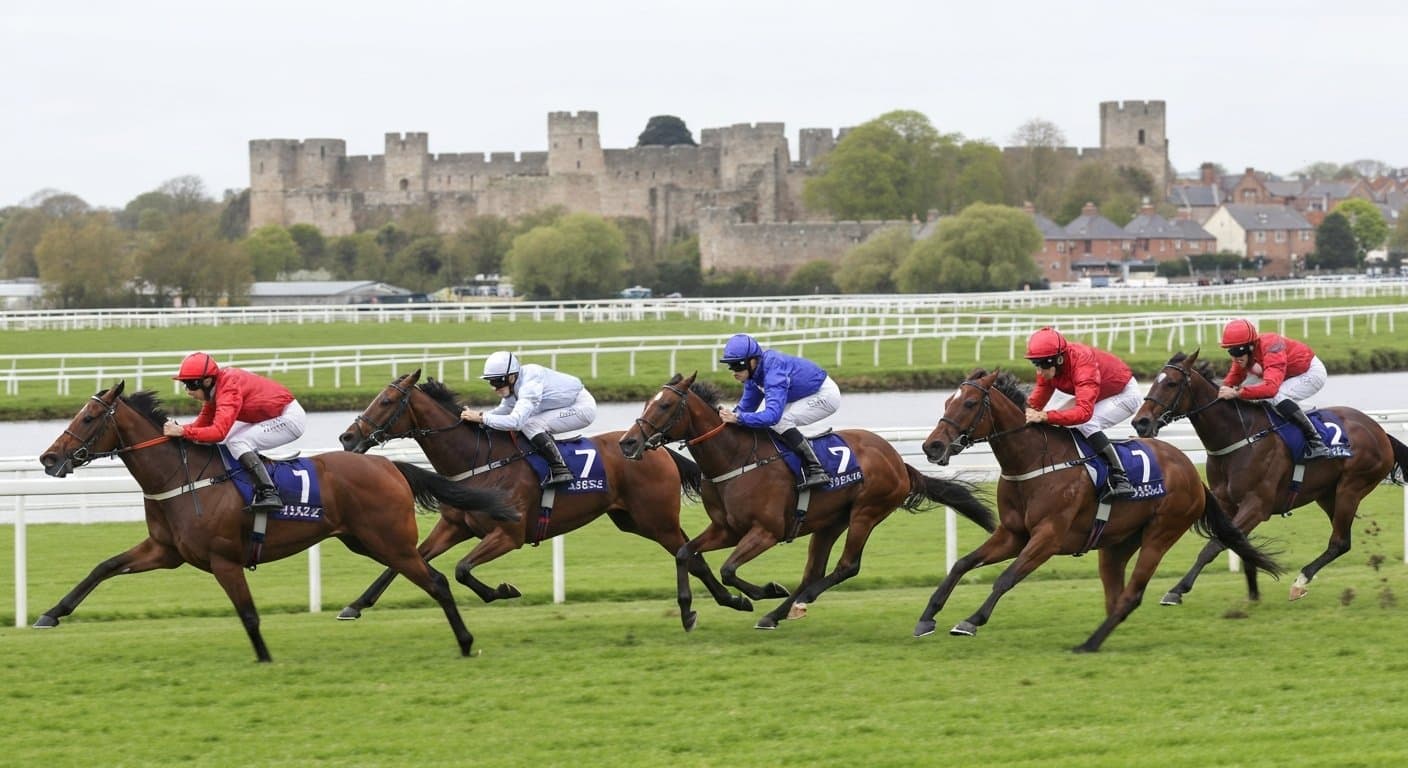
Betting at Chester Racecourse
How to bet smarter at Chester — draw biases, track characteristics, going preferences, key trainers and winning strategies for the Roodee.
Read more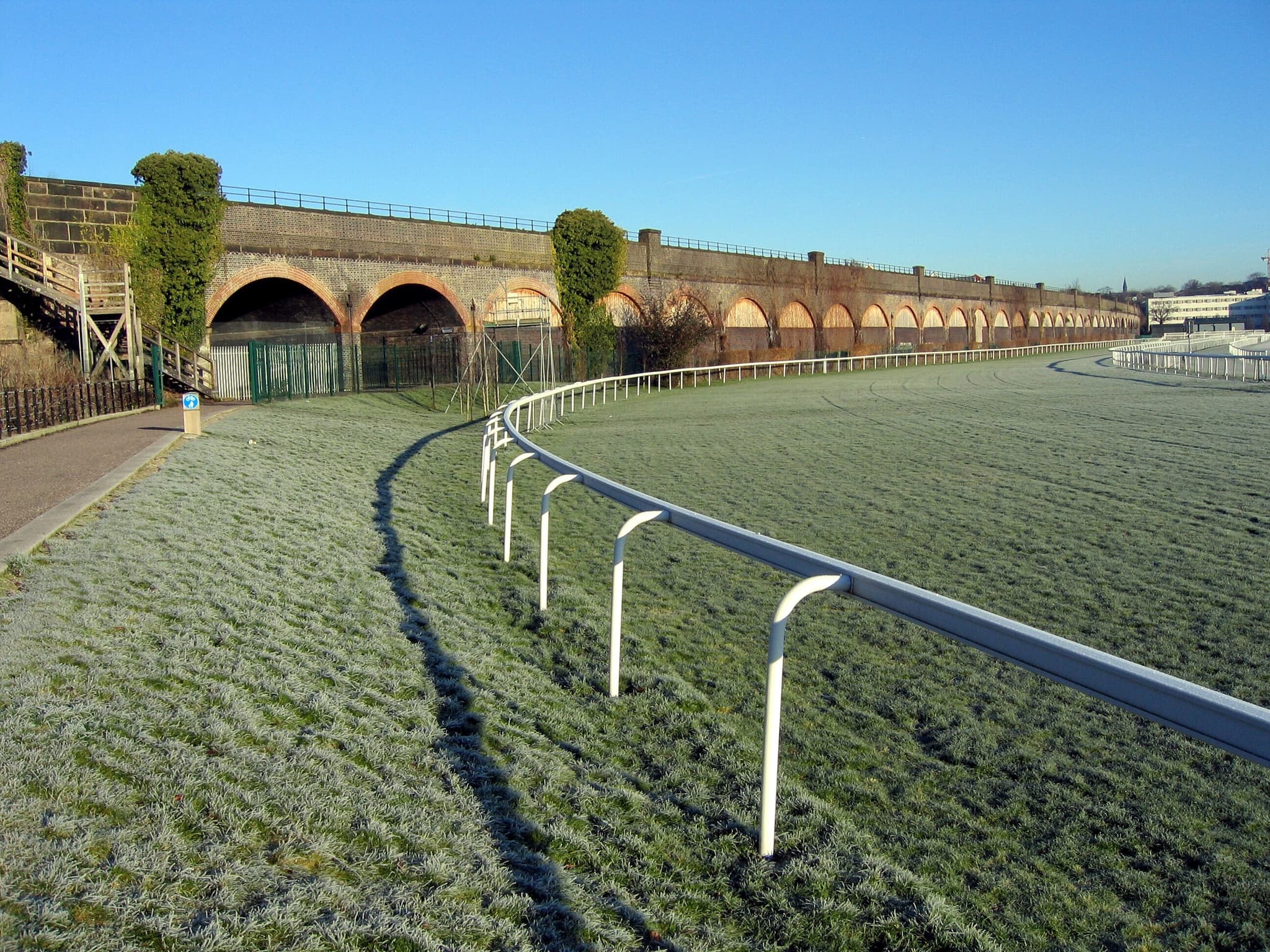
Chester Racecourse: Complete Guide
Your complete guide to Chester Racecourse — the oldest racecourse in England, racing on the Roodee since 1539.
Read more
Chester Cup Day at Chester: The Complete Guide
Your complete guide to Chester Cup Day: the Thursday of Chester's May Festival, headlined by the Chester Cup staying handicap, the Dee Stakes Derby trial, and the Cheshire Oaks. Racing inside the Roman walls, on the tightest major track in Britain.
Read morePhotos on this page are used under Creative Commons licences. Titles, sources and licence links for each one are on our image credits page.
Research the field with the AI Race Predictor
Our model publishes calibrated win-probability estimates for UK races — a second opinion to understand a race, not tips. It's open about its record: it doesn't beat the market, and we show exactly how it does.
Work it out & learn the basics
Gamble Responsibly
Gambling should be entertaining and not seen as a way to make money. Never bet more than you can afford to lose. If you or someone you know has a gambling problem, help and support is available.