
Founder & Editor · Last reviewed 2026-04-05
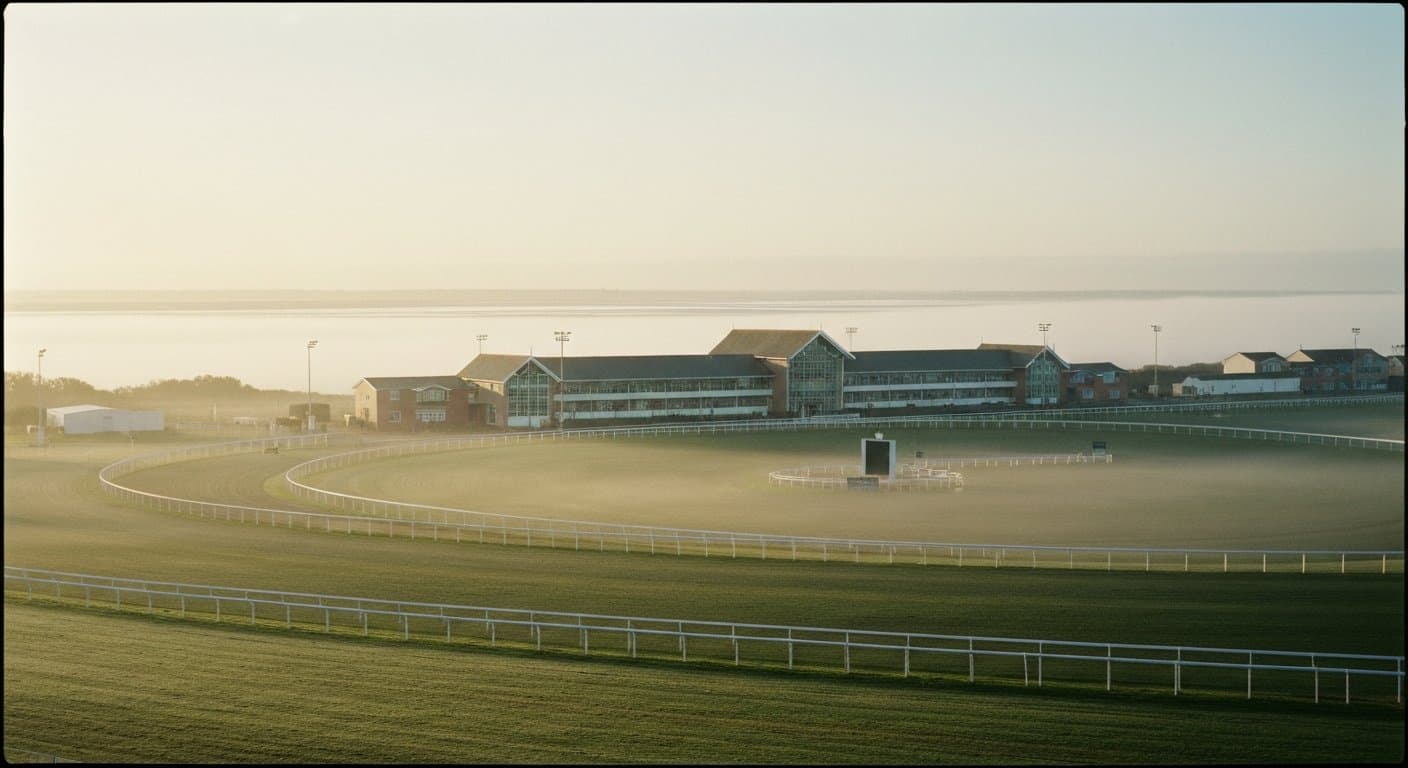
On a clear autumn afternoon, when the haze has lifted off the Carmarthenshire coast, the stands at Ffos Las offer a view that few racecourses in Britain can match. The Gower Peninsula stretches across the southern horizon, its limestone headlands dropping to the sea fifteen miles distant. The Loughor estuary gleams to the south-west. Closer in, the reclaimed farmland of Trimsaran spreads flat in every direction — land that, twenty years ago, was the floor of an opencast coal mine. Now, on a Saturday with a thousand racegoers filling the modern grandstand and a feature race a couple of contests away, you would struggle to find a trace of what was here before.
Ffos Las Racecourse is the newest racecourse in Britain. It opened in June 2009, making it the first new racecourse to be built in Wales since 1928 and the first purpose-built racing venue anywhere in the United Kingdom in over eighty years. That distinction alone would make it a curiosity. What makes Ffos Las something more than a curiosity is where it sits, what it was built on, and what it represents for a part of Wales that had no racecourse to call its own.
The site is a former opencast coal mine. The Ffos Las mine operated for decades in the hills above Trimsaran in Carmarthenshire, extracting coal from seams close to the surface until the economics of the trade shifted and the pit closed in the early 2000s. What remained was several hundred acres of graded, reclaimed industrial land with good drainage characteristics and a peculiarly flat profile in a county where flat land is scarce. Welsh businessman Dai Walters saw what could be done with it. The result, after roughly five years of planning, civil engineering, and construction investment of around £20 million, was a left-handed turf circuit of approximately one mile and four furlongs, a modern grandstand, full stable facilities, and a dual-purpose licence covering both flat and National Hunt racing.
The name carries its own history. Ffos Las means "green trench" or "green ditch" in Welsh. The reference is to the mine itself — the long excavated gash in the Carmarthenshire landscape that gave the site its character and its name. Carmarthenshire is part of the Welsh-speaking heartland of the country. In some communities in the county, sixty per cent of residents speak Welsh as a first or second language, and the Welsh language is present throughout life at Ffos Las: in the signage, in the public address announcements, in the names of races and in the conversation of a significant portion of those who come racing here.
That linguistic identity matters because it is not an affectation. Racing in this part of Wales is not a borrowed activity transplanted from England. It is something the community has claimed for itself. The Welsh Champion Hurdle, a Limited Handicap over about two miles, was the biggest race at Ffos Las from 2010 to 2024. It moved to Chepstow in October 2025, and Ffos Las now stages the West Wales National, a staying handicap chase. The course draws a crowd who follow Welsh racing with the same investment they bring to Welsh rugby. Alongside Chepstow in the east and Bangor-on-Dee in the north, Ffos Las completes a trio of Welsh venues that form the backbone of racing in the principality.
This article tells the full story of how Ffos Las came to be and what it has become in its first sixteen years of operation. It begins with the landscape that preceded it, moves through the planning and construction years, covers the development of racing at the venue since 2009, and closes with an account of its place in Welsh sport and Welsh life. The coal mine is where the story starts. The racecourse is where it now lives.
Origins and the Mining Era
Welsh Racing Before Ffos Las
Before June 2009, a racegoer living in Carmarthen, Llanelli, or Haverfordwest had no racecourse in their county, their region, or anywhere near west or central Wales. The nearest venue was Chepstow, in Monmouthshire on the English border, approximately ninety miles to the east along the A48 and M4. Chepstow is technically in Wales, but it sits a mile from the English county of Gloucestershire and its natural catchment runs east into Bristol and the West Country as much as it runs west into the Welsh valleys. For the Welsh-speaking communities of Carmarthenshire, Ceredigion, and Pembrokeshire, attending a race meeting meant a round trip of at least three hours on roads that are not motorway standard for much of their length.
The other operating Welsh racecourse, Bangor-on-Dee, is in the north-east of the country, near Wrexham. It stages National Hunt racing on summer ground and has a respected programme, but it sits close to the English border too, and it is 130 miles from Llanelli by road. Wales is a country of 8,000 square miles and more than three million people. In 2008, it had two racecourses, both near English borders and neither within 80 miles of the western or central population centres.
The historical provision had been no better. Cardiff's Ely Racecourse, once the most significant flat track in Wales, closed in 1939 when the land was needed for wartime purposes and never reopened. Swansea had staged racing at intervals through the nineteenth and early twentieth centuries, but no permanent venue survived. Aberystwyth Racecourse, a small National Hunt track on the mid-Wales coast, operated into the 1970s before closing. Newport staged occasional meetings at its athletic ground. None of these left a working successor. By the time Ffos Las was conceived, Wales west of Cardiff had not had a functioning racecourse for a generation.
The Ffos Las Mine
The land that became the racecourse had a very different character for most of the twentieth century. Opencast coal mining came to Carmarthenshire in a serious way during the 1940s, when wartime demand for coal and the mechanical techniques of surface extraction converged to make large-scale open-pit working economical across the South Wales coalfield's western flanks. The Ffos Las mine, situated above the village of Trimsaran roughly three miles north of Llanelli, was one of the more significant opencast operations in the county.
Opencast mining works by removing the surface vegetation and soil (the overburden) to expose the coal seams below. The process is mechanically intensive, relying on large excavators, draglines, and earth-moving equipment to strip back the landscape layer by layer. At Ffos Las, coal extraction continued across several hundred acres of what had been agricultural and common land. The seams were shallow enough for surface working to be efficient, and the site operated over a period extending from the mid-twentieth century through to the late 1990s or early 2000s, when the remaining reserves no longer justified the costs of extraction at prevailing coal prices.
When the mine closed, the statutory requirement for land reclamation applied. The site could not simply be left as an industrial scar. Earth was regraded, drainage was addressed, the surface was vegetated, and the land was returned to a state that could support future use. The reclaimed ground had one characteristic that would prove unexpectedly valuable: it was flat. The original coal workings had been on a gentle plateau, and the regrading process produced a large area of very even terrain in a county where natural flatness is uncommon. The ground conditions, compacted fill over former extraction pits, also had reasonable free-draining properties once properly engineered.
Dai Walters and the Racecourse Vision
The man who turned the reclaimed mine into a racecourse was Dai Walters, a Carmarthenshire-born entrepreneur whose Walters Group civil engineering business had been involved in land reclamation and construction across South Wales for decades. Walters was a horse-racing enthusiast as well as a businessman, and the combination of his professional expertise in large-scale ground engineering and his personal interest in the sport gave him an angle on the Ffos Las site that few others would have identified.
The core insight was straightforward: the reclaimed opencast land had the flat profile, the area, and the drainage potential to host a racecourse if the engineering was done correctly. The Walters Group had the plant, the expertise, and the local knowledge to carry out the earthworks. The question was whether the project was financially viable and whether the racing authorities would grant a licence to a new venue in a country where the existing provision was already modest.
The planning and approval process took several years. Ffos Las required local authority planning consent, environmental impact assessment, a British Horseracing Authority licence application, and the infrastructure of road access, water, drainage, and power that a modern sports venue demands. The wider development on the site included housing, hospitality units, a hotel, and commercial space; the racecourse was the centrepiece of a broader regeneration scheme rather than a standalone sporting facility. That broader scope helped the economic case and gave the project a community benefit argument that planning authorities responded to positively.
Total investment in the development ran to approximately £20 million across the construction phase. The Walters Group itself provided much of the civil engineering labour and equipment, which contained costs that would have been higher had the project been procured entirely from external contractors.
"Ffos Las": The Welsh Name
The site and the racecourse share a name that is entirely Welsh in its origin and meaning. Ffos Las translates from Welsh as "green trench" or "green ditch," with ffos meaning a ditch, trench, or moat, and glas (lenited to las in this compound) meaning green or blue-green, the colour of growing vegetation. The name is a direct reference to the old mine workings: the long, landscaped excavation that had been cut through the Carmarthenshire hillside and then, after reclamation, greened over. A coal mine transformed into farmland, and then into a racecourse, carries its name in the Welsh language as a reminder of what was there before.
Carmarthenshire is one of the Welsh-language strongholds in Wales. The county, known in Welsh as Sir Gaerfyrddin, is one of the largest in the country by area, stretching from the Gower Peninsula in the south to the Cambrian Mountains in the north. It is largely rural and agricultural, with a scattered population of around 185,000 concentrated in the coastal towns of Llanelli and Carmarthen. The proportion of Welsh speakers is among the highest of any Welsh county: figures from the 2021 census put Welsh language use in Carmarthenshire at around 44 per cent of the population, and in rural and inland areas the proportion is considerably higher. Trimsaran itself, where the racecourse sits, is a village in the Welsh-speaking inland belt.
The name Ffos Las, pronounced roughly "voss lass" by Welsh speakers, is not an anglicised approximation. It is a Welsh-language place name rooted in the landscape's industrial history, and its adoption as the name of the racecourse placed the venue within the Welsh-language cultural life of its community from the outset.
The Region and Its Character
Carmarthenshire in 2009 was a county with a deep awareness of its industrial past and an uncertain economic future. The coal trade had sustained communities in the coalfield area for over a century; its decline from the 1980s onwards left the towns and villages of the Llanelli hinterland without the employment that had defined them. Trimsaran was one such community: a former mining village seeking a new economic identity.
The landscape around Ffos Las is defined as much by its literary associations as by its agriculture. Dylan Thomas was born in Swansea in 1914 and spent formative years in the villages of this coast and hinterland. Laugharne, fifteen miles to the west on the Taf estuary, was where he wrote much of his mature work and where he is buried; his most celebrated radio play, Under Milk Wood, broadcast in 1954, drew on the character of small Welsh coastal communities much like those within a few miles of Ffos Las. The Gower Peninsula, fifteen miles to the south across the Loughor estuary, was designated in 1956 as Britain's first Area of Outstanding Natural Beauty. Rhossili Bay at the Gower's western tip is regularly cited among the finest beaches in Europe.
A racecourse built in this setting, on a site of specific industrial history, named in the Welsh language, and serving a community with its own distinct cultural identity, was never going to be merely an outpost of English racing relocated to west Wales. Ffos Las was local from the first day.
Founding Takeaway
Ffos Las emerged from the convergence of a specific industrial landscape, one man's entrepreneurial vision, and a clear gap in Welsh racing provision. The former opencast mine gave the project its site, its flat ground, and its name. Carmarthenshire's Welsh-speaking character gave it its community. The complete absence of any racecourse west of Chepstow gave it its purpose.
The First Era: 2009 to the Present
The First Meeting, June 2009
Ffos Las Racecourse opened on 18 June 2009 with an evening flat meeting. The attendance exceeded expectations. Close to 10,000 people came to Trimsaran that evening to watch racing on turf that, a decade earlier, had been the floor of a coal mine. The scale of the turnout reflected something that Dai Walters and his team had correctly anticipated: west Wales had been starved of local racing for decades, and the community's appetite for a venue of its own was large.
The course ran left-handed and oval, approximately a mile and four furlongs around, built on the reclaimed ground of the former opencast site. The track had been engineered from the sub-base upward — layers of geotextile, aggregate, sand, and finally rootzone turf, installed over drainage infrastructure designed to cope with the rainfall levels typical of the Carmarthenshire coast. The British Horseracing Authority's inspection team, which had assessed the track before the licence was granted, had found the surface and facilities satisfactory. The going on that first evening in June was described as good, which for a brand-new track on reclaimed industrial land was a result of deliberate engineering rather than luck.
The racing on opening night was a seven-race flat card. The programme included apprentice races, maiden races, and a fillies' handicap. Winners on the night came from a spread of stables across South Wales and the West Country. The occasion was celebrated in Welsh, with bilingual public address throughout, and local businesses and community organisations were well represented in the hospitality areas. The racing press gave the opening significant coverage; the story of a mine becoming a racecourse was one that worked in print and on screen.
The Dual-Purpose Licence and the Jumps Programme
Ffos Las's licence covered both flat and National Hunt racing from the outset. The dual-purpose model was integral to the business case: a venue that could only stage flat racing would be idle from November through March, and a National Hunt-only track would miss the summer revenue that flat fixtures generate. The circuit was designed to accommodate both codes, with the chase course, hurdle course, and flat track running parallel but separate, each with its own maintenance regime.
The National Hunt programme began in the course's first autumn, with a jumps meeting in late 2009. The introduction of jumps racing extended Ffos Las's fixture list through the winter months and brought a different constituency of trainers and owners to the course. National Hunt racing in Wales has a distinct character from the flat game. It is more locally rooted, drawing on Welsh hill farms and the farming communities of west Wales for its horses, its owners, and a significant portion of its spectators. The presence of a dual-purpose course in Carmarthenshire meant that these communities had a proper venue for both their summer flat days and their winter jumping fixtures.
By its second full season, Ffos Las was staging approximately twenty race days per year across the two codes. The fixture list spread through the calendar from May to October on the flat and October to April over jumps, with some overlap in the shoulder months. The course held both weekday and weekend meetings, with weekend fixtures drawing the larger crowds and midweek cards serving the more regular racing public.
Peter Bowen and the Welsh National Hunt Community
No trainer exploited Ffos Las more effectively in its early years than Peter Bowen, based at Haverfordwest in Pembrokeshire approximately thirty miles to the west. Bowen is one of the most respected National Hunt trainers in Wales, running a small-to-medium yard that has produced winners consistently for four decades. He had been a supporter of the Ffos Las project before the course opened, recognising that a quality venue within reasonable distance of his yard would allow him to run horses that would otherwise have to travel to Chepstow or English courses.
Bowen's record at Ffos Las in the course's first several years was exceptional. He targeted the track regularly with horses suited to its flat, left-handed, galloping circuit, and his local knowledge of Carmarthenshire going conditions gave him an edge over trainers from outside the region who were assessing the track for the first time. His son Sean Bowen, who went on to become one of Britain's leading National Hunt jockeys, rode many winners at Ffos Las in his early career, giving the course an association with one of the most talented young riders in the sport during its formative years.
The Bowen family's dominance at Ffos Las in the early seasons illustrated a pattern that the course's management had hoped to encourage: Welsh trainers, Welsh jockeys, and Welsh owners competing at a Welsh venue, building a fixture identity around the people who lived and worked in the region.
Evan Williams, another significant Welsh National Hunt trainer based at Llancarfan in the Vale of Glamorgan approximately forty-five miles to the east, also targeted Ffos Las from its first season. Williams runs a larger operation than Bowen and has won multiple high-profile races at Cheltenham and beyond, but he has maintained a consistent presence at Ffos Las across the course's history, recognising that the flat, galloping track suits certain horses in his string and that the relatively low-key competitive level of many Ffos Las fixtures offers opportunities for horses at mid-career development stages.
The Welsh Champion Hurdle
The Welsh Champion Hurdle is a Limited Handicap, run over about two miles in October. The date and trip moved during the Ffos Las era: the early runnings were in February, and it went over two and a half miles from 2013 to 2015. Ffos Las staged it from 2010 to 2024, and it was the signature fixture in the course's calendar throughout. Its arrival gave the course an identifiable centrepiece for the season: a race that drew quality hurdlers, attracted media coverage, and gave Welsh racing fans a domestic championship event to follow.
Limited handicaps of this kind sit below the Pattern races but above the ordinary handicaps and conditions races that make up most of a provincial course's programme. A race of this standing at Ffos Las brought the course into a different category: not merely a local venue but one capable of staging championship-quality racing and attracting runners trained by top yards.
The Welsh Champion Hurdle drew connections from beyond Wales from its early runnings. Irish-trained horses entered the race, attracted by the prize money and the standing of the contest. Trainers from Lambourn and Newmarket, who would not normally look at a course in west Wales, began to identify the Welsh Champion Hurdle as a reasonable target for hurdlers not quite good enough for Cheltenham's top novice or championship races.
Building the Flat Programme
On the flat side, Ffos Las developed a programme that mixed maiden races and novice events for younger horses with handicaps for more experienced runners. The course's distance range on the flat covers five furlongs to approximately one mile and six furlongs, with the round course offering the longer trips and a straight chute used for the shorter sprints.
The flat programme attracted trainers from across south Wales and the west of England. Andrew Balding, Ralph Beckett, and other significant southern flat trainers occasionally sent horses to Ffos Las when the programme offered a suitable race and the journey was commercially justified. More regularly, the flat card drew from Welsh and West Country yards whose horses were aimed at competitive provincial level rather than the top tier. This functional level of racing, honest, competitive, and accessible to the local betting public, was exactly what the racecourse's business model required.
The summer flat programme gave Ffos Las a profile in the flat racing world that a National Hunt-only course could not have achieved. Bookmakers, broadcasters, and racing media covered the flat meetings. Ordinary racegoers who followed the flat rather than the jumping programme had a reason to visit Trimsaran in summer.
The Course and the Community
Ffos Las's relationship with the surrounding community deepened through its first decade of operation. The wider Walters Group development around the racecourse site brought housing, a hotel, and commercial facilities to what had been an industrial wasteland at Trimsaran. Employment in construction, hospitality, and services was created in a community that had lost its coal industry.
Race days became community events in Carmarthenshire in a way that Chepstow, ninety miles away, could never be. Local schools, sports clubs, and charities were involved in the course's programming. Welsh-language events were held at the racecourse. The bilingual character of the venue, Welsh and English throughout, was not a token gesture but a reflection of the linguistic reality of the community it served.
Era Takeaway
Ffos Las's first decade of operation established the dual-purpose model as the right framework for Welsh racing's newest venue: a flat programme through the summer months, a National Hunt programme in autumn and winter, the Welsh Champion Hurdle as the season's centrepiece, and a community relationship built on geographical loyalty, Welsh-language identity, and the novelty of watching racing on land that had once been an industrial pit.
Famous Moments
Opening Night and the Scale of the Welcome
The evening of 18 June 2009 produced one of the more unusual gatherings in Welsh sporting history. Nearly 10,000 people came to Trimsaran to watch horses race on a track that had been given its licence less than a year earlier. The roads into the village, not built for that volume of traffic, backed up for several miles. People walked the last stretch from where they had parked their cars in surrounding fields. The atmosphere that greeted the first race was celebratory in the specific way that sporting events are when they satisfy a community need that has been unmet for a long time.
The winning connections on opening night may not have included household names from the sport's elite, but that was beside the point. The point was that west Wales had racing, on a turf track laid over a coal mine, broadcast on national television, with a crowd that rivalled the attendances at many established provincial courses. Sir Peter O'Sullevan CBE, the legendary BBC racing commentator then in his 90s, gave the occasion his presence and endorsement, lending the new course the authority of someone whose connection to British racing stretched across seven decades.
Peter Bowen's Record
Peter Bowen's record at Ffos Las is the most sustained expression of local training excellence that the course has produced. In the seasons following the 2009 opening, Bowen trained winners at the venue with a regularity that placed him consistently among the leading trainers by strike rate. His horses tended to be well-prepared for Carmarthenshire conditions, as you would expect from a yard thirty miles down the road, and his knowledge of how the track rode in different going conditions gave him timing advantages over trainers basing their assessments on a single visit or on form from other courses.
Among his most notable achievements at Ffos Las in the early seasons was a sequence of National Hunt winners across multiple fixtures that reinforced the course's value to the Welsh jumps community. Bowen did not restrict himself to the lower grades: he targeted competitive handicap chases and hurdles at Ffos Las with horses that went on to perform creditably at Cheltenham and at the top Welsh venues, demonstrating that winning at Ffos Las was not merely a sign of moderate ability.
Sean Bowen, who rode as an amateur and then a conditional jockey before turning professional, partnered many of his father's Ffos Las winners in his early career. He rode his first winners at Ffos Las while still a teenager, and his development from a promising young Welsh rider to one of Britain's leading jump jockeys (Champion Jump Jockey in 2022-23) had its foundation partly in race experience accumulated at a course he knew from the start of his career.
The Welsh Champion Hurdle's Early Runnings
The Welsh Champion Hurdle established itself as the course's signature occasion in the years following its arrival in 2010. From 2016 it was run in October, a useful position in the jumping calendar: the Cheltenham Festival and the major spring handicaps were five or six months away, the flat programme was winding down, and National Hunt horses that had spent the summer at grass were coming back into condition. It moved to Chepstow in October 2025.
The race consistently attracted runners from Irish yards as well as English training centres. Ireland's strength in quality hurdlers, rooted in a breeding and racing culture that produces more top-class hurdlers per capita than any other country, meant that a competitive autumn hurdle in Wales was a viable target for horses aiming at the Cheltenham Champion Hurdle or the Ryanair Hurdle in March. The presence of Irish runners at Ffos Las gave the Welsh Champion Hurdle a competitive edge and an international character that distinguished it from the rest of the card.
The attendance on the busiest cards became one of the largest of the Ffos Las calendar. The combination of a quality race, autumn timing when the weather is still often reasonable, and the growing reputation of the fixture as a Welsh sporting occasion drew crowds that reflected the community investment in having a proper championship hurdle event in their county.
Racing on Reclaimed Land: The Conversation Piece
Visitors to Ffos Las who knew the history of the site brought a particular attention to the physical experience of the racecourse that regular racegoers at older venues rarely had. Standing on the Ffos Las grandstand terrace and looking out over the oval of turf, knowing that twenty years earlier the same view would have shown an industrial pit with heavy machinery and coal workings, produced a reflective quality to the afternoon. Several racing journalists, covering the course in its early years, noted that the coal mine transformation was not merely a marketing story but a concrete fact that changed how the venue felt.
The flat ground that opencast mining left behind also shaped the racing itself. Ffos Las is an unusually level course by British standards. There are no significant gradients on the circuit, no demanding uphill finishes like Chepstow or Cheltenham, no tight downhill bends like Cartmel. The track rewards horses with a smooth galloping action and good jumping technique over fences and hurdles. Form from Ffos Las translates reasonably directly to similarly flat courses, and trainers who understood this correlation used the course as a form-building venue for horses aimed at other flat or mildly undulating tracks.
Evan Williams and Quality Welsh Representation
Evan Williams, operating from Llancarfan in the Vale of Glamorgan, contributed significantly to Ffos Las's competitive programme in the National Hunt sphere from the course's earliest seasons. Williams has trained horses to win at the Cheltenham Festival and at Grade 1 and Grade 2 level, which placed him in a different category from most trainers who appeared regularly at a provincial venue. His willingness to run quality horses at Ffos Las, rather than reserving them exclusively for higher-profile fixtures, helped raise the standard of the racing at the course.
In particular, Williams targeted the Welsh Champion Hurdle and the better-quality autumn and winter handicaps at Ffos Las with horses that were capable of competing in competitive Saturday handicaps at top venues. When a Williams horse won or was placed prominently at Ffos Las, the form carried real meaning for the market, and the betting industry and racing media treated it accordingly.
The Irish Dimension
From its earliest seasons, Ffos Las attracted Irish-trained runners to its better races. The autumn timing of the Welsh Champion Hurdle suited the Irish jumping calendar, which has fewer comparable domestic options in that month than the English programme. Trainers from County Kilkenny, County Cork, and the Curragh area sent hurdlers to Trimsaran that they would not have bothered to transport for a lesser prize or a lower-graded race.
The presence of Irish runners at a west Wales venue underlined the standing of the course's better races. An Irish trainer paying transport costs and entry fees to run a horse in Wales is making a judgment that the race is worth winning and that the prize money justifies the journey. The appearance of Irish-trained horses in the Welsh Champion Hurdle became a reliable indicator of how far the race had come.
The Coal Mine as Community Memory
Older racegoers at Ffos Las, particularly those from Trimsaran, Llanelli, and the surrounding villages, carried a specific relationship with the site that visitors from outside the region did not share. For many local families, the Ffos Las mine had been a source of employment for a parent or grandparent. The closure of the collieries across south Wales in the 1980s and 1990s had been a defining trauma for mining communities. A racecourse built on the reclaimed site of one of those mines was, from one angle, evidence of economic regeneration; from another, a reminder of what had been lost and transformed.
This dual quality, of celebration and of memory, gave Ffos Las an emotional resonance at community level that a racecourse built on farmland or greenfield development could not have possessed. Welsh flags flew regularly in the stands. Welsh-language race names and bilingual public address were not decoration but statement. The racecourse was specifically, deliberately, and authentically Welsh, and the community of west Carmarthenshire recognised it as such.
The Modern Era
Ffos Las at Fifteen Years
Ffos Las has been operating since 2009. The course stages approximately twenty to twenty-five race days per year, divided between the flat programme running from May to October and the National Hunt programme from October through to April. Midweek and weekend fixtures are spread across the calendar. The dual-purpose model, which Dai Walters and his team built into the licence from the outset, has proved correct as a business framework: neither code alone would have generated the fixture density that the course now sustains.
The grandstand and facilities, entirely modern because they were built from scratch in 2008-2009, have required less capital maintenance in their first decade and a half than older courses spend simply managing heritage buildings. This infrastructure advantage is real. Older venues that must balance racing investment with the upkeep of Victorian or Edwardian structures face cost pressures that Ffos Las does not. The modern stable blocks, the weighing room, the parade ring, and the hospitality areas were all designed to current standards, and while they will require investment as they age, they have not yet reached the point where significant remediation is needed.
The overall capacity at Ffos Las is approximately 10,000, roughly the figure that the opening night crowd reached, and on the bigger days of the year the course approaches that number. Midweek cards draw smaller crowds, as they do at every British racecourse, but the course has maintained a consistent attendance profile that reflects its strong community embeddedness in west Wales.
The Welsh Racing Calendar
Wales has three operating racecourses: Ffos Las, Chepstow, and Bangor-on-Dee. Each occupies a distinct position in the calendar. Chepstow in the south-east stages the Welsh Grand National in late December, the October Festival in autumn, and a year-round programme that includes some of the most valuable races in Wales. Bangor-on-Dee in the north-east operates a summer National Hunt programme on good or firm ground, a type of jumping that is uncommon in Wales and attracts a specific type of runner. Ffos Las in the south-west provides the year-round dual-purpose programme.
The three venues do not significantly overlap in the type of racing they offer. Chepstow's trump card is the heavy-ground staying test of the Welsh Grand National. Bangor-on-Dee's is the summer jumping programme on faster ground. Ffos Las's is the dual-purpose programme, flat and jumps on the same site. Together they provide a Welsh racing calendar that, while not matching the depth of the English programme, gives horse owners and trainers in the principality options across every month of the year.
The Welsh Champion Hurdle in the Modern Era
The Welsh Champion Hurdle held its position as one of the best-known hurdle races in Wales through its Ffos Las years, from 2010 to 2024. Its October timing gave it a specific role in the training programmes of horses aimed at Cheltenham's Grade 1 hurdle races in the spring: an autumn win, particularly in a competitive field containing Irish runners, showed that a hurdler had returned from the summer in good order. The race moved to Chepstow in October 2025.
Ffos Las staged the Welsh Champion Hurdle from 2010 to 2024, before it moved to Chepstow in October 2025.
Quality hurdlers trained by leading yards, including operations in Ireland that regarded the Welsh Champion Hurdle as a viable autumn target, appeared in the race regularly. The consistent competitiveness of the field reinforces the race's standing and ensures that it is treated seriously by the betting market and by media that would otherwise have little reason to focus on an autumn meeting in Carmarthenshire.
Key Trainers in the Modern Era
Peter Bowen, now in his sixties, has maintained his position as the leading local supporter of Ffos Las through the course's entire existence. His Haverfordwest yard, thirty miles to the west, trains a consistent supply of National Hunt horses that appear at the course across the jumps season. His strike rate at Ffos Las remains among the highest of any trainer at the venue and reflects a combination of local knowledge, appropriate horse selection, and the geographical advantage of proximity.
Rebecca Curtis, based near Newport in Pembrokeshire approximately thirty-five miles west of Ffos Las, has become another significant local training presence at the course. Curtis trained prominently for a period in the 2010s and has continued to place horses at Ffos Las where the programme and the horse's condition align. She has been one of a small group of female trainers to achieve consistent success in Welsh racing, and her presence at Ffos Las reinforces the course's character as a specifically Welsh venue.
Evan Williams remains a significant contributor from his Vale of Glamorgan base. Williams's operation has grown in scope and ambition over the years, and Ffos Las remains part of his programme for horses at different stages of their careers: a development venue for younger horses and a target for more experienced ones in the right class of race.
The Welsh Language at Ffos Las
Ffos Las stages the most explicitly Welsh-language racing programme in Britain. Race names are announced in Welsh and English. The public address system operates bilingually throughout race days. Bilingual signage covers the grandstand and the course's public areas. These are not token gestures toward the Welsh Language Act; they reflect the linguistic reality of the population in Carmarthenshire and the surrounding county, where Welsh is spoken daily by a substantial proportion of the community.
The Welsh-language character of Ffos Las distinguishes it from all other British racecourses. At Chepstow and Bangor-on-Dee, both technically in Wales, the Welsh language has a lower public presence than at Ffos Las. The course's location in the Welsh-speaking heartland, its owner's local roots, and the consistent policy of bilingual operation have made it the only racecourse in Britain where attending a race day is also an encounter with a living minority language spoken by a substantial portion of those around you.
Tourism and the West Wales Economy
Ffos Las sits within a tourism landscape that includes some of the most visited destinations in Wales. The Gower Peninsula, fifteen miles to the south across the Loughor estuary, was designated Britain's first Area of Outstanding Natural Beauty in 1956 and attracts hundreds of thousands of visitors annually for its beaches, coastal walks, and scenery. Rhossili Bay at the Gower's western end appears regularly in lists of the finest beaches in Europe. Laugharne, fifteen miles to the west, is associated internationally with Dylan Thomas and draws a literary tourism audience. The Pembrokeshire Coast National Park is forty miles to the west.
A racecourse embedded in this tourism landscape has the potential to attract visitors who are in the region for reasons beyond racing. The Ffos Las management have recognised this, marketing the racecourse as a day out within a wider West Wales visit rather than as an isolated sporting venue. The combination of a race meeting, the surrounding countryside, and the coastal destinations accessible within thirty minutes of Trimsaran gives Ffos Las an appeal to casual visitors that courses in more urban or featureless settings cannot offer.
The Regeneration Legacy Continuing
The broader Walters Group development around the racecourse has matured over the fifteen years since opening. The housing, hotel, and commercial facilities that were built alongside the track in 2008-2009 have generated employment and economic activity in Trimsaran and the surrounding area. The racecourse itself employs a permanent staff and expands its workforce significantly on race days. The aggregate economic effect of the development on a former industrial wasteland in a deprived Carmarthenshire community represents exactly the kind of post-industrial regeneration that local and national government had hoped the project would deliver.
Ffos Las's Legacy
Ffos Las's Enduring Identity
Ffos Las is the youngest racecourse in Britain, and that youth is an unusual strength. The course carries no legacy costs from a nineteenth-century grandstand, no compromised infrastructure from piecemeal adaptation over generations, and no institutional habits formed when racing operated under a different commercial model. Everything at Trimsaran was built at once, to a single design, on a clear site with no pre-existing constraints. That freedom has allowed Ffos Las to operate with an efficiency that older venues struggle to match.
The transformation from opencast coal mine to racing venue is the fact that defines the course to anyone who encounters it for the first time. A two-minute explanation of how Ffos Las came to exist (mine closes, land reclaimed, entrepreneur sees a flat site, racecourse built) is more arresting than almost any origin story in British sport. The name encodes the history: Ffos Las, "green trench," the Welsh-language description of a mined-out valley that has been grassed over and repurposed. Coal left the valley and racing arrived in its place, on ground that the miners themselves would have stood on.
The Welsh-language identity of the course matters beyond its marketing value. Ffos Las sits in the Welsh-speaking heartland of Carmarthenshire, a county where Welsh is the daily language of a significant portion of the population. The bilingual operation of the course, Welsh and English throughout in PA announcements, signage, and race names, reflects who comes racing at Trimsaran. It is not a performance for tourists. It is a normal function of life in a Welsh-speaking community where a racecourse happens to be located.
The Welsh Champion Hurdle grew from a new fixture on a new course into one of the best-known hurdle races in Wales. It drew runners from Ireland and from English championship yards that had no other reason to visit Carmarthenshire, and from 2016 its October date placed it usefully in the autumn jumping calendar. Its association with Ffos Las, the newest course in Britain and the one with the most unusual origin story, gave it a context racing journalists found easy to write about. The race and the course built each other's reputation across its Ffos Las years, and in October 2025 the race returned to Chepstow.
The three Welsh racecourses together, namely Chepstow's Welsh Grand National in December, Bangor-on-Dee's summer jumping programme, and Ffos Las's dual-purpose year-round calendar, provide a racing calendar for Wales that is more coherent than it has been at any point in the country's history. Ffos Las is the youngest of the three by nearly a century, but it has established its position quickly enough that it now feels as natural a part of the Welsh racing landscape as the older venues. The coal mine that gave it its site also gave it its story, and in the sport of horse racing, a good story is not nothing.
Frequently Asked Questions
When did Ffos Las Racecourse open?
Ffos Las opened in June 2009. It is the newest racecourse in Britain and the first new racecourse to be built in Wales since 1928, a gap of more than eighty years. No other purpose-built racecourse has opened anywhere in the United Kingdom since Ffos Las.
What does "Ffos Las" mean?
Ffos Las is a Welsh phrase meaning "green trench" or "green ditch." It is a direct reference to the former opencast coal mine on which the racecourse was built. The site was mined for decades and then reclaimed; the long, grassed-over excavation that remained gave the place its Welsh-language name. The name is pronounced approximately "voss lass" by Welsh speakers.
What type of racing does Ffos Las stage?
Ffos Las is a dual-purpose racecourse, staging both flat racing and National Hunt racing. The flat programme runs from May to October. The National Hunt programme runs from October to April, with some overlap in the shoulder months. The course stages approximately twenty to twenty-five race days per year across both codes.
What is the Welsh Champion Hurdle?
The Welsh Champion Hurdle is a Limited Handicap over about two miles, run in October. Ffos Las staged it from 2010 to 2024, and it moved to Chepstow in October 2025 as part of the new three-day Welsh Racing Festival. It drew quality hurdlers from Irish and English yards alongside Welsh-based runners, and it sits in a useful position in the autumn jumping calendar, when horses summered at grass are returning to fitness and trainers are looking for early-season form before the winter championships.
How do I get to Ffos Las Racecourse?
By rail, the nearest station is Llanelli, approximately eight miles south-west of the course on the South Wales Main Line. Direct services from Cardiff Central take around thirty-five minutes. By road from Cardiff, take the M4 westbound, exit at Junction 48, and follow the A4138 and then the B4308 towards Trimsaran; the total road distance from Cardiff is approximately sixty-five miles. The postcode for navigation is SA17 5HF. Parking at the course is plentiful and free on most race days.
Who owns and operates Ffos Las Racecourse?
Ffos Las is owned and operated by Ffos Las Race Company Ltd, an independent Welsh company. The course was developed and is controlled by Dai Walters through the Walters Group, a Carmarthenshire-based civil engineering and property business. Ffos Las is not part of any national racecourse group or holding company; it operates as an independent Welsh venue.
Share this article
More about this racecourse
All Ffos Las guides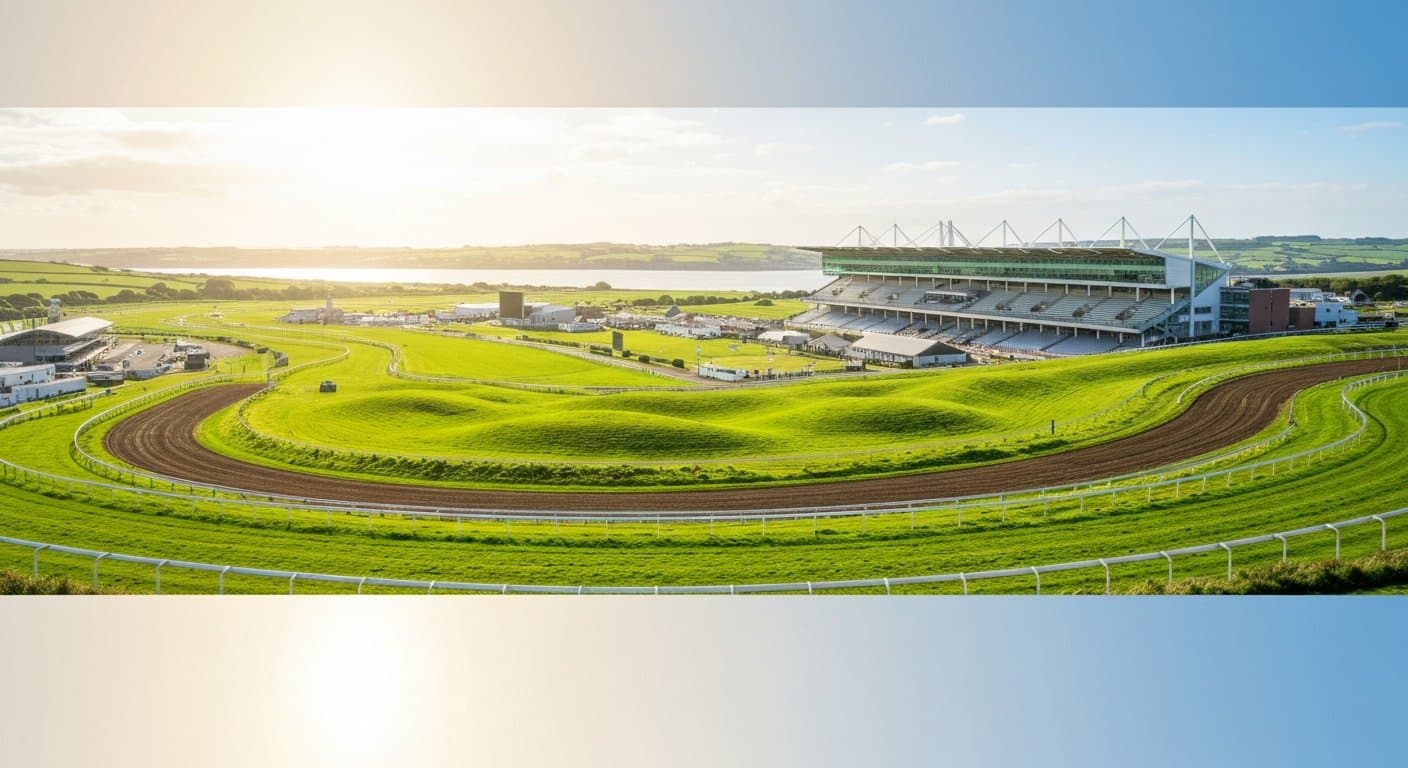
Ffos Las: From Opencast Mine to Racecourse
The extraordinary story of how Europe's largest opencast coal mine became Ffos Las Racecourse — Wales's first new racecourse in 80 years.
Read more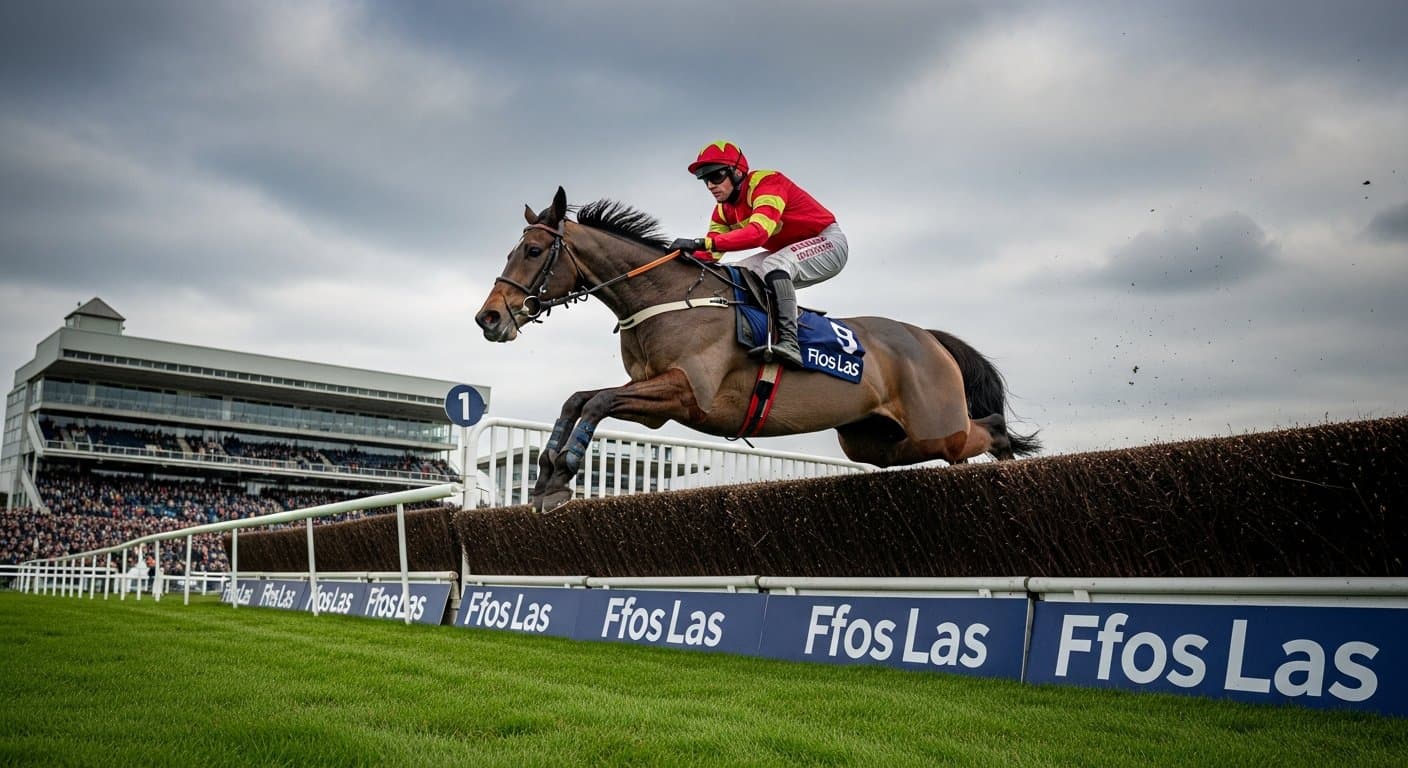
Sprinter Sacre at Ffos Las: The Complete Story
How Sprinter Sacre's ten-length win at Ffos Las in 2011 was the first glimpse of a horse destined to become one of jump racing's all-time greats.
Read more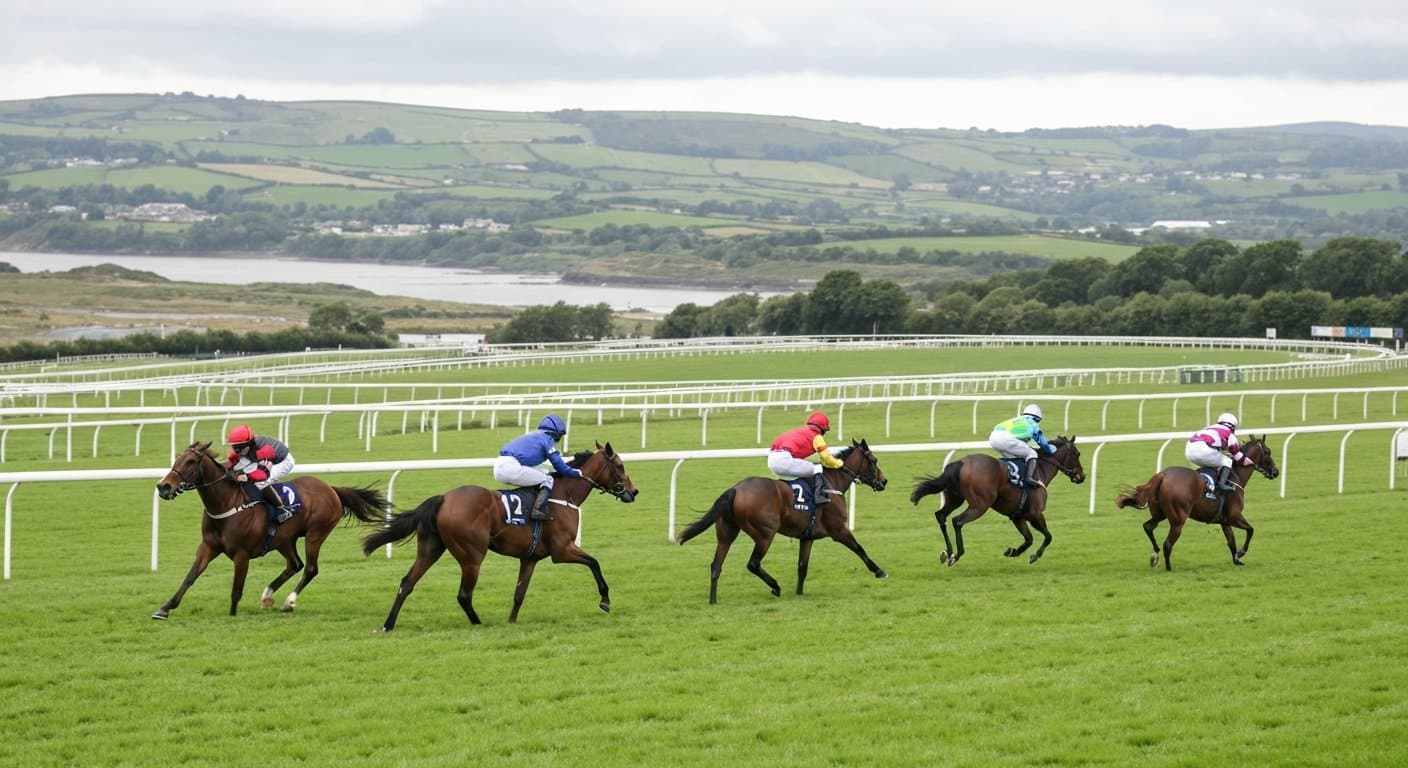
Welsh Champion Hurdle at Ffos Las: 2010 to 2024
Ffos Las staged the Welsh Champion Hurdle from 2010 to 2024. The race moved to Chepstow in October 2025. Its Ffos Las years, winners and course notes.
Read moreGamble Responsibly
Gambling should be entertaining and not seen as a way to make money. Never bet more than you can afford to lose. If you or someone you know has a gambling problem, help and support is available.