
Founder & Editor · Last reviewed 2026-04-05
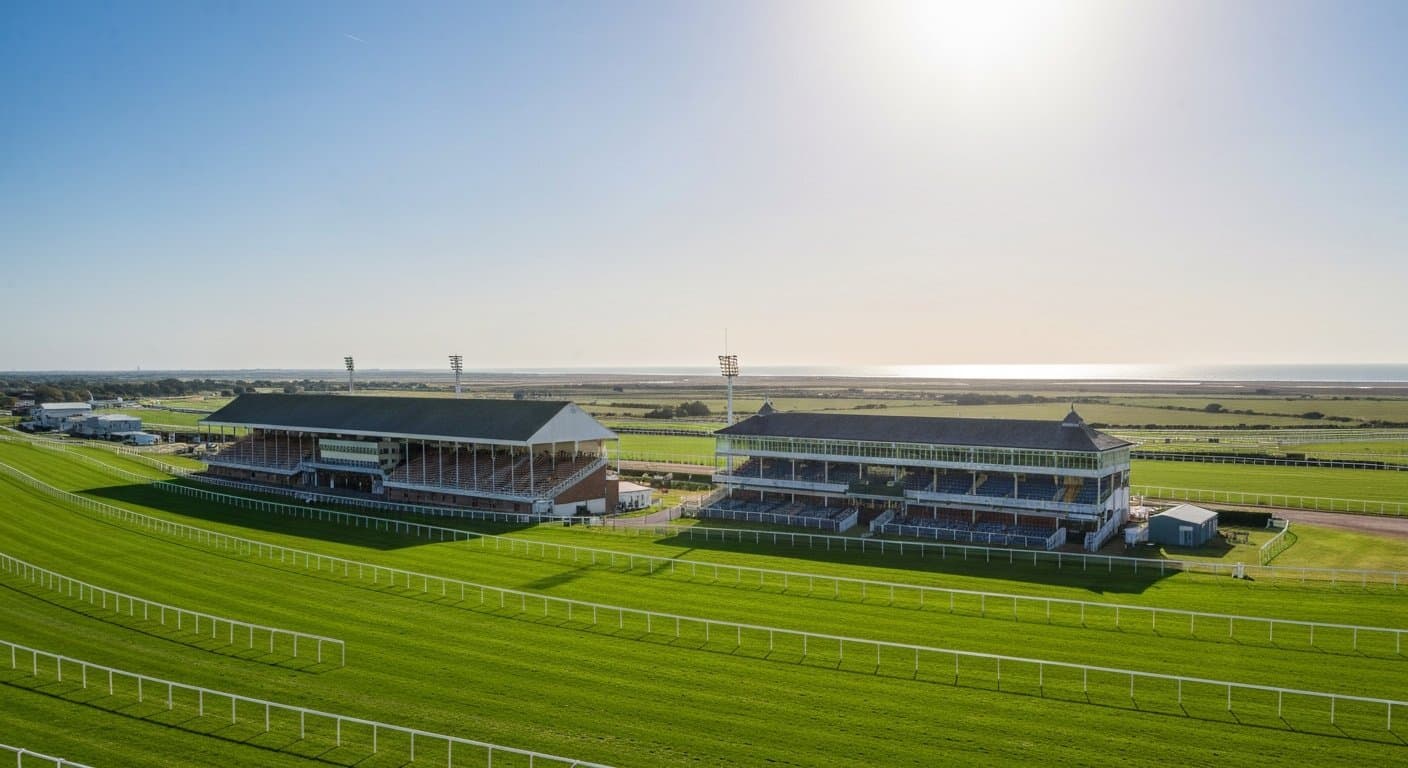
Great Yarmouth Racecourse sits roughly 200 yards from the North Sea shoreline. On a clear summer evening, you can stand on the apron in front of the grandstand and watch a field of two-year-olds kick clear down the straight while the smell of salt air carries in from the coast. That combination — flat racing on fast ground, a seaside setting, and a racing calendar that goes back to 1715 — makes this one of the most individual flat venues in Britain.
This guide is written for three types of visitor. First, the day-tripper who wants to know whether Great Yarmouth races are worth combining with a beach holiday — they are, and the logistics are simple. Second, the form student who wants to know how much Yarmouth 2YO form travels — it travels exceptionally well to Newmarket and Doncaster in October, and understanding why is part of what this guide explains. Third, the casual racing fan who has never been and wants a complete picture before booking tickets.
Quick Facts
| Detail | Information |
|---|---|
| Location | Great Yarmouth, Norfolk, NR30 1NG |
| Racing type | Flat only |
| Track shape | Left-handed oval, approximately 1 mile 3 furlongs round |
| Straight course | 7 furlongs, used for sprint races |
| Season | April to October |
| Signature race | Norfolk Stakes (Listed, 5f, two-year-olds, August) |
| Year established | 1715 |
| Capacity | Approximately 5,000 |
| Nearest station | Great Yarmouth (approximately 1 mile) |
| Region | East Anglia |
The Seaside Setting
The racecourse is located on Jellicoe Road, on the northern side of Great Yarmouth, with Caister Road running along the back of the course and the North Sea visible beyond the dunes to the east. This is not a token coastal backdrop — the sea is truly close, and wind direction matters when you're assessing sprint times. A north-easterly blowing in off the sea can add several lengths to sprint times. A tail wind can produce unusually fast sectionals.
The proximity to the coast also means the ground dries quickly. Great Yarmouth's sandy base drains well, and the course rarely sees heavy going during its summer fixtures. Good to firm is the norm from June through August, which is one reason the form translates so reliably — runners are consistently competing on fast ground, giving a useful benchmark for autumn assessments.
2YO Form and the Newmarket Connection
The most practically useful fact about Great Yarmouth for a betting or form-study perspective is this: two-year-old maiden and novice results from Yarmouth's August and September meetings are among the most reliable early-season indicators in flat racing. The course sits 30 miles from Newmarket, and trainers based there — John Gosden, Roger Varian, Charlie Appleby, and others — use Great Yarmouth as their nearest racecourse for introducing juveniles to competitive racing before the Newmarket autumn meetings in October.
A juvenile who wins a 6-furlong maiden at Great Yarmouth in August on good to firm ground and then runs in the Dewhurst Stakes or the Autumn Stakes at Newmarket in October has already been exposed to fast conditions on a fair, unexaggerated track. That matters. Yarmouth does not flatter horses the way a tight, turning track can. The form is honest.
Evening Racing
From late June through August, Great Yarmouth stages evening meetings that begin around 6pm and finish by 9pm. These cards typically include five or six races, with a mix of handicaps and maiden races. The long East Anglian summer light holds well into the evening, and the seaside setting makes these meetings a distinctive alternative to an afternoon at a conventional venue. The crowd is different too — more relaxed, more local, and less focused on form study than a Saturday afternoon field.
The August evening meetings are worth targeting for atmosphere alone. The grandstand faces west, so you are not racing into the sun, and the sea air keeps temperatures reasonable even on hot days. If you are planning a Great Yarmouth seaside holiday in July or August, there is almost certainly a racing card within reach of your trip.
Bet on Great Yarmouth
Place your bets on Great Yarmouth races with a trusted bookmaker.

Promo code BETFRED50. New customers only. Register, deposit with a Debit Card, and place a first bet of £10+ at Evens (2.0)+ on Sports, to be settled within 7 days, to get £30 in Sports Free Bets and £20 in Bet Builder Free Bets within 24 hours of settlement. 7-day expiry. Eligibility & payment exclusions apply. Full T&Cs apply. Take Time to Think. BeGambleAware.org. 18+. Full T&Cs.

Promo code R30. New UK customers only, 18+. Register, deposit £10 or more, then place a £10 single cash bet at odds of 1/2 (1.5) or greater on any sports market (excluding Virtuals). Once the qualifying bet settles you get £30 in Free Bets (3 x £10) — the qualifying bet can win or lose. Free Bets are valid on any sports market excluding Virtuals, expire in 7 days, are non-withdrawable and must be used in full. Excluded deposit methods apply (including PayPal, Apple Pay, Skrill and NETELLER). Named bets such as Lucky 15 do not qualify. If you cash out the qualifying bet, or it is voided, you are no longer eligible for the offer. Ends 31.12.26. Full T&Cs apply. Please gamble responsibly. BeGambleAware.org. 18+. Full T&Cs.

Promo code BET40GET20. New UK customers, 18+. Register with the code and place a first bet of £40 or more at Evens (2.0) or greater. Receive 2 × £10 free bets: the first credited automatically once the qualifying bet settles, the second 24 hours later. Free bets must be placed at minimum odds of 4/1 (5.0), expire 24 hours after credit, and the free-bet stake is not returned with winnings. Debit card deposits only. Take Time to Think. BeGambleAware.org. 18+. T&Cs apply. Full T&Cs.

50% of your first-day net losses refunded as a free bet, capped at £25. New UK customers aged 18+ only. To qualify, deposit and place a first bet of £10 or more on any sport at minimum odds of evens (2.00), then place at least two further bets on different events, each worth at least 50% of your largest bet, all at evens (2.00) or greater. Losses are counted from your first settled bet until 23:59 the same day. Place a qualifying £10+ bet and you are guaranteed at least a £5 free bet. Bets placed at SP, void bets, cashed-out bets and bets struck with free bets do not count towards the offer. The free bet is credited the day after your qualifying bets settle and must be used within 7 days, after which it expires. It can be used at odds from 1/4 (1.25) up to 250/1 on singles and straight accumulators, but not on Trixie, Patent or Yankee style multiples. Free-bet stake is not returned with winnings. One offer per person, household, address, IP address and device. E-wallet deposits may not qualify, so check the cashier before depositing. Customers registered with GAMSTOP cannot claim. KYC identity verification must be completed before the free bet is credited. Take Time to Think. BeGambleAware.org. 18+. T&Cs apply. Full T&Cs.

New customers, 18+. Choose the sports bonus at sign-up, make a first deposit and receive a 100% bonus up to £50 in your Sports Bonus balance. To convert the bonus to cash, wager it 10x within 30 days. Single bets below Evens (2.00) do not qualify; accumulators do not qualify if any selection is below 1/2 (1.50). Virtual Sports, voided, cancelled, drawn, cashed-out and free-bet wagers do not count towards wagering. Only the first settled bet per event counts. Withdrawing before the wagering requirement is met forfeits the bonus balance including bonus winnings. Real-money funds are used before bonus funds. Deposits via Skrill or Neteller are not eligible. Not valid in conjunction with other promotions. Odds, bet and payment limits apply. 10bet general and promotion T&Cs apply. BeGambleAware.org. 18+. Full T&Cs.

New customers in Great Britain and Republic of Ireland, 18+. Place a £10 fixed-odds qualifying bet at minimum odds of 1/2 (1.50) — single or each-way (only the win part counts), pre-event or in-play, not cashed out early, within 28 days of opening the account. Receive up to £60 in bonuses credited over three days: 3 × £10 fixed-odds free bets (the first on settlement, then 24 and 48 hours later) plus 3 × £5 Total Goals FOOTBALL spread bets and 3 × £5 racing Winning Favourites spread bets, with a £1 racing Race Index spread bet as an extra on top. The spread bets need a full spread-betting account, opened within 28 days of the fixed-odds account and subject to Spreadex's eligibility and appropriateness checks. Free-bet stakes not returned with winnings; free bets valid 28 days from issue. IMPORTANT: the £5 credits are SPREAD bets — sports spread betting carries the risk that losses can exceed your stake. Sports spread-betting customers do not have Financial Ombudsman or FSCS recourse. Take Time to Think. BeGambleAware.org. 18+. T&Cs apply. Full T&Cs.

Promo code WELCOME15, entered under My Bonuses after registering. New UK customers, 18+. Place a first qualifying bet of at least £10 from your cash balance at odds of evens (2.0) or greater within 7 days of opening the account. Once the qualifying bet fully settles you receive £15 in free bets, credited as 3 x £5 tokens with set uses: one £5 accumulator free bet (minimum 4 legs, each leg at 2/5 or bigger), one £5 sports free bet (any market at evens or bigger) and one £5 Sub Cover free bet (selected football player markets at evens or bigger). Free-bet stakes are not returned with winnings. Free bets expire 7 days after they are credited. Void, cashed-out and partially cashed-out bets do not qualify. One offer per customer. Confirm the current terms on BetGoodwin's own welcome-offer page before claiming. Take Time to Think. BeGambleAware.org. 18+. T&Cs apply. Full T&Cs.

New UK customers, 18+. Minimum deposit £10. Place a £10 qualifying single on sports (excluding virtuals) at minimum odds of 1/2 (1.50), settled within 14 days. Deposit-method exclusions apply. Receive £30 in free bets (stake not returned), split £20 for sportsbook use (2 x £10) and £10 for Bet Builder only (2 x £5); Bet Builder does not cover horse racing. Free bets must be accepted within 7 days and expire 7 days after acceptance. No promo code required. Best Odds Guaranteed on UK & Irish racing, subject to having staked over £25 in the previous seven days. Operated by LiveScore Betting and Gaming (Gibraltar) Ltd, UKGC 56859. Confirm the current terms on LiveScore Bet's own promotions page before claiming. Take Time to Think. BeGambleAware.org. 18+. T&Cs apply. Full T&Cs.
18+. BeGambleAware.org
The Course
Great Yarmouth is a left-handed oval of approximately 1 mile 3 furlongs in circumference, with a separate straight course of 7 furlongs that runs parallel to the round track. The track is essentially flat throughout — there is no significant undulation — which means form is rarely distorted by gradient. Horses that ran well here in June are being judged on ability and ground handling, not on whether they negotiated a hill.
Distances and Course Configuration
Great Yarmouth offers races at the following distances:
- 5 furlongs — run on the straight course, starting from the far end of the back straight and finishing at the winning post
- 6 furlongs — run on the straight course, starting from a different set of stalls further back
- 7 furlongs — run on the straight course from the maximum extension of the straight
- 1 mile — starting on the round course, running through one full bend and into the straight for the final 5 furlongs
- 1 mile 1 furlong 170 yards — a round-course distance, making use of the longer back straight
- 1 mile 3 furlongs — uses the full oval, with a run in of approximately 5 furlongs after the final bend
- 1 mile 6 furlongs 17 yards — the longest distance at Yarmouth, requiring real stayers
The distinction between the straight course and the round course matters for race reading. A horse that wins over 6 furlongs on the straight has been tested on a real speed track with no turning ability required. A horse that wins over 1 mile on the round course has needed to travel the bend at pace and then sustain its effort down the home straight.
Draw Bias
The draw effect at Great Yarmouth varies significantly between the straight course and the round course.
Straight course (5f, 6f, 7f): In large fields — typically 12 or more runners — low-drawn horses (stalls 1 to 5) have a measurable advantage. The slight camber on the straight course and the tendency for horses to be ridden towards the stands rail in the early stages of sprint races gives low-drawn runners a positional edge. This bias is not overwhelming and is affected by the wind direction; in conditions where horses want to race towards the far rail, high draws become more competitive. In small fields of eight or fewer, the draw is largely irrelevant on the straight.
Round course (1m and beyond): The draw has much less influence on round-course races at Yarmouth. Horses drawn high in 1-mile fields can be inconvenienced at the start of the race if the pace is slow and there is early crowding for position on the bend, but this is a racing management issue rather than a structural bias. By 1 mile 3 furlongs, draw position has minimal relevance to finishing position.
Going Tendencies
Great Yarmouth's sandy, free-draining subsoil is the defining characteristic of its going. The course rarely goes below good, and good to firm is the standard from late May through September. Heavy ground at Yarmouth is truly unusual in the summer months. Even after 24 hours of significant rainfall, the course will typically be restored to good or good to soft within a day.
This fast-ground tendency has two practical consequences. First, soft-biased horses — those that carry a form record built predominantly on soft or heavy — are not disadvantaged by unusual conditions here, they are simply disadvantaged by the course's normal conditions. Always check a horse's turf rating on good or faster ground before betting at Yarmouth in summer. Second, the fast times generated on good-to-firm ground are a real reading of ability, not an aberration. A two-year-old that clocks a smart time at Yarmouth in August has earned that time on fair ground.
The going can change more quickly at Yarmouth than at inland courses because of the wind. A sustained onshore wind dries the surface rapidly in warm weather. This makes late declarations important — going described as good on Monday morning can be good to firm by Friday afternoon if conditions have been dry and breezy.
Wind: The Coastal Factor
No feature of Great Yarmouth affects racing more consistently than the wind, and no feature is more frequently underweighted by bettors who approach the course without understanding its location.
The course runs broadly south to north on its back straight, with the straight course oriented west to east relative to the seafront. Wind direction off the North Sea — predominantly from the north, north-east, or east — creates headwinds or crosswinds for horses racing on the straight. A 15mph headwind into which a field of two-year-olds is racing in the final two furlongs of a 6-furlong sprint will add approximately two to three lengths to the time compared with calm conditions. A tail wind of the same speed produces correspondingly fast times.
The practical implication: do not compare raw times at Yarmouth across different meetings without checking the prevailing wind. A juvenile clocking 1:14 over 6 furlongs on a windy August day may actually be faster than one clocking 1:12 on a calm September afternoon. Wind data is available from the Met Office and weather stations at Caister-on-Sea, which is less than a mile from the racecourse.
Wind also affects which types of horses win sprint races. In headwind conditions, prominent racers are disadvantaged by having to do more work against the wind in the early stages. Closers who settle behind the pace and accelerate in the final furlong often outperform their odds in a stiff headwind. Trainers familiar with the course — particularly those from Newmarket yards who run horses here regularly — are aware of this and will sometimes instruct jockeys to change tactics based on the forecast.
Horse Types That Succeed
Sprint races (5f–7f straight): Clean-actioned speedsters who handle fast ground and can travel strongly in the early stages. Low draws in big fields. Two-year-olds from Newmarket yards who have been prepared on good going.
1-mile races: Well-balanced horses that handle a sweeping left-handed bend. Pacemakers sometimes go off quickly on 1-mile round-course races at Yarmouth, so horses that can settle and produce a sustained run from two furlongs out are favoured.
1m1f170y to 1m3f: Middle-distance horses that stay well on fast ground. This trip is not a test of raw speed — it rewards class and consistency. Newmarket-trained horses that have performed in Pattern races often drop back to competitive Yarmouth handicaps at this distance and are worth following.
1m6f and beyond: real stayers. The flat track and typically fast ground mean that horses who need cut in the ground to produce their best are at a disadvantage. Stayers with a record on good to firm at other flat tracks — Newmarket, Nottingham, Leicester — are the type to favour.
Track Maintenance and Surface
The course is maintained to a high standard by Arena Racing Company, which operates Great Yarmouth as part of its portfolio. The straight course benefits from regular inspection and has historically produced some of the most consistent going in the east of England. An irrigation system is used during dry periods to prevent the ground from becoming firm or hard, which would present welfare concerns for horses on the all-weather-style fast base.
The overall effect is a track that produces honest form on a consistent surface — which is exactly why trainers return to it repeatedly with their best young horses.
Key Fixtures & Calendar
Great Yarmouth stages between 18 and 22 fixtures per year, all on the flat, running from April through to mid-October. The season divides roughly into three phases: the spring opening, the core summer period, and the autumn finish that includes the course's most important two-year-old races.
The Racing Calendar
April and May — The season opens cautiously at Great Yarmouth, typically with two or three fixtures in April and one or two in May. Fields tend to be smaller at this stage of the year, and the going is variable as the Norfolk spring settles. These early meetings can throw up useful early-season form, particularly in maidens for three-year-olds who are returning from their winter break, but they are not the meetings that attract the largest followings. For a visitor, April and May at Yarmouth are quiet, which has its own appeal — crowds are small, parking is easy, and the course feels pleasantly unhurried.
June and July — From early June the programme builds significantly. Yarmouth stages several evening meetings in June and July, with first races typically scheduled for 6.00pm or 6.15pm and the card finishing by 8.45pm to 9.00pm. These evening fixtures attract a distinctly different crowd from afternoon Saturday meetings: local families, groups from Norwich and the Broads, couples treating an evening at the races as a night out. The atmosphere is relaxed rather than charged, and the seaside light in July — the sun remains well above the horizon until past 9pm — gives these meetings an unhurried quality you rarely find in racing.
July also sees the beginning of the summer season for two-year-olds at Yarmouth. Trainers from Newmarket yards start introducing their better juveniles from July onwards, using Yarmouth's maiden races as a first or second start before the bigger autumn targets.
August — The Core Month — August is the busiest month at Great Yarmouth, and the most important for the serious race-goer. The course typically stages four or five fixtures during August, spread across weekdays and weekends, and this is the period when the Norfolk Stakes is run.
The Norfolk Stakes is a Listed race run over 5 furlongs for two-year-olds, staged in August as part of the course's summer highlight meeting. It is the most prestigious race at Yarmouth and has a documented record of producing subsequent Pattern-race winners. Trainers use it as a target for their speediest juveniles who have shown early promise, and the quality of the field — typically 8 to 12 runners — is Of note higher than the standard Yarmouth maiden card. If you can attend one meeting at Yarmouth, the August meeting containing the Norfolk Stakes is the one to target.
August meetings also attract larger crowds because Great Yarmouth itself is at its peak as a seaside resort during this month. The racecourse sits within walking distance of the seafront hotels and guest houses that fill up in August, and it is not unusual to see visitors who had no prior intention of attending the races decide on the day to add it to their itinerary. This organic, holiday-driven attendance gives August fixtures an atmosphere that scheduled racing events rarely produce.
September — September is the month that matters most for form students. The course stages its Eastern Festival in September — historically a three-day meeting spread across a long weekend — along with two or three further fixtures. September meetings at Yarmouth carry the two-year-old maiden and novice races that provide the clearest indicators of autumn Classic potential.
The reasoning is straightforward: Newmarket's two biggest autumn meetings — the Cambridgeshire meeting in late September and the Champions meeting in October — draw on horses that have been building their form through the summer. Trainers preparing juveniles for the Dewhurst Stakes, the Fillies' Mile, or the Royal Lodge at Newmarket will often run them at Yarmouth in September as a final prep. A horse that wins a 7-furlong maiden at Yarmouth in early September on good-to-firm ground and then lines up at Newmarket three or four weeks later is a horse whose Yarmouth form has immediate, concrete relevance.
September also sees handicappers returning to form after the summer. Competitive handicaps at 1 mile and 1 mile 3 furlongs in September can throw up improvers — horses who have gained experience and fitness through the summer and are meeting the handicapper for the first time on a mark that has not yet caught up with their progress.
October — The season ends with one or two fixtures in October, typically staged in the first two weeks of the month before the ground becomes too soft for the course to operate reliably. These finale meetings have a slightly different character from the summer cards. The crowds are smaller, the fields often contain older horses that are finishing their campaigns, and there is a valedictory quality to a late-October afternoon at Yarmouth with the sea wind picking up and the summer visitors gone.
For the serious punter, October at Yarmouth is worth watching for one specific reason: horses that failed to win in August or September but showed enough to suggest their handicap mark is wrong sometimes find easier conditions in October fields, and well-handicapped horses from Newmarket yards winning in October competitive fields on going that is now soft or good to soft represents a real form angle.
Evening Racing: What to Expect
The evening fixtures at Yarmouth — typically four or five per season between late June and August — begin around 6.00pm. The card usually contains five or six races, with a mix of apprentice handicaps, class 5 and class 6 maidens, and occasional novice races. These are not high-profile meetings, but they serve a purpose: they give horses experience in a competitive environment without the pressure of a Saturday afternoon field.
For a visitor, an evening meeting costs less than a weekend fixture, the queues at the bar are shorter, and the light at 8pm on the Norfolk coast in July is worth the trip on its own terms.
Ticket Prices and Booking
Ticket prices vary by enclosure and meeting. General admission typically ranges from £12 to £18 for a standard weekday fixture. Premium enclosure access adds £8 to £15 on top of that. The Norfolk Stakes meeting in August and the Eastern Festival in September both carry higher pricing, with general admission typically £20 to £25. Children under 18 are admitted free with a paying adult at most fixtures — confirm the current policy on the Great Yarmouth Racecourse website before booking.
Booking in advance is advisable for August and September meetings. The car park fills early on summer Saturdays, and advance purchase secures your enclosure of choice. For weekday evening fixtures, walk-up tickets are usually available without difficulty.
Facilities & Hospitality
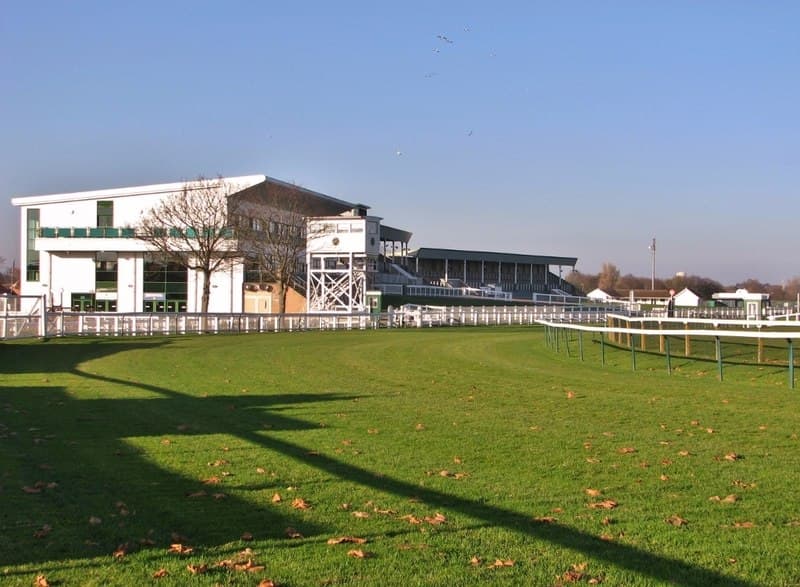
Great Yarmouth is a mid-sized course with a capacity of approximately 5,000, and the facilities reflect that scale — functional, well-maintained, and sufficient without pretending to be Ascot. The course has been modernised in phases over recent decades while keeping its seaside character intact. The one feature that no other racecourse in Britain can match is what you see when you turn your back on the track: the North Sea.
The Grandstand
The main grandstand at Great Yarmouth runs along the home straight and provides covered seating for most of its length. The viewing angle is excellent — the straight course of 7 furlongs is visible almost in its entirety from the grandstand, and the final furlong is directly in front of the main stands. The grandstand was refurbished in the early 2000s and again more recently under Arena Racing Company ownership, and the facilities inside it are in reasonable modern condition.
Seating is a mixture of fixed plastic seats in the upper tier and standing/leaning rail space on the lower apron. The lower apron is the preferred position for most experienced race-goers — you can hear the call of the race, feel the pace of horses accelerating past you, and still step back to the bar area quickly between races.
The Premier Enclosure
The Premier Enclosure, accessible from the main grandstand, offers enhanced facilities including reserved seating, a separate bar with table service, and closer proximity to the parade ring and saddling area. Premier Enclosure access adds around £12 to £15 to the standard ticket price on most fixture days.
The parade ring at Great Yarmouth is positioned between the stands and the track, and Premier Enclosure access gives the best view of horses in the paddock. For a form student, watching horses in the parade ring at Yarmouth is particularly useful in juvenile races — young horses that are unsettled, sweating excessively, or refusing to be led out calmly in the paddock here are frequently doing so because the coastal wind and the noise of the crowd are unfamiliar. Some trainers note that juveniles can be fractious at Yarmouth on their first visit regardless of their actual condition.
The Seafront-Facing Viewing Areas
The feature that distinguishes Great Yarmouth from every other flat course in Britain is the view from the eastern end of the track. On the far side of the course, looking east from behind the straight, you can see across the dunes to the North Sea. On a clear day in August, with a race field coming down the straight towards you, the sea is visible as a strip of blue behind the far rails. This is the view that gives the course its identity.
The seafront-facing areas are not formally designated as premium viewing zones — they are accessible from the general admission areas — but the eastern stretches of the course boundary are where photographers and serious race-watchers often position themselves. The light in late afternoon and evening points into the stands rather than into the sea, which makes for excellent photographs from the eastern side of the track in evening meetings.
Food and Drink
The food offering at Great Yarmouth has improved substantially in recent years, and the course makes appropriate use of its coastal setting. Fish and chips are available on-course, typically from a dedicated unit near the general admission concourse, and the quality is Of note better than the generic race-day catering you find at many venues. This is a fish-and-chip town, and the course knows its audience.
Additional food options include burgers, hot dogs, and a range of cold options. The Premier Enclosure has a more formal dining setup, with table-service catering available for pre-booked groups. Afternoon menus on summer Saturday meetings typically include prawn dishes and seafood platters alongside more standard race-day fare.
Bars are positioned throughout the course — at least three operating bars on a standard summer meeting — and the beer range includes draught lagers, ales, and cider. The bar in the grandstand area operates throughout the card. Wine and Prosecco are available in most enclosures. Prices are in line with race-day industry norms: expect to pay slightly more than you would in a Norwich pub, but not significantly so.
For the evening meetings in July and August, the bar areas are busier relative to the crowd size — the evening format concentrates socialising into a shorter period, and the first and last races mark natural gathering points.
Betting Facilities
The betting ring is positioned in front of the grandstand. On a standard weekday fixture, you will typically find 15 to 20 bookmakers operating. On busier August and September meetings, that number increases to 25 to 30. The ring is well laid out with sufficient space to move between boards and inspect prices without difficulty.
Tote facilities operate from a dedicated unit near the main entrance. Betting apps function without issue on the course grounds, though network coverage can be patchy in the eastern parts of the course near the track boundary. The main stand area has reliable signal on all major networks.
Family and Children's Facilities
Great Yarmouth is one of the more family-friendly flat courses in the east of England, partly by design and partly by virtue of its summer, seaside-adjacent audience. A Family Enclosure provides a designated area with outdoor space, and pushchairs and buggies are accommodated without difficulty. Children under 18 are typically admitted free with a paying adult, which makes a summer-afternoon meeting an economical family outing when combined with a day on the beach.
The paddock area is accessible from most enclosures and provides an opportunity for children to see the horses close up before each race — a feature that those new to racing consistently cite as the highlight of a first visit. The horse walk from the stables to the parade ring takes horses past a section of the course boundary that is open to general viewing without a premium ticket.
Getting There
Great Yarmouth Racecourse is located on Jellicoe Road, Great Yarmouth, Norfolk, NR30 1NG, on the northern edge of the town about half a mile from the main seafront. The course is straightforward to reach by car or train. The key constraint to understand in advance is that Great Yarmouth is a peninsula town with limited road access — there are only two main approaches, and both can become congested in high summer.
By Train
Great Yarmouth station is the terminus of the Wherry Line from Norwich, and it sits approximately 1 mile from the racecourse. The walk from the station to the course takes around 20 minutes on foot, following Beach Road north along the seafront and then turning right on Caister Road. Taxis are available outside the station and the journey costs around £5 to £7.
Services between Norwich and Great Yarmouth run every 30 minutes on most days, with the journey taking approximately 30 minutes. The first train from Norwich on a typical race day leaves early enough for afternoon fixtures and most evening meetings — check Greater Anglia timetables before travelling.
There are no direct trains to Great Yarmouth from London. The only route from London Liverpool Street involves a change at Norwich, where you transfer to the Wherry Line. Total journey time from London Liverpool Street to Great Yarmouth is approximately 2 hours to 2 hours 20 minutes depending on the Norwich connection. The most direct sequence is: London Liverpool Street to Norwich (approximately 1 hour 50 minutes on a fast service), then Norwich to Great Yarmouth (30 minutes). On a summer Saturday with a busy Norwich connection, allow extra time — the Norwich to Great Yarmouth service is a single-track line with limited capacity.
By Car
From Norwich — Take the A47 east from Norwich. At the junction with the A12 near Gorleston, follow the A149 north into Great Yarmouth. Total distance is approximately 20 miles; journey time is normally 25 to 35 minutes outside the summer peak. In July and August, the A47 approaching Great Yarmouth can back up from the A12 junction, and journey times can extend to 45 to 60 minutes. Allow this additional time for August weekend fixtures.
From London and the south-east — From London, take the A11 to Norwich (approximately 100 miles from central London) and then follow the A47 to Great Yarmouth as above. Total distance from central London is approximately 130 miles; journey time is around 2 hours 30 minutes in normal traffic. Avoid arriving between 12pm and 3pm on a summer Saturday if possible — this is the peak period for holiday traffic entering Great Yarmouth.
From the Midlands — Join the A47 at Leicester or Peterborough and follow it east through Wisbech, King's Lynn, and then into Norfolk, continuing through Norwich to Great Yarmouth. From Leicester, allow approximately 2 hours 30 minutes. From Peterborough, allow approximately 1 hour 45 minutes.
Car Parking
The racecourse has a free car park accessible from Jellicoe Road, with capacity for several hundred vehicles. On summer Saturdays and the Norfolk Stakes meeting in August, the car park fills by mid-afternoon. Arrive at least 30 minutes before the first race if you want guaranteed on-site parking. Overflow parking is available on local roads and a short walk from the course — Caister Road and Beach Road both have unrestricted parking on race days, though these fill up too on busy days.
For evening fixtures, parking is easier — the tourist traffic from the seafront typically thins out by 5pm, and the course car park usually has space until first race time at 6pm.
By Bus
Local bus services connect Great Yarmouth station and town centre with the broader Norfolk network. First Eastern Counties operates routes between Norwich and Great Yarmouth, with journey times of approximately 50 to 60 minutes by bus (compared with 30 minutes by train). The racecourse is not directly on a bus route, but routes along Caister Road pass within five minutes' walk. Services are more frequent on weekdays than weekends — check the First Eastern Counties website for current timetables, as Sunday services in particular can be limited.
From the Seafront Hotels
If you are staying in a seafront hotel or guest house on Marine Parade or Marine Drive, the racecourse is approximately a 15-minute walk north along the beach road. This is the most enjoyable approach on a summer afternoon — along the seafront with the sea to your right before turning inland to Jellicoe Road.
Frequently Asked Questions
History of Great Yarmouth Racecourse
Racing at Great Yarmouth began in 1715, which places it among the oldest flat courses in England. To put that date in context: it predates the foundation of the Jockey Club, which was established around 1750. It predates the first running of the St Leger (1776), the Oaks (1779), and the Derby (1780) by more than half a century. When racing at Yarmouth was already an established annual event, the Pattern-race structure that now governs British flat racing had not yet been imagined.
Origins on the Denes
The earliest races at Great Yarmouth were run on the North Denes — the broad strip of sandy common land that stretches north from the town along the coast. The North Denes were a natural galloping ground: flat, firm in summer, and long enough to stage races of a mile or more. Horse racing on the Denes was part of the civic calendar of Georgian Great Yarmouth, attracting spectators from across Norfolk and serving as much a social function as a sporting one.
The precise layout of those early races differed from the present course, which was formalised in its current oval configuration sometime in the early nineteenth century. The shift from informal seaside galloping to a regulated, enclosed racecourse reflects the same process that restructured British racing generally during the Regency and early Victorian periods — the enclosure of common land, the establishment of entry fees, and the emergence of organised fixtures with prize money rather than simple wager races between owners.
The Victorian Era and the Seaside Resort
Great Yarmouth's development as a formal racecourse ran in parallel with its growth as a Victorian seaside resort. From the 1840s onwards, the arrival of the railway — the Yarmouth and Norwich Railway opened in 1844 — transformed the town. What had been a market town and fishing port accessible mainly by road became a resort that middle-class Victorian families from Norwich, Ipswich, and eventually London could reach in an afternoon.
The racecourse benefited directly from this railway-driven growth. Race meetings in the second half of the nineteenth century drew larger crowds than the earlier Georgian fixtures because a broader section of the public could now attend. The pattern of summer racing attracting holiday visitors — a pattern that still defines Great Yarmouth today — was established in the Victorian period, when race days at Yarmouth were specifically marketed as part of the resort's summer entertainment programme.
The Norfolk Aristocracy and Royal Connections
The racing calendar at Great Yarmouth was historically attended by the Norfolk aristocracy, and the county's rural landowning class provided a significant proportion of both owners and patrons during the course's Georgian and Victorian peak. Among the notable landowners with an interest in Norfolk racing was the Sandringham estate, approximately 30 miles north-west of Great Yarmouth.
The connection between Sandringham and British racing is well documented. The Prince of Wales — later King Edward VII — maintained a significant racing operation at Sandringham from the 1870s onwards, and the Norfolk flat-racing calendar was of interest to the estate's racing management. Yarmouth, as the nearest seaside course to Sandringham's training operations in North Norfolk, appeared on the estate's racing agenda in the late nineteenth and early twentieth centuries. The Royal Family's involvement in British flat racing extended naturally to courses within reach of Sandringham, and Yarmouth's fixture list during the late Victorian and Edwardian periods reflected the broader interest of the Norfolk racing community in which the Sandringham operation was a central presence.
Newmarket Trainers and the Proving Ground Function
The relationship between Great Yarmouth and Newmarket that defines the course's modern identity has historical roots going back at least to the late nineteenth century. Newmarket-based trainers — then as now the dominant force in British flat racing — identified Yarmouth as a suitable early test for young horses because of its manageable distance (30 miles from the Newmarket gallops), its fast-ground character, and its fair, uncomplicated layout.
Throughout the twentieth century, Yarmouth accumulated a reputation as a proving ground for juveniles. The course's role was not to host the most prestigious races but to provide a competitive, fair-ground introduction to racing for horses that would later be seen on the bigger stages of Newmarket, Doncaster, and Ascot. This function grew more deliberate as British racing became increasingly professionalised after the Second World War and trainers began treating individual course visits as specific preparation tools rather than opportunistic entries.
By the 1970s and 1980s, when the British training establishment was dominated by figures such as Henry Cecil (Newmarket), Michael Stoute (Newmarket), and Luca Cumani (Newmarket), the pattern of sending promising two-year-olds for an August or September run at Yarmouth before the autumn Newmarket meetings was well established. That pattern has continued uninterrupted to the present day.
The Twentieth Century and Arena Racing Company
The course changed hands several times during the twentieth century. For much of the post-war period it was operated under the British Horseracing Board's licensing framework as an independent course, before being absorbed into the Arena Racing Company portfolio in the consolidation of British racecourse ownership that accelerated from the 2000s onwards.
Under Arena Racing Company management, Great Yarmouth has retained its essential character while receiving investment in facilities and track management. The straight course was improved and the grandstand modernised. The current infrastructure — functional, clean, and appropriate for a course of this size — dates largely from the ARC improvement programme of the 2000s and 2010s.
The Norfolk Stakes, which underpins the course's modern prestige calendar, was elevated to Listed status, giving it official Pattern-race recognition and strengthening its function as a reliable pointer to Group-race potential. That elevation consolidated Yarmouth's position as more than a provincial provincial curiosity — it made the course part of the formal infrastructure of British flat racing's juvenile programme.
Famous Moments
Great Yarmouth is not a course defined by its own Group 1 races — it has none. Its famous moments are not the sort that generate front-page headlines on the day they happen. Instead, they are moments understood in retrospect: a juvenile winning a modest maiden in August, looking unremarkable to all except the trainer who knows what is coming, and then reappearing three months later in a Classic with a Yarmouth win as the only public form reference point. The course's famous moments are mostly famous for what they predicted.
The Norfolk Stakes and Its Record
The Norfolk Stakes, run over 5 furlongs for two-year-olds in August, is the course's most prestigious race and its most reliable producer of subsequent Group winners. The Listed race — rated below Group 3 in the official Pattern — has shown a consistent record of identifying juvenile sprinters that go on to compete at the top level.
The pattern is repeatable: a lightly raced juvenile wins or finishes placed in the Norfolk Stakes in August, is then put away for the season, returns as a three-year-old in the following spring in a Group race, and runs to a performance level that the Yarmouth form had quietly suggested was possible. Trainers at Newmarket yards — where knowledge of the race's record is institutional — use it as a deliberate staging post. A horse that wins the Norfolk Stakes is not assumed to be a sprinting champion in waiting, but it is noted as a horse that has handled fast ground, a straight 5 furlongs, and competitive pressure, all of which are relevant qualities for Group-level sprinting.
Classic Trial Indicators: The September Maidens
In the modern era, several horses that Then competed in Classic races in England and Ireland have had their public debut or early career start at Great Yarmouth in August or September. The specific pattern worth understanding is this: a Newmarket trainer introduces a well-bred juvenile in a 7-furlong or 1-mile maiden at Yarmouth in September. The horse wins without being asked for maximum effort. It is then aimed at the Racing Post Trophy at Doncaster in October or the Dewhurst Stakes at Newmarket. The Yarmouth form, visible to anyone checking the form book, was already telling the story.
This happened with enough frequency across the 1990s, 2000s, and 2010s that serious form students now routinely flag Yarmouth juvenile winners from August and September maidens for ante-post Classic markets. The course's honest, flat, fast-ground conditions mean that a horse cannot win at Yarmouth through course bias or favourable ground — it wins on merit.
Summer Sprint Handicap Upsets
Great Yarmouth's summer sprint handicaps have produced a number of memorable results over the years, typically because the wind factor — described in the course section of this guide — regularly wrong-foots bettors who have not factored conditions into their assessment.
The recurring scenario: a well-backed market leader at short odds in a 6-furlong handicap, racing into a stiff north-easterly off the sea, is beaten by a closer that races off the pace in the early stages and comes home strongly in the final furlong when the field has had its pace cut by the headwind. Because bettors focus on form rather than conditions, the winner is recorded as an upset. In reality, it was a predictable result for anyone who had checked the wind forecast that morning.
These upsets tend to occur most frequently in June and July, when the North Sea air is often brisk and race-day conditions differ most sharply from the conditions in which horses' form was established at other tracks. Yarmouth's sprint handicaps in early summer are among the most condition-sensitive races in the British flat-racing calendar.
Royal Family and Sandringham Connections
Given that Sandringham is approximately 30 miles from Great Yarmouth, Royal Family attendance at Yarmouth meetings has historical precedent. The late Victorian and Edwardian period saw the Prince of Wales — later King Edward VII — attend racing at various Norfolk venues, and Yarmouth's position as the nearest seaside course to Sandringham placed it within the orbit of the estate's racing interests.
The Sandringham racing operation, which sent horses under royal colours to courses across Britain, was active at Yarmouth in the late nineteenth and early twentieth centuries. Horses prepared at or associated with Sandringham's Norfolk base appeared in Yarmouth races during the Edwardian period, when Great Yarmouth was at its peak as a fashionable resort and race meeting.
In the modern era, Royal Family attendance at Great Yarmouth is uncommon — the course's prestige level does not typically attract owners of that prominence to the track. But the historical connection through Sandringham remains part of the course's character and is reflected in the name of the Norfolk Stakes itself, which references the county identity that the Sandringham connection helped define.
The Eastern Festival
The Eastern Festival, run as a multi-day meeting in September, has accumulated its own store of memorable moments. Listed-race fields at the festival have included horses that Then became Group winners at the biggest British meetings. The relaxed atmosphere of the festival — which draws a mix of serious race-goers, summer visitors who happen to still be in Norfolk in September, and local racing families — has produced the particular quality of a meeting where something significant happens in front of a crowd that has not entirely realised it is watching something significant.
That understatement is part of the course's character. Great Yarmouth does not announce itself. Its famous moments ask to be noticed.
Betting Guide
Great Yarmouth offers several distinct betting angles that reward systematic thinking. The course is not a venue where raw form reading is sufficient — the wind factor, the draw bias on the straight, and the specific way Newmarket trainers use the course all create exploitable patterns. This section sets out the most consistently useful ones.
The 2YO Maiden Angle
The most reliable long-term betting angle at Great Yarmouth is using the course's August and September two-year-old maiden form as a market for Newmarket and Doncaster in autumn.
The logic: Newmarket-based trainers — Thady Gosden at Clarehaven Stables, Roger Varian at Kremlin House, Charlie Appleby at Moulton Paddocks — use Great Yarmouth as their nearest racecourse and regularly run their best juveniles there in August and September as a preparation for the Newmarket autumn meetings. These trainers know the track, trust its form, and return to it deliberately. A juvenile that wins a 6-furlong or 7-furlong maiden at Yarmouth in August is not chosen for Yarmouth at random — it has been selected because the trainer believes the horse is ready to win, and because winning at Yarmouth on fast ground is a significant form reference for the autumn.
The practical application: when assessing ante-post markets for the Autumn Stakes, the Dewhurst Stakes, the Fillies' Mile, or the Racing Post Trophy at Newmarket or Doncaster in October, check which horses in the field have Yarmouth maiden wins from August or September. If those horses are priced at 16/1 or longer without a strong reason for that price — no subsequent poor run, no fitness question — they frequently represent value. The Yarmouth form is known to Newmarket insiders but underweighted by the general betting market, which tends to focus on Pattern-race form.
Also, horses that finish second or third in Yarmouth 2YO maidens but lose to a winner who Then wins again at Newmarket are worth noting in their own right. The placed form from Yarmouth's August and September juvenile races has a stronger strike rate in subsequent Pattern-race fields than placed form from comparable maiden races at most other provincial flat courses.
Trainer Statistics: The Newmarket Bias
Trainer statistics at Great Yarmouth are skewed markedly towards the Newmarket training establishment. Data from Arena Racing Company and independent form databases consistently shows that trainers based in Newmarket — within 35 miles of the course — account for over 50% of winners at Yarmouth in any given season.
The three Newmarket operations with the most consistently strong records at Great Yarmouth are:
Thady Gosden (Clarehaven Stables) — The Gosden yard, previously operated by John Gosden, has historically had one of the highest strike rates at Yarmouth of any trainer in Britain. The yard uses the course frequently and carefully, typically running horses that are well prepared and expected to run to their ability rather than being used for experience or fitness. A Gosden runner at Yarmouth in a maiden or novice race that is sent off in the top three in the market can be trusted to run its race.
Roger Varian (Kremlin House Stables) — Varian's record at Yarmouth is strong across distances from 7 furlongs to 1 mile 3 furlongs. The yard runs horses at Yarmouth that are often ready to win — Varian does not typically send horses to the course for educational purposes. His runners in August and September middle-distance handicaps are worth tracking.
Charlie Appleby (Moulton Paddocks, Godolphin) — Appleby sends horses to Yarmouth that are often well above the class level of the race in which they appear. Godolphin horses that are unbeaten or lightly raced appearing in Yarmouth maiden races at short prices should be taken seriously at face value — the yard's strike rate at the course in 1-mile and 1m1f races is strong.
Trainers outside the Newmarket corridor — from Lambourn, Yorkshire, or Ireland — can and do win at Yarmouth, but their strike rates are lower and their runners require greater scrutiny before backing.
The Wind Factor in Sprint Betting
Check the wind forecast before betting on any sprint race at Great Yarmouth. This is not optional advice — it is the single most underutilised piece of information available to bettors at this course.
In headwind conditions (wind from the north, north-east, or east): favour closers and hold-up horses. A field of sprinters racing into a 15mph headwind will have their pace cut in the early stages, which means horses ridden conservatively with the expectation of a strong final furlong finish have an increased advantage. Front-runners and horses that need to be produced early will find the headwind a significant impediment.
In tail-wind conditions: favour pace horses. With a following wind, front-runners can be ridden more aggressively because the effort cost of holding a prominent position is reduced. Times will be faster, which favours horses with high Racing Post Ratings on good or good-to-firm ground.
In strong crosswind conditions: draw bias on the straight course is amplified. Low draws in a crosswind that pushes the field towards the stands rail give horses in stalls 1 to 4 an additional advantage that is already present in calm conditions.
Weather data: the Met Office produces reliable point forecasts for Great Yarmouth, and the Caister-on-Sea weather station (less than 2 miles from the course) provides real-time wind readings. Check both before the race day.
Going Angle: Soft-Biased Horses to Avoid
Great Yarmouth's fast-draining sandy base means the course is essentially a good-to-firm track from June through September. Any horse whose career form is predominantly on soft or heavy ground — horses described in the form book with ratings that are several pounds higher on soft than on good — should be downgraded at Yarmouth in summer regardless of recent form.
Conversely, horses with strong turf ratings on good or good-to-firm that have been competing at higher-rated tracks and have been beaten — but whose form is on the right ground type — are worth noting when they drop into handicap company at Yarmouth on a summer fixture. These horses are often well-handicapped relative to the local opposition and are racing on ground that suits them.
The September Handicap Pattern
In competitive September handicaps at Great Yarmouth — particularly at distances of 1 mile to 1 mile 3 furlongs — look for horses from Newmarket yards that are making their first or second run from a new handicap mark. The sequence to watch for: a Newmarket-trained horse runs in a Pattern or Listed race in June or July, finishes out of the places, is reassessed by the handicapper at a slightly lower mark, and then appears in a Yarmouth September handicap at what appears to be a winnable mark for the trainer.
This is a deliberate targeting strategy that Newmarket yards use with horses that have been exposed at Pattern level but remain well handicapped in class 3 or class 2 company. The September Yarmouth handicaps at 1 mile and 1m3f have produced a consistent stream of well-priced winners that form students who follow Newmarket trainers closely will have anticipated.
Atmosphere & Planning Your Visit
Great Yarmouth is one of England's oldest seaside resorts and makes no apology for what it is. The donkeys are still on the beach. The arcades are still open. The Pleasure Beach — one of the oldest amusement parks in the country, operating on Marine Parade since 1909 — is still running its wooden roller coaster. This is not a gentrified coastal town full of boutique hotels and artisan coffee. It is an honest, old-fashioned English seaside place, and the racing fits that character entirely.
Planning the Day
A race day at Great Yarmouth works best when treated as a full seaside day rather than a racing-only trip.
Morning: The beach at Great Yarmouth stretches for several miles either side of the town centre. The southern beaches near Gorleston-on-Sea are quieter and cleaner; the central beach near the Pleasure Beach is busier and more characterful. For an August Saturday, arrive early — by 9am the seafront car parks fill, and the beach between Britannia Pier and the Pleasure Beach is crowded by 11am.
Lunch: The town centre and quayside have several good fish-and-chip restaurants. Seafood & Grill on Hall Quay is among the better options on the River Bure side of town — proper grilled fish, local crab, and good chips. Budget around £15 to £20 per head for lunch before the races. Leave lunch before 1pm to walk to the course in time for a 2pm first race. The walk from Hall Quay to the racecourse takes about 20 minutes on foot via the seafront.
Afternoon at the races: Racing typically runs from 2pm to 5.30pm on a summer Saturday afternoon card. The paddock shows before each race give a 15-minute interval between races. Allow time to walk the course boundary if you arrive early — the view from the far end of the straight, looking back towards the grandstand with the sea behind you, is the best orientation point for understanding why this course is what it is.
Evening (on non-evening-racing days): The Pleasure Beach on Marine Parade is open until late in summer. The seafront fish-and-chip shops operate until 9pm or 10pm. The town has a working pub trade along King Street and Regent Road for those who want a drink after the racing.
The Evening Meetings
The evening fixtures from late June through August deserve separate attention. These are not standard race-day affairs. They begin at 6pm, which means they fit naturally into a day that already includes an afternoon on the beach or in the town. The crowd is a particular mix: couples who have been in the area for a few days and want an evening out; groups of friends who drove from Norwich (30 minutes on the A47); families on a final evening of a week's holiday who have seen the Pleasure Beach twice and want something different. These are not people who know who trained the favourite. That is not a criticism — it gives evening meetings an atmosphere that is truly different from a Saturday afternoon card.
Racing at 7.30pm on a clear July evening at Great Yarmouth, with the light still strong and the sea visible over the dunes, is one of the better places to watch flat racing in Britain on a pure quality-of-experience basis.
What the Town Is Like
Great Yarmouth is a Type A traditional English resort — kiss-me-quick hats, bingo on the pier, arcades along the Golden Mile, and ice cream at every 50 metres. The population of the town itself is around 38,000, with seasonal visitors pushing that number significantly higher in July and August. It has not been comprehensively regenerated — there are rundown sections and some closed shops on the main retail streets. That is part of its character.
The Rows — a network of narrow medieval lanes running between King Street and the quayside — are one of England's surviving examples of a medieval street pattern, and the St Nicholas Minster on Church Plain is the largest parish church in England. For visitors who want more than the beach and the races, the older parts of the town are worth half an hour of exploration before or after racing.
Tips for a Smooth Day
Arrive by 1.30pm at the latest for a 2pm first race on a summer Saturday. The car park on Jellicoe Road fills by 2pm on busy days and overflow parking on Caister Road is further from the entrance than it looks on the map.
Bring a layer for evening meetings even in July. The coastal wind drops the effective temperature by three to four degrees compared with inland, and the stands face north — you will be glad of a jacket by the final race at 8.45pm.
The betting ring is busiest in the 10 minutes before each race. If you want to walk the boards and check prices rather than using an app, arrive at the ring with 15 minutes to spare, not five.
If you are combining a beach day with afternoon racing, apply sun cream before you arrive — the course has no shade except under the covered stand, and a July afternoon in Norfolk without protection will leave you uncomfortable by race three.
More guides for this course
Share this article
More about this racecourse
All Great Yarmouth guides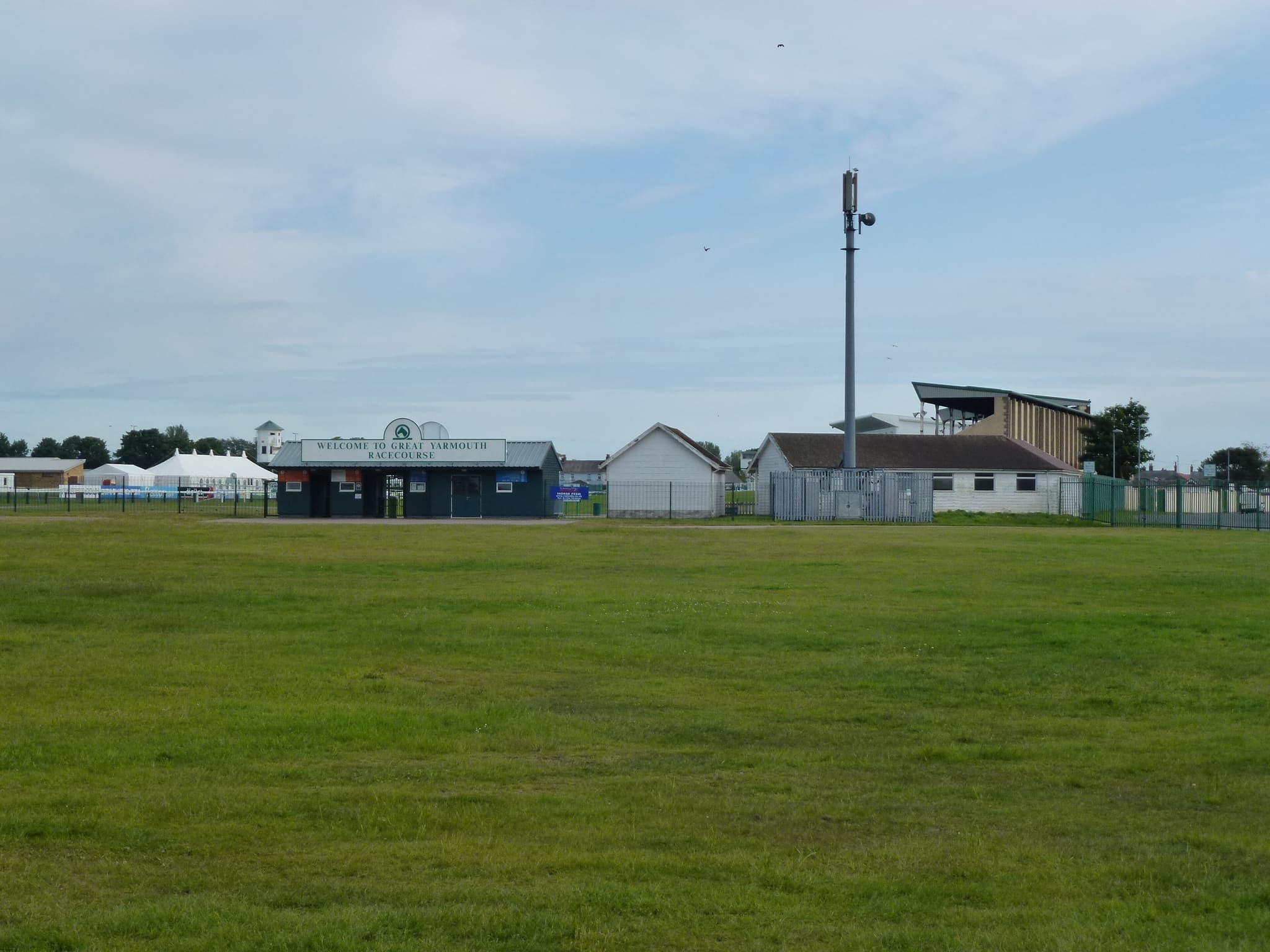
A Day Out at Great Yarmouth Racecourse
A day at Great Yarmouth — getting there, what to wear, enclosures, food and drink, and insider tips for East Anglia's seaside flat course.
Read more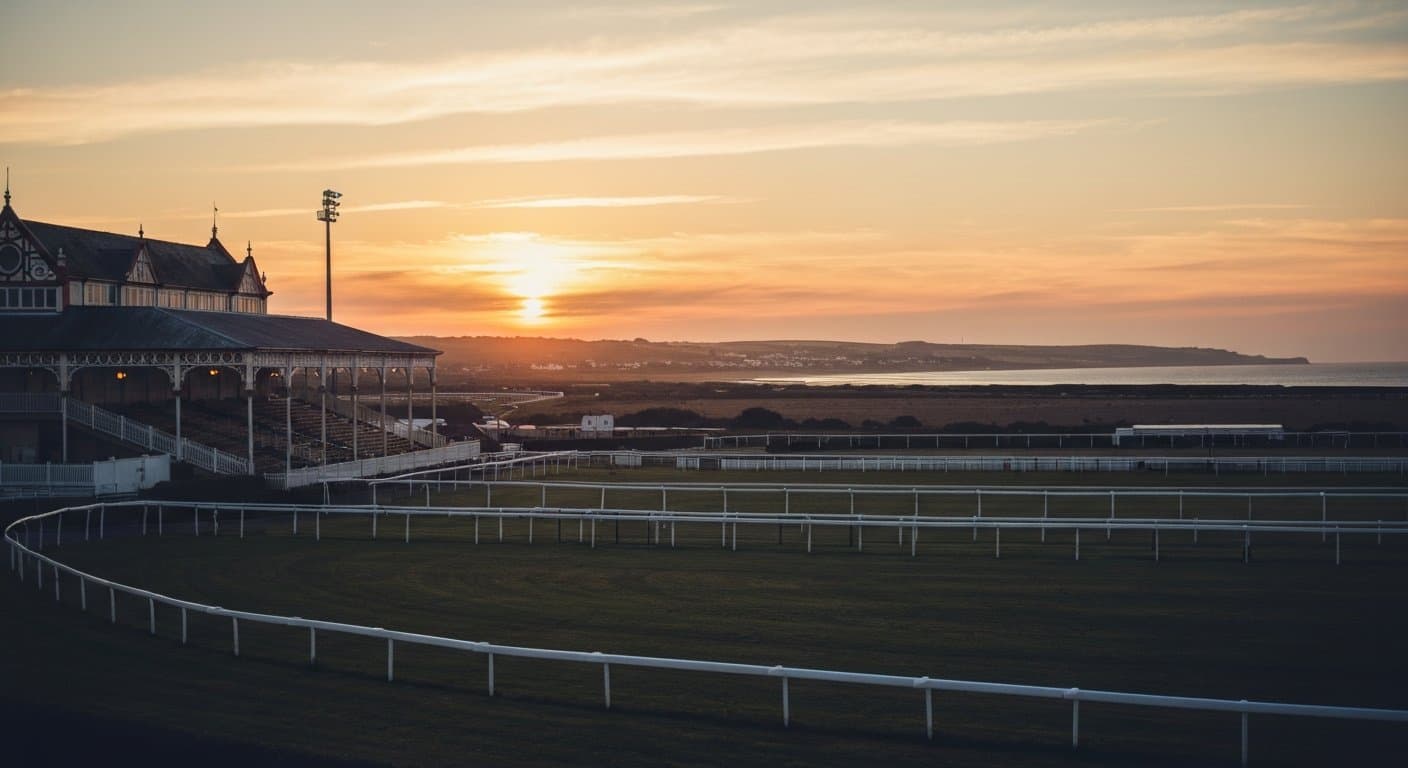
The History of Great Yarmouth Racecourse
Over 300 years of racing at Great Yarmouth — from its origins in 1715 to East Anglia's seaside flat course and the Eastern Festival.
Read more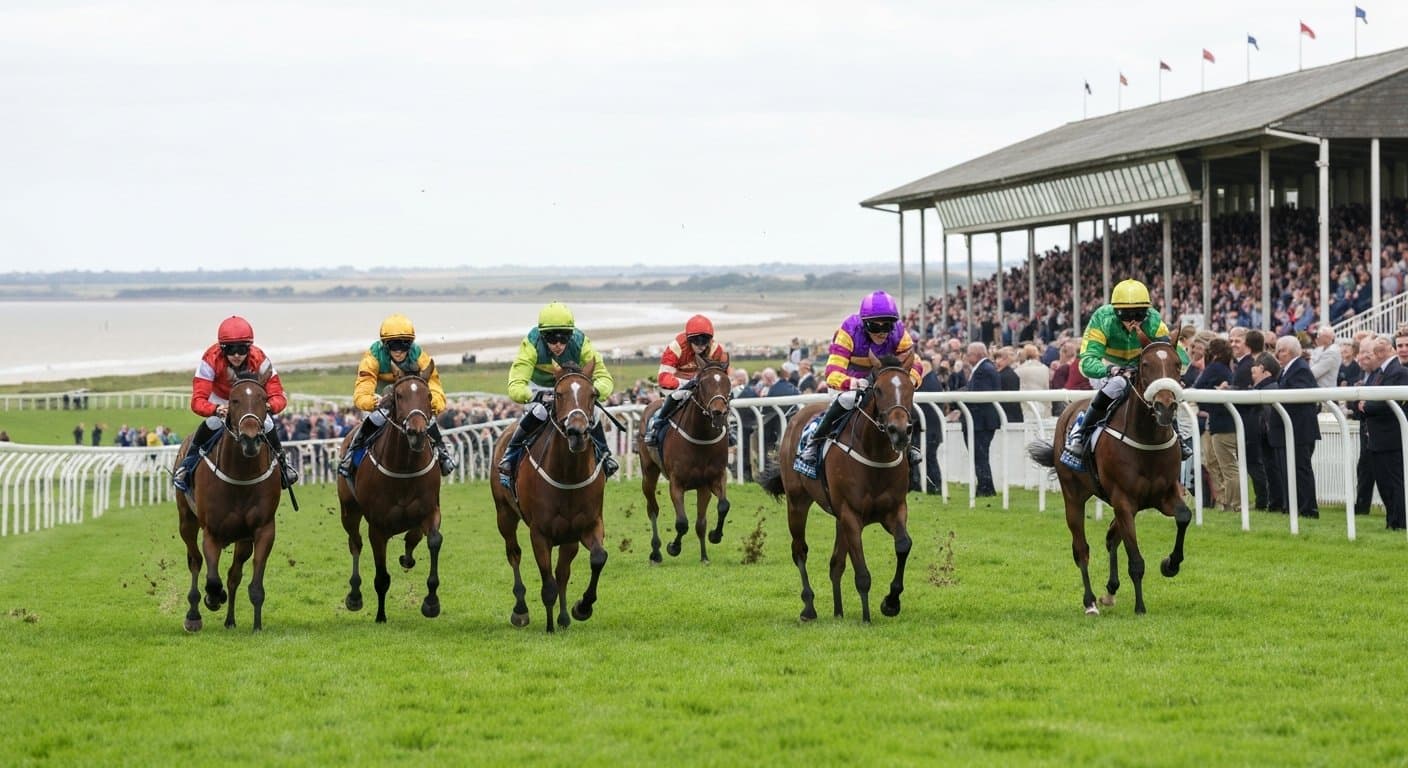
Seaside Racing at Great Yarmouth: Complete Guide
Your complete guide to seaside racing at Great Yarmouth — the Eastern Festival, summer meetings, and racing on the Norfolk coast.
Read morePhotos on this page are used under Creative Commons licences. Titles, sources and licence links for each one are on our image credits page.
Research the field with the AI Race Predictor
Our model publishes calibrated win-probability estimates for UK races — a second opinion to understand a race, not tips. It's open about its record: it doesn't beat the market, and we show exactly how it does.
Work it out & learn the basics
Gamble Responsibly
Gambling should be entertaining and not seen as a way to make money. Never bet more than you can afford to lose. If you or someone you know has a gambling problem, help and support is available.