
Founder & Editor · Last reviewed 2026-03-02
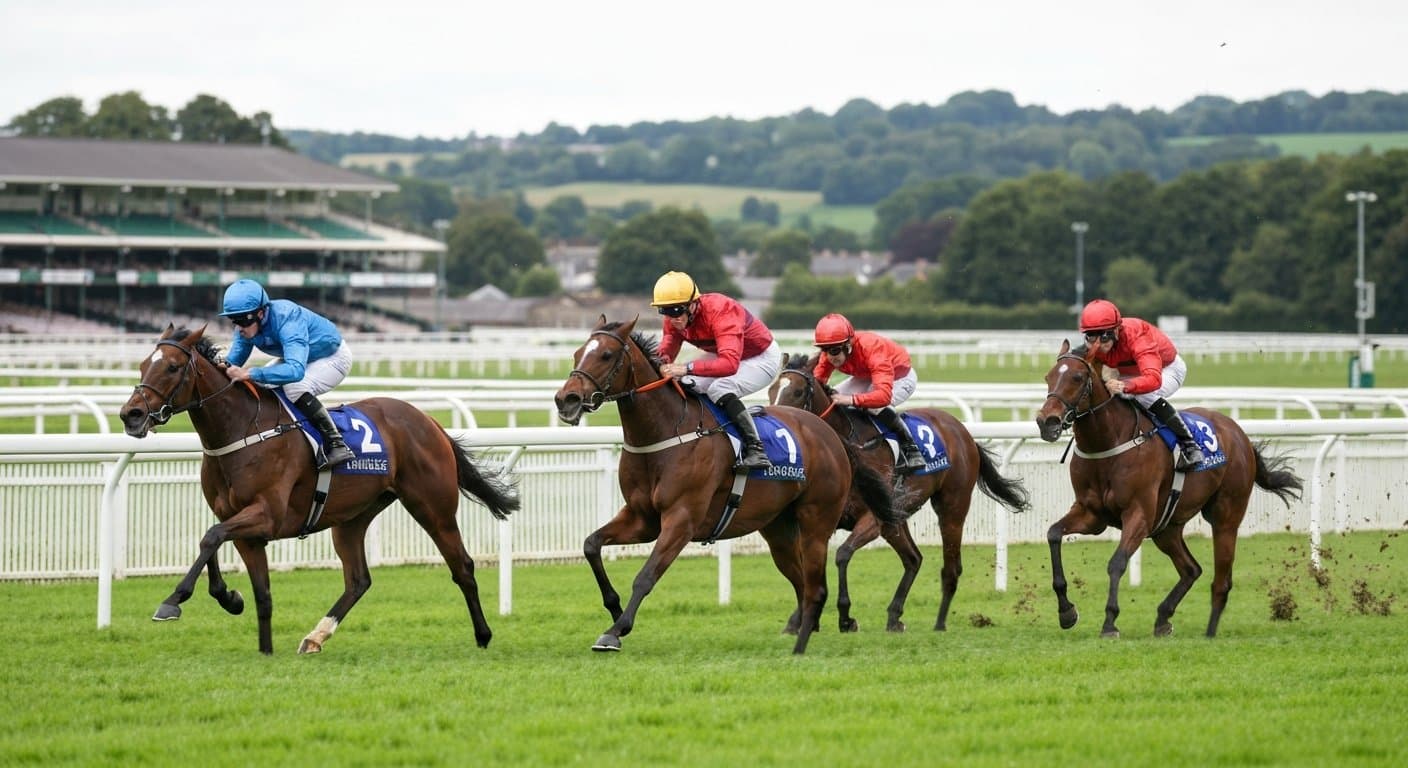
Hamilton Park sits in South Lanarkshire, thirteen miles south-east of Glasgow, and serves as Scotland's only flat-racing venue in the central belt. The course stages flat racing exclusively from April to October, and its position within easy reach of Glasgow and Edinburgh generates consistently strong attendance. For bettors, Hamilton's defining characteristic is its combination of a stiff uphill finish and tight right-handed bends — a layout that produces a specific and learnable pattern in the results and penalises horses whose form has been produced at contrasting galloping venues.
Scotland's racing geography shapes the trainer landscape. The proximity to Glasgow means that Scottish-based trainers — particularly those in Lanarkshire, Ayrshire, and Stirlingshire — maintain a steady presence. But the fixture list also draws northern English stables from Yorkshire and Cumbria, and the Glasgow Stakes, Hamilton's Listed flagship, attracts horses from further afield when the right staying three-year-old is available.
Quick Betting Reference
- Course type: Right-handed oval; flat only; stiff uphill finish
- Distance range: 5f to 1m5f
- Going: Good to Firm or Good typical in summer; Good to Soft in spring and autumn
- Flagship race: Glasgow Stakes (Listed, 1m3f, mid-July, 3yo stayers)
- Primary advantage: Course form filter — uphill finish and tight bends create a specific horse type that keeps winning
- Form transfer: Catterick, Ripon, Musselburgh — tight right-handed tracks with gradients transfer directly
- Trainer to watch: Mark Johnston/Kingsley Park Racing for the Glasgow Stakes; Keith Dalgleish locally
The Uphill Finish
The run-in at Hamilton rises steadily for approximately two furlongs to the winning post, and this gradient imposes a stamina test that flat course times do not capture. A horse that has a half-length lead at the two-furlong marker at a flat course like Newmarket or Haydock may arrive at the line in the same position. The same lead at the two-furlong marker at Hamilton can evaporate if the horse is not truly staying the distance — the climb absorbs the final reserves of tired horses in a way that flat finishes do not.
This uphill finish creates the primary selection principle at Hamilton: back horses that stay their distance rather than those that merely achieve it. In sprint races of five and six furlongs, the gradient at the end means pure speed merchants who have no stamina reserve can be caught and beaten in the final furlong. In races over a mile and beyond, the finish becomes the key discriminating obstacle — horses that have previously won races with something in hand at the line are more reliable than horses that have won by getting up on the line at flat-course venues.
The Tight Bends
The right-handed oval at Hamilton has bends tighter than at the bigger Scottish venues. This creates a course character closer to Catterick or Ripon than to York or Newmarket. Horses that travel comfortably in a prominent position — those that do not need pulling back to settle and can sit second or third without pulling — navigate the bends most efficiently. Wide-running horses, those that pull hard in the early stages, and horses from big-field sprint courses that depend on finding a gap in the final furlong face the tight bends as an additional demand on top of the uphill finish.
The practical implication for betting: Hamilton form is most reliably produced by horses from similarly compact northern circuits. Form from galloping tracks — Newmarket, York, Sandown — requires significant discounting because the tactical demands of tight bends and an uphill finish are not tested at those venues.
Bet on Hamilton Park
Place your bets on Hamilton Park races with a trusted bookmaker.

Promo code BETFRED50. New customers only. Register, deposit with a Debit Card, and place a first bet of £10+ at Evens (2.0)+ on Sports, to be settled within 7 days, to get £30 in Sports Free Bets and £20 in Bet Builder Free Bets within 24 hours of settlement. 7-day expiry. Eligibility & payment exclusions apply. Full T&Cs apply. Take Time to Think. BeGambleAware.org. 18+. Full T&Cs.

Promo code R30. New UK customers only, 18+. Register, deposit £10 or more, then place a £10 single cash bet at odds of 1/2 (1.5) or greater on any sports market (excluding Virtuals). Once the qualifying bet settles you get £30 in Free Bets (3 x £10) — the qualifying bet can win or lose. Free Bets are valid on any sports market excluding Virtuals, expire in 7 days, are non-withdrawable and must be used in full. Excluded deposit methods apply (including PayPal, Apple Pay, Skrill and NETELLER). Named bets such as Lucky 15 do not qualify. If you cash out the qualifying bet, or it is voided, you are no longer eligible for the offer. Ends 31.12.26. Full T&Cs apply. Please gamble responsibly. BeGambleAware.org. 18+. Full T&Cs.

Promo code BET40GET20. New UK customers, 18+. Register with the code and place a first bet of £40 or more at Evens (2.0) or greater. Receive 2 × £10 free bets: the first credited automatically once the qualifying bet settles, the second 24 hours later. Free bets must be placed at minimum odds of 4/1 (5.0), expire 24 hours after credit, and the free-bet stake is not returned with winnings. Debit card deposits only. Take Time to Think. BeGambleAware.org. 18+. T&Cs apply. Full T&Cs.

50% of your first-day net losses refunded as a free bet, capped at £25. New UK customers aged 18+ only. To qualify, deposit and place a first bet of £10 or more on any sport at minimum odds of evens (2.00), then place at least two further bets on different events, each worth at least 50% of your largest bet, all at evens (2.00) or greater. Losses are counted from your first settled bet until 23:59 the same day. Place a qualifying £10+ bet and you are guaranteed at least a £5 free bet. Bets placed at SP, void bets, cashed-out bets and bets struck with free bets do not count towards the offer. The free bet is credited the day after your qualifying bets settle and must be used within 7 days, after which it expires. It can be used at odds from 1/4 (1.25) up to 250/1 on singles and straight accumulators, but not on Trixie, Patent or Yankee style multiples. Free-bet stake is not returned with winnings. One offer per person, household, address, IP address and device. E-wallet deposits may not qualify, so check the cashier before depositing. Customers registered with GAMSTOP cannot claim. KYC identity verification must be completed before the free bet is credited. Take Time to Think. BeGambleAware.org. 18+. T&Cs apply. Full T&Cs.

New customers, 18+. Choose the sports bonus at sign-up, make a first deposit and receive a 100% bonus up to £50 in your Sports Bonus balance. To convert the bonus to cash, wager it 10x within 30 days. Single bets below Evens (2.00) do not qualify; accumulators do not qualify if any selection is below 1/2 (1.50). Virtual Sports, voided, cancelled, drawn, cashed-out and free-bet wagers do not count towards wagering. Only the first settled bet per event counts. Withdrawing before the wagering requirement is met forfeits the bonus balance including bonus winnings. Real-money funds are used before bonus funds. Deposits via Skrill or Neteller are not eligible. Not valid in conjunction with other promotions. Odds, bet and payment limits apply. 10bet general and promotion T&Cs apply. BeGambleAware.org. 18+. Full T&Cs.

New customers in Great Britain and Republic of Ireland, 18+. Place a £10 fixed-odds qualifying bet at minimum odds of 1/2 (1.50) — single or each-way (only the win part counts), pre-event or in-play, not cashed out early, within 28 days of opening the account. Receive up to £60 in bonuses credited over three days: 3 × £10 fixed-odds free bets (the first on settlement, then 24 and 48 hours later) plus 3 × £5 Total Goals FOOTBALL spread bets and 3 × £5 racing Winning Favourites spread bets, with a £1 racing Race Index spread bet as an extra on top. The spread bets need a full spread-betting account, opened within 28 days of the fixed-odds account and subject to Spreadex's eligibility and appropriateness checks. Free-bet stakes not returned with winnings; free bets valid 28 days from issue. IMPORTANT: the £5 credits are SPREAD bets — sports spread betting carries the risk that losses can exceed your stake. Sports spread-betting customers do not have Financial Ombudsman or FSCS recourse. Take Time to Think. BeGambleAware.org. 18+. T&Cs apply. Full T&Cs.

Promo code WELCOME15, entered under My Bonuses after registering. New UK customers, 18+. Place a first qualifying bet of at least £10 from your cash balance at odds of evens (2.0) or greater within 7 days of opening the account. Once the qualifying bet fully settles you receive £15 in free bets, credited as 3 x £5 tokens with set uses: one £5 accumulator free bet (minimum 4 legs, each leg at 2/5 or bigger), one £5 sports free bet (any market at evens or bigger) and one £5 Sub Cover free bet (selected football player markets at evens or bigger). Free-bet stakes are not returned with winnings. Free bets expire 7 days after they are credited. Void, cashed-out and partially cashed-out bets do not qualify. One offer per customer. Confirm the current terms on BetGoodwin's own welcome-offer page before claiming. Take Time to Think. BeGambleAware.org. 18+. T&Cs apply. Full T&Cs.

New UK customers, 18+. Minimum deposit £10. Place a £10 qualifying single on sports (excluding virtuals) at minimum odds of 1/2 (1.50), settled within 14 days. Deposit-method exclusions apply. Receive £30 in free bets (stake not returned), split £20 for sportsbook use (2 x £10) and £10 for Bet Builder only (2 x £5); Bet Builder does not cover horse racing. Free bets must be accepted within 7 days and expire 7 days after acceptance. No promo code required. Best Odds Guaranteed on UK & Irish racing, subject to having staked over £25 in the previous seven days. Operated by LiveScore Betting and Gaming (Gibraltar) Ltd, UKGC 56859. Confirm the current terms on LiveScore Bet's own promotions page before claiming. Take Time to Think. BeGambleAware.org. 18+. T&Cs apply. Full T&Cs.
18+. BeGambleAware.org
Track Characteristics
Hamilton Park's oval measures approximately one mile and three furlongs around the outside and is right-handed throughout. The circuit is neither the smallest nor the tightest in British flat racing — it is comparable to Ripon and Catterick in scale — but it is significantly more compact and more demanding in its configuration than the major northern tracks at York, Doncaster, and Newmarket. The combination of a non-trivial uphill finish, right-handed tight bends, and a relatively short straight creates a racing test with a specific and repeating character.
The Sprint Straight
Sprint races at Hamilton from five to six furlongs are run on a separate straight course that leads directly to the same uphill finishing straight used by oval races. The straight is wide enough to accommodate the full field without significant compression, and there is no severe camber rewarding one side over the other. The gradient in the final two furlongs is the determining factor in straight-course sprints: horses with a speed advantage in the first three furlongs can be caught by horses with superior stamina as the ground rises to the winning post.
This creates a specific sprint profile at Hamilton. The most reliable sprint type is a horse that combines early speed with a real two-furlong stamina reserve — not a pure sprinter that cannot sustain pace up a gradient, and not a middle-distance horse dropping in trip that lacks the early pace to be in a good position before the climb. Horses that have previously won sprints by grounding out opponents up a hill — at Catterick's five furlongs, at Ripon's five-furlong sprint — carry that evidence directly to Hamilton.
The Round Course
Races from seven furlongs through to one mile and five furlongs use the round course. The right-handed bends arrive at regular intervals, and horses are required to maintain their rhythm through each turn before accelerating in the straight. The most important tactical position on the round course is before the final bend — horses that arrive at the final turn in the first three positions have a significant advantage over horses that need to angle wide and accelerate simultaneously around the bend.
The straight itself, while uphill, is not excessively long. There is enough distance for hold-up horses to mount a finishing run when the pace has been truly strong, but the combination of the tight final bend and the climb means that pure closing ability from the back of the field is less effective than at galloping tracks with extended straights. Horses that race in the first four throughout the race, expending their energy evenly, win at a higher rate than horses relying on a late run from off the pace.
The Glasgow Stakes Profile
The Glasgow Stakes over one mile and three furlongs is the race that most specifically illustrates Hamilton's character. Three-year-old stayers who can travel prominently through the tight bends, maintain their rhythm into the straight, and find a real late response up the gradient consistently outperform horses that carry extravagant reputations from flat-course middle-distance races. Postponed, who won in 2014, and Subjectivist, who won in 2020 — both trained by Mark Johnston at Middleham — are representative: well-paced staying types that handled the uphill finish by having the stamina to produce a sustained finishing effort rather than a single burst.
Form Transfer
Courses that transfer most directly to Hamilton: Catterick (right-handed, tight, downhill then uphill run-in), Ripon (right-handed oval, stiff test), Musselburgh (right-handed, tight bends, Scottish circuit). Form from York (left-handed, galloping, flat), Newmarket (right/left-handed, very long straights, flat), and Haydock (left-handed, wide, flat) requires discounting at Hamilton because the tactical demands are fundamentally different.
Going & Draw Bias
Hamilton Park's soil is free-draining, and the course generally produces going descriptions that are Good to Firm or Good across the summer flat season. South Lanarkshire is not especially wet compared to the west coast of Scotland, and the track's drainage — improved in a late-2000s renovation — handles typical summer rainfall without producing soft conditions. Soft and Heavy are rare in July and August; Good to Soft appears most often in April, May, and September as the season opens and closes in wetter conditions.
Seasonal Going Profile
April to May: The season opens on going that is typically Good or Good to Soft. Spring rain in central Scotland can push the ground softer than would be expected later in the summer, and horses whose form has been produced on Good to Firm at southern flat tracks may face conditions one grade softer than their optimal going at Hamilton in spring.
June to August: The core summer period at Hamilton produces Good to Firm or Good as the norm. Sustained dry Scottish summers — less common than summer droughts further south, but not rare — push the going to Good to Firm by mid-July for the Glasgow Stakes meeting. This is the going for which Hamilton's form is most reliable: a consistent surface that produces clear form lines across successive meetings.
September to October: Autumn rain pushes the going toward Good to Soft in the later fixtures. The course's drainage slows this deterioration compared to clay-based tracks, but by October the going is typically one to two grades softer than the midsummer standard.
Going and Race Type Interaction
On Good to Firm, Hamilton's uphill finish creates a stamina premium even in sprint races. The firm surface allows higher early pace, which means horses are running faster into the gradient — this amplifies the energy cost of the climb and makes stamina more decisive at Good to Firm than the going description alone implies. Sprint races on Good to Firm at Hamilton are won at a higher rate by horses with proven staying ability over the trip than sprint races on Good to Firm at flat-course venues.
On Good to Soft, the pace drops and the relative advantage of the truly fast early-pace horse diminishes. Stayers consolidate their advantage further, because the softer ground tires horses more evenly throughout the race, making the gradient in the final two furlongs even more significant as a discriminating factor.
Draw Analysis
Five to six furlongs (sprint straight): Low draws have a marginal advantage. The sprint course is a straight run from start to finish, and a low draw allows a horse to take a position on the stands-side rail without expending energy moving across the track. The magnitude of this advantage is modest — perhaps one to two lengths' positioning value — and is most relevant in fields of twelve or more runners. In fields of eight to ten, the advantage is negligible.
Seven furlongs plus (round course): Draw bias on the round course is minimal. The first bend is reached quickly enough from the seven-furlong start that low-drawn horses have a positional advantage at that first turn, but the wide, right-handed configuration means the advantage dissipates around subsequent bends. For races over a mile and beyond, draw is not a productive betting filter.
Evening Meeting Considerations
Hamilton's evening meetings — typically Tuesday and Wednesday evenings from May to August — run on the same going as afternoon cards. On warm, dry evenings, the going can ride marginally faster than earlier in the day as the surface dries. This is a minor factor and does not typically shift the going description, but it is worth noting for horses that have previously run in afternoon conditions at similar going descriptions: the evening surface at Hamilton on a warm summer day may be fractionally quicker than the going board suggests.
Key Trainers & Jockeys
Hamilton Park's trainer landscape combines Scottish and northern English stables for most of the season, with selected appearances from national yards for the Glasgow Stakes and the most valuable handicaps. The dominant force in the biggest race of the calendar — the Glasgow Stakes — is the Johnston operation at Middleham, North Yorkshire, which has targeted the race more systematically than any other yard. For the regular programme of handicaps and conditions races, Scottish yards and northern English operations from within 150 miles carry the most consistent advantage.
Mark Johnston / Kingsley Park Racing
Mark Johnston trained at Middleham in North Yorkshire before handing the licence to his son Charlie. The Johnston operation — now operating under the Kingsley Park Racing banner — has the strongest Glasgow Stakes record of any yard in the race's history, with multiple winners including Postponed (2014) and Subjectivist (2020), both of whom went on to win at the highest level. Johnston's Middleham yard produces the type of staying middle-distance horse that Hamilton specifically rewards: well-paced, real stayers that handle a tight circuit and grind up a gradient without fading.
A Johnston or Kingsley Park Glasgow Stakes runner that has shown staying form earlier in the season — at Newmarket, Haydock, or Chester — is the starting point for the race each July. These horses are not always short prices; when they are available at 4/1 or above with solid staying credentials, the yard's deliberate targeting of the race creates a value case.
Keith Dalgleish
Keith Dalgleish trains at Carluke in Lanarkshire, approximately fifteen miles from Hamilton Park. He is the dominant Scottish trainer at the course and operates a mixed string of sprinters, middle-distance horses, and staying types that run regularly at Hamilton throughout the flat season. Dalgleish's local knowledge — of the going, the track's surface behaviour, and the specific demands of the uphill finish — translates into a consistent win rate across all race grades.
When Dalgleish sends a runner to Hamilton in a competitive Class 3 or Class 4 handicap at prices of 4/1 or above with course form, the local knowledge and deliberate targeting combine to create a reliable value angle. His sprinters and seven-furlong horses are the most productive type from his yard at Hamilton — the shorter distances expose other yards' horses to the uphill finish most acutely, and Dalgleish's horses are specifically conditioned for this test.
Jim Goldie
Jim Goldie trains at Uplawmoor in Ayrshire, approximately twenty-five miles from Hamilton. He is a prolific trainer at the course with a volume of runners across the season that generates consistent wins across Class 4 and Class 5 handicaps. Goldie's Hamilton runners include regular course specialists — horses that have won at the track two or three times and return to conditions they have previously handled. At prices of 5/1 or above for a Goldie horse with multiple Hamilton wins in its record, the repeat course specialist angle is worth following.
Northern English Yards (Catterick/Ripon Circuit)
Trainers based at Malton, Middleham, Thirsk, and Tadcaster who run horses regularly at Catterick and Ripon find Hamilton a natural extension of that circuit. The track characteristics — tight bends, uphill finish, Good to Firm summer going — are close enough to the North Yorkshire tracks that horses from this circuit carry their form directly. When a northern English yard outside the Johnston operation has a horse with Catterick or Ripon form that has not yet been tested at Hamilton, that form transfer case is worth assessing.
Jockeys
Connor Beasley and Jason Hart are the leading flat jockeys on the Scottish circuit, riding regularly at Hamilton, Musselburgh, and Ayr. Their familiarity with Hamilton's tight bends and uphill finish is built over years of rides, and their positioning through the final turn — knowing where to be in the field as it enters the straight — is more refined than that of southern-circuit jockeys making occasional visits.
When a Dalgleish or Goldie horse is ridden by Beasley or Hart at Hamilton in a competitive handicap, the trainer-jockey-course alignment is a positive signal. Conversely, when a southern yard brings a well-regarded horse to Hamilton with a jockey having their first Hamilton ride, the local positioning disadvantage through the tight final turn is a quantifiable risk worth factoring into the assessment.
Betting Strategies
Hamilton's betting strategies flow from two structural facts: the uphill finish creates a stayer premium that is not fully reflected in market prices derived from flat-course form, and the tight bends create a course-form advantage that persists across successive visits. Apply these facts systematically before any other assessment.
Strategy One: Fade Galloping-Track Favourites in Handicaps
The most exploitable market error at Hamilton is the overvaluation of horses whose ratings and recent form have been earned at flat, galloping tracks — Newmarket, Haydock, York, Sandown. These horses carry their ratings accurately to similar tracks; at Hamilton, the tight bends and uphill finish impose additional demands that the rating does not capture. A horse rated 90 from Newmarket form faces a different physical test at Hamilton than another horse rated 88 from Catterick form — the Catterick horse's rating was set on a course that more closely resembles Hamilton's demands.
In practice: when a flat-course favourite is available at 5/4 to 7/4 with its form achieved on galloping tracks, and an alternative with Catterick, Ripon, or Hamilton form is available at 4/1 or above, the market has underpriced the course specialist. The discount required for galloping-track form is not large — perhaps five to seven lengths' equivalent — but it is consistent and exploitable.
Strategy Two: Course Form as a Two-Visit Filter
At Hamilton, previous course visits are worth grading. A horse that has won at Hamilton is the strongest positive signal. A horse that has placed at Hamilton without winning — but whose defeat was by a horse that then won elsewhere — is the second tier. A horse with a Hamilton run that ended in a distance defeat or pulled up should not be classified as having course form.
Apply this two-visit filter as follows: in any field that includes at least one horse with a win at Hamilton in the last twenty-four months, that horse is the selection starting point. Opposition to a Hamilton winner requires actively positive reasons beyond raw rating, because the structural demands of the uphill finish and tight bends are a real barrier that ratings from other courses underestimate.
Strategy Three: Stayer Premium in Sprint Races
The uphill finish at Hamilton creates a stamina premium even in five and six-furlong races. This produces a specific betting opportunity: pure speed sprinters — horses with a fast early pace that fades over the final furlong — are systematically overpriced at Hamilton relative to their chances in races at flat-course venues. When a sprint favourite's form record shows multiple wins where the horse hit the front early and held on by a narrow margin at flat courses, that form carries risk at Hamilton. The gradient will test the late reserves in a way that those flat-course victories did not.
Back horses in Hamilton sprints whose form shows they have sustained their effort up a gradient — Catterick's five furlongs, Ripon's five furlongs, or a previous Hamilton run — at prices that the market has not adjusted adequately for the uphill-finish premium.
Strategy Four: Keith Dalgleish and Jim Goldie at 4/1+
In Class 3, 4, and 5 handicaps across the season — the bread-and-butter of the Hamilton programme — Dalgleish and Goldie represent the most reliable local trainer value. Their horses at prices of 4/1 and above with course form or form from the North Yorkshire circuit carry more information than national market-makers reflect. These trainers do not attract the systematic support from national punters that Middleham or the big southern yards generate, and their local knowledge premium is not priced in.
Strategy Five: Evening Meeting Value in Class 4-5 Handicaps
Hamilton's evening meetings in June, July, and August attract smaller crowds and lower betting turnover than the afternoon cards. Market efficiency in these meetings is lower than on major weekend cards — the less liquid market means that occasional pricing errors persist to the off. In Class 4 and Class 5 handicaps at evening meetings, horses from Dalgleish, Goldie, or other regular Scottish yards with course form at 5/1 or above represent a consistent value case. The smaller field sizes — typically six to ten runners — also improve each-way returns per unit staked.
To compare place terms and each-way promotions across the major bookmakers, see our best bookmakers for horse racing guide.
Key Races to Bet On
Hamilton stages approximately fifteen to twenty fixtures each season from April to October, with the calendar building toward the Glasgow Stakes meeting in mid-July — the single most important betting event on the Scottish flat calendar. Beyond the Glasgow Stakes, the summer programme of Class 3 and Class 4 handicaps from June to August provides the most consistent betting opportunity for bettors who have applied the course form and going filters.
The Glasgow Stakes
The Glasgow Stakes is a Listed race run over one mile and three furlongs for three-year-olds, typically staged in mid-July on the Glasgow Bacardi Mango Card. It is Scotland's most prestigious flat race and consistently produces horses that go on to compete at the highest level: Postponed won before going on to win the Dubai Sheema Classic and the King George; Subjectivist won before taking the Prix du Cadran and the Gold Cup at Royal Ascot.
The race specifically rewards three-year-old stayers — horses at the beginning of their middle-distance career whose stamina is further developed than their speed. The uphill finish at Hamilton is a more decisive test of staying ability for three-year-olds than for older horses, because three-year-olds' stamina development is more variable at this stage of the season. Horses whose previous form shows they have already demonstrated real stamina — staying on strongly at Newmarket, Haydock, or Chester rather than just getting the trip — hold a structural advantage over those entering the staying category on the basis of breeding alone.
Each-way betting at 5/1 or above on the second Johnston/Kingsley Park runner when there are multiple representatives, or on an English staying three-year-old from a northern yard with course-compatible form from Catterick or Ripon, has historically provided value in the Glasgow Stakes.
Summer Handicap Programme
From late June through August, Hamilton stages a series of Class 3 and Class 4 handicaps over five furlongs to one mile and five furlongs. These races are the most productive betting environment at Hamilton for systematic course-form application. The going is most consistent in summer — typically Good to Firm or Good — which makes form comparisons across meetings reliable. Fields of eight to twelve runners from Scottish and northern English yards provide the right environment for the Dalgleish/Goldie value strategy.
The most productive distance range for Hamilton summer handicaps is seven furlongs to one mile — races long enough to test stamina at the uphill finish, short enough that the tight bends create a significant positional advantage for course-experienced horses. A horse rated 80 to 95 from a northern English yard with a previous Hamilton win in this distance range at prices of 4/1 to 7/1 is the optimal summer handicap selection profile.
Evening Meeting Handicaps
The Tuesday and Wednesday evening meetings in June, July, and August run Class 4 and Class 5 handicaps across all distances. These meetings attract smaller crowds but provide real betting opportunities. The fields of six to ten runners include Scottish yard regulars alongside occasional visitors from the northern English circuit. Market efficiency is lower than on major cards, and the each-way terms — typically first three places — mean that at 5/1 or above the place component alone represents solid value when the horse has a plausible Hamilton profile.
Novice and Conditions Races
Hamilton stages maiden and novice races for two-year-olds throughout the season. These races are primarily useful for the form they generate rather than as direct betting propositions — two-year-old debutantes are notoriously hard to assess. However, two-year-old winners at Hamilton who then run at Catterick or Ripon carry their form directly, and the uphill finish at Hamilton means that winning a race here demonstrates real stamina reserves that transfer well to staying juvenile events at northern venues.
Share this article
More about this racecourse
All Hamilton Park guides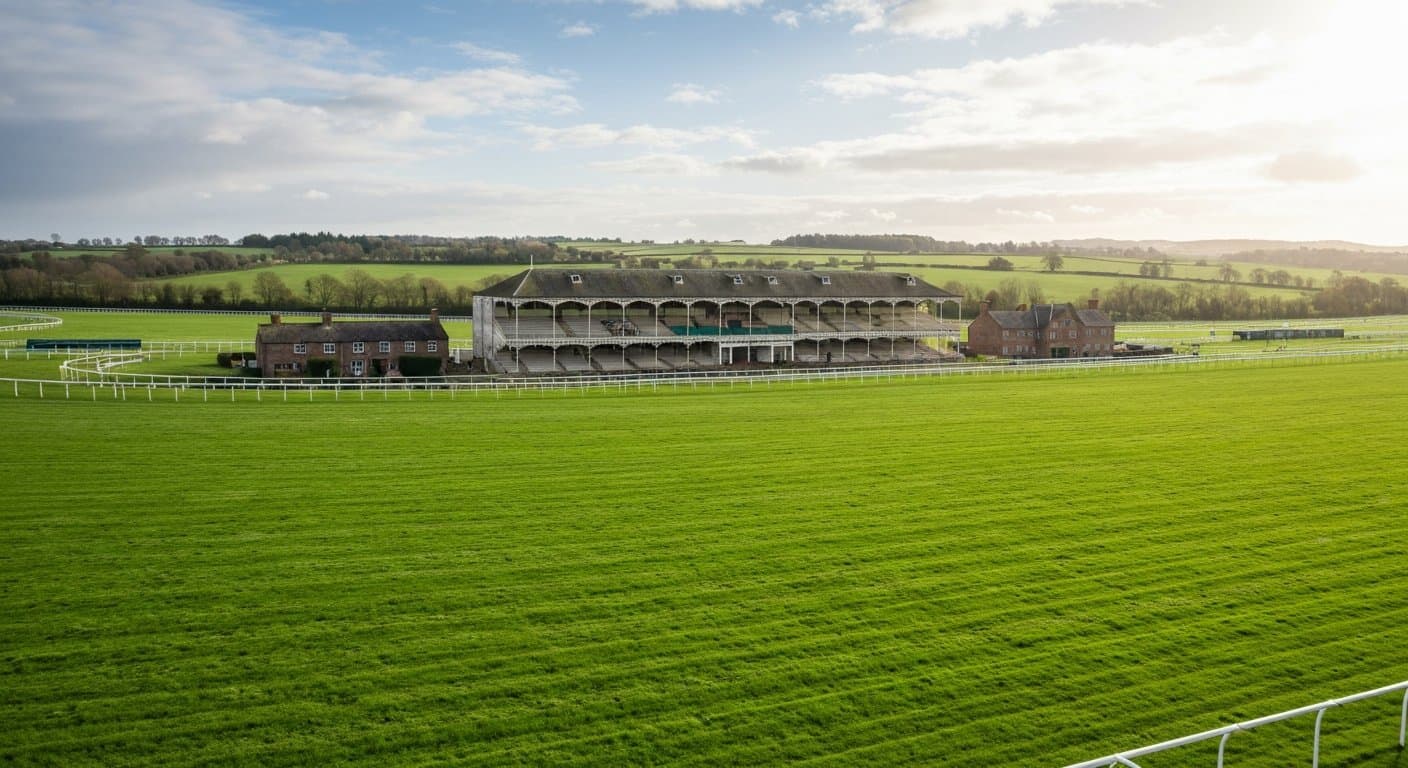
Hamilton Park Racecourse: Complete Guide
Everything you need to know about Hamilton Park — Scotland's premier flat course, the Glasgow Stakes, and evening racing in the Lanarkshire countryside.
Read more
A Day Out at Hamilton Park Racecourse
Everything you need for a day at Hamilton Park — getting there, what to wear, enclosures, food and drink, and insider tips for Scotland's premier flat course.
Read more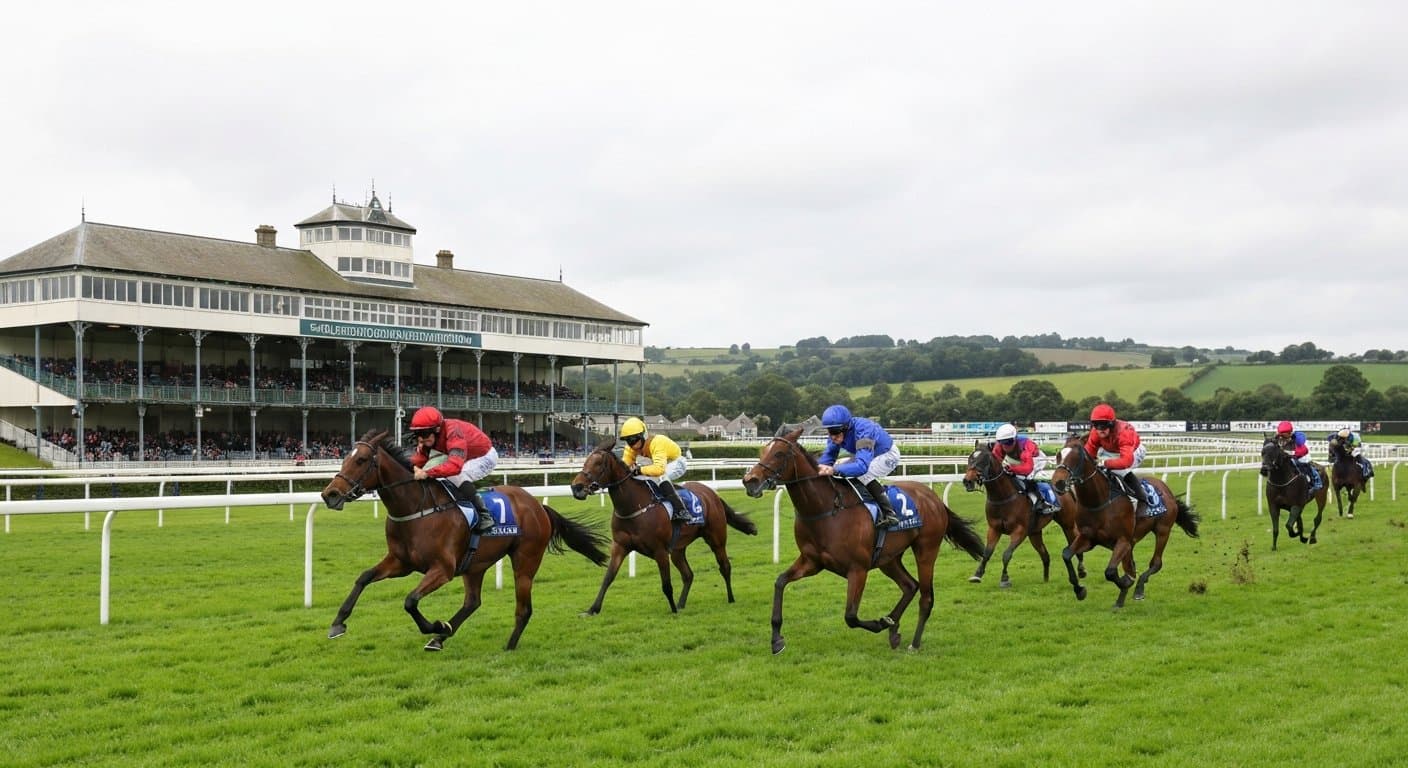
Evening Racing at Hamilton Park Racecourse
Your guide to evening racing at Hamilton Park — where British evening racing began in 1947, with summer nights in the Lanarkshire countryside.
Read moreResearch the field with the AI Race Predictor
Our model publishes calibrated win-probability estimates for UK races — a second opinion to understand a race, not tips. It's open about its record: it doesn't beat the market, and we show exactly how it does.
Work it out & learn the basics
Gamble Responsibly
Gambling should be entertaining and not seen as a way to make money. Never bet more than you can afford to lose. If you or someone you know has a gambling problem, help and support is available.