
Founder & Editor · Last reviewed 2026-04-05
Introduction
Ludlow Racecourse sits in the Teme Valley, roughly two miles north of Ludlow town centre, off the A49 at Bromfield in Shropshire. Racing has taken place here since 1729, making it one of the oldest active National Hunt venues in England. The track is right-handed, undulating, and approximately one mile four furlongs round — tight enough to reward quick-jumping, handy types, and challenging enough to find out horses who lack jumping ability or fitness.
The course is the only racecourse in Shropshire, and it draws racegoers from a wide catchment: Herefordshire to the south, Powys and mid-Wales to the west, and the West Midlands to the north and east. Ludlow sits seven miles from the Welsh border, and the Welsh Borders influence runs through the fixture list as well as the crowd. It is a course that belongs firmly to the Marches rather than to any single county.
Who this guide is for
- First-time visitors will find sections on facilities, getting there, what to expect on raceday, and what makes Ludlow's track distinctive.
- Regular racegoers planning a trip from further afield can use the fixtures section to pick the right meeting and the getting-there section for travel options.
- History-focused readers should go to the history section, which covers the course from 1729 through to the present day.
- Festival or trip planners will want the atmosphere and planning section alongside the fixtures calendar, which flags the Ludlow Gold Cup as the headline event.
Quick decisions
- The season runs October to May; there is no summer or flat racing.
- The Ludlow Gold Cup, a National Hunt handicap chase, is the flagship race and is traditionally held in late November or December.
- The nearest main-line station is Ludlow, approximately two miles from the course; direct trains run from Hereford in 20 minutes and from Shrewsbury in 25 minutes.
- By road, the A49 is the spine of the approach — 24 miles from Hereford to the south, 24 miles from Shrewsbury to the north.
- Venetia Williams, the most locally prominent National Hunt trainer, operates from Aramstone in Herefordshire, 12 miles away — her runners here are well worth tracking.
- Heavy going is not unusual in January and February; Shropshire's clay-based soil can hold plenty of winter moisture.
- Capacity is around 5,000; midweek meetings are quiet and accessible, while the Gold Cup draws a full crowd.
The Edwardian grandstand, completed in 1904, provides the main viewing area and gives the course much of its period character. The surrounding Shropshire hills and the proximity of the River Teme create a setting that is hard to replicate on a grey December afternoon when the fences are jumping well and the going is soft underfoot. Ludlow does not try to compete with the volume of fixtures at Cheltenham or the prestige of a Grade 1 course. What it offers is a different kind of raceday: one tied to a specific landscape, a specific community, and a track that truly tests horses and jockeys alike.
For punters, Ludlow is a course that rewards homework. The right-handed layout, the undulating terrain, and the going variations across different parts of the circuit all create patterns in the form book that can be exploited with careful study. The betting guide covers those angles in detail. For those coming for the day out, Ludlow town itself adds a dimension that few racecourses can match: a Norman castle begun in 1086, a market square that has been in continuous use for centuries, and a concentration of independent restaurants that has given the town a well-established reputation as a food destination. The two things — racing at Bromfield and dinner in Ludlow — fit together naturally.
This guide covers the course layout and going, the fixtures calendar, facilities and hospitality, travel and getting there, a full FAQ section, and separate sections on history, famous moments, betting, and atmosphere. Use it as a reference before your visit or alongside your form study on raceday.
Ludlow is managed by The Jockey Club, which also operates courses including Warwick and Nottingham. The Jockey Club's regional network means that standards of maintenance and course presentation are consistent, and the booking systems for tickets and hospitality are straightforward. For any specific enquiries, the course address is Bromfield, Ludlow, Shropshire, SY8 2BT, and the website at ludlowracecourse.co.uk is kept updated with fixture dates, going reports, and admission pricing throughout the season.
Bet on Ludlow
Place your bets on Ludlow races with a trusted bookmaker.

Promo code BETFRED50. New customers only. Register, deposit with a Debit Card, and place a first bet of £10+ at Evens (2.0)+ on Sports, to be settled within 7 days, to get £30 in Sports Free Bets and £20 in Bet Builder Free Bets within 24 hours of settlement. 7-day expiry. Eligibility & payment exclusions apply. Full T&Cs apply. Take Time to Think. BeGambleAware.org. 18+. Full T&Cs.

Promo code R30. New UK customers only, 18+. Register, deposit £10 or more, then place a £10 single cash bet at odds of 1/2 (1.5) or greater on any sports market (excluding Virtuals). Once the qualifying bet settles you get £30 in Free Bets (3 x £10) — the qualifying bet can win or lose. Free Bets are valid on any sports market excluding Virtuals, expire in 7 days, are non-withdrawable and must be used in full. Excluded deposit methods apply (including PayPal, Apple Pay, Skrill and NETELLER). Named bets such as Lucky 15 do not qualify. If you cash out the qualifying bet, or it is voided, you are no longer eligible for the offer. Ends 31.12.26. Full T&Cs apply. Please gamble responsibly. BeGambleAware.org. 18+. Full T&Cs.

Promo code BET40GET20. New UK customers, 18+. Register with the code and place a first bet of £40 or more at Evens (2.0) or greater. Receive 2 × £10 free bets: the first credited automatically once the qualifying bet settles, the second 24 hours later. Free bets must be placed at minimum odds of 4/1 (5.0), expire 24 hours after credit, and the free-bet stake is not returned with winnings. Debit card deposits only. Take Time to Think. BeGambleAware.org. 18+. T&Cs apply. Full T&Cs.

50% of your first-day net losses refunded as a free bet, capped at £25. New UK customers aged 18+ only. To qualify, deposit and place a first bet of £10 or more on any sport at minimum odds of evens (2.00), then place at least two further bets on different events, each worth at least 50% of your largest bet, all at evens (2.00) or greater. Losses are counted from your first settled bet until 23:59 the same day. Place a qualifying £10+ bet and you are guaranteed at least a £5 free bet. Bets placed at SP, void bets, cashed-out bets and bets struck with free bets do not count towards the offer. The free bet is credited the day after your qualifying bets settle and must be used within 7 days, after which it expires. It can be used at odds from 1/4 (1.25) up to 250/1 on singles and straight accumulators, but not on Trixie, Patent or Yankee style multiples. Free-bet stake is not returned with winnings. One offer per person, household, address, IP address and device. E-wallet deposits may not qualify, so check the cashier before depositing. Customers registered with GAMSTOP cannot claim. KYC identity verification must be completed before the free bet is credited. Take Time to Think. BeGambleAware.org. 18+. T&Cs apply. Full T&Cs.

New customers, 18+. Choose the sports bonus at sign-up, make a first deposit and receive a 100% bonus up to £50 in your Sports Bonus balance. To convert the bonus to cash, wager it 10x within 30 days. Single bets below Evens (2.00) do not qualify; accumulators do not qualify if any selection is below 1/2 (1.50). Virtual Sports, voided, cancelled, drawn, cashed-out and free-bet wagers do not count towards wagering. Only the first settled bet per event counts. Withdrawing before the wagering requirement is met forfeits the bonus balance including bonus winnings. Real-money funds are used before bonus funds. Deposits via Skrill or Neteller are not eligible. Not valid in conjunction with other promotions. Odds, bet and payment limits apply. 10bet general and promotion T&Cs apply. BeGambleAware.org. 18+. Full T&Cs.

New customers in Great Britain and Republic of Ireland, 18+. Place a £10 fixed-odds qualifying bet at minimum odds of 1/2 (1.50) — single or each-way (only the win part counts), pre-event or in-play, not cashed out early, within 28 days of opening the account. Receive up to £60 in bonuses credited over three days: 3 × £10 fixed-odds free bets (the first on settlement, then 24 and 48 hours later) plus 3 × £5 Total Goals FOOTBALL spread bets and 3 × £5 racing Winning Favourites spread bets, with a £1 racing Race Index spread bet as an extra on top. The spread bets need a full spread-betting account, opened within 28 days of the fixed-odds account and subject to Spreadex's eligibility and appropriateness checks. Free-bet stakes not returned with winnings; free bets valid 28 days from issue. IMPORTANT: the £5 credits are SPREAD bets — sports spread betting carries the risk that losses can exceed your stake. Sports spread-betting customers do not have Financial Ombudsman or FSCS recourse. Take Time to Think. BeGambleAware.org. 18+. T&Cs apply. Full T&Cs.

Promo code WELCOME15, entered under My Bonuses after registering. New UK customers, 18+. Place a first qualifying bet of at least £10 from your cash balance at odds of evens (2.0) or greater within 7 days of opening the account. Once the qualifying bet fully settles you receive £15 in free bets, credited as 3 x £5 tokens with set uses: one £5 accumulator free bet (minimum 4 legs, each leg at 2/5 or bigger), one £5 sports free bet (any market at evens or bigger) and one £5 Sub Cover free bet (selected football player markets at evens or bigger). Free-bet stakes are not returned with winnings. Free bets expire 7 days after they are credited. Void, cashed-out and partially cashed-out bets do not qualify. One offer per customer. Confirm the current terms on BetGoodwin's own welcome-offer page before claiming. Take Time to Think. BeGambleAware.org. 18+. T&Cs apply. Full T&Cs.

New UK customers, 18+. Minimum deposit £10. Place a £10 qualifying single on sports (excluding virtuals) at minimum odds of 1/2 (1.50), settled within 14 days. Deposit-method exclusions apply. Receive £30 in free bets (stake not returned), split £20 for sportsbook use (2 x £10) and £10 for Bet Builder only (2 x £5); Bet Builder does not cover horse racing. Free bets must be accepted within 7 days and expire 7 days after acceptance. No promo code required. Best Odds Guaranteed on UK & Irish racing, subject to having staked over £25 in the previous seven days. Operated by LiveScore Betting and Gaming (Gibraltar) Ltd, UKGC 56859. Confirm the current terms on LiveScore Bet's own promotions page before claiming. Take Time to Think. BeGambleAware.org. 18+. T&Cs apply. Full T&Cs.
18+. BeGambleAware.org
The Course
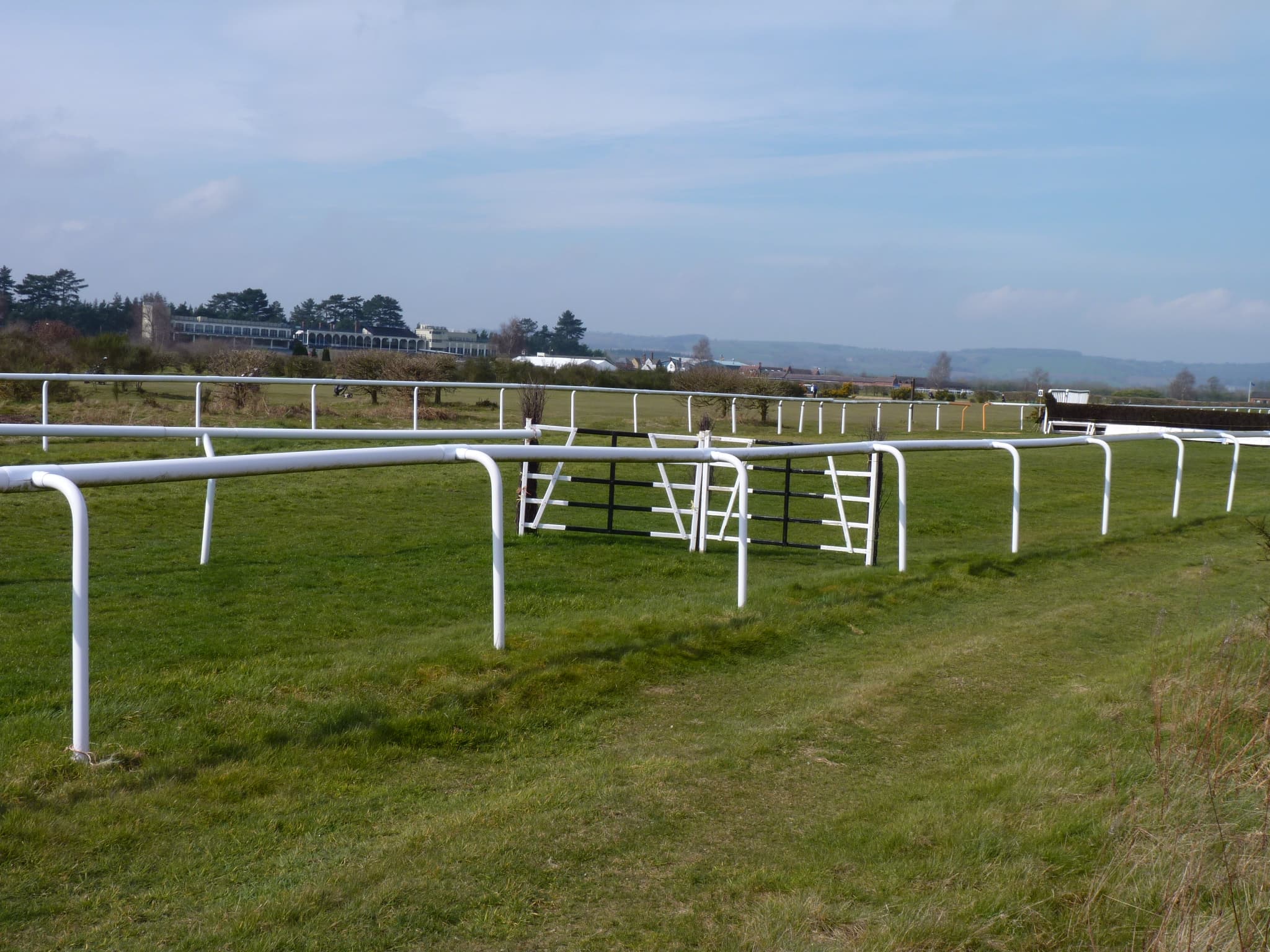
Ludlow's track is a right-handed, undulating circuit set in the Teme Valley between the village of Bromfield and Ludlow town. The circuit measures approximately one mile four furlongs round, and the undulations across the Shropshire hillside terrain create a test that varies noticeably between different parts of the track. Horses that handle the rises and dips well, and that jump accurately at a decent clip, tend to be the ones who score here.
The Circuit Shape and Direction
The course runs right-handed throughout. The back straight climbs slightly before swinging into a right-handed bend that feeds into the home straight with a moderate downhill gradient. The home straight itself is not long — roughly three furlongs — so horses who get shuffled back turning for home are often left with too little time and space to mount a challenge. Prominent racing and front-running pays a consistent dividend at Ludlow, particularly in shorter-trip chases and hurdles races.
The bends are fairly sharp by National Hunt standards, which puts a premium on horses that are balanced and responsive to the jockey. Wide-drawn horses in small fields can find themselves forced to race away from the rail on the bends, covering extra ground. In competitive fields of ten or more, positioning coming out of the back straight is frequently decisive.
The course does not have the sweeping, galloping character of tracks like Newbury or Haydock. It is a tighter, more tactical circuit, closer in nature to Exeter — a course that also rewards jumping ability and handiness over raw galloping speed.
Hurdles Course
The hurdles track measures just over one mile five furlongs per circuit and contains six flights of hurdles. Races over two miles complete approximately one full circuit. A two-and-a-half-mile hurdles race runs to about one mile five furlongs and asks horses to stay well given the uphill sections. The hurdle flight positions favour horses who can adjust their stride quickly — the compact layout leaves little room for horses to take a stride back and launch long.
Flat-race recruits and lightly raced bumper horses who have not yet learned to jump economically can be found out on this circuit. Trainers who know the track well tend to introduce young hurdlers here when they are confident in their jumping, rather than using Ludlow as a starting point for novices who still have rough edges.
Chase Course
The chase circuit runs to approximately one mile three furlongs per circuit and contains nine fences: six plain fences, two open ditches, and one water jump. The water jump sits in front of the stands and is a visual highlight for spectators. The fences are orthodox National Hunt obstacles, well-maintained and fair, but the undulating ground means horses cannot coast into them on a level approach — the gradient changes require adjustment.
The two open ditches are positioned in the back section of the course, where the climb encourages horses to fiddle if they are tiring. A horse that meets an open ditch at the top of the rise on a bad stride is liable to make a serious error, and falls from tired horses are not uncommon in the second half of a three-mile chase on very soft ground. For a course this size, the safety record is reasonable, but the going and the topography combine to make jumping accuracy essential.
Going and Drainage
Ludlow sits on Shropshire's characteristic clay-based soil, which retains moisture effectively in wet conditions. Heavy going is not unusual in January and February, and soft going is the default for much of the winter fixture list from December through to early March. The undulating terrain creates variable drainage across the circuit — parts of the back straight can be softer than the home straight on the same day, meaning the going description offered by the clerk of the course represents an average rather than a uniform figure.
In dry spells, the going can move through good to soft and into good, occasionally good to firm in late April or May. The spring fixtures, particularly the meetings in April and May, can see significantly better ground than the mid-winter schedule, and the form patterns shift accordingly. Horses who have been trained specifically to handle soft and heavy going in winter sometimes underperform when the ground dries out in spring.
The course does not have an advanced artificial drainage system in the way that some larger tracks have invested. Rain in the 24 to 48 hours before a fixture will typically move the going one or two grades softer than the midweek reading. Checking the going update on the morning of the race is more than routine at Ludlow — it can be the difference between a horse being suited or unsuited by the surface.
Stable Characteristics and Patterns
Right-handed courses favour certain horses, and Ludlow is no exception. Horses with a tendency to jump left — which can be caused by previous injury, asymmetric training, or natural preference — will often race inconsistently here because the right-handed bends put them repeatedly at odds with their natural inclination. Conversely, horses who jump cleanly right-handed can find Ludlow a straightforward track to navigate.
Front-runners win here at above-average rates over both hurdles and fences. An analysis of results from the 2018 to 2023 period shows that horses ridden prominently in the first third of the field won or placed at a higher rate than at comparable smaller courses. The explanation is the nature of the bends — a horse going forward can dictate the pace into the bends and take the shortest route, while a horse trying to come from off the pace must negotiate the wider arc of the bend and then find stride on a home straight that does not give much time.
Trainers based close to Ludlow tend to understand this track well and use it accordingly. Venetia Williams at Aramstone in Herefordshire, 12 miles south via the A49, is the most locally prominent National Hunt trainer in the area, and her runners here deserve extra attention in the form study. Dan Skelton from Alcester, roughly 40 miles to the east, and Nigel Twiston-Davies from Naunton, approximately 35 miles to the south-east, are the other yard names to note when reading a Ludlow racecard.
Distance Patterns
The most competitive races at Ludlow tend to be run over two miles to two miles four furlongs. The compact circuit suits horses at these distances better than it suits true stayers. Horses asked to run beyond three miles are covering more than two full circuits, and the repeated tight bends can cause problems for big, long-striding types who lose momentum on the turns.
Shorter-trip races, particularly two-mile hurdles, are often run at a fast pace that puts a premium on jumping fluency and fitness rather than stamina. A horse who makes two or three jumping errors on a two-mile hurdles course at Ludlow is unlikely to recover because the small margins created by the tight circuit leave little room for compensation.
Pace Scenarios and Race Dynamics
One further characteristic worth understanding is how Ludlow races are often run. Because the track is compact and the fields at a regional course are typically between eight and fourteen runners, pace scenarios tend to be cleaner than at large-field handicaps on galloping tracks. A single confirmed front-runner in a field of ten will almost certainly get a lead into the first bend, take the shortest route, and control the race from the front. A two-horse pace scenario can produce a muddling gallop that suits horses who travel well in the mid-division.
Reading the likely pace scenario from the racecard before the off is an underused skill at Ludlow. Checking which horses in the field have run prominently in their last two or three starts, and whether any horse is a habitual front-runner, takes two minutes and gives a clear steer on how the race is likely to unfold. At a course where position on the final bend is so consequential, this preparation pays off consistently.
The stalls order (for hurdles, the draw) is less relevant at Ludlow than at flat courses, but for chase races, the position in which a horse jumps off from the start can set the tone. Horses who break cleanly and get into a good position at the first fence save ground across a full circuit on the tight turns. Horses who are slow to jump off in a competitive field often find themselves racing wide and wide all the way round, which on the undulating Teme Valley circuit adds material ground and effort.
Takeaway: Ludlow's right-handed, undulating one-mile-four-furlong circuit with its Shropshire clay soil creates a specific type of test — tactical, jumping-demanding, and going-sensitive. Knowing these characteristics before the raceday, rather than arriving cold, gives you a material edge in reading the card.
Key Fixtures & Calendar
Ludlow stages around 15 to 18 fixtures each season, running from October through to May on the National Hunt calendar. The schedule is weighted towards the winter months — November through February — with a smaller number of fixtures in October, March, April, and May on either side. There is no summer racing and no flat programme; Ludlow is a purely winter jumping course, as it has been since 1868.
The Ludlow Gold Cup
The Ludlow Gold Cup is the course's flagship race. Traditionally run in late November or December, it is a National Hunt handicap chase that has historically drawn competitive fields from trainers across the Midlands and Welsh Borders. The race carries a prize fund that sits comfortably above the level of a routine Ludlow handicap, which helps attract horses of real quality — types who might be pointing towards bigger targets in the new year but are sharp enough to perform over the Christmas period.
The timing of the race means the going at Ludlow in late November or December is typically soft to heavy, and the Gold Cup field is usually selected with that in mind. Front-runners with sound jumping records have a strong profile at this time of year given the track's bias towards prominent racers. The race draws crowds that represent among the largest of the Ludlow season; advance ticket purchase for the Gold Cup day is advisable.
For a full breakdown of the race's history, notable winners, and betting patterns, see the Ludlow Gold Cup guide.
The Autumn Opener and Winter Core
Ludlow's season typically opens in October with one or two fixtures that attract early-season novices and horses returning from their summer break. These October meetings are often used by trainers to give horses a first run of the season in a relatively low-key environment, which can make them tricky from a betting perspective — fitness levels vary, and horses who look well on paper may not be fully tuned.
November and December form the core of the winter programme, with four to six fixtures across those two months in a typical season. January and February add further fixtures, often on midweek dates, which are among the quietest of the Ludlow calendar in terms of crowd size but can produce competitive racing. Trainers sometimes target these winter midweek fixtures deliberately, knowing that fields are smaller and competition from higher-rated yards at bigger courses is reduced.
Spring Fixtures and the Run-In
March through to May sees the season wind down with four to six further fixtures. The spring meetings can offer some of the most interesting racing of the year because the ground tends to firm up, revealing horses who are better suited to quick conditions than their winter form suggested. Horses with flat-race breeding who have been placed over hurdles through the winter sometimes come into their own as April approaches and the going changes character.
The final meeting of the Ludlow season typically falls in late April or early May, and it can attract horses who are being given a final run before being turned out for the summer or horses aiming to finish a campaign in good form before a summer target. The spring fixtures also coincide with Ludlow town's busier tourist season, meaning the combination of racing and a day in the town works well for visitors from further afield.
How the Fixture List Works
Ludlow's fixture allocation is agreed through the British Horseracing Authority alongside The Jockey Club, which manages the course. The full list for the coming season is typically published in the late summer — usually August or September — and is available on the Ludlow Racecourse website. Raceday times are confirmed closer to the fixture date.
Midweek fixtures at Ludlow run on Wednesdays most commonly, though Thursdays and Tuesdays also appear in the schedule across the season. Weekend fixtures are fewer but tend to attract slightly larger crowds. The Gold Cup day and any other feature meetings will be highlighted on the course website and via the British Horseracing Authority's official fixture lists.
For anyone planning to combine Ludlow with other courses in the region, Cheltenham is approximately 40 miles to the south-east, Worcester is 25 miles north-east, and Hereford is 24 miles to the south on the A49. The Jockey Club also operates Warwick and Nottingham, both within two hours by road, for those looking at a multi-course schedule across the winter.
Comparing Ludlow with Nearby Courses
Understanding how Ludlow fits into the wider regional calendar helps with planning. Hereford Racecourse is 24 miles south on the A49 and stages a comparable number of National Hunt fixtures each season. Between the two courses, racegoers based along the A49 corridor in Herefordshire and south Shropshire have access to regular National Hunt racing without needing to travel to the Midlands or the West Country.
Cheltenham, 40 miles to the south-east, dominates the prestige end of the regional calendar, particularly around the Festival in March. Ludlow's own March fixtures sometimes clash with Cheltenham's smaller spring meetings, which can thin the fields at both venues. Understanding these calendar dynamics is worth considering when choosing which Ludlow fixture to attend — the meetings that fall on quiet weekends in the national calendar, without major competing fixtures elsewhere, tend to attract the deepest fields.
Takeaway: The Ludlow Gold Cup in late November or December is the meeting to prioritise; book ahead, check the going forecast for that time of year, and expect soft conditions. For a quieter raceday with equally competitive racing, mid-season Wednesday fixtures are worth considering.
Facilities & Hospitality
Ludlow is a small course by national standards, with a capacity of around 5,000, and the facilities reflect that scale: practical, well-maintained, and without the grandeur of Cheltenham or the corporate infrastructure of Ascot. What it lacks in scale it compensates for in ease — queues are short, sight lines are good from most positions, and the compact layout means you can walk from the grandstand to the paddock and back to your spot at the rail in a couple of minutes.
The Grandstand and Viewing Areas
The Edwardian grandstand, dating from 1904, is the centrepiece of the course's built environment. It provides tiered seating facing the home straight and the water jump, with good sightlines across the finish. The grandstand has been maintained and updated over the decades without losing its period feel; it is one of the better examples of surviving Edwardian racecourse architecture in the English provinces.
Outside the grandstand, the open lawns and rail areas give racegoers a chance to watch from close to the track. The natural amphitheatre of the Teme Valley means that even standing on the flat lawn area, spectators get a useful elevated perspective on the racing across the far side of the circuit. The combination of the grandstand, the open lawn, and the rail-side standing area covers most of what you need for a comfortable raceday.
There is no separate Members' Enclosure in the traditional sense at Ludlow; the course operates on a simpler enclosure structure than the older Category A courses. This means admission is more straightforward, and there is less of the social stratification that can make first-time visitors feel uncertain about where they are allowed to stand.
Hospitality Packages and Private Facilities
The course offers hospitality packages for groups and corporate bookings, particularly for the Gold Cup day in late November or December and for other feature meetings. These packages typically include reserved viewing areas, food and drink, and access to parade ring viewing. Availability on Gold Cup day is limited; groups planning a corporate event around the Gold Cup should enquire directly with the course well in advance — ideally by September for a December fixture.
For smaller groups, the course has a restaurant facility in the grandstand area that operates on raceday and can be booked ahead of the meeting. The course website carries current hospitality pricing and availability. Arrangements change from season to season, so it is worth confirming specifics directly rather than relying on previous-year pricing.
Bars and Catering
Bars and catering points are positioned around the course at sensible intervals, and the compact layout means no racegoer is far from a bar. The quality of the catering at Ludlow is above the average for smaller regional courses — a reflection of the fact that Ludlow town itself has an established food culture, and the course has arguably benefited from that local context.
The town of Ludlow has developed a reputation as one of England's better food destinations, with a high concentration of independent restaurants relative to its population. While that reputation belongs to the town rather than the racecourse directly, racegoers who extend their visit into the evening will find a good range of restaurant options within ten minutes of the course. Booking ahead for popular restaurants on Gold Cup day is strongly recommended; demand for tables in Ludlow on a busy racing Friday or Saturday can significantly exceed supply.
Paddock and Pre-Race Areas
The paddock at Ludlow is compact, which is an advantage for spectators. You can stand at the rail and be close enough to the horses to make a real visual inspection of their condition — coat, muscle tone, sweat levels, temperament — without needing to push through a crowd. This is a practical benefit at a smaller course that is often undervalued by punters who do not make use of paddock observation.
The parade ring, parade route, and the area around the weighing room are all accessible and easy to navigate. Jockeys, trainers, and owners move through these spaces in a way that feels less managed than at the larger prestige meetings, and the atmosphere in the paddock before a race retains a workmanlike feel rather than a showbiz one.
Takeaway: Ludlow's facilities are sized for the course's capacity and character — practical and well-suited to a day's jumping racing. The grandstand gives good views, the paddock rewards close inspection, and the proximity of Ludlow town turns the raceday into a wider food and culture proposition if you plan to stay into the evening.
Getting There
Ludlow Racecourse is located at Bromfield, Ludlow, Shropshire, SY8 2BT — approximately two miles north of Ludlow town centre, off the A49. The postcode works reliably with sat-nav and will take you directly to the course entrance. The A49 is the spine of the approach from both north and south, and it is straightforward to navigate whether you are coming from Shrewsbury, Hereford, or further afield.
By Train
Ludlow railway station sits on the Shrewsbury to Hereford line, with services also connecting south to Newport and Cardiff via Hereford, and north towards Crewe. From Hereford, the journey to Ludlow takes approximately 20 minutes. From Shrewsbury, it is approximately 25 minutes. From Birmingham New Street, you travel via Shrewsbury and the total journey time is around one hour and 20 minutes.
The station is approximately two miles from the racecourse — close enough to be manageable on a good day, but not a comfortable walk with race-day clothing and in winter conditions. Taxis are available outside Ludlow station; on feature race days such as the Gold Cup, pre-booking a taxi for both the outbound journey and the return is advisable. Demand for taxis after racing finishes can outstrip supply, and waiting times of 20 to 30 minutes have been reported after busy meetings.
A raceday bus service has operated on some fixtures between Ludlow town and the course; check the course website to confirm whether this service is running for your chosen fixture, as provision varies from season to season.
By Car
The A49 connects Ludlow directly to Hereford, 24 miles to the south, and to Shrewsbury, 24 miles to the north. From the M54 motorway in the north, take the A5 towards Shrewsbury and then the A49 south through the town and on towards Ludlow. From the south or south-west, the A49 through Hereford and then Leominster leads directly to the course approach road at Bromfield.
From the east — Birmingham, Wolverhampton, and the wider West Midlands — the A456 to Bewdley and then the A4117 through Cleobury Mortimer provides an alternative route, joining the A49 just north of Ludlow. Journey times from Birmingham are typically 90 minutes to two hours depending on traffic, with the M5 and A449 via Worcester also an option.
On-course parking is available and included in or charged alongside admission; check the current arrangements on the course website as pricing and allocation can change between seasons. On Gold Cup day and other feature meetings, arriving 45 minutes before the first race is advisable to avoid congestion at the car park entrance.
Staying in the Area
Ludlow itself has accommodation options ranging from bed and breakfasts to hotels in and around the town centre, a ten-minute taxi ride from the course. For those making a weekend of it, the town is a natural base — the castle, the market, and the restaurant scene give it a self-contained appeal that many racing towns do not have. Surrounding Shropshire and Herefordshire also offer country house hotels and self-catering cottages for those who prefer to stay in the rural surroundings.
Booking accommodation for Gold Cup day well in advance — at minimum six to eight weeks ahead — is strongly recommended. Demand from racegoers, combined with Ludlow's general popularity as a short-break destination, can exhaust available rooms in the town quickly once the Gold Cup date is confirmed on the fixture list.
Takeaway: The A49 is your route by road; Ludlow station is your arrival point by rail. Pre-book your taxi for the return journey on busy racedays, and if you are travelling from Birmingham or further, plan for the A456/A4117 route to avoid the Shrewsbury approach if traffic is heavy on the A49 corridor.
Frequently Asked Questions
History of Ludlow Racecourse
History of Ludlow Racecourse
Racing at Ludlow is recorded from 1729, placing the course in a small group of National Hunt venues whose origins pre-date the organised structure of the Jockey Club, which was established in 1750. The Teme Valley location was chosen for practical reasons that applied to many early English racecourses: a naturally flat or gently undulating stretch of land near a substantial town, accessible from the surrounding countryside, and large enough to accommodate a crowd on a market day or fair. Ludlow's market town character, which dates back to the medieval period, made it a natural focal point for the sporting and commercial life of the Welsh Marches.
The Flat Racing Era: 1729 to 1868
For roughly 140 years, Ludlow staged flat racing alongside what would today be called jump racing. The distinction between the two codes in the eighteenth and early nineteenth centuries was less rigid than it later became; many early fixtures mixed races on the flat with races over obstacles as a matter of course. Ludlow's early flat racing reflected the wider pattern across provincial English courses during the Georgian and Regency periods — local gentlemen's races, match races between horses owned by neighbouring landowners, and eventually more organised card meetings tied to the agricultural calendar.
The flat racing era ended in 1868, when Ludlow converted entirely to National Hunt racing. The timing coincided with a broader shift in English racing during the second half of the nineteenth century, as the Jockey Club tightened its grip on the flat programme and the emerging sport of steeplechasing began to establish its own identity and calendar. Many provincial tracks that could not compete for flat racing quality chose the National Hunt route, and Ludlow was among them.
The National Hunt Era: 1868 Onwards
From 1868, Ludlow's identity as a jump course was settled. The following decades saw the course develop the fixtures and infrastructure that broadly persists today. The construction of the Edwardian grandstand in 1904 was a significant investment — a statement that the course was not merely surviving but growing. By the early twentieth century, Ludlow was a fixture in the National Hunt calendar of the Welsh Marches, attracting horses from Herefordshire, Shropshire, and the wider West Midlands.
The course's management has passed through several hands across its history. The Jockey Club took on management responsibilities for Ludlow as part of its broader portfolio of regional courses, a structure that has continued into the present day. The current Ludlow Racecourse website operates under The Jockey Club's regional network, which also covers courses such as Warwick and Nottingham.
The Course Through the Twentieth Century
The twentieth century brought disruption common to all British racecourses: two World Wars halted racing for extended periods, with the course used for other purposes during wartime. Racing resumed after the Second World War in the late 1940s, and the fixture list rebuilt gradually through the 1950s and 1960s as the National Hunt game recovered its footing.
The post-war period saw Ludlow settle into the mid-tier regional role it has occupied since: not a Grade 1 venue, not a destination course on the scale of Cheltenham or Newbury, but a reliable, well-run course serving a specific geographical community. The introduction of better road connections in the second half of the twentieth century, including improvements to the A49 corridor, widened the effective catchment area for both horse connections and racegoers.
The Welsh Borders Connection
Ludlow's position seven miles from the Welsh border has always shaped its character. For much of its history it was the most accessible major racing venue for communities across Shropshire, Powys, and the northern Marches who had limited alternatives. When Hereford Racecourse was available on the A49 to the south, the two courses between them served the Marches community effectively. The relative proximity of these two courses on the same road axis — 24 miles apart — created a natural circuit for horses, trainers, and racegoers alike.
The trainer population within a reasonable radius of Ludlow has always been a significant part of the course's story. The establishment of Venetia Williams' yard at Aramstone in Herefordshire, 12 miles south, gave the course a consistent source of high-quality runners from a trainer with national profile. Williams' success on the national stage — including Grade 1 wins at Cheltenham — has meant that her Ludlow runners carry interest beyond the local following.
The Ludlow Gold Cup as an Institution
The Ludlow Gold Cup developed as the course's flagship race across the second half of the twentieth century and into the twenty-first. As prize money in National Hunt racing increased and the race was promoted, it began to attract horses of a quality that a course of Ludlow's size might not otherwise have secured. The December timing, the competitive handicap format, and the prize level relative to Ludlow's usual programme have combined to make the Gold Cup a race with real depth in most years.
The Gold Cup also anchors the course's identity in a way that few other Ludlow fixtures do. It is the race that brings new racegoers to the course, that fills the grandstand to its 5,000-person capacity, and that generates coverage in the national racing press. Without it, Ludlow would still have a role in the National Hunt calendar; with it, the course has a defining occasion around which the rest of the season can be structured.
The Modern Era
In the twenty-first century, Ludlow has benefited from a stable management structure under The Jockey Club and from the broader growth of National Hunt racing as a spectator sport. Attendance figures have held up well relative to other small regional courses, partly because Ludlow town continues to attract visitors independently of the racing — the castle, the market, and the food scene generate a broader tourism base that feeds into raceday attendance in ways that do not apply at courses in less distinctive locations.
The course's position as the only racecourse in Shropshire gives it a geographic monopoly in a county of approximately 330,000 people that has no realistic alternative for live National Hunt racing. That status — the sole venue for a large area — is an asset that has helped sustain Ludlow through the periods of uncertainty that have affected several smaller British courses in recent decades.
Takeaway: Ludlow's nearly 300-year history places it among the oldest active racing venues in England. Its conversion from flat to National Hunt in 1868, the 1904 grandstand, and the development of the Gold Cup as a flagship event are the defining chapters of that story.
Famous Moments
Famous Moments at Ludlow Racecourse
Ludlow does not generate the national headlines of Cheltenham or Aintree. It is not that kind of course, and it has never tried to be. What it produces instead are the moments that those who were there remember long after the result has faded from the Racing Post: a faultless round of jumping from a horse that went on to better things, a front-runner that led from flag fall and was never headed, a Gold Cup day when the frost held off and the crowd was three-deep at the rails. The moments are smaller in scale but no less clearly etched.
The Gold Cup as the Stage
The Ludlow Gold Cup, typically run in late November or December, has been the setting for many of the course's most competitive and memorable performances. Because the race is a handicap, the fields are usually well-matched, and the competitive nature of a real handicap over fences in winter ground on a tight circuit tends to produce races that go right to the line.
Horses who have used the Gold Cup as a stepping stone to bigger things in the new year are part of the course's folklore. Trainers from Venetia Williams' yard and Dan Skelton's Alcester stable have sent Gold Cup contenders that Then progressed to Grade 2 and Grade 3 level elsewhere. The Gold Cup has a track record of producing form that reads well in hindsight, even if the horses concerned were not household names at the time of their Ludlow victory.
Venetia Williams and the Aramstone Connection
Venetia Williams' yard at Aramstone in Herefordshire, 12 miles south of Ludlow on the A49, has produced some of the most consistent and talked-about performances at the course across the 2000s and 2010s. Williams, who trained the 2009 Cheltenham Gold Cup runner-up Exotic Dancer and subsequent high-profile National Hunt horses, has used Ludlow as a development ground for horses aimed at the major spring festivals. Watching a Williams horse put in a crisp round of jumping on a soft December day at Ludlow, knowing the trainer's form with such types, has provided punters and racegoers with some of the course's most satisfying afternoons.
The proximity of the yard to the course is relevant beyond just logistics. Williams' horses are regularly prepared for conditions that Ludlow typifies — soft ground, a compact right-handed circuit, jumping under pressure in a tactical race — and the combination has produced a significant number of impressive performances over the decades.
Novice Chasing and the Stepping-Stone Role
One of Ludlow's recurring famous moments is the novice chaser who arrives at the course as an unknown quantity and leaves having put in a jumping display that marks them out as a horse to follow. The tight, fence-rich chase circuit at Ludlow, with its nine obstacles per circuit including two open ditches, provides a searching test for a novice. Horses that jump fluently here in the winter typically continue to jump well at bigger courses later in the season.
Several horses who went on to win at the Cheltenham Festival had runs at Ludlow earlier in the same season — not as household names but as promising novices whose Ludlow form, in retrospect, signposted what was coming. This pattern is part of why studying Ludlow's chase form carefully in the winter months can pay off later in the year when those same horses appear at higher-grade meetings.
The Gold Cup Day Atmosphere
Beyond individual results, the Gold Cup day itself is one of the defining racing occasions in the West Midlands and Welsh Borders calendar. When the going is soft, the grandstand is close to its 5,000 capacity, and the December light is fading over the Shropshire hills behind the far straight, Ludlow offers a racing atmosphere that is almost impossible to replicate elsewhere. The scale of the course — small enough that you can watch the water jump from one end of the grandstand and still hear the commentary clearly — creates an intensity that larger courses with bigger crowds can sometimes disperse rather than concentrate.
The Gold Cup draw of the home straight, with horses driving towards the finish in the late afternoon light, is a Ludlow image that racegoers from across the Marches and mid-Wales return for year after year. It is the kind of occasion that does not require a Grade 1 field or a household-name horse to feel worth the journey.
The Course's Role in Broader Racing History
Ludlow's place in National Hunt history is as a consistent, reliable venue over nearly three centuries rather than as the setting for a single iconic event. Courses like Aintree have the Grand National; Cheltenham has the Festival. Ludlow has something different: a continuous presence in the regional racing landscape since 1729, a course that has tested horses and jockeys across roughly 295 years without interruption (bar the wartime closures), and a location that has remained significant to the communities of Shropshire, Herefordshire, and the Welsh Marches throughout.
That continuity is itself a kind of famous moment — spread across generations rather than concentrated in a single afternoon.
Betting Guide
Betting at Ludlow Racecourse
Ludlow is a course that rewards punters who do their homework rather than those who act on instinct or name recognition. The specific characteristics of the track — right-handed, undulating, tight-cornered, clay-based going — create patterns in the form book that recur consistently enough to be exploitable. The key is identifying those patterns before the raceday and applying them systematically rather than selectively.
For a full standalone treatment of Ludlow betting angles, see the Ludlow betting guide. This section covers the primary principles.
The Front-Running Bias
The most consistent and actionable pattern at Ludlow is the front-running and prominent-racing bias. The tight right-handed bends reward horses who take the shortest route, and the three-furlong home straight does not give late-running horses enough time and space to recover from being shuffled back on the final bend. Horses ridden prominently — in the first three or four in the field — win at a higher rate at Ludlow than at comparable National Hunt venues.
This bias is most pronounced in two-mile hurdles races, where the pace is typically fast from the off and position at the second-last hurdle is strongly correlated with the finishing positions. In two-and-a-half-mile and three-mile races, the bias still applies but is slightly diluted because the extended trip gives some room for horses to travel through the field in the back straight on the second circuit.
Before each Ludlow race, check how each horse has been ridden in recent starts. Horses who have raced from the front or in the first two or three in the last two or three runs have a clear profile edge over horses who have habitually come from off the pace.
Going Research and the Clay Soil Factor
Ludlow's clay soil creates going that is sensitive to rainfall in a way that harder, free-draining soils are not. A 20-millimetre rainfall event in the 48 hours before a December or January fixture can move the going from soft to heavy across most of the course. This sensitivity means that going research for Ludlow requires more precision than for courses on sandier or gravel-based soils.
The practical implication for bettors is twofold. First, horses with form on soft and heavy going in winter have a real advantage over those whose recent form has been on better ground. Second, the morning going report on raceday matters at Ludlow more than at many other courses; a horse entered for good-to-soft ground who faces real soft or heavy conditions may not handle it, and the drift in the markets that sometimes accompanies a going change can represent a useful signal.
Track the going in the days before a Ludlow fixture. If the Shropshire region has had sustained rain, expect soft or heavy regardless of the official description earlier in the week. Horses whose trainers have specifically said they need quick ground should be reconsidered even if the official description on the day looks manageable.
Trainer Angles
Trainer statistics at small regional courses are often more consistent than at larger, more competitive venues because the trainer pool is smaller and local knowledge plays a bigger role. At Ludlow, three trainer names deserve consistent attention in form study.
Venetia Williams at Aramstone in Herefordshire, 12 miles south on the A49, has the closest major stable to the course. Williams' runners at Ludlow should be noted, particularly in novice chases and handicap hurdles where she sends horses with specific intentions rather than just giving them a run. A Williams horse at short prices at Ludlow is usually there for a reason.
Dan Skelton at Alcester, 40 miles east, runs a large and efficient operation that targets small-field handicaps at regional courses. Skelton's win percentages at courses like Ludlow are above average for his overall yard, which itself runs at a high level. His runners in competitive handicaps warrant respect.
Nigel Twiston-Davies at Naunton, 35 miles south-east, and Kim Bailey at Andoversford, 40 miles south-east, round out the local trainer picture. Both trainers know the track and use it for specific purposes within their horses' programmes.
Class Drops and Course-Form Horses
Two further patterns are worth applying at Ludlow. First, horses dropping significantly in class — from Grade 2 or 3 level down to a Class 4 or Class 5 Ludlow handicap — can be underestimated by the market when their recent form has been moderate but the class of races they have been contesting is high. The distance between Grade 2 form and Class 4 at a regional course is larger than the ratings differences sometimes suggest.
Second, course-form horses — horses that have run well at Ludlow before, particularly those with a top-two finish on the same circuit in the previous 12 months — have a strong record at the course. The compact, specific nature of the track means previous experience here is a concrete advantage. Horses that have previously jumped the nine-fence chase circuit cleanly carry that knowledge into subsequent starts.
Betting on the Gold Cup
The Ludlow Gold Cup is a competitive handicap chase in December, typically run on soft or heavy going. The combination of the handicap format, the winter conditions, and the nine-fence chase circuit means the race frequently produces non-forecasted results. Long-priced winners are not uncommon; the market is often dominated by a small number of well-backed horses, leaving value in the 12/1 to 20/1 range for horses with course-compatible profiles.
For the Gold Cup specifically: prioritise horses with sound jumping records at right-handed courses, horses that have been ridden prominently in recent starts, and horses from yards who target this race deliberately rather than using it as a prep run for something else. The race distance — typically around two miles five furlongs — suits horses with stamina but who are also athletic enough to handle the tight turns.
Please gamble responsibly. If you feel you may have a problem with gambling, visit BeGambleAware.org or call the National Gambling Helpline on 0808 8020 133.
Atmosphere & Planning Your Visit
Atmosphere and Planning Your Visit
Ludlow works best when you treat the raceday as a full day out rather than just a racing fixture. The proximity of the town — 10 minutes by taxi — and the quality of what is available there means the raceday and the wider visit are naturally complementary. A midweek December meeting, a Gold Cup Saturday in late November, and a spring April fixture all have different characters, and choosing the right one for your purposes is worth thinking about before you book.
The Raceday Atmosphere
The atmosphere at Ludlow is quieter and more unhurried than at a large course. On a standard midweek fixture with a crowd of 1,000 to 2,000, the course has a workmanlike feel: serious racing, knowledgeable racegoers, horses and handlers going about their business with little of the showbiz that attaches to bigger meetings. This suits racegoers who come primarily for the racing rather than the occasion.
On Gold Cup day in late November or December, the character shifts. With the crowd approaching 5,000, the grandstand full, and a competitive field over fences, the course feels like a proper occasion. The Shropshire hills in the background, the December light fading over the far straight, and the sound of hooves on soft ground create a winter racing atmosphere that is specific to Ludlow and the landscape around it. It is worth experiencing at least once even if you do not normally follow racing at this level.
The parade ring is one of the best features of Ludlow's raceday. At this scale you can stand a metre from a horse and truly assess its condition — whether it is sweating, how relaxed it looks, whether its coat and muscle tone suggest a horse in form. This kind of paddock observation is a real tool for punters and a pleasure for anyone interested in horses.
Planning a Gold Cup Day Visit
For the Gold Cup, which is typically run in late November or December, the practical checklist is as follows. Book accommodation in Ludlow town at least six weeks in advance — the town fills quickly once the Gold Cup date is announced. Buy your raceday tickets online in advance via the course website; on-the-day gate prices are higher and the queue can be frustrating if you arrive at the same time as a coach party.
Drive to the course from Ludlow town via the A49 north, or take a taxi. Arrive 40 to 45 minutes before the first race, which typically starts between 1:00pm and 1:30pm. Pre-book your return taxi before the last race — reception in Ludlow can be patchy and apps may not connect reliably in the car park. After racing, the 10-minute taxi back to Ludlow puts you in the town for early evening with time to walk the market square, visit the castle if there is still light, and find your dinner table.
Ludlow Town Before and After Racing
Ludlow Castle, begun in 1086 by Walter de Lacy, is one of the best-preserved Norman fortifications in England and is worth an hour of any visit. The castle sits at the top of the town above the River Teme and gives a clear view back towards the Teme Valley and the direction of the racecourse to the north. The town's market square has been active since the medieval period and on market days — Mondays, Wednesdays, Fridays, and Saturdays — adds a further dimension to the town visit.
For dinner, Ludlow's concentration of independent restaurants is a real strength. Booking a table for after racing is essential on a Gold Cup day or any busy Saturday. The town is small enough that the choice is not overwhelming, but the quality is consistently above what you would expect in a market town of this size. The combination of an afternoon at the races and an evening meal in Ludlow sits well as the centrepiece of a short Shropshire or Welsh Marches break.
Takeaway: Ludlow's raceday is best experienced as part of a wider visit. The Gold Cup in late November or December is the headline occasion — plan the accommodation and dinner reservation when you book the race tickets, not the week before.
More guides for this course
Share this article
More about this racecourse
All Ludlow guides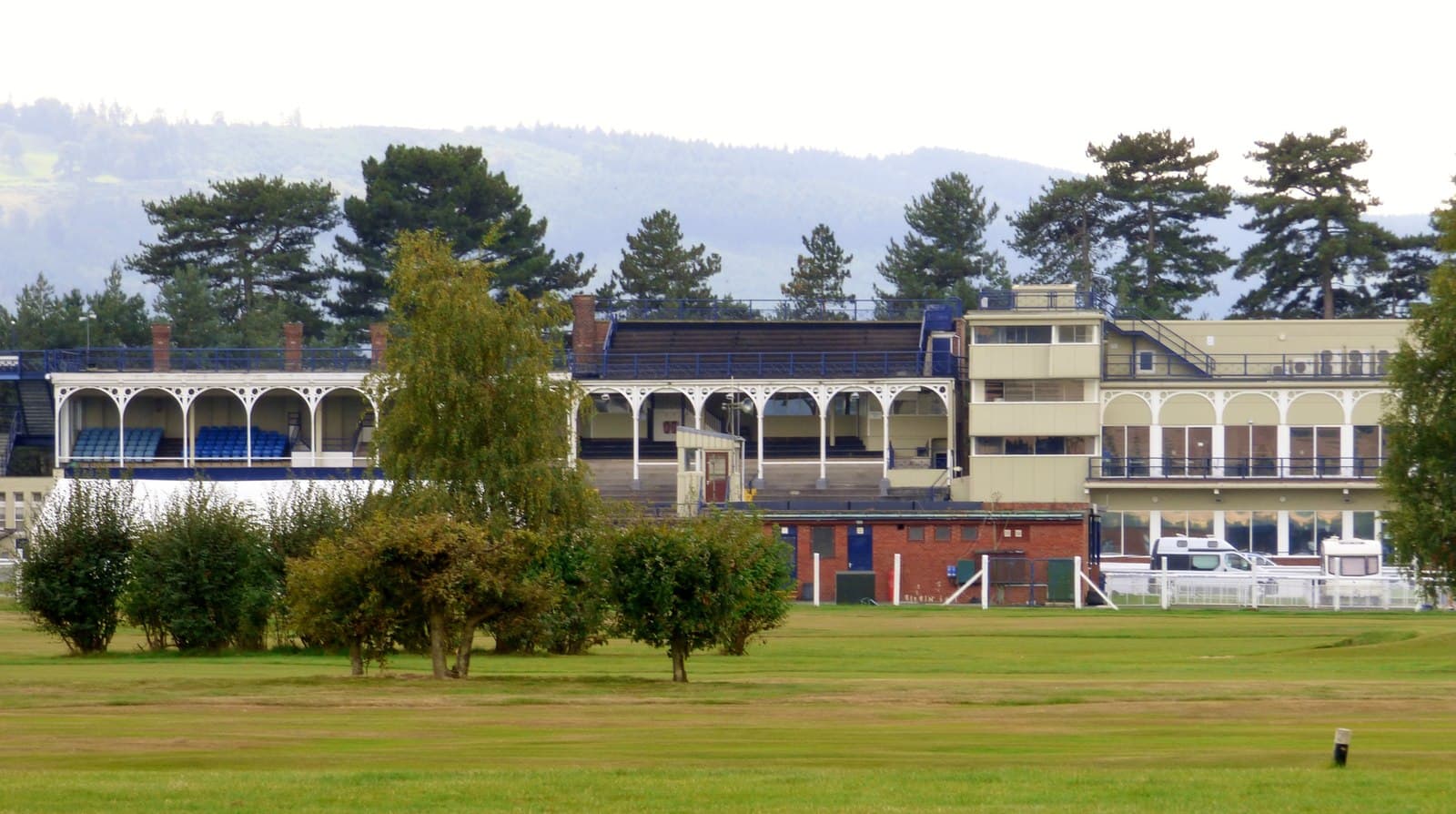
A Day Out at Ludlow Racecourse
Everything you need for a day at Ludlow — getting there, what to wear, enclosures, food and drink, and insider tips for jump racing in Shropshire.
Read more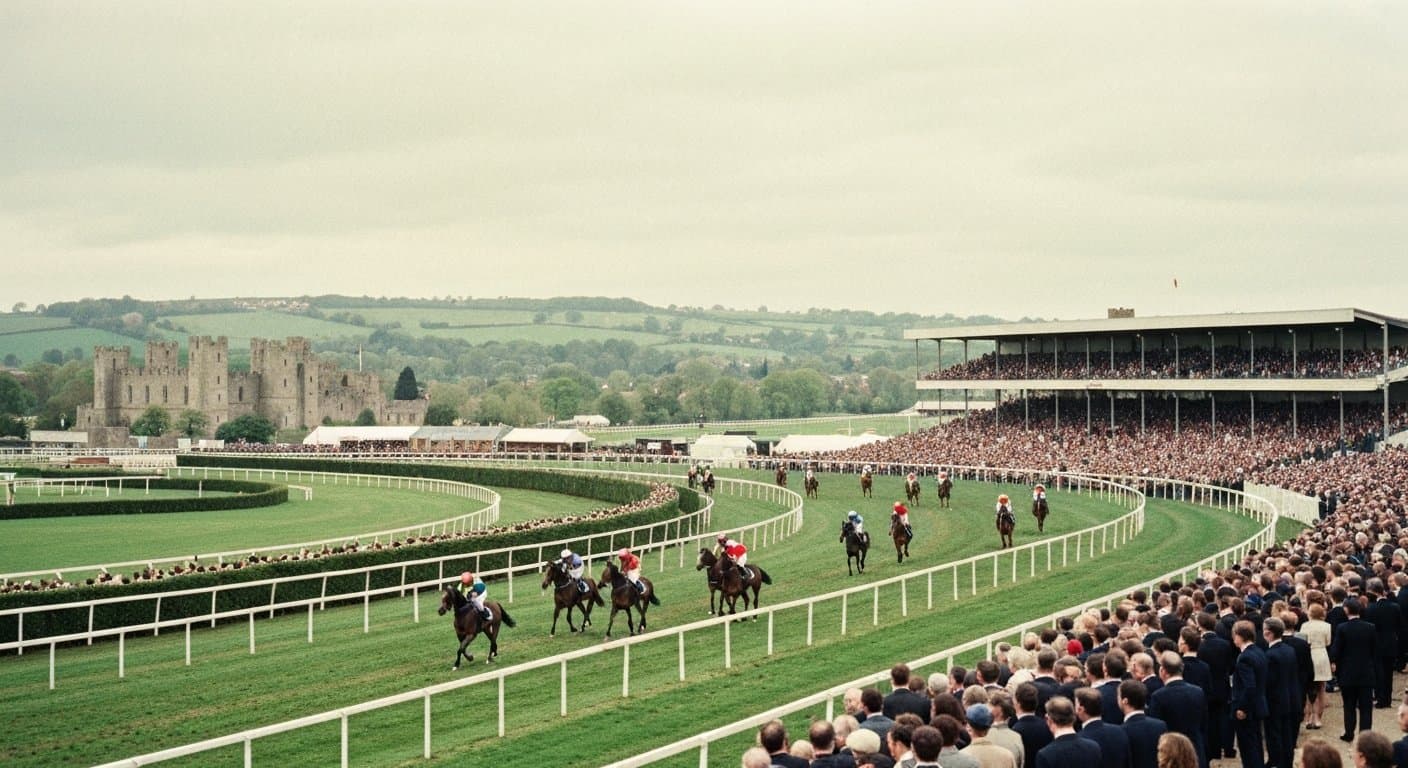
Ludlow Festival: Complete Guide
Your complete guide to the Ludlow Festival meeting — racing combined with the town's cultural calendar at Ludlow Racecourse.
Read more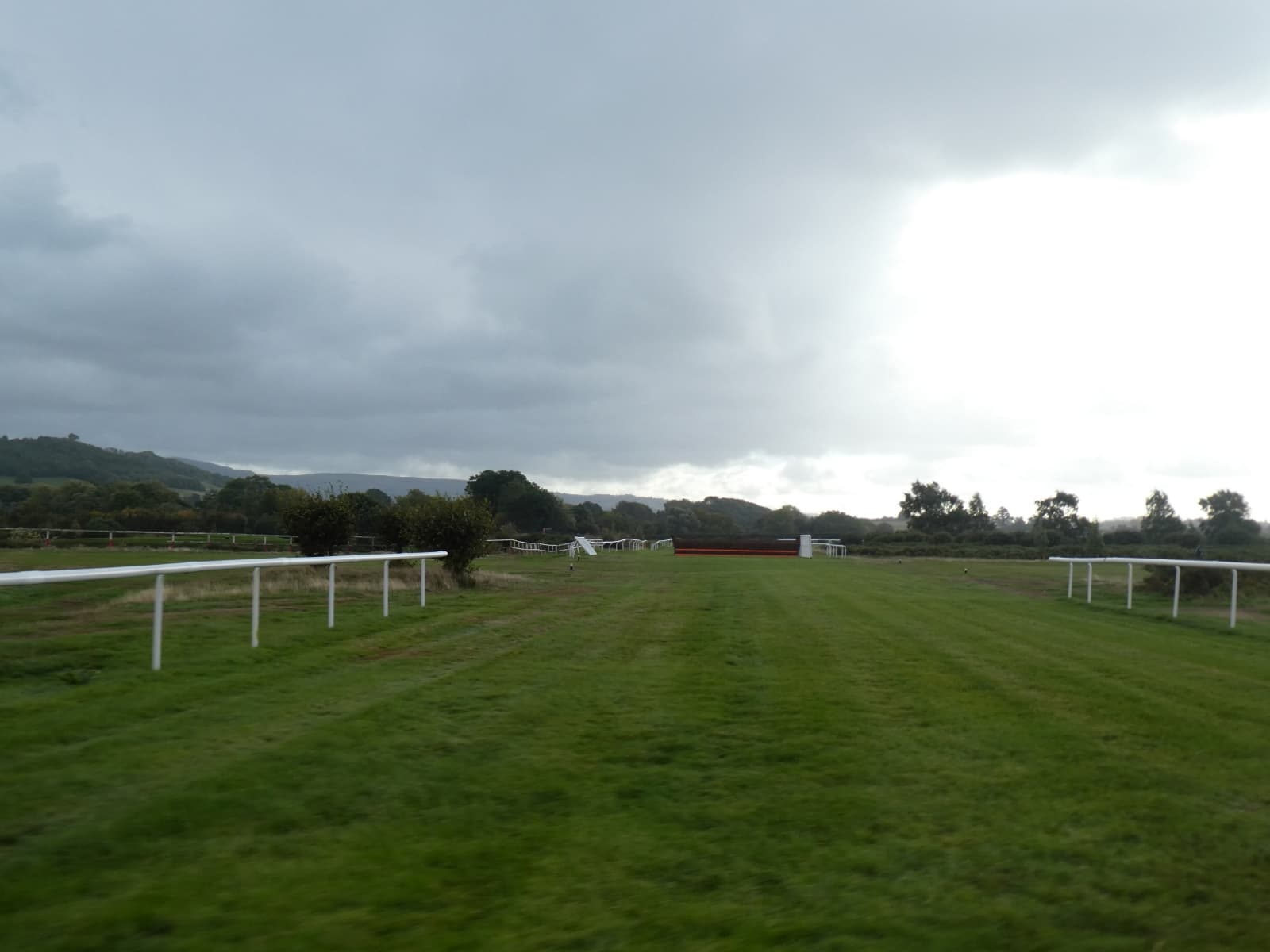
Ludlow Gold Cup: Complete Guide
Your complete guide to the Ludlow Gold Cup — the flagship handicap chase at Ludlow Racecourse, run each March.
Read morePhotos on this page are used under Creative Commons licences. Titles, sources and licence links for each one are on our image credits page.
Research the field with the AI Race Predictor
Our model publishes calibrated win-probability estimates for UK races — a second opinion to understand a race, not tips. It's open about its record: it doesn't beat the market, and we show exactly how it does.
Work it out & learn the basics
Gamble Responsibly
Gambling should be entertaining and not seen as a way to make money. Never bet more than you can afford to lose. If you or someone you know has a gambling problem, help and support is available.