
Founder & Editor · Last reviewed 2026-04-05
Introduction
Stand on the far side of the track at Bromfield on a clear October afternoon and you can see Ludlow Castle on the ridge two miles to the south. The towers are a thousand years old and the view costs nothing. It is one of the most distinctive approaches to any racecourse in England: a medieval fortress framing a National Hunt afternoon in the Shropshire Hills, the River Teme threading through the valley below. That combination of history and landscape is not incidental to Ludlow Racecourse. It is the whole point.
Racing was first recorded here in 1729, which places Ludlow among the oldest National Hunt venues in England. Nearly three centuries of continuous use give the course a settled, unhurried confidence that is increasingly hard to find. While the sport has been reshaped by consolidation, with Jockey Club Racecourses now owning seventeen courses and Arena Racing Company another twenty-one, Ludlow has remained under the control of the Ludlow Race Club, an independent, member-owned organisation that traces its origins to those Georgian meetings on the Bromfield flood plain. Member-owned racing clubs at this level are rare. Chester and Epsom are run as limited companies; Newmarket answers to the Jockey Club's central machinery. Ludlow answers to its members, which gives the place a different character entirely.
The course sits at Bromfield, a small village just off the A49 at the northern edge of Ludlow's orbit, roughly two miles from the town centre. Bromfield has its own claim on history: a Benedictine priory was founded there around 1135, and the priory gatehouse still stands beside the road. The flat ground beside the River Teme made Bromfield the natural site for racing, firm enough to ride on, open enough for a circuit, and close enough to Ludlow town for the spectators to arrive without difficulty. The geography has not changed.
What has changed is the racing itself. Ludlow began as a flat racing venue; hurdles arrived in the mid-19th century, steeplechasing followed, and by 1868 the flat programme had been abandoned entirely. The course has been National Hunt only ever since. Its right-handed circuit of approximately one mile and four furlongs runs across undulating ground, dropping sharply towards the final bend before the run-in. That downhill section requires horses to balance quickly and jockeys to place their mounts carefully. On a heavy-ground day in February, when a tired horse meets the slope at the wrong angle, the margin between a clean round and a fall is narrow.
The Shropshire Hills Area of Outstanding Natural Beauty surrounds the course. Brown Clee Hill, at 1,772 feet the highest point in Shropshire, is visible to the north-east on a clear day. The Welsh border is twelve miles to the west; Offa's Dyke, the 8th-century earthwork that marked the limit of Mercia, runs through the hills beyond. Ludlow has always been border country, and that sense of being at the edge of things — between England and Wales, between the urban Midlands and the rural west — gives the town and its racecourse a particular quality.
Ludlow stages approximately 15 to 17 race days each season, running from mid-October through to May. The Ludlow Gold Cup in April is the flagship race, a National Hunt chase that draws the best chasers the course can attract at that point in the season. Beyond the Gold Cup, the programme is built around competitive handicap hurdles and chases across a range from two miles to three miles and further. Prize money is at the lower end of the National Hunt scale, which means the fields are generally made up of horses that need to run rather than horses being handled with big spring targets in mind. That honest, working character suits the course.
This article traces the full story of the racecourse: from the Marcher gentry who established it in the Georgian era, through the Victorian transition to jump racing, to the modern member-owned organisation that keeps it running today. For the course as it operates now, see the complete guide to Ludlow Racecourse. For the Gold Cup specifically, the Ludlow Gold Cup guide covers the race in detail.
Origins
The first documented race meeting at Ludlow took place on 27 August 1729. The record is sparse: a notice in the local press, an account of the prize money, the names of a handful of horses. But the date is firm. Racing was already an established pastime in provincial England by that point, and the Marcher gentry who gathered at Bromfield that summer would have recognised it as the natural extension of an older culture: horse breeding, hunting, and the ritual of public competition that gave each county's racing scene its social shape.
To understand why racing began at Ludlow in 1729, it helps to understand what Ludlow was in 1729. The town had been one of the most important administrative centres in England for much of the previous two centuries. From the late 13th century, Ludlow Castle was the seat of the Council of Wales and the Marches, the body that governed Wales and the four English border counties on behalf of the Crown. The Council sat at Ludlow from the 1470s through to its final abolition in 1689, a period of more than two hundred years during which the town functioned as something close to a regional capital. Lawyers, officials, merchants, and their households made Ludlow prosperous. The street plan, laid out around 1150 in a deliberate grid by the de Lacy lords who held the castle, was built to accommodate a trading town, and by the 14th century the wool trade was generating the wealth that paid for the Church of St Laurence, one of the largest parish churches in England, and still the dominant building on Ludlow's skyline.
The castle itself had been begun around 1075 by Roger de Montgomery, one of William the Conqueror's most powerful lieutenants, as a stone fortification controlling the Teme crossing and the road north into Shropshire. The Mortimer family inherited it in the 13th century and made it one of the most formidable baronial strongholds in the Welsh Marches. Edward IV used it as a base for his campaigns; his son Edward, later Edward V, lived here as Prince of Wales. Arthur, Prince of Wales, the elder son of Henry VII and the original heir to the Tudor throne, came to Ludlow Castle in the winter of 1501 after his marriage to Catherine of Aragon. He died there in April 1502, aged fifteen, most likely of a sweating sickness, and the course of English history turned. Henry, Arthur's younger brother, became heir, eventually becoming Henry VIII, and the story of the Reformation followed from that death in a Shropshire castle.
By 1729, the Council of Wales had been gone for forty years and Ludlow was adjusting to a quieter life. The lawyers and officials had largely departed; the market and the wool trade kept the town functioning, but the political importance was history. What remained was a prosperous, well-connected community of landowners, farmers, and merchants across the surrounding Marches, and that community needed its social occasions. Racing provided one. The Shropshire and Herefordshire gentry were active in horse breeding, since the Marches had long been horse country, and the hunting culture of the area sustained a steady interest in the qualities that distinguished one animal from another. A race meeting at Bromfield, with prize money drawn from local subscriptions, fitted naturally into the social calendar.
The site at Bromfield was chosen for practical reasons. The village lies on the flat ground of the Teme flood plain, where the river broadens slightly before curving south towards Ludlow. The land is level enough to ride on at speed, unlike the hillier ground that surrounds the town on most sides. A Benedictine priory had been founded at Bromfield around 1135, dissolved by Henry VIII in 1537, and the priory buildings and their land had passed into secular hands. By the 18th century the ground was farm and common land, available for periodic use as a racecourse. The proximity of the A49 road, the main route between Shrewsbury and Hereford, made it accessible to visitors from both directions. Shrewsbury is 27 miles north; Hereford is 24 miles south. Both had their own racing communities, and Ludlow sat squarely between them.
The early meetings were flat races, typical of the 18th-century provincial pattern. Small fields, short distances, modest prize money, and a crowd drawn from the farms and market towns of a twenty-mile radius. The races were managed by a loose association of local gentlemen who put up the subscriptions and organised the programme. That informal arrangement was the origin of what became the Ludlow Race Club, a body with no corporate parent, no external shareholder, and no obligation beyond the racing itself.
Why the member-owned model survived at Ludlow when it disappeared at dozens of other provincial courses is partly a matter of scale and partly a matter of geography. Ludlow was never large enough to attract the kind of investment that would have made a buyout attractive, and it was never so small that it failed to sustain a membership willing to keep it going. The Welsh Borders farming community provided a consistent body of members who had a direct interest in the course: people who bred horses, hunted with the Ludlow Hunt or the South Shropshire Hunt, and saw the racecourse as an expression of the same culture. The result was continuity — the same basic ownership structure, the same basic site, the same basic purpose, running from 1729 to the present.
Hurdle races were introduced by 1850, the first recorded evidence of jumping at Ludlow. Steeplechasing followed in the 1860s. The flat racing programme shrank as the NH side grew, and by 1868 the flat had been abandoned entirely. That transition was not unique to Ludlow, since many provincial courses made the same shift during the Victorian period as National Hunt racing developed its own formal structure, but it locked Ludlow into the character it still holds. From 1868 forward, Ludlow was a jumps course in a jumps county, serving the hunting and farming communities that had sustained it from the start.
The Golden Era
The abandonment of flat racing in 1868 did not diminish Ludlow. It focused it. National Hunt racing in the late Victorian period was finding its institutional shape: the Grand National at Aintree had been running since 1839, the National Hunt Chase had been established in 1860, and the sport was acquiring the infrastructure of a proper discipline rather than an informal adjunct to the flat. Ludlow, as a purely NH venue from 1868, was part of that consolidation. The course attracted the trainers and owners who were investing in jumping horses, and the meetings drew the hunting-country crowd that formed the natural audience for steeplechasing.
The Shropshire and Herefordshire NH training community was not large, but it was active. The Welsh Borders countryside, with its rolling pasture, good hedges, and limestone-based going that dried quickly after rain, suited the production of jumpers. Farmers who hunted with the Ludlow Hunt or the South Shropshire Hunt kept horses that often ended up in point-to-points and, from there, in NH races. The connection between the hunting field and the racecourse was direct and personal in a way that has since become less common: the same horse might hunt on Saturday and race on Wednesday, and the trainer might be the same man who rode to hounds with the owner.
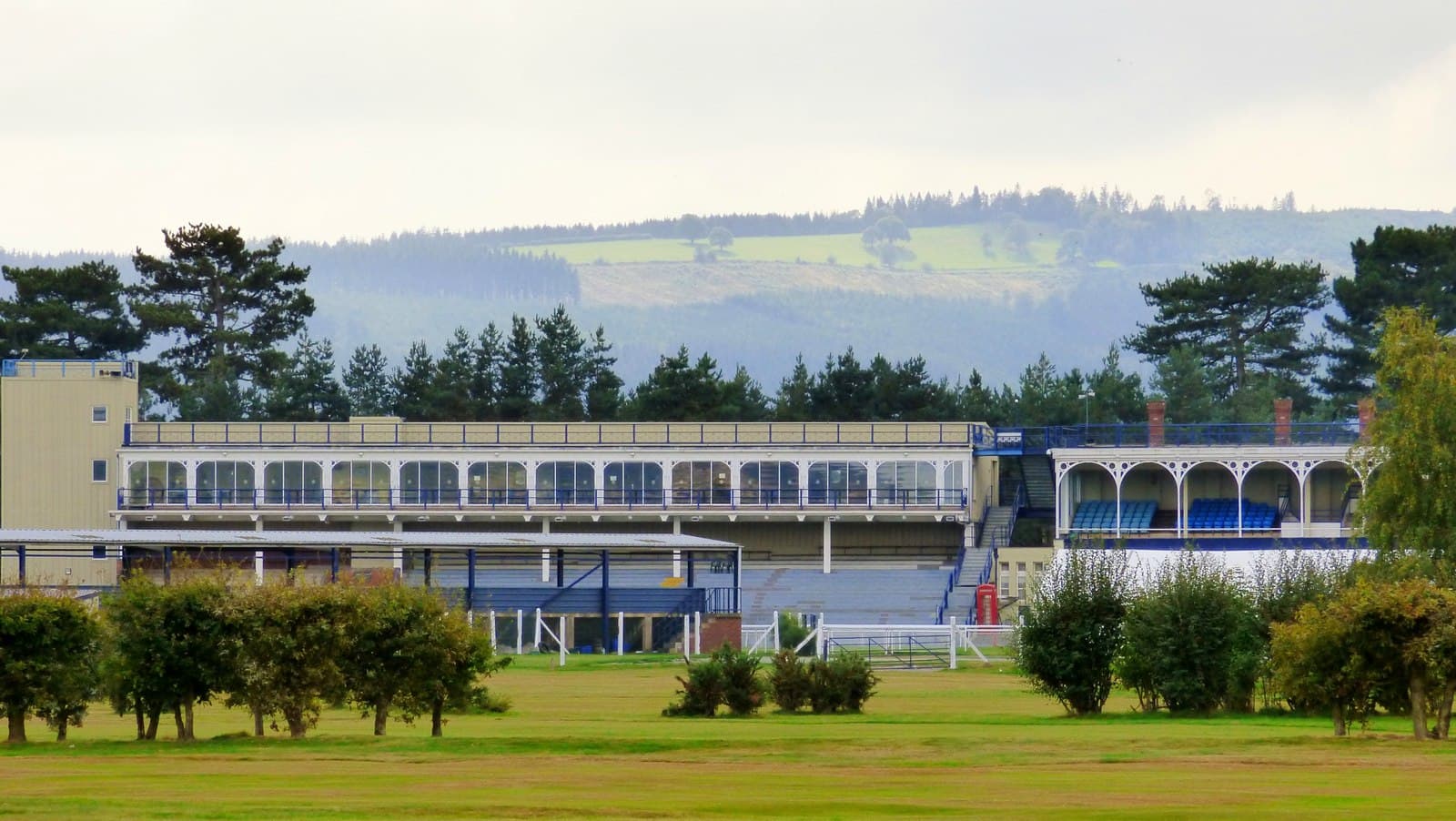
In 1904 a new grandstand was built at Bromfield in Edwardian style. It remains on the course today, a brick-and-timber structure that has been repaired and maintained rather than replaced. The 1904 grandstand represents the moment when Ludlow's status as a permanent, serious NH venue was confirmed in bricks. It was a statement of intention: this course would be here for the next century, and it required a building to match. The Edwardian grandstand has since become the most photographed feature of the course, its period character contrasting with the open Shropshire Hills behind and the flash of racing colours in the foreground.
Racing continued through the First World War years in limited form and resumed fully afterwards. The inter-war period saw Ludlow settle into the autumn-through-spring pattern that still defines it: fixtures starting in mid-October, running through the winter months, and concluding in the spring. The Ludlow Gold Cup appears in the records from the 1920s as a feature race, though its exact origins are not precisely documented. By the time racing resumed after the Second World War, the Gold Cup was established as the course's flagship event, the race that defined the April meeting and gave the calendar its climax. It is run over approximately two and a half miles and is open to handicap chasers. In a typical year it attracts fields of ten to sixteen runners and is run on the last or penultimate fixture of the season, usually in April.
The post-war resumption of racing at Ludlow in 1945 and 1946 coincided with a broader rebuilding of the NH programme across England. Courses that had suspended during the war years reopened, and the pattern of provincial racing was re-established. Ludlow was well placed for recovery: it had a functioning course, an intact grandstand, and a membership willing to fund the resumption. The autumn opening meetings, traditionally in the second or third week of October, provided a staging post at the start of the jumps season, before Cheltenham's October meeting, before the big November festival fixtures at Sandown and Ascot, before the long winter grind. Trainers used the early Ludlow fixtures to get horses fit and give young animals their first experience of a track.
The Ludlow Hunt and the South Shropshire Hunt remained important cultural connections through the mid-20th century. Hunt point-to-points were held in the Marches each spring, and the horses that had competed in those events often appeared at Ludlow in the early part of the following season. The relationship between the point-to-point and the NH programme has weakened nationally as the sport has professionalised, but in the Welsh Borders the connection remained strong through the 1970s and 1980s. A horse that had won a hunter chase at the Ludlow Hunt point-to-point might reasonably be expected to run in a novice hurdle at Bromfield the following October.
The Welsh Borders training community expanded from the 1980s onward. Venetia Williams established her yard at Aramstone, near King's Caple in Herefordshire, approximately 20 miles south of Bromfield. She trained her first winner as a licenced trainer in 1995 and built a record at Ludlow that few yards in the region have matched. Williams specialises in staying chasers, horses that thrive on the undulating, stamina-testing tracks of the Midlands and Welsh Borders circuit, and Ludlow suits her string. The course's right-handed layout, the relatively stiff uphill sections, and the testing final bend reward the kind of well-schooled, accurate jumper that Williams produces. Her strike rate at Ludlow over a 30-year career has made her name inseparable from the course in the minds of regular racegoers.
The autumn programme at Ludlow carries a particular quality that distinguishes it from the course's winter and spring fixtures. An October afternoon at Bromfield, with the leaves turning on the hill above the town and the light falling at a low angle across the Teme valley, is a specific experience. The first race of the season is often a bumper — a National Hunt flat race for horses that have never run under rules — and the crowd has a first-day energy that the midwinter fixtures, run in grey cold with smaller attendances, rarely match. Trainers arrive with horses freshened by their summer breaks, and the form from the previous spring is ancient history: anything can happen in October, which is part of why the betting on early-season Ludlow cards tends to be lively.
The course's position within the broader NH fixture list has always been that of a reliable, competitive venue rather than a prestige one. Ludlow does not stage races that attract the very best horses in training, since those horses are aimed at Cheltenham, Sandown, or Kempton. What Ludlow stages are races for horses that are good enough to run under rules but modest enough to find the competitive level manageable. That honest grading of competition is not a failing. It is what makes the racing fair and the betting relevant, and it has kept the course's loyal following engaged across generations.
Famous Moments
The moment that brought Ludlow to national attention in modern times came on 24 October 1980. Prince Charles, then 31 years old and an active amateur rider, took the mount on Allibar in the Amateur Riders Handicap Chase. Allibar was trained by Nick Gaselee and was a horse the Prince had ridden before; he finished second that afternoon at Bromfield, beaten in the closing stages by a length and a half. The national press coverage was considerable: a future king at a small Shropshire course on a Wednesday afternoon in October. It brought Ludlow a level of attention it would not otherwise have attracted. The Prince rode in a number of point-to-points and NH races during this period, but the Ludlow appearance was one of his most prominent outings, and it cemented the course's reputation as a place where the sport's broader culture was alive and present.
Amateur riding at Ludlow did not begin with royal participation and did not end with it. The course has always welcomed the amateur contingent that forms part of National Hunt racing's character, the men and women who ride for enjoyment and who bring horses from the point-to-point and hunter chase world into the licensed racing programme. The Amateur Riders Handicap Chase that Prince Charles contested in 1980 was a regular fixture on the Ludlow card. Its continued presence in the calendar is a sign that the course has held onto that part of the sport's culture even as many venues have let it go.
Venetia Williams's record at Ludlow runs through the famous moments of the past three decades like a thread. Her yard at Aramstone in Herefordshire is close enough to Bromfield that the journey is manageable in a way it would not be from, say, Lambourn or Middleham. She has sent horses to Ludlow in every month of the season, from the October openers to the April closing fixtures, and the cumulative total of winners she has trained at the course puts her well ahead of any other trainer in the modern record. Among the horses that Williams brought to Ludlow in the 2000s, Mon Mome stands out: the horse that won the 2009 Grand National at 100-1, one of the biggest upsets in the race's history, ran at Ludlow on more than one occasion during the earlier stages of his career. His 2009 Aintree victory made retrospective interest in every course he had ever visited, and Ludlow's connection with him added a small measure of Grand National history to the course's own record.
The downhill run to the final fence at Bromfield is the feature of the track most likely to produce drama. The course drops away from the back straight into a left-turning section that feeds into the home straight, and the approach to the final fence is taken on a downhill gradient that increases the speed at which horses arrive. On ground that is soft or heavy, which at Ludlow in November or January is not uncommon, that combination of slope and tired legs at the end of a two-and-a-half-mile chase can cause horses to meet the fence wrong. Falls at the last fence at Ludlow have altered the outcomes of races that looked settled from the turn for home: a horse travelling smoothly in second, with the leader weakening twenty lengths out, can still come to grief at the fence on the slope if its jockey has not kept a hold on the stride pattern through the turn.
The experienced rider at Ludlow knows to sit quietly into that final fence, to let the horse drop its hocks and find the ground, rather than to press for an extra length of speed that the gradient will amplify unpredictably. Jockeys who have ridden the course dozens of times manage the last better than those arriving for a first or second visit. AP McCoy raced at Ludlow through the 1990s and 2000s, as did Richard Johnson and Barry Geraghty. McCoy's career record at Ludlow was characteristic: he rode winners across all the course's race types, but the chase programme at Bromfield was where his judgment of the track's peculiarities showed most clearly. His ability to rate a horse through the downhill turn without losing momentum was a skill that paid dividends on the Shropshire course as it did at every other NH venue.
Richard Johnson grew up in Herefordshire and was based for much of his career at Philip Hobbs's yard in Somerset before developing associations with multiple Welsh Borders trainers. He became champion jockey four times and rode more than 3,500 winners in his career before retiring in April 2021. A disproportionate number of his winners came on the Welsh Borders circuit, covering Hereford, Ludlow, and Chepstow, where his local knowledge and his long-standing relationships with regional trainers gave him a consistent supply of rides. At Ludlow specifically, his partnership with Venetia Williams's horses produced a series of winners through the 2000s and 2010s that are remembered by the course's regular followers.
The Ludlow Gold Cup itself has produced close finishes and notable upsets over its history. The April timing places it at the end of a long season, when some horses are past their best and others are improving rapidly as the ground dries. The handicap format means a well-weighted horse returning from a break, or a young chaser that has improved sharply through the winter, can beat more fancied rivals. In the past two decades the Gold Cup has been won by horses trained across a wide geographic spread: yards from Somerset, Wales, the Midlands, and Herefordshire itself have all supplied winners. That breadth reflects the race's position as a credible target for any trainer within the NH programme's middle tier. It is not a race that Nicky Henderson or Paul Nicholls would normally aim a good horse at, but it is a race that a Venetia Williams or a Peter Bowen would treat as a serious target.
The atmosphere on Gold Cup day differs from a standard midweek Ludlow fixture. The membership turns out in numbers; the paddock is full; the bookmakers' pitches are occupied by firms that send representatives to this meeting but not to every other card on the Ludlow calendar. The enclosures feel different when a race matters, and the Gold Cup matters to the community that surrounds it. A course that holds roughly 4,000 spectators at capacity has a specific quality of intimacy when it is close to full — the crowd noise carries, the horse and rider are never distant, and the finish is seen by everyone from the stand at an angle that a larger, more strung-out track cannot replicate.
The Modern Era
Ludlow Race Club operates as an independent, member-owned organisation without the corporate ownership structure that now governs the majority of British racecourses. Membership is open to individuals who pay an annual subscription; members receive entrance to all race meetings, voting rights at the annual general meeting, and a direct stake in the decisions the Club makes about the course's management and development. The AGM is where the Club's committee is elected, where the financial accounts are presented, and where members can question the direction of the business. That level of direct accountability is unusual in British racing in 2026, since most racecourse visitors interact with a venue as customers rather than as stakeholders.
The Club's finances reflect its independent status. Prize money at Ludlow sits at the lower end of the National Hunt scale. A typical handicap hurdle at a standard Ludlow fixture in 2024-25 carried prize money of between £4,000 and £7,000; the Gold Cup, as the course's flagship race, offered around £15,000 to £20,000 in a typical year. Those figures are modest compared to what Jockey Club and ARC venues can offer, since a Grade 1 race at Cheltenham carries £200,000 or more, but Ludlow is not competing for Grade 1 horses. The prize money level positions the course within the NH handicap tier, attracting horses that need to run regularly and owners who are engaged with racing at a realistic level rather than at the top end of the market.
The current programme runs to approximately 15 to 17 race days per season, beginning in mid-October and closing in late April or early May. The October and November fixtures are the best-attended, driven by the seasonal enthusiasm of the opening weeks and by the relative scarcity of NH fixtures in the calendar before the midwinter period. January and February fixtures can be smaller affairs, with racing taking place on cold weekday afternoons when attendance is thin, but the track itself is well maintained and the racing is honest. Ludlow has built a reputation for reliable ground management: the drainage on the Bromfield site is good, and the course is rarely lost to waterlogging. In seasons when other Welsh Borders venues have abandoned fixtures, Ludlow has generally managed to race.
The Welsh Borders NH training community that provides much of the course's supply of horses has changed in structure over the past thirty years but has remained broadly consistent in its geographic base. Venetia Williams at Aramstone, Herefordshire, remains the most prominent regional trainer in terms of winners at Ludlow. Peter Bowen, based at Haverfordwest in Pembrokeshire roughly 80 miles to the south-west, sends horses to Ludlow regularly; his yard has produced horses of all levels, from point-to-point graduates running in novice hurdles to handicap chasers targeting the Gold Cup. David Brace, whose small yard in South Wales has operated quietly but effectively over the past decade, represents the lower end of the training tier that feeds into Ludlow's programme. The course is within feasible travelling distance for yards from Somerset, the West Midlands, and North Wales, and the fields reflect that broad catchment.
Racing Television covers Ludlow fixtures, which means the course's racing is broadcast to subscribers across the country and available for betting-market trading by the firms that rely on pictures to price their markets. The coverage does not guarantee large turnover, since Ludlow fields are not the type that generates millions of pounds in exchange bets, but it does mean that a Ludlow race in January, watched by a few hundred people in the stands, might be followed by tens of thousands of people placing bets in their homes or via mobile phones. The racing product is national even when the crowd is local. Bookmakers with regular pitches at Ludlow know the course well; the on-course betting market is lively on the big days and quieter during midwinter, but it functions.
Ludlow's limited physical facilities are a feature of its independence rather than a consequence of neglect. The 1904 grandstand has been maintained but not replaced; the enclosures are functional rather than lavish; the catering is straightforward. Members who have been coming to Bromfield for twenty or thirty years tend to see these characteristics as marks of integrity. A course that has not been redeveloped by a corporate owner retains the layout and the atmosphere that its long-term followers understand. The sightlines from the grandstand are good; the paddock is accessible; the pre-parade ring is close to the main enclosures. None of this requires a glass-and-steel development to work.
Ludlow town's reputation as a food destination adds an alternative attraction for racegoers who want to extend the day. The Ludlow Food Festival, held annually in September over a weekend, draws producers and visitors from across the country and has helped establish the town's identity as a serious destination for eating and drinking. The Michelin-listed restaurants in the town are within walking distance of the town centre, two miles from the course; Ludlow has had Michelin-starred restaurants in its history and the food scene remains strong in 2026. The combination of a day at the races in October followed by dinner in Ludlow has become a known itinerary for visitors who come from Birmingham, Cardiff, or further afield specifically for the combination of racing and food.
The course's position within the national racing industry is accurately described as peripheral in commercial terms and central in cultural ones. It does not move markets, does not stage races that shape championship titles, and does not attract the owners and trainers who appear regularly in Racing Post headlines. What it does is provide a reliable, well-run, independently managed NH programme in a region that has very few other venues. Hereford Racecourse closed in 2012 after financial difficulties; its loss removed a venue from the Welsh Borders circuit and increased the significance of Ludlow as the dominant NH course in the region — a responsibility the Race Club has carried without fanfare since that date.
Ludlow's Legacy
Nearly three hundred years of racing at Bromfield have produced something that cannot be replicated by corporate investment or administrative rationalisation: a course with a settled identity, shaped by its community and its landscape in equal measure. Ludlow Racecourse is not a famous place in the way that Cheltenham or Ascot is famous. It does not stage Grade 1 races, does not attract television cameras from the BBC, and does not feature in conversations about the sport's prestige hierarchy. What it has, and what increasingly few courses can claim, is a direct and unbroken connection between the people who run it and the sport it serves.
The Ludlow Race Club, independent, member-owned, and accountable to its membership rather than to a plc board or a charitable trust, is the institutional expression of that connection. Members are not customers at a venue managed on their behalf by a distant operator. They are the owners of the place, in the functional sense that their subscriptions fund the programme, their votes shape the governance, and their presence at the annual general meeting determines who sits on the committee. That relationship between institution and community is rare in British sport generally, not just in racing. It is also what gives the course its particular atmosphere on race days: the people who work behind the scenes are the same people who sit in the stands.
The medieval backdrop provided by Ludlow Castle, visible from the track two miles to the south with the towers above the Teme on their sandstone ridge, is not a marketing device. It is a geographical fact, and it has been a geographical fact since racing began at Bromfield in 1729. A thousand years of fortification, administration, royal residence, and market trade have shaped the town that gives the racecourse its name and its context. Visitors who come for racing often stay for the town, and the relationship works in both directions: Ludlow's food scene, its preserved medieval street plan, and its walking-distance concentration of history make it one of the most complete day-out destinations in the Marches.
The Shropshire Hills setting reinforces what the town provides. Racing takes place here against a background of upland moorland, ancient woodland, and the long westward view towards the Welsh border. No other NH course in England runs against quite this combination of terrain and history. That is not a small thing. It is the reason that a midwinter Wednesday fixture at Ludlow, grey skies, thin crowd, a handicap hurdle worth £5,000 to the winner, still feels worth attending.
Ludlow's future depends on the same factors that have sustained it since 1729: a membership willing to maintain the Race Club, a training community within driving distance that sends competitive horses, and a landscape that remains worth visiting. All three of those conditions are currently in place. The course will not become a prestige venue and does not need to. It will continue to provide honest National Hunt racing in one of England's finest corners, and that is more than enough.
Frequently Asked Questions
When was Ludlow Racecourse founded?
The first documented race meeting at Ludlow took place on 27 August 1729, making it one of the oldest National Hunt venues in England. Racing has continued at the Bromfield site, with interruptions during wartime, ever since. The nearly three-century record places Ludlow among a small group of courses whose history reaches back to the early Georgian period.
Who owns Ludlow Racecourse?
Ludlow Racecourse is owned and operated by the Ludlow Race Club, an independent, member-owned organisation. Members pay an annual subscription, receive entry to all race meetings, and hold voting rights at the Club's annual general meeting. There is no corporate parent company and no external shareholder. The member-owned model is increasingly rare in British racing, where Jockey Club Racecourses and Arena Racing Company between them control the majority of licensed venues.
What is the Ludlow Gold Cup?
The Ludlow Gold Cup is the course's flagship race: a National Hunt handicap chase run over approximately two and a half miles, held at the April meeting that typically closes the Ludlow season. The race attracts handicap chasers from across the Welsh Borders training community and further afield. It is not a race that determines championship titles, but it is a real competitive target at the middle tier of the NH programme, and Gold Cup day is the best-attended fixture on the Ludlow calendar.
How do I get to Ludlow Racecourse?
The course is at Bromfield, two miles north of Ludlow town centre, just off the A49. By rail, Ludlow station is served by trains on the Shrewsbury-Hereford line and also by the Cardiff Central-Manchester Piccadilly service via Newport. From Ludlow station the course is accessible by taxi or a short drive. By road, the A49 is the main approach from both north and south; parking is available on-site at Bromfield. The postcode for navigation is SY8 2BT.
What type of racing does Ludlow stage?
Ludlow is a National Hunt-only venue. The programme covers hurdle races, steeplechases, and bumpers (National Hunt flat races). The course has not staged flat racing since 1868. The season runs from mid-October to late April or early May, with approximately 15 to 17 fixtures per year. Prize money is at the lower end of the NH scale, which means the fields are generally drawn from the competitive middle tier of the jumps programme rather than from the top-level horses aimed at Cheltenham or Sandown.
What is the track like at Ludlow?
Ludlow is a right-handed circuit of approximately one mile and four furlongs, set on undulating ground in the Shropshire Hills. The track rises and falls across its circuit, with a notable downhill section leading into the final bend and approaching the last fence. That downhill run increases the speed at which horses arrive at the fence and requires accurate jumping; inexperienced or tired horses can be caught out by the gradient. The going at Ludlow is typically good to soft through the autumn and soft to heavy through the midwinter period, with the ground improving towards the spring. The course's drainage is good by the standards of the Welsh Borders circuit.
Share this article
More about this racecourse
All Ludlow guides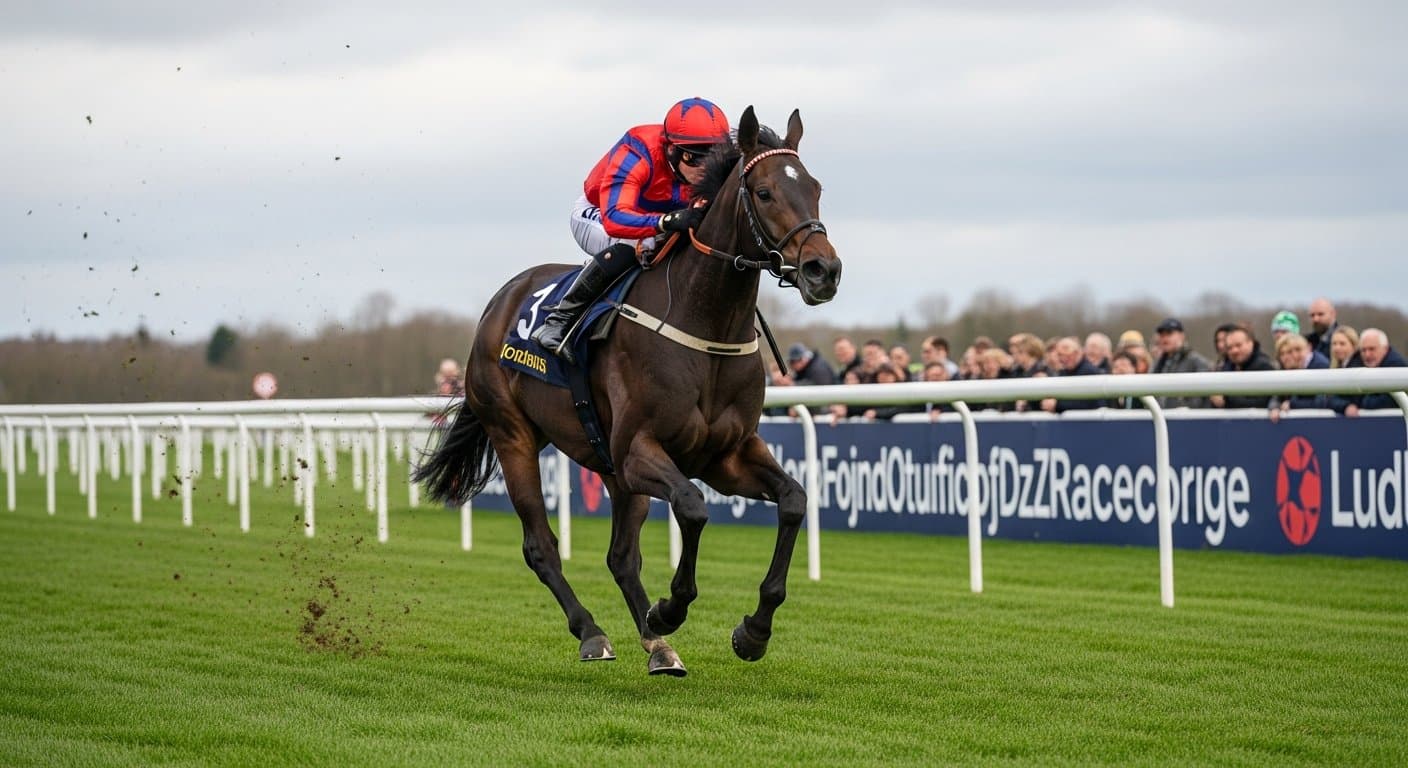
Punjabi at Ludlow: The Champion Hurdler's Shropshire Story
Punjabi won the 2009 Champion Hurdle at 22/1. His connection to Ludlow racecourse reflects the course's proud role in shaping top National Hunt horses.
Read more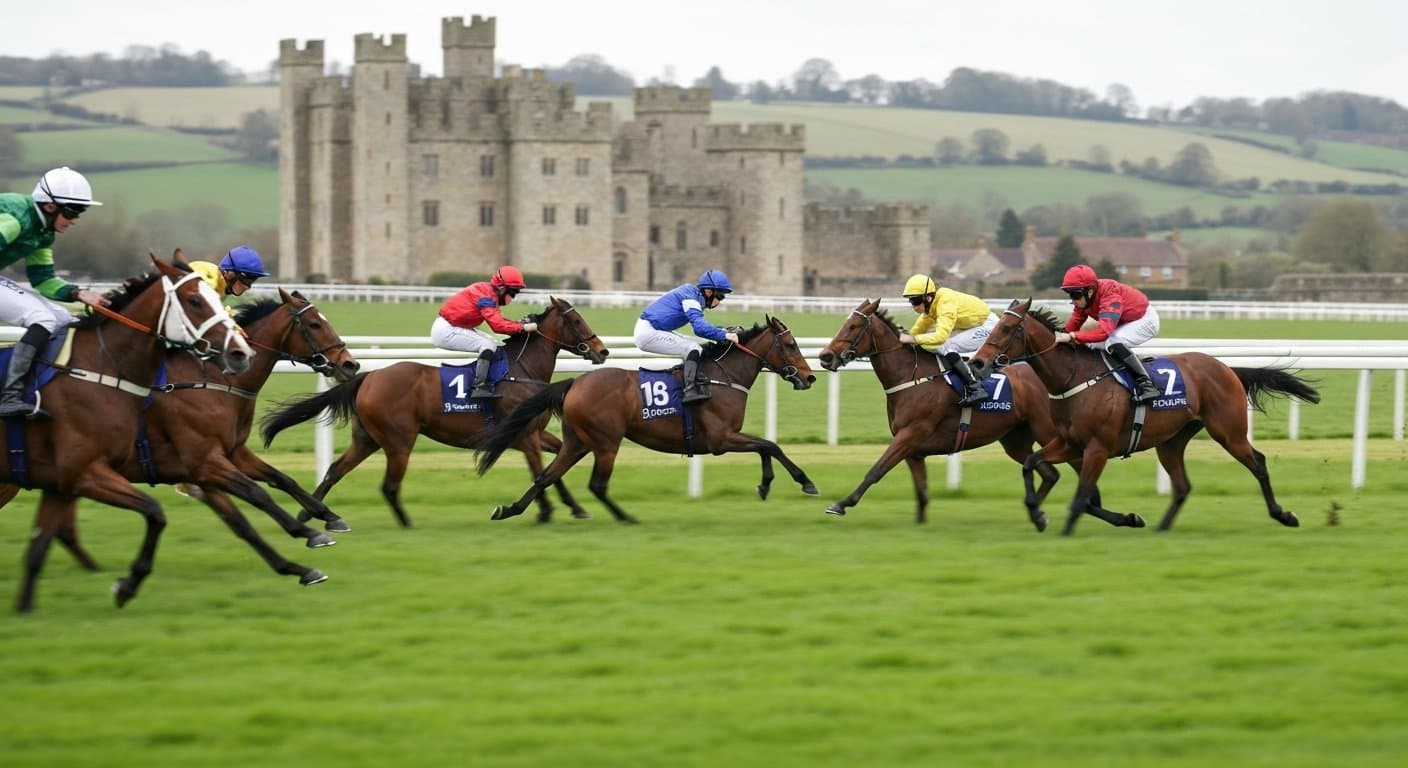
Betting at Ludlow Racecourse
How to bet smarter at Ludlow — track characteristics, going and draw, key trainers and jockeys, and strategies for jump racing in Shropshire.
Read more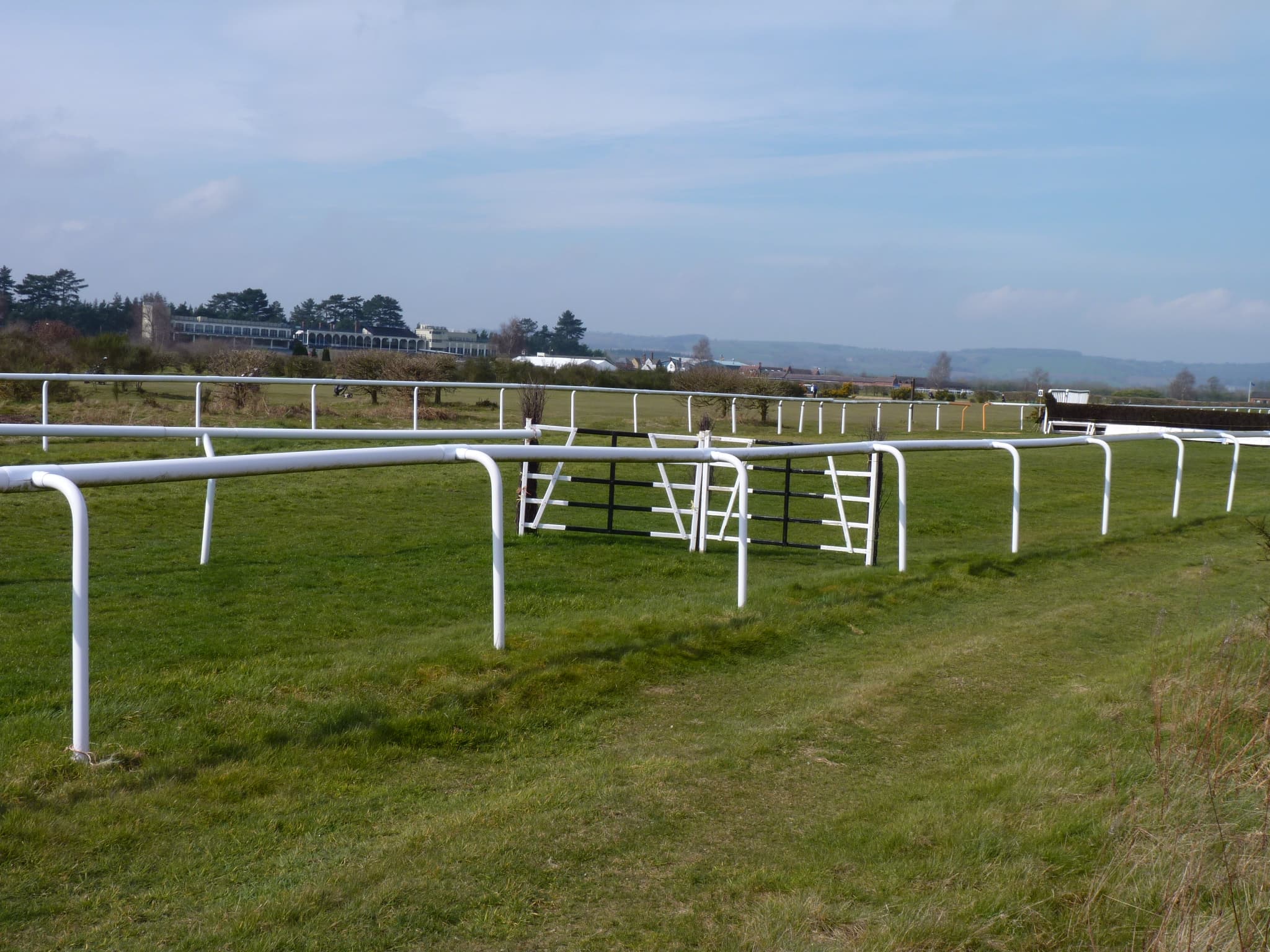
Ludlow Racecourse: Complete Guide
Everything you need to know about Ludlow Racecourse — charming jump racing beneath the castle in Shropshire, the Ludlow Gold Cup, and facilities.
Read morePhotos on this page are used under Creative Commons licences. Titles, sources and licence links for each one are on our image credits page.
Gamble Responsibly
Gambling should be entertaining and not seen as a way to make money. Never bet more than you can afford to lose. If you or someone you know has a gambling problem, help and support is available.