
Founder & Editor · Last reviewed 2026-03-02
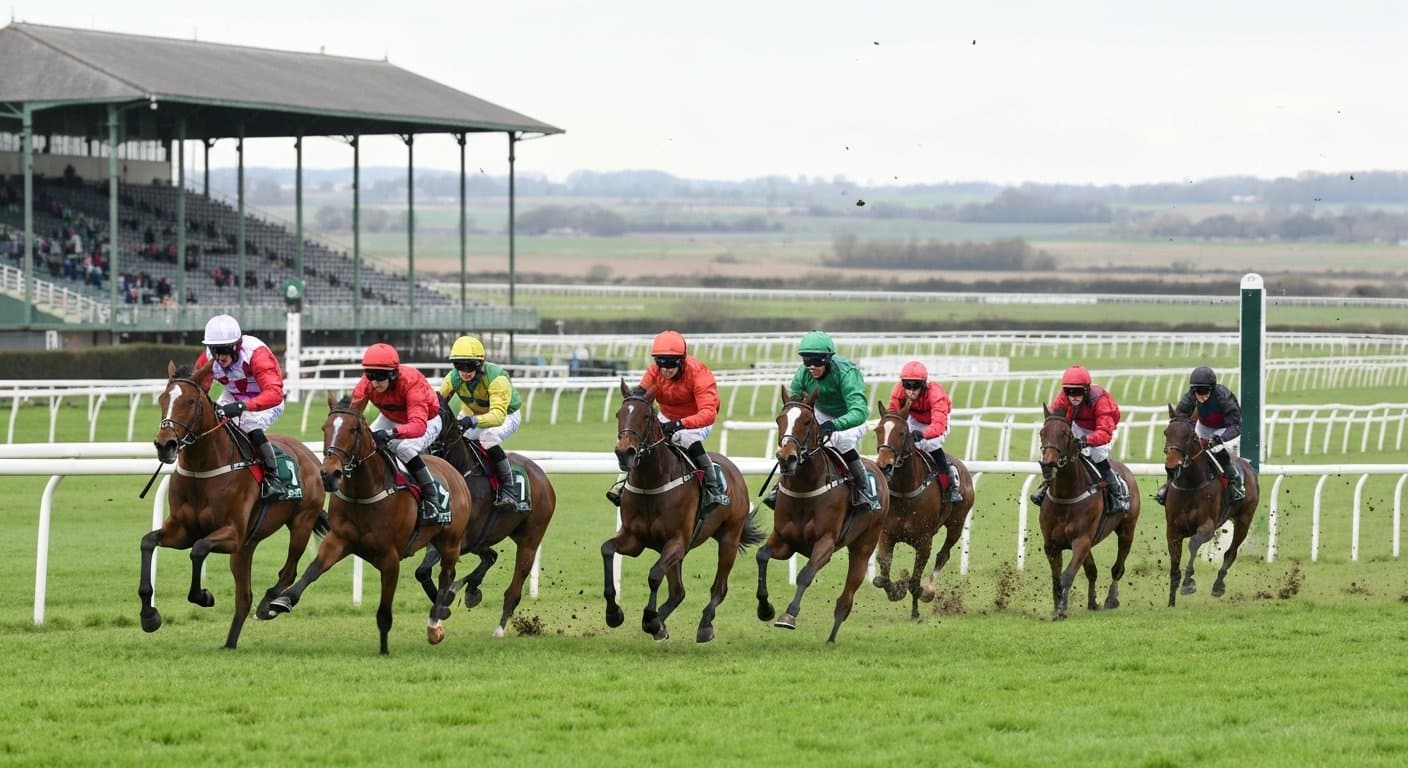
Market Rasen Racecourse sits in the Lincolnshire Wolds at the edge of the town of Market Rasen, twenty miles north of Lincoln. It is a National Hunt course operating year-round — one of only a handful of NH venues in Britain that stage summer jumping — and this year-round programme creates a going range that runs from Good or Good to Firm in July to Soft in January, encompassing the full spectrum of British NH going descriptions within a single season. The Summer Plate meeting in mid-July is the most prestigious event on the Lincolnshire calendar and one of the most valuable summer NH prizes in the country.
For bettors, Market Rasen presents a course that rewards two specific skills: the going filter across its wide seasonal range, and the identification of front-running or prominent-racing horses suited to its compact right-handed oval. The sharp circuit — approximately one mile and two furlongs around — means that prominent position is a structural advantage, and course form from the compact right-handed layout is predictive across multiple visits.
Quick Betting Reference
- Course type: Right-handed compact oval ~1m2f; NH only; year-round programme
- Distance range: 2m to 3m5f
- Going: Good to Good to Firm in summer; Good to Soft in autumn; Soft in winter
- Flagship race: Summer Plate (Grade 3 chase, 2m5f, mid-July)
- Primary advantage: Year-round programme creates going-range expertise; course form carries above-average value
- Form transfer: Fakenham (left-handed but compact), Huntingdon (right-handed, similar circuit scale); Stratford for hurdles
- Trainer to watch: Dan Skelton (Alcester, Warwickshire); Nigel Twiston-Davies; Fergal O'Brien
Year-Round Racing
Market Rasen's year-round programme is its defining commercial characteristic and its most significant betting variable. A horse that has won at Market Rasen in January on Soft has not run in the same conditions as a horse that won there in July on Good. These are the same course in terms of layout and fence placement, but the going profiles are entirely different — July Market Rasen is one of the firmest summer NH surfaces in England; January Market Rasen can be truly testing winter ground.
This calendar range makes Market Rasen's going filter more important than at almost any other British NH course. A horse assessed as a Market Rasen course specialist carries significant form only if its previous course visits were on comparable going to today's conditions. A horse with two summer wins at the course may be well below its best form in a January card, and vice versa. The standard course-form filter must always be combined with the going-adjusted filter to be reliable.
The Sandy Lincolnshire Wolds Going
The Lincolnshire Wolds are known for their sandy, chalky subsoil — the same subsoil that produces the lighter, well-draining soils of the East Midlands generally. Market Rasen benefits from this free-draining base and typically produces going descriptions one grade firmer than comparable West Country or Welsh NH venues in the same weather conditions. In October, when Chepstow might be Soft, Market Rasen is typically Good to Soft. In January, when Chepstow runs on Heavy, Market Rasen may be running on Soft or Good to Soft. This Lincolnshire drainage advantage is less pronounced than at Ludlow's engineered system but is real and consistent.
Bet on Market Rasen
Place your bets on Market Rasen races with a trusted bookmaker.

Promo code BETFRED50. New customers only. Register, deposit with a Debit Card, and place a first bet of £10+ at Evens (2.0)+ on Sports, to be settled within 7 days, to get £30 in Sports Free Bets and £20 in Bet Builder Free Bets within 24 hours of settlement. 7-day expiry. Eligibility & payment exclusions apply. Full T&Cs apply. Take Time to Think. BeGambleAware.org. 18+. Full T&Cs.

Promo code R30. New UK customers only, 18+. Register, deposit £10 or more, then place a £10 single cash bet at odds of 1/2 (1.5) or greater on any sports market (excluding Virtuals). Once the qualifying bet settles you get £30 in Free Bets (3 x £10) — the qualifying bet can win or lose. Free Bets are valid on any sports market excluding Virtuals, expire in 7 days, are non-withdrawable and must be used in full. Excluded deposit methods apply (including PayPal, Apple Pay, Skrill and NETELLER). Named bets such as Lucky 15 do not qualify. If you cash out the qualifying bet, or it is voided, you are no longer eligible for the offer. Ends 31.12.26. Full T&Cs apply. Please gamble responsibly. BeGambleAware.org. 18+. Full T&Cs.

Promo code BET40GET20. New UK customers, 18+. Register with the code and place a first bet of £40 or more at Evens (2.0) or greater. Receive 2 × £10 free bets: the first credited automatically once the qualifying bet settles, the second 24 hours later. Free bets must be placed at minimum odds of 4/1 (5.0), expire 24 hours after credit, and the free-bet stake is not returned with winnings. Debit card deposits only. Take Time to Think. BeGambleAware.org. 18+. T&Cs apply. Full T&Cs.

50% of your first-day net losses refunded as a free bet, capped at £25. New UK customers aged 18+ only. To qualify, deposit and place a first bet of £10 or more on any sport at minimum odds of evens (2.00), then place at least two further bets on different events, each worth at least 50% of your largest bet, all at evens (2.00) or greater. Losses are counted from your first settled bet until 23:59 the same day. Place a qualifying £10+ bet and you are guaranteed at least a £5 free bet. Bets placed at SP, void bets, cashed-out bets and bets struck with free bets do not count towards the offer. The free bet is credited the day after your qualifying bets settle and must be used within 7 days, after which it expires. It can be used at odds from 1/4 (1.25) up to 250/1 on singles and straight accumulators, but not on Trixie, Patent or Yankee style multiples. Free-bet stake is not returned with winnings. One offer per person, household, address, IP address and device. E-wallet deposits may not qualify, so check the cashier before depositing. Customers registered with GAMSTOP cannot claim. KYC identity verification must be completed before the free bet is credited. Take Time to Think. BeGambleAware.org. 18+. T&Cs apply. Full T&Cs.

New customers, 18+. Choose the sports bonus at sign-up, make a first deposit and receive a 100% bonus up to £50 in your Sports Bonus balance. To convert the bonus to cash, wager it 10x within 30 days. Single bets below Evens (2.00) do not qualify; accumulators do not qualify if any selection is below 1/2 (1.50). Virtual Sports, voided, cancelled, drawn, cashed-out and free-bet wagers do not count towards wagering. Only the first settled bet per event counts. Withdrawing before the wagering requirement is met forfeits the bonus balance including bonus winnings. Real-money funds are used before bonus funds. Deposits via Skrill or Neteller are not eligible. Not valid in conjunction with other promotions. Odds, bet and payment limits apply. 10bet general and promotion T&Cs apply. BeGambleAware.org. 18+. Full T&Cs.

New customers in Great Britain and Republic of Ireland, 18+. Place a £10 fixed-odds qualifying bet at minimum odds of 1/2 (1.50) — single or each-way (only the win part counts), pre-event or in-play, not cashed out early, within 28 days of opening the account. Receive up to £60 in bonuses credited over three days: 3 × £10 fixed-odds free bets (the first on settlement, then 24 and 48 hours later) plus 3 × £5 Total Goals FOOTBALL spread bets and 3 × £5 racing Winning Favourites spread bets, with a £1 racing Race Index spread bet as an extra on top. The spread bets need a full spread-betting account, opened within 28 days of the fixed-odds account and subject to Spreadex's eligibility and appropriateness checks. Free-bet stakes not returned with winnings; free bets valid 28 days from issue. IMPORTANT: the £5 credits are SPREAD bets — sports spread betting carries the risk that losses can exceed your stake. Sports spread-betting customers do not have Financial Ombudsman or FSCS recourse. Take Time to Think. BeGambleAware.org. 18+. T&Cs apply. Full T&Cs.

Promo code WELCOME15, entered under My Bonuses after registering. New UK customers, 18+. Place a first qualifying bet of at least £10 from your cash balance at odds of evens (2.0) or greater within 7 days of opening the account. Once the qualifying bet fully settles you receive £15 in free bets, credited as 3 x £5 tokens with set uses: one £5 accumulator free bet (minimum 4 legs, each leg at 2/5 or bigger), one £5 sports free bet (any market at evens or bigger) and one £5 Sub Cover free bet (selected football player markets at evens or bigger). Free-bet stakes are not returned with winnings. Free bets expire 7 days after they are credited. Void, cashed-out and partially cashed-out bets do not qualify. One offer per customer. Confirm the current terms on BetGoodwin's own welcome-offer page before claiming. Take Time to Think. BeGambleAware.org. 18+. T&Cs apply. Full T&Cs.

New UK customers, 18+. Minimum deposit £10. Place a £10 qualifying single on sports (excluding virtuals) at minimum odds of 1/2 (1.50), settled within 14 days. Deposit-method exclusions apply. Receive £30 in free bets (stake not returned), split £20 for sportsbook use (2 x £10) and £10 for Bet Builder only (2 x £5); Bet Builder does not cover horse racing. Free bets must be accepted within 7 days and expire 7 days after acceptance. No promo code required. Best Odds Guaranteed on UK & Irish racing, subject to having staked over £25 in the previous seven days. Operated by LiveScore Betting and Gaming (Gibraltar) Ltd, UKGC 56859. Confirm the current terms on LiveScore Bet's own promotions page before claiming. Take Time to Think. BeGambleAware.org. 18+. T&Cs apply. Full T&Cs.
18+. BeGambleAware.org
Track Characteristics
Market Rasen's circuit is right-handed, approximately one mile and two furlongs around, with no significant gradient in either direction. The layout is a compact, right-handed oval — tighter than most English NH circuits but not as extreme as Plumpton or Fontwell. Both the chase and hurdle courses run on the same oval, and the same tactical principles apply to both codes.
The Compact Right-Handed Circuit
The defining characteristic of Market Rasen as a racing surface is the frequency of its bends relative to the circuit length. In a two-mile chase, horses complete approximately one and two-thirds loops of the circuit. In a three-mile chase, they complete approximately two and a half loops. This means the right-handed bends arrive repeatedly, and any horse running wide on these turns covers meaningfully more ground than one holding the inner rail.
The bends at Market Rasen are not as severe as at Ludlow, Cartmel, or Plumpton, but they are tighter than at the galloping NH circuits — Cheltenham, Newbury, Haydock. A horse that drifts wide through all the Market Rasen bends in a two-mile race can cover an extra half-furlong of distance compared to a horse that consistently holds the rail. Over a three-mile race with multiple laps, this accumulates to a significant distance.
Front-running and prominent racing are advantages at Market Rasen that become self-reinforcing: a horse at the front controls the pace, holds the inside rail, and forces rivals to run wider. In fields where a clear front-runner exists and no horse is likely to challenge the lead through the early bends, the leader can build a positional advantage on the inner rail that becomes very difficult to overcome when rivals must pass on the outside of the bends.
Hurdles and Chases
Both hurdle and chase circuits at Market Rasen use the same oval. The fences are built to standard specifications and positioned at regular intervals around the circuit. No fence is positioned immediately after a tight bend in a way that creates an unusually difficult approach angle. The obstacles are fair in placement, and horses meet them with good rhythm from the straight sections that precede each fence or flight.
The summer going at Market Rasen — Good or Good to Firm — creates a faster-paced racing environment over both codes. Horses meeting fences on firm ground at higher speeds produce a different energy cost profile than horses meeting fences on soft ground at a slower pace. Summer Market Rasen chases are truly fast affairs, and accurate jumping at pace is more critical than at winter meetings where the slower pace provides more margin for error.
The Summer Programme Profile
Market Rasen's summer jumping is its most distinctive offering. From late May through September, the course stages NH racing on going conditions that are unavailable at most British NH venues — Good to Firm or Good, producing fast, exciting chasing and hurdling that contrasts sharply with the grinding winter NH programme. The Summer Plate and Summer Hurdle on the third Saturday in July are the prestige events, drawing horses from across England and occasionally Ireland who are specifically targeting the summer NH programme.
Summer jumping at Market Rasen attracts horses that are specifically suited to firm going and a sharp right-handed circuit — a narrower profile than the typical soft-ground winter NH horse. These horses are often lightly raced and in peak summer condition, producing race times that represent the fastest Market Rasen form of the year.
Form Transfer
Huntingdon (right-handed, compact, fair) is the most directly comparable British NH course in terms of character. Fakenham (left-handed, very compact square) shares the compact oval character from the opposite direction. Stratford-on-Avon (left-handed, compact, fair) provides reasonable hurdle form transfer. Form from galloping courses — Cheltenham, Wetherby, Newbury — requires discounting, particularly for chases where the tight bends create demands that galloping circuits do not.
Going & Conditions
Market Rasen's year-round programme creates the widest going range of any British NH course within a single season. The same Lincolnshire Wolds circuit that produces Good to Firm for the Summer Plate in July can be running on Soft or Good to Soft in January — a difference that makes going assessment the most important pre-race filter at the course across all seasons.
Summer Going (May to September)
Summer NH racing at Market Rasen is staged on going descriptions that range from Good to Firm to Good to Soft as summer rainfall and late-season moisture arrive. Good to Firm is the most common description from late May through July; Good or Good to Soft appears in August and September as the season transitions.
On Good to Firm, the pace of Market Rasen chases and hurdles is significantly higher than on winter ground. Horses meet their fences at greater speed and expend more energy at a faster rate than winter NH horses. The compact oval means this pace is generated consistently through the circuit — there are no galloping sections where horses can recover before the next obstacle. The Good-to-Firm summer surface rewards horses that are physically conditioned for fast-ground effort and jump accurately at pace.
The Summer Plate in mid-July typically runs on Good or Good to Soft — the going often softens slightly in the days before the July card due to irrigation or pre-race rainfall. Bettors targeting the Summer Plate should check the going report on the morning of the race rather than relying on the Wednesday going declaration, because the course's irrigation management can shift the going by half a grade before raceday.
Autumn Going (October to November)
October and November produce Good to Soft as the seasonal transition from summer conditions begins. The Lincolnshire Wolds' free-draining soil delays this transition relative to West Country or Welsh NH courses, meaning October Market Rasen is typically one grade firmer than comparable venues in wet autumns. November cards run on Good to Soft rather than Soft except after sustained rainfall.
Winter Going (December to April)
December through March produces Good to Soft, Soft, and occasionally Heavy depending on the preceding weather. Market Rasen's drainage advantage over clay-soil courses is most evident in winter: when Chepstow, Hereford, and Worcester are running on Heavy, Market Rasen is typically Soft or Good to Soft. The course rarely produces Heavy except in exceptional winters with sustained cold and wet. Frost is a more frequent abandonment risk than waterlogging.
Going as the Year-Round Filter
The most consistent betting error at Market Rasen is treating the course as a single going environment rather than adjusting for seasonal variation. A horse with three summer Market Rasen wins on Good to Firm carries no useful course form for a January race on Soft — the surface, pace, and physical demands are fundamentally different. Apply the going filter before the course form filter: confirm the previous course wins were achieved on going within one grade of today's conditions before counting them as evidence.
Draw and Positioning
Market Rasen is NH only, so no stall draw applies. Tactical positioning matters — the right-handed bends favour horses holding the inner rail from the outset. As at all right-handed compact NH circuits, prominent racers benefit from the positional advantage that front-running on the rail provides. The most important positional moment in any Market Rasen race is the approach to the first bend — horses that have secured a prominent inner-rail position by this point are well placed for the remainder of the race.
In summer meetings with smaller fields of six to ten runners, the inner rail is accessible to any horse finishing in the first three through the opening stages. In winter meetings with fields of twelve or more, the competition for the inner line is greater and jockeys who are proactive about gaining the rail through the first bend produce results that justify the tactical priority.
Key Trainers & Jockeys
Market Rasen sits at the junction of the Midlands and northern NH circuits. East Midlands stables — from Nottinghamshire, Lincolnshire, and Derbyshire — provide a consistent base of runners throughout the season. Yorkshire and Warwickshire yards extend the reach. For the Summer Plate and Summer Hurdle, the field expands to include horses from leading southern and West Country yards who specifically target the summer NH programme. Understanding which trainers use Market Rasen deliberately versus incidentally is the starting point for value identification.
Dan Skelton
Dan Skelton trains at Lodge Hill Stables in Alcester, Warwickshire, approximately sixty-five miles south-west of Market Rasen. He is one of the most productive trainers at the course in terms of winners per season, running horses across all race grades from Class 5 novice events through to Class 2 competitive handicaps and the Summer Plate. Skelton's operation produces versatile NH horses suited to compact right-handed circuits, and his consistent Midlands targeting means Market Rasen is a regular outlet.
Skelton's Market Rasen runners in Class 3 and Class 4 handicap chases at prices of 4/1 or above with course form from the same or adjacent seasons carry the trainer-course knowledge premium that his national profile does not always price accurately. Harry Skelton — Dan's brother and his primary jockey — rides regularly at Market Rasen, and the Skelton family combination at the course is the most consistent trainer-jockey-course signal available.
Nigel Twiston-Davies
Nigel Twiston-Davies at Naunton in Gloucestershire, eighty miles south-west of Market Rasen, is a regular visitor with horses targeting specific competitive handicaps. His track record at the course is spread across hurdles and chases, and his runners tend to be experienced NH types rather than developing novices. Twiston-Davies at Market Rasen in Class 3 chases at 5/1 or above with previous course form represents a secondary value angle behind Skelton.
Fergal O'Brien
Fergal O'Brien trains at Ravenswell Farm in Gloucestershire, approximately seventy-five miles south-west of Market Rasen. He has built a consistent Midlands NH record that includes regular Market Rasen appearances. O'Brien's horses in Class 4 and Class 5 handicap hurdles at the course represent the each-way value angle at prices of 6/1 or above, where the trainer's local targeting is not fully reflected in market prices from national punters.
Summer Plate Visitors
The Summer Plate meeting in July attracts horses and trainers from well beyond the usual Midlands circuit. Paul Nicholls, Nicky Henderson, Evan Williams, and occasionally Irish yards target the Summer Plate specifically when they have a suitable staying chaser at the peak of a summer campaign. These horses arrive with credentials from Cheltenham, Aintree, or spring campaign meetings — their form is generally well-assessed by the market and they tend to be accurately priced.
For value at the Summer Plate, look beyond the nationally prominent entries to East Midlands or Yorkshire-based runners with Market Rasen form from earlier in the summer season at prices of 5/1 or above. These horses carry course-form evidence that summer-targeting specialists from further afield lack.
Harry Skelton and Brian Hughes
Harry Skelton is the most productive jockey at Market Rasen by rides and winners, riding primarily for his brother's yard. Brian Hughes, based in the North and riding primarily for Sue Smith and other Yorkshire stables, is the second most productive NH jockey at the course. Both jockeys understand the right-handed compact oval's tactical demands — the importance of the inner rail on the early bends and the pace management required through repeated circuits.
When Harry Skelton takes a ride for a non-Skelton yard at Market Rasen in a competitive handicap, that outside booking is a signal worth noting — senior Midlands jockeys do not commit to rides at a specific course on non-stable business without having assessed the horse's suitability.
Betting Strategies
Market Rasen's betting strategies are shaped by two characteristics that distinguish it from most British NH courses: the year-round programme creating a wide going range, and the compact right-handed oval creating a course-form advantage that is specific and seasonal. Apply these in sequence.
Strategy One: Going-Adjusted Course Form
The year-round programme at Market Rasen means that course form must always be qualified by going. Apply this rule before counting any Market Rasen previous run as relevant course form: the previous run must have been completed on going within one grade of today's conditions. A horse with three Market Rasen wins in July on Good is not course form for a January race on Soft — the circuit is the same, the going is entirely different, and the horse's suitability to the January conditions is unknown.
Once this going-qualification is applied, real going-adjusted course form is highly predictive. A horse with two Market Rasen wins in January on Soft carries the strongest evidence available for a January race at the same course on similar going. Support these horses at prices of 4/1 or above without requiring any additional positive reasons.
Strategy Two: Front-Runner Premium in Summer
Summer Market Rasen NH racing produces the fastest-paced races on the circuit. On Good to Firm, horses race at their highest speeds and the compact oval creates a situation where front-runners who jump accurately can build unassailable advantages through the bends. In summer chases of two miles to two and a half miles, front-runners who have previously controlled the pace at Market Rasen, combined with Dan Skelton or a comparably effective trainer, are worth backing at prices of 5/2 to 4/1 in competitive Class 3 and Class 4 races.
The summer front-runner strategy is less reliable in fields of twelve or more, where the higher pace creates more competition for the lead and front-runners are more likely to burn out. It is most productive in fields of seven to ten runners where the pace dynamics are predictable and a single front-runner can control the tempo.
Strategy Three: Dan Skelton at 4/1+
Skelton's consistent Market Rasen record across all seasons makes him the primary trainer value signal at the course. In Class 3 and Class 4 handicap chases and hurdles at prices of 4/1 or above, his runners represent the most reliable each-way value on any card. The going qualification from Strategy One applies — Skelton's summer form must not be counted for winter races and vice versa — but within the same seasonal going profile, his horses carry demonstrable targeting evidence.
Strategy Four: Summer Plate — Fade Short-Priced Galloping-Track Form
The Summer Plate draws horses from leading southern yards whose form profiles are from galloping tracks. These horses — often at short prices on the basis of spring campaign form from Cheltenham, Aintree, or Sandown — face Market Rasen's compact right-handed oval for the first time on Good to Firm summer going. Their ratings are accurate for galloping courses; the compact bends introduce demands not tested in their form.
In the Summer Plate field, oppose horses at prices of 6/4 to 5/2 whose only previous form is from galloping NH tracks, in favour of horses at 4/1 or above with previous Market Rasen or compact-circuit summer form. The structural disadvantage of galloping-track horses on the compact oval creates a consistent market mispricing in the Summer Plate.
Strategy Five: Winter Handicap Value in Class 4-5
November through February at Market Rasen, in Class 4 and Class 5 handicap chases on Good to Soft or Soft, produce competitive eight-to-twelve-runner fields from East Midlands and Yorkshire yards. These races are below the radar of national punters and are priced by markets with lower information quality than the Summer Plate. Skelton, Twiston-Davies, and O'Brien runners at 5/1 to 9/1 in these races with going-adjusted course form represent the most accessible each-way value on the Market Rasen calendar outside the Summer Plate.
To compare place terms and each-way promotions across the major bookmakers, see our best bookmakers for horse racing guide.
Key Races to Bet On
Market Rasen stages approximately twenty-five to thirty meetings per year across all twelve months. The year-round programme peaks twice: at the Summer Plate meeting in mid-July (the highest-value card of the calendar) and across the autumn competitive programme from October to November when fields are at their largest and going conditions are at their most manageable.
The Summer Plate
The Summer Plate is a Grade 3 handicap steeplechase run over two miles and five furlongs on the third Saturday in July. It is one of the most valuable NH races staged in Britain during the summer months and draws the strongest field of chasers that Market Rasen sees all season. Horses from leading national yards — Nicholls, Henderson, Skelton, and occasionally Irish operations — target the race alongside East Midlands regulars.
For betting at the Summer Plate: the going on the July card is typically Good to Soft as the course's irrigation system maintains the surface in ideal condition for summer NH racing. The field of fourteen to twenty-two runners is assessed on form from spring and early-summer NH racing, but the compact right-handed oval creates course-specific demands that pure galloping-track form does not reflect. The Summer Plate consistently produces overpriced front-runners from locally-based yards and underpriced galloping-track favourites from national operations — the structural market error described in Strategy Four.
Each-way at 8/1 or above on a Skelton or northern yard runner with previous Market Rasen form from the summer season is the standard Summer Plate approach.
The Summer Hurdle
Run on the same card as the Summer Plate, the Summer Hurdle is a conditions race over two miles and two furlongs. It attracts quality hurdlers at the peak of their summer campaigns, typically from the same national yards targeting the Summer Plate card. The Summer Hurdle field tends to be smaller (eight to fourteen runners) and the form lines from spring hurdle campaigns transfer more directly than in the Summer Plate, because the hurdle circuit's wider, less demanding bends create smaller course-form effects than the chase circuit.
Autumn Competitive Programme
October and November are the most consistently productive months for Market Rasen betting outside the Summer Plate. The going is typically Good to Soft — manageable conditions that produce reliable form — and field sizes in Class 3 and Class 4 handicap chases reach twelve to eighteen runners. These fields are large enough to generate each-way value at 6/1 or above, and the Skelton and Twiston-Davies going-adjusted course form strategies apply at their most productive.
The most useful race type in the autumn programme is the Class 3 handicap chase over two miles to two and a half miles on Good to Soft going with a field of twelve to sixteen runners. This combination produces the highest density of course-form opportunities and the widest range of prices where the value angle exists.
Winter Programme
December through April at Market Rasen produces Class 4 and Class 5 handicaps on softer ground with smaller fields. These races are below the threshold of national punter attention and are consequently less efficiently priced. Class 4 chases on Soft in January or February with eight to ten runners from East Midlands yards include the highest concentration of going-adjusted course specialists, and prices of 5/1 to 9/1 for Skelton or O'Brien runners with winter form at the course are common.
Novice Events
Market Rasen's novice programme produces form that transfers reliably to Huntingdon, Fakenham, and Stratford. The compact right-handed oval provides a fair novice test without the extreme demands of steeper or quirkier circuits, and winners here carry forward reasonably accurate form for subsequent novice events. Summer novice events — early-season novice hurdles for horses converting from the flat — attract better-bred types from Midlands and Yorkshire yards and are worth noting as form indicators for autumn NH campaigns.
Share this article
More about this racecourse
All Market Rasen guides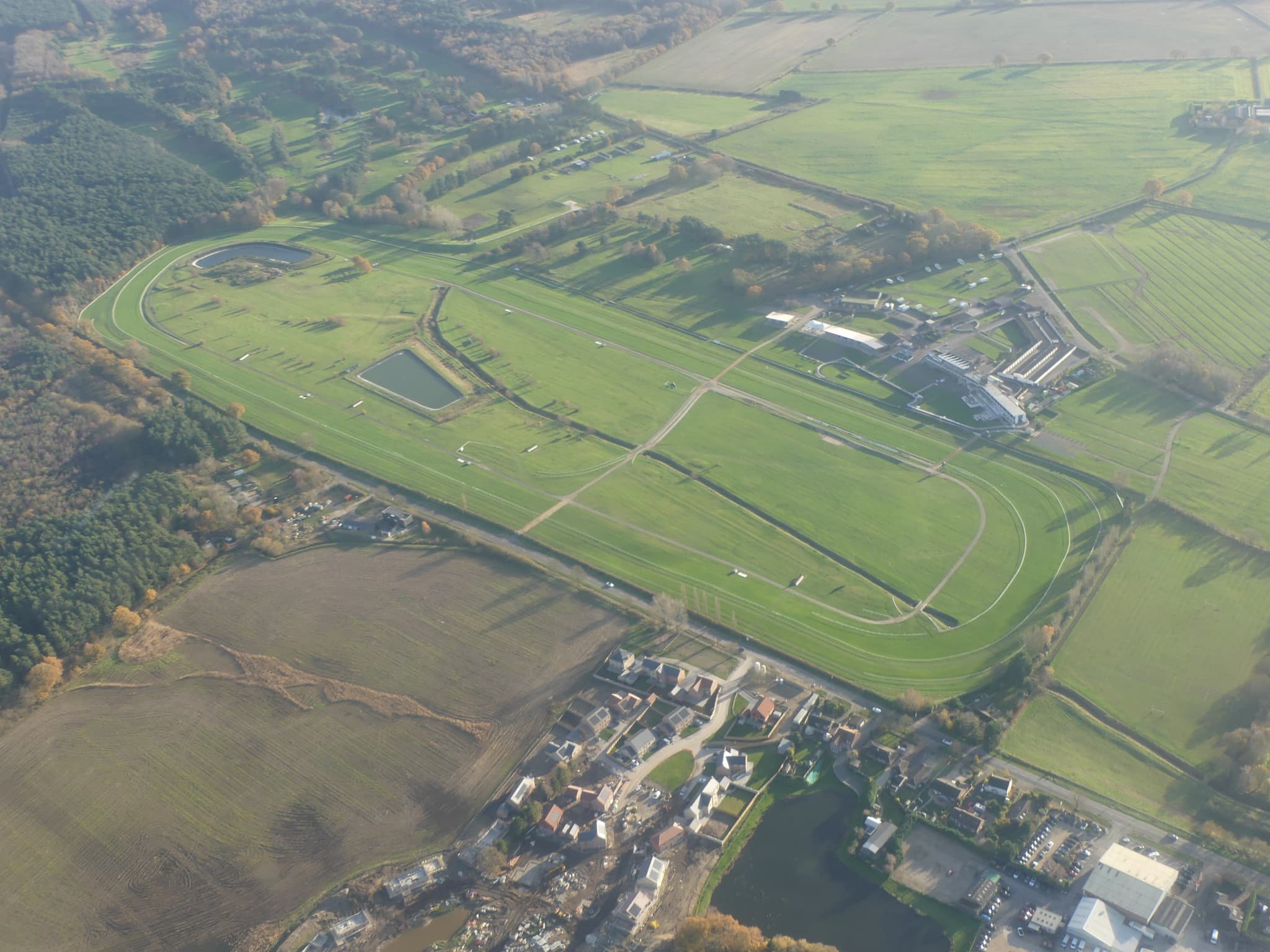
Market Rasen Racecourse: Complete Guide
Everything you need to know about Market Rasen — Britain's year-round jumps track in the Lincolnshire Wolds, the Summer Plate, and racing in the East Midlands.
Read more
A Day Out at Market Rasen Racecourse
A day at Market Rasen — getting there, what to wear, enclosures, food and drink, and insider tips for Lincolnshire's year-round jumps track.
Read more
Market Rasen Summer Jump Festival: Your Complete Guide
Market Rasen stages Britain's most popular summer jump racing festival. Here's your guide to the Lincolnshire course's August bank holiday occasion and annual Summer Plate.
Read morePhotos on this page are used under Creative Commons licences. Titles, sources and licence links for each one are on our image credits page.
Research the field with the AI Race Predictor
Our model publishes calibrated win-probability estimates for UK races — a second opinion to understand a race, not tips. It's open about its record: it doesn't beat the market, and we show exactly how it does.
Work it out & learn the basics
Gamble Responsibly
Gambling should be entertaining and not seen as a way to make money. Never bet more than you can afford to lose. If you or someone you know has a gambling problem, help and support is available.