
Founder & Editor · Last reviewed 2026-04-05
Introduction
Market Rasen Racecourse sits on Legsby Road in the Lincolnshire Wolds, approximately 16 miles north-east of Lincoln — a right-handed National Hunt circuit that holds one of British jump racing's most unusual distinctions. While most jumps venues follow the academic year pattern of autumn to spring, Market Rasen races year-round. May, June, July, August, September: the fences and hurdle flights are still in use when courses like Cheltenham and Kempton have their jumpers turned out for the summer. That single fact shapes everything about the course's character, its racing, and who turns up to watch.
The circuit at LN8 3EA has been in operation since 1924, when the Jockey Club issued a formal licence for racing on the present site. The surrounding landscape is chalk and limestone upland — the Lincolnshire Wolds, an Area of Outstanding Natural Beauty — and on a clear summer day you can see Lincoln Cathedral's twin towers some 16 miles to the south-west. Racing in this part of Lincolnshire actually predates 1924, with documented evidence of Feast Week meetings in the town during the early nineteenth century, but the modern course on its current footprint dates from after the First World War.
Ownership sits with Jockey Club Racecourses, the same group that runs Cheltenham, Newmarket, and Epsom. Market Rasen is one of the smaller venues in the portfolio — capacity is around 5,000 — but the Jockey Club investment means the infrastructure is maintained to a consistent standard, and prize money at the flagship summer fixtures reflects that affiliation.
Who This Guide Is For
First-time visitors will find everything needed to plan a day here: the course layout, facilities, travel options, and what to expect on arrival. The FAQ section at the end covers the questions most people ask before their first visit.
Regular racegoers who know Market Rasen in winter will find this guide useful for understanding how the summer programme differs — different going, different types of horses, different crowds. The fixtures and betting sections go into that detail.
History-focused readers should head to the history section, which covers the course's origins in 1924, its post-war development under clerk of the course Victor Lucas, and the milestones that brought it to its current status.
Festival and trip planners should read the Summer Plate section of the fixtures guide and the atmosphere and planning section. July's Summer Plate day is the centrepiece of the year: a Grade 3 handicap hurdle that draws competitive fields from across England and delivers an atmosphere distinct from anything the winter calendar offers.
Quick Decision Block
- Best day to visit: Summer Plate day, normally the third Saturday in July — the biggest crowd, best racing, and the most animated atmosphere of the year.
- Best enclosure for watching: The main grandstand gives a clear sightline from start to finish; the compact track means you are rarely more than 100 metres from the action.
- Going to expect in summer: Good to soft is the default; the chalk Wolds soil drains well, so firm is possible in a dry spell.
- Travel: Market Rasen station is a 10-minute walk from the course; direct trains from Lincoln take 30 minutes and from Grimsby around 40 minutes.
- Who dominates the summer programme: Trainers from the North and Midlands — Donald McCain from Cholmondeley, Brian Ellison from Malton — though Jonjo O'Neill has targeted the Summer Plate from his Jackdaws Castle base.
- Signature race: The Summer Plate, a Grade 3 NH handicap hurdle run in July, is the race the course is best known for.
- Atmosphere: Families and casual racegoers make up a larger share of the summer crowd than at winter jumps meetings; the dress code is relaxed and the pace unhurried.
Market Rasen is not trying to be Cheltenham. It is a community racecourse with a clear identity: accessible, summer-focused National Hunt racing in one of England's most attractive rural counties. This guide covers everything you need to make the most of it.
Bet on Market Rasen
Place your bets on Market Rasen races with a trusted bookmaker.

Promo code BETFRED50. New customers only. Register, deposit with a Debit Card, and place a first bet of £10+ at Evens (2.0)+ on Sports, to be settled within 7 days, to get £30 in Sports Free Bets and £20 in Bet Builder Free Bets within 24 hours of settlement. 7-day expiry. Eligibility & payment exclusions apply. Full T&Cs apply. Take Time to Think. BeGambleAware.org. 18+. Full T&Cs.

Promo code R30. New UK customers only, 18+. Register, deposit £10 or more, then place a £10 single cash bet at odds of 1/2 (1.5) or greater on any sports market (excluding Virtuals). Once the qualifying bet settles you get £30 in Free Bets (3 x £10) — the qualifying bet can win or lose. Free Bets are valid on any sports market excluding Virtuals, expire in 7 days, are non-withdrawable and must be used in full. Excluded deposit methods apply (including PayPal, Apple Pay, Skrill and NETELLER). Named bets such as Lucky 15 do not qualify. If you cash out the qualifying bet, or it is voided, you are no longer eligible for the offer. Ends 31.12.26. Full T&Cs apply. Please gamble responsibly. BeGambleAware.org. 18+. Full T&Cs.

Promo code BET40GET20. New UK customers, 18+. Register with the code and place a first bet of £40 or more at Evens (2.0) or greater. Receive 2 × £10 free bets: the first credited automatically once the qualifying bet settles, the second 24 hours later. Free bets must be placed at minimum odds of 4/1 (5.0), expire 24 hours after credit, and the free-bet stake is not returned with winnings. Debit card deposits only. Take Time to Think. BeGambleAware.org. 18+. T&Cs apply. Full T&Cs.

50% of your first-day net losses refunded as a free bet, capped at £25. New UK customers aged 18+ only. To qualify, deposit and place a first bet of £10 or more on any sport at minimum odds of evens (2.00), then place at least two further bets on different events, each worth at least 50% of your largest bet, all at evens (2.00) or greater. Losses are counted from your first settled bet until 23:59 the same day. Place a qualifying £10+ bet and you are guaranteed at least a £5 free bet. Bets placed at SP, void bets, cashed-out bets and bets struck with free bets do not count towards the offer. The free bet is credited the day after your qualifying bets settle and must be used within 7 days, after which it expires. It can be used at odds from 1/4 (1.25) up to 250/1 on singles and straight accumulators, but not on Trixie, Patent or Yankee style multiples. Free-bet stake is not returned with winnings. One offer per person, household, address, IP address and device. E-wallet deposits may not qualify, so check the cashier before depositing. Customers registered with GAMSTOP cannot claim. KYC identity verification must be completed before the free bet is credited. Take Time to Think. BeGambleAware.org. 18+. T&Cs apply. Full T&Cs.

New customers, 18+. Choose the sports bonus at sign-up, make a first deposit and receive a 100% bonus up to £50 in your Sports Bonus balance. To convert the bonus to cash, wager it 10x within 30 days. Single bets below Evens (2.00) do not qualify; accumulators do not qualify if any selection is below 1/2 (1.50). Virtual Sports, voided, cancelled, drawn, cashed-out and free-bet wagers do not count towards wagering. Only the first settled bet per event counts. Withdrawing before the wagering requirement is met forfeits the bonus balance including bonus winnings. Real-money funds are used before bonus funds. Deposits via Skrill or Neteller are not eligible. Not valid in conjunction with other promotions. Odds, bet and payment limits apply. 10bet general and promotion T&Cs apply. BeGambleAware.org. 18+. Full T&Cs.

New customers in Great Britain and Republic of Ireland, 18+. Place a £10 fixed-odds qualifying bet at minimum odds of 1/2 (1.50) — single or each-way (only the win part counts), pre-event or in-play, not cashed out early, within 28 days of opening the account. Receive up to £60 in bonuses credited over three days: 3 × £10 fixed-odds free bets (the first on settlement, then 24 and 48 hours later) plus 3 × £5 Total Goals FOOTBALL spread bets and 3 × £5 racing Winning Favourites spread bets, with a £1 racing Race Index spread bet as an extra on top. The spread bets need a full spread-betting account, opened within 28 days of the fixed-odds account and subject to Spreadex's eligibility and appropriateness checks. Free-bet stakes not returned with winnings; free bets valid 28 days from issue. IMPORTANT: the £5 credits are SPREAD bets — sports spread betting carries the risk that losses can exceed your stake. Sports spread-betting customers do not have Financial Ombudsman or FSCS recourse. Take Time to Think. BeGambleAware.org. 18+. T&Cs apply. Full T&Cs.

Promo code WELCOME15, entered under My Bonuses after registering. New UK customers, 18+. Place a first qualifying bet of at least £10 from your cash balance at odds of evens (2.0) or greater within 7 days of opening the account. Once the qualifying bet fully settles you receive £15 in free bets, credited as 3 x £5 tokens with set uses: one £5 accumulator free bet (minimum 4 legs, each leg at 2/5 or bigger), one £5 sports free bet (any market at evens or bigger) and one £5 Sub Cover free bet (selected football player markets at evens or bigger). Free-bet stakes are not returned with winnings. Free bets expire 7 days after they are credited. Void, cashed-out and partially cashed-out bets do not qualify. One offer per customer. Confirm the current terms on BetGoodwin's own welcome-offer page before claiming. Take Time to Think. BeGambleAware.org. 18+. T&Cs apply. Full T&Cs.

New UK customers, 18+. Minimum deposit £10. Place a £10 qualifying single on sports (excluding virtuals) at minimum odds of 1/2 (1.50), settled within 14 days. Deposit-method exclusions apply. Receive £30 in free bets (stake not returned), split £20 for sportsbook use (2 x £10) and £10 for Bet Builder only (2 x £5); Bet Builder does not cover horse racing. Free bets must be accepted within 7 days and expire 7 days after acceptance. No promo code required. Best Odds Guaranteed on UK & Irish racing, subject to having staked over £25 in the previous seven days. Operated by LiveScore Betting and Gaming (Gibraltar) Ltd, UKGC 56859. Confirm the current terms on LiveScore Bet's own promotions page before claiming. Take Time to Think. BeGambleAware.org. 18+. T&Cs apply. Full T&Cs.
18+. BeGambleAware.org
The Course
The Course
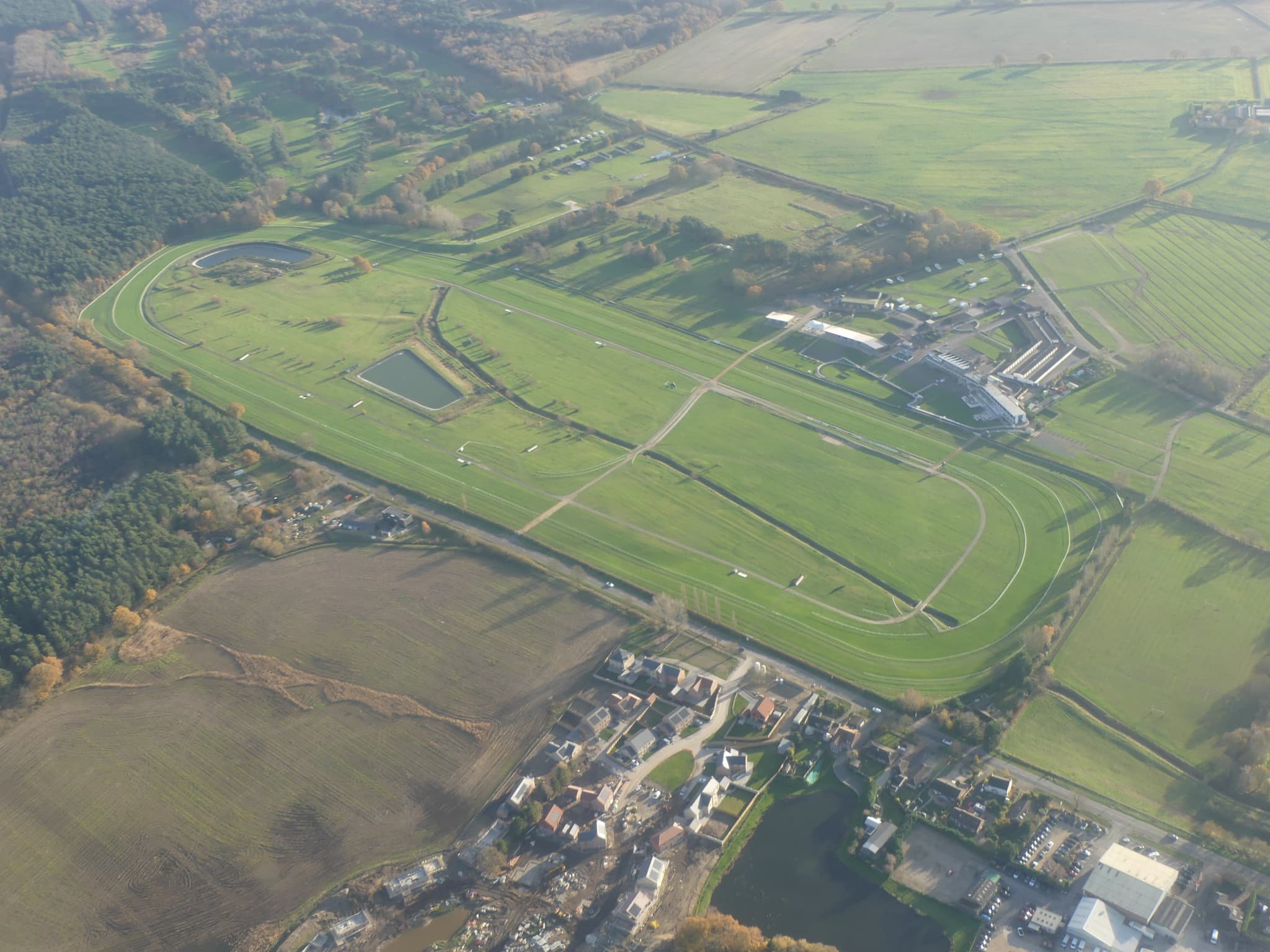
Market Rasen's track is a right-handed oval of approximately one mile two furlongs, set in the Lincolnshire Wolds on Legsby Road. The layout has been in place since the post-war era — Victor Lucas served as clerk of the course between 1945 and 1971, and the configuration he oversaw is largely what you see today. That continuity is part of why the course has such a consistent character: this is not a track that has been repeatedly redesigned or altered at the margins.
Shape, Direction, and Distances
The circuit runs right-handed throughout. There is no separate chute or spur for short trips — all races use the full oval or a portion of it. The back straight is shorter than you might expect given the overall circuit length; the course bends into the home straight relatively early by comparison with galloping tracks like Doncaster or Newbury. As a result, races play out with frequent changes of angle, and horses need to be balanced and responsive to rider instructions throughout.
Distances at Market Rasen start at around two miles for hurdles and two miles two furlongs for chases. The Summer Plate itself is run over two miles five furlongs. Longer trips — two miles six furlongs and upwards — also feature on the card. There are no sprint hurdles or very short jumps trips here; the minimum distance reflects the nature of a track designed for stamina-testing National Hunt racing. Runners completing the full circuit cover approximately one mile two furlongs per loop, so a two-and-a-half-mile chase involves something close to two full circuits.
The Fences and Hurdles
Market Rasen has seven fences on the chase course and seven flights on the hurdle course per circuit. The obstacles are generally regarded as fair rather than severe — the fences are well-constructed and the approach angles are not particularly difficult. The course has not historically generated the same attrition rates you see at hilly or fence-rich tracks. That suits summer jumping, where trainers often bring horses they want to campaign without undue physical stress.
One quirk worth knowing: the final fence in chases is positioned closer to the winning post than at many courses, which limits the recovery time for horses that make a mistake there. Horses that are accurate at their fences — particularly at the last two — tend to run well here regardless of the pace scenario up front.
The hurdle flights are portable and consistent. Market Rasen's hurdle course sits inside the chase track, as is standard at most oval NH venues. The final hurdle in the home straight is the last significant test before horses are asked to sprint to the line.
Going and Drainage
The ground beneath Market Rasen's track is chalk and limestone — the subsoil of the Lincolnshire Wolds. That composition drains naturally and quickly. In summer, the going is most commonly described as good to soft, with good possible if the weather has been dry over a sustained period. Firm ground is unusual but not unknown in a drought summer. Heavy going is rare at any time of year; even in winter, the natural drainage keeps conditions manageable.
This drainage characteristic has practical consequences for punters and trainers. Horses that need truly soft or heavy ground to show their best form are at a disadvantage here in summer. Conversely, horses that act well on a sound surface — ones with clean, efficient action — are not penalised by conditions at Market Rasen the way they might be at clay-based summer venues like Worcester on a wet day.
Going reports are issued by the course on race day morning and the preceding afternoon. Given the variability of English summer weather, always check the actual going report rather than assuming from the time of year.
What the Track Favours
The consensus among trainers who run regularly at Market Rasen is that the sharp, turning nature of the track suits handy horses that jump fluently. A free-going front-runner who clears his fences cleanly can dictate a controlled pace around the short back straight and into the home turn. If such a horse has the jumping accuracy to handle the final fence with a lead, they are difficult to catch.
Hold-up horses can win at Market Rasen, but the geometry of the track gives them less room for error. The relatively short home straight — roughly three furlongs from the final obstacle to the line — means any horse held up needs to find an opening quickly. When the pace has been truly strong from the outset, there can be enough momentum for a closer to come from behind. But on the more moderate gallop that summer fields often produce, the front-runner has a material advantage.
For trainers like Donald McCain, based at Cholmondeley in Cheshire approximately 60 miles from the course, Market Rasen's summer programme is a natural fit for NH horses that need racing rather than summer holiday. Brian Ellison, operating from Malton in North Yorkshire — also around 60 miles — is another yard that appears regularly on the Market Rasen card. Jonjo O'Neill makes the longer trip from Jackdaws Castle in the Cotswolds when the Summer Plate is the target.
The Viewing Experience as a Spectator
The practical layout of the course has consequences for how you experience a race day. The main grandstand faces the home straight and gives a direct view of the final bend, the last two obstacles, and the run-in to the post. From the grandstand, you can watch horses emerge from the back straight, negotiate the final turn, and battle it out through the closing stages — the phase of any race that matters most.
The inner rail on the home straight is accessible to general admission spectators at most fixtures, which means you can position yourself close to the final fence or the winning post. At a 5,000-capacity venue, finding a good position along the rail is not difficult except on the busiest days. Summer Plate day is the one exception where the popular spots fill up early; arriving 30 to 40 minutes before the feature race gives you time to take up a position before the crowds build.
The parade ring sits between the grandstand and the paddock area in a configuration that is easy to navigate on foot. Horses are led up approximately 15 minutes before the scheduled off time, giving spectators a reasonable window to assess runners before committing to the betting ring or mobile apps. The walking-up pattern at Market Rasen is straightforward — the ring is not complicated to read, and the horses tend to be well-settled by the time they come out to parade.
Seasonal Variation on the Track
The experience of racing at Market Rasen is different in July compared to December, and not just because of the weather. In summer, fields tend to be smaller on average — eight to 12 runners is typical for routine fixtures, though the Summer Plate attracts larger entries. Smaller fields change the pace dynamics: with fewer horses competing for the early lead, front-runners face less pressure and the gallop is often steadier than in a tightly contested winter handicap with 16 runners.
In winter, fields are sometimes larger, pace is typically stronger, and the going — while still on the better side of the scale by comparison with many venues — can move toward soft. Horses coming from the more demanding winter campaign are typically fitter than summer horses making their first seasonal appearance, and form reading requires an awareness of which horses are at peak condition versus which are being freshened up after a demanding spring.
For anyone visiting to assess horses for betting purposes, summer evening meetings with six to eight runners and moderate pace can be deceptive. The winning time is slower, margins are larger, and form is harder to transfer from these races to busier winter handicaps. Treating summer Market Rasen form as a self-contained sample — rather than comparing it directly to winter form at other venues — tends to produce more accurate assessments.
The Course in Context
Compared to other summer NH venues, Market Rasen sits in its own niche. Newton Abbot (Devon) and Worcester (Worcestershire) also race over jumps in summer, but Market Rasen's position as the sole NH venue in Lincolnshire and the wider East Midlands gives it a catchment area that neither of those courses can match from the North. Southwell, 25 miles to the south-west, stages flat racing on an all-weather surface — a different product entirely. For northern and midlands NH trainers looking for summer mileage, Market Rasen is the most convenient option in the region.
The undulating Wolds terrain around the course provides a pleasant backdrop without creating the severe gradients you encounter at places like Hexham or Exeter. The course itself is largely flat across the infield, which makes it straightforward to navigate as a spectator. The grandstand sits on the home straight and gives a clean, unobstructed view from the final bend to the line.
Takeaway: Market Rasen's compact, right-handed shape and free-draining chalk subsoil make it a consistent summer venue that rewards accurate jumpers and front-runners. Knowing those tendencies is the starting point for reading any race at the course.
Key Fixtures & Calendar
Key Fixtures and the Racing Calendar
Market Rasen stages around 20 fixtures a year, distributed across all 12 months. The programme is exclusively National Hunt — no flat racing, no mixed-code days. The spread of meetings across summer and winter gives the course a dual identity: an accessible family day out in the warmer months, and a quieter, more committed jumps crowd in winter. Both are worth knowing about before you plan a visit.
The Summer Plate: July's Centrepiece
The Summer Plate is the race that defines Market Rasen in the national consciousness of NH racing. Run normally on the third Saturday in July, it is a Grade 3 handicap hurdle — the grade was awarded in 2020 — and represents one of the highest-quality NH races staged in the Midlands during the summer months. The race distance is two miles five furlongs, which provides a real test of stamina on what is typically good to soft ground.
Prize money at Grade 3 level attracts competitive entries. Trainers who would ordinarily bypass a summer NH fixture send horses specifically for the Summer Plate. Jonjo O'Neill has made the 90-mile journey from Jackdaws Castle in the Cotswolds to target the race; yards from the North like Donald McCain's Cholmondeley operation treat it as a calendar fixture. Entries often include horses with Graded form and horses stepping up from competitive Listed handicaps, creating fields that real analysis rewards.
The Summer Plate day card extends beyond the feature race. A Summer Hurdle over two miles features on the same card, and supporting races across all distances fill out a full afternoon. The meeting typically draws the largest crowd of the year — several thousand people who would not describe themselves as regular racegoers come out for this day specifically. That social dimension is part of what distinguishes Summer Plate day from routine fixtures.
The exact date each year is confirmed by Jockey Club Racecourses in the autumn preceding the season. Always verify against the course website before booking travel or accommodation.
The Rest of the Summer Programme
Between May and September, Market Rasen runs the majority of its annual fixtures. Evening meetings feature in the calendar — a format that works particularly well at this latitude in midsummer, when British Summer Time gives usable light until past 9pm. An evening at Market Rasen in June or August has a different rhythm to an afternoon meeting: the working day crowd arrives later, the atmosphere around the parade ring is more relaxed, and the fields tend to be drawn from horses campaigned specifically for the summer schedule.
Many of the summer fixtures carry decent prize money for conditions and handicap races below Grade level. Novice hurdle divisions are well-populated in summer as trainers bring young horses along in the absence of autumn alternatives. Mares' races appear regularly on the card. For punters, the summer programme offers consistent opportunities to assess horses in a context where trainer patterns — which yards travel to Market Rasen in summer, which horses they bring — are worth tracking across multiple seasons.
Winter Fixtures: October to April
The winter programme is smaller in scale and quieter in atmosphere. Fixtures between October and April serve the local and regional jumps following: people who go racing because they love National Hunt racing, not because it is a summer social event. Fields can be tighter, prize money lower, and conditions more variable — though the drainage that helps the course in summer also keeps waterlogging at bay in winter.
Quality jumpers do appear at Market Rasen in winter. Novice chasers from northern yards are tested here before graded targets in the second half of the season. Handicap chasers from the Malton and Middleham training centres — 60 and 80 miles north respectively — are entered regularly. These meetings are worth attending for anyone who prefers a concentrated NH atmosphere without the social-occasion dressing.
Planning Your Visit Around the Calendar
The distinction between summer and winter fixtures matters practically. Summer meetings: book ahead for the Summer Plate (it sells out); evening fixtures can be attended on shorter notice; parking fills up for the flagship July meeting. Winter meetings: rarely sold out; arrival on the day is normally straightforward; the atmosphere is purely racing-focused.
For a day that balances quality racing with a social programme, the Summer Plate in July is the answer. For the experience of NH racing as regular attendees know it — smaller crowd, committed racing public, competitive fields in the context of the season — a winter fixture between December and February gives a truer sense of the course's year-round character.
Takeaway: The Summer Plate in July is the reason most people visit Market Rasen for the first time, but the year-round programme means there is almost always a fixture available within a few weeks for anyone in the East Midlands or North who wants a day at the jumps.
Facilities & Hospitality
Facilities and Hospitality
Market Rasen's facilities match its identity as an accessible, intimate jumps course with a capacity of around 5,000. This is not a venue trying to replicate the corporate hospitality architecture of Cheltenham or Ascot. What it offers instead is a well-maintained set of facilities that are straightforward to use, comfortable enough for a full day, and well suited to the relaxed summer atmosphere that defines its best meetings.
Enclosures and Viewing
The main grandstand runs along the home straight and provides a clear, elevated view from the final bend to the winning post. The structure is not large — in keeping with the 5,000 capacity — but the sight lines are good and the compact nature of the oval means no spectator is particularly remote from the action. On Summer Plate day, the grandstand fills up, and the areas of open grass around the track become populated well before the first race.
The paddock and parade ring are positioned centrally relative to the grandstand, making it easy to watch the horses being led up before each race and then move to a viewing position without a long walk. For anyone who uses the paddock as part of their pre-race assessment — watching how horses travel in their coats, how they move, how relaxed or wound up they appear — Market Rasen's compact layout is actually an advantage over larger venues where the parade ring can be some distance from the main stand.
There is no rail or grandstand divide that creates dramatically different viewing experiences between enclosures, in the way that Cheltenham's various enclosures do. Market Rasen's relatively egalitarian layout means most spectators have a broadly similar experience of the racing.
Catering and Bars
Food and drink outlets are distributed around the course. Options range from standard racecourse catering — pies, burgers, fish and chips — to table-service restaurants for those who want a sit-down meal as part of the day. The Jockey Club's ownership means a consistent baseline of quality across its venues, and Market Rasen benefits from that group standard.
Bars open when the gates do and are busy on Summer Plate day. On quieter winter fixtures, the bar areas are less crowded and service is faster. Real ale is typically available alongside standard lager and cider options. Food quality at Jockey Club venues has improved noticeably since 2015, when the group invested in upgrading catering across its portfolio; Market Rasen was part of that improvement programme.
For hospitality packages, the course offers a range of options depending on the fixture. The Summer Plate meeting carries the widest menu of packages, including private dining with race cards and tipping guides. For group bookings of ten or more, the corporate hospitality office is worth contacting directly through the Jockey Club website. Private boxes with track-facing windows are available for the larger fixtures.
Accessibility
The site is relatively flat across the main public areas, which makes it easier to navigate than courses built on hillsides like Hexham or Ludlow. Disabled parking is available close to the main entrance; the course recommends contacting the office in advance to confirm specific arrangements for anyone with mobility requirements. Accessible viewing areas exist near the home straight, and the parade ring area is reachable without steps from the main concourse.
Pushchair access is manageable on the main hardstanding and grass areas, though the course can be uneven underfoot in wet conditions. Summer fixtures on firm ground make the experience noticeably easier for families with young children — one of several reasons the Summer Plate meeting draws such a high proportion of first-time visitors with families.
Takeaway: The facilities at Market Rasen are appropriate for the scale of the course — practical, maintained, and truly accessible. Anyone expecting a large-venue experience will need to adjust expectations; anyone looking for a comfortable, stress-free day at the jumps will find what they need.
Getting There
Getting There
Market Rasen Racecourse is on Legsby Road, Market Rasen, Lincolnshire, LN8 3EA — in the Lincolnshire Wolds, approximately 16 miles north-east of Lincoln. Getting there by public transport is feasible and straightforward for those coming from Lincoln or Grimsby. For everyone else, driving is the most practical option.
By Train
Market Rasen station is on the Nottingham to Grimsby line and is served by direct trains from Lincoln (journey time approximately 30 minutes) and from Grimsby (approximately 40 minutes). The station sits roughly 10 minutes' walk from the course on Legsby Road — a flat, straightforward walk through the town centre.
There are no direct trains from London to Market Rasen. Travellers from the capital or the south should connect via Lincoln — reached from London King's Cross in approximately 90 minutes on East Midlands Railway services. From Newark Northgate (also on the East Coast main line), connections to Lincoln and then Market Rasen are possible but add to the journey time. Allow at least two to two and a half hours from central London in total.
Services between Lincoln and Market Rasen run roughly every hour during the day, but less frequently on evenings and Sundays. For evening fixtures, check the last train back before you travel — catching the final service after a late-running evening meeting is not always possible, and pre-booking a taxi back to Lincoln may be the safer option.
By Car
From Lincoln, take the A158 east towards Horncastle, then follow the A157 north-west into Market Rasen. From the south, the A46 Lincoln bypass connects with the A158. From the north and Grimsby, the A46 south from Caistor brings you to Market Rasen directly. The racecourse is signposted from the main roads into town.
On-course parking is included in standard admission for most fixtures. Summer Plate day is the exception where parking pressure is highest: aim to arrive 45 minutes before the first race if you want a space close to the entrance. For evening meetings, the course is less congested and late arrival is generally not a problem.
Staying Nearby
Market Rasen town itself has limited hotel stock — it is a small Lincolnshire market town of around 3,500 residents. Lincoln offers the widest range of accommodation within easy distance: the city is 16 miles south-west and well served by hotels across all price categories, from budget chains near the train station to boutique options in the cathedral quarter. Louth, 10 miles north-east, has bed and breakfast options and is a pleasant Lincolnshire market town with a fifteenth-century church and a lively Wednesday market. For the Summer Plate meeting, accommodation across the region fills up — Lincoln in particular has limited availability in peak July — so book at least a month in advance.
Grimsby and Cleethorpes, approximately 24 miles to the north-east, offer further accommodation options for anyone who wants to combine a Market Rasen fixture with a visit to the Lincolnshire coast. Cleethorpes seafront is around 30 miles from the course by road.
Travelling from Outside the Region
From Manchester and the North West, the most practical route is the M62/M18 eastbound to the Humber Bridge (A15), then south through Barnetby and on to Market Rasen via the A46. Total distance from Manchester is approximately 100 miles. From Sheffield, the A57 east to Gainsborough and then the A631 through Market Rasen is around 55 miles. From Nottingham, the A46 north all the way to Market Rasen covers about 45 miles and is largely dual carriageway.
Coming by train from the North East, the most practical route is London King's Cross to Newark Northgate or Grantham, then a connection to Lincoln, then onward to Market Rasen. The full journey from Leeds via this route takes approximately two and a half to three hours. No direct train from Yorkshire to Market Rasen exists.
Takeaway: The easiest approach from outside Lincolnshire is to connect via Lincoln — either driving from there or arriving by train. For Summer Plate day especially, planning travel and accommodation well in advance will save the frustration of last-minute difficulties.
Frequently Asked Questions
History of Market Rasen Racecourse
History of Market Rasen Racecourse
Racing in Market Rasen predates the current course by at least a century. The town's Feast Week — an annual celebration tied to the agricultural calendar of the Lincolnshire Wolds — included horse races as early as the first decades of the nineteenth century. These were informal by modern standards: no permanent infrastructure, no permanent enclosures, and no regulated betting ring in the sense the Jockey Club would later require. But the appetite for racing in this part of Lincolnshire was established long before the modern venue opened.
The 1924 Licence and Early Development
The course on Legsby Road received its formal Jockey Club licence in 1924, placing Market Rasen within the regulated framework of British horseracing for the first time. Racing on the current site replaced the scattered Feast Week meetings with a permanent, structured programme. The right-handed oval was laid out to make use of the naturally draining chalk-and-limestone terrain of the Wolds — a practical decision that has continued to benefit the course ever since.
The interwar years were a period of consolidation for many smaller British courses, with the Jockey Club working to professionalise both the racing product and the facilities. Market Rasen's early programme was modest: a handful of fixtures annually, competing for prize money and entries against more established northern venues like Doncaster and York. The National Hunt programme that characterises the course today was not immediately dominant; it evolved as the course found its feet through the 1930s.
Racing at Market Rasen was suspended during the Second World War, as it was at almost all British venues. The cessation from 1940 to 1945 created a gap in the course's development, but it also gave subsequent management a clean start.
The Victor Lucas Era: 1945 to 1971
The post-war period at Market Rasen is defined by the tenure of Victor Lucas as clerk of the course, a role he held from 1945 until 1971. Lucas oversaw the physical development of the track — the configuration of the oval, the positioning of the fences and hurdle flights, and the establishment of the grandstand on the home straight — and gave the course the layout it still uses today. His 26-year tenure is the longest-serving period of individual influence on the course's infrastructure, and the stability of the circuit since his departure is partly a reflection of how well the original design has functioned.
Under Lucas, the National Hunt programme grew. The jump-racing tradition in Lincolnshire was strengthened through regular fixtures, and trainers from the North began incorporating Market Rasen into seasonal schedules for horses that needed summer mileage. The post-war National Hunt boom — a period when attendances at jump meetings rose sharply as public appetite for sport recovered — worked in Market Rasen's favour: a convenient, accessible venue in a county with strong agricultural roots and a population that understood horse culture.
Summer Jumping Takes Hold
The decision to pursue year-round jumping — offering fixtures across the summer months when most National Hunt venues were closed — was a defining strategic choice in Market Rasen's modern history. The precise moment when the summer programme became systematic is difficult to date precisely, but by the 1980s the course had established itself as one of the very few venues willing to stage competitive NH racing in July and August.
This was not without risk. Summer jumping attracts thinner fields on average than the peak winter season, smaller crowds at routine fixtures, and racing of variable quality. What Market Rasen identified was that the Midlands and North had a gap: no other venue in the region offered summer NH racing, and there was real demand from trainers who wanted to keep active jumpers in work without sending them south to Newton Abbot or Worcester.
The development of the Summer Plate into a high-profile fixture — eventually achieving Grade 3 status in 2020 — gave the summer programme a centrepiece that justified serious entries. A Grade 3 prize money race changes the calculation for northern and Midlands trainers: it is worth running a good hurdler in July, even if the rest of the summer card is lower in class.
Jockey Club Ownership and the Modern Era
Market Rasen became part of the Jockey Club Racecourses portfolio as the group consolidated its ownership of British tracks through the 1990s and 2000s. The group now operates 15 venues, including Cheltenham, Newmarket, and Epsom. For Market Rasen, that affiliation has meant access to group-wide investment in facilities and prize money, and the marketing reach of a national organisation.
The Grade 3 upgrading of the Summer Plate in 2020 was a product of Jockey Club investment in the fixture's prize money. Race grades in Britain are determined by Racing UK — an independent body — based partly on the quality of previous fields, which is in turn influenced by prize money. By committing resource to the Summer Plate, the Jockey Club created a positive feedback loop: better prize money attracted better horses, which produced better race quality, which justified the Grade 3 classification.
Market Rasen in the Wider Context
A hundred years after its 1924 licence, Market Rasen occupies a clearly defined position in British racing: the leading summer NH venue in the East Midlands and one of a small number of year-round jump racing venues in England. The Lincoln Cathedral view on a clear summer evening, the sound of the commentary echoing across the Wolds, and a racecard that includes horses from yards as far apart as Cheshire, North Yorkshire, and the Cotswolds — this is what a century of accumulated identity produces.
The course has not tried to be something it is not. Capacity is maintained at around 5,000; the grandstand is not dramatically enlarged. That choice reflects an understanding that the course's strength is intimacy, accessibility, and a consistent product delivered in one of England's more attractive rural settings.
Famous Moments
Famous Moments at Market Rasen
For a course of its size, Market Rasen has produced a disproportionate number of truly memorable racing moments. Most of those moments are connected to the Summer Plate, which since its elevation to Grade 3 status in 2020 has attracted the kind of fields that generate significant results. But the winter programme and novice races have also thrown up horses and performances that repay attention.
The Summer Plate's Grade 3 Era
The awarding of Grade 3 status to the Summer Plate in 2020 marked the start of a new phase for Market Rasen's flagship race. In the seasons that followed, fields began to include hurdlers with graded form from the winter season — horses placed at Cheltenham, Leopardstown, and Kempton appearing on a July card in Lincolnshire, which would have seemed unlikely a decade earlier. The race transformed from a respectable regional handicap into a real midsummer target.
Trainers like Jonjo O'Neill, whose Jackdaws Castle operation is principally associated with staying chasers and graded hurdlers, specifically identified the Summer Plate as a summer target. The willingness of a trainer at that level to make a 90-mile journey from the Cotswolds for a Market Rasen race is a signal of how the race's standing changed following the 2020 upgrade. In summers since the Grade 3 designation, the Summer Plate has regularly featured horses rated 140 or above in the official BHA handicap — competitive by any standard for an NH race outside the spring festival season.
Jonjo O'Neill's Summer Plate Campaigns
Jonjo O'Neill's targeting of Market Rasen in summer represents one of the notable recent storylines of the course. O'Neill — champion jockey in the 1977-78 and 1979-80 seasons, and a Gold Cup-winning trainer — treating a Market Rasen Grade 3 as a significant target speaks to the race's improved standing. The specific results in individual years are less significant than the pattern: a trainer of that profile allocating preparation time and resources specifically for a July fixture at a 5,000-capacity course in Lincolnshire is a significant statement about the race's quality.
Donald McCain's Northern Dominance
Donald McCain, son of the legendary trainer Ginger McCain who trained Red Rum to three Grand National victories, has built a significant record at Market Rasen from his Cholmondeley base. The 60-mile trip from Cheshire is well within the range of a well-organised northern yard, and McCain has treated the course as a reliable summer option for horses suited to the track's jumping demands. Identifying which McCain horses are specifically prepared for Market Rasen — rather than running there as a convenience — is one of the productive lines of research for anyone betting on the summer card.
Brian Ellison and the North Yorkshire Influence
Brian Ellison, based in Malton, North Yorkshire, is another trainer for whom Market Rasen's summer programme has been a consistent feature of the annual plan. Malton is approximately 60 miles from the course, close enough that runners can travel on the day. Ellison's yard handles a mix of flat and jumps horses, but the NH side of the operation has produced multiple winners at Market Rasen over recent seasons. Among northern trainers, Ellison and McCain represent the two most productive sources of Market Rasen runners in summer.
The Lincoln Cathedral View: A Signature Setting
No list of Market Rasen's memorable elements would be complete without the setting itself. On a clear July day, with the racing programme running and the stands comfortably populated, Lincoln Cathedral is visible 16 miles to the south-west — the twin towers of one of England's great Gothic buildings rising above the Wolds landscape. The Cathedral was built from 1072 onwards and the towers reach 83 metres above the hilltop on which the building sits. That view, coinciding with the sound of horses going to post and the chalk downland terrain all around, creates a distinctly Lincolnshire scene that is not replicated anywhere else in British racing.
It is a moment that regular visitors tend to mention specifically: you are watching jump racing in July with a medieval cathedral on the horizon. The combination of the rural and the architectural is part of what gives Market Rasen days their particular atmosphere.
An Evening in June: The Quiet Famous Moment
Not every memorable experience is a single dramatic race. Market Rasen's evening meetings in June — the sun still high at 7pm, the Wolds bathed in low summer light, a modest card of hurdle races with competitive fields — produce a specific kind of enjoyment that regular attendees return for year after year. This is not something that makes the Racing Post front page. But for the audience that has discovered it, an evening meeting at Market Rasen in midsummer is one of British jump racing's pleasures that has nothing to do with prize money or prestige.
Betting Guide
Betting Guide
Market Rasen has a set of characteristics that reward anyone who takes the time to understand them. The track's shape, the seasonal going patterns, and the trainer profiles that dominate the summer card all create angles that can be identified with systematic research. This guide does not offer selections — results change every week. What it does provide is the framework for thinking about Market Rasen betting in a structured way.
Please gamble responsibly. If you feel you may have a problem with gambling, visit BeGambleAware.org or call the National Gambling Helpline on 0808 8020 133.
Track Characteristics and Their Betting Implications
Market Rasen's right-handed, compact oval of approximately one mile two furlongs creates a specific set of demands. Horses that run here regularly and run well tend to share a profile: accurate jumping, an ability to travel on or near the pace, and good balance through bends. Horses with a long, galloping stride — the type that excels at wide-open tracks like Kempton or Exeter — do not necessarily translate their flat-track form here. The turns come frequently enough that a horse with a more compact, efficient action is often at an advantage.
Front-runners at Market Rasen perform above their expected market rate. The back straight is short, giving hold-up horses limited time to build momentum. When the early pace is moderate — which happens regularly in summer with thinner fields — a horse that takes the lead from the start and clears its fences cleanly faces an opponent who must first close the gap and then find the jumping accuracy to challenge in the final two obstacles. That sequence is harder than it looks on paper.
Going matters, but in a predictable direction. The chalk subsoil means the ground at Market Rasen rarely deviates far from good to soft in summer. Horses that are specifically described as benefiting from soft ground are not at a structural advantage here in July or August the way they would be at a wet winter track. Equally, horses marked as unsuited to firm conditions are less likely to encounter them at Market Rasen than at other summer venues with less natural drainage.
Trainer Patterns Worth Tracking
Three yards are the starting point for any Market Rasen research. Donald McCain (Cholmondeley), Brian Ellison (Malton), and Jonjo O'Neill (Jackdaws Castle) have each produced consistent returns at the course. But the key distinction is between trainers who run at Market Rasen as a matter of habit and trainers who specifically prepare a horse for a particular race there.
A McCain runner in a summer hurdle handicap that has had two previous runs at the course in similar conditions is a different proposition from one that is running at Market Rasen for the first time after a busy spring schedule. The same principle applies to Ellison runners. Trainer statistics by racecourse are available through Racing Post and Timeform; filtering for summer months specifically gives a more accurate picture than full-year figures that include winter results.
For the Summer Plate itself, the Grade 3 status means preparation tends to be more deliberate. Trainers who target the race typically bring horses off a recent run — often 14 to 28 days previously — and the form of that prep run is worth examining carefully. A horse placed in Listed or Grade 3 company in the spring who returns in early July with a handicap mark that reflects winter form, not summer fitness, can be underestimated by the market.
Handicap Angles in Summer
Summer handicap hurdles at Market Rasen often feature horses whose official BHA ratings were set during the winter, when fields were more competitive and going conditions more demanding. A horse rated 130 for performances on heavy ground in December may be running in a summer handicap on good to soft ground with a rating that was earned under quite different conditions. If that horse has shown in its form history that it acts on a sounder surface — even one run on good to soft that it won — it is potentially underrated for its summer appearances.
Conversely, watch for horses whose form was built entirely on soft or heavy going during winter. They may be running at a market price that reflects a strong overall record without proper adjustment for the going they are about to encounter.
Betting on the Summer Plate
The Summer Plate at Grade 3 level carries ante-post markets from several weeks out. For punters interested in ante-post betting, the key variables are going (confirm closer to the day), field size (declared the week before), and weights (published when the handicap is issued). Top weights in a Grade 3 handicap at Market Rasen in July are running off ratings typically in the 145 to 155 range; lower weights may be as low as 120. That spread creates a real contest where form at different ratings levels is truly difficult to compare.
On-course betting and exchange markets for the Summer Plate are active and liquid by market standards for a July NH race. The race is broadcast on Sky Sports Racing, which brings national attention and tightens the prices compared to a routine summer fixture. Prices at the off tend to be shorter than ante-post figures for the favourite, but more generous for unexposed or lightly raced handicappers coming off the back of a promising run.
A Note on Race Reading
For chases specifically, watch the jumping at the first few fences. A horse that is bold and accurate early in a Market Rasen chase — particularly one going right-handed with confidence — has signalled something useful about its readiness for the conditions. A horse that is hesitant or unbalanced at the first fence often does not recover well given the lack of recovery time on a compact circuit. That early observation, combined with paddock assessment and pre-race going reports, is part of the decision framework for a well-researched bet.
Atmosphere and Planning Your Visit
Atmosphere and Planning Your Visit
Market Rasen on Summer Plate day in July is one of British jump racing's more distinctive experiences — not because of scale, but because of its combination of setting, season, and crowd. Understanding the atmosphere before you arrive helps you plan a day that works rather than one that catches you unprepared.
What the Crowd Is Like
The Summer Plate meeting draws a crowd that is unlike the typical winter jumps audience. Families with children, groups on a social day out, racegoers who attend perhaps once or twice a year — these make up a large share of the July meeting, alongside the committed racing following who attend throughout the year. The result is an atmosphere that is animated and friendly without the intensity of a Cheltenham Festival day.
Dress code is relaxed. Smart casual is the norm and you will see everything from morning suits in the hospitality areas to T-shirts and trainers on the course rails. No one is turned away for being underdressed at a routine fixture, though the hospitality enclosures have their own standards. On weekday winter meetings, the crowd is smaller — perhaps 1,000 to 1,500 people — and more homogeneous: regular racegoers who know the course, know the form, and are there primarily for the racing.
A Sense of the Place
Arrive 40 minutes before the first race and walk the course perimeter before the crowd builds. In July, the Lincolnshire Wolds in the middle distance are at their best — a rolling chalk landscape under a wide sky, with Lincoln Cathedral visible 16 miles to the south-west if the day is clear. The parade ring fills with horses for the first race while the sun is still climbing. The commentary system carries across the infield to the betting ring, where the boards go up around 20 minutes to post. This is the texture of a summer afternoon at Market Rasen: unhurried, rural, and specific to this particular stretch of English countryside.
Practical Preparation
Summer Plate day: Book tickets and accommodation in advance — the meeting can sell out. Arrive 45 minutes before the first race for parking close to the entrance. Bring layers; the Wolds can be windy even in July. Study the card in advance: the Summer Plate field is worth researching, and the supporting card often includes unexposed novice hurdlers.
Evening meetings: Check the last train from Market Rasen station before you travel. Evening fixtures run until 9pm or later in midsummer; the connection back to Lincoln is not always available after the final race.
Winter meetings: Dress for Lincolnshire in winter. The course is exposed — the Wolds are upland terrain and wind is a factor. The reward for a cold December afternoon is a real NH atmosphere with knowledgeable company and competitive racing.
Children: The summer programme is significantly more manageable for families. The site is flat, the atmosphere unhurried, and the afternoon format gives children time between races. Check the current admission policy for under-16s on the Jockey Club website.
Market Rasen will not overwhelm you with spectacle. What it offers is reliable, well-organised National Hunt racing in a setting that makes the day truly worth the journey.
More guides for this course
Share this article
More about this racecourse
All Market Rasen guides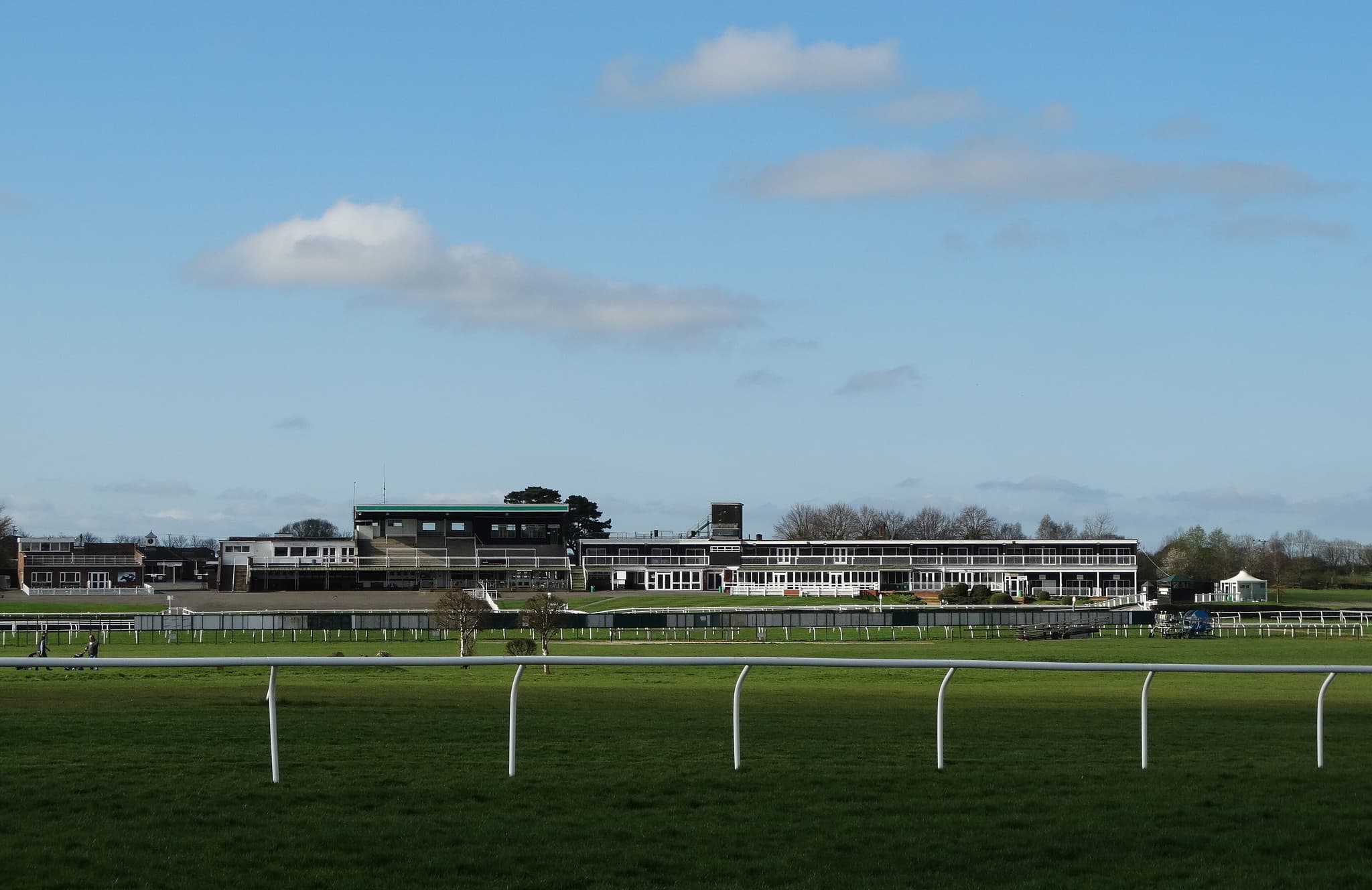
A Day Out at Market Rasen Racecourse
A day at Market Rasen — getting there, what to wear, enclosures, food and drink, and insider tips for Lincolnshire's year-round jumps track.
Read more
Market Rasen Summer Jump Festival: Your Complete Guide
Market Rasen stages Britain's most popular summer jump racing festival. Here's your guide to the Lincolnshire course's August bank holiday occasion and annual Summer Plate.
Read more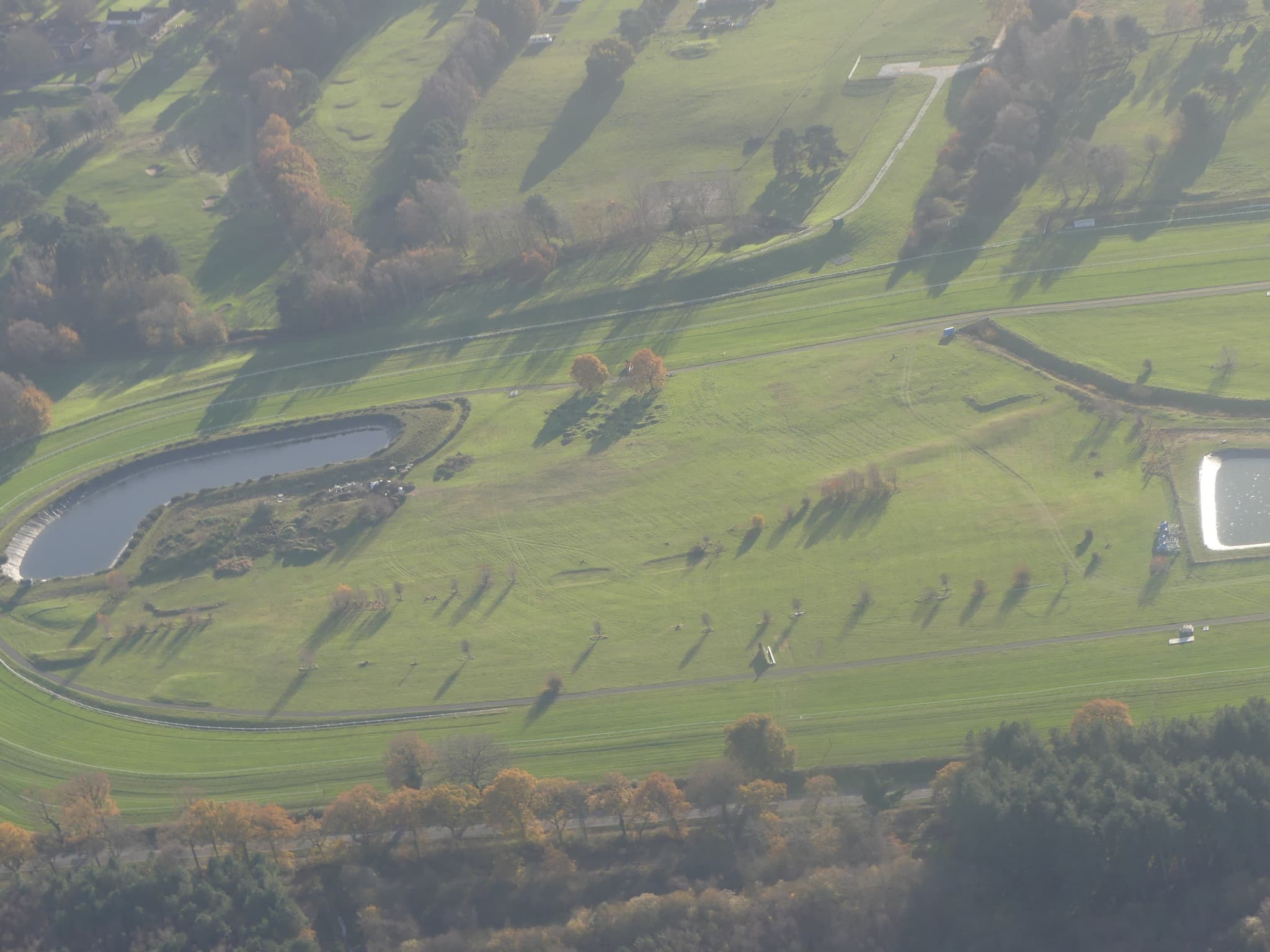
The History of Market Rasen Racecourse
Over 200 years of racing at Market Rasen — from Feast Week in the early 1800s to Britain's only year-round National Hunt track.
Read morePhotos on this page are used under Creative Commons licences. Titles, sources and licence links for each one are on our image credits page.
Research the field with the AI Race Predictor
Our model publishes calibrated win-probability estimates for UK races — a second opinion to understand a race, not tips. It's open about its record: it doesn't beat the market, and we show exactly how it does.
Work it out & learn the basics
Gamble Responsibly
Gambling should be entertaining and not seen as a way to make money. Never bet more than you can afford to lose. If you or someone you know has a gambling problem, help and support is available.