
Founder & Editor · Last reviewed 2026-04-05
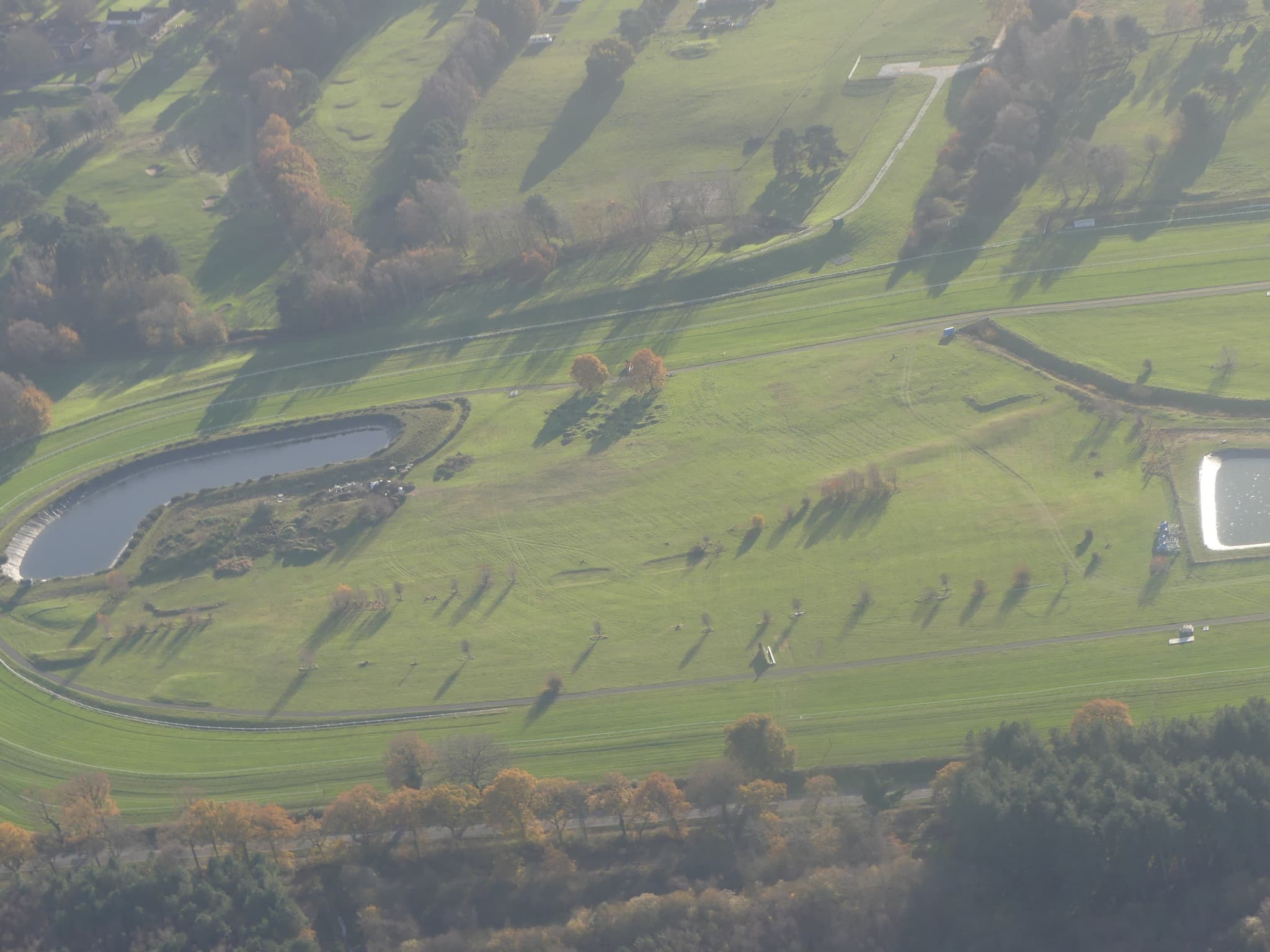
On a clear July Saturday, with the Lincolnshire Wolds rolling away to the south and east, Market Rasen Racecourse has a look that few British jump venues can match. The chalk hills rise to around 550 feet — the highest ground in eastern England — and they frame the right-handed circuit in a way that reminds you how unusual this corner of the country is. Lincolnshire is flat in the popular imagination, a county of fenland and big skies. The Wolds, designated an Area of Outstanding Natural Beauty in 1973, are something else entirely: beech-wooded ridgelines, steep-sided valleys, and the particular quality of light you get at altitude on a summer afternoon.
That setting matters because Market Rasen is, above all else, a summer jumping track. While Cheltenham and Aintree own the winter months and the spring festivals, Market Rasen has built its identity around the National Hunt calendar's quieter season. The course runs from April to October, with the Summer Plate — a competitive NH handicap run in July — as its headline event. It is a role that no other British racecourse plays in quite the same way.
The track itself sits on Legsby Road at the northern edge of the market town, postcoded LN8 3EA. The circuit measures 1 mile 3 furlongs, runs right-handed, and is noticeably undulating given the Wolds terrain. Horses that handle the changing gradients and the tight bends have a consistent advantage. The track rewards staying types: horses with the stamina to maintain their effort over a circuit that asks questions throughout, rather than just at the finish. Bold jumping matters here too. The fences are placed on sections of the track where the undulation puts pressure on a horse's jumping arc, and a clumsy leaper will lose ground it cannot recover.
The Jockey Club has owned Market Rasen since 1995, bringing it into the same portfolio as Cheltenham, Aintree, and Epsom. That ownership has brought investment in facilities and prize money, and the Summer Plate now sits as one of the most valuable summer NH handicaps in Britain. The capacity of around 5,000 keeps the atmosphere compact and close. Racegoers are near the track at all times, which gives a summer's day at Market Rasen a character closer to a county show than a major festival — and that is part of the appeal.
The town of Market Rasen itself, with a population of around 4,000, has had a railway station since 1848. The line between Lincoln and Cleethorpes via Grimsby still serves the course, which means that racegoers from the Humber estuary towns have always been able to arrive by train. Lincoln, 16 miles to the south-west, provides another natural catchment. The two cities together — one a cathedral city of Roman and medieval significance, the other a working port built on the fish trade — give Market Rasen a racegoing public that is distinctly East Midlands in character.
This article traces the course from its founding in 1924 through the development of its summer programme, the moments that have defined it, and the modern identity it has earned as the home of British summer jumping.
Origins & Early Racing in Lincolnshire
Racing in Lincolnshire Before 1924
Lincolnshire has a racing history that stretches back further than most counties in England. Lincoln Racecourse, laid out on the old Roman road at Carholme, was staging meetings by 1773. The Lincoln Handicap — run over the flat, straight mile of the Carholme course — was one of the traditional season-openers on the Flat calendar, a race that brought the national racing world to a county that was otherwise seldom prominent in the sport's geography. By the time the Lincoln Handicap was established as a fixture in the early nineteenth century, Lincolnshire had already developed the habits of a racing county: a strong hunting tradition, an agricultural economy that kept horses central to daily life, and market towns where crowds could gather.
Market Rasen sits roughly in the middle of Lincolnshire, 16 miles north-east of Lincoln. In the nineteenth century it was a coaching stop on the road between Lincoln and the coast, and the rhythm of the town's life was tied to the agricultural calendar of the Wolds. The farms on those chalk hills produced grain and sheep. The town provided the market. And for a period between 1828 and 1887, it also provided racing.
The Feast Week Meetings
The Feast Week meetings at Market Rasen were a feature of the local social calendar. The feast itself was a traditional celebration tied to the church calendar — a gathering that brought people from villages across the Wolds into town for a day or a week of events. Racing was part of the programme: not National Hunt racing in the modern sense, but a mix of flat races, match races, and early jumping events run over improvised courses on common land or rented farmland. Prize money was modest. The fields reflected the local horse population rather than the national racing scene. The meetings drew crowds. Several hundred attendees, sometimes more, were not unusual for a Lincolnshire market town in the mid-Victorian era.
The meetings ran until 1887, when they ceased. The precise reasons are not recorded with clarity, but the pattern was common: changing land-use arrangements, the increasing professionalisation of racing under the Jockey Club's authority, and the gradual withdrawal of informal racing from English market towns. By the 1890s, the era of improvised local meetings was giving way to the era of licensed permanent courses.
The Railway and the Racegoing Public
Market Rasen had been connected to the railway network since 1848, when the Manchester, Sheffield and Lincolnshire Railway opened the line from Barnetby through Market Rasen to Lincoln. The line gave the town direct connections to Grimsby, 22 miles to the north-east, and through Grimsby to Hull. Grimsby in the late nineteenth century was one of the largest fishing ports in the world. Its docks employed thousands. Its population was overwhelmingly working class and had an appetite for racing that was supplied by Saturday afternoon trips to whichever course was reachable by train. Market Rasen, once it had a permanent licensed course, was that course.
The railway connection also mattered for the cultural context of the Wolds. The line ran through country that Alfred Lord Tennyson had grown up in. Tennyson was born in 1809 at Somersby, a village 8 miles east of Market Rasen in the heart of the Wolds. He spent his first 28 years in the county and wrote some of his earliest poetry in response to the landscape — the beech woods, the chalk valleys, the sense of a country apart from the industrial England developing elsewhere. The Wolds retained that character into the twentieth century: rural, farming, defined by livestock markets and agricultural shows rather than by factories or commerce.
The 1924 Founding
After nearly four decades without racing, the idea of reviving a course at Market Rasen took shape in the early 1920s. Post-war Britain had a particular hunger for recreation. Racing attendances across the country were recovering from the wartime suspension, and the demand for new licensed venues was real. A group of local enthusiasts — landowners, farmers, and businessmen from the Lincolnshire agricultural community — identified a site on Legsby Road on the northern edge of the town. The land offered a natural circuit, reasonable drainage for a chalk-based soil, and room for a grandstand and paddock facilities.
The decision to establish a National Hunt-only course was significant. Lincoln Racecourse, 16 miles to the south-west, already provided Flat racing for the county. What Lincolnshire lacked was a permanent licensed venue for jumping. The Wolds farmers knew the jumping horse well. The hunting tradition was embedded across the county — the Blankney Hunt, the Lincolnshire Hunt, and others had been operating across this landscape for well over a century. A National Hunt course at Market Rasen would serve a community that already understood what jumping horses could do.
The first meeting at the new course took place in April 1924. The track was a right-handed oval, and the undulating Wolds terrain that the site occupied gave it a character immediately distinct from the flat tracks that dominated East Midlands racing. From the first day, Market Rasen was a course that asked something of its horses — and that has remained true for the century since.
The founding of Market Rasen in 1924 was an act of local confidence: a county that already had a centuries-old racing tradition choosing to invest in a new permanent home for the jumping game, placed on some of the most distinctive landscape in eastern England.
The Golden Era: Post-War Development and the Summer Programme
The Interwar Years
Market Rasen in the late 1920s and 1930s was a rural jumping track serving a rural community. The programme was modest by modern standards: a handful of meetings spread across the autumn and winter months, card sizes reflecting the NH scene of the era rather than the packed fixture lists of today. The course attracted local trainers and local owners, with horses drawn from the hunting fields of Lincolnshire and Yorkshire rather than the professional yards of Lambourn or Newmarket.
The Lincolnshire farming economy of the interwar period gave the course a particular social character. Agriculture in the Wolds was changing: the arrival of mechanised farming was beginning to reduce the working-horse population, and the Depression years of the early 1930s put pressure on the county's smaller farms. Racing at Market Rasen in that period was closely tied to the agricultural shows and livestock markets that punctuated the Lincolnshire calendar. Raceday crowds were drawn from the same communities that attended the Lincolnshire Show — farmers, farmhands, market traders, and the professional classes of Lincoln and Grimsby.
Racing Resumes After the War
National Hunt racing was suspended for the duration of the Second World War. Market Rasen, like every other British course, went dark from 1940 onwards. Racing resumed in 1945, and the post-war period brought changes to the course's structure and programme that would shape its identity for the following decades.
The most significant influence on the post-war course was Victor Lucas, who oversaw the track's development from 1945 until 1971. Lucas refined the layout of the circuit — the positioning of the fences and hurdles, the configuration of the bends, the run-in from the final obstacle — and in doing so established the compact, demanding track that modern racegoers recognise. The circuit he left behind measured approximately 1 mile 3 furlongs. Right-handed throughout, with bends that came quickly and terrain that rose and fell according to the Wolds contour, it was a track that made demands on horse and jockey from the moment the tape went up.
The Summer Programme Takes Shape
The most consequential decision in Market Rasen's development was the extension of the racing programme into the summer months. Most National Hunt tracks close for the summer: the Flat season from May to September commands the calendar, and the NH industry takes a break before regrouping for the autumn. Market Rasen chose a different path. By running meetings through June, July, and August, the course created a niche that no other NH track in England occupied in quite the same way.
The summer programme grew partly from opportunity. With so few competitors for the NH audience in the summer months, Market Rasen could attract horses that might otherwise have had nothing to run in. Trainers with horses not quite ready for the autumn campaign, or with summer chasers and hurdlers that performed well on good or firm ground, found that Market Rasen met a need. The fields were competitive because the options were limited elsewhere.
The Summer Plate emerged from this context. The race — a staying NH handicap run over approximately 2 miles 5 furlongs — became the focal point of the summer programme. As prize money grew and the race attracted better-quality fields, it established itself as the signature event of Market Rasen's year. By the 1970s and 1980s, it was drawing horses from across the North, the Midlands, and occasionally from further south, all converging on the Lincolnshire Wolds for the most valuable summer jumping handicap in the country.
The Trainer Catchment
Market Rasen's position in the East Midlands, within reach of the major NH training centres of Yorkshire, has always shaped the character of its fields. Malton, 70 miles to the north, has been a source of runners since the early post-war years. The tradition of northern trainers targeting Market Rasen — exploiting the course's summer programme and its right-handed track, which suits horses that had been schooled on similar Yorkshire circuits — is one of the most consistent threads in the course's history.
Brian Ellison, based at Malton, has been among the most successful trainers in the modern era at the course, but the pattern of northern support has predecessors stretching back decades. Tim Easterby at Great Habton, 75 miles north, and Nigel Tinkler in the Malton area have both targeted Market Rasen's summer programme with horses suited to the track and the ground conditions typical of July on the Wolds.
The East Midlands also contributes. Market Rasen is the only National Hunt course in Lincolnshire. There is no alternative for the county's jump racing community — no other venue where a Lincolnshire owner can see their horse run over fences within the county boundary. That monopoly has given the course a loyal local following that extends well beyond the town itself, drawing from Lincoln, Grimsby, Louth, and the smaller Wolds market towns.
The Circuit and Its Demands
The track that Victor Lucas shaped in the post-war years makes consistent demands. The Wolds terrain means that the ground rises out of the back straight and falls again on the approach to the final bend. Horses that lack stamina will be found out here, on the section of the circuit where the gradient takes the energy from a tired horse's stride. The right-handed bends are tight enough that a horse must be handy and balanced rather than long-striding and galloping.
Bold jumping is rewarded. The fences at Market Rasen are placed on sections where the ground conditions and the gradient put pressure on a horse's technique. A clean round — one without significant losses at the obstacles — is often the difference between winning and finishing fourth. That characteristic has given the course a reputation as a test of straightforward jumping ability rather than raw speed or class.
The golden era of Market Rasen is not a single decade but a cumulative process: the post-war refinement of the circuit, the growth of the summer programme, and the gradual establishment of the Summer Plate as the course's defining event. By the time the Jockey Club took ownership in 1995, Market Rasen had already earned a distinct identity in British jump racing.
Famous Moments
The Summer Plate and Its History
The Summer Plate has been Market Rasen's signature race since the summer programme established itself as a fixture in the NH calendar. Run in mid-July over approximately 2 miles 5 furlongs, it is a handicap chase that draws competitive fields precisely because the alternatives in summer jumping are so limited. Trainers who want to keep a quality chaser active during the summer months have few places to go; Market Rasen is the most valuable option, and the Summer Plate fields reflect that.
The race has produced its share of memorable finishes. In 2013, the Summer Plate was won by Medinas, trained by Philip Hobbs from his Somerset yard at Minehead — one of the occasions when a southern handler made the journey north to the Lincolnshire Wolds and found it worth the effort. The field that year included several horses with winning form at Cheltenham and Aintree, a reminder that the Summer Plate, however quiet the time of year may appear on a National Hunt calendar, attracts horses of real quality.
More recently, in 2019, Lossiemouth — trained by Lucinda Russell from her yard at Kinross in Scotland — took the Summer Plate in a performance that showed the race's reach as a northern and national contest rather than a purely regional one. Russell's yard is best known for producing Corach Rambler, winner of the 2023 Grand National at Aintree, and the trajectory of horses through yards like hers — from summer handicaps at Market Rasen to the spring festivals — is one of the ways the course connects to the upper levels of the sport.
Tony McCoy at Market Rasen
A P McCoy, the champion jockey who rode 4,348 winners before his retirement in April 2015, was a frequent visitor to Market Rasen. The course suited his style: aggressive, front-foot riding that kept a horse balanced through tight bends and committed to its jumping. McCoy's association with Martin Pipe and later Jonjo O'Neill gave him a steady supply of horses for the summer programme, and the combination of McCoy's riding and Market Rasen's compact circuit produced several notable winner-riders through the 2000s.
McCoy rode his 3,000th career winner at Market Rasen on 17 August 2009, aboard Mr Thriller, trained by Joanna Morgan. The milestone attracted national coverage to a mid-August afternoon at a Lincolnshire jumping track — a measure of what a record-breaking achievement could do for the course's profile. McCoy went on to reach 4,348 winners, a total that exceeded Richard Dunwoody's previous record by a margin that may stand indefinitely, but it was Market Rasen that provided the stage for one of the significant numbers on the way to that total.
Stepping-Stone Horses
Market Rasen has served as a development circuit for horses that went on to distinguish themselves at graded level. The summer programme and the handicap conditions of races like the Summer Plate make the course particularly attractive for trainers who want to give a young chaser or hurdler a run in competitive conditions without the pressure of a graded event.
Ballabriggs, who won the 2011 Grand National at Aintree under Jason Maguire for trainer Donald McCain, ran at Market Rasen earlier in his career. The Aintree winner — one of the most popular National heroes of recent decades, a strong, uncomplicated chaser with a fierce appetite for the game — used the Market Rasen circuit as part of the schooling process that built his jumping confidence. The course's right-handed layout and the variety of its fence placements gave horses like Ballabriggs experience of the kind of conditions they would face at the major festivals.
The Atmosphere of Summer Jumping
What distinguishes a day at Market Rasen from the winter jumping calendar is the crowd as much as the racing. The Grand National at Aintree in April is a national event. The Cheltenham Festival in March is a pilgrimage. Market Rasen on a July Saturday is something different: families, casual racegoers who might attend two or three meetings a year, and the regular jumping fans who follow the summer circuit from Cartmel to Worcester to Newton Abbot.
The atmosphere has the quality of a county show crossed with an afternoon at the races. Children run between the rails and the grandstand. The betting ring operates at a different pace from February at Kempton. The food and drink stalls do a brisker trade than they might in November, because the weather is reliably warm and the crowds have come for a day out as much as for the form book. The Lincolnshire Wolds provide a backdrop that no urban racecourse can replicate — and on a clear July afternoon, with the chalk hills visible beyond the course perimeter, the setting alone explains why summer jumping at Market Rasen has its own devoted following.
The Tennyson Connection
Alfred Lord Tennyson was born at Somersby, 8 miles east of Market Rasen, in 1809, and spent his formative years in the Lincolnshire Wolds. The landscape that shaped his early poetry — the beech woods, the chalk valleys, the sense of an England that moved at a slower pace than the industrial cities — is the same landscape that forms Market Rasen's backdrop. Tennyson's In Memoriam, published in 1850, was partly written in response to the Wolds terrain he knew from childhood. The poem's meditation on loss and time has nothing to do with racing, but the sense of continuity — of a place that accumulates meaning through repeated experience — connects to what Market Rasen represents for its regular racegoers.
The county's literary heritage is not usually the first thing a punter thinks about when studying the Summer Plate form. But it is part of why Lincolnshire feels like a place apart: a county with its own history, its own landscape, and its own way of doing things, of which racing in the Wolds on a summer afternoon is a representative expression.
Hunter Chases and Amateur Racing
Market Rasen has a tradition of hunter chase and amateur race programmes that reflects the county's hunting background. The Point-to-Point circuit in Lincolnshire feeds directly into the hunter chase programme at Market Rasen, providing a pathway for horses and riders from the hunting field to test themselves against a licensed course. Hunter chases at Market Rasen have attracted horses with point-to-point form from Yorkshire and the East Midlands, and the quality of these fields — often featuring horses that have jumped a full season's worth of fences over country — can be as high as any of the handicap chases on the card.
The amateur riding tradition at Market Rasen also connects to the course's character. The East Midlands has produced a consistent supply of amateur jockeys over the decades, many of them from farming backgrounds, and the course has given them a platform at a licensed track without requiring the full infrastructure of a major venue. That accessibility — for horses, for riders, for owners with small strings — is part of what Market Rasen has always offered.
The Modern Era
Jockey Club Ownership Since 1995
The Jockey Club acquired Market Rasen Racecourse in 1995, integrating it into the same organisation that runs Cheltenham, Aintree, Epsom, Newmarket, and a dozen other British courses. The acquisition brought structural investment: improved grandstand facilities, upgraded catering, better track maintenance equipment, and the kind of marketing budget that a small Lincolnshire course could not have generated independently.
For racegoers, the most visible change over the thirty years since 1995 has been in the quality of the raceday experience rather than in the track itself. The circuit remains essentially the course that Victor Lucas shaped in the post-war decades: right-handed, 1 mile 3 furlongs, undulating, demanding. What has changed is the infrastructure around it. The Jockey Club's investment has made Market Rasen a more comfortable venue for a family day out without stripping away the compact, accessible character that distinguishes it from the larger festival courses.
The Modern Race Programme
Market Rasen currently stages approximately 18 to 20 race days per year, running from April through to October with the summer months forming the core of the programme. The emphasis is entirely on National Hunt racing — hurdles, steeplechases, and bumpers — which makes it unusual among British courses that might otherwise look to attract Flat meetings during the summer. Market Rasen has never wavered from the NH commitment, and the result is a course that has become the focal point of the summer jumping circuit.
The summer NH circuit that Market Rasen anchors includes Cartmel in Cumbria, Worcester on the banks of the Severn, Newton Abbot in Devon, and Stratford-upon-Avon in Warwickshire. Of these, Market Rasen is the furthest east and the most geographically isolated from the cluster of summer jumping venues in the south and west of England. That isolation is partly what gives it its character: a long drive or a train journey from most of the country means the racegoing public at Market Rasen is drawn from the immediate region rather than from the national pool of racing tourists.
The Summer Plate in the Modern Era
The Summer Plate is now one of the most valuable National Hunt handicaps run between May and September anywhere in Britain. The prize money has grown under Jockey Club ownership, and the race attracts horses with ratings that would make them competitive in graded company. The July timing means trainers have a clear window for horses that are building towards an autumn campaign: a Summer Plate run in good form tells a trainer something useful about where a horse stands as the new season approaches.
The 2020s have seen the Summer Plate consistently attract fields of twelve or more runners. The races are run on ground that is typically good or good to firm in July on the chalk-based Wolds soil, which suits horses that are at their best during the summer months — animals whose trainers would rather avoid the heavy conditions of a November fixture. For the betting market, the Summer Plate is a race where the form is hard to read with certainty: big fields, variable weights, summer conditions, and a track that rewards specific attributes rather than general class.
Key Trainers in the Modern Era
The modern training landscape around Market Rasen is dominated by northern yards. Brian Ellison, based at Spring Cottage Stables in Malton, North Yorkshire — approximately 70 miles north of the course — has been one of the most consistent scorers at Market Rasen over the past decade. Ellison's horses are typically well-schooled jumpers suited to right-handed tracks, and the summer programme aligns with his yard's seasonal pattern.
Dan Skelton, whose Lodge Hill stables in Alcester, Warwickshire sit about 60 miles to the south-west, has been a significant presence at Market Rasen in recent years. Skelton is among the most ambitious trainers in the modern NH game, sending runners to tracks across England and Ireland with a strategic focus that has made him a perennial challenger for the NH trainers' title. His Market Rasen runners tend to be horses being sharpened for the autumn rather than summer specialists.
Nicky Richards, at Greystoke in Cumbria, represents the northern NH tradition at Market Rasen. His horses have the stamina bred for the Cumbrian hills and often perform well on an undulating right-handed track. The connection between Cumbrian training and Lincolnshire jumping is not obvious on a map, but the summer circuit creates links between yards that geography would otherwise keep apart.
The Lincolnshire Context
Market Rasen's position as the only National Hunt racecourse in Lincolnshire gives it a social function that goes beyond the racing itself. The county has a strong agricultural identity — the Lincolnshire Show, held annually in June at Lincoln Showground, is one of the largest agricultural shows in England, drawing around 90,000 visitors over two days. The farming community that attends the Show and the community that attends Market Rasen races overlap considerably. Both events are part of the Lincolnshire year.
The food and drink culture of the county is part of the raceday experience at Market Rasen. Lincolnshire sausages — made to a recipe with a distinctive proportion of sage and nutmeg that has been consistent since at least the early twentieth century — appear in the catering at summer race meetings. Local producers from the Wolds villages supply the food stalls. The sense of a racecourse rooted in its specific county rather than operating as an interchangeable venue in a national circuit is one of Market Rasen's less-remarked but real qualities.
The betting market at Market Rasen during the summer programme reflects the summer jumping landscape. Starting prices at summer jumping meetings tend to be tighter than at the major winter festivals: fields are smaller, trainers have fewer options, and the form book is thinner. For informed punters, the summer NH programme at Market Rasen offers a different kind of opportunity from the handicap mazes of Cheltenham or the graded form lines of Aintree.
Market Rasen's Legacy
An Enduring Identity
A century after its 1924 founding, Market Rasen Racecourse occupies a position in British jump racing that is both specific and settled. It is not a festival venue. It is not a graded-race track in the way that Cheltenham or Aintree defines the upper end of the National Hunt calendar. What it is, and has been for the better part of its existence, is the home of British summer jumping: the course that keeps National Hunt racing alive through the months when most jumping fans have switched to the Flat or stepped away from the sport altogether.
The Lincolnshire Wolds give Market Rasen something that money and planning cannot manufacture: a landscape that makes the course feel located. The chalk hills of the AONB, reaching up to 550 feet and visible on most racedays from the grandstand, are as much a part of the experience as the racing itself. A summer afternoon at Market Rasen has a quality that the sport's urban and suburban venues cannot replicate. The light is different. The horizon is wider. The sense of a racecourse embedded in a specific English county is real and unforced.
The Summer Plate is the thread that runs through the course's post-war identity. From a modest summer handicap on a small Lincolnshire circuit to one of the most valuable National Hunt handicaps of the summer season, its growth tracks the growth of the course's ambitions and its reputation. The trainers who now target the Summer Plate come from Scotland, the West Midlands, Yorkshire, and Cumbria — a national spread that reflects how far the race's profile has travelled from its Lincolnshire origins.
The Jockey Club's ownership since 1995 has given Market Rasen stability and investment without stripping the course of its character. The compact site on Legsby Road remains easily navigable, the capacity of around 5,000 keeps the atmosphere close and accessible, and the National Hunt-only programme maintains the focus that the founding owners chose in 1924. A hundred years on, those original decisions look prescient: the commitment to jumping, the summer programme, the undulating Wolds circuit that asks something of every horse that runs on it.
Market Rasen's legacy is the thing it has always been: a racecourse that knows what it is, knows where it is, and has built an identity from those two certainties.
Frequently Asked Questions
When was Market Rasen Racecourse founded?
The current course on Legsby Road was founded in 1924, when local Lincolnshire enthusiasts secured the site and staged the first meeting in April of that year. Racing in the Market Rasen area has older roots — Feast Week race meetings ran between 1828 and 1887 — but the permanent licensed course dates from 1924.
What is the Summer Plate?
The Summer Plate is Market Rasen's headline race: a competitive National Hunt handicap chase run over approximately 2 miles 5 furlongs in mid-July. It is one of the most valuable summer jumping handicaps in Britain, attracting horses from training yards across England and Scotland. The race's July timing makes it a useful prep for the autumn NH season, and the fields are consistently strong given the limited number of alternatives for summer chasers.
What type of racing does Market Rasen stage?
Market Rasen stages National Hunt racing exclusively — hurdle races, steeplechases, and National Hunt flat races (bumpers). There is no Flat racing on the programme. The season runs from April to October, with the summer months forming the core of the fixture list. Market Rasen is the only National Hunt course in Lincolnshire.
Who owns Market Rasen Racecourse?
The Jockey Club has owned Market Rasen Racecourse since 1995. The Jockey Club is the largest commercial group in British horseracing, also operating Cheltenham, Aintree, Epsom, Newmarket, and other courses. Its ownership has brought investment in facilities and prize money while the course has retained its distinctive character.
How do I get to Market Rasen Racecourse?
The racecourse is on Legsby Road, Market Rasen, Lincolnshire, LN8 3EA. Market Rasen railway station is on the Lincoln to Cleethorpes line, which also serves Grimsby. The station is a short walk from the course. By road, the A46 provides the main route from Lincoln, 16 miles to the south-west. Grimsby is approximately 22 miles to the north-east via the A46 and A18.
What is the track like at Market Rasen?
Market Rasen is a right-handed circuit of 1 mile 3 furlongs. The terrain is undulating, reflecting the Lincolnshire Wolds landscape on which the course sits — the ground rises and falls throughout the circuit, with the back straight climbing before the descent into the home turn. The track rewards staying types and bold jumpers. Horses that handle changing gradients and tight right-handed bends have a consistent advantage, and accurate jumping is more important here than at flatter circuits where a minor jumping error can be recovered with a burst of speed.
Share this article
More about this racecourse
All Market Rasen guides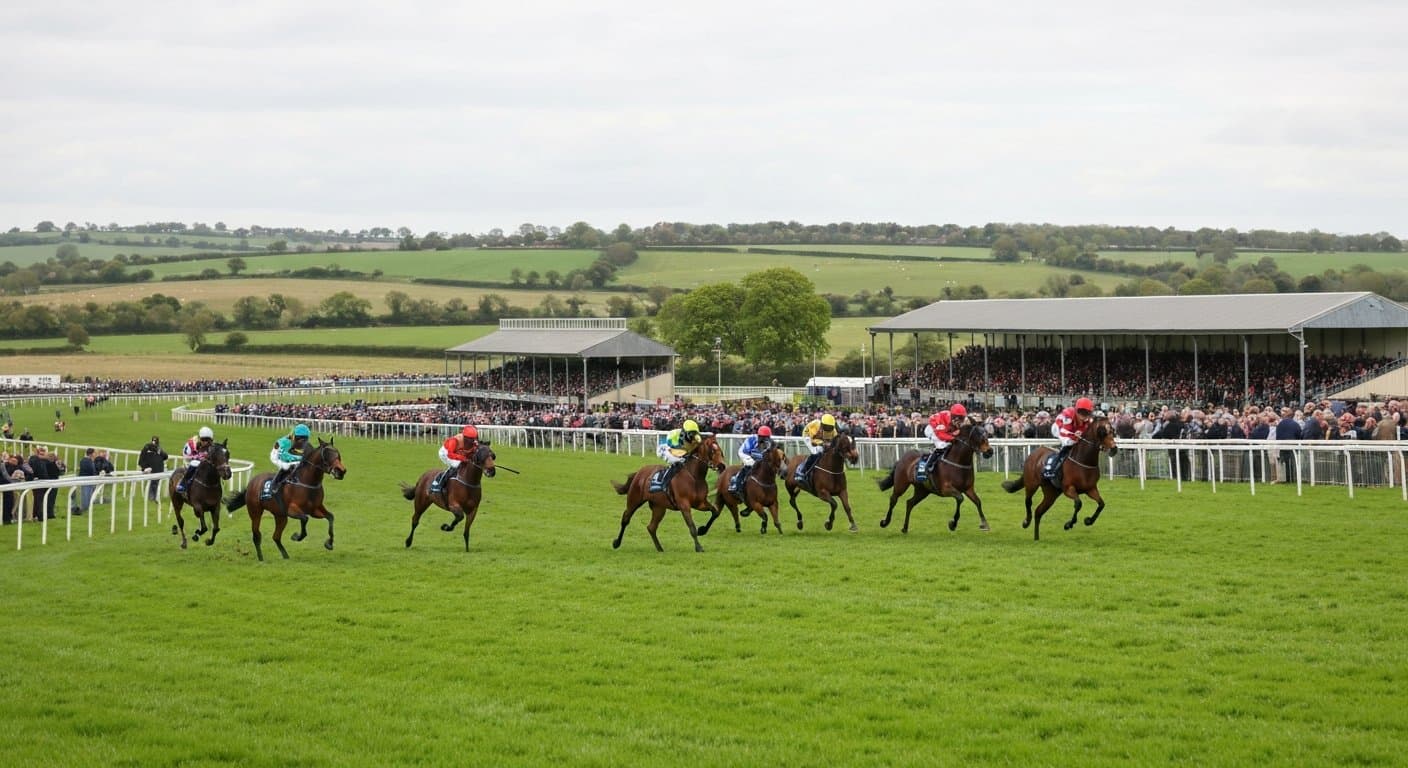
Market Rasen Summer Jumping: The Year-Round Programme
Market Rasen's summer jumping — Britain's only year-round National Hunt track, the Summer Plate, and what makes summer jumping different.
Read more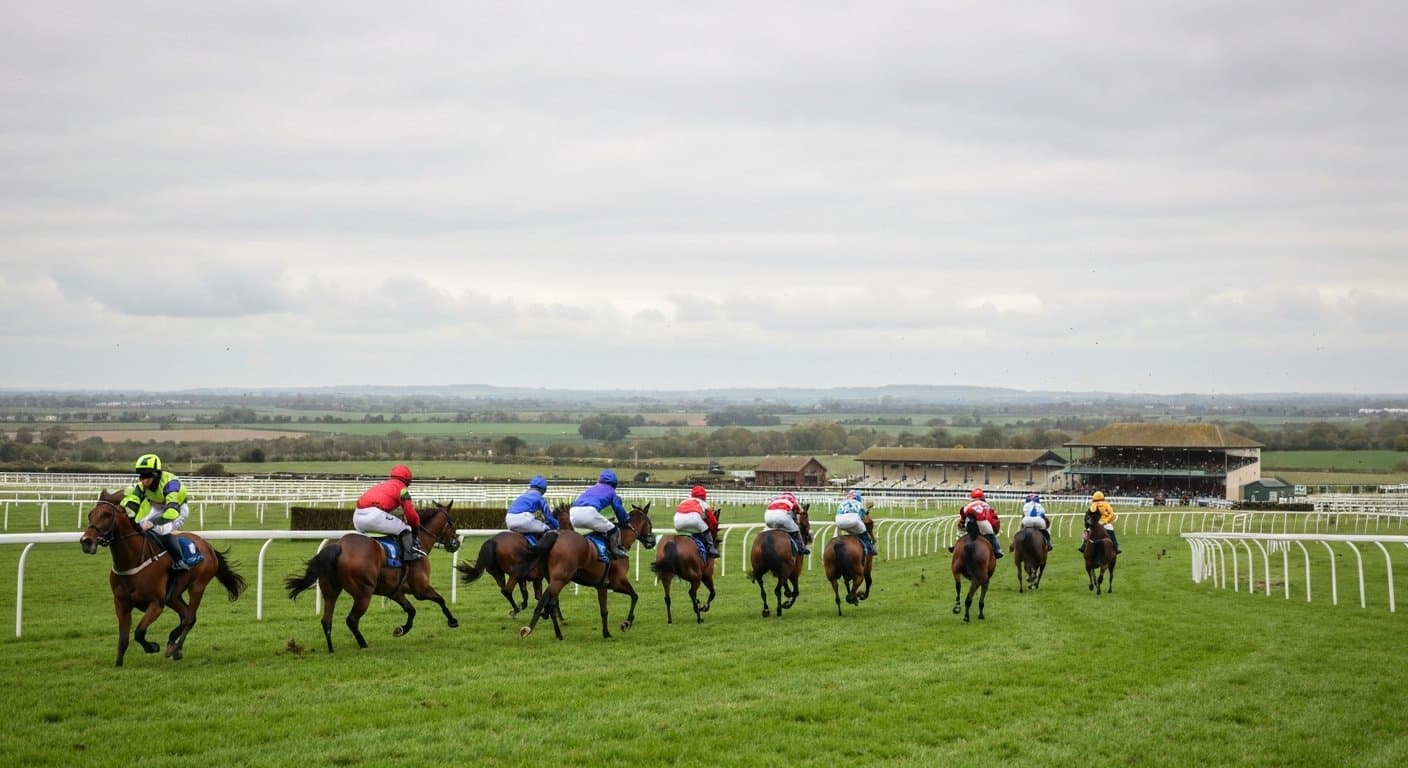
Summer Plate 2026: Market Rasen Tips, Odds & Race Guide
Get expert tips for Market Rasen's Summer Plate - Britain's most valuable summer chase. Race times, betting odds and course insights.
Read more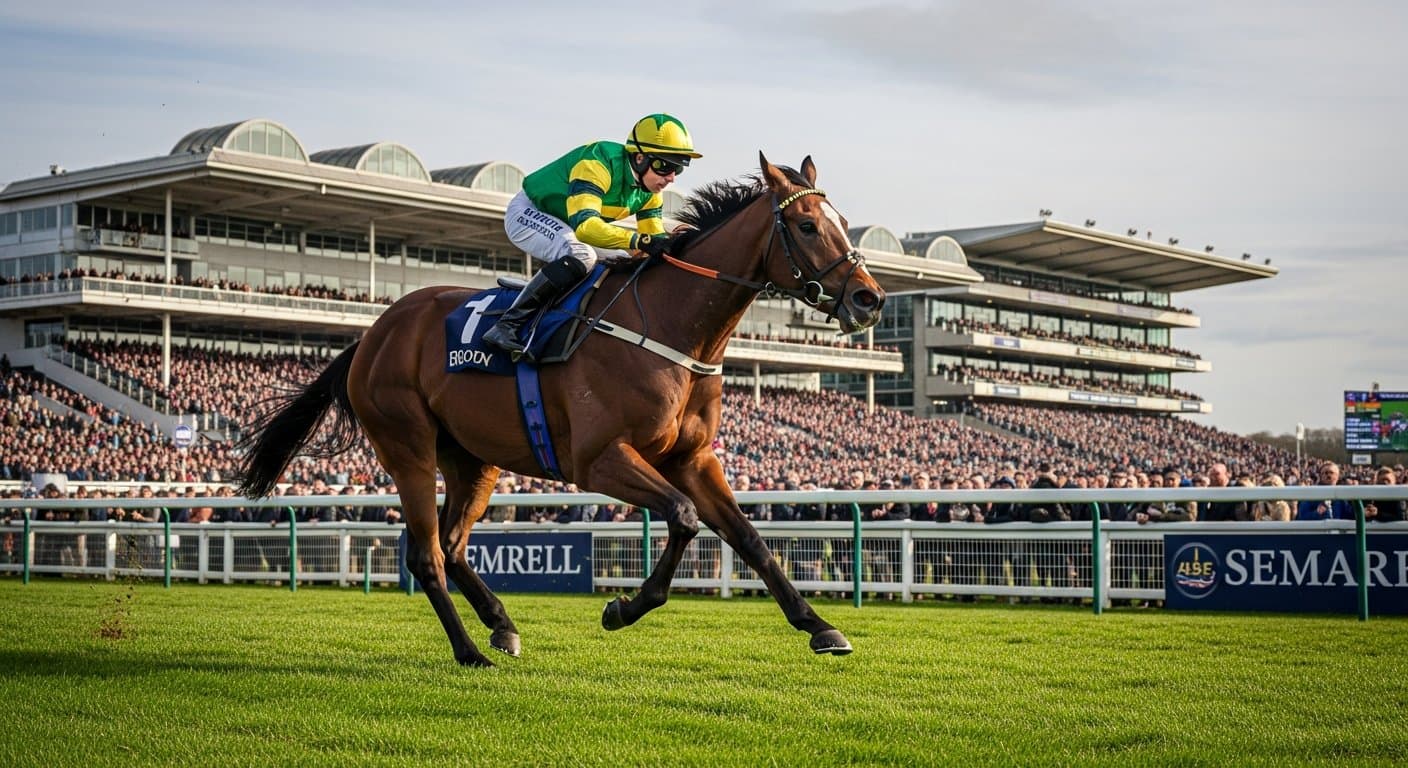
Tiger Roll at Market Rasen: The Complete Story
Tiger Roll won his debut juvenile hurdle at Market Rasen in November 2013 before becoming a dual Grand National winner and one of the most loved horses in National Hunt history.
Read moreGamble Responsibly
Gambling should be entertaining and not seen as a way to make money. Never bet more than you can afford to lose. If you or someone you know has a gambling problem, help and support is available.