
Founder & Editor · Last reviewed 2026-04-05
On a July afternoon at Newton Abbot, the light falls at a particular angle across the infield. The Dartmoor tors sit on the western horizon, their granite crowns catching the last warmth of the day, and the River Teign glints a mile to the south through the reed beds. In the paddock, a Paul Nicholls two-mile chaser is being saddled for the third race. The handlers know the drill — walk him quietly, let him settle, because this track punishes horses that panic at its turns.
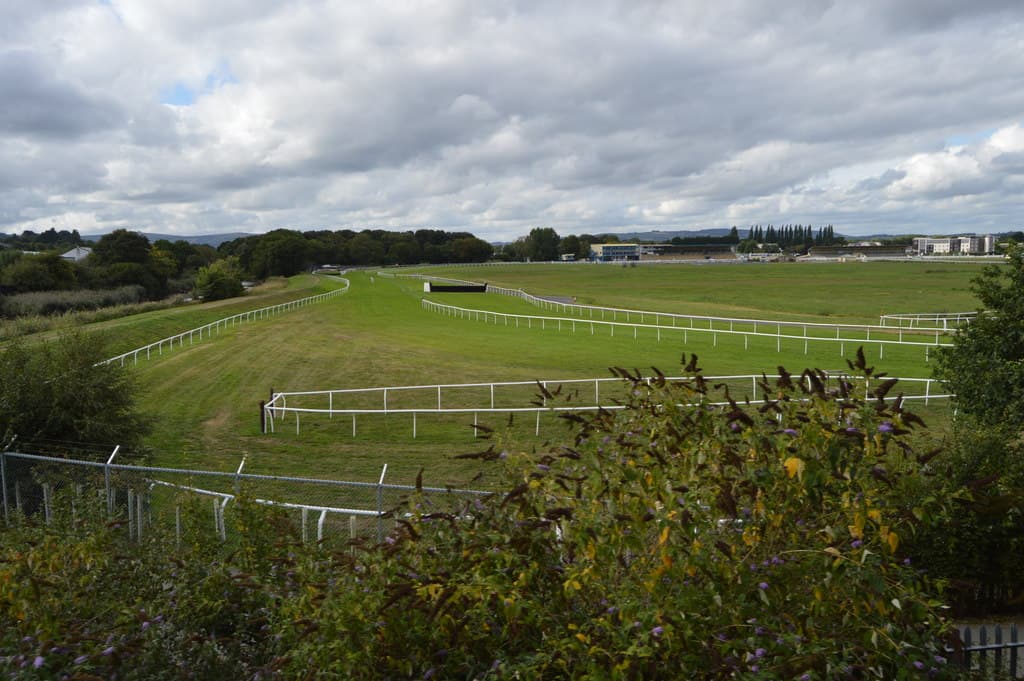
Newton Abbot Racecourse sits on Kingsteignton Road in the town of Newton Abbot, Devon, TQ12 3AF, and it operates as one of British jump racing's most distinctive venues. The circuit measures approximately one mile in length, runs left-handed, and contains bends sharp enough to unsettle a horse that has never encountered them before. Those bends are not incidental. They are the course's defining feature, the quality that separates its winners from horses better suited to the long galloping tracks at Haydock or Ascot. At Newton Abbot, you need a horse that jumps fluently and quickens off a bend. Horses that do both tend to win here repeatedly; horses that do neither tend to find it out quickly.
The course has been staging National Hunt racing since 1866, which places it among the older dedicated jumps venues in England. It is not a prestigious venue in the sense that Cheltenham or Aintree are prestigious. It does not attract the Champion Hurdle or the Gold Cup. What it does attract is a particular kind of summer afternoon — families from Torquay, holiday visitors drawn up from the English Riviera coastal resorts, local Devon farming families, and a core of serious racing folk who know exactly what the tight Newton Abbot circuit tests in a jumper.
Summer is the key word. Newton Abbot races from May to September, a period when almost every other National Hunt track in Britain is shut. Cheltenham's last Festival fixture has been run months earlier. Aintree's Grand National meeting is a distant memory. The big winter yards are resting horses or running them on the Flat. At Newton Abbot, though, the jumping programme continues. That summer focus is the course's greatest practical contribution to the NH calendar, and it has shaped everything about the venue's character: the type of horses trained for it, the trainers who target it, the racegoers who attend.
Newton Abbot Race Company, an independent operator separate from Jockey Club Racecourses and Arena Racing Company, has run the course for many years. That independence has allowed the venue to maintain its own identity rather than be absorbed into a larger corporate template. The programme, the facilities, and the community feel have all developed around the specific demands of Devon summer jumping rather than around the priorities of a national group.
The course's capacity sits at around 5,000, modest by the standards of the sport's flagship venues, and that number suits the intimate nature of a July evening here. The nearest railway station, Newton Abbot, stands on the London Paddington to Penzance main line and is roughly five minutes on foot from the track, which puts the venue within straightforward reach of Exeter to the north, Plymouth to the west, and Torquay to the south. For a jumps course that operates almost entirely in summer, the accessibility matters: a good proportion of its crowd on any given day is making a holiday excursion rather than a dedicated racing pilgrimage.
What follows traces how a piece of reclaimed Devon marshland became the country's principal summer National Hunt venue — from its Victorian foundations through the era of Martin Pipe's records and Paul Nicholls's dominance to the independent operation it runs today.
Origins
Origins: Victorian Devon and the Making of a Track
The Great Western Railway reached Newton Abbot on 30 May 1846, when Isambard Kingdom Brunel's broad-gauge South Devon Railway opened its line between Exeter and Newton Abbot as the first stage of the route west to Plymouth. The town was already a functioning market centre for the South Hams and Dartmoor fringe communities, but the arrival of the railway transformed its scale and reach within a decade. By the mid-1850s, Newton Abbot had become the junction point for the Moretonhampstead branch to the north and would later serve as the division point for the Torquay branch south-east. Trains ran to Exeter in under half an hour and reached Plymouth in around forty minutes. London Paddington was a five-hour journey away — slow by modern standards, but revolutionary for a market town that had previously been connected to the wider world only by road and coastal shipping.
That railway connection is the foundation of Newton Abbot Racecourse's existence. Racing, in the Victorian era, depended on racegoers being able to travel to the track. Before the railways, meetings were local affairs drawing from no more than a day's horse-ride in any direction. Once the GWR opened, a promoter in Newton Abbot could realistically expect supporters from Exeter, Plymouth, Torquay, and even Bath and Bristol. The catchment area for a race meeting expanded from roughly thirty miles to several hundred, and the economics of organising fixtures changed accordingly.
The course was formally established in 1866 on land adjoining the Kingsteignton Road, approximately one mile north-east of the town centre. The site sits within the broad alluvial plain of the River Teign estuary, where the river widens and slows before reaching the sea at Teignmouth. This is low-lying ground, reclaimed from marshland over the preceding century, and it carries the characteristics of that geology: flat, with a slight tendency toward moisture retention, and largely level in all directions. There are no natural undulations to speak of. The circuit that was laid out in 1866 reflected its setting — tight, flat, and left-handed, shaped by the available acreage rather than by topographical preference.
The approximately one-mile circuit that emerged was small even by the standards of Victorian jumping courses. English National Hunt tracks of the 1860s and 1870s varied considerably in size and layout, but many of the major venues in the South West — Exeter being the most obvious comparison — had more room to work with. At Newton Abbot, the tight turns were a product of necessity. The flat ground around the Teign estuary did not offer the broad sweeping space of a Midlands or northern racecourse. Instead, the course made a virtue of compression: sharp bends, short straights, and a premium on a horse's ability to maintain rhythm and balance through turns rather than simply galloping flat out between them.
To the west of the track, the Dartmoor plateau begins its rise within a few miles of the course boundary. High Willhays, at 2,038 feet the highest point on Dartmoor, sits roughly fourteen miles to the north-west. On clear days the tors are visible from the course — a striking backdrop of ancient granite moorland behind what is, at track level, a mild and low-lying coastal plain. The contrast between the Dartmoor uplands and the Teign valley floor is one of the defining characteristics of South Devon's landscape, and Newton Abbot Racecourse sits directly in that transition zone between moor and sea.
Six miles to the south-east lies Torquay. By the 1860s, Torquay had already developed its identity as a fashionable resort — the so-called English Riviera, a name that reflected the mild climate, the limestone coastline, and the influx of wealthy Victorian visitors who came to winter in its hotels and villas. The town had attracted significant investment in accommodation and entertainments throughout the mid-century, and by the time Newton Abbot Racecourse opened, Torquay was drawing visitors from London and the Home Counties who were looking for summer and winter resort experiences broadly comparable to what they might find on the Continent.
Racing was part of that resort entertainment economy. A meeting at Newton Abbot, six miles by road or by the branch railway, offered Torquay's visitor population a day out with specific attractions: the spectacle of horses jumping at speed, the social occasion of the enclosures, and the opportunity for a wager. The GWR connection meant that holidaymakers staying in Torquay or Paignton could reach Newton Abbot station without difficulty, and the course's proximity to the station — a short walk along Kingsteignton Road — made the journey from resort to racecourse straightforward. In this sense, from its first decade Newton Abbot was positioning itself as a summer leisure destination as much as a serious racing venue.
The choice of National Hunt racing, rather than Flat racing, as the course's specialism was both practical and strategic. Flat racing's summer calendar was dominated by the great southern tracks — Goodwood, Newmarket, Epsom, Ascot — and competing with those venues for quality horses was unrealistic for a small Devon course. National Hunt racing, by contrast, had its own summer problem: almost no one was running it in July and August. The major jumping venues in Britain concentrated their programmes in autumn, winter, and spring. The Cheltenham Festival ran in March. The Grand National meeting at Aintree fell in April. By May, the NH calendar had thinned dramatically, and by July it had largely stopped.
That gap was Newton Abbot's opportunity. A summer NH programme in Devon, drawing on the holiday crowd from the English Riviera resorts and accessible by the GWR from Exeter and Plymouth, had a plausible commercial logic that a summer Flat programme could not match. The track layout — tight, flat, testing for jumpers rather than gallopers — reinforced the NH identity. By the 1870s and 1880s, Newton Abbot had settled into the seasonal role it still occupies today: the track that keeps National Hunt racing alive through the summer months when everywhere else has closed its gates.
The founding era ended with a course that was modest in infrastructure but clear in purpose. The GWR had made it accessible. The Teign estuary had given it its flat, tight character. Dartmoor had given it its backdrop. And the English Riviera had given it its audience.
The Golden Era
The Golden Era: Building a Summer NH Institution
The interwar years gave British jump racing its character in ways that are still felt today. The sport expanded its audience, its training methods professionalised, and the summer programme at courses like Newton Abbot became a fixed and anticipated part of the national calendar. By the 1920s, Newton Abbot's May-to-September fixture list had settled into a rhythm that suited the South West's training community: a sequence of meetings through the school holidays and the peak Torbay tourist season, drawing horses from yards across Somerset and Devon that needed summer targets to keep their jumpers sharp without exposing them to the heavy winter ground that can wear a horse down.
The track itself remained largely as it had been laid out in 1866 — tight, left-handed, flat, and demanding of horses that could jump accurately on a tight circuit. The bends at Newton Abbot have always been the great filter: a horse that loses its rhythm going into a turn, or that jumps big and gains ground on a straight but struggles to readjust, will find Newton Abbot a frustrating experience. Horses that jump economically, that can quicken after a fence without needing fifty yards to organise themselves, tend to win here again and again. That pattern was visible in the interwar era and has intensified since.
Post-war Britain saw jump racing grow in popularity alongside the expansion of television and the development of betting offices following the Betting and Gaming Act 1960. Newton Abbot benefited from that wider growth. Attendances at summer meetings increased, and the quality of the racing programme improved as more trainers targeted the summer fixture list. There is no Newton Abbot Cup, and this sentence used to credit one with attracting a better class of horse through this period. The course's feature race in that era was the Lord Mildmay Memorial Handicap Chase, whose winners can be traced back to 2004 and which was last run on 22 August 2015.
The relationship between Newton Abbot and the Somerset and Devon training yards is central to understanding the course's history. The great South West training establishments are clustered thirty to sixty miles north and north-east of the track, in the Somerset hills and vales that provide the long gallops and upland terrain ideal for preparing jumpers. By the time the post-war era reached its midpoint, a specific geography of South West jump racing had formed: Exeter for autumn and winter, Taunton for winter and spring, Newton Abbot for summer. Each course served a different season, and the Somerset and Devon trainers programmed their horses accordingly.
Martin Pipe changed the scale and ambition of that programme from the mid-1980s onward. Pipe trained from Nicholashayne in Somerset, approximately 55 miles north of Newton Abbot, and his methods — interval training on artificial gallops, high-volume programming, data-led management of each horse's preparation — were unlike anything that had come before in British jump racing. He trained winners at a rate no trainer had previously approached, sending out 220 winners in the 1999-2000 season alone, a figure that would have been considered impossible a decade earlier. Newton Abbot, as a summer NH venue accessible from his Somerset base in under an hour, was a natural target for Pipe to place young and improving horses early in the summer when the competition was thinner than at the winter festivals.
Pipe's operation at Newton Abbot in the 1980s and 1990s illustrated the course's specific function in a trainer's season plan. A horse running in July at Newton Abbot is typically being aimed at the winter programme — the November meetings at Cheltenham, the January cards at Sandown, the spring festivals. The summer outing is a confidence builder, a fitness check, an opportunity to win under Rules before the competition intensifies in autumn. The tight Newton Abbot track is useful precisely because it tests a horse's jumping discipline. A horse that wins at Newton Abbot on a tight left-handed track has demonstrated something specific: it can jump, it can quicken off a bend, and it handles the pressure of a compact circuit. Those qualities transfer directly to courses like Cheltenham's Old Course, which places similar demands on accuracy.
Philip Hobbs, who trains at Minehead in Somerset roughly 40 miles north of the track, has been among Newton Abbot's leading trainers across multiple decades. Hobbs's yard at Sandhill Racing Stables has produced horses across all grades, from handicap chasers winning at Newton Abbot in July to Grade 1 performers at the major festivals. The summer Newton Abbot programme has served Hobbs exactly as it serves any shrewd South West trainer: a set of opportunities to place horses on appropriate ground, at appropriate weights, against appropriate competition, while the big yards elsewhere are saving horses for the autumn.
Paul Nicholls arrived at Ditcheat in Somerset in 1991, forty-five miles north-east of Newton Abbot, and within a decade had built the most powerful NH training operation in Britain. His dominance at Newton Abbot in the summer months has been consistent and often striking. A Nicholls horse appearing at Newton Abbot in July or August carries a short price with good reason: the Ditcheat operation targets the track selectively, places well-prepared horses against appropriate fields, and has a strike rate that the market prices in quickly. The relationship between Ditcheat and Newton Abbot is one of the defining patterns in the course's modern programme.
The track's use as a nursery for young jumpers is a golden-era legacy that has survived intact. Two-mile hurdlers making their seasonal debut in May, novice chasers getting their first experience of a National Hunt fence in July, improving horses stepping up in class in August — Newton Abbot's tight circuit has been testing these horses for generations. The bends produce honest feedback. A horse that corners well at Newton Abbot and wins on its seasonal reappearance has passed a significant test. A horse that corners poorly, or jumps its way out of contention on the turn, has told its trainer something worth knowing before the winter programme begins.
By the time Newton Abbot moved into the second half of the twentieth century, the golden era had given the course a clear identity: the South West's summer jumping specialist, a track defined by its tight circuit and its position in the calendar, and a venue that the best Somerset and Devon trainers understood and consistently targeted. That identity was not assembled by accident. It was built by decades of a specific kind of summer racing, shaped by the geography of the Teign valley and the location of the training yards that surround it.
Famous Moments
Famous Moments: The Races and Runners That Shaped Newton Abbot's Story
The races that define a track are not always the ones that attract a national audience. Newton Abbot's most significant moments have tended to be the afternoons when a horse showed, for the first time, that it had something exceptional — a July debut that seeded an autumn campaign, an August performance that pointed the way to a February festival. The course has functioned as a proving ground for that kind of quiet revelation, and the trainers who understand it best have produced the most memorable chapters.
Martin Pipe's ascent to the top of British jump training coincided with Newton Abbot becoming one of his most productive summer venues. In the 1988-89 season, Pipe trained 208 winners in Britain, a new record that stood until he broke it himself. Through the following decade, his Newton Abbot record was substantial. Pipe understood that summer jumping offered thinner fields and more winnable races for horses that were carefully placed, and his careful record-keeping — he was among the first British trainers to monitor horses' blood profiles and pulse recovery rates systematically — meant his horses arrived at summer meetings in excellent condition. On race days at Newton Abbot in the early 1990s, seeing a Pipe horse in the paddock, saddled by one of his stable staff from Nicholashayne, was enough to significantly shorten a horse in the market before a hoof hit the track.
Jockey Peter Scudamore, who rode as Pipe's stable jockey from 1986 until his retirement in 1993, was a frequent winner at Newton Abbot during those years. Scudamore's style suited the track perfectly. He was a precise, accurate jockey rather than a power jockey, and at Newton Abbot's tight bends that precision was worth lengths over the course of a race. Scudamore rode 1,678 winners in his career, setting a British jump racing record that stood until Adrian Maguire briefly threatened it and was eventually surpassed by Tony McCoy. Several of those winners came at Newton Abbot in the summer months, horses prepared to a specific fitness standard and placed in races their stable expected to win.
Tony McCoy himself became a regular Newton Abbot winner across his career with Pipe and later with J.P. McManus's retained riding arrangement. McCoy's extraordinary record — 4,348 winners in a career spanning 1992 to 2015, with the Champion Jockey title in every one of those seasons — included a consistent presence at Newton Abbot's summer programme. McCoy's drive was renowned: he was rarely content to settle for a place when a winner was possible, and at Newton Abbot, where the track rewards horses that are ridden with confidence and purpose into the bends, that attitude produced results.
Ruby Walsh, when riding for Paul Nicholls in the 2000s and 2010s, also appeared at Newton Abbot when the race and the horse merited it. Nicholls has spoken in interviews about the value of placing a horse at Newton Abbot early in the summer as a confidence-building exercise for both horse and jockey. A horse that has won at Newton Abbot in June or July — tight bends, crowd noise, all the sensory demands of a racecourse — has had its education advanced in ways that even the best schooling at home cannot fully replicate.
Paul Nicholls's summer campaigns at Newton Abbot have produced horses that Then won at the highest level. In August 2006, Nicholls sent Master Minded — who would go on to win the Queen Mother Champion Chase at Cheltenham in 2008 and 2009 with a performance in 2008 that many judges consider the greatest two-mile chase performance seen at Cheltenham in the post-war era — for an early summer campaign outing. The horse was still being educated, still learning the professional demands of racing, and a summer start at Newton Abbot was part of that learning curve. When Master Minded Then arrived at Cheltenham as a fully formed performer, the tight-track experience from Devon was part of the foundation.
There is no Newton Abbot Cup, and this paragraph used to credit its winners with going on to place at Exeter, Cheltenham and the spring festivals. The course's feature race is the Aubrey Loze Memorial Handicap Hurdle, a Class 2 handicap hurdle over 2m 5f 122y run in late August, and its documented renewals are recent. Before it, the course's August feature was the Lord Mildmay Memorial Handicap Chase, last evidenced in 2015.
The track's reputation for producing front-runners is not accidental. At approximately one mile around, with bends that arrive quickly after the fences, a horse that jumps and moves forward off the obstacle has a structural advantage over one that needs to settle and wait for a late run. The tight circuit does not accommodate the patient hold-up style that succeeds at longer, more galloping tracks. Horses that try to come from the rear at Newton Abbot often find the leaders have already turned for home and accelerated before the backmarkers have straightened up. The front-running, bold-jumping style that Newton Abbot rewards has been consistent since the track's first decades.
Philip Hobbs, training from Minehead across a career that has produced more than 1,500 winners, has been a consistent force at Newton Abbot through multiple decades. Hobbs has spoken of the track's usefulness for placing horses that need an educational outing or a confidence run before being aimed at higher-grade targets in winter. His yard's proximity — around 40 miles north — and its access to good summer ground in Somerset means that Hobbs horses are typically well-prepared for a July outing at Newton Abbot. Several of the course's multiple-winners in recent decades have come from Sandhill Racing Stables.
Local Devon trainers have also contributed memorable afternoons. Hugo Tett, based at Crediton in Devon some fifteen miles north-west of Newton Abbot, has targeted the course with horses that know the Westcountry conditions. Jeremy Scott, training from Dulverton in Somerset roughly 40 miles north, has been another consistent source of Newton Abbot winners. The pattern across famous moments is consistent: the track rewards trainers who plan for it specifically, who understand its turning demands, and who place horses in races calibrated precisely to their ability and fitness level on that day.
Newton Abbot's famous moments are not headline events in the way that a Gold Cup or a Grand National produces a headline. They are the moments that serious racing followers remember: the July afternoon when a horse's performance told you something about its winter prospects, the August winner that Then ran into the top three at Cheltenham, the career-building Pipe double on a Tuesday when barely three thousand people were in the ground. Those moments accumulate over 160 years into a specific and unrepeatable institutional character.
The Modern Era
The Modern Era: Independent, Summer-Focused, and Distinctly Devon
Newton Abbot Racecourse enters its second century and a half as one of British jump racing's more unusual operations: an independent venue, owned and operated by the Newton Abbot Race Company, that has resisted absorption into either of the two large ownership groups that dominate British racecourse management. Jockey Club Racecourses controls eighteen tracks including Cheltenham, Sandown, and Newmarket. Arena Racing Company operates a portfolio of twenty-one tracks including Chepstow, Wolverhampton, and Windsor. Newton Abbot sits in neither portfolio, and that independence shapes everything from its commercial model to the character of its racing programme.
Independent racecourse ownership in Britain carries specific pressures. The Jockey Club's courses benefit from cross-subsidisation — prize money at a profitable Cheltenham can support investment at a less commercially powerful track in the same group. ARC's size gives it negotiating leverage with sponsors, media rights holders, and suppliers. An independent like Newton Abbot must balance its books on what it generates: gate receipts, hospitality income, sponsorship, and the levy contributions distributed to all tracks based on betting turnover. The prize money at Newton Abbot reflects that reality. It is a grassroots NH venue in economic terms, not a Grade 1 prize-money powerhouse, and trainers who enter horses there are doing so because the race and the track suit their horse — not because the prize fund alone justifies the entry.
That commercial honesty produces a specific kind of programme. Newton Abbot's approximately 20 race days per year, concentrated between May and September, are built around what summer NH racing in Devon can realistically support. Fields are competitive at the level appropriate to the track, and the entries tend to be from yards that have a clear reason to run there — proximity, track suitability, or a programme gap that the Newton Abbot fixture fills.
Paul Nicholls at Ditcheat remains the single most powerful force in the Newton Abbot summer programme in the modern era. The Ditcheat operation fields horses across all levels of the NH game, and for a Nicholls horse below Grade 1 standard, a summer start at Newton Abbot is a logical and productive choice. Nicholls's statistics at the track in the 2010s and 2020s show a strike rate — winners per runners — that consistently outperforms the field. The market adjusts accordingly, and a Nicholls runner at Newton Abbot typically starts at odds reflecting that record, which shapes the betting significantly.
Philip Hobbs at Minehead has maintained a similar pattern of consistent Newton Abbot targeting. Hobbs's retirement from training in 2023 and the transfer of his licence to his son Tom Hobbs means that the Sandhill Racing Stables operation continues, and the connection with Newton Abbot's summer programme is unlikely to change substantially. The infrastructure of a Somerset jumping yard that has targeted Newton Abbot for forty years does not dissolve with a change of trainer's licence.
Harry Fry, based at Seaborough in Dorset approximately 50 miles north-east of Newton Abbot, has been among the significant forces in South West NH training in the 2010s and 2020s. Fry's yard has produced horses that have run at Newton Abbot in the summer as part of their preparation for winter targets. Jeremy Scott at Dulverton in Somerset, roughly 40 miles north, occupies a similar position in the regional hierarchy: a yard that knows Newton Abbot's programme and targets it when the race fits the horse.
The local Devon dimension of the Newton Abbot programme is represented by Hugo Tett, training at Crediton. A local trainer competing against Nicholls, Hobbs, and Fry at Newton Abbot faces a steep task, but Tett has produced winners on the course and represents the domestic Devon element of a programme that might otherwise be dominated entirely by Somerset imports. The tension between local and regional is healthy for the betting market: a Devon-trained horse that has shown specific ability on the Newton Abbot track can be a value play against a short-priced Somerset favourite.
The Torbay tourism dimension of Newton Abbot's modern identity deserves emphasis. The English Riviera — Torquay, Paignton, and Brixham — attracts around 1.5 million visitors per year, a figure that places it among the major UK coastal resort destinations outside of Cornwall. Many of those visitors are looking for day-out options, and Newton Abbot Racecourse sits within twenty minutes by road or rail from the central Torquay hotel strip. The course's racing calendar aligns almost perfectly with the peak tourist season: May to September covers the half-term visits, the school holiday weeks, and the early-autumn breaks when families still have time and the weather remains reasonable.
The track itself has seen infrastructure improvement through the modern era. Drainage work, essential on ground that sits on reclaimed estuarine marshland, has improved the racing surface's consistency through a Devon summer that can deliver both bone-hard ground in dry spells and unexpectedly soft conditions after Atlantic rain systems. The grandstand facilities are functional rather than lavish, suited to a track with a capacity of around 5,000 and an atmosphere that remains family-accessible and unhurried.
The debate about Newton Abbot's tight circuit — an argument that has run as long as the track has been operational — continues in the modern era. Some trainers avoid the track for horses they consider unsuited to its sharpness. A long-striding chaser that jumps well and gallops powerfully on a two-mile plus course at Cheltenham or Haydock may struggle to show those qualities around a one-mile left-handed loop with bends that arrive before a horse has properly developed its gallop. Other trainers target Newton Abbot specifically for horses they believe have the handiness and jumping precision the track requires. The resulting fields are, at their best, precisely calibrated races between horses that belong there — and that calibration is one of the things that keeps Newton Abbot's racing honest.
Newton Abbot station's position on the London Paddington to Penzance main line — direct services from London Paddington, Exeter, and Plymouth all stop at Newton Abbot — means that the track remains as well-connected to the national rail network as it was in Brunel's day. The journey time from London Paddington to Newton Abbot on a Great Western Railway service is approximately two hours fifteen minutes. That accessibility continues to serve the holiday crowd as well as the dedicated racing follower, maintaining the dual audience that has defined Newton Abbot since the Victorian era.
Newton Abbot's Legacy
Legacy: Devon's Summer Jumping Specialist
Newton Abbot Racecourse has earned a specific kind of legacy in British jump racing: not the prestige of the winter festivals, not the prize money of the Grade 1 tracks, but something more durable — the status of the venue that keeps National Hunt racing running through the summer months when almost every other jumping track in Britain has closed. That function, sustained for more than 160 years, is a real contribution to the sport and one that has no obvious replacement if Newton Abbot were ever to cease operating.
The South West summer NH circuit — Newton Abbot from May to September, Exeter in autumn and winter, Taunton through winter and spring — is a self-contained ecosystem that has produced careers, made reputations, and tested horses that Then became festival performers. The circuit gives trainers in Somerset and Devon a year-round local programme rather than forcing them to travel hundreds of miles for their horses' summer outings. It gives horses a consistent test that builds their experience and sharpens their jumping before the competition intensifies in the colder months. It gives racegoers in one of Britain's major tourist regions access to live racing through the peak holiday season.
The tight, left-handed circuit at Newton Abbot is, in its way, an honest track. There is nowhere to hide for a horse that cannot jump accurately, and no advantage for a horse that simply gallops and hopes. The sharp turns expose weaknesses in a horse's technique that longer, more forgiving tracks would conceal. Trainers who understand this use Newton Abbot deliberately, as a quality-control check on a horse's jumping education before they ask it to perform at a higher level. In that sense, the track has served as a nursery and an exam room simultaneously, and the horses that have passed through it into festival careers represent its deepest legacy.
The independent ownership of Newton Abbot Race Company, separate from the Jockey Club and ARC portfolios, has allowed the venue to develop its own identity rather than be shaped by the priorities of a national group. That independence is not without risk — the financial pressures on a standalone racecourse are real — but it has preserved something specific about the Newton Abbot experience: the atmosphere of a local, Devon institution rather than a standardised racecourse product. The Dartmoor tors on the western horizon, the river reed beds to the south, the informal mix of local families and holiday visitors — these are not corporate assets but they are what make a July afternoon at Newton Abbot different from a July afternoon anywhere else in British racing.
Newton Abbot's legacy, finally, is inseparable from the community that surrounds it: the Devon farming families who have attended for generations, the Torbay visitors who came for the beach and stayed for the racing, the Somerset trainers who have targeted the track season after season, and the horses — some of them good enough for Cheltenham, most of them content with Newton Abbot — who have made the tight left-handed circuit their own.
Frequently Asked Questions
When was Newton Abbot Racecourse founded?
Newton Abbot Racecourse was founded in 1866, when the current site on Kingsteignton Road was formally established as a National Hunt venue. The course has operated continuously since that year, making it one of the longest-established jumping venues in the South West. The Great Western Railway's arrival in Newton Abbot in 1846 was the key enabler, making the town accessible enough from Exeter, Plymouth, and London to support a regular race meeting.
What is distinctive about Newton Abbot's racing?
Newton Abbot is one of the very few National Hunt venues in Britain that races through July and August, when almost every other jumping track is closed. Its summer focus — May to September — fills a specific gap in the NH calendar and makes Newton Abbot the principal summer jumping venue in Devon and one of the most important in England. This scheduling attracts horses being prepared for autumn and winter campaigns, and the meetings draw a holiday crowd from the English Riviera coastal resorts as well as committed racing followers.
What is the track like at Newton Abbot?
Newton Abbot is a left-handed, flat circuit of approximately one mile — one of the smallest National Hunt circuits in Britain. The track sits on reclaimed marshland in the River Teign estuary, which gives it its level, tight character. The sharp bends place a premium on horses that jump accurately and quicken off a turn, and the course consistently favours bold front-runners over hold-up horses. Horses that win here have demonstrated a specific jumping competence that transfers well to other tight or turning tracks.
Who owns Newton Abbot Racecourse?
Newton Abbot Racecourse is owned and operated by the Newton Abbot Race Company, an independent company that is not part of either Jockey Club Racecourses or Arena Racing Company. This independent status means the course manages its own commercial operations, prize money, and programming decisions without the cross-subsidisation arrangements available to courses within the larger ownership groups.
How do I get to Newton Abbot Racecourse?
The easiest route is by rail. Newton Abbot railway station is on the London Paddington to Penzance main line, with direct services from London (approximately two hours fifteen minutes), Exeter (approximately twenty minutes), and Plymouth (approximately thirty minutes). The station is roughly five minutes on foot from the racecourse entrance on Kingsteignton Road. By road, the A380 links Newton Abbot to Torquay and the M5 motorway corridor to the north; junction 31 of the M5 at Exeter is approximately fifteen miles away.
When does Newton Abbot race?
Newton Abbot's racing season runs from May to September, covering the summer National Hunt period. The course stages approximately 20 race days in that window, concentrated in June, July, and August. Evening and weekend meetings are included in the programme. This summer-only schedule makes Newton Abbot the South West's answer to the gap in the National Hunt calendar between the end of the spring festivals in April and the resumption of the major autumn programme in October.
Share this article
More about this racecourse
All Newton Abbot guides
Cue Card at Newton Abbot: The Complete Story
Cue Card's early career at Newton Abbot launched him to King George VI Chase glory. Discover how this Devon track shaped a champion steeplechaser.
Read more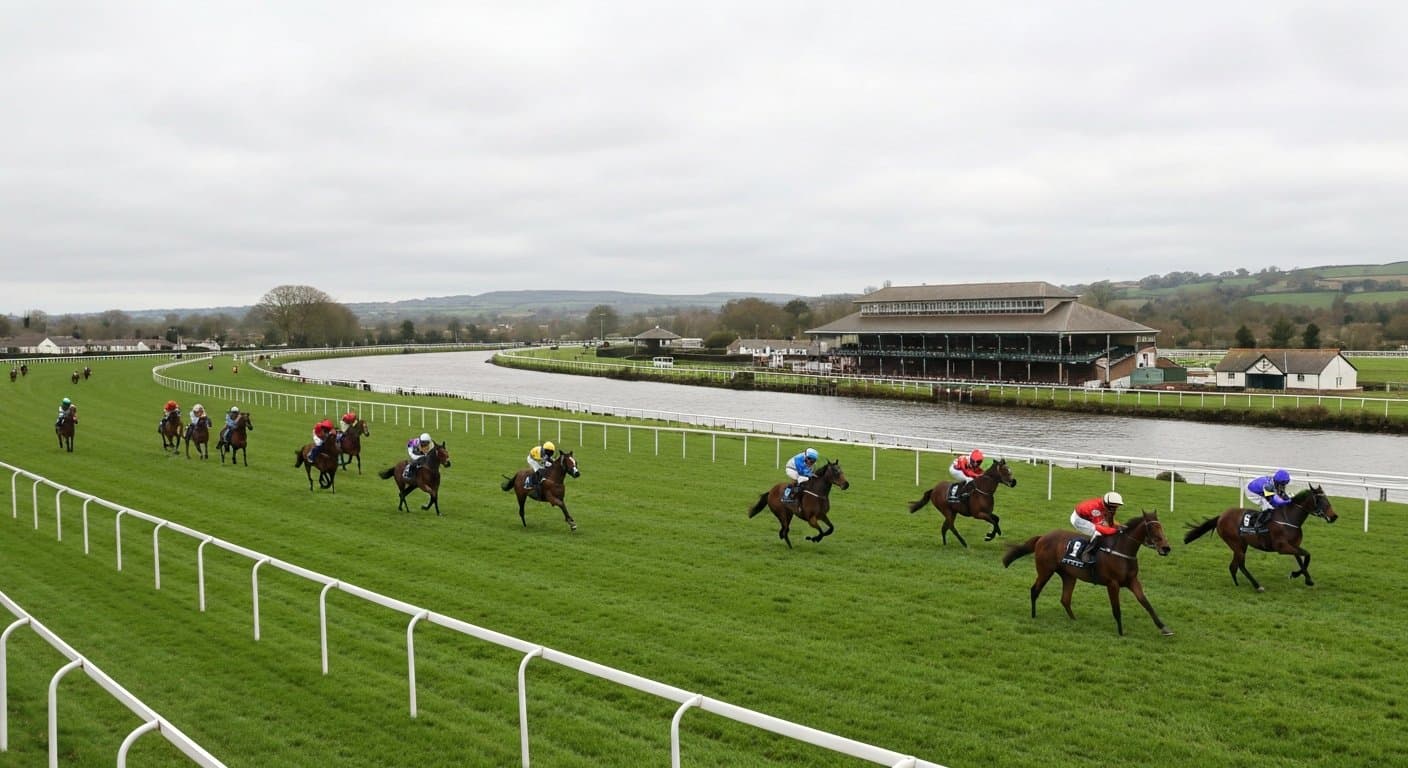
Summer Jumping at Newton Abbot: Complete Guide
Summer jumping at Newton Abbot: the Aubrey Loze Memorial Handicap Hurdle, the key meetings, and racing in Devon while the Flat is in full swing.
Read more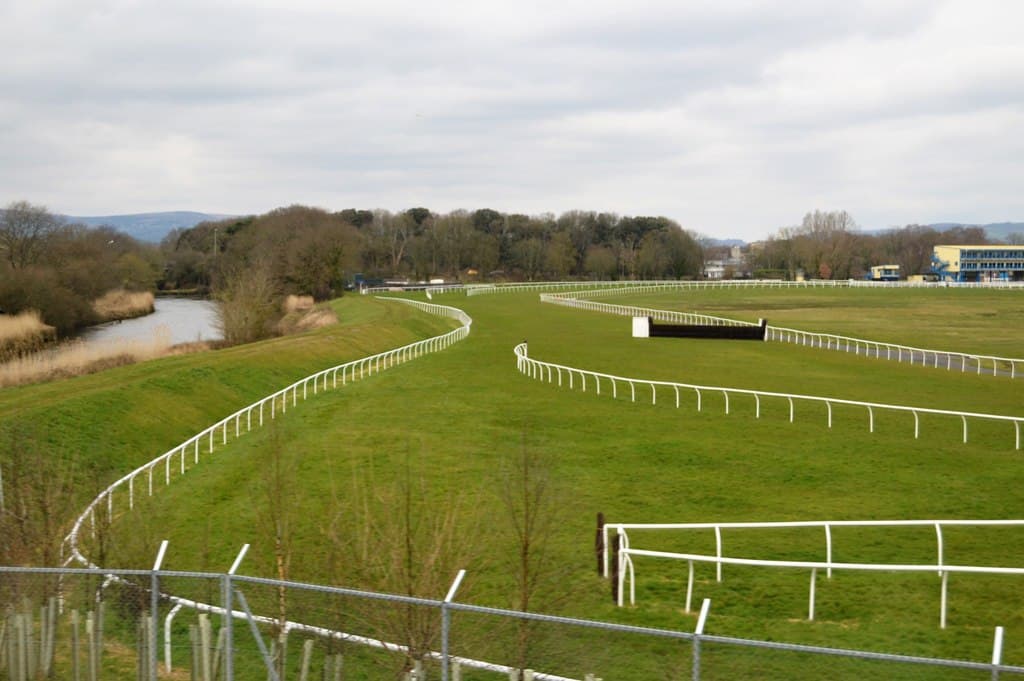
August Bank Holiday at Newton Abbot: The Biggest Day of the Summer
August Bank Holiday at Newton Abbot Racecourse is the peak of Devon's summer jumping calendar — a festival atmosphere on the Devon Riviera with top jumpers in form.
Read morePhotos on this page are used under Creative Commons licences. Titles, sources and licence links for each one are on our image credits page.
Gamble Responsibly
Gambling should be entertaining and not seen as a way to make money. Never bet more than you can afford to lose. If you or someone you know has a gambling problem, help and support is available.