
Founder & Editor · Last reviewed 2026-04-07
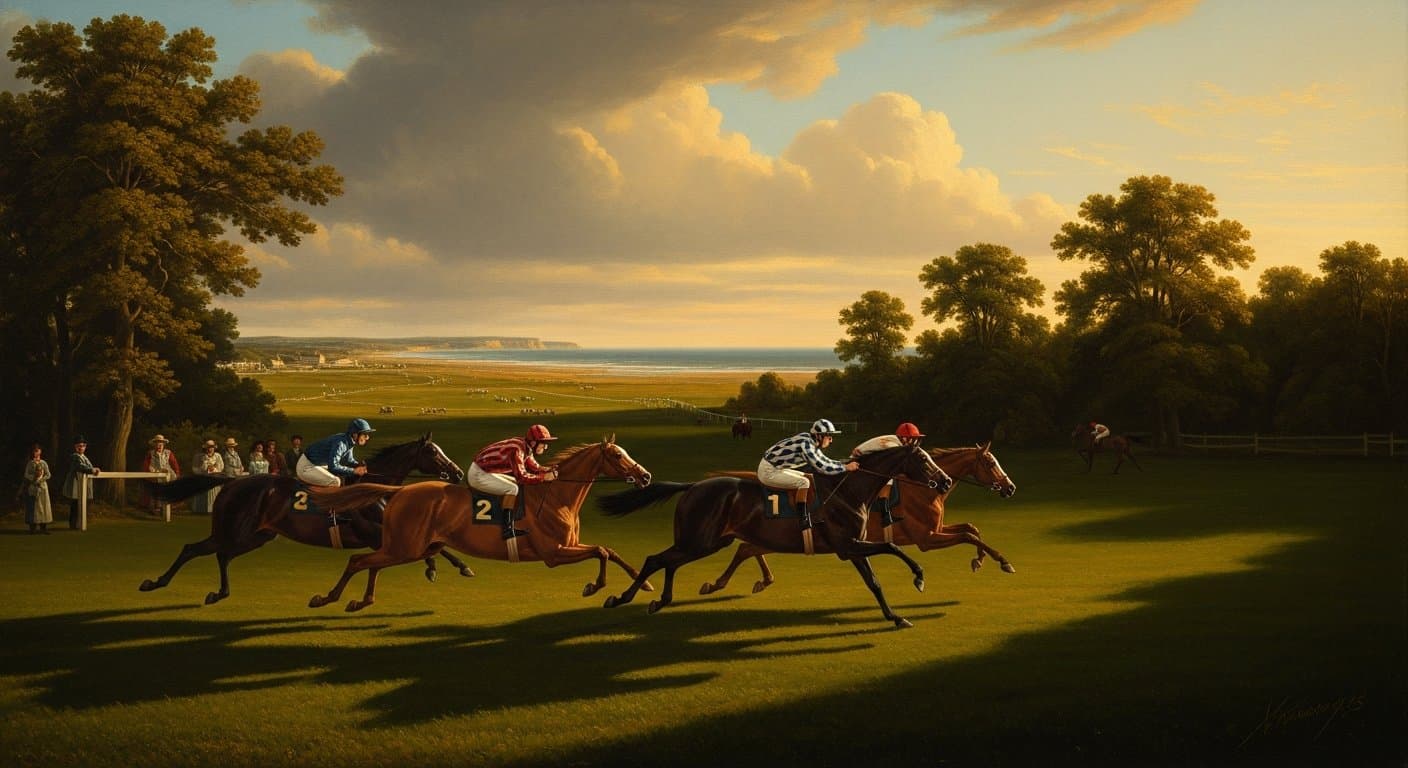
Redcar Racecourse sits where the North Yorkshire moors meet the North Sea — a straight, flat course on the Cleveland coast that has been staging competitive flat racing since 1872. The sea air, the wide open landscape and the remarkably level track combine to make Redcar a genuinely distinctive racing venue. But the real reason serious racing people make the trip to Cleveland is for the Two-Year-Old Trophy: one of the most significant and valuable juvenile sprint handicaps in the entire British flat calendar.
The Two-Year-Old Trophy (Heritage Handicap, 6f, October) is unique in European racing. Run exclusively for two-year-olds under handicap conditions at the very end of the juvenile season, it attracts a field of 20 or more young horses representing the full range of northern and southern yards. The race is both a betting puzzle and a serious form reference — winners and placed horses regularly return as Group race performers at three. For the serious race-goer, it is one of the most intellectually rewarding afternoons of the autumn.
The summer programme that precedes Trophy day features some of the best flat racing on the north-east coast. The Cleveland Gold Cup (Heritage Handicap, 2m) and the Zetland Gold Cup (Heritage Handicap, 1m2f) are genuinely competitive handicaps that attract quality fields and produce horses that subsequently win at a higher level. Redcar's straight, galloping track suits a particular type of horse — one with a clean, efficient action and the straightforward physiology to run freely on fast ground — and form here tends to hold up well across the season.
Redcar is also simply a pleasant place to spend a race day. The town is directly accessible by train, the course sits within walking distance of the station, and the informal, welcoming atmosphere that characterises the best northern tracks is very much in evidence here.
Bet on Redcar
Place your bets on Redcar races with a trusted bookmaker.

Promo code BETFRED50. New customers only. Register, deposit with a Debit Card, and place a first bet of £10+ at Evens (2.0)+ on Sports, to be settled within 7 days, to get £30 in Sports Free Bets and £20 in Bet Builder Free Bets within 24 hours of settlement. 7-day expiry. Eligibility & payment exclusions apply. Full T&Cs apply. Take Time to Think. BeGambleAware.org. 18+. Full T&Cs.

Promo code R30. New UK customers only, 18+. Register, deposit £10 or more, then place a £10 single cash bet at odds of 1/2 (1.5) or greater on any sports market (excluding Virtuals). Once the qualifying bet settles you get £30 in Free Bets (3 x £10) — the qualifying bet can win or lose. Free Bets are valid on any sports market excluding Virtuals, expire in 7 days, are non-withdrawable and must be used in full. Excluded deposit methods apply (including PayPal, Apple Pay, Skrill and NETELLER). Named bets such as Lucky 15 do not qualify. If you cash out the qualifying bet, or it is voided, you are no longer eligible for the offer. Ends 31.12.26. Full T&Cs apply. Please gamble responsibly. BeGambleAware.org. 18+. Full T&Cs.

Promo code BET40GET20. New UK customers, 18+. Register with the code and place a first bet of £40 or more at Evens (2.0) or greater. Receive 2 × £10 free bets: the first credited automatically once the qualifying bet settles, the second 24 hours later. Free bets must be placed at minimum odds of 4/1 (5.0), expire 24 hours after credit, and the free-bet stake is not returned with winnings. Debit card deposits only. Take Time to Think. BeGambleAware.org. 18+. T&Cs apply. Full T&Cs.

50% of your first-day net losses refunded as a free bet, capped at £25. New UK customers aged 18+ only. To qualify, deposit and place a first bet of £10 or more on any sport at minimum odds of evens (2.00), then place at least two further bets on different events, each worth at least 50% of your largest bet, all at evens (2.00) or greater. Losses are counted from your first settled bet until 23:59 the same day. Place a qualifying £10+ bet and you are guaranteed at least a £5 free bet. Bets placed at SP, void bets, cashed-out bets and bets struck with free bets do not count towards the offer. The free bet is credited the day after your qualifying bets settle and must be used within 7 days, after which it expires. It can be used at odds from 1/4 (1.25) up to 250/1 on singles and straight accumulators, but not on Trixie, Patent or Yankee style multiples. Free-bet stake is not returned with winnings. One offer per person, household, address, IP address and device. E-wallet deposits may not qualify, so check the cashier before depositing. Customers registered with GAMSTOP cannot claim. KYC identity verification must be completed before the free bet is credited. Take Time to Think. BeGambleAware.org. 18+. T&Cs apply. Full T&Cs.

New customers, 18+. Choose the sports bonus at sign-up, make a first deposit and receive a 100% bonus up to £50 in your Sports Bonus balance. To convert the bonus to cash, wager it 10x within 30 days. Single bets below Evens (2.00) do not qualify; accumulators do not qualify if any selection is below 1/2 (1.50). Virtual Sports, voided, cancelled, drawn, cashed-out and free-bet wagers do not count towards wagering. Only the first settled bet per event counts. Withdrawing before the wagering requirement is met forfeits the bonus balance including bonus winnings. Real-money funds are used before bonus funds. Deposits via Skrill or Neteller are not eligible. Not valid in conjunction with other promotions. Odds, bet and payment limits apply. 10bet general and promotion T&Cs apply. BeGambleAware.org. 18+. Full T&Cs.

New customers in Great Britain and Republic of Ireland, 18+. Place a £10 fixed-odds qualifying bet at minimum odds of 1/2 (1.50) — single or each-way (only the win part counts), pre-event or in-play, not cashed out early, within 28 days of opening the account. Receive up to £60 in bonuses credited over three days: 3 × £10 fixed-odds free bets (the first on settlement, then 24 and 48 hours later) plus 3 × £5 Total Goals FOOTBALL spread bets, 3 × £5 racing Winning Favourites spread bets and a £1 racing Race Index spread bet (the spread bets need a full spread-betting account). Free-bet stakes not returned with winnings; free bets valid 28 days from issue. IMPORTANT: the £5 credits are SPREAD bets — sports spread betting carries the risk that losses can exceed your stake. Sports spread-betting customers do not have Financial Ombudsman or FSCS recourse. Take Time to Think. BeGambleAware.org. 18+. T&Cs apply. Full T&Cs.

Promo code WELCOME15, entered under My Bonuses after registering. New UK customers, 18+. Place a first qualifying bet of at least £10 from your cash balance at odds of evens (2.0) or greater within 7 days of opening the account. Once the qualifying bet fully settles you receive £15 in free bets, credited as 3 x £5 tokens with set uses: one £5 accumulator free bet (minimum 4 legs, each leg at 2/5 or bigger), one £5 sports free bet (any market at evens or bigger) and one £5 Sub Cover free bet (selected football player markets at evens or bigger). Free-bet stakes are not returned with winnings. Free bets expire 7 days after they are credited. Void, cashed-out and partially cashed-out bets do not qualify. One offer per customer. Confirm the current terms on BetGoodwin's own welcome-offer page before claiming. Take Time to Think. BeGambleAware.org. 18+. T&Cs apply. Full T&Cs.

New UK customers, 18+. Minimum deposit £10. Place a £10 qualifying single at minimum odds of 1/2 (1.50), settled within 14 days. Receive £30 in free bets (stake not returned), split £20 for sportsbook use (2 x £10) and £10 for Bet Builder only (2 x £5); Bet Builder does not cover horse racing. Free bets must be accepted within 7 days and expire 7 days after acceptance. No promo code required. Best Odds Guaranteed on UK & Irish racing, subject to having staked over £25 in the previous seven days. Operated by LiveScore Betting and Gaming (Gibraltar) Ltd, UKGC 56859. Confirm the current terms on LiveScore Bet's own promotions page before claiming. Take Time to Think. BeGambleAware.org. 18+. T&Cs apply. Full T&Cs.
18+. BeGambleAware.org
The Festival Season
Two-Year-Old Trophy Day (October)
The defining day of the Redcar racing year — and one of the most fascinating and complex betting afternoons in the entire British flat calendar. The Two-Year-Old Trophy (Heritage Handicap, 6f) typically goes off in mid-afternoon on an October Saturday that serves as the unofficial end-of-season celebration for the north's flat racing community. Fields of 20 or more juveniles, drawn from the full spread of northern and southern yards, compete under handicap conditions for a valuable prize that provides the perfect snapshot of the year's two-year-old form.
The surrounding card is competitive and well-constructed. Redcar puts serious effort into making Trophy day a full-day event — there are usually six or seven races including some excellent maiden and novice events that allow quality two-year-olds to get their first start of their career on a good track at a well-attended meeting. Many trainers use Trophy day as the launchpad for horses that will be major players in the following season's classics trials.
Arrive early. The paddock is a revelation on Trophy day — 20 or more well-bred juveniles all in peak condition, with connections from across the country visible among the crowd. Watching the horses in the parade ring before the race is one of the most rewarding 15 minutes of any race day in the north.
Cleveland Gold Cup Day (Summer)
The Cleveland Gold Cup (Heritage Handicap, 2m) is the counterpoint to the Trophy — a test of seasoned stayers rather than precocious juveniles, run in the summer when Redcar's fast, flat track produces reliable times and solid form. The Gold Cup card typically features a good spread of middle-distance and staying handicaps that fill the programme around the feature race.
Redcar's staying programme benefits from the track's flat, straight nature. Unlike the testing circuits at Pontefract or Beverley, horses here are not required to handle a stiff uphill finish or tight bends — the challenge is purely about stamina and the ability to sustain effort over a long distance on quick ground. This makes the Cleveland Gold Cup form particularly useful as a reference point for horses subsequently running in staying races elsewhere.
Form students note: Gold Cup form at Redcar translates well to Ascot's staying races and Goodwood's longer handicaps. Horses that run competitively here in the summer often go on to feature in the autumn staying programme at a higher level.
Zetland Gold Cup Meeting (Early Summer)
The Zetland Gold Cup (Heritage Handicap, 1m2f) provides the middle-distance highlight of Redcar's summer programme. Run in late May or early June, it attracts horses that have either started the season with a run at one of the southern tracks or are having their seasonal debut on a track that will be undemanding physically. The prize money is competitive for northern middle-distance horses, and the fields are strong.
The meeting around the Zetland Gold Cup day also typically features the strongest juvenile maiden of the early Redcar season — a race worth watching closely as an early indicator of the northern two-year-old crop. Trainers who target Redcar in June with well-bred juveniles are often setting them up for an autumn campaign, and the form from these early maiden races frequently surfaces at a higher level by August.
Summer Saturday Programme (May–September)
Redcar's Saturday fixtures from May through September form the backbone of the coastal flat season. The straightforward, galloping nature of the track makes it attractive to trainers with improving handicappers who need a flat, honest track to show their form — and the sprint and mile handicaps in particular draw competitive fields from across the region.
The Saturday programme at Redcar has a pleasant, unhurried quality. The crowds are loyal but not overwhelming, the betting ring is accessible, and the straightforward track layout means you can follow the races from almost any vantage point without losing sight of the action. For the racegoer who finds the big northern meetings at York overwhelming, Redcar's Saturday fixtures offer a genuinely excellent alternative.
Key Races to Watch
Two-Year-Old Trophy (Heritage Handicap, 6f — October)
The most significant juvenile handicap in Britain and one of the most analytically demanding betting races of the autumn. Run in October over six furlongs on Redcar's straight, flat track, the Two-Year-Old Trophy assembles 20 or more two-year-olds under handicap conditions at the very end of their juvenile season — giving punters a field in which every horse has run at least twice and been assigned a mark, but in which the pace of development through the season means those marks may already be out of date in either direction.
The race consistently produces horses that go on to win Group races at three. Winners have progressed to pattern company at Newmarket's Guineas meeting, at Royal Ascot and at Glorious Goodwood, and the race is treated seriously by the major yards. Kevin Ryan and Richard Fahey both target the Trophy specifically with horses they regard as above average — not because they think a Heritage Handicap is the ceiling for their horses, but because winning it at a big price confirms something about the horse's character and versatility.
Key angle: The Trophy draw is important but not determinative on Redcar's wide straight track. The pace scenario matters more than the stall number — horses drawn centrally to high that can race closer to the pace than their draw suggests are sometimes the most dangerous runners.
Cleveland Gold Cup (Heritage Handicap, 2m — Summer)
One of the north's most competitive staying handicaps and a race that consistently rewards thorough form study. The Cleveland Gold Cup runs in the summer over Redcar's full straight course, and the combination of fast ground and a genuinely flat track produces the kind of reliable times that make form comparison straightforward. This is unusual among staying handicaps, which often run on testing or variably soft ground.
The race attracts horses from both northern and southern yards — Redcar's prize money and the straightforward nature of the test make it an attractive target for staying specialists from across the country. Mark Johnston (now Charlie Johnston) has an excellent Cleveland Gold Cup record, and the stable's stayers arrive at this race typically fit and ready to run well.
Zetland Gold Cup (Heritage Handicap, 1m2f — Early Summer)
The Zetland Gold Cup provides Redcar's middle-distance showcase — a competitive Heritage Handicap over a mile and a quarter that draws progressive types from both northern and southern yards in late May or early June. The prize money is competitive, the track is completely honest, and the result tends to produce reliable form.
Watch the Zetland Gold Cup closely as a barometer for middle-distance handicap form through the season. Horses that run to the front of the handicap here — those who run within a length or two of the winner despite finishing unplaced — often progress meaningfully at their next start when they carry a mark that does not fully reflect the closeness of the Redcar form.
Betting Preview
Betting the Two-Year-Old Trophy
The Two-Year-Old Trophy is simultaneously one of the best-value betting races of the autumn and one of the most analytically demanding. Twenty-plus runners in a handicap where every horse has run at least twice but the pace of juvenile development means the official marks may be significantly out of date — in either direction. The key to the Trophy is identifying horses whose handicap mark does not yet reflect a significant improvement that has occurred in the weeks since the mark was set.
The recency angle: The Trophy weights are set around a month before the race. Juveniles improve dramatically between August and October — a horse that was rated 75 in August could easily have produced an 85-rated performance in September. If the mark has not been updated, that horse is racing off a stale and underrating. Look for horses that have run a personal best at their most recent start and are entering the Trophy off the mark from their previous run.
Trainer targeting: Kevin Ryan and Richard Fahey both specifically target the Two-Year-Old Trophy. When either yard enters a juvenile that has run only once or twice and has a mark that looks like it might be below the horse's true ability, take serious notice. Both trainers have excellent Trophy records built on exactly this approach.
Redcar's Straight Track — Form Holds Up
One of Redcar's most useful properties for the betting student is the reliability of its form. The straight, flat track produces times that are easy to compare, and there are few of the obscuring variables — tight bends, steep hills, tricky ground — that make form at other courses harder to read. What you see at Redcar is broadly what you get, which means that horses that run to their mark here can be relied upon to reproduce it elsewhere.
The flat track principle: When assessing Redcar form for horses that subsequently run at a more complicated track, remember that the form was produced under ideal, uncomplicated conditions. A horse that ran to a Redcar time equivalent to a mark of 85 has demonstrated an ability of 85 on a perfect day — but that does not mean it will produce 85 on a track with bends, camber or testing ground. Factor in some adjustment when translating Redcar form to more demanding venues.
Practical Betting Notes
Redcar's betting ring is accessible and the on-course bookmakers are well-informed about northern form. On Trophy day, the market is active from the moment the track opens — get your positions established early in the day rather than waiting for the race itself, as the Trophy market contracts significantly in the final hour.
The best Trophy prices are typically available 48 hours before the race, after the field has been declared but before the national media has focused heavily on it. If your homework has identified a specific horse as underrated, take the price before it shortens.
Visitor Information
Getting There
By train: Redcar Central station (Northern Rail from Middlesbrough, approximately 10 minutes; Middlesbrough connects to the East Coast main line at Darlington) is approximately 5 minutes' walk from the racecourse. The train connection is one of the best of any racecourse in the north — straightforward from both directions, with regular services throughout the day.
By car: Redcar is accessible from the A174 (Teesside coastal road) and the A1085. From the A1(M), take the A66 eastbound to Teesside and then follow signs for Redcar. Parking is available on-site and pre-booking is advisable for Trophy day.
From Darlington: The mainline journey to Middlesbrough takes approximately 20 minutes, then the short hop to Redcar Central takes another 10 minutes.
Enclosures and Facilities
Premier Enclosure: The top tier with the best grandstand views, restaurant facilities and reserved seating. Smart attire preferred. Book in advance for Two-Year-Old Trophy day.
Grandstand Enclosure: The main public area with covered grandstand views of the straight course, full catering and bar facilities. The standard choice for Trophy day — accessible, well-stocked and with excellent sight lines to the long straight run-in.
Course Enclosure: Informal area with access to the running rail. Good for watching the field pass at close quarters on the straight.
Essential Tips
- Trophy day is the one to book in advance. The October date draws a bigger crowd than any other Redcar fixture. Tickets through the Redcar website.
- Bring layers for October. Redcar is on the North Sea coast, and October race days can be cold and breezy even when the sun is shining. A warm jacket is essential; racing on the north-east coast has a bracing quality that is part of the experience.
- The straight track means good views from everywhere. Unlike turning circuits, every vantage point at Redcar gives you a clear view of the race from start to finish. Position yourself on the rail for the best view of the Trophy field breaking from the stalls.
- Redcar town has good post-racing options. The seafront is a short walk and has several cafes and pubs. Middlesbrough is 15 minutes by train for a wider choice.
- The Two-Year-Old Trophy parade ring is unmissable. Twenty or more well-bred juveniles in peak condition — the pre-race paddock inspection is one of the highlights of the north's flat season.
Share this article
More about this racecourse
All Redcar guides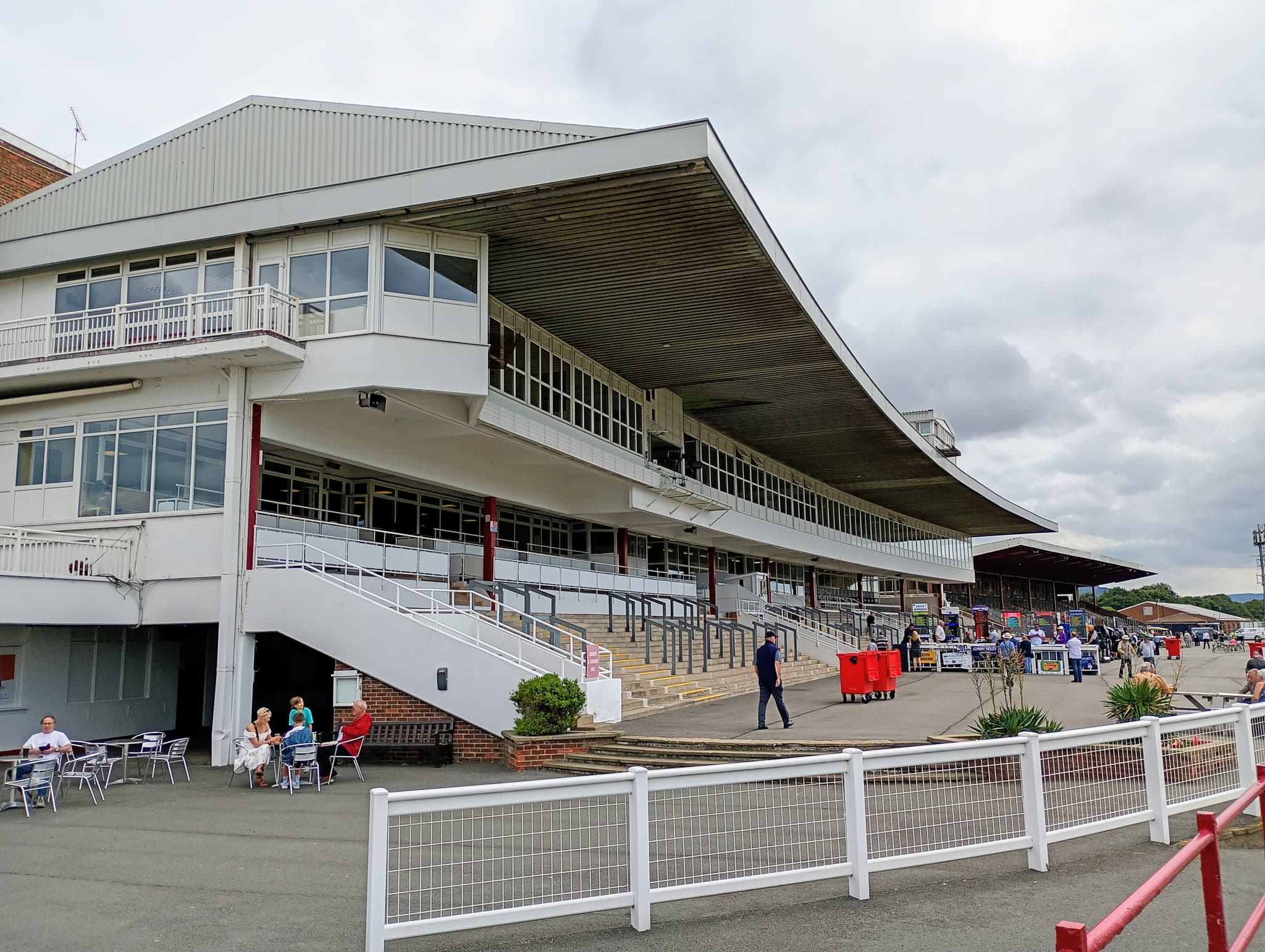
The History of Redcar Racecourse
Over 150 years of racing at Redcar — from beach meetings on the sands to North Yorkshire's seaside flat venue and the Two Year Old Trophy.
Read more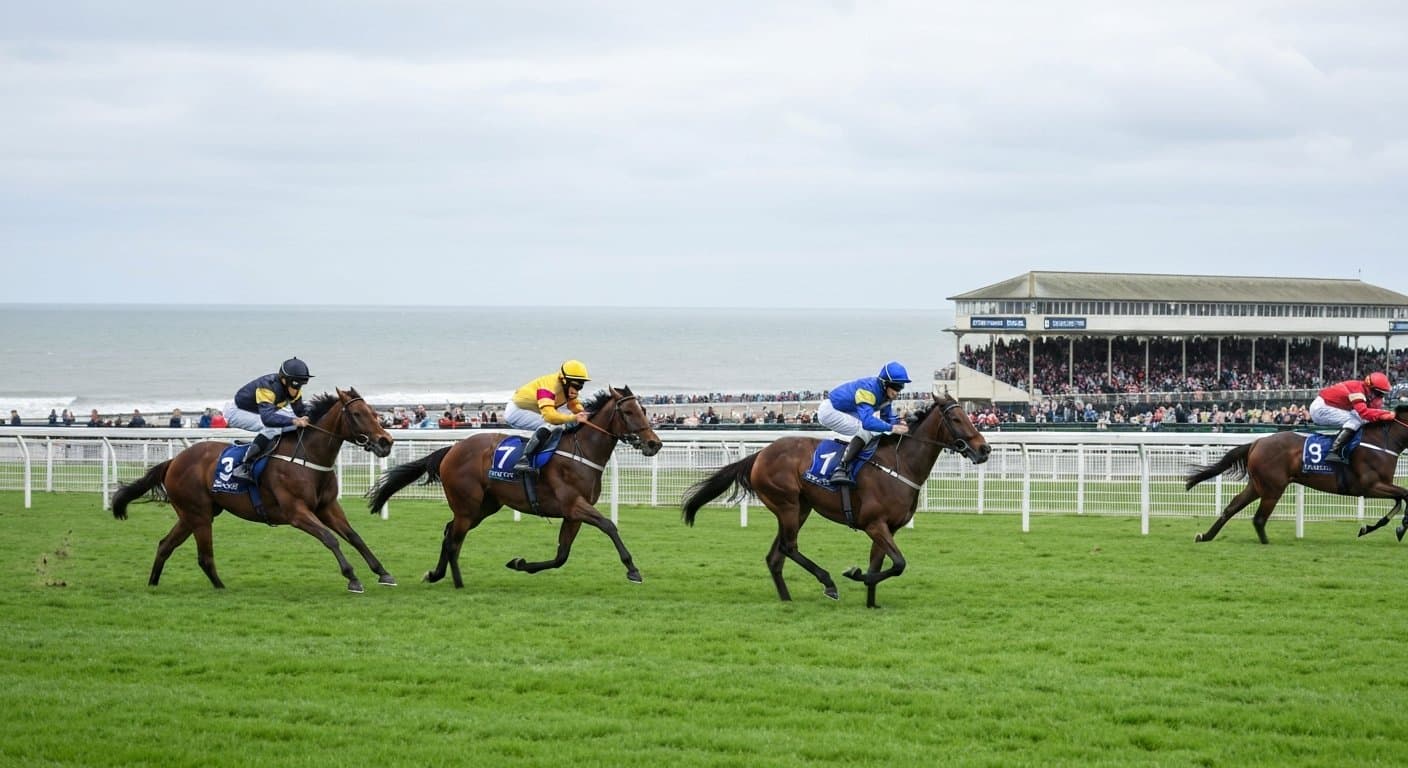
Redcar Straight Mile: UK's Only Level Mile Track Guide
Discover why Redcar's straight mile is racing's ultimate speed test. The UK's only flat, straight mile reveals true form like no other track.
Read more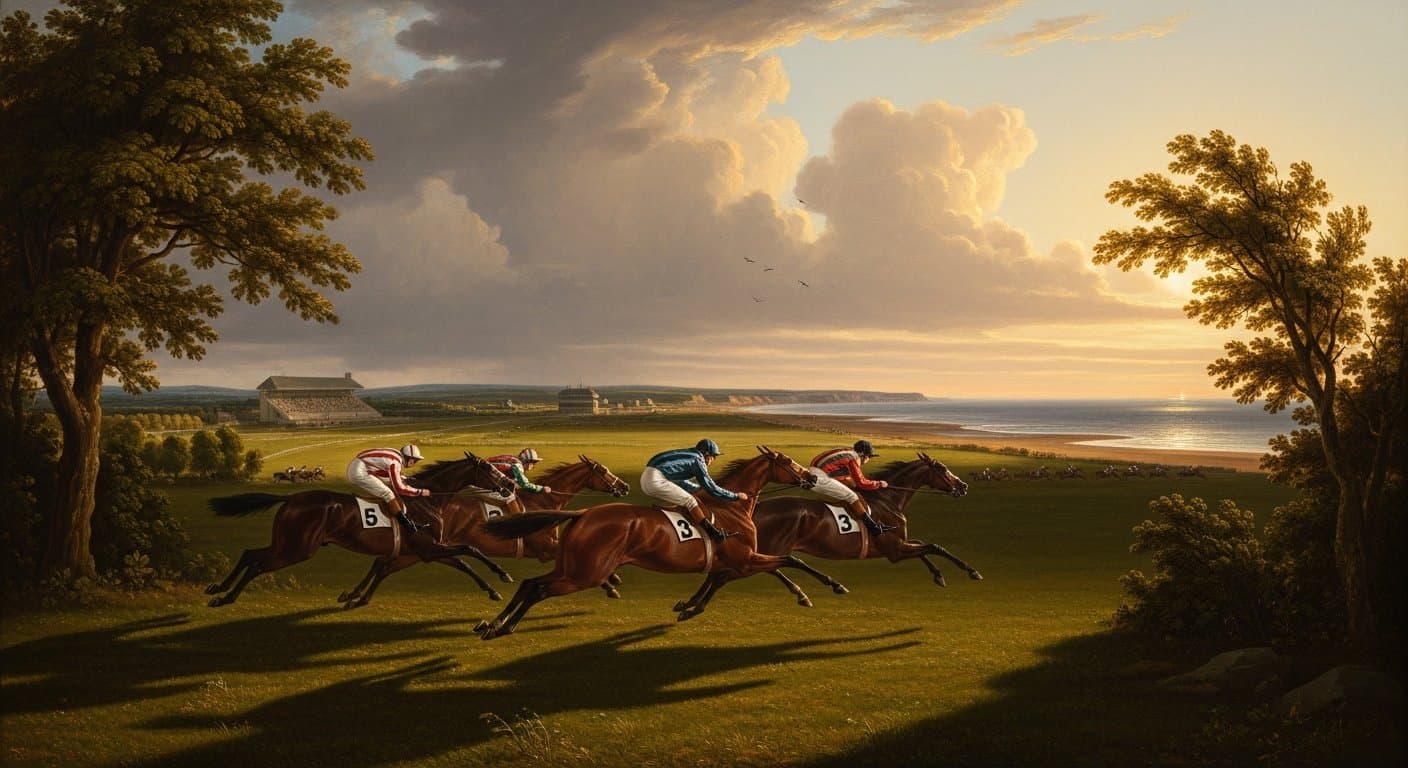
Two-Year-Old Trophy Day at Redcar: The Complete Guide
Everything you need to know about Two-Year-Old Trophy Day at Redcar — the most important juvenile form guide in northern flat racing, the Zetland Gold Cup, pedigree reading on the straight course, and how to find next year's Classic horses.
Read morePhotos on this page are used under Creative Commons licences. Titles, sources and licence links for each one are on our image credits page.
Research the field with the AI Race Predictor
Our model publishes calibrated win-probability estimates for UK races — a second opinion to understand a race, not tips. It's open about its record: it doesn't beat the market, and we show exactly how it does.
Work it out & learn the basics
Gamble Responsibly
Gambling should be entertaining and not seen as a way to make money. Never bet more than you can afford to lose. If you or someone you know has a gambling problem, help and support is available.