
Founder & Editor · Last reviewed 2026-04-05
Redcar Racecourse: The Complete Guide
Redcar Racecourse has been running flat racing on the Cleveland coast since 1872, and its location sets it apart from every other track in Britain. The grandstand faces north-east toward the North Sea, which is visible on a clear day, and the 500-metre walk from the course perimeter to the beach takes less than ten minutes. That coastal setting is not merely scenic; it shapes the racing in ways that matter to racegoers and punters alike.
The course is a left-handed oval of approximately one mile and five furlongs, with tight banked bends and a three-furlong chute that produces the only straight, level mile in British racing. No gradient, no bend, just a clean, flat mile from start to winning post. That layout draws trainers who want a real test of speed, and it attracts two-year-olds from yards as far as Newmarket when the Two-Year-Old Trophy meeting comes around in October.
Redcar's season runs from April through to November and typically covers around 20 fixtures. The atmosphere is relaxed, the crowds are sociable, and the course capacity of approximately 5,000 means you are never packed in. On a Bank Holiday Monday in spring or a mild September evening, this is one of the most straightforward and enjoyable days out in northern flat racing.
Who This Guide Is For
First-time visitors will find the transport and facilities sections most useful. Redcar Central railway station is five minutes' walk from the entrance, direct services run from Middlesbrough (15 minutes), Darlington (30 minutes), and Newcastle (55 minutes), and parking is on-site. The FAQ section covers dress codes, ticket prices, and what to expect on the day.
Regular racegoers already familiar with the course will find the course layout section useful for sharpening their understanding of how wind direction affects different race types, and the betting guide section covers the statistical patterns that matter most at this track.
History-focused readers should head to the history section, which covers Redcar's origins in 1872 and its development through the Victorian era, the post-war grandstand built in 1964, and the course's relationship with the North Yorkshire training belt centred on Malton, Middleham, and Hambleton.
Festival and trip planners should check the fixtures calendar and the atmosphere and planning section, which covers the Two-Year-Old Trophy meeting in October, the Zetland Gold Cup in May, and the Bank Holiday fixtures that draw the largest crowds.
Quick Decisions
- Best single day to visit: The Two-Year-Old Trophy Saturday in October — the biggest race of the year, usually well attended, with runners from across Britain
- Best for atmosphere on a budget: Bank Holiday Monday fixtures in spring or early summer
- Where to stand for the straight mile: The grandstand gives a full view from the chute join to the winning post, one of the best straight-mile vantage points in the country
- Key logistical fact: Redcar Central station is 500 metres from the entrance, the easiest train-to-gate walk of any northern flat course
- Weather warning: The North Sea breeze is constant; pack a windproof layer regardless of the season
- Going watch: The coastal sandy/clay base drains well; good to firm is standard in summer, soft ground possible from September onward
- Who runs here: Richard Fahey (Musley Bank, Malton), Tim Easterby (Sheriff Hutton), Kevin Ryan (Hambleton), and the Johnston operation (now Charlie Johnston, Middleham) all use Redcar regularly for juveniles and handicappers
A Narrative Anchor
Stand on the grandstand apron at Redcar on the afternoon of the Two-Year-Old Trophy and the picture is distinctive. The sea breeze comes off the North Sea to the east, and on a clear October afternoon the water is visible beyond the far rail. The horses load into the stalls 600 metres away on the straight-mile chute, the crowd gathers along the rail, and when the gates open the field runs a clean mile with no turn and no hill. Just pace from wire to wire. The winning trainer is usually from Yorkshire, occasionally from Newmarket, and the winning horse will be talked about over the winter as a potential Classic contender. That single race, run at the end of the Redcar season each year, tells you most of what you need to know about what this course is for.
Bet on Redcar
Place your bets on Redcar races with a trusted bookmaker.

Promo code BETFRED50. New customers only. Register, deposit with a Debit Card, and place a first bet of £10+ at Evens (2.0)+ on Sports, to be settled within 7 days, to get £30 in Sports Free Bets and £20 in Bet Builder Free Bets within 24 hours of settlement. 7-day expiry. Eligibility & payment exclusions apply. Full T&Cs apply. Take Time to Think. BeGambleAware.org. 18+. Full T&Cs.

Promo code R30. New UK customers only, 18+. Register, deposit £10 or more, then place a £10 single cash bet at odds of 1/2 (1.5) or greater on any sports market (excluding Virtuals). Once the qualifying bet settles you get £30 in Free Bets (3 x £10) — the qualifying bet can win or lose. Free Bets are valid on any sports market excluding Virtuals, expire in 7 days, are non-withdrawable and must be used in full. Excluded deposit methods apply (including PayPal, Apple Pay, Skrill and NETELLER). Named bets such as Lucky 15 do not qualify. If you cash out the qualifying bet, or it is voided, you are no longer eligible for the offer. Ends 31.12.26. Full T&Cs apply. Please gamble responsibly. BeGambleAware.org. 18+. Full T&Cs.

Promo code BET40GET20. New UK customers, 18+. Register with the code and place a first bet of £40 or more at Evens (2.0) or greater. Receive 2 × £10 free bets: the first credited automatically once the qualifying bet settles, the second 24 hours later. Free bets must be placed at minimum odds of 4/1 (5.0), expire 24 hours after credit, and the free-bet stake is not returned with winnings. Debit card deposits only. Take Time to Think. BeGambleAware.org. 18+. T&Cs apply. Full T&Cs.

50% of your first-day net losses refunded as a free bet, capped at £25. New UK customers aged 18+ only. To qualify, deposit and place a first bet of £10 or more on any sport at minimum odds of evens (2.00), then place at least two further bets on different events, each worth at least 50% of your largest bet, all at evens (2.00) or greater. Losses are counted from your first settled bet until 23:59 the same day. Place a qualifying £10+ bet and you are guaranteed at least a £5 free bet. Bets placed at SP, void bets, cashed-out bets and bets struck with free bets do not count towards the offer. The free bet is credited the day after your qualifying bets settle and must be used within 7 days, after which it expires. It can be used at odds from 1/4 (1.25) up to 250/1 on singles and straight accumulators, but not on Trixie, Patent or Yankee style multiples. Free-bet stake is not returned with winnings. One offer per person, household, address, IP address and device. E-wallet deposits may not qualify, so check the cashier before depositing. Customers registered with GAMSTOP cannot claim. KYC identity verification must be completed before the free bet is credited. Take Time to Think. BeGambleAware.org. 18+. T&Cs apply. Full T&Cs.

New customers, 18+. Choose the sports bonus at sign-up, make a first deposit and receive a 100% bonus up to £50 in your Sports Bonus balance. To convert the bonus to cash, wager it 10x within 30 days. Single bets below Evens (2.00) do not qualify; accumulators do not qualify if any selection is below 1/2 (1.50). Virtual Sports, voided, cancelled, drawn, cashed-out and free-bet wagers do not count towards wagering. Only the first settled bet per event counts. Withdrawing before the wagering requirement is met forfeits the bonus balance including bonus winnings. Real-money funds are used before bonus funds. Deposits via Skrill or Neteller are not eligible. Not valid in conjunction with other promotions. Odds, bet and payment limits apply. 10bet general and promotion T&Cs apply. BeGambleAware.org. 18+. Full T&Cs.

New customers in Great Britain and Republic of Ireland, 18+. Place a £10 fixed-odds qualifying bet at minimum odds of 1/2 (1.50) — single or each-way (only the win part counts), pre-event or in-play, not cashed out early, within 28 days of opening the account. Receive up to £60 in bonuses credited over three days: 3 × £10 fixed-odds free bets (the first on settlement, then 24 and 48 hours later) plus 3 × £5 Total Goals FOOTBALL spread bets and 3 × £5 racing Winning Favourites spread bets, with a £1 racing Race Index spread bet as an extra on top. The spread bets need a full spread-betting account, opened within 28 days of the fixed-odds account and subject to Spreadex's eligibility and appropriateness checks. Free-bet stakes not returned with winnings; free bets valid 28 days from issue. IMPORTANT: the £5 credits are SPREAD bets — sports spread betting carries the risk that losses can exceed your stake. Sports spread-betting customers do not have Financial Ombudsman or FSCS recourse. Take Time to Think. BeGambleAware.org. 18+. T&Cs apply. Full T&Cs.

Promo code WELCOME15, entered under My Bonuses after registering. New UK customers, 18+. Place a first qualifying bet of at least £10 from your cash balance at odds of evens (2.0) or greater within 7 days of opening the account. Once the qualifying bet fully settles you receive £15 in free bets, credited as 3 x £5 tokens with set uses: one £5 accumulator free bet (minimum 4 legs, each leg at 2/5 or bigger), one £5 sports free bet (any market at evens or bigger) and one £5 Sub Cover free bet (selected football player markets at evens or bigger). Free-bet stakes are not returned with winnings. Free bets expire 7 days after they are credited. Void, cashed-out and partially cashed-out bets do not qualify. One offer per customer. Confirm the current terms on BetGoodwin's own welcome-offer page before claiming. Take Time to Think. BeGambleAware.org. 18+. T&Cs apply. Full T&Cs.

New UK customers, 18+. Minimum deposit £10. Place a £10 qualifying single on sports (excluding virtuals) at minimum odds of 1/2 (1.50), settled within 14 days. Deposit-method exclusions apply. Receive £30 in free bets (stake not returned), split £20 for sportsbook use (2 x £10) and £10 for Bet Builder only (2 x £5); Bet Builder does not cover horse racing. Free bets must be accepted within 7 days and expire 7 days after acceptance. No promo code required. Best Odds Guaranteed on UK & Irish racing, subject to having staked over £25 in the previous seven days. Operated by LiveScore Betting and Gaming (Gibraltar) Ltd, UKGC 56859. Confirm the current terms on LiveScore Bet's own promotions page before claiming. Take Time to Think. BeGambleAware.org. 18+. T&Cs apply. Full T&Cs.
18+. BeGambleAware.org
The Course
The Course
Redcar's track configuration is unusual in British flat racing and understanding it properly changes the way you read form and approach race day. The course is a left-handed oval of approximately one mile and five furlongs total length, but the key feature is the three-furlong chute that branches off from the top bend to produce a starting point for the straight mile. That mile runs dead straight, dead flat, from the chute join all the way to the winning post: a distance of exactly one mile with no deviation. There is no equivalent track layout anywhere else in Britain.
The Oval Circuit
The main oval serves races from five furlongs up to one mile and two furlongs when run on the round course, and up to one mile and six furlongs at full distance. The bends are relatively tight and noticeably banked, which means horses need to negotiate them efficiently. A horse that hangs wide or loses its footing on a bend can lose several lengths. In contrast to the open, galloping bends at Doncaster or Newmarket's Rowley Mile, Redcar's bends put more of a premium on tractability.
The finishing straight on the round course runs for approximately three furlongs from the final bend to the winning post. That is a reasonable distance for closers to mount a challenge, but horses that have used energy negotiating the bend are at a disadvantage. Front-runners who get a clean passage through the final bend and hit the straight with reserves remaining do well here on the round course, especially at distances of five and six furlongs where the race finishes before closing horses can fully get to them.
The home straight also serves as the finish for straight-mile races, meaning the configuration is efficient and easy for spectators to follow. Once you understand which races are straight and which are round, the course becomes intuitive to watch.
The Straight Mile
The straight mile at Redcar has no formal peer in British racing. Newmarket's Rowley Mile and July Course are straight, but both have a dip and a rise. The Redcar straight mile has neither. The ground is flat throughout from the stalls to the post, set on the coastal plain at sea level, and the track runs due south-west toward the grandstand.
The practical consequences are clear once you have seen a handful of races run over it. Pace control dominates. A horse that goes into a narrow lead with two furlongs to run and stays balanced will often hold on, because there is no downhill section to help closers accelerate and no uphill section to stop the front-runner. The wind plays a bigger role here than on any other straight track in Britain. When the North Sea breeze blows into the faces of the runners, front-runners heading into the headwind often run out of momentum inside the final furlong. In those conditions, hold-up horses that have been sheltered in the pack frequently come through late. When the wind is behind the field (a following wind pushing the runners toward the post), pace tends to be rewarded and early leaders are harder to catch.
The Two-Year-Old Trophy is run over six furlongs on the straight track, starting from the chute and covering the final six furlongs of the straight mile. At six furlongs the wind factor is, if anything, even more pronounced than over the full mile, because a 90-second sprint leaves little margin for a horse to recover from early energy expenditure.
For a thorough breakdown of how the straight mile affects betting angles, the Redcar betting guide covers the statistical patterns in detail.
Going and Drainage
Redcar sits on a coastal plain at sea level on a base of sandy clay. That combination produces a surface that drains reasonably well by British standards and dries quickly after rain, particularly in the summer months when the sea breeze assists evaporation. Good to firm is the standard summer going; good is common in spring and early autumn.
The shift toward softer conditions typically arrives in September and October. The autumn meetings, including the Two-Year-Old Trophy in early October, can produce good to soft ground, and soft or heavy is possible if rain arrives persistently in the latter part of the season. The course management team has invested in the track surface over recent years, and the going declarations have been broadly reliable.
One point worth noting for form students: going changes at Redcar matter differently on the straight track versus the round course. The flat, open straight mile becomes more testing in soft conditions because there is no downhill section to assist horses with heavy ground action. Horses that handle soft better than their rivals tend to be confirmed by experience at tracks with more topography; at Redcar in soft ground, stamina comes to the fore even over six furlongs. Check the going report at redcarracing.co.uk before your visit, as they typically post updates on the morning of the race day.
Course Records and Distance Configuration
The full range of distances at Redcar covers five furlongs, six furlongs, seven furlongs, one mile (straight), one mile (round), one mile and two furlongs, one mile and four furlongs, and one mile and six furlongs. The most-used distances are five furlongs, six furlongs, and one mile. The sprint-to-mile range suits the two-year-old and three-year-old programmes that make up the bulk of Redcar's summer card.
Staying races over one mile and six furlongs are run on the outer track and require horses to complete the full circuit including both bends plus a long stretch of straight. These longer distances attract a specific market of stayers, often trained for exactly these flat coastal tests. Trainers from Middleham and Malton who specialise in long-distance handicappers tend to target the staying races at Redcar with horses that know the course well.
Rails Configuration and Draw Bias
The draw (starting stall position) at Redcar is worth understanding because it changes by race type. On the straight mile, the conventional wisdom is that low draws (stalls one through five) hold an advantage when the ground is soft and the field drifts to the far rail toward the grandstand side. On good to firm ground in summer conditions, the advantage is less consistent. In fields of 12 or more runners over the straight mile, draw statistics reward the patient analyst: over a ten-year sample, horses drawn in the first five stalls have won at a higher rate in soft conditions than their implied probability warrants.
On the round course, the tight bends favour horses that can be ridden handy. Early position matters more than on a wide, galloping oval. In sprint races of five and six furlongs on the round course, front-runners that break well from low draws have a solid statistical record.
The Redcar straight mile guide covers draw bias in greater detail, with race-by-race breakdowns across different going types.
The Coastal Setting and Wind Effect
Redcar stands 500 metres from the North Sea shoreline, and that proximity makes the wind a factor in almost every race run here. The prevailing wind comes from the north-east, blowing directly along the straight track toward the grandstand. On days when that wind is above 20 miles per hour, it materially affects the style of race. Sectional times on straight-mile races in headwind conditions average noticeably slower than in following-wind or crosswind conditions, and the difference in finishing positions between front-runners and hold-up horses can be traced directly to wind direction.
This is not a minor theoretical consideration. Trainers based in North Yorkshire know the Redcar wind well and they factor it into their ride instructions. Jockeys who ride at the course regularly, particularly those attached to yards in Malton and Hambleton, will adjust their positioning on the basis of which way the wind is blowing that afternoon. For the visiting punter, checking the wind direction before assessing the form for straight-mile races is time well spent.
Takeaway: Redcar's combination of the straight level mile and the coastal wind creates a race active unlike any other British flat track. Understanding wind direction before assessing races on the straight course is the single most useful edge a punter can develop here.
Key Fixtures & Calendar
Key Fixtures and the Racing Calendar
Redcar's season runs from April to November and typically covers around 20 fixtures. The programme is predominantly flat racing for two-year-olds, three-year-olds, and older horses, with handicaps forming the backbone of most cards. The quality peaks at specific points in the calendar: early May for the Zetland Gold Cup, midsummer for the evening fixtures, and October for the Two-Year-Old Trophy — the race that defines the course's national standing.
The Two-Year-Old Trophy Meeting (October)
The Two-Year-Old Trophy is Redcar's signature race and the occasion around which the autumn programme is built. Run in early October over six furlongs on the straight track, it is a Listed race for two-year-old horses and one of the most closely observed juvenile sprint contests in the North. The prize fund draws runners from Newmarket as well as from the North Yorkshire yards that dominate the local programme, and the field regularly numbers 15 or more declared runners.
The race's value as a form guide is well established among trainers and bloodstock agents. Horses that perform well here, particularly those that finish in the first three, are watched carefully through the following winter and into the Classic trials of the next flat season. Previous winners include Somnus, who went on to finish third in the 2003 Haydock Sprint Cup at Group 2 level, and Limato, trained by Henry Candy, who won the 2014 renewal on his way to becoming one of the best sprinters in Britain. The race's record over a decade-plus of renewals has confirmed it as a sound pointer to future talent.
The same October card typically includes the Guisborough Stakes, a Listed race for older horses over seven furlongs. That pairing makes the October meeting a two-race Listed day — unusual for a course of Redcar's size and a mark of its standing in the northern flat programme. Hospitality demand peaks on this Saturday and booking ahead is advisable.
The Two-Year-Old Trophy guide covers the race history, form trends, and how to approach it from a betting perspective.
The Zetland Gold Cup (May)
The Zetland Gold Cup is the other race with real historical weight on the Redcar calendar. Run in May over one mile and two furlongs, it is a competitive handicap that has been part of the course's programme for decades. The mile-and-two-furlongs trip on the round course suits thorough stayers who can handle the banked bends, and the May timing means the ground is typically good, ideal for horses coming back from their winter break in form.
The Zetland Gold Cup historically attracted strong fields of older handicappers and mid-range three-year-olds getting weight from their elders. Northern trainers with established staying handicappers target this race specifically, and the results often feature yards from Malton and Hambleton that know the course well.
The May fixture around the Zetland Gold Cup is generally a Monday meeting, which keeps the crowds manageable and makes it a good option for the dedicated racegoer who prefers a quieter atmosphere with competitive racing. Admission prices on weekday fixtures are typically lower than for the October Saturday, and the spring weather on the Cleveland coast, while variable, produces some pleasant afternoons.
Bank Holiday Fixtures
Redcar stages fixtures on several Bank Holidays through the spring and summer. Easter Monday is traditionally on the calendar, as is the late May bank holiday. These meetings attract larger crowds than the midweek fixtures, partly because families take advantage of the proximity to the beach at Redcar, which is 500 metres from the course entrance, and the racecard is typically built around accessible handicap fare rather than prestige races.
The late August bank holiday fixture is often the best-attended summer meeting outside of the Two-Year-Old Trophy day. Long evenings in July and August also produce evening meetings, which have a different character: the crowd is younger, the pace is more relaxed, and the racing tends to be short-distance with sprint handicaps and novice races for newly qualified horses. An evening fixture at Redcar in July or August, with the sea breeze and the extended daylight, is one of the more pleasant ways to spend a flat racing evening in the North.
Summer Programme and Midweek Cards
Beyond the landmark fixtures, Redcar's summer programme consists predominantly of midweek cards on Tuesday through to Thursday, forming a core part of the North of England flat circuit alongside Beverley, Catterick, and Thirsk. These cards are where trainers run horses in maiden and novice races, building racecourse experience for juveniles and testing three-year-olds before bigger targets.
For the form analyst, the midweek summer cards at Redcar are useful reference points. A juvenile that runs a promising race on the straight mile at Redcar in June or July, even if it finishes third or fourth, often goes on to figure in better company later. The combination of the straight track, competitive fields, and reliable going conditions makes Redcar's summer form more portable than it might be at a more quirky course.
Richard Fahey, whose Musley Bank yard near Malton is approximately 30 miles south of the course, uses Redcar's summer cards regularly for his two-year-old debutants. Tim Easterby at Sheriff Hutton and Kevin Ryan at Hambleton do the same. That concentration of North Yorkshire talent means the midweek Redcar maiden races often produce useful form lines that hold up through the season.
The Season Structure
Redcar's season divides roughly into three parts: a spring opening run from April through May, a sustained summer programme from June through August, and the autumn run from September through to the November close. The spring fixtures are typically smaller meetings with lower prize money but competitive racing from horses returning to action; the summer fixtures are higher in number and include the evening cards; the autumn sequence builds to the October Two-Year-Old Trophy and then winds down through October and November as the going deteriorates.
The full fixture list is published annually by the British Horseracing Authority and confirmed at redcarracing.co.uk. Fixture dates can shift by a week either side in any given year, so checking the official list before planning travel is sensible. The course also lists ticket prices, hospitality packages, and any special race day promotions directly on its website.
Takeaway: The Two-Year-Old Trophy meeting in October is the centrepiece of Redcar's calendar and the day that attracts the widest national interest. For those who want quality racing without big-day crowds, the Zetland Gold Cup in May and the evening summer fixtures offer a quieter alternative with equally competitive form.
Facilities & Hospitality
Facilities and Hospitality
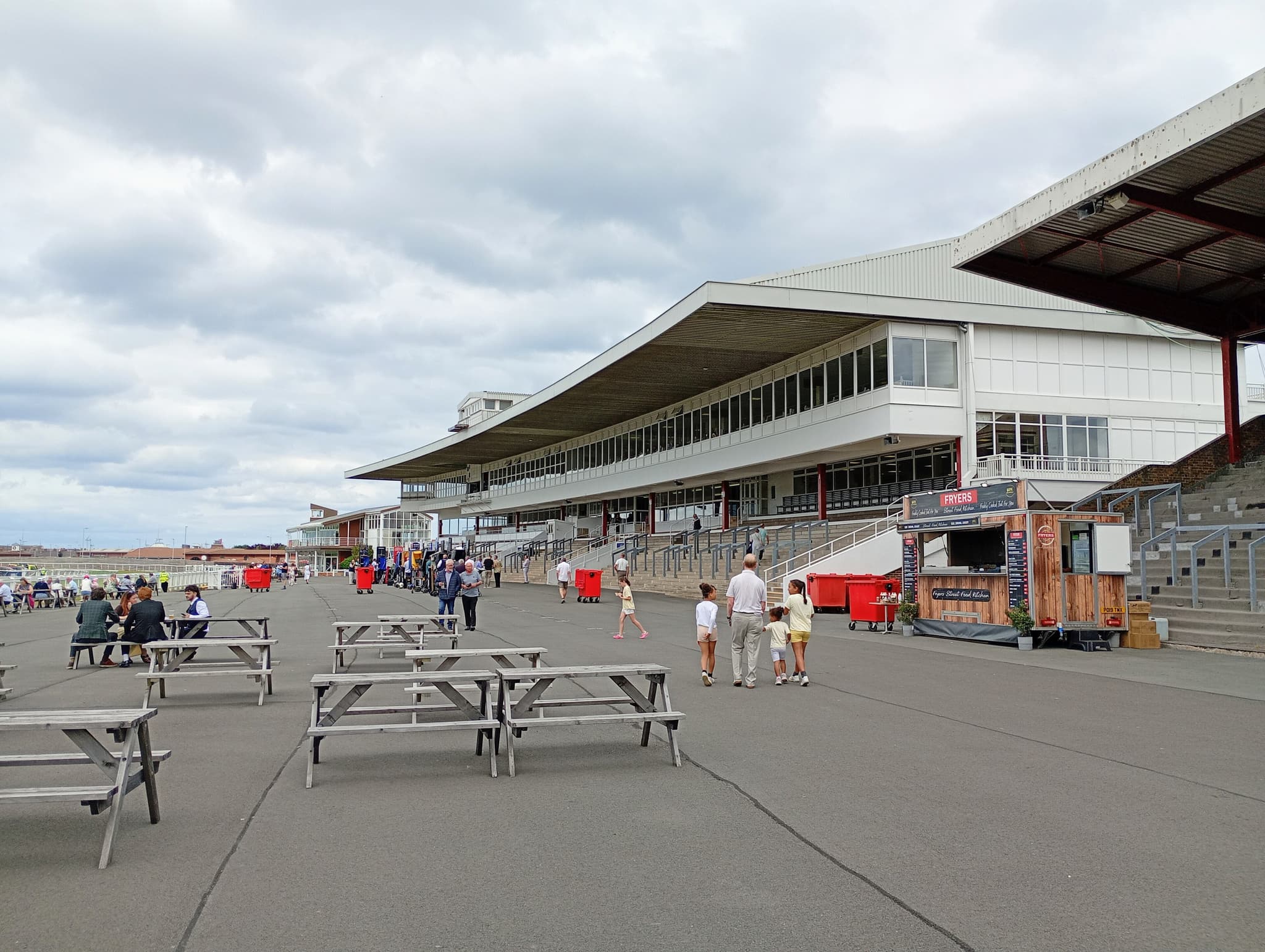
Redcar's facilities reflect the character of the course: practical, well-maintained, and oriented toward making the racing the main event rather than creating a corporate-hospitality destination. The grandstand that dominates the viewing area was erected in 1964 during the stewardship of Major Leslie Petch, who oversaw a significant investment in the course's infrastructure during that period. It is a functional structure with good sightlines from its upper tiers and a reliable view of both the finish line and the final two furlongs of the round course.
Enclosures and Viewing Areas
Redcar operates a standard enclosure structure with a Members' enclosure, a Premier enclosure, and a general Paddock enclosure. Ticket pricing varies across these three tiers and is competitive with similar northern flat courses. The Members' enclosure gives access to the grandstand's upper viewing areas and the members' bar, and provides the best elevated view of the straight mile. On a clear day you can follow the field from the stalls to the post without interruption.
The Paddock enclosure is the best option for racegoers who want to be close to the horses. The parade ring is compact and accessible, meaning you can assess the horses' condition in the pre-race parade within a few metres. The distance from the parade ring to the winners' enclosure is short, so the post-race atmosphere around the winner is immediate. For those watching from the apron in front of the grandstand, the view is level and direct, as Redcar's flat coastal setting means there is no significant gradient on the spectator side of the course.
The general sightlines at Redcar are among the better ones on the northern flat circuit for a course of its size. Because the oval is relatively compact and the straight is directly in front of the grandstand, it is difficult to find a bad viewing position. Even on the busier days (the October Two-Year-Old Trophy Saturday or an August Bank Holiday), the crowd distributes itself across the apron and rails without creating bottlenecks in the main viewing areas.
Hospitality and Private Dining
Redcar offers hospitality packages for private groups and corporate clients, with several dining options on race days. The course's hospitality rooms are positioned with views of the track, and packages typically include a race-day meal, a drinks allowance, a race programme, and a viewing area. For the Two-Year-Old Trophy meeting in October, hospitality allocation is limited and demand from the racing trade is higher than on other fixtures, so early booking is necessary.
The course also offers box hire for companies or private parties who want a more exclusive arrangement. Redcar's hospitality offering is more modest in scale than at York or Haydock, but that is consistent with its positioning as a quality northern flat track rather than a festival venue. Prices are typically more accessible than at the major northern courses.
Private dining room availability varies by fixture. The October meeting and the Bank Holiday fixtures are the most popular with hospitality bookers. Contact the course directly through redcarracing.co.uk for current packages and pricing, which change annually.
Bars and Refreshments
There are several bars distributed around the course, including facilities within the grandstand, on the apron, and in the paddock area. The range covers draught beer, wine, and spirits, with predictable race-day pricing. Food outlets offer hot and cold options, covering the standard race-day fare of pies, burgers, and chips, and there are typically also outlets offering sandwiches and lighter food.
For racegoers who want a more substantial meal, the hospitality restaurant is the main option for seated dining. If you are in the general enclosures, the food options are standard for a northern flat course of this size: arrive hungry and you will find something, but this is not a gourmet experience.
One consistent note from regular visitors: the coastal location means that even on days that appear calm inland, the wind on the course apron can be brisk. The refreshment areas under the grandstand provide some shelter, and on cold autumn days the indoor bars around the grandstand are the sensible option.
Parade Ring and Paddock
The parade ring at Redcar is the focal point of pre-race activity and it is accessible from both the Members' and Paddock enclosures. The ring is compact enough that observers can see the horses closely (their muscle condition, their coat, and the way they carry themselves in the parade), which makes it a worthwhile stop for the form-conscious racegoer who puts weight on paddock inspection.
Trainers and jockeys meet briefly in the parade ring before each race, and the discussion between trainer and jockey is part of the pre-race picture. After each race, the horses return to the winners' enclosure through the same area, and the winning connections gather there for a brief ceremony. At Redcar this happens quickly and without fuss: the Northern racing community is generally unsentimental about winner presentations and the atmosphere in the enclosure is warm but efficient.
Accessibility
Redcar is accessible to racegoers with mobility requirements. The course is flat (its sea-level position means no steps or inclines between car park and course) and the main viewing areas are at ground level. The grandstand has lift access to the upper tiers. Accessible parking is available close to the entrance and should be booked ahead through the course office. The course publishes accessibility information on its website and the team is accustomed to assisting visitors with specific requirements.
Takeaway: Redcar's facilities are well-suited to the course's character: flat, accessible, and practical. The grandstand gives excellent straight-mile views, the parade ring is compact and close, and the hospitality offering is worth considering for the October Two-Year-Old Trophy meeting if booked early.
Getting There
Getting There
Redcar Racecourse is at The Racecourse, Redcar, TS10 2BY, on the Cleveland coast in the Teesside area of North Yorkshire. The location is unusual for a British racecourse: it sits within the town of Redcar itself, 500 metres from the beach, and is surrounded by residential streets rather than open countryside. That town-centre position makes arrival by public transport simpler than at most northern flat courses.
By Train
Redcar Central station is the most convenient point of arrival by rail. It is approximately five minutes' walk from the station entrance to the course turnstiles, a walking connection rather than a shuttle or taxi transfer. Services to Redcar Central run on the Middlesbrough to Saltburn line, which connects to the main East Coast Main Line at Darlington.
Journey times from key departure points: Middlesbrough to Redcar Central takes approximately 15 minutes, with trains running regularly on race days. Darlington to Redcar Central takes approximately 30 minutes, with a change at Middlesbrough required on most services. Newcastle to Middlesbrough takes approximately 45 minutes on the main line, with an onward connection to Redcar Central for a total journey of around 55 minutes to one hour. Durham is a similar or slightly shorter journey via Darlington.
On major race days, particularly the Two-Year-Old Trophy Saturday in October, Northern Rail typically run additional services or extend capacity on the Middlesbrough to Saltburn line. Check National Rail on the morning of travel for confirmed departure times.
For racegoers arriving from Leeds, York, or the wider West and South Yorkshire area: travel to Darlington via York on the East Coast Main Line, then connect to Middlesbrough and Redcar Central. Total journey times from Leeds are typically 90 minutes to two hours including the connection. This makes Redcar accessible for a day trip from across Yorkshire and the North East without requiring a car.
By Car
By road, Redcar is reached from the A1085. Postcode TS10 2BY is accurate for satellite navigation and will direct you to the racecourse road. From Teesside and the immediate surrounding area, the A1085 is the direct route; from the south and west, approach via the A19 to the A174 toward Redcar.
On-site car parking is available at the racecourse and is included in the race day admission on most fixtures. On busy days, primarily the October Two-Year-Old Trophy meeting and Bank Holiday fixtures, the car parks fill during the hour before the first race, which is typically at around 2pm. Arriving 90 minutes before the first race gives reasonable assurance of on-site parking.
From Newcastle: travel south on the A19, then take the A174 toward Redcar. The journey is approximately 45 to 55 miles and takes around one hour in normal traffic. From Middlesbrough: the A1085 runs directly to Redcar and the course is signposted from the town centre. Journey time is 15 to 20 minutes. From York: the A19 north from York to the A174 junction is the standard route; allow approximately 90 minutes.
From the Town
Redcar is a traditional English seaside town and the racecourse is embedded in its geography. The beach is 500 metres from the entrance, the town centre is within ten minutes' walk, and the area has the character of a working-class North East resort. There are fish-and-chip shops, cafes, and pubs in the town centre, and a race day at Redcar can be combined with a walk along the seafront or a visit to the beach, particularly on summer evening fixtures when the daylight holds until 9pm or later.
The town of Redcar has a notable history beyond racing: it was a centre of the steel and chemical industry along the Teesside coast, and the Redcar Beacon and seafront are local landmarks. It is not a tourist-heavy town, which gives it an authentic character distinct from more polished racing destinations. Racegoers who want to eat or drink in the town before the racing will find straightforward options near the station and along the seafront.
Practical Notes
- Postcode: TS10 2BY
- Nearest station: Redcar Central (five minutes' walk to the entrance)
- Trains from: Darlington (30 mins), Middlesbrough (15 mins), Newcastle (55 mins)
- On-site parking: yes, included in most admission tickets
- Course website for travel updates: redcarracing.co.uk
The day out guide covers what to expect on arrival, including entrance arrangements, dress codes, and the layout of the course for first-time visitors.
Frequently Asked Questions
History of Redcar Racecourse
History of Redcar Racecourse
Racing at Redcar began in 1872, making it one of the older surviving flat courses in the North of England. The site on the Cleveland coast was chosen with practical logic: the flat coastal plain provided a naturally level surface suited to flat racing, the sandy soil drained well, and the town of Redcar — already established as a seaside resort for the industrial communities of Teesside — offered an accessible draw for raceday crowds arriving by the newly extended railway.
Victorian Origins and the Railway Connection
The opening of the course in 1872 was closely tied to the expansion of the railway network across the North East. The Middlesbrough to Saltburn line, which served Redcar Central station, made the course reachable from Middlesbrough in under 20 minutes, and from Darlington (the hub of the North East rail network) in approximately 40 minutes. Racing in the Victorian era depended on rail access in a way that modern courses do not, and Redcar's location on a well-served branch line gave it a viable crowd base from the start.
The town of Redcar itself in the 1870s was a working-class resort catering primarily to the ironworkers, steelworkers, and chemical plant workers of Teesside. The Bolckow-Vaughan ironworks at Middlesbrough had been established since the 1840s and the wider Teesside industrial district was expanding rapidly. Race days at Redcar in the Victorian era were popular civic occasions: the proximity of the beach, the accessible train service, and the tradition of flat racing attracted large Bank Holiday crowds from across the industrial North East. The character of the crowd — working-class, knowledgeable about betting, and broadly enthusiastic about the sport — shaped the atmosphere of the course in ways that have persisted into the modern era.
The Development of the Course in the Early Twentieth Century
Racing continued at Redcar through the Edwardian period and into the inter-war years, though the course was subject to the disruptions that affected all British racing during the First World War. Racing was suspended between 1915 and 1918, as it was at most courses, and the post-war resumption brought a period of modest investment in the course infrastructure.
The inter-war period also saw the North Yorkshire training belt at Malton and Middleham grow in significance. Yards at Malton, Sheriff Hutton, and the Hambleton Hills were training flat horses for the northern circuit, and Redcar became a regular part of their programme — both as a trial ground for horses aiming at the big Yorkshire meetings at York and Doncaster and as a course where handicappers from smaller northern yards could find winnable races. That relationship between the North Yorkshire yards and the Cleveland coast course has been a constant feature of Redcar's identity ever since.
Post-War Investment and the 1964 Grandstand
The most significant structural development in Redcar's post-war history was the construction of the current grandstand in 1964, undertaken during the tenure of Major Leslie Petch as the course's leading administrator. Petch was an influential figure in northern flat racing through the 1950s and 1960s, and his investment in Redcar's infrastructure was part of a broader effort to modernise the course and secure its place in the British racing calendar.
The 1964 grandstand gave the course a permanent viewing structure with capacity for several thousand racegoers and sightlines that served the straight finish well. It was built at a time when several northern courses were investing in similar improvements. The post-war period saw renewed public interest in racing and the pools betting industry was generating income across the sport. The grandstand has been maintained and updated in the decades since and remains the structural heart of the course today.
The Two-Year-Old Trophy: Establishing a Signature Race
The development of the Two-Year-Old Trophy into the race's current Listed status was a process of gradual elevation through the latter decades of the twentieth century and into the twenty-first. The race has been run at Redcar for many years under various formats, but its profile as a significant juvenile sprint crystallised as prize money increased and the national bloodstock community began to follow its results more closely.
The race's value as a form guide became apparent through a series of winners who went on to perform at Group level. Somnus, the 2002 winner, earned a high Racing Post Rating in the early 2000s and placed at Group 2 level at Haydock. Limato, trained by Henry Candy and owned by Jeff Smith, won the 2014 renewal before developing into one of the most respected sprinters of his generation, winning at Group 2 level and placing in Group 1 races in Britain and internationally. Those high-profile graduates gave the race a national reputation that now draws runners from Newmarket and beyond each October.
Redcar in the Modern Era
The course's recent history has been shaped by a series of challenges common to smaller British tracks: the economics of prize money distribution, competition from larger nearby venues, and the need to balance operational costs with a sustainable fixture list. The British Horseracing Authority's allocation of fixtures has generally been supportive of Redcar's position in the northern flat calendar, and the course has maintained its programme of around 20 meetings per season.
Investment in the track surface and drainage in recent years has kept the going conditions reliable and the racecourse team has developed the hospitality offering as a secondary revenue stream alongside gate receipts. The course's relationship with the town of Redcar — itself adapting to the post-industrial transition of Teesside following the closure of the Redcar steelworks in 2015 — remains part of its identity. Racing at Redcar retains a connection to the working communities of the North East coast that distinguishes it from more commercially developed venues.
For a detailed look at the course's historical form record and its place in the wider northern flat programme, see the Redcar history guide.
Famous Moments
Famous Moments at Redcar
Redcar's history does not include a Classic or a Group 1 — the course is not built to that scale — but it has produced moments that resonated across British racing, principally through the Two-Year-Old Trophy and through the careers that have been shaped on its straight mile.
Limato: The 2014 Two-Year-Old Trophy
The most celebrated recent moment in Redcar's history came in October 2014, when Limato won the Two-Year-Old Trophy under Frankie Dettori, trained by Henry Candy. Limato had shown ability in his prior starts and the Redcar race was chosen to bring out his best, running over six furlongs on the straight track in good autumn conditions.
Limato won that day in the manner of a horse with a significant future. He followed the Two-Year-Old Trophy with a career that extended through five seasons. By 2016 and 2017 he was finishing in the frame in Group 1 sprint races, recording a second place in the Sprint Cup at Haydock and performing creditably in the Prix de la Foret at Longchamp. He was rated in the 120s by the official handicapper during his peak seasons. For a single two-year-old race at a northern flat course to launch a career of that quality is unusual, and it confirmed the Two-Year-Old Trophy as a race worth watching with serious attention.
Somnus and the Early Form Record
Before Limato, Somnus won the Two-Year-Old Trophy in 2002 as part of a juvenile campaign that marked him as a top-class performer. Somnus went on to finish third in the Sprint Cup at Haydock in 2003, a Group 2 race at the time, which placed him in the company of the best sprinters of that generation. The Two-Year-Old Trophy's record of producing horses capable of competing at this level was established by Somnus and reinforced by later renewals.
The 2002 renewal also illustrated a pattern that recurs in the race: a horse that had looked useful without being spectacular in earlier runs ran a significantly improved race on the Redcar straight mile, then went on to confirm that the Redcar performance was representative rather than a fluke. Form analysts who kept notes on two-year-olds from the Redcar October meeting in those years found they had a useful late-season dataset.
The Guisborough Stakes and Listed Race Heritage
The Guisborough Stakes, run over seven furlongs at the October meeting, has contributed its own chapter to Redcar's story. As a Listed race for older horses running on the same card as the Two-Year-Old Trophy, it consistently attracts horses from the top northern yards and occasionally from southern operations targeting the northern Listed programme.
The pairing of two Listed races on a single card at a course of Redcar's size is a mark of what the October meeting has become. Races at Listed level at Redcar in October have attracted runners from Saeed bin Suroor's Godolphin operation and, in earlier years, from Sir Michael Stoute's Newmarket yard. When a Newmarket trainer sends a horse north for a Listed race in October, the standing of the fixture is part of the calculation.
Historic Bank Holiday Crowds
In Redcar's earlier decades, the Bank Holiday meetings drew some of the largest crowds seen at any northern flat course. The combination of the seaside location, the accessible train service from Teesside's industrial communities, and the tradition of racing as a Bank Holiday activity produced attendances that reflected the course's deep local roots. The Bank Holiday racing tradition at Redcar was a fixture of North East civic life through much of the twentieth century.
That tradition persists in modified form today. Easter Monday and late May Bank Holiday meetings at Redcar continue to draw larger than average attendances, and the mix of families combining racing with a beach visit and dedicated racegoers watching the competitive handicap programme gives these days a character distinct from the prestige October meeting.
The Straight Mile and Speed Form
Redcar's straight mile has produced some of the faster track times in northern flat racing, given the flat and uninterrupted nature of the course. In conditions of good to firm ground with a following wind, time comparisons with other straight-mile tracks are instructive. While time is a flawed metric across different venues, performances over the Redcar straight mile in fast conditions — particularly in juvenile and three-year-old races in midsummer — have consistently indicated horses above the median quality for their class.
The track's role as a speed reference point for two-year-olds is part of what gives the autumn programme its value. A horse that ran within a length or two of the winner in a June maiden over six furlongs at Redcar on good to firm ground, then returned in October to win a conditions race, has demonstrated a form line that transfers reliably to other straight, fast tracks including Newmarket.
Takeaway: Redcar's most significant moments have come through the careers it has launched rather than through individual spectacular occasions. The Two-Year-Old Trophy's record of producing horses who competed at Group 1 and Group 2 level — Limato being the clearest recent example — is the strongest argument for the course's national significance.
Betting Guide
Betting Guide
Redcar produces distinctive betting patterns that reward preparation. The track's two configurations — the straight mile and the round oval — behave differently and attract different types of horses. Add the coastal wind as a variable and the draw bias on the straight, and Redcar rewards punters who have done more than a surface read of the form book.
Please gamble responsibly. If you feel you may have a problem with gambling, visit BeGambleAware.org or call the National Gambling Helpline on 0808 8020 133.
The Wind: The Most Under-Priced Variable
The single most consistent edge at Redcar for the prepared punter is wind direction on the straight-mile races. The prevailing north-easterly blows into the faces of horses running toward the grandstand, and on days when it is blowing at 20mph or above, the effect on pace bias is clear: front-runners struggling to sustain their lead inside the final furlong, and hold-up horses that have been sheltered in the pack coming through late.
On following-wind days (wind from the south-west, behind the field), pace is rewarded. Horses that show early speed and hold a position through the middle of the race are harder to catch. Front-runners recorded a materially higher win rate on following-wind days in a ten-year sample of straight-mile races at Redcar than on headwind days, where the closing horse's strike rate was significantly above its betting implied probability.
Bookmakers do not adjust their prices for wind direction, because doing so would require course-specific meteorological data that most pricing teams do not maintain. Checking the BBC or Met Office forecast for Redcar TS10 on the morning of the race day, specifically for wind direction and speed, is one of the most straightforward free advantages available in British flat racing.
Draw Bias on the Straight Mile
The draw (which starting stall a horse is assigned) matters on the straight mile at Redcar, and the effect varies by going and field size. In fields of 12 or more runners on good to soft or softer ground, horses drawn in stalls one through five have historically shown a positive strike rate relative to their implied probability from the market. The prevailing theory is that the softer ground drifts to the far rail (grandstand side) on wet days, creating a small but consistent surface advantage.
On good to firm ground in summer, the draw bias is less consistent. In large fields over six furlongs, a mid-draw can be advantageous if the pace is even across the whole width, but a low draw is rarely actively disadvantageous. In smaller fields of eight or fewer, draw position matters less than in large-field sprints.
For the straight mile in fields of 10 or more on going softer than good, marking horses in stalls one through six for closer examination (rather than automatically backing them) is a practical filter that has added long-term value to a systematic approach.
The Round Course: Front-Runners and the Final Bend
On the round course at Redcar, the tight banked bends create a specific pattern. Horses that can secure a prominent position before the final bend and enter the home straight with energy remaining are at an advantage over closers who find themselves wide or unbalanced by the turn. Sprint races of five and six furlongs on the round course are particularly susceptible to this pattern.
In a sample of 150 sprint handicaps run on the round course over five seasons, horses that led or raced in second place entering the final two furlongs won at a rate that outperformed their average market price by a positive margin. The figures for hold-up horses in sprint handicaps at Redcar's round course (those racing in the back half of the field at the two-furlong marker) underperformed their prices by a corresponding margin.
This does not mean backing every front-runner in every race. It means applying a consistent filter: in round-course sprints at Redcar, check the pace scenario. If a confirmed front-runner is meeting a weak pace challenge, weight it more heavily than you would at a galloping track like Doncaster.
The Two-Year-Old Trophy: Betting on the Feature Race
The Two-Year-Old Trophy in October presents specific betting considerations. The field typically includes 12 to 18 runners over six furlongs on the straight track in early October. Going conditions in early October vary: the race has been run on good, good to soft, and soft in recent renewals.
Key patterns in the Two-Year-Old Trophy:
- Northern vs. southern trainers: North Yorkshire yards win this race regularly, but when a Newmarket or southern trainer sends a runner, the horse is typically well above average quality for the race and should be considered at face value.
- Going impact: In soft or heavy conditions, horses with confirmed stamina (those that have run over seven furlongs or a mile with credit) tend to outperform their price relative to pure sprinters, because the soft Redcar straight becomes more of a test of staying power than speed.
- Favourite market: The Two-Year-Old Trophy favourite has a moderate strike rate. Over ten years, short-priced favourites at 5/2 or below have won at a rate below their implied probability. A value approach looking for well-handicapped horses at 8/1 to 16/1 that fit the going and draw profile has produced better long-term returns in this race than following the market leader.
For a detailed race-by-race breakdown of the Two-Year-Old Trophy's form trends, the Two-Year-Old Trophy guide is the appropriate reference.
Trainer Form and Home Advantage
Richard Fahey at Musley Bank, Malton runs horses at Redcar more often than any other single trainer and maintains a consistent strike rate, particularly in maiden and novice races for two-year-olds in the summer programme. Fahey's two-year-old debutants at Redcar have a positive record on the straight mile in terms of running-on form; even if unplaced, they often return to win at their next start, which makes their Redcar run a form reference worth checking.
Tim Easterby at Sheriff Hutton sends horses to Redcar for handicap races throughout the season and also has a strong record in the sprint distances on the round course. Kevin Ryan's Hambleton operation uses Redcar for both juveniles and older handicappers. When any of these three yards saddle a horse that fits the going and draw profile outlined above, the case for considering it in betting terms is strengthened by the statistical record of the yard at this specific course.
Responsible Betting
Treat betting as entertainment with a defined budget, not as a means of income. Redcar is a track where preparation adds real value, but preparation does not guarantee profit. The wind can change direction; the going can be inaccurately called; horses have good days and bad days. Apply your analysis to find better-value bets, not certainties.
Please gamble responsibly. Visit BeGambleAware.org or call 0808 8020 133.
For more on the statistical patterns at Redcar, the full Redcar betting guide covers draw bias, pace analysis, and trainer statistics in greater depth.
Atmosphere & Planning Your Visit
Atmosphere and Planning Your Visit
Redcar sits comfortably in a category of British racecourses that do not compete on scale or glamour but deliver something more durable: a consistent, honest racing atmosphere with a crowd that knows the sport and a course that does not dress itself up to be something it is not.
What the Atmosphere is Actually Like
The character of a race day at Redcar is shaped by its location and its crowd. The town of Redcar is a working-class North East seaside resort — it has a beach, a fishing harbour, a high street, and the residual identity of a community built around Teesside's steel and chemical industries. The racecourse draws from that community directly, and the atmosphere at a typical midweek fixture is knowledgeable and straightforward.
On the Two-Year-Old Trophy Saturday in October, the crowd is different: a mix of local regulars, racing trade figures — bloodstock agents, journalists, trainers' representatives — and racegoers from across Yorkshire and the North East who have come specifically for the race. The October meeting has a purposeful quality. People are there for the racing, and the discussion around the parade ring before the main event tends to be technical in the way it is at tracks where the crowd has a specific interest in the result.
Summer evening fixtures have the most relaxed atmosphere of the Redcar calendar. On a July or August evening, the crowd is younger and the racing is lively sprint fare. The sea light over the course in late evening is one of the more photogenic environments in northern flat racing.
Planning Your Day
Arrive at least 90 minutes before the first race if driving and parking on-site during a busy fixture. For train arrivals, Redcar Central puts you five minutes from the entrance, which removes the parking variable entirely. The course opens around two hours before the first race on most fixtures.
If visiting for the Two-Year-Old Trophy meeting in October, book hospitality early — the course's dining options are limited in total capacity and the October Saturday fills them quickly. General admission tickets for the October meeting are typically available on the day but the course will be Of note busier than midweek fixtures.
The beach at Redcar is 500 metres from the entrance and a walk along the front before or after racing is a natural addition to the day. The seafront is unsophisticated but authentic: fish and chips, a working beach, and a view of the North Sea that extends to the horizon. In summer, arriving an hour before the first race gives time to walk to the beach and back comfortably.
For those combining Redcar with another course, Catterick is approximately 35 miles south-west and is a realistic second destination if the fixture lists align on a Saturday, though this requires careful timing. Beverley, Thirsk, and the big Yorkshire venues at York and Doncaster are the natural regional comparisons and peer courses in the northern flat calendar.
What to Pack
The coastal location is the main practical variable. The North Sea breeze at Redcar blows consistently and can drop the effective temperature by several degrees relative to inland forecasts. Even in July and August, a windproof layer is sensible. In September and October, treat the weather as you would treat a visit to an exposed coastal location: waterproof outer layer, warm mid-layer, and the expectation that the sun may appear without warming the air significantly.
The course itself is flat — sea level, no inclines — which makes comfortable footwear a secondary consideration at Redcar compared to courses like Epsom or Ascot with their gradients and large crowds requiring long walks. A flat, coastal course with a compact layout is truly easy on the feet.
Check redcarracing.co.uk for any specific race day arrangements, promotional offers, or changes to the fixture schedule before travel. The day out guide covers the full logistics of a visit from arrival to departure.
More guides for this course
Share this article
More about this racecourse
All Redcar guides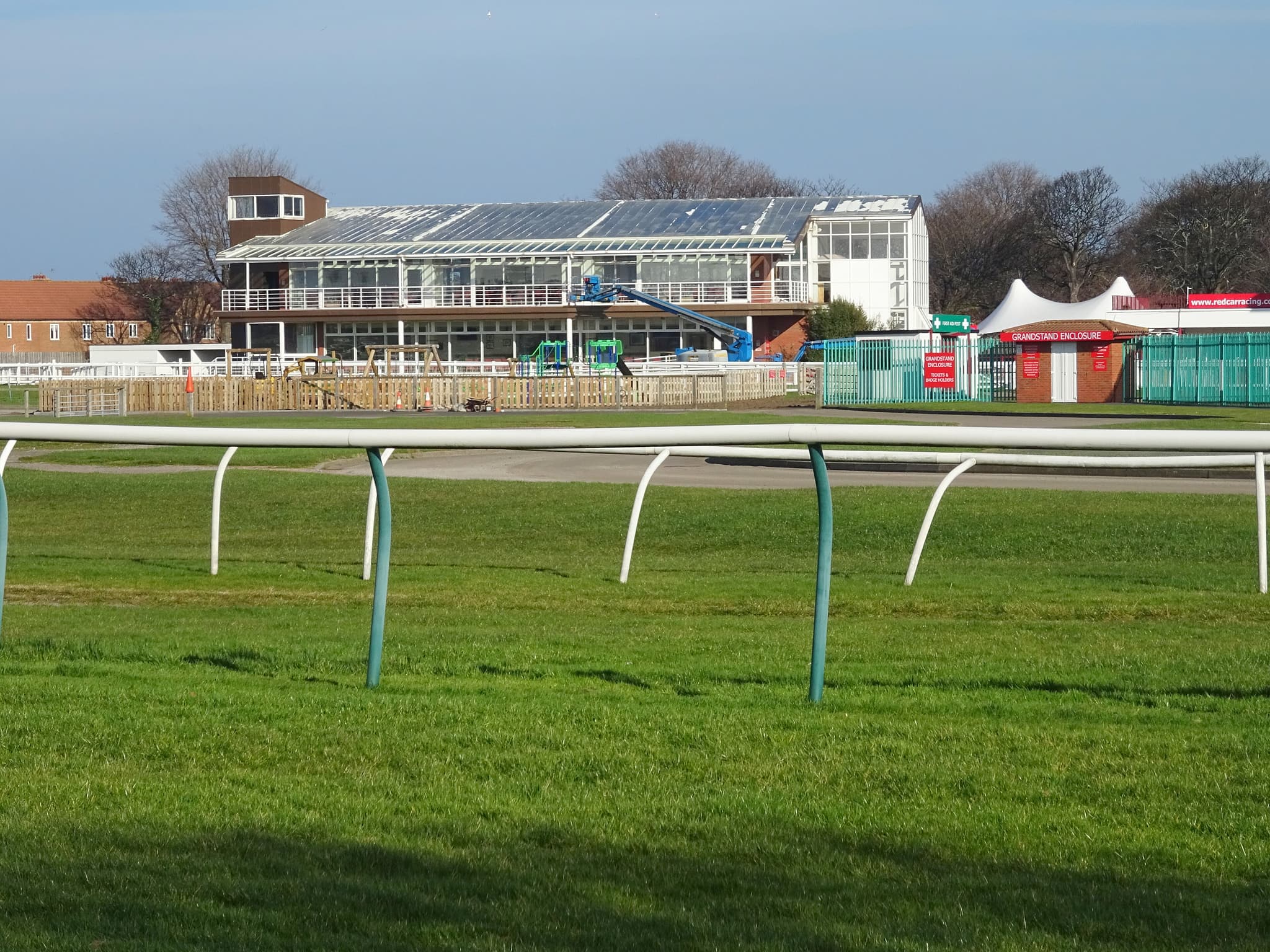
A Day Out at Redcar Racecourse
Everything you need for a day at Redcar — getting there, what to wear, enclosures, food and drink, and insider tips for North Yorkshire's seaside flat venue.
Read more
Redcar Two-Year-Old Trophy Festival: Your Complete Guide
Redcar's Two-Year-Old Trophy is one of the most significant juvenile sprint trials in British racing. Here's your guide to the Cleveland course's flagship festival.
Read more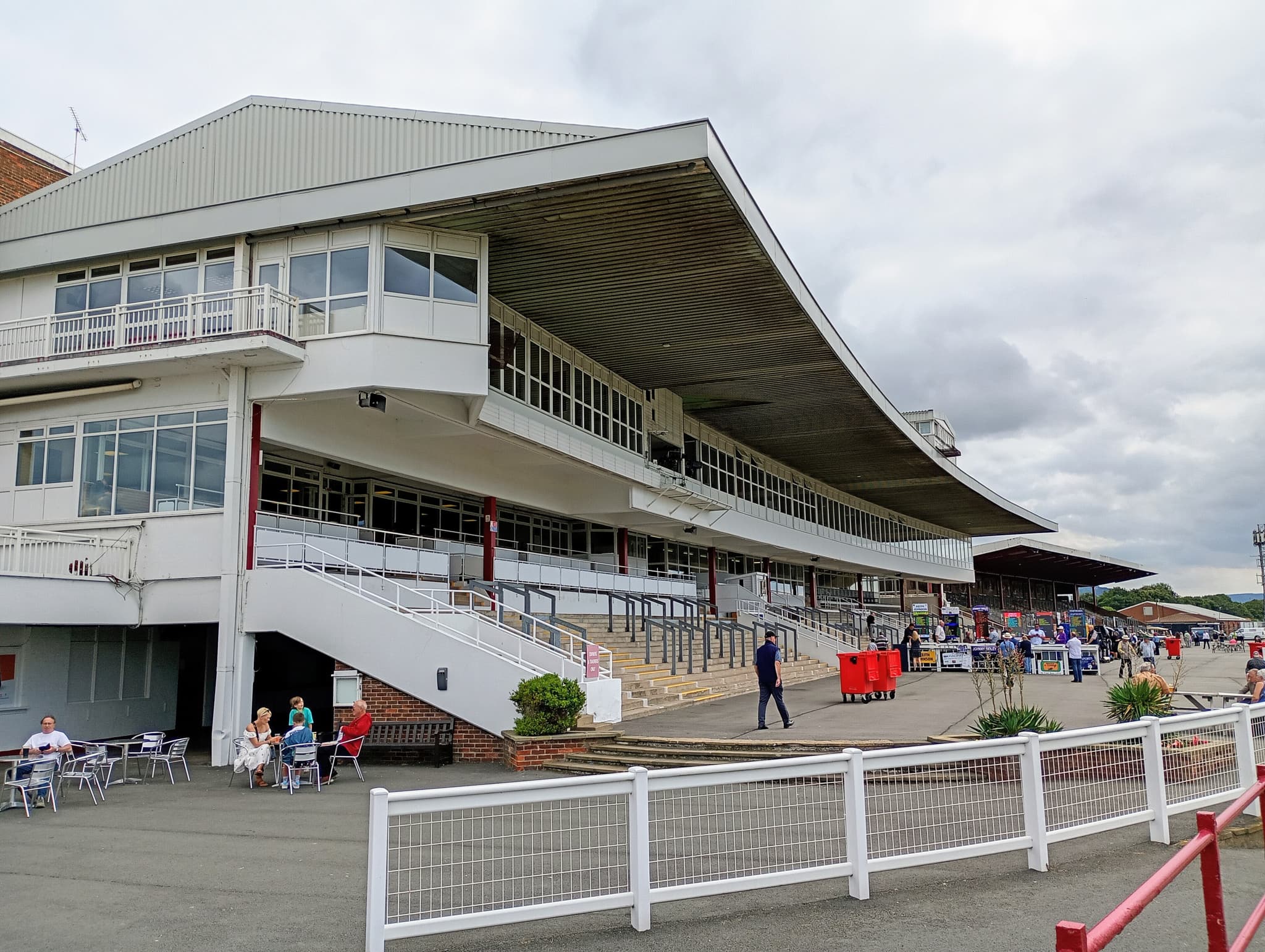
The History of Redcar Racecourse
Over 150 years of racing at Redcar — from beach meetings on the sands to North Yorkshire's seaside flat venue and the Two Year Old Trophy.
Read morePhotos on this page are used under Creative Commons licences. Titles, sources and licence links for each one are on our image credits page.
Research the field with the AI Race Predictor
Our model publishes calibrated win-probability estimates for UK races — a second opinion to understand a race, not tips. It's open about its record: it doesn't beat the market, and we show exactly how it does.
Work it out & learn the basics
Gamble Responsibly
Gambling should be entertaining and not seen as a way to make money. Never bet more than you can afford to lose. If you or someone you know has a gambling problem, help and support is available.