
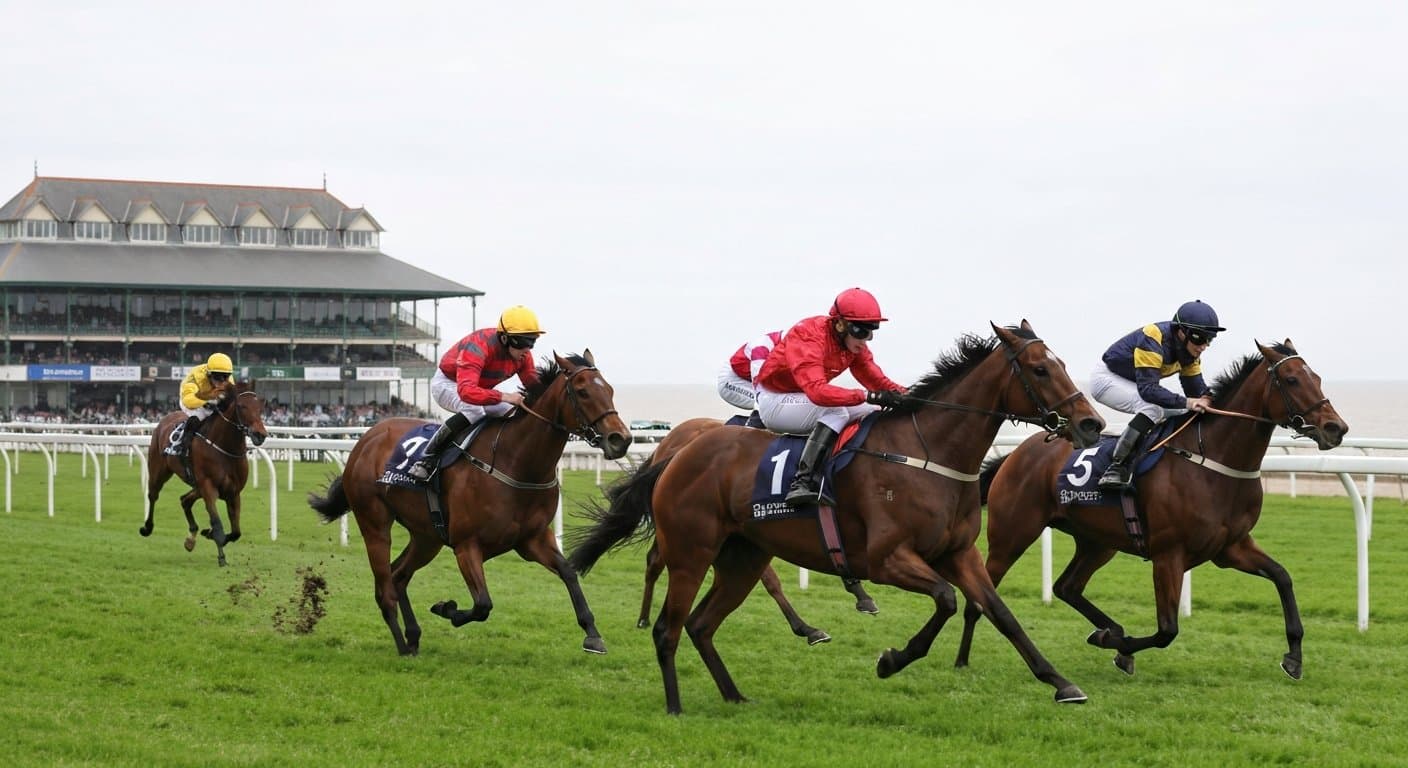
Founder & Editor · Last reviewed 2026-03-02
Redcar offers the most distinctive flat racing geography in northern England. The course combines a left-handed oval of just over a mile and four furlongs with a real straight mile — the only fully straight, fully level mile course in Britain. Those two configurations produce fundamentally different race dynamics, and understanding the distinction between them is the first step to betting well here.
The straight mile is Redcar's most reliable form surface. No bends, no gradient, no rail bias of the sort that affects undulating or curved courses — horses that win on Redcar's straight mile have done so on merit, and their form translates well to other straight tracks and to Newmarket in particular. This makes the Two Year Old Trophy in October one of the most form-reliable juvenile contests of the autumn calendar.
The oval, by contrast, rewards positional horses. Tight left-handed bends penalise hold-up horses who must pass rivals through turns, and the enclosed nature of the course puts a premium on early tactical positioning. Handy types that can sit just off the pace and kick from the final bend consistently outperform deep closers at Redcar.
Richard Fahey and Tim Easterby are the dominant training names on the northern circuit that includes Redcar, and both have strong course records. The coastal Cleveland location produces variable going conditions — the combination of reasonable drainage and exposure to North Sea weather means the ground can shift considerably across a season and even across a single meeting.
This guide covers track characteristics, going and draw, key trainers and jockeys, betting strategies, and key races. For the Two Year Old Trophy specifically, the Two Year Old Trophy guide covers race trends and betting angles in detail.
Quick decision framework:
- Straight-mile form: most reliable single form indicator at the course; back horses with placed Redcar straight form
- Oval races: handy racers with course form over first-time visitors from galloping tracks
- Two Year Old Trophy: favour horses from top northern yards with fast-ground two-year-old sprint form
- Zetland Gold Cup: strong staying form and soft-ground effectiveness essential
- Coastal going shifts: check going report on the day — Cleveland weather can change ground quickly
- Northern-yard routing signal: Fahey or Easterby targeting Redcar over York or Doncaster indicates course suitability
Bet on Redcar
Place your bets on Redcar races with a trusted bookmaker.

Promo code BETFRED50. New customers only. Register, deposit with a Debit Card, and place a first bet of £10+ at Evens (2.0)+ on Sports, to be settled within 7 days, to get £30 in Sports Free Bets and £20 in Bet Builder Free Bets within 24 hours of settlement. 7-day expiry. Eligibility & payment exclusions apply. Full T&Cs apply. Take Time to Think. BeGambleAware.org. 18+. Full T&Cs.

Promo code R30. New UK customers only, 18+. Register, deposit £10 or more, then place a £10 single cash bet at odds of 1/2 (1.5) or greater on any sports market (excluding Virtuals). Once the qualifying bet settles you get £30 in Free Bets (3 x £10) — the qualifying bet can win or lose. Free Bets are valid on any sports market excluding Virtuals, expire in 7 days, are non-withdrawable and must be used in full. Excluded deposit methods apply (including PayPal, Apple Pay, Skrill and NETELLER). Named bets such as Lucky 15 do not qualify. If you cash out the qualifying bet, or it is voided, you are no longer eligible for the offer. Ends 31.12.26. Full T&Cs apply. Please gamble responsibly. BeGambleAware.org. 18+. Full T&Cs.

Promo code BET40GET20. New UK customers, 18+. Register with the code and place a first bet of £40 or more at Evens (2.0) or greater. Receive 2 × £10 free bets: the first credited automatically once the qualifying bet settles, the second 24 hours later. Free bets must be placed at minimum odds of 4/1 (5.0), expire 24 hours after credit, and the free-bet stake is not returned with winnings. Debit card deposits only. Take Time to Think. BeGambleAware.org. 18+. T&Cs apply. Full T&Cs.

50% of your first-day net losses refunded as a free bet, capped at £25. New UK customers aged 18+ only. To qualify, deposit and place a first bet of £10 or more on any sport at minimum odds of evens (2.00), then place at least two further bets on different events, each worth at least 50% of your largest bet, all at evens (2.00) or greater. Losses are counted from your first settled bet until 23:59 the same day. Place a qualifying £10+ bet and you are guaranteed at least a £5 free bet. Bets placed at SP, void bets, cashed-out bets and bets struck with free bets do not count towards the offer. The free bet is credited the day after your qualifying bets settle and must be used within 7 days, after which it expires. It can be used at odds from 1/4 (1.25) up to 250/1 on singles and straight accumulators, but not on Trixie, Patent or Yankee style multiples. Free-bet stake is not returned with winnings. One offer per person, household, address, IP address and device. E-wallet deposits may not qualify, so check the cashier before depositing. Customers registered with GAMSTOP cannot claim. KYC identity verification must be completed before the free bet is credited. Take Time to Think. BeGambleAware.org. 18+. T&Cs apply. Full T&Cs.

New customers, 18+. Choose the sports bonus at sign-up, make a first deposit and receive a 100% bonus up to £50 in your Sports Bonus balance. To convert the bonus to cash, wager it 10x within 30 days. Single bets below Evens (2.00) do not qualify; accumulators do not qualify if any selection is below 1/2 (1.50). Virtual Sports, voided, cancelled, drawn, cashed-out and free-bet wagers do not count towards wagering. Only the first settled bet per event counts. Withdrawing before the wagering requirement is met forfeits the bonus balance including bonus winnings. Real-money funds are used before bonus funds. Deposits via Skrill or Neteller are not eligible. Not valid in conjunction with other promotions. Odds, bet and payment limits apply. 10bet general and promotion T&Cs apply. BeGambleAware.org. 18+. Full T&Cs.

New customers in Great Britain and Republic of Ireland, 18+. Place a £10 fixed-odds qualifying bet at minimum odds of 1/2 (1.50) — single or each-way (only the win part counts), pre-event or in-play, not cashed out early, within 28 days of opening the account. Receive up to £60 in bonuses credited over three days: 3 × £10 fixed-odds free bets (the first on settlement, then 24 and 48 hours later) plus 3 × £5 Total Goals FOOTBALL spread bets and 3 × £5 racing Winning Favourites spread bets, with a £1 racing Race Index spread bet as an extra on top. The spread bets need a full spread-betting account, opened within 28 days of the fixed-odds account and subject to Spreadex's eligibility and appropriateness checks. Free-bet stakes not returned with winnings; free bets valid 28 days from issue. IMPORTANT: the £5 credits are SPREAD bets — sports spread betting carries the risk that losses can exceed your stake. Sports spread-betting customers do not have Financial Ombudsman or FSCS recourse. Take Time to Think. BeGambleAware.org. 18+. T&Cs apply. Full T&Cs.

Promo code WELCOME15, entered under My Bonuses after registering. New UK customers, 18+. Place a first qualifying bet of at least £10 from your cash balance at odds of evens (2.0) or greater within 7 days of opening the account. Once the qualifying bet fully settles you receive £15 in free bets, credited as 3 x £5 tokens with set uses: one £5 accumulator free bet (minimum 4 legs, each leg at 2/5 or bigger), one £5 sports free bet (any market at evens or bigger) and one £5 Sub Cover free bet (selected football player markets at evens or bigger). Free-bet stakes are not returned with winnings. Free bets expire 7 days after they are credited. Void, cashed-out and partially cashed-out bets do not qualify. One offer per customer. Confirm the current terms on BetGoodwin's own welcome-offer page before claiming. Take Time to Think. BeGambleAware.org. 18+. T&Cs apply. Full T&Cs.

New UK customers, 18+. Minimum deposit £10. Place a £10 qualifying single on sports (excluding virtuals) at minimum odds of 1/2 (1.50), settled within 14 days. Deposit-method exclusions apply. Receive £30 in free bets (stake not returned), split £20 for sportsbook use (2 x £10) and £10 for Bet Builder only (2 x £5); Bet Builder does not cover horse racing. Free bets must be accepted within 7 days and expire 7 days after acceptance. No promo code required. Best Odds Guaranteed on UK & Irish racing, subject to having staked over £25 in the previous seven days. Operated by LiveScore Betting and Gaming (Gibraltar) Ltd, UKGC 56859. Confirm the current terms on LiveScore Bet's own promotions page before claiming. Take Time to Think. BeGambleAware.org. 18+. T&Cs apply. Full T&Cs.
18+. BeGambleAware.org
Track Characteristics
Redcar's track has two truly different characters: the oval, used for races that require bends, and the straight mile, which is unique in British flat racing. A horse that performs well on one configuration does not automatically transfer that form to the other. Treating them as separate betting surfaces is correct.
The Straight Mile — Britain's Only Straight Level Mile
The three-furlong chute joins the main oval at the top bend, creating a straight course of exactly one mile with no gradient in either direction. This is not simply a long straight on an otherwise undulating course — it is a flat, true track from start to finish. The absence of any camber, bend, or significant gradient means that horses racing on the Redcar straight mile are tested purely on their ability to travel at pace and sustain it over the distance.
The practical implication for form assessment is significant. Form from Redcar's straight mile is unusually pure compared to most British track results. When a horse wins over the straight mile at Redcar, that performance is not heavily mediated by draw bias, gradient advantage, or the compounding effects of tight bends. The form transfers well to other straight tracks — Goodwood's five-furlong course, Chester Rows at six furlongs, and Newmarket's July Course straight — and to straight-course sprint and mile races generally.
A horse drawn in high stalls can sometimes reach the far rail more easily on the straight mile if the pace sets up on that side, but the bias is typically less pronounced than at courses with more pronounced camber effects. Watch same-day results for any consistent pattern on the day's going.
The Oval — Left-Handed, Tight Bends, Positional Advantage
The oval circuit of just over a mile and four furlongs runs left-handed with bends that are tight relative to the course's overall size. In races from five furlongs to a mile and a half that use the oval configuration, the left-handed turns arrive regularly and penalise horses that must pass rivals through them. Every bend negotiated wide costs ground that cannot be fully recovered before the next bend arrives.
Handy types — horses that naturally settle in the first three or four positions — have a consistent advantage on the oval. They can hold the inner rail through the bends without the energy cost of passing rivals. Deep closers trying to make up ground from the back of the field must run wide through turns and cover extra ground that translates to lost lengths at the finish. In fields of ten or more runners on the oval, backing prominent racers with course form is structurally sound reasoning.
Form Transfer
The closest equivalent courses to Redcar's oval are Catterick (left-handed, tight, handy-racer advantage) and Carlisle (left-handed, uphill finish). For the straight mile, Goodwood sprint form and Newmarket straight-course form transfer well. Form from galloping right-handed tracks — Doncaster, Haydock — requires significant discount for oval races but transfers adequately for straight-mile events.
Going & Draw Bias
Redcar sits on the Cleveland coast, and the going is directly influenced by North Sea weather patterns. The course's sandy-based soil drains reasonably well by northern standards, but coastal exposure means wind and rainfall can change conditions rapidly across a single meeting. Checking the going report on raceday — not just the day before — is particularly important at Redcar.
Seasonal Going Profile
The flat season at Redcar runs from spring to late autumn. In summer, good or good to firm is achievable in dry spells, particularly on the straight mile where the drainage properties are at their most effective. The Two Year Old Trophy in October often falls on good to soft as the season winds down and autumn rainfall increases. The Zetland Gold Cup in May can see anything from good to firm in a dry spring to good to soft after wet weeks.
On good to firm ground, the straight mile produces its fastest times and most pace-reliable races. Prominent horses benefit most from quick going on the oval because their positional advantage is reinforced by a pace they can sustain. On good to soft or soft, the going rewards stamina over pure speed, and Redcar's coastal position means that soft conditions can arrive quickly after previously moderate rain. For the Zetland Gold Cup specifically, true stayers with wet-ground form significantly outperform their betting market prices relative to faster-ground performers.
Draw Patterns
Straight mile: The draw on Redcar's straight mile is less of a systematic factor than on most comparable courses. With no bends, the outcome is not structurally dependent on stall position. In fields that split into two groups — a high-draw group and a low-draw group — the group that gets the stronger gallop can have an advantage. Checking same-day results for which group the winners have been coming from is the most reliable method. In two-year-old races on the straight mile, the draw pattern is particularly variable because young horses sometimes drift in running.
Oval races: On the oval, low draws in sprint races of five and six furlongs have a moderate advantage because the left-handed bend arrives early and inside runners hold their position without the energy cost of finding a route through. The advantage is less extreme than at Pontefract or Catterick, but it is real in large-field sprint handicaps of twelve or more runners. For middle-distance oval races over a mile to a mile and a half, the draw is less significant as horses settle into their positions before the bends become decisive.
Going and Running Style Interaction
On quick ground at Redcar, handy racers on the oval benefit most — they can set or track a fast pace and hold their position through the bends without fatigue. On soft going, the pace slows, the energy cost of each bend increases, and horses must have real stamina reserves for the finish. On the straight mile in soft conditions, pure speed is less decisive and horses that stay the trip comfortably move up the competitive scale relative to those at the limit of their distance.
The coastal wind at Redcar can be a significant factor in straight-mile races specifically. A strong headwind in the final two furlongs of the mile tests stamina; a tailwind inflates times and can mask the weaknesses of less real stayers. Checking the wind direction and noting its implication for front-runner or hold-up advantage is good practice at any Redcar straight-mile meeting.
Key Trainers & Jockeys
Redcar sits within the broad northern training heartland centred on Malton and Middleham in North Yorkshire. The course is approximately 40 miles from Malton and about 50 miles from Middleham, making it a natural target for the large northern training operations that dominate the summer flat programme in the region.
Richard Fahey — Consistent Course Volume and Strike Rate
Richard Fahey at Musley Bank near Malton sends more runners to Redcar than any other trainer and has a strong historical strike rate. His two-year-old programme consistently includes Redcar entries because the straight mile provides an ideal early test for young horses before they are asked to navigate bends. Fahey's juveniles on the straight mile are frequently returned as short-priced favourites that the market has correctly assessed — but at prices of 5/2 to 4/1, particularly for horses with one or two previous runs showing clear progression, they represent solid value.
For Fahey's older runners on the oval, the form assessment follows the same pattern as at other northern venues: look for horses that have already shown they can handle left-handed tracks and positional racing, and that are being targeted at Redcar rather than sent there as a fallback from a more prestigious entry.
Tim Easterby — Staying Programme Specialist
Tim Easterby at Great Habton, also in North Yorkshire, has a particularly strong record in Redcar's middle-distance and staying races. His horses are typically well-suited to going that has some cut and to the left-handed configuration of the oval. Easterby's approach — placing horses in races where the conditions match their abilities rather than chasing prize money in higher classes — means his Redcar entries are usually competitive rather than learning exercises. At 4/1 or above for an oval race with going-adjusted course form, an Easterby runner is worth the research.
Kevin Ryan and David O'Meara
Kevin Ryan at Hambleton targets Redcar's sprint programme, and his sharp-ground sprint horses frequently win on the straight mile and in the six-furlong oval handicaps. Ryan's two-year-olds are well represented at the Two Year Old Trophy card in October. David O'Meara at Upper Helmsley has become one of the leading northern trainers of the past decade, and his handicappers appear across the Redcar programme throughout the season. O'Meara's horses often win at bigger prices than their form warrants in isolation because he tends to run horses fit and ready rather than using races as prep work.
Jockeys
Paul Hanagan, based in the north and riding across the northern circuit, is the primary jockey signal at Redcar. His tactical intelligence and course knowledge transfer well to both the straight mile and the oval. When Hanagan rides for Fahey or O'Meara at Redcar, the combination commands attention.
Daniel Tudhope has become one of the leading northern riders and frequently rides the best horses from the Middleham and Malton yards. His straight-mile record at Redcar is strong because his ability to judge pace on a flat, true course is a recognised skill. Kevin Stott, Connor Beasley, and Jason Hart round out the core northern-circuit jockey group that rides regularly at Redcar and understands its specific demands.
Two Year Old Trophy Visitors
The Two Year Old Trophy attracts runners from southern yards that do not appear at Redcar at other times of year. John Gosden (now Gosden and Gosden), Sir Michael Stoute, and Charlie Appleby have sent runners in previous years when the race aligned with the late-season programme of their better juveniles. Southern-yard runners in the Trophy deserve real consideration — the race is run on the straight mile, which is a neutral surface that favours ability over course knowledge.
Betting Strategies
Redcar's betting strategies divide cleanly between the two track configurations. Straight-mile races and oval races require different assessment frameworks. Applying the right framework to each race type is the primary discipline.
Strategy One: Trust Straight-Mile Form
Form from Redcar's straight mile is among the most reliable in northern flat racing. The absence of bends, gradient, and the most severe types of draw bias means that race results on the straight mile reflect real ability more directly than results on any other northern flat configuration. A horse that has won or placed on the Redcar straight mile has earned its form rating honestly.
Back horses with Redcar straight-mile form at prices of 5/2 or above in comparable straight-mile races without requiring any additional positive factor beyond the form itself. The form transfers well to Newmarket, Goodwood's five-furlong course, and other straight tracks. Conversely, horses arriving at Redcar's straight mile from oval tracks with no straight-mile experience face real unknowns — their ability to sustain pace without the benefit of a bend to gather momentum is untested.
Strategy Two: Course Form in Oval Races
For oval races at Redcar, course form is the primary positive filter. The left-handed bends, the tight configuration, and the early positional requirement create a test that horses from right-handed galloping tracks experience as unusual. A horse with a Redcar oval win or placed finish in the last eighteen months has demonstrated it can handle the turn requirements and the positional demands of the course. First-time visitors from Doncaster, York, or Haydock should be discounted in sprint and middle-distance oval races unless they carry clearly superior form from comparable tight left-handed tracks such as Catterick.
Strategy Three: Fahey and Easterby at Value Prices
Richard Fahey runners at Redcar at prices of 5/2 to 5/1 with course or straight-mile form represent the most reliable value signal on any card. Below 5/2, they are typically fully priced. Above 5/1, examine why the market has drifted — sometimes it reflects real form concerns; sometimes it reflects thin early betting on a northern midweek card where volume takes time to develop.
Tim Easterby runners on the oval at 4/1 or above with soft-ground form or staying form represent the comparable value signal for middle-distance races. Easterby's horses tend to be running to win rather than to qualify for a future handicap, and his Redcar runners at bigger prices regularly outperform their market positions.
Strategy Four: Two Year Old Trophy as the Premium Betting Event
The Two Year Old Trophy is Redcar's most competitive betting event of the season. The combination of a quality juvenile field, a neutral straight-mile surface, and October going that can vary from good to good to soft creates ideal conditions for a thorough form assessment. Apply the following filters in order: first, identify which horses have straight-mile form at any course; second, assess the going and identify horses with proven effectiveness in October conditions; third, check the trainer signal — yards that have specifically targeted the race rather than sending it as a fallback entry. See the Two Year Old Trophy guide for race-specific trends.
Strategy Five: Coastal Going Adjustment
Check the going report at Redcar on the morning of the meeting and compare it to the previous day's report. The coastal location means that overnight wind can dry or dampen the going by a full grade in either direction relative to what forecasts predicted. When the going has moved significantly from the advance estimate, look for horses whose optimal going matches the actual conditions rather than the forecast — these horses often start at prices reflecting the advance estimate rather than the actual ground, creating short-term value windows before the market fully adjusts.
To compare place terms and each-way promotions across the major bookmakers, see our best bookmakers for horse racing guide.
Key Races to Bet On
Redcar's racing calendar runs from spring through late autumn, with the programme divided between regular northern handicap meetings and a small number of quality events that attract the best fields of the season. The races below are the primary betting targets.
Two Year Old Trophy (Listed, 6f, October)
The Two Year Old Trophy is Redcar's signature race — a Listed contest for two-year-olds run over six furlongs in early October. It is staged on the straight mile configuration using the chute start, giving juveniles a pure test of speed over six furlongs without any bend. The race has produced winners that went on to Group-level success: Limato (2013) won before becoming a Group 1 performer, and Somnus (2002) won before becoming one of northern racing's best sprinters. Past winners from leading yards including Fahey, Hannon, and Johnston have made the Trophy a real quality indicator for the following season's sprint programme.
The betting angles are clear: favour horses with fast-ground straight-course form, trainers with a specific record of targeting the race, and juveniles that have shown progressive form rather than one-run wonders. Avoid backing horses with form exclusively from oval tracks unless they have a clear straight-course entry in their record. See the full Two Year Old Trophy guide for detailed historical trends and winning profiles.
Zetland Gold Cup (1m 2f, May Handicap)
The Zetland Gold Cup is a competitive handicap over a mile and two furlongs, run at Redcar's May meeting. It is one of the longer-standing fixtures in the northern flat racing calendar. The race tests stamina as well as tactical ability on the oval, and horses that stay the trip and can handle May going — which is often good to soft in the Cleveland climate — consistently outperform those with form from shorter, quicker races.
Fahey and Easterby are the dominant trainers in the race's recent history. Horses with Pontefract or Hamilton Park form in the same going category transfer well to the Zetland Gold Cup's demands. Backing horses at 5/1 or above with stiff-finish form from comparable northern oval tracks is a productive approach.
Guisborough Stakes (Listed, 7f)
The Guisborough Stakes is a Listed race over seven furlongs for horses aged three and older, typically run on the same card as the Two Year Old Trophy in October. It attracts quality older sprinters and milers from across the northern and national programme. The seven-furlong distance is run on the oval configuration, so the oval-form filter applies: horses with Redcar or left-handed oval experience have an edge over galloping-track horses making a first visit.
Straight Mile Handicaps
Redcar's straight mile stages handicap races throughout the season — five-furlong sprints, six-furlong and seven-furlong events, and the mile handicaps that form the main programme on several cards. These races are consistently the most reliable form races at the course and reward straight-forward form analysis. Horses that have run well on the straight mile before — whether at Redcar or at other straight courses — are the priority selections. The straight mile at Redcar is the most predictable betting surface at the course, and handicappers who have won on it before regularly return to win again. The straight mile guide covers course-specific details.
The Bank Holiday Monday Feature Meetings
Redcar stages Bank Holiday Monday fixtures in spring and early summer that typically attract the largest crowds of the non-Trophy season and the most competitive handicap fields. The combination of higher attendance, more betting volume, and better-quality fields from Yorkshire's top yards means that these Bank Holiday cards produce the most market-efficient racing of the Redcar non-feature programme. Going and draw analysis is most productive on these cards because there are enough runners and data points within the meeting to identify patterns before the later races.
Share this article
More about this racecourse
All Redcar guides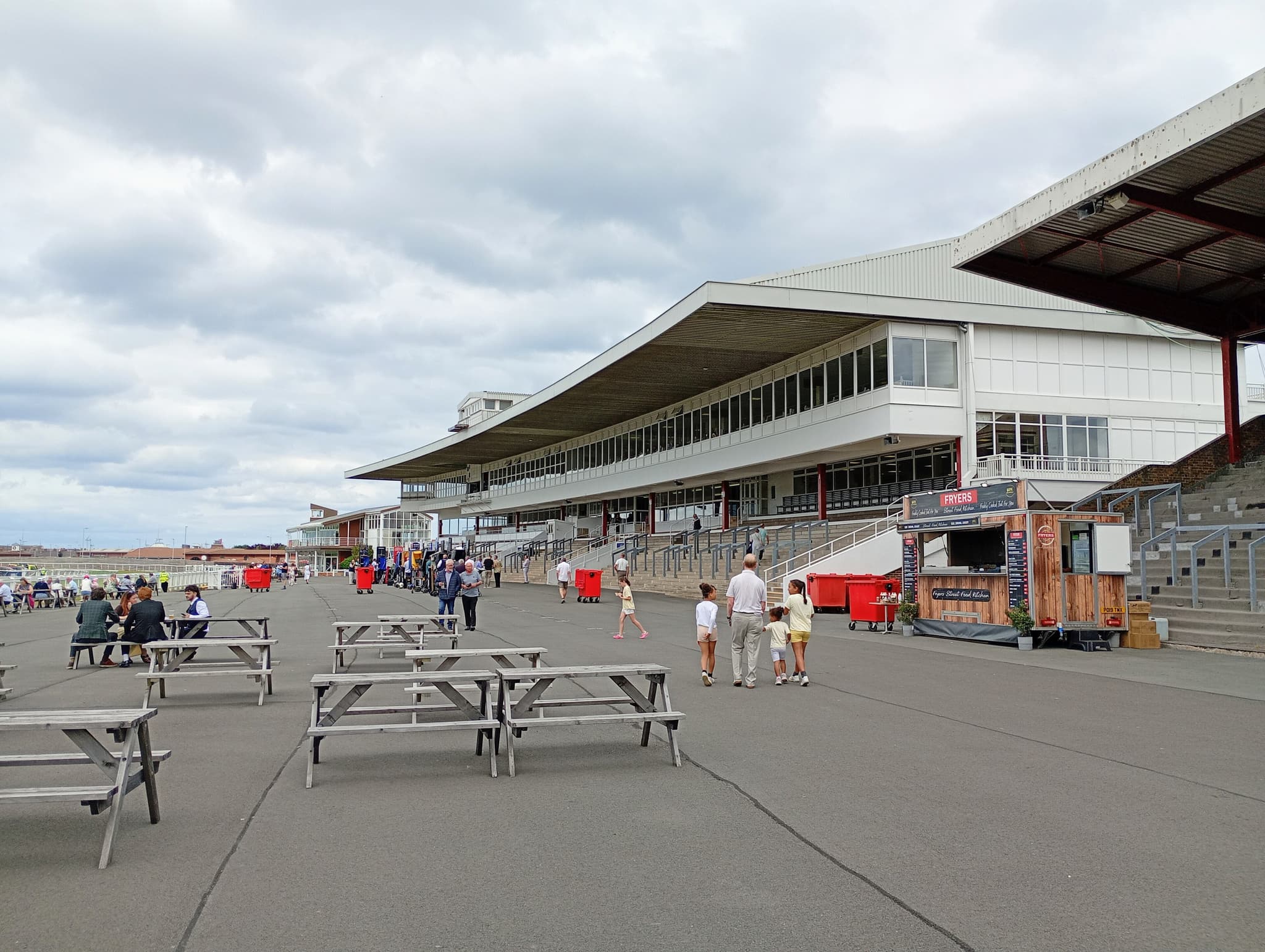
Redcar Racecourse: Complete Guide
Everything you need to know about Redcar Racecourse — North Yorkshire's seaside flat venue, the Two Year Old Trophy, and the UK's only straight and level mile.
Read more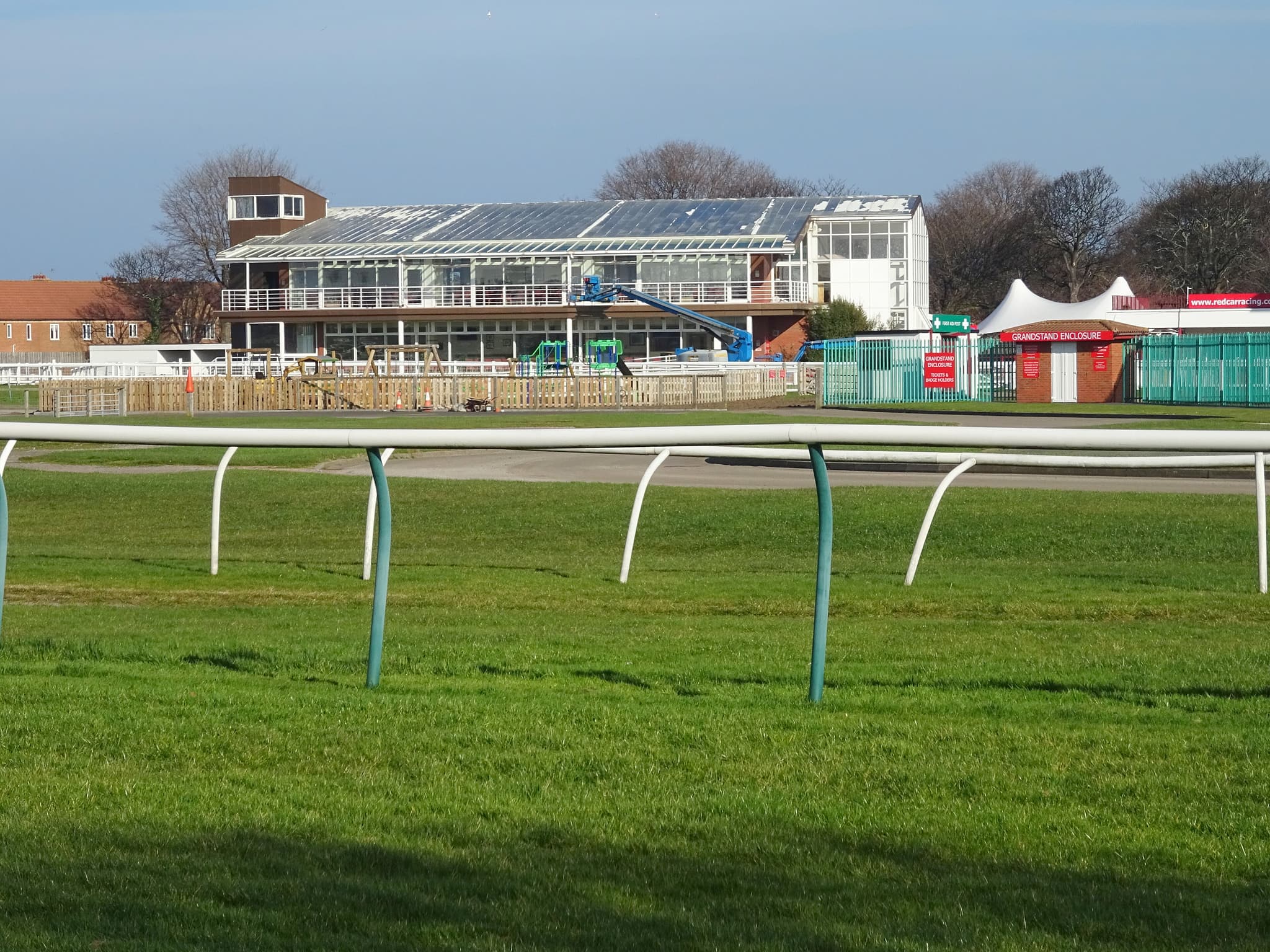
A Day Out at Redcar Racecourse
Everything you need for a day at Redcar — getting there, what to wear, enclosures, food and drink, and insider tips for North Yorkshire's seaside flat venue.
Read more
Redcar Two-Year-Old Trophy Festival: Your Complete Guide
Redcar's Two-Year-Old Trophy is one of the most significant juvenile sprint trials in British racing. Here's your guide to the Cleveland course's flagship festival.
Read morePhotos on this page are used under Creative Commons licences. Titles, sources and licence links for each one are on our image credits page.
Research the field with the AI Race Predictor
Our model publishes calibrated win-probability estimates for UK races — a second opinion to understand a race, not tips. It's open about its record: it doesn't beat the market, and we show exactly how it does.
Work it out & learn the basics
Gamble Responsibly
Gambling should be entertaining and not seen as a way to make money. Never bet more than you can afford to lose. If you or someone you know has a gambling problem, help and support is available.