
Founder & Editor · Last reviewed 2026-03-02
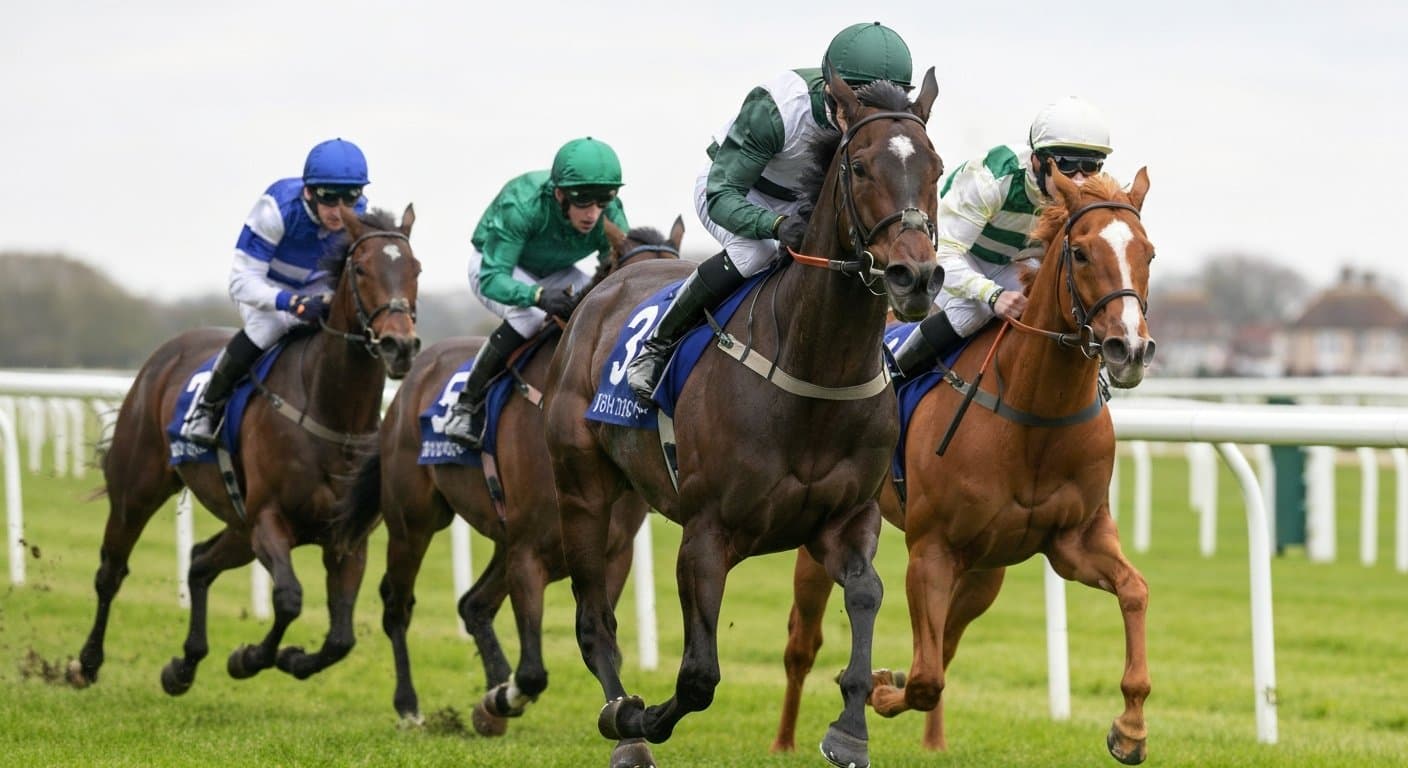
Sedgefield is northern National Hunt racing at its most demanding and most authentic. The left-handed oval of approximately a mile and two furlongs runs through undulating County Durham countryside, tightens through close-set bends, drops sharply in the home straight, and then climbs back to the winning post in a finish that reserves nothing. The horse that wins at Sedgefield has jumped well, paced itself through the undulations, managed the steep descent without losing its footing, and still produced an effort up the hill. That combination does not favour the merely talented — it favours the real article.
Brian Ellison, training at Malton in North Yorkshire, is the dominant force at Sedgefield. His operation has topped the course standings across multiple seasons, and his understanding of the type of horse that succeeds at this track — particularly in the demanding jump races around the left-handed circuit on soft winter going — is reflected in his consistent strike rates. Micky Hammond and Henry Daly are the next most productive operations, both with strong records in the stamina-testing NH races that define the Sedgefield programme.
The course's most famous resident was Fatehalkhair, a horse that won 13 races at Sedgefield, becoming the most identifiable example of the Sedgefield specialist: a horse that finds the course's combination of tight bends, undulations, and demanding finish ideally suited to its particular way of going. Sedgefield regularly produces course specialists of this type, and tracking them is among the most reliable approaches to betting profitably here.
This guide covers track characteristics, going and conditions, key trainers and jockeys, betting strategies, and key races. For the Durham National specifically, the race guide covers it in detail.
Quick decision framework:
- Course form: the strongest single positive factor; prioritise horses that have previously won or placed at Sedgefield
- Brian Ellison runner at 4/1 or above with course or comparable undulating-NH form: follow without additional justification
- Stamina essential: the descent-then-climb run-in eliminates horses that have used energy too early
- Winter going: typically good to soft or soft; check for drainage updates before betting in advance
- Durham National (3m5f, October): extreme staying test — pure mudlarks with three-mile-plus form only
- Oppose galloping-track NH form at short prices: Hexham or Newcastle form requires significant discount
Bet on Sedgefield
Place your bets on Sedgefield races with a trusted bookmaker.

Promo code BETFRED50. New customers only. Register, deposit with a Debit Card, and place a first bet of £10+ at Evens (2.0)+ on Sports, to be settled within 7 days, to get £30 in Sports Free Bets and £20 in Bet Builder Free Bets within 24 hours of settlement. 7-day expiry. Eligibility & payment exclusions apply. Full T&Cs apply. Take Time to Think. BeGambleAware.org. 18+. Full T&Cs.

Promo code R30. New UK customers only, 18+. Register, deposit £10 or more, then place a £10 single cash bet at odds of 1/2 (1.5) or greater on any sports market (excluding Virtuals). Once the qualifying bet settles you get £30 in Free Bets (3 x £10) — the qualifying bet can win or lose. Free Bets are valid on any sports market excluding Virtuals, expire in 7 days, are non-withdrawable and must be used in full. Excluded deposit methods apply (including PayPal, Apple Pay, Skrill and NETELLER). Named bets such as Lucky 15 do not qualify. If you cash out the qualifying bet, or it is voided, you are no longer eligible for the offer. Ends 31.12.26. Full T&Cs apply. Please gamble responsibly. BeGambleAware.org. 18+. Full T&Cs.

Promo code BET40GET20. New UK customers, 18+. Register with the code and place a first bet of £40 or more at Evens (2.0) or greater. Receive 2 × £10 free bets: the first credited automatically once the qualifying bet settles, the second 24 hours later. Free bets must be placed at minimum odds of 4/1 (5.0), expire 24 hours after credit, and the free-bet stake is not returned with winnings. Debit card deposits only. Take Time to Think. BeGambleAware.org. 18+. T&Cs apply. Full T&Cs.

50% of your first-day net losses refunded as a free bet, capped at £25. New UK customers aged 18+ only. To qualify, deposit and place a first bet of £10 or more on any sport at minimum odds of evens (2.00), then place at least two further bets on different events, each worth at least 50% of your largest bet, all at evens (2.00) or greater. Losses are counted from your first settled bet until 23:59 the same day. Place a qualifying £10+ bet and you are guaranteed at least a £5 free bet. Bets placed at SP, void bets, cashed-out bets and bets struck with free bets do not count towards the offer. The free bet is credited the day after your qualifying bets settle and must be used within 7 days, after which it expires. It can be used at odds from 1/4 (1.25) up to 250/1 on singles and straight accumulators, but not on Trixie, Patent or Yankee style multiples. Free-bet stake is not returned with winnings. One offer per person, household, address, IP address and device. E-wallet deposits may not qualify, so check the cashier before depositing. Customers registered with GAMSTOP cannot claim. KYC identity verification must be completed before the free bet is credited. Take Time to Think. BeGambleAware.org. 18+. T&Cs apply. Full T&Cs.

New customers, 18+. Choose the sports bonus at sign-up, make a first deposit and receive a 100% bonus up to £50 in your Sports Bonus balance. To convert the bonus to cash, wager it 10x within 30 days. Single bets below Evens (2.00) do not qualify; accumulators do not qualify if any selection is below 1/2 (1.50). Virtual Sports, voided, cancelled, drawn, cashed-out and free-bet wagers do not count towards wagering. Only the first settled bet per event counts. Withdrawing before the wagering requirement is met forfeits the bonus balance including bonus winnings. Real-money funds are used before bonus funds. Deposits via Skrill or Neteller are not eligible. Not valid in conjunction with other promotions. Odds, bet and payment limits apply. 10bet general and promotion T&Cs apply. BeGambleAware.org. 18+. Full T&Cs.

New customers in Great Britain and Republic of Ireland, 18+. Place a £10 fixed-odds qualifying bet at minimum odds of 1/2 (1.50) — single or each-way (only the win part counts), pre-event or in-play, not cashed out early, within 28 days of opening the account. Receive up to £60 in bonuses credited over three days: 3 × £10 fixed-odds free bets (the first on settlement, then 24 and 48 hours later) plus 3 × £5 Total Goals FOOTBALL spread bets and 3 × £5 racing Winning Favourites spread bets, with a £1 racing Race Index spread bet as an extra on top. The spread bets need a full spread-betting account, opened within 28 days of the fixed-odds account and subject to Spreadex's eligibility and appropriateness checks. Free-bet stakes not returned with winnings; free bets valid 28 days from issue. IMPORTANT: the £5 credits are SPREAD bets — sports spread betting carries the risk that losses can exceed your stake. Sports spread-betting customers do not have Financial Ombudsman or FSCS recourse. Take Time to Think. BeGambleAware.org. 18+. T&Cs apply. Full T&Cs.

Promo code WELCOME15, entered under My Bonuses after registering. New UK customers, 18+. Place a first qualifying bet of at least £10 from your cash balance at odds of evens (2.0) or greater within 7 days of opening the account. Once the qualifying bet fully settles you receive £15 in free bets, credited as 3 x £5 tokens with set uses: one £5 accumulator free bet (minimum 4 legs, each leg at 2/5 or bigger), one £5 sports free bet (any market at evens or bigger) and one £5 Sub Cover free bet (selected football player markets at evens or bigger). Free-bet stakes are not returned with winnings. Free bets expire 7 days after they are credited. Void, cashed-out and partially cashed-out bets do not qualify. One offer per customer. Confirm the current terms on BetGoodwin's own welcome-offer page before claiming. Take Time to Think. BeGambleAware.org. 18+. T&Cs apply. Full T&Cs.

New UK customers, 18+. Minimum deposit £10. Place a £10 qualifying single on sports (excluding virtuals) at minimum odds of 1/2 (1.50), settled within 14 days. Deposit-method exclusions apply. Receive £30 in free bets (stake not returned), split £20 for sportsbook use (2 x £10) and £10 for Bet Builder only (2 x £5); Bet Builder does not cover horse racing. Free bets must be accepted within 7 days and expire 7 days after acceptance. No promo code required. Best Odds Guaranteed on UK & Irish racing, subject to having staked over £25 in the previous seven days. Operated by LiveScore Betting and Gaming (Gibraltar) Ltd, UKGC 56859. Confirm the current terms on LiveScore Bet's own promotions page before claiming. Take Time to Think. BeGambleAware.org. 18+. T&Cs apply. Full T&Cs.
18+. BeGambleAware.org
Track Characteristics
Sedgefield's track is a left-handed oval of approximately a mile and two furlongs with a three-furlong finishing straight. The course is markedly undulating — rising and falling through the back section before dropping steeply into the home straight and then climbing sharply to the winning post. The complete circuit tests every aspect of a NH horse's ability: jumping accuracy, tactical positioning, pace management through the undulations, and real stamina for the descent-and-climb finish.
The Layout and Undulations
The course rises and falls through the back section of the circuit in a way that makes pace judgment critical. Horses that race too freely through the rising sections of the back straight expend energy that they cannot recover before the descent begins. Jockeys who know Sedgefield understand the rhythm of the undulations and rate their horses accordingly — conserving energy on the rises and allowing the horse to bowl along naturally on the downhill sections without fighting against the gradient.
The tight left-handed bends arrive regularly on the mile-and-two-furlong circuit. In a two-mile chase, horses complete approximately one and two-thirds circuits, meaning the bends are negotiated multiple times. Each bend negotiated wide costs ground that, on a tight circuit, must be recovered before the next bend arrives. Horses that hold a prominent inner position through the bends run measurably less distance than those forced wide, and the positional advantage compounds over the multiple laps.
The Descent and the Climb
The defining feature of Sedgefield's home straight is the two-phase finish. The straight begins with a steep descent from the final bend — a section that catches out horses that are not balanced or that have racing-related fatigue affecting their coordination. Horses that jump the final fence on the descent without fluency often lose momentum and pitch forward. The descent then flattens and begins to rise sharply to the winning post in a climb that tests the remaining stamina of every horse in the field.
For betting assessment purposes, the two-phase finish creates a premium on horses with two specific qualities: jumping accuracy at the final fence (which is positioned on the descent), and stamina reserves sufficient for the subsequent climb. Horses that jump the final fence well and arrive at the base of the climb with enough energy to sustain the finish are consistently the horses that win at Sedgefield. Horses that have raced too freely through the back straight often manage the descent adequately but find nothing for the climb.
Prominent Racers vs Hold-Up Horses
Handy racers — horses that settle in the first four or five positions and track the pace without fighting their jockeys — are structurally well-placed at Sedgefield. They can hold the inner rail through the tight bends, pace themselves through the undulations while maintaining a competitive position, and arrive at the final two fences with enough energy to sustain the descent-and-climb finish.
Hold-up horses attempting to make ground through the tight bends must run wide, expending energy on the wider arc. When they do attempt to improve their position, they are simultaneously dealing with the undulations and the bend geometry. The combination rarely produces the clean, late run that a hold-up horse needs to deliver its finishing effort. Deep closers from the rear of the field at Sedgefield succeed occasionally but at a rate significantly lower than their market prices suggest.
Form Transfer
Catterick (left-handed, undulating, sharp bends) is the most direct flat-racing equivalent that NH horses may have visited. Musselburgh and Ayr provide comparable northern NH form references. Form from Hexham — left-handed, very different in character due to its altitude and extreme uphill finish — transfers poorly to Sedgefield specifically because the altitude-related going at Hexham tests a different horse type to Sedgefield's valley-floor undulations.
Going & Conditions
Sedgefield sits in the County Durham lowlands, and the going reflects both the climate and the ground composition of that region. The course has benefited from drainage improvements in recent years, which has reduced the frequency of abandonment due to waterlogging. However, the winter NH programme — which runs from October through April — consistently produces soft or good to soft going, and heavy conditions remain possible in the coldest and wettest periods of January and February.
Seasonal Conditions Profile
October to November: The NH season at Sedgefield typically opens on good to soft going as autumn rainfall accumulates after the summer dry period. The drainage system performs best at this stage of the season when the ground is not yet saturated. The Durham National meeting in October often falls on going in the good to soft to soft range — demanding for the three-mile-plus marathon distance of the feature race but not yet the heavy going of midwinter.
December to February: This is Sedgefield at its most testing. Soft is the norm from December through February, and heavy going is a realistic possibility in January and February after sustained rainfall or snowmelt. On heavy going, the energy cost of each circuit increases sharply, the descent in the home straight becomes more treacherous, and the climb to the finish line is truly severe. Only horses with proven effectiveness on heavy going and at staying distances are competitive in these conditions. The field-thinning effect of heavy going is more pronounced at Sedgefield than at most other northern NH venues because the undulating circuit amplifies the energy cost.
March to April: Spring drying begins in March, though the County Durham climate means this process is slower than at equivalent southern venues. Good to soft in March; good to soft or occasionally good in April. The end-of-season Sedgefield meetings on better going attract horses from across the North East and Yorkshire that are working back to fitness for the following season or targeting autumn chases at a lighter prep race.
Going and Horse Type
On soft or heavy ground at Sedgefield, the going filter functions as an absolute filter rather than a relative one. Apply this rule before any other assessment: any horse without proven effectiveness on soft or soft-comparable going should not be backed at Sedgefield in December, January, or February regardless of its form ratings on better going. The combination of soft going, multiple bends, undulations, and the two-phase finish creates conditions that expose horses without real heavy-ground stamina completely.
On good to soft in October or April, the going filter is relative rather than absolute — horses with form on good or good to soft are qualified, and stamina is still the priority quality but not to the extreme degree required in midwinter.
The Drainage Improvement Factor
Sedgefield's drainage improvements in recent years have made the course less prone to abandonment and have improved the consistency of the going at the soft to good-to-soft range. Before these improvements, the going frequently reached heavy and the course was more regularly unavailable. When comparing historical form from before approximately 2015 with more recent form, the difference in going conditions means historical heavy-ground performances may be less instructive than they appear — the modern Sedgefield rarely reaches the extremes of its pre-improvement period.
Weather Watch
County Durham experiences some of the most variable weather in England. Frost is a significant risk in November and December — more so than in the south of England — and the course can be lost to frost even when the going itself would otherwise be acceptable. A Sedgefield meeting in November or December deserves an additional weather check the morning of the fixture, not just the going report. For advance betting on winter Sedgefield races, shorter ante-post exposure is sensible.
Key Trainers & Jockeys
Sedgefield's dominant trainer landscape is shaped by the geography of northern NH racing. The course draws primarily from North Yorkshire, County Durham, and the North East — a region served by a cluster of NH yards that have the local knowledge, the right horse types, and the experienced northern-circuit jockeys to compete effectively on this demanding track.
Brian Ellison — Course's Leading Trainer
Brian Ellison, based at Springfield House near Malton in North Yorkshire, has topped the Sedgefield trainer standings across multiple seasons and is the single most reliable trainer signal at the course. His yard specialises in the type of NH horse that Sedgefield demands: horses with real stamina, accurate jumping, and the constitution to compete on winter northern going. Ellison places his horses carefully, and a Sedgefield entry from his yard typically reflects considered targeting rather than an opportunistic entry.
At prices of 4/1 or above, Ellison runners with Sedgefield or comparable undulating-circuit course form are the primary value target on any card. His hurdle horses frequently win at bigger prices than their form suggests because the going filter and course-suitability factor are not consistently priced in by the market. His chase horses are more often favourite-level selections, but even at 5/2 to 4/1 they carry the trainer-course signal that justifies attention.
Micky Hammond — North Yorkshire Competitor
Micky Hammond at Middleham has a strong Sedgefield record, particularly in hurdle races where his horses tend to have the jumping accuracy and stamina combination that the course demands. Hammond is less dominant than Ellison in volume terms but his strike rate at the course is competitive, and his horses at 5/1 or above in hurdle handicaps with course or comparable undulating-NH form are worth each-way consideration.
Henry Daly — West Midlands Raider
Henry Daly, training at Downton Hall in Shropshire, sends occasional runners to Sedgefield when his horses need a northern NH target. Daly's horses are typically well-prepared when they travel north — he does not make long trips without real confidence — and his Sedgefield runners at 5/1 or above are worth noting as potentially well-placed outsiders.
Course Specialists
The most profitable Sedgefield betting approach involves tracking course specialists. Fatehalkhair won 13 races at the course in his career — an extreme example, but illustrative of a real pattern. Horses that have won at Sedgefield twice or more, and are returning to similar race conditions at similar distances on comparable going, represent the most reliable betting platform at the course. The market does not always fully price in the third, fourth, and fifth Sedgefield wins from a specialist horse, particularly in handicap chases where the weight adjustment may be modest compared to the course advantage.
Jockeys
Brian Hughes is the most productive northern NH jockey of the current era, having won the champion jockey title multiple times. His Sedgefield record is strong across all race types, and his ability to manage pace through the undulating circuit and time the descent-and-climb finish correctly is a recognised asset on this track. When Hughes rides for Ellison at Sedgefield, the combination is the most reliable signal on the card.
Danny Cook rides extensively across the northern circuit for multiple trainers and has a consistent Sedgefield record. Jonjo O'Neill Jr — based in the North but from a famous southern NH family — has become a productive northern-circuit jockey and rides at Sedgefield regularly. Henry Brooke and Thomas Dowson are experienced northern-circuit riders with course knowledge at Sedgefield.
Betting Strategies
Sedgefield's betting strategies are built on three properties of the course that consistently create market inefficiencies: the extreme predictiveness of course form, the going filter in winter conditions, and the stamina premium that the descent-and-climb finish imposes on every race. Apply these in order.
Strategy One: Course Form as Absolute Filter
At Sedgefield, previous course form is the most reliable single predictor of future performance at this course among British NH tracks at the standard tier. The combination of tight left-handed bends, undulating terrain, the specific challenge of the home-straight descent, and the stamina-testing uphill finish creates a test that horses from conventional NH tracks experience as unusual. A horse that has won or placed at Sedgefield has demonstrated it can handle all four elements.
Apply course form as the hard first filter: any field containing a horse with a Sedgefield win in the last twenty-four months, that horse is the starting benchmark. Opposition requires positively superior form credentials, not merely comparable Official Ratings. This filter is slightly stronger in chases — where the jumping demands of the descent fence compound the course specificity — than in hurdles, where the lower obstacles make first-time visitors slightly less disadvantaged.
Strategy Two: Going Filter in Winter
From December through February, apply the going filter as an absolute rule before any other assessment. Any horse without proven effectiveness on soft going (or better: heavy going if that is the declared surface) should not be backed at Sedgefield regardless of its form ratings on better going. The winter going at Sedgefield creates conditions that expose horses without real soft-ground stamina completely, and the normal form translation from good-to-soft performances at other courses is insufficient.
This filter is directional: it identifies horses that qualify (soft-ground form, real staying ability) rather than horses that are to be backed. Once the qualifying horses are identified, the course form filter and the trainer signal apply within that subset.
Strategy Three: Ellison at 4/1 or Above
Brian Ellison targeting Sedgefield with a horse that has course or undulating-NH form is the most reliable trainer value signal at this course. At prices of 4/1 or above in any race type, Ellison runners that pass the going filter represent the primary each-way value target. At odds-on to 3/1, they are typically fully priced. At 4/1 and above, the market has underweighted either the trainer's course knowledge or the horse's specific suitability.
When Ellison sends a runner with Brian Hughes in the saddle at 4/1 or above and the horse passes both the going filter and the course form filter, the three-way combination is the strongest signal on any Sedgefield card.
Strategy Four: Track Course Specialists Systematically
Horses that have won two or more times at Sedgefield represent a portfolio worth tracking across the season. The market often underprices their third, fourth, or fifth win because the Official Rating adjustment may have caught up with the form rating but not with the course-specific advantage that exceeds what ratings capture. A Sedgefield specialist running at 5/1 to 8/1 in a race type and distance that matches its previous wins is consistently an each-way proposition.
Fatehalkhair's 13 wins at the course are the extreme example, but horses with three or four Sedgefield wins exist in most seasons and are worth flagging. When the rating says they should not win but the course form says they always improve, trust the course form.
Strategy Five: Oppose Galloping-Track NH Form at Short Prices
Horses arriving at Sedgefield with form exclusively from Hexham, Newcastle, or Wetherby — courses with fundamentally different character (altitude, wide galloping, or long straight) — at prices of 6/4 to 5/2 deserve scrutiny. The structural difference between Sedgefield's tight undulating course and these venues means that form transfer is less reliable than the Official Rating comparison suggests. When a Sedgefield course specialist is available at 4/1 or above as an alternative, the specialist represents structural value the market has not fully captured.
To compare place terms and each-way promotions across the major bookmakers, see our best bookmakers for horse racing guide.
Key Races to Bet On
Sedgefield's racing calendar runs from October through April in line with the northern NH programme. Several races stand out as the primary betting targets — either for the quality of the field they attract, the reliability of the form they produce, or the specific betting angles they present.
Durham National (3m 5f, October — Chase)
The Durham National is Sedgefield's premier event and the most extreme stamina test on the northern NH calendar at standard-grade courses. Run over three miles and five furlongs at the October meeting, the race combines Sedgefield's demanding circuit at maximum distance with going that is typically good to soft or soft after early autumn rainfall. The distance — nearly four miles of racing on an undulating, left-handed circuit with tight bends and the home-straight descent-and-climb — eliminates any horse that is not a real staying chaser.
Notable winners include Hewick, who won the Durham National before going on to win the King George VI Chase at Kempton Park on Boxing Day — an extraordinary achievement that illustrates the quality of jumping and stamina the race demands. Fatehalkhair, Sedgefield's most celebrated course specialist, is also in the roll of honour. Horses that run creditably in the Durham National without winning — finishing in the first four at reasonable distances — are often worth following in similar long-distance events through the season.
For betting the Durham National, the going filter is essential: only horses with proven effectiveness on soft going at three miles or beyond are qualified. Form from flat-ground staying chases at Newbury or Cheltenham requires significant discount because the undulating circuit and tight bends are not what those courses test. Horses with Sedgefield course form at any shorter distance and soft-ground staying form from any comparable undulating circuit are the priority profiles. See the Durham National guide for the race conditions, and the winter racing guide for the meeting.
John Wade Novices' Hurdle Final (October)
Run on the same October meeting as the Durham National, the John Wade Novices' Hurdle Final is the culminating event of a novice hurdle series that runs through the early part of the northern NH season. The race attracts progressive novice hurdlers from northern yards, often making their first or second appearance at Sedgefield. The course-form filter is less decisive here than in established handicaps — novices are by definition short on course experience — but the going filter and the trainer signal (Ellison, Hammond, and Daly) apply fully.
Midwinter Handicap Chases (December to February)
The competitive mid-season Sedgefield programme of handicap chases from December through February produces the most reliable betting opportunities for systematic punters. These races are below the profile of national betting markets, meaning that market efficiency is lower than at weekend or feature events. Horses with Sedgefield course form running in their preferred going conditions at prices of 5/1 to 10/1 represent the most accessible each-way value in the northern NH calendar outside of the main graded events. The going filter is most decisive in this period, and the combination of Ellison or Hammond as trainer, Brian Hughes as jockey, and two or more previous Sedgefield runs is the most reliable signal in Sedgefield's betting year.
Spring End-of-Season Meetings (March to April)
The Sedgefield season closes in March and April on going that has usually improved to good to soft or good after the winter wet. These meetings attract horses working back to fitness after winter campaigns, as well as those targeting the following season's early fixtures. Going-adjusted course form from the current season is the most relevant data; winter form on heavy going should be assessed with the understanding that the horse performing on better spring ground may be a different proposition.
Share this article
More about this racecourse
All Sedgefield guides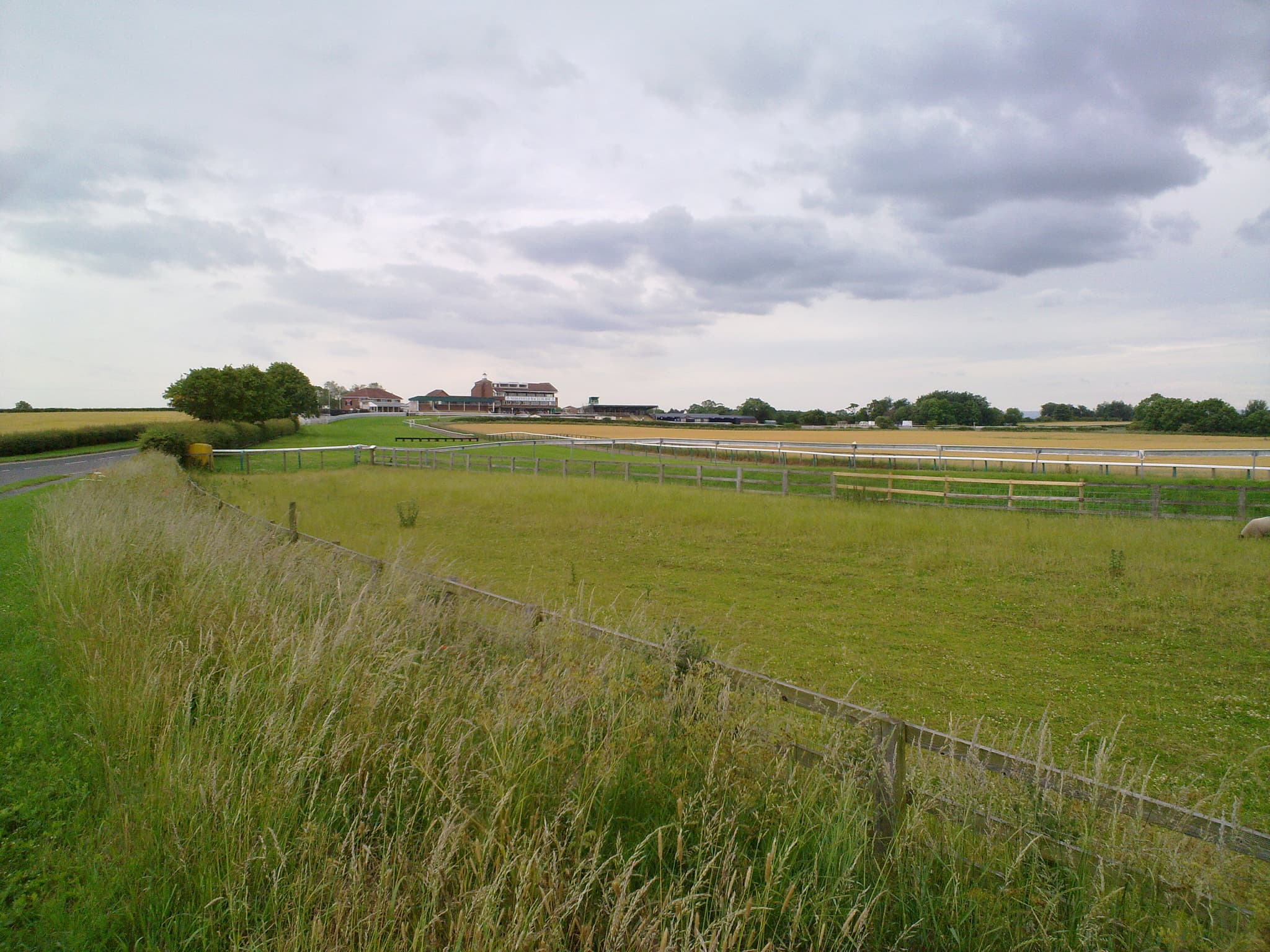
Sedgefield Racecourse: Complete Guide
Everything you need to know about Sedgefield Racecourse — County Durham's National Hunt venue, the Sedgefield Cup, and nearly 300 years of jumps racing.
Read more
The Durham National: Sedgefield's Biggest Race
Sedgefield's biggest race: a Class 3 handicap chase run every October, a fixture since 1955. There is no Sedgefield Cup, and this page explains why.
Read more
A Day Out at Sedgefield Racecourse
Everything you need for a day at Sedgefield — getting there, what to wear, enclosures, food and drink, and insider tips for County Durham's National Hunt venue.
Read morePhotos on this page are used under Creative Commons licences. Titles, sources and licence links for each one are on our image credits page.
Research the field with the AI Race Predictor
Our model publishes calibrated win-probability estimates for UK races — a second opinion to understand a race, not tips. It's open about its record: it doesn't beat the market, and we show exactly how it does.
Work it out & learn the basics
Gamble Responsibly
Gambling should be entertaining and not seen as a way to make money. Never bet more than you can afford to lose. If you or someone you know has a gambling problem, help and support is available.