
Founder & Editor · Last reviewed 2026-04-05
Sedgefield Racecourse has been staging National Hunt racing since 1732, making it one of the oldest jump venues in the North of England. Tucked into the market town of Sedgefield in County Durham — postcode TS21 2HW — the course sits roughly 12 miles from Middlesbrough, eight miles from Durham city, and a straightforward six miles from the A1(M) at the Rushyford junction. That combination of age, location, and character places Sedgefield in a category of its own among northern jump tracks.
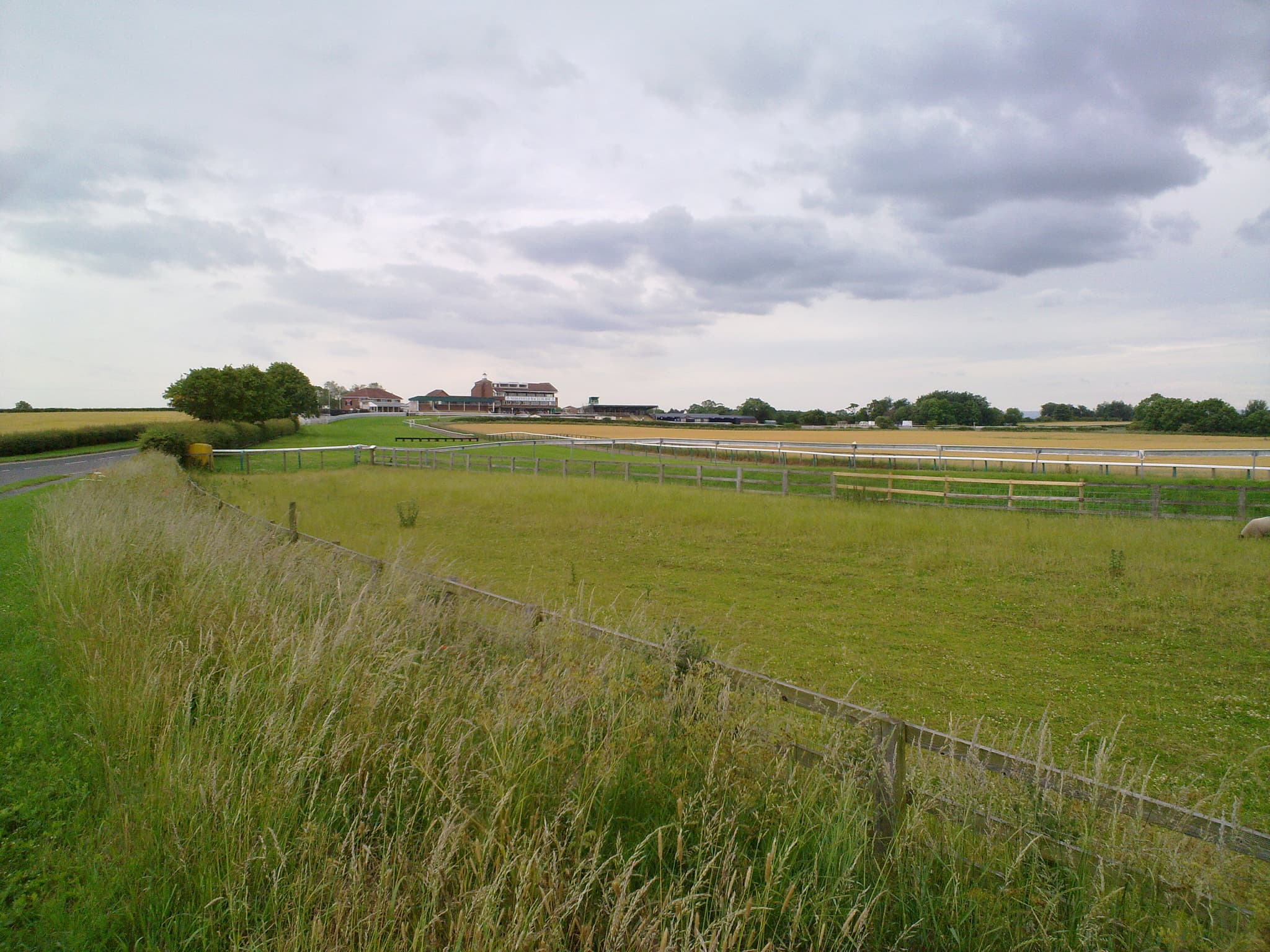
The course is a left-handed, undulating oval of approximately one mile two furlongs. Tight bends, a steep descent into the home straight, and a testing climb to the winning post produce a track that rewards jumping technique and fitness over raw speed. Sedgefield is not a galloping course — horses need to travel, jump, and handle quick changes in direction. The going is typically soft or heavy through the winter months, with the County Durham clay soil holding water well, and the undulations meaning different parts of the track drain at different rates.
Who This Guide Is For
First-time visitors will find everything they need here: how to get to Sedgefield, what the enclosures offer, what to wear, and what to expect from a day at the races. The getting there section and facilities section are your starting points.
Regular racegoers looking to understand the track better — the bias towards horses that handle soft ground and jump fluently on left-handed circuits, the trainers who run well at Sedgefield, and the fixtures worth travelling for — should focus on the course section and the betting guide.
History-focused readers will find the full story in the history section and the famous moments section. Racing began at Sedgefield in 1732, and the course has connections ranging from the 18th-century colliery villages of County Durham to Tony Blair's parliamentary constituency, which carried the Sedgefield name from 1983 to 2007.
Festival or trip planners should read the fixtures section for a full breakdown of the racing calendar, then the atmosphere and planning section for practical advice on the Durham National meeting in October and other key days in the Sedgefield season.
Quick Decision Block
- The Durham National meeting in October is the year's biggest fixture — book ahead for hospitality.
- Arrive early for big meetings: the on-site car park fills on high-attendance days.
- The run-in from the last fence climbs to the winning post — watch it from the main viewing area on the far side of the home straight.
- Nearest rail is Darlington (about 12 miles), Stockton-on-Tees (10 miles), or Durham (12 miles) — all require onward transport, so most racegoers drive.
- Going is typically soft to heavy October through March; check the official going report before you travel.
- Capacity is around 4,000 — Sedgefield is an intimate venue; you are close to the horses throughout.
Sedgefield stages approximately 18–20 National Hunt fixtures per season, running from autumn through to spring. The course has a capacity of around 4,000, which keeps the atmosphere personal — you are never far from the action here. The parade ring is easily accessible, the viewing areas give clear sightlines to the jumps, and the North East crowd brings an easy familiarity that regulars value. This guide covers the course layout, fixtures calendar, facilities, travel information, the history of the track, famous moments from Sedgefield's past, the betting guide, and planning your visit. Whether this is your first visit or your fiftieth, the answers are here.
Bet on Sedgefield
Place your bets on Sedgefield races with a trusted bookmaker.

Promo code BETFRED50. New customers only. Register, deposit with a Debit Card, and place a first bet of £10+ at Evens (2.0)+ on Sports, to be settled within 7 days, to get £30 in Sports Free Bets and £20 in Bet Builder Free Bets within 24 hours of settlement. 7-day expiry. Eligibility & payment exclusions apply. Full T&Cs apply. Take Time to Think. BeGambleAware.org. 18+. Full T&Cs.

Promo code R30. New UK customers only, 18+. Register, deposit £10 or more, then place a £10 single cash bet at odds of 1/2 (1.5) or greater on any sports market (excluding Virtuals). Once the qualifying bet settles you get £30 in Free Bets (3 x £10) — the qualifying bet can win or lose. Free Bets are valid on any sports market excluding Virtuals, expire in 7 days, are non-withdrawable and must be used in full. Excluded deposit methods apply (including PayPal, Apple Pay, Skrill and NETELLER). Named bets such as Lucky 15 do not qualify. If you cash out the qualifying bet, or it is voided, you are no longer eligible for the offer. Ends 31.12.26. Full T&Cs apply. Please gamble responsibly. BeGambleAware.org. 18+. Full T&Cs.

Promo code BET40GET20. New UK customers, 18+. Register with the code and place a first bet of £40 or more at Evens (2.0) or greater. Receive 2 × £10 free bets: the first credited automatically once the qualifying bet settles, the second 24 hours later. Free bets must be placed at minimum odds of 4/1 (5.0), expire 24 hours after credit, and the free-bet stake is not returned with winnings. Debit card deposits only. Take Time to Think. BeGambleAware.org. 18+. T&Cs apply. Full T&Cs.

50% of your first-day net losses refunded as a free bet, capped at £25. New UK customers aged 18+ only. To qualify, deposit and place a first bet of £10 or more on any sport at minimum odds of evens (2.00), then place at least two further bets on different events, each worth at least 50% of your largest bet, all at evens (2.00) or greater. Losses are counted from your first settled bet until 23:59 the same day. Place a qualifying £10+ bet and you are guaranteed at least a £5 free bet. Bets placed at SP, void bets, cashed-out bets and bets struck with free bets do not count towards the offer. The free bet is credited the day after your qualifying bets settle and must be used within 7 days, after which it expires. It can be used at odds from 1/4 (1.25) up to 250/1 on singles and straight accumulators, but not on Trixie, Patent or Yankee style multiples. Free-bet stake is not returned with winnings. One offer per person, household, address, IP address and device. E-wallet deposits may not qualify, so check the cashier before depositing. Customers registered with GAMSTOP cannot claim. KYC identity verification must be completed before the free bet is credited. Take Time to Think. BeGambleAware.org. 18+. T&Cs apply. Full T&Cs.

New customers, 18+. Choose the sports bonus at sign-up, make a first deposit and receive a 100% bonus up to £50 in your Sports Bonus balance. To convert the bonus to cash, wager it 10x within 30 days. Single bets below Evens (2.00) do not qualify; accumulators do not qualify if any selection is below 1/2 (1.50). Virtual Sports, voided, cancelled, drawn, cashed-out and free-bet wagers do not count towards wagering. Only the first settled bet per event counts. Withdrawing before the wagering requirement is met forfeits the bonus balance including bonus winnings. Real-money funds are used before bonus funds. Deposits via Skrill or Neteller are not eligible. Not valid in conjunction with other promotions. Odds, bet and payment limits apply. 10bet general and promotion T&Cs apply. BeGambleAware.org. 18+. Full T&Cs.

New customers in Great Britain and Republic of Ireland, 18+. Place a £10 fixed-odds qualifying bet at minimum odds of 1/2 (1.50) — single or each-way (only the win part counts), pre-event or in-play, not cashed out early, within 28 days of opening the account. Receive up to £60 in bonuses credited over three days: 3 × £10 fixed-odds free bets (the first on settlement, then 24 and 48 hours later) plus 3 × £5 Total Goals FOOTBALL spread bets and 3 × £5 racing Winning Favourites spread bets, with a £1 racing Race Index spread bet as an extra on top. The spread bets need a full spread-betting account, opened within 28 days of the fixed-odds account and subject to Spreadex's eligibility and appropriateness checks. Free-bet stakes not returned with winnings; free bets valid 28 days from issue. IMPORTANT: the £5 credits are SPREAD bets — sports spread betting carries the risk that losses can exceed your stake. Sports spread-betting customers do not have Financial Ombudsman or FSCS recourse. Take Time to Think. BeGambleAware.org. 18+. T&Cs apply. Full T&Cs.

Promo code WELCOME15, entered under My Bonuses after registering. New UK customers, 18+. Place a first qualifying bet of at least £10 from your cash balance at odds of evens (2.0) or greater within 7 days of opening the account. Once the qualifying bet fully settles you receive £15 in free bets, credited as 3 x £5 tokens with set uses: one £5 accumulator free bet (minimum 4 legs, each leg at 2/5 or bigger), one £5 sports free bet (any market at evens or bigger) and one £5 Sub Cover free bet (selected football player markets at evens or bigger). Free-bet stakes are not returned with winnings. Free bets expire 7 days after they are credited. Void, cashed-out and partially cashed-out bets do not qualify. One offer per customer. Confirm the current terms on BetGoodwin's own welcome-offer page before claiming. Take Time to Think. BeGambleAware.org. 18+. T&Cs apply. Full T&Cs.

New UK customers, 18+. Minimum deposit £10. Place a £10 qualifying single on sports (excluding virtuals) at minimum odds of 1/2 (1.50), settled within 14 days. Deposit-method exclusions apply. Receive £30 in free bets (stake not returned), split £20 for sportsbook use (2 x £10) and £10 for Bet Builder only (2 x £5); Bet Builder does not cover horse racing. Free bets must be accepted within 7 days and expire 7 days after acceptance. No promo code required. Best Odds Guaranteed on UK & Irish racing, subject to having staked over £25 in the previous seven days. Operated by LiveScore Betting and Gaming (Gibraltar) Ltd, UKGC 56859. Confirm the current terms on LiveScore Bet's own promotions page before claiming. Take Time to Think. BeGambleAware.org. 18+. T&Cs apply. Full T&Cs.
18+. BeGambleAware.org
The Course
Sedgefield's track is one of the most distinctive in British National Hunt racing. An undulating, left-handed oval of approximately one mile two furlongs, with tight bends, a steep descent into the home straight, and a demanding climb to the winning post — the layout creates a test that separates horses that stay, jump, and handle a sharp course from those that simply have pace. It is quite different from the galloping circuits you find at Hexham or the dual-purpose track at Catterick, 45 miles to the south-west.
Direction and Shape
The course runs left-handed throughout. The oval shape means horses are constantly turning, and the bends are truly tight — there is no long back straight where horses can coast and recover their position. Jockeys need to travel well within themselves into the turns, and horses that pull hard or race keenly often find themselves on the wrong side of the contest by the time they reach the home straight. The undulations add a further dimension: horses that handle an uneven surface and maintain their jumping rhythm through the dips and rises have a consistent advantage.
The track measures approximately one mile two furlongs around, which means that in a two-mile chase the field completes the full circuit and then some. The run from the top of the home straight to the finish covers roughly three furlongs, but that description understates the challenge — the ground drops sharply before rising to the winning post, which means any horse that has raced too freely will find the final climb a serious test.
Fences and Hurdles
The fences at Sedgefield are well-built and have a reputation for being fair but demanding. In a standard two-mile chase the field encounters nine fences, and the course designers have placed them to arrive at key moments in the race — including at the top of the descent into the home straight, where a poor jump can effectively end a horse's chance. The hurdles course uses an identical left-handed configuration and the tight bends are if anything more of a factor over obstacles, as horses need to shorten their stride and rebalance before each flight.
One specific fence deserves mention: the obstacle known locally as the Johnny Ridley fence, which replaced the original water jump in 1994. The water jump at Sedgefield was, for many years, one of the longest run-ins in British jump racing — longer even than the famous run-in at Aintree. When the layout was modified and the water jump removed, the course changed character slightly, but the run-in remains long enough to punish horses that have emptied themselves earlier in the race.
The course also stages bumpers — National Hunt flat races run without obstacles — which provides an entry point for unraced horses and gives racegoers a chance to see potential future chasers and hurdlers in their first competitive outing.
Going and Ground Conditions
The going at Sedgefield is one of the most important factors in predicting results. The course sits in County Durham on clay-heavy soil that holds water readily. Through the core winter months — November, December, January, and February — the going is frequently soft or heavy, and in a wet autumn it can reach those conditions by late October. Firm or good to firm going is rare at Sedgefield; when it occurs it is generally in September or a dry October.
The undulating topography creates a specific problem for ground assessments: different parts of the track drain at different rates. A going description of "good to soft" at Sedgefield might mean soft conditions through the dip in the back straight and something closer to good on the higher ground approaching the home turn. Horses that have previously won on soft ground at Sedgefield should be taken seriously when similar conditions return; those with a record on faster surfaces at other venues may find the going more testing than the official description suggests.
The course has benefited from drainage improvements in recent seasons, but it remains one of the more reliably testing surfaces in the North East. Checking the official going report on the morning of the meeting is strongly recommended before making any travel plans or betting decisions.
The Home Straight and Winning Post
The home straight at Sedgefield is the section of the course that most defines its character. After turning for home the field initially faces a downhill section — the ground drops quite sharply, which means horses need to be jumping cleanly and balanced to get through the fence at the top of the descent without losing momentum. A blunder there, or even an untidy jump, can cost three or four lengths and effectively end a race for a horse that was travelling well up to that point.
After the descent, the ground rises steadily to the winning post. The climb is not brutal by the standards of somewhere like Hexham, where the finish is a severe gradient, but it is sufficient to expose any horse that has run out of petrol. Horses that were still travelling strongly turning in and who jumped the last fence cleanly often find their advantage extends through the run-in rather than being eroded by it. Staying power matters here, and a horse's record over further distances often translates better at Sedgefield than a horse that has won on speed at flatter, sharper tracks.
Track Comparison: Sedgefield vs Hexham and Catterick
Sedgefield is one of three National Hunt venues in the North East — the others being Hexham in Northumberland, 30 miles to the north-west, and Catterick, 45 miles to the south-west, which is dual-purpose and stages both flat and jump racing. The three courses serve the same regional market but have very different characters.
Hexham is a right-handed oval with an exceptionally severe finish — the uphill run from the last to the winning post is one of the most testing in Britain, and stamina horses hold a significant advantage. The going at Hexham is also heavy through the winter.
Catterick's jumping circuit is also sharp and left-handed, but the track is flatter than Sedgefield and the fences are placed differently. Horses that win at Catterick do not always transfer form directly to Sedgefield, despite the geographic proximity and surface similarity.
Sedgefield's combination of tight bends, undulation, and the downhill-then-uphill home straight makes it the most technically demanding of the three. Horses with a good Sedgefield record should be treated as reliable course specialists; those with form at other venues need their jumping and handling of an uneven surface assessed carefully.
Course specialists matter at Sedgefield. The tight circuit, consistent going conditions, and technical demands of the home straight mean that horses who have won here before carry real advantage on their return. When assessing a Sedgefield race, course form deserves weight alongside class and recent form.
Key Fixtures & Calendar
Sedgefield's fixture list runs from autumn through to spring, with the bulk of meetings concentrated in the winter months. The course typically hosts around 18–20 National Hunt fixtures per season. That number places Sedgefield in the mid-range of British jump courses by fixture count — not as busy as a year-round venue like Catterick, but enough to sustain a full competitive programme from September to April.
The Durham National Meeting
The Durham National meeting, usually held in October, is the centrepiece of the Sedgefield calendar. The headline race — the Durham National itself — is a steeplechase run over three and three quarter miles, one of the more unusual distances in British jump racing and a real test of stamina over the undulating Sedgefield circuit.
The race has produced notable winners over its history. Hewick, who went on to win the King George VI Chase at Kempton Park, numbered the Durham National among his earlier victories. Fatehalkhair, a horse who became closely associated with Sedgefield, won 13 races at the course across his career, a record that speaks to the quality of horse the track can attract at its annual showpiece meeting.
The Durham National meeting typically draws the largest crowd of the Sedgefield season. Hospitality packages fill up ahead of race day, and the car park can be operating near capacity by mid-morning on a well-attended year. Booking accommodation, travel, and any hospitality options well in advance is strongly recommended. The winter racing guide covers this meeting in full.
Trainers to Note
Trainers based in North Yorkshire, including Brian Ellison at Malton and Micky Hammond at Middleham, run regularly at Sedgefield. Donald McCain, whose yard is at Cholmondeley in Cheshire, is also a consistent presence. Understanding which yards run well at Sedgefield is one of the more useful angles when approaching the handicaps at the course.
Winter Midweek Fixtures
The backbone of Sedgefield's programme is midweek racing through November, December, and January. These fixtures attract the working core of the North East jumping community — professional punters, owner/trainer syndicates from County Durham and the Tees Valley, and racegoers who prefer a quieter setting to the big-meeting crowds. Fields at midweek Sedgefield meetings are typically filled with northern-trained horses, which means the form is geographically concentrated and horses' records at the course carry more weight than they might at a more cosmopolitan venue.
The colliery village connections that surround Sedgefield — small communities across County Durham and the Tees Valley with deep histories in the horse trade — mean that the owner/trainer makeup at midweek fixtures often has a distinctly local flavour. Some horses run almost exclusively at Sedgefield and the other North East venues, building course records that become useful guides for regular punters.
Weekend and Easter Fixtures
Sedgefield also stages Saturday and Sunday meetings through the season, which attract larger general audiences than the midweek fixtures. The Easter period, when the jump season is approaching its close, often features a final-weekend fixture at Sedgefield. Going conditions can be more variable in spring — there have been seasons when April meetings have been run on ground that has dried significantly compared to the winter heavy, and others where late-season rain keeps conditions testing right to the end.
Planning Around the Fixture List
The full fixture list is published by Sedgefield Racecourse at the start of each season and updated on the official website. The list confirms dates, race names, and early hospitality availability. For punters and visitors alike, building a shortlist of target meetings early in the season — particularly if you want to attend the Durham National — pays off when it comes to travel and accommodation.
The Durham National meeting in October is the date to prioritise. It attracts the strongest field of the season, the most competitive betting, and the most racegoers. For a quieter, more intimate day's racing with easier access and parking, a midweek fixture in November or December provides a different but equally enjoyable experience.
Facilities & Hospitality
Sedgefield has developed its facilities steadily over the past three decades. The major investment period came in the 1990s under the chairmanship of Frank Scotto, who oversaw the construction of the Sedgefield Pavilion in 1991 and the Theakston Suite in 1995. Northern Racing's purchase of the course in 2001 brought a further phase of investment, with the parade ring and winners' enclosure refurbished to a standard that remains in place today. The result is a course that feels well-maintained and properly equipped without the scale or formality of a larger southern venue.
Enclosures and Viewing Areas
Sedgefield operates with a relatively straightforward enclosure structure compared to some of the larger British courses. The main viewing areas face the home straight, and the compact layout of the one-mile-two-furlong circuit means you are rarely more than a short walk from the action. The undulating terrain creates natural elevated viewing points from which the descent into the home straight is clearly visible — watching a field navigate that downhill section and then climb to the winning post is one of the more engaging sights in northern jump racing.
The stands and viewing areas were upgraded as part of the Northern Racing investment from 2001, and the course has continued to maintain the facilities since Jockey Club Racecourses took over management. Viewing angles from the main stand cover the home straight and finish line, while the areas near the first and second fences allow close-up viewing of jumping technique earlier in the race.
The course's capacity of around 4,000 means that on most fixtures the viewing areas are comfortably spacious — you can find a good position without having to arrive particularly early. On the Durham National meeting, when attendance is higher, arriving 45–60 minutes before the first race gives you the best choice of viewing spots.
The Theakston Suite and Sedgefield Pavilion
The Theakston Suite, built in 1995, is the main hospitality facility at Sedgefield and takes its name from the North Yorkshire brewery whose ales have long been associated with North East racing culture. The suite offers restaurant dining with views of the course, and packages typically include a set menu, a racecard, and enclosure admission. Booking opens several months ahead of each meeting, and the Durham National fixture is the first to fill.
The Sedgefield Pavilion (1991) provides a more informal setting for smaller groups and private hire. It can be adapted for corporate events, owner/trainer parties, or group raceday experiences. Both facilities represent the kind of hospitality provision you expect from a well-run regional track: not extravagant, but well-managed and suited to the occasion.
For parties of fewer than eight or nine who want a hospitality-style experience without booking a full table, the course also offers premium enclosure packages that include a pre-race reception and a racecard. These can be booked through the Sedgefield website and provide a midpoint between standard admission and full restaurant hospitality.
Bars and Refreshments
Bars operate throughout the course from gates-open until the end of racing. The North East's pub culture means the bar provision at Sedgefield is well-regarded — Theakston's ales are among the options — and prices are noticeably more reasonable than at the major festivals and southern courses. Food options range from hot snacks at trackside outlets to a more structured menu in the Theakston Suite.
Given the winter-heavy fixture list, most racegoers come prepared for cold conditions, and the indoor facilities are well used. Hot drinks are available from multiple points around the course, and the bars offer covered standing space that becomes valuable when the County Durham wind picks up. Cold weather and early nightfall through December and January mean that having access to a warm indoor area is a practical necessity rather than a luxury.
Parade Ring and Winners' Enclosure
The parade ring and winners' enclosure sit in the central area of the course and were part of the 2001 refurbishment programme. Both are accessible and well-positioned — the parade ring is large enough to watch horses properly in the pre-race parade, and racegoers can study condition, stride, and demeanour without being crowded out. This matters for those who like to supplement their form study with a direct look at the horses before betting.
The winners' enclosure is close to the unsaddling area, which keeps the post-race sequence compact and easy to follow. Trainers and jockeys are usually accessible after races at Sedgefield in a way that is less common at busier venues — the smaller scale means that winning connections are visible and the atmosphere after a good race is close and informal.
Sedgefield's facilities are well-suited to its scale. The venue does not try to replicate the infrastructure of a bigger course, but what is here is properly maintained and functional. For a full-day experience with hospitality, book the Theakston Suite well in advance for the Durham National. For a standard raceday, general admission provides good access to the course, good viewing, and a comfortable day out.
Getting There
Sedgefield Racecourse sits near the town of Sedgefield in County Durham, at postcode TS21 2HW. The town itself is a small market settlement with a population of around 4,500, and the racecourse sits on its northern edge. Access is straightforward by car from the major population centres of the North East and Yorkshire, though reaching the course by public transport requires planning, as there is no railway station in the town.
By Car
The car is the practical choice for most Sedgefield racegoers. The course sits six miles from the A1(M) motorway, accessed via the Rushyford junction. From there the A689 connects directly to Sedgefield — the route is well signposted for race days. On-site parking is available and is included or available as an add-on depending on your ticket type; check the official website for the current arrangement.
Journey times from the main North East cities:
- Newcastle: approximately 30 miles via the A1(M) south — allow 40–50 minutes, more at peak times or in winter conditions.
- Durham city: approximately eight miles — 15–20 minutes via the A690 and A177.
- Darlington: approximately 12 miles — 20 minutes via the A167 and A689.
- Middlesbrough and Teesside: approximately 12 miles — 25–30 minutes via the A66 west and A689.
- York: approximately 50 miles south on the A1(M) — allow 55–65 minutes.
- Sunderland: approximately 20 miles — 30–35 minutes via the A19 south.
On the Durham National meeting in October, the access roads can experience delays from late-morning onwards. Arriving by 11:30am for a 12:30pm first race is a reasonable target. On midweek fixtures the roads are quieter and parking is rarely a problem.
By Rail
There is no railway station in Sedgefield town. The three nearest stations are Stockton-on-Tees (approximately 10 miles), Durham (approximately 12 miles), and Darlington (approximately 12 miles). All three are on the East Coast main line or its connecting services, with regular trains from London Kings Cross, Edinburgh, Newcastle, and Leeds.
Darlington is the most commonly used rail access point. From Darlington station, a taxi to the racecourse takes around 20 minutes and covers roughly 12 miles. Pre-booking a taxi or private hire vehicle is advisable, particularly for return journeys from the Durham National or other well-attended meetings, when demand for cabs is high and waiting times can extend significantly after racing.
Stockton-on-Tees is served from Middlesbrough and from Newcastle via the Tees Valley line, and a taxi from Stockton takes around 20–25 minutes. Durham station has fast connections from London and Edinburgh and a taxi to the course from Durham takes 15–20 minutes.
Race-day coaches and minibuses from Darlington occasionally operate for major meetings — check the Sedgefield Racecourse website and local North East racing groups for confirmed arrangements each season.
Practical Tips for Your Visit
Winter conditions matter. Sedgefield stages the majority of its fixtures between October and March, when County Durham can be cold, wet, and occasionally icy. The car park surface can be soft in heavy rain, and walking from the car park to the entrance in sodden conditions benefits from appropriate footwear. Wellingtons or waterproof walking boots are a sensible choice for any October to February meeting.
Daylight is limited. In December and January, racing finishes in the dark at Sedgefield — not a problem within the course itself, which is well-lit, but worth factoring in for the drive home, particularly if travelling on rural A-roads back to the A1(M).
Accommodation. There is limited accommodation in Sedgefield town itself. Darlington, with its railway connections and range of chain hotels, is the most practical base for visitors travelling from outside the region. Durham city offers a wider range of options and is a straightforward drive or taxi to the course on race day.
The day out guide has further practical detail on what to bring, where to eat, and how to structure a day at Sedgefield. If you are combining the trip with other North East racing — Hexham is 30 miles north-west; Catterick is 45 miles south-west — a two-day trip based in Darlington covers both options comfortably.
Frequently Asked Questions
History of Sedgefield Racecourse
History of Sedgefield Racecourse
Racing at Sedgefield dates to 1732, which places the course among the oldest National Hunt venues in the North of England. That date predates the formal codification of British racing rules, which means Sedgefield was established during the era of match races and subscription meetings — a period when local landowners and colliery owners organised racing as a social occasion rather than a regulated sport. The County Durham setting matters here: the region's wealth in the 18th century came from coal, and the pit owners and landed gentry who bankrolled early Sedgefield racing were the same class of men who owned the collieries that would transform County Durham over the following century.
The 18th and 19th Centuries
The early history of Sedgefield is typical of small northern courses: intermittent records, occasional gaps in the calendar, and an audience drawn largely from the agricultural and mining communities of the surrounding area. The market town of Sedgefield — a settlement with medieval origins, built around a church and a market square that survive today — provided the social centre from which racing was organised. Local inn-keepers and merchants supported the fixtures as a commercial opportunity, and the racecourse established itself as an annual event in the town's calendar.
By the mid-19th century, the formalisation of National Hunt racing under the Rules of Racing had given Sedgefield a clearer identity as a jump venue. Flat racing had by then centralised around the major tracks — Newmarket, Epsom, York, Doncaster — and courses like Sedgefield settled into a winter-based jumping programme that suited both the local conditions and the agricultural calendar. Horses were trained by small local yards whose facilities bore little resemblance to the polished operations of Newmarket or Lambourn, but whose knowledge of the local terrain and going conditions gave them consistent advantages at home.
The 20th Century and Northern Racing
The early 20th century brought the consolidation of British racing under the Jockey Club's expanding authority, and Sedgefield adapted accordingly. The course's physical layout was adjusted over the decades to meet evolving safety and racing standards. One significant change occurred in 1994, when the original water jump was removed and replaced by an ordinary fence — now known as the Johnny Ridley fence. The water jump at Sedgefield had for many years produced one of the longest run-ins in British jump racing, longer even than the celebrated Grand National run-in at Aintree. Its removal changed the tactical character of races at the course, though the climb to the winning post remained a defining feature.
The period from 1945 to the 1970s saw Sedgefield weather the same difficulties that threatened several northern tracks: declining attendances, ageing facilities, and the challenge of competing with better-funded southern venues for media coverage and sponsorship. The course survived this period as a truly community-owned institution, valued by the local racing public for its accessibility and atmosphere even when the prize money on offer was modest.
The Frank Scotto Era and Modernisation
The chairmanship of Frank Scotto brought the most significant infrastructure investment in the course's modern history. The Sedgefield Pavilion was built in 1991, providing a permanent hospitality facility that the course had previously lacked. Four years later, in 1995, the Theakston Suite was added — named after the Black Sheep Brewery's famous Yorkshire ale brand that had become synonymous with northern racing culture. Together, the two facilities gave Sedgefield a hospitality offer that could support corporate and private bookings for the first time at scale.
This investment reflected broader growth in racing's commercial ambitions through the 1990s. The sport was moving towards a model in which hospitality revenue supplemented gate receipts and betting levies, and courses that had upgraded their facilities were better positioned to attract both sponsors and racegoers.
Northern Racing and Jockey Club Ownership
In 2001, Northern Racing acquired Sedgefield as part of a portfolio of smaller British tracks. The purchase brought further capital investment, with the parade ring and winners' enclosure refurbished to a modern standard. Northern Racing's strategy was to manage a group of regional courses as a combined operation, reducing costs through shared administration while maintaining each course's local identity. Sedgefield benefited from the financial stability this provided, even as it remained a distinctly local institution rather than a nationally prominent venue.
The Jockey Club Then became the controlling entity for a number of the courses in the Northern Racing portfolio, and Sedgefield now operates under Jockey Club Racecourses management — part of a group that includes major venues such as Cheltenham, Newmarket, and Epsom alongside smaller tracks like Sedgefield and Hexham.
The Tony Blair Era and National Recognition
From 1983 to 2007, Sedgefield was the name of the parliamentary constituency held by Tony Blair — first as MP, then as Leader of the Labour Party from 1994, and then as Prime Minister from 1997 until his resignation in June 2007. Blair's profile as Prime Minister made the Sedgefield name familiar to audiences far beyond the North East, and the constituency boundary changes of 2010, which abolished the Sedgefield seat, closed that chapter of the name's national recognition.
The connection between the racecourse and the political constituency is purely geographic — both take their name from the same market town. Blair himself had limited public association with the racecourse. But the period cemented Sedgefield's profile as a name with meaning beyond its racing community, and the course's location in what was for a decade the Prime Minister's home constituency remains a point of local identity.
Sedgefield Today
The course continues as an active National Hunt venue and holds its position as one of the three principal jump venues in the North East, alongside Hexham and Catterick. The Durham National meeting and the winter midweek programme form the backbone of the calendar. Racing here looks recognisably similar to the racing that has been staged in this corner of County Durham for close to three centuries: a left-handed oval, testing ground, and a crowd that knows the horses.
Famous Moments
Famous Moments at Sedgefield Racecourse
Sedgefield has produced a catalogue of notable performances across its near-three-century history. The scale of the course — small, regional, sharp — means that the moments which endure are not always the high-profile victories that make national headlines, but performances that resonate with a local audience who understand the track and what winning there demands.
Hewick and the Durham National
Of all the horses that have run at Sedgefield, Hewick holds a particular place in recent memory. The horse won the Durham National — Sedgefield's three-and-three-quarter-mile showpiece — before going on to win the King George VI Chase at Kempton Park on Boxing Day. The King George is one of the most prestigious races in the National Hunt calendar, run at Grade 1 level against the best staying chasers in training. Hewick's Sedgefield victory over the extended distance of three and three quarter miles demonstrated the stamina that would later carry him through Kempton's two-mile five-furlong test. For a small northern course, producing a King George winner is a real marker of quality, and the connection between the Durham National and Hewick's subsequent success at the highest level gives the Sedgefield race a credibility beyond its regional standing.
Fatehalkhair: 13 Wins at One Course
Fatehalkhair's record at Sedgefield stands as the clearest illustration of the course specialist in British jump racing. Thirteen wins at a single course across a career is a extraordinary tally by any measure, and at Sedgefield the number reflects both the horse's affinity for the sharp, undulating circuit and the knowledge of connections who recognised what they had on their hands. Fatehalkhair's wins included the Durham National, and the horse's name is closely associated with the course in the memories of those who follow North East racing closely. Horses that accumulate that kind of record at a single venue become part of the fabric of a course — they are discussed in the bars, referenced by trainers sizing up the opposition, and remembered by racegoers who saw them win.
The Water Jump Removal, 1994
The removal of Sedgefield's original water jump in 1994 was not a race but a moment that changed the character of racing at the course. The water jump had produced a run-in that exceeded even the distance from the last fence to the post at Aintree — the Grand National run-in is 494 yards, and Sedgefield's previous configuration reportedly exceeded that figure. The replacement obstacle, now known as the Johnny Ridley fence, normalised the layout while retaining the climbing finish. The change altered the tactical options available to jockeys and modified the type of horse that could win here — those who needed a long, flat run-in to grind out a victory were less advantaged after 1994, while horses that could jump the last fence and sustain a climb to the post came into their own.
Northern Racing's Arrival, 2001
The sale of Sedgefield to Northern Racing in 2001 represented a key moment of a different kind. The refurbishment of the parade ring and winners' enclosure that followed was widely noted by regular racegoers as an improvement that brought the course's central facilities up to a modern standard. For a course that had operated under sometimes threadbare conditions through the latter decades of the 20th century, the investment signalled continuity and confidence in Sedgefield's future as an active venue. The course's survival into the 21st century as a functioning, well-attended track is itself a kind of achievement — many small regional courses did not make it.
The Atmosphere of a County Durham Winter Race Day
There is a quality to racing at Sedgefield on a cold January afternoon that regulars describe as distinct from anything available at a busier, more southern venue. The crowd is small enough that you recognise faces. The trainers and jockeys are accessible. The horses in the parade ring are close enough to assess properly. When a well-backed local favourite clears the last fence and climbs to the winning post — and the crowd in the main stand responds with the particular energy of a cold-weather jump crowd who know exactly what they have just witnessed — that is the defining Sedgefield moment, and it has played out at this course in some version since 1732.
Betting at Sedgefield
Betting at Sedgefield Racecourse
Sedgefield has characteristics that reward careful study. The tight, undulating circuit, consistent winter going conditions, and concentration of northern-trained runners combine to create a betting environment where patterns are more predictable than at a more cosmopolitan venue. That does not mean Sedgefield is easy to profit from — it means the relevant factors are identifiable and worth applying systematically.
Please gamble responsibly. If you feel you may have a problem with gambling, visit BeGambleAware.org or call the National Gambling Helpline on 0808 8020 133.
Course Form: The Most Reliable Starting Point
At Sedgefield, a horse's record at the course is the single most useful filter. The combination of tight bends, undulations, and the downhill-then-uphill home straight creates a set of demands that not every horse meets on their first visit. Horses that have won at Sedgefield previously have demonstrated they handle the left-handed configuration, jump adequately under these specific conditions, and stay the course in testing going.
The principle applies to distances as well as to the course itself. A horse that has won a two-mile hurdle at Sedgefield is not automatically reliable over two-and-a-half miles there — the extra distance on this particular circuit places significantly more emphasis on stamina. Equally, a horse dropping back from longer distances at other courses to a two-mile trip at Sedgefield should be assessed on their jumping technique and ability to settle, not simply on their overall form record.
Horses that have won at Hexham — another tight, undulating, left-handed circuit — sometimes transfer that form well to Sedgefield. The two courses share surface and topographical characteristics. Catterick form translates less consistently, despite the geographic proximity.
Going Patterns and Their Impact
The going at Sedgefield is reliably soft to heavy from November through March, with the clay soil holding water and the undulations causing drainage variation across different parts of the track. This consistency means you can use going-based filters with more confidence than at courses with more variable drainage.
Horses proven on soft or heavy ground at Sedgefield specifically — not just on similar going at other venues — have a demonstrable edge. The course's undulation means the official going description can mask conditions that are softer in the low-lying sections than on the higher ground. A horse described as having won on "soft" at a flat course like Huntingdon may find Sedgefield's going more exacting than the label suggests.
When the going is good or good to soft — which occurs mainly in September and a dry October — the betting picture changes. A smaller pool of Sedgefield races is run in these conditions, so the form sample is thinner. Horses with proven ability on faster ground at other courses become more relevant in these circumstances.
Trainer Angles
The geographic concentration of northern-based trainers running at Sedgefield creates a manageable set of trainer patterns worth tracking. The key yards include:
Brian Ellison (Malton, North Yorkshire — 40 miles south): Ellison runs regularly at Sedgefield and has a solid record across both hurdles and chases at the course. His runners in handicap chases, particularly when returning to Sedgefield after a recent run at a comparable track, are worth noting.
Micky Hammond (Middleham, North Yorkshire — 35 miles south-west): Hammond's smaller string targets northern venues consistently, and Sedgefield is among his preferred tracks. His runners over two miles on soft or heavy going have performed well historically.
Donald McCain (Cholmondeley, Cheshire — 65 miles south): McCain runs a larger string that ranges across the north and midlands. His Sedgefield runners are worth identifying when they appear, as he is selective enough about entry that a declaration often reflects real confidence.
Smaller local yards from County Durham and the Tees Valley contribute runners to the midweek programme. These horses are often less exposed, and their form can be harder to assess from public records alone. When a local yard runs a horse that has been to Sedgefield before without winning and now steps up in class, the unexplained confidence is worth a closer look.
Race Type and Distance
Sedgefield's programme is built around novice hurdles, novice chases, and handicaps across a range of distances from two miles to three and three quarter miles (the Durham National distance). The race type shapes the betting approach:
Novice hurdles: First-time hurdlers from well-regarded yards can be assessed on their flat or bumper form, with the additional factor of whether they are likely to handle a sharp, left-handed track. Horses with experience of similar tracks — tight flat courses, or oval tracks used for schooling — tend to adapt more quickly than those from wider, galloping courses.
Handicap chases: This is where course form carries the greatest weight. The combination of jumping demands, going conditions, and the technical home straight means experienced Sedgefield performers dominate more often than the raw handicap ratings would predict.
Bumpers: National Hunt flat races at Sedgefield attract horses from yards that see the tight circuit as a specific learning experience. Watching a horse travel well around Sedgefield in a bumper — particularly in the turn for home and up the climb — can be a useful guide to their future potential over obstacles.
On-Course vs. Starting Price
On midweek fixtures at Sedgefield, the betting market can be thin. The number of on-course bookmakers and the volume of exchange money available means that odds on less-fancied runners can be significantly better than the starting price in a busy Saturday market. For racegoers who bet on-course, midweek Sedgefield offers a better spread of prices than a comparable Saturday fixture at a busier track. On the Durham National meeting, the market is deeper and prices are more efficiently set.
Summary of Key Angles
- Course form is the primary filter: weight horses with previous wins at Sedgefield ahead of form on paper.
- Soft and heavy going is the norm October to March; treat horses with specific Sedgefield going form with respect.
- Brian Ellison, Micky Hammond, and Donald McCain are the trainers most worth tracking for handicap chases.
- On the Durham National day, fields are more open and market pricing is more competitive.
- Midweek fixtures offer thinner betting markets and potentially better value on unfashionable runners.
The full analysis, including updated trainer statistics, is in the Sedgefield betting guide.
Atmosphere & Planning Your Visit
Atmosphere and Planning Your Visit
Sedgefield has a character that is easier to understand by going than by describing. The course holds around 4,000 people, which is small enough that you notice the faces repeating — the same trainers at the parade ring rail, the same regulars at the bar between races, the same cluster of local owners who have driven in from the colliery villages around the town. This is not a course where you feel anonymous, and for most racegoers that is one of its strongest qualities.
The Atmosphere
On a midweek winter fixture — a Tuesday in November, say, with soft going and five or six races on the card — Sedgefield feels like it belongs to the people who follow North East jump racing all year round. The crowd will be a few hundred at most. The conversations near the parade ring are between people who know each other's horses by name. The commentary on the PA is crisp, the tote windows are quick, and the bar in the Theakston Suite is warm. If you are from outside the region and attending for the first time, you are welcomed without ceremony.
The Durham National meeting in October is a different proposition. The crowd is larger, approaching or exceeding the 4,000 capacity on a good year, and the atmosphere is closer to that of a proper jumping festival than a midweek fixture. There is a buzz around the Durham National race itself — three and three quarter miles on an undulating left-handed circuit, with a field drawn from across the North. The race typically takes between seven and eight minutes to complete, which is long enough for the pace of the race to tell clearly through the second circuit.
Planning: What to Bring
For any October to March fixture at Sedgefield, the essentials are:
- Waterproof outer layer. The County Durham weather can turn quickly, and standing in the open with rain driving in from the east is an experience best met with preparation rather than optimism.
- Warm layers underneath. The course's open layout means wind chill is a factor from November onwards. Thermals under your main clothes are not excessive for a January meeting.
- Appropriate footwear. Wellingtons or waterproof walking boots for the car park crossing and any wet-weather fixtures. Leather-soled shoes on soft ground are uncomfortable and can become a problem.
- A racecard. Available at the gate. Essential for following form between races and essential if you plan to use the tote or course bookmakers.
- Cash. On-course bookmakers are cash-only at Sedgefield. The tote accepts cards, and the bars accept contactless, but the bookmakers' ring operates as it has for generations.
Where to Watch
For general admission racegoers, the main viewing area facing the home straight gives you the descent and the climb to the winning post — the most dramatic section of a Sedgefield race. For the fences away from the straight, you can walk to the rail on the back of the course on most fixtures, which puts you close to jumping action that the main stand cannot see.
The parade ring is small enough that standing at the rail gives a proper view of the horses in the pre-race parade. Arriving at the parade ring ten minutes before each race is the most efficient use of time between the tote window and the start. The winners' enclosure, directly connected, means the post-race sequence — unsaddling, trainer interview, connections — unfolds quickly and accessibly.
A Recommended Schedule
For a first visit on a non-peak fixture, arrive at gates open (typically 90 minutes before the first race). Walk the course perimeter if conditions allow — the view from the back straight gives a sense of the undulations that the main stand does not. Spend the first two races at the parade ring rail, watching horses pre-race. Bet selectively — choose two or three races where your preparation has produced a clear conclusion. After the last race, allow 20–30 minutes for the car park to clear before driving out.
For the Durham National meeting, add at least 30 minutes to all timings. The hospitality areas fill fast, the car park needs the earlier arrival, and the post-race crowd around the winners' enclosure after the Durham National itself will be the largest of the day.
The day out guide has additional practical detail on the meeting structure, food options, and what to expect from each part of the Sedgefield experience. The winter racing guide covers the Durham National meeting in full, including historical winners and how to read the conditions on race day.
More guides for this course
Share this article
More about this racecourse
All Sedgefield guides
The Durham National: Sedgefield's Biggest Race
Sedgefield's biggest race: a Class 3 handicap chase run every October, a fixture since 1955. There is no Sedgefield Cup, and this page explains why.
Read more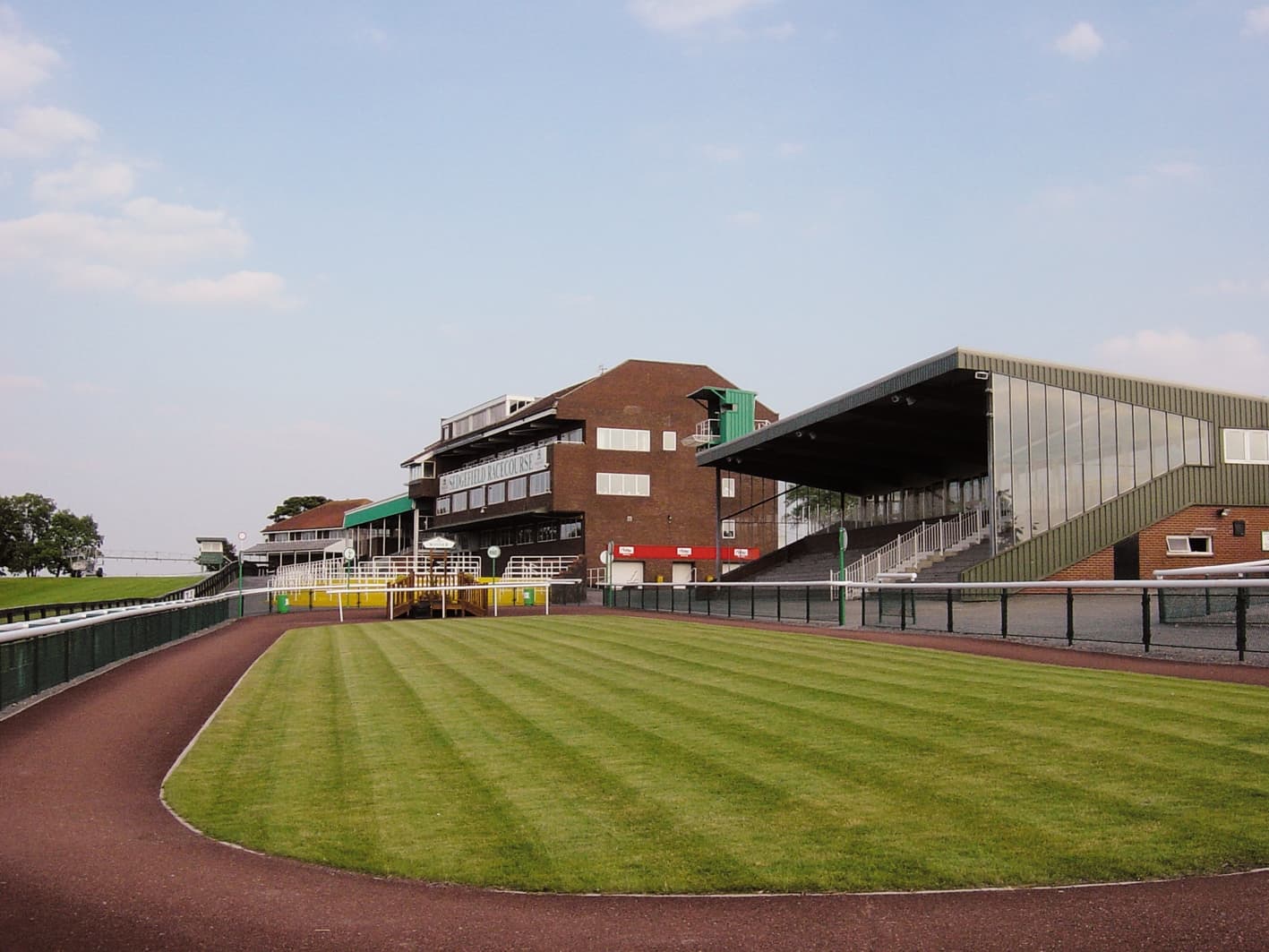
A Day Out at Sedgefield Racecourse
Everything you need for a day at Sedgefield — getting there, what to wear, enclosures, food and drink, and insider tips for County Durham's National Hunt venue.
Read moreSedgefield Jump Festival: Your Complete Guide
Sedgefield is County Durham's National Hunt heartland — a tight, sharp circuit beloved by northern jump trainers. Here's your guide to the Sedgefield Cup and the region's grassroots jump racing.
Read morePhotos on this page are used under Creative Commons licences. Titles, sources and licence links for each one are on our image credits page.
Research the field with the AI Race Predictor
Our model publishes calibrated win-probability estimates for UK races — a second opinion to understand a race, not tips. It's open about its record: it doesn't beat the market, and we show exactly how it does.
Work it out & learn the basics
Gamble Responsibly
Gambling should be entertaining and not seen as a way to make money. Never bet more than you can afford to lose. If you or someone you know has a gambling problem, help and support is available.