
Founder & Editor · Last reviewed 2026-04-05
Stratford-on-Avon Racecourse is one of the oldest National Hunt venues in England, with formal racing on the current Luddington Road site dating to 1755. Set on the banks of the River Avon, roughly one mile south of Shakespeare's birthplace, it offers something rare in British racing: a course where the surrounding town is as much of a draw as the jumping itself. Stratford-upon-Avon attracts around five million tourists a year, and the racecourse sits at the edge of that world, close enough to walk from the station and far enough to feel like it belongs to its own pace.
What separates Stratford from almost every other jumps course in Britain is when it races. While Cheltenham, Exeter, and Newbury wind down through the summer months, Stratford keeps going. The course runs National Hunt fixtures from May through to August as a primary window, with additional spring and autumn meetings either side. Racing under summer skies, with the Avon visible from the back straight, is a different experience from the mud-spattered winter norm: the atmosphere is lighter, the crowds more relaxed, and the surroundings as pleasant as any racing venue in the country.
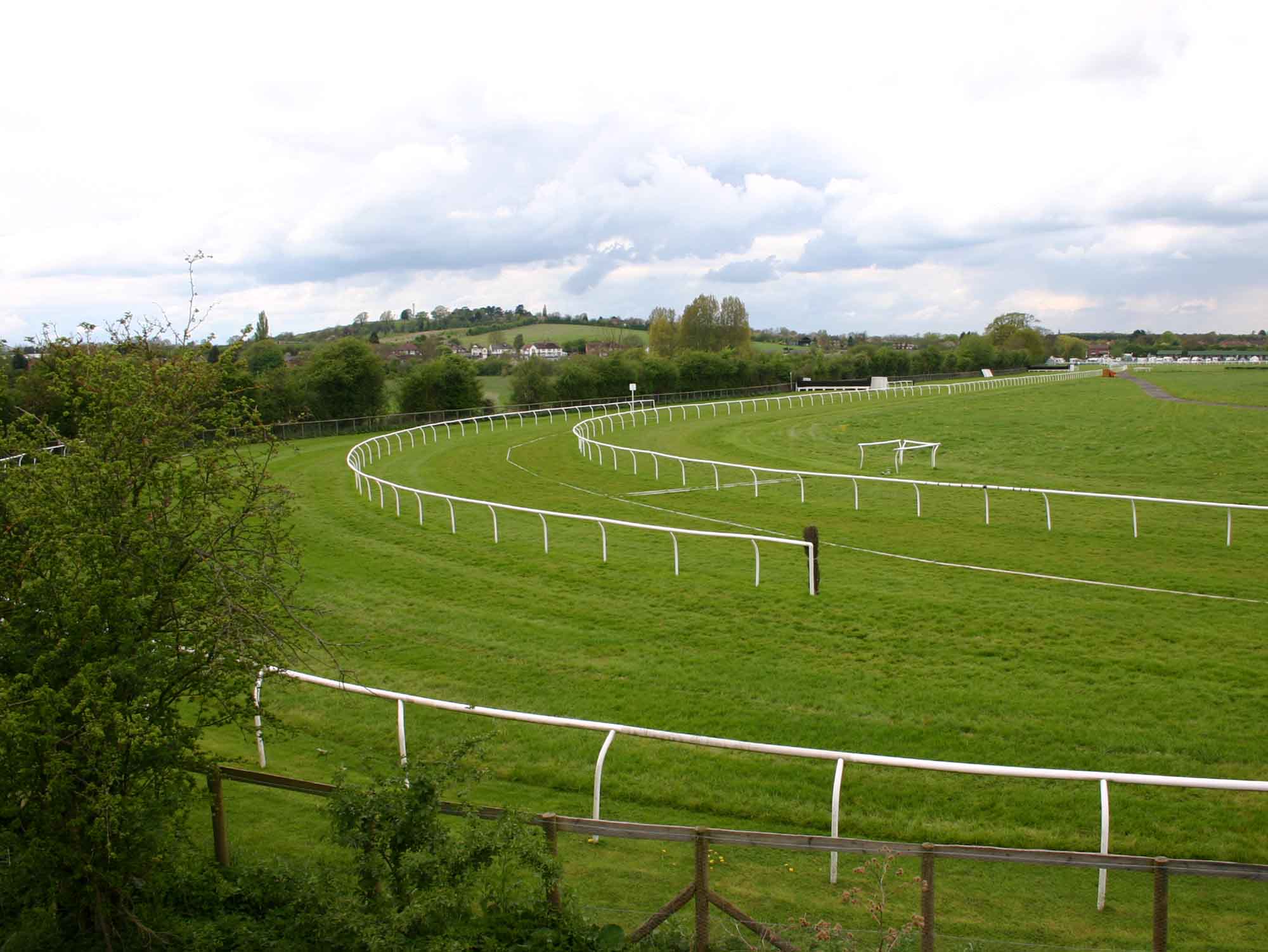
The circuit itself is a flat, left-handed oval of approximately one mile two furlongs. The back straight runs directly alongside the River Avon, making it one of the few British courses where the riverbank forms part of the actual course boundary. Fences are fair, the run-in is around two furlongs, and the going through the summer months tends to be on the quicker side, good to firm or good, favouring athletic jumping types over mudlarks.
The Horse & Hound Cup is the course's signature race, a handicap chase staged in June that draws competitive fields and the best crowds of the season. Beyond that centrepiece, Stratford offers a programme of hurdles and chases across 18 to 22 fixtures per year, with evening meetings providing a particularly relaxed option for those who prefer smaller crowds and a slower tempo. The Horse & Hound Cup meeting is the one that sells out and demands advance planning; for most other fixtures, turning up on the day is fine.
Olly Murphy, whose yard sits approximately one mile from the course itself, is the most locally based top trainer to any racecourse in Britain. He can walk horses to the track. Dan Skelton operates from Alcester, nine miles north, and is another constant presence in the Stratford results. Both trainers use Stratford regularly, and understanding their seasonal patterns is among the clearer edges available to anyone studying the form book here.
This guide covers everything: the course layout and track characteristics, the key fixtures and seasonal calendar, the facilities and enclosures, how to get there, the history of the course, and betting angles. Whether you are planning a summer afternoon out or building a profile for the form book, this is the starting point.
Who This Guide Is For
First-time visitors will find the facilities, enclosure breakdown, transport options, and practical planning advice they need. Regular racegoers who want to sharpen their understanding of track characteristics, trainer patterns, and seasonal form will find the course analysis and betting sections most useful. History-focused readers should go straight to the history and famous moments sections, which cover 270 years of racing on this site. Festival and trip planners (particularly those combining racing with a Stratford-upon-Avon cultural visit) will find the atmosphere and planning section covers the logistics of making the most of a full day in the town.
Quick Decision Guide
- Best meeting: the Horse & Hound Cup in June, strongest fields, best atmosphere
- Easiest access: Stratford-upon-Avon station, 25 minutes' walk or five minutes by taxi
- Best enclosure for views: Premier Enclosure, grandstand side, finish straight
- Best for families and first-timers: Course Enclosure, plenty of space, affordable
- Going matters most: check before travelling; the summer fixtures often race on good ground, but spring and autumn can be soft
- Trainer to follow: Olly Murphy, whose yard is less than one mile from the track
- Plan the whole day: Royal Shakespeare Theatre, Anne Hathaway's Cottage, and riverside walks are all within 20 minutes of the course on foot
Bet on Stratford-on-Avon
Place your bets on Stratford-on-Avon races with a trusted bookmaker.

Promo code BETFRED50. New customers only. Register, deposit with a Debit Card, and place a first bet of £10+ at Evens (2.0)+ on Sports, to be settled within 7 days, to get £30 in Sports Free Bets and £20 in Bet Builder Free Bets within 24 hours of settlement. 7-day expiry. Eligibility & payment exclusions apply. Full T&Cs apply. Take Time to Think. BeGambleAware.org. 18+. Full T&Cs.

Promo code R30. New UK customers only, 18+. Register, deposit £10 or more, then place a £10 single cash bet at odds of 1/2 (1.5) or greater on any sports market (excluding Virtuals). Once the qualifying bet settles you get £30 in Free Bets (3 x £10) — the qualifying bet can win or lose. Free Bets are valid on any sports market excluding Virtuals, expire in 7 days, are non-withdrawable and must be used in full. Excluded deposit methods apply (including PayPal, Apple Pay, Skrill and NETELLER). Named bets such as Lucky 15 do not qualify. If you cash out the qualifying bet, or it is voided, you are no longer eligible for the offer. Ends 31.12.26. Full T&Cs apply. Please gamble responsibly. BeGambleAware.org. 18+. Full T&Cs.

Promo code BET40GET20. New UK customers, 18+. Register with the code and place a first bet of £40 or more at Evens (2.0) or greater. Receive 2 × £10 free bets: the first credited automatically once the qualifying bet settles, the second 24 hours later. Free bets must be placed at minimum odds of 4/1 (5.0), expire 24 hours after credit, and the free-bet stake is not returned with winnings. Debit card deposits only. Take Time to Think. BeGambleAware.org. 18+. T&Cs apply. Full T&Cs.

50% of your first-day net losses refunded as a free bet, capped at £25. New UK customers aged 18+ only. To qualify, deposit and place a first bet of £10 or more on any sport at minimum odds of evens (2.00), then place at least two further bets on different events, each worth at least 50% of your largest bet, all at evens (2.00) or greater. Losses are counted from your first settled bet until 23:59 the same day. Place a qualifying £10+ bet and you are guaranteed at least a £5 free bet. Bets placed at SP, void bets, cashed-out bets and bets struck with free bets do not count towards the offer. The free bet is credited the day after your qualifying bets settle and must be used within 7 days, after which it expires. It can be used at odds from 1/4 (1.25) up to 250/1 on singles and straight accumulators, but not on Trixie, Patent or Yankee style multiples. Free-bet stake is not returned with winnings. One offer per person, household, address, IP address and device. E-wallet deposits may not qualify, so check the cashier before depositing. Customers registered with GAMSTOP cannot claim. KYC identity verification must be completed before the free bet is credited. Take Time to Think. BeGambleAware.org. 18+. T&Cs apply. Full T&Cs.

New customers, 18+. Choose the sports bonus at sign-up, make a first deposit and receive a 100% bonus up to £50 in your Sports Bonus balance. To convert the bonus to cash, wager it 10x within 30 days. Single bets below Evens (2.00) do not qualify; accumulators do not qualify if any selection is below 1/2 (1.50). Virtual Sports, voided, cancelled, drawn, cashed-out and free-bet wagers do not count towards wagering. Only the first settled bet per event counts. Withdrawing before the wagering requirement is met forfeits the bonus balance including bonus winnings. Real-money funds are used before bonus funds. Deposits via Skrill or Neteller are not eligible. Not valid in conjunction with other promotions. Odds, bet and payment limits apply. 10bet general and promotion T&Cs apply. BeGambleAware.org. 18+. Full T&Cs.

New customers in Great Britain and Republic of Ireland, 18+. Place a £10 fixed-odds qualifying bet at minimum odds of 1/2 (1.50) — single or each-way (only the win part counts), pre-event or in-play, not cashed out early, within 28 days of opening the account. Receive up to £60 in bonuses credited over three days: 3 × £10 fixed-odds free bets (the first on settlement, then 24 and 48 hours later) plus 3 × £5 Total Goals FOOTBALL spread bets and 3 × £5 racing Winning Favourites spread bets, with a £1 racing Race Index spread bet as an extra on top. The spread bets need a full spread-betting account, opened within 28 days of the fixed-odds account and subject to Spreadex's eligibility and appropriateness checks. Free-bet stakes not returned with winnings; free bets valid 28 days from issue. IMPORTANT: the £5 credits are SPREAD bets — sports spread betting carries the risk that losses can exceed your stake. Sports spread-betting customers do not have Financial Ombudsman or FSCS recourse. Take Time to Think. BeGambleAware.org. 18+. T&Cs apply. Full T&Cs.

Promo code WELCOME15, entered under My Bonuses after registering. New UK customers, 18+. Place a first qualifying bet of at least £10 from your cash balance at odds of evens (2.0) or greater within 7 days of opening the account. Once the qualifying bet fully settles you receive £15 in free bets, credited as 3 x £5 tokens with set uses: one £5 accumulator free bet (minimum 4 legs, each leg at 2/5 or bigger), one £5 sports free bet (any market at evens or bigger) and one £5 Sub Cover free bet (selected football player markets at evens or bigger). Free-bet stakes are not returned with winnings. Free bets expire 7 days after they are credited. Void, cashed-out and partially cashed-out bets do not qualify. One offer per customer. Confirm the current terms on BetGoodwin's own welcome-offer page before claiming. Take Time to Think. BeGambleAware.org. 18+. T&Cs apply. Full T&Cs.

New UK customers, 18+. Minimum deposit £10. Place a £10 qualifying single on sports (excluding virtuals) at minimum odds of 1/2 (1.50), settled within 14 days. Deposit-method exclusions apply. Receive £30 in free bets (stake not returned), split £20 for sportsbook use (2 x £10) and £10 for Bet Builder only (2 x £5); Bet Builder does not cover horse racing. Free bets must be accepted within 7 days and expire 7 days after acceptance. No promo code required. Best Odds Guaranteed on UK & Irish racing, subject to having staked over £25 in the previous seven days. Operated by LiveScore Betting and Gaming (Gibraltar) Ltd, UKGC 56859. Confirm the current terms on LiveScore Bet's own promotions page before claiming. Take Time to Think. BeGambleAware.org. 18+. T&Cs apply. Full T&Cs.
18+. BeGambleAware.org
The Course
The Course
Stratford-on-Avon is a left-handed, flat circuit of approximately one mile two furlongs in circumference. The track sits on low-lying ground alongside the River Avon, which runs immediately adjacent to the back straight, making it the only British racecourse where the riverbank forms part of the course boundary for a significant stretch of the circuit. The layout is an elongated oval with relatively tight bends at each end, a long back straight running parallel to the river, and a run-in from the final turn to the winning post of around two furlongs.
Direction and Shape
The course runs left-handed, which is worth noting for horses with a strong directional preference. The overall shape is flatter than many National Hunt venues, with no significant elevation changes of the kind you encounter at Cheltenham or Ludlow. What Stratford lacks in gradient it compensates for with its configuration: the turns are tight enough to put a premium on agility and jumping accuracy, and the two-furlong run-in, while not steeply uphill, is long enough to sort out horses that have used energy freely in the early stages.
The distance from the last fence to the winning post is an important factor in how races unfold. Horses that jump fluently and arrive at the last with something in reserve tend to hold their advantage; those relying on a sprint finish have less time to make ground than they would on a track with a shorter run-in. Jockeys with good course knowledge, and Stratford's local trainers supply plenty of those, tend to manage this well.
Track Characteristics
The ground at Stratford is typically on the quicker side through the summer months, which is the course's primary season. The riverside location and low-lying terrain mean that moisture retention is a factor; the water table in this part of Warwickshire can be higher than on courses built on chalk or limestone-draining hillsides. In practice, this means the going can move from good to good-to-soft relatively quickly after rain, and spring and autumn fixtures can encounter soft ground.
Summer meetings, particularly those in June, July, and August, tend to race on good or good-to-firm ground. That favours a particular type of horse: athletic jumpers who travel well through their races and do not need soft ground to produce their best. Horses that have been busy on summer NH circuits, including Stratford, Worcester (25 miles north-east), and Uttoxeter (40 miles north), often carry strong recent form that translates well between these venues. For more on how to use this in a betting context, see the betting guide.
Fences and Hurdles
Stratford stages both chases and hurdle races. The fences are considered fair and well-maintained, without the intimidating dimensions of Aintree or some of the more demanding park tracks. The open ditch at Stratford has caught out horses making errors at a critical point of their round, as it appears in the back straight where pace is typically high. Jumping fluency matters here more than raw size; the track rewards horses that meet their fences on a good stride rather than those that rely on bravado to clear big obstacles.
Hurdle races at Stratford are popular summer contests, attracting horses coming off flat-racing prep or those in the early stages of their jumping career. The relatively flat track and fair hurdles make it a sensible starting point for young jumpers, and trainers looking to introduce a horse to hurdle racing in a low-pressure environment use Stratford regularly throughout the summer programme.
Distance Ranges
Stratford offers races across a range of distances common to National Hunt racing. The minimum hurdle trip is typically around two miles, with chases starting at a similar distance and extending to three miles plus for staying contests. The course's circuit length of approximately one mile two furlongs means that two-mile races complete a circuit and three-quarters, while longer chases require horses to negotiate the bends and back straight twice over. Staying chases at three miles are a significant test of jumping accuracy as well as stamina, because horses encounter the tight bends and the open ditch multiple times.
For a detailed breakdown of how distance affects results by race type at Stratford, see the summer jumping guide.
Going Impact on Results
On good to firm ground, the pace of summer races at Stratford can be fast from the off. Horses that race prominently and jump well tend to dominate the results at this end of the going spectrum. On softer ground, more common in April, October, and after heavy rain, the results profile changes significantly: staying types with better ground-handling ability come into their own, and horses that front-run effectively on quick summer ground can struggle to find the same fluency through heavier autumn conditions. The contrast between a June meeting on good to firm and an October fixture on soft at the same course can make the form books look almost unrelated, which is why treating Stratford as a single seasonal entity rather than two distinct populations is a mistake.
Checking the going report before committing to a Stratford bet is straightforward; the racecourse publishes updates in the 48 hours before racing, and the BHA going assessor visit confirms the official description on the morning of the fixture. The River Avon's proximity means that going can sometimes be wetter on the back straight than on the home straight, though this is a nuance that course regulars factor in rather than anything dramatically course-altering.
The River Avon Boundary
The most distinctive physical feature of Stratford's circuit is the River Avon running immediately alongside the back straight. From the Course Enclosure on a summer evening, the river is visible beyond the running rail, with willows on the bank and the water catching the late light. The back straight fence appears set against the water, creating a visual framing that no other NH course in Britain can match. This is not merely aesthetic. The low-lying riverbank terrain means the ground in this section can retain moisture when the rest of the course has dried, contributing to the going variability that makes Stratford's going reports worth checking carefully.
The proximity of the Avon also means that after heavy or sustained rain, the back straight is the first part of the track to show the effects. Racecourse staff monitor this closely, and in spring the official going description can sometimes understate conditions in the back section. Horses that are efficient jumpers, meeting fences on a good stride rather than requiring ideal ground to produce their best, tend to handle the variability more reliably than those who are going-dependent.
How Track Shape Affects Betting
Stratford's configuration creates several tendencies worth understanding before approaching a race. Horses drawn wide at the start of a hurdle race or chase can find themselves having to make up ground on the first bend if the field settles quickly. Course form counts; horses that have won here before have already demonstrated they handle the combination of left-hand bends, flat terrain, and the long run-in. Trainers who use Stratford regularly, particularly Olly Murphy and Dan Skelton, have horses that are schooled for this track's specific demands.
The left-hand configuration has a subtler implication for flat-bred horses converting to jumping in novice hurdles. The issue is pace management around tight left-hand bends, where a horse that naturally lugs left will gain a small advantage while one that hangs right will waste ground. This is a marginal effect in most races, but in small-field novice hurdles where margins are tight, it is worth factoring in.
For the full picture on track trends and what they mean for backing and opposing, the betting guide goes into specific statistics. The course history also provides context on how the track has changed and developed since 1755.
Takeaway: Stratford is a flat, left-handed circuit with a riverside back straight and a two-furlong run-in that rewards jumping fluency and race management. Summer going is typically on the quicker side, and the Avon's proximity adds a nuance to ground conditions in the back section that is worth accounting for.
Key Fixtures & Calendar
Key Fixtures and Seasonal Calendar
Stratford stages between 18 and 22 National Hunt fixtures per year, concentrated in the May-to-August window that defines the course as one of the primary venues on the summer jumping circuit. Unlike most NH courses, which close through the summer to give way to flat racing, Stratford continues racing through the warmest months. That unusual positioning gives the course a distinct identity within the jumping calendar and makes it a key destination for trainers, owners, and racegoers who do not want to wait until September for jumping to resume elsewhere.
The Horse & Hound Cup Meeting
The Horse & Hound Cup is Stratford's headline fixture, staged in June and considered the most significant event in the course's annual calendar. The race itself is a handicap chase that attracts competitive fields from across the training centres of the Midlands and beyond. Olly Murphy, based less than one mile from the course, regularly targets the meeting with his better chasers, and Dan Skelton from Alcester has been a consistent presence over the years.
The Horse & Hound Cup meeting typically draws the largest crowd of the season, several thousand racegoers, and the atmosphere on the day reflects the significance of the occasion relative to Stratford's usual programme. Hospitality is more prominent on Horse & Hound Cup day than at regular fixtures, corporate packages are available, and the catering is stepped up accordingly. If you plan to attend only one meeting at Stratford, this is the one to choose. Book ahead: the better enclosures can sell out for this fixture weeks in advance.
Summer Evening Meetings
Evening fixtures are a distinctive part of Stratford's calendar and among the most popular meetings with local racegoers. Typically staged on weekday evenings in June, July, and August, these meetings offer racing in warm conditions, smaller and more relaxed crowds than weekend fixtures, and often the added pleasure of watching racing in long summer daylight. The schedule usually concludes before 9pm.
Evening meetings at Stratford have a different feel from the main fixtures. The crowds are more local, the atmosphere more informal, and the racing is often a mix of novice hurdles, handicaps, and maiden chases that provide solid form-study opportunities. For trainers like Olly Murphy, who can walk horses to the track from his yard less than a mile away, these mid-week evenings are a natural option for bringing on younger horses or giving course experience to horses preparing for bigger targets later in the year.
Spring and Autumn Fixtures
Stratford also races in spring (typically April and May) and autumn (September and October), bookending the core summer programme. Spring fixtures often take place on ground that retains moisture from winter and early-spring rainfall, which changes the complexion of the form significantly compared to the summer meetings. Horses that excel on quicker ground in June may find April conditions less suitable, and trainers who run horses regularly through spring at Stratford tend to be well aware of this distinction.
Autumn fixtures bring a return to more variable going as the season moves toward its close. These meetings connect Stratford's summer programme to the broader NH calendar. Horses that have run well at Stratford through the summer are often being pointed toward autumn targets at larger venues, and the autumn fixtures here can include horses freshened up after a summer break and beginning their preparation for the winter season proper.
The Summer NH Circuit
Understanding Stratford's place within the broader summer jumping calendar adds context to the form. The summer National Hunt circuit centres on a handful of venues: Stratford, Worcester (25 miles north-east), Market Rasen, Cartmel, Newton Abbot, and Perth. Horses rotate between these tracks during the summer months, and trainers build their summer programmes around this cluster of fixtures.
Form from Worcester to Stratford is particularly transferable because the two tracks are closely matched in character. Both are flat, both favour the athletic jumping type, and the horse populations overlap heavily. A horse that wins a two-mile hurdle at Worcester on good ground in July is a strong consideration for a similar race at Stratford two or three weeks later, particularly if the same trainer is involved. The summer jumping guide explores these cross-track form patterns in detail.
Fixture List and Ticket Planning
The full Stratford fixture list is published on the racecourse website and updated through the season. For most meetings, tickets are available on the day at the gate, but advance purchase is advisable for the Horse & Hound Cup and any Bank Holiday fixture. Prices vary by enclosure; the Premier Enclosure is the highest, the Course Enclosure is more affordable, and children under 18 are often admitted free when accompanied by an adult.
The day out guide has practical advice on planning a visit, including how to combine racing with a cultural day in Stratford-upon-Avon.
Takeaway: Stratford's summer-focused calendar, anchored by the Horse & Hound Cup in June, makes it the most active NH venue in Britain through the warmest months. Evening meetings and the course's position on the summer circuit give it a programme unlike any other jumping track.
Facilities & Hospitality
Facilities and Hospitality
Stratford-on-Avon is a compact racecourse with a capacity of around 5,000, and its size is part of its appeal. You are never far from the action, the sightlines are good across most of the enclosures, and the atmosphere feels proportionate rather than overwhelmed. The facilities are honest and well-suited to a course that positions itself as a relaxed summer destination rather than a festival ground. There is a clear tiering between enclosures, and choosing the right area for your preferences is worth thinking about before you arrive.
Premier Enclosure
The Premier Enclosure is the main grandstand area and provides the best facilities at the course. Access to the grandstand gives elevated views of the finish straight and the final fence, and the paddock is directly adjacent, making it straightforward to watch the pre-race parade and the saddling-up routine close up. This is the area to book for the Horse & Hound Cup meeting, where the better facilities match the significance of the day.
Smart casual dress is the expectation in the Premier Enclosure. The racecourse asks racegoers to avoid sportswear, ripped clothing, and beach attire. In practice, most racegoers dress comfortably but presentably for summer racing; a light jacket and smart trousers, or a summer dress, is the norm. There is no top-hat requirement; Stratford is not that kind of venue.
Food and drink in the Premier Enclosure includes a wider range of options than the Course Enclosure: bars, a restaurant, and catering units serving hot and cold food. Quality is consistent with the racecourse catering standard across British NH tracks, solid and unpretentious, and appropriate for a day's racing. The bar in the Premier Enclosure is a social focal point on busier meeting days.
Course Enclosure
The Course Enclosure is more affordable and accessible, and for many racegoers it is the preferred option. Views of the track from the Course Enclosure are good; the flat terrain means that sightlines across the circuit are rarely obstructed, and standing at the rail through the back straight or home turn gives a close-up perspective on the jumping that you do not get from elevated grandstand seats.
Families and groups particularly favour the Course Enclosure because of the space it offers. You can bring a picnic, find a spot near the rails, and spend the day in a relaxed setting without feeling pressured to use the catering or conform to a particular style of viewing. The rail through the back straight, with the River Avon visible beyond, is one of the better free-standing race-watching spots on any summer NH course.
There are bars and food outlets in the Course Enclosure, though the selection is narrower than in the Premier. The course also has a Tote outlet and on-course bookmakers positioned to serve both enclosures. Cash is widely accepted; card payments are increasingly available at most outlets.
Corporate and Hospitality Packages
Stratford offers corporate hospitality packages for the Horse & Hound Cup meeting and selected other fixtures through the season. Packages typically include a private suite or box, catering (lunch or afternoon dining), a racecard, and admission for a set number of guests. The racecourse is a popular venue for company days, team outings, and client entertainment, partly because the Stratford-upon-Avon location makes the whole day easy to frame as a cultural and sporting event rather than simply a day at the races.
Details of hospitality packages and pricing are available directly through the racecourse website. For summer meetings, it is worth enquiring well in advance; the Horse & Hound Cup packages in particular are popular and can fill up several weeks before race day.
Facilities for Families and Groups
Children under 18 are admitted free at most Stratford meetings when accompanied by an adult, subject to the terms in place for each fixture. The open space in the Course Enclosure makes the course manageable with younger children, and the low-key, non-festival nature of most Stratford meetings means that large groups are less common than at bigger NH venues, reducing congestion around food and drink outlets.
There is a betting ring for those wishing to use on-course bookmakers, and the Tote is present for pool betting. The course has toilets and basic facilities distributed across both enclosures, and accessibility provisions are available for racegoers with mobility requirements; the flat terrain of the site makes it one of the more accessible NH venues in the Midlands.
Atmosphere on a Typical Race Day
A normal Stratford meeting outside of the Horse & Hound Cup draws between 1,500 and 3,000 racegoers, creating a relaxed rather than intense atmosphere. The racing tends to start in the early afternoon and run through to early or mid-evening depending on the fixture type. On evening meetings, the long summer light and warm temperatures create a particularly pleasant setting. The riverside location and the surrounding parkland give the course a character that is unhurried and easy to enjoy even for racegoers who are attending for the first time.
For more detail on planning your day and getting the most from each enclosure, the day out guide covers the specifics in full.
Takeaway: Stratford offers two clear enclosure tiers, Premier and Course, and a compact layout that keeps you close to the action at all times. The facilities are appropriate for the scale of the course and the relaxed summer NH setting.
Getting There
Getting There
Stratford-on-Avon Racecourse is at Luddington Road, Stratford-upon-Avon, Warwickshire, CV37 9SE. The course is approximately one mile south of the town centre, which makes it unusual among British racecourses: you can walk from the station, walk into town before or after racing, and combine the two in a single day without needing a car.
By Train
Stratford-upon-Avon railway station is the nearest station, and the walking time to the course is approximately 25 minutes following Luddington Road south from the town centre. Taxis from the station take around five minutes and are readily available on race days. The walk is flat, straightforward, and pleasant in summer; it passes through part of the town if you want to take in a riverside view on the way.
Train services to Stratford-upon-Avon run from Birmingham Moor Street approximately every hour, with a journey time of around 55 minutes. Chiltern Railways operates a London Marylebone to Stratford-upon-Avon service, with a journey time of approximately two hours and fifteen minutes, though some services require a change at Leamington Spa or Warwick Parkway. From Leamington Spa, the journey is around 25 minutes.
For up-to-date timetables, use National Rail's journey planner at nationalrail.co.uk. On busy race days such as the Horse & Hound Cup meeting, services can fill up; booking ahead is sensible if you are travelling from Birmingham or London.
By Car
The course is signposted from the A439 (the main road running south from Stratford town centre toward Evesham) and from the B4632. The postcode for sat-nav navigation is CV37 9SE, which takes you directly to the course entrance on Luddington Road.
Driving times from the surrounding area: Warwick is approximately 20 minutes via the A46; Birmingham is around 40 minutes in light traffic via the M42 and A46; Coventry is roughly 30 minutes via the A46; Oxford is around 50 minutes via the A34 and A44. The course is also accessible from the M40 (Junction 15), making it straightforward from the south.
On-site parking is available and free for standard enclosures. The capacity of the car park means that parking is rarely a problem except on the busiest days of the season, principally the Horse & Hound Cup and any Bank Holiday fixture. Arriving 45 minutes before the first race is generally sufficient to secure a good space. Overflow arrangements are in place for the biggest meetings.
Combining Racing with Stratford-upon-Avon
One of the strongest practical arguments for choosing Stratford is the ease with which you can build the racing around the rest of the town. The main cultural attractions, including Shakespeare's Birthplace on Henley Street, Anne Hathaway's Cottage in Shottery (about one mile west of the town centre), and the Royal Shakespeare Company's theatres on Waterside, are all within 20 minutes' walk of the racecourse. If you are arriving by train, the logical order is to walk from the station into the town centre, spend the morning at one of the attractions or along the Avon, then walk down to the course for the first race.
There are dozens of restaurants, pubs, and cafes in Stratford-upon-Avon town centre. The tourism infrastructure that serves five million visitors a year means you will not struggle to find anywhere to eat before or after racing. The riverside areas near the Bancroft Gardens and Holy Trinity Church are particularly pleasant on a summer afternoon.
The day out guide has a full itinerary for combining racing with the town's other attractions.
Takeaway: Stratford-upon-Avon station is the key access point for racegoers arriving by public transport, with a 25-minute walk or five-minute taxi to the course. By car, the course is within 40 minutes of Birmingham and well signposted from the A439 and A46.
Frequently Asked Questions
History of Stratford-on-Avon Racecourse
History of Stratford-on-Avon Racecourse
Origins: Racing at Stratford Before 1755
Racing in Stratford-upon-Avon predates the formal establishment of the current course. Informal horse racing in and around the town was recorded from at least the early eighteenth century, consistent with the pattern seen across English market towns during that period. Racing was as much a civic event as a sporting one, a gathering point for the local gentry, traders, and townsfolk, and Stratford, as a well-established market town in the heart of Warwickshire, was a natural host.
The formal history of the current Luddington Road site begins in 1755, when organised racing under recognised rules was established at what became the permanent course. That date puts Stratford among the earliest continuously operating NH venues in England, predating the formation of the Jockey Club as a formal regulatory body by only a few years. Racing at Stratford in the eighteenth century was a different enterprise from what the course stages today. Matches between horses owned by local gentry, plate races with small fields, and the social calendar that surrounded them mattered as much as the racing itself.
The Nineteenth Century and National Hunt Development
The growth of the railway network through the mid-nineteenth century transformed racing across Britain. Stratford-upon-Avon gained its railway connection with the opening of the Great Western Railway branch from Honeybourne in 1859, and the subsequent connection to Birmingham and London via the Stratford-upon-Avon and Midland Junction Railway opened the course to racegoers from across the region. The ability to bring horses to the course by rail, and to bring paying crowds from Birmingham and beyond, changed the economics of a race meeting in ways that permanently altered what the sport looked like.
Through the latter half of the nineteenth century, National Hunt racing, then still establishing its identity as a distinct discipline separate from flat racing, grew in popularity in the Midlands. Stratford was part of that growth. The course staged hunter chases and hurdle races that reflected the fox-hunting traditions of Warwickshire, a county where the hunt remained a significant part of rural life. The connection between fox-hunting and National Hunt racing was direct and practical: horses that hunted through the winter were natural candidates for the jumping season.
The Twentieth Century: Survival and Specialisation
The twentieth century brought the pressures that reshaped racing across Britain. Two world wars interrupted racing at Stratford as they did at virtually every course in the country. The inter-war period saw a rationalisation of the racing programme across British tracks, with some venues ceasing to operate entirely. Stratford survived, partly because of its established local following, partly because the Luddington Road site remained viable as a racing venue, and partly because the summer jumping niche it occupied was not duplicated by nearby courses.
The post-war period saw Stratford settle into the pattern it broadly maintains today: a summer jumping course with a programme built around the warmer months. The decision to concentrate fixtures in the May-to-August window gave the course a clear identity within the national racing calendar. By the 1970s and 1980s, summer NH racing was an established, if secondary, part of the British jumping scene, and Stratford was one of its principal homes alongside Worcester, Newton Abbot, Cartmel, and Market Rasen.
The development of a coherent summer NH circuit through the latter decades of the twentieth century was significant for Stratford's economics as well as its identity. As the summer circuit became better recognised, with horses specifically trained for it and prize money distributed across its constituent venues, Stratford's position as one of the anchor tracks of that circuit gave it a sustainable purpose within the broader structure of British racing.
The Horse & Hound Cup, long the course's principal race, consolidated its status as the headline fixture and the anchor of the summer programme. The race's connection to the country sports world, through the Horse & Hound magazine link, reflected Stratford's roots in the rural and hunting traditions of Warwickshire, even as the course evolved into a professional racing venue serving a wide catchment of racegoers.
Recent History and the Course Today
The course's recent history has been shaped by the same forces affecting NH racing nationally: the concentration of prize money toward the festival tracks, the growth of commercial sponsorship, and the emergence of powerful training operations whose scale would have been inconceivable to earlier generations. Olly Murphy establishing his yard in Stratford-upon-Avon itself, approximately one mile from the course entrance, is a notable chapter in recent history. Murphy's rapid rise to prominence as a top NH trainer through the late 2010s and early 2020s brought national attention to Stratford as his de facto home track in a way that no previous trainer has matched.
The course has continued to invest in its facilities through the twenty-first century, maintaining standards appropriate for its position in the racing hierarchy while retaining the character that distinguishes it from larger venues. Its capacity of around 5,000 reflects an operation that is deliberate in scale, large enough to be commercially viable and small enough to preserve the atmosphere that its loyal following values.
Racing at Stratford in 2026 runs essentially year-round from spring to autumn, on a track that has carried horses across those same flat acres beside the River Avon since 1755. For a deeper dive into specific races and moments that have shaped the course's story, the famous moments section follows directly.
Famous Moments
Famous Moments at Stratford-on-Avon Racecourse
The Horse & Hound Cup as a Landmark Occasion
The Horse & Hound Cup has provided the most celebrated individual days in Stratford's recent history. As the course's signature race, it has drawn trainers and owners who do not always feature in the course's regular summer programme, and in years when the field has been particularly strong, the race has produced performances that resonated beyond the immediate summer NH circuit. The race's timing in June, when the big-race NH calendar is dormant and punters are looking for competitive jump racing, gives it an importance in the betting markets that few other summer NH races can match.
The winners of the Horse & Hound Cup over the past three decades form a roll call of summer jumping specialists, horses that were specifically campaigned through the warmer months rather than being put away for the winter. A number of those horses were trained by Olly Murphy, and several carried the same owners' silks across multiple summer campaigns, giving the race a continuity of character that adds to its significance within the course's history.
Olly Murphy at Stratford
No recent chapter in Stratford's story is as notable as the arrival and rise of Olly Murphy. Murphy opened his training operation in Stratford-upon-Avon in 2016, working from a yard approximately one mile from the racecourse. His rise was rapid: by the 2018-19 season he had established himself as one of the leading NH trainers in Britain, and by 2022 he was a regular presence in the top ten of the trainers' championship.
What this has meant for Stratford is a sustained period in which one of the country's best trainers has used the local course as a natural schooling ground, a home track for stable newcomers, and a target for horses prepared specifically for the summer NH schedule. Murphy has won at Stratford with horses across all categories: novice hurdlers making their debuts, established chasers in handicap company, and horses being freshened up after winter campaigns. His dominance of the Stratford statistics through the late 2010s and early 2020s is a distinctive modern chapter in the course's history.
High-Profile Summer Jumping Performances
Stratford has hosted several performances over the years that attracted wider attention, including horses that went on to more prominent careers or produced an individual run at Stratford that stood as a benchmark within their season.
The flat track and fair fences make Stratford a course where good jumping is visible and appreciated. Horses that jump fluently around Stratford's left-hand bends in summer conditions are often showing a form of technical proficiency that translates well when they step up in class at autumn and winter festivals. Form students tracking horses through summer campaigns have found Stratford a useful reference point for identifying horses on an improving trajectory before they become widely noticed on the bigger stages.
The Setting as Part of the Story
The River Avon has been a backdrop to racing at Stratford for as long as records exist. On summer evenings when the light is long and the going is good, the course offers a setting that racegoers return to describe in terms that go beyond the racing itself. The back straight, running alongside the water, has been the scene of mid-race contests where the Warwickshire countryside forms a backdrop more evocative than almost anything else in British NH racing.
That setting has made Stratford a regular subject of the racing media's occasional features on the courses that preserve something of the character of the sport before it became dominated by festival culture. Writers from Horse & Hound, the Racing Post, and the national press have returned repeatedly to Stratford's summer programme as an example of what NH racing can offer outside of the major festivals.
Racing for 270 Years
The scale of Stratford's history is not measured in single headline events but in continuity. Racing on this site for more than 270 years means that the course predates the railway, the motor car, the photographic finish, the camera patrol, and every other technology that now surrounds a race meeting. The horses have changed, from match-race hunters to professional jumping specialists bred for the purpose, and the racegoers have changed, but the circuit beside the Avon has remained.
One measure of that continuity is the racecourse itself. The Luddington Road site has been in use as a racing venue since 1755, when Stratford-upon-Avon was already a well-established market town and tourist destination by virtue of its Shakespearean heritage. The two identities, racing and Shakespeare, have coexisted in the town for nearly three centuries, making Stratford an unusual case where the racecourse and the cultural landmark have grown up together rather than one displacing the other.
That continuity is the most significant fact about Stratford. The history section of this guide puts it in fuller context.
Betting Guide
Betting Guide
Stratford offers several well-defined betting angles that are worth understanding before you approach a race here. The combination of the course's summer-only NH schedule, the local trainer dominance, the going profile, and the transferable form from sister tracks on the summer circuit creates a more structured information edge than you find at most of the larger, more heavily scrutinised tracks.
Please gamble responsibly. If you feel you may have a problem with gambling, visit BeGambleAware.org or call the National Gambling Helpline on 0808 8020 133.
Trainer Patterns
Olly Murphy's yard is approximately one mile from the course entrance, a proximity that is without parallel in British training. His horses travel to Stratford in the most literal sense: some are walked to the track on race morning. This familiarity has practical consequences. Murphy's horses tend to have course experience from the point of their early career, and when he returns a horse to Stratford in a race it suits, the strike rate reflects real confidence rather than optimistic targeting.
The key is distinguishing between Murphy runners that are there for experience and those he expects to win. His stable form going into any Stratford meeting is worth checking: a horse in good recent form, stepping back to a track it has handled before, in a class appropriate to its current level, is worth shortlisting at any price. His two-year strike rate at Stratford (season on season through the early 2020s) has been among the highest of any trainer at any specific course in Britain.
Dan Skelton, based in Alcester nine miles to the north, targets Stratford across the summer and brings horses that are generally fit and race-ready. Skelton's operation has the scale to run horses in multiple races on the same card, and he sometimes saddles two or three runners at a single meeting. Identifying which of his runners is the intended winner and which is there for experience or to ensure a pace requires studying the market as it forms on the day.
Going Trends
Summer racing at Stratford predominantly takes place on good to good-to-firm ground. That going range favours athletic horses with fluent jumping technique over grinding stayers who need soft ground to produce their best. Horses that have won on quick ground at Worcester (25 miles north-east) or Uttoxeter (40 miles north) are natural candidates for Stratford when conditions are similar.
The going picture changes materially in spring (April-May) and autumn (September-October), when rainfall can bring soft or heavy conditions to the low-lying Avon floodplain. Horses that have been running on summer ground and are switched to soft conditions here need form evidence of handling cut; do not assume summer form transfers automatically to an autumn Stratford fixture on heavy ground.
Cross-Track Form
The summer NH circuit creates a form pool that is more consistent than the mixed-weather winter programme. Horses running at Worcester, Stratford, Uttoxeter, and Market Rasen through the summer are competing against overlapping fields on similar tracks. A horse that finished second at Worcester three weeks ago, beaten by a neck on ground it handles, is a strong starting point for Stratford on similar going.
Perth, at the northern end of the summer circuit, also contributes form that translates to Stratford, though the track characteristics differ (Perth is right-handed with a more pronounced uphill finish). Horses whose form reads well at flat, fair tracks are better candidates from the Perth form book than those that prefer the stiffer test.
Race Type Considerations
Novice hurdles at Stratford in summer are typically competitive with horses at various stages of their early jumping career. Trainers use the summer programme to bring on horses that will be targeted at bigger novice hurdle races in the autumn and winter. These races can be difficult to assess from a betting perspective because the horses have limited form and their improvement trajectories are unclear. Focus on horses with good flat or bumper form converting to hurdling, particularly those trained by Murphy or Skelton whose schooling standards are high.
Handicap chases, including the Horse & Hound Cup, often provide the clearest form to assess. Horses in the field typically have several runs over fences, carry handicap marks that reflect their demonstrated ability, and are being targeted at a specific race by their trainers. Past course form in these races carries significant weight, and horses with a Stratford win on their record at a similar trip and going are worth particular attention.
Market Watching
Stratford draws a smaller betting market than the major tracks, which has two consequences. First, the prices available in the morning and the SP can differ significantly; early prices from bookmakers can be generous on shorter-priced horses if they are not immediately identified by the market. Second, significant market movements at Stratford, particularly a horse drifting from its morning price or coming in sharply, carry signal value because the market here is thinner and reflects a smaller number of informed opinions.
On a practical level, Stratford fixtures are broadcast on Racing TV and ITV Racing where selected, and the in-running markets on exchanges can be thin early in races before money arrives. Horses that travel well through the first half of a race and jump fluently at the open ditch on the back straight often go shorter in running than their starting price, which is one reason that watching the race live matters if you use exchanges actively.
Course Records and Form Validation
Horses that have run well at Stratford before, even without winning, carry relevant form for subsequent visits. A second or third on the course in a similar race type and going is a useful reference point, not a negative. The flat, fair circuit means that horses running to their best here tend to perform consistently across visits, rather than producing one-off efforts that are course-specific flukes. Look for horses whose best form figures include Stratford and who are returning to similar conditions.
For a full statistical breakdown of trainer records, going trends, and race-type patterns at Stratford, the dedicated betting guide covers each of these angles in depth.
Takeaway: Stratford's most actionable betting edges are trainer proximity (Olly Murphy above all), summer going patterns favouring athletic jumping types, cross-track form from the summer NH circuit, and market intelligence in a thinner-than-average betting market.
Atmosphere & Planning Your Visit
Atmosphere and Planning Your Visit
What a Day at Stratford Feels Like
A summer meeting at Stratford on a good afternoon, warm, the Avon catching the light at the back of the course, three or four hundred regulars spread across the Course Enclosure, has the quality of a local event that happens to be a professional race meeting rather than a professional production that happens to be local. That distinction matters. The scale keeps the atmosphere proportionate. You can watch the horses parade in the paddock from ten feet away. You can see the jockeys mount, hear the instructions from trainers, and walk directly from the paddock to the rails with no crowd to navigate.
Evening meetings in July or August amplify this. First race at 5:30pm, the last at around 8:00pm, racing in shirt-sleeve weather with the course three-quarters full. These are the fixtures that turn occasional racegoers into Stratford regulars.
Planning for the Horse & Hound Cup
The Horse & Hound Cup meeting in June is a different proposition from the standard summer fixture. Book tickets in advance; Premier Enclosure and hospitality packages fill up weeks ahead. If you are in a group, the Course Enclosure is more affordable and the atmosphere is good throughout. Arrive early enough to see the pre-race paddock on the first few races, because the build-up to the Cup itself is part of the experience.
The town is busier than usual on Cup day, so if you plan to eat in Stratford-upon-Avon before or after racing, having a restaurant reservation is advisable rather than arriving and hoping.
Combining Racing with the Town
The standard recommendation is a morning in the town, an afternoon at the races. Shakespeare's Birthplace (Henley Street, about 25 minutes on foot from the course) is open from 9:00am. Anne Hathaway's Cottage in Shottery opens at the same time and is reachable by a pleasant walk or short bus ride from the town centre. The Royal Shakespeare Company's main stage (the Royal Shakespeare Theatre, on the Waterside) sometimes runs matinees that can technically precede an evening race meeting, though the timing is tight.
For a single day combining culture and racing without an overnight stay, the most practical order is: arrive at Stratford-upon-Avon station around 10:00am, walk into town (10 minutes), spend the morning at one attraction, eat in the town centre, then walk or take a taxi to the course for the afternoon programme. After racing, the town is still busy enough in summer to find dinner without difficulty.
Staying Overnight
Stratford-upon-Avon has accommodation across all price ranges, from budget options near the station to hotels on the Waterside with river views. The tourism infrastructure that serves five million visitors per year means supply is high, but so is demand, particularly on summer weekends. Book accommodation well in advance for any Horse & Hound Cup visit, and at least a few weeks ahead for any other summer fixture if you want the best options at reasonable prices. The town's hotel capacity has grown alongside the RSC's reputation as a major theatrical destination, so there is more choice than you might expect for a market town of around 30,000 people.
A longer stay, arriving the evening before racing and leaving the morning after, gives you the chance to see the town properly. Holy Trinity Church, where William Shakespeare is buried, opens from 8:30am and is five minutes from the riverside hotels. The Bancroft Gardens, immediately adjacent to the RSC theatres, are free and well-kept year-round.
Takeaway: A typical Stratford summer fixture is informal, close-up, and easy to enjoy, the kind of racing day that works as well for first-timers as it does for regular racegoers. Combine with the town's cultural attractions and you have a full day without needing to plan extensively or spend heavily.
More guides for this course
Share this article
More about this racecourse
All Stratford-on-Avon guides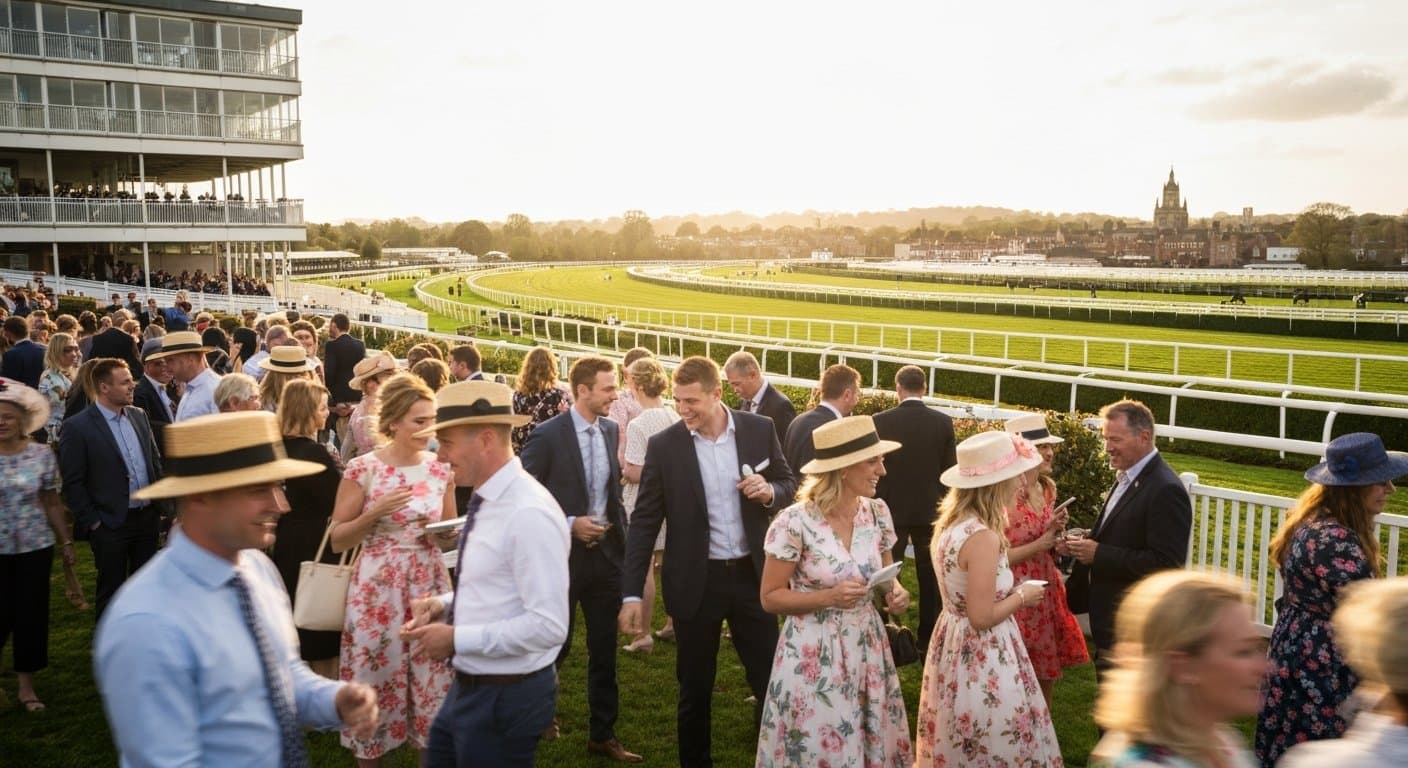
A Day Out at Stratford-on-Avon Racecourse
A day at Stratford-on-Avon — getting there, what to wear, enclosures, food and drink, and insider tips for Warwickshire's historic jumps venue.
Read moreStratford-on-Avon Festival Guide
Your complete guide to Stratford-on-Avon Racecourse — the summer jump festivals by the River Avon, the Bank Holiday meetings and what makes this Shakespeare country track one of the most picturesque in Britain.
Read more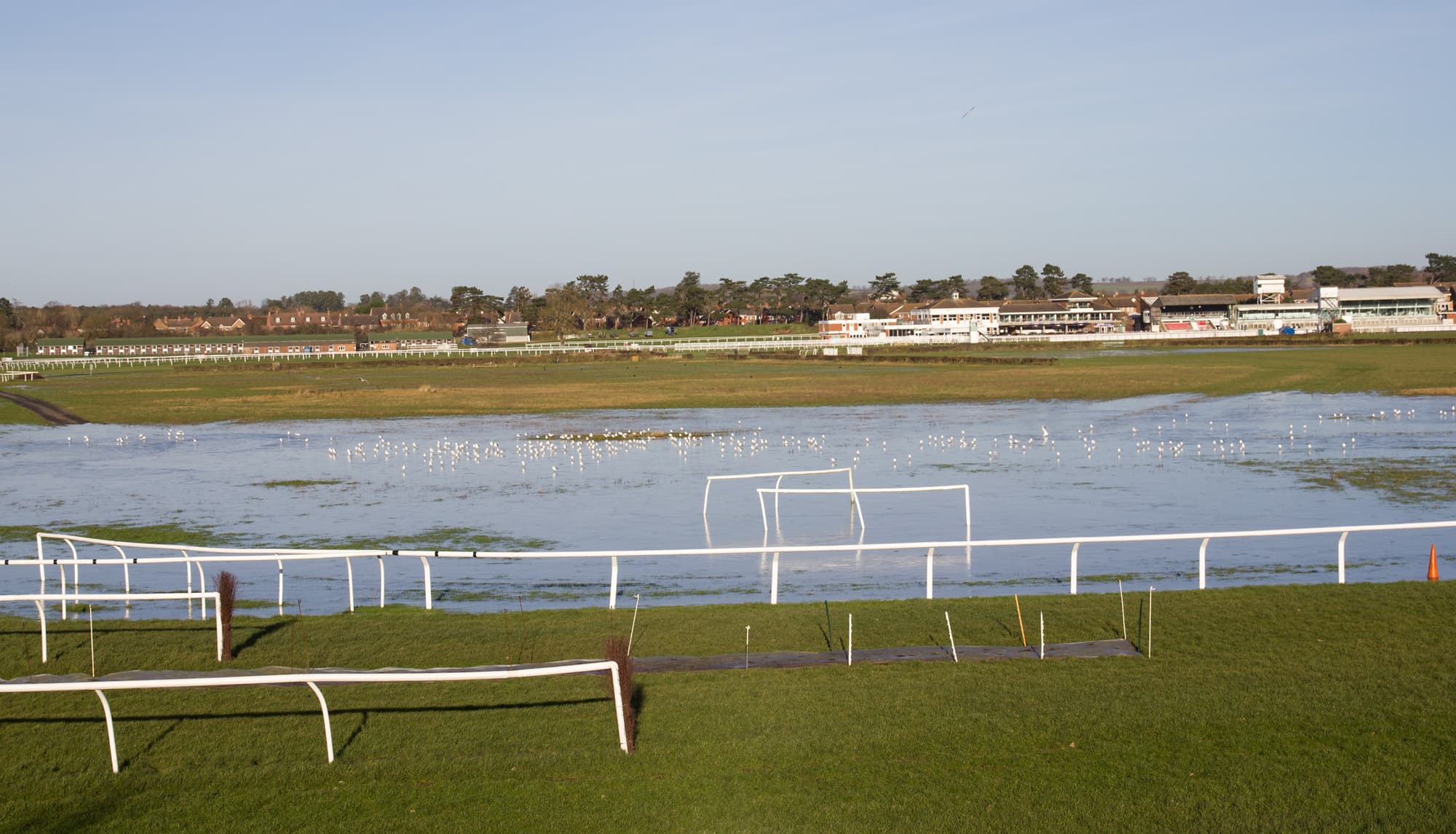
The History of Stratford-on-Avon Racecourse
Over 265 years of racing at Stratford-on-Avon — from its origins in 1755 to Warwickshire's historic jumps venue and the Horse & Hound Cup.
Read morePhotos on this page are used under Creative Commons licences. Titles, sources and licence links for each one are on our image credits page.
Research the field with the AI Race Predictor
Our model publishes calibrated win-probability estimates for UK races — a second opinion to understand a race, not tips. It's open about its record: it doesn't beat the market, and we show exactly how it does.
Work it out & learn the basics
Gamble Responsibly
Gambling should be entertaining and not seen as a way to make money. Never bet more than you can afford to lose. If you or someone you know has a gambling problem, help and support is available.