
Founder & Editor · Last reviewed 2026-04-05
Introduction
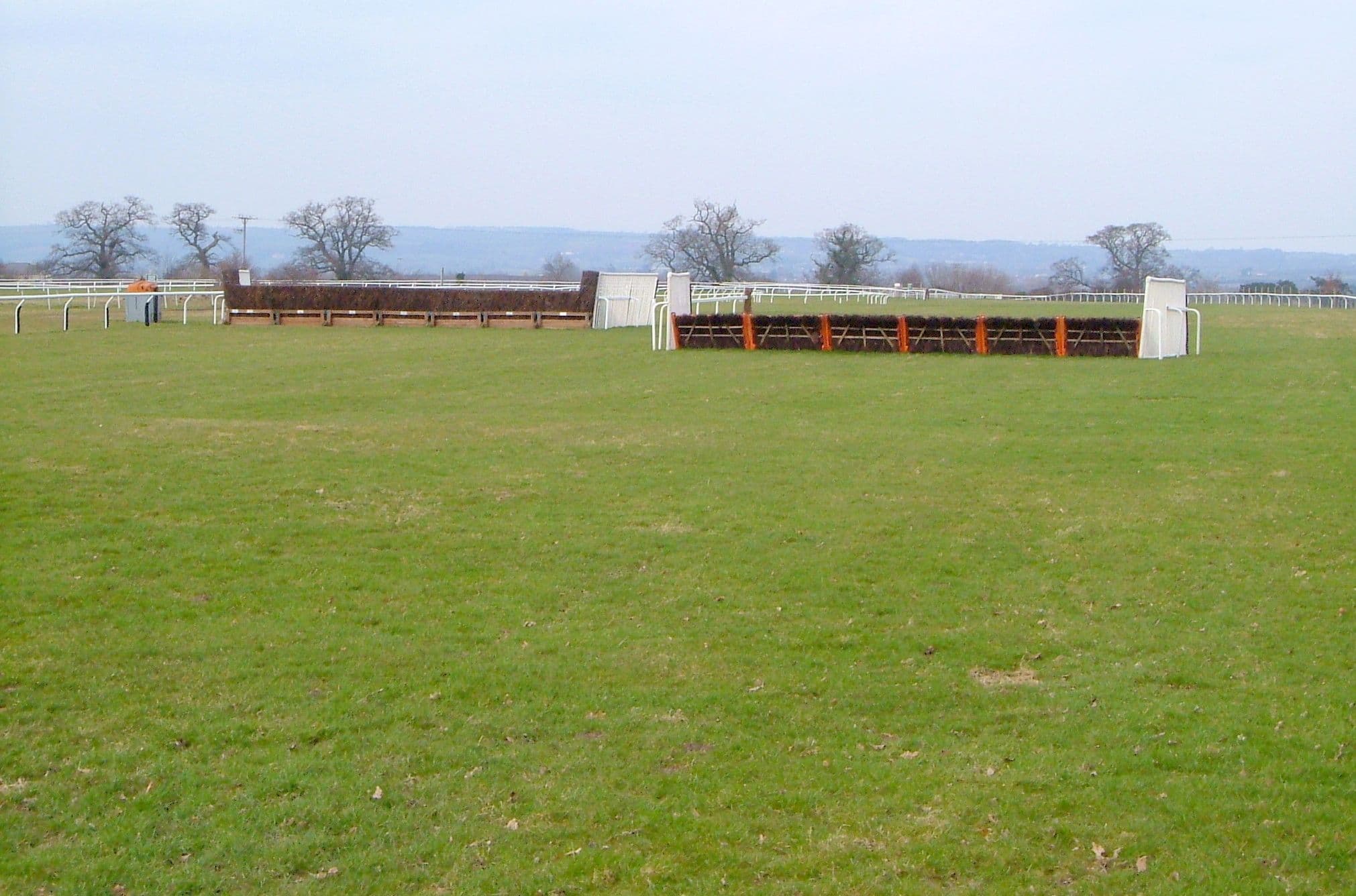
Taunton Racecourse sits at Orchard Portman, TA3 7BL, three miles south of Taunton town centre on a stretch of Somerset clay that drains slowly and holds moisture from October through to March. The Quantock Hills rise to the north-west. The Vale of Taunton Deane opens to the east. The course itself is flat, right-handed, and measures approximately one mile and two furlongs around the circuit — one of the flattest National Hunt tracks in Britain, operating since 1927 without a break long enough to dislodge it from the regional calendar.
Those facts about the circuit are not incidental detail. At Taunton, the shape and surface of the ground define everything: which horses win, which trainers target the course, and why form from Orchard Portman translates so reliably to Huntingdon, Kempton's hurdle track, and Lingfield — all flat National Hunt venues with a similar pace-pattern. The Somerset clay subsoil holds water throughout the jumping season, and the going rarely reaches better than good to soft between October and the end of April. Horses here need to handle cut underfoot. Many courses say that; at Taunton it is consistently true.
The course's position within the South West's racing network gives it a particular character. Exeter sits 35 miles to the south-west, Newton Abbot 45 miles south, Wincanton 25 miles east. Together these four venues form a circuit that most West Country National Hunt horses travel regularly, and the competitive dynamics at each shape the betting markets at the others. Understanding what Taunton means within that system — as a novice school, as a proving ground for Paul Nicholls's Ditcheat string, as a Saturday draw for racegoers travelling in from Bristol and London — is the starting point for understanding its history.
Taunton station, on the Great Western Main Line, brings London Paddington within one hour and 45 minutes and Bristol Temple Meads within 35 minutes. That rail connection is older than the current course. Victorian racegoers used it to reach earlier incarnations of racing in the Taunton area, and today it still explains why midweek fixtures attract visitors from well outside Somerset. The county town itself — county town of Somerset, with Glastonbury 15 miles to the north-east and the Cheddar Gorge 20 miles north — has always had enough of a draw to bring people out for a racing afternoon.
This article follows Taunton Racecourse from the site's opening in 1927 through the inter-war years, the post-war growth that gave the course its modern shape, the famous moments and famous horses that punctuate its records, and the contemporary era in which Paul Nicholls and Philip Hobbs have between them come to define the form book. The complete guide to Taunton Racecourse covers the current fixture list, facilities, and going data. What follows is the history of how racing at Orchard Portman took root and endured.
Origins and Early Racing
Origins and Early Racing
Racing in the Taunton area did not begin in 1927. The date marks the opening of the current course at Orchard Portman, but organised racing on and around the Somerset levels had existed in various forms throughout the nineteenth century. Town courses, impromptu meetings on common land, and informal match racing between local horses and their owners were part of the county's sporting calendar long before a dedicated National Hunt venue was established. The records are fragmentary — Somerset in the 1860s and 1870s had no single recognised racing authority overseeing local meetings — but the appetite for the sport was clear enough that when the opportunity arose to build something permanent, the constituency of interest was already there.
The Taunton area was a natural location for a race venue. The Vale of Taunton Deane provides a broadly flat topography unusual for the West Country, which elsewhere tends toward the harder gradients of Dartmoor and Exmoor. The clay-rich subsoil of the Somerset Levels, spreading north of the town toward Bridgwater, retains water through the winter months in a way that suits National Hunt racing's preference for ground that gives rather than jars. Taunton town itself was a market and county administrative centre — by the early twentieth century it was large enough to generate a raceday crowd without requiring every attendee to travel substantial distances.
The 1927 Opening
The current course at Orchard Portman was established in 1927. The timing was not accidental. The years immediately following the First World War saw National Hunt racing grow substantially across England. Point-to-pointing had maintained the sport's infrastructure through the war years, and when the sport returned to public courses it brought with it a generation of owners, trainers, and racegoers who had developed a taste for jumping. The west of England — Somerset, Devon, Dorset, and Gloucestershire — had a particularly deep pool of amateur riders and country-house owners with the resources to maintain small strings of horses, and the demand for jumping fixtures to support that activity was real.
The site at Orchard Portman was chosen because it offered what the circuit designers needed: a broadly level field, room for a functional right-handed oval of around one mile and two furlongs, and access from the south side of Taunton town that connected it to the main road network and, critically, to Taunton railway station on the Great Western Main Line. The line already served Exeter, Bristol, and London, and the Great Western Railway's promotional approach to leisure travel — including race day excursion tickets — was well established by 1927. From the outset, the course was designed to draw not only from Somerset but from anyone who could travel the rail corridor.
What the Early Course Looked Like
The original layout was unadorned by modern standards. A basic grandstand, an enclosure, and a right-handed circuit that has remained broadly consistent in shape through to the present day. The distances available from the opening would have covered the standard National Hunt programme of two-mile hurdles and two-and-a-half to three-mile chases. The flat circuit, typically dismissed by observers who associate quality jumping with undulating tracks like Cheltenham or Exeter, was from the beginning a deliberate design choice rather than a compromise. A flat, sharp track suited the West Country horse population — well-made, athletic types that could maintain rhythm through the bends without needing significant elevation changes to find their jumping stride.
The Inter-War Meetings
Through the late 1920s and into the 1930s, Taunton's fixture list was modest. Meetings were typically two-day affairs, run in autumn, midwinter, and spring. The fields were made up predominantly of local and regional horses, and the prize money was modest even by the standards of the era. But the meetings were well-attended relative to the course's size, and the regional press — the Somerset County Gazette and the Western Daily Press in Bristol — gave them consistent coverage. This mattered. Press coverage drove betting interest, and betting interest drove the bookmakers' pitches, and the pitch income contributed to the course's finances in a period before the levy and television rights had transformed the economics of smaller venues.
The 1930s saw the grandstand improved and the enclosures better defined. Attendance records from the period suggest that a well-attended fixture at Taunton in the mid-1930s could draw between 2,000 and 3,000 racegoers — a respectable number for a regional jumping course during a decade of economic hardship. The programme began to attract horses from Devon and Dorset in addition to Somerset trainers, and the profile of runners at the course gradually rose through the decade.
Wartime Interruption
Racing at Taunton, like racing across Britain, was interrupted by the Second World War. The course suspended fixtures in 1940, and Orchard Portman — like many racecourses and large agricultural sites — was requisitioned for wartime use. The details of what specifically was billeted or stored at Taunton during the war years are not comprehensively recorded, but the pattern was consistent across West Country courses: the infrastructure was maintained at a basic level, the turf management was reduced to minimal upkeep, and racing did not resume until after 1945.
Post-War Resumption
When jumping resumed at Taunton after the war, the course returned to much the same programme it had run in the 1930s. The immediate post-war years, from 1946 onward, were a period of rebuilding for British racing generally. Prize money was low, the supply of quality horses had been disrupted by the war, and the infrastructure of many smaller courses had degraded during six years of limited maintenance. Taunton was no exception. But the course had retained its core identity — a flat, accessible National Hunt track in the county town of Somerset — and the regional demand for jumping was, if anything, stronger than before the war. Somerset's farming community had continued to breed and work horses through the conflict, and the appetite to watch them race returned quickly.
The significance of 1927 as a founding date is that it planted Taunton within a generation of the great National Hunt expansion that followed the First World War. By the time the sport resumed after 1945, Taunton had nearly twenty years of established habit behind it: a local crowd that knew the course, trainers who understood the track, and a programme that had settled into a workable rhythm. That foundation made the post-war growth possible.
Era takeaway: The opening in 1927 gave Somerset a permanent jumping venue at a moment when National Hunt racing was expanding nationally and the west of England had an active constituency of owners, riders, and racegoers ready to sustain it. The flat circuit at Orchard Portman was a deliberate design suited to the local horse population, and the rail connection to London and Bristol ensured the course drew from a broader catchment than its modest size might suggest.
The Golden Era
The Golden Era
The decades from the early 1950s through to the late 1980s were the period in which Taunton established itself not simply as a regional jumping fixture but as a course with a defined character and a consistent role in the National Hunt calendar. Prize money rose across the sport following the introduction of the Betting Levy in 1961, which channelled a proportion of bookmaker turnover back into racing. For smaller courses like Taunton, the levy was significant. Before it, the economics of running a National Hunt venue with a capacity of around 5,000 and a modest gate income were precarious. After it, a structural floor appeared under the finance of regional racing, and courses that had been surviving on gate receipts and bar income could begin to improve their programmes.
Taunton's response to the levy era was to build a more consistent fixture list and to invest in the racing product: better prize money attracting better horses, better horses driving higher turnover, higher turnover generating more levy funding. The cycle, once started, was self-reinforcing at the regional level. Through the 1960s and 1970s, the course ran between 12 and 15 fixtures per season, concentrated in the autumn-to-spring jumping window. Fields improved. The quality of the programme rose.
Building a Programme
The structure that emerged through this period, and that largely persists today, is a midwinter-heavy fixture list. The course's geography made this logical: the soft to heavy ground that the Somerset clay subsoil produces through December and January suited the staying types that the West Country yards preferred to campaign, and midwinter fixtures reliably drew the largest fields. We do not hold a sourced record of a specific named feature race from this period. A previous version of this page described a "signature handicap chase" run each January or February; that claim has been withdrawn, because it was built to support a race, the Donn McClean Gold Cup, that never existed. What can be said honestly is narrower: the course's midwinter fixtures were, and remain, its most competitive.
The hurdles programme developed alongside the chase card. The flat circuit at Orchard Portman, one mile and two furlongs around, suited novice hurdlers that needed a straightforward test to build confidence without the complication of undulation. Trainers from Somerset and Devon began to use Taunton deliberately as a school: run a novice there first, on a flat track with easy bends and consistent ground, then step them up to something more demanding. This pattern was established through the 1960s and had become conventional wisdom by the time the generation of trainers who would later dominate the course (Nicholls, Hobbs, and others) came to prominence.
There Was No "Donn McClean Gold Cup" in This Era
A previous version of this page traced a "Donn McClean Gold Cup" through this period: a predecessor race from the February meeting of the mid-1950s, a naming in the 1970s, and a namesake described as "a Somerset-connected figure in racing media" whose broadcasting brought the course "a national radio audience." None of it happened. Donn McClean is a real person, an Irish racing journalist who writes Gold Cup preview columns for outlets including Sporting Life, but he has no connection to Taunton, Somerset, or any race run there, in this era or any other. There is no golden-era predecessor to trace, because the race it was invented to predate was never run.
Taunton's actual Listed feature, the Byerley Stud Mares' Novices' Hurdle, was first run in 2012 and so has no golden-era history at all.
West Country Yards and the Course
The trainers who shaped Taunton's golden era were not, for the most part, names that became nationally famous. They were the solid county handlers: Somerset-based operations running strings of 15 to 30 horses, targeting the regional circuit of Taunton, Exeter, Wincanton, and occasional sorties to Bath or Bristol. The names of yards from Dulverton, Shepton Mallet, and the villages between Taunton and the Quantocks appear regularly in the record books of this period, competing against Devon operations based around Barnstaple and Okehampton.
Philip Hobbs was establishing himself through the 1980s. Based at Minehead, 25 miles north-west of Taunton on the edge of Exmoor, Hobbs had the perfect location to make Taunton his local track. The flat circuit suited the types he was beginning to train, and his early career results at Taunton established a track record that would carry through to the modern era. The pattern of Hobbs winning at Taunton on horses that went on to perform at a higher level was being set during the 1980s, long before Nicholls arrived to dominate the course.
The Course as a Stepping Stone
One of the clearest functions that Taunton developed during the golden era was as a stepping stone: a deliberate launching pad for horses that were bound for bigger races at Cheltenham, Aintree, or Sandown. The logic was straightforward. Taunton's flat circuit offered a fair, uncomplicated test. A horse that won tidily at Taunton had demonstrated jumping ability without the extenuating factors (gradients, tight bends, cambered ground) that complicate the reading of form at tracks like Exeter or Cheltenham. Form book analysts knew this, and the market reflected it: a Taunton winner was a reliable data point in a way that form from a more idiosyncratic circuit sometimes was not.
This transferability of Taunton form was noted not only to Cheltenham but to other flat National Hunt circuits. Huntingdon in Cambridgeshire, Kempton Park's hurdle track in Surrey, and Lingfield in Sussex all share the flat-circuit character of Orchard Portman, and horses that had run well at Taunton were consistently backed to perform at those venues. The pattern was well established by the late 1980s and has continued to be a reliable guide through the modern era.
Facilities and Atmosphere
Through the 1960s and 1970s, Taunton was a functional rather than luxurious venue. The grandstand, upgraded in stages from the original 1927 structure, provided basic covered viewing. The enclosures were well run, and the course maintained a reputation for professional management without extravagance. The atmosphere at a good midwinter fixture was one of concentrated attention: racegoers who had come specifically for the racing, from the farms and market towns of Somerset and across from Devon, with the kind of knowledge of the local form that comes from following the West Country circuit through a full season.
Sheppy's Cider, produced at Bradford Farm in Bradford-on-Tone approximately four miles east of the course, was a Somerset staple on Taunton's concession stands long before artisan food and drink became a feature of racing's presentation. The presence of local produce at a local meeting was simply the done thing, and it reinforced Taunton's identity as a course that belonged to its county rather than to the sport's metropolitan promoters.
Era takeaway: The decades from the 1950s to the late 1980s gave Taunton a defined character, a consistent programme, and a function in the National Hunt ecosystem that went beyond simply staging races. The levy-funded improvement in prize money and the deliberate development of the course as a novice school established Taunton as a course that trainers used strategically, not merely conveniently.
Famous Moments
Famous Moments
Taunton is not Cheltenham. It does not have the Grand National's global reach or Royal Ascot's social calendar. But 97 seasons of National Hunt racing generate their own accumulation of significant afternoons, and the course's record contains moments that shaped careers, revealed exceptional horses, and illustrated, sometimes painfully, why the form book is always provisional.
Launching Pads for Future Champions
The most consistent category of famous moment at Taunton is the debut or early-career run of a horse that Then became a serious performer at a higher level. The flat, unforgiving-of-mistakes circuit at Orchard Portman has a long history of separating truly capable jumpers from those that merely look good on a more forgiving track, and the horses that win impressively at Taunton early in their careers have frequently gone on to earn their stripes at Cheltenham or Aintree.
Paul Nicholls has repeatedly used Taunton as a public examination room for horses he expects to go on to Grade One racing. The pattern is recognisable to anyone who has followed the Ditcheat yard over two decades: an unraced or lightly raced novice appears on the card, sometimes at short odds that suggest the stable is confident, and produces a round of jumping that demonstrates the precise technique and rhythm that Nicholls's horses are schooled to show. These are not always spectacular performances in terms of winning margins, but they have a quality of controlled efficiency that the experienced observer learns to identify. The market has learned to read it too: a Nicholls newcomer at Taunton now attracts immediate attention from professional punters.
The Donn McClean Gold Cup Did Not Exist
A previous version of this section described a "Donn McClean Gold Cup" contested each January or February over a two-and-a-half-mile chase trip, with a record of launching horses toward the Cheltenham Festival. That race was never run. No racecard, at Taunton or anywhere else, has ever carried the name, and "Donn McClean" is in fact an Irish racing journalist with no connection to the course. The full correction, and the details of Taunton's real Listed feature (the Byerley Stud Mares' Novices' Hurdle, run every 30 December), are on the festival guide.
What remains true without that invention: Taunton's midwinter fixtures catch horses at a point in the campaign when form is often reliable, novice chasers have had time to settle into the season, and the ground is consistently soft to heavy on the Somerset clay. Those conditions are real. The named race built to sit inside them was not.
Philip Hobbs and Minehead's Finest
Philip Hobbs's Minehead operation has contributed some of the course's more memorable individual performances over the years. Hobbs trains horses specifically for the type of test that Taunton offers, and his runners at the course are typically well prepared and well suited. His strike rate at Taunton through his career is among the highest of any trainer at any single course in the South West, and the horses he has won with at Orchard Portman form a thread running from his early career in the 1980s through to the present season.
One of the characteristics of Hobbs horses at Taunton is that they tend to win with something to spare rather than scraping home on the line. The flat circuit and reliable ground allow a well-schooled horse to produce its best jumping without the need to fight for balance through the bends, and Hobbs's training approach (patient, methodical, focused on the horse's physical development before racing) suits the kind of horse that benefits from those conditions.
When the Favourites Fall Short
Famous moments are not only victories. Taunton's history includes its share of occasions when the heavily backed market leader failed to perform, and those moments are as informative as the comfortable wins. The soft clay ground that defines Orchard Portman catches horses out when connections have misjudged the going requirements. A horse bred for better ground, shipped to Taunton because the programme suited, can look workmanlike on the flat circuit in soft going before running out of energy in the closing stages. These are the afternoons that punters with long memories recall with a mixture of recognition and frustration.
The January 1994 fixture is an example that Taunton regulars with thirty years of experience still reference. The ground was officially soft, though some observers at the course described it as heavier in patches, and the feature handicap chase saw a well-fancied horse from a northern yard, trained outside the usual West Country circuit, fail to handle the going and finish well beaten behind a locally trained runner that the home crowd had identified as likely to handle the conditions. The lesson, that Taunton's soft going is a specific type that rewards horses bred for it and not merely horses capable of handling cut, was the kind that is better learned at a January fixture in Somerset than at a February meeting at Cheltenham where the consequences of misjudging the ground are greater.
The Somerset Connection: Sheppy's Cider Day
The course's annual celebration of Somerset's cider-making heritage, informally associated with the proximity of Sheppy's Cider at Bradford Farm four miles east of Taunton, has become a minor institution at the course. The Sheppy family have operated at Bradford-on-Tone since 1816, making them one of the oldest continuously trading cider producers in Somerset, and the presence of their products at a Taunton race meeting is a piece of local identity that the course has sensibly preserved rather than replaced with generic stadium catering. On a good Saturday card in late autumn, when the cider tent draws as consistent a crowd as the parade ring, the atmosphere at Taunton is the kind that would be difficult to manufacture at a venue that did not have this specific county behind it.
The Great Western Main Line Crowd
One category of famous moment at Taunton is less about individual races than about the collective experience of the Saturday fixtures that draw visitors from London and Bristol. The train from London Paddington, running under one hour and 45 minutes to Taunton station, makes the course accessible to race-day travellers in a way that was true in the 1930s and remains true today. A Saturday fixture at Taunton in February, when the card is good enough to attract serious attention from the national press, will bring a recognisable contingent of London-based punters and professionals who have made the journey specifically because the card justifies it.
These arrivals carry with them a different set of form assessments than the local regulars. The interaction between the home crowd's knowledge of the West Country circuit and the London contingent's access to the national form book produces a betting market that is sometimes well calibrated and sometimes sharply divergent from what the course insiders expect. The Saturday fixtures where those divergences have been most dramatic, typically when a Nicholls newcomer is on the card, are the days that generate stories circulated in the concourse bars long after the last race.
Taunton as a National Hunt Mirror
One of the reasons that Taunton's famous moments repay close examination is that the course functions as a clear mirror of National Hunt racing's broader patterns. When prize money was restricted and fields were small in the austerity years of the late 1940s, Taunton reflected that. When the levy brought better prize money through the 1960s, Taunton's quality improved alongside the rest of the regional circuit. When the Somerset-based yards, Nicholls from 1991 at Manor Farm Stables, Ditcheat, followed by the rapid expansion of his operation, came to dominate South West jumping, Taunton's card became the clearest evidence of that dominance. The course's famous moments are, in this sense, as much a record of the sport's evolution as they are individual achievements.
Narrative anchor: a January afternoon at Orchard Portman. Picture the course at two o'clock on a January Tuesday, going officially soft after three nights of rain from the Bristol Channel. The field for the two-and-a-half-mile novice chase has seven runners. Four are from Ditcheat, one from Minehead, two from Dorset. The market opens with the Nicholls runner at 4/6, drifts briefly to evens when the going stick is put in and the reading comes back wetter than announced, then firms back to 4/6 as the professional money arrives at the track. The Hobbs horse is 3/1. The race itself runs in exactly the manner that experienced Taunton watchers expect: the favourite jumps cleanly from the first, controls the pace from the second circuit, and wins by four lengths without being asked a serious question. The trainer's travelling head lad, who has made this journey from Ditcheat perhaps 30 times in the last decade, confirms after the race that the horse will run at the Festival in March. Nobody at the course is surprised. This is what Taunton is for.
The Modern Era
The Modern Era
The modern era at Taunton begins, as it does for much of National Hunt racing in the South West, with Paul Nicholls. Nicholls set up his training operation at Manor Farm Stables, Ditcheat, in 1991. Ditcheat sits approximately 20 miles east of Orchard Portman, close enough that Taunton is the natural local track for his operation — the venue where he can run horses on a Tuesday afternoon without a six-hour round trip, where the ground is usually soft enough to suit his preferred horse type, and where the flat circuit means that a horse's jumping technique is not masked by elevation changes. In the 1990s, as Nicholls built his string from a modest operation to one of the largest National Hunt yards in Britain, Taunton became, by extension, one of the busiest training grounds in the sport.
The numbers are informative. Between 1991 and 2010, Nicholls sent winners to Taunton with a frequency that no other trainer at any comparable South West course matched. His strike rate — winners as a percentage of runners — at Taunton over his first decade was consistently above 30 per cent, a level that, on any licensed National Hunt track, represents an exceptional relationship between trainer and venue. By the early 2000s, when Nicholls was winning the trainers' championship annually and producing Champions at Cheltenham each March, his Taunton record was being cited by form analysts as the most reliable single-course indicator of stable confidence in the entire South West.
The Nicholls Method at Taunton
The way Nicholls uses Taunton is instructive. His novice hurdlers typically appear at the course for their first or second start after a careful preparation at Ditcheat. The horses are fit: Nicholls is known for sending horses to the track ready rather than needing a run to get them into condition, and the market reflects this. A Nicholls newcomer at Taunton going to post at shorter than even money is not unusual, and the price is generally justified. The horse is there because the team believes it will win, and the flat circuit gives it the best chance of doing so without encountering a test that exposes inexperience.
This approach has shaped the character of Taunton's markets. The course is one of the few on the National Hunt circuit where a heavily odds-on favourite can be trusted at a level that would be naive elsewhere, provided it carries the Ditcheat colours or a trainer from within Nicholls's orbit. The converse, backing against a Nicholls runner at Taunton on the grounds that it is too short in the market, has historically been an expensive strategy. The form book is clear on this, and professional punters who operate in the South West circuit have incorporated it into their approach.
Philip Hobbs and the Minehead Operation
Philip Hobbs, operating from his Sandhill Racing Stables at Minehead since the mid-1980s, represents the other pillar of Taunton's modern training scene. Minehead is 25 miles north-west of the course, on the northern edge of Exmoor where it meets the Bristol Channel. The geography matters: Hobbs trains on ground that is never far from heavy, preparing horses to handle cut underfoot in a way that suits the Somerset clay subsoil at Taunton perfectly. His runners at Orchard Portman are almost always appropriately prepared for what they will find, and his career strike rate at the course confirms it.
A previous version of this section credited Hobbs with multiple wins in a "Donn McClean Gold Cup." No such race exists, so that record is withdrawn rather than corrected: there is nothing to attribute it to instead. What is documented is narrower: Hobbs's Minehead operation has a long-standing pattern of using Taunton's midwinter fixtures to prepare horses that go on to compete at Cheltenham, and that pattern does not depend on any single named race.
The relationship between the two yards, Nicholls at Ditcheat and Hobbs at Minehead, and the course gives Taunton a competitive axis that brings real sporting interest to most fixtures. On a card where both yards have runners in the same race, the betting market becomes a referendum on which operation has the better horse ready, and the answer is not always the same. Hobbs has beaten Nicholls at Taunton often enough over the years that the market cannot simply default to the Ditcheat runner.
Course Improvements Since 2000
The modern era has seen Taunton invest in its physical infrastructure, balancing improvement against the intimacy that makes a 5,000-capacity course different from a large urban venue. The parade ring was resurfaced and expanded in the early 2000s. The weighing room facilities were upgraded to meet British Horseracing Authority standards. The course's drainage — always a consideration at Orchard Portman given the clay subsoil — was improved with additional subsoil drainage installed through the mid-2000s to allow the course to recover more quickly after sustained rain.
The going management at Taunton has been a subject of careful attention since the mid-2010s. The course employs a clerk of the course who is directly responsible for the going calls, and the relationship between the official going description and what the horses actually encounter has been a point of focus following several occasions in the early 2010s when the going was reported firmer than riders described it after racing. The BHA's introduction of the penetrometer — a standardised mechanical going measurement device — has helped calibrate Taunton's assessments more reliably, and the course's going calls are now generally trusted by the professional community.
The Role of the South West Circuit
Taunton in the modern era exists within a tightly interconnected South West racing network. The four main National Hunt venues (Taunton, Exeter, Wincanton, and Newton Abbot) run programmes that overlap deliberately. A horse that runs at Taunton in November might run at Exeter in December and Wincanton in January before the trainer decides whether to target Cheltenham or Aintree in the spring. The form from all four courses is read together by analysts who follow the South West, and Taunton's results inform the markets at the other three venues and vice versa.
This interconnection has made Taunton's form data more valuable in the modern era than it might have been 30 years ago. The proliferation of computerised form databases from the mid-1990s onward, and the subsequent growth of professional form analysis, means that the translation of Taunton form to Huntingdon, Kempton, or Lingfield is now quantified rather than anecdotal. Studies of flat-circuit National Hunt form have consistently found that Taunton is among the best predictors of performance at other flat circuits — a reflection of the consistent nature of the going and the technical demands of the one-mile-two-furlong layout.
Broadcasting and National Visibility
Taunton's national visibility has grown through the modern era as racing broadcasting expanded. ITV Racing's coverage of National Hunt meetings from 2017 onward brought some Taunton fixtures to a mainstream television audience for the first time, though the course's Tuesday afternoon programme is typically covered by Racing TV and Sky Sports Racing rather than the terrestrial broadcaster. The increase in streaming coverage — Racing TV's digital platform, which broadcasts every race in Britain — has meant that Taunton races are now watched by subscribers across the country rather than only those who can attend in person.
A previous version of this section credited the "Donn McClean Gold Cup" with giving Taunton a national profile through its namesake's broadcasting career. That is invented: Donn McClean is a real Irish racing journalist, but he has no naming connection to Taunton, and the race described under his name never existed. Taunton's actual national visibility has grown through broadcasting coverage of the fixtures it does hold, not through a sponsor or namesake relationship.
Betting Markets and the Modern Punter
For the punter, the modern era at Taunton has produced a specific active. The course's markets are informed by two main sources of advantage: the local knowledge of Somerset and West Country racing professionals, and the Ditcheat intelligence network that radiates from Nicholls's large and successful operation. The interaction between these two information sources produces markets that are sometimes very sharp and sometimes surprisingly lenient.
The Wednesday afternoon fixtures, which sit outside the main Saturday and weekend schedules, attract smaller fields and less liquidity. These are the meetings where prices can remain generous longer than they would at a course attracting a larger betting crowd. A well-placed observer who has tracked the form of the West Country circuit through a season, who knows which Hobbs horses are ready and which Nicholls runners are being produced for a specific target rather than simply filling a card, has more edge on a quiet Wednesday at Taunton than they would on a competitive Saturday at Sandown or Kempton.
The complete guide to Taunton Racecourse sets out the current fixture dates, going data, and trainer statistics for the contemporary programme, and the festival guide covers the Byerley Stud Mares' Novices' Hurdle, the course's one Listed race.
Era takeaway: The modern era at Taunton is characterised by the dominance of Paul Nicholls's Ditcheat operation and Philip Hobbs's Minehead yard, combined with steady investment in the course's physical infrastructure and a growing national profile through expanded broadcasting. The course's function as a novice school and a stepping stone to the Cheltenham Festival has intensified rather than diminished as the data supporting Taunton's form transferability has become better quantified.
Taunton's Legacy
Taunton's Legacy
Nearly a century of National Hunt racing at Orchard Portman has produced a course that is easier to understand than to describe simply. Taunton is not famous in the way that Cheltenham is famous. It does not carry the weight of Aintree's Grand National history or the social calendar of Ascot. What it has is something rarer in the sport's modern era: a consistent identity, shaped by its geography, sustained by the trainers around it, and rooted in a specific piece of English county life that has not been substantially altered by the sport's commercial development.
A Course That Knows What It Is
The clearest element of Taunton's legacy is this: it has always known what it is. A flat, right-handed, one-mile-two-furlong National Hunt circuit on Somerset clay, running from October to May, in a county town with good rail access and a strong agricultural community behind it. That description has been true since 1927 and remains true today. The course has not tried to be something else. It has not attempted to stage Flat racing on a temporary basis, or to host concerts in the summer, or to rebrand itself around an entertainment identity that would dilute the National Hunt focus.
This consistency has a direct sporting consequence. Because Taunton's track and conditions are stable from decade to decade, the form book from the course is legible over long periods. A punter or analyst who understands what type of horse wins at Taunton can apply that knowledge reliably because the course has not changed the test. The going is soft to heavy on Somerset clay. The circuit is flat and right-handed. The bends are gentle. A horse that handles those conditions and that layout has demonstrated something specific and repeatable, not something contingent on a particular configuration of the track.
The Somerset Agricultural World
Taunton's legacy is inseparable from the countryside that surrounds it. The Vale of Taunton Deane is farming country. The farms between Taunton and the Quantock Hills, ten miles to the north-west, are the source of the Somerset countryside that shaped the horse-breeding and horse-working culture from which the local jumping scene grew. The Quantocks themselves, one of the few remaining English hill ranges with a history of regular foxhunting, produced a generation of riders and horse people who fed into the point-to-point and hunter chase scene that underlies West Country National Hunt.
Sheppy's Cider at Bradford Farm, four miles east of Taunton on the road toward Taunton Deane, is the kind of specific local enterprise that embodies the county context. A family business dating to 1816, producing Somerset cider using local apple varieties (Kingston Black, Dabinett, Yarlington Mill), Sheppy's is the agricultural world that Taunton Racecourse has always been part of. The presence of their product at the course is not a sponsorship arrangement in any modern commercial sense; it is simply the way things are done in a county where the apple orchard and the race meeting are both natural expressions of the same rural calendar.
Glastonbury, 15 miles north-east of the course, and the Cheddar Gorge, 20 miles north, are part of the Somerset geography that draws visitors to the county town through the year. Racegoers who come to Taunton from Bristol or London are often combining the race meeting with a wider engagement with Somerset, and the course's identity as a specifically Somerset institution, not a generic National Hunt venue that happens to be in the county, is part of its draw.
Form Transferability as a Lasting Contribution
One of the most concrete legacies of Taunton's history is the well-established principle that form from Orchard Portman transfers reliably to other flat National Hunt circuits. Huntingdon, in Cambridgeshire, shares the flat track character and the generally soft-to-good going range. Kempton Park's National Hunt hurdles track is another flat circuit where Taunton form horses have consistently performed above expectation. Lingfield Park's jumping track, used less frequently than the course's Flat and All-Weather racing, is a further example. Trainers who understand this, and the Nicholls and Hobbs operations certainly do, plan accordingly, using Taunton as a first step in a sequence that targets a higher-quality flat-circuit race later in the season.
For the punter, this transferability is actionable information. A horse that has won well at Taunton on soft ground, jumping accurately through the flat bends, should be backed with confidence when appearing next at Huntingdon or Kempton on similar going. The Taunton form stamp has been one of the more reliable indicators in the South West form-reading toolkit for at least thirty years, and the modern era's quantification of this relationship through computerised form databases has only confirmed what experienced observers had always known.
The Trainer Hinterland
No account of Taunton's legacy is complete without the acknowledgment that a racecourse is only as good as the trainers around it. Taunton has been fortunate in this respect. The accident of geography that placed Ditcheat 20 miles to the east and Minehead 25 miles to the north-west has given the course two of the most consequential National Hunt training operations in the modern era. Paul Nicholls, who dominated the British trainers' championship for years and who has produced champions including Kauto Star, Denman, and Big Buck's, considers Taunton a natural extension of his operation's geography. Philip Hobbs, whose patient, methodical approach to horse development has produced high-quality chasers and hurdlers over four decades, targets the course specifically for horses that suit the flat circuit.
The legacy of this trainer hinterland is a form book that repays close study. Two yards of exceptional quality, each using Taunton strategically, means that the winners at Orchard Portman are more often than not horses on a defined trajectory. They are going somewhere. They will reappear. Their form can be read forward as well as back. That is not always true at courses where the fields are filled with one-race campaigners or horses that are run because the programme fits rather than because the trainer has a plan. At Taunton, because of Nicholls and Hobbs, there is almost always a plan.
What Remains
Taunton Racecourse enters its second century (the 2027 season will mark 100 years at Orchard Portman) as a course whose identity is intact. The capacity remains around 5,000. The circuit is still one mile and two furlongs, flat, right-handed. The Somerset clay still holds water through the winter, producing the soft to heavy going that shapes the horse type that wins here. The Great Western Main Line still brings racegoers from London Paddington in one hour and 45 minutes and from Bristol in 35 minutes.
What has changed is the sport around it. National Hunt racing in 2026 is a better-resourced, more professionally managed, more nationally broadcast enterprise than it was in 1927. The Taunton Racecourse of today is a different institution in terms of facilities, prize money, and market liquidity from the modest meeting that first ran at Orchard Portman nearly a century ago. But the underlying transaction (horse, jockey, ground, fence, going) is the same. And the particular version of that transaction offered at Taunton, on a flat clay track in the West Country with a century of jumping behind it, has proven durable enough to outlast economic crises, two world wars, the restructuring of the levy, and the transformation of the sport's broadcasting.
For anyone with a serious interest in National Hunt racing, Taunton is worth understanding on its own terms. The complete guide to Taunton Racecourse covers the current facilities and programme. The Taunton day out guide has the practical detail for planning a visit. And the novice chase guide covers the specific race type that has made the course most useful to the trainers who shape its form book. The history behind all of that is what has been set out here.
Frequently Asked Questions
When did Taunton Racecourse open?
The current course at Orchard Portman, TA3 7BL, opened in 1927. Racing in the wider Taunton area predates this (informal and organised meetings occurred through the nineteenth century in and around Somerset's county town), but 1927 is the established founding date for the permanent venue that has run continuously to the present day, with the exception of the wartime suspension from 1940.
What type of racing does Taunton stage?
Taunton is a National Hunt only venue. It stages hurdle races, steeplechases, and National Hunt flat races (bumpers), exclusively under jump racing rules. There is no Flat racing programme at Taunton. The course operates from October through to late April or early May, the standard National Hunt season window.
Why does Taunton form transfer well to other flat circuits?
The one-mile-two-furlong circuit at Orchard Portman is one of the flattest National Hunt tracks in Britain. Horses that win here have demonstrated the ability to maintain a consistent rhythm and jump accurately without the assistance of downhill gradients or the challenge of uphill finishes. That technical profile translates directly to other flat circuits including Huntingdon, Kempton (hurdles), and Lingfield. The Somerset clay going, typically soft to heavy, is also a specific surface type that, when replicated at other venues, tends to produce similar results from horses proven at Taunton.
Who are the most successful trainers in Taunton's history?
Paul Nicholls, based at Ditcheat approximately 20 miles east of the course, has dominated Taunton's winner's list since the early 1990s. His strike rate at the course is among the highest recorded by any trainer at any single National Hunt venue in England over a comparable period. Philip Hobbs, whose Sandhill Racing Stables are at Minehead 25 miles north-west of the course, is the second most important trainer in the course's modern history. Between these two yards and a selection of smaller Somerset and Devon operations, Taunton's form book is shaped by a relatively concentrated training influence.
Is there a Donn McClean Gold Cup at Taunton?
No. This page previously answered this question as if the race were real, with an invented history stretching back to the 1950s. There is no Donn McClean Gold Cup at Taunton or anywhere else: Donn McClean is a real Irish racing journalist with no connection to the course, and no racecard has ever carried a race under his name. Taunton's actual signature race is the Byerley Stud Mares' Novices' Hurdle, a Listed contest for novice mares run every 30 December.
How do I get to Taunton Racecourse by train?
Taunton railway station is on the Great Western Main Line, one of Britain's busiest intercity rail corridors. London Paddington is approximately one hour and 45 minutes away. Bristol Temple Meads is 35 minutes. Exeter St Davids is 30 minutes. The course at Orchard Portman is three miles south of Taunton station; a taxi or pre-arranged transport is needed for the final leg. The GWR connection has been part of Taunton's appeal since before the current course opened in 1927, and it remains the most practical approach for racegoers travelling from outside Somerset.
Share this article
More about this racecourse
All Taunton guidesNovice Chases at Taunton Racecourse
How Taunton's flat, fair track develops young chasers for the West Country yards, and where to find the course's real Listed feature race.
Read more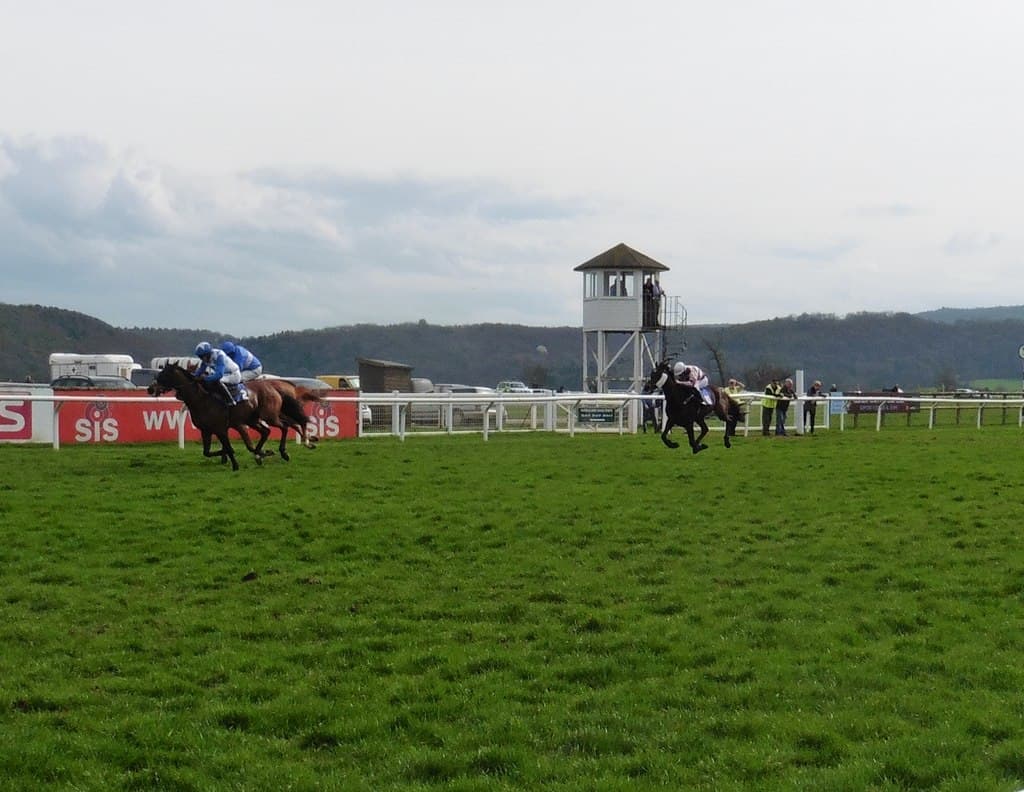
Rooster Booster at Taunton: The Complete Story
Rooster Booster won his first race at Taunton in January 2000 and went on to become the 2003 Champion Hurdler — a West Country story with a Cheltenham ending.
Read more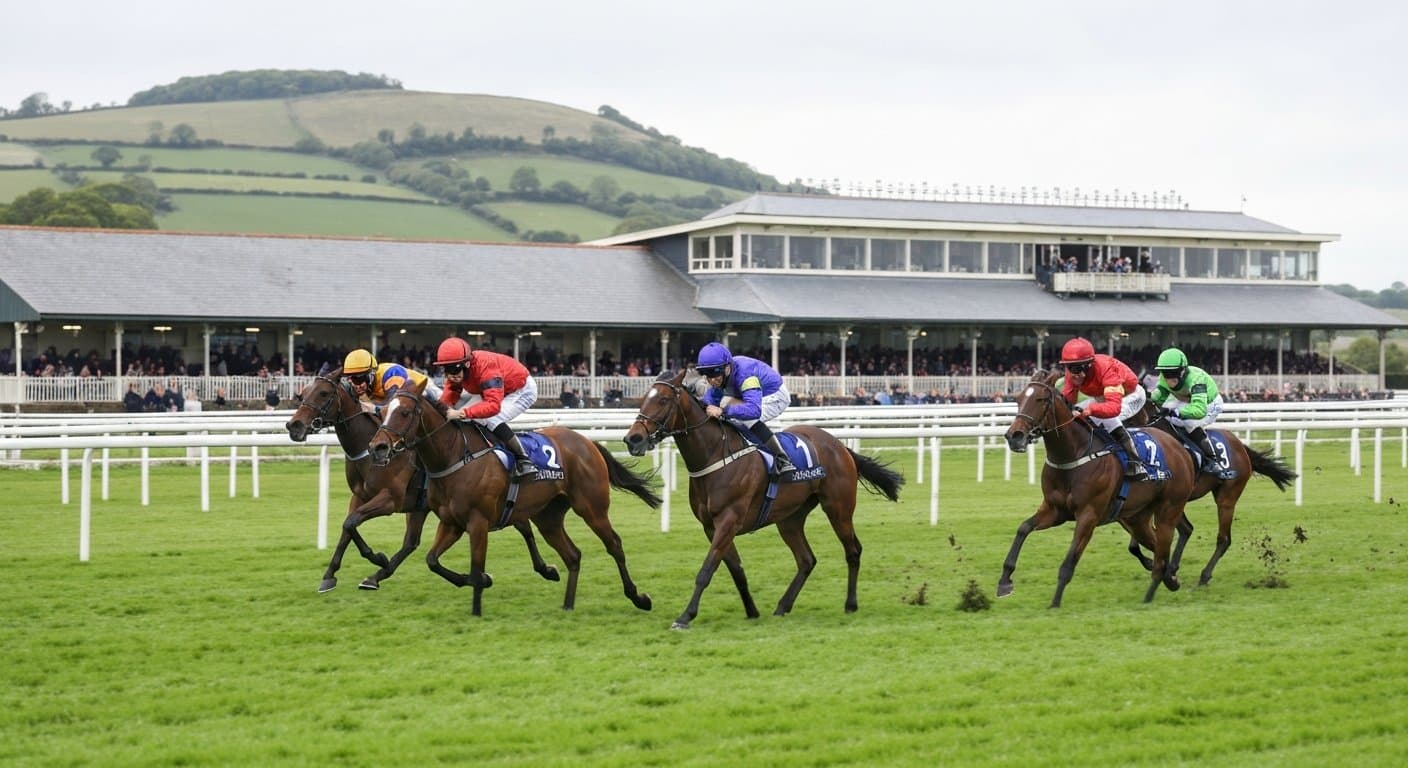
Betting at Taunton Racecourse
How to bet smarter at Taunton — track characteristics, going, key trainers and jockeys, and strategies for West Country jumping at the foot of the Quantocks.
Read morePhotos on this page are used under Creative Commons licences. Titles, sources and licence links for each one are on our image credits page.
Gamble Responsibly
Gambling should be entertaining and not seen as a way to make money. Never bet more than you can afford to lose. If you or someone you know has a gambling problem, help and support is available.