
Founder & Editor · Last reviewed 2026-04-07
Introduction to Thirsk Racecourse
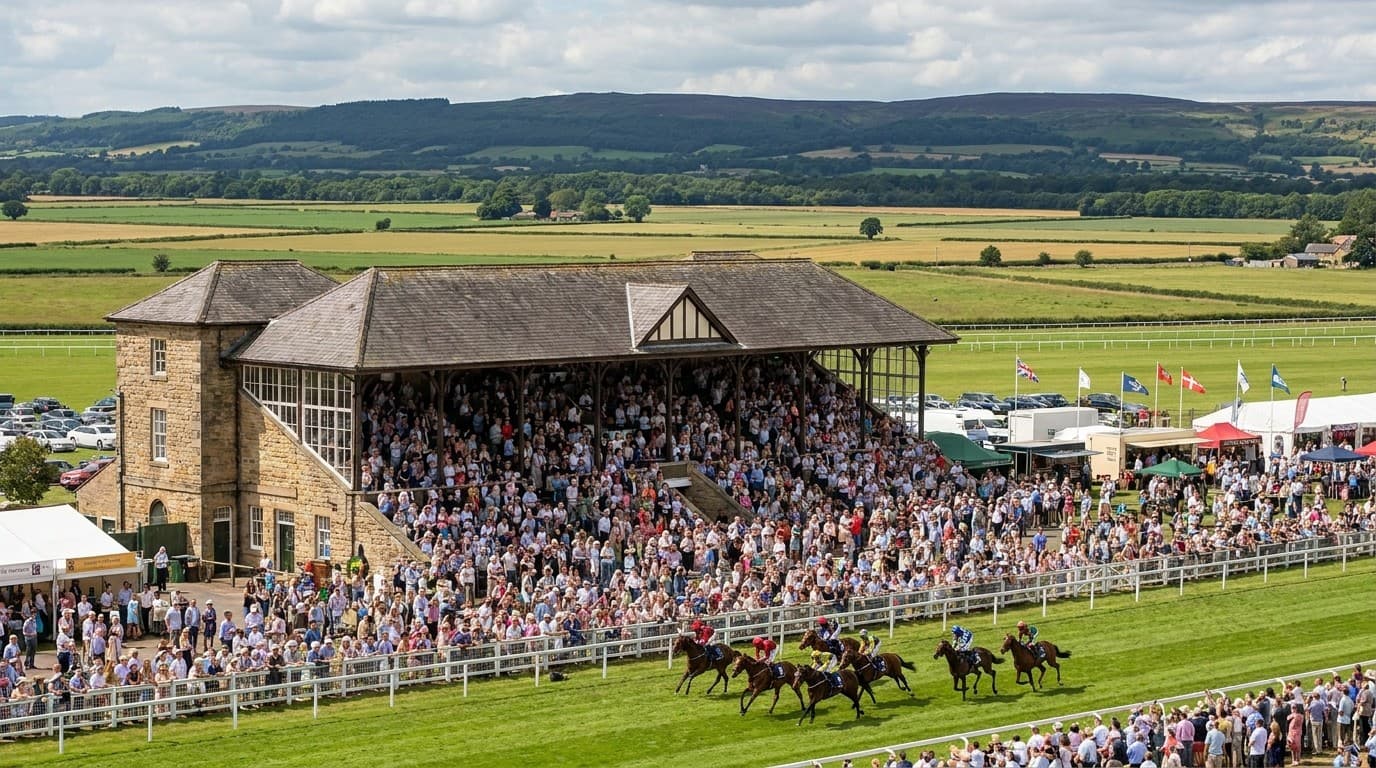
Thirsk Racecourse sits at the heart of one of the most pleasant small towns in the north of England — a compact, walkable place in the Vale of Mowbray whose market square, independent pubs and thoroughly Yorkshire character make it a natural destination for a day's flat racing. The course itself is a proper flat track: a left-handed oval with a long, sweeping home straight that allows large fields to race genuinely and without the positional scramble that mars sprint races at tighter circuits. Thirsk opens in April and runs through September, concentrated around its two most significant fixtures: the Classic Trial meeting in spring and the Hunt Cup meeting in May.
A Reliable, Honest Track
Flat racing is full of quirky courses where geography or engineering has produced a circuit that distorts the natural order — sharp bends that reward handy horses, false straights that mislead jockeys, cambers that favour one side of the track on certain going. Thirsk is notably free of these distortions. The oval is regular, the turns are gradual enough not to cause problems for horses with a long galloping stride, and the home straight is sufficiently long to allow genuine battles to develop. The course produces clean, honest racing, and form at Thirsk tends to be reliable and informative — a horse that runs well here is usually running to its true ability.
This reliability is what makes Thirsk a respected track for spring form. The Classic Trial meeting in April provides one of the first reliable pieces of Classic generation evidence of the season, at a point when much of the form being generated elsewhere is compromised by inexperience, unfavourable going or unsuitable track configurations.
Between York and the Dales
Thirsk's location is central to its identity. It sits roughly equidistant between York to the south and the Yorkshire Dales to the north — close enough to York that racegoers from the big city treat it as an easy day out, and close enough to the Dales that the countryside around it has the open, windswept quality of proper North Yorkshire rather than the suburban fringe that surrounds some urban tracks. The A19 connects it directly to the York conurbation; the A61 brings in traffic from Harrogate and beyond.
The town itself rewards attention. The market square is alive on market days, the pub selection is excellent — The Three Tuns and The Golden Fleece are both proper northern pubs with real ales and honest food — and the racecourse sits comfortably within the town's fabric in a way that feels organic rather than imposed. This is what a proper town racecourse looks like, and there are fewer of them left in Britain than there used to be.
The Northern Flat Racing Community
Thirsk's crowd is made up of the flat racing faithful of the north: Yorkshire families for whom a summer day at the races is a natural part of the calendar, punters from Teesside and Tyneside who understand northern sprint form, and the trainers and owners from the Middleham and Malton yards who use Thirsk regularly as a testing ground for their horses. There is no pretension here, no dress code anxiety, no sense that racing is anything other than a shared pleasure enjoyed by people who love horses and understand the form book. It is a northern flat meeting at its best.
Thirsk station, just five minutes' walk from the course, makes the journey straightforward from York, Leeds and Darlington — adding to the sense that this is a course designed to be visited, used and enjoyed by a broad public, rather than reserved for those with cars and owners' badges.
Bet on Thirsk
Place your bets on Thirsk races with a trusted bookmaker.

Promo code BETFRED50. New customers only. Register, deposit with a Debit Card, and place a first bet of £10+ at Evens (2.0)+ on Sports, to be settled within 7 days, to get £30 in Sports Free Bets and £20 in Bet Builder Free Bets within 24 hours of settlement. 7-day expiry. Eligibility & payment exclusions apply. Full T&Cs apply. Take Time to Think. BeGambleAware.org. 18+. Full T&Cs.

Promo code R30. New UK customers only, 18+. Register, deposit £10 or more, then place a £10 single cash bet at odds of 1/2 (1.5) or greater on any sports market (excluding Virtuals). Once the qualifying bet settles you get £30 in Free Bets (3 x £10) — the qualifying bet can win or lose. Free Bets are valid on any sports market excluding Virtuals, expire in 7 days, are non-withdrawable and must be used in full. Excluded deposit methods apply (including PayPal, Apple Pay, Skrill and NETELLER). Named bets such as Lucky 15 do not qualify. If you cash out the qualifying bet, or it is voided, you are no longer eligible for the offer. Ends 31.12.26. Full T&Cs apply. Please gamble responsibly. BeGambleAware.org. 18+. Full T&Cs.

Promo code BET40GET20. New UK customers, 18+. Register with the code and place a first bet of £40 or more at Evens (2.0) or greater. Receive 2 × £10 free bets: the first credited automatically once the qualifying bet settles, the second 24 hours later. Free bets must be placed at minimum odds of 4/1 (5.0), expire 24 hours after credit, and the free-bet stake is not returned with winnings. Debit card deposits only. Take Time to Think. BeGambleAware.org. 18+. T&Cs apply. Full T&Cs.

50% of your first-day net losses refunded as a free bet, capped at £25. New UK customers aged 18+ only. To qualify, deposit and place a first bet of £10 or more on any sport at minimum odds of evens (2.00), then place at least two further bets on different events, each worth at least 50% of your largest bet, all at evens (2.00) or greater. Losses are counted from your first settled bet until 23:59 the same day. Place a qualifying £10+ bet and you are guaranteed at least a £5 free bet. Bets placed at SP, void bets, cashed-out bets and bets struck with free bets do not count towards the offer. The free bet is credited the day after your qualifying bets settle and must be used within 7 days, after which it expires. It can be used at odds from 1/4 (1.25) up to 250/1 on singles and straight accumulators, but not on Trixie, Patent or Yankee style multiples. Free-bet stake is not returned with winnings. One offer per person, household, address, IP address and device. E-wallet deposits may not qualify, so check the cashier before depositing. Customers registered with GAMSTOP cannot claim. KYC identity verification must be completed before the free bet is credited. Take Time to Think. BeGambleAware.org. 18+. T&Cs apply. Full T&Cs.

New customers, 18+. Choose the sports bonus at sign-up, make a first deposit and receive a 100% bonus up to £50 in your Sports Bonus balance. To convert the bonus to cash, wager it 10x within 30 days. Single bets below Evens (2.00) do not qualify; accumulators do not qualify if any selection is below 1/2 (1.50). Virtual Sports, voided, cancelled, drawn, cashed-out and free-bet wagers do not count towards wagering. Only the first settled bet per event counts. Withdrawing before the wagering requirement is met forfeits the bonus balance including bonus winnings. Real-money funds are used before bonus funds. Deposits via Skrill or Neteller are not eligible. Not valid in conjunction with other promotions. Odds, bet and payment limits apply. 10bet general and promotion T&Cs apply. BeGambleAware.org. 18+. Full T&Cs.

New customers in Great Britain and Republic of Ireland, 18+. Place a £10 fixed-odds qualifying bet at minimum odds of 1/2 (1.50) — single or each-way (only the win part counts), pre-event or in-play, not cashed out early, within 28 days of opening the account. Receive up to £60 in bonuses credited over three days: 3 × £10 fixed-odds free bets (the first on settlement, then 24 and 48 hours later) plus 3 × £5 Total Goals FOOTBALL spread bets, 3 × £5 racing Winning Favourites spread bets and a £1 racing Race Index spread bet (the spread bets need a full spread-betting account). Free-bet stakes not returned with winnings; free bets valid 28 days from issue. IMPORTANT: the £5 credits are SPREAD bets — sports spread betting carries the risk that losses can exceed your stake. Sports spread-betting customers do not have Financial Ombudsman or FSCS recourse. Take Time to Think. BeGambleAware.org. 18+. T&Cs apply. Full T&Cs.

Promo code WELCOME15, entered under My Bonuses after registering. New UK customers, 18+. Place a first qualifying bet of at least £10 from your cash balance at odds of evens (2.0) or greater within 7 days of opening the account. Once the qualifying bet fully settles you receive £15 in free bets, credited as 3 x £5 tokens with set uses: one £5 accumulator free bet (minimum 4 legs, each leg at 2/5 or bigger), one £5 sports free bet (any market at evens or bigger) and one £5 Sub Cover free bet (selected football player markets at evens or bigger). Free-bet stakes are not returned with winnings. Free bets expire 7 days after they are credited. Void, cashed-out and partially cashed-out bets do not qualify. One offer per customer. Confirm the current terms on BetGoodwin's own welcome-offer page before claiming. Take Time to Think. BeGambleAware.org. 18+. T&Cs apply. Full T&Cs.

New UK customers, 18+. Minimum deposit £10. Place a £10 qualifying single at minimum odds of 1/2 (1.50), settled within 14 days. Receive £30 in free bets (stake not returned), split £20 for sportsbook use (2 x £10) and £10 for Bet Builder only (2 x £5); Bet Builder does not cover horse racing. Free bets must be accepted within 7 days and expire 7 days after acceptance. No promo code required. Best Odds Guaranteed on UK & Irish racing, subject to having staked over £25 in the previous seven days. Operated by LiveScore Betting and Gaming (Gibraltar) Ltd, UKGC 56859. Confirm the current terms on LiveScore Bet's own promotions page before claiming. Take Time to Think. BeGambleAware.org. 18+. T&Cs apply. Full T&Cs.
18+. BeGambleAware.org
Day-by-Day Guide
Day-by-Day Guide to Thirsk Racing
Thirsk runs a flat programme from April through September, with its key meetings clustered around the spring — the Classic Trial in April and the Hunt Cup meeting in May — before settling into a solid summer programme of Saturday and occasional weekday cards. Understanding the shape of the Thirsk year helps you identify when the best racing and most informative form appears.
Classic Trial Meeting: April
Thirsk opens its season in April with what is typically the most prestigious card it stages all year: the Classic Trial meeting, headlined by the Thirsk Classic Trial itself, a Listed race run over one mile that serves as an early-season marker for horses being aimed at the Qipco 2000 Guineas or 1000 Guineas at Newmarket the following month.
The timing of this meeting is significant. April Thirsk is one of the first major Classic trial opportunities of the season, arriving after the season's first serious Flat cards at Doncaster and Newmarket but before the form picture has fully clarified. Horses that run well at Thirsk in April are often doing so on limited racecourse experience, and the reliability of the track — the honest oval, the long straight, the good drainage that brings forward going conditions in April — means that the form is more than usually trustworthy.
Several horses have used the Thirsk Classic Trial as a genuine stepping stone to the Guineas meeting, and Newmarket observers take the Thirsk result seriously. For the punter, it is one of those early-season Listed races where watching it unfold carefully pays dividends: the horses that travel well through the race but are not fully wound up for the day are often the Guineas horses to follow.
The wider card on Classic Trial day is also competitive. Early-season sprint form from Yorkshire has its own value, and the handicap supporting races often feature horses fresh from winter all-weather campaigns ready to show their turf form.
Hunt Cup Meeting: May Bank Holiday
The Hunt Cup meeting, typically staged around the May Bank Holiday period, is Thirsk's biggest popular occasion of the year. The headline race — the Thirsk Hunt Cup itself, a heritage handicap sprint over six furlongs — is one of the major northern sprint handicap events, with large fields, significant betting turnover and the kind of competitive atmosphere that draws serious flat racing punters from across the north.
Heritage handicaps — those sprints and miles run at set weights with a long history — occupy a special place in the flat racing calendar. They are genuinely difficult to win precisely because so many horses have a reasonable claim on the prize, fields tend to be large and wide-margin wins are rare. The Thirsk Hunt Cup follows this pattern exactly. Seventeen or eighteen runners over six furlongs on good going, with the early pace typically fierce and the result often determined by who gets the best of the draw and the clearest run.
Bank Holiday attendance at Hunt Cup day is typically the highest of the Thirsk season. Families, punters, owners and trainers who might not normally travel to Thirsk make the effort for the biggest card of the year, and the atmosphere lifts correspondingly. A warm May Bank Holiday at Thirsk is one of the more enjoyable days the northern flat season provides.
Summer Saturday Meetings: June Through August
Through the summer months, Thirsk stages a regular programme of Saturday cards offering a mix of conditions races, listed contests and competitive handicaps. The prize money is respectable by northern provincial standards, and the quality of fields reflects this: trainers from the Middleham and Malton yards who operate at this level of the sport use Thirsk regularly, as do stables from further afield targeting the northern handicap market.
The Saturday summer cards at Thirsk carry something of the flavour of old-fashioned flat racing: proper crowd, proper competition, sensible facilities without the overwhelming scale of York or Chester. They attract a loyal northern audience that understands flat form and appreciates a well-run card.
September Finale
Thirsk's final meeting of the season, typically in mid-to-late September, often features horses looking for a final end-of-season win before being turned out for the winter or heading to the all-weather. These horses are frequently well-handicapped: they have dropped in the official ratings over a quiet summer, are fit after months of racing and arrive at a relatively uncompetitive September card in good heart. End-of-season value is a consistent pattern at tracks like Thirsk, and the September finale is worth examining carefully with this in mind.
Key Races to Watch
Key Races at Thirsk
Thirsk's race programme spans April to September, anchored by four races that carry significance beyond their individual prize money: the Classic Trial, the Hunt Cup and two other contests that attract serious horses and generate useful form. Understanding these races, their historical significance, their track bias and their betting angles, is the foundation of intelligent Thirsk analysis.
Thirsk Classic Trial (Listed from 2000, April, discontinued after 2003)
The Thirsk Classic Trial is the course's most prestigious race, a Listed contest over one mile, typically run in mid-to-late April, that serves as one of the early-season pointers to the Qipco 2000 Guineas at Newmarket and occasionally the 1000 Guineas for fillies. The race has been won by horses that went on to significant Classic success, and Newmarket observers pay it genuine attention.
What makes the Classic Trial valuable as a form reference is the reliability of Thirsk's track configuration. The honest oval and long straight allow the best horse to win more often than at idiosyncratic spring tracks like Chester or Sandown, where the draw or the ability to handle specific quirks can distort results. A horse that wins the Thirsk Classic Trial by convincing margins has usually done something genuine.
The reverse is also true: horses that are considered Classic hopefuls but trail in behind unexpected winners at Thirsk are often signalling that their spring form needs a reappraisal. The trial serves as a useful reality check as much as a launching pad.
For the betting market, Classic Trial day at Thirsk produces some of the sharpest early-season ante-post movements of the flat calendar. Horses that are backed into single figures for the Guineas after winning here have a genuine form basis for that confidence.
Thirsk Hunt Cup (Class 2 handicap, 7f 218y, early May)
The Thirsk Hunt Cup is one of the major northern heritage handicaps, a race that sits alongside the Chester Cup, the Northumberland Plate and the Ebor in the tradition of long-established handicaps with a permanent place in the British flat racing calendar. Run over six furlongs with a typically large field, the Hunt Cup generates significant betting turnover and is one of the occasions that punters across the north circle in their calendar months in advance.
Heritage handicaps have fixed weight allowances and long histories, and they attract a specific type of horse: proven handicappers at six furlongs who have run several times in similar company without necessarily winning, accumulating the race experience and tactical awareness to make the most of a big field and a fast pace. The horses that typically win the Hunt Cup are those with strong recent form in similar heritage sprint events at York, Newmarket or Haydock, transferable sprint handicap form rather than form from small-field conditions races.
The six-furlong trip at Thirsk suits horses with a long, sweeping stride that suits the left-handed oval rather than tight-turning specialists. The long straight rewards horses that can sustain their effort over the final two furlongs as others stop.
Draw matters. Thirsk's six-furlong races have consistent draw biases that shift with going: on ground faster than good, low-drawn horses have an advantage in the early stages; on soft ground, the bias flattens. Always check draw stats relevant to the meeting's going conditions before finalising Hunt Cup analysis.
Hambleton Trophy (Listed, Sprint)
The Hambleton Trophy is Thirsk's premier Listed sprint, a race aimed at the top end of the northern sprint hierarchy. Listed sprints serve as stepping stones between competitive handicaps and the Pattern sprint races at major venues, and the Hambleton Trophy attracts horses sitting at exactly that transition point: horses that have outgrown handicaps but are not quite ready for Group-level competition.
Northern sprint form at this level connects directly to the major sprint handicaps at York, Ascot and Goodwood later in the season. A horse that wins the Hambleton Trophy is usually on an upward curve, and following it into the pattern races beyond Thirsk tends to be worthwhile.
Summer Handicap Series (June Through August)
The summer handicap programme at Thirsk runs across three months and provides the core betting diet of the course's July and August cards. These are competitive northern flat handicaps at mile and seven-furlong trips, distances that suit the left-handed oval and produce races decided over the full length of the home straight.
The summer series is a reliable source of Midlands and Yorkshire flat form. Horses from Middleham, Malton and the wider Yorkshire training community use these cards extensively, and form between them is consistent across the summer.
Betting Preview
Betting at Thirsk: Flat Racing Analysis
Thirsk is one of the more analytically tractable flat tracks in northern Britain, but it requires specific understanding of how the oval configuration, the long straight and the going interact with different types of horse. The mistake most punters make at Thirsk is applying generic flat racing analysis without accounting for the particular qualities the course demands.
The Straight and the Sustained Galloper
Thirsk's home straight is significantly longer than comparable provincial tracks like Catterick or Pontefract, and this has a direct bearing on which types of horse win here. The long straight rewards horses with a sustained galloping action — horses that build momentum over several furlongs and maintain it to the line — rather than the sharp, quickly-finishing types that dominate on tight, short-straight circuits.
Horses that run well at Catterick or Carlisle — where short straights favour those that can quicken rapidly from off the pace — do not automatically translate to Thirsk. Conversely, horses that have run well at York or Chester — tracks where a long run-in rewards sustained effort — tend to handle Thirsk more naturally. The comparison with York is particularly useful: both are left-handed Yorkshire ovals with long straights, though Thirsk is smaller and tighter through the bends.
This principle is especially important in sprint races. Six-furlong sprinters that win at Thirsk typically do so through combination of natural pace and sustained effort rather than a sharp kick. Looking for horses with strong finishes at tracks with similar long-run-in profiles is one of the most reliable approaches to Thirsk sprint betting.
Hunt Cup Angles: Heritage Handicap Methodology
Large-field sprint heritage handicaps are genuinely difficult races to analyse, but there are consistent approaches that improve the odds. The Thirsk Hunt Cup — six furlongs, typically fifteen to eighteen runners — rewards specific preparation and course-suitability rather than simple quality.
First, look for horses that have placed in similar heritage sprint handicaps at comparable northern venues — York's Stewards' Cup, the Epsom Dash, the Windsor Castle Stakes at Ascot. Horses with experience of big-field heritage sprint conditions handle the Hunt Cup more effectively than lightly-raced horses who have not coped with the chaos and positional demands of a major sprint field.
Second, the draw. In large-field six-furlong handicaps, draw bias is consistent at Thirsk and varies predictably with going. Research current-season draw statistics for the specific going conditions expected on race day — the bias can be sufficient to render half the field essentially unwinnable. This is not a subtle edge but a straightforward price efficiency to exploit: horses drawn poorly for the conditions can be eliminated from contention with reasonable confidence.
Third, freshness. Heritage sprint handicaps favour horses arriving with some freshness — three or four weeks since their last run rather than the six or seven days that sometimes happens when trainers squeeze in an extra run before the big race.
Classic Trial: Early-Season Form Caution
The Thirsk Classic Trial is one of the more informative early-season Classic pointers, but it must be read carefully. Flat form in early April — when the season has only just started — is inherently less reliable than form from later in the season. Horses are often still building fitness, the ground can be inconsistently firm or soft after a variable spring, and the opposition includes horses at very different stages of preparation.
The reliable signal from the Classic Trial is not simply who wins — it is how they win. A convincing winner that travels smoothly, goes to the front when asked and clears away from the field without being pushed has usually shown something real. A horse that stumbles to victory in a race where the pace collapsed and the field bunched on the turn has shown considerably less.
Look for trainers whose April preparation record suggests their horses are genuinely ready in mid-April rather than building towards a May target. The major Flat handlers at Newmarket and Middleham often have a clear sense of whether their Classic horses are ready for April or not, and the market tends to reflect this — but not always accurately in the early-season fog.
Going: Thirsk Drains Well and Suits Sharp Types Early
Thirsk's drainage is good, and the course regularly achieves good or good-to-firm going earlier in the spring season than comparable northern tracks. This is significant because fast ground at Thirsk in April suits a specific type of horse — sharp flat types with a clean action that handles firm conditions — while the same horses might struggle on the soft April going found at similarly-timed meetings elsewhere in Yorkshire.
When the forecast shows dry conditions for the week before a Thirsk meeting, the going is likely to be fast, and horses with firm-ground form credentials should be prioritised. Conversely, wet springs produce good-to-soft or soft Thirsk, which changes the nature of the racing considerably and tends to favour horses with physical strength over pure speed. Knowing the going before committing to ante-post bets at the Classic Trial or Hunt Cup can make the difference between a well-reasoned selection and one that turns out to be running on unsuitable ground.
Visitor Information
Visitor Information: Thirsk Racecourse
Getting There
By Train
Thirsk station is one of the most conveniently located in northern racing — approximately five minutes' walk from the racecourse entrance, making it genuinely feasible to arrive by train and reach the course before the opening race with ease. The station is served by the East Coast Main Line, with services calling regularly from York (approximately 20 minutes), Leeds (approximately 50 minutes) and Darlington (approximately 35 minutes). Direct services also run from Newcastle and London King's Cross, with journey times of approximately one hour and two and a quarter hours respectively.
For racegoers from the wider Yorkshire and north-east region, the combination of East Coast Main Line connectivity and the five-minute walk to the course makes Thirsk one of the most accessible provincial flat tracks in northern England. A day out from York — 20 minutes on the train, racing in a pleasant market town, drinks in the town centre, train home — is hard to beat as a low-effort northern flat racing experience.
By Car
Thirsk is accessible via the A19 from York (approximately 25 minutes south) and Teesside (approximately 40 minutes north). The A61 connects from Harrogate and Ripon to the east. The town centre is easily navigable and the racecourse is signposted clearly from the main approach roads. Free car parking is available adjacent to the course — one of the practical advantages of a provincial northern track over the major venues at York or Chester.
Enclosures and Facilities
Grandstand and Members' Enclosure: Thirsk's main grandstand runs along the finishing straight and provides solid covered viewing with good sight lines across the long home straight — the grandest architectural feature of a straightforward but well-maintained facility. The Members' Enclosure includes the parade ring, which is particularly worth visiting at Classic Trial day when the quality of horses parading is a genuine spectacle.
Paddock/Course Enclosure: The more general admission area provides access to the main viewing areas and betting ring. Thirsk's compact layout means that racegoers can move freely between the different areas without navigating vast distances between facilities.
The Town of Thirsk
Thirsk's town centre is one of the more pleasant of any British racecourse town. The market square is genuinely attractive — a proper northern market place surrounded by traditional buildings — and it comes alive on market days with stalls and activity. The town has a connection to the vet and writer James Herriot (Alf Wight), whose practice was based here, and the World of James Herriot museum on Kirkgate is worth a visit for those arriving early.
Pubs: The Three Tuns on Market Place and The Golden Fleece on Market Place are both solid northern pubs serving real ales and honest food. For racegoers wanting to eat before the card, both offer reliable pub lunch options within a few minutes' walk of the course.
Restaurants: Thirsk's restaurant offer is modest by the standards of a city, but there are several decent options in the town centre that work well for a pre-racing lunch or post-racing dinner.
Practical Tips
Arrive from York for the best day out: The 20-minute train ride from York to Thirsk is a natural pairing — breakfast or coffee in York, morning train to Thirsk, racing across the afternoon, evening train back. It is one of the most straightforward full-day racing trips available in northern England without requiring a car.
Hunt Cup Day: The May Bank Holiday Hunt Cup meeting is the busiest of the Thirsk year. If attending by car, leave earlier than usual — the approaches to the town can be slow on busy bank holiday weekends. By train, the service is reliable and the walk from the station is so short that even arriving close to the first race is not a problem.
Dress code: Smart casual throughout the season. The northern racing crowd dresses practically for racing days — a jacket for the grandstand, comfortable shoes for the grass lawns — rather than the hat-and-heels formality of the major summer festivals.
Market days: Thirsk holds markets on Monday and Saturday. If visiting midweek or at the weekend, check whether a market is running in the square — it adds to the atmosphere of the town if you have time before the card begins.
Share this article
More about this racecourse
All Thirsk guides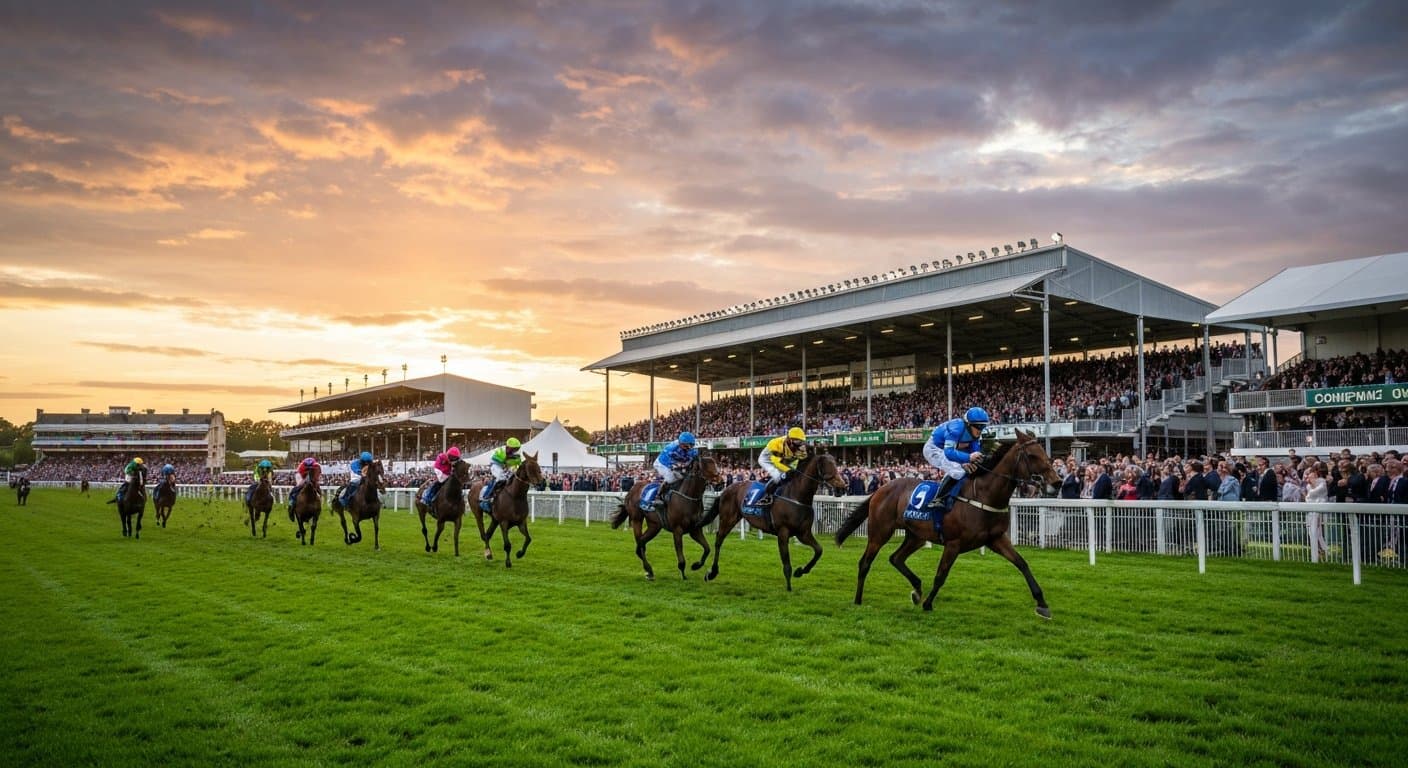
Thirsk Hunt Cup: Complete Guide
Your complete guide to the Thirsk Hunt Cup, North Yorkshire's signature race at Thirsk Racecourse.
Read more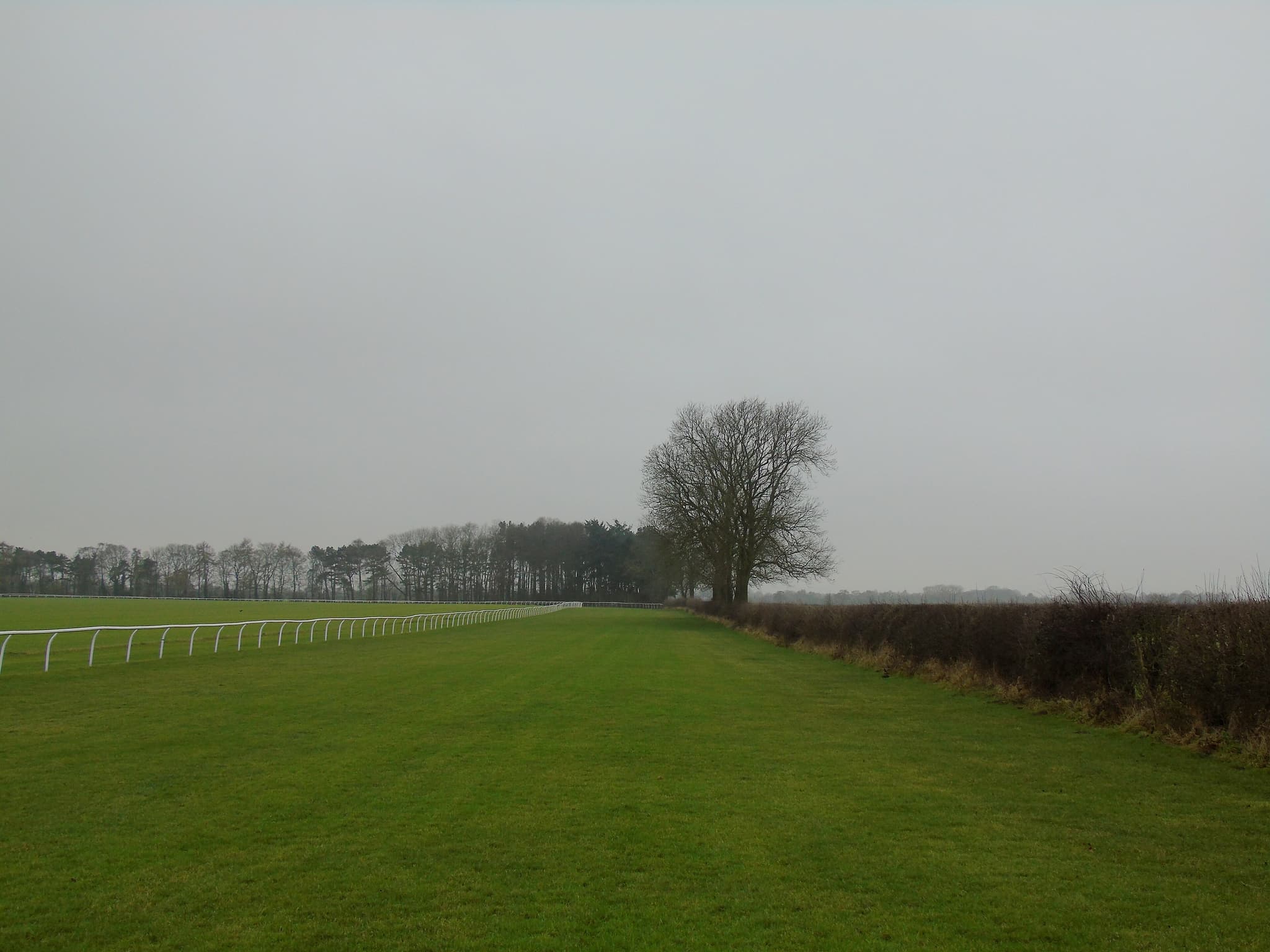
The History of Thirsk Racecourse
Over 165 years of racing at Thirsk, from its origins in the 17th century to North Yorkshire's honest flat venue, the Thirsk Classic Trial, and the Thirsk Hunt Cup.
Read more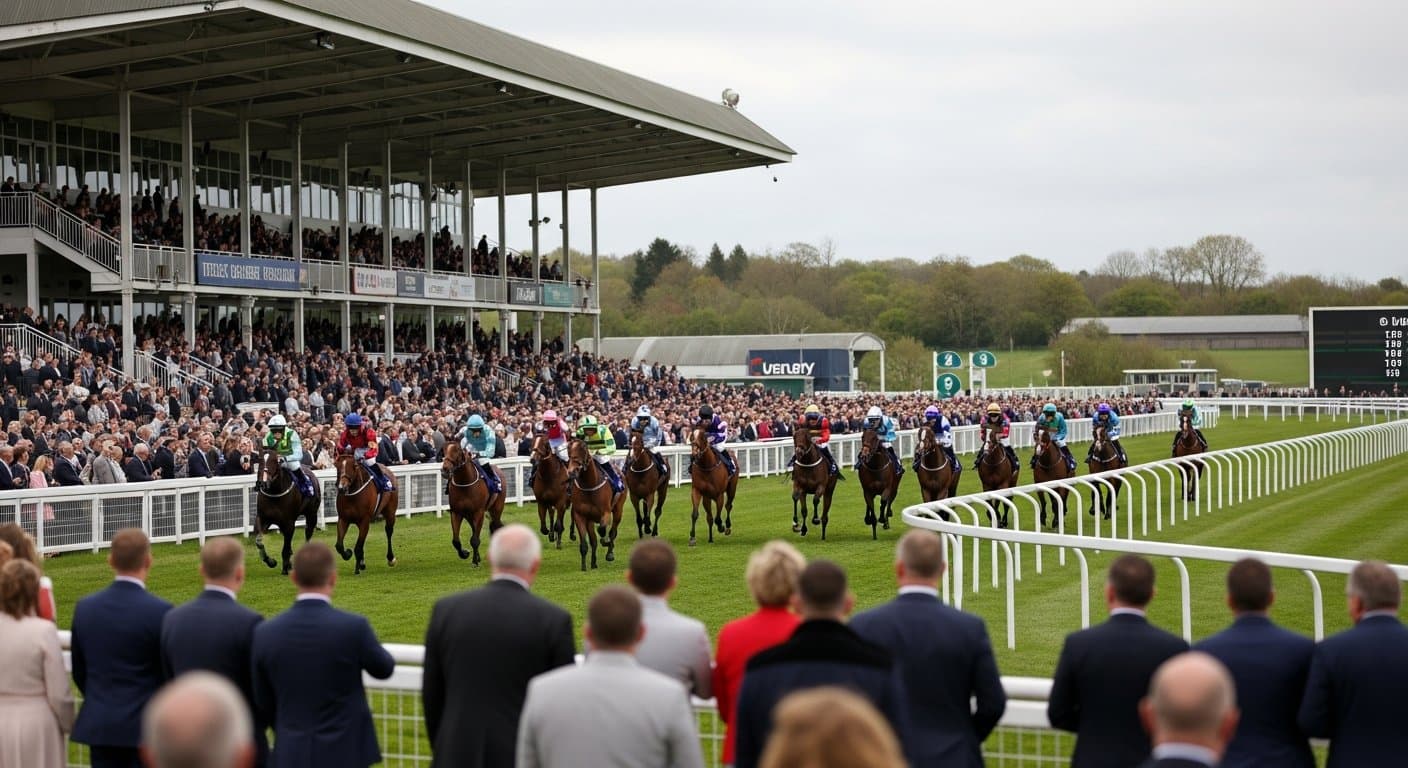
Thirsk Hunt Cup Day: The Complete Guide
Thirsk Hunt Cup Day is the biggest fixture of the flat season in North Yorkshire — a May bank holiday meeting built around Britain's oldest surviving flat handicap.
Read morePhotos on this page are used under Creative Commons licences. Titles, sources and licence links for each one are on our image credits page.
Research the field with the AI Race Predictor
Our model publishes calibrated win-probability estimates for UK races — a second opinion to understand a race, not tips. It's open about its record: it doesn't beat the market, and we show exactly how it does.
Work it out & learn the basics
Gamble Responsibly
Gambling should be entertaining and not seen as a way to make money. Never bet more than you can afford to lose. If you or someone you know has a gambling problem, help and support is available.