
Founder & Editor · Last reviewed 2026-04-05
Warwick Racecourse has been staging racing since 1714, making it one of the oldest jump venues in England. The circuit sits beside the medieval walls of Warwick town, barely a mile from the castle, and it draws a loyal crowd every winter from October through to May. If you want National Hunt racing in the Midlands at a venue that feels properly connected to its surroundings, Warwick is the place.
The course is left-handed and sharp. At roughly one mile and six furlongs round, with a tight right-hand turn into the home straight and approximately three furlongs of run-in, it rewards handy horses that can jump accurately at pace. It is not a galloping track. That distinction matters for form students and casual racegoers alike, because the type of horse that wins here tends to differ from those that thrive at bigger, more open circuits like Haydock or Newbury. The chase course carries ten fences per circuit, and the hurdles track eight flights — both set on a flat, enclosed layout that demands consistent jumping throughout rather than simply over the final two obstacles.
The headline race is the Kingmaker Novices' Chase, a Grade 2 over two miles run in early February. It is one of the most reliable Arkle trials in the calendar, and it has produced a string of subsequent Grade 1 winners: Flagship Uberalles (Queen Mother Champion Chase, 1999), Voy Por Ustedes (2006), and Finian's Rainbow (2012) all stepped up from Warwick to Cheltenham success. The Classic Chase in January, a Premier Handicap over three miles and five furlongs, carries serious Grand National trial status, having launched One For Arthur to Aintree glory in 2017.
Beyond those two flagship days, Warwick offers a programme of Saturday and midweek cards that cater for novice chasers, novice hurdlers, and a mix of handicap grades that attract runners from across the Midlands training centres. Dan Skelton, based just eight miles away at Lodge Hill in Alcester, is the dominant local force. His stables are the closest of any major National Hunt operation to the course, and his win rate at Warwick consistently outperforms his national average. Olly Murphy at Stratford-upon-Avon (12 miles) and Kim Bailey at Andoversford (30 miles) are the other reliable names in Warwick race cards throughout the season.
The course sits in the shadow of Warwick Castle, a Norman fortification that has stood since 1068 and is visible above the grandstand roofline on clear days. That proximity to one of the most complete medieval castle complexes in England gives Warwick a setting that distinguishes it from the industrial-area and farmland backdrops of many comparable NH tracks.
Who this guide is for
First-time visitors will find the course layout, parking, transport, and what to expect on arrival covered in detail in the sections on the course, getting there, and facilities.
Regular racegoers looking to plan specific fixture visits will find the key fixtures section and the FAQ particularly useful, with details on the Kingmaker and Classic Chase dates, ticket options, and hospitality.
History-focused readers will find a dedicated history section covering racing at Warwick from the early 18th century onwards, including how the course evolved from its origins on the town's open land to its present configuration.
Bettors and form students will find the betting guide section the most practical, with detail on track bias, going patterns, trainer statistics, and how to approach the key races.
Quick decisions
- Best day to visit: Kingmaker Novices' Chase day in early February, or Classic Chase day in January
- Easiest way to get there: Train to Warwick station (1 mile), then shuttle bus or a 20-minute walk
- Best viewing spot: Alongside the final fence and up the run-in, or the main grandstand for a full-circuit view
- Going to watch for: Soft and heavy are the norm in winter; clay-based soil holds water through January and February
- Trainer to follow: Dan Skelton (Alcester, 8 miles) has a win rate at Warwick that consistently outperforms his national average
- Races with Grand National trial status: The Classic Chase in January; One For Arthur won both in 2017
- Nearest attraction to combine: Warwick Castle is under a mile away; Shakespeare's Stratford-upon-Avon is 12 miles
Bet on Warwick
Place your bets on Warwick races with a trusted bookmaker.

Promo code BETFRED50. New customers only. Register, deposit with a Debit Card, and place a first bet of £10+ at Evens (2.0)+ on Sports, to be settled within 7 days, to get £30 in Sports Free Bets and £20 in Bet Builder Free Bets within 24 hours of settlement. 7-day expiry. Eligibility & payment exclusions apply. Full T&Cs apply. Take Time to Think. BeGambleAware.org. 18+. Full T&Cs.

Promo code R30. New UK customers only, 18+. Register, deposit £10 or more, then place a £10 single cash bet at odds of 1/2 (1.5) or greater on any sports market (excluding Virtuals). Once the qualifying bet settles you get £30 in Free Bets (3 x £10) — the qualifying bet can win or lose. Free Bets are valid on any sports market excluding Virtuals, expire in 7 days, are non-withdrawable and must be used in full. Excluded deposit methods apply (including PayPal, Apple Pay, Skrill and NETELLER). Named bets such as Lucky 15 do not qualify. If you cash out the qualifying bet, or it is voided, you are no longer eligible for the offer. Ends 31.12.26. Full T&Cs apply. Please gamble responsibly. BeGambleAware.org. 18+. Full T&Cs.

Promo code BET40GET20. New UK customers, 18+. Register with the code and place a first bet of £40 or more at Evens (2.0) or greater. Receive 2 × £10 free bets: the first credited automatically once the qualifying bet settles, the second 24 hours later. Free bets must be placed at minimum odds of 4/1 (5.0), expire 24 hours after credit, and the free-bet stake is not returned with winnings. Debit card deposits only. Take Time to Think. BeGambleAware.org. 18+. T&Cs apply. Full T&Cs.

50% of your first-day net losses refunded as a free bet, capped at £25. New UK customers aged 18+ only. To qualify, deposit and place a first bet of £10 or more on any sport at minimum odds of evens (2.00), then place at least two further bets on different events, each worth at least 50% of your largest bet, all at evens (2.00) or greater. Losses are counted from your first settled bet until 23:59 the same day. Place a qualifying £10+ bet and you are guaranteed at least a £5 free bet. Bets placed at SP, void bets, cashed-out bets and bets struck with free bets do not count towards the offer. The free bet is credited the day after your qualifying bets settle and must be used within 7 days, after which it expires. It can be used at odds from 1/4 (1.25) up to 250/1 on singles and straight accumulators, but not on Trixie, Patent or Yankee style multiples. Free-bet stake is not returned with winnings. One offer per person, household, address, IP address and device. E-wallet deposits may not qualify, so check the cashier before depositing. Customers registered with GAMSTOP cannot claim. KYC identity verification must be completed before the free bet is credited. Take Time to Think. BeGambleAware.org. 18+. T&Cs apply. Full T&Cs.

New customers, 18+. Choose the sports bonus at sign-up, make a first deposit and receive a 100% bonus up to £50 in your Sports Bonus balance. To convert the bonus to cash, wager it 10x within 30 days. Single bets below Evens (2.00) do not qualify; accumulators do not qualify if any selection is below 1/2 (1.50). Virtual Sports, voided, cancelled, drawn, cashed-out and free-bet wagers do not count towards wagering. Only the first settled bet per event counts. Withdrawing before the wagering requirement is met forfeits the bonus balance including bonus winnings. Real-money funds are used before bonus funds. Deposits via Skrill or Neteller are not eligible. Not valid in conjunction with other promotions. Odds, bet and payment limits apply. 10bet general and promotion T&Cs apply. BeGambleAware.org. 18+. Full T&Cs.

New customers in Great Britain and Republic of Ireland, 18+. Place a £10 fixed-odds qualifying bet at minimum odds of 1/2 (1.50) — single or each-way (only the win part counts), pre-event or in-play, not cashed out early, within 28 days of opening the account. Receive up to £60 in bonuses credited over three days: 3 × £10 fixed-odds free bets (the first on settlement, then 24 and 48 hours later) plus 3 × £5 Total Goals FOOTBALL spread bets and 3 × £5 racing Winning Favourites spread bets, with a £1 racing Race Index spread bet as an extra on top. The spread bets need a full spread-betting account, opened within 28 days of the fixed-odds account and subject to Spreadex's eligibility and appropriateness checks. Free-bet stakes not returned with winnings; free bets valid 28 days from issue. IMPORTANT: the £5 credits are SPREAD bets — sports spread betting carries the risk that losses can exceed your stake. Sports spread-betting customers do not have Financial Ombudsman or FSCS recourse. Take Time to Think. BeGambleAware.org. 18+. T&Cs apply. Full T&Cs.

Promo code WELCOME15, entered under My Bonuses after registering. New UK customers, 18+. Place a first qualifying bet of at least £10 from your cash balance at odds of evens (2.0) or greater within 7 days of opening the account. Once the qualifying bet fully settles you receive £15 in free bets, credited as 3 x £5 tokens with set uses: one £5 accumulator free bet (minimum 4 legs, each leg at 2/5 or bigger), one £5 sports free bet (any market at evens or bigger) and one £5 Sub Cover free bet (selected football player markets at evens or bigger). Free-bet stakes are not returned with winnings. Free bets expire 7 days after they are credited. Void, cashed-out and partially cashed-out bets do not qualify. One offer per customer. Confirm the current terms on BetGoodwin's own welcome-offer page before claiming. Take Time to Think. BeGambleAware.org. 18+. T&Cs apply. Full T&Cs.

New UK customers, 18+. Minimum deposit £10. Place a £10 qualifying single on sports (excluding virtuals) at minimum odds of 1/2 (1.50), settled within 14 days. Deposit-method exclusions apply. Receive £30 in free bets (stake not returned), split £20 for sportsbook use (2 x £10) and £10 for Bet Builder only (2 x £5); Bet Builder does not cover horse racing. Free bets must be accepted within 7 days and expire 7 days after acceptance. No promo code required. Best Odds Guaranteed on UK & Irish racing, subject to having staked over £25 in the previous seven days. Operated by LiveScore Betting and Gaming (Gibraltar) Ltd, UKGC 56859. Confirm the current terms on LiveScore Bet's own promotions page before claiming. Take Time to Think. BeGambleAware.org. 18+. T&Cs apply. Full T&Cs.
18+. BeGambleAware.org
The Course & Layout
The Course & Layout
Warwick is a left-handed, sharp circuit that tests every part of a jumping horse's toolkit. The main circuit measures approximately one mile and six furlongs in circumference. There is a tight right-hand turn into the home straight, which catches out flat-track gallopers that have never encountered a bend of that radius. The home straight itself is roughly three furlongs, giving chasing jockeys enough room to build momentum from the final fence but not enough to manufacture heroics from too far back.
Understanding the shape of the circuit is important before betting or visiting. Warwick does not favour the same type as Cheltenham, where staying power up an uphill run-in is the premium attribute. Here, the premium is placed on accuracy and balance through the turns.
Circuit dimensions and configuration
The full circuit at approximately 1m6f is among the smaller jump tracks in the country. Races are run from two miles up to three miles and five furlongs, with the longer trips requiring multiple circuits that magnify the effect of the bends. On a two-mile chase, horses complete the circuit once and pass through the tight home turn once. On a three-mile-five-furlong staying chase like the Classic Chase, that bend is negotiated three times, each pass potentially exposing a horse that is weak through the corners.
The run-in of approximately three furlongs is long enough that a horse arriving at the last fence in second or third position can still win if its jumping is accurate and the leader tires. Weak finishers, however, often get swallowed up in the run to the line after jumping the last.
Chase fences and hurdle flights
The chase course at Warwick has ten fences per circuit. At two miles, horses jump ten fences in total. The fences are fair: well-built and properly dressed, maintained in good condition throughout the season. The open ditch and the water jump are positioned on the far side of the circuit, where the crowd has a clear view across to the back straight.
The hurdles track follows a similar configuration, with eight hurdle flights per circuit. The tightest part of the hurdles course is through the back bend, where the hurdles are placed close enough to the inside rail that a horse that jumps wide can lose several lengths through the corner. On soft or heavy ground, horses that hug the inside rail at the hurdles tend to have a small but measurable advantage.
Going: the clay sub-soil factor
Warwick's soil profile is predominantly clay-based. Clay retains moisture, which means that autumn and winter rainfall does not drain quickly. From late November through to February, the going is routinely soft, often heavy, and occasionally waterlogged. The course's drainage has been improved in recent years, but the fundamental character of the sub-soil cannot be engineered away.
That going pattern has a material effect on which horses perform here. Pure speed horses from flat-race backgrounds that have been switched to jumping often find Warwick's soft ground a test they cannot pass. Conversely, horses from Irish yards that operate in winter ground routinely, or those trained in the wetter parts of the south-west, frequently travel to Warwick and perform above their market price.
A useful rule for form analysis: in the six renewals of the Classic Chase between 2018 and 2024, the going was soft or heavy on five occasions. Horses that had already won on soft ground entered those races with a significant, verifiable advantage.
Track bias and race patterns
The tight left-handed nature of Warwick creates a well-documented course bias. Low draws in flat racing have a comparable effect to what the inside rail does here: horses that race close to the running rail through the back straight and the final bend save ground that adds up over the course of a race. In a two-mile chase, a horse that hugs the inside rail through the two main bends can cover approximately two lengths less distance than one that drifts wide.
Jockeys who ride Warwick regularly understand this. Harry Skelton, Dan Skelton's brother and retained jockey, is routinely seen positioning his mounts on the inner as the field sweeps into the back straight. That knowledge of the course is part of why the Skelton operation is so dominant here.
For handicap chasers at the lower end of the weights, the track bias towards nimble, accurate types is compounded by the fact that long-striding gallopers need room they often do not get. Horses rated in the 115–130 band that are described by their trainers as "sharp" or "handy" should be elevated in Warwick handicap assessments.
Viewing for racegoers
From a spectator's perspective, the circuit at Warwick is one of the more satisfying to watch. The stands face west across the track, and from the main grandstand or the rail beside the paddock you can see horses from the point where they disappear briefly into the back straight and then reappear rounding the turn into the straight. On clear winter days, the castle is visible above the roofline of the stands, which gives the venue a backdrop that few other British racecourses can match.
The final two fences are directly in front of the main enclosure. Most serious racegoers prefer to position themselves at the rail from the second-last fence up to the finish line, where they can track the jumping and the final battle to the post at close range. Arrive early on busy days. The Classic Chase and Kingmaker meetings bring crowds of around 5,000, which is enough to fill the prime viewing positions.
The back straight and the far side
One aspect of Warwick that is easy to overlook when studying the course from a map or diagram is the character of the back straight itself. The run from the top of the home straight, out and along the far side, is approximately six furlongs in a race at the two-mile distance. Horses travel at full pace through this section, and the fences on the far side, including the open ditch positioned at roughly the halfway point of the circuit, are jumped at speed with limited natural room to check momentum.
The open ditch on the far side is the fence that most regularly separates accurate jumpers from those that take shortcuts. On soft ground, horses that leave a leg at the open ditch can lose several lengths recovering, and in a tight race over two miles that deficit is rarely recovered before the home turn. Race analysis for Warwick chases should always include a check on how horses handle open ditches specifically, not just fences in general.
The water jump
The water jump at Warwick is located on the far rail, visible from the main stand between races but less easy to judge during the race itself. Horses that have not encountered a water jump in previous races occasionally hesitate or jump awkwardly. Novice chasers meeting a water jump for the first time at a sharp-turning course like Warwick can find the combination of a new obstacle type and the subsequent tight bend into the back straight a particular challenge. Trainers who have prepared their horses over a water jump at home or at a schooling facility are at a small but measurable advantage when entering the Kingmaker or other novice chases at Warwick.
Race distances and their implications
The range of distances at Warwick, from two miles to three miles and five furlongs, spans the full spectrum of National Hunt stamina requirements. The two-mile chases are contested at a pace that leaves no margin for poor jumping; every fence matters, and a single significant error will typically end a horse's chance. The staying races at three miles or beyond operate differently: pace judgement from the jockey, the horse's ability to conserve energy through the middle sections, and the depth of stamina in the final circuit are the primary determinants.
For handicap analysis purposes, this means the two-mile division at Warwick is effectively a different puzzle from the three-mile-plus division. Horses that win two-mile chases at the course are demonstrating jumping technique and two-mile speed; horses that win the Classic Chase or similar staying handicaps are demonstrating endurance and the ability to handle repeated circuits of a tight track on testing ground. Very few horses excel at both, and trainers rarely aim the same horse at both distances in the same season.
Section takeaway: Warwick's sharp, left-handed layout and clay-based going profile mean that form from similar tight tracks on soft ground should be weighted heavily. Horses that win here have usually earned it through technique and stamina, not raw speed.
Key Fixtures & Calendar
Key Fixtures & Race Calendar
Warwick's National Hunt season runs from October to May. The fixture list is built around two flagship winter Saturday meetings: the Kingmaker Novices' Chase day in early February and the Classic Chase day in January, with a supporting programme of Saturday and occasional midweek cards running through the season.
The course stages between 14 and 18 fixtures per season. Most are Saturday afternoon meetings, though Warwick hosts two or three evening meetings and a handful of midweek cards that attract smaller, more specialist crowds. Checking the official website in September for the season fixture list is the best way to plan ahead.
The Kingmaker Novices' Chase (Grade 2, February)
The Kingmaker Novices' Chase is Warwick's most important race. Run in early February, usually on the first or second Saturday of the month, it is a Grade 2 over two miles and the course's highest-rated contest. Entry is restricted to novice chasers (horses that had not won a chase before the start of the current season), which means it serves as an accurate snapshot of the best young chasers in training.
Its status as an Arkle trial has been earned over multiple decades. Past Kingmaker winners that went on to win Grade 1 races include Flagship Uberalles, who won the Queen Mother Champion Chase at Cheltenham in 1999; Voy Por Ustedes, the 2006 Queen Mother champion; and Finian's Rainbow, winner of the 2012 Champion Chase. Long Run, one of the outstanding chasers of the early 2010s, ran in the Kingmaker before his Gold Cup campaign. That record of follow-up achievement gives the race a level of credibility that is rare for a February Grade 2 at a provincial track.
For the visit, the Kingmaker meeting is the best single day at Warwick. Attendance reaches the upper end of the course's capacity, the card is strong across multiple races, and the atmosphere has an edge that the more routine Saturday fixtures do not match. If you can attend just one Warwick meeting in a season, make it this one.
The Classic Chase (Premier Handicap, January)
The Classic Chase runs in January, typically on the second Saturday. It is a Premier Handicap (BHA's highest handicap designation), run over three miles and five furlongs. That distance, combined with Warwick's left-handed sharpness and the reliable winter going, makes it a thorough test of a staying chaser.
The race has Grand National trial status. The most emphatic proof of that connection came in 2017 when One For Arthur, trained by Lucinda Russell and ridden by Derek Fox, won the Classic Chase before going on to win the Grand National at Aintree in April of the same year. That double is rare. Staying chasers that handle Warwick's going and configuration in January are demonstrably equipped for the demands of big-field handicap chasing.
The race attracts entries from some of the leading staying chaser trainers in Britain, including regulars from Gordon Elliott's and Willie Mullins's Irish operations when the prize money and conditions suit. Weights are published in late November, and entries are typically strong by Christmas. The field is limited to a maximum of 20 runners under the standard condition for a race of this distance and class.
For bettors, the Classic Chase merits detailed ante-post study from early December. The going forecast in January is an important input. If projections point to heavy ground, Irish-trained horses that have been competing in similar conditions throughout the winter often represent value versus the British-trained market leaders.
The Hampton Novices' Chase (November)
Warwick stages the Hampton Novices' Chase in November as one of the early-season tests for novice chasers. Run over two miles, it attracts horses from the Midlands and south-west training centres who are looking to gain experience before the graded contests later in the season. The race does not carry a grade, but its proximity to the Cheltenham build-up season means several Hampton alumni have gone on to compete in Grade 1 races before the end of the winter.
Dan Skelton and Kim Bailey, the Andoversford-based trainer whose horses regularly perform well at right-handed and left-handed circuits alike, are regular presences in the Hampton field.
The rest of the season
Beyond those three anchor races, Warwick's programme covers:
- October: Opening fixtures of the NH season, novice hurdles, handicap chases for horses returning from summer breaks
- November–December: The Hampton meeting, competitive handicap hurdles, novice chases building towards Christmas
- January: Classic Chase card plus supporting programme of staying hurdles and intermediate chases
- February: Kingmaker day; also the point at which Cheltenham trial races begin appearing on the card
- March–April: Post-Cheltenham cards; horses that did not go to the Festival or are stepping down in class after a big-race campaign
- May: End-of-season fixtures; often competitive staying handicaps as trainers look for spring soft ground
Section takeaway: The January Classic Chase and the February Kingmaker Novices' Chase are the two dates that define Warwick's racing year. Plan around those two Saturdays if you are visiting for the first time; they offer the strongest racing and the best atmosphere the course produces.
Facilities & Hospitality
Facilities & Hospitality
Warwick is a compact, well-maintained venue. The facilities are proportionate to its size. This is not a course that has been built for crowds of 20,000, and it does not pretend to be. What it offers is clean, functional infrastructure that makes a day out comfortable without requiring the pre-planning that the larger Jockey Club venues demand.
Enclosures and viewing areas
The main grandstand runs parallel to the finishing straight and gives covered viewing of the run-in and the final two fences. The grandstand seating is reserved on the busier days (Kingmaker and Classic Chase meetings), and tickets for specific seats should be booked in advance through the Jockey Club website or the course office.
The paddock is positioned immediately in front of the main stand and is accessible to all ticket holders. The parade ring is modest in size, which has the advantage of putting you close to the horses at the pre-race inspection. On big days, the paddock area starts filling 20 minutes before each race, so plan accordingly if you want a position at the rail.
The course also has a flat-side rail along the back straight and the home turn, where racegoers can spread out with a view of the field as it swings for home. This vantage point works particularly well on clear winter afternoons when the light is low in the west and the horses are silhouetted coming around the bend.
Grandstand and general admission areas
General admission gives access to the main enclosure, the paddock, the bar areas, and the trackside rail. For most Saturday meetings, general admission tickets cost between £15 and £25 per adult, with prices higher for the Kingmaker and Classic Chase days. Check the course website for current pricing and any online booking discounts, which are typically applied for tickets purchased more than a week in advance.
The Silver Ring, which was the traditional cheaper enclosure at many British courses, has been amalgamated into the main admission at Warwick over successive seasons. There is effectively one main admission zone that covers all the public areas.
Bars, food, and catering
The main bars are located beneath the grandstand and in a separate facility beside the paddock. The range is standard racecourse fare: draught lager and bitter, wines by the glass, soft drinks. On big days, queues build between races, so buying your drink before the field goes to post is the practical approach.
Food outlets serve burgers, hot dogs, pies, fish and chips, and similar. There is a more formal restaurant on the upper level of the grandstand, which serves a two- or three-course set menu on the major racedays. Booking is recommended for the restaurant on Kingmaker and Classic Chase days, as the capacity is limited to around 80 covers and it fills up by early November for the January meeting.
Hospitality packages
Warwick offers private box hire and table bookings through the Jockey Club's hospitality operation. Private boxes are located in the main stand and look directly over the finishing straight. They typically accommodate between eight and 16 guests and include a dedicated table service for food and drinks, a race card, and car park passes.
For corporate groups, the hospitality packages are particularly popular for the two flagship meetings. Prices are published on the Jockey Club's national hospitality portal and vary by meeting. For groups of four to eight, a shared table in the restaurant is often the more economical option and provides a comparable experience.
Family facilities
Warwick is child-friendly in the way that most National Hunt venues are: the atmosphere is good-natured, the crowds are manageable, and there is space to move around without pressure. Under-18s receive discounted admission, and under-12s are typically admitted free when accompanied by a paying adult (confirm on the course website as this policy occasionally changes by meeting).
There is no dedicated family zone of the kind found at summer festival meetings, but the compact layout means that children can see the horses from multiple points around the course without needing to push through crowds. The paddock inspection is a good introduction for younger visitors who have not been to racing before.
For a detailed account of what to expect across a full visit, including what to wear, where to eat, and how to plan the timing of the day, see the Warwick day out guide.
Section takeaway: Warwick's facilities match the scale of the venue: practical, clean, and accessible rather than lavish. Book the restaurant or a hospitality package in advance for the Kingmaker and Classic Chase days; for standard Saturday fixtures, general admission with a bar budget is entirely sufficient.
Getting to Warwick
Getting to Warwick Racecourse
The racecourse is at Hampton Street, Warwick, CV34 6HN, approximately one mile from the town centre and about the same distance from Warwick railway station. It is well served by train, reasonable by car from the motorway network, and accessible by local bus from nearby towns.
By train
Warwick station sits on the Chiltern Main Line, which runs between London Marylebone and Birmingham Snow Hill via Leamington Spa. It is one of the most convenient train connections of any National Hunt venue in the Midlands.
Journey times from the main departure points:
- London Marylebone: approximately 85 minutes direct on Chiltern Railways services
- Birmingham New Street (change at Moor Street): approximately 25–30 minutes
- Leamington Spa: approximately five minutes
On major racedays, specifically the Kingmaker and Classic Chase, Warwick Racecourse operates a shuttle bus service between the station and the course. The shuttle typically runs from around an hour before the first race until approximately 30 minutes after the last. Check the course website in advance as exact timings are published on the fixture-specific information pages.
If the shuttle is not running, or you prefer to walk, the route from Warwick station to the course takes around 20 minutes on foot. The walk is flat and follows the A425 through the town, passing the castle area. Taxis from the station rank typically take around five minutes and cost between £5 and £8.
By car
The nearest motorway junction is the M40 junction 15, approximately three miles from the course. From the motorway, follow the A429 north into Warwick town, then signs for the racecourse. The A46 Coventry-to-Stratford ring road also connects to Warwick from the east and is the fastest approach from Coventry (approximately 12 miles).
The racecourse has on-site car parking with space for several thousand vehicles. On busy days, specifically the January and February flagship meetings, the car parks can reach capacity by early afternoon. Arriving at least 45 minutes before the first race on those days is advisable. Standard car park charges apply; current pricing is on the course website.
For Sat-Nav, use: CV34 6HN. This routes directly to the racecourse entrance on Hampton Street.
By bus
Local bus services connect Warwick with Leamington Spa (approximately four miles), Coventry (approximately 12 miles), and Stratford-upon-Avon (approximately 12 miles). Stagecoach Midlands operates several routes through Warwick town centre, with stops within a 10-minute walk of the course. Journey times and timetables vary by route and day, so checking the Stagecoach or Traveline West Midlands websites before travel is worthwhile. Bus services are reduced on Sundays and some bank holidays.
Combining with nearby attractions
Warwick's location makes it easy to extend a racecourse visit into a wider day out. Warwick Castle is less than a mile from the racecourse and is among the best-preserved Norman castles in England, built from 1068 on the orders of William the Conqueror. The castle is open year-round and can be visited either before or after racing, depending on the day's fixture schedule.
Shakespeare's birthplace at Stratford-upon-Avon is 12 miles south-west on the A429. It is a practical combination for visitors coming from London who want to extend their trip; Stratford has a wide range of hotels and restaurants, and the drive between the two towns takes approximately 20 minutes. For visitors using public transport, the Chiltern Railways stopping service connects Warwick and Stratford-upon-Avon in approximately 15 minutes.
Section takeaway: The train is the easiest option for visitors from London or Birmingham. Use the shuttle bus on major racedays. Drivers should plan for a 45-minute buffer on Classic Chase and Kingmaker Saturdays, when car parks fill before noon.
Frequently Asked Questions
History of Warwick Racecourse
History of Warwick Racecourse
Warwick has been a racing venue since 1714, which places it among the oldest continuously operating jump venues in England. That date marks the establishment of formal, organised race meetings on land adjacent to the town, though horse racing and informal contests had been part of the area's sporting culture for considerably longer. The course at Hampton Street is, by any measure, one of the most historically rooted in the British calendar.
Origins: the 18th century
The earliest formal meetings at Warwick in the early 18th century were organised under the patronage of local landowners and the Warwickshire gentry, following the pattern common to many English market towns of the period. Racing was a civic event as much as a sporting one: a meeting ground for trade, socialising, and the display of horse breeding. The Warwickshire countryside had been producing quality horses for centuries, fed by the agricultural traditions of the Avon valley and the broader Midlands horse-trading culture.
The course in those early decades ran on common land near the town, with a layout that bore little resemblance to the current circuit. Races were typically run as heats over four miles, repeated across multiple heats in a single afternoon. That format was standard in British racing before the shift to single-race contests took hold through the late 18th century.
Development through the 19th century
The Victorian period brought structural change to British racing as a whole, and Warwick followed the general pattern. The course was enclosed, admission charges introduced, and the infrastructure upgraded to accommodate the growing crowds that the railway network was beginning to deliver. The Warwick station, which opened in 1852 on the line that would become the Chiltern route, made the course accessible from Birmingham, Coventry, and London in a way that previously required a horse-drawn journey of several hours.
Flat racing was the dominant code through the 19th and early 20th centuries. Warwick staged a full calendar of flat fixtures, with the summer programme drawing runners from yards across the Midlands and occasionally from further afield. The course developed a reputation as a competitive provincial flat track, with several classic trials and pattern races appearing on the summer card at various points in its history.
The transition to National Hunt
Jump racing at Warwick predates the formal National Hunt designation that standardised the code in the 19th century. Steeplechasing and hurdle racing were popular at the course through the Victorian era alongside the flat programme. Through the 20th century, however, the National Hunt card grew in relative importance as the flat programme contracted, and by the later decades of the 20th century Warwick's identity was increasingly defined by its winter jumping.
The formal decision to move to National Hunt racing only came in 2014, when the BHA rationalised fixture allocations and removed flat racing from several provincial venues that could not compete commercially with the specialist flat tracks. For Warwick, the transition was in many ways an acknowledgement of what the course had already become in practice: a winter jumping venue with a loyal Midlands following and a fixture list built around the NH calendar.
The Kingmaker and the Classic Chase
The Kingmaker Novices' Chase developed its current Grade 2 status over many years of gradual elevation. The race dates from the mid-20th century in various forms, but its modern character as a leading Arkle trial was established through the 1990s and 2000s, when successive winners went on to win at the highest level. Flagship Uberalles's victory at Warwick in early 1999 before winning the Queen Mother Champion Chase at Cheltenham that March was a formative moment — it demonstrated to trainers and bettors alike that Warwick's two-mile chase was a reliable quality filter.
The Classic Chase's reputation as a Grand National trial was similarly earned over time rather than bestowed. One For Arthur's 2017 double gave the race the clearest single data point, but the pattern of Classic Chase alumni performing creditably in big-field staying handicaps had been building for years before that. The race now sits alongside the Welsh Grand National and the Haydock Grand National Trial as one of the three or four most credible NH preview races for the spring staying programme.
Warwick Castle and the setting
The course's proximity to Warwick Castle, the Norman fortification visible above the roofline of the stands on a clear day, places the venue in a historical context that is specific to the Midlands. The castle was built from 1068 on the orders of William the Conqueror, and its towers have looked out over the Avon valley for nearly a thousand years. Warwick Racecourse, which began formal racing in 1714, is operating in the shadow of a structure that predates it by six and a half centuries. That context is part of what makes Warwick unusual: a racecourse with real historical depth, surrounded by history that is older still.
Warwick in the modern era
Today the course operates as part of the Jockey Club's portfolio, which acquired it as part of the group's broader consolidation of British racing venues. Capital investment from the Jockey Club has maintained the course's infrastructure through the 21st century, with grandstand and drainage improvements helping it remain competitive with other regional NH venues.
Attendances at the flagship meetings have been broadly stable over the past decade, with the Kingmaker day regularly drawing close to the 5,000-capacity crowd. The course's role as a trainer-friendly venue, easy to access from the dense cluster of NH yards in Warwickshire, Worcestershire, and Gloucestershire, gives it a structural advantage in attracting competitive fields that pure commercial logic might not sustain.
Section takeaway: Warwick's history from 1714 to the present is the story of a provincial racing venue that evolved from a flat-racing meeting ground to one of the most reliable National Hunt trial venues in England. The course's identity as a jump track was not imposed on it. It grew organically from the Midlands NH culture that surrounds it.
Famous Moments
Famous Moments at Warwick Racecourse
Warwick's racing history has produced a series of performances that have aged into reference points for the National Hunt world. Most are attached to the Kingmaker Novices' Chase, which has functioned as a quality filter for the best young chasers in training for more than three decades, and the Classic Chase has also generated moments that resonated far beyond the course's own racecard.
Flagship Uberalles (1999)
The run of top-class Kingmaker alumni that defined the race's modern status began, most pointedly, with Flagship Uberalles. Trained by Philip Hobbs and ridden by Richard Johnson, Flagship Uberalles won the 1999 Kingmaker with the kind of precise, economical jumping that the course demands and then went directly to Cheltenham, where he won the Queen Mother Champion Chase in March of the same year. That sequence (Warwick in February, Champion Chase in March) became a blueprint that trainers and analysts returned to repeatedly in the years that followed.
Voy Por Ustedes (2006)
Voy Por Ustedes, trained by Alan King and ridden by Robert Thornton, was arguably the most talented horse to use the Kingmaker as a stepping stone in the 2000s. He won the race in February 2006 before taking the Queen Mother Champion Chase at Cheltenham, where he beat a high-class field with a display of accurate jumping that was a natural extension of what he had produced at Warwick six weeks earlier. King's familiarity with the course contributed to the targeting that produced the double; his base at Barbury Castle is approximately 40 miles from the track.
Finian's Rainbow (2012)
Finian's Rainbow repeated the Kingmaker-Champion Chase sequence in 2012, trained by Nicky Henderson and ridden by Barry Geraghty. His Kingmaker win came over a field that included several horses with significant form, and his Festival win confirmed the Warwick race's status as a reliable quality indicator rather than a coincidental trial. Three Queen Mother Champion Chase winners from a single novice chase at a provincial Midlands track is a record that no similar race outside the major festivals can match.
One For Arthur (2017)
The most broadly significant performance in Warwick's recent history came in January 2017, when One For Arthur won the Classic Chase under Derek Fox for trainer Lucinda Russell. The horse, owned by the Two Golf Widows syndicate, was not heavily fancied at the time of the Classic Chase. He won on heavy going over the three miles and five furlongs in a manner that suggested he was better than his handicap mark implied. Three months later, he won the Grand National at Aintree at odds of 14/1 under the same jockey, completing a winter-to-spring double that placed the Classic Chase in the company of the most reliable staying-chase trial races in the calendar.
Edwardstone at Warwick
Edwardstone, the Alan King-trained gelding owned by Robert Abrey, won at Warwick on multiple occasions in the early stages of his career. His appearances at the course as a novice chaser were part of the progression that eventually led to Grade 1 victories and a profile as one of the better two-mile chasers of his generation. The consistency of his early performances at Warwick, a course that does not flatter mediocre jumping, was evidence in retrospect of the quality he would later display at Cheltenham and elsewhere.
Long Run (2010)
Long Run, the giant chaser trained by Nicky Henderson and later by Robert Waley-Cohen, ran in the Kingmaker in early 2010 as part of the campaign that would ultimately lead to his King George VI Chase win at Kempton Park on Boxing Day 2010 and his Cheltenham Gold Cup victory in 2011. His appearance at Warwick was brief in the context of his career arc, but it illustrated the race's role as a proving ground for horses that trainers wanted to test at Grade 2 level before committing to the highest tier. Long Run's physical scope (he stood over 17 hands) was an unusual attribute for a Warwick specialist, but he demonstrated that size and accuracy are not mutually exclusive.
The atmosphere on Kingmaker day
The experiential dimension of Warwick's famous moments is concentrated on Kingmaker day. On a cold February Saturday, with the fields trimmed by the approach of the Festival and the best novice chasers in the country declared, the course reaches a state of focused attention that larger venues dilute with scale. The final circuit of the Kingmaker, horses swinging into the home straight with the castle visible beyond the stands, is a moment that regular attendees describe as one of the more satisfying in the winter NH calendar. Not because of noise or ceremony, but because the quality of the jumping is laid out in front of you at close range, and you can read it clearly.
Those who attended the 2006 Kingmaker describe it as a race where the winner's quality was obvious long before the line. Watching Voy Por Ustedes under Robert Thornton ping the final two fences and power up the straight, there was no doubt about the outcome from the top of the straight. That is the particular appeal of a sharp track: the talent, or the lack of it, is visible. There are no wide open gallops where an ordinary horse can coast to victory. Warwick's circuit demands, and reveals, the truth about a horse's jumping ability within the first circuit.
Section takeaway: Warwick's most consequential moments share a common thread: they are performances by horses that went on to prove the quality of what they showed here. The Kingmaker in particular has a record that justifies taking its winner seriously in every subsequent major two-mile chasing engagement.
Betting Guide
Betting Guide to Warwick Racecourse
Warwick's sharp, left-handed circuit and clay-based going profile create identifiable patterns that repeat across seasons. Bettors who understand those patterns and apply them consistently have a structural edge over those who approach Warwick races the same way they would approach a meeting at a flat, galloping track like Haydock or Newbury.
This section covers the principal factors that matter at Warwick: going, track shape, trainer statistics, race types, and how to approach the two headline contests. For a full race-by-race breakdown of the Kingmaker and Classic Chase specifically, see the dedicated guides linked below.
Going is the primary filter
The single most important variable at Warwick is the going. The clay sub-soil holds water through the winter months, and the going from November to February is routinely soft or heavy. This is not a course where you can hope a horse's flat-track form will translate because conditions happen to suit. You need to establish, before anything else, whether each horse in the field has performed on comparable going.
A useful working approach: discard any horse that has not won or placed on ground officially described as soft or heavy within the past 12 months, unless there is a specific and verifiable reason to think they will handle it (e.g., breeding strongly associated with soft ground, a trainer whose horses consistently improve on testing surfaces). This filter removes a significant portion of many Warwick fields and leaves a smaller, more focused group of contenders.
The Classic Chase is the extreme case. In January 2020 the going was heavy; in January 2021, heavy; in January 2022, soft; in January 2023, soft. Horses that had been competing on similar ground in Ireland or at Chepstow in the preceding weeks held a clear advantage in each of those renewals.
The trainer angle: Dan Skelton
Dan Skelton's dominance at Warwick is the single most consistent statistical pattern at the course. His stables at Lodge Hill, Alcester, are eight miles from the track. He knows the course as well as any trainer in the country, targets it deliberately across the season, and consistently runs horses here that are ahead of their handicap mark or improving on a line of form.
His win rate at Warwick across a full season routinely sits between 25% and 35%, materially above his national average of approximately 17–20%. That difference is not random. Skelton runs horses at Warwick when conditions suit, when they are fit, and when the race class matches their ability. He is not padding his run total with hopeless runners.
The practical implication: a Skelton runner at Warwick should be assessed at a shorter effective price than its market odds suggest. If a Skelton horse is 7/2 at a course where his win rate is 30%, the implied probability in the odds (approximately 22%) undervalues the statistical reality. That does not mean backing everything he runs, but it does mean his runners deserve attention in every race they appear.
Harry Skelton, his jockey brother, compounds the trainer advantage with a detailed course knowledge of his own. He positions his mounts consistently on the inner rail through the bends, which is measurably superior to the lines taken by riders who visit less frequently.
The Kingmaker: how to bet it
The Kingmaker Novices' Chase is a Grade 2 at the upper end of novice chase quality. Ante-post markets typically open in November and tighten substantially through January as runners emerge from Christmas meetings.
Key factors for the Kingmaker:
- Previous experience over fences at a sharp left-handed track:horses that have only raced at right-handed or galloping tracks bring an unknown quantity to Warwick's configuration
- Jumping accuracy at pace:sloppy jumpers that get away with errors at low-tempo races find Warwick's tight circuit less forgiving
- Trainer form leading into the race:Alan King has won this race multiple times; Nicky Henderson targets it periodically; Gordon Elliott occasionally sends runners from Ireland when he has a horse he wants to test before the Arkle
On the day, the race often sets up as a match between two or three horses that have already been identified in the market. The pace is strong throughout. Waiting riders get caught in the tight home turn.
The Classic Chase: how to bet it
The Classic Chase is a Premier Handicap, and Premier Handicap analysis requires a different approach from graded races. The most important inputs:
- Going on the day:see the going filter above; this is even more important here given the race's length (3m5f) and the January timing
- Weight:horses carrying near the top of the weights have a poor record; the race is regularly won by a horse in the 10–10 to 11–2 range, off a BHA mark of 120–135
- Distance record:horses that have not proven themselves beyond three miles should be treated with scepticism in a race over three miles and five furlongs on heavy ground; the stamina test is real and sustained
- Irish form:horses trained by Gordon Elliott or Willie Mullins that have been running on comparable going in Ireland through December and January transfer their form well; the Cheltenham-style going at Warwick in January is not dissimilar from winter conditions at Thurles or Navan
The betting market on the Classic Chase is typically competitive, with six to ten horses trading at single-figure odds on race morning. The favourites have a reasonable record (three won between 2017 and 2024), but the race regularly produces a 12/1 or longer winner that reflects the depth of the handicap field.
General Warwick handicap principles
For the broader programme of Warwick handicap chases and hurdles that make up most of the fixture list, three principles apply:
-
Sharp horses over horses that need a long run:the tight circuit does not give long-striding gallopers time to build momentum. Horses described by their trainers as "quick" or "handy" should be preferred to those described as "staying on well at the end."
-
The inside rail saves ground:in competitive handicaps where a length or two separates most of the field in terms of ability, the horse drawn or positioned closest to the inside rail through the back bend is measurably advantaged. Jockeys who ride Warwick regularly exploit this; the betting market does not consistently price it in.
-
Beware course-and-distance qualifiers that won on fast ground:a horse that won at Warwick in April on good-to-firm is not the same qualifier as one that won in January on soft. Distinguish between the two when assessing course records.
For responsible betting, always set a budget before attending or betting on any meeting. Warwick is one of the better environments for informed betting given its identifiable patterns and form reliability, but no pattern eliminates the fundamental uncertainty of horse racing.
Please gamble responsibly. If you feel you may have a problem with gambling, visit BeGambleAware.org or call the National Gambling Helpline on 0808 8020 133.
Section takeaway: The going filter and the Skelton trainer angle are the two most consistently applicable edges at Warwick. Apply both before studying anything else, and your assessment of each race field will be materially more focused.
Atmosphere & Planning Your Visit
Atmosphere & Planning Your Visit
Warwick is a winter racecourse in the plainest sense: cold, sometimes muddy, the light fading before the last race in December and January. That description is not a discouragement. It is simply a description of what makes the place work. National Hunt racing in the Midlands in winter has a specific atmosphere that you do not find at a summer flat meeting, and Warwick delivers it in a compact, accessible form that suits a wide range of visitors.
What the atmosphere is like
The atmosphere at Warwick on a standard Saturday card is relaxed and sociable. Crowds of between 1,500 and 2,500 fill the main enclosure without generating pressure or the queues that affect the larger racecourses. You can move between the paddock, the rail, and the bar without difficulty, and you are never far from the action.
On the Kingmaker and Classic Chase Saturdays, the character shifts. Attendance approaches the 5,000 capacity. The paddock fills early, the bar has a wait, and there is an edge to the crowd that reflects the quality of the day's racing. Experienced racegoers who have followed the season will be discussing the Kingmaker runners with reference to their Festival prospects; the atmosphere in the final 15 minutes before the race carries the kind of focused interest that Cheltenham generates. That is unusual for a provincial track.
The setting contributes. With Warwick Castle visible above the roofline on clear days, the course has a backdrop that reinforces its sense of place. The castle has looked over this part of Warwickshire since 1068; the racecourse has been here since 1714. Both facts are in the background as you watch horses circle the paddock on a January Saturday.
Planning your day
The first race at Warwick typically goes off at 1:00pm or 1:15pm on afternoon Saturday cards, with five or six races through to approximately 4:00pm. On evening fixtures in March and April, racing begins at 5:00pm or later.
A practical timetable for a Saturday visit:
- 11:30am–12:00pm: Arrive, collect race card (£2–3 from the gate), find your bearings
- 12:00pm: Paddock inspection for the first race
- 12:30pm: Bar and food before the card starts
- 1:00pm: First race
- Between races: Paddock for each race, then the rail for the run-in; the cycle takes approximately 25–30 minutes
- Final race (c.4:00pm): Station shuttle or car park exit — leave promptly on big days or allow 30 minutes for the car park to clear
Arriving 90 minutes before the first race on Kingmaker and Classic Chase days is the advised approach. It allows time for a proper pre-race inspection of the field (on Grade 2 day this is worth doing carefully) and secures a position at the rail before the crowd builds.
What to wear
Winter racecourse clothing. The standing areas at Warwick are exposed in cold and wet weather, and January or February racing in Warwickshire carries a real risk of sub-zero wind chill. Layers are more useful than a single heavy coat. Waterproof boots or wellies are practical when the ground is soft and the aprons have taken a week of foot traffic. Smart-casual dress is the norm in general admission; hospitality guests are expected to dress more formally.
Combining with Warwick and the surrounding area
Warwick town centre, less than a mile from the course, is worth an hour of exploration before or after racing. The Lord Leycester Hospital, founded in 1571, is open to visitors and is one of the best-preserved Elizabethan buildings in the Midlands. Warwick Castle charges separately and takes two to three hours to do properly; best combined with a morning visit before an afternoon card.
Stratford-upon-Avon, 12 miles south-west, is the natural extension for visitors who have travelled from London or further afield. The Shakespeare Birthplace Trust properties, including the house where Shakespeare was born in 1564, are clustered near the town centre and can fill a morning before a drive to Warwick for the afternoon card.
Section takeaway: Warwick rewards the visitor who arrives early, watches the paddock carefully, and positions themselves at the final fence. The scale of the course makes the racing accessible in a way that larger venues cannot replicate. Dress for cold, book hospitality in advance for the flagship meetings, and use the train if you are coming from Birmingham or London.
More guides for this course
Share this article
More about this racecourse
All Warwick guides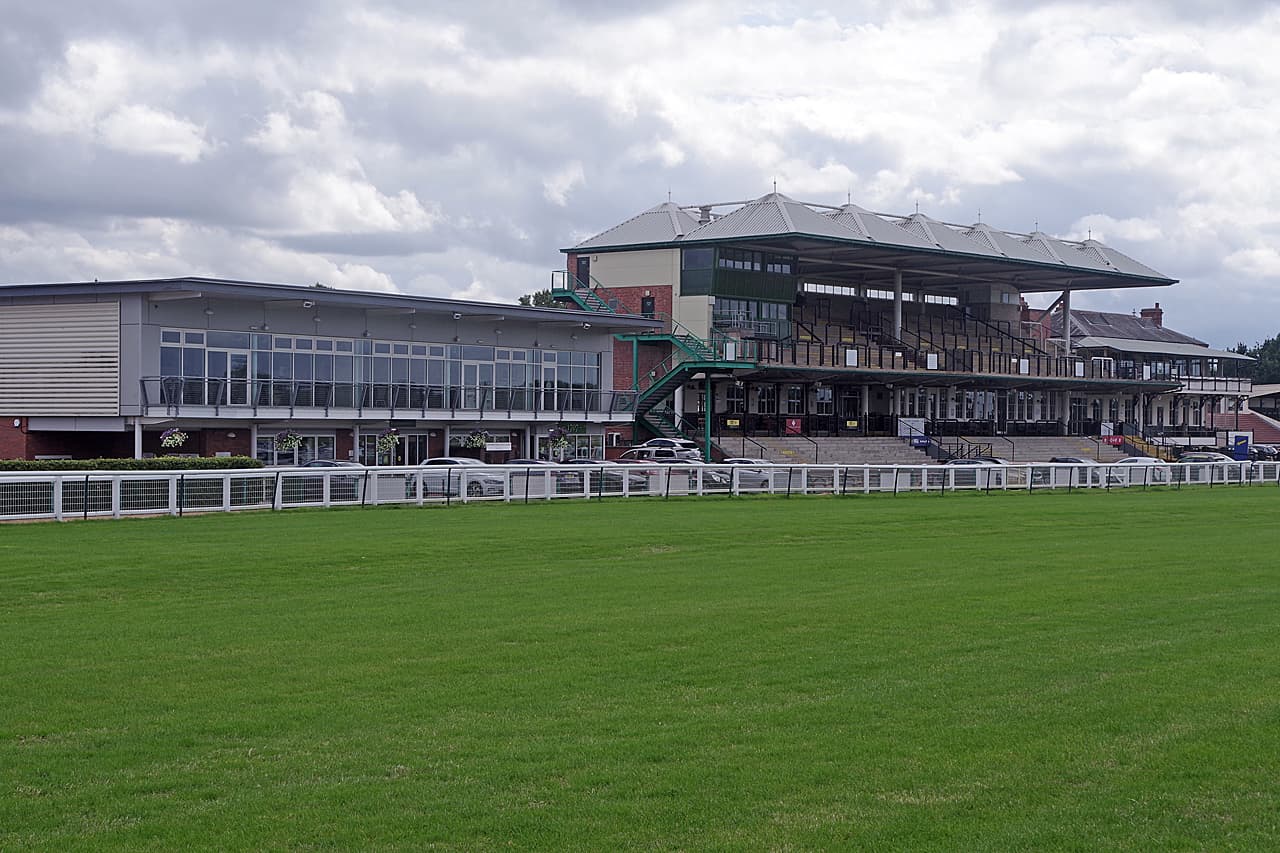
A Day Out at Warwick Racecourse
Everything you need for a day at Warwick — getting there, what to wear, enclosures, food and drink, and tips.
Read moreWarwick Festival Guide
Your complete guide to Warwick Racecourse festivals — the January Chase Festival, the summer flat programme and what makes this historic Midlands track one of Britain's oldest racing venues.
Read more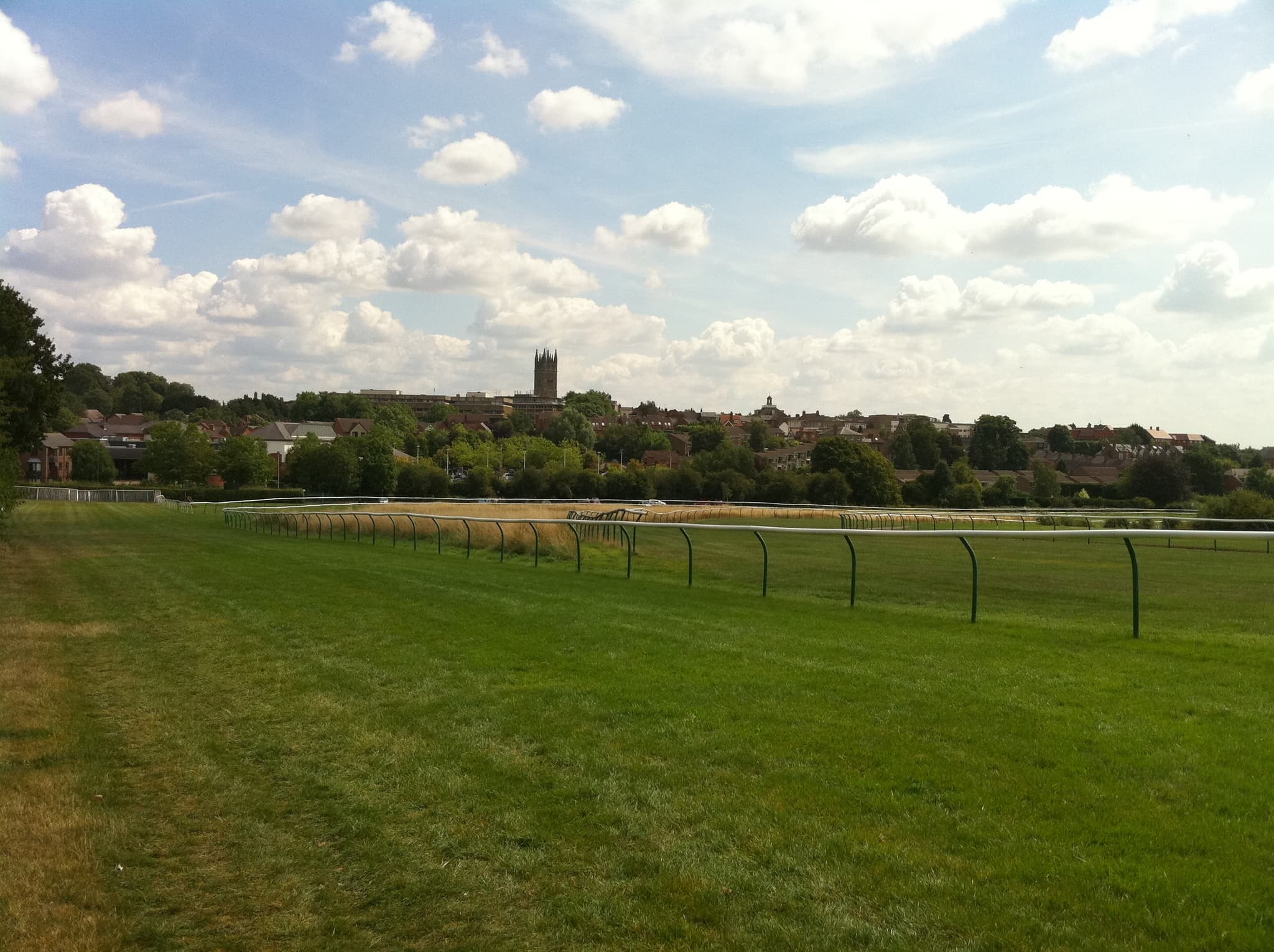
The History of Warwick Racecourse
Over 300 years of racing at Warwick — from Georgian origins to a modern National Hunt venue.
Read morePhotos on this page are used under Creative Commons licences. Titles, sources and licence links for each one are on our image credits page.
Research the field with the AI Race Predictor
Our model publishes calibrated win-probability estimates for UK races — a second opinion to understand a race, not tips. It's open about its record: it doesn't beat the market, and we show exactly how it does.
Work it out & learn the basics
Gamble Responsibly
Gambling should be entertaining and not seen as a way to make money. Never bet more than you can afford to lose. If you or someone you know has a gambling problem, help and support is available.