
Founder & Editor · Last reviewed 2026-03-02
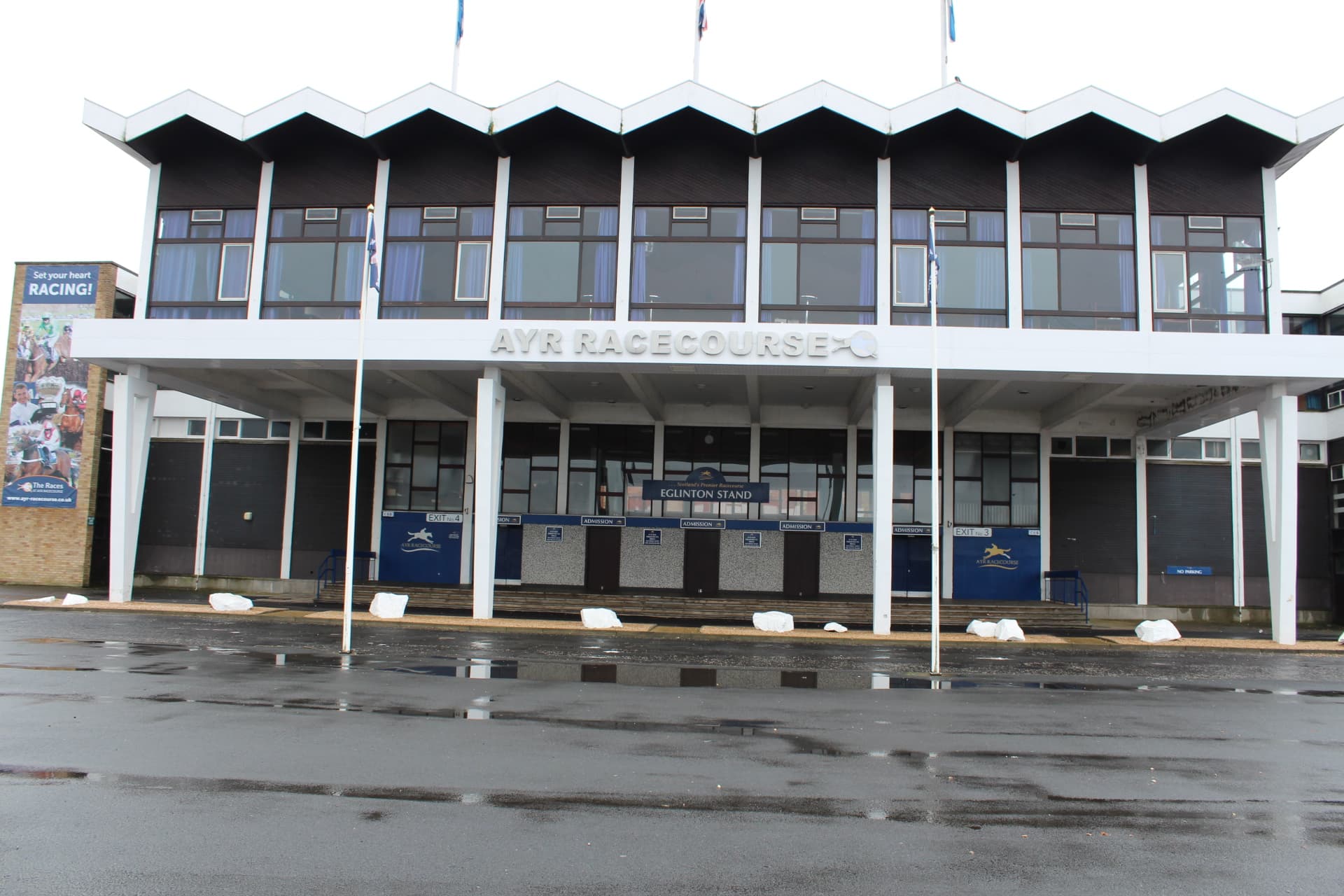
If you're heading to Ayr Racecourse for the first time, you're in for a proper day out. Scotland's premier racecourse sits on the Ayrshire coast, just south of the town centre, with views that stretch to the Isle of Arran on a clear day. It has been welcoming racegoers since 1907 and the welcome hasn't dulled one bit.
Ayr is a dual-purpose track, which means flat racing through the summer months and National Hunt action through the winter and spring. Whether you're timing your visit for the Scottish Grand National in April or the famous Ayr Gold Cup meeting in September, the experience is outstanding, big fields, noisy crowds, and that unmistakable buzz that only a packed racecourse can deliver.
But you don't need a marquee fixture to enjoy Ayr. Midweek meetings through the summer are relaxed, affordable, and a fine way to spend an afternoon on the Ayrshire coast. The course has a capacity of around 15,000, so even on the busiest days it never feels dangerously packed. On quieter cards, you'll have plenty of space to find your preferred spot by the rail.
What makes Ayr special is the combination of quality racing and real warmth. This isn't a corporate day out dressed up as sport. It's proper racing in a proper town, with real pubs nearby and a seaside setting that gives the whole experience an air that southern courses simply can't replicate. The facilities are modern (a major redevelopment in recent years sorted that) but the atmosphere has stayed distinctly Scottish and refreshingly down-to-earth.
The course's position in Ayr town is also a significant advantage for a day out. The town itself has real character: Robert Burns was born three miles away in Alloway, the seafront is a short walk from the track, and the town centre has enough pubs, restaurants, and independent shops to fill the hours before and after racing. Whether you're arriving for a Saturday feature day or a quiet Tuesday evening fixture, there's a full day's entertainment available if you want it.
The two showpiece occasions worth building a trip around are the Western Meeting in September and the Scottish Grand National in April. Both attract large, partisan crowds who know their racing and love their course. Gold Cup day in particular (with 15,000 spectators, Scotland's biggest flat racing crowd) has the kind of festival atmosphere that transforms a racecourse visit into something closer to an event. The Scottish Grand National day is quieter but no less passionate; the crowd skews heavily towards National Hunt enthusiasts who take their jumping seriously.
This guide covers everything you need to plan your day at Ayr. How to get there, what to wear, which enclosure to choose, where to eat and drink inside and outside the course, what the town has to offer, and the insider tips that make the difference between a good day and a great one. For a deeper look at the course itself, our complete guide to Ayr Racecourse has you covered.
Getting to Ayr
By Train
The train is the best way to reach Ayr Racecourse, and the journey from Glasgow is truly straightforward. Ayr railway station is served by regular ScotRail services from Glasgow Central, with trains running roughly every 30 minutes throughout the day. The journey takes approximately 55 minutes and the station is a short five-minute walk from the racecourse entrance, head out of the station and turn right onto the main road, following the signs and the stream of fellow racegoers. It's a flat, easy walk with no hills or complicated junctions.
On major racedays (the Scottish Grand National and the Western Meeting) ScotRail typically runs additional services to manage the extra passenger numbers. Check the ScotRail website or app in advance for any special timetables, as the final return services can be busier than usual and it's worth knowing when they run.
From Edinburgh, the simplest route is to take a train to Glasgow Central and change there for the Ayr service. Door to door from Edinburgh Waverley, allow around 90 minutes in total. The connection at Glasgow Central is usually comfortable. The Ayr platform is clearly signposted from the main concourse.
From further north (Stirling, Perth, Dundee) the route also passes through Glasgow Central. From Inverness or Aberdeen, the journey is longer but the appeal of a major Ayr race meeting justifies the trip for dedicated racegoers.
Taxis from Ayr station to the course are available for the short journey if the weather is poor or if you're carrying a lot. The walk is truly brief, however, and most visitors choose to walk given the five-minute distance.
By Car
Ayr Racecourse sits just off the A77, which connects Glasgow to the Ayrshire coast. From Glasgow, the M77 motorway takes you most of the way before becoming the A77 south of Kilmarnock. The drive from Glasgow city centre takes approximately 55 minutes to an hour in normal traffic, allow an extra 20 to 30 minutes on major racedays when the roads around Ayr town centre get considerably busier.
The postcode for your satnav is KA8 0JE. The racecourse has dedicated car parks adjacent to the track, and parking is typically included in or bundled with admission on standard racedays. On the biggest days (Gold Cup Saturday and Scottish Grand National day) overflow car parks open in the surrounding area, with racecourse stewards directing traffic. Arrive early if you want a spot in the main adjacent car park rather than a walk from an overflow site.
From Edinburgh, take the M8 motorway towards Glasgow, then join the M77 southbound. Continue onto the A77 at the end of the motorway and follow it into Ayr. Total journey time from Edinburgh is approximately 90 minutes in decent traffic, and the route is almost entirely motorway and dual carriageway.
From the north of England (Carlisle, Newcastle, or beyond) the M74 motorway runs north through Lanarkshire before joining the network towards Ayr. From Carlisle it's around 90 minutes. For visitors coming from the English Midlands or further south, the drive is long but motorway-heavy and manageable if split across a weekend stay.
Parking tips: On Gold Cup day, the racecourse advises arriving at least 90 minutes before the first race to secure a good parking position. The main car park fills quickly after midday on a big Saturday. If you're in a group, consider dropping passengers at the course entrance before parking rather than having everyone walk from an overflow site.
By Bus
Stagecoach runs regular bus services to Ayr from surrounding towns including Kilmarnock, Troon, and Prestwick. The bus station in Ayr town centre is approximately a mile from the racecourse, a 15–20 minute walk along Whitletts Road. For visitors already staying in Ayr town, bus connections from other parts of Ayrshire are a practical option, but for most visitors arriving from Glasgow or Edinburgh, the train is faster and more straightforward.
Taxis and Rideshares
Local taxi firms in Ayr know the racecourse well. Fares from the town centre are modest, typically under £5 for the short journey. On major racedays, there is usually a rank of taxis waiting at the course entrance after the last race, though the queue can build up after a busy Saturday card. It's worth saving a local cab firm's number in your phone before you go, as booking in advance is more reliable than hoping for availability at the rank when 15,000 people are all leaving at the same time.
Uber operates in Ayr but the availability of drivers can be limited compared to a major city. Local firms including A1 Taxis Ayr and Ayr Radio Taxis are reliable options and familiar with the racecourse routine.
Accommodation
If you're making a weekend of it (and for the major meetings, staying over is highly recommended) Ayr has a good range of hotels, guesthouses, and B&Bs within easy reach of the course.
Western House Hotel is the racecourse's own hotel, located directly adjacent to the track. It's the obvious choice for a fully integrated raceday experience, you're on-site, the journey to the course is a short walk across the car park, and the hotel offers hospitality packages that combine accommodation with raceday access. Book well in advance for the Gold Cup and Scottish Grand National weekends; Western House fills up months ahead for these fixtures.
For accommodation in Ayr town centre, the Savoy Park Hotel is a reliable mid-range option within a short drive or taxi of the course. The Ramada Ayr and the various chain hotels near the seafront provide comfortable bases, and the town centre location puts you within walking distance of the pubs and restaurants that fill the evening after racing.
Troon, five miles north of Ayr, has substantial additional accommodation including several golf hotels (Turnberry and Trump Turnberry a little further south stand out). Troon also has a direct rail link to Glasgow, which makes it a practical alternative base for the Western Meeting if Ayr town is fully booked. Prestwick, immediately between Troon and Ayr, is another option with good transport links.
For the Gold Cup and Scottish Grand National weekends, book as early as possible. Ayr and the surrounding area fills up fast when the major meetings are in the diary. Some visitors plan and book their accommodation six months in advance, particularly for Gold Cup day which is one of the biggest racegoing occasions in Scotland.
B&Bs: Ayr has a good stock of bed and breakfasts in the residential streets near the town centre and seafront. These are often excellent value compared with the hotels and tend to book up quickly for the big meetings. A list of registered accommodation is maintained on the Visit South Ayrshire website.
What to Wear
Ayr is one of the more relaxed racecourses when it comes to dress code, but what you wear depends on which enclosure you're heading to and what time of year you're visiting.
General Admission and Tattersalls
For the main enclosures, smart casual is the standard. You don't need a suit and tie, but equally this isn't a football match. Clean jeans or chinos, a collared shirt, and decent shoes. That's the reliable combination that works across all the standard enclosures on any raceday. Trainers are generally acceptable in the general admission areas, though most racegoers dress up at least a little, because it's racing and that's half the pleasure.
Women have plenty of freedom here. A nice dress, smart trousers and a blouse, or well-put-together casual wear all work without issue. Hats and fascinators are not required outside the Queen's Enclosure, but nobody will raise an eyebrow if you fancy wearing one at any level of the course.
The Queen's Enclosure
The Queen's Enclosure (Ayr's premium enclosure) is where the dress code steps up. Gentlemen are expected to wear a jacket, shirt, and tie at minimum, with full suits the norm on feature days. Ladies tend to go for dresses or smart separates, and this is where you'll see the full range of hats, fascinators, and carefully chosen outfits, particularly on Gold Cup day and Scottish Grand National day.
During the Western Meeting in September, the Queen's Enclosure has a proper occasion feel. People make an effort and it shows. This is Scottish racing at its most dressed up, and the effort is part of what makes Gold Cup day feel different from a standard Saturday card. If you're planning the Queen's Enclosure for a big meeting, approach the dress code as you would a smart wedding: polished and considered, but not overdressed for a day at the races.
Seasonal Considerations
Here's the practical reality about Ayr: it sits on the west coast of Scotland, exposed to Atlantic weather that does what it likes regardless of the calendar. Planning your outfit around the season rather than just the dress code requirement is as important as the dress code itself.
Spring (Scottish Grand National, April): April in Ayrshire can be anything from bright and mild to cold and wet. The National Hunt crowd is generally more practically dressed than the flat racing crowd, waxed jackets, warm layers, and waterproof boots are entirely at home here and no one will look twice. The jumping-racing crowd at Ayr in April dresses for function as well as appearance, and the atmosphere is all the better for it.
Summer flat meetings (May–August): Evenings and midweek cards can be pleasant, but the west-coast breeze off the Firth of Clyde can be cooler than you expect, particularly after 4pm. A light jacket that can be removed if the sun comes out is the standard-issue summer solution. In a real summer heatwave, lighter fabrics work perfectly, but Ayr is not the place to rely on sustained warmth.
September Western Meeting: The Gold Cup in September combines the racing crowd's tendency to dress up with truly unpredictable weather. Some September days at Ayr are warm and still; others arrive with rain and wind. The safest approach is to dress smartly for the enclosure you've chosen, with a packable waterproof layer that can be folded into a bag if the weather holds.
Winter jumps season (October–March): For National Hunt meetings through the winter, function comes first. Warm base layers, a heavy waterproof jacket, and proper waterproof boots (not fashion wellies, but actually waterproof footwear) are the practical requirements. The course is well-drained, but the paddock area and the rail positions can get soft underfoot after rain. Standing trackside in the cold watching a quality staying chase is one of racing's great pleasures, but only if you're warm enough to enjoy it.
Top Practical Tips
Layers are your most important clothing decision at Ayr. The weather can shift dramatically during an afternoon's racing, sunshine for the first two races, drizzle for the next two, clearing again for the feature. A smart jacket that doubles as a windbreaker, worn over a lighter shirt or blouse, gives you flexibility without sacrificing appearance.
For the Queen's Enclosure in any season, bring the umbrella. A compact, fold-flat umbrella that fits in a bag is more useful at Ayr than at any other British racecourse. The west-coast setting means rain arrives without much warning, and standing in the Queen's Enclosure being soaked while watching the Gold Cup would be a memory for the wrong reasons.
Sensible footwear matters more than it does at southern courses. Even at the Queen's Enclosure level, the ground conditions around the course mean that stilettos or completely flat-soled shoes can cause difficulties on soft ground near the paddock. Block heels or wedge heels are more practical on racecourse ground than very thin stilettos, particularly for the spring and autumn meetings.
Check the Ayr Racecourse website before your visit for any specific dress code updates, particularly for hospitality packages and the Queen's Enclosure on feature days. Dress codes for special events (ladies' days, themed evenings) can differ from the standard.
What to Bring
Beyond clothing, a few practical items make the day at Ayr significantly more comfortable:
Binoculars are highly recommended. Ayr is a big, galloping track and the far side of the course is a long way from the grandstand. Even from the Queen's Enclosure, a decent pair of binoculars transforms the experience, you'll watch races develop from a mile out rather than picking up horses only in the final furlong.
A racecard can be bought at the course. The official racecard contains the full card, jockey and trainer details, and typically some form commentary. On big days, picking one up before the queues build at the card sellers near the entrance is worth doing.
Cash and card: Most outlets: bars, food stands, bookmakers, accept card and contactless payments. However, the independent bookmakers in the betting ring typically prefer cash, and having some available gives you access to the on-course bookmaker market, which is a different and often better-value betting experience than the Tote windows alone.
Enclosures & Viewing
Ayr offers several enclosure options, and choosing the right one makes a significant difference to your day. The three main areas are the Queen's Enclosure, the County Enclosure, and the Centre Course, each with a distinct character and price point.
The Queen's Enclosure
The Queen's Enclosure is the premium area of Ayr Racecourse and provides the best overall raceday experience. Access includes the main grandstand with its elevated viewing positions over the finishing straight and the entire home turn, the parade ring, the winner's enclosure, the Champagne Bar, the Long Bar, and the better dining facilities. On a big meeting day, this is where the atmosphere peaks.
On Gold Cup day, the Queen's Enclosure is transformed. 15,000 people at Ayr make it the biggest Scottish flat racing crowd of the year, and the Queen's Enclosure is the heart of that occasion. People dress up properly, the bars are busy, and the noise as the 26-runner field charges down the straight six furlongs generates a wall of sound that builds from the moment the stalls open. There's a reason Gold Cup day has been described as Scotland's Glorious Goodwood. It has a festival quality that goes well beyond a standard race meeting.
On Scottish Grand National day, the Queen's Enclosure has a more focused atmosphere. The National Hunt crowd is passionate and knowledgeable, and the noise as the runners approach the final fence and battle up the long straight is something that National Hunt racing does better than any other sport.
Ticket prices for the Queen's Enclosure typically range from £25 to £35 on standard days and £35 to £50 on the Gold Cup and Scottish Grand National. For a first visit to a feature meeting, the Queen's Enclosure is the right choice. You'll understand what makes Ayr special, and the extra cost over a standard enclosure is justified by the complete experience.
The County Enclosure
The County Enclosure is the solid middle-ground option and the choice of many regular Ayr racegoers. It offers good viewing of the track (not quite the grandstand height of the Queen's Enclosure, but clear sightlines to the home straight and the parade ring) at a considerably lower price.
The facilities in the County Enclosure are perfectly decent: bars, food outlets, covered viewing areas, and access to the betting ring. This is where the core of Ayr's regular racing crowd congregates. It's busy on the big days without the formality of the Queen's Enclosure, which suits racegoers who want the noise and energy of a packed course without the dress code requirement.
For midweek fixtures, minor Saturday cards, and summer evening meetings, the County Enclosure is the sweet spot for value and experience. Prices typically range from £15 to £25 depending on the meeting. On Gold Cup day, the County Enclosure offers a way to experience the Western Meeting's atmosphere at a lower entry price, though for a first-time visit to the Gold Cup, the Queen's Enclosure is still recommended.
The Centre Course
The Centre Course is the most affordable access option at Ayr. Entry at this level gives access to the infield area of the course, with viewing from the rail along the home straight and other sections of the track. Facilities are more limited (fewer food and bar outlets, no grandstand access) but the racing is the same, the atmosphere carries, and the view from the rail in the straight can be excellent for those who want to feel physically close to the horses.
For the serious racegoer who wants proximity to the action rather than grandstand comfort, the Centre Course with binoculars and a good rail position is a fully satisfying experience. Prices start from around £10 to £15. On quieter midweek cards, this is a relaxed, affordable way to spend an afternoon watching quality racing at Scotland's best track.
Hospitality Packages
Ayr's hospitality packages are well-regarded and offer a clear step up from the standard enclosures. The Western House Hotel complex provides the primary hospitality offering, private boxes and shared dining rooms where packages typically include a three-course meal, a racecard, drinks, and the best viewing positions in the house.
For a group outing or a special occasion (birthday, corporate day, anniversary) Ayr's hospitality represents real value compared with equivalent packages at Cheltenham or Aintree. The quality of the food and service has improved significantly with recent investment, and the viewing positions from the Western House complex are among the best at the course.
Book through the racecourse website well in advance for the Gold Cup and Scottish National. Popular hospitality packages for these meetings sell out months ahead, and availability in October for the following September's Gold Cup is not unusual at the premium level.
Gold Cup Day Atmosphere: Scotland's Biggest Flat Racing Occasion
Gold Cup day deserves its own section because it's categorically different from every other day at Ayr, and from most other days at any British racecourse.
The crowd of 15,000-plus creates an atmosphere that starts building well before the first race. By mid-morning, the town centre is buzzing with racegoers in their Gold Cup day best, pubs are already busy, and the approach roads around the racecourse are filling with cars. By the time the gates open, there's an unmistakable electricity in the air that you either recognise from years of attending or discover for the first time with some surprise at its intensity.
The parade ring on Gold Cup day is worth visiting before every race, not just the feature. The combination of quality horses, national trainers who have made the trip specifically for the meeting, top jockeys, and a large, knowledgeable crowd creates a paddock atmosphere that rivals any track in Britain. Watching the Gold Cup field (20-plus sprint handicappers) parade before the race, you can feel the expectation building.
The race itself, when it goes off, is the loudest moment of the Scottish flat racing year. Twenty-six horses bursting from the stalls on the straight six and the crowd leaning forward as one, it's one of British racing's great sprint race spectacles. Win, lose, or draw on your bet, the Gold Cup produces a noise and a finish that you remember.
After the Gold Cup, the atmosphere doesn't immediately deflate. There are more races to come, the bars stay busy, and Gold Cup Saturday at Ayr has a habit of extending well into the evening for those who head into town afterwards.
Scottish Grand National Day Atmosphere
The Scottish Grand National day in April has a different energy from the Gold Cup, quieter, more focused, but no less passionate. The National Hunt crowd at Ayr is a specific kind of racegoing audience: people who know their staying chasers, who follow the winter jumps season with the same attention that others give to flat racing, and who come to Ayr specifically because they love the race.
The parade ring before the National is worth watching carefully. The big staying chasers (many of them carrying the marks of a full winter's jumping) have a presence that flat horses don't quite match. These are athletic, powerful horses built for endurance rather than speed, and in the paddock before a four-mile race, that quality is tangible.
The race itself, run over 27 fences on two circuits of the national hunt course, builds in drama through its length. The first circuit is tactical, horses finding their place, jumping establishing a rhythm, the pace honest but not frantic. The second circuit is where the race is won and lost. At the final bend, the survivors who have jumped cleanly and galloped honestly through four miles are fighting for the finish, and the crowd (who have been watching and willing on their horses for nearly ten minutes) generates a finish-straight noise that matches anything the day produces.
Scottish Grand National day is smaller than Gold Cup day in terms of crowd size, but if anything, the intimacy makes the occasion feel more special. The people who come to the Scottish National care deeply about the race and the course, and that enthusiasm creates a real warmth that makes it one of the better jumping days in the British calendar.
Choosing Your Enclosure
The practical guide: if it's your first visit to a feature meeting (Gold Cup or Scottish National) choose the Queen's Enclosure. You'll understand what makes Ayr special and the experience is worth the premium. For regular visits and standard Saturday or midweek cards, the County Enclosure is the intelligent choice. If you're a regular racegoer who lives for the rail view and doesn't need grandstand comfort, the Centre Course with binoculars is a perfectly good day out at excellent value.
For any enclosure, the same advice applies: arrive early. Walk the course if it's available, explore the paddock before the first race, find your viewing position before it fills up. The best spots at Ayr (particularly the rail near the finish) go quickly on the busy days, and 20 minutes of early exploration is worth more than two hours of scrambling for position later in the card.
Food & Drink
One of the real pleasures of a day at Ayr is that you won't go hungry or thirsty. The racecourse has invested in its food and drink offering, and the combination of on-course facilities and the town's own resources means a visit to Ayr can be as much about eating and drinking well as about the racing itself.
On-Course Dining
The Western House restaurant at the racecourse complex is Ayr's best on-course dining option. The menu leans into Scottish provenance (locally sourced salmon and seafood, Ayrshire beef, seasonal vegetables) and the quality is noticeably above the standard racecourse fare you'd find at a smaller track. A proper sit-down meal at Western House on a feature day is an occasion in itself, combining the racing atmosphere with food that does justice to Scotland's reputation for high-quality produce.
Booking is essential for Western House on the Gold Cup and Scottish Grand National. Tables go quickly, and arriving without a reservation on a major meeting day is optimistic. Book through the racecourse website in advance, ideally at the same time as your tickets.
For something less formal, the Eglinton Restaurant and various hospitality areas offer lighter menus including sandwiches, platters, and two-course options that are ideal if you want a proper meal without committing to the full Western House experience. These work particularly well for lunchtime eating before the racing gets fully underway, or for the afternoon break between races mid-card.
Bars
Ayr's bars are spread across all enclosures and are generally well-stocked and reasonably efficient given the crowd sizes they handle on busy days.
The Champagne Bar in the Queen's Enclosure is the place if you're celebrating, or simply starting the day with optimism about the first race. It fills up early on Gold Cup day and the atmosphere is impressively upbeat. This is where you'll see the full range of Ayr's dressed-up crowd at their Gold Cup best.
The Long Bar is the Queen's Enclosure's main bar and gets properly busy from mid-morning on the major days. Queues build ahead of the big races, so the experienced strategy is to get your drink between races rather than in the five minutes before the feature. The bar is well-stocked with a good range of lagers, ales, wines, and spirits, plus soft drinks.
In the County Enclosure, the bars are functional and busy. The crowds are large enough on Gold Cup day that some patience is required, but the bar teams move quickly and the wait is rarely excessive. Pints, spirits, wine, soft drinks, and coffee are all available across the enclosures. Prices are typical racecourse rates, higher than pub prices, but not outrageous.
On winter jumps days, the indoor bars are particularly valued. Standing by the rail in January watching a competitive chase is one of racing's great experiences, but the ability to step into a warm bar between races and warm up properly is not something to undervalue. Ayr's bar facilities across all enclosures make the winter jumps programme properly comfortable for racegoers who plan their day around the track's layout.
Casual Eats on Course
Dotted around the course you'll find a solid selection of food stalls and vans. The staples (burgers, fish and chips, hot dogs, pies) are the reliable anchors, and the quality at Ayr's food outlets is generally good. The fish and chip van is a perennial favourite and usually has a queue that tells you everything you need to know about its quality.
On the bigger racedays, the variety expands. Artisan food trucks, hog roasts, and Scottish specialities appear alongside the standard fast food options. Haggis bon bons, Cullen skink, and locally sourced pies reflect Ayr's commitment to Scottish food identity and are worth seeking out if you're visiting for the first time. It's worth doing a circuit of the food outlets before committing, the best options aren't always the most prominently positioned.
Hot drinks are available throughout the course. On cold winter days, a proper coffee or a cup of hot chocolate between races is a practical necessity, and Ayr's catering teams are well aware of that. The quality of the coffee has improved at most racecourses in recent years, and Ayr is no exception.
Before Racing: Ayr Town Pubs and Cafés
Part of the pleasure of Ayr as a racecourse destination is that the town itself is worth exploring before the gates open. A pint in one of Ayr's traditional pubs before racing is a fine way to set up the day.
The Chestnuts is a popular pre-racing pub with a friendly crowd that skews towards regular racegoers. It's within walking distance of the course and fills up early on big meeting days. Real ale is available alongside the standard lager options, and the bar food is reliable and unpretentious.
The Twa Dugs (the name a reference to Robert Burns's poem) is another Ayr staple with a traditional Scottish pub character that suits the pre-racing atmosphere well. The name alone tells you something about the pub's awareness of its cultural setting. This is a proper Ayrshire local with Burns country credentials.
For something to eat before racing, the town centre has a good range of cafés and bakeries. Given Ayr's seafront position, a walk along the promenade with a coffee before heading to the course sets the day up nicely. The bakeries near the town centre produce excellent filled rolls and pastries that are much cheaper than anything you'll find at the course.
After Racing: Dinner and Drinks in Ayr Town
Post-racing, the town centre is a short walk or a very short taxi ride from the course. Ayr has enough restaurants and pubs to absorb even the Gold Cup day crowd comfortably, and the town fills with a relaxed, celebratory atmosphere after the last race that makes staying on for dinner a truly attractive option.
The Geordie Munro and The Smoking Goat are both popular with the racing crowd and well-known for post-racing drinks. The Geordie Munro in particular draws a reliable raceday crowd and is worth visiting if you want to extend the racing atmosphere beyond the final furlong.
For a proper meal after racing, Ayr's town centre restaurants range from Scottish gastropubs to Indian and Italian options. The seafront also has fish and chip restaurants that are the perfect end to a day at Ayr Racecourse, proper Scottish fish suppers, a short walk from the course, at a fraction of the cost of on-course dining.
The Burns Country connection also puts good whisky firmly on the menu at Ayr's better bars. A post-racing dram in one of the town's traditional pubs, with the day's form debated and dissected over a decent malt, is an appropriately Scottish conclusion to a day at Scotland's best racecourse.
Bringing Your Own
On standard racedays, Ayr allows racegoers to bring a small amount of food and non-alcoholic drinks into the course. Policies can vary by meeting, so check the racecourse website before your visit. On the bigger days, restrictions are tighter. A bottle of water is always a sensible thing to carry regardless of the policy on other drinks.
Tips & FAQ
Ayr Town: Making the Most of Your Visit
Ayr is not just a racecourse destination, it's a town with real character, a strong identity, and cultural connections that make the wider visit worthwhile. Building in some time to explore before or after racing transforms the day from a race meeting into a proper Ayrshire experience.
Robert Burns Country: Burns was born in Alloway, three miles south of Ayr town centre, in 1759. Burns Cottage (the thatched cottage where the poet was born) is now a museum and is one of the most visited literary heritage sites in Scotland. The adjacent Robert Burns Birthplace Museum covers his life, work, and extraordinary cultural legacy in detail. For visitors who haven't explored Burns Country before, the combination of the cottage, the museum, and the nearby Burns Monument and Garden makes for a morning or afternoon that stands alone from the racing.
The Auld Brig o' Ayr (the 13th-century stone bridge mentioned in Burns's poem "Tam o' Shanter") stands in the town centre and is worth a short detour for the view and the literary connection. Burns permeates Ayr in a way that feels organic rather than manufactured; the town is rightly proud of its connection to Scotland's national bard.
The Seafront and Beach: Ayr has a proper seafront promenade and a long sandy beach that stretches south towards Prestwick. A morning walk along the front before heading to the races is one of the better pre-racing rituals available at any British course, sea air, views of Arran on a clear day, and a relaxed start to what might become an intense betting afternoon. The beach itself is worth a look even in April or September, when the west-coast light can be dramatic.
The Carrick Hills: To the south and east of Ayr, the Carrick Hills offer walking with views over the Firth of Clyde and, on clear days, to the island of Arran and sometimes the Irish coast. These aren't demanding mountain walks, gentle hillside paths with open views. For those staying overnight and wanting a morning activity before Gold Cup day, a short hill walk is a fine contrast to the racing ahead.
The Gaiety Theatre: Ayr's Gaiety Theatre on Carrick Street is a traditional variety theatre with a history stretching back to 1902 and one of the best-preserved Victorian theatrical interiors in Scotland. Evening performances through the summer season are worth checking if you're staying for a night or two around a big race meeting.
Insider Tips for Race Day
Arrive early. Gates typically open 90 minutes before the first race. Use that time to walk around, check the parade ring, study the form, and find your ideal viewing spot on the rail or in the stands. On Gold Cup day and Scottish National day, the best rail positions near the finish fill up quickly after the gates open, and the difference between a great viewing position and an obstructed one is entirely dependent on when you arrive.
Buy your tickets online. Advance booking is almost always cheaper than paying on the gate, and for the Gold Cup and Scottish National, booking ahead is strongly recommended. Some hospitality packages sell out well in advance. Online booking also means you can skip the queue on arrival.
Bring binoculars. Ayr is a big, galloping track and the far side of the course is a considerable distance from the grandstand. A good pair of binoculars transforms the experience, you'll watch the race develop from the moment the stalls open rather than only picking up horses once they enter the final furlong.
Check the weather. West-coast Scotland means you should always be prepared for rain, even in summer. A compact umbrella or a lightweight waterproof jacket takes minimal bag space and could save the day entirely.
Use the parade ring. Watching the horses before each race is one of the great free pleasures of a day at the races, and it tells you things that the form book doesn't. Look for horses that are calm, walking well, and have a healthy coat, a clean, bright look to the coat can indicate a horse in particularly good condition. Horses sweating heavily, looking agitated, or moving poorly in the parade ring are often worth opposing regardless of their market price.
Study the betting guide before you go. Understanding Ayr's track characteristics (the draw bias on the flat in sprint races, the going patterns that affect the Gold Cup, the emphasis on stamina over jumps) gives you a real advantage over the casual punter. Even 20 minutes of homework makes the day more interesting and more profitable.
Time your bar visits. The queues at Ayr's bars peak in the 10 minutes before a major race, particularly before the Gold Cup. Get your drinks between races and you'll wait a fraction of the time.
Plan your exit. On Gold Cup day especially, the roads around Ayr get busy after the last race. If you're driving, allowing the car park to clear before you leave (staying for a final drink and a debrief in the bar) is a more relaxed option than joining the immediate post-racing queue. If you're on the train, the earlier services after racing fill quickly; the later ones are often less crowded.
Family Facilities
Ayr is a welcoming course for families. Children under 18 are admitted free on most racedays, making a family visit truly affordable. On bigger racedays (particularly at the Western Meeting) there are typically designated family areas with entertainment and activities for younger visitors. The course's layout gives children good views from multiple points, and the general atmosphere is inclusive and safe rather than exclusively adult-orientated.
For parents, the practical facilities are good: accessible changing areas, family-friendly food outlets throughout the course, and ample space in the Centre Course area where children can move around comfortably. The parade ring is particularly good for children, horses at close range are impressive and the experience engages younger visitors in a way that watching from the stands sometimes doesn't.
The Gold Cup itself is a spectacular race for children. Twenty-six horses bursting from the stalls on the straight six furlongs and the crowd roar that accompanies the finish is the kind of experience that creates lifelong racegoers. It's no coincidence that many adults who attend Ayr regularly first visited as children.
Accessibility
Ayr provides good accessible facilities. Designated viewing areas with level access and good sightlines are available across the course. Accessible toilets are well-positioned. Parking spaces close to the main entrance are reserved for Blue Badge holders.
The course's general layout (flat terrain throughout, good path surfaces) makes it one of the more accessible racecourses in Britain for visitors with mobility requirements. Contact the racecourse in advance to discuss any specific requirements; the team is consistently helpful in arranging appropriate access and facilities.
Frequently Asked Questions
Is Ayr Racecourse suitable for children?
Yes. Ayr welcomes families, and children under 18 are admitted free. There are usually designated family areas on the bigger racedays with entertainment and activities. It's a fine introduction to racing for younger visitors.
Can I bring a dog?
No. Dogs are not permitted on the racecourse, with the exception of registered assistance dogs.
Are there cash machines on course?
Yes, there are ATMs on site. Most food outlets, bars, and bookmakers accept card and contactless payments. Cash is still useful for the independent bookmakers in the betting ring, who typically offer better prices on the exchanges than the Tote windows.
What time does racing usually start and finish?
This varies by meeting. A typical afternoon card starts around 1.30pm or 2pm, with the last race around 5pm or 5.30pm. Evening meetings in summer start later, usually around 5.30pm, with the last race at around 8pm. Check the racecard for exact times on your specific day.
Is there disabled access?
Ayr provides accessible facilities including designated viewing areas, accessible toilets, and parking spaces close to the entrance. Contact the racecourse in advance to arrange any specific requirements.
What is the postcode for the racecourse satnav?
KA8 0JE.
How far is Ayr station from the course?
Approximately five minutes on foot, a flat, well-signed walk. The walk from the station to the main entrance takes you along a direct route that most racegoers find without any difficulty.
Where can I find more information about the course?
Our complete guide to Ayr Racecourse covers the track layout, history, facilities, and betting angles in detail. For tickets and specific fixture information, visit the official Ayr Racecourse website.
Share this article
More about this racecourse
All Ayr guides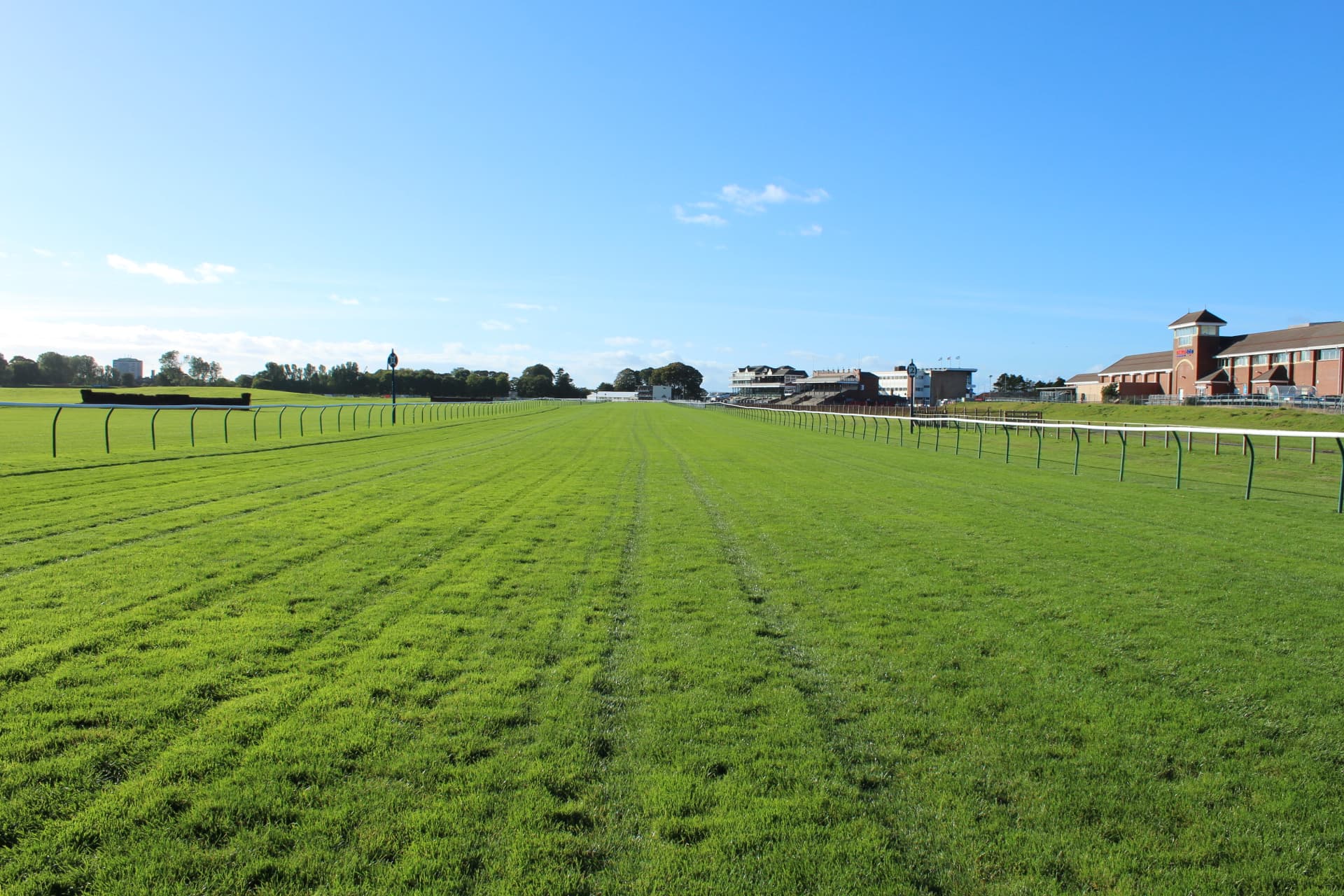
The Ayr Gold Cup Festival: Your Complete Guide
Scotland's biggest race meeting brings three days of competitive flat handicap racing to the Ayrshire coast every September. Here's everything you need to know.
Read more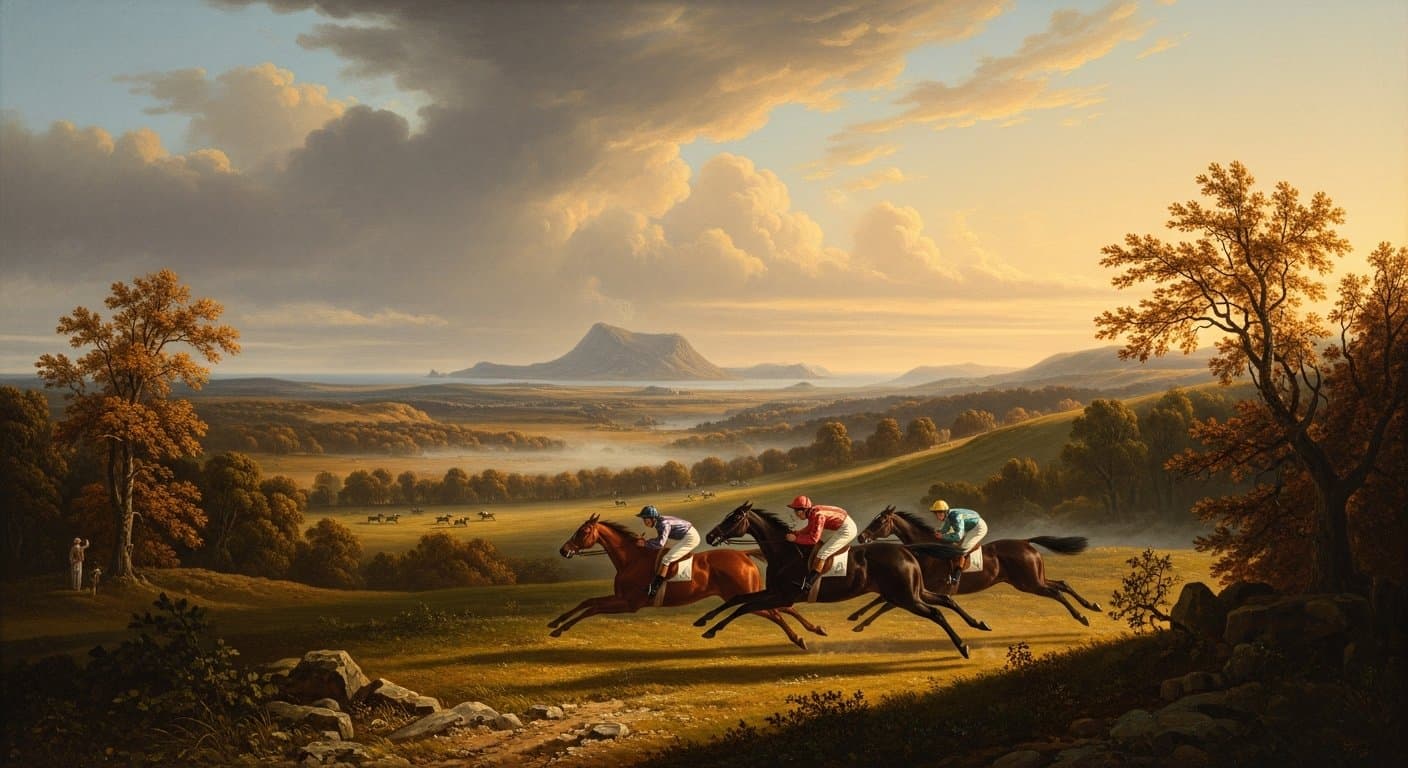
Ayr Gold Cup Day at Ayr: The Complete Guide
Everything you need to know about Ayr Gold Cup Day — Scotland's biggest racing occasion. The Western Meeting Saturday in mid-September draws 20,000 fans for the Ayr Gold Cup, Britain's most prestigious sprint handicap north of the border.
Read more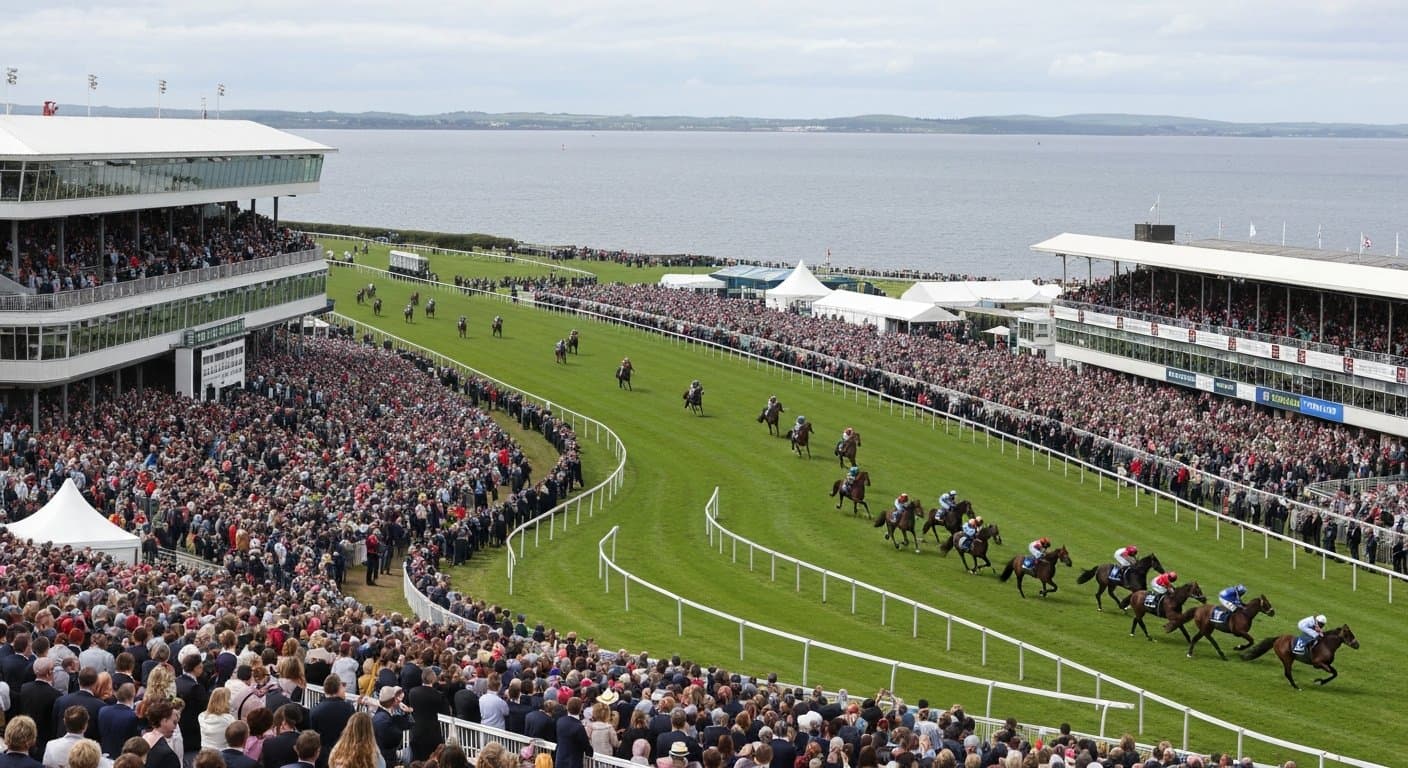
Ayr Gold Cup: Complete Guide
Your complete guide to the Ayr Gold Cup — one of the biggest flat handicaps of the season, its history, trends and betting angles.
Read morePhotos on this page are used under Creative Commons licences. Titles, sources and licence links for each one are on our image credits page.
Gamble Responsibly
Gambling should be entertaining and not seen as a way to make money. Never bet more than you can afford to lose. If you or someone you know has a gambling problem, help and support is available.