
Founder & Editor · Last reviewed 2026-03-02
Scotland has one truly great racecourse. Ayr. Perched on the Ayrshire coast with views stretching to the Isle of Arran, it's where the best of British and Irish racing crosses the border — and where Scottish racing finds its heartbeat.
Every April, the Scottish Grand National draws twenty-plus runners over four miles of honest, galloping turf. It's the biggest race north of the border and one of the most competitive staying chases on the calendar. Trainers from Lambourn to County Meath target it. Punters love it. The atmosphere is something else entirely.
But Ayr isn't just about one Saturday in spring. Come September, the three-day Western Meeting transforms the town into Scotland's answer to York's Ebor Festival. Ayr Gold Cup day — six furlongs of chaos with 20+ sprinters flying out of the stalls — is one of the season's great betting races. A Heritage Handicap that has been sorting the brave from the foolish since 1804.
This is a proper dual-purpose track. Flat racing from April through October. National Hunt from October through April. The kind of place where you might watch a Group race one month and a quality handicap chase the next. Versatile, well-run, and loved by regulars who know their racing.
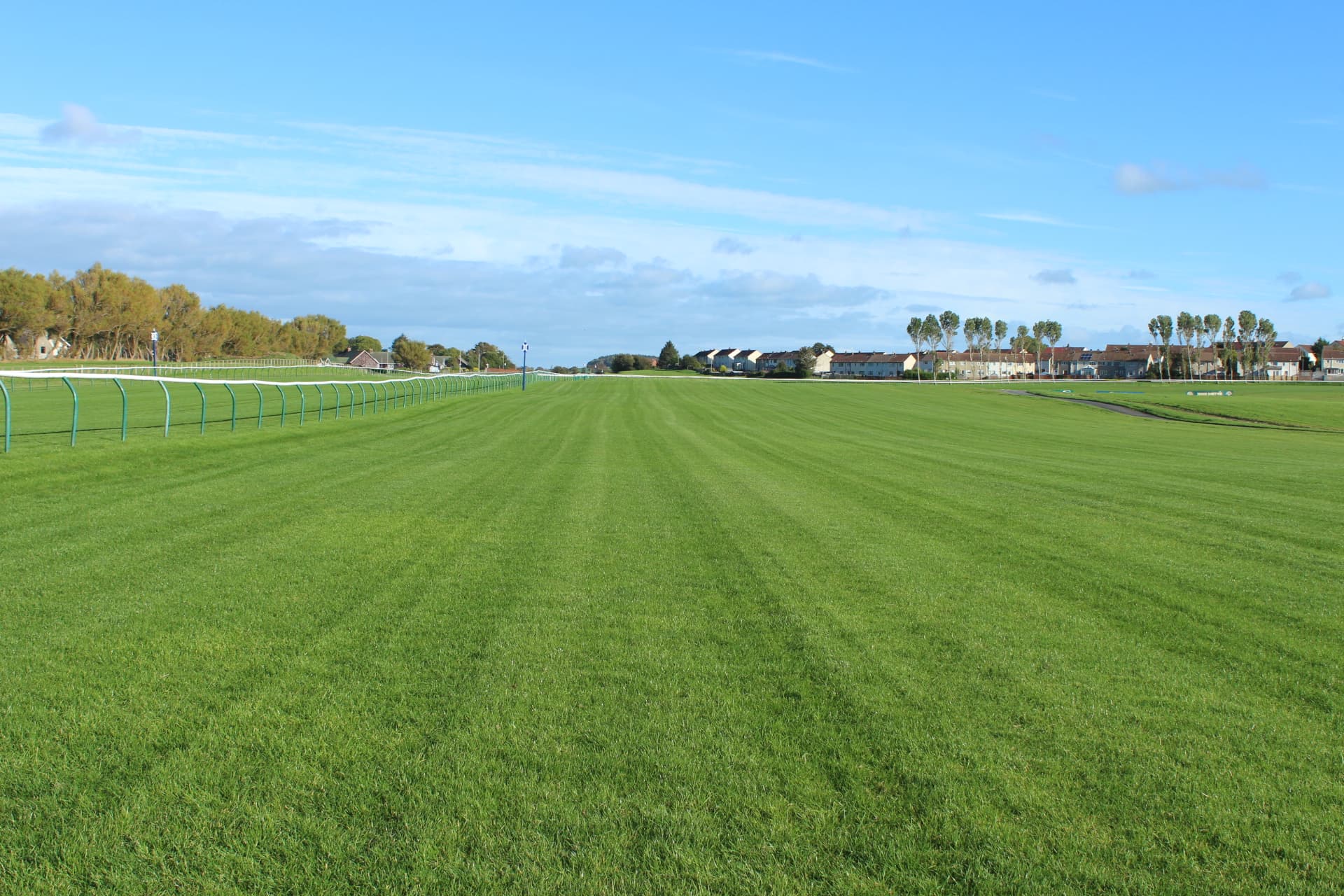
The course itself is a left-handed, galloping oval of about a mile and four furlongs. Flat as a bowling green. Fair as they come. No quirky undulations or tricky cambers to flatter horses that don't truly stay. The flat track sits inside the jumps course, and both reward honest, front-running types who can sustain a gallop.
Founded in 1907, Ayr has spent over a century establishing itself as Scotland's premier racing venue. The facilities are modern — a major redevelopment saw to that — and the welcome is warm in that distinctly Scottish way. It's a proper day out whether you're a seasoned racegoer or someone who's never set foot on a racecourse.
Quick facts at a glance
| Detail | Information |
|---|---|
| Location | Whitletts Road, Ayr, South Ayrshire, KA8 0JE |
| Track type | Left-handed, flat, galloping oval |
| Racing codes | Flat (April–October) and National Hunt (October–April) |
| Capacity | 15,000 |
| Signature flat race | Ayr Gold Cup (September, 6f Heritage Handicap) |
| Signature jumps race | Scottish Grand National (April, 4m handicap chase, Grade 3) |
| Nearest station | Ayr (10–15-minute walk) |
| From Glasgow | 45–50 minutes by train from Glasgow Central |
| Enclosures | Western House, County Enclosure, Silver Ring |
Whether you're planning a trip to the Scottish Grand National, eyeing up the Gold Cup, or simply want to know what makes Ayr special, this guide covers everything. The course, the history, the facilities, how to get there, and the betting angles that can give you an edge. Scotland's leading racecourse, explained.
Bet on Ayr
Place your bets on Ayr races with a trusted bookmaker.

Promo code BETFRED50. New customers only. Register, deposit with a Debit Card, and place a first bet of £10+ at Evens (2.0)+ on Sports, to be settled within 7 days, to get £30 in Sports Free Bets and £20 in Bet Builder Free Bets within 24 hours of settlement. 7-day expiry. Eligibility & payment exclusions apply. Full T&Cs apply. Take Time to Think. BeGambleAware.org. 18+. Full T&Cs.

Promo code R30. New UK customers only, 18+. Register, deposit £10 or more, then place a £10 single cash bet at odds of 1/2 (1.5) or greater on any sports market (excluding Virtuals). Once the qualifying bet settles you get £30 in Free Bets (3 x £10) — the qualifying bet can win or lose. Free Bets are valid on any sports market excluding Virtuals, expire in 7 days, are non-withdrawable and must be used in full. Excluded deposit methods apply (including PayPal, Apple Pay, Skrill and NETELLER). Named bets such as Lucky 15 do not qualify. If you cash out the qualifying bet, or it is voided, you are no longer eligible for the offer. Ends 31.12.26. Full T&Cs apply. Please gamble responsibly. BeGambleAware.org. 18+. Full T&Cs.

Promo code BET40GET20. New UK customers, 18+. Register with the code and place a first bet of £40 or more at Evens (2.0) or greater. Receive 2 × £10 free bets: the first credited automatically once the qualifying bet settles, the second 24 hours later. Free bets must be placed at minimum odds of 4/1 (5.0), expire 24 hours after credit, and the free-bet stake is not returned with winnings. Debit card deposits only. Take Time to Think. BeGambleAware.org. 18+. T&Cs apply. Full T&Cs.

50% of your first-day net losses refunded as a free bet, capped at £25. New UK customers aged 18+ only. To qualify, deposit and place a first bet of £10 or more on any sport at minimum odds of evens (2.00), then place at least two further bets on different events, each worth at least 50% of your largest bet, all at evens (2.00) or greater. Losses are counted from your first settled bet until 23:59 the same day. Place a qualifying £10+ bet and you are guaranteed at least a £5 free bet. Bets placed at SP, void bets, cashed-out bets and bets struck with free bets do not count towards the offer. The free bet is credited the day after your qualifying bets settle and must be used within 7 days, after which it expires. It can be used at odds from 1/4 (1.25) up to 250/1 on singles and straight accumulators, but not on Trixie, Patent or Yankee style multiples. Free-bet stake is not returned with winnings. One offer per person, household, address, IP address and device. E-wallet deposits may not qualify, so check the cashier before depositing. Customers registered with GAMSTOP cannot claim. KYC identity verification must be completed before the free bet is credited. Take Time to Think. BeGambleAware.org. 18+. T&Cs apply. Full T&Cs.

New customers, 18+. Choose the sports bonus at sign-up, make a first deposit and receive a 100% bonus up to £50 in your Sports Bonus balance. To convert the bonus to cash, wager it 10x within 30 days. Single bets below Evens (2.00) do not qualify; accumulators do not qualify if any selection is below 1/2 (1.50). Virtual Sports, voided, cancelled, drawn, cashed-out and free-bet wagers do not count towards wagering. Only the first settled bet per event counts. Withdrawing before the wagering requirement is met forfeits the bonus balance including bonus winnings. Real-money funds are used before bonus funds. Deposits via Skrill or Neteller are not eligible. Not valid in conjunction with other promotions. Odds, bet and payment limits apply. 10bet general and promotion T&Cs apply. BeGambleAware.org. 18+. Full T&Cs.

New customers in Great Britain and Republic of Ireland, 18+. Place a £10 fixed-odds qualifying bet at minimum odds of 1/2 (1.50) — single or each-way (only the win part counts), pre-event or in-play, not cashed out early, within 28 days of opening the account. Receive up to £60 in bonuses credited over three days: 3 × £10 fixed-odds free bets (the first on settlement, then 24 and 48 hours later) plus 3 × £5 Total Goals FOOTBALL spread bets and 3 × £5 racing Winning Favourites spread bets, with a £1 racing Race Index spread bet as an extra on top. The spread bets need a full spread-betting account, opened within 28 days of the fixed-odds account and subject to Spreadex's eligibility and appropriateness checks. Free-bet stakes not returned with winnings; free bets valid 28 days from issue. IMPORTANT: the £5 credits are SPREAD bets — sports spread betting carries the risk that losses can exceed your stake. Sports spread-betting customers do not have Financial Ombudsman or FSCS recourse. Take Time to Think. BeGambleAware.org. 18+. T&Cs apply. Full T&Cs.

Promo code WELCOME15, entered under My Bonuses after registering. New UK customers, 18+. Place a first qualifying bet of at least £10 from your cash balance at odds of evens (2.0) or greater within 7 days of opening the account. Once the qualifying bet fully settles you receive £15 in free bets, credited as 3 x £5 tokens with set uses: one £5 accumulator free bet (minimum 4 legs, each leg at 2/5 or bigger), one £5 sports free bet (any market at evens or bigger) and one £5 Sub Cover free bet (selected football player markets at evens or bigger). Free-bet stakes are not returned with winnings. Free bets expire 7 days after they are credited. Void, cashed-out and partially cashed-out bets do not qualify. One offer per customer. Confirm the current terms on BetGoodwin's own welcome-offer page before claiming. Take Time to Think. BeGambleAware.org. 18+. T&Cs apply. Full T&Cs.

New UK customers, 18+. Minimum deposit £10. Place a £10 qualifying single on sports (excluding virtuals) at minimum odds of 1/2 (1.50), settled within 14 days. Deposit-method exclusions apply. Receive £30 in free bets (stake not returned), split £20 for sportsbook use (2 x £10) and £10 for Bet Builder only (2 x £5); Bet Builder does not cover horse racing. Free bets must be accepted within 7 days and expire 7 days after acceptance. No promo code required. Best Odds Guaranteed on UK & Irish racing, subject to having staked over £25 in the previous seven days. Operated by LiveScore Betting and Gaming (Gibraltar) Ltd, UKGC 56859. Confirm the current terms on LiveScore Bet's own promotions page before claiming. Take Time to Think. BeGambleAware.org. 18+. T&Cs apply. Full T&Cs.
18+. BeGambleAware.org
History of Ayr
Ayr's story begins long before the current racecourse existed. Organised racing around the town dates to the sixteenth century, when horses competed on the Low Green, a stretch of common ground near the burgh's centre. These early meetings were rough-and-ready affairs — more local fair than sporting event — but they embedded horse racing into the fabric of Ayrshire life.
Scottish Racing Origins: Before 1907
By the eighteenth century, racing had become more structured. Ayr's Seafield course, to the north of the town, hosted regular fixtures that drew runners from across Scotland and occasionally from across the border. The going was variable, the facilities basic, but the spectators were enthusiastic. Racing had found a home on the west coast.
The Ayr Gold Cup was first run in 1804 at Seafield, making it one of the oldest flat handicaps in the entire calendar. At a time when much of British racing operated without formal handicapping, Ayr's Gold Cup was already asking the question that has occupied punters ever since: which horse can carry its allotted weight faster than the rest? Over two centuries later, that question remains as difficult to answer.
As the Victorian era gathered pace, the gap between Seafield and the purpose-built venues emerging across England became uncomfortably wide. The sport was professionalising rapidly. The Jockey Club was tightening its grip on racecourse standards. Facilities that might have passed muster in 1850 were looking threadbare by 1890. Scotland needed something better.
The Western Meeting Club and the New Course: 1907
The solution came from a group of wealthy Scottish racing enthusiasts who formed the Western Meeting Club. Their brief was simple: build a racecourse that Scotland could be proud of. Not a compromise venue, not a provincial outpost, but a proper track that could stand alongside the best in Britain.
They chose a site at Whitletts Road, just south of Ayr town centre. Flat, naturally well-drained land close to the railway line. Enough space for a full-size galloping oval. In 1907, the new Ayr Racecourse opened its gates.
The design was deliberate. A left-handed oval of approximately one mile and four furlongs, with long sweeping straights and gradual bends. No quirky undulations. No cambers to catch horses out. A track built on the principle that the best horse on the day should win. Inside the main oval, a straight six-furlong course served sprint races. Outside the flat track, a National Hunt circuit added dual-purpose capability from the very start.
The Ayr Gold Cup transferred from Seafield to the new venue immediately. Here was a race with over a century of history, now housed in a setting that matched its prestige. The September Western Meeting established itself quickly as the highlight of the Scottish racing year. Trainers from the major English yards began sending runners north, drawn by decent prize money and a track that rewarded quality over quirk.
Building a Reputation: 1907–1939
The first three decades at Whitletts Road were about establishing identity and quality. Ayr resisted the temptation to be all things to all people. The flat programme centred on the Western Meeting and built a supporting calendar around it. The National Hunt circuit grew steadily, with the Scottish Grand National — which had existed in various forms since 1858 at different venues — taking root as the course's jumps flagship.
By the 1920s and 1930s, Ayr had achieved something important: it had become a destination rather than a convenience. Trainers and horses travelling from England represented a vote of confidence in the course's standards. The betting public responded. Crowds at the September meeting filled the grandstands and spilled across the infield. The Western Meeting became an occasion, not just a fixture.
The jumps programme benefited from Ayr's layout. The flat, galloping National Hunt circuit suited staying chasers perfectly. Horses that could bowl along at a good clip, jump their fences cleanly, and sustain their effort over four miles found Ayr to their liking. The Scottish Grand National grew in competitive depth through this period, regularly drawing runners from England alongside the best Scottish and Irish staying chasers.
War and Recovery: 1939–1960
The Second World War brought racing to a halt at Ayr, as it did at virtually every British course. The track was requisitioned for military use. When peace returned in 1945, the challenge was rebuilding — not just the infrastructure, but the fixture list, the prize money, and the public's habit of attending.
Recovery came faster than might have been expected. Post-war Britain was hungry for sport and entertainment, and Ayr's proximity to Glasgow — Scotland's largest city, then a metropolis of over a million — gave it a natural catchment area. Trains from Glasgow Central to Ayr were packed on racedays through the late 1940s and 1950s. The jumps programme recovered strongly, and the Scottish Grand National grew in stature with each passing season.
The 1950s delivered the race's most significant moment to that point. Merryman II, trained by Neville Crump and ridden by Gerry Scott, had won the 1960 Aintree Grand National. His subsequent appearance in the Scottish Grand National — and victory — was a statement that landed with enormous weight. Here was a real Aintree champion treating the Scottish race as a worthy test. The course's status rose accordingly.
The flat calendar benefited too. The Western Meeting in September drew trainers who might once have kept their horses south. Prize money remained modest compared to the biggest English fixtures, but the track's reputation for honest, reliable racing made it attractive to trainers looking for fair conditions rather than quirky advantages.
The Scottish Grand National Takes Shape: 1960s–1980s
The 1960s and 1970s were the years in which the Scottish Grand National fully emerged as a championship event in its own right. No longer a consolation for horses that had missed Aintree or a regional curiosity, it was now a real target — a race that quality staying chasers were entered for specifically, not as an afterthought.
The race's four-mile trip over Ayr's flat circuit meant that horses needed a specific combination of stamina, jumping ability, and sustained galloping power. There was nowhere to hide on the long home straight. Tired horses were found out in the final two furlongs in a way that would not happen at an undulating track where momentum could carry them home.
Red Rum's appearance at Ayr in 1974 drew enormous crowds, even though he was not at his best that day. His presence underlined something important: when the most famous racehorse in Britain turns up at your course, you know you're on the right side of the sport's hierarchy. The aura that Aintree's greatest hero brought to Ayr was not lost on the spectators or the racing press.
Through this period, the course invested steadily in its grandstands and facilities. Track maintenance improved. The fences were kept to a high standard. Ayr's reputation among jockeys — as one of the most reliable and fair courses in the country — was established by the consistent quality of the track preparation. When jockeys talk well of a course, it travels fast through the weighing room.
The Ayr Gold Cup on the flat side continued to deliver its annual drama. By the 1970s, the race had firmly established itself as the most competitive sprint handicap between the end of Royal Ascot and the end of the flat season. Fields of 25 or more were not unusual. Big-priced winners were common. The race became a byword for difficulty and excitement in equal measure.
Modernisation: 1990s–2010s
Prize money across Scottish racing lagged behind England through the 1980s and into the 1990s, and Ayr needed investment to maintain its competitive position against rival venues. The response was an ambitious redevelopment programme that transformed the raceday experience without losing the course's character.
The Western House development was the centrepiece. New hospitality suites, improved enclosures, and modernised bars and restaurants brought the venue into line with the best racecourses in Britain. Critically, the refurbishment preserved what made Ayr Ayr: the warmth, the accessibility, the sense that this was a course for racing people rather than a corporate showcase.
Track improvements matched the facility upgrades. Better drainage systems and a sophisticated watering capability allowed the ground staff to maintain more consistent going throughout the season. Trainers who had occasionally been caught out by variable Ayr ground now trusted the course's going reports completely.
The Scottish Grand National gained Grade 3 status during this period, a formal recognition of its importance in the National Hunt calendar. The Ayr Gold Cup's Heritage Handicap designation brought the sprint into an exclusive group of historically significant flat races, placing it alongside the Cambridgeshire, the Cesarewitch, and other ancient handicaps in the sport's calendar hierarchy.
The Modern Era: 2010–Present
Today, Ayr stages around 25 fixtures per year across both codes. Total attendance regularly tops 100,000 across the season. The course's facilities are truly modern — not merely serviceable, but well-maintained and thought-through in terms of the racegoer experience.
The Scottish Grand National meeting in April consistently draws 8,000 to 10,000 on the Saturday. The Western Meeting in September matches that scale. Beyond the marquee occasions, summer evening meetings have broadened Ayr's audience, bringing in younger racegoers and first-timers who might not manage a full afternoon card.
Recent Scottish Grand National results demonstrate the race's continuing quality. Mighty Thunder's victory in 2021, trained by Lucinda Russell from her Kinross base, produced one of the most celebrated Scottish racing moments of recent times. The combination of local trainer, local pride, and a truly deserved win at the biggest Scottish race of the year created an atmosphere that everyone who was there still talks about.
The conference and events side of the business now generates income throughout the year, funding investment in the racing programme. It's a commercial model that serves the course well: year-round revenue from the Western House complex supports the prize money and track maintenance that keep the racing at its best.
A Lasting Legacy
Over a century at Whitletts Road, Ayr has earned its standing through consistent performance rather than inheritance. The Gold Cup, the Scottish Grand National, the Western Meeting — these are institutions with deep roots in the Scottish sporting calendar. They endure because the course that hosts them has endured: well-run, fair, and truly committed to quality racing.
Scotland has five racecourses. Edinburgh (Musselburgh), Hamilton Park, Perth, Kelso, and Ayr. Each has its place. But Ayr is where the biggest days happen, where the best horses travel, and where Scottish racing measures itself against the rest of Britain. That position has not been handed down. It has been earned, maintained, and defended over more than a century.
For the full account of Ayr's history — including detailed profiles of the greatest Scottish Grand Nationals and the evolution of the Gold Cup — read our complete History of Ayr Racecourse.
The Course
Ayr is a left-handed, flat, galloping oval. About one mile and four furlongs round. The kind of track where you can see the whole race unfold from the stands and where the best horse — not the luckiest — usually wins.
The Flat Course: Layout and Dimensions
The flat track sits inside the jumps course. It's a wide, sweeping oval with long straights and gentle bends. No hills. No cambers. No tricky undulations to catch horses out. As fair a test as you'll find in Britain.
The home straight runs for approximately four furlongs on the round course, giving horses plenty of time to settle into their stride and find their finishing gear. Front-runners are not automatically disadvantaged, and closers have room to mount sustained challenges. The long straight rewards real speed and real stamina in equal measure, without artificially favouring one type over the other.
The back straight runs roughly parallel to the home straight. Races that start from the far end of the course give horses a lengthy run before they reach the bend into the home straight, which means the turn causes minimal disruption to the rhythm of front-runners. It is far closer to York or Newmarket in character than to Chester or Musselburgh, where tight turns can dramatically alter race outcomes.
The Straight Sprint Course
Separate from the round course, a straight six-furlong track runs alongside the main circuit. This is where the Ayr Gold Cup and all other sprint races are staged. Flat and true, with a very slight rise in the final furlong that just tests horses that have been at full stretch from the stalls.
The width of the straight course is significant in large-field sprints. It is broad enough to accommodate 25-plus runners without dangerous crowding, but wide enough that stall positions truly matter. In a 20-runner Gold Cup, the field tends to split into groups — a stands-side contingent and a far-side group — and understanding which side is moving faster on the day becomes one of the most important factors in assessing the result.
There is also a five-furlong straight course. It follows the same flat, honest configuration as the six-furlong track.
Draw Bias on the Straight Course
In big-field sprints on the straight course, draw position carries real significance. The direction of the bias depends primarily on ground conditions.
On good or faster ground, high draws (towards the far rail) have a marginal statistical edge at six furlongs. The far rail appears to offer slightly faster ground in dry conditions, and horses drawn there tend to form their own group. However, this is not an overwhelming bias — the margin is in the region of a length to a length and a half in an average field.
On softer ground, the bias reverses. The stands-side rail becomes the preferred strip, and horses drawn low have the advantage. In truly soft conditions — which are possible at Ayr even during the flat season given the coastal location — low-drawn horses in sprint handicaps are significantly better placed than the draw alone would suggest.
At five furlongs, the dynamics are slightly different. Low draws near the stands rail have a slight edge in most conditions because the stands side tends to ride more consistently across different ground types.
The key rule for Gold Cup draw analysis: check the going report on the morning of the race and adjust your assessment accordingly. A horse drawn 18 out of 22 on good ground is an entirely different proposition to one drawn 18 on good-to-soft.
Round Course Distances
Races at seven furlongs start from a chute into the back straight, giving runners time to settle before the bend. The turn is gradual and does not unduly favour any running position.
At one mile, horses begin on the round course proper and negotiate the full sweeping bend into the home straight. Middle draws offer the most straightforward passage around the turn, though the wide bends mean position is less critical than at tighter courses.
From ten furlongs (one mile two furlongs) upwards, the stamina demands increase substantially. Ayr's flat terrain means there is no downhill section to help tired horses conserve energy. real stayers are rewarded here. A horse that relies on a downhill run to find its finishing kick will be exposed on Ayr's flat home straight.
What Type of Flat Horse Wins at Ayr?
On the straight course: real sprinters with speed to sustain over six furlongs and the fitness to handle a stiff final furlong. Pure speed horses with no stamina can be found wanting. Horses that race well when fresh — as many sprint handicappers do — perform consistently here.
On the round course: honest gallopers that travel through their race without fighting the rider. Ayr's wide turns allow long-striding, free-moving horses to maintain their natural rhythm. Short-striding, busy types that excel at tight, turning tracks can find Ayr too straightforward — there are no narrow bends to exploit.
At a mile and beyond: horses with a proven cruising speed and the ability to accelerate when asked. Closers can win here, but they need to be positioned close enough to the pace. Getting isolated off the back of a slowly run race on Ayr's long straight is a difficult position to recover from.
The Jumps Course
The National Hunt course loops around the outside of the flat track. Same left-handed direction. Same flat, galloping character. Approximately one mile and six furlongs round, with well-spaced fences that suit athletic, front-running chasers.
The fences are well-built and set at regulation height. Nothing unnecessarily punishing or tricky. The questions Ayr asks are fundamental: can your horse gallop, stay, and jump? If all three answers are yes, the track will suit. Horses with technical jumping issues that might survive at a track with smaller or more forgiving obstacles tend to be found out here.
There are ten fences per circuit on the chase course. The open ditches are properly dug and well-maintained. The plain fences are well-presented. The water jump — which falls early in the circuit — is a fair test but not a trap. Ayr builds good jumping habits.
The Scottish Grand National Distance
The race runs over approximately three miles and seven furlongs — two complete circuits of the jumps course plus a short extension. The home straight is run twice, meaning horses must sustain their gallop over the long flat run-in on two separate occasions.
That second run down the straight, when horses are tired and the race is on the line, is where the Scottish Grand National is usually decided. Horses that lack the stamina to maintain a gallop over the final two furlongs of a four-mile race are exposed in the cruelest fashion here. A horse that was still moving well going into the last fence can fade dramatically on the long run home. That long, flat finish is as demanding as any finish in British racing.
The Hurdles Course
The hurdles circuit follows the same flat, galloping configuration as the chases. Hurdle races from two miles upwards suit horses that can gallop and jump at pace. The flat terrain means there are no downhill flights where free-jumping horses can fly and build momentum. Jumping ability must be combined with real pace and stamina.
Ground Conditions
Ayr's coastal location in South Ayrshire gives it a specific microclimate. Atlantic weather systems arrive from the west, bringing rainfall that can be persistent rather than dramatic. The course handles this better than its geography might suggest.
The soil profile is naturally sandy and free-draining in many sections. Investment in drainage infrastructure over the past three decades has improved the track's ability to shed water. truly waterlogged ground is rare, even in wet Scottish winters.
For flat racing (April–October), the going typically ranges from good-to-firm to good-to-soft. The watering system allows the ground staff to maintain consistency during dry spells. Firm ground is unusual and rarely reached except during prolonged summer droughts. Heavy ground on the flat occurs occasionally after very wet spring weather.
For National Hunt racing (October–April), conditions are naturally more testing. Soft ground is standard through the winter months. Good-to-soft in October and November is not unusual in a dry autumn. By January and February, soft or heavy is the realistic expectation. The Scottish Grand National in April can be run on anything from good-to-soft to heavy depending on the preceding weeks.
The key point for punters: Ayr's flat terrain amplifies the effect of going changes. A track with hills and undulations allows tired horses to recover momentum on downhill sections. Ayr offers no such relief. The difference between good and soft at a flat track like Ayr is greater than the same difference at an undulating track. Horses that merely stay on good ground can struggle in the testing conditions that Ayr delivers in autumn and winter.
Viewing the Course
From the main grandstands, racegoers can see the entire racing surface on both the flat and jumps tracks. Ayr's relatively compact site means no race disappears from view for long, and the long home straight means the decisive portion of every race is played out in clear view of the stands. It is one of the best spectator tracks in the country for this reason.
Facilities & Enclosures
Ayr's facilities have been thoroughly modernised through successive redevelopment programmes. The course now offers a comfortable raceday experience across three distinct enclosures, with hospitality options for every budget. It's compact enough to navigate easily but spacious enough not to feel cramped, even on the busiest days.
Western House Enclosure
The premium option. Western House sits closest to the winning post and offers the best views of the finishing straight and parade ring. This is where you'll find private boxes, hospitality suites, and the course's main restaurant facilities.
Admission to Western House is the most expensive, but you get what you pay for. A covered grandstand with excellent sightlines. Access to bars and restaurants with table service. A smarter atmosphere without being stuffy about it. If you're entertaining clients or want a more refined day out, this is where to be.
The restaurant in Western House serves a proper sit-down menu — think Scottish salmon, locally sourced steaks, and seasonal dishes that go beyond the standard racecourse fare. On feature days, booking is essential. Walk-ins are fine on quiet midweek cards, but the Scottish Grand National meeting and the September Western Meeting fill up weeks in advance.
Dress code in Western House is smart. No trainers or sportswear. Suits and dresses are common on feature days. On quieter fixtures the atmosphere relaxes, but smart casual is the minimum.
County Enclosure
The middle ground, and where most regular racegoers end up. The County Enclosure offers good views of the track and the parade ring, access to the main betting ring where on-course bookmakers display their boards, and a solid range of food and drink options.
The County Enclosure strikes the balance between value and experience. You're close to the action without paying premium prices. The grandstand offers covered seating and standing areas, with big screens showing live replays and results. The betting ring is particularly useful here — on-course bookmakers offer competitive prices, especially in the early races before the market has fully hardened.
This is the most popular enclosure for a reason. On Scottish Grand National day and during the Western Meeting, the County Enclosure has an excellent atmosphere: busy, engaged, and distinctly Scottish in character.
Dress code: none formally required, but most racegoers dress smartly on the bigger days. Smart casual is always appropriate. Jeans and a collared shirt work perfectly well.
Silver Ring
The most affordable way through the gates. The Silver Ring offers a relaxed, informal experience. Views are not as close to the finish, but the racing is clearly visible and the big screens are visible from most spots.
The Silver Ring attracts families, younger racegoers, and those who want a fun afternoon without the expense of the premium enclosures. Food and drink is available, and the atmosphere is casual and welcoming. On feature days, the Silver Ring fills up quickly. Arrive early if you want the best spot along the rail.
Children under 18 are admitted free in the Silver Ring when accompanied by an adult at most fixtures — one of the practical reasons Ayr works so well as a family day out.
The Parade Ring and Winner's Enclosure
The parade ring is centrally positioned between the main grandstands. Viewing areas around it are open to all enclosures, though Western House and County racegoers get the closest positions. Watching the horses circle before each race is one of the most valuable things you can do at a racecourse. You can assess coat condition, muscle tone, sweat levels, and how a horse is moving before committing money on the outcome.
The winner's enclosure sits adjacent to the parade ring. After each race, the first three or four home return here for unsaddling. On big race days, the unsaddling ceremony draws a crowd and generates real excitement — particularly after the Scottish Grand National when connections are overwhelmed with emotion.
The Betting Ring
The traditional betting ring in the County Enclosure is well-populated on feature days. On-course bookmakers chalk up their prices and compete for business. The ring is not as large as those at York or Cheltenham, but it functions well and the on-course prices are competitive.
Most racegoers now bet via mobile. Signal at Ayr is generally reliable, and all major betting apps function on course. Tote windows offer pool betting as an alternative. Cash is still accepted by on-course bookmakers, and there's an ATM on site, though the queues build on big days. Having cash to hand for the on-course bookmakers is worthwhile — you can occasionally negotiate on larger bets in a way that phone apps don't allow.
Food and Drink
Ayr's catering has improved significantly through successive investment programmes. The options break down by enclosure:
Western House: Sit-down restaurant with full menu service. The quality here truly impresses — it's a proper restaurant rather than an elevated canteen. Bar service available throughout the day with table service for dining areas.
County Enclosure: A range of food stalls and vendors. Pies, fish and chips, hot sandwiches, and on bigger days additional options including street food trucks. Quality varies between vendors. Prices are standard racecourse rates — not cheap, but not extortionate. A pint runs to around £5–6, wine to £6–8 per glass.
Silver Ring: Burgers, hot dogs, chips, and the standard fast food selection. Functional rather than exciting, but sufficient for a day's racing. The local chippy van that appears on bigger race days is worth the queue.
On Scottish Grand National day and during the Western Meeting, additional food vendors expand the offering considerably. Pop-up stalls, hog roasts, and occasionally Scottish specialities appear that you wouldn't find on a quiet Tuesday card.
Timing matters. Getting food and drink between races is considerably easier than queuing immediately before the big races. Regulars learn to eat before the feature race, not during it.
Accessibility
Ayr provides dedicated facilities for visitors with disabilities and mobility requirements. Accessible viewing areas with clear sightlines are available in the main enclosures. Accessible toilets are located throughout the course. Designated parking spaces are available close to the entrance.
The course staff are generally helpful with accessibility queries. For specific requirements — companion seating, wheelchair access to specific areas, or additional assistance — contact the racecourse in advance. They make reasonable adjustments readily.
The flat terrain that makes Ayr such a fair racing surface also makes it more navigable for wheelchair users than courses built on hillsides.
Corporate and Group Hospitality
For corporate events or special occasions, Ayr offers hospitality packages ranging from private boxes in Western House to restaurant packages with pre-race drinks and table service. Group options are available for parties of varying sizes.
Prices are tiered by fixture importance. Scottish Grand National day and Ayr Gold Cup day command the highest rates and book up earliest. For less prominent fixtures, packages often represent excellent value compared to equivalent experiences at southern English courses.
Box hire for feature meetings should be booked months in advance. Groups planning a Gold Cup day corporate event typically need to book before the end of the previous calendar year.
General Amenities
Toilets are well-maintained and located throughout the course. Big screens showing live race coverage, replays, and results are visible from most areas. A racecourse shop near the entrance sells programmes, form guides, and Ayr-branded merchandise.
The raceday programme is worth purchasing on your first visit — it includes the racecard with form details, a course map, and background on the day's races. On feature days, the programme notes are particularly good.
Mobile phone reception is reliable across the site. Wi-Fi is available in some areas, though connection quality varies during busy periods when many users are on the network simultaneously.
For First-Time Visitors
The single best piece of advice for navigating Ayr is to arrive early. The course opens approximately 90 minutes before the first race. Using that time to explore the enclosures, find the parade ring, identify good viewing spots, and check the going (visible from the rail) means you start betting with better information than those who arrive at the first race.
Pick up a racecard at the gate. Spend five minutes walking the perimeter if access allows. And locate your preferred food and drink source before the queue builds.
Getting There
Ayr Racecourse sits on Whitletts Road, just south of Ayr town centre. The postcode is KA8 0JE. Getting there is straightforward whether you're coming from Glasgow, Edinburgh, or further afield — and the train is by some distance the best option for most visitors.
By Train (Recommended)
The best way to reach Ayr Racecourse. Ayr station is a 10–15-minute walk from the course entrance. Step off the train, follow the crowd on racedays, and you'll arrive without having to think about parking or traffic on the way home.
From Glasgow Central: ScotRail services run from Glasgow Central to Ayr every 30 minutes throughout the day. Journey time is approximately 45–50 minutes. Trains are frequent and reliable. On feature racedays — the Scottish Grand National meeting in April and the Western Meeting in September — additional services sometimes run. A return ticket costs around £15–20.
The walk from Ayr station is simple: left out of the station, then along Whitletts Road towards the course. Signage points you in the right direction on racedays, and you'll typically be in a stream of other racegoers heading the same way.
From Edinburgh: The most practical route is Edinburgh Waverley to Glasgow Central (around 50 minutes), then change for the Ayr service. Total journey time from Edinburgh door to door is roughly two hours. A full day's racing at Ayr is entirely achievable as a day trip from Edinburgh with an early enough start.
From the north of Scotland: Trains connecting to Glasgow Central from Perth, Dundee, Aberdeen, or Inverness allow onward travel to Ayr. Allow at least three hours from Aberdeen and over four from Inverness, plus connection time at Glasgow.
From England: Avanti West Coast services from London Euston reach Glasgow Central in approximately 4.5 hours on express services. From Manchester Piccadilly, TransPennine Express or Avanti services reach Glasgow in around two hours. Once at Glasgow Central, pick up the Ayr service for the final 50-minute leg.
On Scottish Grand National day and during the Western Meeting, trains get busy both ways. Southbound post-racing trains from Ayr can be crowded — standing room only after the last race on a busy Saturday. Booking a return ticket in advance locks in your seat. Those who travel home by taxi or car avoid the post-racing queue, but taxis from Ayr station after a big meeting can have waits of 30–40 minutes.
By Car
Ayr is well connected by road. The A77 runs from Glasgow directly to Ayr as a dual carriageway for most of its length. It's an easy drive in normal traffic.
From Glasgow: A77 southbound. Journey time is approximately 45–50 minutes without traffic. Ayr town is well signposted from the southern edge of Glasgow. Follow signs for Ayr town centre, then racecourse signage once you enter the town.
From Edinburgh: M8 westbound to Glasgow, then A77 south to Ayr. Total journey time around 90 minutes in decent conditions, though the Glasgow section of the M8 can slow during morning rush hour. Leave by 9am on racedays if you want to avoid congestion.
From Carlisle and the north of England: Head for the A75 westbound across Dumfries and Galloway, then pick up the A77 north of Girvan for the final run into Ayr. Alternatively, the M74 to Glasgow and then the A77 south. From Carlisle, allow around two hours.
From Manchester and further south: M6 north to the M74, continue to Glasgow, then A77 to Ayr. From Manchester, allow around three to three and a half hours.
Parking
The racecourse has on-site parking adjacent to the course. At quieter midweek fixtures, you can typically drive in and park without advance planning. On feature days — Scottish Grand National and Ayr Gold Cup in particular — arrive early. The main car parks fill steadily from mid-morning on big Saturdays.
Parking is included in admission at most fixtures. On the very biggest days, additional overflow parking opens nearby with stewards directing traffic. The racecourse website publishes parking information before major meetings.
Ayr town centre car parks are within a 10–15-minute walk and represent a useful alternative if the racecourse lot is full. The town centre is compact and well signed.
By Bus
Stagecoach West Scotland operates routes through Ayr that serve the racecourse area. The bus station in Ayr town centre is approximately 15 minutes' walk from the track. Local services are regular during the daytime.
From Glasgow, Scottish Citylink coaches run to Ayr bus station hourly. Journey time is around one hour. The bus is cheaper than the train but takes longer and deposits you in the town centre rather than at the more convenient station near the racecourse approach.
By Taxi
From Ayr station or the town centre, taxis to the racecourse cost approximately £5–8. Quick and practical if you don't fancy the 15-minute walk, particularly in wet weather. On racedays, taxis queue outside the station and town-centre stands.
From Glasgow Airport, a taxi to Ayr runs approximately £50–60 depending on traffic. An Uber or private hire alternative from the airport is usually available at similar prices. Given the fare, a group of four splitting the cost makes this reasonable.
Pre-booking a return taxi for after racing is strongly recommended on big days. The number of racegoers trying to get taxis simultaneously after the last race on a Scottish Grand National Saturday is substantial. Having a booking — or a local taxi firm's number saved in your phone — is worth the small advance effort.
By Air
Glasgow Prestwick Airport is the nearest airport, approximately eight miles from Ayr Racecourse. A direct rail service connects Prestwick Airport station to Ayr in around ten minutes. However, Prestwick's scheduled flight network is now limited — check availability carefully if using Prestwick as your arrival point.
Glasgow International Airport is the more practical choice for visitors flying in. Around 35 miles from Ayr, it can be reached from the airport to Glasgow Central by bus or taxi, then train to Ayr. Allow around 90 minutes door to door.
Edinburgh Airport is approximately 85 miles. The airport express connects to Edinburgh Waverley, then train to Glasgow and on to Ayr. Allow at least three hours from landing to arriving at the course.
Accommodation Near the Course
Ayr town centre has a solid range of hotels, guesthouses, and B&Bs within walking distance of the racecourse. The Western House Hotel, adjacent to the course itself, is the most convenient option — literally next door. It books up quickly for the major meetings.
The seafront hotels along Ayr's Esplanade offer good value and a pleasant morning walk to the course. The Fairfield House Hotel is a popular choice for longer-stay visitors.
For the Scottish Grand National meeting and the Western Meeting, book accommodation as far in advance as possible. Ayr's limited hotel stock means even modest options fill up weeks before the major fixtures. Glasgow is a good alternative base — the 50-minute train makes it entirely practical, and Glasgow's much larger hotel, restaurant, and entertainment offering suits visitors who want to make a full weekend of it.
For a complete picture of enjoying a day at Ayr — from arrival to the last race — read our Ayr Day Out Guide.
Racing Calendar & Key Fixtures
Ayr races year-round. Flat from April through October, jumps from October through April. Around 25 fixtures per season, with two marquee meetings that draw the biggest crowds and the best horses.
The Scottish Grand National Meeting (April)
The biggest fixture of the year. Two days of National Hunt racing built around the Scottish Grand National itself — a Grade 3 handicap chase over approximately four miles that consistently attracts fields of 20 or more.
The Scottish Grand National is run on the Saturday. It's the most valuable jumps race in Scotland and one of the most competitive staying chases of the entire season. Trainers from across Britain and Ireland target it specifically. Some use it as a target for horses that narrowly missed the Aintree Grand National cut. Others have campaigned their horse specifically for Ayr throughout the spring. Either way, the quality is consistently high.
The Scottish Grand National is typically run two to three weeks after the Aintree Grand National, giving horses recovered from Liverpool a chance to line up at Ayr. Horses that ran at Aintree without a hard race can bounce back quickly at the right level. Horses that had a truly exhausting Aintree usually take longer to recover.
The supporting card on Scottish Grand National day features quality handicap chases, novice hurdles, and conditions races. Prize money across the two-day meeting is the highest of Ayr's jumps calendar by a considerable margin. The Friday card acts as a competitive support event with races that attract good prize money by Scottish standards and regularly feature horses from the leading jumps yards.
Attendance on Scottish Grand National day regularly reaches 8,000–10,000. It is Scotland's biggest single raceday and the crowd reflects the occasion — families, serious punters, trainers, owners, and racegoers who might visit Ayr only once a year specifically for this meeting.
The Western Meeting (September)
Three days of flat racing in September. This is Ayr's equivalent of York's Ebor Meeting or Goodwood's Glorious week. The Western Meeting has been running since the course opened in 1907 and is the cornerstone of Scottish flat racing.
Ayr Gold Cup Day is the centrepiece. The Gold Cup — a Heritage Handicap over six furlongs — is one of the most competitive sprint handicaps of the year and one of the oldest, having been run since 1804. Fields of 20 to 28 runners are standard. The race regularly produces big-priced winners, making it simultaneously a punter's dream and a handicapper's nightmare.
The Gold Cup card features some of the best flat racing seen north of the border in any given year. The Firth of Clyde Stakes (Group 3, 6 furlongs) is an important two-year-old race that has launched future Classic contenders. The Doonside Cup (listed) and other quality handicaps fill out a card that would be competitive on any flat racecourse in Britain.
The three days of the Western Meeting provide a sustained programme of high-quality flat racing. The other two days feature the Land O'Burns Stakes and strong programmes of handicaps and conditions races. Prize money across the meeting is the highest of Ayr's flat calendar, and runners travel from the leading English yards in Newmarket, Lambourn, and Middleham.
Gold Cup Day in Detail
Gold Cup day is the social and sporting peak of the Scottish flat season. The course fills to capacity. The betting ring is the liveliest it gets all year. And the Gold Cup itself — six furlongs, 20-plus runners, enormous prize money for a handicap — is the kind of race that defines punting seasons.
In recent years the Gold Cup has attracted fields drawn from all the major sprint yards. Horses with form at Royal Ascot, Goodwood, and York appear in the entries. The race is taken seriously by the best sprint trainers in Britain as a major autumn handicap target.
For racegoers, Gold Cup day is a proper occasion. The crowd dresses up. The stands are packed. The buzz starts building hours before the race and doesn't die down until well after the last. It is the day when Ayr most closely resembles the great English flat meetings — not in scale, but in intensity of atmosphere and quality of racing.
Flat Season Programme (April–October)
Outside the Western Meeting, Ayr's flat fixtures offer a mix of competitive handicaps, maiden and novice races, and occasional listed contests. The course stages around 12–14 flat fixtures per season.
Key flat fixtures include:
-
Spring meetings (April–May): Early-season flat racing with seasonal debutants and horses stepping up in class after successful winter programmes on all-weather tracks. The going is typically good-to-soft to good at this time of year.
-
Summer evening meetings (June–August): Ayr's summer evening programme under the extended Scottish daylight is one of the season's most enjoyable formats. Racing starts around 5.30pm or 6pm with the sun still well above the horizon. Smaller crowds, relaxed atmosphere, competitive handicaps. The best introduction to Ayr for first-time visitors.
-
September Western Meeting: The headline three-day fixture, detailed above.
The flat programme does not match the volume of York or Newmarket, but the track's honest nature means form works out reliably. Horses that have won at Ayr previously tend to return with confidence, and the course's fair characteristics make it a good place to assess a horse's improvement or deterioration.
Jumps Season Programme (October–April)
The National Hunt programme builds from autumn fixtures through to the Scottish Grand National in April. Key fixtures include:
-
October–November: Season openers with quality novice hurdles and conditions chases. Horses making their seasonal debuts. The ground is soft enough by late October to test stamina properly. These early meetings attract trainers who want to get their horses' jumping sharp before the main winter campaign.
-
December–January: Midseason fixtures with competitive handicap chases and hurdles. The going ranges from soft to heavy. The best Scottish jumps trainers target these meetings with their better horses. Fields are strong for the grade, and the prize money is competitive.
-
February–March: The build-up to the Scottish Grand National begins in earnest. Trial races and stepping-stone handicaps attract horses being prepared specifically for the big April race. Trainers are sharpening their horses and assessing their jumping. Course form from these February and March fixtures is highly relevant when assessing Scottish Grand National runners.
-
April: The Scottish Grand National meeting. The climax of the jumps season at Ayr.
The Scottish Champion Hurdle is a notable race in the winter calendar. It attracts quality hurdlers and represents one of the most important Scottish hurdle contests of the season, typically run in January or February.
Best Time to Visit
For the biggest single day: Scottish Grand National Saturday in April. The atmosphere, the quality of racing, and the drama of a 20-runner staying chase over four miles. If you've never been to Ayr, this is the day to choose.
For flat racing at its best: Ayr Gold Cup day during the September Western Meeting. Bring your form book and an open mind about the draw.
For a relaxed, affordable afternoon: Summer evening racing in July or August. Smaller crowds, pleasant conditions, competitive handicaps. Ideal for first-time visitors or those who want racing without the big-day bustle.
For serious jumps fans: Midwinter fixtures in December or January. Soft ground, quality races, smaller crowds. Proper jumping without the hustle of the major meetings.
For families: Ayr runs designated family days throughout the season with reduced admission prices and children's entertainment. Check the racecourse website for specific dates — they shift year to year.
Betting at Ayr
Ayr is a punter-friendly track. The galloping, fair nature of the course means form tends to work out reliably. Horses that deserve to win usually do. That makes it a good course for methodical bettors who do their homework.
Flat Betting: The Gold Cup
The Ayr Gold Cup is the ultimate test of your handicapping skills. Twenty-plus sprinters, a straight six furlongs, and a history of big-priced winners. Several factors consistently influence the outcome.
Draw: In big-field sprints on the straight course, draw bias is real but conditional on going. On good or faster ground, high draws (towards the far rail) carry a marginal edge at six furlongs — approximately one to two lengths' advantage in races of 20-plus runners when conditions suit the far side. On soft or good-to-soft, the bias reverses: the stands-side rail becomes the preferred strip and low draws are favoured. The important step is checking the going report on the morning of the race before finalising your Gold Cup selections.
Pace: The Gold Cup runs at a ferocious gallop from the off. In a 24-runner sprint with multiple pace-horses in the field, the early fractions are extreme. Front-runners burn through their energy reserves in the first three furlongs and fade. Horses that settle just off the pace — tracking the leaders without being among the first three or four — and pick up strongly in the final furlong have the best record. Pure front-runners who lead by five lengths at halfway rarely see out the race.
Weight: Heritage Handicap history suggests that horses in the middle of the handicap bracket perform best. Horses rated to carry between 8st 12lb and 9st 7lb have a significantly better strike rate than those carrying top weight. The very bottom weights can also struggle — carrying less weight at Ayr doesn't automatically confer advantage if a horse is running off an unrealistic mark.
Trainer patterns: Northern yards consistently punch above their weight in the Gold Cup. Trainers who send horses to Ayr regularly — Keith Dalgleish from Carluke, Jim Goldie, and the Johnston operation in Middleham — understand the track and target the race specifically. Their runners are often better fancied in the northern betting markets than in national markets.
Value: The Gold Cup regularly produces priced-up winners because the field size makes the market diffuse. Each-way betting at 8–12 places is the standard Gold Cup approach. Identifying horses that suit the draw conditions, carry a manageable weight, and have shown a strong finishing kick in recent races is the basic framework for finding value.
Jumps Betting: The Scottish Grand National
The Scottish Grand National is one of the season's great betting races. Big field, long distance, competitive handicap. The form book helps, but you need to look beyond straightforward class ratings.
Stamina is the primary filter. Four miles at Ayr is a real test. Horses need proven form at three miles or beyond — ideally at three miles six furlongs or further. Horses stepping up significantly in trip for the first time, regardless of how good their form looks at shorter distances, are unreliable at Ayr's distance. The long, flat home straight means tired horses are utterly exposed in the final two furlongs.
Fitness and timing. Horses that arrive at Ayr fit and fresh outperform those coming off hard efforts at Cheltenham or Aintree. A horse that ran in the Aintree Grand National two to three weeks before Ayr and came home safely without being pushed hard is potentially well placed — it has the fitness but not the accumulated fatigue of a tough race. A horse that was pulled up or fell at Aintree can be a different matter.
Course form. Horses that have won at Ayr before have a strong record in the Scottish Grand National. The flat, galloping circuit suits a specific type — bold jumpers who maintain their stride and stay. Previous winners here have demonstrated those qualities. Previous placed runners at Ayr, particularly over staying distances, are worth shortlisting.
Weight. Long-distance handicap patterns consistently favour the lower weights. Horses carrying between 10st 0lb and 10st 12lb have the best Scottish Grand National strike rate. Those carrying 11st 7lb or more face a real statistical disadvantage over four miles.
Scottish trainers. Lucinda Russell and Sandy Thomson have strong records at Ayr over jumps. Their horses are prepared specifically for this track and this race in ways that English trainers, making one annual trip north, may not replicate. When a Scottish trainer targets the Scottish National with a horse they've been building a campaign around, the market frequently undervalues them.
General Betting at Ayr
Form is reliable. The galloping, fair track means recent form translates consistently. Horses that have been running well on similar ground at similar distances tend to perform to their form lines at Ayr. This is not a course where quirks or biases mask or flatter certain horses.
Northern trainer value. The Ayr market is influenced heavily by southern form analysis. Horses from Keith Dalgleish, Jim Goldie, and smaller Scottish yards are often underestimated relative to their actual chances. A Dalgleish runner at 12/1 in a competitive Ayr handicap is frequently a more realistic 8/1.
Jockey bookings signal intent. When a local yard with strong Ayr form books a jockey who rides the course regularly, it's a significant combination. The pairing of trainer knowledge and rider familiarity is particularly telling in lower-profile handicaps where market intelligence is thinner.
Each-way value in big fields. Ayr's biggest handicaps run with generous place terms — typically five or six places each-way. Horses drawn well (factoring in going), weighted appropriately, and suited by the distance can hit the frame at prices that make each-way returns worthwhile even without winning.
For a detailed angle-by-angle breakdown of betting at Ayr, including seasonal patterns and how all-weather form from Newcastle and Wolverhampton translates to the Ayr summer programme, read our complete Ayr Betting Guide.
Atmosphere & What to Expect
Ayr has an atmosphere that takes some explaining if you haven't been. It's Scottish, which means direct, unsentimental, and truly warm — a combination that isn't as contradictory as it sounds.
Gold Cup Day
There is no raceday in Scotland quite like Gold Cup Saturday. The stands fill steadily from mid-morning. By the time the feature race approaches, the County Enclosure is packed, the betting ring is loud, and the air carries that specific charge that only competitive racing with large sums at stake can generate.
The Gold Cup itself — 20-plus sprinters flying down the straight six — is over in about 65 seconds. But those 65 seconds are the culmination of hours of anticipation, form study, and argument in the bars. When the result comes up on the big screen, the reaction ripples through the crowd in layers: the winners who backed it, the losers who had the second, and everyone in between working out whether their each-way bet has scraped a place.
After the race, the enclosures stay busy. Racegoers who've had a good day extend the afternoon. Those who haven't console themselves with the last two races on the card. The walk back to the station is a long, noisy debrief.
Scottish Grand National Day
The Scottish Grand National brings a different quality to the crowd. It's a race that takes four minutes to complete over four miles, with most of the drama arriving in the final half-mile. The sustained tension of a long-distance chase — watching the field string out, assessing who's still travelling, waiting for the fences to find out who's jumping — builds in a way that a sprint handicap doesn't allow.
When the leader clears the last fence and runs clear on the long run home, the noise from the stands is real. These aren't racegoers performing enthusiasm — they're people who have been watching and betting on this race with real money and real investment, and the outcome matters.
The Western Scotland Character
Ayr's character is rooted in its geography and its community. The town itself is a working west coast town — unpretentious, with Burns Country heritage, decent seafood restaurants, and pubs that have been serving racegoers for generations. The racegoers at Ayr reflect that. They dress up on the big days, they know their racing, and they don't put up with nonsense.
The trainers and jockeys who race here regularly appreciate the directness. Ayr's racing professionals — Keith Dalgleish, the Johnstons, Lucinda Russell — are engaged with the sport at its ground level, not performing for a corporate audience. That comes through in the raceday atmosphere in ways that are difficult to quantify but immediately apparent to anyone who visits.
Regular Meetings
Not every day at Ayr is a big occasion. Midweek summer cards, Wednesday jumps fixtures in December, and spring flat meetings before the Gold Cup build real small-meeting atmosphere. Smaller crowds mean more space, easier access to viewing rails, shorter queues, and the opportunity to watch the horses up close in ways that aren't possible when 10,000 people are competing for the same spots.
For racing enthusiasts who care more about the sport than the social occasion, these quieter meetings often provide the most enjoyable days. You can watch the parade ring without ten people in front of you, place a bet with the on-course bookmakers in seconds, and stand right on the rail as the horses come past at the end.
Ayr is worth visiting on any fixture day. The big meetings are the obvious draws, but the course's quality doesn't diminish when the crowds thin out.
Frequently Asked Questions
More guides for this course
Share this article
More about this racecourse
All Ayr guides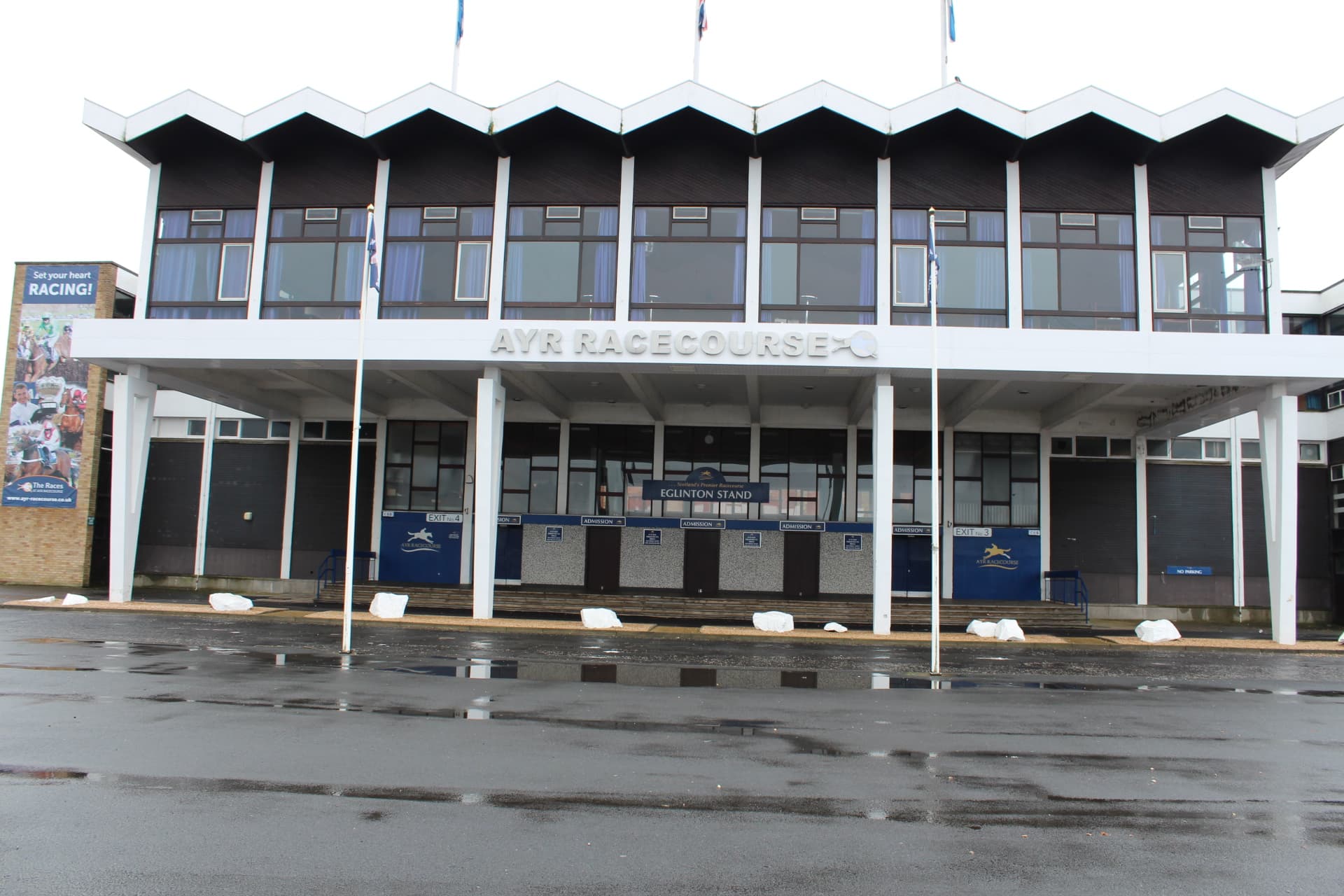
A Day Out at Ayr Racecourse
Everything you need for a day at Ayr Racecourse: getting there, what to wear, enclosures, food and drink, and insider tips for Scotland's leading course.
Read more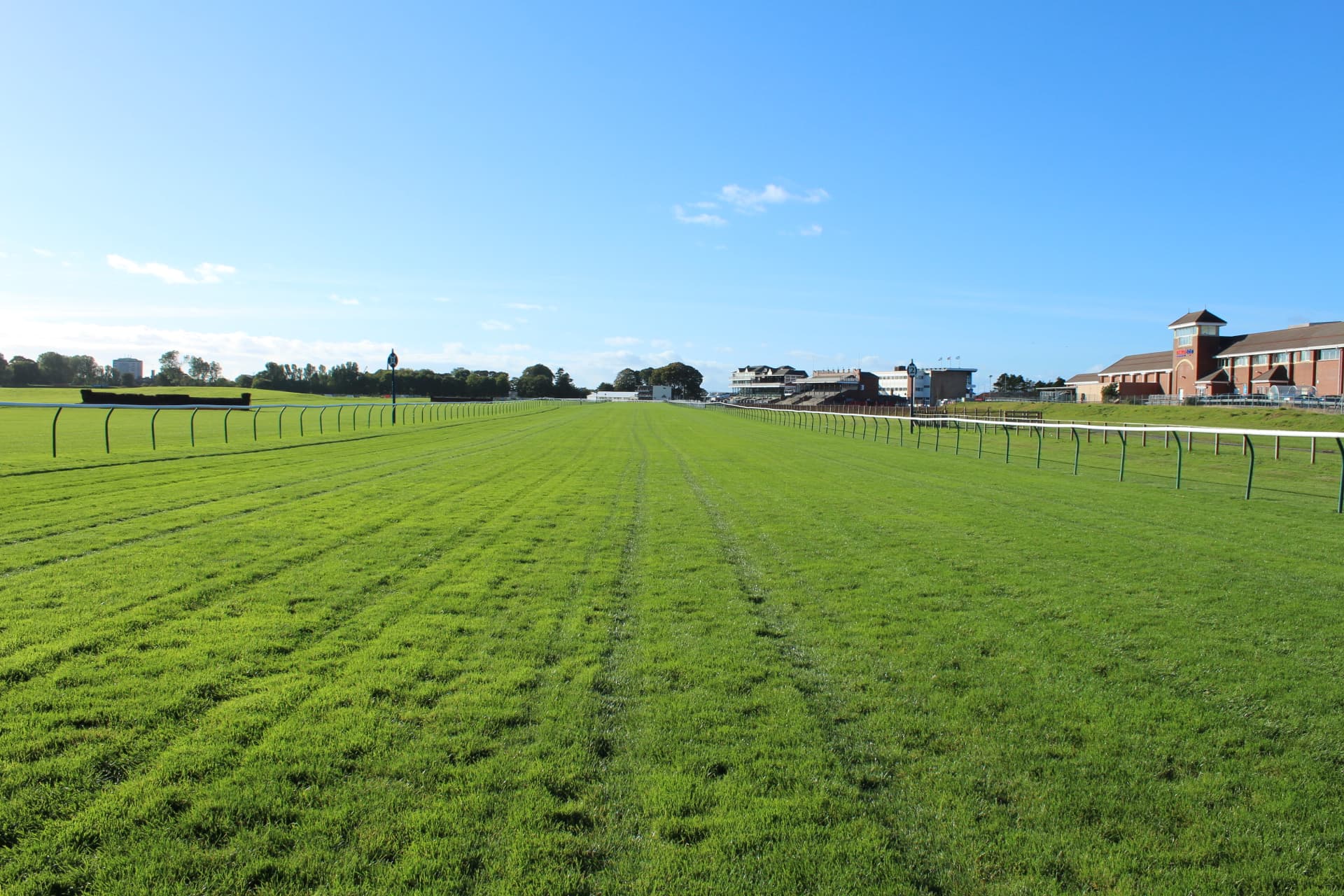
The Ayr Gold Cup Festival: Your Complete Guide
Scotland's biggest race meeting brings three days of competitive flat handicap racing to the Ayrshire coast every September. Here's everything you need to know.
Read more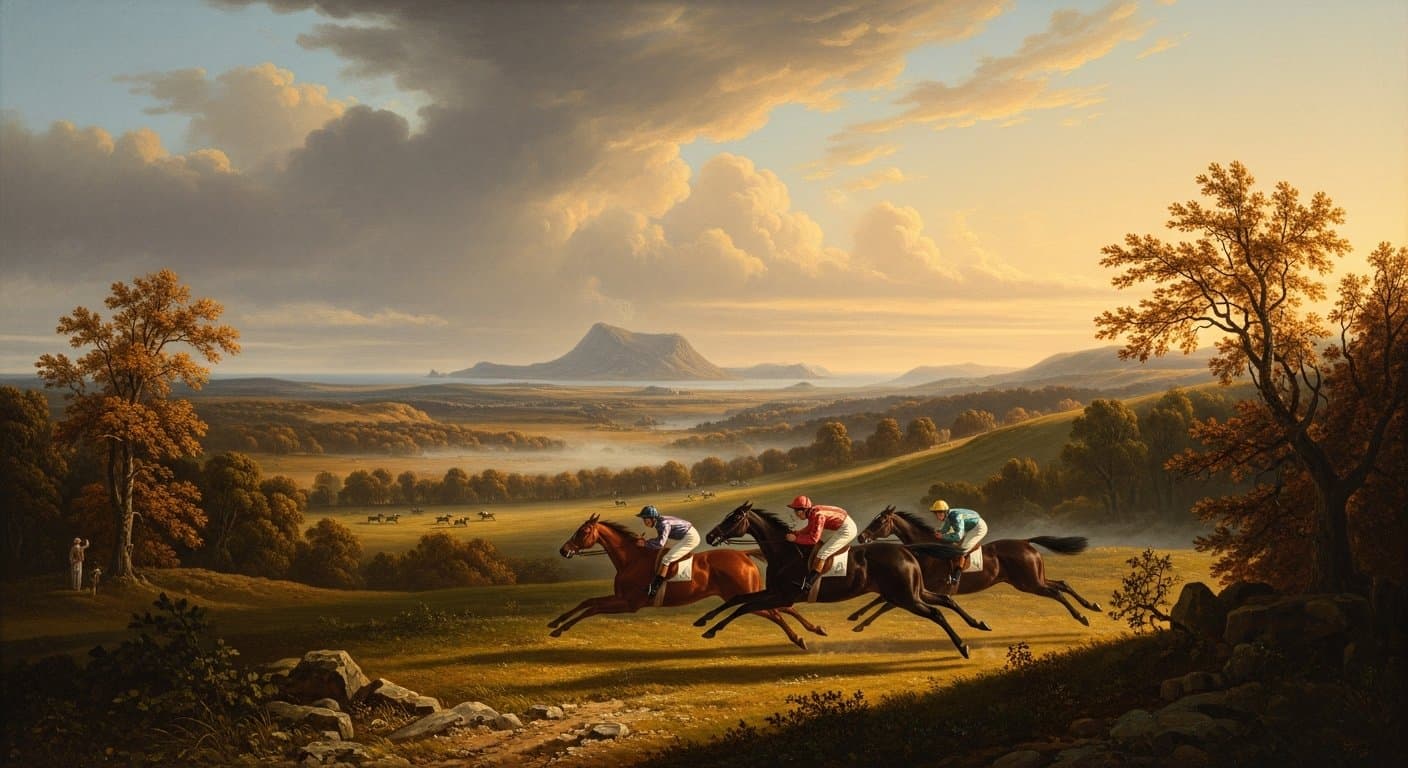
Ayr Gold Cup Day at Ayr: The Complete Guide
Everything you need to know about Ayr Gold Cup Day — Scotland's biggest racing occasion. The Western Meeting Saturday in mid-September draws 20,000 fans for the Ayr Gold Cup, Britain's most prestigious sprint handicap north of the border.
Read morePhotos on this page are used under Creative Commons licences. Titles, sources and licence links for each one are on our image credits page.
Research the field with the AI Race Predictor
Our model publishes calibrated win-probability estimates for UK races — a second opinion to understand a race, not tips. It's open about its record: it doesn't beat the market, and we show exactly how it does.
Work it out & learn the basics
Gamble Responsibly
Gambling should be entertaining and not seen as a way to make money. Never bet more than you can afford to lose. If you or someone you know has a gambling problem, help and support is available.