
Founder & Editor · Last reviewed 2026-03-02
Every racecourse has a story. Ayr's is one of ambition, reinvention, and a determined refusal to be second best to anything south of the border.
Since 1907, this corner of the Ayrshire coast has been the beating heart of Scottish racing. The course has survived two world wars, economic downturns, and the constant challenge of competing for prize money and prestige against the established powerhouses of English racing. Through it all, Ayr hasn't just endured — it's thrived.
The story begins long before the current course existed. Racing around Ayr dates back to the sixteenth century, with organised meetings taking place as early as the 1500s on the Low Green near the town centre. But the modern racecourse — the one that hosts the Scottish Grand National and the Ayr Gold Cup — was born from a deliberate decision by Scotland's racing community to build something worthy of the sport's finest traditions.
What followed was over a century of growth: from a purpose-built track on flat Ayrshire farmland to Scotland's undisputed premier venue. Along the way, Ayr has hosted some of the most absorbing races in British racing history, launched careers, tested the best horses in the country, and given generations of Scottish racegoers a place to call their own.
The Ayr Gold Cup traces its origins to 1804 — over two centuries of the same race, on the same stretch of Ayrshire ground, sorting sprint handicappers in September. The Scottish Grand National has been part of the national sporting calendar in various forms since 1858. These are not just fixtures. They are institutions with roots deeper than most sporting events in Britain.
This is the story of how a racecourse on Scotland's west coast became one of the most important in Britain. From the Western Meeting Club's founding vision to the modern dual-purpose venue standing today, here is the history of Ayr.
Origins & The Western Meeting
Racing Before the Racecourse: Scottish Origins
Long before anyone thought to build a grandstand at Whitletts Road, horses were racing around Ayr. The earliest organised meetings date back to the sixteenth century, when the burgh hosted races on the Low Green — a stretch of common land near the town centre. These were rough-and-ready affairs: local merchants and landowners matching their horses against one another in front of enthusiastic crowds. More festival than sport, but the seed was planted.
By the seventeenth century, horse racing had become one of Scotland's most popular pastimes. The burghs competed to host race meetings, which brought income, visitors, and prestige to local communities. Ayr, as one of the principal towns of the Lowlands and a significant port on the Firth of Clyde, was well placed to stage important meetings. The town's wealthy merchant class and its connections to the landed gentry of Ayrshire gave it both the funding and the social status that good racing required.
The eighteenth century brought further structure. Racing became more professionalised across Britain as the Jockey Club established rules, weight allowances, and handicapping systems. Scotland's courses adapted, if sometimes more slowly than their English counterparts. Ayr's Seafield course, located to the north of the town, became the principal venue for organised racing in the region by the mid-eighteenth century. Seafield hosted regular fixtures that drew runners from across Scotland and, on the bigger occasions, from England.
The Ayr Gold Cup: Born in 1804
The Ayr Gold Cup was first run in 1804 at Seafield. This fact deserves emphasis. Racing's most famous handicaps — the Cambridgeshire, the Cesarewitch, the Ebor — are old races. But a handicap sprint that has run continuously from 1804 to the present day, surviving two world wars, the transfer to a new course, and a complete transformation of the sport around it, is in truly rare company.
The original Gold Cup at Seafield was a gentlemen's handicap in the tradition of the era — an event where wealthy patrons matched their horses against one another with weight adjustments to theoretically equalise their chances. The format, at its most basic, has not changed in over two centuries: a sprint over six furlongs, a handicap weight allocation, and a prize for the fastest horse on the day.
By the mid-nineteenth century, the Gold Cup had become the centrepiece of Ayr's September fixture. The meeting at Seafield attracted runners from the better Scottish stables and occasionally from English yards that saw value in a long trip north. The race was competitive, popular, and beginning to establish the reputation for unpredictability that would define it through the following century.
The Victorian Era: Ayr Racing Matures
The Victorian period transformed British racing. The Jockey Club tightened its regulatory grip. Prize money grew substantially. Rail travel made it practical for horses to race across the country rather than simply at their local venues. Racecourses that could not meet the standards of the emerging professional sport began to fall behind or close altogether.
Seafield was increasingly struggling. The facilities were basic by the standards of the new purpose-built courses appearing in the south of England. The track layout was imperfect. Drainage was problematic. And the access to the course — while adequate for a town of Ayr's size — was not comparable to the rail-connected venues that were becoming the gold standard for British racing in the 1880s and 1890s.
A succession of owners and managers at Seafield struggled to fund the investment needed to bring the venue up to modern standards. Prize money stagnated. Better-quality horses were less likely to make the trip north when the prize fund didn't justify the travel. Scotland's premier racing meeting was at risk of becoming a provincial backwater.
The solution required a new vision and new money.
The Western Meeting Club: A New Course Takes Shape
The Western Meeting Club was formed by a group of wealthy Scottish racing enthusiasts in the early 1900s. Their ambition was clear: build Scotland a racecourse that could stand comparison with the best in Britain. Not an upgraded version of Seafield. A purpose-built venue that matched the modern standards of York, Goodwood, or Chester.
They found their site at Whitletts Road, just south of Ayr town centre. Flat, well-drained land close to the railway station. Enough space for a full-size galloping oval of a mile and four furlongs. The location was practical: racegoers from Glasgow and the west of Scotland could reach Ayr by rail in under an hour. The emerging middle classes — clerks, shopkeepers, skilled workers — who were becoming an important part of the racing audience could afford the train fare and the admission price.
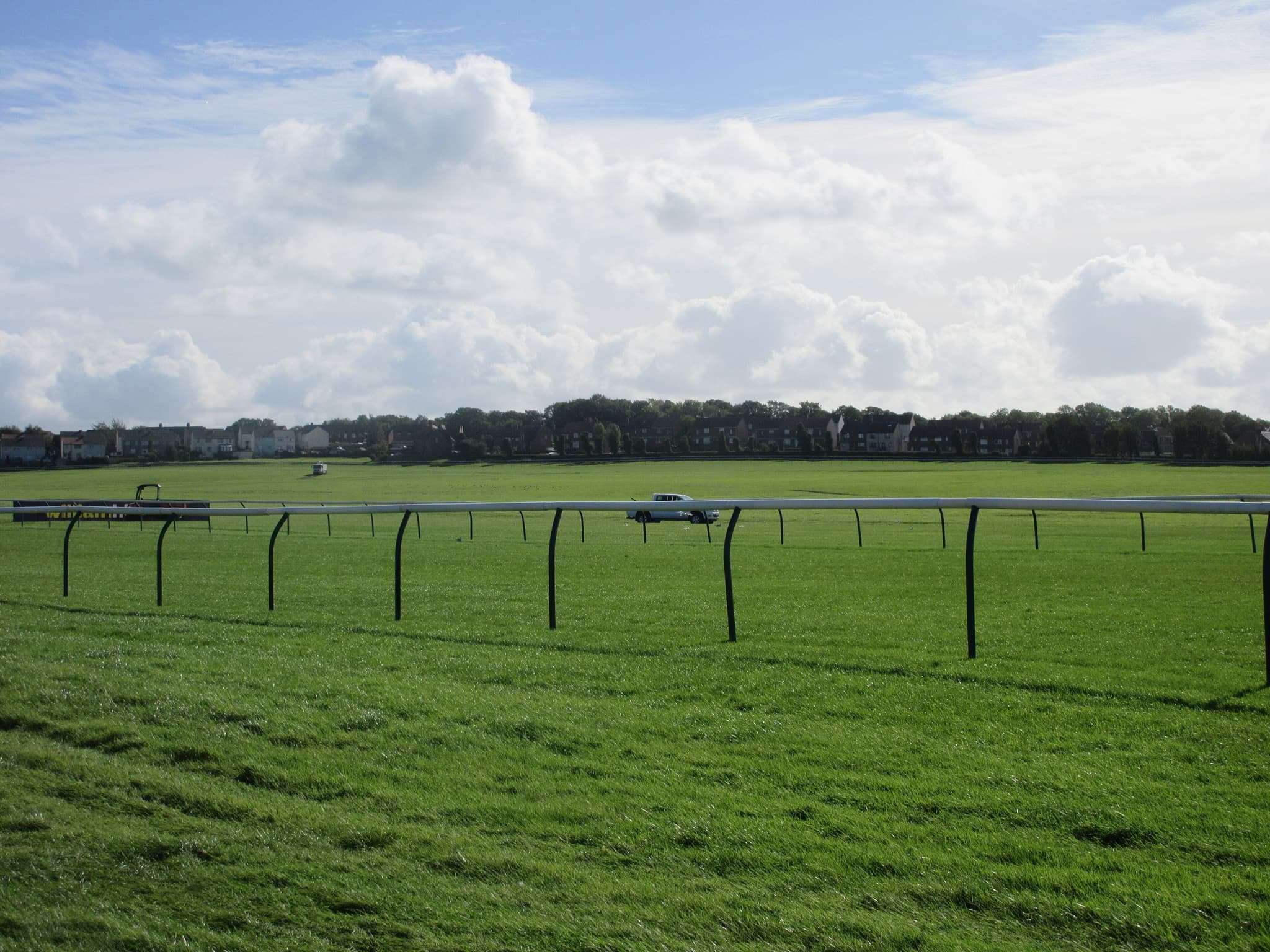
The design was deliberately high-standard. A left-handed oval with long straights and gradual bends — no quirks, no cambers, no tricks. A track built on fairness, where the best horse on the day would win. Inside the main oval, a straight sprint course for five and six furlongs. Outside, a National Hunt circuit that gave the venue dual-purpose capability from day one. It was an ambitious vision.
Opening Day: 1907
In 1907, Ayr Racecourse opened at Whitletts Road. The opening meeting was a significant occasion for Scottish sport. The Western Meeting Club had delivered what it promised: a modern, well-appointed racecourse that Scotland could be proud of. The new grandstands offered covered seating with good views of the finishing straight. The track surface was level and well-maintained.
The Ayr Gold Cup transferred from Seafield to the new venue immediately. The race had over a century of history at that point — an unbroken thread connecting the current race back to 1804 — and the new course provided a setting that finally matched the race's importance.
From the outset, the September Western Meeting was positioned as a major fixture on the racing calendar. The three-day format gave it the weight and structure of a real festival rather than a single-day event. Trainers from the leading English yards were invited north with competitive prize money incentives. The racing press gave the meeting proper coverage, treating it as a significant point on the autumn flat calendar rather than a Scottish curiousity.
Building the Jumps Programme: 1907–1939
The Scottish Grand National had existed in various forms since 1858 at different venues around Scotland. Racing at Bogside near Irvine had hosted the race during parts of the nineteenth century. When Ayr opened, the Scottish Grand National found its permanent home.
Through the 1920s and 1930s, the jumps programme grew steadily. Ayr's flat, galloping layout proved ideal for staying chasers. The four-mile trip demanded real stamina and bold, accurate jumping over well-built fences. The race drew competitive fields from across Britain and began to establish itself as one of the most important staying chases outside the Cheltenham and Aintree festivals.
The Western Meeting Club's investment in the infrastructure showed in the quality of what was produced. By the eve of the Second World War, Ayr had achieved what its founders intended: a real, top-class dual-purpose racecourse that Scotland could be proud of, and a racing calendar that included two races — the Gold Cup and the Scottish National — of real national significance.
Victorian Grandstand and Early Infrastructure
The original grandstand at Whitletts Road was a statement of confidence by the Western Meeting Club. Built to accommodate several thousand spectators in covered seating, it was typical of the best course architecture of the Edwardian era: sturdy, well-positioned relative to the finishing post, and designed with both function and appearance in mind.
The parade ring and winners' enclosure were central to the design — at a time when many provincial courses still treated these as afterthoughts, Ayr put them where they belonged: at the heart of the raceday experience. Watching the horses before a race and celebrating the winners after it were built into the course's layout from the beginning.
Early investment in the track surface was equally important. The ground staff from the opening years maintained the turf to a standard that attracted real racehorses rather than the moderate animals that populated courses where the ground was uncertain. Trainers who trusted a course's going reports sent better horses. Better horses produced better races. Better races drew bigger crowds. It was a virtuous cycle that served Ayr well for decades.
The Golden Years
The War and Recovery: 1939–1955
Like every British racecourse, Ayr lost its best years to the Second World War. The course was requisitioned for military use from 1940, and racing stopped. The grandstands and facilities were put to wartime purposes. The track surface, left without the regular maintenance that keeps turf racing-fit, deteriorated.
When peace returned in 1945, the challenge at Ayr — as at courses across Britain — was threefold: restore the physical infrastructure, rebuild the fixture list, and re-engage the racing public. All three proved achievable faster than might have been expected.
Post-war Britain was hungry for sport and entertainment. Rationing and austerity applied to food and goods, not to sport. A day at the races was affordable by the standards of the era — particularly with cheap rail fares and modest admission prices — and the public took to it enthusiastically. Ayr's proximity to Glasgow, a city of over a million people by the late 1940s, gave it a natural catchment area that most courses could only envy.
The jumps programme recovered strongly through the late 1940s and into the 1950s. Prize money was modest but the quality of racing was real, and the Scottish Grand National emerged from the post-war period as a stronger race than it had been before 1939. The fields were larger, the horses better, and the race's reputation was spreading beyond Scotland.
Scottish Racing Stars and Notable Figures
The post-war decades produced Scottish racing figures whose names still carry weight. Local trainers built careers around the circuits in Scotland, developing horses that knew Ayr's flat, galloping surface and performed consistently when the bigger meetings came round.
The training establishments in Ayrshire and Lanarkshire had a natural advantage at Ayr: shorter travel, familiar territory, and horses acclimatised to the local climate and going conditions. A trainer from Lambourn who sent one horse a year to Ayr was at a systematic disadvantage compared to a Scottish yard that raced here six times a season and knew every blade of grass.
Jockeys based in Scotland developed an intimate knowledge of the course. The long home straight at Ayr requires specific judgement about where to make a challenge. Jockeys who ride Ayr regularly learn to time their runs slightly later than instinct might suggest — the straight is long enough that an early challenge, seemingly decisive at the two-furlong marker, can be pegged back. Local riders exploited this knowledge against visiting jockeys who had not built up comparable experience.
The Scottish Grand National's Rise to National Significance
The 1950s delivered the race's defining moment. Merryman II, trained by Neville Crump and ridden by Gerry Scott, won the 1960 Aintree Grand National — arguably the world's most famous steeplechase. When Merryman II Then ran in the Scottish Grand National and won there too, the message was impossible to miss: this was a race capable of hosting a real Aintree champion.
The race's ability to attract and test the top staying chasers of the era established its reputation firmly. Trainers who had previously used the Scottish Grand National as a fallback option — a race for horses that had not quite made the Aintree cut — began treating it as a real primary target. The race's prize money improved. The fields deepened. The quality rose.
Through the 1960s and 1970s, the Scottish Grand National became one of the most competitive staying chases in the calendar outside the Cheltenham and Aintree festivals. It was not a consolation prize for also-rans. It was a serious test that asked truly demanding questions of stamina, jumping, and race fitness.
The Western Meeting's Heyday
On the flat side, the Western Meeting from the 1950s through the 1970s was at the peak of its social and sporting importance. Three days in September transformed Ayr into something approaching a festival town. Hotels were booked solid. The bars in town did a week's business in three days. Trains from Glasgow ran packed services.
The Ayr Gold Cup in this era consistently attracted fields of 20 or more. The race was acknowledged as one of the most competitive sprint handicaps in the calendar — right behind Royal Ascot's Wokingham and Stewards' Cup at Goodwood in terms of prestige and difficulty. Trainers from Yorkshire and Lambourn targeted it specifically, preparing horses for the September date months in advance.
What made the Western Meeting special beyond the racing was its character. Ayr's racing community gathered here with an intensity that northern English meetings like York's Ebor could match but few others could. Owners, trainers, jockeys, bookmakers, and the ordinary racing public rubbed shoulders in the enclosures. The social distinctions that marked English racing were present but less pronounced. Scotland's more egalitarian spirit was evident in the mixing of classes and backgrounds in the paddock and the bars.
Investment and Physical Growth: 1960s–1980s
Through the 1960s and 1970s, the racecourse invested steadily in its infrastructure. New grandstands were constructed to meet the growing demand for covered seating. The original Edwardian grandstand, still functional but showing its age, was supplemented with modern additions. Viewing areas improved.
The track surface received sustained attention. The ground staff at Ayr developed a reputation for consistency — a important attribute at a course that experienced Scottish weather year-round. Trainers learned to trust the going reports from Ayr's clerk of the course. When the going was reported as good, the track rode good. That reliability — unremarkable on its face but actually quite rare in British racing — encouraged trainers to send better horses, particularly for the bigger meetings.
The jumps course fences were maintained to a standard that drew professional respect. Fences at Ayr were fair and well-built: regulation size, properly constructed and consistently maintained. They tested jumping ability without being needlessly punishing. Horses with good jumping habits performed well here. Scrappy jumpers who relied on their riders to patch up their technique found Ayr unforgiving.
Famous Scottish Jockeys and Trainers
The history of Ayr is inseparable from the Scottish racing families and individuals who built their careers around the course. While the biggest names in British racing came from England and Ireland, Scottish racing's own professionals developed at Ayr and carved out respectable livings on the circuit.
The training villages around Ayrshire and Lanarkshire produced a generation of trainers who understood that placing horses correctly at Ayr — in races that suited their profile, on going they handled — was the foundation of a successful operation. The local trainers who built sustained records at Ayr in the post-war decades were not doing so through luck. They were exploiting systematic advantages: track knowledge, field-reading ability, and horses physically conditioned to the local environment.
On the jockeys' side, Scottish-based riders who committed to riding at Ayr regularly developed that specific familiarity with the track that produces the extra half-length in a tight finish. The subtle art of timing a run down Ayr's long straight — reading where the challenges will come from, judging when to commit — is learned through repetition, not intuition.
The Course Earns Its Reputation
By the end of the 1970s, Ayr's reputation was secure. The course was respected across the racing profession for its fairness, its consistency, and the quality of its two flagship races. It had proved that a Scottish course could stage races of real national importance, attract horses and trainers of the highest calibre, and provide racegoers with an experience that matched the best in Britain.
That reputation had not been easily or quickly built. It was the product of seventy years of investment, careful management, and a willingness to compete seriously for quality horses, quality riders, and quality prize money. The Western Meeting Club's founders in 1907 had articulated a vision of what Scottish racing could be. By 1980, that vision had been substantially realised.
Famous Races & Moments
Scottish Grand National Legends
No account of Ayr's history is complete without the great Scottish Grand Nationals. The race has produced moments that have entered the sport's folklore and shaped perceptions of Scottish racing for decades.
Merryman II (1960) remains the touchstone. Trained by Neville Crump and ridden by Gerry Scott, Merryman II had won the Aintree Grand National in 1960 — the most famous steeplechase in the world. His subsequent visit to Ayr and victory in the Scottish Grand National sent an unambiguous signal: this race was worthy of champions. The crowds that witnessed it understood the significance. Racing's prestige flows partly from which horses deign to enter, and an Aintree Grand National winner treating the Scottish version as a serious test changed how the race was perceived permanently.
Red Rum at Ayr (1974) drew the biggest crowd the course had seen for years. Red Rum had won the Aintree Grand National in 1973 and 1974 — his second consecutive victory at Aintree came just weeks before his Ayr appearance. He didn't win at Ayr on that occasion, but his presence underlined the status of the Scottish race. The most famous racehorse in Britain — a horse whose name was on every front page — had chosen to run at Ayr. You don't do that with consolation races.
Andrei Koreloff (1990 and 1991) achieved a feat that few horses in the race's history have managed: back-to-back victories. Winning the Scottish Grand National once requires a horse of real quality, stamina, and consistent jumping over four miles of demanding turf. Doing it in consecutive years — arriving fit, well-prepared, and competitive twice in succession over the most gruelling staying trip in Scottish racing — confirmed a horse of real quality. Andrei Koreloff's double is one of the race's most distinguished achievements.
The Grey Monk (2004) provided a story for the romantics. Trained locally by Howard Johnson and returning to familiar territory, The Grey Monk came home to the warmest Ayr reception in years. Local horses winning local races generate a particular quality of celebration that imported winners, however talented, cannot quite replicate. The Grey Monk's victory tapped into Ayr's sense of itself: proud, local, and sporting.
Dingo Dollar (2019) demonstrated the race's continuing reach into the best English and Irish yards. Trained by Alan King and ridden with cool confidence, Dingo Dollar's victory showed that top trainers from the south were not merely making up the numbers — they were sending horses specifically prepared for Ayr's demands.
Mighty Thunder (2021) produced the most celebrated Scottish racing moment of the modern era. Trained by Lucinda Russell from her base in Kinross — just two hours up the road — and ridden by Derek Fox, Mighty Thunder produced a performance that brought the stands at Ayr alive in a way that every racegoer present still talks about. A local trainer, a horse prepared with Ayr in mind all season, and a winning moment that encapsulated what the Scottish Grand National means to Scottish racing. The roar when he crossed the line was something beyond sport.
Gold Cup Dramas
The Ayr Gold Cup has generated its own catalogue of absorbing finishes. Six furlongs with 20-plus sprinters produces a specific kind of drama: chaotic in the early stages, increasingly clear as the field sorts itself out in the final furlong, and then agonisingly close at the line.
The race's history of big-priced winners is well-documented. Horses at 33/1, 40/1, and 50/1 have won the Gold Cup in various years. The combination of enormous fields, draw significance, going variability, and weight differentials means that formidable analysis skills are required — and even those skills cannot account for the unpredictable interventions of luck that define big-field sprint handicaps.
The 1980s and 1990s were particularly fertile decades for Gold Cup drama. Fields regularly exceeded 25 runners. Winning margins were frequently measured in fractions of a length. The race's Heritage Handicap designation — confirmed in the 1990s — acknowledged that history and confirmed its place among racing's oldest and most significant handicaps.
Photo finishes have been a feature throughout the Gold Cup's modern history. The six-furlong straight, while flat and honest, produces compressed finishes when a large field of sprinters travels the distance at maximum effort. Four or five horses reaching the line within a head of each other — each with connections convinced their horse has won until the photograph is developed — is not unusual.
The Course's Role in Shaping Careers
Beyond the headline races, Ayr has been the venue where careers have been made and confirmed. Trainers who have targeted the course consistently and built real records here — Keith Dalgleish, Jim Goldie, Lucinda Russell, the Johnston operation — have used Ayr to develop their horses and their reputations in ways that translate across the sport.
Young jockeys learning their trade at Scottish courses have used Ayr as the testing ground where a good ride on a competitive card gets noticed. The jump from lesser Scottish fixtures to riding in a competitive Ayr handicap is a significant step in a rider's development, and many careers have been shaped by performances here.
The course's role in discovering talent extends to the horses themselves. The Firth of Clyde Stakes (Group 3), run on Gold Cup day, has produced horses that went on to Classic success. Identifying a quality two-year-old in a Group race at Ayr in September and following their career through the next season is one of the pleasures the course offers to those who pay proper attention.
International Connections
Ayr's significance extends beyond Scottish or even British racing. Irish trainers have long regarded the Scottish Grand National as a valuable target, bringing their staying chasers across the Irish Sea for the big April prize. Gordon Elliott, Willie Mullins, and their predecessors have all sent runners to Ayr, adding an international dimension to the race that enriches its competitive depth.
The cross-border nature of Ayr's biggest days — English, Scottish, and Irish trainers competing on the same ground — is what separates the course from the smaller Scottish venues at Hamilton, Perth, Kelso, and Musselburgh. Those courses serve their local communities well. Ayr serves Scotland's racing community and then reaches beyond it. International runners at the Scottish Grand National and the Gold Cup are not a novelty — they are an established feature that confirms the races' standing.
The Moments That Aren't Famous
For every race that made the national headlines, Ayr has staged hundreds that mattered deeply to the people present. A novice hurdle winner in December. A summer maiden victory for a two-year-old that would go on to better things. A flat handicap at an evening meeting where a 14/1 shot caught the field on the line and sent a small group of racegoers into delirium.
Racing's real history is made in these unremarkable moments as much as in the famous ones. Ayr has been the setting for the quiet dramas of the sport — the first winners, the unexpected performances, the horses that showed something special — for over a century. The people who were there for those moments carry them. That collective memory is what gives a racecourse its character, and Ayr's is deep.
The Modern Era
Redevelopment and Physical Renewal
The 1990s brought a period of significant modernisation. Ayr's management recognised that ageing facilities risked losing the course its competitive edge against the increasingly well-appointed venues in England. The racecourse invested heavily, with the Western House development forming the centrepiece of a programme that transformed the hospitality offering and brought the venue into line with the best courses in Britain.
New grandstands, improved enclosures, modern bars and restaurants — the physical transformation was substantial. The challenge in any racecourse redevelopment is retaining character while improving function, and Ayr managed this balance better than many. The course emerged from the 1990s investment with modern facilities and its own distinctive identity intact: welcoming, well-organised, and committed to serious racing rather than corporate spectacle.
The track surface received equal attention. Improved drainage systems — both the primary drainage network and the surface drainage installed to handle heavy rain events — allowed the ground staff to maintain more consistent going. A sophisticated watering system gave them the tools to manage dry spells during the flat season without the turf drying beyond good-to-firm. For trainers sending expensive horses long distances to Ayr, the confidence that the going would be as reported was enormously valuable.
Prize Money and the Battle for Status
The persistent challenge for Scottish racing has been prize money. The economics of the British racing industry concentrate prize money at venues with high television rights fees, large crowds, and strong corporate hospitality revenues — all of which correlate strongly with proximity to London and the major population centres of England.
Ayr has fought that structural disadvantage with determination. The Scottish Grand National and the Ayr Gold Cup now offer prize funds that truly attract the best staying chasers and sprint handicappers in Britain. Neither race relies on home-circuit horses making up the numbers — they get real raiders from the top yards because the prize money justifies the trip.
The Scottish Grand National's Grade 3 status, confirmed in the 1990s, gave the race formal recognition in the National Hunt calendar's hierarchy. Grade 3 designation places it above most handicap chases and signals that the race tests horses of a real quality level. The Ayr Gold Cup's Heritage Handicap status placed it in an elite group of historically significant flat races — a designation that carries weight with trainers who care about the history of the sport.
Embracing New Audiences
Ayr has shown consistent willingness to broaden its appeal beyond the traditional racing audience. Evening racing during Scotland's long summer days has been a significant development. Starting cards at 5.30pm or 6pm under the extended northern daylight allows people who work standard hours to attend without taking a day off. The relaxed atmosphere of evening meetings — smaller crowds, more accessible prices, a slightly less formal atmosphere — suits younger racegoers and families who might not otherwise engage with the sport.
Designated family days throughout the season have introduced racing to a generation of Scottish children who might otherwise have grown up without experiencing it. Under-18 free admission policies, children's entertainment programmes on certain racedays, and proactive efforts to make the course welcoming to families have collectively broadened the base of regular Ayr racegoers.
Themed events and non-racing entertainment on quieter fixture days have kept the course relevant to audiences who want a day out that combines sport with entertainment. These are pragmatic commercial decisions, but they serve the longer-term health of the sport by creating new racing enthusiasts.
The Conference and Events Business
Beyond racing, Ayr has developed its conference and events operation into a year-round revenue stream. The Western House complex hosts weddings, corporate events, conferences, and hospitality functions across the calendar. It is a pragmatic model that the best-run British racecourses have adopted as a way of generating income on the approximately 340 days per year when racing is not taking place.
The commercial resilience this creates is significant. A racecourse that earns income only on its 25 racedays is vulnerable to a poor season, a wet spring, or an economic downturn in ways that a year-round events business is not. The non-racing income at Ayr funds investment in the racing programme — better prize money, better track maintenance, better facilities — that feeds back into the quality of racing offered.
Digital Age Expansion
The past decade has seen Ayr extend its reach beyond the Ayrshire coast in ways that would have been unimaginable to the Western Meeting Club. Live streaming, social media engagement, online ticketing, and improved broadcast coverage have made Ayr's racing accessible to audiences who will never visit the course in person.
The Scottish Grand National now attracts serious international betting interest from punters who watch the race on screens in England, Ireland, and increasingly further afield. The race's quality is judged by a global audience, which in turn increases the importance of maintaining the standards that earned that audience's interest.
The Ayr Gold Cup's September timing, at the end of the European flat season when racing attention is already focused on the final Classic meetings and the big autumn handicaps, benefits from strong television and streaming coverage. The race has built a following among punters across Britain who study it seriously each year precisely because its history and competitiveness reward careful analysis.
The Course Today
Today, Ayr stages around 25 fixtures per year. Total annual attendance regularly exceeds 100,000. The facilities are well-maintained and thoughtfully designed around the racegoer experience — not a legacy estate patched together over a century, but an integrated venue that functions smoothly.
The track itself remains exactly what it was designed to be in 1907: left-handed, flat, galloping, and fair. No amount of redevelopment has changed the fundamental character of Ayr's racing surface, and no development plan ever proposes to. The track's fairness — the consistent ability to produce results where the best horse wins — is its most important commercial asset. Trainers trust Ayr. Trainers who trust a course send good horses. Good horses produce good racing. Good racing brings crowds.
For a full picture of today's Ayr — its facilities, transport links, and raceday experience — see our complete guide to Ayr Racecourse.
Ayr's Legacy
Scotland has five racecourses. Edinburgh (Musselburgh), Hamilton, Perth, Kelso, and Ayr. Each plays its part in Scottish racing's story. But there's no argument about which one matters most.
Ayr is where Scottish racing's biggest days happen. The Gold Cup. The Scottish Grand National. The Western Meeting. These aren't regional fixtures — they're events that sit comfortably alongside the best that English and Irish racing have to offer. The course's ability to attract runners from Lambourn, Newmarket, County Meath, and County Tipperary speaks to its standing in the wider sport.
What Makes Ayr Endure
The course itself helps. That flat, galloping, left-handed oval is as fair a test as you'll find anywhere in Britain. Horses that win at Ayr have truly earned it. There are no track quirks to exploit, no tricky gradients to negotiate. Just honest turf that rewards speed, stamina, and jumping ability in the right measures.
But it's more than the track. Ayr endures because it serves its community. The course is woven into the fabric of the town and the wider region. Racedays are occasions — events that bring people together in a way that few other sporting venues manage. The taxi driver who drops you at the gate has an opinion on the 2.30. The barman in town knows which jockey's riding well. Racing isn't a niche interest in Ayr — it's part of the culture.
The Dual-Purpose Advantage
Being dual-purpose has been central to Ayr's success. While some courses specialise in either flat or jumps, Ayr does both to a high standard. That gives the course year-round relevance. There's always a fixture to look forward to, always a meeting on the horizon. It keeps the audience engaged and the racecourse in the public eye throughout the calendar.
The dual-purpose nature also creates fascinating connections. A trainer might bring a flat horse for the Gold Cup in September and a staying chaser for the Scottish National the following April. Racegoers who attend both get to see the full breadth of the sport, which deepens their appreciation and their loyalty to the course.
Looking Forward
Ayr's future looks secure. The course is well-managed, the fixtures are strong, and the racing public's appetite for what Ayr offers shows no sign of fading. Challenges remain — prize money will always be a battle, and Scottish racing needs continued investment — but the foundations are solid.
Over a century since the Western Meeting Club opened the gates at Whitletts Road, Ayr remains exactly what its founders intended: Scotland's finest racecourse. A venue that belongs in any conversation about the best racing in Britain. Long may it continue.
For practical information on visiting, see our day out guide. For betting insights, our betting guide covers everything from draw bias to key trainer angles.
Share this article
More about this racecourse
All Ayr guides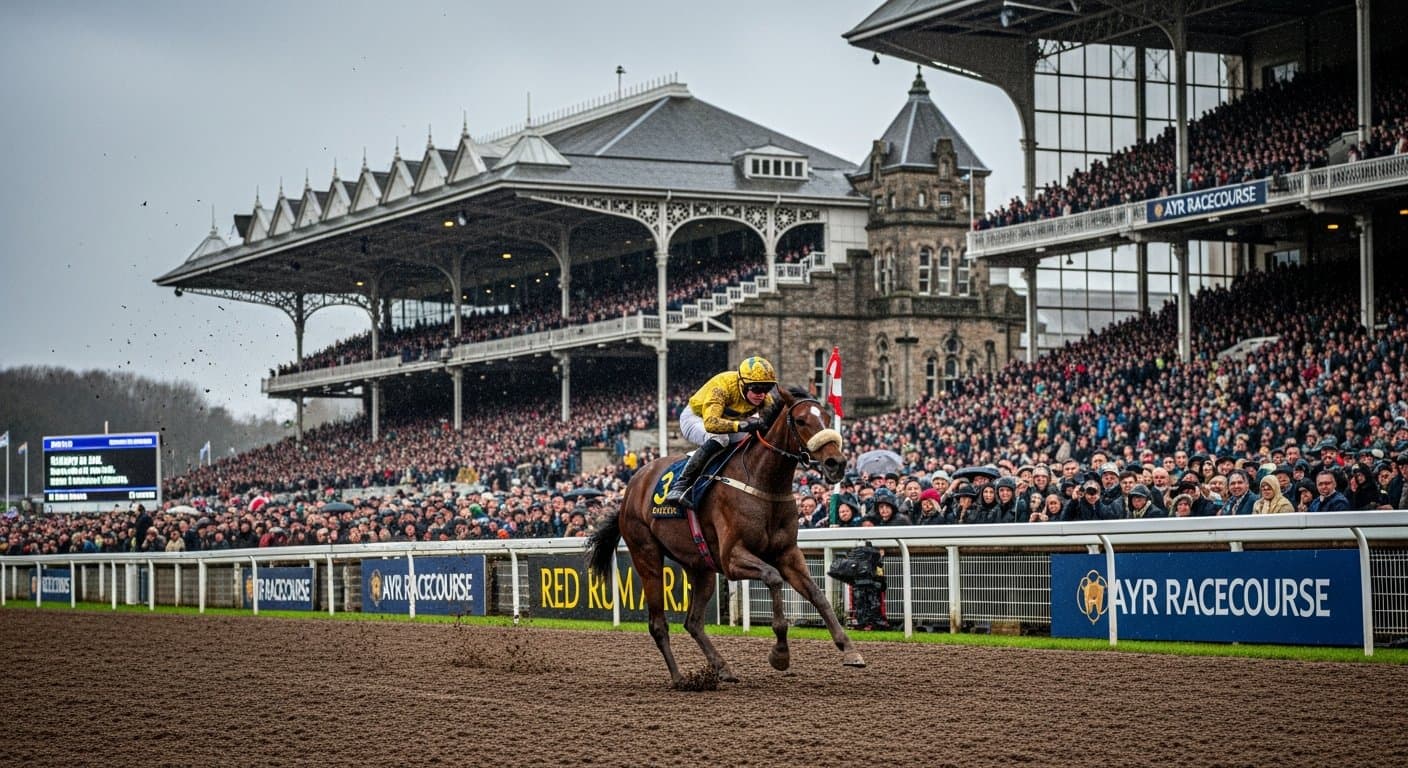
Red Rum at Ayr: The Scottish Grand National Double
Red Rum won the 1974 Scottish Grand National at Ayr weeks after his Aintree triumph, becoming the only horse to complete the Grand National double in one season.
Read more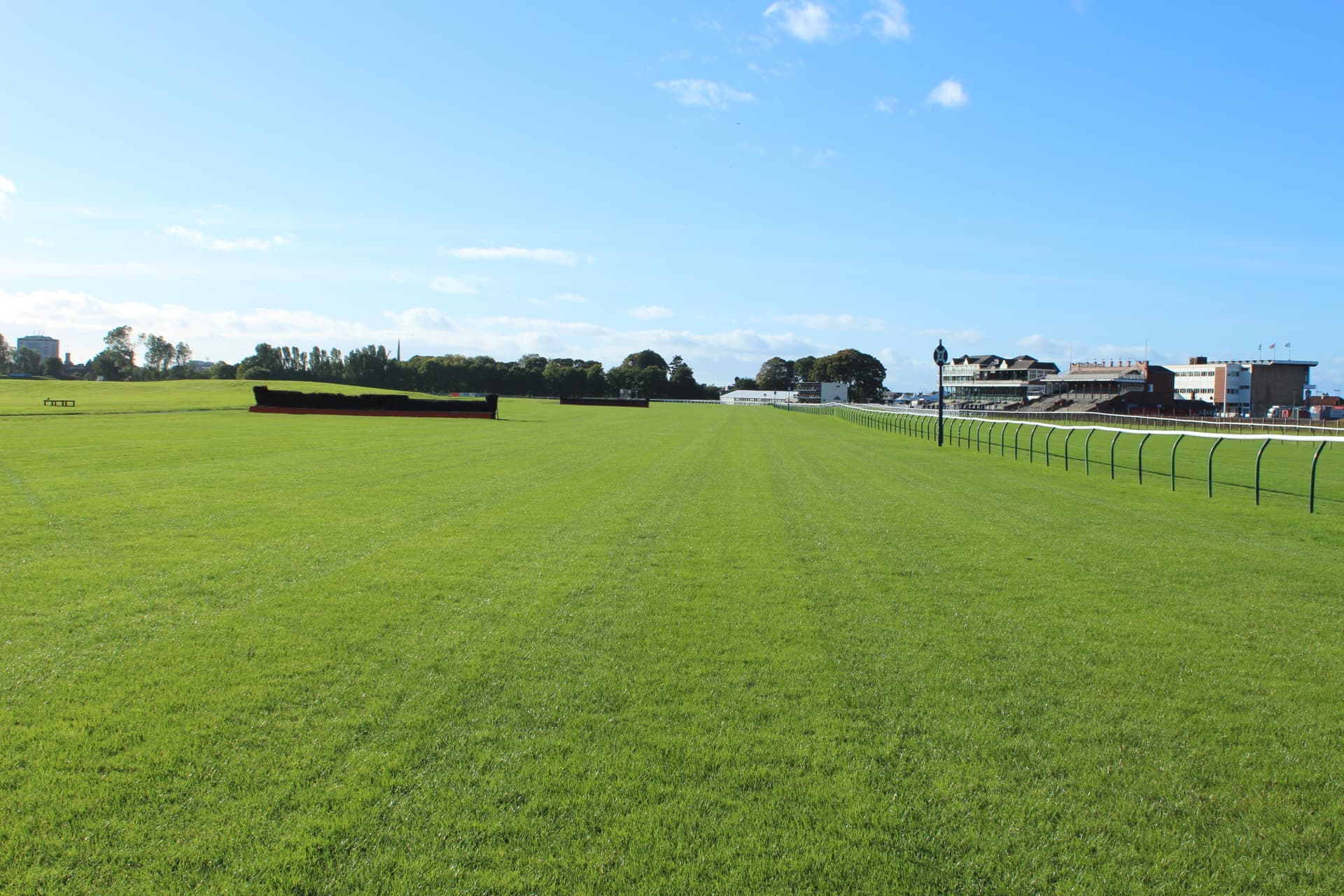
Scottish Grand National: Complete Guide
Your complete guide to the Scottish Grand National at Ayr: history, great winners, the course, betting angles and everything you need to know.
Read more
Scottish Grand National Winners: The Full Roll of Honour (1970-2026)
Every Scottish Grand National winner since 1970 - horse, age, starting price, jockey and trainer - with the trends that emerge across the full roll of honour. Source-verified.
Read morePhotos on this page are used under Creative Commons licences. Titles, sources and licence links for each one are on our image credits page.
Gamble Responsibly
Gambling should be entertaining and not seen as a way to make money. Never bet more than you can afford to lose. If you or someone you know has a gambling problem, help and support is available.