
Founder & Editor · Last reviewed 2026-04-05
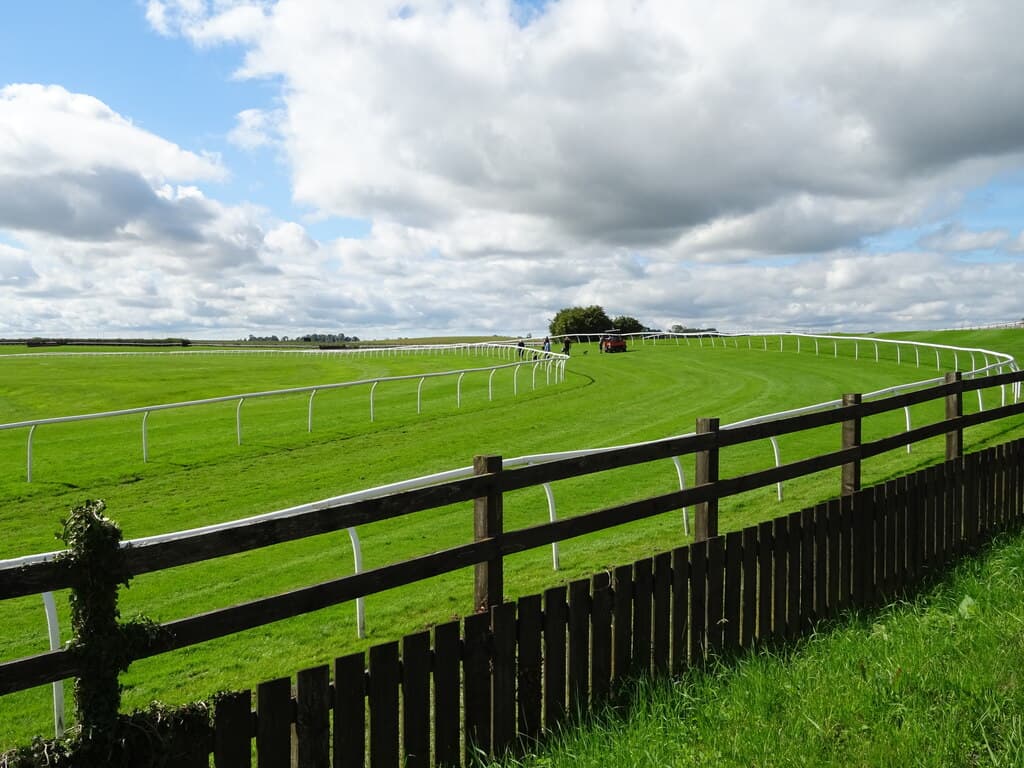
Catterick Racecourse has been staging meetings since 1783, a date that places it among the half-dozen oldest surviving racecourses in northern England. The official record begins there, though informal racing in the area almost certainly predates it — the village of Catterick sits on one of the most travelled corridors in England, and wherever men and horses gathered regularly, racing tended to follow.
The course lies at Catterick Bridge, a hamlet on the River Swale roughly a mile northwest of the village itself. The Great North Road — now the A1(M) — passes close enough that racegoers from Durham, Leeds, and Teesside could reach the gate without difficulty, and that has been true since the Georgian era. That position on a major artery has sustained Catterick through every era of transport: the coaching road, the railway age, and the motorway era alike.
What Catterick has never been is fashionable. York has its Ebor Festival, Doncaster its St Leger and its Flat season opener, Haydock its Sprint Cup. Catterick has a sharp left-handed track on the edge of the North Yorkshire Dales, two racing codes, and a crowd that turns out because they like racing rather than because they want to be seen. That is not a criticism of the place — it is the clearest explanation of why the course has survived for more than two and a half centuries. It serves a community rather than an occasion.
The dual-purpose character is central to the Catterick identity. Flat racing dominates from spring to autumn; National Hunt racing takes over from October through to April. No other Yorkshire racecourse offers both, and that self-sufficiency has given Catterick a stability that single-code tracks elsewhere have sometimes lacked. Around 27 fixtures a year keep the gates open in every calendar month.
The history that follows moves from the earliest documented racing at Catterick Bridge through the Victorian formalisation of the course under Jockey Club rules, the moment that gave Catterick its most enduring claim to national significance — Lester Piggott's first winner on 18 August 1948, at the age of 12 years and 9 months, aboard The Chase trained by his father Keith Piggott — and the modern era in which Jockey Club Racecourses has invested steadily in a course that was already old when most of its infrastructure peers were still fields.
The Catterick Dash, run over five furlongs on the downhill straight each June, is the race the course is best known for nationally. The Boxing Day National Hunt meeting draws the strongest winter crowd of the year. Around 27 fixtures a year, split roughly 17 flat to 10 jumps, give Catterick a programme that no other Yorkshire course can match in breadth. Local trainers based at Middleham, 12 miles to the west, and at Sheriff Hutton and Hambleton to the southeast know the track intimately and fill the fields. The result is a racecourse that, while not producing Classic heroes or Group 1 afternoon spectacles, has been quietly indispensable to the sport in the north for generation after generation. Catterick does not need embellishment. The record speaks plainly enough.
Origins & Early Racing
Racing Before the Course
The first formal race meeting at Catterick Bridge is recorded in 1783, but the site's association with horse racing almost certainly goes back further. By the mid-18th century the village of Catterick was an established stop on the coaching routes north — the journey from London to Edinburgh passed through Catterick's immediate neighbourhood, and the inns along that stretch of road were well patronised. Wherever there was money, horses, and idle time between journeys, some form of informal racing was a predictable result.
The earliest documented races appear to have been run on Catterick Moor, the open common ground to the north of the village. This was standard practice for pre-enclosure racing in England — straight or loose courses marked out on unfenced ground, with spectators and their horses mingling freely. Meetings at such venues were irregular, dependent on weather and on the goodwill of landowners, and the records that survive are fragmentary. What is clear is that by 1783 the activity had acquired enough organisation to be formally noted.
The Raby Connection
The landholding context matters to understanding how Catterick racing was sustained in its early decades. The Vane family of Raby Castle — a fortified castle some 25 miles north of Catterick in County Durham — were among the most powerful landowners in the north of England throughout the 18th and 19th centuries. The Raby Estate had interests in land across County Durham and into the fringes of North Yorkshire, and the family's enthusiasm for field sports extended to horse racing. While Catterick Bridge itself sits on land directly associated with the Richmond-area estates rather than Raby, the broader network of northern gentry families who supported the early race meetings formed a connected social world in which Raby figured prominently. Raby Castle's ownership of horse-racing stock and its patronage of northern fixtures helped maintain the culture within which Catterick operated.
The River Swale and the A1 Corridor
The River Swale runs close to the eastern boundary of the racecourse, and its presence shaped the site's geography. The flat, well-drained meadow ground along the Swale's banks provided the going that racing required — firmer than the heavy upland clay of the surrounding Dales, yet free enough from surface water to be usable through much of the year. The gravel subsoil draining into the river system meant that even after rain the ground recovered relatively quickly, a characteristic that has made Catterick one of the more reliable venues in the north for racing in autumn and winter.
Alongside the natural drainage, the Great North Road gave the course its catchment area. The Roman road from York to the north passed through Catterick — the Roman fort of Cataractonium sat at the river crossing — and its medieval and post-medieval successor followed the same alignment. By 1783 the road was a turnpike, maintained to a standard that made carriage travel possible throughout the year. Racegoers from Darlington, 17 miles north, from Richmond, 4 miles west, and from York, 35 miles south, could reach Catterick Bridge in a few hours by coach or on horseback. That accessibility was the economic foundation of the early race meetings.
The Permanent Course, 1813
The decisive step in Catterick's development came in 1813, when a permanent, enclosed track replaced the informal moor racing that had preceded it. The layout that emerged was left-handed and undulating, with a circuit of just over one mile. The five-furlong downhill straight that forms the home straight of the flat course was already a feature of that early layout — the natural fall of the ground from the far turn towards the finish line made it unavoidable, and it became the defining characteristic of the track.
The enclosure of the course also allowed gatekeeping and the collection of admissions, which changed the financial model. A permanent track could support investment in stands, weighing room, and parade ring infrastructure in a way that open-moor racing never could. By the middle of the 19th century Catterick had the basic physical apparatus of a recognisable racecourse.
Early Programme Development
Through the second half of the 19th century Catterick built a programme that balanced flat and jumping races. The course held spring and summer flat fixtures alongside autumn and winter NH meetings. The sprint races over the five-furlong straight — run downhill into the finish — were popular with local owners and trainers because they suited the quick, agile horses that were easier to keep and train on the modest budgets that characterised North Yorkshire horsemanship at the time.
The race that would eventually become the Catterick Dash emerged from this tradition of sprint racing on the downhill straight. The five-furlong course drops appreciably from the far bend to the winning post, and the downhill gradient produces fast times in conditions of good going. Early sprint races at Catterick were not named fixtures of any national significance, but they drew competitive fields from across Yorkshire and County Durham. The combination of short distance, downhill gradient, and firm late-season going established a template that the Catterick Dash would later formalise.
The Shape of Early Yorkshire Racing
Catterick's role in the wider structure of Yorkshire racing in the 19th century was as a reliable provincial fixture rather than a prestige venue. York ran the Ebor Handicap from 1843 and the Yorkshire Oaks from 1849, drawing the sport's best horses. Doncaster hosted the St Leger from 1776, the oldest Classic in Britain. Against those institutions Catterick did not compete on terms of prestige. What it offered instead was regularity: a dependable fixture list on a sound surface, for horses and owners who needed places to run between the major engagements of the season. That role was honourable, and it proved durable.
The Golden Era
Jockey Club Rules and the Formal Era
The Jockey Club had been the governing body of British flat racing since the mid-18th century, but its authority over provincial meetings was consolidated progressively through the 19th century. Catterick's flat racing programme came under Jockey Club rules in the Victorian era, bringing with it the licensing, handicapping, and administrative structures that separated organised racing from the informal matches that had preceded it. National Hunt racing followed a separate regulatory path — the Grand National Hunt Committee, formed in 1866, provided equivalent oversight for jumping. By the time of Queen Victoria's Diamond Jubilee in 1897, Catterick was operating under both sets of rules and had the dual-purpose character that it maintains today.
The formal structure mattered for the programme. With Jockey Club licensing came access to official handicap ratings, the ability to stage registered races with properly advertised conditions, and the infrastructure of the Weatherby's administrative office that managed entries, declarations, and results. Catterick's flat card became a proper fixture in the racing calendar, carrying races at distances from five furlongs to one mile five furlongs around the circuit.
The Grandstand of 1906
The most visible statement of Catterick's Victorian and Edwardian ambition was the grandstand built in 1906. The structure replaced earlier temporary or rudimentary facilities with a permanent building capable of housing a paying crowd in reasonable comfort. The 1906 stand was not on the scale of York's County Stand or Doncaster's grandstand at Town Moor, but it was a substantial investment for a provincial course of Catterick's size — a signal that the Catterick Racecourse Company, formed in the early 1920s to formally manage the venue, had predecessors who took the long view.
The stand's construction reflected the Edwardian era's appetite for racecourse investment across Britain. The period between 1900 and 1914 saw significant building at courses throughout England as railway travel put racing within reach of a much wider public. At Catterick, special race-day trains running from Darlington and York brought crowds that the original accommodation could not have managed.
The National Hunt Programme
Catterick's jumping fixtures developed alongside the flat programme through the late Victorian and Edwardian years. The course's undulating, left-handed circuit suited National Hunt racing naturally — the turns were sharp enough to produce a real test of jumping accuracy, but not so severe as to punish horses caught wide. The fences on the Catterick NH circuit are straightforward in their construction, and the course became associated with novice hurdlers and chasers taking their first steps in the sport.
By the early 20th century a winter jumps programme of five or six meetings sat alongside the flat card, giving Catterick a year-round presence that single-code tracks in Yorkshire could not match. York ran flat racing only, closing in October after its autumn meeting. Wetherby concentrated on jumps. Catterick bridged the gap between them, serving both the summer and winter racing communities in North Yorkshire.
The Flat Programme's Development
Through the inter-war years the flat programme at Catterick grew in consistency if not in prestige. The course staged competitive handicaps at sprint and middle distances, drawing horses from the training yards that had begun to cluster in the Vale of York and the Hambleton Hills. Middleham, 12 miles to the west in Wensleydale, was already established as a training centre by the early 20th century — the high gallops on Middleham Moor produced horses that suited the sharp Catterick circuit perfectly.
The five-furlong sprint on the downhill straight was the race Catterick did best. The gradient from the top of the straight to the winning post is a real physical feature of the course — the fall is approximately one and a half chains across the straight's length — and it produces clock times that flatter horses with quick early pace. Sprint specialists trained on the sharp Middleham and Hambleton gallops arrived at Catterick suited to exactly the kind of racing the straight demanded.
Post-War Reconstruction
The Second World War interrupted racing across Britain. Catterick, like many provincial courses, suspended its full programme during the conflict years, with only a reduced schedule operating under wartime conditions. The post-war recovery brought a new phase of investment and administration.
The Catterick Racecourse Company that had been managing the venue since the early 1920s resumed normal operations, and the fixture list was rebuilt. By the early 1950s the course was staging roughly 20 meetings a year, split between flat and jumps. The grandstand dating from 1906 remained the principal structure, adapted where necessary but not fundamentally rebuilt. The racecourse that Lester Piggott visited in August 1948 — the occasion discussed in detail in the next section — was a functioning, well-established dual-purpose track operating continuously since 1783.
Setting the Stage
What the Victorian and Edwardian era gave Catterick was institutional permanence. The Jockey Club's regulatory framework, the 1906 grandstand, the railway connections from Darlington and York, and the development of the dual-purpose programme together transformed the course from an 18th-century curiosity into an established fixture of the northern racing calendar. The basic architecture of the modern Catterick — dual code, sharp circuit, sprint straight, accessible from the A1 — was in place by 1914 and essentially unchanged when the post-war era began.
The course that emerged from this period was not a fashionable one, and it never tried to be. Its appeal was its reliability: consistent going on the gravel subsoil, a programme that ran from spring to late winter, and a location that served a broad catchment from the Durham coalfield to the Wensleydale Dales. The owners who used Catterick regularly in the first half of the 20th century were not aristocratic patrons filling boxes at Ascot; they were Yorkshire and County Durham men with one or two horses, looking for a place to run them under fair conditions. Catterick provided exactly that, and the relationship was mutual and durable.
Famous Moments
18 August 1948: The First Winner
On 18 August 1948, a twelve-year-old boy rode his first winner in Britain at Catterick Racecourse. The horse was The Chase, a two-year-old trained by Keith Piggott at Lambourn. The rider was Lester Piggott, Keith's son, who would go on to become the defining flat jockey of the 20th century and one of the most celebrated sportsmen Britain has ever produced.
Piggott was 12 years and 9 months old on that afternoon in August. The achievement was possible under the rules of the time, which permitted apprentice jockeys to ride at an age that would be unthinkable by modern standards. Keith Piggott — himself a former jump jockey who had trained successfully at Lambourn — had clearly identified his son's precocious ability and placed him on a horse that gave the youngster a realistic chance. The Chase duly delivered, and a racing career that would span more than five decades began on the North Yorkshire track.
The significance of the moment only became clear in retrospect. By the time Piggott retired for the first time in 1985 he had ridden 30 British Classic winners, including nine Derbys. He won the Prix de l'Arc de Triomphe three times, took the Breeders' Cup Mile in 1990 at the age of 54, and returned to win the 1992 Two Thousand Guineas on Rodrigo de Triano at the age of 56. None of that was knowable on 18 August 1948, but it is the context that gives Catterick's afternoon its weight. The course that day was the starting point of the greatest flat racing career in British history.
No other racecourse of Catterick's size can claim to have witnessed the first winner of an athlete of Piggott's stature. York, Newmarket, Ascot — all have hosted more important races, more famous horses, larger crowds. Catterick provided the debut. That fact is part of the course's permanent record, and no subsequent development can diminish it.
Collier Hill: From Catterick to the World
The most striking example of a Catterick graduate achieving international Group 1 success is Collier Hill, trained by Don Eddy and owned by the Midlands businessman Philip Arkwright. Collier Hill began his career in modest company and won at Catterick early in his career before developing into a specialist at the highest level of staying races. He won the Canadian International Stakes at Woodbine, the Irish St Leger at the Curragh, and the Hong Kong Vase at Sha Tin in 2006 — three Group 1 races at three different courses on three different continents. Catterick was one of the places where he first proved his ability.
The Catterick Dash: Sprint History
The Catterick Dash, run over five furlongs on the downhill straight, is the race most associated with the summer flat programme. The sprint distance and the gradient together produce a spectacle unlike any other on the Yorkshire circuit — horses accelerate downhill into a finish that rewards natural speed over stamina. The race is typically run in June and draws competitive sprint handicap fields from across the north and Midlands.
Over the years the Dash has produced winners who went on to better things at Listed and Group level, though the race itself sits in the heritage handicap category. The course record on the five-furlong straight, set in good summer going, stands as one of the faster straight-course times recorded in the north of England, a function of the downhill gradient that shaves fractions of a second from every performance. Sprint trainers from the Karl Burke and Tim Easterby yards — both based within 20 miles of the course — have been regular contributors to the Dash's roll of honour in the modern era.
NH Moments: Novices Pointing Toward Festivals
Catterick's National Hunt fixtures, particularly the winter meetings from November through February, have served as early proving grounds for horses that later reached Cheltenham or Aintree. The track's relatively straightforward fences and honest going make it a sensible starting point for novice hurdlers and chasers in their first or second season.
Several horses have used Catterick novice hurdle wins as the opening stage of a trajectory toward Festival-level competition. The pattern is consistent: a horse arriving at Catterick as a maiden hurdler, winning comfortably against modest opposition, and returning a month later having developed enough to be assessed at a higher level. The Catterick form guides of the 1990s and 2000s contain multiple examples of horses that went on to run in Grade 1 company at Cheltenham, with their first hurdle victories recorded at the North Yorkshire course.
The Boxing Day Meeting
Catterick's Boxing Day fixture has become one of those annual markers in North Yorkshire's sporting calendar that locals arrange their schedules around. The meeting typically draws its strongest jumps crowd of the season — families in from Christmas, trainers hoping to launch a novice on the busiest casual-racegoing day of the year, and the core winter jumping fraternity who treat the 26 December fixture as a gathering rather than merely a race card.
The crowd numbers at Boxing Day meetings regularly reach the higher end of Catterick's attendance range. The course's capacity is around 5,000, and the December fixture has filled the venue on multiple occasions. For many North Yorkshire racegoers, the Boxing Day meeting at Catterick is the only time in the year they attend racing, which gives it a cultural weight that extends beyond the quality of the races themselves.
The Course Record Books
Catterick's timing records reflect the nature of the track. The flat five-furlong straight, running downhill, produces quick times in fast going — the record for the distance has stood for a number of years and reflects a combination of exceptional horse speed and the gradient's assistance. On the jumps side, the two-mile hurdle course has produced front-running performances of notable efficiency, with horses able to maintain strong gallops on the consistent going that Catterick's gravel subsoil typically delivers through the autumn and winter.
The Modern Era
Jockey Club Racecourses
Catterick Racecourse is owned and operated by Jockey Club Racecourses, the commercial subsidiary of The Jockey Club that manages 15 courses across Britain. The group includes Cheltenham, Epsom, Aintree, and Newmarket among its portfolio, placing Catterick in company that is by some measure more prestigious — but the ownership structure has brought real investment to a course that a smaller independent operator might have struggled to maintain.
The Jockey Club Racecourses acquisition brought Catterick under a management framework with the financial resource to undertake capital projects, negotiate media rights packages as part of a larger group, and maintain facilities to a standard appropriate to a course staging 27 fixtures a year. The course's website now runs under the catterickbridge.co.uk domain, reflecting the formal name, and its fixture allocation is managed as part of the Jockey Club group's broader scheduling negotiations with the British Horseracing Authority.
Facilities Development, 1990s Onward
The post-1990 period at Catterick has been characterised by steady improvements to the physical infrastructure rather than a single significant rebuild. The main grandstand, rooted in the 1906 structure, has been progressively updated — weatherproofing, catering facilities, and viewing areas have all been modernised. The weighing room and associated jockey facilities have been upgraded to meet current BHA requirements, which have grown significantly more detailed since the 1990s in areas of safety, changing accommodation, and medical provision.
The parade ring area and pre-parade ring were improved in the early 2000s, giving the course a cleaner sightline from the main enclosure to the horses before they enter the track. Hospitality boxes and private raceday packages were developed as part of the broader industry shift toward premium revenue streams in British racing through the 2000s. Catterick's hospitality operation is modest by the standards of a Group 1 venue, but it is functional and well-regarded by the local corporate market in Teesside, the Tees Valley, and North Yorkshire.
Prize Money
The prize money available at Catterick has tracked the general movement of British racing's prize fund through the modern era. The introduction of media rights deals — first with Channel 4 Racing, Then with At The Races and then Racing TV — brought distribution payments to racecourses that were reinvested partly into prize money. Catterick's races in the early 21st century offer more in prize value than they did in the 1980s in real terms, though the course remains a lower-tier prize money venue by comparison with the major festival tracks.
The Catterick Dash, as the course's signature race, carries the highest individual prize money of any flat race on the Catterick card. The race's stakes have been raised incrementally as the course has sought to attract stronger sprint handicap fields. A well-subscribed Dash field in June, drawn from trainers across the north and Midlands, is a mark of the prize money being sufficient to make the journey worthwhile.
Local Trainers and the Catterick Connection
Three training operations within easy range of Catterick have been particularly prominent in the modern era's fixture list.
Karl Burke operates from Spigot Lodge at Leyburn, approximately 12 miles from the course. Burke trains a large flat string on the Middleham gallops and has developed a series of sprinters and precocious two-year-olds who suit Catterick's sharp track. His runners appear regularly in the summer programme, and he has trained multiple Catterick winners in most seasons since establishing Spigot Lodge as a major northern yard.
Tim Easterby trains at New House Stables, Sheriff Hutton, approximately 12 miles southeast of the course. Easterby runs one of the largest yards in the north and is a consistent presence at Catterick across the full flat season. His dual-code operations — he has handled both flat and NH horses during his career — mirror Catterick's own dual-purpose character, and his familiarity with the track's nuances gives his runners an advantage in the sharp handicap fields that fill most of the card.
Kevin Ryan trains at Hambleton, near Thirsk, approximately 20 miles from Catterick. Ryan has built one of the leading sprint operations in Britain from his Hambleton base, regularly competing at Royal Ascot and at Group level, and his horses provide some of the most competitive runners on the Catterick flat card. His presence in the Catterick Dash field in June is a reliable indicator of the race's quality in a given year.
The Catterick Dash in the Modern Era
The Dash now sits as a Listed-quality sprint handicap in terms of the fields it attracts, even if its official rating remains below that tier. Run over five furlongs in June — the sprint straight at its fastest in early summer going — the race draws trainers who train specifically for the conditions it offers: downhill, sharp, favouring early pace. The prize money available for the race, combined with the course's accessibility from the major training centres, has made it a target race for northern sprint handlers.
The NH Programme
The National Hunt programme at Catterick has maintained its character as a development track for northern horses. The course stages 10 to 11 NH fixtures a year, concentrated from October through to March. The fences — eight per circuit, straightforward obstacles of standard dimensions — are forgiving enough to suit novice chasers in their first or second season. Catterick's NH prize money is broadly in line with comparably sized tracks and has attracted competitive fields from the Middleham, Malton, and Richmond training yards through the modern era.
Catterick's Legacy
What Catterick Is Not
Catterick does not have a Classic race. It has not hosted a Group 1 in living memory. The Richmond and North Yorkshire Dales surround it on three sides, the A1 on the fourth, and the total capacity of 5,000 puts it far below the scales of Cheltenham or York. These are simply facts. The course has never presented itself as something other than what it is, and that is a form of institutional honesty that distinguishes it from venues that have occasionally oversold their own importance.
What the course has instead is continuous operation from 1783 to the present, across every political era, through two world wars, and through the multiple structural crises that British racing endured in the 20th century. That record is not nothing. A venue that opens its gates in January and again in November — flat in summer, jumps in winter — and that has done so without significant interruption for more than 240 years occupies a category that very few sporting venues in Britain can match.
The Piggott Connection
The permanent significance of Catterick to national racing history rests substantially on the afternoon of 18 August 1948. The beginning of Lester Piggott's career — on The Chase, trained by Keith Piggott, at a provincial course in North Yorkshire — gives Catterick an importance that no amount of prize money development could manufacture. A course that hosted the first winner of a nine-Derby champion is a course with a claim on history that outweighs its fixture-list rating.
The connection is simple to state and difficult to overplay. Piggott's career is the most decorated in the history of British flat racing. Every part of that career has a starting point, and the starting point is Catterick. The racecourse has a small plaque noting the fact. It warrants rather more.
The Yorkshire Racing Community
Catterick's relationship with the local racing community has always been its core function. The course serves the owners and trainers of the Middleham area — Spigot Lodge, New House Stables, the various yards that work the Middleham Moor gallops — as reliably as it serves those in from Richmond, Darlington, and Teesside for a day out. The stands are not full every day. The prize money does not attract international strings. But the course provides what those communities need: a regular fixture on a sound surface, accessible from the A1, where horses can run and careers can develop at every level of the sport.
The working-class character of Catterick's crowd — families, regulars, local owners with horses in modest training — reflects the North Yorkshire and County Durham demographic rather than the southern racecourse circuit. The dress code is smart casual, enforced lightly. The Catterick Sunday Market, operating on the racecourse site, brings a different section of the same community to the same ground on non-race days. That civic dimension — a racecourse as a year-round community asset rather than a periodic sporting event — is part of what has sustained the venue through periods when the racing economics alone might not have done so.
A Working British Racecourse
Catterick has operated without interruption since 1783. It has done so in a corner of England that is not associated with affluence or with the social calendar that drives the sport's most famous meetings. It sits 4 miles from Richmond, 12 miles from Middleham, 30 miles from York, on the edge of the North Yorkshire Dales, at a crossing of the River Swale on the Great North Road. That is where it was in the 18th century and where it remains.
The dual-purpose model — flat and jumps, spring to winter — is the shape that has kept the gates open. No other Yorkshire course offers what Catterick offers across a full calendar year. That self-sufficiency is not accident; it is the result of 240 years of adaptation to what the local community and the local geography made possible. The sharp left-handed circuit that suits handy horses has not changed because the land has not changed. The Swale still drains the ground to the east. The A1 still carries the traffic north.
Catterick is not the most famous racecourse in Britain. It is one of the oldest, one of the most consistent, and — since 18 August 1948 — one of the most historically significant. The record is enough.
Share this article
More about this racecourse
All Catterick guides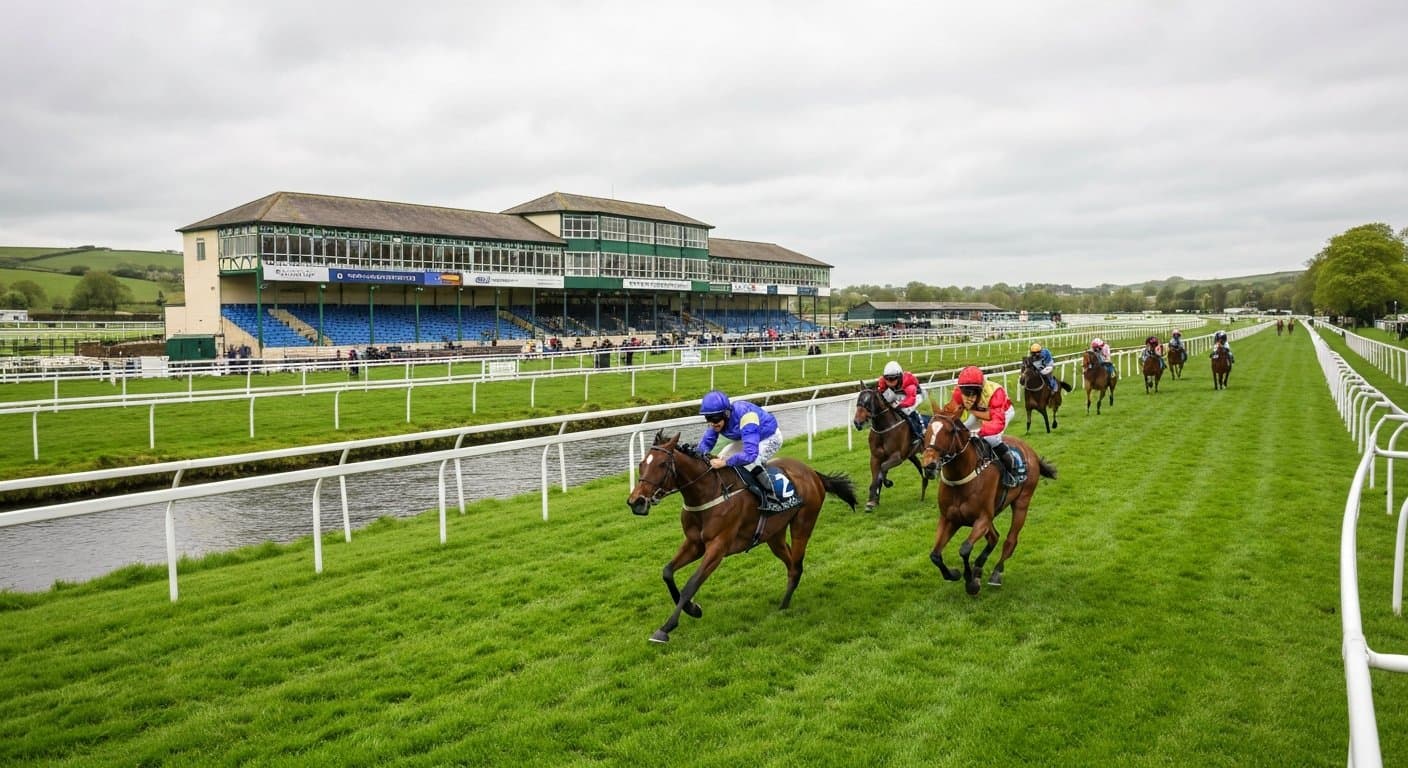
Catterick Jumps: Sharp Track, 8 Fences & Winning Tips
Master Catterick's tricky National Hunt layout with our insider guide to the sharp bends, undulating terrain and fence placement that decides races.
Read more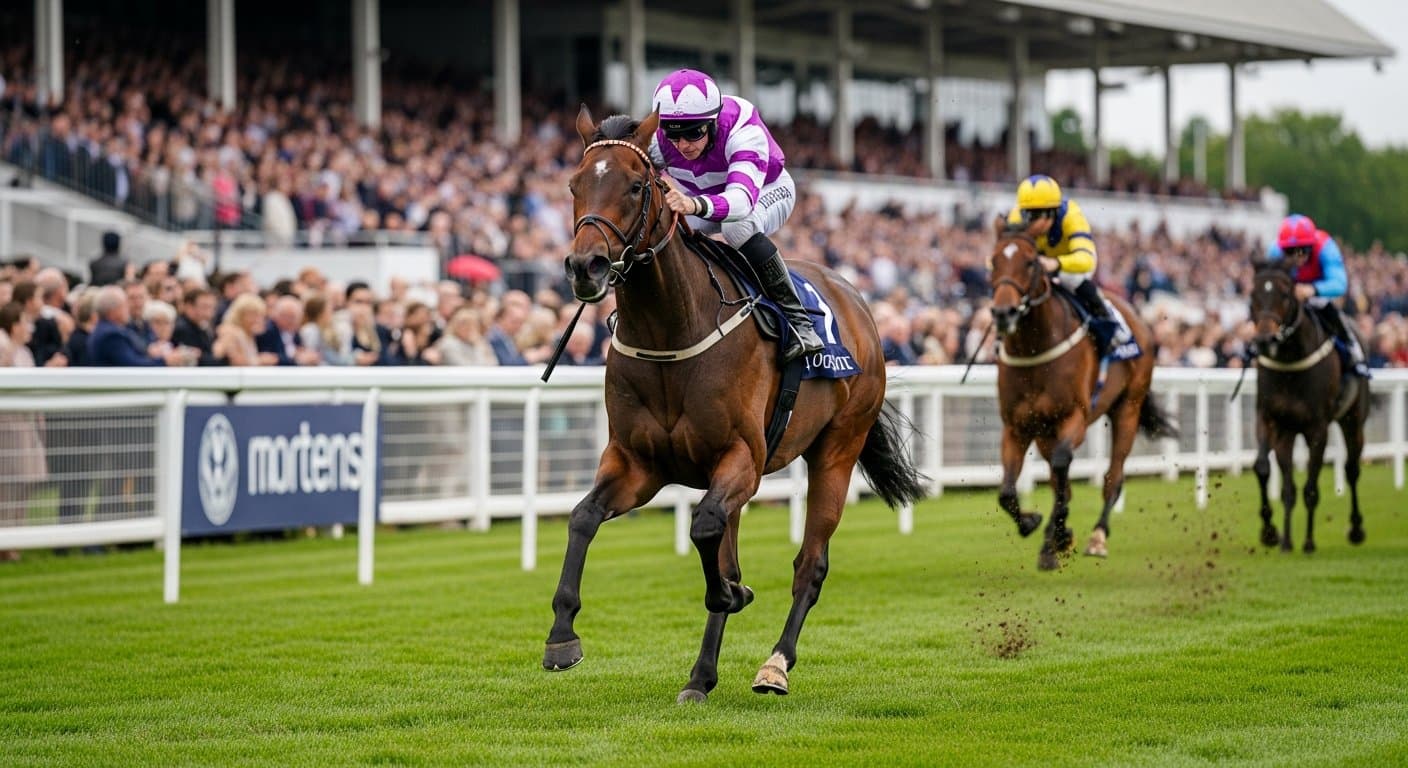
Collier Hill at Catterick: The Complete Story
How a £5,500 North Yorkshire horse made his first win at Catterick before going on to win the Irish St Leger and the Hong Kong Vase.
Read more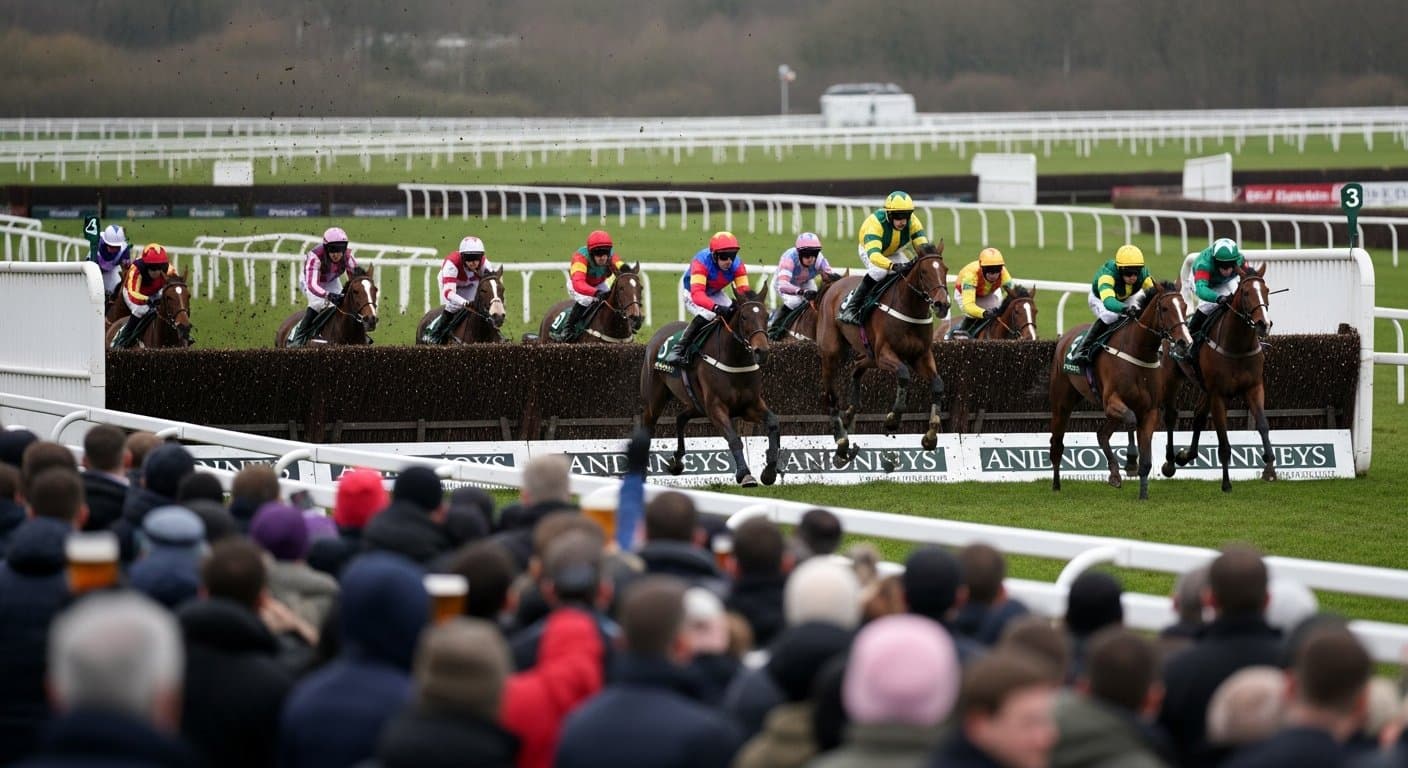
The North Yorkshire Grand National at Catterick: Your Complete Guide
Everything you need to know about the North Yorkshire Grand National — Catterick's biggest race day, run over 3m 6f every January.
Read moreGamble Responsibly
Gambling should be entertaining and not seen as a way to make money. Never bet more than you can afford to lose. If you or someone you know has a gambling problem, help and support is available.