
Founder & Editor · Last reviewed 2026-04-05
The St Leger Festival is four days of top-class flat racing held every September at Doncaster, built around the oldest Classic race in the world. The St Leger itself was first run in 1776 and the 2026 edition is the 250th running, and the festival that has grown up around it represents the definitive end-of-season statement for the British flat-racing calendar. No other meeting combines a Classic race, a staying championship, a two-year-old championship and a sprint championship across the same four-day programme.
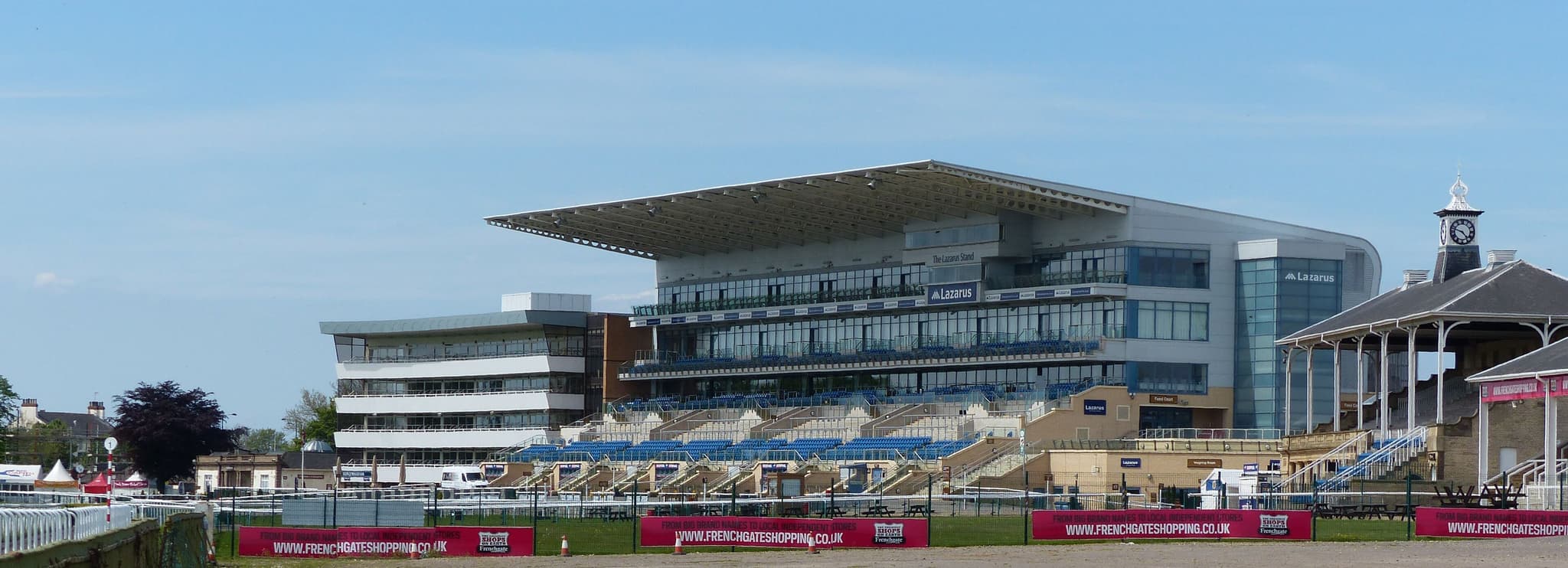
The course sits on Doncaster's Town Moor, a public common that has hosted racing for more than 400 years. The St Leger is run over 1 mile 6 furlongs 115 yards, a full circuit of the moor, and the distance alone sets this Classic apart from the others. While the 2,000 Guineas rewards speed over a mile at Newmarket and the Derby tests stamina over a mile and a half at Epsom, the Leger asks for something more: a horse that can stay strongly through a long September afternoon when the season has already taken a toll. Nijinsky, the last horse to win the Triple Crown, completed his clean sweep here in 1970. The next occasion when a real Triple Crown attempt arrives will stop the country.
The 2026 festival carries extra significance. The 250th St Leger is a landmark the British racing industry is marking properly, with Doncaster running a programme of anniversary events around the meeting. The count is 250 rather than 251 because the race was not run in 1939, cancelled at the outbreak of the Second World War, the only year missed since 1776. Whether you are planning your first visit or your twentieth, 2026 is the right year to be at Doncaster in September.
Who This Guide Is For
This guide is for anyone attending the St Leger Festival, betting on it or both. It covers the programme in detail across all four days, explains the major races with enough historical and tactical context to make them significant, and provides a betting section built around the specific angles that this meeting offers. There is also a practical planning section covering tickets, accommodation and transport for the full four days.
If you want a broader introduction to Doncaster as a venue — its layout, enclosures, parking, going preferences and full race schedule — the complete course guide covers all of that. If you want to go straight to Doncaster's betting characteristics and draw data, the betting guide is the dedicated resource. This festival guide sits alongside both of those.
Quick Decision Block
Best day for atmosphere: Saturday (St Leger Day) — the largest crowd of the week, the Classic itself, a full card of supporting races. Expect 25,000+ attendance.
Best day for racing quality: Friday — the Doncaster Cup (Group 2, 2m 2f) and two or three other Pattern races make Friday the day for the serious racing enthusiast who wants variety without Saturday's peak crowds.
Best day for a social occasion: Thursday (Ladies' Day) — dress code enforced in the Premier Enclosure, style awards, and a strong racing card including the May Hill Stakes (Group 2 for two-year-old fillies, a recognised stepping stone to the 1,000 Guineas).
Best day for a quieter visit: Sunday, the closing card — smaller attendance, competitive racing, and the best chance of a good betting position on the rail without a 6am start.
Going to attend all four days? Book accommodation at least three months ahead. Doncaster's hotels fill during St Leger week. The planning section of this guide covers the best areas to stay and how to handle the logistics across multiple days.
The Festival in Context
The St Leger Festival sits at the end of a summer that has already delivered the 2,000 Guineas and 1,000 Guineas at Newmarket in May, the Derby and Oaks at Epsom in June, the Coronation Cup, the Eclipse and Goodwood in July, and the Juddmonte International and Yorkshire Oaks at York in August. By September, the pattern of the Classic generation has emerged. We know which horses have trained on from two to three, which have found the top level, and which are the definitive staying types who will find the Leger's demanding trip within their compass.
That context makes the ante-post St Leger market one of the most interesting in racing. Horses can be backed at long prices in May and June before the narrative of the season identifies the true Leger types, and the market firms quickly once a horse establishes itself as a real stayer. The betting angles section of this guide covers how to approach that market.
For now: clear your diary for the first full weekend of September, book early for 2026, and understand that what you are watching when the field sets off over Town Moor on a Saturday afternoon has been happening since the reign of George III, in a sequence broken only by the cancelled 1939 running.
Bet on Doncaster
Place your bets on Doncaster races with a trusted bookmaker.

Promo code BETFRED50. New customers only. Register, deposit with a Debit Card, and place a first bet of £10+ at Evens (2.0)+ on Sports, to be settled within 7 days, to get £30 in Sports Free Bets and £20 in Bet Builder Free Bets within 24 hours of settlement. 7-day expiry. Eligibility & payment exclusions apply. Full T&Cs apply. Take Time to Think. BeGambleAware.org. 18+. Full T&Cs.

Promo code R30. New UK customers only, 18+. Register, deposit £10 or more, then place a £10 single cash bet at odds of 1/2 (1.5) or greater on any sports market (excluding Virtuals). Once the qualifying bet settles you get £30 in Free Bets (3 x £10) — the qualifying bet can win or lose. Free Bets are valid on any sports market excluding Virtuals, expire in 7 days, are non-withdrawable and must be used in full. Excluded deposit methods apply (including PayPal, Apple Pay, Skrill and NETELLER). Named bets such as Lucky 15 do not qualify. If you cash out the qualifying bet, or it is voided, you are no longer eligible for the offer. Ends 31.12.26. Full T&Cs apply. Please gamble responsibly. BeGambleAware.org. 18+. Full T&Cs.

Promo code BET40GET20. New UK customers, 18+. Register with the code and place a first bet of £40 or more at Evens (2.0) or greater. Receive 2 × £10 free bets: the first credited automatically once the qualifying bet settles, the second 24 hours later. Free bets must be placed at minimum odds of 4/1 (5.0), expire 24 hours after credit, and the free-bet stake is not returned with winnings. Debit card deposits only. Take Time to Think. BeGambleAware.org. 18+. T&Cs apply. Full T&Cs.

50% of your first-day net losses refunded as a free bet, capped at £25. New UK customers aged 18+ only. To qualify, deposit and place a first bet of £10 or more on any sport at minimum odds of evens (2.00), then place at least two further bets on different events, each worth at least 50% of your largest bet, all at evens (2.00) or greater. Losses are counted from your first settled bet until 23:59 the same day. Place a qualifying £10+ bet and you are guaranteed at least a £5 free bet. Bets placed at SP, void bets, cashed-out bets and bets struck with free bets do not count towards the offer. The free bet is credited the day after your qualifying bets settle and must be used within 7 days, after which it expires. It can be used at odds from 1/4 (1.25) up to 250/1 on singles and straight accumulators, but not on Trixie, Patent or Yankee style multiples. Free-bet stake is not returned with winnings. One offer per person, household, address, IP address and device. E-wallet deposits may not qualify, so check the cashier before depositing. Customers registered with GAMSTOP cannot claim. KYC identity verification must be completed before the free bet is credited. Take Time to Think. BeGambleAware.org. 18+. T&Cs apply. Full T&Cs.

New customers, 18+. Choose the sports bonus at sign-up, make a first deposit and receive a 100% bonus up to £50 in your Sports Bonus balance. To convert the bonus to cash, wager it 10x within 30 days. Single bets below Evens (2.00) do not qualify; accumulators do not qualify if any selection is below 1/2 (1.50). Virtual Sports, voided, cancelled, drawn, cashed-out and free-bet wagers do not count towards wagering. Only the first settled bet per event counts. Withdrawing before the wagering requirement is met forfeits the bonus balance including bonus winnings. Real-money funds are used before bonus funds. Deposits via Skrill or Neteller are not eligible. Not valid in conjunction with other promotions. Odds, bet and payment limits apply. 10bet general and promotion T&Cs apply. BeGambleAware.org. 18+. Full T&Cs.

New customers in Great Britain and Republic of Ireland, 18+. Place a £10 fixed-odds qualifying bet at minimum odds of 1/2 (1.50) — single or each-way (only the win part counts), pre-event or in-play, not cashed out early, within 28 days of opening the account. Receive up to £60 in bonuses credited over three days: 3 × £10 fixed-odds free bets (the first on settlement, then 24 and 48 hours later) plus 3 × £5 Total Goals FOOTBALL spread bets and 3 × £5 racing Winning Favourites spread bets, with a £1 racing Race Index spread bet as an extra on top. The spread bets need a full spread-betting account, opened within 28 days of the fixed-odds account and subject to Spreadex's eligibility and appropriateness checks. Free-bet stakes not returned with winnings; free bets valid 28 days from issue. IMPORTANT: the £5 credits are SPREAD bets — sports spread betting carries the risk that losses can exceed your stake. Sports spread-betting customers do not have Financial Ombudsman or FSCS recourse. Take Time to Think. BeGambleAware.org. 18+. T&Cs apply. Full T&Cs.

Promo code WELCOME15, entered under My Bonuses after registering. New UK customers, 18+. Place a first qualifying bet of at least £10 from your cash balance at odds of evens (2.0) or greater within 7 days of opening the account. Once the qualifying bet fully settles you receive £15 in free bets, credited as 3 x £5 tokens with set uses: one £5 accumulator free bet (minimum 4 legs, each leg at 2/5 or bigger), one £5 sports free bet (any market at evens or bigger) and one £5 Sub Cover free bet (selected football player markets at evens or bigger). Free-bet stakes are not returned with winnings. Free bets expire 7 days after they are credited. Void, cashed-out and partially cashed-out bets do not qualify. One offer per customer. Confirm the current terms on BetGoodwin's own welcome-offer page before claiming. Take Time to Think. BeGambleAware.org. 18+. T&Cs apply. Full T&Cs.

New UK customers, 18+. Minimum deposit £10. Place a £10 qualifying single on sports (excluding virtuals) at minimum odds of 1/2 (1.50), settled within 14 days. Deposit-method exclusions apply. Receive £30 in free bets (stake not returned), split £20 for sportsbook use (2 x £10) and £10 for Bet Builder only (2 x £5); Bet Builder does not cover horse racing. Free bets must be accepted within 7 days and expire 7 days after acceptance. No promo code required. Best Odds Guaranteed on UK & Irish racing, subject to having staked over £25 in the previous seven days. Operated by LiveScore Betting and Gaming (Gibraltar) Ltd, UKGC 56859. Confirm the current terms on LiveScore Bet's own promotions page before claiming. Take Time to Think. BeGambleAware.org. 18+. T&Cs apply. Full T&Cs.
18+. BeGambleAware.org
The Festival Calendar
The St Leger Festival runs across four days in mid-September, from Thursday to Sunday in each of the last three years. Each day has a distinct identity shaped by the principal race and the type of crowd it attracts. What follows is the full programme as it currently stands, with the character of each day, what to expect from the racing, and where the opportunities lie for racegoers and punters.
Thursday: Ladies' Day
Thursday is the social centrepiece of the St Leger Festival and the day that attracts the highest concentration of racegoers who have been planning their visit since the spring. The Premier Enclosure operates a full smart-dress code — jacket and tie for men, a hat or fascinator for women — and the standard of turnout is the highest of any racing event outside Royal Ascot. Style awards are run throughout the afternoon, and the competition for the prizes is taken with complete seriousness.
The racing programme on Thursday represents the festival's two-year-old showcase. The May Hill Stakes (Group 2, 1 mile, for two-year-old fillies) is the senior two-year-old race on the Thursday card and has produced a consistent trail of subsequent Group 1 winners. Winners of the May Hill have gone on to contest — and win — the 1,000 Guineas, the Coronation Stakes and the Irish Oaks. Trainers including Aidan O'Brien, John Gosden and Charlie Appleby treat the race as a serious target rather than a stepping stone, which has progressively raised the quality of the field since the race was elevated to Group 2 in 2004.
The Park Hill Stakes (Group 2, 1 mile 6 furlongs 115 yards, for fillies and mares) shares the Thursday card with the May Hill and is the fillies' equivalent of the St Leger. Run over the same demanding trip as the Classic, the Park Hill has traditionally attracted progressive staying fillies who are stepping up in distance for the first time in Pattern company. The race can produce excellent each-way value when the market underestimates a filly's stamina credentials: form over a mile and a quarter in Group 3 company does not automatically translate to the Park Hill, and horses who have demonstrated staying power over longer trips in maiden or handicap company often represent better value than their starting price suggests.
The Thursday card typically carries 7–8 races. Alongside the May Hill there will be a listed or conditions race for older horses, at least one competitive handicap on the round course and a sprint handicap on the straight. Attendance on Thursday usually exceeds 10,000, making it the second-biggest crowd of the week, and the atmosphere in the parade ring for the May Hill — colourful silks, well-bred fillies stepping out for what is often their third or fourth career start — has the feel of a real Classic occasion.
For punters: Two-year-old races in September are primarily information rather than betting events, unless you have strong form opinions from earlier in the season. The May Hill winner's odds for the 1,000 Guineas will move immediately after the race, and if you have a view before the off, bet before the result rather than chasing a contracting ante-post price. The Thursday handicaps are better value for direct betting; the straight course handicaps in particular attract large fields and are susceptible to draw bias analysis.
Friday: Cup Day
Friday is the day for the serious racing enthusiast. The quality of the racing card is higher on average than any other day of the festival, and the crowd — while substantial — has not yet reached the packed levels of St Leger day. Friday is built around two contrasting tests of stamina and class.
The Doncaster Cup (Group 2, 2 miles 2 furlongs) is the senior race of the afternoon and one of the most demanding tests in the staying calendar. Run over Town Moor in the opposite direction to the St Leger starting position, the Cup covers a trip that only real long-distance specialists can handle. The race regularly attracts horses who have competed in the Gold Cup at Royal Ascot (2 miles 4 furlongs) earlier in the summer, and the field, while typically small — five to nine runners is normal — represents a tight concentration of the best stayers in training. Horses who win the Cup tend to be aged four or older, with the conditioning that comes from a full career of staying races. Notable recent winners include Stradivarius, who won the race in 2018, 2019 and 2020, completing a hat-trick in the process.
Rounding out the Friday programme are the Flying Childers Stakes (Group 2, 5 furlongs, for two-year-olds), the sprinting highlight of the week, and a card of handicaps and conditions races. Five furlongs of raw speed on the straight course, usually over in under sixty seconds, it is the complete contrast to the Cup. Winners of the Flying Childers are usually the fastest two-year-olds in training at the minimum trip, and the race has produced subsequent Royal Ascot winners and champions at two.
Friday's character: If you can only attend one day and your primary interest is racing quality over social spectacle, Friday is the answer. Two Group contests across completely contrasting distances (sprint pace for the Flying Childers, marathon endurance for the Cup) plus competitive handicaps add up to one of the most varied single-day programmes of the flat season.
For punters on Friday: The Doncaster Cup is susceptible to pace analysis. With small fields and confirmed stayers, the race often develops into a procession if the pace is set too slow, favouring any horse positioned close to the lead.
Saturday: St Leger Day
Saturday is the day that the entire festival has been building towards and the occasion that gives the meeting its name. The crowd on St Leger day regularly approaches or exceeds 25,000 — the single largest attendance at any Yorkshire racecourse in a single day during the flat season. The gates open at 10:30am, the first race goes off at approximately 1:35pm, and the St Leger is typically the fifth race on the card, running around 3:35pm.
The supporting card on St Leger day is a real supporting card rather than filler. The Champagne Stakes (Group 2, 7 furlongs, for two-year-old colts and geldings) is one of the season's most significant juvenile contests, with Entrepreneur (later a 2,000 Guineas winner), Rock of Gibraltar and Dubawi among its winners. The race typically fields eight to twelve runners and the form works out at a rate that makes the result truly useful for winter ante-post betting. It rewards ante-post betting on horses you have already identified from earlier in the season: by September the two-year-old market is efficient, and value mostly exists before the race rather than at the starting price. Look for horses who have already shown they handle seven furlongs and have scope for improvement.
Beyond those two features, the Saturday card includes at least three handicaps, a conditions race and occasionally a listed race, giving the afternoon 7–8 races in total. The betting ring is at its most active during the half-hour before the St Leger off — bookmakers along the rails take large sums and the market shifts noticeably as money comes in.
The parade ring before the St Leger is worth attending even if your betting position is already placed. The three-year-old Classic generation, having campaigned through May, June, July and August, arrives in Doncaster at the peak of their physical condition. By September of a Classic year, the contenders for the Leger are already known quantities — they have been racing at the highest level for five months — and watching them walk before a big race carries a different quality from seeing a two-year-old who has run only twice. Connections are visible, trainers are accessible in the pre-race period, and the build-up to the off has the kind of charged atmosphere that makes the race memorable regardless of the result.
The full treatment of Saturday's centrepiece — the history of the St Leger, the roll of honour, the Triple Crown context and the betting market — is in the dedicated section of this guide.
Sunday: The Closing Card
Sunday closes the meeting. Its feature is the Sceptre Fillies' Stakes (Group 3, 7 furlongs, for fillies and mares), which has been run on the festival's Sunday in each of the last three years, alongside the Mallard Handicap, a staying handicap, and a run of sprint handicaps.
Sunday is the quietest day of the four by attendance. The stands are not full, the parade ring is accessible, and racegoers who position themselves properly on the rail can watch from a few feet away from the horses rather than peering over a six-deep crowd. Families find it the easiest day of the week to manage.
For punters, three days of racing have by now shown which part of the straight is riding fastest and whether the draw is operating normally or being distorted by the ground. That information is directly useful for the Sunday handicaps.
Key Races: Thursday and Friday
Thursday: Ladies Day, the Fillies' Card
May Hill Stakes — Group 2, 1 mile, Two-Year-Old Fillies
The Thursday card's primary filly race, the May Hill Stakes runs over one mile on the Doncaster round course and has a strong record of producing subsequent Group 1 performers. Trainers from the top yards target this race as a proper objective rather than a qualifier, and recent winners have included fillies who went on to compete at the top level at three.
Clues to look for in the May Hill: fillies who have already won over six or seven furlongs and are stepping up to a mile for the first time often run on past tiring rivals in the final furlong, suggesting stamina reserves that will be important for the Oaks or Irish Oaks. The race has a bias toward horses from the larger yards — Ballydoyle, Godolphin, Newmarket — because the necessary strength in depth to develop a filly specifically for this race requires a large operation. An Aidan O'Brien winner of the May Hill is a 1,000 Guineas contender by definition; the question is only the starting price.
Park Hill Stakes — Group 2, 1 mile 6 furlongs 115 yards, Fillies
Run over the same trip as the St Leger, the Park Hill Stakes is the fillies' equivalent of the Classic. Run on the Thursday alongside the May Hill, it has been a fixture of the September Doncaster meeting since the 19th century and provides a reference point for fillies who may have Classic ambitions at four or who are being assessed for breeding purposes against the St Leger trip.
The Park Hill has historically been a good source of each-way value. The race attracts a mixture of progressive fillies stepping up in trip and established Group 3 performers who may have already shown they can't quite beat the best colts at a mile and a quarter. The former can be underestimated when the market relies on Pattern form at shorter distances; a filly who has won a mile-and-a-half maiden by ten lengths and then finished third in a decent staying handicap tells a more interesting stamina story than a filly who has competed respectably at ten furlongs in listed company.
Trainer record matters in the Park Hill. Aidan O'Brien and John Gosden have won this race repeatedly, and their entries are worth marking early — both trainers use the race as a deliberate target rather than a consolation for fillies who missed the St Leger engagement. A ballpark to know: fillies who win the Park Hill at 16–1 or larger have placed in subsequent Group 1 staying races on four occasions since 2010, making it a productive hunting ground for overlay prices.
A note on the Futurity Trophy
Doncaster's other Group 1, the Futurity Trophy, is not part of the St Leger Festival. It is run at the same course in October, at a separate fixture, and this guide previously placed it on the Thursday of this meeting in error. If you are looking for the two-year-old mile championship, it is an October target, not a September one. It has its own owner page: Futurity Trophy.
Friday: Cup Day — The Staying and Sprint Championships
Doncaster Cup — Group 2, 2 miles 2 furlongs
The Doncaster Cup is one of the oldest Pattern races in Britain and the principal staying race of the St Leger Festival. Run over 2 miles 2 furlongs on the round course, it is a test that only horses specifically conditioned for extreme distances can handle. The field is small — five to eight runners is typical — and the runners are familiar faces from the summer's staying programme: Gold Cup participants, Goodwood Cup horses, Ascot Stakes types who have been campaigning over extreme distances since May.
Stradivarius dominated this race between 2018 and 2020, winning it three times in succession trained by John Gosden and ridden by Frankie Dettori. The horse's achievements — four Goodwood Cups, three Doncaster Cups and a Gold Cup — defined the staying division of the late 2010s and gave the race its highest profile in a generation. His presence at Doncaster drew crowds specifically to watch him, and the three-peat remains the most recent example of a single horse reshaping what was already an historic race.
For punters, the Doncaster Cup rewards pattern analysis over the summer. Look for horses who have won or placed in the Gold Cup (2m 4f, Ascot, June) and the Goodwood Cup (2m, Glorious Goodwood, August) — those two races, along with the Doncaster Cup, form the unofficial Stayers' Triple Crown. A horse who has already won at Ascot and Goodwood will be well-fancied at Doncaster, but the price reflects that dominance. The value typically lies in the second or third in the market: a horse who placed at Goodwood in a strongly-run race often represents better value than its starting price implies when the Cup conditions suit.
Pace is the critical variable. With six runners over 2 miles 2 furlongs, the race can be run at a crawl before developing into a sprint over the final three furlongs — or, when one of the runners makes it a real test of stamina, it develops into a procession for the horse with the superior fitness. The first furlong sets the tone: if an obvious front-runner goes out to establish an uncontested lead, the race will suit closers; if the field bunches and moves as a unit until the turn into the straight, the race often becomes a sprint.
Flying Childers Stakes — Group 2, 5 furlongs, Two-Year-Olds
Run on the Friday, on the same card as the Doncaster Cup, the Flying Childers Stakes is the sprint championship of the two-year-old season and takes its name from one of the most celebrated horses of the 18th century. Flying Childers, bred by the Duke of Devonshire early in the 18th century, was regarded as unbeatable in his era and lent his name to a race that has since tracked the fastest juveniles of each generation.
Five furlongs of raw speed on the straight course, the Flying Childers field typically includes eight to twelve runners who represent the top sprinting two-year-olds of the season. The race is usually over in 57–60 seconds. Winners have gone on to compete in the Nunthorpe Stakes, the Commonwealth Cup and the King's Stand Stakes in subsequent seasons, making it a forward guide to the following year's sprinting landscape.
The race is difficult to bet from a form perspective because the very best sprinting juveniles often arrive at Doncaster having won their only two or three starts by large margins over lower-grade opposition — the form cannot be tested against other high-quality sprinters until they meet in the race itself. Breeding provides some guidance: National Hunt-bred types tend to stay better than sprint; by contrast, two-year-olds by Kodiac, Exceed and Excel or Harry Angel types carry speed genetics that suits five furlongs. Early pace from the stalls is decisive on the Doncaster straight.
Saturday: St Leger Day
Saturday: St Leger Day and the Race Itself
The St Leger: Group 1, 1 mile 6 furlongs 115 yards
The St Leger Stakes is the fifth and final Classic of the British flat-racing season, the longest of the five, and the oldest. The first running took place on 24 September 1776, on a course staked out on Doncaster's Town Moor by Anthony St Leger, an army officer who had settled in South Yorkshire. The race was named after him two years later, having initially been run without a formal title. It has been run every year since except one: the 1939 running was cancelled at the outbreak of the Second World War, which is why 2026 was the 250th running rather than the 251st. In both world wars it was staged away from Doncaster (at Newmarket, Thirsk, Manchester and York), and it moved again for single years to Ayr in 1989 and York in 2006.
The 2026 running is the 250th edition of the race, an exceptional milestone in British sport. Very few sporting events of any kind have reached that marker. The British Horseracing Authority and Doncaster Racecourse are expected to mark the occasion with enhanced prize money, a commemorative programme and ceremony elements during race week. For those who follow racing history seriously, attending the 250th St Leger is an occasion that will not repeat.
For this year's card and our selections through the week, see the St Leger Festival tips.
The Distance and What It Demands
At 1 mile 6 furlongs 115 yards, the St Leger is run over a full circuit of the Town Moor. The starting stalls are positioned on the far side of the course; the field enters the bend roughly 2 furlongs in, runs around the top of the moor and enters the long straight approximately 4 furlongs from home. That straight, the longest finishing straight of any British Classic course, stretches away to the winning post in a way that tests horses mercilessly in the final stages.
The distance is the defining characteristic of the race and the reason it produces a different kind of champion from the Derby. Epsom's mile and a half favours horses who can accelerate on a turning course; Doncaster's extra two furlongs, run at the end of a long season in September, identifies horses whose stamina is real rather than manufactured by an artificially slow pace. By the time the field turns into Doncaster's straight, the true stayers are finding their best stride while the borderline stamina cases are running out of fuel.
History and Roll of Honour
The St Leger has been won by some of the most celebrated horses in British racing history. Bahram won in 1935 as part of a Classic treble and remained unbeaten in sixteen starts. Nijinsky, trained by Vincent O'Brien and ridden by Lester Piggott, won in 1970 to complete the last Triple Crown — Guineas, Derby and Leger in the same season — a feat that has not been repeated in the half-century since. The Triple Crown demands a horse who can win at a mile, a mile and a half and a mile and six furlongs against the best of their generation, and while several horses have won two of the three in the years since 1970, none has achieved all three.
In the modern era, Camelot came closest. Trained by Aidan O'Brien and ridden by Joseph O'Brien, Camelot won the 2,000 Guineas and the Derby in 2012 before being sent to Doncaster for the Leger, where he started at 2–9. He finished second to Encke, trained by Mahmood Al Zarooni for Godolphin, by a length. The defeat was one of the shocks of the modern Classic era — a horse dismissed as a formality beaten at a price that offered no value in the other direction, by a rival who had competed primarily on the all-weather.
Since Camelot's near-miss, the St Leger has continued to produce memorable winners and the occasional surprise. Harbour Law (2016) won at 22–1, one of the biggest-priced winners in the modern era of the race, trained by Laura Mongan and ridden by George Baker — a combination who had never previously competed in Classic company. Hurricane Lane (2021), trained by Charlie Appleby for Godolphin, won in impressive fashion before finishing fifth in the Prix de l'Arc de Triomphe. The Leger's roll of honour reflects the broad scope of the race: big stables win it regularly, but the trip occasionally produces a result that confounds expectations entirely.
Aidan O'Brien's record at the St Leger deserves specific mention. O'Brien has won the race on multiple occasions with horses including Camelot (2012, second), Authorized (trained by Peter Chapple-Hyam but owned by Cheveley Park Stud — O'Brien context), Milan (2001), Brian Boru (2003), Scorpion (2005), Yeats (before his staying career developed), Masterofthehorse, Voleuse de Coeurs, and others across nearly three decades. When Ballydoyle enters a confirmed stayer in the Leger market, the question is not whether to take notice but when the price is value.
The Triple Crown Angle
The Triple Crown — St James's Palace or 2,000 Guineas plus the Derby plus the St Leger — is the most prestigious achievement in British Classic racing. The last winner was Nijinsky in 1970. Since then, Shergar (1981) won the Derby and came close but was not tried for the Guineas; Oh So Sharp (1985) completed the fillies' Triple Crown (Guineas, Oaks, Leger); Camelot (2012) went for all three and was beaten at Doncaster.
In any season when a horse wins both the 2,000 Guineas and the Derby, the Triple Crown becomes the story of the summer. Trainers are often reluctant to run a dual Classic winner in the Leger because the Arc de Triomphe (run three weeks after the Leger) offers a more prestigious international target and the risk of a Leger defeat is considered greater than the reward of a Triple Crown in modern commercial racing. A real Triple Crown attempt in 2026 or any subsequent year would represent the defining narrative of that season.
Race Dynamics and Running Patterns
The St Leger typically attracts between six and twelve runners. Fields below six are unusual; fields above twelve occur when the market is open and several trainers believe they have a live contender. The race is almost always truly run — the trip makes crawling tactics nearly impossible to sustain — and the pace tends to be honest from halfway.
Draw and starting position matter, though the Leger's long run to the first bend (roughly 2 furlongs from the stalls to the first major turn) means that the draw effect is less pronounced than in the sprint or handicap races on the straight course. Low stalls (1–5) have a slight advantage in races with large fields because they avoid the traffic that can develop on the outside as the field bends into the top of the moor. In fields of eight or fewer, draw effect is minimal.
The final quarter-mile, the last 2 furlongs of the long Doncaster straight, is where the Leger is won and lost. Horses who have been racing well within themselves through the middle stages of the race and can quicken in the straight are the type who succeed here; horses who have been pulling for their heads or have been at the top of their effort since the bend rarely hold on. Watching the halfway point of the race — whether horses are settled and moving smoothly or already under pressure — gives a clear reading of the likely finish.
Recent Leger Betting Market Patterns
The St Leger market forms in late spring and crystallises over the summer. Horses identified as potential Leger candidates in May — typically Derby runners who are bred to stay and who have shown a clear preference for long distances — are available at 10–1 to 25–1 before the summer season gets underway. By August, after the Great Voltigeur Stakes at York (Group 2, 1m 4f, the principal Leger trial) and the Gordon Stakes at Goodwood (Group 3, 1m 4f), the market has usually narrowed to a favourite at 2–1 to 5–1 and a field behind.
The Great Voltigeur is the most important Leger trial. Held at York's Ebor Festival in August, typically two to three weeks before Doncaster, the race has produced a high proportion of subsequent Leger winners — in the period 2010 to 2023, the Leger favourite at York's cut-off was a Voltigeur winner or runner-up in seven of those thirteen years. Any serious Leger ante-post strategy should include the Great Voltigeur result as a key input.
The Gordon Stakes at Glorious Goodwood (late July) provides the other major trial signal. A horse who wins at Goodwood over 1m 4f in conditions that favour stamina and then goes to York for the Voltigeur has a two-race preparation that mirrors the profile of recent Leger winners. Back that type in June or early July, before the two trials confirm what the form already suggests.
Champagne Stakes: Group 2, 7 furlongs, Two-Year-Old Colts and Geldings
The Champagne Stakes is Saturday's juvenile feature, run on the St Leger day card. It has been run at Doncaster since 1823 and carries real weight in the ante-post markets for the following year's 2,000 Guineas. Seven furlongs on the Doncaster straight course tests two-year-olds at a distance that separates pure sprinters from horses with real middle-distance potential: fast enough to require natural speed, long enough to reward stamina.
The roll of honour includes Dubawi (2004), who went on to win the Irish 2,000 Guineas and became one of the most successful sires of the past two decades, and Rock of Gibraltar (2001), who won seven consecutive Group 1 races as a three-year-old in 2002. In more recent years, Advertise (2018) used the Champagne as a stepping stone before winning the Commonwealth Cup at Royal Ascot. The race has a consistent record of producing horses who compete at the top level at three, even if they don't always land the biggest prizes.
For ante-post betting: the 2,000 Guineas market is typically between 8–1 and 25–1 for most Champagne Stakes winners immediately after the race. Those who go on to trial well during the winter or post a strong Craven Stakes or Greenham Stakes performance in the spring can be backed at the Doncaster odds, which hold until they run again. The value window is roughly October to February; after the spring trials, the market becomes efficient.
Betting Angles and Planning Your Visit
Betting Angles for the Festival
The St Leger: Ante-Post Strategy
The most lucrative betting on the St Leger is done before the race week, not during it. By the time the field is declared, on the Thursday of festival week, two days before the race, the market reflects all available information and the starting prices on the main contenders rarely offer value to a punter who has been following the season.
The productive ante-post window runs from approximately late May, after the Derby, through to mid-August, when the Great Voltigeur and Gordon Stakes results firm up the market decisively. A horse who wins the Derby over 1m 4f but is clearly bred to stay further — out of a dam by Sadler's Wells, Old Vic or Galileo, for instance — will be available at 6–1 to 10–1 for the Leger immediately after Epsom. If that horse then runs promisingly in the Great Voltigeur in August, those odds have contracted to 2–1 or 3–1. The trade in that period — Derby to Voltigeur — is where ante-post St Leger betting has historically offered the best value.
The non-runner risk in ante-post betting is real. The most common reasons a Leger ante-post bet fails to reach the start: the horse is redirected to the Prix de l'Arc de Triomphe (typically the alternative target for any horse considered top-class enough to be aimed at both races), or a summer setback prevents the horse from reaching Doncaster in peak condition. Using a non-runner money-back offer from a bookmaker, where available, removes that risk element, though it also restricts the price available.
For those who prefer to wait until closer to the race, the Great Voltigeur result (typically mid-August) is the key signal. Backing the Voltigeur winner immediately after the race, before the Doncaster market fully reflects the trial's implication, has produced profitable outcomes in recent seasons. The price available on a Voltigeur winner in the hours after York is typically 10–20% longer than the same horse's Leger price seven to ten days later.
Draw Bias and Course Characteristics
On the Doncaster straight course — where the sprints, handicaps and some conditions races take place — draw bias varies by going and field size. On good to firm ground with fields of twelve or more, low draws (stalls 1–6) have a measurable advantage in races over five and six furlongs because horses on the far side of the track historically race on the faster ground. As going moves toward soft or heavy, the bias frequently reverses: horses drawn wide on the stands' side benefit from better ground and can steal an advantage by the time the field has gone two furlongs.
The pattern is not absolute — a strongly-run race with a wide pace-setter can pull the field across to the far rail regardless of draw — but the principle is worth applying in every straight-course race during the festival. In the sprint handicaps on the Thursday and Friday cards, where fields of fourteen to twenty are common, draw analysis is the most important pre-race factor after going assessment.
On the round course — used for the Doncaster Cup, the Park Hill and the St Leger — draw effect is much less pronounced. The long run to the first bend allows horses to find their position before the course's shape becomes decisive.
Two-Year-Old Races as Ante-Post Generators
The May Hill Stakes and Champagne Stakes provide the best ante-post betting opportunities of the festival for the following season's Classics. Three specific approaches have worked consistently:
The Futurity winner for the Derby: The October Futurity Trophy has produced Derby winners including Motivator, Authorized, Camelot and Auguste Rodin. If you rate the Futurity winner as a Derby horse, the price tends to be biggest in the days after the Doncaster result, before the ante-post market adjusts.
The May Hill winner for the 1,000 Guineas: The price available on a May Hill winner for the 1,000 Guineas typically shortens by 30–50% between the Doncaster result and the start of the following spring's campaign. Backing before Christmas at the Doncaster aftermath price has produced value in the majority of seasons since 2010.
The Champagne Stakes winner for the 2,000 Guineas: The same principle applies, though the Guineas market is more efficient than the Derby market, meaning the post-race window closes faster. Move within 24 hours of the Champagne result for the best price.
Handicap Value During the Festival
The festival's handicap programme — spread across all four days — offers the best betting value for punters who don't have strong opinions on the Pattern races. Festival handicaps attract well-prepared horses who have been given a specific target all summer, and the betting markets are often more exposed to false favourites than equivalent races at York or Ascot.
Look for: horses who have had a single run since June at a lower-grade meeting, returning to competitive racing at a track and trip they have already won on. Trainers who win handicaps at the St Leger Festival repeatedly — Richard Fahey (based in Malton, North Yorkshire), David O'Meara (Sheriff Hutton, North Yorkshire), and Tim Easterby (Great Habton, North Yorkshire) are the most consistently represented local yards in the festival handicaps — are worth tracking through their declared entries each morning.
Each-Way Betting in Open Races
The Park Hill Stakes and the Doncaster Cup, by virtue of their small fields (typically five to eight runners), do not automatically qualify for four or five place terms at each-way standard fractions. Check the terms before betting: most bookmakers offer three places at one-fifth odds for races with five to seven runners, and four places for eight or more. In a six-runner Doncaster Cup, backing a 10–1 chance each-way at one-fifth odds represents real value if the horse is likely to run on into third or fourth — but confirm the terms first.
Planning Your Visit
Tickets and Enclosures
The St Leger Festival operates four enclosures: the Premier Enclosure (the main grandstand, closest to the winning post), the Grandstand Enclosure (formerly Tattersalls), the Course Enclosure (formerly the Silver Ring) and a specific Festival Village area that operates on the bigger days. Prices vary by day, and Saturday is the most expensive.
Indicative pricing for 2026: Premier Enclosure from approximately £35–40 on the cheaper days to £65–75 (Saturday); Grandstand from £25–35 on the cheaper days to £50–60 (Saturday); Course Enclosure from £15–20 to £35–40. Exact prices are published on the Doncaster Racecourse website early in the calendar year, and significant early-booking discounts — typically 20–25% — apply when purchased before June. For the 250th St Leger in 2026, early booking is particularly important as enhanced demand should be expected.
Ladies' Day (Thursday) and St Leger Day (Saturday) routinely sell the Premier and Grandstand enclosures to capacity. Book these two days first. Friday and Sunday are manageable with shorter notice, but advance prices are still significantly cheaper than gate prices.
Hospitality packages for the festival range from restaurant dining in the Wentworth Suite — with views of the track and a three-course meal included — to private boxes above the grandstand with dedicated catering and betting facilities. The Wentworth Suite packages typically run £150–200 per person; private boxes are priced for groups of twelve upward. Book hospitality for St Leger day no later than April; the best packages sell in January and February.
Annual membership at Doncaster covers the Premier Enclosure for all standard fixtures and offers a reduced rate for festival days. If you attend the full St Leger Festival plus three or four other Doncaster meetings through the year, membership is cost-effective.
Getting There
Doncaster railway station is approximately a 15-minute walk from the racecourse entrance, making the festival accessible by train from most of northern and central England without a car. Direct services connect Doncaster to London King's Cross (journey time approximately 90 minutes), Leeds (25 minutes), York (25 minutes), Sheffield (20 minutes), and Nottingham (45 minutes). Services on St Leger day run at high frequency from late morning and return services continue until at least 8pm, though trains immediately after the last race fill quickly — building in a 30-minute wait at the course before heading to the station avoids the worst of the crowds.
By car, the course is accessed from the A630, with the main entrance close to junction 36 of the A1(M). On-course parking is available at £10–15 depending on the day, and opens from approximately 10am. Arrive before midday on Thursday and Saturday to secure a space within the main car park; on the peak days, overflow parking operates further from the entrance with a shuttle service. Sat-nav to DN2 6BB for the main entrance.
If driving, note that Doncaster town centre roads experience significant congestion on St Leger day from approximately noon onwards. The A1(M) approach is generally more reliable than routes through the town centre.
Accommodation
St Leger week fills Doncaster's central hotels faster than any other event on the local calendar. If attending for multiple days, the highest-demand properties — the DoubleTree by Hilton Doncaster, the Doncaster Marriott Hotel and the Copthorne Hotel Doncaster — sell out two to three months ahead for St Leger week. Book as soon as your travel plans are confirmed.
Alternatives within 20 minutes of the course: York (25 minutes by train) provides significantly more accommodation choice, particularly in the city-centre hotels around Micklegate Bar and the train station. Leeds (25 minutes by train) is equally accessible and has a large hotel stock that rarely sells out. Sheffield (20 minutes by train) offers another option for those who prefer a city-centre base.
For groups of four or more, serviced apartments and holiday lets in Doncaster's central areas often provide better value than multiple hotel rooms and allow the group to eat breakfast together without restaurant costs. Properties on Airbnb and equivalent platforms in DN1 and DN2 postcodes typically book out six to eight weeks ahead of the festival.
What to Wear
The Premier Enclosure operates a smart dress code throughout the festival, with the expectation rising on Thursday and Saturday. The published standard for the Premier Enclosure: jacket and tie for men; dresses, skirts or smart trousers for women; no sports trainers, football shirts or shorts. On Ladies' Day (Thursday), the practical standard in the Premier Enclosure is formal — morning suits are not required but are common, and dresses with hats or fascinators are the norm.
The Grandstand and Course Enclosures are smart casual throughout the festival. Jeans and trainers are accepted; sportswear is not.
The September weather in South Yorkshire is unpredictable. Historically the St Leger period coincides with the first cool and sometimes wet weather of autumn — September averages around 14°C in Doncaster, and afternoon showers are common. Bring a layer and a compact waterproof regardless of the morning forecast.
Frequently Asked Questions
Share this article
More about this racecourse
All Doncaster guides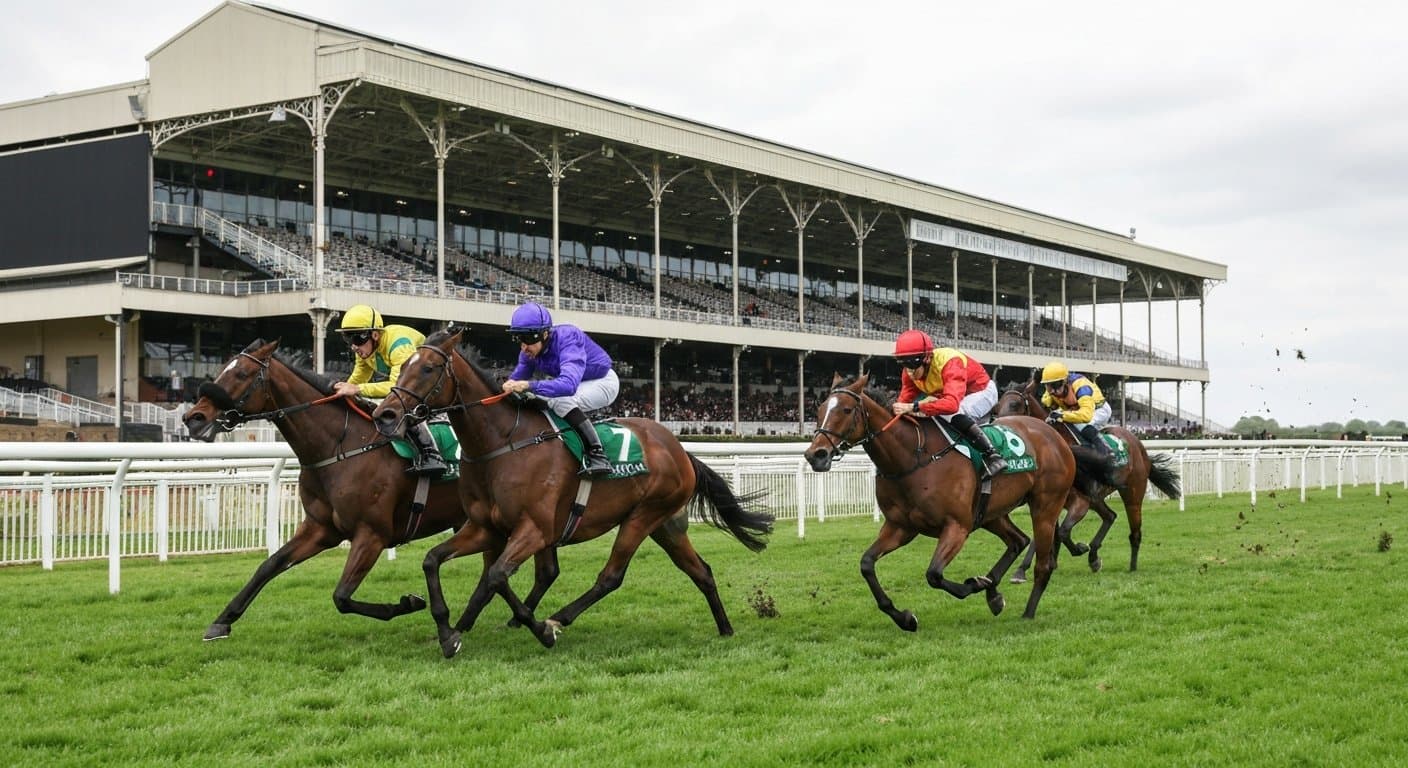
Betting at Doncaster Racecourse
How to bet smarter at Doncaster: track characteristics, draw bias, going preferences, key trainers and strategies for Town Moor.
Read more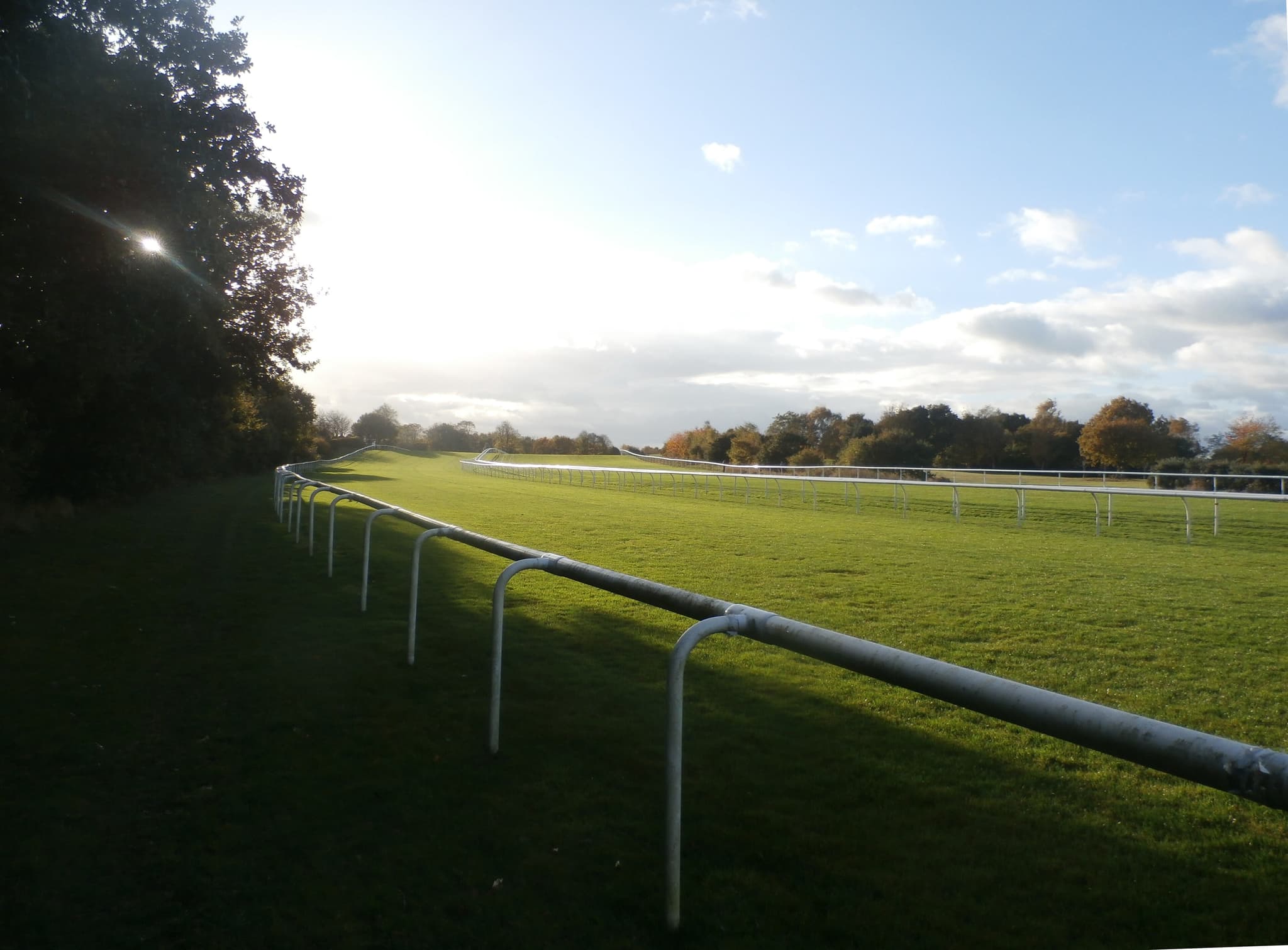
Doncaster Racecourse: Complete Guide
Doncaster Racecourse — home of the St Leger, the world's oldest classic. Course layout, facilities, transport and betting angles.
Read more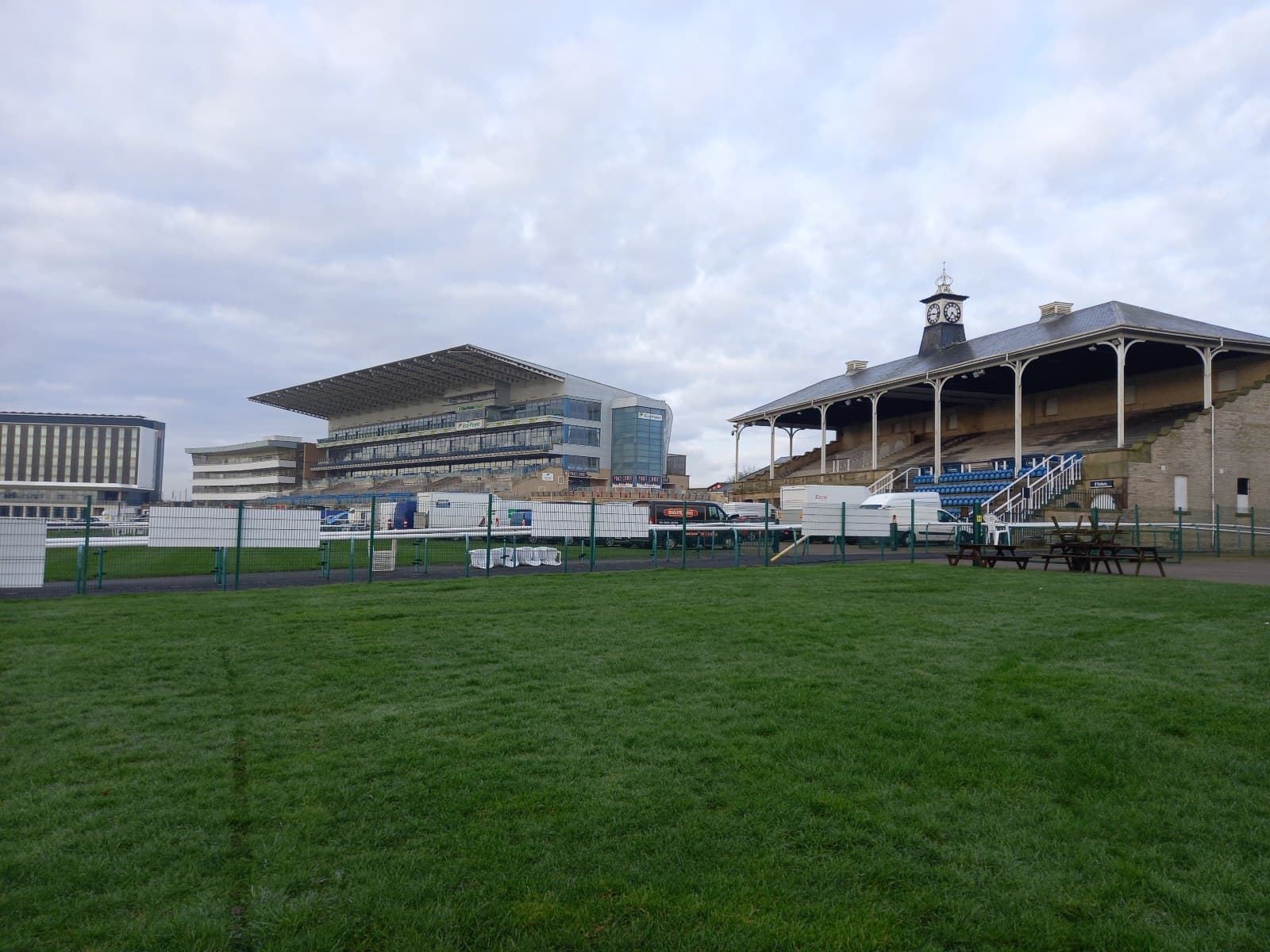
A Day Out at Doncaster Racecourse
Everything you need for a day at Doncaster — getting there, what to wear, enclosures, food and drink, and insider tips for Town Moor.
Read morePhotos on this page are used under Creative Commons licences. Titles, sources and licence links for each one are on our image credits page.
Research the field with the AI Race Predictor
Our model publishes calibrated win-probability estimates for UK races — a second opinion to understand a race, not tips. It's open about its record: it doesn't beat the market, and we show exactly how it does.
Work it out & learn the basics
Gamble Responsibly
Gambling should be entertaining and not seen as a way to make money. Never bet more than you can afford to lose. If you or someone you know has a gambling problem, help and support is available.